Characterising Free-Range Layer Flocks Using Unsupervised Cluster Analysis
by
 , , ,
, , ,
Terence Zimazile Sibanda
1,* ,
,
Mitchell Welch
2,
Derek Schneider
2,
Manisha Kolakshyapati
1 and
Isabelle Ruhnke
1 1
School of Environmental and Rural Science, Faculty of Science, Agriculture, Business and Law, University of New England, Armidale, NSW 2351, Australia
2
Precision Agriculture Research Group, Faculty of Science, Agriculture, Business and Law, School of Science and Technology, University of New England, Armidale, NSW 2351, Australia
*
Author to whom correspondence should be addressed.
Animals 2020, 10(5), 855; https://doi.org/10.3390/ani10050855
Submission received: 15 April 2020
/
Revised: 6 May 2020
/
Accepted: 13 May 2020
/
Published: 15 May 2020
(This article belongs to the Section Animal Welfare)
Simple Summary
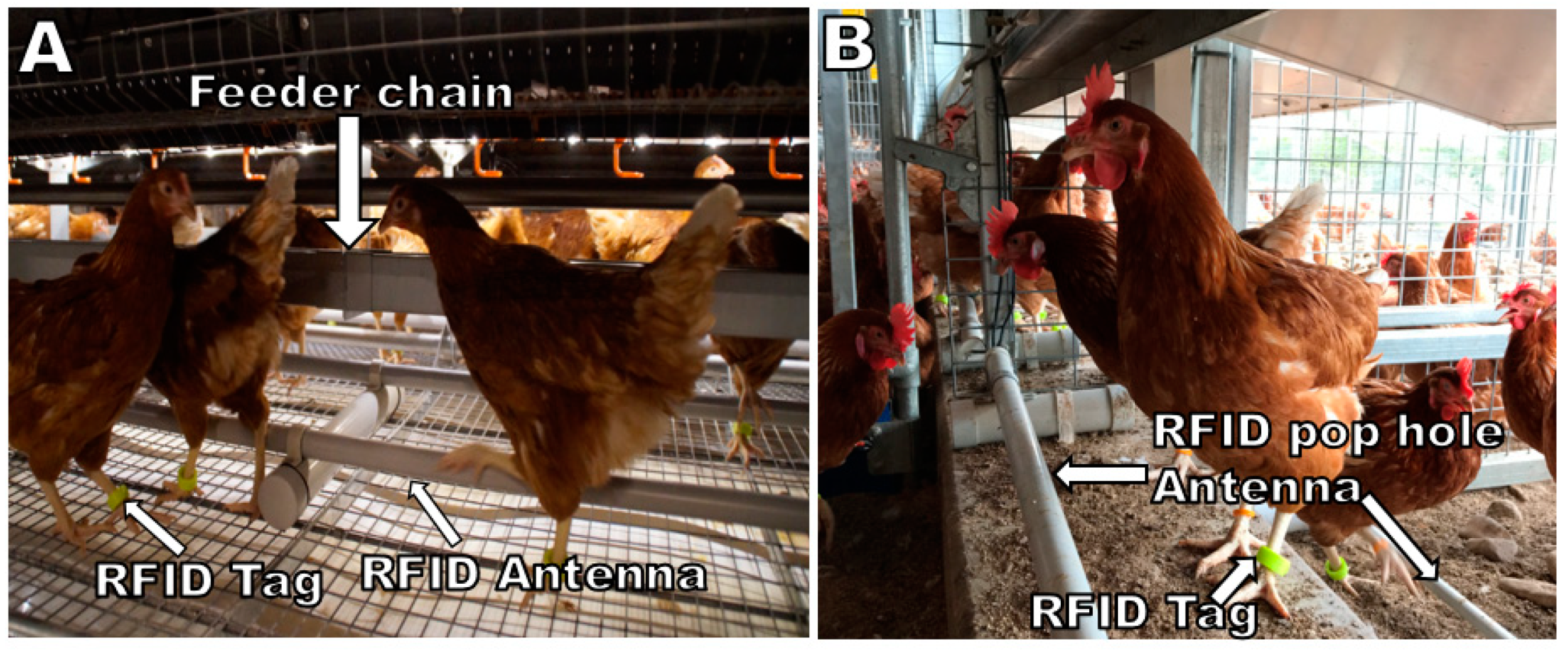
Little is known on how free-range laying hens on commercial farms exploit their offered resources. However, only when hen usage of the structural resources is understood, can design improvements be made to optimize hen health and welfare. This study was conducted in order to understand the extent to which free-range hens use the aviary system and range. With the help of individual tracking technology, agglomerative, and K-means cluster analysis, we were able to characterize various flock sub-populations. Regardless of the cluster group, hens used the nest boxes and lower feeder tier more consistently compared to the outdoor range and the upper feeder tier. Overall, hens that were more consistent with their average time spent at each location stayed for longer duration at each location than those hens that had inconsistent movement patterns. The identification of ‘routine’ behavior patterns can be essential for flock management, such as smothering prevention and future shed design.
Abstract
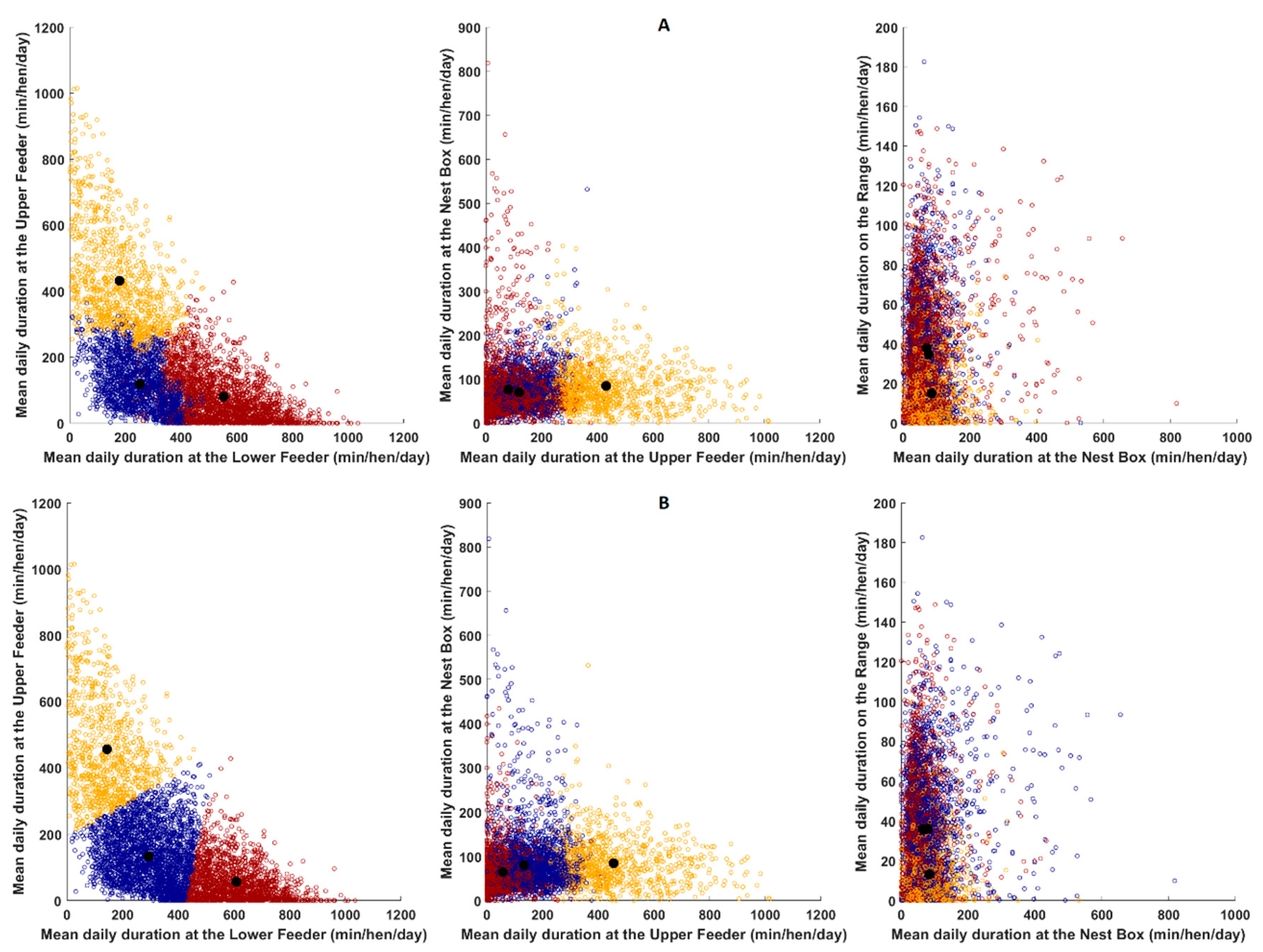
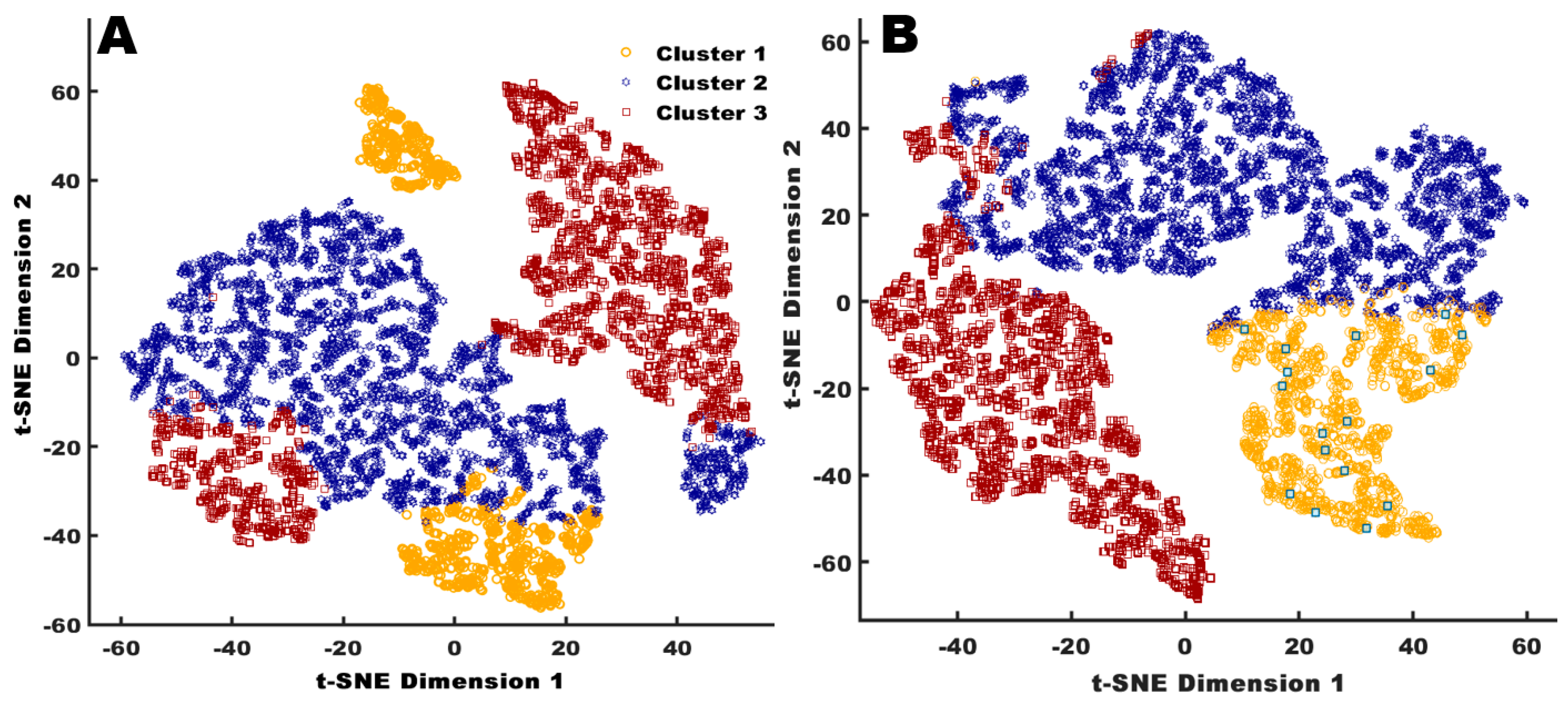
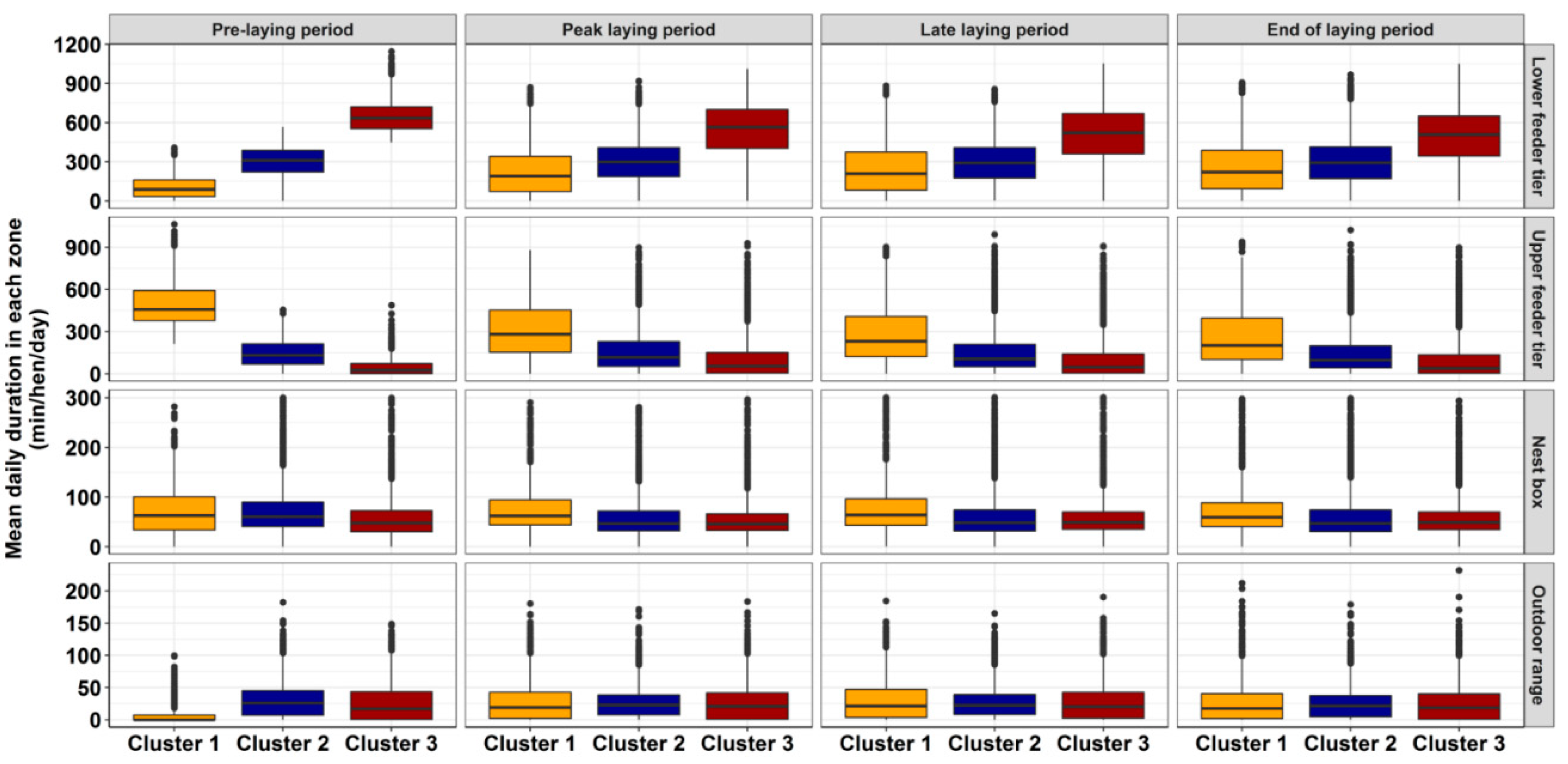
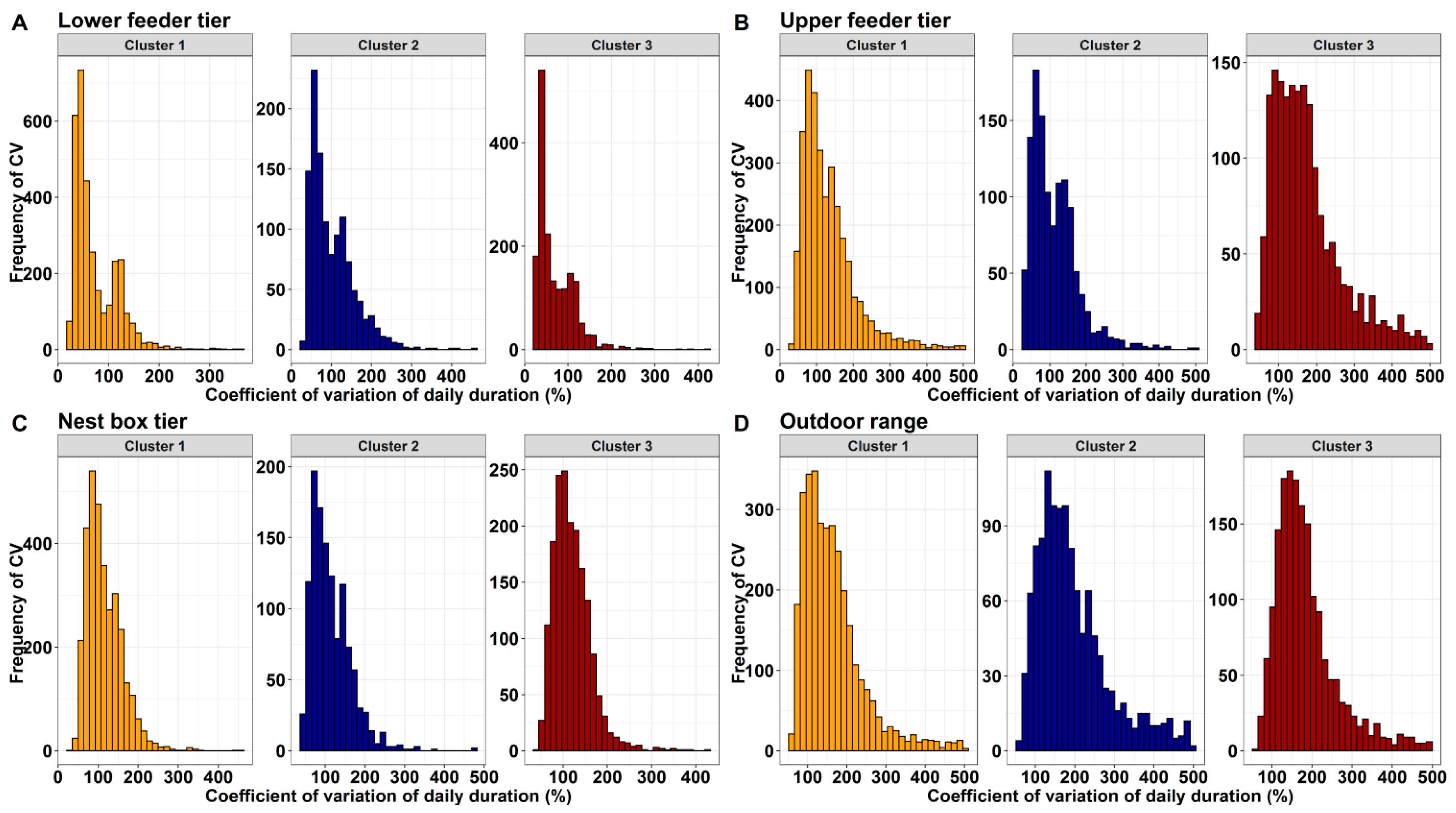
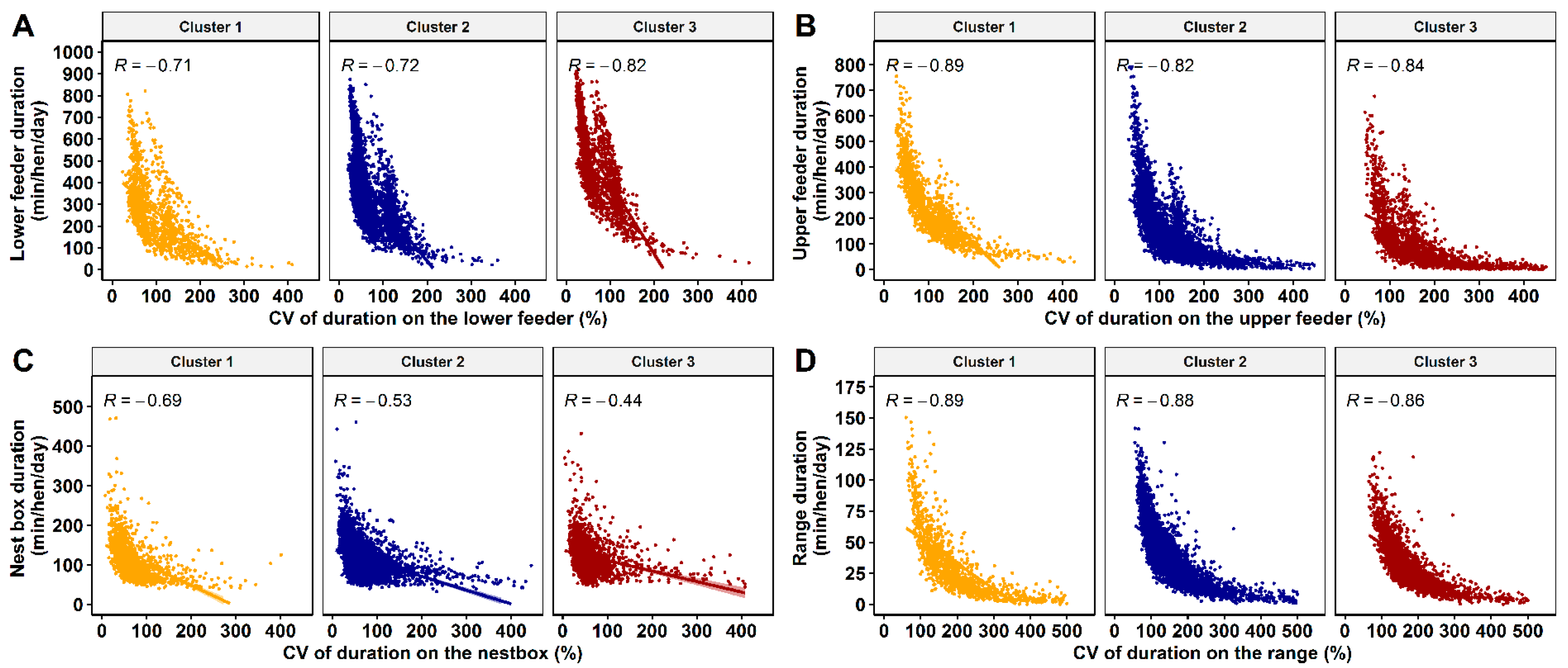
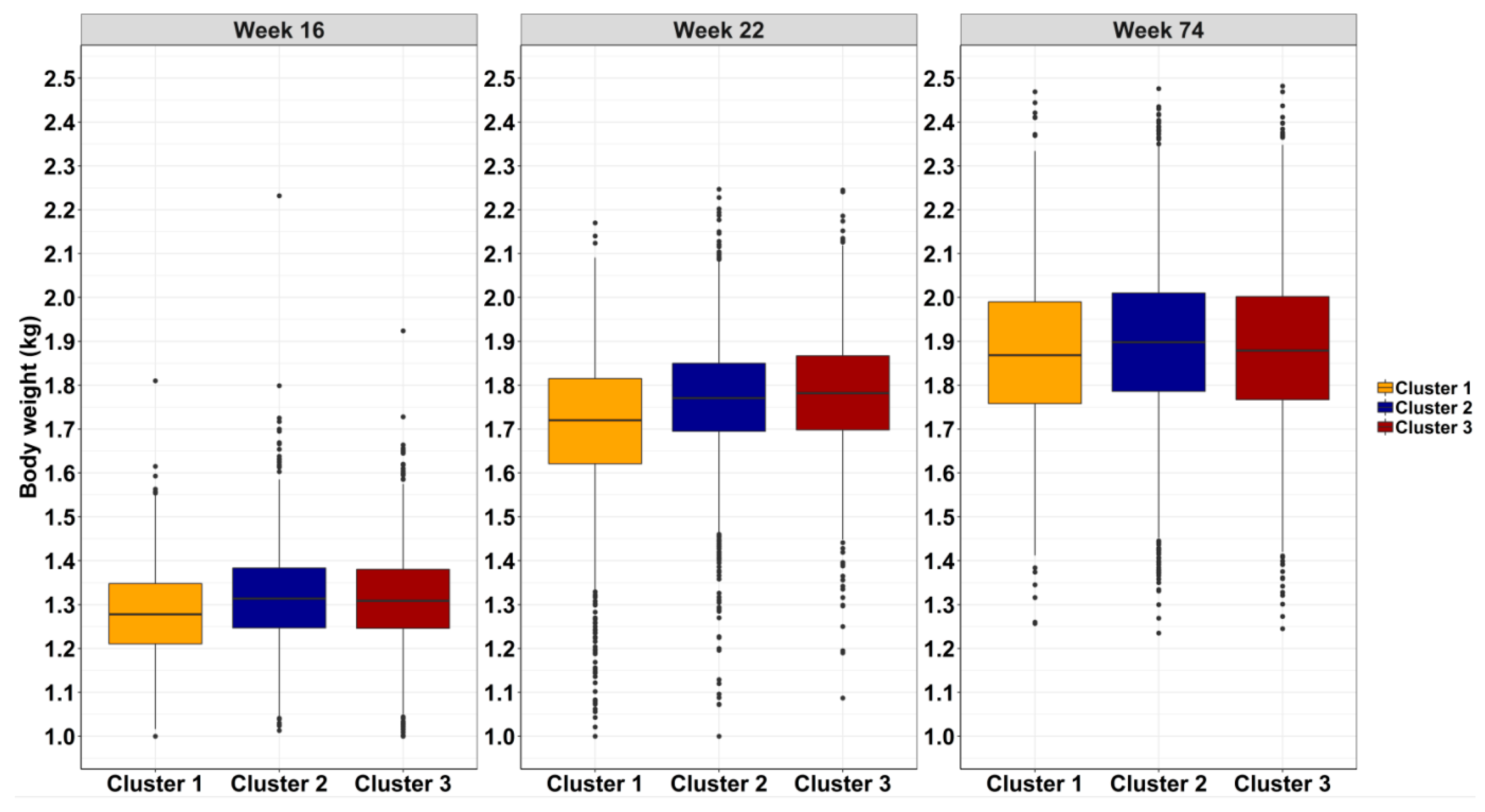
This study aimed to identify sub-populations of free-range laying hens and describe the pattern of their resource usage, which can affect hen performance and welfare. In three commercial flocks, 3125 Lohmann Brown hens were equipped with radio-frequency identification (RFID) transponder leg bands and placed with their flock companions, resulting in a total of 40,000 hens/flock. Hens were monitored for their use of the aviary system, including feeder lines, nest boxes, and the outdoor range. K-means and agglomerative cluster analysis, optimized with the Calinski-Harabasz Criterion, was performed and identified three clusters. Individual variation in time duration was observed in all the clusters with the highest individual differences observed on the upper feeder (140 ± 1.02%) and the range (176 ± 1.03%). Hens of cluster 1 spent the least amount time on the range and the most time on the feed chain located at the upper aviary tier (p < 0.05). We conclude that an uneven load on the resources, as well as consistent and inconsistent movement patterns, occur in the hen house. Further analysis of the data sets using classification models based on support vector machines, artificial neural networks, and decision trees are warranted to investigate the contribution of these and other parameters on hen performance.
Keywords:
aviary; eggs; individual; pasture; poultry; radio frequency identification (RFID); variation; spatial; technology; time budget; welfare