Assessing the Diversity and Population Substructure of Sarda Breed Bucks by Using Mtdna and Y-Chromosome Markers
by
 , ,
, ,
Maria Luisa Dettori
1,* ,
,
Elena Petretto
1,
Michele Pazzola
1,
Oriol Vidal
2,
Marcel Amills
3,4 and
Giuseppe Massimo Vacca
1 1
Department of Veterinary Medicine, University of Sassari, via Vienna 2, 07100 Sassari, Italy
2
Departament de Biologia, Universitat de Girona, 17003 Girona, Spain
3
Centre for Research in Agricultural Genomics (CRAG), CSIC-IRTA-UAB-UB, Department of Animal Genetics, Universitat Autònoma de Barcelona, 08193 Bellaterra, Spain
4
Departament de Ciència Animal i dels Aliments, Facultat de Veterinària, Universitat Autònoma de Barcelona, 08193 Bellaterra, Spain
*
Author to whom correspondence should be addressed.
Animals 2020, 10(12), 2194; https://doi.org/10.3390/ani10122194
Submission received: 3 November 2020
/
Revised: 21 November 2020
/
Accepted: 22 November 2020
/
Published: 24 November 2020
(This article belongs to the Collection Genetic Diversity in Livestock and Companion Animals)
Simple Summary
Domestic goats show extraordinary adaptation to different environments. Sardinia (Italy), the second-largest island in the Mediterranean Sea, is the birthplace of Sarda goats which are raised to produce milk mainly devoted to cheesemaking. The aim of this research was to characterize genetic diversity of Sarda bucks, reared in eight subregions of the island, to gain information about the relationship between genetic variation and geography as well as to investigate the existence of population substructure. We performed genotyping of Y-chromosome markers, which trace the patrilineal diversity, and sequencing of a portion of mitochondrial DNA, which gives information about matrilineal diversity. Analysis of Y-chromosome markers revealed the occurrence of high levels of diversity in populations from Southwest Sardinia. Further analysis of both Y-chromosome and mitochondrial DNA data evidenced the lack of population substructure. These results suggest the occurrence of extensive gene flow between the different subregions of Sardinia. The introduction of goats from other geographical locations, outside Sardinia, and belonging to highly productive breeds probably contributed to enhance genetic variation.
Abstract
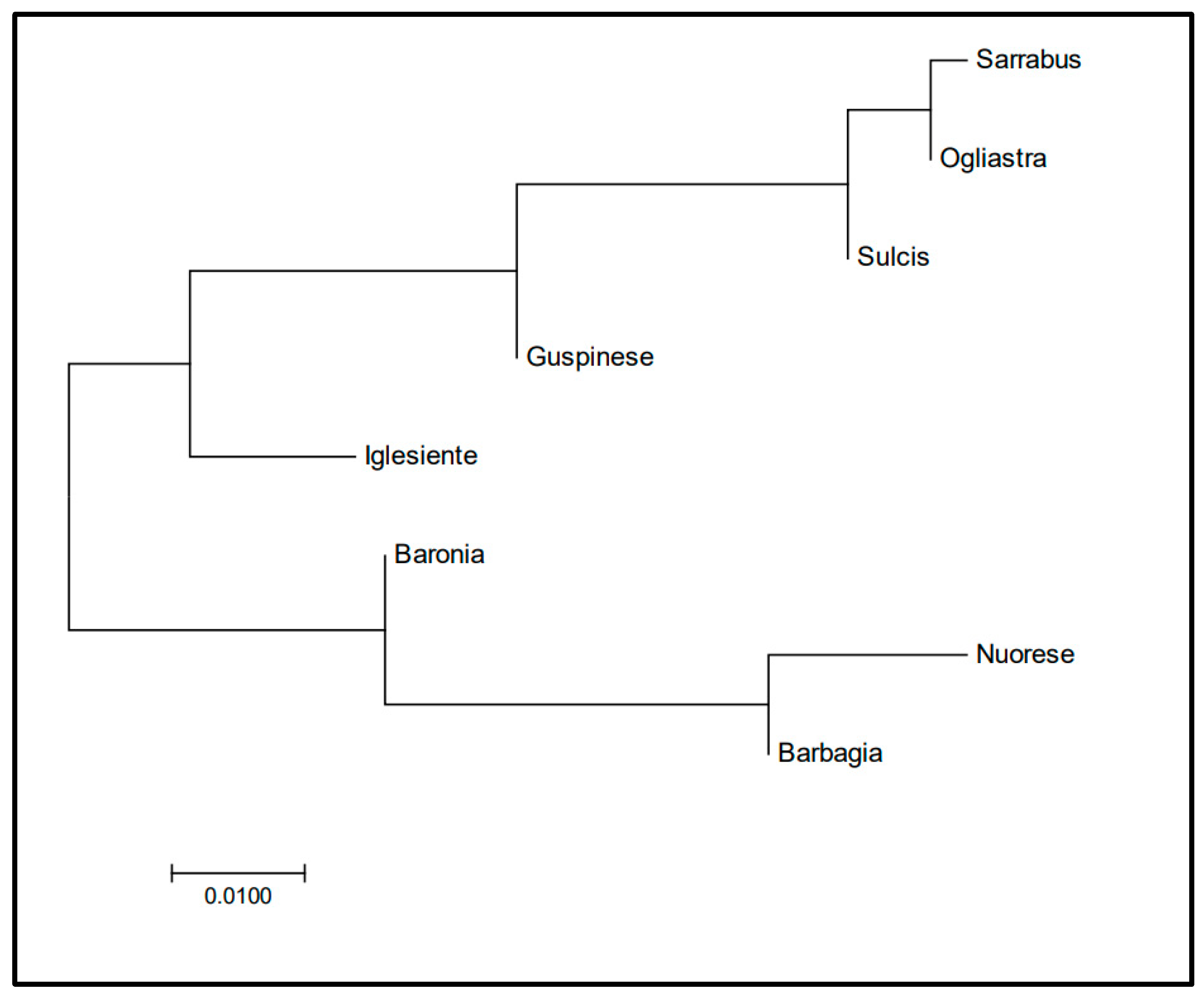
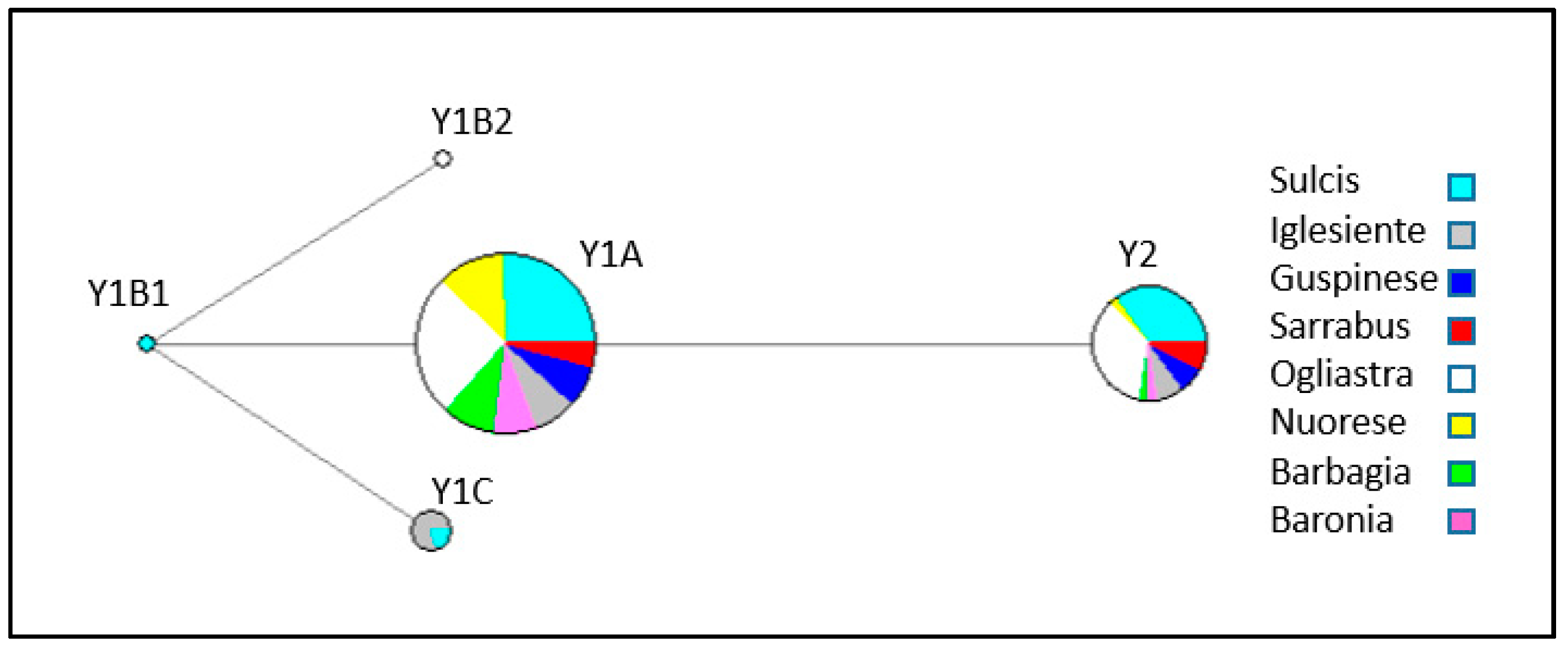
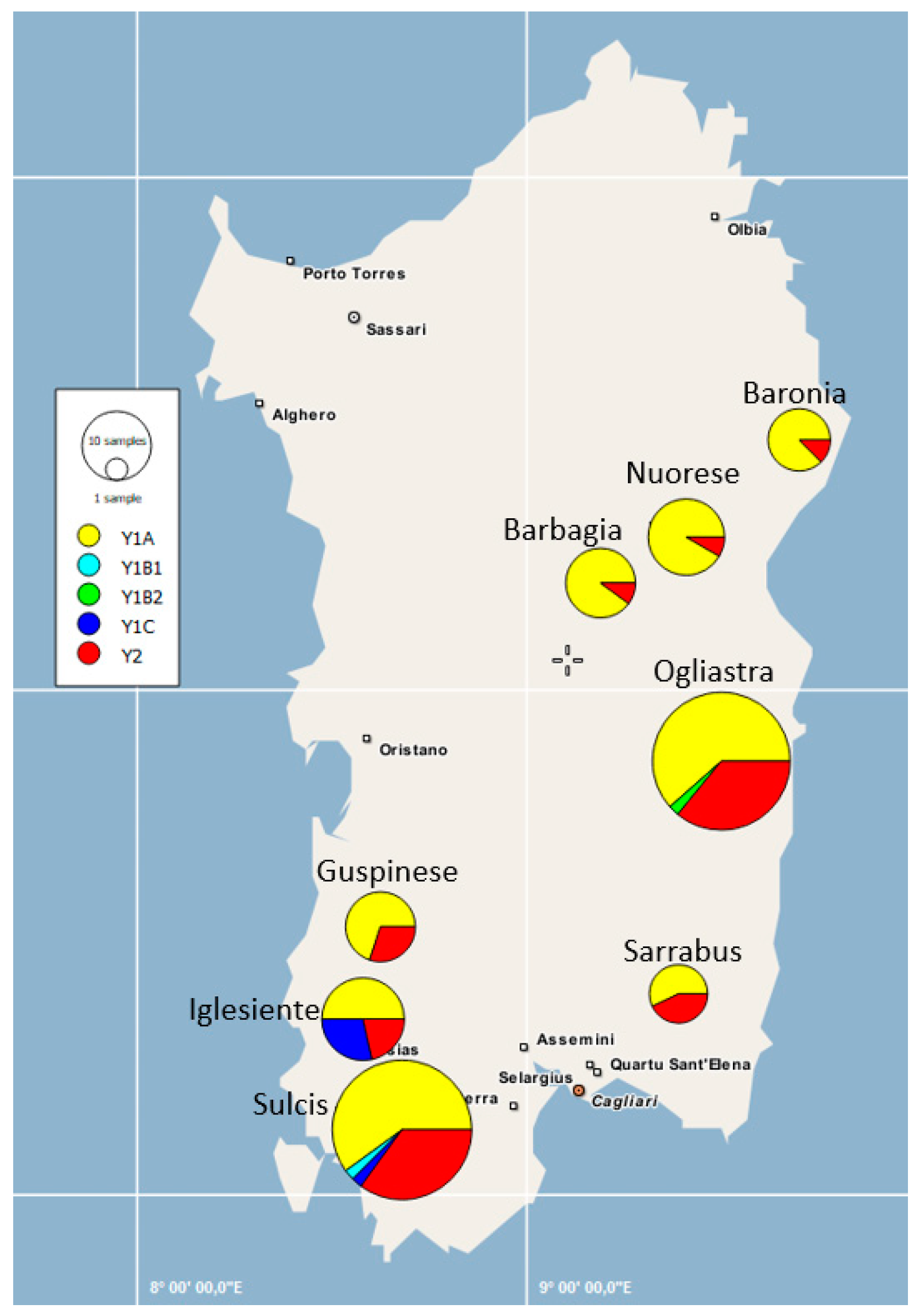
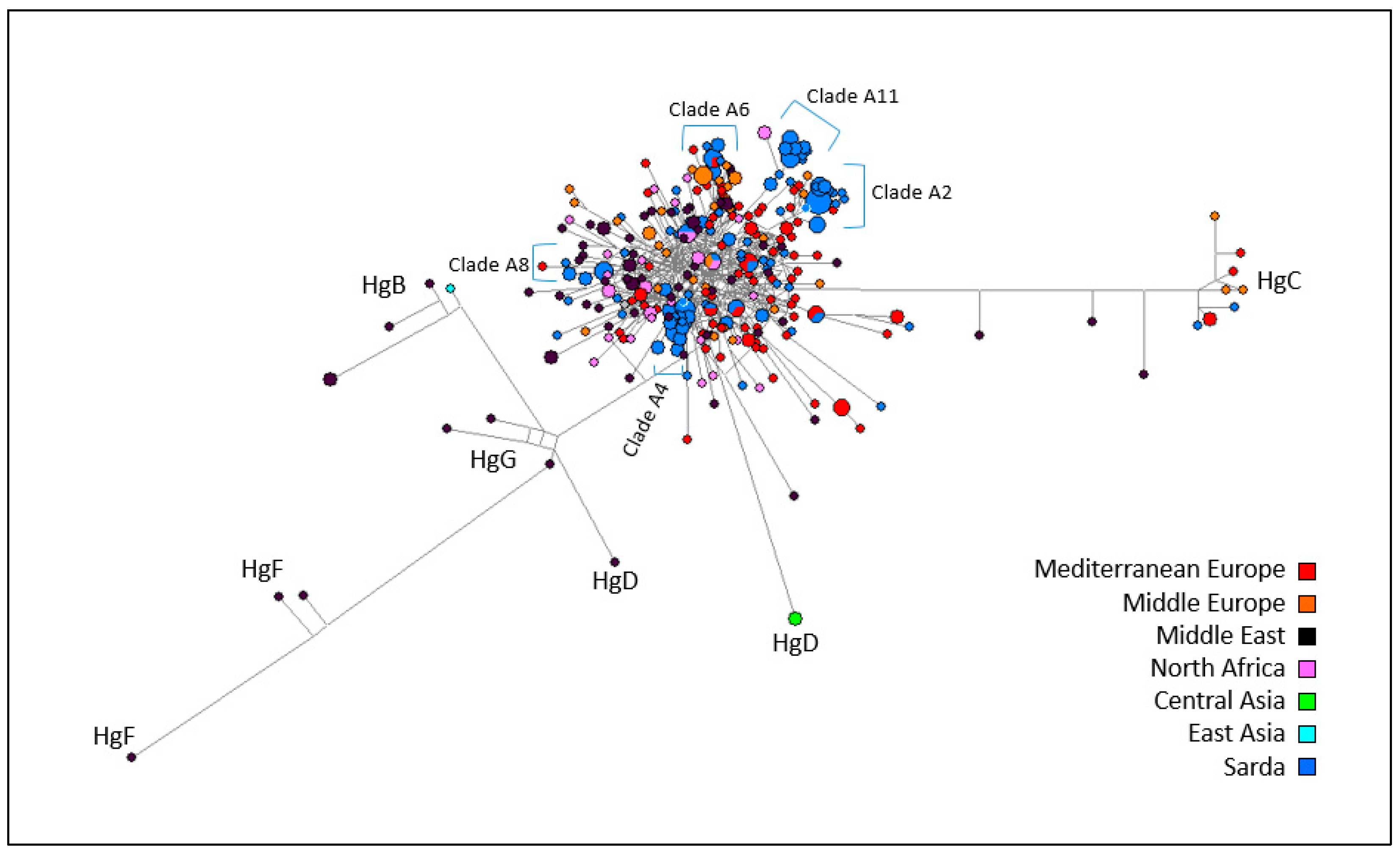
A sample of 146 Sarda bucks from eight subregions of Sardinia, Italy (Nuorese, Barbagia, Baronia, Ogliastra, Sarrabus, Guspinese, Iglesiente, Sulcis) were characterized for Y-chromosome and mtDNA markers to assess the levels of population substructure. Five polymorphic loci (SRY, AMELY, ZFY, and DDX3Y) on the Y-chromosome were genotyped. The control region of mtDNA was sequenced as a source of complementary information. Analysis of Y-chromosome data revealed the segregation of 5 haplotypes: Y1A (66.43%), Y2 (28.57%), Y1C (3.57%), Y1B1 (0.71%), and Y1B2 (0.71%). High levels of Y-chromosome diversity were observed in populations from Southwest Sardinia. The FST values based on Y-chromosome and mtDNA data were low, although a paternal genetic differentiation was observed when comparing the Nuorese and Barbagia populations (Central Sardinia) with the Sulcis, Iglesiente, and Sarrabus populations (Southern Sardinia). AMOVA analysis supported the lack of population substructure. These results suggest the occurrence of a historical and extensive gene flow between Sarda goat populations from different locations of Sardinia, despite the fact that this island is covered by several large mountain ranges. Introgression with foreign caprine breeds in order to improve milk production might have also contributed to avoiding the genetic differentiation amongst Sarda populations.
Keywords:
Y-chromosome; mitochondrial DNA; buck; population structuring; goat; SRY; AMELY; ZFY; DDX3Y