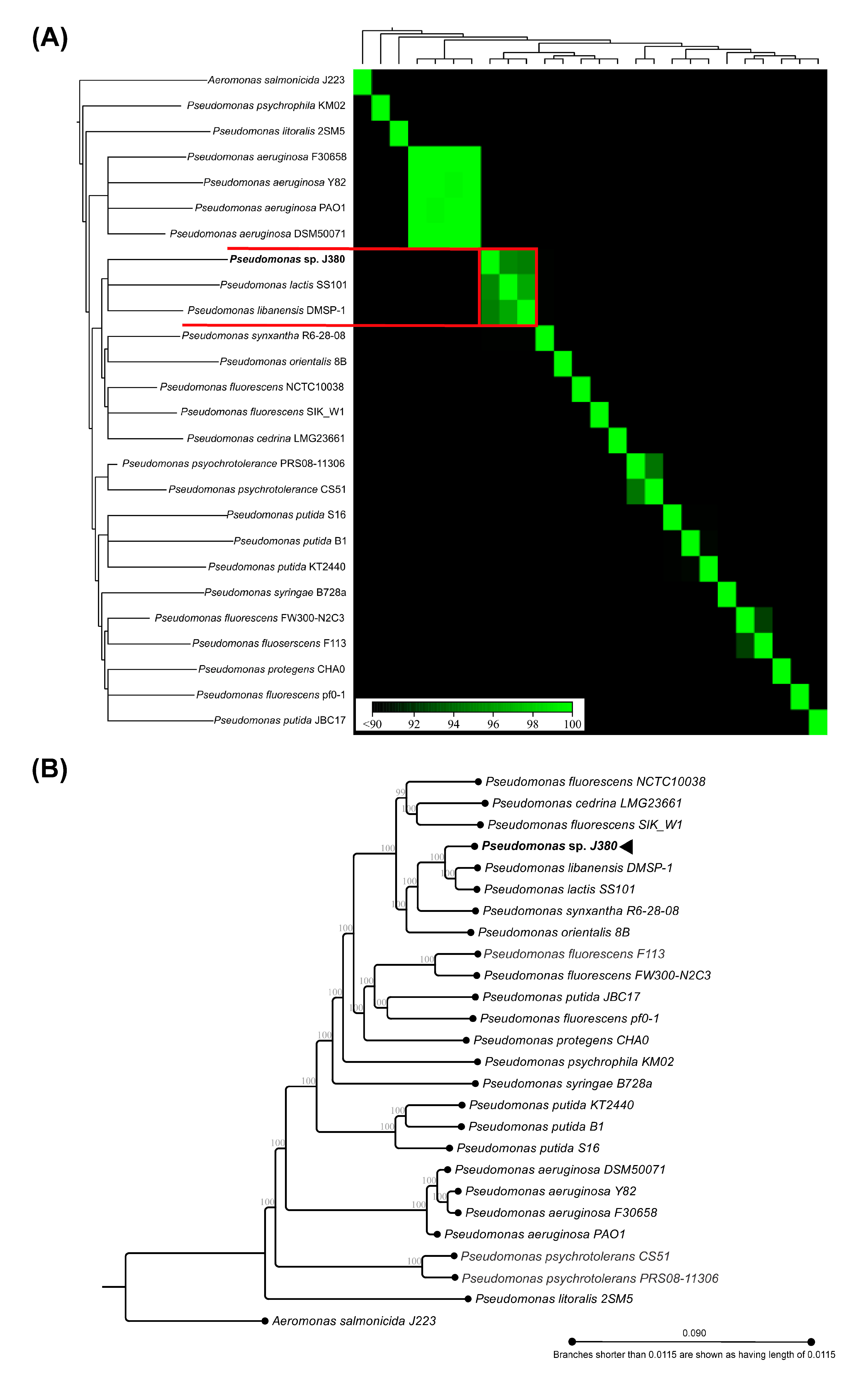
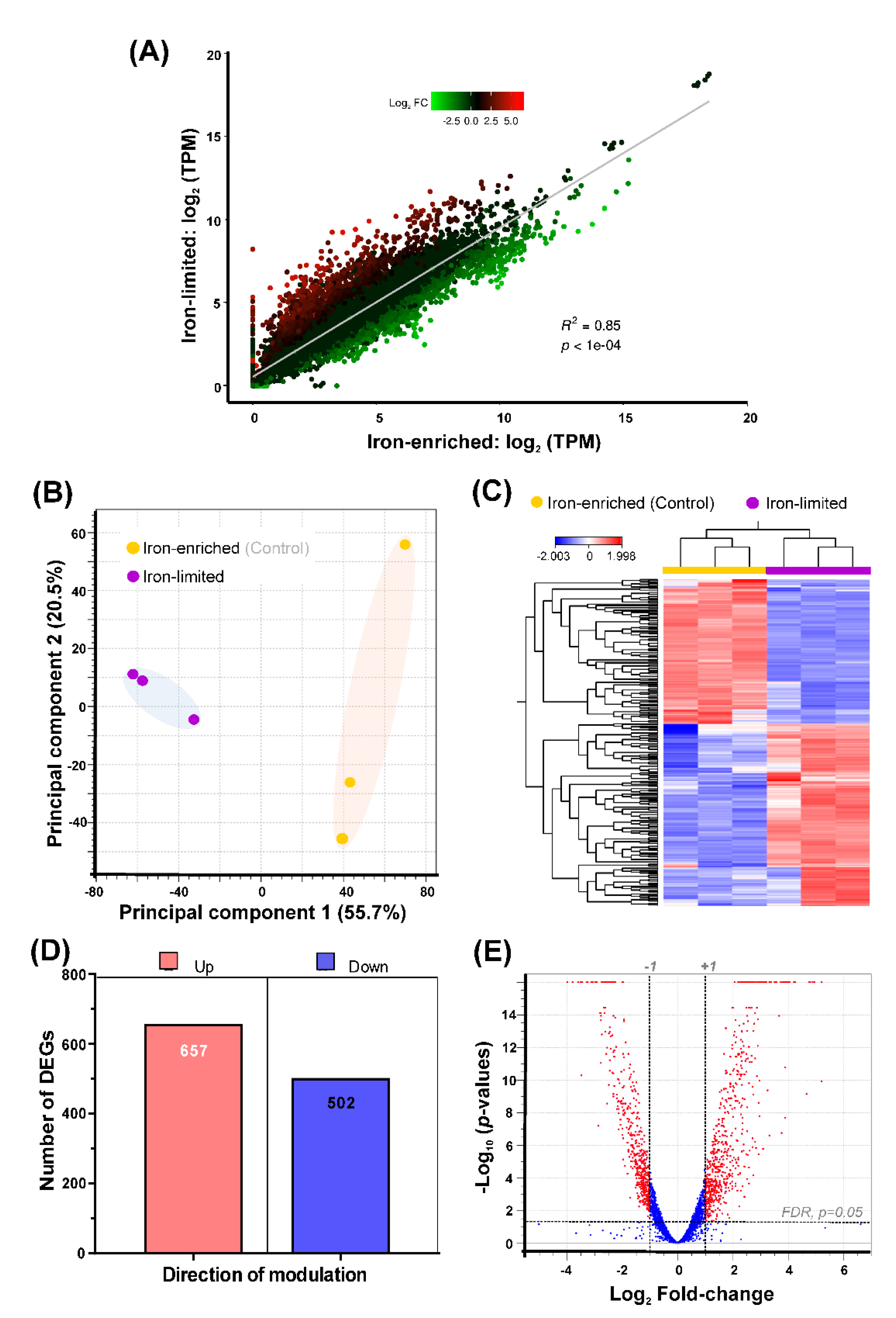
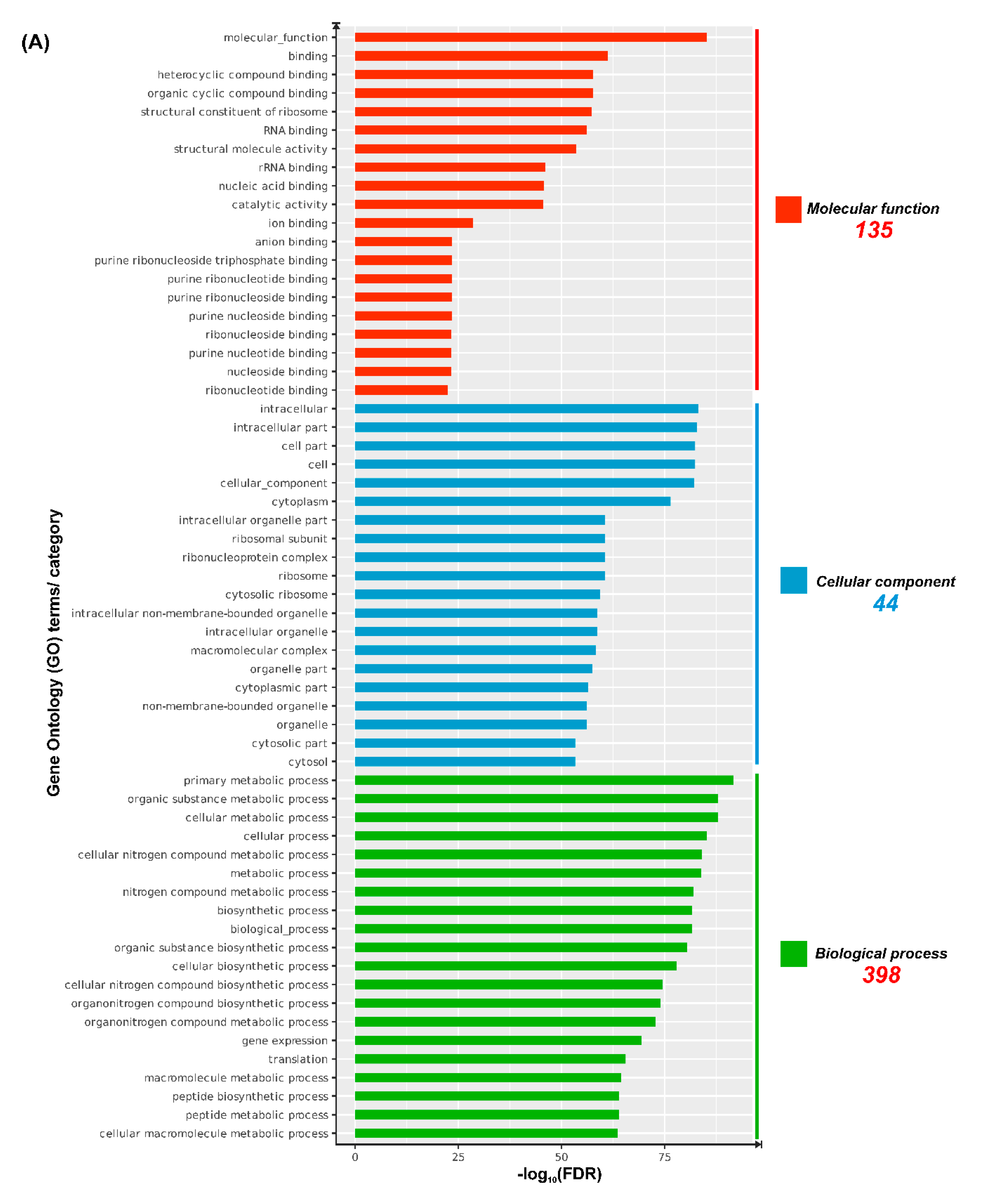
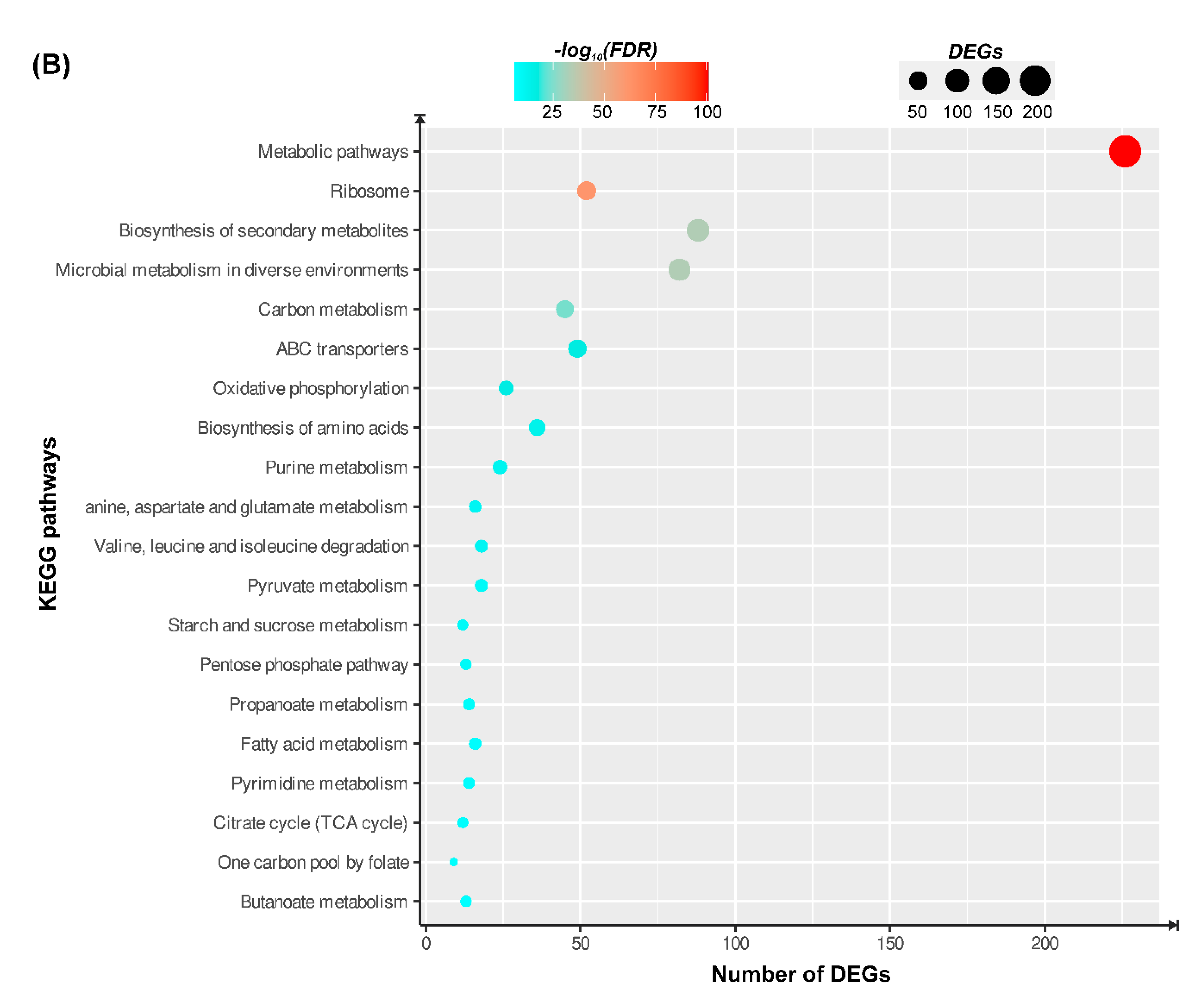
A Novel Marine Pathogen Isolated from Wild Cunners (Tautogolabrus adspersus): Comparative Genomics and Transcriptome Profiling of Pseudomonas sp. Strain J380
 , ,
, ,  , ,
, , 
Abstract
Share and Cite
Umasuthan, N.; Valderrama, K.; Vasquez, I.; Segovia, C.; Hossain, A.; Cao, T.; Gnanagobal, H.; Monk, J.; Boyce, D.; Santander, J. A Novel Marine Pathogen Isolated from Wild Cunners (Tautogolabrus adspersus): Comparative Genomics and Transcriptome Profiling of Pseudomonas sp. Strain J380. Microorganisms 2021, 9, 812. https://doi.org/10.3390/microorganisms9040812
Umasuthan N, Valderrama K, Vasquez I, Segovia C, Hossain A, Cao T, Gnanagobal H, Monk J, Boyce D, Santander J. A Novel Marine Pathogen Isolated from Wild Cunners (Tautogolabrus adspersus): Comparative Genomics and Transcriptome Profiling of Pseudomonas sp. Strain J380. Microorganisms. 2021; 9(4):812. https://doi.org/10.3390/microorganisms9040812
Chicago/Turabian StyleUmasuthan, Navaneethaiyer, Katherinne Valderrama, Ignacio Vasquez, Cristopher Segovia, Ahmed Hossain, Trung Cao, Hajarooba Gnanagobal, Jennifer Monk, Danny Boyce, and Javier Santander. 2021. "A Novel Marine Pathogen Isolated from Wild Cunners (Tautogolabrus adspersus): Comparative Genomics and Transcriptome Profiling of Pseudomonas sp. Strain J380" Microorganisms 9, no. 4: 812. https://doi.org/10.3390/microorganisms9040812
APA StyleUmasuthan, N., Valderrama, K., Vasquez, I., Segovia, C., Hossain, A., Cao, T., Gnanagobal, H., Monk, J., Boyce, D., & Santander, J. (2021). A Novel Marine Pathogen Isolated from Wild Cunners (Tautogolabrus adspersus): Comparative Genomics and Transcriptome Profiling of Pseudomonas sp. Strain J380. Microorganisms, 9(4), 812. https://doi.org/10.3390/microorganisms9040812