Article

Predatory Bacteria Select for Sustained Prey Diversity
by
Ramith R. Nair
1,2,* and
Gregory J. Velicer
2
1
Department of Medical Biochemistry and Microbiology, Uppsala University, 75234 Uppsala, Sweden
2
Institute for Integrative Biology, ETH Zürich, 8092 Zürich, Switzerland
*
Author to whom correspondence should be addressed.
Microorganisms 2021, 9(10), 2079; https://doi.org/10.3390/microorganisms9102079

Submission received: 17 July 2021 / Revised: 22 September 2021 / Accepted: 23 September 2021 / Published: 2 October 2021
(This article belongs to the Special Issue Myxobacteria: Physiology and Regulation)

Abstract

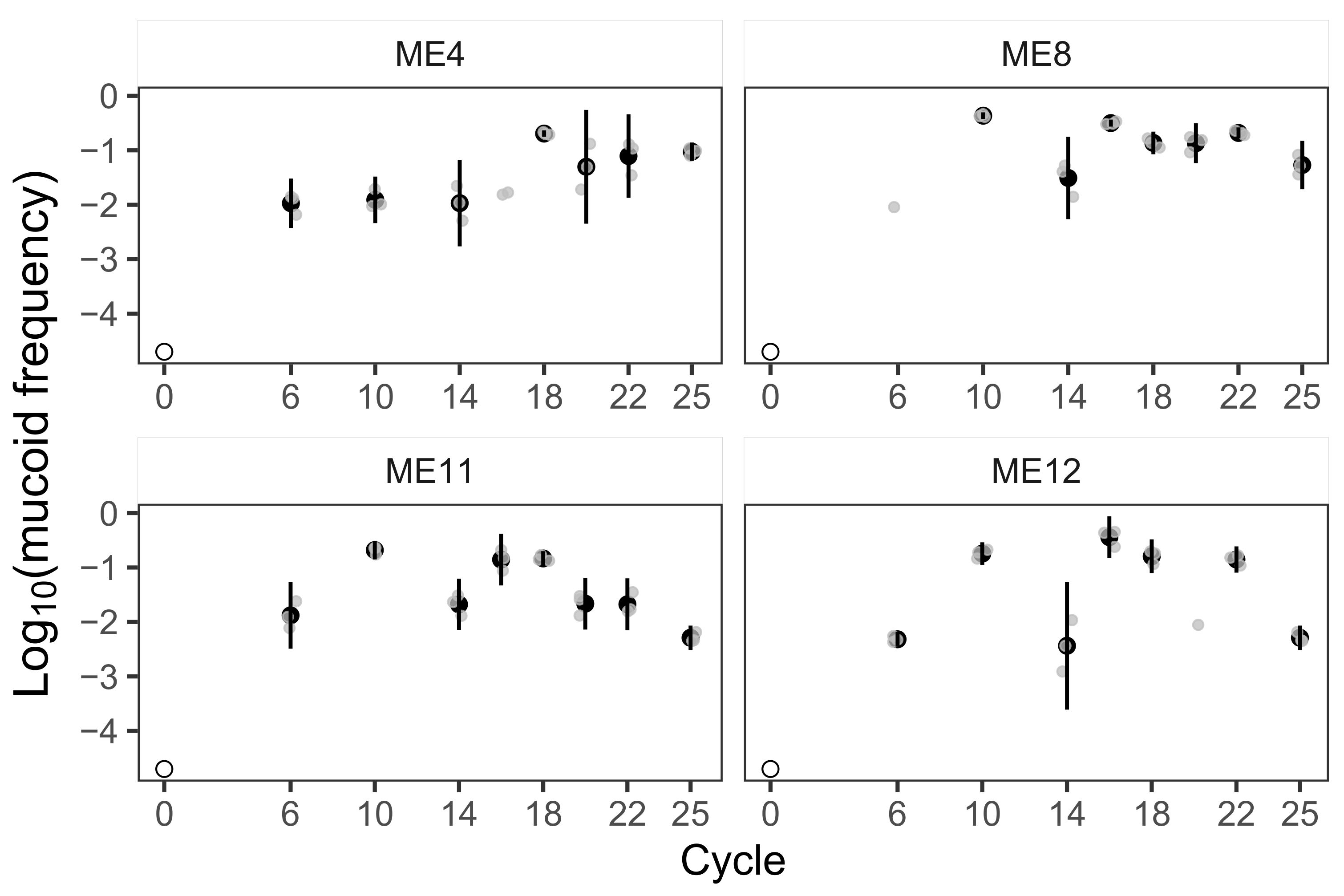
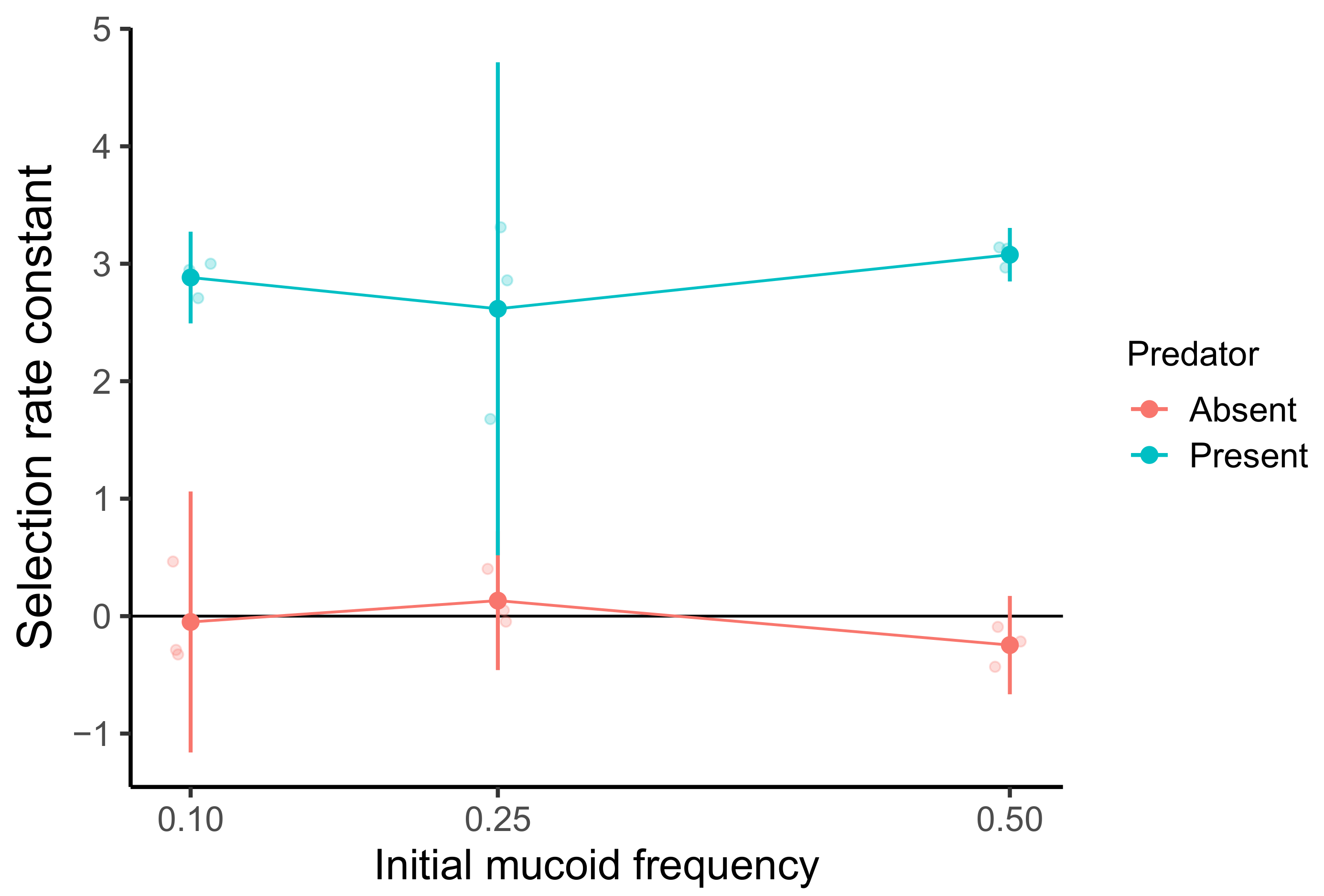
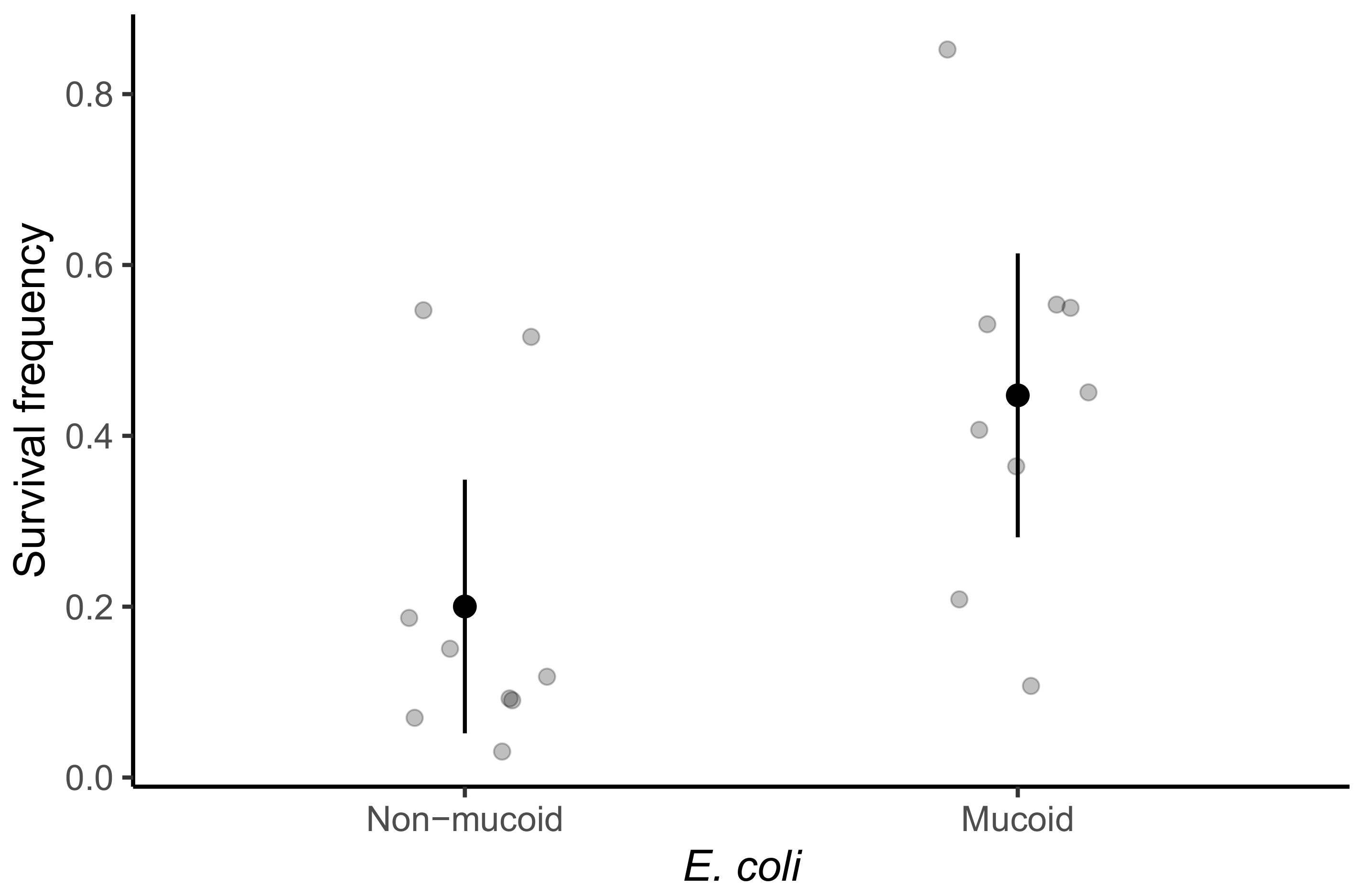
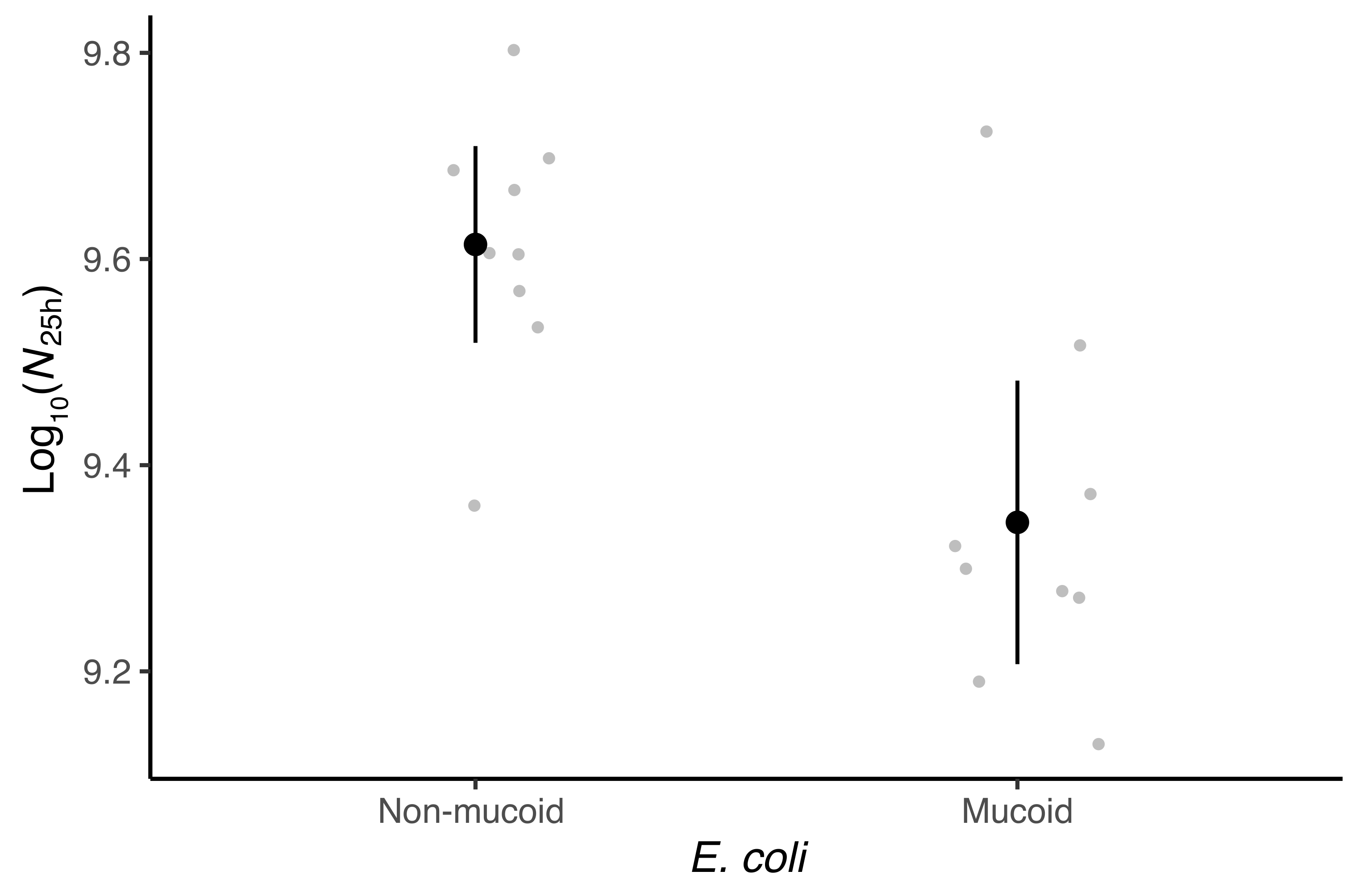
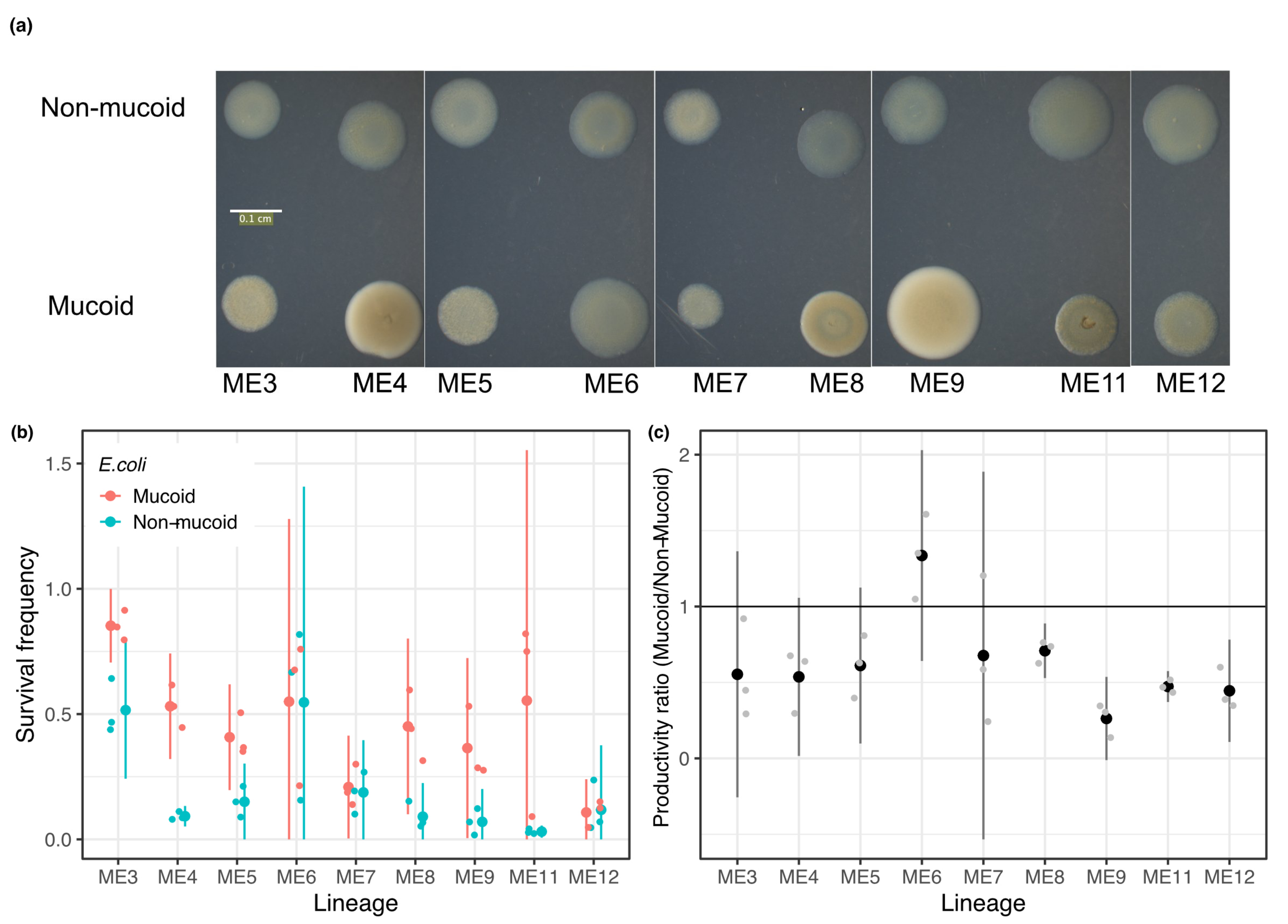
Predator impacts on prey diversity are often studied among higher organisms over short periods, but microbial predator-prey systems allow examination of prey-diversity dynamics over evolutionary timescales. We previously showed that Escherichia coli commonly evolved minority mucoid phenotypes in response to predation by the bacterial predator Myxococcus xanthus by one time point of a coevolution experiment now named MyxoEE-6. Here we examine mucoid frequencies across several MyxoEE-6 timepoints to discriminate between the hypotheses that mucoids were increasing to fixation, stabilizing around equilibrium frequencies, or heading to loss toward the end of MyxoEE-6. In four focal coevolved prey populations, mucoids rose rapidly early in the experiment and then fluctuated within detectable minority frequency ranges through the end of MyxoEE-6, generating frequency dynamics suggestive of negative frequency-dependent selection. However, a competition experiment between mucoid and non-mucoid clones found a predation-specific advantage of the mucoid clone that was insensitive to frequency over the examined range, leaving the mechanism that maintains minority mucoidy unresolved. The advantage of mucoidy under predation was found to be associated with reduced population size after growth (productivity) in the absence of predators, suggesting a tradeoff between productivity and resistance to predation that we hypothesize may reverse mucoid vs non-mucoid fitness ranks within each MyxoEE-6 cycle. We also found that mucoidy was associated with diverse colony phenotypes and diverse candidate mutations primarily localized in the exopolysaccharide operon yjbEFGH. Collectively, our results show that selection from predatory bacteria can generate apparently stable sympatric phenotypic polymorphisms within coevolving prey populations and also allopatric diversity across populations by selecting for diverse mutations and colony phenotypes associated with mucoidy. More broadly, our results suggest that myxobacterial predation increases long-term diversity within natural microbial communities.
Keywords: pretator-prey coevolution; antagonism; mucoidy; predatory bacteria; bacterial predation; prey diversity; negative frequency dependence; experimental evolution; MyxoEE-6 pretator-prey coevolution; antagonism; mucoidy; predatory bacteria; bacterial predation; prey diversity; negative frequency dependence; experimental evolution; MyxoEE-6