Article

Regulation of Chitin-Dependent Growth and Natural Competence in Vibrio parahaemolyticus

Graduate School of Medicine, Dentistry and Pharmaceutical Sciences, Okayama University, 1-1-1, Tsushima-naka, Kita-ku, Okayama 700-8530, Japan
*
Author to whom correspondence should be addressed.
Microorganisms 2020, 8(9), 1303; https://doi.org/10.3390/microorganisms8091303

Submission received: 21 July 2020 / Revised: 24 August 2020 / Accepted: 25 August 2020 / Published: 26 August 2020

Abstract

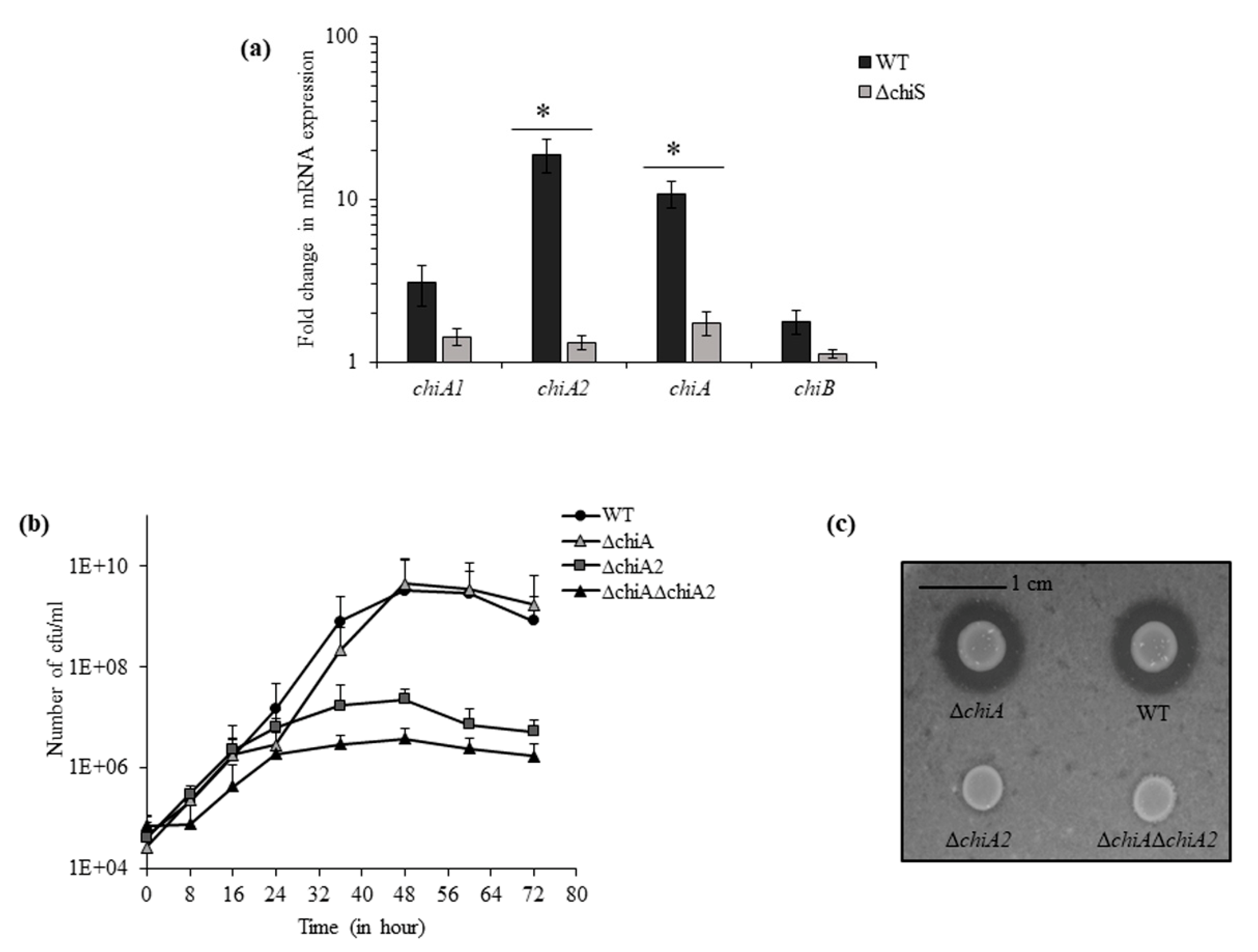
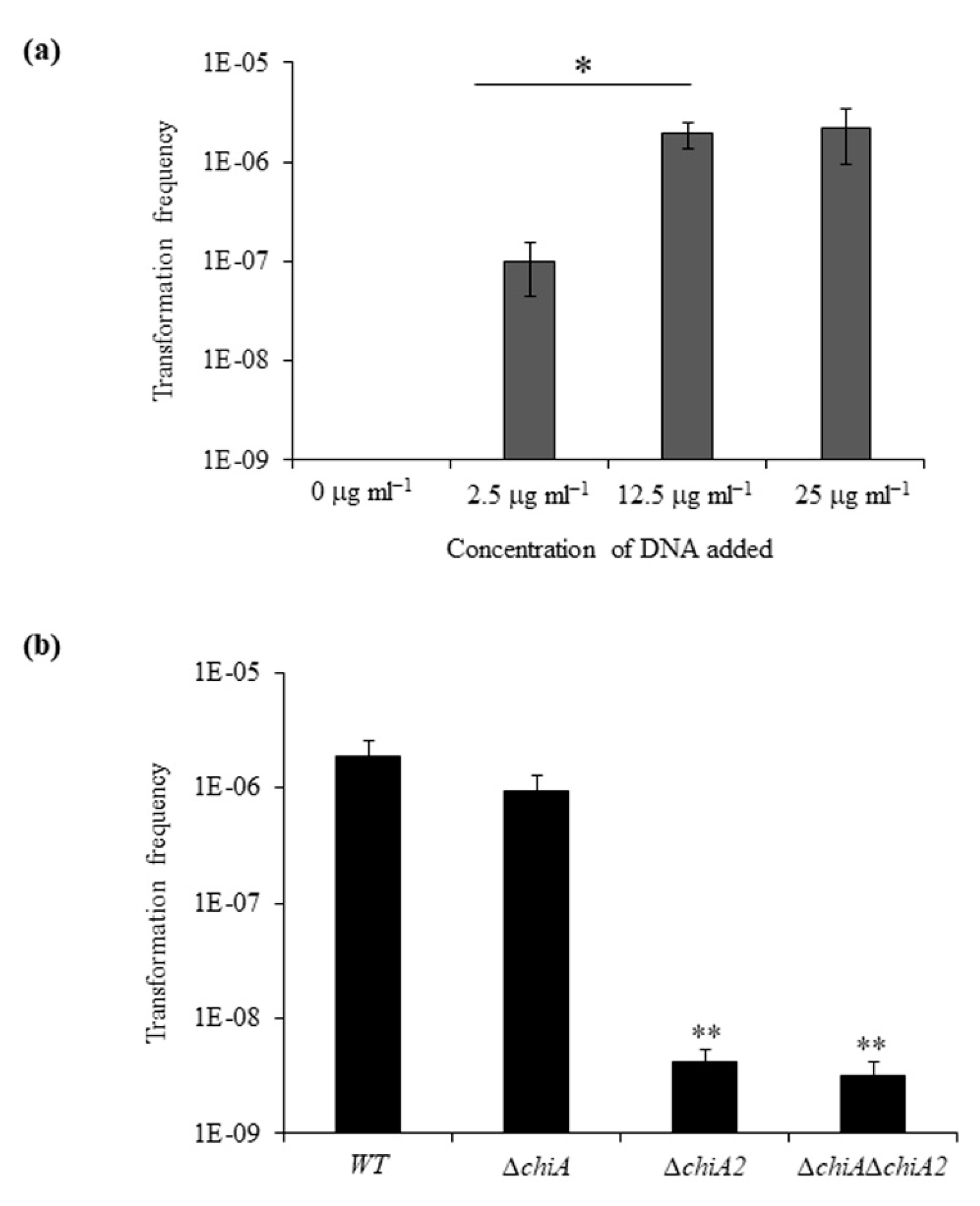
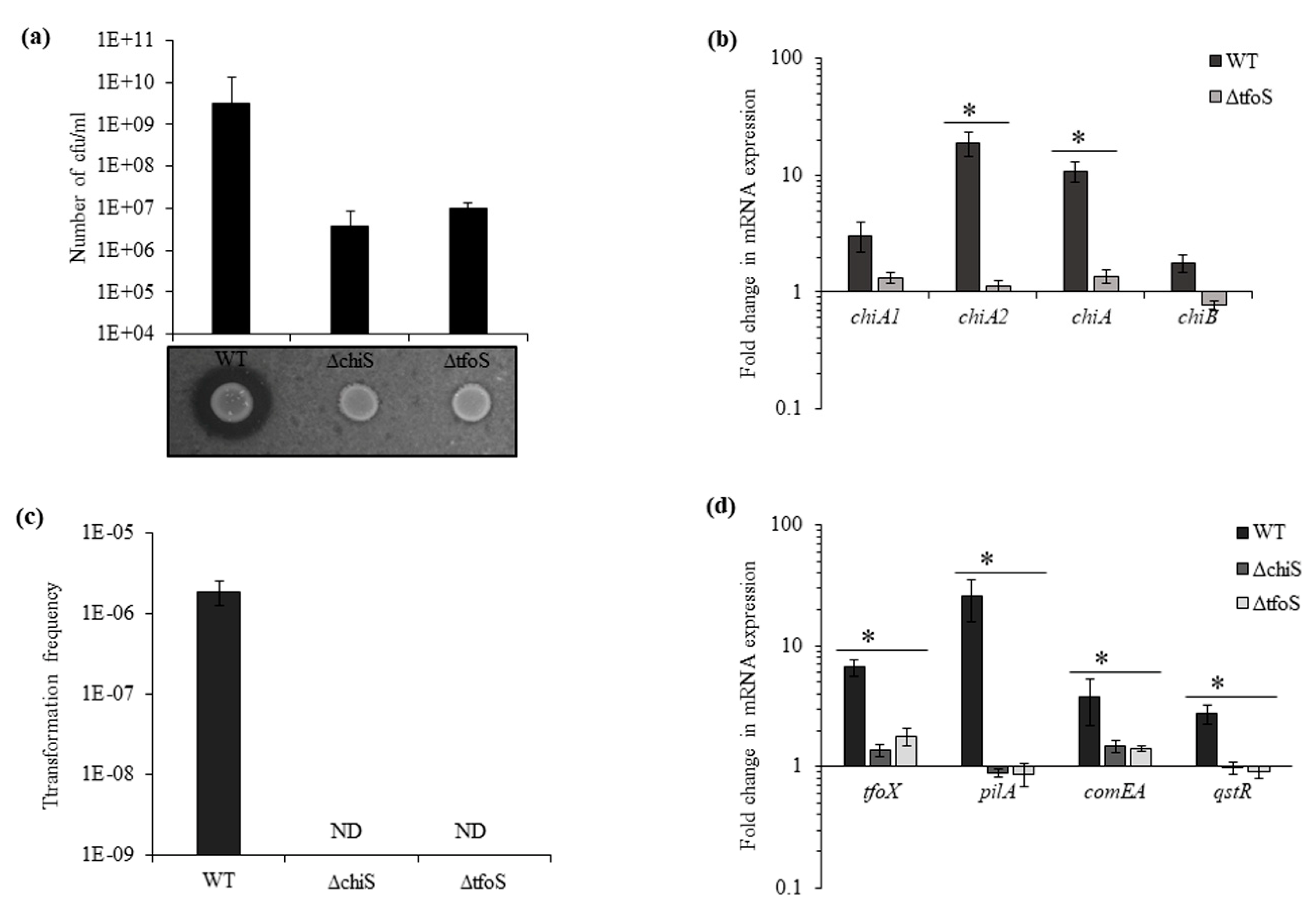
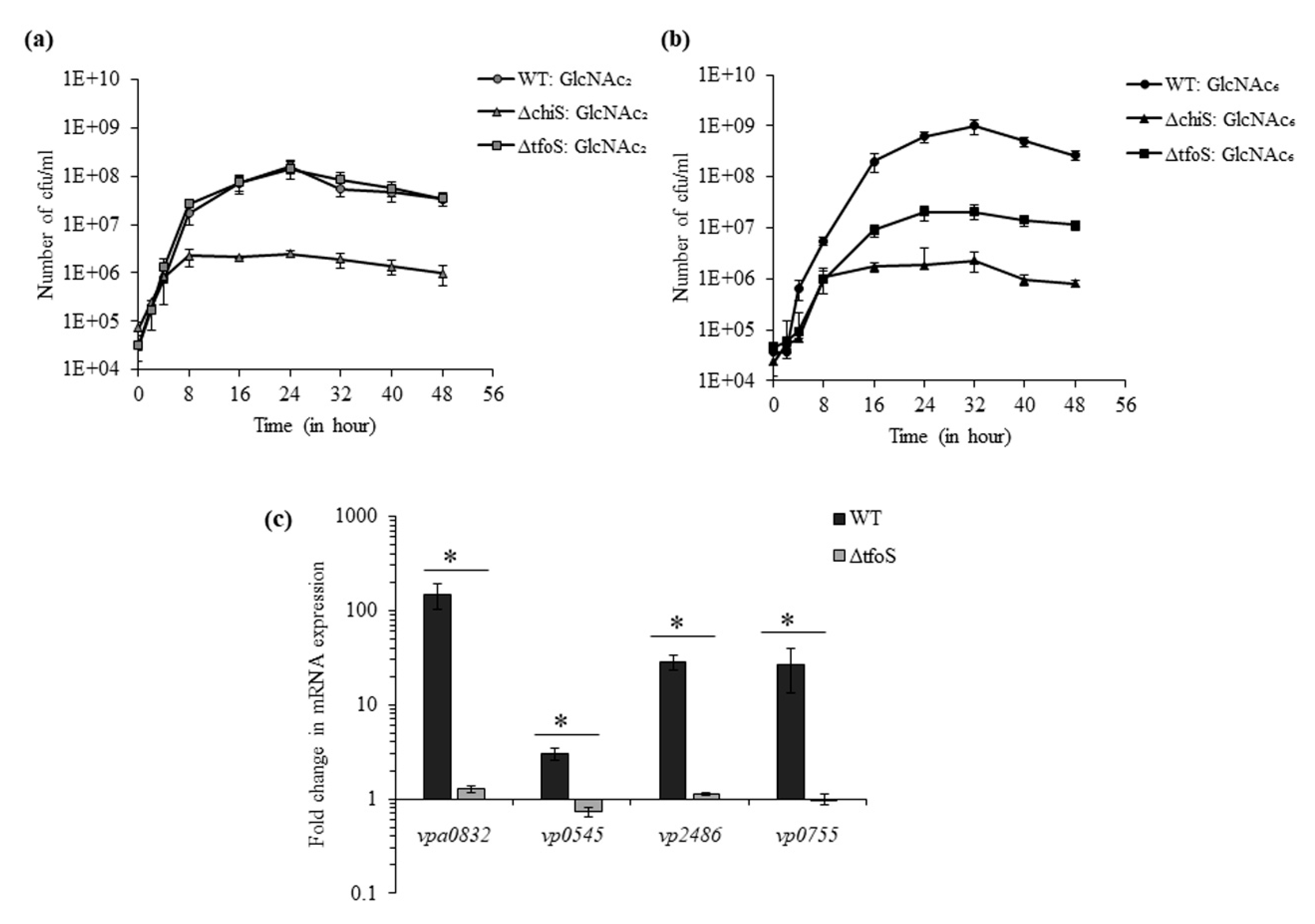
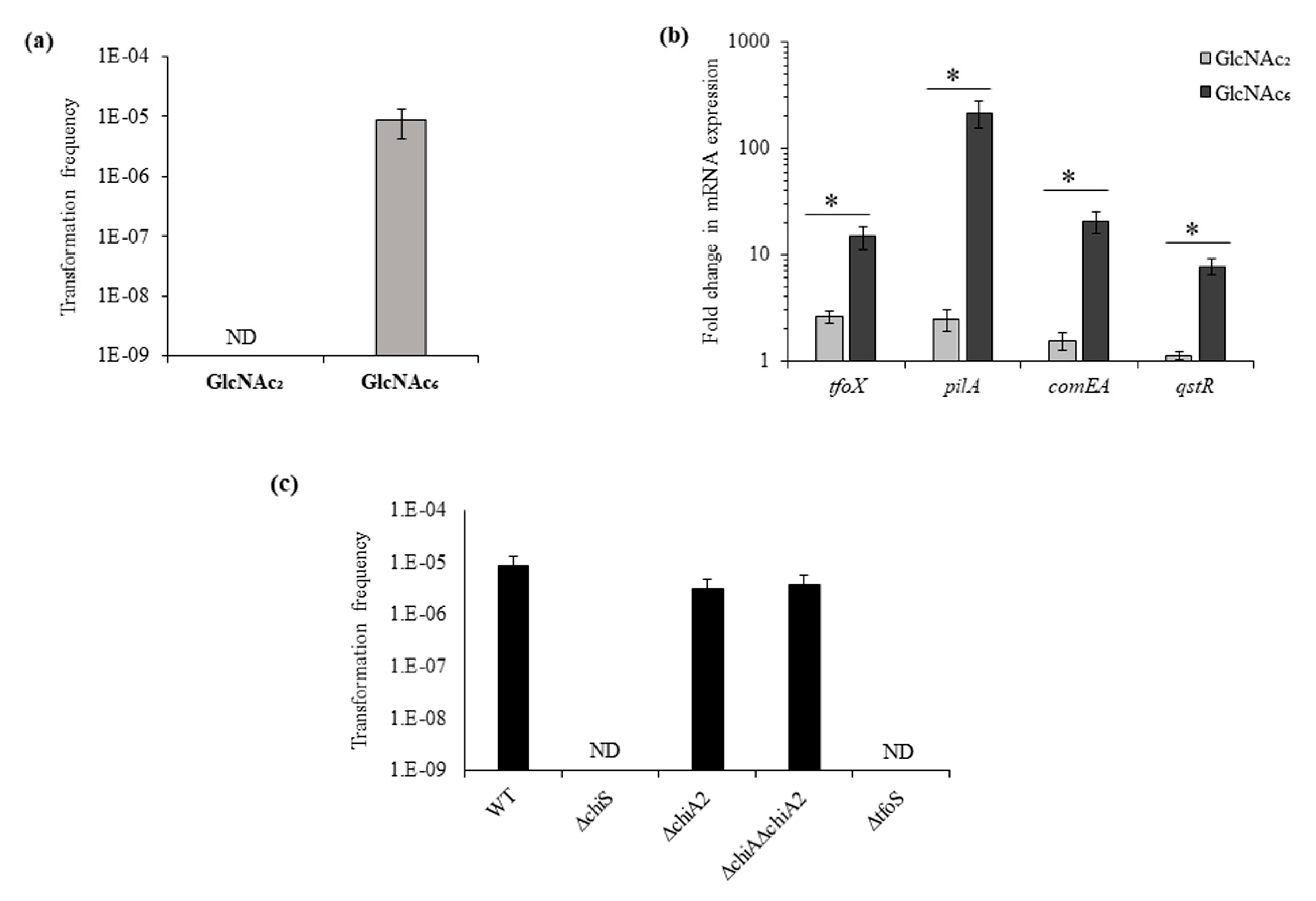
Vibrios can degrade chitin surfaces to soluble N-acetyl glucosamine oligosaccharides (GlcNAcn) that can be utilized as a carbon source and also induce a state of natural genetic competence. In this study, we characterized chitin-dependent growth and natural competence in Vibrio parahaemolyticus and its regulation. We found that growth on chitin was regulated through chitin sensors ChiS (sensor histidine kinase) and TfoS (transmembrane transcriptional regulator) by predominantly controlling the expression of chitinase VPA0055 (ChiA2) in a TfoX-dependent manner. The reduced growth of ΔchiA2, ΔchiS and ΔtfoS mutants highlighted the critical role played by ChiA2 in chitin breakdown. This growth defect of ΔchiA2 mutant could be recovered when chitin oligosaccharides GlcNAc2 or GlcNAc6 were supplied instead of chitin. The ΔtfoS mutant was also able to grow on GlcNAc2 but the ΔchiS mutant could not, which indicates that GlcNAc2 catabolic operon is dependent on ChiS and independent of TfoS. However, the ΔtfoS mutant was unable to utilize GlcNAc6 because the periplasmic enzymes required for the breakdown of GlcNAc6 were found to be downregulated at the mRNA level. We also showed that natural competence can be induced only by GlcNAc6, not GlcNAc2, because the expression of competence genes was significantly higher in the presence of GlcNAc6 compared to GlcNAc2. Moreover, this might be an indication that GlcNAc2 and GlcNAc6 were detected by different receptors. Therefore, we speculate that GlcNAc2-dependent activation of ChiS and GlcNAc6-dependent activation of TfoS might be crucial for the induction of natural competence in V. parahaemolyticus through the upregulation of the master competence regulator TfoX.
Keywords: chitin; chitinase; GlcNAc6; natural competence; ChiA2; ChiS; TfoS chitin; chitinase; GlcNAc6; natural competence; ChiA2; ChiS; TfoS