Article

Molecular Identification of Borrelia afzelii from Ticks Parasitizing Domestic and Wild Animals in South Korea


1
Veterinary Drugs and Biologics Division, Animal and Plant Quarantine Agency, 177 Hyeoksin 8-ro, Gimcheon, Gyeongbuk 39660, Korea
2
College of Veterinary Medicine, Kyungpook National University, 80 Daehak-ro, Buk-gu, Daegu 41566, Korea
3
Cardiovascular Research Institute, Kyungpook National University, 680 Gukchaebosang-ro, Jung-gu, Daegu 41944, Korea
*
Author to whom correspondence should be addressed.
Microorganisms 2020, 8(5), 649; https://doi.org/10.3390/microorganisms8050649

Submission received: 20 March 2020 / Revised: 25 April 2020 / Accepted: 27 April 2020 / Published: 29 April 2020
(This article belongs to the Special Issue Advance in Tick-Borne Diseases Research)

Abstract

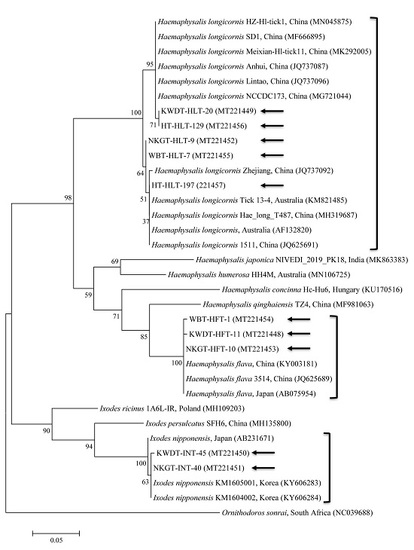
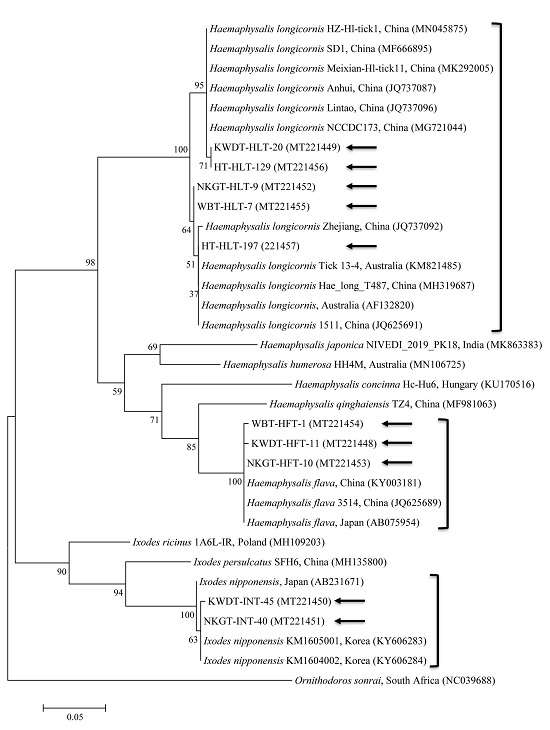
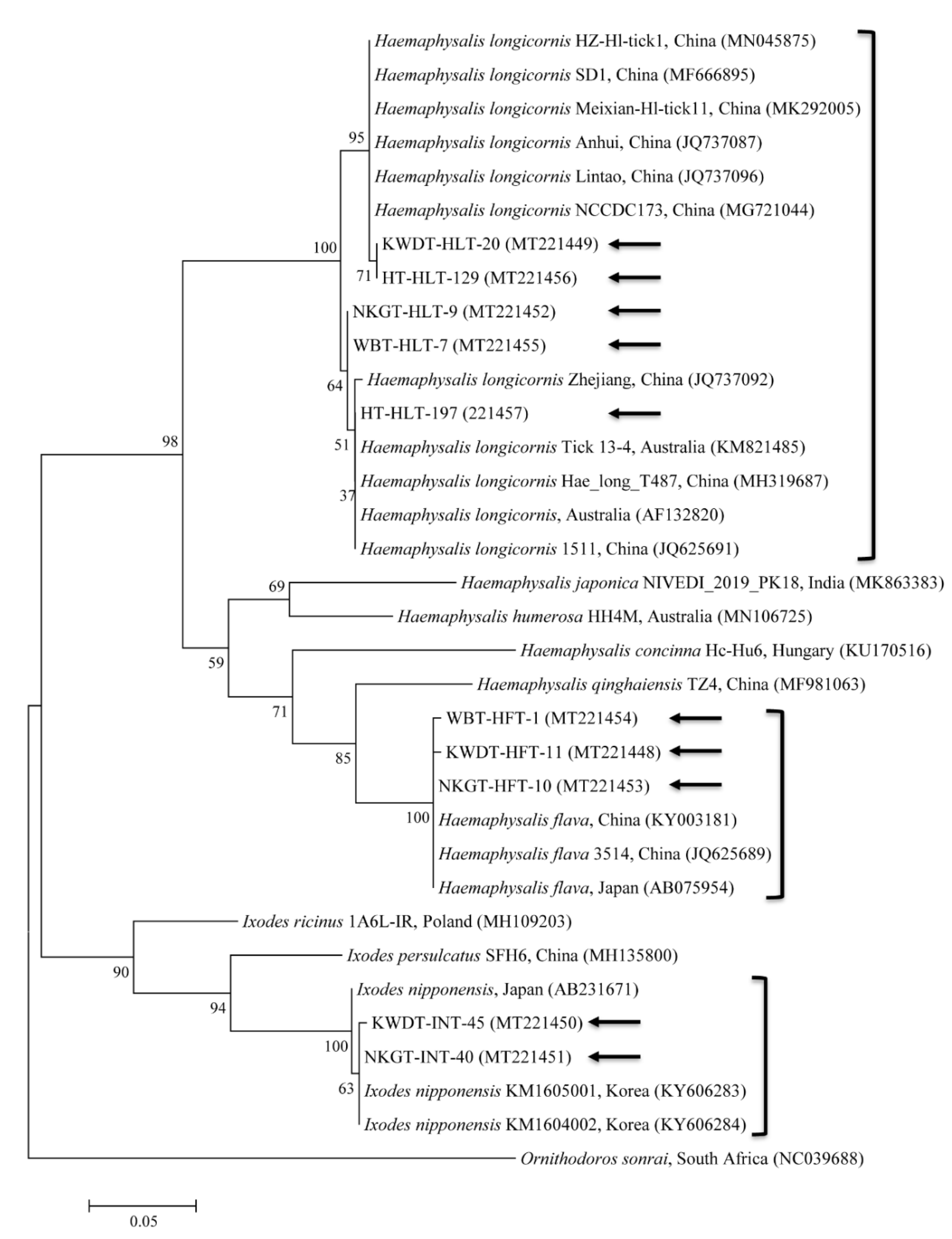
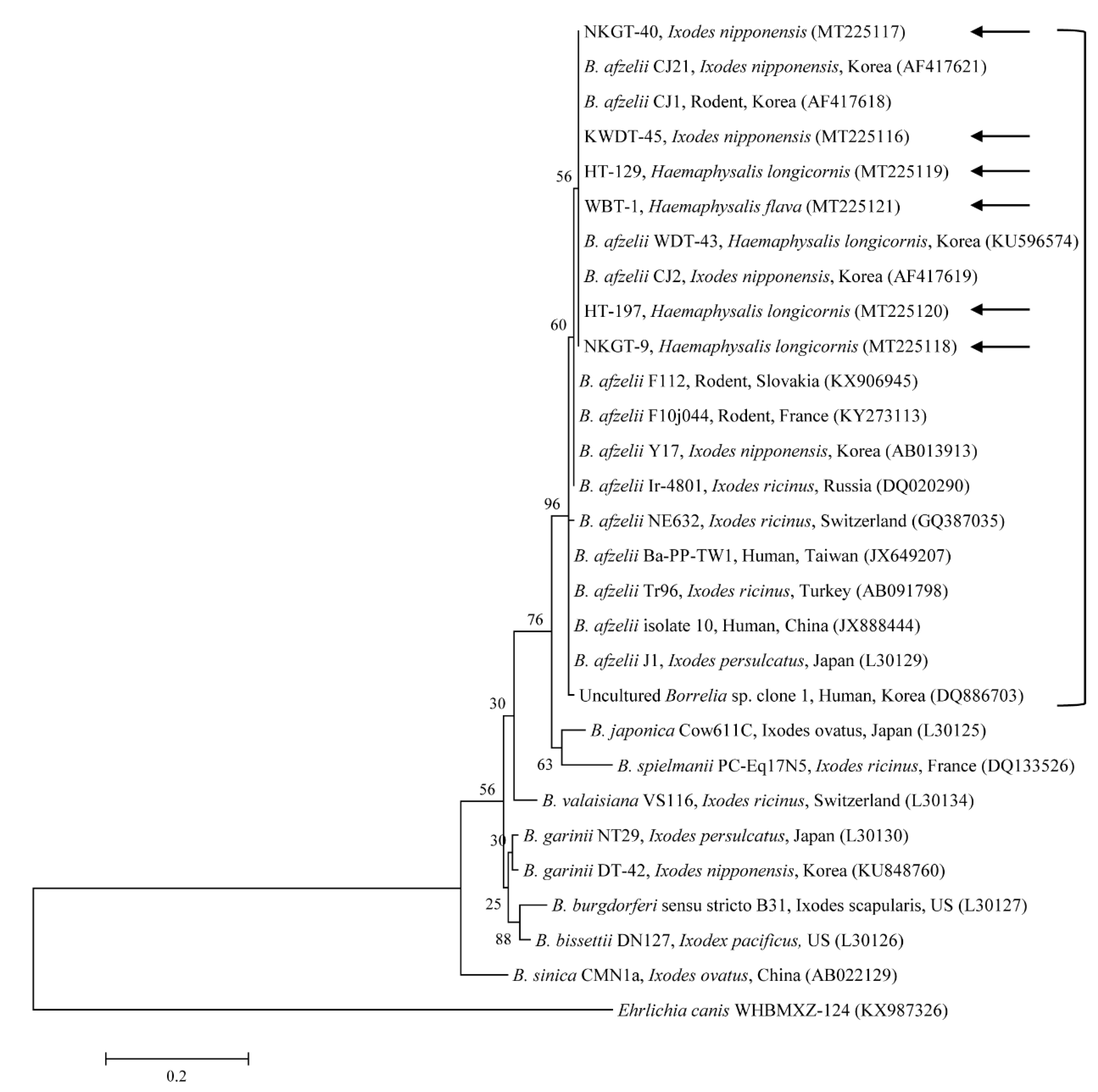
Lyme borreliosis is one of the most prevalent tick-borne infectious zoonotic diseases caused by spirochetes of the Borrelia burgdorferi sensu lato group. The present study assessed the risk factors and prevalence of Lyme borreliosis in ticks parasitizing domestic and wild animals. A total of 589 ticks (329 tick pools) collected from animals were identified as Haemaphysalis longicornis, (85.7%), H. flava (10.0%), and Ixodes nipponensis (4.3%) using morphological and molecular methods in South Korea. In this study, the 5S–23S gene sequences of B. afzelii (6/329, 1.8%) were detected in ticks taken from mammals, including ticks from horses (2/147 pools, 1.4%), wild boar (1/19 pools, 5.3%), native Korean goats (NKG, 2/34 pools, 5.9%), and Korean water deer (1/129 pools, 0.8%). Unfortunately, ospA, pyrG, and flagellin genes were not able to be amplified in the present study. To our knowledge, our results are the first inclusive data available for B. afzelii circulation in several tick species taken from NKG, horses, and wild boar in South Korea. We believe that the current findings extend our knowledge of the distribution and possible vector spectrum of Borrelia spp. We recommend continuous evaluation of the potential public health threat posed by Borrelia infected ticks.
Keywords: Borrelia afzelii; phylogeny; tick; domestic and wild animals Borrelia afzelii; phylogeny; tick; domestic and wild animals
Graphical Abstract