Article

Wild Nutria (Myocastor coypus) Is a Potential Reservoir of Carbapenem-Resistant and Zoonotic Aeromonas spp. in Korea


1
Infectious Disease Research Center, Korea Research Institute of Bioscience and Biotechnology, Daejeon 34141, Korea
2
Department of Biomolecular Science, KRIBB School of Bioscience, Korea University of Science and Technology (UST), Daejeon 34113, Korea
3
Division of Ecological Conservation Research, National Institute of Ecology, Seocheon 33657, Korea
4
Biological and Genetic Resources Assessment Division, National Institute of Biological Resources, Incheon 22689, Korea
5
Environmental Diseases Research Center, Korea Research Institute of Bioscience and Biotechnology, 125 Gwahak-ro, Daejeon 34141, Korea
6
Laboratory of Aquatic Biomedicine, College of Veterinary Medicine, Kyungpook National University, Daegu 41566, Korea
7
Department of Microbiology, College of Natural Sciences, Chungbuk National University, Cheongju 28644, Korea
*
Author to whom correspondence should be addressed.
These authors contributed equally to this work.
Microorganisms 2019, 7(8), 224; https://doi.org/10.3390/microorganisms7080224

Submission received: 2 July 2019 / Revised: 26 July 2019 / Accepted: 29 July 2019 / Published: 30 July 2019
(This article belongs to the Special Issue An Update on Aeromonas)

Abstract

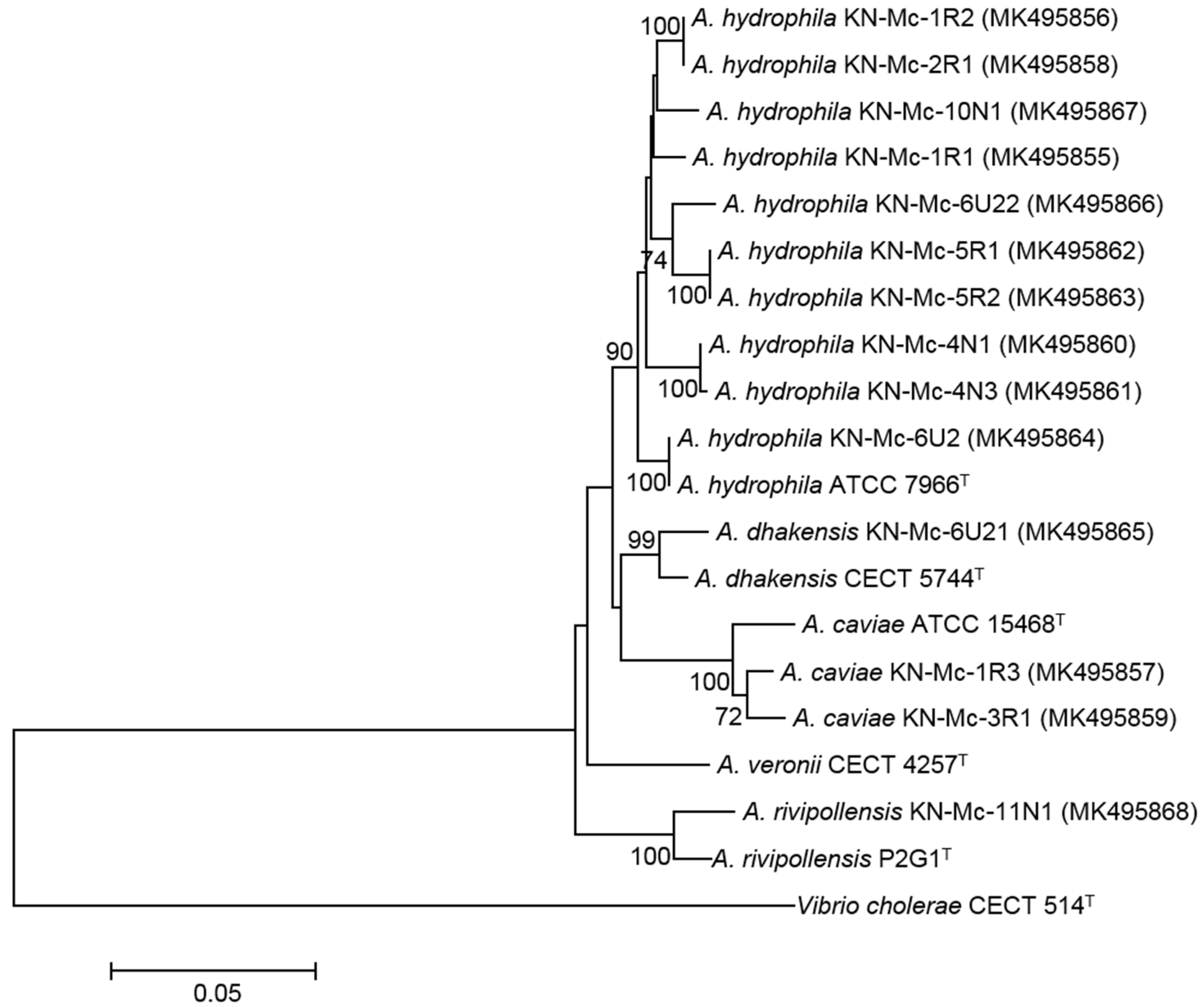
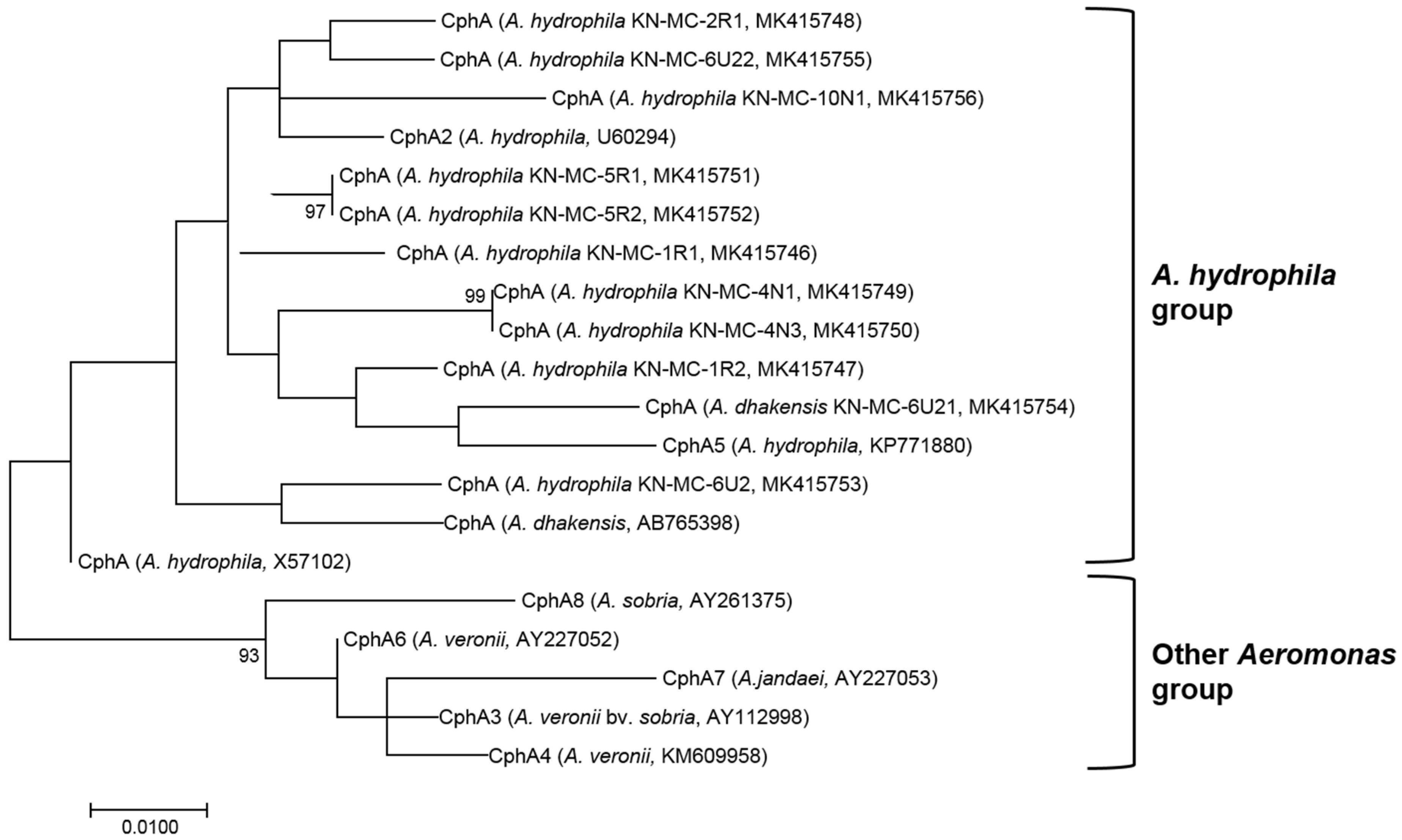
The emergence and spread of antibiotic-resistant Aeromonas spp. is a serious public and animal health concern. Wild animals serve as reservoirs, vectors, and sentinels of these bacteria and can facilitate their transmission to humans and livestock. The nutria (Myocastor coypus), a semi-aquatic rodent, currently is globally considered an invasive alien species that has harmful impacts on natural ecosystems and carries various zoonotic aquatic pathogens. This study aimed to determine the prevalence of antibiotic-resistant zoonotic Aeromonas spp. in wild invasive nutrias captured in Korea during governmental eradication program. Three potential zoonotic Aeromonas spp. (A. hydrophila, A. caviae, and A. dhakensis) were identified among isolates from nutria. Some strains showed unexpected resistance to fluoroquinolones, third-generation cephalosporins, and carbapenems. In carbapenem-resistant isolates, the cphA gene, which is related to intrinsic resistance of Aeromonas to carbapenems, was identified, and phylogenetic analysis based on this gene revealed the presence of two major groups represented by A. hydrophila (including A. dhakensis) and other Aeromonas spp. These results indicate that wild nutrias in Korea are a potential reservoir of zoonotic and antibiotic-resistant Aeromonas spp. that can cause infection and treatment failure in humans. Thus, measures to prevent contact of wild nutrias with livestock and humans are needed.
Keywords: nutria (Myocastor coypus); Aeromonas spp.; antibiotic resistance; carbapenem; cphA nutria (Myocastor coypus); Aeromonas spp.; antibiotic resistance; carbapenem; cphA