Comparative Evaluation of Pesticidal Potential of Five Aromatic Plants, with Emphasis on the Fungicidal Activity of Lavandula dentata and Thymus vulgaris Extracts Against the Soil-Borne Tomato Pathogens Fusarium oxysporum f.sp. radicis-lycopersici and Verticillium dahliae

 ,
,  , ,
, ,  , ,
, ,  ,
,  ,
,  and
and 
Abstract
1. Introduction
2. Materials and Methods
2.1. In Vitro Screening of the Antifungal Activity of Aromatic Plant Extracts Against Fusarium oxysporum f.sp. radicis-lycopersici and Verticillium dahliae
2.2. In Vitro Assessment of Inhibitory Effects of Lavandula dentata and Thymus vulgaris Ethanolic Extracts
2.3. Germination Index (GI) Tests
2.4. In Planta Assessment of Phytoprotective Activity of Lavandula dentata and Thymus vulgaris Extracts Against Fusarium oxysporum f.sp. radicis-lycopersici and Verticillium dahliae
2.5. Lavandula dentata and Thymus vulgaris Extract Analysis
2.6. Statistical Analysis
3. Results and Discussion
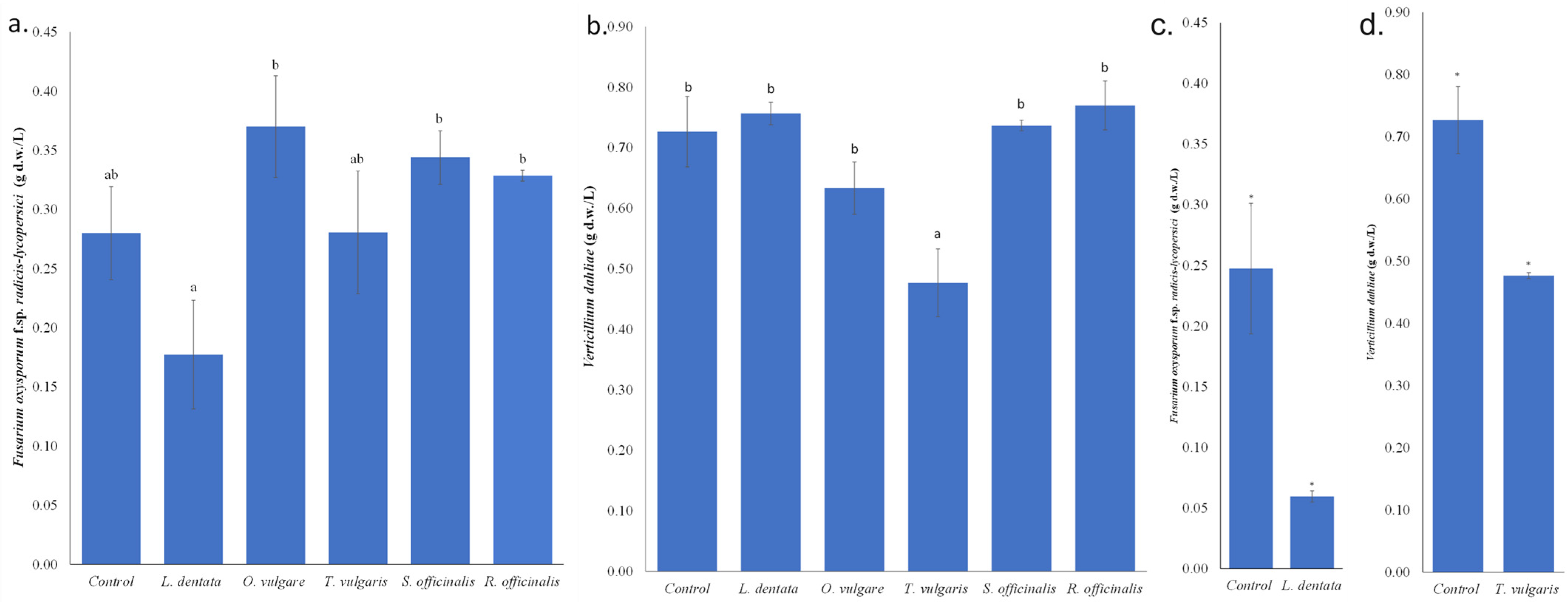
3.1. In Vitro Screening of the Antifungal Activity of Aromatic Plant Extracts Against Fusarium oxysporum f.sp. radicis-lycopersici and Verticillium dahliae
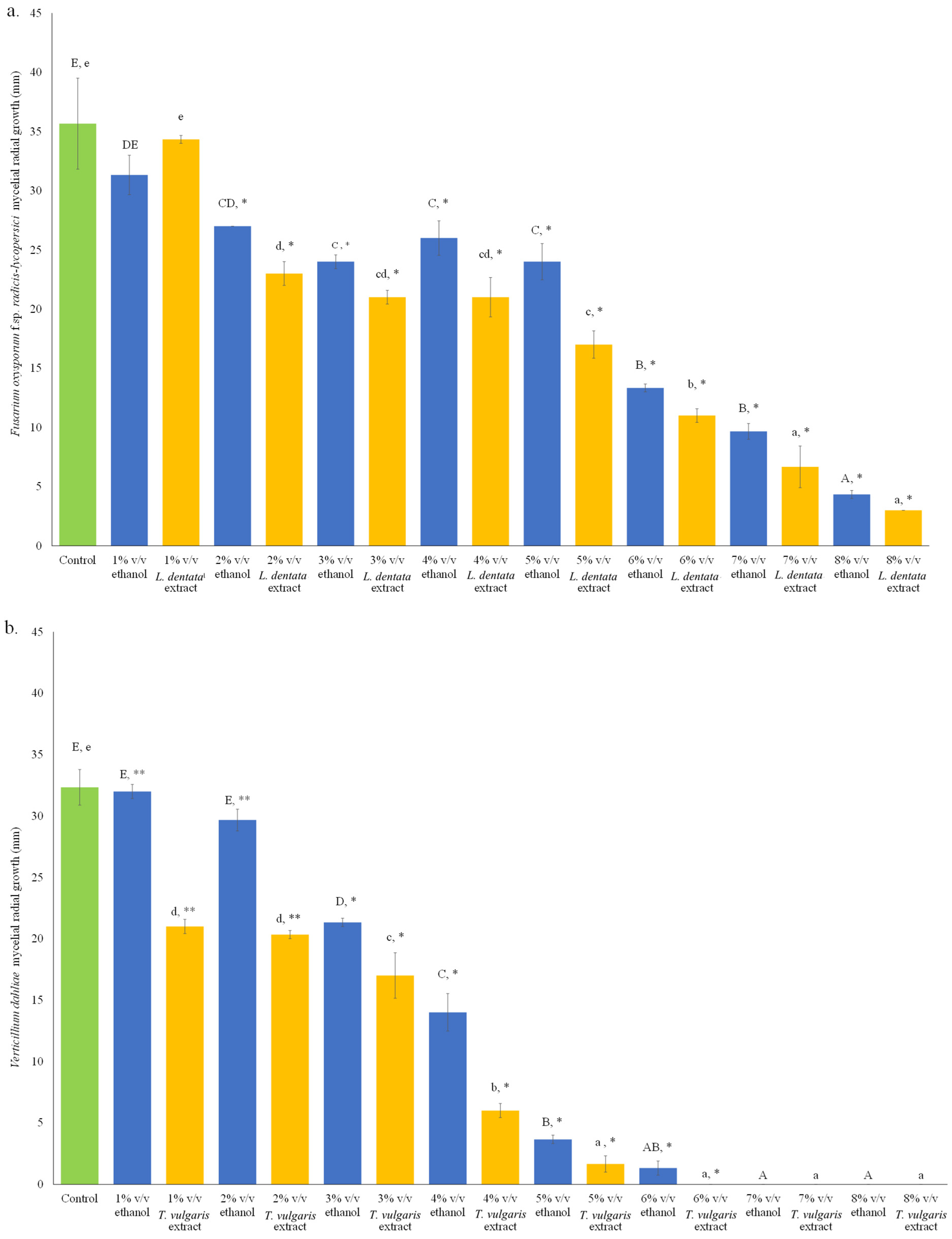
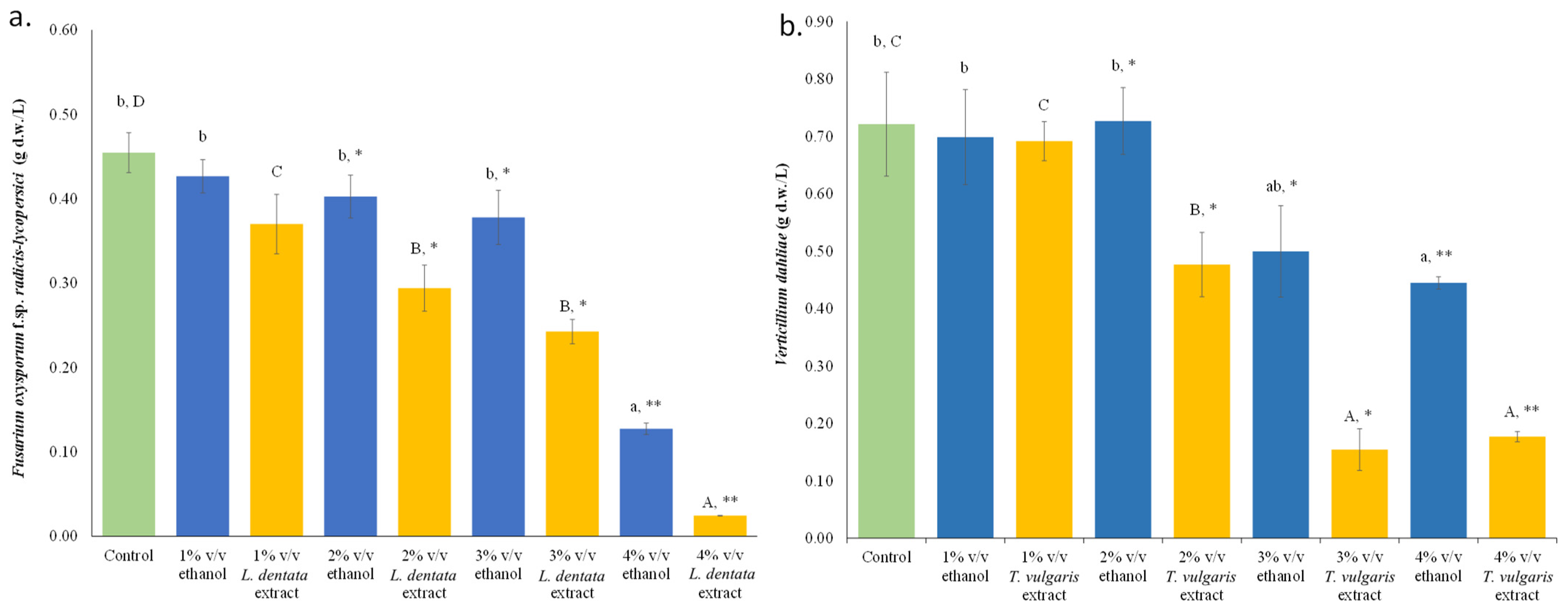
3.2. In Vitro Assessment of Inhibitory Effects of Lavandula dentata and Thymus vulgaris Ethanolic Extracts
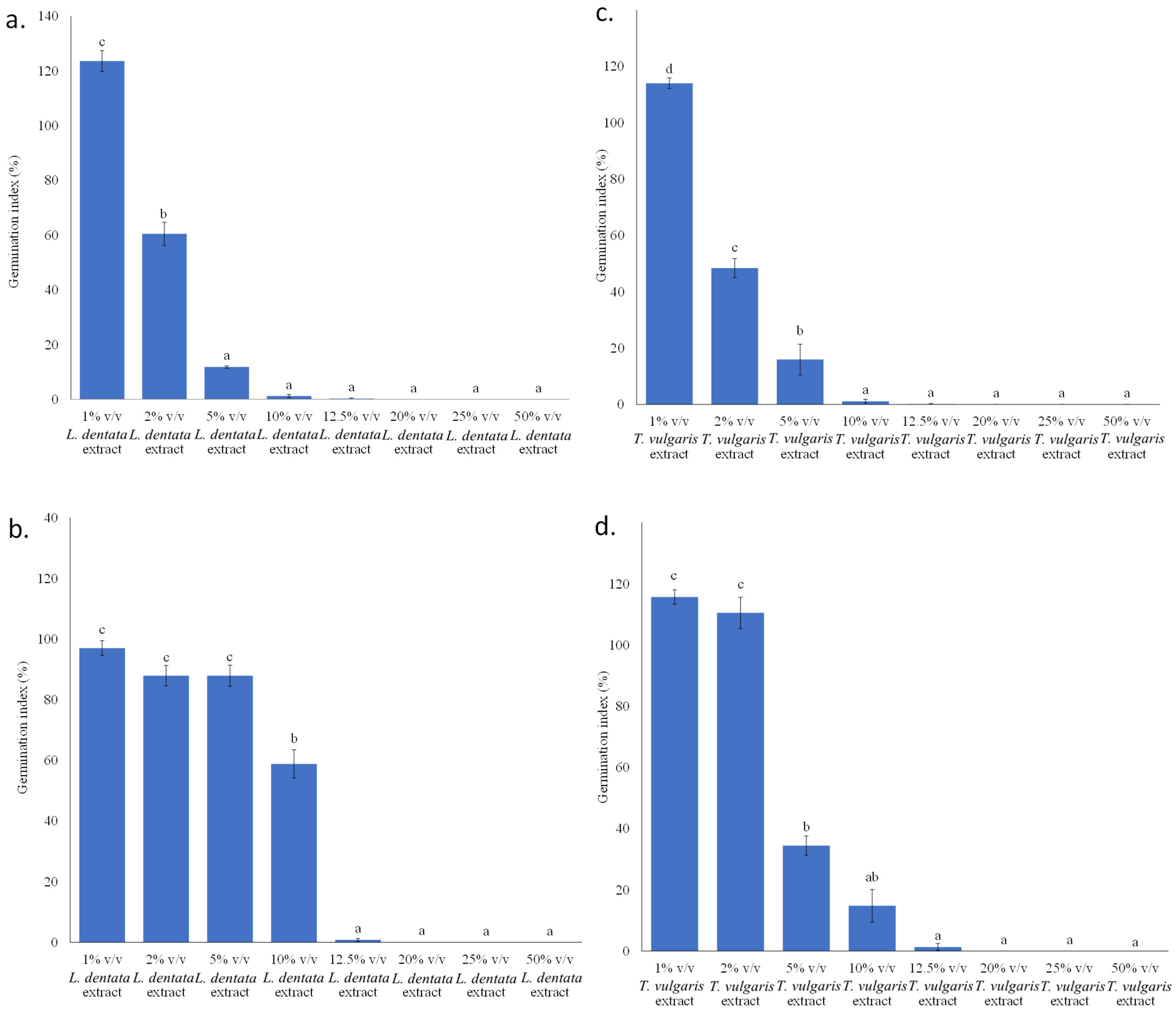
3.3. Germination Index (GI) Tests
3.4. In Planta Assessment of Phytoprotective Activity of Lavandula dentata and Thymus vulgaris Extracts Against Fusarium oxysporum f.sp. radicis-lycopersici and Verticillium dahliae
3.5. Lavandula dentata and Thymus vulgaris Extract Analysis
4. Conclusions
Author Contributions
Funding
Institutional Review Board Statement
Informed Consent Statement
Data Availability Statement
Acknowledgments
Conflicts of Interest
References
- United Nations Department of Economic and Social Affairs, Population Division. World Population Prospects 2024: Summary of Results 2024; UN DESA/POP/2024/TR/NO. 9; United Nations: New York, NY, USA, 2024; Available online: https://www.un.org/development/desa/pd/world-population-prospects-2024 (accessed on 27 February 2026).
- Food and Agriculture Organization. Pesticides Use and Trade—1990–2023; FAOSTAT Analytical Briefs, No. 109; FAO: Rome, Italy, 2025. [Google Scholar] [CrossRef] [Scilit]
- Food and Agriculture Organization. Pesticides Use and Trade—1990–2022; FAOSTAT Analytical Briefs, No. 89; FAO: Rome, Italy, 2024. [Google Scholar] [CrossRef] [Scilit]
- Marrone, P.G. Status of the biopesticide market and prospects for new bioherbicides. Pest Manag. Sci. 2023, 80, 81–86. [Google Scholar] [CrossRef] [Scilit]
- Acheuk, F.; Basiouni, S.; Shehata, A.A.; Dick, K.; Hajri, H.; Lasram, S.; Yilmaz, M.; Emekci, M.; Tsiamis, G.; Spona-Friedl, M.; et al. Status and Prospects of Botanical Biopesticides in Europe and Mediterranean Countries. Biomolecules 2022, 12, 311. [Google Scholar] [CrossRef] [Scilit]
- Majeed, U.; Saoliebieke, B.; Shafi, A.; Majeed, H.; Fu, X. Sustainable green botanical pesticides: An innovative safe and secure food horizon. J. Nat. Pestic. Res. 2026, 16, 100186. [Google Scholar] [CrossRef] [Scilit]
- Ayilara, M.S.; Adeleke, B.S.; Akinola, S.A.; Fayose, C.A.; Adeyemi, U.T.; Gbadegesin, L.A.; Omole, R.K.; Johnson, R.M.; Uthman, Q.O.; Babalola, O.O. Biopesticides as a promising alternative to synthetic pesticides: A case for microbial pesticides, phytopesticides, and nanobiopesticides. Front. Microbiol. 2023, 14, 1040901, Erratum in Front. Microbiol. 2024, 14, 1258968. https://doi.org/10.3389/fmicb.2023.1258968. [Google Scholar] [CrossRef] [Scilit]
- Zhou, X.; Zeng, M.; Huang, F.; Qin, G.; Song, Z.; Liu, F. The potential role of plant secondary metabolites on antifungal and immunomodulatory effect. Appl. Microbiol. Biotechnol. 2023, 107, 4471–4492. [Google Scholar] [CrossRef] [Scilit] [PubMed]
- Kai, K.; Wang, R.; Bi, W.; Ma, Z.; Shi, W.; Ye, Y.; Zhang, D. Chlorogenic acid induces ROS-dependent apoptosis in Fusarium fujikuroi and decreases the postharvest rot of cherry tomato. World J. Microbiol. Biotechnol. 2021, 37, 93. [Google Scholar] [CrossRef] [Scilit] [PubMed]
- Yörük, E. Rutin hydrate induces autophagic cell death and oxidative stress response in phytopathogenic fungus Fusarium graminearum. Zemdirb.-Agric. 2023, 110, 375–382. [Google Scholar] [CrossRef] [Scilit]
- El-Nagar, A.; Elzaawely, A.A.; Taha, N.A.; Nehela, Y. The Antifungal Activity of Gallic Acid and Its Derivatives against Alternaria solani, the Causal Agent of Tomato Early Blight. Agronomy 2020, 10, 1402. [Google Scholar] [CrossRef] [Scilit]
- El Abdali, Y.; Beniaich, G.; Mahraz, A.M.; El Moussaoui, A.; Bin Jardan, Y.A.; Akhazzane, M.; Chebaibi, M.; Nafidi, H.-A.; Eloutassi, N.; Bourhia, M.; et al. Antibacterial, Antioxidant, and in silico NADPH Oxidase Inhibition Studies of Essential Oils of Lavandula dentata against Foodborne Pathogens. Evid.-Based Complement. Altern. Med. 2023, 2023, 9766002. [Google Scholar] [CrossRef] [Scilit]
- Bouyahya, A.; Chamkhi, I.; Menyiy, N.E.; Moudden, H.E.; Harhar, H.; Idrissi, Z.L.E.; Khouchlaa, A.; Jouadi, I.; Baaboua, A.E.; Taha, D.; et al. Traditional use, phytochemistry, toxicology, and pharmacological properties of Lavandula dentata L.: A comprehensive review. S. Afr. J. Bot. 2023, 154, 67–87. [Google Scholar] [CrossRef] [Scilit]
- Vicenço, C.B.; Silvestre, W.P.; Menegol, I.V.; Carraro, M.C.; Pauletti, G.F. Insecticidal Activity of Lavandula dentata L. Essential Oil on Anticarsia gemmatalis (Hübner, 1818). Braz. Arch. Biol. Technol. 2021, 64, e21210327. [Google Scholar] [CrossRef] [Scilit]
- El Jilali, S.B.; Ihamdane, R.; Moubchir, T.; Beniaich, G.; Mssillou, I.; El Abdali, Y.; Allali, A.; Khadmaoui, A. Lavandula dentata essential oils: A bio-insecticide for an agroecological approach to protecting chickpea seeds against Callosobruchus maculatus. Trop. J. Nat. Prod. Res. 2023, 7, 5123–5127. [Google Scholar] [CrossRef] [Scilit]
- Aboulwafa, M.M.; Mostafa, N.M.; Youssef, F.S.; Eldahshan, O.A.; Singab, A.N.B. Lavandula dentata leaves as potential natural antibiofilm agents against Pseudomonas aeruginosa. Sci. Rep. 2025, 15, 8540. [Google Scholar] [CrossRef] [Scilit]
- Wagner, L.S.; Sequin, C.J.; Foti, N.; Campos-Soldini, M.P. Insecticidal, fungicidal, phytotoxic activity and chemical composition of Lavandula dentata essential oil. Biocatal. Agric. Biotechnol. 2021, 35, 102092. [Google Scholar] [CrossRef] [Scilit]
- Rahmouni, A.; Saidi, R.; Khaddor, M.; Pinto, E.; Da Silva Joaquim Carlos Gomes, E.; Maouni, A. Chemical composition and antifungal activity of five essential oils and their major components against Fusarium oxysporum f. Sp. albedinis of Moroccan palm tree. Euro-Mediterr. J. Environ. Integr. 2019, 4, 27. [Google Scholar] [CrossRef] [Scilit]
- Si Mohammed, A.; Kadar, N.H.; Djaafer, M.; Baghdad, A.; Kihal, M.; Sanchez, J.; Gallego, E.; Garrido-Cardenas, J.A. In vitro activity of Lavandula dentata essential oil against Fusarium oxysporum f. sp. radicis-lycopersici in Algeria. South Asian J. Exp. Biol. 2020, 10, 249–254. [Google Scholar] [CrossRef] [Scilit]
- Wirtu, S.F.; Ramaswamy, K.; Maitra, R.; Chopra, S.; Mishra, A.K.; Jule, L.T. Isolation, characterization and antimicrobial activity study of Thymus vulgaris. Sci. Rep. 2024, 14, 21573. [Google Scholar] [CrossRef] [Scilit] [PubMed]
- Casas, J.L.; Sagarduy-Cabrera, A.; López Santos-Olmo, M.; Marcos-García, M.Á. Essential Oils from Selected Mediterranean Aromatic Plants—Characterization and Biological Activity as Aphid Biopesticides. Life 2023, 13, 1621. [Google Scholar] [CrossRef] [Scilit] [PubMed]
- Galovičová, L.; Borotová, P.; Valková, V.; Vukovic, N.L.; Vukic, M.; Štefániková, J.; Ďúranová, H.; Kowalczewski, P.Ł.; Čmiková, N.; Kačániová, M. Thymus vulgaris Essential Oil and Its Biological Activity. Plants 2021, 10, 1959. [Google Scholar] [CrossRef] [Scilit] [PubMed]
- Aldosary, S.K.; El-Rahman, S.N.A.; Al-Jameel, S.S.; Alromihi, N.M. Antioxidant and antimicrobial activities of Thymus vulgaris essential oil contained and synthesis thymus (vulgaris) silver nanoparticles. Braz. J. Biol. 2023, 83, e244675. [Google Scholar] [CrossRef] [Scilit]
- Jung, M.; Bang, S.-W.; Lee, J.-E.; Kim, J.-E.; Park, I.-K. Antibacterial mode of action of thyme white (Thymus vulgaris L.) essential oil and its constituents, thymol and carvacrol against Agrobacterium tumefaciens via down-regulation of manganese transport genes, sitABCD and mntH. Pestic. Biochem. Physiol. 2025, 214, 106601. [Google Scholar] [CrossRef] [Scilit] [PubMed]
- Aksit, H.; Bayar, Y.; Simsek, S.; Ulutas, Y. Chemical Composition and Antifungal Activities of the Essential Oils of Thymus Species (Thymus pectinatus, Thymus convolutus, Thymus vulgaris) Against Plant Pathogens. J. Essent. Oil Bear. Plants 2022, 25, 200–207. [Google Scholar] [CrossRef] [Scilit]
- Aoujil, F.; Dra, L.; El Ghdaich, C.; Toufiq, S.; Yahyaoui, H.; Hafidi, M.; Aziz, A.; Habbadi, K. Antifungal efficacy of four plant-derived essential oils against Botrytis cinerea: Chemical profiles and biological activities. Phytopathol. Mediterr. 2025, 64, 109–127. [Google Scholar] [CrossRef] [Scilit]
- Varo, A.; Mulero-Aparicio, A.; Adem, M.; Roca, L.F.; Raya-Ortega, M.C.; López-Escudero, F.J.; Trapero, A. Screening water extracts and essential oils from Mediterranean plants against Verticillium dahliae in olive. Crop Prot. 2017, 92, 168–175. [Google Scholar] [CrossRef] [Scilit]
- Azenzem, R.; Koussa, T.; Alfeddy, M.N. Biocontrol potential of essential oils from six Moroccan plants against the causal agent of Verticillium wilt of olives. J. Nat. Pestic. Res. 2024, 9, 100085. [Google Scholar] [CrossRef] [Scilit]
- Giamperi, L.; Fraternale, D.; Ricci, D. The In Vitro Action of Essential Oils on Different Organisms. J. Essent. Oil Res. 2002, 14, 312–318. [Google Scholar] [CrossRef] [Scilit]
- Rus, C.; Sumalan, R.M.; Alexa, E.; Copolovici, D.M.; Pop, G.; Botau, D. Study on chemical composition and antifungal activity of essential oils obtained from representative species belonging to the Lamiaceae family. Plant Soil Environ. 2015, 61, 297–302. [Google Scholar] [CrossRef] [Scilit]
- Zucconi, F.; Pera, A.; Forte, M.; de Bertoldi, M. Evaluating toxicity of immature compost. BioCycle 1981, 22, 54–57. [Google Scholar]
- Lavenburg, V.M.; Rosentrater, K.A.; Jung, S. Extraction Methods of Oils and Phytochemicals from Seeds and Their Environmental and Economic Impacts. Processes 2021, 9, 1839. [Google Scholar] [CrossRef] [Scilit]
- Angioni, A.; Barra, A.; Coroneo, V.; Dessi, S.; Cabras, P. Chemical composition, seasonal variability, and antifungal activity of Lavandula stoechas L. ssp. stoechas essential oils from stem/leaves and flowers. J. Agric. Food Chem. 2006, 54, 4364–4370. [Google Scholar] [CrossRef] [Scilit]
- Moon, T.; Cavanagh, H.M.A.; Wilkinson, J.M. Antifungal Activity of Australian Grown Lavandula spp. Essential Oils Against Aspergillus nidulans, Trichophyton mentagrophytes, Leptosphaeria maculans and Sclerotinia sclerotiorum. J. Essent. Oil Res. 2007, 19, 171–175. [Google Scholar] [CrossRef] [Scilit]
- Nthuku, B.M.; Kahariri, E.W.; Kinyua, J.K.; Nyaboga, E.N. Fungal endophytes of Moringa oleifera L., Azadirachta indica and Lavandula angustifolia and their biological control of Fusarium wilt of banana. Microbiol. Res. 2023, 14, 2113–2132. [Google Scholar] [CrossRef] [Scilit]
- Donadu, M.G.; Ferrari, M.; Behzadi, P.; Le, N.T.; Usai, D.; Fiamma, M.; Battah, B.; Barac, A.; Bellardi, M.G.; Hoai, T.N.; et al. Multifactorial action of lavender and lavandin oils against filamentous fungi. Nat. Prod. Res. 2025, 39, 1520–1528. [Google Scholar] [CrossRef] [Scilit]
- Özcan, M.M.; Starovic, M.; Aleksic, G.; Figueredo, G.; Juhaimi, F.A.; Chalchat, J.-C. Chemical Composition and Antifungal Activity of Lavender (Lavandula stoechas) Oil. Nat. Prod. Commun. 2018, 13, 1934578X1801300728. [Google Scholar] [CrossRef] [Scilit]
- Marchidan, I.G.; Popa, E.E.; Geicu-Cristea, M.; Boiu-Sicuia, O.-A.; Radu, N.; Băbeanu, N.E. In vitro antimicrobial activity of different essential oils from Lavandula sp. Sci. Bull. Ser. F Biotechnol. 2023, 27, 133–144. [Google Scholar]
- Barkaoui, H.; Chafik, Z.; Benabbas, R.; Chetouani, M.; El Mimouni, M.; Hariri, E. Antifungal activity of the essential oils of Rosmarinus officinalis, Salvia officinalis, Lavandula dentata and Cymbopogon citratus against the mycelial growth of Fusarium oxysporum f. sp. albedinis. Arab. J. Med. Aromat. Plants 2022, 8, 108–133. [Google Scholar]
- Rashad, Y.M.; Abdel Razik, E.S.; Darwish, D.B. Essential oil from Lavandula angustifolia elicits expression of three SbWRKY transcription factors and defense-related genes against sorghum damping-off. Sci. Rep. 2022, 12, 857. [Google Scholar] [CrossRef] [Scilit]
- Erdogan, O.; Celik, A.; Zeybek, A. In vitro antifungal activity of mint, thyme, lavender extracts and essential oils on Verticillium dahliae Kleb. Fresenius Environ. Bull. 2016, 25, 4856–4862. [Google Scholar]
- Arslan, M.; Dervis, S. Antifungal activity of essential oils against three vegetative-compatibility groups of Verticillium dahliae. World J. Microbiol. Biotechnol. 2010, 26, 1813–1821. [Google Scholar] [CrossRef] [Scilit]
- Şimşek, S. Green Synthesis, Characterization, and Multifunctional Bioactivity of Thymus pectinatus-Derived Silver Nanoparticles. Chem. Sel. 2025, 10, e03764. [Google Scholar] [CrossRef] [Scilit]
- Al-Ansari, M.M.; Andeejani, A.M.I.; Alnahmi, E.; AlMalki, R.H.; Masood, A.; Vijayaraghavan, P.; Abdel Rahman, A.; Choi, K.C. Insecticidal, antimicrobial and antioxidant activities of essential oil from Lavandula latifolia L. Ind. Crops Prod. 2021, 170, 113740. [Google Scholar] [CrossRef] [Scilit]
- Soković, M.; Van Griensven, L.J.L.D. Antimicrobial activity of essential oils and their components against the three major pathogens of the cultivated button mushroom, Agaricus bisporus. Eur. J. Plant Pathol. 2006, 116, 211–224. [Google Scholar] [CrossRef] [Scilit]
- Ibáñez, M.D.; Blázquez, M.A. Phytotoxic effects of commercial Eucalyptus citriodora, Lavandula angustifolia, and Pinus sylvestris essential oils. Molecules 2019, 24, 2847. [Google Scholar] [CrossRef] [Scilit]
- Zheljazkov, V.D.; Jeliazkova, E.A.; Astatkie, T. Allelopathic effects of essential oils on seed germination of barley and wheat. Plants 2021, 10, 2728. [Google Scholar] [CrossRef] [Scilit]
- Terzić, D.; Tabaković, M.; Oro, V.; Poštić, D.; Štrbanović, R.; Filipović, V.; Stanisavljević, R. Impact of essential oils on seed quality and seed-borne pathogens of Althea officinalis seeds of different ages. Chem. Biol. Technol. Agric. 2023, 10, 33. [Google Scholar] [CrossRef] [Scilit]
- Et-Tazy, L.; Desideri, S.; Fedeli, R.; Lamiri, A.; Loppi, S. Unlocking biostimulant potential of essential oils to improve chickpea germination and nutritional quality. Plant Biosyst. 2025, 159, 1667–1682. [Google Scholar] [CrossRef] [Scilit]
- Ghorbanpour, M.; Salehi Sardoei, A.; Babarabie, M.; Zolfaghary, P.; Hasanpour, Z.; Hatami, M. Comparative LC–MS-based metabolite profiling of peppermint, rosemary, savory, and thyme extracts and their potential role in germination and early growth. 3 Biotech 2025, 15, 120. [Google Scholar] [CrossRef] [Scilit] [PubMed]
- Mulero-Aparicio, A.; Varo, A.; Agustí-Brisach, C.; López-Escudero, F.J.; Trapero, A. Biological control of Verticillium wilt of olive in the field. Crop Prot. 2020, 128, 104993. [Google Scholar] [CrossRef] [Scilit]
- López-Escudero, F.J.; Mwanza, C.; Blanco-López, M.A. Reduction of Verticillium dahliae microsclerotia viability in soil by dried plant residues. Crop Prot. 2007, 26, 127–133. [Google Scholar] [CrossRef] [Scilit]
- Safari Motlagh, M.R.; Hamdami, S. Antifungal activity of some plant extracts against Pyricularia oryzae, the causal agent of rice blast disease. Environ. Pollut. Bioavailab. 2026, 38, 2610087. [Google Scholar] [CrossRef] [Scilit]
- Emam, M.; Abdel-Haleem, D.R.; Salem, M.M.; Abdel-Hafez, L.J.M.; Abdel Latif, R.R.; Farag, S.M.; Sobeh, M.; El Raey, M.A. Phytochemical profiling of Lavandula coronopifolia Poir. aerial parts extract and its larvicidal, antibacterial, and antibiofilm activity against Pseudomonas aeruginosa. Molecules 2021, 26, 1710. [Google Scholar] [CrossRef] [Scilit] [PubMed]
- Tundis, R.; Grande, F.; Occhiuzzi, M.A.; Sicari, V.; Loizzo, M.R.; Cappello, A.R. Lavandula angustifolia Mill. (Lamiaceae) ethanol extract and its main constituents as promising agents for the treatment of metabolic disorders: Chemical profile, in vitro biological studies, and molecular docking. J. Enzym. Inhib. Med. Chem. 2023, 38, 2269481. [Google Scholar] [CrossRef] [Scilit]
- Boros, B.; Jakabová, S.; Dörnyei, Á.; Horváth, G.; Pluhár, Z.; Kilár, F.; Felinger, A. Determination of polyphenolic compounds by liquid chromatography–mass spectrometry in Thymus species. J. Chromatogr. A 2010, 1217, 7972–7980. [Google Scholar] [CrossRef] [Scilit] [PubMed]
- Sonmezdag, A.S.; Kelebek, H.; Selli, S. Characterization of aroma-active and phenolic profiles of wild thyme (Thymus serpyllum) by GC-MS-olfactometry and LC-ESI-MS/MS. J. Food Sci. Technol. 2016, 53, 1957–1965. [Google Scholar] [CrossRef] [Scilit]
- Taghouti, M.; Martins-Gomes, C.; Félix, L.M.; Schäfer, J.; Santos, J.A.; Bunzel, M.; Nunes, F.M.; Silva, A.M. Polyphenol composition and biological activity of Thymus citriodorus and Thymus vulgaris: Comparison with endemic Iberian Thymus species. Food Chem. 2020, 331, 127362. [Google Scholar] [CrossRef] [Scilit]
- Yang, R.; Dong, Y.; Gao, F.; Li, J.; Stevanovic, Z.D.; Li, H.; Shi, L. Comprehensive analysis of secondary metabolites of four medicinal thyme species used in folk medicine and their antioxidant activities in vitro. Molecules 2023, 28, 2582. [Google Scholar] [CrossRef] [Scilit]
- Lopes, C.L.; Pereira, E.; Soković, M.; Carvalho, A.M.; Barata, A.M.; Lopes, V.; Rocha, F.; Calhelha, R.C.; Barros, L.; Ferreira, I.C.F.R. Phenolic composition and bioactivity of Lavandula pedunculata (Mill.) Cav. samples from different geographical origin. Molecules 2018, 23, 1037. [Google Scholar] [CrossRef] [Scilit]
- Dobros, N.; Zawada, K.D.; Paradowska, K. Phytochemical profiling, antioxidant and anti-inflammatory activity of plants belonging to the Lavandula genus. Molecules 2023, 28, 256. [Google Scholar] [CrossRef] [Scilit]
- Picos-Salas, M.A.; Heredia, J.B.; Leyva-López, N.; Ambriz-Pérez, D.L.; Gutiérrez-Grijalva, E.P. Extraction processes affect the composition and bioavailability of flavones from Lamiaceae plants: A comprehensive review. Processes 2021, 9, 1675. [Google Scholar] [CrossRef] [Scilit]
- Steinkellner, S.; Mammerler, R. Effect of flavonoids on the development of Fusarium oxysporum f.sp. lycopersici. J. Plant Interact. 2007, 2, 17–23. [Google Scholar] [CrossRef] [Scilit]
- Martínez, G.; Regente, M.; Jacobi, S.; Del Rio, M.; Pinedo, M.; de la Canal, L. Chlorogenic acid is a fungicide active against phytopathogenic fungi. Pestic. Biochem. Physiol. 2017, 140, 30–35. [Google Scholar] [CrossRef] [Scilit]
- Gauthier, L.; Bonnin-Verdal, M.-N.; Marchegay, G.; Pinson-Gadais, L.; Ducos, C.; Richard-Forget, F.; Atanasova-Penichon, V. Fungal biotransformation of chlorogenic and caffeic acids by Fusarium graminearum: New insights in the contribution of phenolic acids to resistance to deoxynivalenol accumulation in cereals. Int. J. Food Microbiol. 2016, 221, 61–68. [Google Scholar] [CrossRef] [Scilit]
- Picman, A.K.; Schneider, E.F.; Picman, J. Effect of flavonoids on mycelial growth of Verticillium albo-atrum. Biochem. Syst. Ecol. 1995, 23, 683–693. [Google Scholar] [CrossRef] [Scilit]
- Chaves, N.; Nogales, L.; Montero-Fernández, I.; Blanco-Salas, J.; Alías, J.C. Mediterranean Shrub Species as a Source of Biomolecules against Neurodegenerative Diseases. Molecules 2023, 28, 8133. [Google Scholar] [CrossRef] [Scilit]
- Chilev, C.; Simeonov, E.; Dimitrova, B.; Yonkova, V.; Pietsch, S.; Heinrich, S.; Peshev, D. Valorization of waste lavender residue from the essential oil industry for production of rosmarinic acid—A study on the solid-liquid extraction. J. Chem. Technol. Metall. 2022, 57, 522–532. [Google Scholar]
- Kumar, S.; Pandey, A.K. Chemistry and biological activities of flavonoids: An overview. Sci. World J. 2013, 2013, 162750. [Google Scholar] [CrossRef] [Scilit]
- Lan, W.; Morreel, K.; Lu, F.; Rencoret, J.; del Río, J.C.; Voorend, W.; Vermerris, W.; Boerjan, W.; Ralph, J. Maize tricin-oligolignol metabolites and their implications for monocot lignification. Plant Physiol. 2016, 171, 810–820. [Google Scholar] [CrossRef] [Scilit] [PubMed]
- López-Fernández, O.; Domínguez, R.; Pateiro, M.; Munekata, P.E.S.; Rocchetti, G.; Lorenzo, J.M. Determination of polyphenols using liquid chromatography–tandem mass spectrometry technique (LC–MS/MS): A review. Antioxidants 2020, 9, 479. [Google Scholar] [CrossRef] [Scilit]
- Barberán, F.A.T.; Tomás, F.; Hernández, L.; Ferreres, F. Reversed-phase high-performance liquid chromatography of 5-hydroxyflavones bearing tri- or tetrasubstituted A rings. J. Chromatogr. 1985, 347, 443–446. [Google Scholar] [CrossRef] [Scilit]
- González-Cortazar, M.; Salinas-Sánchez, D.O.; Herrera-Ruiz, M.; Román-Ramos, D.C.; Zamilpa, A.; Jiménez-Ferrer, E.; Ble-González, E.A.; Álvarez-Fitz, P.; Castrejón-Salgado, R.; Pérez-García, M.D. Eupatorin and Salviandulin-A, with antimicrobial and anti-inflammatory effects from Salvia lavanduloides Kunth leaves. Plants 2022, 11, 1739. [Google Scholar] [CrossRef] [Scilit]
- Falcone Ferreyra, M.L.; Rius, S.P.; Casati, P. Flavonoids: Biosynthesis, biological functions, and biotechnological applications. Front. Plant Sci. 2012, 3, 222. [Google Scholar] [CrossRef] [Scilit] [PubMed]
- Graf, E. Antioxidant potential of ferulic acid. Free Radic. Biol. Med. 1992, 13, 435–448. [Google Scholar] [CrossRef] [Scilit]
- Birtic, S.; Dussort, P.; Pierre, F.-X.; Bily, A.C.; Roller, M. Carnosic acid. Phytochemistry 2015, 115, 9–19. [Google Scholar] [CrossRef] [Scilit]



| Putative Identified Compound | Precursor Mass (m/z) | Key MS/MS Fragments (m/z) | Proposed Formula | MSI Level * | Role/Origin |
|---|---|---|---|---|---|
| Caffeoylquinic acid (mono-CQA) | 355.9 |
| C16H19O9 | 3 | Mono-CQA—a native lavender phenolic from plant’s phenylpropanoid pathway (caffeic acid part) plus shikimate-derived quinic acid [16,61,67] |
| Rosmarinic acid | 428.6 |
| C18H16O8 | 2 | Rosmarinic acid—a plant secondary metabolite formed by the conjugation of two phenylpropanoid-derived units [54,55,68] |
| Luteolin-O-glucuronide | 458.8 |
| C21H18O12 | 2 | A well-reported Lavandula-derived flavonoid conjugate formed by glucuronidation of luteolin [54,67] |
| Myricetin-O-pentoside | 453.4 |
| C20H18O12 | 3 | A myricetin-type flavonol O-glycoside—a lavender polyphenol derived from the phenylpropanoid–flavonoid pathway involved in antioxidant defense and UV protection [67,69] |
| Tricin | 329.9 |
| C17H14O7 | 2 | Methoxylated flavone produced via the phenylpropanoid pathway involved in antioxidant defense and UV protection [54,70] |
| Isorhamnetin-like flavonoid (O-methylated quercetin-type aglycone) | 339.9 |
| C16H12O7 | 3 | Flavonol—a polyphenolic plant secondary metabolite [54,71] |
| Putative Identified Compound | Precursor Mass (m/z) | Key MS/MS Fragments (m/z) | Proposed Formula | MSI Level * | Role/Origin |
|---|---|---|---|---|---|
| Eupatorin | 344.8 |
| C18H16O7 | 2 | Eupatorin is a methoxylated flavone of Lamiaceae plants, including thyme, with function as a defensive secondary metabolite with antioxidant and antimicrobial activity, contributing to plant protection against pathogens and environmental stress [72,73] |
| Luteolin/apigenin-type C-glycoside (orientin/isoorientin-like) | 453.4 |
| C21H22O10 | 3 | Flavonoid C-glycosides (orientin/isoorientin-type compounds) are biosynthesized via the phenylpropanoid–flavonoid pathway and they can act as protective antioxidants and contribute to defense against pathogens and environmental stress [53,74] |
| Pentyl ferulate | 282.0 |
| C15H20O4 | 3 | Pentyl ferulate is a phenylpropanoid ester, formed from ferulic acid and short-chain alcohols, with antioxidant and protective function, supporting plants defend against oxidative stress and pathogens [56,75] |
| Quercetin | 302.6 |
| C15H10O7 | 2 | Quercetin is a flavonol biosynthesized via the phenylpropanoid pathway and commonly found in thyme and other Lamiaceae spp., providing antioxidant activity and protect against UV stress, pathogens, and herbivores [56,74] |
| Putative oxygenated diterpenoid (abietane/terpenoid ester) | 444.9 |
| C24H28O8 | 3 | A carnosic acid–family derivative belonging to abietane diterpenes biosynthesized by Lamiaceae spp. (including thyme) from the terpenoid pathway and acting as defensive antioxidants and antimicrobials to protect from oxidative stress, UV exposure, and pathogens [76] |
Disclaimer/Publisher’s Note: The statements, opinions and data contained in all publications are solely those of the individual author(s) and contributor(s) and not of MDPI and/or the editor(s). MDPI and/or the editor(s) disclaim responsibility for any injury to people or property resulting from any ideas, methods, instructions or products referred to in the content. |
© 2026 by the authors. Licensee MDPI, Basel, Switzerland. This article is an open access article distributed under the terms and conditions of the Creative Commons Attribution (CC BY) license.
Share and Cite
Gropali, A.; Stavrakakis, I.; Remmas, N.; Basiouni, S.; Tsiamis, G.; Salem, A.B.; Lasram, S.; Yilmaz, M.; Emekci, M.; Acheuk, F.; et al. Comparative Evaluation of Pesticidal Potential of Five Aromatic Plants, with Emphasis on the Fungicidal Activity of Lavandula dentata and Thymus vulgaris Extracts Against the Soil-Borne Tomato Pathogens Fusarium oxysporum f.sp. radicis-lycopersici and Verticillium dahliae. Microorganisms 2026, 14, 1001. https://doi.org/10.3390/microorganisms14051001
Gropali A, Stavrakakis I, Remmas N, Basiouni S, Tsiamis G, Salem AB, Lasram S, Yilmaz M, Emekci M, Acheuk F, et al. Comparative Evaluation of Pesticidal Potential of Five Aromatic Plants, with Emphasis on the Fungicidal Activity of Lavandula dentata and Thymus vulgaris Extracts Against the Soil-Borne Tomato Pathogens Fusarium oxysporum f.sp. radicis-lycopersici and Verticillium dahliae. Microorganisms. 2026; 14(5):1001. https://doi.org/10.3390/microorganisms14051001
Chicago/Turabian StyleGropali, Aikaterini, Ioannis Stavrakakis, Nikolaos Remmas, Shereen Basiouni, George Tsiamis, Asma Ben Salem, Salma Lasram, Mete Yilmaz, Mevlut Emekci, Fatma Acheuk, and et al. 2026. "Comparative Evaluation of Pesticidal Potential of Five Aromatic Plants, with Emphasis on the Fungicidal Activity of Lavandula dentata and Thymus vulgaris Extracts Against the Soil-Borne Tomato Pathogens Fusarium oxysporum f.sp. radicis-lycopersici and Verticillium dahliae" Microorganisms 14, no. 5: 1001. https://doi.org/10.3390/microorganisms14051001
APA StyleGropali, A., Stavrakakis, I., Remmas, N., Basiouni, S., Tsiamis, G., Salem, A. B., Lasram, S., Yilmaz, M., Emekci, M., Acheuk, F., Shehata, A. A., Eisenreich, W., Melidis, P., & Ntougias, S. (2026). Comparative Evaluation of Pesticidal Potential of Five Aromatic Plants, with Emphasis on the Fungicidal Activity of Lavandula dentata and Thymus vulgaris Extracts Against the Soil-Borne Tomato Pathogens Fusarium oxysporum f.sp. radicis-lycopersici and Verticillium dahliae. Microorganisms, 14(5), 1001. https://doi.org/10.3390/microorganisms14051001