Article

The Effects of Applied Potential and Carbon Donor on Succinic Acid Production via Electro-Fermentation

Department of Biological and Agricultural Engineering, North Carolina State University, Raleigh, NC 27695, USA
*
Author to whom correspondence should be addressed.
Microorganisms 2026, 14(3), 686; https://doi.org/10.3390/microorganisms14030686

Submission received: 9 December 2025 / Revised: 7 March 2026 / Accepted: 13 March 2026 / Published: 18 March 2026
(This article belongs to the Special Issue Microbial Electrolysis Cells and Microbial Fuel Cells)

Abstract

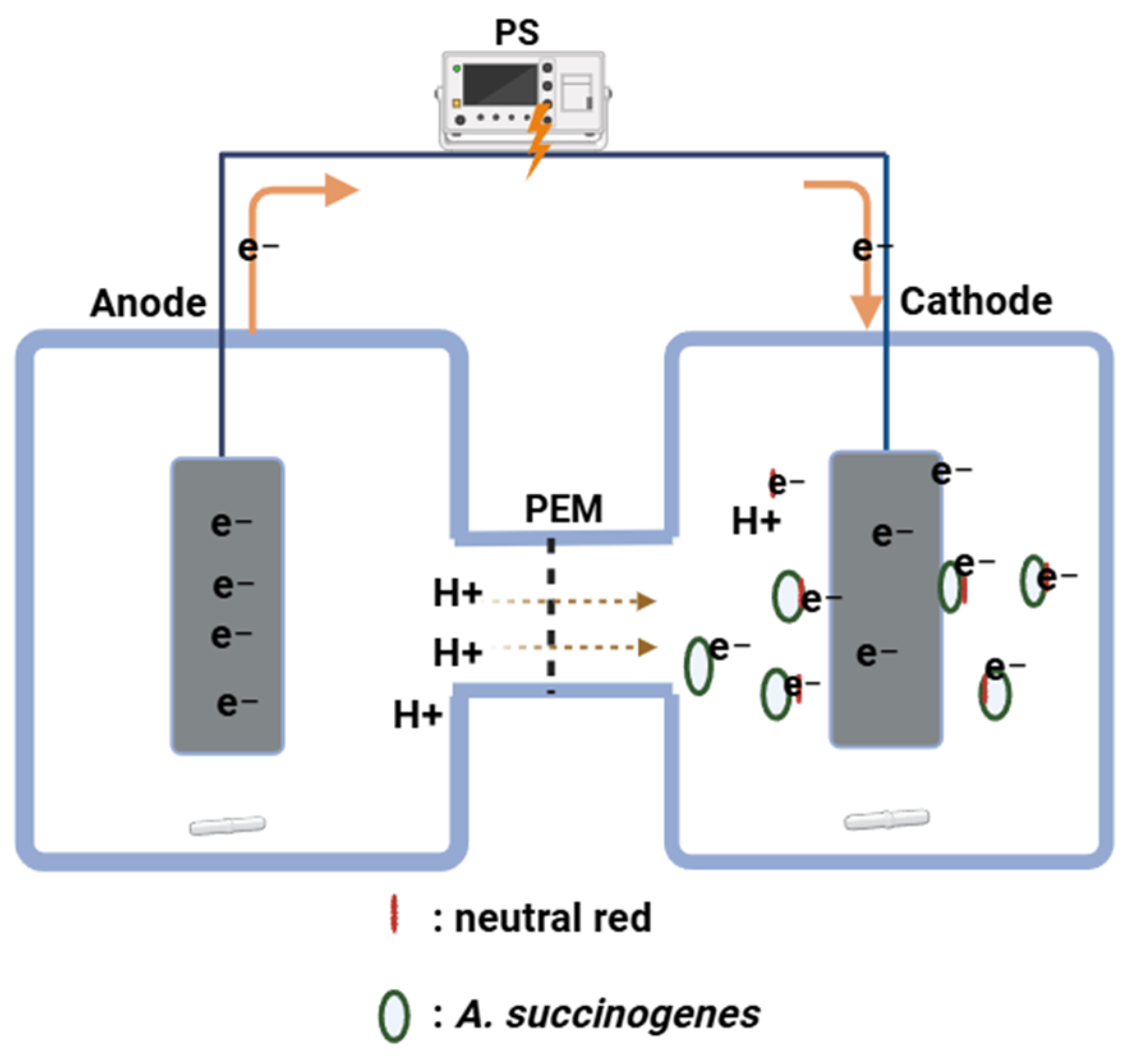
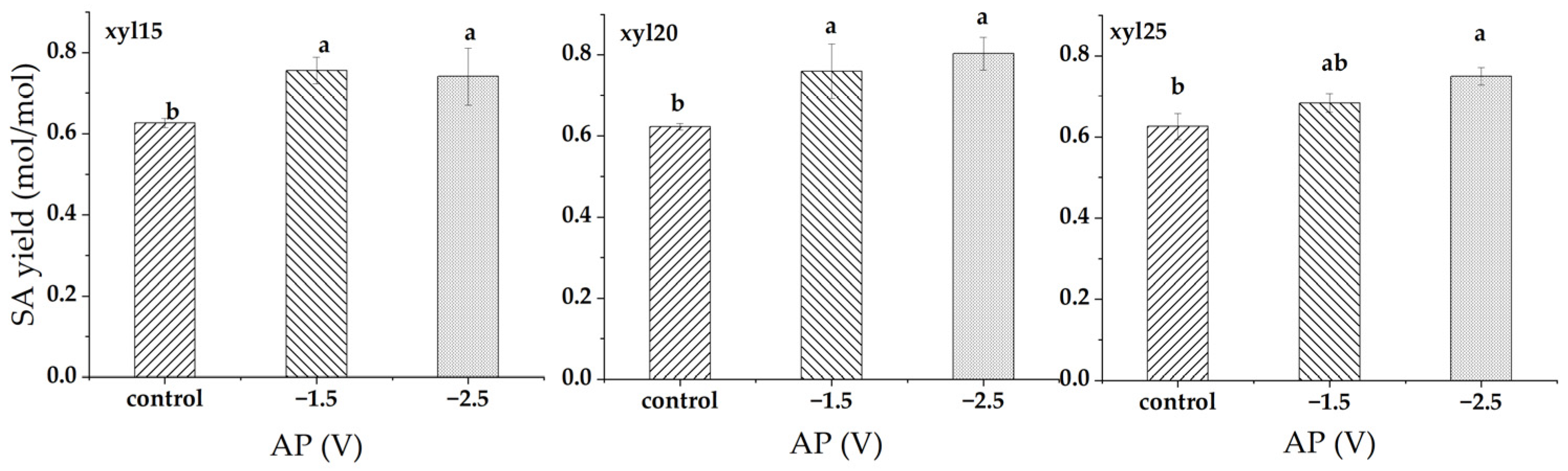
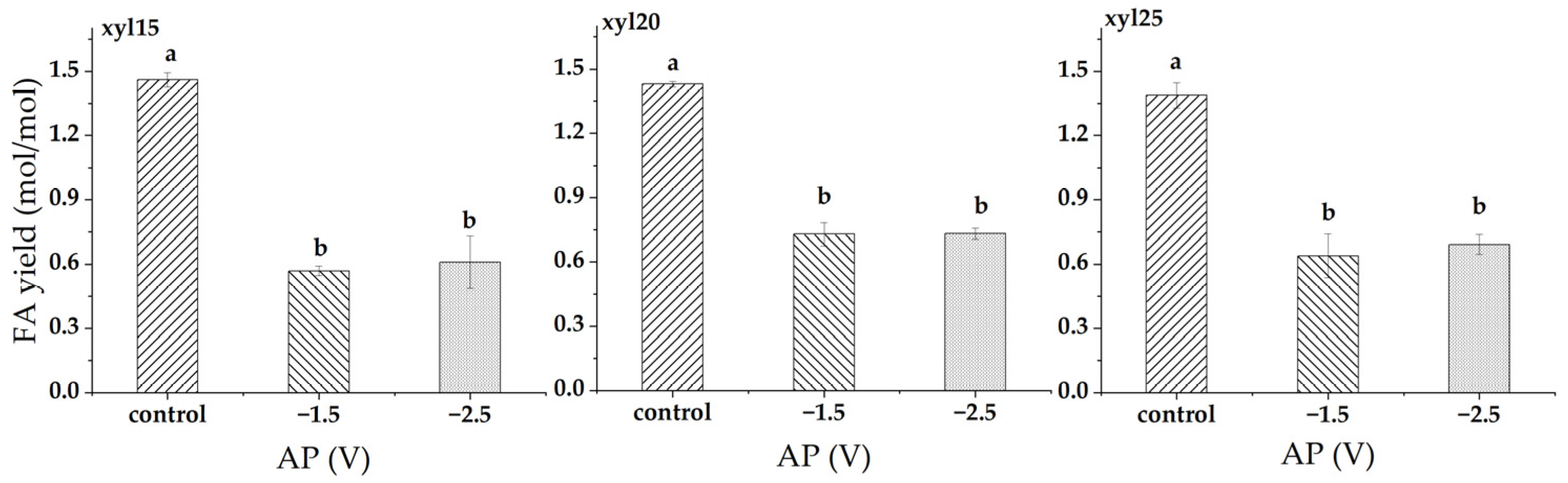
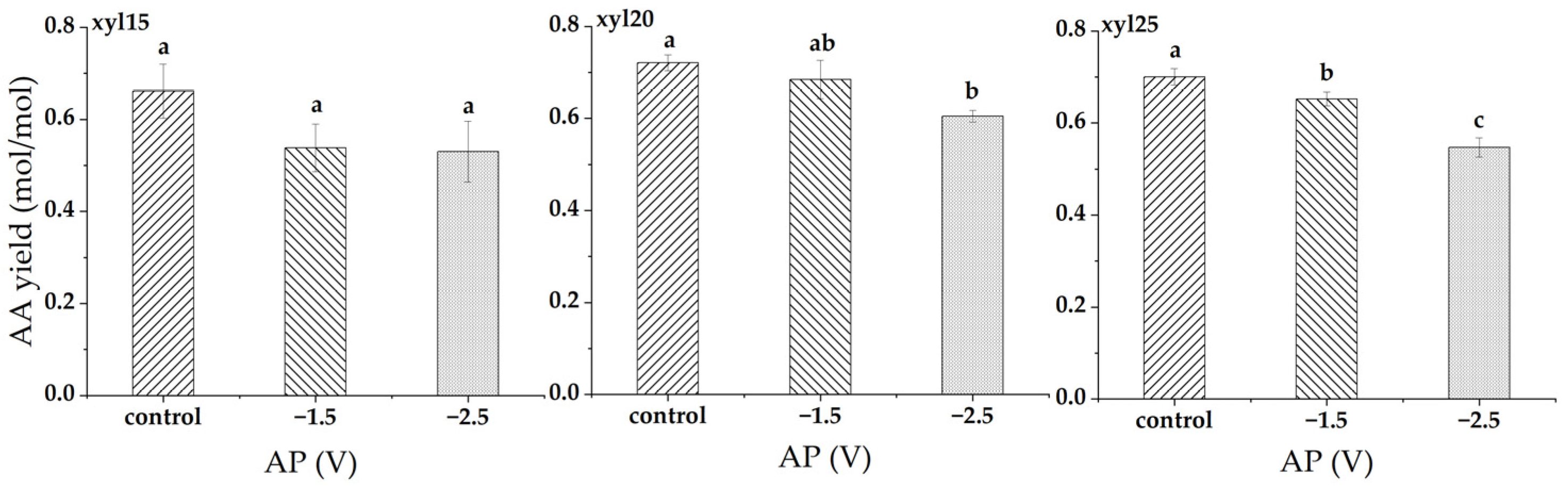
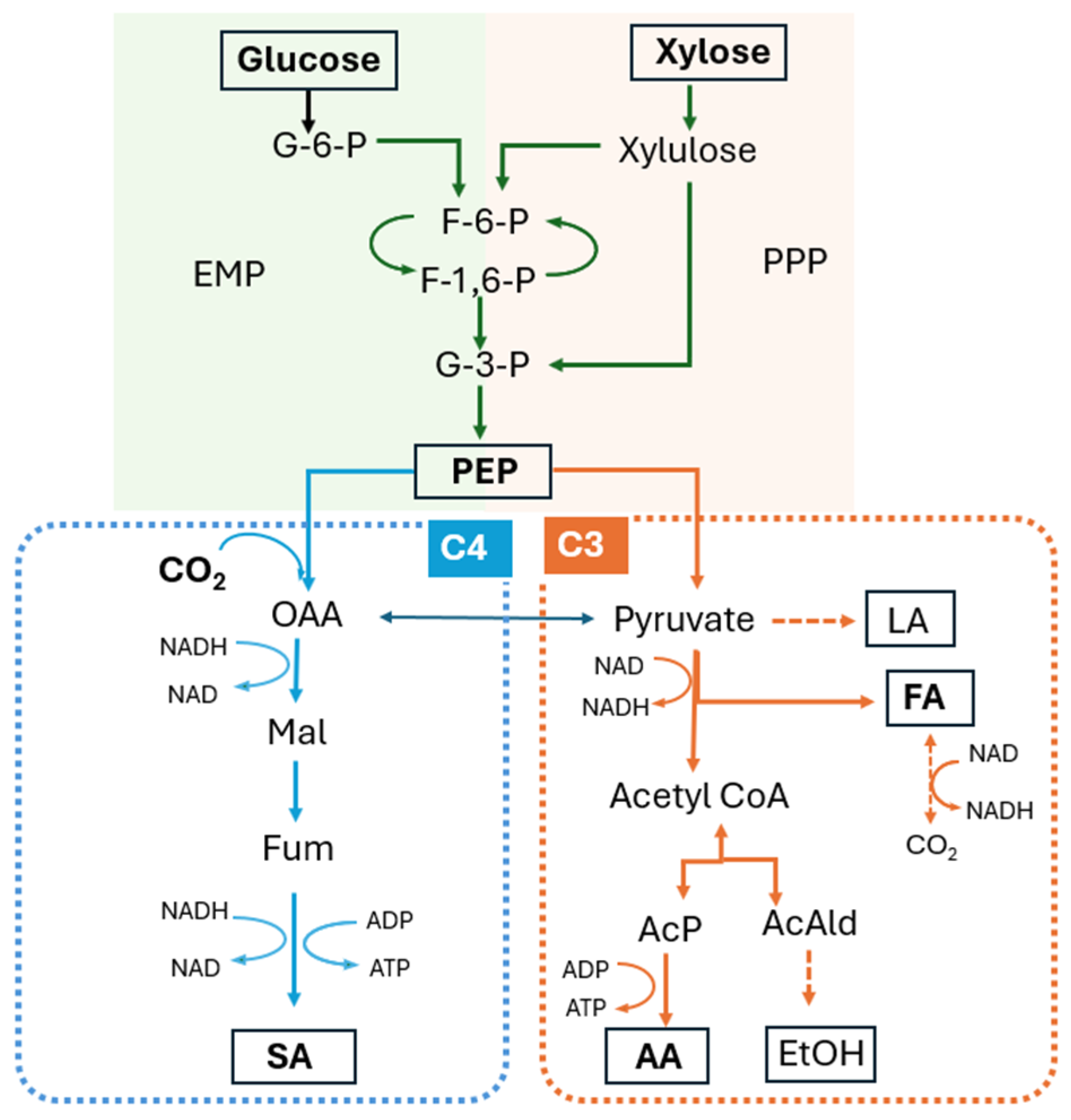
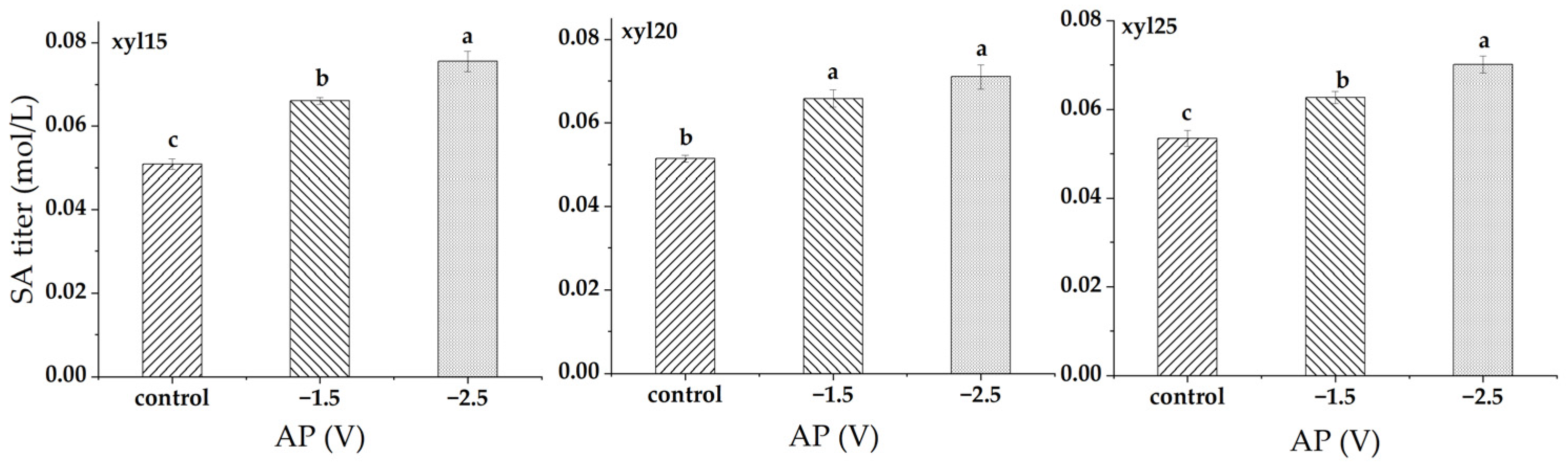
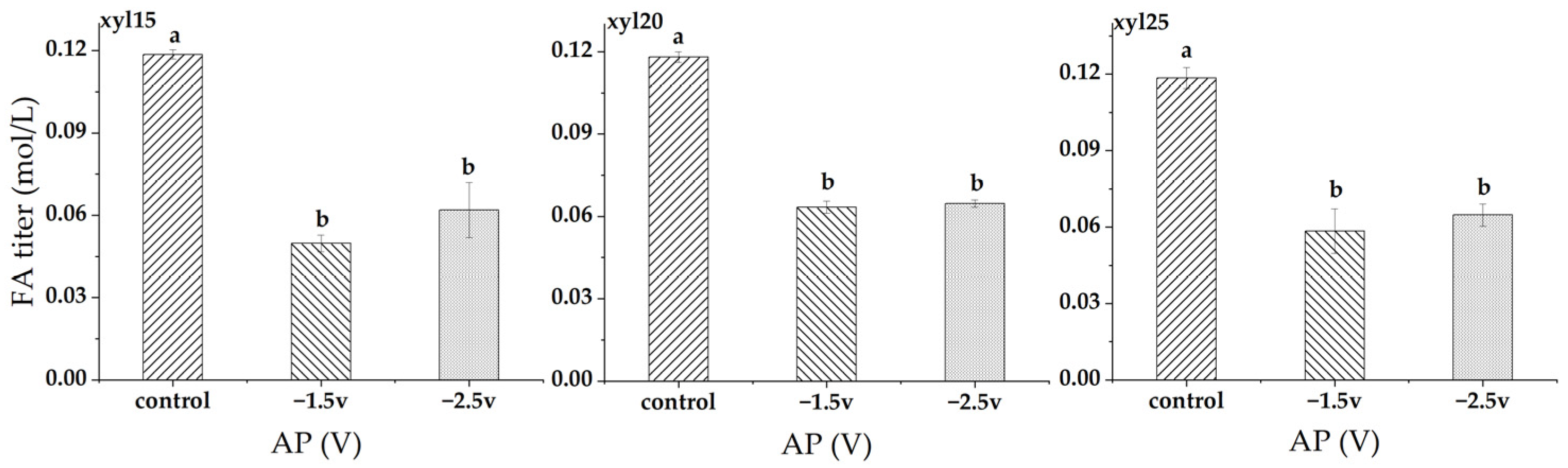
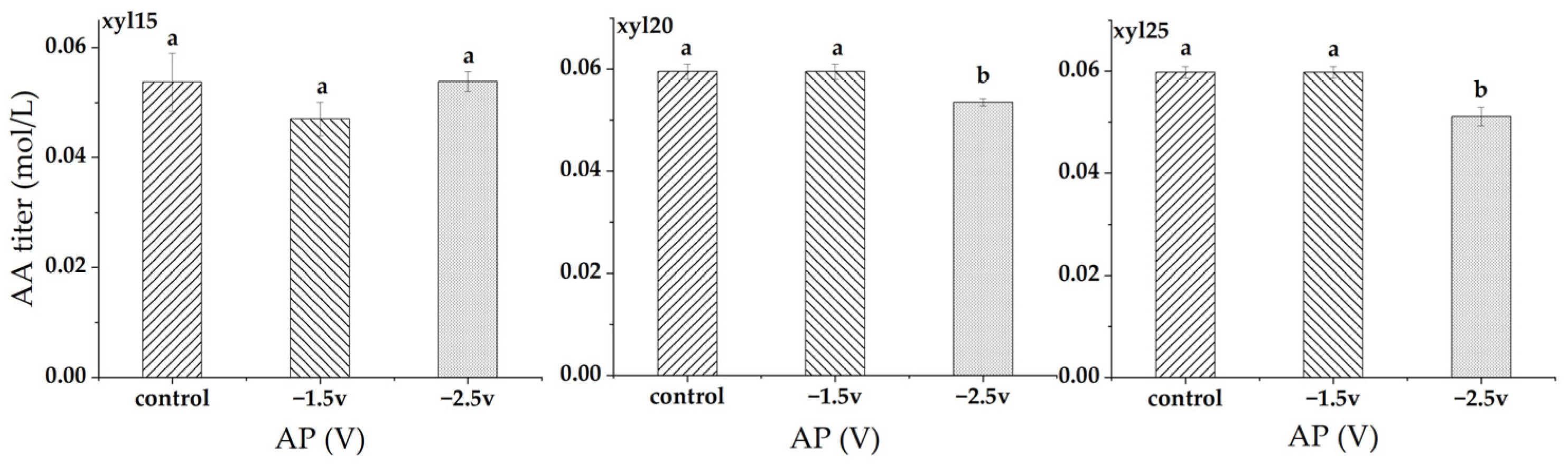
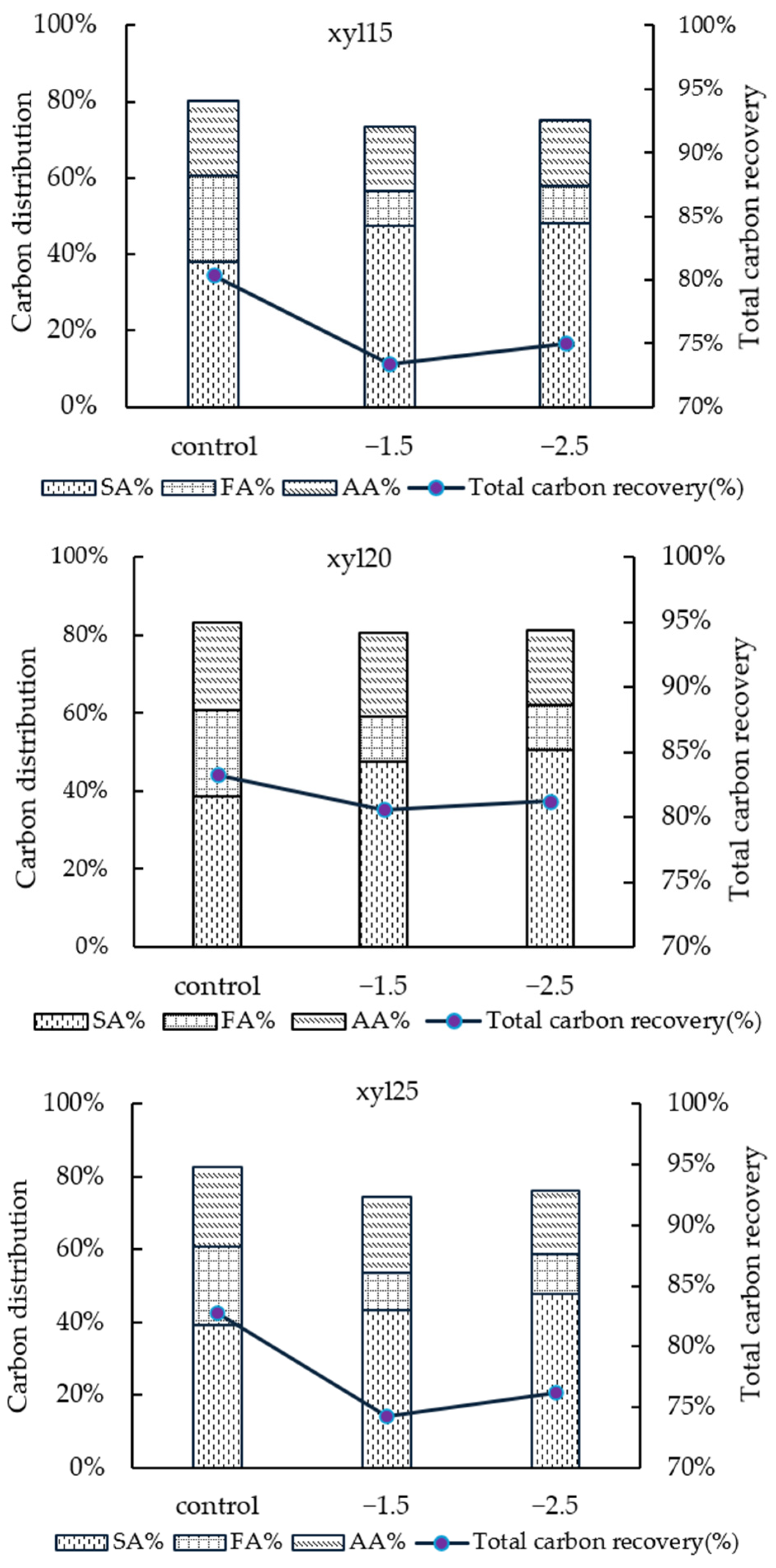
This study was conducted to understand how applied potential modulates metabolic flux toward succinic acid during xylose electro-fermentation by Actinobacillus succinogenes under varying feed concentrations (15, 20, 25 g/L). Electro-fermentations were conducted with applied potential at −1.5 V and −2.5 V and compared to open circuit control. Product distribution and carbon balance were quantified to assess the effect of potential on pathway routing. Results showed that applied potential consistently reduced formic acid and increased succinic acid selectivity. At 20 g/L xylose, the highest succinic acid yield was 0.80 mol/mol at −2.5 V, a 28.88% increase compared to that of the control (0.62 mol/mol). Formic acid and acetic acid yields were 0.73 and 0.60 mol/mol, representing a 48.83% and 16.09% reduction, respectively. The carbon allocation to succinic acid was 51% with a total carbon recovery of 81%. In addition, the effects of 10 g/L and 15 g/L NaHCO3, as well as 10 g/L NaHCO3 supplemented with gaseous CO2, were evaluated at 15 g/L xylose and −2.5 V. Supplementation with gaseous CO2 increased succinic acid yield from 0.74 to 0.85 mol/mol and improved total carbon recovery from 75% to 84%. Collectively, these findings show that applied potential, in combination with bicarbonate or CO2 supply, can be strategically employed to improve succinic acid production.
Keywords: applied potential; electro-fermentation; succinic acid; Actinobacillus succinogenes applied potential; electro-fermentation; succinic acid; Actinobacillus succinogenes