Effects of Soil Fumigant-Mediated Changes in the Microbial Communities of Soil with Continuous Cropping on Tomato Yield and Soil-Borne Diseases

Abstract
1. Introduction
2. Materials and Methods
2.1. Experimental Materials
2.2. Experimental Design
2.3. Experimental Methods
2.4. Data Analysis
3. Results
3.1. Effects of Different Fumigant Treatments on Soil Bacterial and Fungal Communities
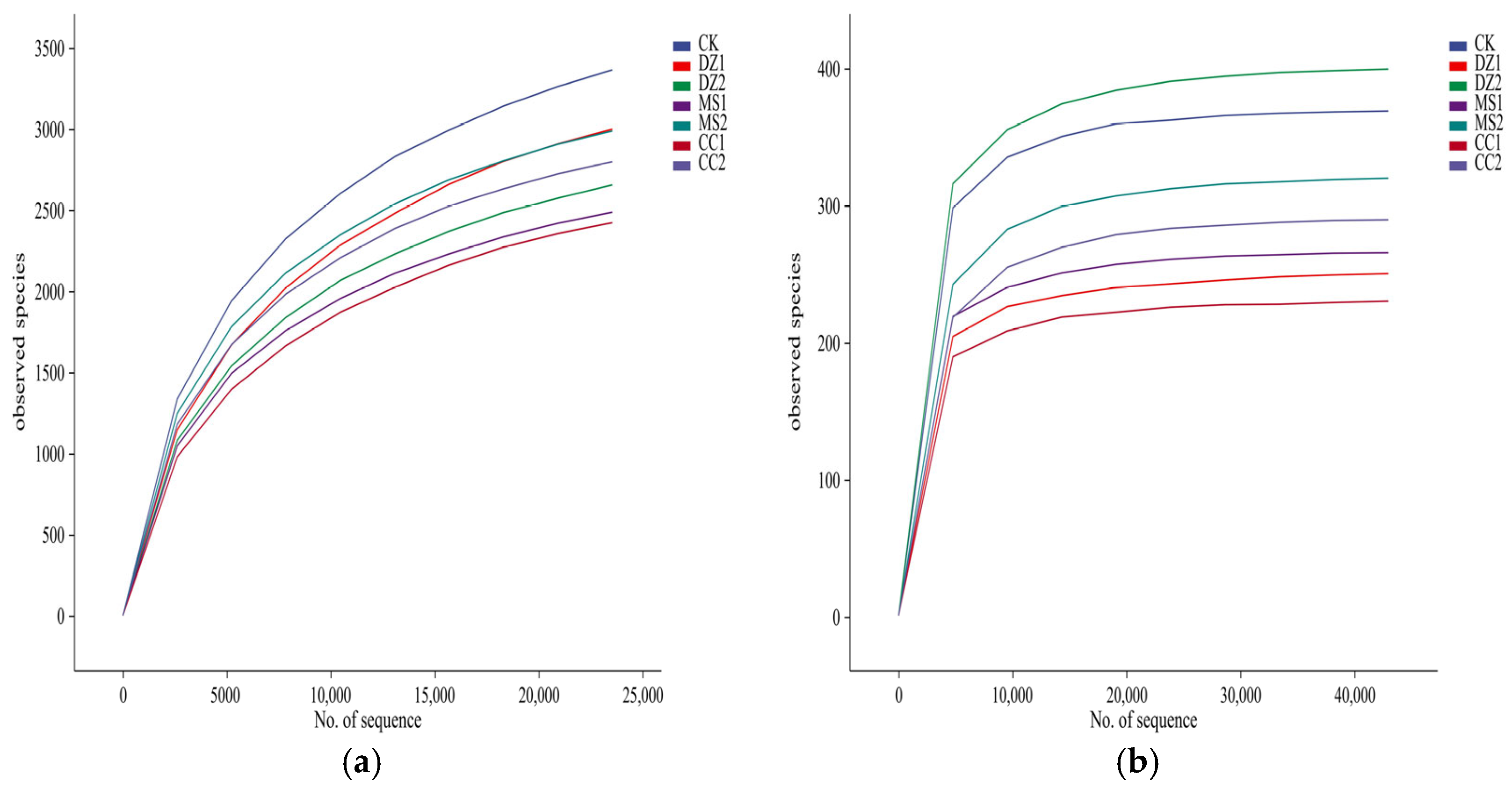
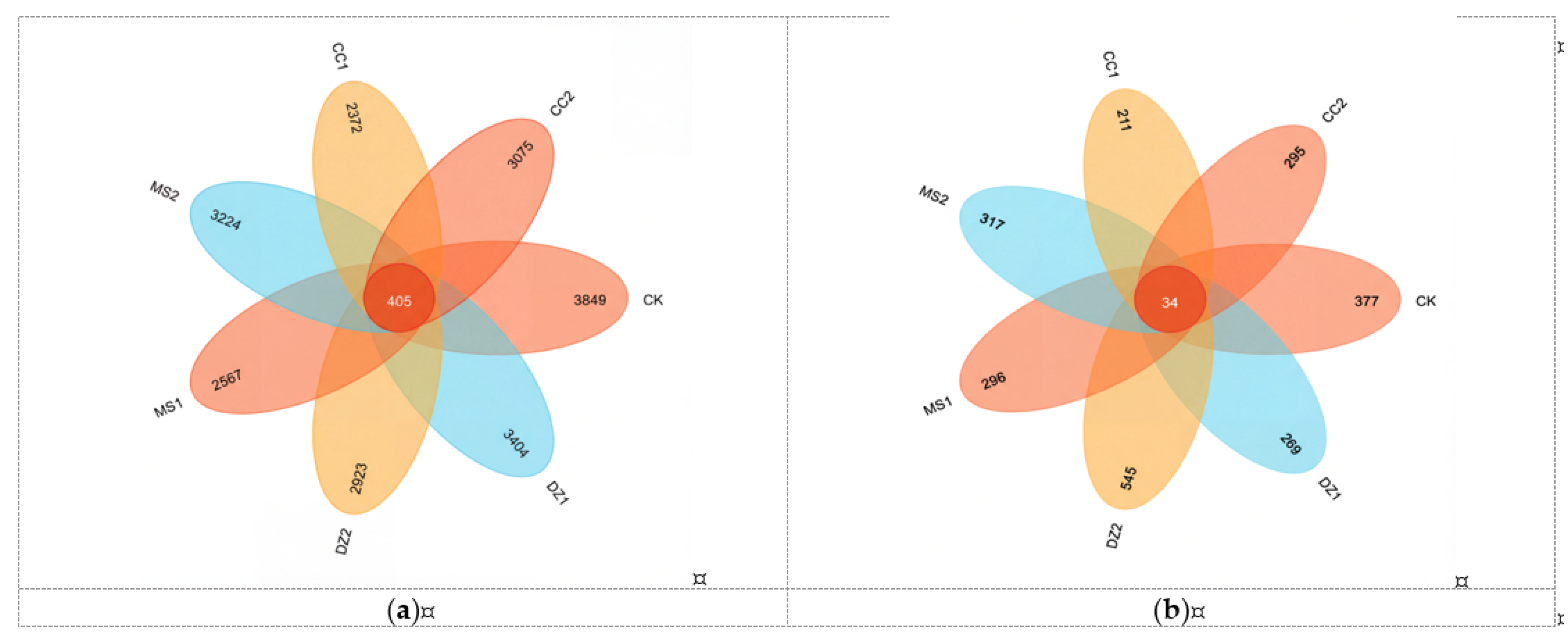
3.1.1. Soil Sample Depth Evaluation and ASV Clustering Analysis
3.1.2. Effects of Different Fumigation Treatments on the α Diversity of Soil Bacteria and Fungi
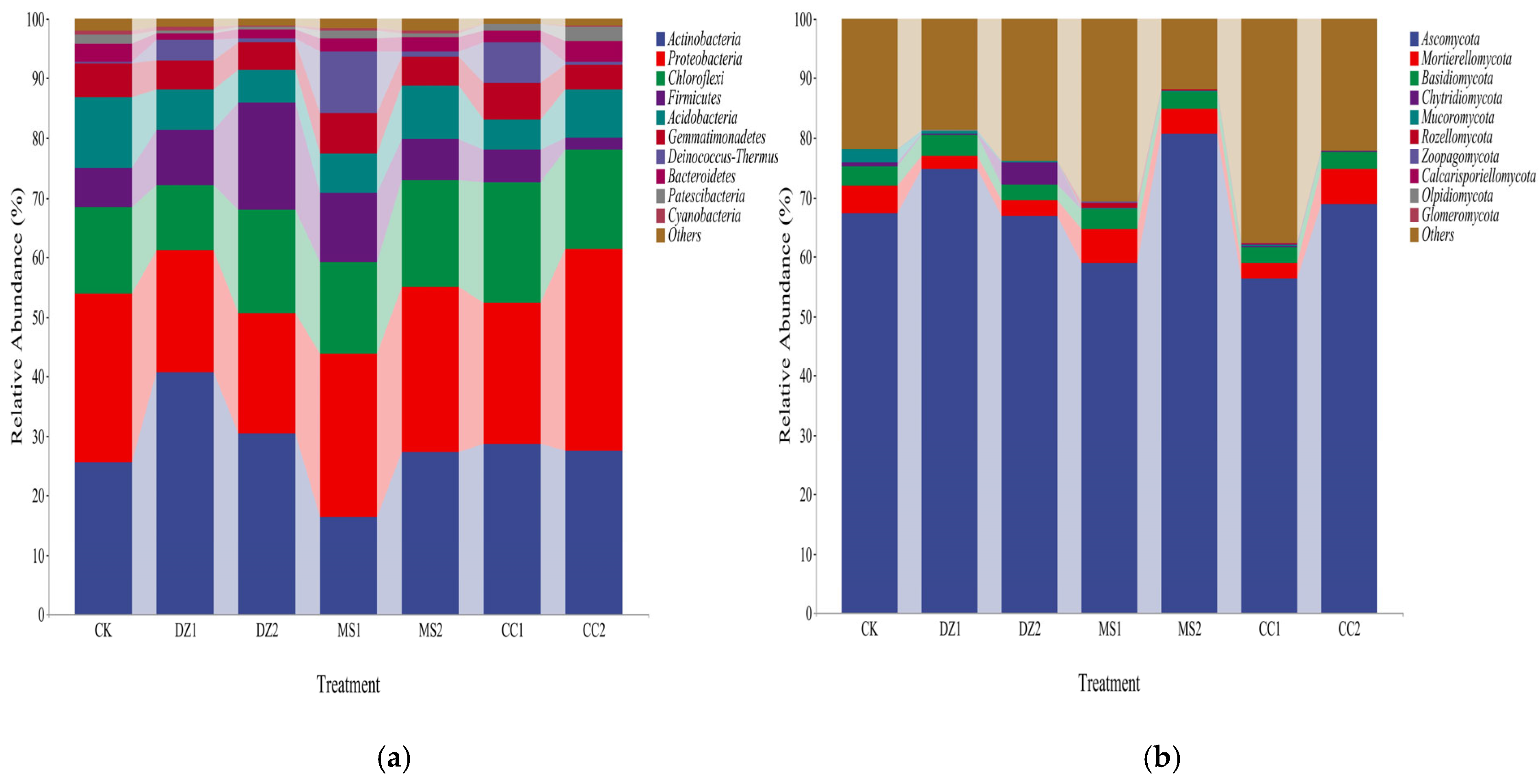
3.1.3. Analysis of Bacteria and Fungi in the Soil Under Different Fumigation Treatments at the Phylum Level
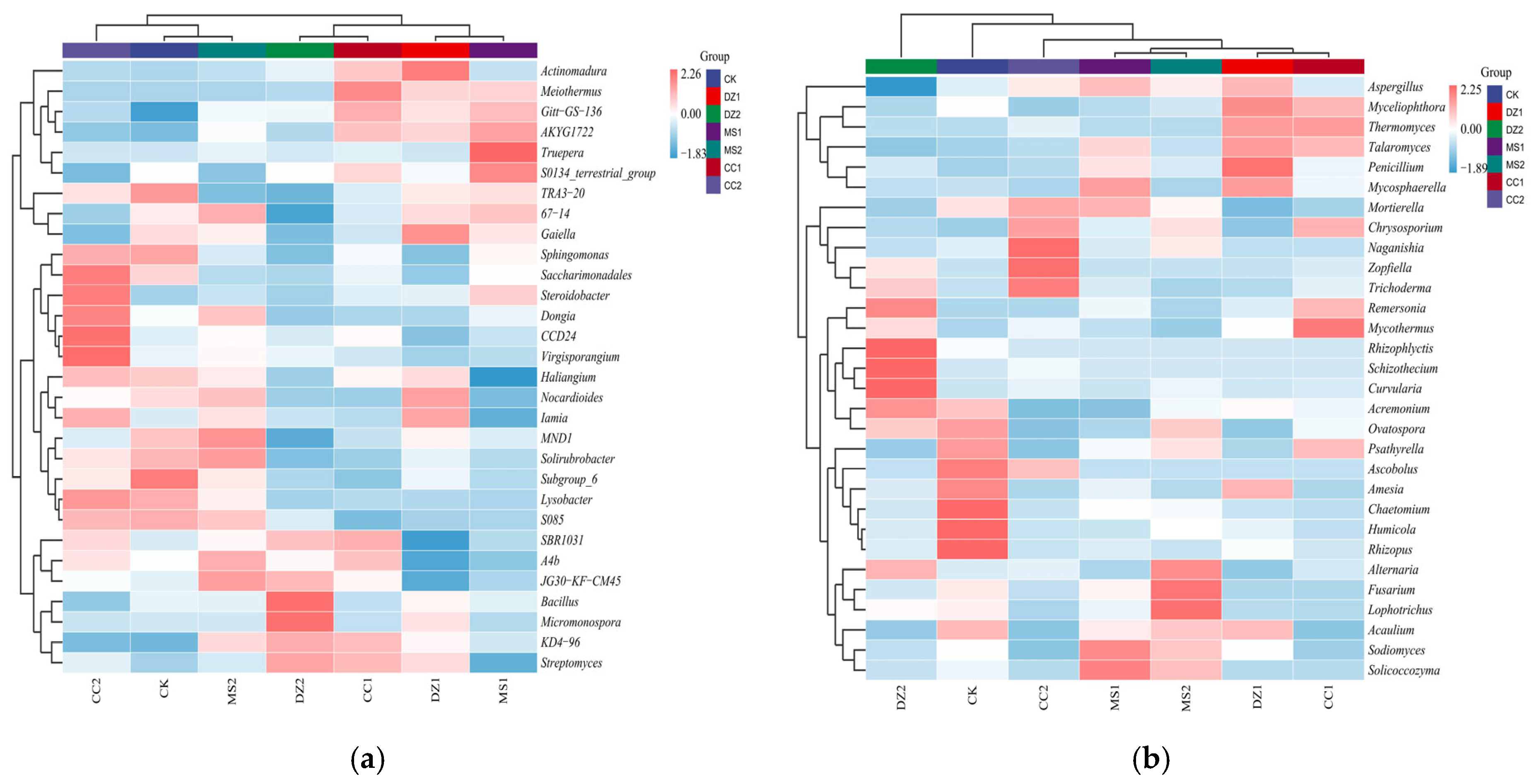
3.1.4. Analysis of the Dominant Bacterial and Fungal Genera in Soil Under Different Fumigation Treatments
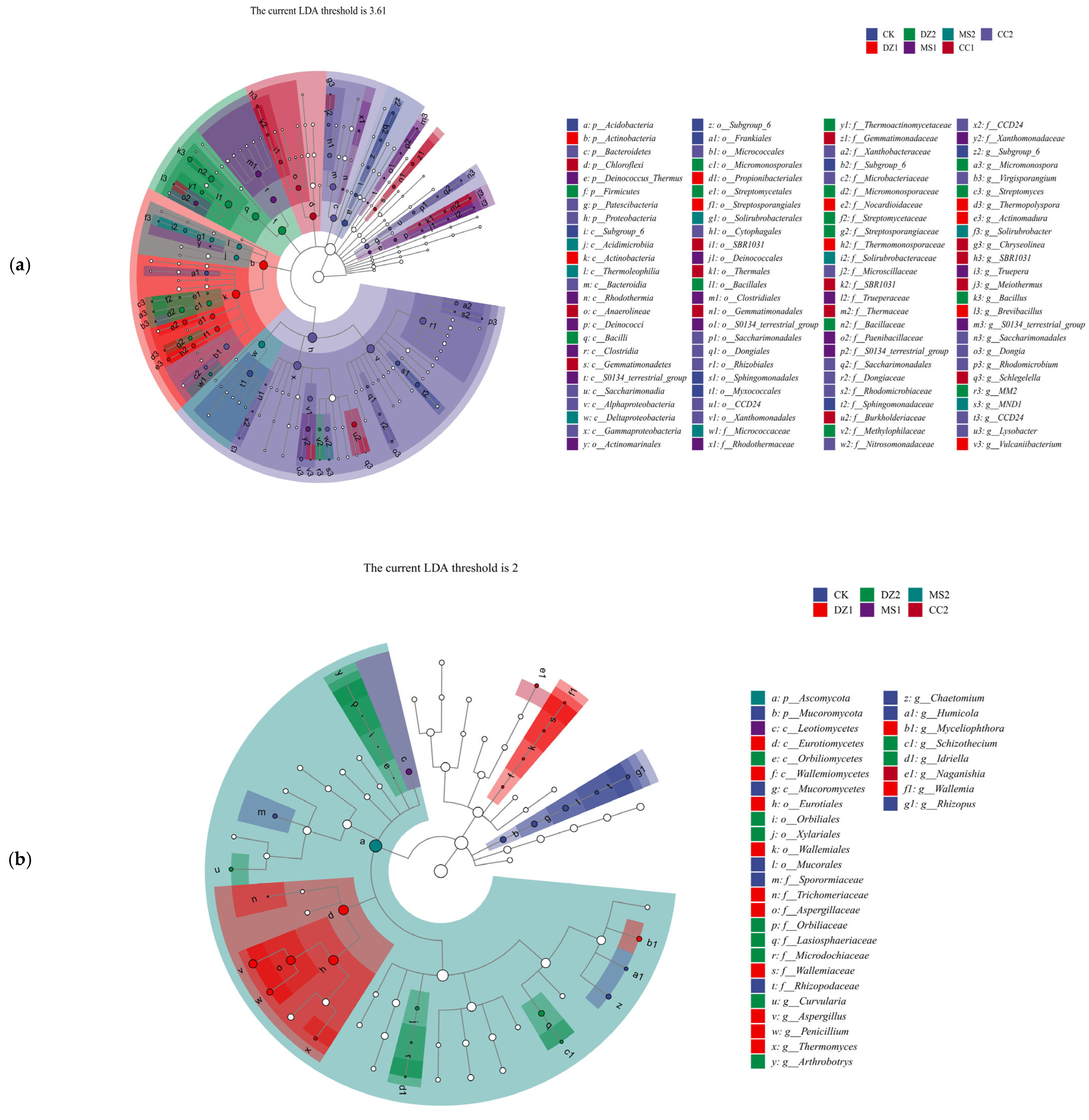
3.1.5. Special Communities of Soil Bacteria and Fungi Under Different Fumigation Treatments
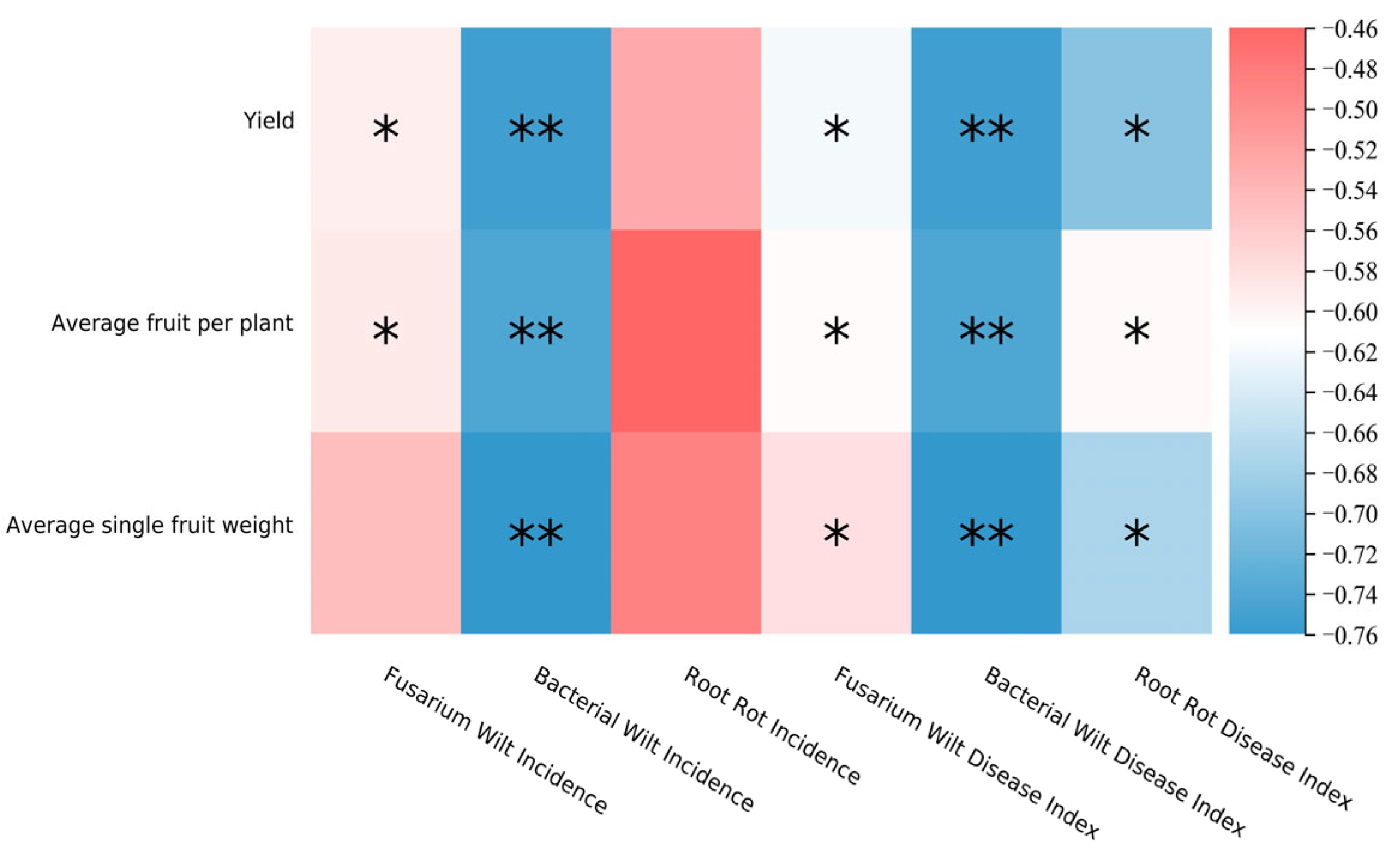
3.2. Effects of Different Fumigation Treatments on Tomato Yield and Soil-Borne Diseases
4. Discussion
5. Conclusions
Author Contributions
Funding
Institutional Review Board Statement
Informed Consent Statement
Data Availability Statement
Acknowledgments
Conflicts of Interest
References
- Bhowmik, D.; Kumar, K.S.; Paswan, S.; Srivastava, S. Tomato-A Natural Medicine and Its Health Benefits. J. Pharmacogn. Phytochem. 2012, 1, 33–43. [Google Scholar]
- Collins, E.J.; Bowyer, C.; Tsouza, A.; Chopra, M. Tomatoes: An Extensive Review of the Associated Health Impacts of Tomatoes and Factors That Can Affect Their Cultivation. Biology 2022, 11, 239. [Google Scholar] [CrossRef]
- Ally, N.M.; Neetoo, H.; Ranghoo-Sanmukhiya, V.M.; Coutinho, T.A. Greenhouse-grown tomatoes: Microbial diseases and their control methods: A review. Int. J. Phytopathol. 2023, 12, 99–127. [Google Scholar] [CrossRef]
- Su, L.; Li, H.; Wang, J.; Gao, W.; Shu, X.; Sun, X.; Wang, K.; Duan, Y.; Liu, Y.; Kuramae, E.; et al. Composition, function and succession of bacterial communities in the tomato rhizosphere during continuous cropping. Biol. Fertil. Soils 2023, 59, 723–732. [Google Scholar] [CrossRef]
- Liu, T.; Cheng, Z.; Meng, H.; Ahmad, I.; Zhao, H. Growth, yield and quality of spring tomato and physicochemical properties of medium in a tomato/garlic intercropping system under plastic tunnel organic medium cultivation. Sci. Hortic. 2014, 170, 159–168. [Google Scholar] [CrossRef]
- Fu, H.; Zhang, G.; Zhang, F.; Sun, Z.; Geng, G.; Li, T. Effects of Continuous Tomato Monoculture on Soil Microbial Properties and Enzyme Activities in a Solar Greenhouse. Sustainability 2017, 9, 317. [Google Scholar] [CrossRef]
- Berendsen, R.L.; Pieterse, C.M.; Bakker, P.A. The rhizosphere microbiome and plant health. Trends Plant Sci. 2012, 17, 478–486. [Google Scholar] [CrossRef]
- Olanrewaju, O.S.; Ayangbenro, A.S.; Glick, B.R.; Babalola, O.O. Plant health: Feedback effect of root exudates-rhizobiome interactions. Appl. Microbiol. Biotechnol. 2019, 103, 1155–1166. [Google Scholar] [CrossRef]
- Chaparro, J.M.; Sheflin, A.M.; Manter, D.K.; Vivanco, J.M. Manipulating the soil microbiome to increase soil health and plant fertility. Biol. Fertil. Soils 2012, 48, 489–499. [Google Scholar] [CrossRef]
- Pieterse, C.M.; Zamioudis, C.; Berendsen, R.L.; Weller, D.M.; Van Wees, S.C.; Bakker, P.A. Induced systemic resistance by beneficial microbes. Annu. Rev. Phytopathol. 2014, 52, 347–375. [Google Scholar] [CrossRef] [PubMed]
- Panth, M.; Hassler, S.C.; Baysal-Gurel, F. Methods for Management of Soilborne Diseases in Crop Production. Agriculture 2020, 10, 16. [Google Scholar] [CrossRef]
- Mao, L.; Liu, X.; Sial, M.U.; Zhang, L.; Zhu, L.; Wu, C.; Cao, A. Soil application of dazomet combined with 1,3-dichloropropene against soilborne pests for tomato production. Sci. Rep. 2024, 14, 31439. [Google Scholar] [CrossRef]
- Wang, L.; Hu, T.; Ji, L.; Cao, K. Inhibitory efficacy of calcium cyanamide on the pathogens of replant diseases in strawberry. Front. Agric. China 2007, 1, 183–187. [Google Scholar] [CrossRef]
- Triky-Dotan, S.; Austerweil, M.; Steiner, B.; Peretz-Alon, Y.; Katan, J.; Gamliel, A. Generation and dissipation of methyl isothiocyanate in soils following metam sodium fumigation: Impact on Verticillium control and potato yield. Plant Dis. 2007, 91, 497–503. [Google Scholar] [CrossRef]
- Nicola, L.; Turco, E.; Albanese, D.; Donati, C.; Thalheimer, M.; Pindo, M.; Insam, H.; Cavalieri, D.; Pertot, I. Fumigation with dazomet modifies soil microbiota in apple orchards affected by replant disease. Appl. Soil Ecol. 2017, 113, 71–79. [Google Scholar] [CrossRef]
- Wang, Y.; Jin, Y.; Han, P.; Hao, J.; Pan, H.; Liu, J. Impact of soil disinfestation on fungal and bacterial communities in soil with cucumber cultivation. Front. Microbiol. 2021, 12, 685111. [Google Scholar] [CrossRef] [PubMed]
- Chen, R.; Jiang, W.; Xu, S.; Fan, H.; Chen, X.; Shen, X.; Yin, C.; Mao, Z. An emerging chemical fumigant: Two-sided effects of dazomet on soil microbial environment and plant response. Environ. Sci. Pollut. Res. 2022, 29, 3022–3036. [Google Scholar] [CrossRef] [PubMed]
- Wu, R.; Li, Y.; Meng, J.; Han, J. Effects of Dazomet Fumigation Combined with Trichoderma harzianum on Soil Microbial Community Structure of Continuously Cropped Strawberry. Horticulturae 2025, 11, 35. [Google Scholar] [CrossRef]
- Liu, L.; Sun, C.; Liu, X.; He, X.; Liu, M.; Wu, H.; Tang, C.; Jin, C.; Zhang, Y. Effect of calcium cyanamide, ammonium bicarbonate and lime mixture, and ammonia water on survival of Ralstonia solanacearum and microbial community. Sci. Rep. 2016, 6, 19037. [Google Scholar] [CrossRef]
- De Ceuster, H.; Pauwels, F. Soil Disinfestations in the Belgian Horticulture- A Practice View. Acta Hortic. 1995, 382, 37–50. [Google Scholar] [CrossRef]
- Callahan, B.J.; McMurdie, P.J.; Rosen, M.J.; Han, A.W.; Johnson, A.J.A.; Holmes, S.P. DADA2: High-resolution sample inference from Illumina amplicon data. Nat. Methods 2016, 13, 581–583. [Google Scholar] [CrossRef]
- Chao, A. Nonparametric estimation of the number of classes in a population. Scand. J. Stat. 1984, 11, 265–270. [Google Scholar]
- Shannon, C.E. A mathematical theory of communication. Bell Syst. Tech. J. 1948, 27, 379–423. [Google Scholar] [CrossRef]
- Pervaiz, Z.H.; Iqbal, J.; Zhang, Q.; Chen, D.; Wei, H.; Saleem, M. Continuous Cropping Alters Multiple Biotic and Abiotic Indicators of Soil Health. Soil Syst. 2020, 4, 59. [Google Scholar] [CrossRef]
- Dong, L.; Xu, J.; Zhang, L.; Yang, J.; Liao, B.; Li, X.; Chen, S. High-throughput sequencing technology reveals that continuous cropping of American ginseng results in changes in the microbial community in arable soil. Chin. Med. 2017, 12, 18. [Google Scholar] [CrossRef] [PubMed]
- Meszka, B.; Malusà, E. Effects of soil disinfection on health status, growth and yield of strawberry stock plants. Crop Prot. 2014, 63, 113–119. [Google Scholar] [CrossRef]
- Chen, L.; Xie, X.; Kang, H.; Liu, R.; Shi, Y.; Li, L.; Xie, J.; Li, B.; Chai, A. Efficiency of calcium cyanamide on the control of tomato soil-borne disease and their impacts on the soil microbial community. Appl. Soil Ecol. 2022, 176, 104522. [Google Scholar] [CrossRef]
- Larki, R.; Mehrabi-Koushki, M.; Farokhinejad, R. Identification of Chaetomium and Amesia species associated with different diseases of some herbaceous ornamentals in Ahvaz. J. Microb. Biol. 2019, 8, 33–50. [Google Scholar]
- Ma, L.J.; Geiser, D.M.; Proctor, R.H.; Rooney, A.P.; O’Donnell, K.; Trail, F.; Gardiner, D.M.; Manners, J.M.; Kazan, K. Fusarium pathogenomics. Annu. Rev. Microbiol. 2013, 67, 399–416. [Google Scholar] [CrossRef]
- Zhao, J.; Mei, Z.; Zhang, X.; Xue, C.; Zhang, C.; Ma, T.; Zhang, S. Suppression of Fusarium wilt of cucumber by ammonia gas fumigation via reduction of Fusarium population in the field. Sci. Rep. 2017, 7, 43103. [Google Scholar] [CrossRef]
- Zhu, J.; Ren, Z.; Huang, B.; Cao, A.; Wang, Q.; Yan, D.; Ouyang, C.; Wu, J.; Li, Y. Effects of Fumigation with Allyl Isothiocyanate on Soil Microbial Diversity and Community Structure of Tomato. J. Agric. Food Chem. 2020, 68, 1226–1236. [Google Scholar] [CrossRef]
- Sutton, J.C. Epidemiology of wheat head blight and maize ear rot caused by Fusarium graminearum. Can. J. Plant Pathol. 1982, 4, 195–209. [Google Scholar] [CrossRef]
- Uwaremwe, C.; Bao, W.; Daoura, B.G.; Mishra, S.; Zhang, X.; Shen, L.; Xia, S.; Yang, X. Shift in the rhizosphere soil fungal community associated with root rot infection of Plukenetia volubilis Linneo caused by Fusarium and Rhizopus species. Int. Microbiol. Off. J. Span. Soc. Microbiol. 2024, 27, 1231–1247. [Google Scholar] [CrossRef]
- Xiang, D.; Wu, Y.; Li, H.; Liu, Q.; Zhou, Z.; Chen, Q.; Zhang, N.; Xu, L. Soil Fungal Diversity and Community Composition in Response to Continuous Sweet Potato Cropping Practices. Phyton-Int. J. Exp. Bot. 2021, 90, 1247–1258. [Google Scholar] [CrossRef]
- Dangi, S.R.; Gerik, J.S.; Tirado-Corbalá, R.; Ajwa, H. Soil microbial community structure and target organisms under different fumigation treatments. Appl. Environ. Soil Sci. 2015, 1, 673264. [Google Scholar] [CrossRef]
- Jia, H.; Khashi-ur-Rahman, M.; Wu, F.; Zhou, X. Effects of rotation of Indian mustard on cucumber seedling rhizosphere fungal community composition. Int. J. Agric. Biol. 2020, 23, 757–762. [Google Scholar] [CrossRef]
- Nielsen, J.C.; Grijseels, S.; Prigent, S.; Ji, B.; Dainat, J.; Nielsen, K.F.; Frisvad, J.C.; Workman, M.; Nielsen, J. Global analysis of biosynthetic gene clusters reveals vast potential of secondary metabolite production in Penicillium species. Nat. Microbiol. 2017, 2, 17044. [Google Scholar] [CrossRef]
- Wakelin, S.A.; Gupta, V.V.; Harvey, P.R.; Ryder, M.H. The effect of Penicillium fungi on plant growth and phosphorus mobilization in neutral to alkaline soils from southern Australia. Can. J. Microbiol. 2007, 53, 106–115. [Google Scholar] [CrossRef]
- Nayak, S.; Samanta, S.; Mukherjee, A.K. Beneficial role of Aspergillus sp. in agricultural soil and environment. Front. Soil Environ. Microbiol. 2020, 17–36. [Google Scholar] [CrossRef]
- Soytong, K.; Kanokmedhakul, S.; Kukongviriyapa, V.; Isobe, M. Application of Chaetomium species (Ketomium) as a new broad spectrum biological fungicide for plant disease control. Fungal Divers. 2001, 7, 1–15. [Google Scholar]
- Ko, W.H.; Yang, C.H.; Lin, M.J.; Chen, C.Y.; Tsou, Y.J. Humicola phialophoroides sp. nov. from soil with potential for biological control of plant diseases. Bot. Stud. 2011, 52, 197–202. [Google Scholar]
- Yang, C.H.; Lin, M.J.; Su, H.J.; Ko, W.H. Multiple resistance-activating substances produced by Humicola phialophoroides isolated from soil for control of Phytophthora blight of pepper. Bot. Stud. 2014, 55, 40. [Google Scholar] [CrossRef]
- Yilmaz, N.; Visagie, C.M.; Houbraken, J.; Frisvad, J.C.; Samson, R.A. Polyphasic taxonomy of the genus Talaromyces. Stud. Mycol. 2014, 78, 175–341. [Google Scholar] [CrossRef]
- Visagie, C.M.; Jacobs, K. Three new additions to the genus Talaromyces isolated from Atlantis sandveld fynbos soils. Persoonia-Mol. Phylogeny Evol. Fungi 2012, 28, 14–24. [Google Scholar] [CrossRef]
- Oskiera, M.; Szczech, M.; Stępowska, A.; Smolińska, U.; Bartoszewski, G. Monitoring of Trichoderma species in agricultural soil in response to application of biopreparations. Biol. Control 2017, 113, 65–72. [Google Scholar] [CrossRef]
- Saxena, A.K.; Kumar, M.; Chakdar, H.; Anuroopa, N.; Bagyaraj, D.J. Bacillus species in soil as a natural resource for plant health and nutrition. J. Appl. Microbiol. 2020, 128, 1583–1594. [Google Scholar] [CrossRef] [PubMed]
- Jahan, T.; Rabbee, M.F.; Islam, M.M.; Habib, M.A.; Rana, M.S.; Basak, A.; Zaki, R.M.; Hasan, M.M.; Baek, K.H. Biocontrol and beyond: The versatile roles of Streptomyces in agriculture. Rev. Environ. Sci. Bio/Technol. 2025, 24, 861–884. [Google Scholar] [CrossRef]
- Simelane, M.P.Z.; Soundy, P.; Maboko, M.M. Effect of Calcium Cyanamide as an Alternative Nitrogen Source on Growth, Yield, and Nitrogen Use Efficiency of Short-Day Onion. Agronomy 2023, 13, 2746. [Google Scholar] [CrossRef]


| Kingdom | Treatment | Community Abundance Index | Community Diversity Index | ||
|---|---|---|---|---|---|
| Chao1 Index | Observed Species | Shannon | Simpson | ||
| Bacteria | CK | 3882.77 ± 211.97 a | 3366.47 ± 88.34 a | 10.73 ± 0.05 a | 0.9989 ± 0.0001 a |
| DZ1 | 3466.94 ± 134.27 b | 3001.10 ± 162.29 b | 10.00 ±0.15 c | 0.9961 ± 0.0008 bc | |
| DZ2 | 3019.60 ± 98.12 cd | 2653.87 ± 51.71 cd | 9.88 ± 0.12 cd | 0.9964 ± 0.0007 b | |
| MS1 | 2892.61 ± 259.11 d | 2488.50 ± 168.63 d | 9.73 ± 0.24 de | 0.9949 ± 0.0017 c | |
| MS2 | 3354.01 ± 134.27 bc | 2988.30 ± 65.43 b | 10.49 ± 0.04 ab | 0.9986 ± 0.0001 a | |
| CC1 | 2845.14 ± 275.04 d | 2426.53 ± 226.33 d | 9.50 ±0.16 e | 0.9950 ± 0.0007 bc | |
| CC2 | 3105.69 ± 215.78 cd | 2801.47 ± 132.86 bc | 10.29 ± 0.07 b | 0.9982 ± 0.0001 a | |
| Fungi | CK | 369.17 ± 16.94 a | 368.83 ± 17.02 a | 6.32 ± 0.10 ab | 0.9676 ± 0.0051 a |
| DZ1 | 252.78 ± 36.41 cd | 250.33 ± 33.30 cd | 5.77 ± 0.14 cd | 0.9577 ± 0.0091 ab | |
| DZ2 | 400.45 ±22.41 a | 399.63 ± 21.60 a | 6.62 ± 0.46 a | 0.9745 ± 0.0082 a | |
| MS1 | 265.94 ±11.48 cd | 265.63 ± 11.47 cd | 5.83 ± 0.16 bc | 0.9571 ± 0.0079 ab | |
| MS2 | 320.68 ± 40.62 b | 319.97 ± 40.94 b | 5.22 ± 0.33 e | 0.9202 ± 0.0222 c | |
| CC1 | 231.30 ± 19.48 d | 230.33 ± 19.16 d | 5.42 ± 0.23 cde | 0.9403 ± 0.0064 bc | |
| CC2 | 290.40 ± 9.46 bc | 289.73 ± 9.48 bc | 5.28 ± 0.37 de | 0.9324 ± 0.0209 c | |
| Kingdom | Serial Number | Genus | CK | DZ1 | DZ2 | MS1 | MS2 | CC1 | CC2 |
|---|---|---|---|---|---|---|---|---|---|
| % | |||||||||
| Bacteria | 1 | Subgroup_6 | 8.10 | 5.01 | 4.19 | 4.23 | 5.72 | 3.74 | 5.72 |
| 2 | Bacillus | 3.48 | 4.76 | 11.76 | 3.29 | 3.41 | 2.27 | 0.89 | |
| 3 | SBR1031 | 3.04 | 0.99 | 4.95 | 2.58 | 3.77 | 5.33 | 4.44 | |
| 4 | Actinomadura | 0.26 | 11.08 | 2.31 | 1.02 | 0.91 | 6.57 | 0.48 | |
| 5 | Micromonospora | 1.88 | 3.82 | 7.63 | 1.29 | 1.91 | 1.58 | 1.73 | |
| 6 | A4b | 2.01 | 0.84 | 2.12 | 1.26 | 2.95 | 2.73 | 2.35 | |
| 7 | KD4-96 | 1.53 | 1.91 | 2.22 | 1.77 | 2.03 | 2.15 | 1.55 | |
| 8 | Meiothermus | 0.00 | 3.32 | 0.28 | 3.43 | 0.00 | 6.05 | 0.01 | |
| 9 | Gitt-GS-136 | 1.40 | 1.91 | 1.77 | 2.04 | 1.78 | 2.09 | 1.65 | |
| 10 | MND1 | 1.91 | 1.70 | 1.17 | 1.54 | 2.14 | 1.48 | 1.54 | |
| 11 | AKYG1722 | 1.11 | 1.67 | 1.26 | 1.90 | 1.46 | 1.75 | 1.17 | |
| 12 | Truepera | 0.25 | 0.28 | 0.38 | 6.90 | 0.82 | 0.70 | 0.29 | |
| 13 | CCD24 | 1.11 | 0.83 | 1.09 | 1.03 | 1.23 | 1.24 | 1.95 | |
| 14 | Sphingomonas | 1.64 | 0.77 | 0.76 | 1.21 | 1.03 | 1.12 | 1.60 | |
| 15 | Streptomyces | 0.73 | 1.26 | 1.58 | 0.50 | 0.90 | 1.46 | 0.95 | |
| 16 | Saccharimonadales | 1.33 | 0.41 | 0.54 | 0.95 | 0.59 | 0.85 | 2.07 | |
| 17 | S0134_terrestrial_group | 0.95 | 0.92 | 0.97 | 1.57 | 0.59 | 1.16 | 0.54 | |
| 18 | Steroidobacter | 0.71 | 0.88 | 0.70 | 1.17 | 0.80 | 0.87 | 1.54 | |
| 19 | Haliangium | 1.07 | 1.02 | 0.75 | 0.55 | 0.98 | 0.94 | 1.11 | |
| 20 | Virgisporangium | 0.73 | 0.19 | 0.75 | 0.37 | 1.01 | 0.53 | 2.80 | |
| 21 | 67-14 | 0.96 | 1.02 | 0.54 | 1.09 | 1.16 | 0.82 | 0.71 | |
| 22 | Gaiella | 0.98 | 1.19 | 0.66 | 0.95 | 0.92 | 0.80 | 0.67 | |
| 23 | Nocardioides | 1.06 | 1.43 | 0.47 | 0.33 | 1.23 | 0.47 | 0.87 | |
| 24 | Dongia | 0.69 | 0.45 | 0.38 | 0.64 | 1.03 | 0.45 | 1.38 | |
| 25 | Solirubrobacter | 1.12 | 0.61 | 0.26 | 0.43 | 1.26 | 0.36 | 0.85 | |
| 26 | Lysobacter | 1.08 | 0.37 | 0.33 | 0.35 | 0.71 | 0.38 | 1.21 | |
| 27 | Brevibacillus | 0.06 | 1.19 | 0.87 | 1.02 | 0.02 | 0.85 | 0.00 | |
| 28 | Acidibacter | 0.46 | 0.30 | 0.63 | 0.53 | 0.52 | 0.47 | 1.07 | |
| 29 | Vulcaniibacterium | 0.00 | 1.27 | 0.03 | 0.94 | 0.0 | 1.11 | 0.00 | |
| 30 | Paenisporosarcina | 0.19 | 0.17 | 0.17 | 1.28 | 0.68 | 0.09 | 0.33 | |
| 31 | Thermopolyspora | 0.00 | 1.17 | 0.51 | 0.09 | 0.00 | 0.80 | 0.00 | |
| 32 | Rhodomicrobium | 0.26 | 0.10 | 0.19 | 0.18 | 0.41 | 0.24 | 1.07 | |
| The relative abundance > 1% of the genus number. | 16 | 17 | 12 | 19 | 16 | 16 | 18 | ||
| Dominant genus proportion/% | 32.88 | 44.71 | 42.05 | 39.63 | 33.12 | 41.84 | 35.95 | ||
| Fungi | 1 | Aspergillus | 15.67 | 26.53 | 2.89 | 25.69 | 20.14 | 15.05 | 20.55 |
| 2 | Alternaria | 3.70 | 0.59 | 10.78 | 1.69 | 13.56 | 3.38 | 4.16 | |
| 3 | Mortierella | 4.65 | 2.16 | 2.67 | 5.75 | 4.24 | 2.78 | 5.96 | |
| 4 | Zopfiella | 0.00 | 0.00 | 5.99 | 0.00 | 0.00 | 1.23 | 17.65 | |
| 5 | Myceliophthora | 3.54 | 9.16 | 0.87 | 1.16 | 1.96 | 7.01 | 0.29 | |
| 6 | Amesia | 10.75 | 7.96 | 1.72 | 2.35 | 0.30 | 0.00 | 0.00 | |
| 7 | Remersonia | 1.39 | 2.39 | 7.46 | 2.87 | 1.28 | 5.70 | 1.41 | |
| 8 | Fusarium | 3.30 | 0.21 | 1.15 | 2.91 | 8.25 | 0.24 | 0.69 | |
| 9 | Talaromyces | 0.57 | 4.93 | 0.18 | 3.33 | 1.06 | 4.10 | 0.92 | |
| 10 | Acremonium | 3.15 | 2.25 | 4.01 | 0.85 | 2.01 | 1.96 | 0.78 | |
| 11 | Sodiomyces | 1.75 | 1.68 | 0.82 | 4.26 | 2.94 | 0.38 | 0.11 | |
| 12 | Thermomyces | 0.04 | 4.52 | 0.08 | 0.00 | 0.00 | 4.48 | 0.87 | |
| 13 | Schizothecium | 0.00 | 0.00 | 8.82 | 0.00 | 0.00 | 0.00 | 0.96 | |
| 14 | Mycothermus | 0.25 | 1.15 | 1.82 | 0.49 | 0.07 | 3.50 | 0.96 | |
| 15 | Chaetomium | 3.16 | 0.17 | 0.25 | 0.76 | 0.65 | 0.05 | 0.15 | |
| 16 | Rhizophlyctis | 0.51 | 0.00 | 3.56 | 0.00 | 0.00 | 0.00 | 0.00 | |
| 17 | Penicillium | 0.05 | 1.62 | 0.29 | 0.74 | 0.30 | 0.41 | 0.14 | |
| 18 | Humicola | 2.24 | 0.00 | 0.00 | 0.00 | 0.00 | 0.00 | 0.01 | |
| 19 | Mycosphaerella | 0.2 | 1.24 | 0.1 | 1.23 | 0.03 | 0.3 | 0.03 | |
| 20 | Rhizopus | 1.92 | 0.00 | 0.00 | 0.00 | 0.00 | 0.00 | 0.00 | |
| 21 | Trichoderma | 0.12 | 0.06 | 0.70 | 0.20 | 0.02 | 0.25 | 1.20 | |
| 22 | Solicoccozyma | 0.28 | 0.00 | 0.07 | 1.30 | 0.84 | 0.00 | 0.00 | |
| 23 | Ascobolus | 1.48 | 0.00 | 0.00 | 0.00 | 0.00 | 0.00 | 0.9 | |
| 24 | Curvularia | 0.00 | 0.04 | 1.44 | 0.00 | 0.16 | 0.06 | 0.14 | |
| 25 | Naganishia | 0.12 | 0.00 | 0.00 | 0.09 | 0.36 | 0.00 | 1.11 | |
| 26 | Idriella | 0.00 | 0.00 | 1.11 | 0.00 | 0.05 | 0.00 | 0.00 | |
| The relative abundance > 1% of the genus number. | 13 | 11 | 13 | 11 | 9 | 10 | 7 | ||
| Dominant genus proportion/% | 56.71 | 65.59 | 53.43 | 52.53 | 55.44 | 49.17 | 52.04 | ||
| Treatment | Average Fruit Per Plant (Units) | Average Single Fruit Weight (g−1) | Yield kg·667 m−2 |
|---|---|---|---|
| CK | 18.00 ± 1.00 b | 145.67 ± 6.6 b | 4962.08 ± 119.40 b |
| DZ | 20.33 ± 1.53 a | 163.8 ± 3.72 a | 6190.66 ± 428.39 a |
| MS | 20.67 ± 0.58 a | 166.57 ± 3.45 a | 6402.03 ± 247.83 a |
| CC | 21.00 ± 1.00 a | 172.2 ± 7.65 a | 6719.03 ± 280.19 a |
| Treatment | Incidence % | Disease Index | ||||
|---|---|---|---|---|---|---|
| Fusarium Wilt | Bacterial Wilt | Root Rot | Fusarium Wilt | Bacterial Wilt | Root Rot | |
| CK | 17.33 ± 2.67 a | 4.67 ± 1.70 a | 15.33 ± 1.70 a | 9.60 ± 2.14 a | 4.60 ± 2.04 a | 12.60 ± 1.54 a |
| DZ | 4.00 ± 1.94 b | 0.00 ± 0.00 b | 2.67 ± 1.24 c | 1.60 ± 0.86 b | 0.00 ± 0.00 b | 0.80 ± 0.39 c |
| MS | 12.67 ± 2.86 a | 0.00 ± 0.00 b | 8.67 ± 1.33 b | 6.00 ± 1.67 ab | 0.00 ± 0.00 b | 4.53 ± 1.85 b |
| CC | 5.33 ± 1.70 b | 0.00 ± 0.00 b | 4.67 ± 1.33 bc | 2.4 ± 0.78 b | 0.00 ± 0.00 b | 1.47 ± 0.68 c |
Disclaimer/Publisher’s Note: The statements, opinions and data contained in all publications are solely those of the individual author(s) and contributor(s) and not of MDPI and/or the editor(s). MDPI and/or the editor(s) disclaim responsibility for any injury to people or property resulting from any ideas, methods, instructions or products referred to in the content. |
© 2026 by the authors. Licensee MDPI, Basel, Switzerland. This article is an open access article distributed under the terms and conditions of the Creative Commons Attribution (CC BY) license.
Share and Cite
Li, Y.; Wu, R.; Jia, S.; Fan, F.; Li, J.; Liu, S. Effects of Soil Fumigant-Mediated Changes in the Microbial Communities of Soil with Continuous Cropping on Tomato Yield and Soil-Borne Diseases. Microorganisms 2026, 14, 400. https://doi.org/10.3390/microorganisms14020400
Li Y, Wu R, Jia S, Fan F, Li J, Liu S. Effects of Soil Fumigant-Mediated Changes in the Microbial Communities of Soil with Continuous Cropping on Tomato Yield and Soil-Borne Diseases. Microorganisms. 2026; 14(2):400. https://doi.org/10.3390/microorganisms14020400
Chicago/Turabian StyleLi, Yan, Ran Wu, Songnan Jia, Fengcui Fan, Jingsong Li, and Shengyao Liu. 2026. "Effects of Soil Fumigant-Mediated Changes in the Microbial Communities of Soil with Continuous Cropping on Tomato Yield and Soil-Borne Diseases" Microorganisms 14, no. 2: 400. https://doi.org/10.3390/microorganisms14020400
APA StyleLi, Y., Wu, R., Jia, S., Fan, F., Li, J., & Liu, S. (2026). Effects of Soil Fumigant-Mediated Changes in the Microbial Communities of Soil with Continuous Cropping on Tomato Yield and Soil-Borne Diseases. Microorganisms, 14(2), 400. https://doi.org/10.3390/microorganisms14020400