Low Temperature Impacts Root Physiological Characteristics and Related Microbial Community Diversity in the Rhizosphere of Japonica Rice
 ,
,  ,
,
Abstract
1. Introduction
2. Materials and Methods
2.1. Plant Materials and Growing Conditions
2.2. Experimental Design
2.3. Field Sampling and Lab Analyses
2.3.1. Root Morphological and Physiological Traits
2.3.2. Root Nitrogen Accumulation, Biomass and Yield
2.3.3. Soil Sample Collection
2.3.4. Soil pH and Nutrient Contents
2.3.5. Soil Metagenomic Sequencing
2.4. Calculation of Cold-Response Index
2.5. Statistical Analysis
3. Results
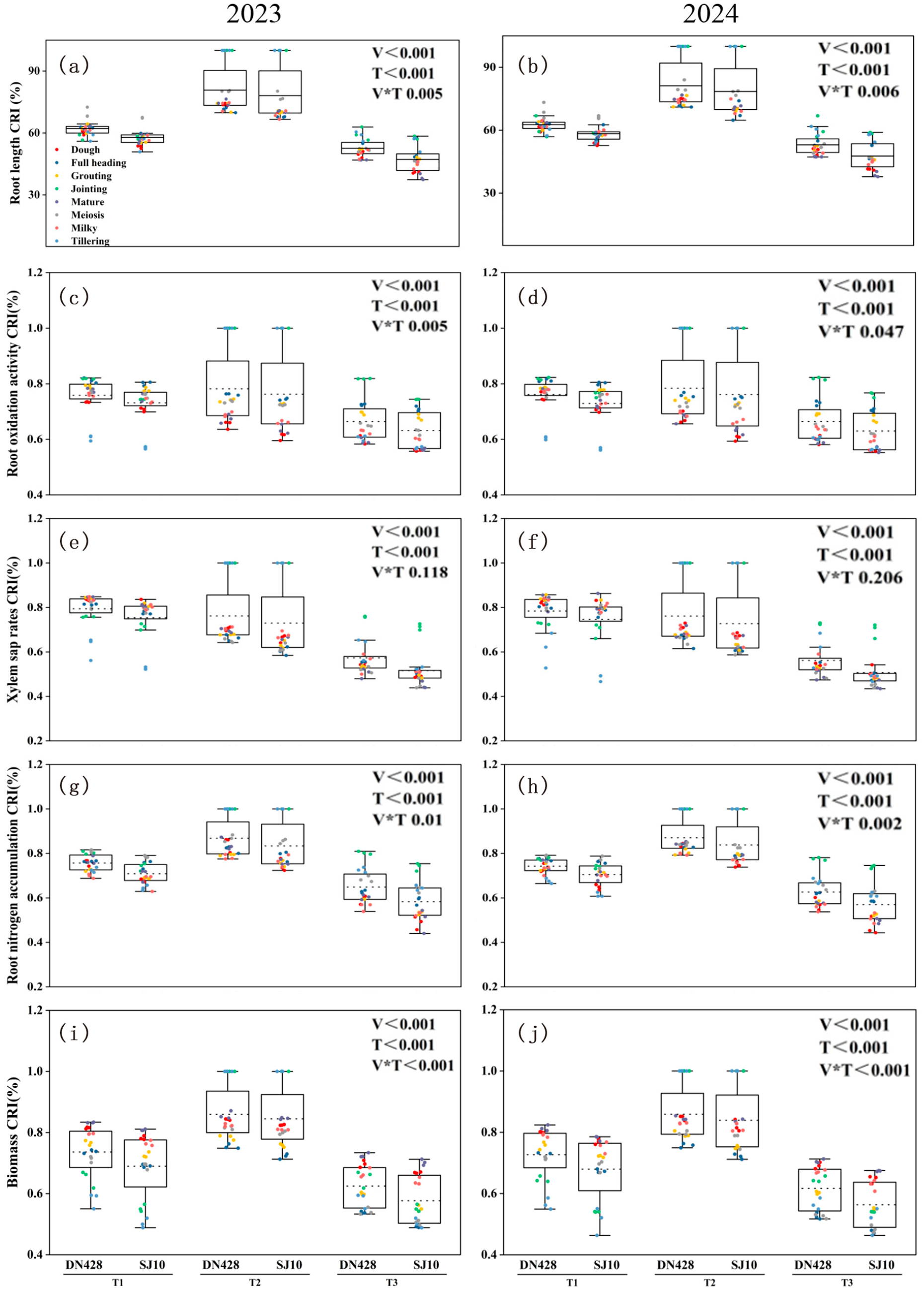
3.1. Root Morphological and Physiological Traits and Root Nitrogen Accumulation and Biomass
3.2. Effects of Low-Temperature Treatment on Yield and Yield Components of Rice
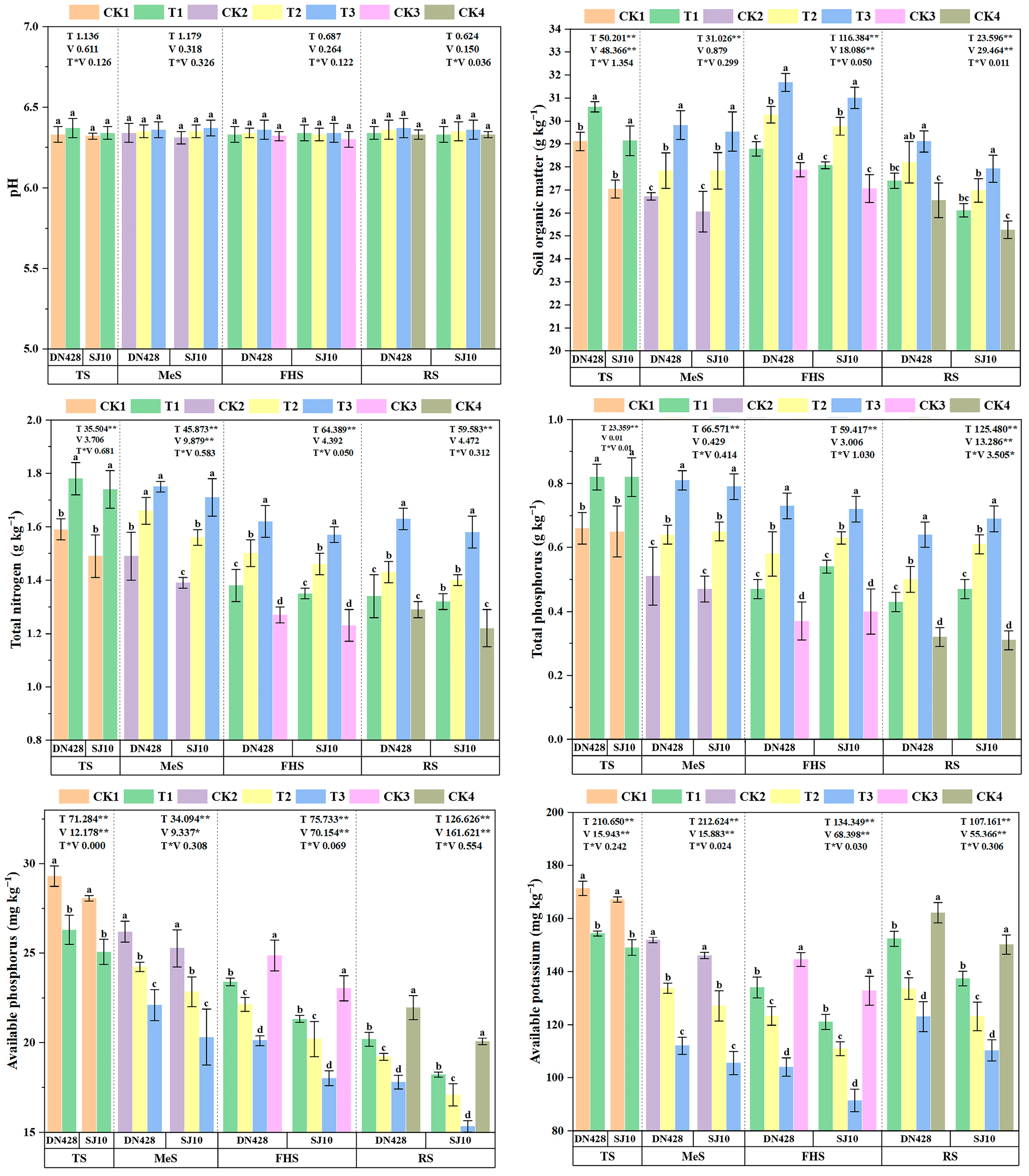
3.3. Effects of Low-Temperature Treatment on Soil pH and Nutrient Contents
3.4. Metagenomic Analysis of Rice Rhizosphere Microbial Under Low-Temperature Treatment
3.4.1. Soil Alpha Diversity
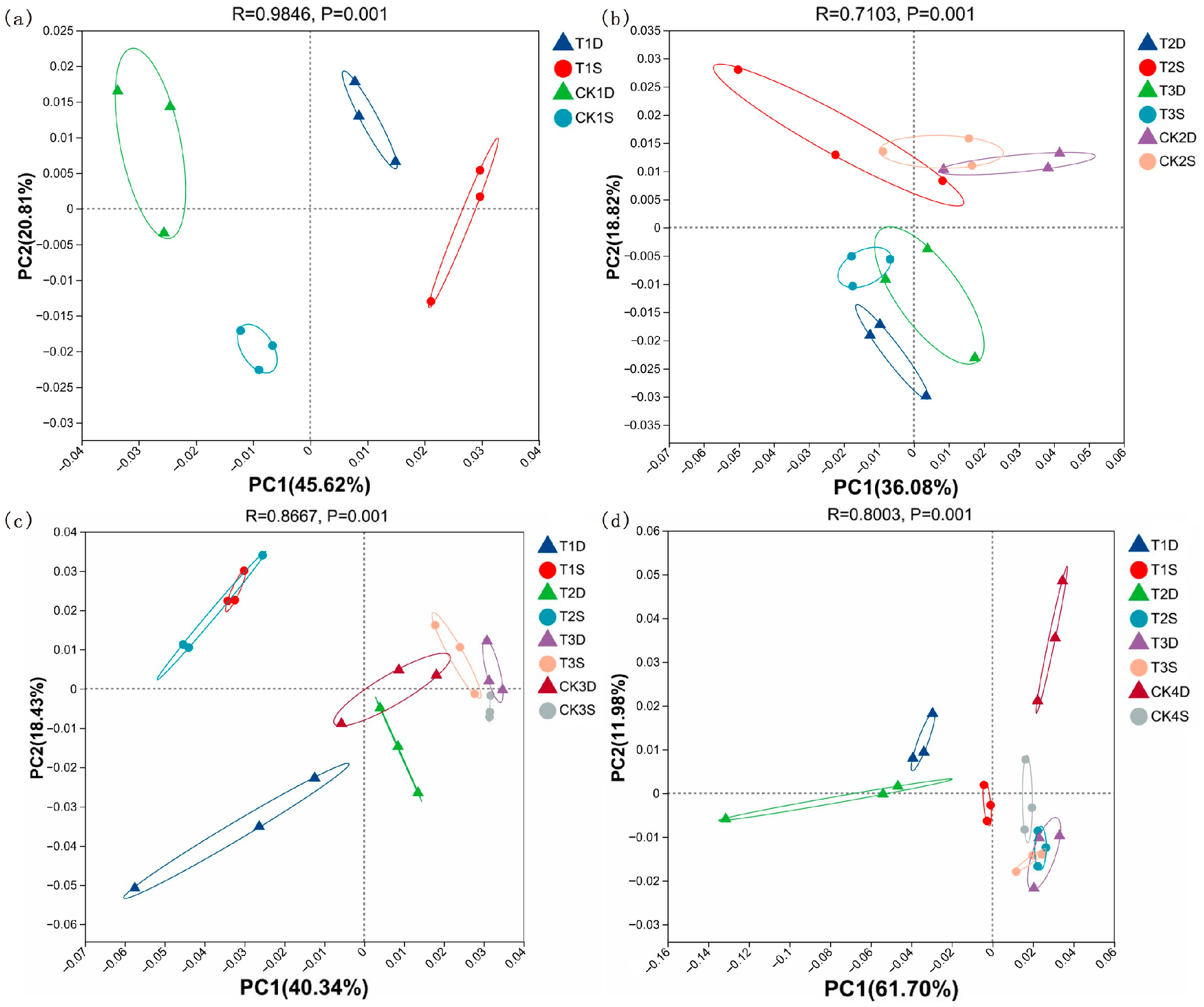
3.4.2. Soil Beta Diversity
3.4.3. Microbial Species Composition
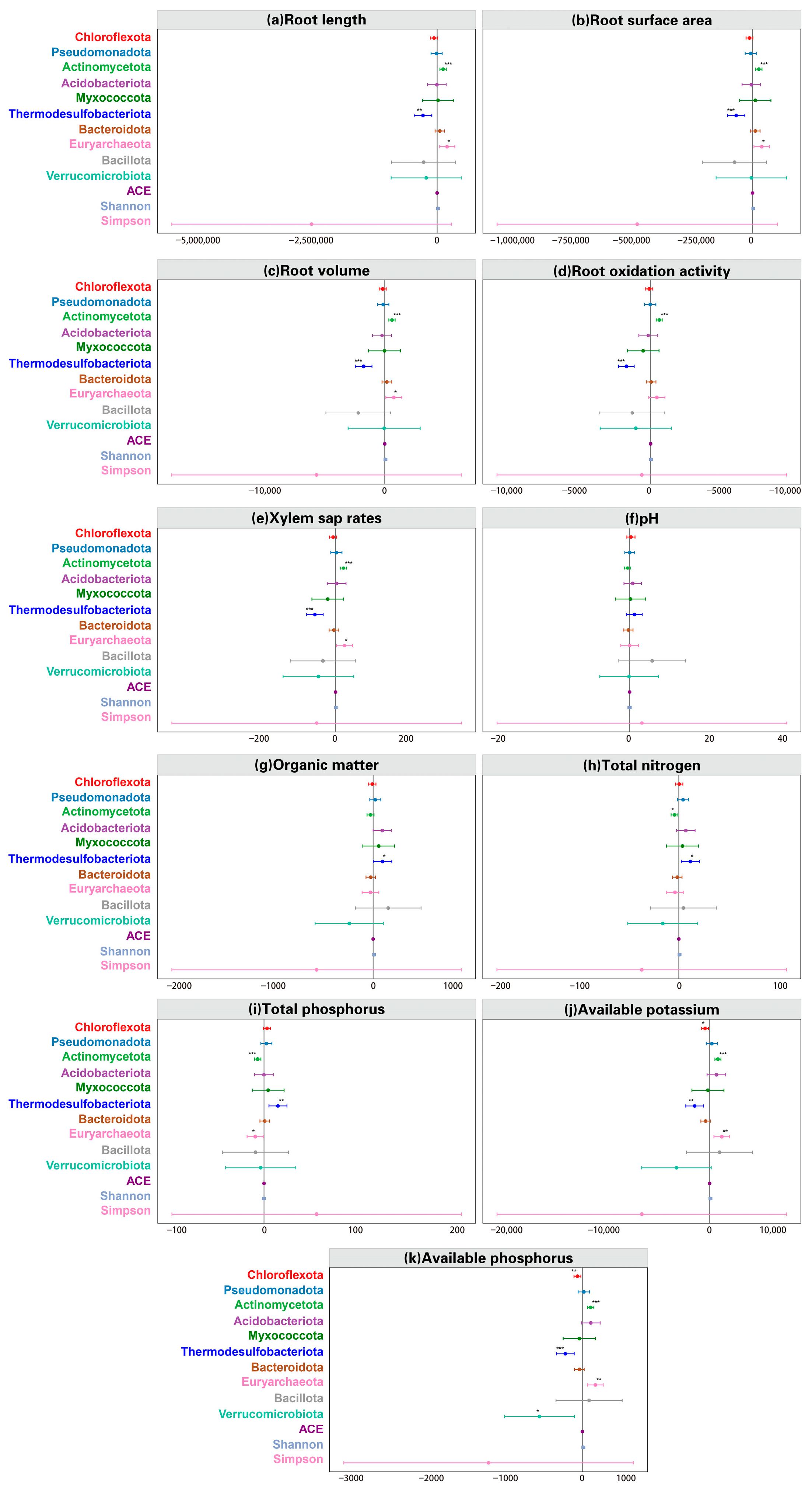
3.4.4. Linking Microbial Features to Plant and Soil Parameters
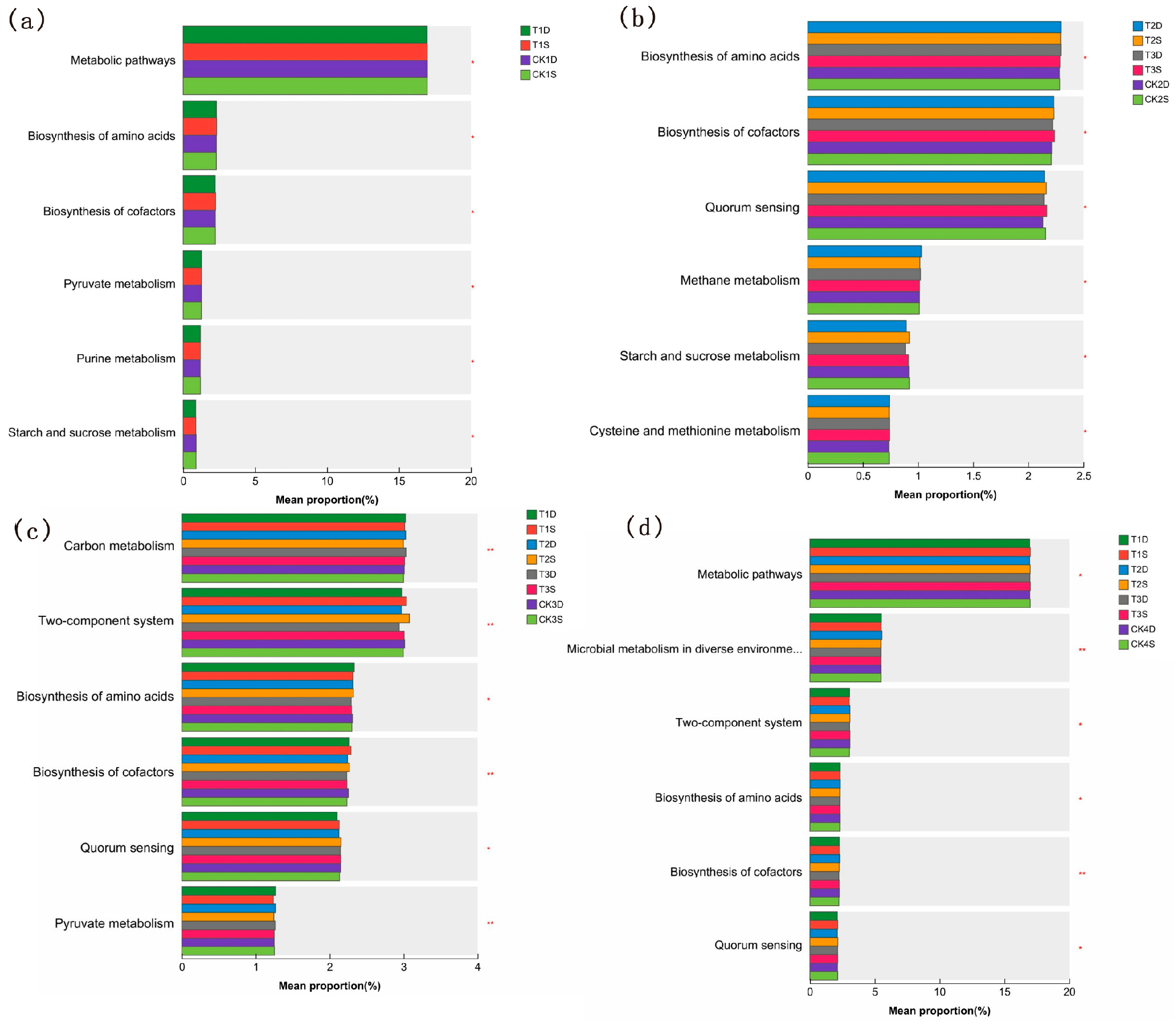
3.4.5. Predicted Functional Profiles of Microbial Communities
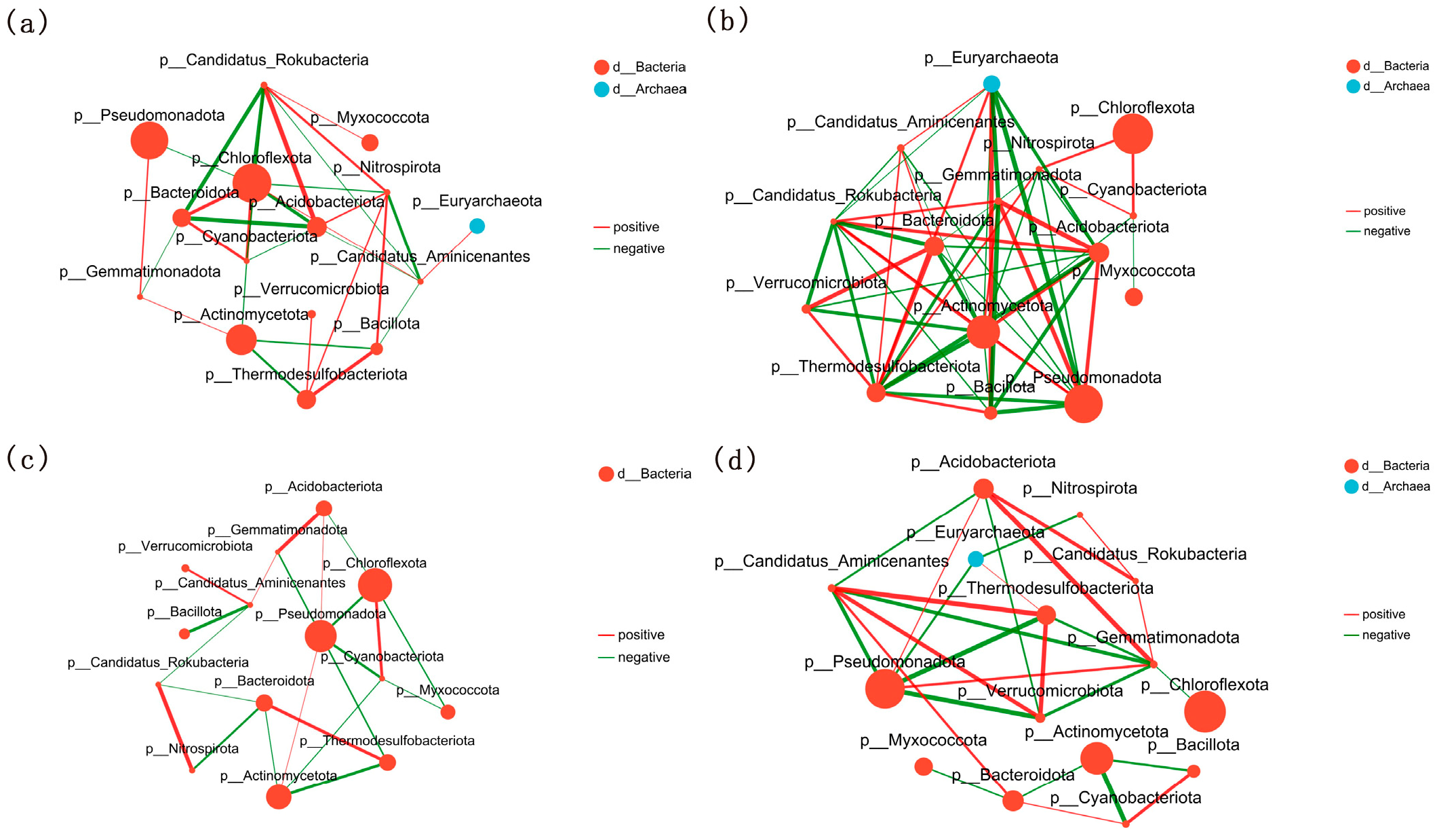
3.4.6. Microbial Correlation Network Analysis
3.5. WGCNA
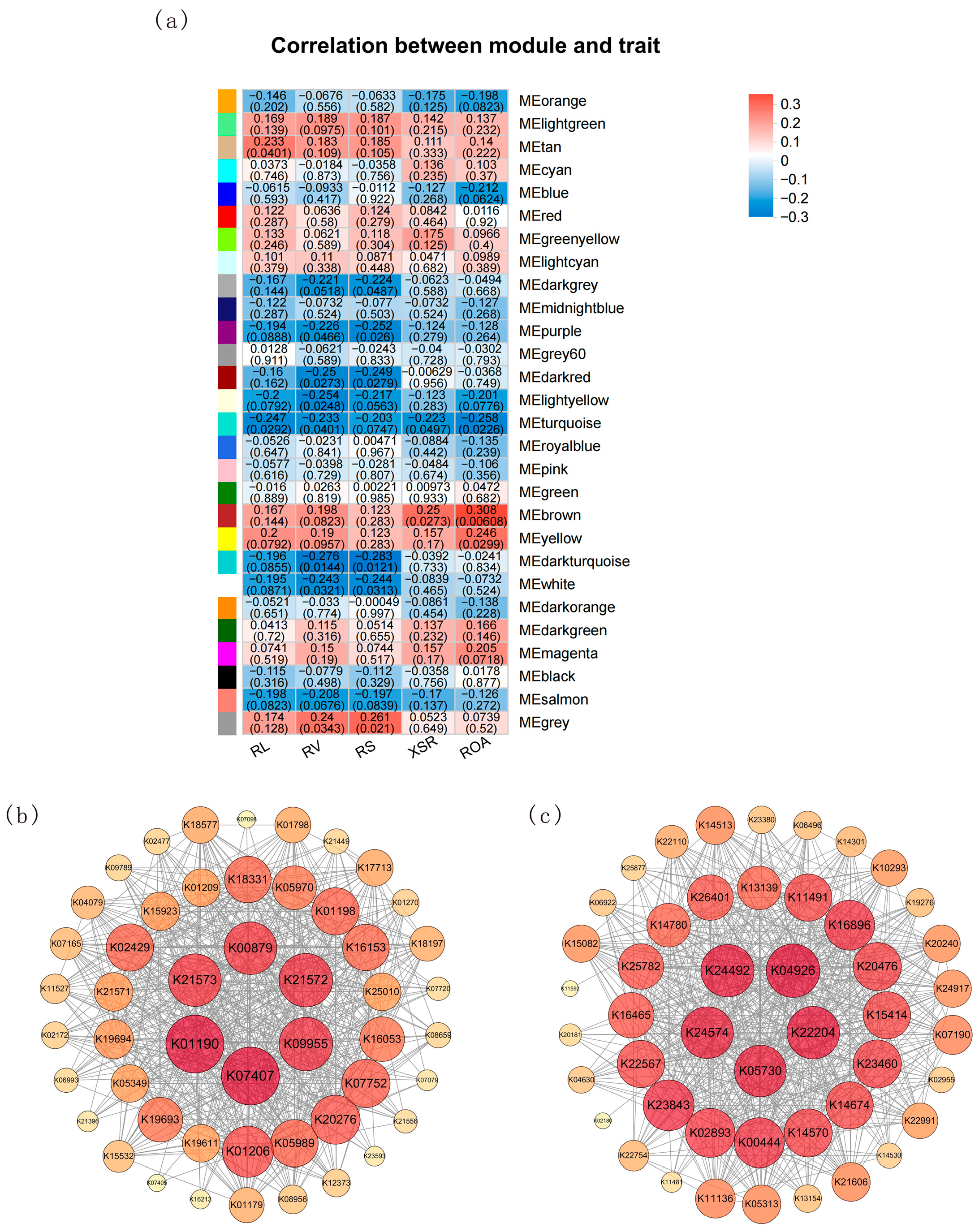
3.5.1. Modules and Hub Genes Associated with Root Traits
3.5.2. Modules and Hub Genes Associated with Soil Nutrients
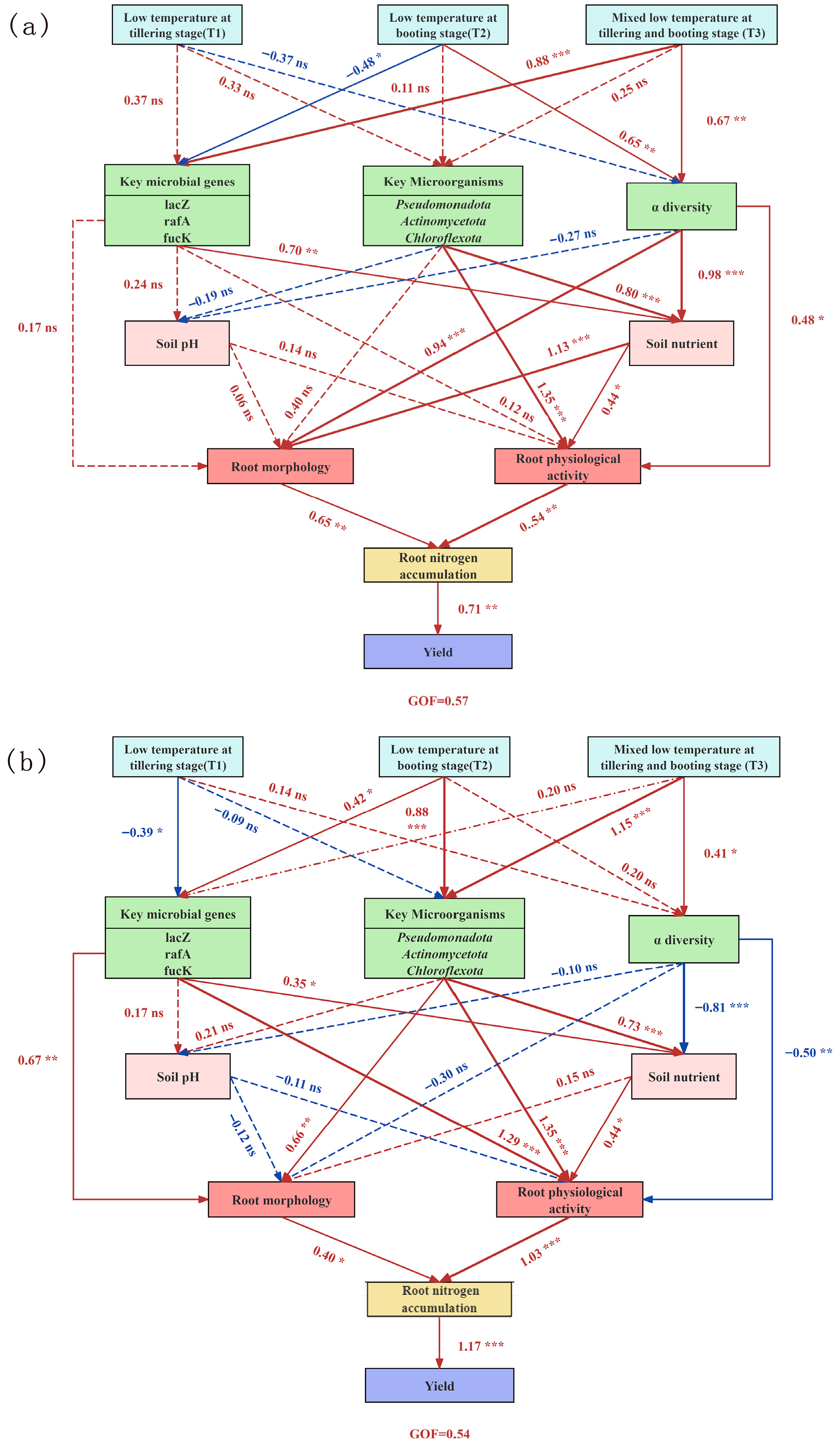
3.6. Integrated Pathways to Yield Loss Under Low-Temperature Treatments
4. Discussion
4.1. Low Temperature Impairs Root Functionality and Limits Yield
4.2. Low Temperature Alters the Rhizosphere Nutrient Availability
4.3. Microbial Community Composition and Functional Gene Regulated by Low Temperature
4.4. Integrative Model of Variety-Dependent Yield Loss Mechanisms Under Low-Temperature Treatment
5. Conclusions
Supplementary Materials
Author Contributions
Funding
Institutional Review Board Statement
Informed Consent Statement
Data Availability Statement
Acknowledgments
Conflicts of Interest
Abbreviations
| RL | Root length |
| RV | Root volume |
| RS | Root surface area |
| XSR | Xylem sap rate |
| ROA | Root oxidation activity |
| SOM | Soil organic matter |
| TN | Total nitrogen |
| TP | Total phosphorus |
| AP | Available phosphorus |
| AK | Available potassium |
References
- Verma, V.; Vishal, B.; Kohli, A.; Kumar, P.P. Systems-based rice improvement approaches for sustainable food and nutritional security. Plant Cell Rep. 2021, 40, 2021–2036. [Google Scholar] [CrossRef] [PubMed]
- Almeida, D.M.; Almadanim, M.C.; Lourenço, T.; Abreu, I.A.; Saibo, N.J.; Oliveira, M.M. Screening for abiotic stress tolerance in rice: Salt, cold, and drought. In Environmental Responses in Plants: Methods and Protocols; Springer: Berlin/Heidelberg, Germany, 2016; pp. 155–182. [Google Scholar]
- Teixeira, E.I.; Fischer, G.; Van Velthuizen, H.; Walter, C.; Ewert, F. Global hot-spots of heat stress on agricultural crops due to climate change. Agric. For. Meteorol. 2013, 170, 206–215. [Google Scholar] [CrossRef]
- Zheng, E.; Qin, M.; Chen, P.; Xu, T.; Zhang, Z. Climate change affects the utilization of light and heat resources in paddy field on the Songnen Plain, China. Agriculture 2022, 12, 1648. [Google Scholar] [CrossRef]
- Rativa, A.G.S.; de Araújo Junior, A.T.; da Silva Friedrich, D.; Gastmann, R.; Lamb, T.I.; dos Santos Silva, A.; Adamski, J.M.; Fett, J.P.; Ricachenevsky, F.K.; Sperotto, R.A. Root responses of contrasting rice genotypes to low temperature stress. J. Plant Physiol. 2020, 255, 153307. [Google Scholar] [CrossRef] [PubMed]
- Wang, P.; Hu, T.; Kong, F.; Xu, J.; Zhang, D. Rice exposure to cold stress in China: How has its spatial pattern changed under climate change? Eur. J. Agron. 2019, 103, 73–79. [Google Scholar] [CrossRef]
- Espe, M.B.; Hill, J.E.; Hijmans, R.J.; McKenzie, K.; Mutters, R.; Espino, L.A.; Leinfelder-Miles, M.; van Kessel, C.; Linquist, B.A. Point stresses during reproductive stage rather than warming seasonal temperature determine yield in temperate rice. Glob. Change Biol. 2017, 23, 4386–4395. [Google Scholar]
- Li, Z.; Qiu, Z.; Ge, H.; Du, C. Long-term dynamic of cold stress during heading and flowering stage and its effects on rice growth in China. Atmosphere 2022, 13, 103. [Google Scholar] [CrossRef]
- Byun, M.Y.; Cui, L.H.; Oh, T.K.; Jung, Y.-J.; Lee, A.; Park, K.Y.; Kang, B.G.; Kim, W.T. Homologous U-box E3 ubiquitin ligases OsPUB2 and OsPUB3 are involved in the positive regulation of low temperature stress response in rice (Oryza sativa L.). Front. Plant Sci. 2017, 8, 16. [Google Scholar] [CrossRef]
- Cruz, R.P.d.; Sperotto, R.A.; Cargnelutti, D.; Adamski, J.M.; de FreitasTerra, T.; Fett, J.P. Avoiding damage and achieving cold tolerance in rice plants. Food Energy Secur. 2013, 2, 96–119. [Google Scholar] [CrossRef]
- Liu, C.; Schläppi, M.R.; Mao, B.; Wang, W.; Wang, A.; Chu, C. The bZIP 73 transcription factor controls rice cold tolerance at the reproductive stage. Plant Biotechnol. J. 2019, 17, 1834–1849. [Google Scholar] [CrossRef]
- Xie, H.; Han, Y.; Li, X.; Dai, W.; Song, X.; Olsen, K.M.; Qiang, S. Climate-dependent variation in cold tolerance of weedy rice and rice mediated by OsICE1 promoter methylation. Mol. Ecol. 2020, 29, 121–137. [Google Scholar] [CrossRef]
- Zhang, Z.; Li, J.; Pan, Y.; Li, J.; Zhou, L.; Shi, H.; Zeng, Y.; Guo, H.; Yang, S.; Zheng, W. Natural variation in CTB4a enhances rice adaptation to cold habitats. Nat. Commun. 2017, 8, 14788. [Google Scholar] [CrossRef]
- Guo, S.; Guo, E.; Zhang, Z.; Dong, M.; Wang, X.; Fu, Z.; Guan, K.; Zhang, W.; Zhang, W.; Zhao, J. Impacts of mean climate and extreme climate indices on soybean yield and yield components in Northeast China. Sci. Total Environ. 2022, 838, 156284. [Google Scholar] [CrossRef]
- Hosokawa, N.; Doi, Y.; Kim, W.; Iizumi, T. Contrasting area and yield responses to extreme climate contributes to climate-resilient rice production in Asia. Sci. Rep. 2023, 13, 6219. [Google Scholar] [CrossRef]
- Xiong, T.; Du, S.; Zhang, H.; Zhang, X. Satellite observed reversal in trends of spring phenology in the middle-high latitudes of the Northern Hemisphere during the global warming hiatus. Glob. Change Biol. 2023, 29, 2227–2241. [Google Scholar] [CrossRef]
- Boyer, J.S. Plant productivity and environment. Science 1982, 218, 443–448. [Google Scholar] [CrossRef]
- Zhu, J.-K. Abiotic stress signaling and responses in plants. Cell 2016, 167, 313–324. [Google Scholar] [CrossRef]
- Allen, D.J.; Ort, D.R. Impacts of chilling temperatures on photosynthesis in warm-climate plants. Trends Plant Sci. 2001, 6, 36–42. [Google Scholar] [CrossRef] [PubMed]
- Li, P.H. Low Temperature Stress Physiology in Crops; CRC Press: Boca Raton, FL, USA, 2018. [Google Scholar]
- Paul, M.J.; Foyer, C.H. Sink regulation of photosynthesis. J. Exp. Bot. 2001, 52, 1383–1400. [Google Scholar] [CrossRef] [PubMed]
- Schulz, E.; Tohge, T.; Zuther, E.; Fernie, A.R.; Hincha, D.K. Flavonoids are determinants of freezing tolerance and cold acclimation in Arabidopsis thaliana. Sci. Rep. 2016, 6, 34027. [Google Scholar] [CrossRef] [PubMed]
- Subedi, K.; Gregory, P.J.; Summerfield, R.; Gooding, M. Cold temperatures and boron deficiency caused grain set failure in spring wheat (Triticum aestivum L.). Field Crops Res. 1998, 57, 277–288. [Google Scholar]
- Cheng, C.; Yun, K.-Y.; Ressom, H.W.; Mohanty, B.; Bajic, V.B.; Jia, Y.; Yun, S.J.; de los Reyes, B.G. An early response regulatory cluster induced by low temperature and hydrogen peroxide in seedlings of chilling-tolerant japonica rice. BMC Genom. 2007, 8, 175. [Google Scholar] [CrossRef]
- Jiang, L.; Han, J.; Cui, H.; Chu, Z.; Li, S.; Zhang, Y.; Ji, Y.; Wang, Q.; Li, X.; Wang, P. Effect of climate change on identification of delayed chilling damage of rice in China’s cold region. Agriculture 2024, 14, 1456. [Google Scholar] [CrossRef]
- Nakashima, K.; Tran, L.S.P.; Van Nguyen, D.; Fujita, M.; Maruyama, K.; Todaka, D.; Ito, Y.; Hayashi, N.; Shinozaki, K.; Yamaguchi-Shinozaki, K. Functional analysis of a NAC-type transcription factor OsNAC6 involved in abiotic and biotic stress-responsive gene expression in rice. Plant J. 2007, 51, 617–630. [Google Scholar] [CrossRef]
- Shimono, H.; Okada, M. Plasticity of rice tiller production is related to genotypic variation in the biomass response to elevated atmospheric CO2 concentration and low temperatures during vegetative growth. Environ. Exp. Bot. 2013, 87, 227–234. [Google Scholar] [CrossRef]
- Andaya, V.C.; Mackill, D.J. Mapping of QTLs associated with cold tolerance during the vegetative stage in rice. J. Exp. Bot. 2003, 54, 2579–2585. [Google Scholar] [CrossRef]
- Liu, Z.; Tao, L.; Liu, T.; Zhang, X.; Wang, W.; Song, J.; Yu, C.; Peng, X. Nitrogen application after low-temperature exposure alleviates tiller decrease in rice. Environ. Exp. Bot. 2019, 158, 205–214. [Google Scholar] [CrossRef]
- Shimono, H.; Hasegawa, T.; Iwama, K. Modeling the effects of water temperature on rice growth and yield under a cool climate: I. Model development. Agron. J. 2007, 99, 1327–1337. [Google Scholar] [CrossRef]
- Wang, W.; Chen, L.; Liu, Y.; Zeng, Y.; Wu, Z.; Tan, X.; Shi, Q.; Pan, X.; Zeng, Y. Effects of humidity-cold combined stress at the seedling stage in direct-seeded indica rice. Environ. Exp. Bot. 2021, 191, 104617. [Google Scholar] [CrossRef]
- Sun, Q.; Zhao, Y.; Zhang, Y.; Chen, S.; Ying, Q.; Lv, Z.; Che, X.; Wang, D. Heat stress may cause a significant reduction of rice yield in China under future climate scenarios. Sci. Total Environ. 2022, 818, 151746. [Google Scholar] [CrossRef] [PubMed]
- Wang, W.; Yuan, S.; Wu, C.; Yang, S.; Zhang, W.; Xu, Y.; Gu, J.; Zhang, H.; Wang, Z.; Yang, J. Field experiments and model simulation based evaluation of rice yield response to projected climate change in Southeastern China. Sci. Total Environ. 2021, 761, 143206. [Google Scholar] [CrossRef]
- Oliver, S.N.; Dennis, E.S.; Dolferus, R. ABA regulates apoplastic sugar transport and is a potential signal for cold-induced pollen sterility in rice. Plant Cell Physiol. 2007, 48, 1319–1330. [Google Scholar] [CrossRef] [PubMed]
- Lynch, J. Root architecture and plant productivity. Plant Physiol. 1995, 109, 7. [Google Scholar] [CrossRef] [PubMed]
- Petricka, J.J.; Winter, C.M.; Benfey, P.N. Control of Arabidopsis root development. Annu. Rev. Plant Biol. 2012, 63, 563–590. [Google Scholar] [CrossRef] [PubMed]
- Chapman, N.; Miller, A.J.; Lindsey, K.; Whalley, W.R. Roots, water, and nutrient acquisition: Let’s get physical. Trends Plant Sci. 2012, 17, 701–710. [Google Scholar]
- Liu, L.; Zhang, H.; Ju, C.; Xiong, Y.; Bian, J.; Zhao, B.; Yang, J. Changes in grain yield and root morphology and physiology of mid-season rice in the Yangtze River basin of China during the last 60 years. J. Agric. Sci. 2014, 6, 1. [Google Scholar] [CrossRef]
- Lynch, J.P. Rightsizing root phenotypes for drought resistance. J. Exp. Bot. 2018, 69, 3279–3292. [Google Scholar] [CrossRef]
- Yang, J.-C.; Zhang, H.; Zhang, J.-H. Root morphology and physiology in relation to the yield formation of rice. J. Integr. Agric. 2012, 11, 920–926. [Google Scholar] [CrossRef]
- Deng, Y.; Men, C.; Qiao, S.; Wang, W.; Gu, J.; Liu, L.; Zhang, Z.; Zhang, H.; Wang, Z.; Yang, J. Tolerance to low phosphorus in rice varieties is conferred by regulation of root growth. Crop J. 2020, 8, 534–547. [Google Scholar] [CrossRef]
- Kano-Nakata, M.; Gowda, V.R.; Henry, A.; Serraj, R.; Inukai, Y.; Fujita, D.; Kobayashi, N.; Suralta, R.R.; Yamauchi, A. Functional roles of the plasticity of root system development in biomass production and water uptake under rainfed lowland conditions. Field Crops Res. 2013, 144, 288–296. [Google Scholar] [CrossRef]
- Yadav, S.K. Cold stress tolerance mechanisms in plants. A review. Agron. Sustain. Dev. 2010, 30, 515–527. [Google Scholar] [CrossRef]
- Aroca, R.; Porcel, R.; Ruiz-Lozano, J.M. Regulation of root water uptake under abiotic stress conditions. J. Exp. Bot. 2012, 63, 43–57. [Google Scholar]
- Hsu, C.H.; Hsu, Y.T. Biochemical responses of rice roots to cold stress. Bot. Stud. 2019, 60, 14. [Google Scholar] [CrossRef]
- Neilson, K.A.; Scafaro, A.P.; Chick, J.M.; George, I.S.; Van Sluyter, S.C.; Gygi, S.P.; Atwell, B.J.; Haynes, P.A. The influence of signals from chilled roots on the proteome of shoot tissues in rice seedlings. Proteomics 2013, 13, 1922–1933. [Google Scholar] [CrossRef]
- Yang, Z.; Sasaki, O.; Shimotashiro, T. Studies on the low-temperature damage in rice seedlings: Effects of the soil moisture at low temperature on the growth of rice seedlings (crop morphology). Jpn. J. Crop Sci. 2002, 71, 96–101. [Google Scholar]
- Kirk, G.J. Rice root properties for internal aeration and efficient nutrient acquisition in submerged soil. New Phytol. 2003, 159, 185–194. [Google Scholar] [CrossRef]
- Lugtenberg, B.; Kamilova, F. Plant-growth-promoting rhizobacteria. Annu. Rev. Microbiol. 2009, 63, 541–556. [Google Scholar] [CrossRef]
- Zhou, J.; Xue, K.; Xie, J.; Deng, Y.; Wu, L.; Cheng, X.; Fei, S.; Deng, S.; He, Z.; Van Nostrand, J.D. Microbial mediation of carbon-cycle feedbacks to climate warming. Nat. Clim. Change 2012, 2, 106–110. [Google Scholar] [CrossRef]
- Grogan, P.; Michelsen, A.; Ambus, P.; Jonasson, S. Freeze–thaw regime effects on carbon and nitrogen dynamics in sub-arctic heath tundra mesocosms. Soil Biol. Biochem. 2004, 36, 641–654. [Google Scholar] [CrossRef]
- Sipes, K.; Buongiorno, J.; Steen, A.D.; Abramov, A.A.; Abuah, C.; Peters, S.L.; Gianonne, R.J.; Hettich, R.L.; Boike, J.; Garcia, S.L. Depth-specific distribution of bacterial MAGs in permafrost active layer in Ny Ålesund, Svalbard (79° N). Syst. Appl. Microbiol. 2024, 47, 126544. [Google Scholar]
- Naylor, D.; Coleman-Derr, D. Drought stress and root-associated bacterial communities. Front. Plant Sci. 2018, 8, 2223. [Google Scholar] [CrossRef] [PubMed]
- Liu, S.; Song, B.; Sehar, S.; Adil, M.F.; Lin, X.; Huo, J.; Zhao, X.; Riaz, M. Variations in rhizosphere soil dominant and pathogenic flora improve boron-efficient Beta vulgaris L. yield under boron deficit. J. Clean. Prod. 2024, 444, 141241. [Google Scholar] [CrossRef]
- Zheng, Y.; Cao, X.; Zhou, Y.; Ma, S.; Wang, Y.; Li, Z.; Zhao, D.; Yang, Y.; Zhang, H.; Meng, C. Purines enrich root-associated Pseudomonas and improve wild soybean growth under salt stress. Nat. Commun. 2024, 15, 3520. [Google Scholar] [CrossRef]
- Ding, S.; Liang, Y.; Wang, M.; Hu, R.; Song, Z.; Xu, X.; Zheng, L.; Shen, Z.; Chen, C. Less is more: A new strategy combining nanomaterials and PGPB to promote plant growth and phytoremediation in contaminated soil. J. Hazard. Mater. 2024, 469, 134110. [Google Scholar] [CrossRef]
- Hu, P.; Zhang, W.; Wanek, W.; Chen, J.; Abalos, D.; Zhao, J.; Xiao, D.; Hou, X.; Li, J.; Chen, H. Calcium-rich parent materials enhance multiple soil functions and bacterial network complexity. Commun. Earth Environ. 2025, 6, 797. [Google Scholar] [CrossRef]
- Wang, X.; Sale, P.; Wood, J.L.; Reddy, P.; Franks, A.E.; Clark, G.; Jin, J.; Rochfort, S.; Hunt, J.; Tang, C. Organic amendments enhance transpiration efficiency of corn plants via changes in soil microbial abundance and leaf hormones. Plant Soil 2024, 497, 549–565. [Google Scholar] [CrossRef]
- Zhang, L.; Feng, Y.; Zhao, Z.; Baoyin, B.; Cui, Z.; Wang, H.; Li, Q.; Cui, J. Macrogenomics-based analysis of the effects of intercropped soybean photosynthetic characteristics and nitrogen-assimilating enzyme activities on yield at different nitrogen levels. Microorganisms 2024, 12, 1220. [Google Scholar] [CrossRef]
- Jia, Y.; Zou, D.; Wang, J.; Liu, H.; Inayat, M.A.; Sha, H.; Zheng, H.; Sun, J.; Zhao, H. Effect of low water temperature at reproductive stage on yield and glutamate metabolism of rice (Oryza sativa L.) in China. Field Crops Res. 2015, 175, 16–25. [Google Scholar] [CrossRef]
- Yang, L.; Wang, Y.; Kobayashi, K.; Zhu, J.; Huang, J.; Yang, H.; Wang, Y.; Dong, G.; Liu, G.; Han, Y. Seasonal changes in the effects of free-air CO2 enrichment (FACE) on growth, morphology and physiology of rice root at three levels of nitrogen fertilization. Glob. Change Biol. 2008, 14, 1844–1853. [Google Scholar] [CrossRef]
- Steen, E. Usefulness of the Mesh Bag Method in Quantitative Root Studies; Blackwell Scientific Publications Ltd.: Oxford, UK, 1991; pp. 75–86. [Google Scholar]
- Ramasamy, S.; Berge, H.F.M.T.; Purushothaman, S. Yield formation in rice in response to drainage and nitrogen application. Field Crops Res. 1997, 51, 65–82. [Google Scholar] [CrossRef]
- Arai-Sanoh, Y.; Ishimaru, T.; Ohsumi, A.; Kondo, M. Effects of soil temperature on growth and root function in rice. Plant Prod. Sci. 2010, 13, 235–242. [Google Scholar] [CrossRef]
- Hirasawa, T.; Araki, T.; Matsuda, E.; Ishihara, K. On exudation rate from the base of the leaf blade in rice plants. Jpn. J. Crop 1983, 52, 574–581. [Google Scholar] [CrossRef]
- Liu, K.; Li, T.; Chen, Y.; Huang, J.; Qiu, Y.; Li, S.; Wang, H.; Zhu, A.; Zhuo, X.; Yu, F. Effects of root morphology and physiology on the formation and regulation of large panicles in rice. Field Crops Res. 2020, 258, 107946. [Google Scholar] [CrossRef]
- Jiang, M.; Li, S.; Li, H.; Jian, S.; Liu, F.; Li, X. Reprogramming of microbial community in barley root endosphere and rhizosphere soil by polystyrene plastics with different particle sizes. Sci. Total Environ. 2023, 866, 161420. [Google Scholar] [CrossRef]
- Duan, Y.; Wang, T.; Lei, X.; Cao, Y.; Liu, L.; Zou, Z.; Ma, Y.; Zhu, X.; Fang, W. Leguminous green manure intercropping changes the soil microbial community and increases soil nutrients and key quality components of tea leaves. Hortic. Res. 2024, 11, uhae018. [Google Scholar] [CrossRef]
- Lefroy, R.D.B.; Blair, G.J.; Strong, W.M. Changes in soil organic matter with cropping as measured by organic carbon fractions and 13C natural isotope abundance. Plant Soil 1993, 155, 399–402. [Google Scholar] [CrossRef]
- Gao, H.; Mao, H.; Zhang, X. Determination of lettuce nitrogen content using spectroscopy with efficient wavelength selection and extreme learning machine. Zemdirbyste-Agriculture 2015, 102, 51. [Google Scholar] [CrossRef]
- Olsen, S.R. Estimation of Available Phosphorus in Soils by Extraction with Sodium Bicarbonate; US Department of Agriculture: Washington, DC, USA, 1954. [Google Scholar]
- Walker, J.M.; Barber, S.A. Absorption of potassium and rubidium from the soil by corn roots. Plant Soil 1962, 17, 243–259. [Google Scholar] [CrossRef]
- Chen, S.; Zhou, Y.; Chen, Y.; Gu, J. Fastp: An ultra-fast all-in-one FASTQ preprocessor. Bioinformatics 2018, 34, i884–i890. [Google Scholar] [CrossRef] [PubMed]
- Noguchi, H.; Park, J.; Takagi, T. MetaGene: Prokaryotic gene finding from environmental genome shotgun sequences. Nucleic Acids Res. 2006, 34, 5623–5630. [Google Scholar] [CrossRef]
- Fu, L.; Niu, B.; Zhu, Z.; Wu, S.; Li, W. CD-HIT: Accelerated for clustering the next-generation sequencing data. Bioinformatics 2012, 28, 3150–3152. [Google Scholar] [CrossRef]
- Buchfink, B.; Xie, C.; Huson, D.H. Fast and sensitive protein alignment using DIAMOND. Nat. Methods 2015, 12, 59–60. [Google Scholar] [CrossRef]
- Xu, W.; Cui, K.; Xu, A.; Nie, L.; Huang, J.; Peng, S. Drought stress condition increases root to shoot ratio via alteration of carbohydrate partitioning and enzymatic activity in rice seedlings. Acta Physiol. Plant. 2015, 37, 9. [Google Scholar] [CrossRef]
- Sun, C.; Sun, B.; Chen, L.; Zhang, M.; Lu, P.; Wu, M.; Xue, Q.; Guo, Q.; Tang, D.; Lai, H. Harnessing biosynthesized selenium nanoparticles for recruitment of beneficial soil microbes to plant roots. Cell Host Microbe 2024, 32, 2148–2160.E7. [Google Scholar] [CrossRef]
- Gunawardena, T.; Fukai, S.; Blamey, F. Low temperature induced spikelet sterility in rice. II. Effects of panicle and root temperatures. Aust. J. Agric. Res. 2003, 54, 947–956. [Google Scholar] [CrossRef]
- Jiang, W.; Lee, J.; Chu, S.H.; Ham, T.H.; Woo, M.O.; Cho, Y.I.; Chin, J.H.; Han, L.; Xuan, Y.; Yuan, D. Genotype × environment interactions for chilling tolerance of rice recombinant inbred lines under different low temperature environments. Field Crops Res. 2010, 117, 226–236. [Google Scholar] [CrossRef]
- Sun, T.; Ruan, J.; Cao, T.; Yao, L.; Zhao, Z.; Zhang, J.; Li, J.; Deng, A.; Chen, H.; Gao, X. Effects of low-temperature stress during rice heading stage on carbon and nitrogen allocation in paddy eco-system of northeastern China. Front. Plant Sci. 2025, 16, 1484734. [Google Scholar] [CrossRef] [PubMed]
- Shi, F.; Zhu, S.; Li, H.; Zhang, B.; Liu, J.; Song, F. Further enhancement of cold tolerance in rice seedlings by Piriformospora indica collaborating with plant growth-promoting bacteria: Evidence from the antioxidant defense, osmoregulation, photosynthesis, and related genes. Plant Stress 2024, 14, 100656. [Google Scholar] [CrossRef]
- Yongbin, Q.; Summat, P.; Panyawut, N.; Sikaewtung, K.; Ditthab, K.; Tongmark, K.; Chakhonkaen, S.; Sangarwut, N.; Wasinanon, T.; Kaewmungkun, K. Identification of rice accessions having cold tolerance at the seedling stage and development of novel genotypic assays for predicting cold tolerance. Plants 2023, 12, 215. [Google Scholar] [CrossRef]
- Liu, J.; Ma, Q.; Hui, X.; Ran, J.; Ma, Q.; Wang, X.; Wang, Z. Long-term high-P fertilizer input decreased the total bacterial diversity but not phoD-harboring bacteria in wheat rhizosphere soil with available-P deficiency. Soil Biol. Biochem. 2020, 149, 107918. [Google Scholar] [CrossRef]
- Zheng, J.; Chen, J.; Pan, G.; Liu, X.; Zhang, X.; Li, L.; Bian, R.; Cheng, K.; Jinwei, Z. Biochar decreased microbial metabolic quotient and shifted community composition four years after a single incorporation in a slightly acid rice paddy from southwest China. Sci. Total Environ. 2016, 571, 206–217. [Google Scholar] [CrossRef] [PubMed]
- Zhang, J.; Song, K.; Jin, F.; Jia, F.; Liang, J.; Wang, F.; Zhang, J. A novel strategy of artificially regulating plant rhizosphere microbial community to promote plant tolerance to cold stress. Sci. Total Environ. 2024, 949, 175184. [Google Scholar] [CrossRef]
- Yamamori, K.; Ishiguro, S.; Ogasawara, K.; Lubba, K.M.; Fujino, K.; Onishi, K.; Sato, Y.; Kishima, Y. Anther transcriptomes in cold-tolerant rice cultivars tend to show insensitive responses. Plant Stress 2025, 15, 100700. [Google Scholar] [CrossRef]
- Xu, F.; Wang, Y.; Yang, J.; Zhang, X.; Wang, K.; Ding, F.; Pang, J.; Tong, L.; Bai, C.; Chen, S. Auxin-producing Pseudomonas recruited by root flavonoids increases rice rhizosheath formation through the bacterial histidine kinase under soil drying. Adv. Sci. 2025, 12, e00607. [Google Scholar] [CrossRef]
- Jia, Y.; Liu, H.; Qu, Z.; Wang, J.; Wang, X.; Wang, Z.; Yang, L.; Zhang, D.; Zou, D.; Zhao, H. Transcriptome sequencing and iTRAQ of different rice cultivars provide insight into molecular mechanisms of cold-tolerance response in japonica rice. Rice 2020, 13, 43. [Google Scholar] [CrossRef]
- Liu, K.; Wang, Q.; Sun, M.; Gao, S.; Liu, Q.; Shan, L.; Guo, J.; Bian, J. Soil bacterial communities of paddy are dependent on root compartment niches but independent of growth stages from Mollisols of Northeast China. Front. Microbiol. 2023, 14, 1170611. [Google Scholar] [CrossRef]
- Ma, Z.; Tian, M.; Tan, Y.; Cui, G.; Feng, Y.; Cui, Q.; Song, X. Response mechanism of the docosahexaenoic acid producer Aurantiochytrium under cold stress. Algal Res. 2017, 25, 191–199. [Google Scholar] [CrossRef]
- Dziurzynski, M.; Gorecki, A.; Pawlowska, J.; Istel, L.; Decewicz, P.; Golec, P.; Styczynski, M.; Poszytek, K.; Rokowska, A.; Gorniak, D. Revealing the diversity of bacteria and fungi in the active layer of permafrost at Spitsbergen island (Arctic)-Combining classical microbiology and metabarcoding for ecological and bioprospecting exploration. Sci. Total Environ. 2023, 856, 159072. [Google Scholar] [CrossRef] [PubMed]
- Mackelprang, R.; Burkert, A.; Haw, M.; Mahendrarajah, T.; Waldrop, M.P. Microbial survival strategies in ancient permafrost: Insights from metagenomics. ISME J. 2017, 11, 2305–2318. [Google Scholar] [CrossRef]
- Müller, S.; Hübschmann, T.; Kleinsteuber, S.; Vogt, C. High resolution single cell analytics to follow microbial community dynamics in anaerobic ecosystems. Methods 2012, 57, 338–349. [Google Scholar] [CrossRef]
- Müller, O.; Bang-Andreasen, T.; White, R.A., III; Elberling, B.; Taş, N.; Kneafsey, T.; Jansson, J.K.; Øvreås, L. Disentangling the complexity of permafrost soil by using high resolution profiling of microbial community composition, key functions and respiration rates. Environ. Microbiol. 2018, 20, 4328–4342. [Google Scholar] [CrossRef]
- Tripathi, B.M.; Min, H.; Jung, J.Y.; Nam, S.; Lee, Y.K. Distinct taxonomic and functional profiles of the microbiome associated with different soil horizons of a moist tussock tundra in Alaska. Front. Microbiol. 2019, 10, 1442. [Google Scholar] [CrossRef]
- Woodcroft, B.J.; Singleton, C.M.; Boyd, J.A.; Evans, P.N.; Emerson, J.B.; Zayed, A.A.F.; Hoelzle, R.D.; Lamberton, T.O.; Mccalley, C.K.; Hodgkins, S.B. Genome-centric view of carbon processing in thawing permafrost. Nature 2018, 8, 304. [Google Scholar] [CrossRef] [PubMed]
- Ligi, T.; Oopkaup, K.; Truu, M.; Preem, J.-K.; Nõlvak, H.; Mitsch, W.J.; Mander, Ü.; Truu, J. Characterization of bacterial communities in soil and sediment of a created riverine wetland complex using high-throughput 16S rRNA amplicon sequencing. Ecol. Eng. 2014, 72, 56–66. [Google Scholar] [CrossRef]
- Xie, Y.; Waqas, M.; Khan, M.U.; Lan, C.; Weng, P.; Zou, J.; Wu, X.; Lin, W.; Li, Z. Overexpression of the rice gene Lsi1 (low silicon gene 1) enhances plant-microbe interactions that result in improved chilling tolerance. Plant Growth Regul. 2022, 98, 525–538. [Google Scholar] [CrossRef]
- Huang, Y.; Yan, Y.; Ma, Y.; Zhang, X.; Zhao, Q.; Men, M.; Huang, Y.; Peng, Z. The effect of low-temperature straw-degrading microbes on winter wheat growth and soil improvement under straw return. Front. Microbiol. 2024, 15, 1391632. [Google Scholar] [CrossRef] [PubMed]
- Kour, D.; Yadav, A.N. Mitigation of low temperature stress and plant growth promotion in barley (Hordeum vulgare L.) by inoculation of psychrotrophic P-solubilizing Serratia nematodiphila EU-PW75. Cereal Res. Commun. 2023, 51, 527–535. [Google Scholar] [CrossRef]
- Wu, B.; Fu, M.; Du, J.; Wang, M.; Zhang, S.; Li, S.; Chen, J.; Zha, W.; Li, C.; Liu, K. Identification of the cold-related genes COLD11 and OsCTS11 via BSA-seq and fine mapping at the rice seedling stage. Rice 2024, 17, 72. [Google Scholar] [CrossRef]
- Xu, Q.; Yan, Y.; Wei, Q.; Wang, H.; Chi, C.; Pan, L.; Kong, Y.; Zhu, L.; Tian, W.; Zhang, J. Salicylic acid alleviates cold stress in Rice via regulating nutrient absorption, osmotic material content, antioxidation system, and expression of cold tolerance genes. J. Plant Growth Regul. 2025, 44, 3260–3272. [Google Scholar] [CrossRef]
- Shi, F.; He, X.; Cao, M.; Wu, R.; Zhang, B.; Xu, T.; Jiang, M.; Song, F. Strategies for plant-microbe symbiosis: Mycorrhizal fungi and helper bacteria to improve cold tolerance in rice. Plant Physiol. Biochem. 2025, 222, 109741. [Google Scholar] [CrossRef]
- Faragó, V.; Megyes, M.; Nagy, B.; Hengst, M.; Paquis, P.; Borsodi, A.K. Environmental characterization and impact of climatic fluctuations on the diversity of extremophilic bacterial communities of a high-altitude seasonal meltwater pond on Ojos del Salado (Dry Andes, Chile). Geomicrobiol. J. 2024, 41, 1008–1017. [Google Scholar] [CrossRef]
- Li, M.; Yue, T.; Han, J.; Wang, J.; Xiao, H.; Shang, F. Exogenous glucose irrigation alleviates cold stress by regulating soluble sugars, ABA and photosynthesis in melon seedlings. Plant Physiol. Biochem. 2024, 217, 109214. [Google Scholar] [CrossRef] [PubMed]
- Shi, H.; Ye, T.; Zhong, B.; Liu, X.; Chan, Z. Comparative proteomic and metabolomic analyses reveal mechanisms of improved cold stress tolerance in bermudagrass [Cynodon dactylon (L.) Pers.] by exogenous calcium. J. Integr. Plant Biol. 2014, 56, 1064–1079. [Google Scholar] [CrossRef] [PubMed]
- Yu, H.; Liu, Q.; Deng, Y.; Gu, S.-S.; Lu, G.-X.; Zhou, X.-L. Effects of reseeding and fertilization on bacterial communities in rhizosphere soil of alpine degraded grassland. Huan Jing Ke Xue = Huanjing Kexue 2024, 45, 7350–7357. [Google Scholar]
- Jalali, M.; Jalali, M. Effect of low-molecular-weight organic acids on the release of phosphorus from amended calcareous soils: Experimental and modeling. J. Soil Sci. Plant Nutr. 2022, 22, 4179–4193. [Google Scholar] [CrossRef]



| Year | Variety | Treatment | Effective Panicles (×104 hm−2) | Number of Grains per Panicle | Seed Setting Rate (%) | 1000-Grain Weight (g) | Yield (kg/hm2) |
|---|---|---|---|---|---|---|---|
| 2023 | DN428 | T0 | 382.68 a | 117.01 a | 97.94 a | 25.78 a | 8871.41 a |
| T1 | 363.66 b | 108.43 b | 92.79 b | 25.18 a | 7391.04 b | ||
| T2 | 379.06 a | 102.01 c | 81.76 c | 24.16 b | 6083.13 c | ||
| T3 | 345.68 c | 93.96 d | 71.65 d | 23.03 c | 4882.30 d | ||
| SJ10 | T0 | 370.21 a | 112.01 a | 96.76 a | 24.21 a | 8670.28 a | |
| T1 | 335.30 b | 101.73 b | 90.57 b | 23.28 a | 7056.12 b | ||
| T2 | 365.22 a | 96.01 c | 78.00 c | 22.09 b | 5782.06 c | ||
| T3 | 313.28 c | 86.96 d | 67.69 d | 21.27 c | 4692.51 d | ||
| 2024 | DN428 | T0 | 380.40 a | 116.67 a | 97.62 a | 25.34 a | 8815.75 a |
| T1 | 361.32 b | 107.86 b | 92.72 b | 24.93 a | 7338.44 b | ||
| T2 | 377.17 a | 101.67 c | 81.22 c | 23.88 b | 6077.95 c | ||
| T3 | 343.57 c | 93.48 d | 71.75 d | 22.72 c | 4850.21 d | ||
| SJ10 | T0 | 368.80 a | 111.62 a | 96.45 a | 24.07 a | 8611.52 a | |
| T1 | 332.75 b | 101.43 b | 90.15 b | 22.97 a | 7042.64 b | ||
| T2 | 364.14 a | 95.70 c | 77.55 c | 21.80 b | 5739.95 c | ||
| T3 | 310.52 c | 86.61 d | 68.16 d | 20.95 c | 4655.67 d | ||
| F-value | |||||||
| Y | 0.830 | 2.645 | 2.460 | 3.161 | 3.688 | ||
| T | 95.060 ** | 1833.364 ** | 3566.571 ** | 57.759 ** | 7821.107 ** | ||
| V | 92.482 ** | 669.796 ** | 201.938 ** | 118.995 ** | 177.649 ** | ||
| Y*T | 0.011 | 0.011 | 0.098 | 0.003 | 0.136 | ||
| Y*V | 0.002 | 0.040 | 0.485 | 0.034 | 0.001 | ||
| T*V | 5.403 ** | 3.088 * | 11.651 ** | 0.738 | 3.232 * | ||
| Y*T*V | 0.007 | 0.021 | 0.851 | 0.061 | 0.163 | ||
| Growth Stage | Variety | Treatment | Ace | Shannon | Simpson |
|---|---|---|---|---|---|
| Tillering | DN428 | CK1 | 38,684 a | 7.10 b | 0.0062 a |
| T1 | 38,281 a | 7.12 a | 0.0061 a | ||
| SJ10 | CK1 | 38,368 b | 7.10 a | 0.0064 a | |
| T1 | 38,910 a | 7.08 a | 0.0062 a | ||
| F-value | T | 0.364 | 2.414 | 3.433 | |
| V | 1.852 | 14.740 ** | 5.798 * | ||
| T*V | 16.835 ** | 15.643 ** | 0.151 | ||
| Meiosis | DN428 | CK2 | 37,960 a | 7.12 a | 0.0057 a |
| T2 | 38,106 a | 7.11 a | 0.0059 a | ||
| T3 | 38,429 a | 7.12 a | 0.0057 a | ||
| SJ10 | CK2 | 38,395 a | 7.11 a | 0.0060 a | |
| T2 | 38,394 a | 7.12 a | 0.0057 b | ||
| T3 | 38,492 a | 7.08 b | 0.0061 a | ||
| F-value | T | 0.737 | 2.556 | 1.805 | |
| V | 1.753 | 3.092 | 3.823 | ||
| T*V | 0.300 | 5.087 * | 6.203 * | ||
| DN428 | CK3 | 38,061 a | 7.08 b | 0.0062 a | |
| T1 | 38,128 a | 7.10 a | 0.0059 b | ||
| Full heading | T2 | 38,165 a | 7.12 a | 0.0060 b | |
| T3 | 38,033 a | 7.12 a | 0.0061 ab | ||
| SJ10 | CK3 | 38,441 a | 7.10 a | 0.0060 b | |
| T1 | 38,325 a | 7.06 b | 0.0064 a | ||
| T2 | 37,597 b | 7.11 a | 0.0056 c | ||
| T3 | 38,165 a | 7.09 a | 0.0062 b | ||
| F-value | T | 3.019 | 6.516 ** | 11.123 ** | |
| V | 0.131 | 7.062 * | 0.020 | ||
| T*V | 4.551 * | 6.267 ** | 18.466 ** | ||
| Mature | DN428 | CK4 | 38,064 a | 7.10 ab | 0.0058 a |
| T1 | 38,215 a | 7.11 a | 0.0058 a | ||
| T2 | 38,006 a | 7.07 b | 0.0059 a | ||
| T3 | 38,600 a | 7.10 ab | 0.0060 a | ||
| SJ10 | CK4 | 38,798 a | 7.10 a | 0.0060 ab | |
| T1 | 38,393 b | 7.09 a | 0.0061 ab | ||
| T2 | 38,483 ab | 7.10 a | 0.0058 b | ||
| T3 | 38,649 ab | 7.08 a | 0.0061 a | ||
| F-value | T | 2.126 | 1.134 | 1.772 | |
| V | 9.707 ** | 0.193 | 3.931 | ||
| T*V | 1.780 | 3.212 | 0.699 |
Disclaimer/Publisher’s Note: The statements, opinions and data contained in all publications are solely those of the individual author(s) and contributor(s) and not of MDPI and/or the editor(s). MDPI and/or the editor(s) disclaim responsibility for any injury to people or property resulting from any ideas, methods, instructions or products referred to in the content. |
© 2026 by the authors. Licensee MDPI, Basel, Switzerland. This article is an open access article distributed under the terms and conditions of the Creative Commons Attribution (CC BY) license.
Share and Cite
Liu, Z.; Jia, Y.; Gong, W.; Jin, J.; Fu, S.; Luo, Z.; Zhou, W.; Wang, J.; Zhao, H. Low Temperature Impacts Root Physiological Characteristics and Related Microbial Community Diversity in the Rhizosphere of Japonica Rice. Microorganisms 2026, 14, 632. https://doi.org/10.3390/microorganisms14030632
Liu Z, Jia Y, Gong W, Jin J, Fu S, Luo Z, Zhou W, Wang J, Zhao H. Low Temperature Impacts Root Physiological Characteristics and Related Microbial Community Diversity in the Rhizosphere of Japonica Rice. Microorganisms. 2026; 14(3):632. https://doi.org/10.3390/microorganisms14030632
Chicago/Turabian StyleLiu, Zhenyu, Yan Jia, Weibin Gong, Jian Jin, Shenyan Fu, Zhijie Luo, Wenhua Zhou, Jingguo Wang, and Hongwei Zhao. 2026. "Low Temperature Impacts Root Physiological Characteristics and Related Microbial Community Diversity in the Rhizosphere of Japonica Rice" Microorganisms 14, no. 3: 632. https://doi.org/10.3390/microorganisms14030632
APA StyleLiu, Z., Jia, Y., Gong, W., Jin, J., Fu, S., Luo, Z., Zhou, W., Wang, J., & Zhao, H. (2026). Low Temperature Impacts Root Physiological Characteristics and Related Microbial Community Diversity in the Rhizosphere of Japonica Rice. Microorganisms, 14(3), 632. https://doi.org/10.3390/microorganisms14030632