Bacterial Diversity of Arctic Soils with Long-Standing Pollution by Petroleum Products and Heavy Metals

 , ,
, ,  , and
, and
Abstract
1. Introduction
2. Materials and Methods
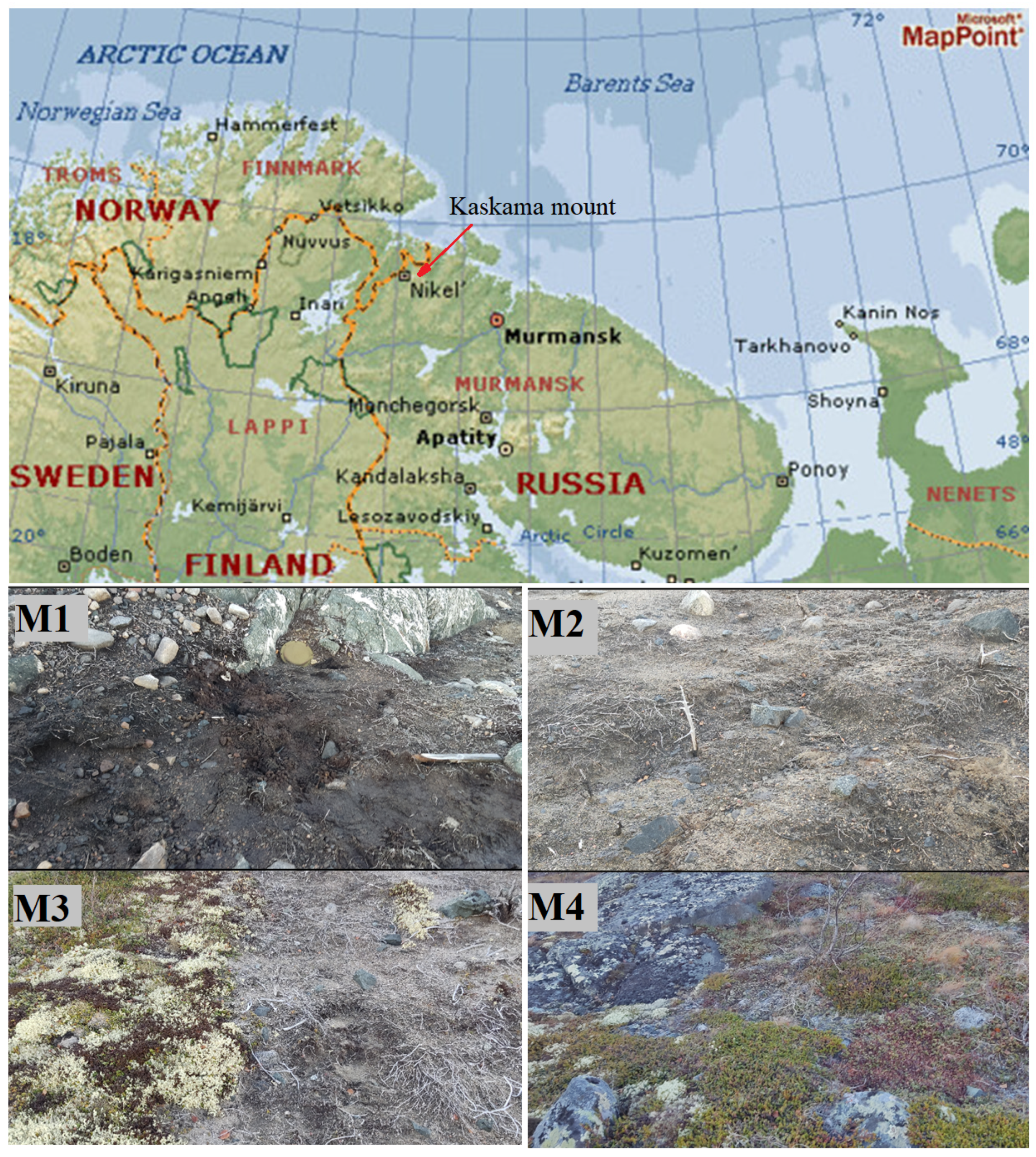
2.1. Site Description and Soil Sampling
2.2. Analytical Methods
2.3. Quantification of Culturable Bacterial Groups and Isolation of Pure Cultures
2.4. DNA Isolation and the 16S rRNA Gene V3–V4 Fragments Sequencing
2.5. Data Analysis
2.6. Nucleotide Sequence Accession Number
3. Results and Discussion
3.1. Physicochemical Characteristics of the Soil Samples and Culturable Bacteria
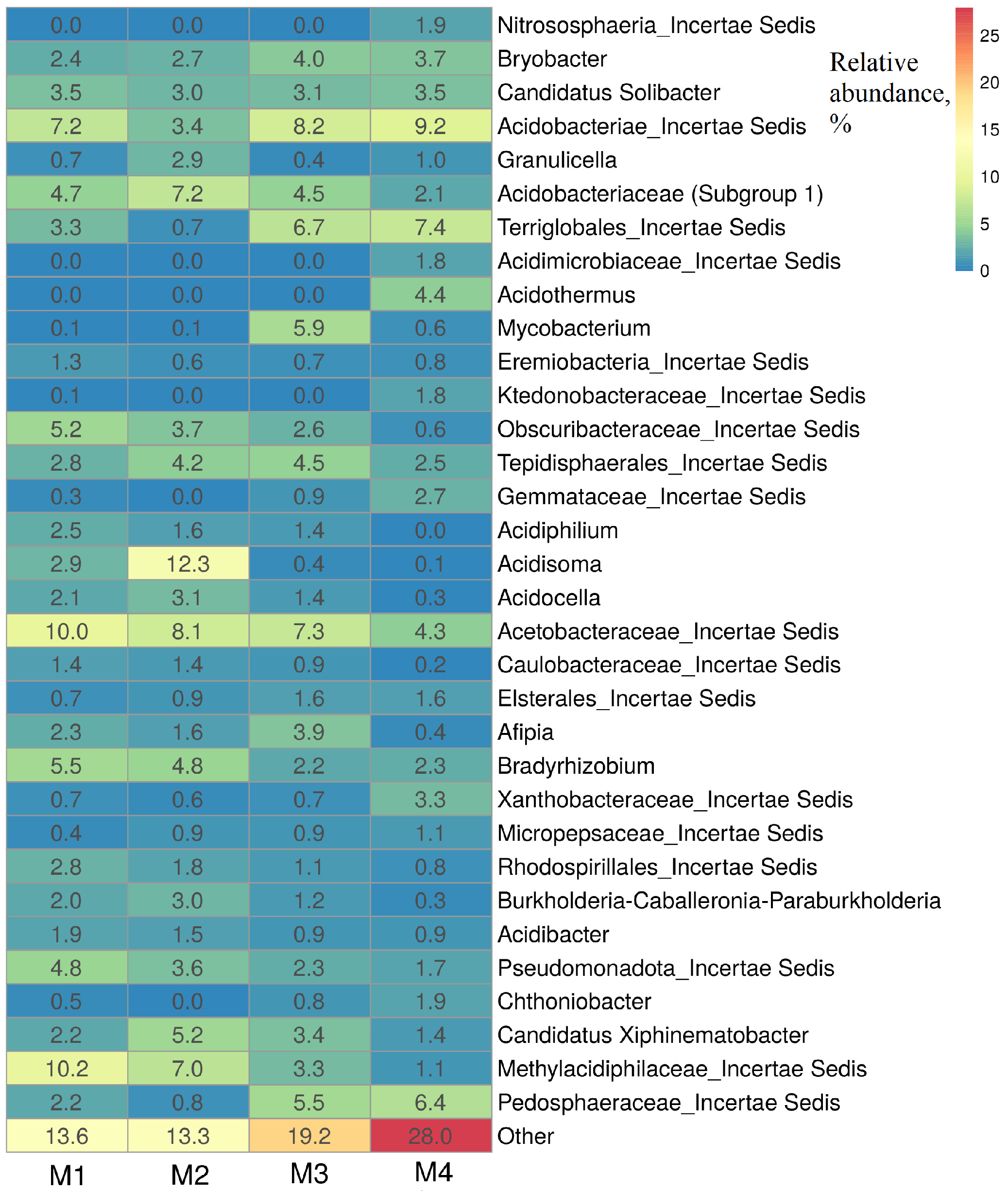
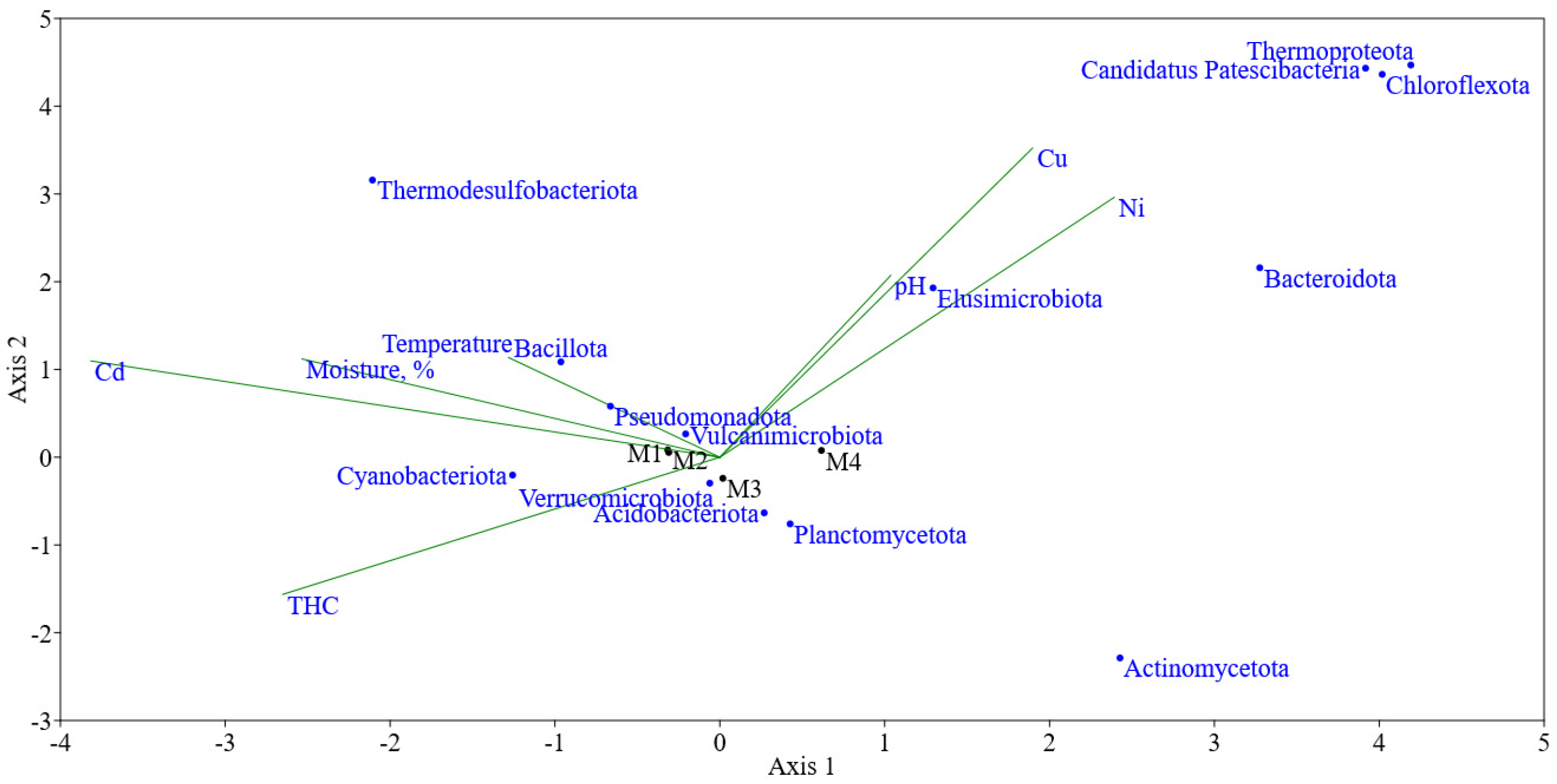
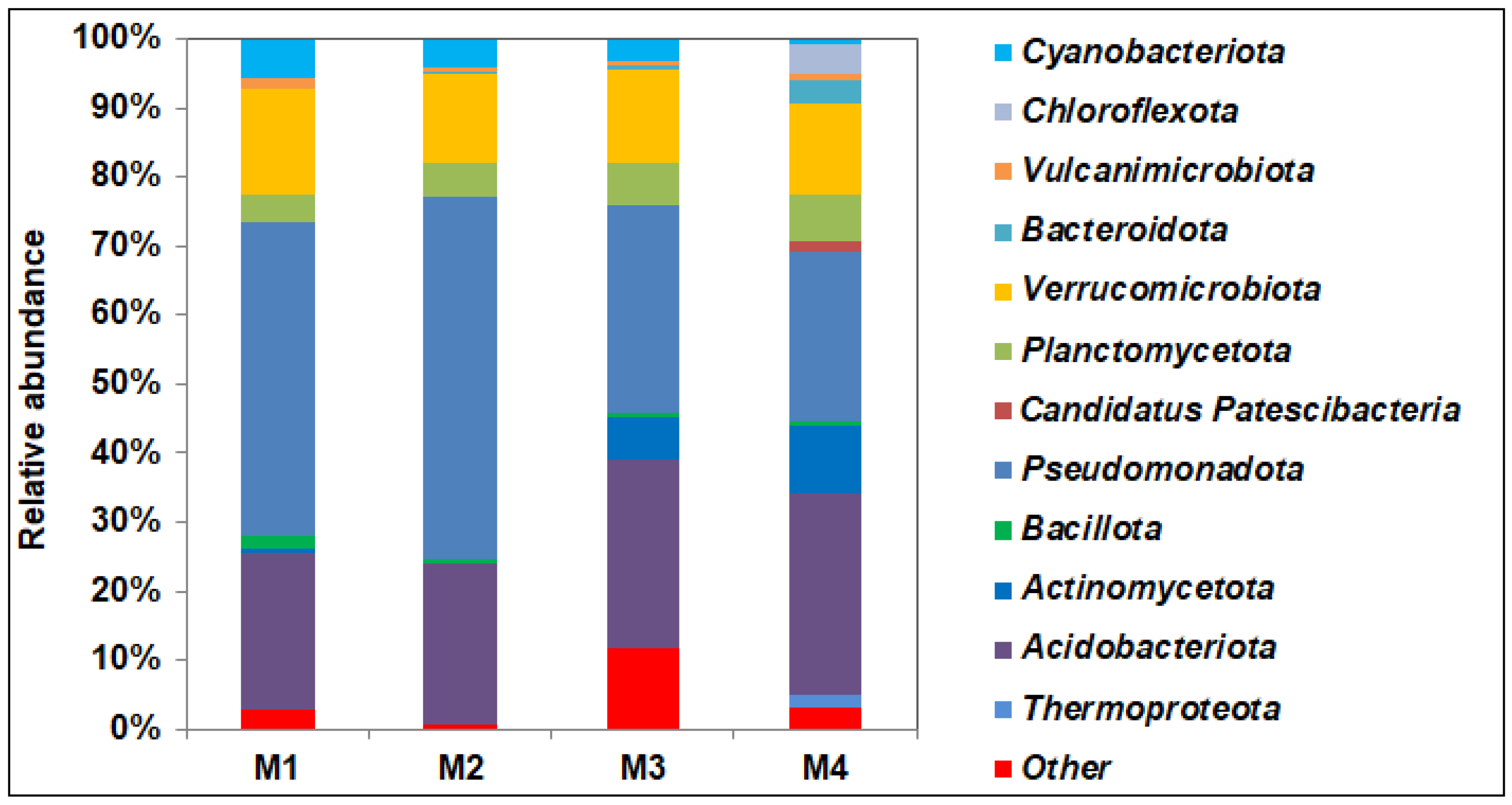
3.2. Prokaryotic Diversity
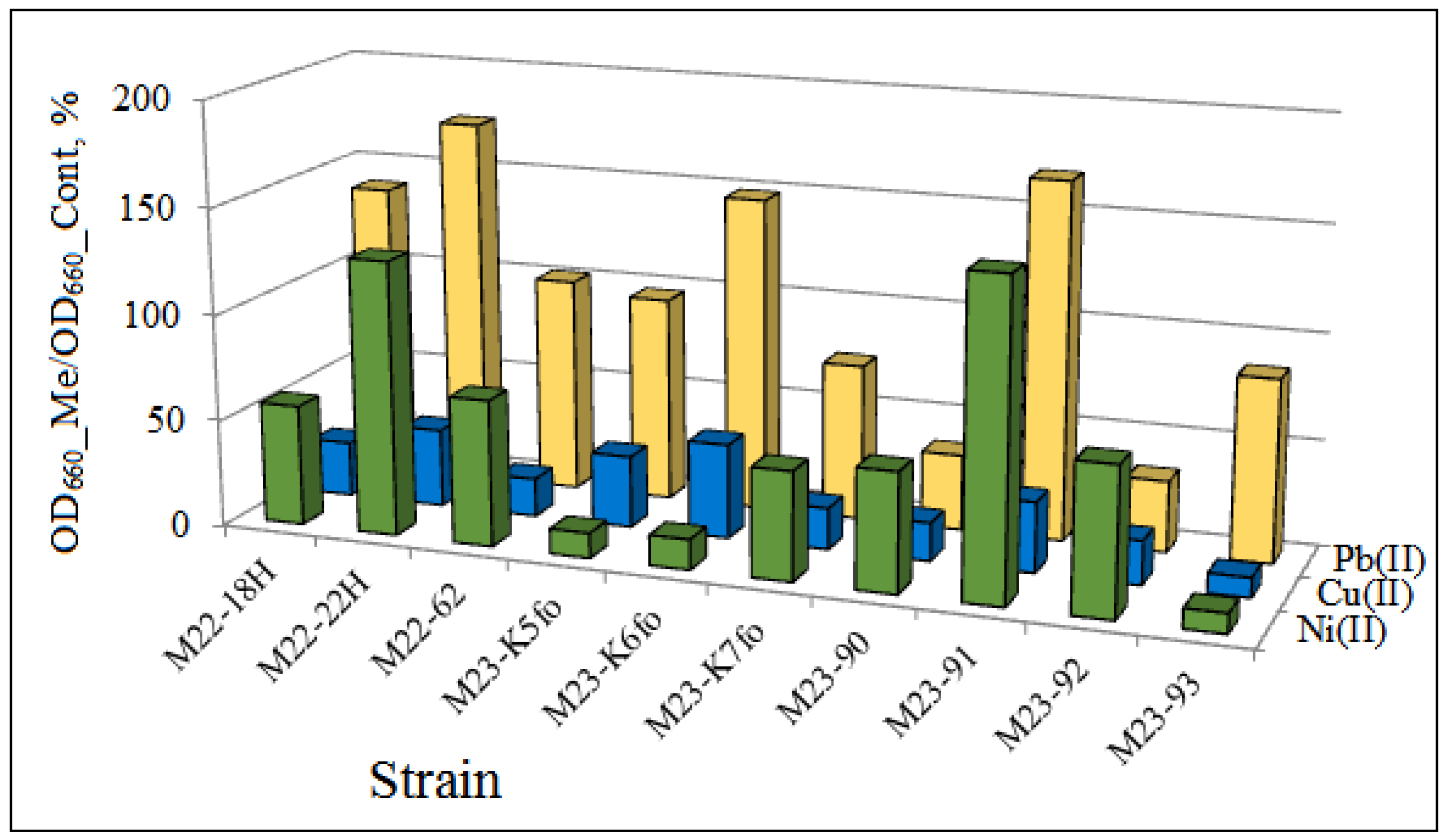
3.3. Culturable Hydrocarbon-Oxidizing Bacteria Isolated from Contaminated Soil
3.4. Culturable Fe(III)-Reducing Bacteria
4. Conclusions
Supplementary Materials
Author Contributions
Funding
Institutional Review Board Statement
Informed Consent Statement
Data Availability Statement
Acknowledgments
Conflicts of Interest
References
- Yergeau, E.; Sanschagrin, S.; Beaumier, D.; Greer, C.W. Metagenomic analysis of the bioremediation of diesel-contaminated Canadian high arctic soils. PLoS ONE 2012, 7, e30058. [Google Scholar] [CrossRef]
- Pandolfo, E.; Barra Caracciolo, A.; Rolando, L. Recent advances in bacterial degradation of hydrocarbons. Water 2023, 15, 375. [Google Scholar] [CrossRef]
- Wu, M.; Ye, X.; Chen, K.; Li, W.; Yuan, J.; Jiang, X. Bacterial community shift and hydrocarbon transformation during bioremediation of short-term petroleum-contaminated soil. Environ. Pollut. 2017, 223, 657–664. [Google Scholar] [CrossRef]
- Aislabie, J.M.; Balks, M.R.; Foght, J.M.; Waterhouse, E.J. Hydrocarbon spills on Antarctic soils: Effects and management. Environ. Sci. Technol. 2004, 38, 1265–1274. [Google Scholar] [CrossRef] [PubMed]
- Malard, L.A.; Pearce, D.A. Microbial diversity and biogeography in Arctic soils. Environ. Microbiol. Rep. 2018, 10, 611–625. [Google Scholar] [CrossRef]
- Garousin, H.; Pourbabaee, A.A.; Alikhani, H.A.; Yazdanfar, N. A combinational strategy mitigated old–aged petroleum contaminants: Ineffectiveness of biostimulation as a bioremediation technique. Front. Microbiol. 2021, 12, 642215. [Google Scholar] [CrossRef]
- Chernov, T.; Tkhakakhova, A.K.; Ivanova, E.A.; Kutovaya, O.V.; Turusov, V.I. Seasonal dynamics of the microbiome of chernozems of the long–term agrochemical experiment in Kamennaya Steppe. Eurasian Soil Sci. 2015, 48, 1349–1353. [Google Scholar] [CrossRef]
- Namsaraev, Z.; Bobrik, A.; Kozlova, A.; Krylova, A.; Rudenko, A.; Mitina, A.; Saburov, A.; Patrushev, M.; Karnachuk, O.; Toshchakov, S. Carbon emission and biodiversity of Arctic soil microbial communities of the Novaya Zemlya and Franz Josef Land Archipelagos. Microorganisms 2023, 11, 482. [Google Scholar] [CrossRef]
- Korneykova, M.V.; Myazin, V.A.; Fokina, N.V.; Chaporgina, A.A.; Nikitin, D.A.; Dolgikh, A.V. Structure of microbial communities and biological activity in tundra soils of the Euro-Arctic region (Rybachy peninsula, Russia). Microorganisms 2023, 11, 1352. [Google Scholar] [CrossRef]
- Semenova, E.M.; Babich, T.L.; Sokolova, D.S.; Dobriansky, A.S.; Korzun, A.V.; Kryukov, D.R. Microbial diversity of hydrocarbon-contaminated soils of the Franz Josef land Archipelago. Microbiology 2021, 90, 721–730. [Google Scholar] [CrossRef]
- Naseri, M.; Barabadi, A.; Barabady, J. Bioremediation treatment of hydrocarbon–contaminated Arctic soils: Influencing parameters. Environ. Sci. Pollut. Res. Int. 2014, 21, 11250–11265. [Google Scholar] [CrossRef]
- Yap, H.S.; Zakaria, N.N.; Zulkharnain, A.; Sabri, S.; Gomez–Fuentes, C.; Ahmad, S.A. Bibliometric analysis of hydrocarbon bioremediation in cold regions and a review on enhanced soil bioremediation. Biology 2021, 10, 354. [Google Scholar] [CrossRef]
- Das, N.; Chandran, P. Microbial degradation of petroleum hydrocarbon contaminants: An overview. Biotechnol. Res. Int. 2011, 2011, 941810. [Google Scholar] [CrossRef]
- Kumar, V.; Kumar, M.; Prasad, R. (Eds.) Microbial Action on Hydrocarbons; Springer: Singapore, 2018; 663p. [Google Scholar] [CrossRef]
- Margesin, R.; Schinner, F. Biodegradation of diesel oil by cold-adapted microorganisms in presence of sodium dodecyl sulfate. Chemosphere 1999, 38, 3463–3472. [Google Scholar] [CrossRef]
- Rivkina, E.M.; Friedmann, E.I.; Mckay, C.P.; Gilichinsky, D.A. Metabolic activity of permafrost bacteria below the freezing point. Appl. Environ. Microbiol. 2000, 66, 3230–3233. [Google Scholar] [CrossRef]
- D’Amico, S.; Collins, T.; Marx, J.C.; Feller, G.; Gerday, C. Psychrophilic microorganisms: Challenges for life. EMBO Rep. 2006, 4, 385–389. [Google Scholar] [CrossRef] [PubMed]
- Semenova, E.M.; Tourova, T.P.; Babich, T.L.; Logvinova, E.Y.; Sokolova, D.S.; Loiko, N.G.; Myazin, V.A.; Korneykova, M.V.; Mardanov, A.V.; Nazina, T.N. Crude oil degradation in temperatures below the freezing point by bacteria from hydrocarbon-contaminated arctic soils and the genome analysis of Sphingomonas sp. AR_OL41. Microorganisms 2024, 12, 79. [Google Scholar] [CrossRef]
- Borowik, A.; Wyszkowska, J.; Wyszkowski, M. Resistance of aerobic microorganisms and soil enzyme response to soil contamination with Ekodiesel Ultra fuel. Environ. Sci. Pollut. Res. Int. 2017, 24, 24346–24363. [Google Scholar] [CrossRef]
- Hatzinger, P.B.; Alexander, M. Effect of aging of chemicals in soil on their biodegradability and extractability. Environ. Sci. Technol. 1995, 29, 537–545. [Google Scholar] [CrossRef] [PubMed]
- Tang, J.; Lu, X.; Suna, Q.; Zhua, W. Aging effect of petroleum hydrocarbons in soil under different attenuation conditions. Agric. Ecosyst. Environ. 2012, 149, 109–117. [Google Scholar] [CrossRef]
- Heipieper, H.J.; Martínez, P.M. Toxicity of hydrocarbons to microorganisms. In Handbook of Hydrocarbon and Lipid Microbiology; Timmis, K.N., Ed.; Springer: Berlin/Heidelberg, Germany, 2010; pp. 1563–1573. [Google Scholar] [CrossRef]
- Tang, H.; Xiang, G.; Xiao, W.; Yang, Z.; Zhao, B. Microbial mediated remediation of heavy metals toxicity: Mechanisms and future prospects. Front. Plant Sci. 2024, 15, 1420408. [Google Scholar] [CrossRef] [PubMed]
- Lovley, D.R. Dissimilatory metal reduction. Annu. Rev. Microbiol. 1993, 47, 263–290. [Google Scholar] [CrossRef]
- Jobby, R.; Desai, N. Biodegradation and Bioremediation. Environmental Science and Engineering; Kumar, P., Gurjar, B.R., Govil, J.N., Eds.; Studium Press: New Delhi, India, 2017; Volume 1, pp. 201–220. [Google Scholar]
- Safonov, A.V.; Babich, T.L.; Sokolova, D.S.; Grouzdev, D.S.; Tourova, T.P.; Poltaraus, A.B.; Zakharova, E.V.; Merkel, A.Y.; Novikov, A.P.; Nazina, T.N. Microbial community and in situ bioremediation of groundwater by nitrate removal in the zone of a radioactive waste surface repository. Front. Microbiol. 2018, 9, 1985. [Google Scholar] [CrossRef]
- Saha, L.; Tiwari, J.; Bauddh, K.; Ma, Y. Recent developments in microbe-plant-based bioremediation for tackling heavy metal-polluted soils. Front. Microbiol. 2021, 12, 731723. [Google Scholar] [CrossRef] [PubMed]
- Abo-Alkasem, M.I.; Hassan, N.H.; Abo Elsoud, M.M. Microbial bioremediation as a tool for the removal of heavy metals. Bull. Natl. Res. Cent. 2023, 47, 31. [Google Scholar] [CrossRef]
- Kumar, A.; Maleva, M.; Bruno, L.B.; Rajkumar, M. Synergistic effect of ACC deaminase producing Pseudomonas sp. TR15a and siderophore producing Bacillus aerophilus TR15c for enhanced growth and copper accumulation in Helianthus annuus L. Chemosphere 2021, 276, 130038. [Google Scholar] [CrossRef]
- Tebo, B.M.; Obraztsova, A.Y. Sulfate-reducing bacterium grows with Cr (VI), U (VI), Mn (IV), and Fe (III) as electron acceptors. FEMS Microbiol. Lett. 1998, 162, 193–199. [Google Scholar] [CrossRef]
- Lloyd, J.R.; Sole, V.A.; Van Praagh, C.V.G.; Lovley, D.R. Direct and Fe (II)-mediated reduction of technetium by Fe (III)-reducing bacteria. Appl. Environ. Microbiol. 2000, 66, 3743–3749. [Google Scholar] [CrossRef]
- Caccavo, F.J.; Lonergan, D.J.; Lovley, D.R.; Davis, M.; Stolz, J.F.; McInerney, M.J. Geobacter sulfurreducens sp. nov., a hydrogen- and acetate-oxidizing dissimilatory metal-reducing microorganism. Appl. Environ. Microbiol. 1994, 60, 3752–3759. [Google Scholar] [CrossRef] [PubMed]
- Mohapatra, B.; Sarkar, A.; Joshi, S.; Chatterjee, A.; Kazy, S.K.; Maiti, M.K.; Satyanarayana, T.; Sar, P. An arsenate-reducing and alkane-metabolizing novel bacterium, Rhizobium arsenicireducens sp. nov., isolated from arsenic-rich groundwater. Arch. Microbiol. 2017, 199, 191–201. [Google Scholar] [CrossRef]
- Sandrin, T.R.; Maier, R.M. Impact of metals on the biodegradation of organic pollutants. Environ. Health Perspect. 2003, 111, 1093–1101. [Google Scholar] [CrossRef] [PubMed]
- Macdonald, C.A.; Yang, X.; Clark, I.M.; Zhao, F.J.; Hirsch, P.R.; McGrath, S.P. Relative impact of soil, metal source and metal concentration on bacterial community structure and community tolerance. Soil Biol. Biochem. 2010, 42, 1408–1417. [Google Scholar] [CrossRef]
- Liu, X.; Hu, X.; Cao, Y.; Pang, W.; Huang, J.; Guo, P.; Huang, L. Biodegradation of phenanthrene and heavy metal removal by acid-tolerant Burkholderia fungorum FM–2. Front. Microbiol. 2019, 10, 408. [Google Scholar] [CrossRef]
- Abdel-Moghny, T.; Mohamed, R.S.A.; El–Sayed, E.; Mohammed Aly, S.; Snousy, M.G. Effect of soil texture on remediation of hydrocarbons–contaminated soil at El–Minia District, Upper Egypt. ISRN Chem. Eng. 2012, 2012, 406598. [Google Scholar] [CrossRef]
- Evdokimova, G.; Masloboev, V.; Mozgova, N.; Myazin, V.; Fokina, N. Bioremediation of oil-polluted cultivated soils in the Euro-Arctic region. J. Environ. Sci. Eng. 2012, 1, 1130–1136. [Google Scholar]
- Dell’Anno, F.; Brunet, C.; van Zyl, L.J.; Trindade, M.; Golyshin, P.N.; Dell’Anno, A.; Ianora, A.; Sansone, C. Degradation of hydrocarbons and heavy metal reduction by marine bacteria in highly contaminated sediments. Microorganisms 2020, 8, 1402. [Google Scholar] [CrossRef]
- Mamet, S.D.; Jimmo, A.; Conway, A.; Teymurazyan, A.; Talebitaher, A.; Papandreou, Z.; Chang, Y.F.; Shannon, W.; Peak, D.; Siciliano, S.D. Soil buffering capacity can be used to optimize biostimulation of psychrotrophic hydrocarbon remediation. Environ. Sci. Technol. 2021, 55, 9864–9875. [Google Scholar] [CrossRef]
- Zeneli, A.; Kastanaki, E.; Simantiraki, F.; Gidarakos, E. Monitoring the biodegradation of TPH and PAHs in refinery solid waste by biostimulation and bioaugmentation. J. Environ. Chem. Eng. 2019, 7, 103054. [Google Scholar] [CrossRef]
- Gorovtsov, A.; Demin, K.; Sushkova, S.; Minkina, T.; Grigoryeva, T.; Dudnikova, T.; Barbashev, A.; Semenkov, I.; Romanova, V.; Laikov, A.; et al. The effect of combined pollution by PAHs and heavy metals on the topsoil microbial communities of Spolic Technosols of the lake Atamanskoe, Southern Russia. Environ. Geochem. Health 2022, 44, 1299–1315. [Google Scholar] [CrossRef] [PubMed]
- Myazin, V.A.; Korneykova, M.V.; Chaporgina, A.A.; Fokina, N.V.; Vasilyeva, G.K. The effectiveness of biostimulation, bioaugmentation and sorption-biological treatment of soil contaminated with petroleum products in the Russian Subarctic. Microorganisms 2021, 9, 1722. [Google Scholar] [CrossRef] [PubMed]
- Shishov, L.L.; Tonkonogov, V.D.; Lebedeva, I.I.; Gerasimova, M.I. Classification and Diagnostics of Soils in Russia; Smolensk: Tallinn, Estonia, 2004. (In Russian) [Google Scholar]
- IUSS Working Group WRB. World Reference Base for Soil Resources 2014: International Soil Classification System for Naming Soils and Creating Legends for Soil Maps; World Soil Resources Reports No. 106; FAO: Rome, Italy, 2014; p. 181. ISBN 978-92-5-108370-3. [Google Scholar]
- Borzenkov, I.A.; Milekhina, E.I.; Gotoeva, M.T.; Rozanova, E.P.; Belyaev, S.S. The properties of hydrocarbon oxidizing bacteria isolated from the oilfields of Tatarstan, Western Siberia, and Vietnam. Microbiology 2006, 75, 66–72. [Google Scholar] [CrossRef]
- Reasoner, D.J.; Geldreich, E.E. A new medium for the enumeration and subculture of bacteria from potable water. Appl. Environ. Microbiol. 1985, 9, 1–7. [Google Scholar] [CrossRef] [PubMed]
- Zakharova, I.R.; Parfenova, V.V. A method for cultivation of microorganisms oxidizing iron and manganese in bottom sediments of Lake Baikal. Biol. Bull. 2007, 34, 236–241. [Google Scholar] [CrossRef]
- Lovley, D.R.; Phillips, E.J.P. Organic matter mineralization with reduction of ferric iron in anaerobic sediments. Appl. Environ. Microbiol. 1986, 51, 683–689. [Google Scholar] [CrossRef]
- Pfennig, N.; Lippert, K.D. Über das vitamin B12—Bedürfnis phototropher Schweferelbakterien. Arch. Microbiol. 1966, 55, 245–256. [Google Scholar] [CrossRef]
- Lane, D.J. 16S/23S rRNA sequencing. In Nucleic Acid Techniques in Bacterial Systematics; Stackebrandt, E., Goodfellow, M., Eds.; John Wiley & Sons: New York, NY, USA, 1991; pp. 115–175. [Google Scholar]
- Frey, B.; Rime, T.; Phillips, M.; Stierli, B.; Hajdas, I.; Widmer, F.; Hartmann, M. Microbial diversity in European alpine permafrost and active layers. FEMS Microbol. Ecol. 2016, 92, fiw018. [Google Scholar] [CrossRef]
- Quast, C.; Pruesse, E.; Yilmaz, P.; Gerken, J.; Schweer, T.; Yarza, P.; Peplies, J.; Glöckner, F. The SILVA ribosomal RNA gene database project: Improved data processing and web-based tools. Nucleic Acids Res. 2013, 41, D590–D596. [Google Scholar] [CrossRef]
- Pruesse, E.; Quast, C.; Knittel, K.; Fuchs, B.M.; Ludwig, W.; Peplies, J.; Glöckner, F.O. SILVA: A comprehensive online resource for quality checked and aligned ribosomal RNA sequence data compatible with ARB. Nucleic Acids Res. 2007, 35, 7188–7196. [Google Scholar] [CrossRef] [PubMed]
- Edgar, R.C. UPARSE: Highly accurate OTU sequences from microbial amplicon reads. Nat. Methods 2013, 10, 996–998. [Google Scholar] [CrossRef]
- Edgar, R.C. Search and clustering orders of magnitude faster than BLAST. Bioinformatics 2010, 26, 2460–2461. [Google Scholar] [CrossRef]
- Rognes, T.; Flouri, T.; Nichols, B.; Quince, C.; Mahé, F. VSEARCH: A versatile open source tool for metagenomics. PeerJ 2016, 4, e2584. [Google Scholar] [CrossRef] [PubMed]
- Camacho, C.; Coulouris, G.; Avagyan, V.; Ma, N.; Papadopoulos, J.; Bealer, K.; Madden, T.L. BLAST+: Architecture and applications. BMC Bioinform. 2009, 10, 421. [Google Scholar] [CrossRef]
- Metsalu, T.; Vilo, J. ClustVis: A web tool for visualizing clustering of multivariate data using Principal Component Analysis and heatmap. Nucleic Acids Res. 2015, 43, W566–W570. [Google Scholar] [CrossRef]
- Hammer, Ø.; Harper, D.A.T.; Ryan, P.D. Past: Paleontological Statistics Software Package for education and data analysis. Palaeontol. Electron. 2001, 4, 1. [Google Scholar]
- Heberle, H.; Meirelles, G.V.; da Silva, F.R.; Telles, G.P.; Minghim, R. InteractiVenn: A web-based tool for the analysis of sets through Venn diagrams. BMC Bioinform. 2015, 16, 169. [Google Scholar] [CrossRef]
- Koyama, A.; Wallenstein, M.D.; Simpson, R.T.; Moore, J.C. Soil bacterial community composition altered by increased nutrient availability in Arctic tundra soils. Front. Microbiol. 2014, 5, 516. [Google Scholar] [CrossRef]
- Jiao, S.; Zhang, Z.; Yang, F.; Lin, Y.; Chen, W.; Wei, G. Temporal dynamics of microbial communities in microcosms in response to pollutants. Mol. Ecol. 2017, 26, 923–936. [Google Scholar] [CrossRef]
- Mukherjee, S.; Juottonen, H.; Siivonen, P.; Quesada, C.L.; Tuomi, P.; Pulkkinen, P.; Yrjälä, K. Spatial patterns of microbial diversity and activity in an aged creosote-contaminated site. ISME J. 2014, 8, 2131–2142. [Google Scholar] [CrossRef] [PubMed]
- Whyte, L.; Schultz, A.; Beilen, J.; Luz, A.; Pellizari, V.; Labbe’, D.; Greer, C.W. Prevalence of alkane monooxygenase genes in Arctic and Antarctic hydrocarbon-contaminated and pristine soils. FEMS Microbiol. Ecol. 2002, 41, 141–150. [Google Scholar] [CrossRef]
- Margesin, R.; Labbe, D.; Schinner, F.; Greer, C.; Whyte, L. Characterization of hydrocarbon–degrading microbial populations in contaminated and pristine alpine soils. Appl. Environ. Microbiol. 2003, 69, 3085–3092. [Google Scholar] [CrossRef] [PubMed]
- Kulichevskaya, I.S.; Suzina, N.E.; Liesack, W.; Dedysh, S.N. Bryobacter aggregatus gen. nov., sp. nov., a peat-inhabiting, aerobic chemo-organotroph from subdivision 3 of the Acidobacteria. Int. J. Syst. Evol. Microbiol. 2010, 60, 301–306. [Google Scholar] [CrossRef]
- Rawat, S.R.; Männistö, M.K.; Bromberg, Y.; Häggblom, M.M. Comparative genomic and physiological analysis provides insights into the role of Acidobacteria in organic carbon utilization in Arctic tundra soils. FEMS Microbiol. Ecol. 2012, 82, 341–355. [Google Scholar] [CrossRef]
- de Chaves, M.G.; Silva, G.G.Z.; Rossetto, R.; Edwards, R.A.; Tsai, S.M.; Navarrete, A.A. Acidobacteria subgroups and their metabolic potential for carbon degradation in sugarcane soil amended with vinasse and nitrogen fertilizers. Front. Microbiol. 2019, 10, 1680. [Google Scholar] [CrossRef] [PubMed]
- Barns, S.M.; Cain, E.C.; Sommerville, L.; Kuske, C.R. Acidobacteria phylum sequences in uranium–contaminated subsurface sediments greatly expand the known diversity within the phylum. Appl. Environ. Microbiol. 2007, 73, 3113–3116. [Google Scholar] [CrossRef] [PubMed]
- Gałązka, A.; Grządziel, J.; Gałązka, R.; Ukalska–Jaruga, A.; Strzelecka, J.; Smreczak, B. Genetic and functional diversity of bacterial microbiome in soils with long term impacts of petroleum hydrocarbons. Front. Microbiol. 2018, 9, 1923. [Google Scholar] [CrossRef]
- Belova, S.E.; Pankratov, T.A.; Detkova, E.N.; Kaparullina, E.N.; Dedysh, S.N. Acidisoma tundrae gen. nov., sp. nov. and Acidisoma sibiricum sp. nov., two acidophilic, psychrotolerant members of the Alphaproteobacteria from acidic northern wetlands. Int. J. Syst. Evol. Microbiol. 2009, 59, 2283–2290. [Google Scholar] [CrossRef]
- Li, L.; Liu, Z.; Zhang, M.; Meng, D.; Liu, X.; Wang, P.; Li, X.; Jiang, Z.; Zhong, S.; Jiang, C.; et al. Insights into the metabolism and evolution of the genus Acidiphilium, a typical acidophile in acid mine drainage. mSystems 2020, 5, e00867-20. [Google Scholar] [CrossRef]
- Jones, R.M.; Hedrich, S.; Johnson, D.B. Acidocella aromatica sp. nov.: An acidophilic heterotrophic alphaproteobacterium with unusual phenotypic traits. Extremophiles 2013, 17, 841–850. [Google Scholar] [CrossRef] [PubMed]
- Ahmad, I.; Hayat, S.; Ahmad, A.; Inam, A.; Samiullah. Metal and antibiotic resistance traits in Bradyrhizobium sp. (cajanus) isolated from soil receiving oil refinery wastewater. World J. Microbiol. Biotechnol. 2001, 17, 379–384. [Google Scholar] [CrossRef]
- Włodarczyk, A.; Lirski, M.; Fogtman, A.; Koblowska, M.; Bidziński, G.; Matlakowska, R. The oxidative metabolism of fossil hydrocarbons and sulfide minerals by the lithobiontic microbial community inhabiting deep subterrestrial Kupferschiefer Black Shale. Front. Microbiol. 2018, 9, 972. [Google Scholar] [CrossRef]
- Manucharova, N.A.; Bolshakova, M.A.; Babich, T.L.; Tourova, T.P.; Semenova, E.M.; Yanovich, A.S.; Poltaraus, A.B.; Stepanov, A.L.; Nazina, T.N. Microbial degraders of petroleum and polycyclic aromatic hydrocarbons from sod-podzolic soil. Microbiology 2021, 90, 743–753. [Google Scholar] [CrossRef]
- Banasiewicz, J.; Gumowska, A.; Hołubek, A.; Orzechowski, S. Adaptations of the genus Bradyrhizobium to selected elements, heavy metals and pesticides present in the soil environment. Curr. Issues Mol. Biol. 2025, 47, 205. [Google Scholar] [CrossRef] [PubMed]
- D’Incau, E.; Ouvrard, S.; Devers-Lamrani, M.; Jeandel, C.; Mohamed, C.E.; Henry, S. Biodegradation of a complex hydrocarbon mixture and biosurfactant production by Burkholderia thailandensis E264 and an adapted microbial consortium. Biodegradation 2024, 35, 719–737. [Google Scholar] [CrossRef]
- Pulschen, A.A.; Bendia, A.G.; Fricker, A.D.; Pellizari, V.H.; Galante, D.; Rodrigues, F. Isolation of uncultured bacteria from Antarctica using long incubation periods and low nutritional media. Front. Microbiol. 2017, 14, 1346. [Google Scholar] [CrossRef]
- Korshunova, T.Y.; Bakaeva, M.D.; Kuzina, E.V.; Rafikova, G.F.; Chetverikov, S.P.; Chetverikova, D.V.; Loginov, O.N. Role of bacteria of the genus Pseudomonas in the sustainable development of agricultural systems and environmental protection (Review). Appl. Biochem. Microbiol. 2021, 57, 281–296. [Google Scholar] [CrossRef]
- Aislabie, J.; Saul, D.J.; Foght, J.M. Bioremediation of hydrocarbon-contaminated polar soils. Extremophiles 2006, 10, 171–179. [Google Scholar] [CrossRef] [PubMed]
- Dobritsa, A.; Samadpour, M. Reclassification of Burkholderia insecticola as Caballeronia insecticola comb. nov. and reliability of conserved signature indels as molecular synapomorphies. Int. J. Syst. Evol. Microbiol. 2019, 69, 2057–2063. [Google Scholar] [CrossRef]
- Ara, I.; Moriuchi, R.; Dohra, H.; Kimbara, K.; Ogawa, N.; Shintani, M. Isolation and genomic analysis of 3-chlorobenzoate-degrading bacteria from soil. Microorganisms 2023, 11, 1684. [Google Scholar] [CrossRef]
- Li, J.; Ou, Y.; Wang, L.; Zheng, Y.; Xu, W.; Peng, J.; Zhang, X.; Cao, Z.; Ye, J. Responses of a polycyclic aromatic hydrocarbon-degrading bacterium, Paraburkholderia fungorum JT-M8, to Cd (II) under P–limited oligotrophic conditions. J. Hazard. Mater. 2024, 465, 133123. [Google Scholar] [CrossRef] [PubMed]
- Weon, H.-Y.; Kim, B.-Y.; Hong, S.-B.; Jeon, Y.-A.; Kwon, S.-W.; Go, S.; Koo, B.-S. Rhodanobacter ginsengisoli sp. nov. and Rhodanobacter terrae sp. nov., isolated from soil cultivated with Korean ginseng. Int. J. Syst. Evol. Microbiol. 2007, 57, 2810–2813. [Google Scholar] [CrossRef][Green Version]
- Hemme, C.L.; Deng, Y.; Gentry, T.J.; Fields, M.W.; Wu, L.; Barua, S.; Barry, K.; Tringe, S.G.; Watson, D.B.; He, Z.; et al. Metagenomic insights into evolution of a heavy metal–contaminated groundwater microbial community. ISME J. 2010, 4, 660–672. [Google Scholar] [CrossRef]
- Prakash, O.; Green, S.J.; Singh, P.; Jasrotia, P.; Kostka, J.E. Stress-related ecophysiology of members of the genus Rhodanobacter isolated from a mixed waste contaminated subsurface. Front. Environ. Sci. Eng. 2021, 15, 23. [Google Scholar] [CrossRef]
- Xu, R.; Zhang, Z.; Wang, L.; Yin, N.; Zhan, X. Surfactant-enhanced biodegradation of crude oil by mixed bacterial consortium in contaminated soil. Environ. Sci. Pollut. Res. 2018, 25, 14437–14446. [Google Scholar] [CrossRef] [PubMed]
- Melekhina, E.N.; Belykh, E.S.; Markarova, M.Y.; Taskaeva, A.A.; Rasova, E.E.; Baturina, O.A.; Kabilov, M.R.; Velegzhaninov, I.O. Soil microbiota and microarthropod communities in oil contaminated sites in the European Subarctic. Sci. Rep. 2021, 11, 19620. [Google Scholar] [CrossRef] [PubMed]
- Wang, J.; Chen, C. Biosorbents for heavy metals removal and their future. Biotechnol. Adv. 2009, 27, 195–226. [Google Scholar] [CrossRef]
- Neethu, C.S.; Mujeeb Rahiman, K.M.; Saramma, A.V.; Mohamed Hatha, A.A. Heavy metal resistance in Gram-negative bacteria isolated from Kongsfjord, Arctic. Can. J. Microbiol. 2015, 61, 429–435. [Google Scholar] [CrossRef]
- Chen, R.; Liu, H.; Zhang, P.; Ma, J.; Jin, M. Co-response of Fe-reducing/oxidizing bacteria and Fe species to the dynamic redox cycles of natural sediment. Sci. Total. Environ. 2022, 815, 152953. [Google Scholar] [CrossRef]
- Zavarzina, D.G.; Gavrilov, S.N.; Chistyakova, N.I.; Antonova, A.V.; Gracheva, M.A.; Merkel, A.Y.; Perevalova, A.A.; Chernov, M.S.; Zhilina, T.N.; Bychkov, A.Y.; et al. Syntrophic growth of alkaliphilic anaerobes controlled by ferric and ferrous minerals transformation coupled to acetogenesis. ISME J. 2020, 14, 425–436. [Google Scholar] [CrossRef]
- Lovley, D.R.; Giovannoni, S.J.; White, D.C.; Champine, J.E.; Phillips, E.J.; Gorby, Y.A.; Goodwin, S. Geobacter metallireducens gen. nov. sp. nov., a microorganism capable of coupling the complete oxidation of organic compounds to the reduction of iron and other metals. Arch. Microbiol. 1993, 159, 336–344. [Google Scholar] [CrossRef]
- Kaämpfer, P.; Lipski, A.; McInroy, J.A.; Clermont, D.; Lamothe, L.; Glaeser, S.P.; Criscuolo, A. Paenibacillus auburnensis sp. nov. and Paenibacillus pseudetheri sp. nov., isolated from the rhizosphere of Zea mays. Int. J. Syst. Evol. Microbiol. 2023, 73, 005808. [Google Scholar] [CrossRef]
- Saavedra-Tralma, D.; Gaete, A.; Merino-Guzmán, C.; Parada-Ibáñez, M.; Nájera-de Ferrari, F.; Jofré-Fernández, I. Functional and genomic evidence of L-arginine-dependent bacterial nitric oxide synthase activity in Paenibacillus nitricinens sp. nov. Biology 2025, 14, 733. [Google Scholar] [CrossRef]
- Daane, L.L.; Harjono, I.; Barns, S.M.; Launen, L.A.; Palleron, N.J.; Häggblom, M.M. PAH-degradation by Paenibacillus spp. and description of Paenibacillus naphthalenovorans sp. nov., a naphthalene-degrading bacterium from the rhizosphere of salt marsh plants. Int. J. Syst. Evol. Microbiol. 2002, 52, 131–139. [Google Scholar] [CrossRef]
- Ahmed, B.; Cao, B.; McLean, J.S.; Ica, T.; Dohnalkova, A.; Istanbullu, O.; Paksoy, A.; Fredrickson, J.K.; Beyenal, H. Fe(III) reduction and U(VI) immobilization by Paenibacillus sp. strain 300A, isolated from Hanford 300A subsurface sediments. Environ. Microbiol. 2012, 78, 8001–8009. [Google Scholar] [CrossRef]
- Li, O.; Lu, C.; Liu, A.; Zhu, L.; Wang, P.M.; Qian, C.D.; Jiang, X.H.; Wu, X.C. Optimization and characterization of polysaccharide-based bioflocculant produced by Paenibacillus elgii B69 and its application in wastewater treatment. Bioresour. Technol. 2013, 134, 87–93. [Google Scholar] [CrossRef] [PubMed]
- Grady, E.N.; MacDonald, J.; Liu, L.; Richman, A.; Yuan, Z.C. Current knowledge and perspectives of Paenibacillus: A review. Microb. Cell Fact. 2016, 15, 203. [Google Scholar] [CrossRef] [PubMed]
- Luo, Y.; Liao, M.; Zhang, Y.; Xu, N.; Xie, X.; Fan, Q. Cadmium resistance, microbial biosorptive performance and mechanisms of a novel biocontrol bacterium Paenibacillus sp. LYX–1. Environ. Sci. Pollut. Res. Int. 2022, 29, 68692–68706. [Google Scholar] [CrossRef]




| Year of Sampling, Site | Depth of Sampling, cm | Temperature, °C | Soil Humidity, % | pH of the Aqueous Soil Extract | TPH Content, mg/kg | Cu2+, mg/kg | Ni2+, mg/kg | Cd2+, mg/kg |
|---|---|---|---|---|---|---|---|---|
| 2022, October | ||||||||
| M22-1-(0–10) | 0–10 | 4.8 | >80 | 4.49 | 52,729 | 40.11 | 23.85 | 1.423 |
| M22-1-(10–20) | 10–20 | 5.1 | >80 | 4.37 | 64,530 | 27.91 | 22.84 | 1.446 |
| M22-2-(0–10) | 0–10 | 5.0 | 39 | 4.65 | 54,182 | 55.50 | 35.56 | 1.924 |
| M22-2-(10–20) | 10–20 | 4.8 | 46 | 4.28 | 115,079 | 16.55 | 16.07 | 1.244 |
| M22-3-(0–10) | 0–10 | 4.4 | 27 | 4.33 | 29,305 | 14.76 | 19.58 | 1.494 |
| M22-3-(10–15) | 10–15 | 4.7 | 20 | 4.46 | 34,008 | 19.50 | 24.13 | 0.522 |
| M22-4-(0–10) | 0–10 | 4.9 | 23 | 5.90 | 890 | 75.85 | 40.94 | 1.226 |
| M22-4-(10–15) | 10–15 | 5.0 | 32 | 6.39 | 183 | 21.20 | 15.61 | 0.191 |
| 2023, August | ||||||||
| M1 | 0–20 | 17.6 | 58 | 5.80 | 52,500 | 34.01 | 23.34 | 1.44 |
| M2 | 0–20 | 16.0 | 40 | 5.75 | 14,900 | 36.02 | 25.82 | 1.584 |
| M3 | 0–20 | 16.1 | 37 | 5.75 | 37,700 | 17.03 | 21.86 | 1.008 |
| M4 | 0–15 | 16.3 | 35 | 5.79 | 530 | 48.73 | 28.28 | 0.701 |
| APC * | 700 | 33.00 | 20.00 | 0.500 | ||||
| Standard error | ±0.1 | ±3.1 | ±0.03 | ±5.0 | ±0.01 | ±0.01 | ±0.001 |
| No. | Strain | Temperature Optimum, °C | NaCl Range (Optimum), % | Substrate * | Fe2+ Oxidation to Fe3+ |
|---|---|---|---|---|---|
| 1 | Pseudomonas hamedanensis M22-18H | 15–20 | 0–3.5 (1) | Ac, Eth, Gly, Suc, Pept | + ** |
| 2 | Pseudomonas yamanorum M22-22H | 15–25 | 0–8 (1–2) | Ac, Eth, Gly, Pept | + |
| 3 | Pseudomonas synxantha M22-62 | 20–30 | 0–5 (2) | Ac, Eth, Gly, Suc, Pept | + |
| 4 | Pseudomonas frederiksbergensis M23-K5fo | 20–25 | 0–7 (0–1) | Ac, Eth, Gly, Suc, Pept | + |
| 5 | Pseudomonas fluorescens M23-K6fo | 20–25 | 0–8 (0–1) | Ac, Gly, Pept | + |
| 6 | Pseudomonas synxantha M23-K7fo | 20–25 | 0–5 (2) | Ac, Eth, Gly, Suc, Pept | + |
| 7 | Caballeronia sordidicola M23-90 | 15–30 | 0–6 (0) | Gly, Pept | − |
| 8 | Rhodanobacter ginsengisoli M23-91 | 20 | 0–1 (0–0.5) | Eth, Gly, Suc, Pep | − |
| 9 | Caballeronia udeis M23-92 | 20 | 0–5 (0) | Ac, Gly, Pep | − |
| 10 | Paraburkholderia domus M23-93 | 25–28 | 0–5 (0) | Ac, Gly, Pep | − |
Disclaimer/Publisher’s Note: The statements, opinions and data contained in all publications are solely those of the individual author(s) and contributor(s) and not of MDPI and/or the editor(s). MDPI and/or the editor(s) disclaim responsibility for any injury to people or property resulting from any ideas, methods, instructions or products referred to in the content. |
© 2025 by the authors. Licensee MDPI, Basel, Switzerland. This article is an open access article distributed under the terms and conditions of the Creative Commons Attribution (CC BY) license.
Share and Cite
Semenova, E.M.; Babich, T.L.; Sokolova, D.S.; Myazin, V.A.; Korneykova, M.V.; Nazina, T.N. Bacterial Diversity of Arctic Soils with Long-Standing Pollution by Petroleum Products and Heavy Metals. Microorganisms 2026, 14, 55. https://doi.org/10.3390/microorganisms14010055
Semenova EM, Babich TL, Sokolova DS, Myazin VA, Korneykova MV, Nazina TN. Bacterial Diversity of Arctic Soils with Long-Standing Pollution by Petroleum Products and Heavy Metals. Microorganisms. 2026; 14(1):55. https://doi.org/10.3390/microorganisms14010055
Chicago/Turabian StyleSemenova, Ekaterina M., Tamara L. Babich, Diyana S. Sokolova, Vladimir A. Myazin, Maria V. Korneykova, and Tamara N. Nazina. 2026. "Bacterial Diversity of Arctic Soils with Long-Standing Pollution by Petroleum Products and Heavy Metals" Microorganisms 14, no. 1: 55. https://doi.org/10.3390/microorganisms14010055
APA StyleSemenova, E. M., Babich, T. L., Sokolova, D. S., Myazin, V. A., Korneykova, M. V., & Nazina, T. N. (2026). Bacterial Diversity of Arctic Soils with Long-Standing Pollution by Petroleum Products and Heavy Metals. Microorganisms, 14(1), 55. https://doi.org/10.3390/microorganisms14010055