Dietary Pediocin Supplementation Restores Intestinal Barrier Function and Microbiota Balance in Salmonella-Infected Specific-Pathogen-Free Chickens
 ,
,
Abstract
1. Introduction
2. Materials and Methods
2.1. Preparation of Bacteriocins
2.2. Culture and Handling of Salmonella pullorum
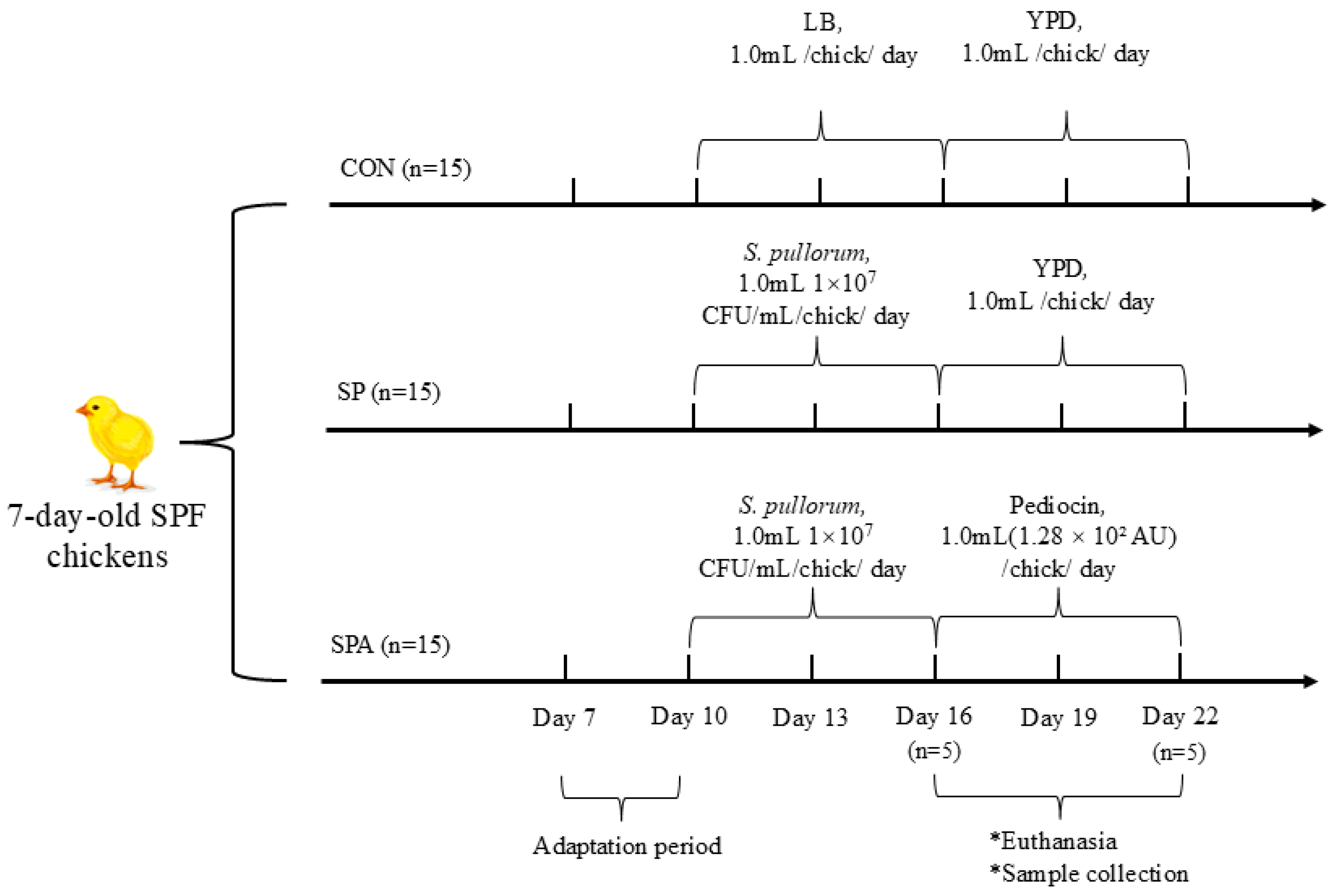
2.3. Animal Experiments
2.4. Sample Collection
2.5. Total RNA Extraction and Quantitative Real-Time Polymerase Chain Reaction (PCR) to Determine the Transcript Levels of Relevant Genes in the Jejunum
2.6. Histological Assessment
2.7. Microbiota Analysis
2.8. Statistical Analysis
3. Results
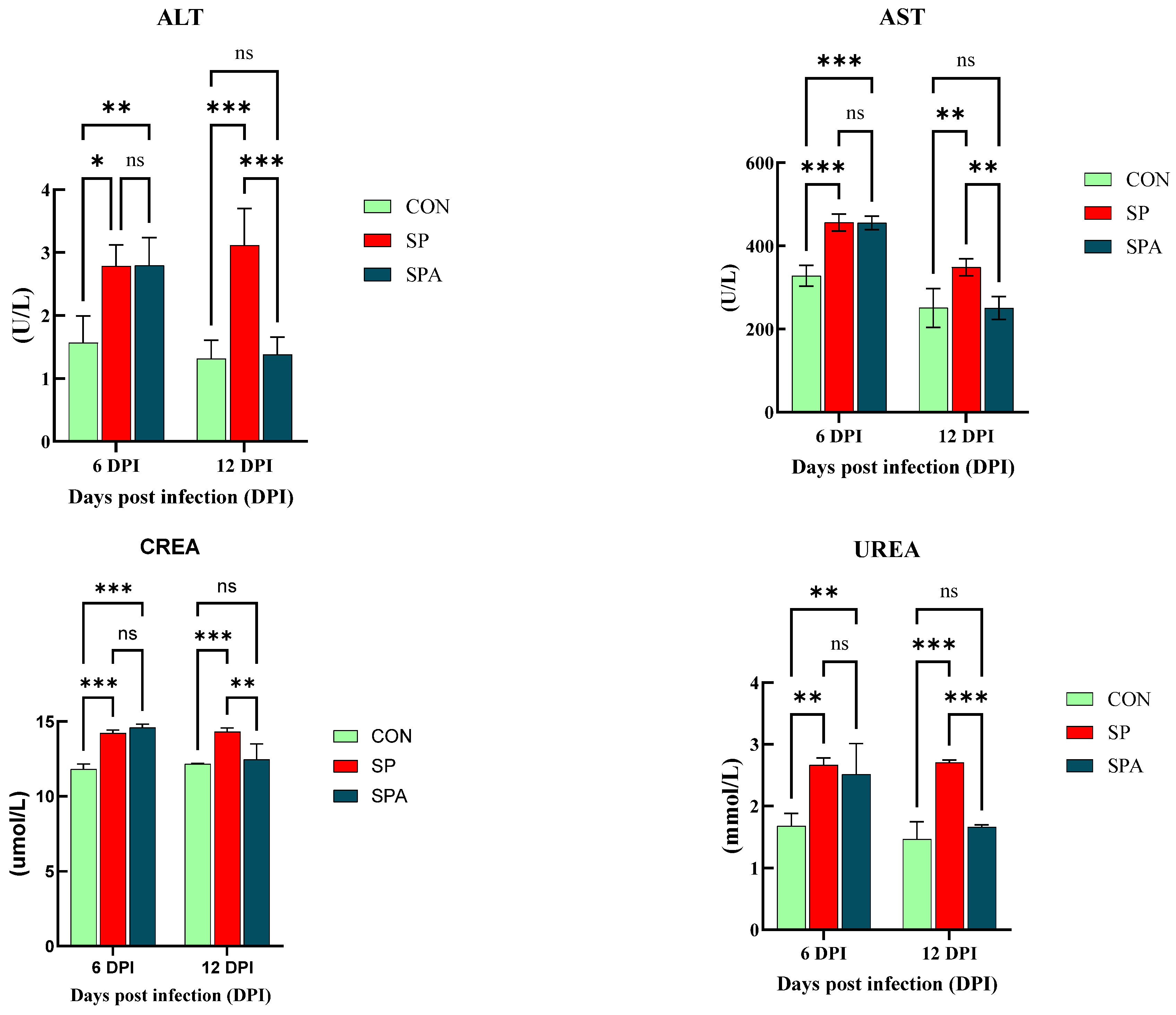
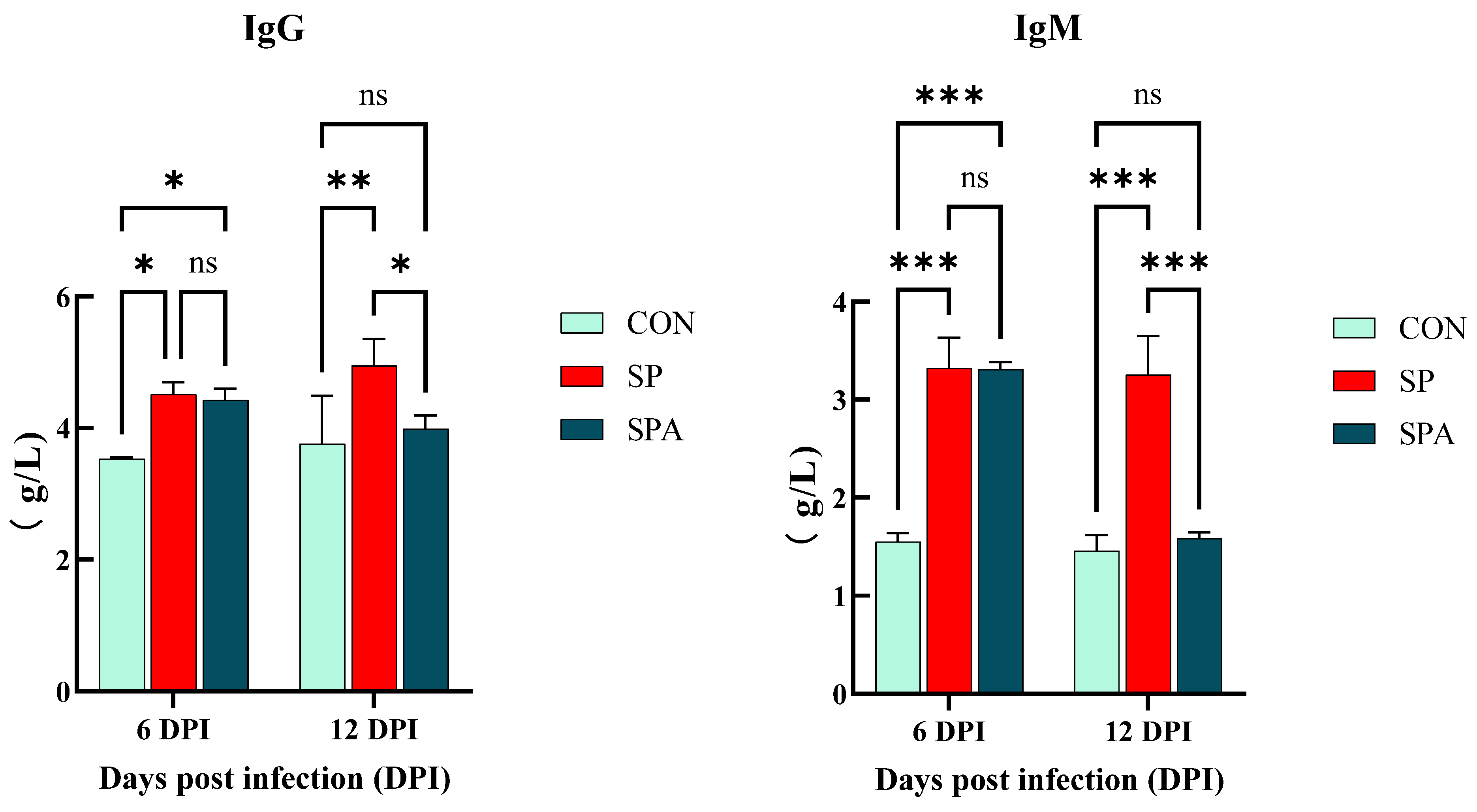
3.1. Serum Indices
3.2. Histological Assessment
3.3. Real-Time qPCR
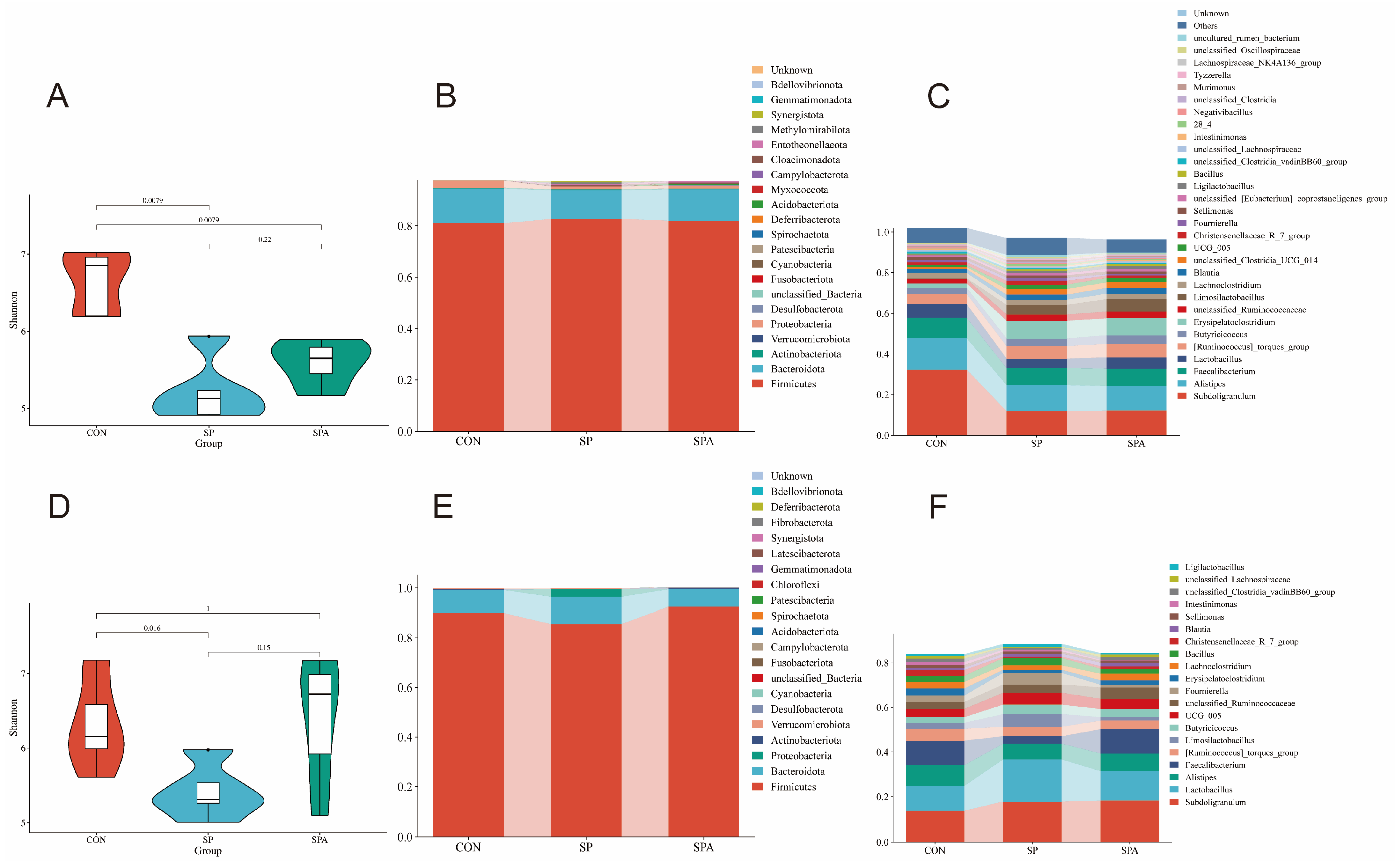
3.4. Microbiota Analysis

4. Discussion
5. Conclusions
Author Contributions
Funding
Institutional Review Board Statement
Informed Consent Statement
Data Availability Statement
Conflicts of Interest
Abbreviations
| ALT | Alanine Aminotransferase |
| AST | Aspartate Aminotransferase |
| CREA | Serum creatinine |
| UREA | Urea uric acid |
| IgG | ImmunogIobuIin G |
| IgM | ImmunogIobuIin M |
| TNF-α | tumor necrosis factor-α |
| IL-6 | Interleukin-6 |
| SAA | serum amyloid A |
| CRP | C-reactive protein |
| ZO-1 | zonula occludens-1 |
| MUC2 | Mucin 2 |
| TFF3 | Trefoil factor family |
| TLR2 | Toll Like Receptor 2 |
| TGF-β1 | transforming growth factor-β1 |
| IL-1β | Interleukin-1β |
References
- Gast, R.K.; Porter, R.E., Jr. Salmonella Infections. In Diseases of Poultry; John Wiley & Sons, Ltd.: Hoboken, NJ, USA, 2020; pp. 717–753. [Google Scholar]
- Wang, W.; Jia, H.; Zhang, H.; Wang, J.; Lv, H.; Wu, S.; Qi, G. Supplemental Plant Extracts from Flos lonicerae in Combination with Baikal skullcap Attenuate Intestinal Disruption and Modulate Gut Microbiota in Laying Hens Challenged by Salmonella pullorum. Front. Microbiol. 2019, 10, 1681. [Google Scholar] [CrossRef] [PubMed]
- Ruesga-Gutiérrez, E.; Ruvalcaba-Gómez, J.M.; Gómez-Godínez, L.J.; Villgrán, Z.; Gómez-Rodríguez, V.M.; Heredia-Nava, D.; Ramírez-Vega, H.; Arteaga-Garibay, R.I. Allium-Based Phytobiotic for Laying Hens’ Supplementation: Effects on Productivity, Egg Quality, and Fecal Microbiota. Microorganisms 2022, 10, 117. [Google Scholar] [CrossRef]
- Schat, K.A.; Nagaraja, K.V.; Saif, Y.M. Pullorum Disease: Evolution of the Eradication Strategy. Avian Dis. 2021, 65, 227–236. [Google Scholar] [CrossRef]
- Lv, Q.; Ran, X.; Qiu, H.; Zhao, S.; Hu, Z.; Wang, J.; Ni, H.; Wen, X. Seroprevalence of pullorum disease in chicken across mainland China from 1982 to 2020, A systematic review and meta-analysis. Res. Vet. Sci. 2022, 152, 156–166. [Google Scholar] [CrossRef] [PubMed]
- Li, W.; Zeng, Z.; Zhou, D.; Wang, G.; Wang, Z.; Li, Y.; Han, Y.; Qin, M.; Luo, C.; Feng, S.; et al. Effect of oral administration of microcin Y on growth performance, intestinal barrier function and gut microbiota of chicks challenged with Salmonella pullorum. Vet. Res. 2024, 55, 66. [Google Scholar] [CrossRef] [PubMed]
- Low, C.X.; Tan, L.T.H.; Ab Mutalib, N.S.; Pusparajah, P.; Goh, B.H.; Chan, K.G.; Letchumanan, V.; Lee, L.H. Unveiling the Impact of Antibiotics and Alternative Methods for Animal Husbandry: A Review. Antibiotics 2021, 10, 578. [Google Scholar] [CrossRef] [PubMed]
- Sazykin, I.S.; Khmelevtsova, L.E.; Seliverstova, E.Y.; Sazykina, M.A. Effect of Antibiotics Used in Animal Husbandry on the Distribution of Bacterial Drug Resistance (Review). Appl. Biochem. Microbiol. 2021, 57, 20–30. [Google Scholar] [CrossRef]
- Kasimanickam, V.; Kasimanickam, M.; Kasimanickam, R. Antibiotics Use in Food Animal Production: Escalation of Antimicrobial Resistance: Where Are We Now in Combating AMR? Med. Sci. 2021, 9, 14. [Google Scholar] [CrossRef]
- Uehara, A.; Maekawa, M.; Nakagawa, K. The mechanism of action of nisin in promoting poultry through tight junction integrity and dendritic cell anti-inflammatory properties. Arch. Microbiol. 2025, 207, 165. [Google Scholar] [CrossRef]
- Miglani, R.; Parveen, N.; Kumar, A.; Dewali, S.; Rawat, G.; Mishra, R.; Panda, A.K.; Bisht, S.S. Bacteriocin and its biomedical application with special reference to Lactobacillus. In Recent Advances and Future Perspectives of Microbial Metabolites; De Mandal, S., Xu, X., Jin, F., Eds.; Academic Press: Cambridge, MA, USA, 2022; pp. 123–146. [Google Scholar]
- Smaoui, S.; Echegaray, N.; Kumar, M.; Chaari, M.; D’Amore, T.; Ali Shariati, M.; Rebezov, M.; Lorenzo, J.M. Beyond Conventional Meat Preservation: Saddling the Control of Bacteriocin and Lactic Acid Bacteria for Clean Label and Functional Meat Products. Appl. Biochem. Biotechnol. 2024, 196, 3604–3635. [Google Scholar] [CrossRef]
- Teng, K.; Huang, F.; Liu, Y.; Wang, Y.; Xia, T.; Yun, F.; Zhong, J. Food and gut originated bacteriocins involved in gut microbe-host interactions. Crit. Rev. Microbiol. 2022, 49, 515–527. [Google Scholar] [CrossRef] [PubMed]
- Qiao, Y.; Qiu, Z.; Tian, F.; Yu, L.; Zhao, J.; Zhang, H.; Zhai, Q.; Chen, W. Effect of bacteriocin-producing Pediococcus acidilactici strains on the immune system and intestinal flora of normal mice. Food Sci. Hum. Wellness 2022, 11, 238–246. [Google Scholar] [CrossRef]
- Liu, Y.; Bu, Y.; Cao, J.; Liu, Y.; Zhang, T.; Hao, L.; Yi, H. Effect of Fermented Milk Supplemented with Nisin or Plantaricin Q7 on Inflammatory Factors and Gut Microbiota in Mice. Nutrients 2024, 16, 680. [Google Scholar] [CrossRef]
- Barbosa, A.A.T.; de Melo, M.R.; da Silva, C.M.R.; Jain, S.; Dolabella, S.S. Nisin resistance in Gram-positive bacteria and approaches to circumvent resistance for successful therapeutic use. Crit. Rev. Microbiol. 2021, 47, 376–385. [Google Scholar] [CrossRef] [PubMed]
- Khorshidian, N.; Khanniri, E.; Mohammadi, M.; Yousefi, M. Antibacterial Activity of Pediocin and Pediocin-Producing Bacteria Against Listeria monocytogenes in Meat Products. Front. Microbiol. 2021, 12, 709959. [Google Scholar] [CrossRef]
- Grilli, E.; Messina, M.R.; Catelli, E.; Morlacchini, M.; Piva, A. Pediocin A improves growth performance of broilers challenged with Clostridium perfringens. Poult. Sci. 2009, 88, 2152–2158. [Google Scholar] [CrossRef]
- Mikulski, D.; Jankowski, J.; Naczmanski, J.; Mikulska, M.; Demey, V. Effects of dietary probiotic (Pediococcus acidilactici) supplementation on performance, nutrient digestibility, egg traits, egg yolk cholesterol, and fatty acid profile in laying hens. Poult. Sci. 2012, 91, 2691–2700. [Google Scholar] [CrossRef]
- Cui, S.; Jiang, J.; Li, B.; Ross, R.P.; Zhao, J.; Zhang, H.; Yang, B.; Chen, W. Effects of the short-term administration of Pediococcus pentosaceus on physiological characteristics, inflammation, and intestinal microecology in mice. Food Funct. 2021, 12, 1695–1707. [Google Scholar] [CrossRef]
- Berhanu, G.; Fulasa, A. Pullorum Disease and Fowl Typhoid in Poultry: A Review. Br. J. Poult. Sci. 2020, 9, 48–56. [Google Scholar]
- Cheng, Y.; Zhang, S.; Lu, Q.; Zhang, W.; Wen, G.; Luo, H.; Shao, H.; Zhang, T. Evaluation of young chickens challenged with aerosolized Salmonella pullorum. Avian Pathol. 2020, 49, 507–514. [Google Scholar] [CrossRef] [PubMed]
- Xu, Z.; Wang, C.; Li, C.; Wang, M.; Chen, W.; Zhou, C.; Wei, P. The effect of oregano essential oil on the prevention and treatment of Salmonella pullorum and Salmonella gallinarum infections in commercial Yellow-chicken breeders. Front. Vet. Sci. 2022, 9, 1058844. [Google Scholar] [CrossRef] [PubMed]
- Peng, F.; Yi, J.; Xiao, J.; Chen, J.; Zhang, H.; He, X.; Song, Z. Protective effect and possible mechanism of arctiin on broilers challenged by Salmonella pullorum. J. Anim. Sci. 2022, 100, skac126. [Google Scholar] [CrossRef] [PubMed]
- Adeyomoye, O.I.; Akintayo, C.O.; Omotuyi, K.P.; Adewumi, A.N.; Adewumi, A.N. The Biological Roles of Urea: A Review of Preclinical Studies. Indian J. Nephrol. 2022, 32, 539. [Google Scholar] [CrossRef]
- Wyss, M.; Kaddurah-Daouk, R. Creatine and Creatinine Metabolism. Physiol. Rev. 2000, 80, 1107–1213. [Google Scholar] [CrossRef]
- Okafor, S.; Ihedioha, J.; Ezema, W. Experimental Salmonella gallinarum Infection in Young Pullets: Correlation of Serum Biochemistry with Organ Pathology. Acta Vet. Eurasia 2025, 51, 1–12. [Google Scholar] [CrossRef]
- McGill, M.R. The past and present of serum aminotransferases and the future of liver injury biomarkers. EXCLI J. 2016, 15, 817–828. [Google Scholar]
- Zhang, W.; Ni, T.; Tang, W.; Yang, G. The Role of Contrast-Enhanced Ultrasound in the Differential Diagnosis of Tuberous Vas Deferens Tuberculosis and Metastatic Inguinal Lymph Nodes. Diagnostics 2023, 13, 1762. [Google Scholar] [CrossRef]
- Rahman, M.M.; Alam, J.; Rahman, M.M.; Khan, M.A.H.N.A.; Haider, M.G. Pathology of Pullorum Disease and Molecular Characterization of Its Pthogen. Ann. Bangladesh Agric. 2019, 23, 25–35. [Google Scholar] [CrossRef]
- Laptev, G.Y.; Yildirim, E.A.; Ilina, L.A.; Filippova, V.A.; Kochish, I.I.; Gorfunkel, E.P.; Dubrovin, A.V.; Brazhnik, E.A.; Narushin, V.G.; Novikova, N.I.; et al. Effects of Essential Oils-Based Supplement and Salmonella Infection on Gene Expression, Blood Parameters, Cecal Microbiome, and Egg Production in Laying Hens. Animals 2021, 11, 360. [Google Scholar] [CrossRef]
- Saleem, G.; Ramzaan, R.; Khattak, F.; Raheela, R. Effects of acetic acid supplementation in broiler chickens orallychallenged with Salmonella pullorum. Turk. J. Vet. Anim. Sci. 2016, 40, 434–443. [Google Scholar] [CrossRef]
- Yin, L.; Hussain, S.; Tang, T.; Gou, Y.; He, C.; Liang, X.; Yin, Z.; Shu, G.; Zou, Y.; Fu, H.; et al. Protective Effects of Cinnamaldehyde on the Oxidative Stress, Inflammatory Response, and Apoptosis in the Hepatocytes of Salmonella gallinarum-Challenged Young Chicks. Oxidative Med. Cell. Longev. 2022, 2022, 2459212. [Google Scholar] [CrossRef]
- Shams Shargh, M.; Dastar, B.; Zerehdaran, S.; Khomeiri, M.; Moradi, A. Effects of using plant extracts and a probiotic on performance, intestinal morphology, and microflora population in broilers. J. Appl. Poult. Res. 2012, 21, 201–208. [Google Scholar] [CrossRef]
- Shehata, A.A.; Yalçın, S.; Latorre, J.D.; Basiouni, S.; Attia, Y.A.; El-Wahab, A.A.; Visscher, C.; El-Seedi, H.R.; Huber, C.; Hafez, H.M.; et al. Probiotics, Prebiotics, and Phytogenic Substances for Optimizing Gut Health in Poultry. Microorganisms 2022, 10, 395. [Google Scholar] [CrossRef]
- Wigley, P. Salmonella and Salmonellosis in Wild Birds. Animals 2024, 14, 3533. [Google Scholar] [CrossRef] [PubMed]
- Abdulwahhab, A.I.; Al-Zuhariy, M.T. Immunological Status of Salmonella pullorum-Infected Broilers Treated with Bacillus Subtilis, Organic Acids and Ciprofloxacin. Iraqi J. Agric. Sci. 2025, 56, 1045–1052. [Google Scholar] [CrossRef]
- Withanage, G.S.K.; Wigley, P.; Kaiser, P.; Mastroeni, P.; Brooks, H.; Powers, C.; Beal, R.; Barrow, P.; Maskell, D.; Maskell, I. Cytokine and Chemokine Responses Associated with Clearance of a Primary Salmonella enterica Serovar Typhimurium Infection in the Chicken and in Protective Immunity to Rechallenge. Infect. Immun. 2005, 73, 5173–5182. [Google Scholar] [CrossRef]
- Kroon, S.; Hardt, W.D. Mechanisms conferring multi-layered protection against intestinal Salmonella Typhimurium infection. FEMS Microbiol. Rev. 2025, 49, fuaf038. [Google Scholar] [CrossRef]
- Kimura, T. Comparative evaluation of acute phase proteins by C-reactive protein (CRP) and serum amyloid A (SAA) in nonhuman primates and feline carnivores. Anim. Dis. 2022, 2, 21. [Google Scholar] [CrossRef]
- Ehlting, C.; Wolf, S.D.; Bode, J.G. Acute-phase protein synthesis: A key feature of innate immune functions of the liver. Biol. Chem. 2021, 402, 1129–1145. [Google Scholar] [CrossRef]
- Perez, L. Acute phase protein response to viral infection and vaccination. Arch. Biochem. Biophys. 2019, 671, 196–202. [Google Scholar] [CrossRef] [PubMed]
- Travis, M.A.; Sheppard, D. TGF-β Activation and Function in Immunity. Annu. Rev. Immunol. 2014, 32, 51–82. [Google Scholar] [CrossRef]
- Zhang, Y.G.; Singhal, M.; Lin, Z.; Manzella, C.; Kumar, A.; Alrefai, W.A.; Dudeja, P.K.; Saksena, S.; Sun, J.; Gill, R.K. Infection with enteric pathogens Salmonella typhimurium and Citrobacter rodentium modulate TGF-beta/Smad signaling pathways in the intestine. Gut Microbes 2018, 9, 326–337. [Google Scholar]
- Suresh, R.; Mosser, D.M. Pattern recognition receptors in innate immunity, host defense, and immunopathology. Adv. Physiol. Educ. 2013, 37, 284–291. [Google Scholar] [CrossRef] [PubMed]
- Voirin, A.C.; Perek, N.; Roche, F. Inflammatory stress induced by a combination of cytokines (IL-6, IL-17, TNF-α) leads to a loss of integrity on bEnd.3 endothelial cells in vitro BBB mode. Brain Res. 2020, 1730, 146647. [Google Scholar] [CrossRef]
- Shao, Y.; Zhen, W.; Guo, F.; Hu, Z.; Zhang, K.; Kong, L.; Guo, Y.; Wang. ZPretreatment with probiotics Enterococcus faecium NCIMB11181 attenuated Salmonella Typhimurium-induced gut injury through modulating intestinal microbiome immune responses with barrier function in broiler chickens. J. Anim. Sci. Biotechnol. 2022, 13, 130. [Google Scholar] [CrossRef] [PubMed]
- Zheng, X.; Liu, B.; Wang, N.; Yang, J.; Zhou, Q.; Sun, C.; Zhao, Y. Low fish meal diet supplemented with probiotics ameliorates intestinal barrier and immunological function of Macrobrachium rosenbergii via the targeted modulation of gut microbes and derived secondary metabolites. Front. Immunol. 2022, 13, 1074399. [Google Scholar] [CrossRef]
- Wang, J.; Wu, Y.; Zhou, T.; Feng, Y.; Li, L.A. Common factors and nutrients affecting intestinal villus height—A review. Anim. Biosci. 2025, 38, 1557–1569. [Google Scholar] [CrossRef]
- Deng, Z.; Han, D.; Wang, Y.; Wang, Q.; Yan, X.; Wang, S.; Liu, X.; Song, W.; Ma, Y. Lactobacillus casei protects intestinal mucosa from damage in chicks caused by Salmonella pullorum via regulating immunity and the Wnt signaling pathway and maintaining the abundance of gut microbiota. Poult. Sci. 2021, 100, 101283. [Google Scholar] [CrossRef]
- Chen, C.; Li, J.; Zhang, H.; Xie, Y.; Xiong, L.; Liu, H.; Wang, F. Effects of a probiotic on the growth performance, intestinal flora, and immune function of chicks infected with Salmonella pullorum. Poult. Sci. 2020, 99, 5316–5323. [Google Scholar] [CrossRef] [PubMed]
- Onder Ustundag, A.; Ozdogan, M. Effects of bacteriocin and organic acid on growth performance, small intestine histomorphology, and microbiology in Japanese quails (Coturnix coturnix japonica). Trop. Anim. Health Prod. 2019, 51, 2187–2192. [Google Scholar] [CrossRef]
- Liu, Q.; Yu, Z.; Tian, F.; Zhao, J.; Zhang, H.; Zhai, Q.; Chen, W. Surface components and metabolites of probiotics for regulation of intestinal epithelial barrier. Microb. Cell Factories 2020, 19, 23. [Google Scholar] [CrossRef]
- Suzuki, T. Regulation of the intestinal barrier by nutrients: The role of tight junctions. Anim. Sci. J. 2020, 91, e13357. [Google Scholar] [CrossRef]
- Jiang, J.; Yin, L.; Li, J.Y.; Li, Q.; Shi, D.; Feng, L.; Liu, Y.; Jiang, W.D.; Wu, P.; Zhao, Y.; et al. Glutamate attenuates lipopolysaccharide-induced oxidative damage and mRNA expression changes of tight junction and defensin proteins, inflammatory and apoptosis response signaling molecules in the intestine of fish. Fish Shellfish Immunol. 2017, 70, 473–484. [Google Scholar] [CrossRef] [PubMed]
- Hu, C.; Song, J.; Li, Y.; Luan, Z.; Zhu, K. Diosmectite–zinc oxide composite improves intestinal barrier function, modulates expression of pro-inflammatory cytokines and tight junction protein in early weaned pigs. Br. J. Nutr. 2013, 110, 681–688. [Google Scholar] [CrossRef]
- Chang, C.H.; Teng, P.Y.; Lee, T.T.; Yu, B. Effects of multi-strain probiotic supplementation on intestinal microbiota, tight junctions, and inflammation in young broiler chickens challenged with Salmonella enterica subsp. enterica. Asian-Australas. J. Anim. Sci. 2019, 33, 1797. [Google Scholar] [CrossRef]
- Wang, L.; Li, L.; Lv, Y.; Chen, Q.; Feng, J.; Zhao, X. Lactobacillus plantarum Restores Intestinal Permeability Disrupted by Salmonella Infection in Newly-hatched Chicks. Sci. Rep. 2018, 8, 2229. [Google Scholar] [CrossRef]
- Bu, Y.; Liu, Y.; Liu, Y.; Cao, J.; Zhang, Z.; Yi, H. Protective Effects of Bacteriocin-Producing Lactiplantibacillus plantarum on Intestinal Barrier of Mice. Nutrients 2023, 15, 3518. [Google Scholar] [CrossRef] [PubMed]
- Wang, Y.; Tian, Y.; Zhang, N.; Li, X.; Wang, X.; Wang, W.; Zhang, J.; Piao, C.; Wang, Y.; Liu, J. Pediococcus pentosaceus PP04 improves high-fat diet-induced liver injury by the modulation of gut inflammation and intestinal microbiota in C57BL/6N mice. Food Funct. 2021, 12, 6851–6862. [Google Scholar] [CrossRef]
- Liu, Y.; Zhu, D.; Liu, J.; Sun, X.; Gao, F.; Duan, H.; Dong, L.; Wang, X.; Wu, C. Pediococcus pentosaceus PR-1 modulates high-fat-died-induced alterations in gut microbiota, inflammation, and lipid metabolism in zebrafish. Front. Nutr. 2023, 10, 1087703. [Google Scholar] [CrossRef] [PubMed]
- Hoffmann, W. Trefoil Factor Family (TFF) Peptides and their Different Roles in the Mucosal Innate Immune Defense and More: An Update. Curr. Med. Chem. 2021, 28, 7387–7399. [Google Scholar] [CrossRef]
- Blyth, G. Regulation of Colonic Mucus and Epithelial Cell Barrier Function by Cathelicidin. Doctoral Thesis, University of Calgary, Calgary, AB, Canada, 2022. [Google Scholar]
- Johansson, M.E.V.; Hansson, G.C. Immunological aspects of intestinal mucus and mucins. Nat. Rev. Immunol. 2016, 16, 639–649. [Google Scholar] [CrossRef]
- Zarepour, M.; Bhullar, K.; Montero, M.; Ma, C.; Huang, T.; Velcich, A.; Xia, L.; Vallance, B.A. The Mucin Muc2 Limits Pathogen Burdens and Epithelial Barrier Dysfunction during Salmonella enterica Serovar Typhimurium Colitis. Infect. Immun. 2013, 81, 3672–3683. [Google Scholar] [CrossRef]
- Aamann, L.; Vestergaard, E.M.; Grønbæk, H. Trefoil factors in inflammatory bowel disease. World J. Gastroenterol. 2014, 20, 3223. [Google Scholar] [CrossRef]
- Taupin, D.; Podolsky, D.K. Trefoil factors: Initiators of mucosal healing. Nat. Rev. Mol. Cell Biol. 2003, 4, 721–732, Erratum in Nat. Rev. Mol. Cell Biol. 2003, 4, 819.. [Google Scholar] [CrossRef]
- Tan, Z.; Chen, Y.; Wen, C.; Zhou, Y. Dietary supplementation with a silicate clay mineral (palygorskite) alleviates inflammatory responses and intestinal barrier damage in broiler chickens challenged with Escherichia coli. Poult. Sci. 2024, 103, 104017. [Google Scholar] [CrossRef]
- Peng, L.; Li, Z.R.; Green, R.S.; Holzman, I.R.; Lin, J. Butyrate Enhances the Intestinal Barrier by Facilitating Tight Junction Assembly via Activation of AMP-Activated Protein Kinase in Caco-2 Cell Monolayers12. J. Nutr. 2009, 139, 1619–1625. [Google Scholar] [CrossRef]
- Kogut, M.H. Chapter 12—Impact of the gut microbiota on the immune system. In Avian Immunology, 3rd ed.; Kaspers, B., Schat, K.A., Göbel, T.W., Eds.; Academic Press: Boston, MA, USA, 2022; pp. 353–364. [Google Scholar]
- Iacob, S.; Iacob, D.G.; Luminos, L.M. Intestinal Microbiota as a Host Defense Mechanism to Infectious Threats. Front. Microbiol. 2019, 9, 3328. [Google Scholar] [CrossRef] [PubMed]
- Zhang, X.; Akhtar, M.; Chen, Y.; Ma, Z.; Liang, Y.; Shi, D.; Cheng, R.; Cui, L.; Hu, Y.; Nafady, A.A. Chicken jejunal microbiota improves growth performance by mitigating intestinal inflammation. Microbiome 2022, 10, 107. [Google Scholar] [CrossRef]
- Oakley, B.B.; Lillehoj, H.S.; Kogut, M.H.; Kim, W.K.; Maurer, J.J.; Pedroso, A.; Lee, M.D.; Collett, S.R.; Johnson, T.J.; Cox, N.A. The chicken gastrointestinal microbiome. FEMS Microbiol. Lett. 2014, 360, 100–112. [Google Scholar] [CrossRef] [PubMed]
- Rodrigues, T.C.V. Comprehensive Characterization of the Protein Microbial Anti-Inflammatory Molecule (MAM) from the Genus Faecalibacterium Structural, Diversity, and Anti-Inflammatory Implications; Universidade Federal de Minas Gerais: Belo Horizonte, Brazil, 2025. [Google Scholar]
- Carasi, P.; Racedo, S.M.; Jacquot, C.; Elie, A.M.; Serradell, M.L.; Urdaci, M.C. Enterococcus durans EP1 a Promising Anti-inflammatory Probiotic Able to Stimulate sIgA and to Increase Faecalibacterium prausnitzii Abundance. Front. Immunol. 2017, 8, 88. [Google Scholar] [CrossRef] [PubMed]
- Hays, K.E.; Pfaffinger, J.M.; Ryznar, R. The interplay between gut microbiota, short-chain fatty acids, and implications for host health and disease. Gut Microbes 2024, 16, 2393270. [Google Scholar] [CrossRef] [PubMed]



| Target Gene | Forward/Reverse | Gene Bank Accession Number |
|---|---|---|
| GAPDH | F: CAACCCCCAATGTCTCTGTT | NC_052532.1 |
| R: TCAGCAGCAGCCTTCACTAC | ||
| Claudin-1 | F:GATGCGGATGGCTGTCTTTGGT | NP_001013629 |
| R:GGCTGGGTGGGTAGGATGTTTC | ||
| Occludin | F:TGTGGGTTCCTCATCGTCATCC | NM_205128.1 |
| R:TCTCCGAGTAGGCAAGCGTGG | ||
| ZO-1 | F:TCTCCCTAAAGGCGAAGAAGTAACC | XM_015278980.1 |
| R:ATAGCGTGTCCACAACCCGAAAC | ||
| CLL5 | F: CAACCGTGTGCTGCTTCAACTAT | NC_052550.1 |
| R:CCTTCCTGGTGATGAACACAACTG | ||
| MUC2 | F:GAGCCACCTCCTAAACCCACCTG | NM_001318434.1 |
| R:GCAATCACACTCCCAATGCCAAC | ||
| TFF3 | F:TGCTTGCTCTTTGTCATCCTTGC | XM_416,743.4 |
| R:GCTGCTGAGATTCCTGGGGG | ||
| TLR2 | F: GAGGGGCACAGGTTGGGAG | NW_026294743.1 |
| R: CAGATGTCTTTCGTGGGGGC | ||
| TNF-α | F: AACTATCCTCACCCCTACCCTGTC | NM_204267.2 |
| R: GGGCGGTCATAGAACAGCACT | ||
| IL-1β | F: CCGCTACACCCGCTCACAGT | XM_015297469.2 |
| R: TGCCGCTCATCACACACGAC | ||
| IL-6 | F: GCCTGTTCGCCTTTCAGACCTAC | NC_052533.1 |
| R: TCGGGATTTATCACCATCTGCC | ||
| TGF-β1 | F: CAAGGATCTGCAGTGGAAGTGG | NC_052569.1 |
| R: CGTAGTAAATGATGGGGAGGGG |
| Treatment Group | ||||||
|---|---|---|---|---|---|---|
| Site | CON | SP | SPA | SEM | p-Value | |
| 6 DPI | Villus height (μm) | 1209.45 a | 1113.11 b | 1109.40 b | 18.80 | 0.042 |
| Crypt depth (μm) | 190.77 | 194.67 | 195.67 | 2.28 | 0.666 | |
| Villus height: crypt depth | 6.40 a | 5.75 b | 5.67 b | 0.13 | 0.049 | |
| 12 DPI | Villus height (μm) | 1222.96 a | 1128.78 b | 1212.20 a | 15.76 | 0.022 |
| Crypt depth (μm) | 196.50 | 194.45 | 196.07 | 2.16 | 0.925 | |
| Villus height: crypt depth | 6.22 a | 5.81 b | 6.18 a | 0.04 | 0.001 | |
| Phylum Level (%) | Treatment Group | |||||
|---|---|---|---|---|---|---|
| CON | SP | SPA | SEM | p-Value | ||
| 6DPI | Proteobacteria | 0.123 a | 0.056 b | 0.056 b | 0.0114 | 0.01 |
| Verrucomicrobia | 0.0060 a | 0.002 b | 0.002 b | 0.0001 | 0.01 | |
| 12DPI | Firmicutes | 91.000 a | 84.000 b | 91.000 a | 1.2401 | 0.01 |
| Actinobacteriota | 0.254 a | 0.165 b | 0.235 a | 0.0141 | 0.01 | |
Disclaimer/Publisher’s Note: The statements, opinions and data contained in all publications are solely those of the individual author(s) and contributor(s) and not of MDPI and/or the editor(s). MDPI and/or the editor(s) disclaim responsibility for any injury to people or property resulting from any ideas, methods, instructions or products referred to in the content. |
© 2025 by the authors. Licensee MDPI, Basel, Switzerland. This article is an open access article distributed under the terms and conditions of the Creative Commons Attribution (CC BY) license.
Share and Cite
Zhou, C.; Liu, H.; Yang, B.; Zhang, Z.; Zhang, M.; Zhang, S.; Feng, Z.; Zhang, D. Dietary Pediocin Supplementation Restores Intestinal Barrier Function and Microbiota Balance in Salmonella-Infected Specific-Pathogen-Free Chickens. Microorganisms 2026, 14, 18. https://doi.org/10.3390/microorganisms14010018
Zhou C, Liu H, Yang B, Zhang Z, Zhang M, Zhang S, Feng Z, Zhang D. Dietary Pediocin Supplementation Restores Intestinal Barrier Function and Microbiota Balance in Salmonella-Infected Specific-Pathogen-Free Chickens. Microorganisms. 2026; 14(1):18. https://doi.org/10.3390/microorganisms14010018
Chicago/Turabian StyleZhou, Chenxin, Hui Liu, Bowen Yang, Zefeng Zhang, Mingrong Zhang, Siyue Zhang, Zhihua Feng, and Dongyan Zhang. 2026. "Dietary Pediocin Supplementation Restores Intestinal Barrier Function and Microbiota Balance in Salmonella-Infected Specific-Pathogen-Free Chickens" Microorganisms 14, no. 1: 18. https://doi.org/10.3390/microorganisms14010018
APA StyleZhou, C., Liu, H., Yang, B., Zhang, Z., Zhang, M., Zhang, S., Feng, Z., & Zhang, D. (2026). Dietary Pediocin Supplementation Restores Intestinal Barrier Function and Microbiota Balance in Salmonella-Infected Specific-Pathogen-Free Chickens. Microorganisms, 14(1), 18. https://doi.org/10.3390/microorganisms14010018