Article

Integrative Transcriptomic and Systems Biology Analyses Identify TCB1 as a Calcium-Responsive Gene in Cryptococcus neoformans

by
Andrea Gomes Tavanti
1,2,†,
Júlia Catarina Vieira Reuwsaat
1,†,
Heryk Motta
1,
Eamim Daidrê Squizani
2,
Rodrigo Silva Araujo Streit
2,
Patrícia Aline Gröhs Ferrareze
2,
Matheus da Silva Camargo
2,
Bruno Cesar Feltes
2,3,
Marilene Henning Vainstein
2,4,5,
Charley Christian Staats
2,5,6 and
Lívia Kmetzsch
1,2,5,*
1
Molecular Biology of Pathogens Laboratory, Center of Biotechnology, Federal University of Rio Grande do Sul, Porto Alegre 91501-970, Brazil
2
Graduate Program in Cellular and Molecular Biology, Center of Biotechnology, Federal University of Rio Grande do Sul, Porto Alegre 91501-970, Brazil
3
Laboratory of DNA Repair and Aging, Department of Biophysics, Institute of Biosciences, Federal University of Rio Grande do Sul, Porto Alegre 91501-970, Brazil
4
Laboratory of Microorganisms of Medical and Biotechnological Importance, Center of Biotechnology, Federal University of Rio Grande do Sul, Porto Alegre 91501-970, Brazil
5
Department of Molecular Biology and Biotechnology, Institute of Biosciences, Federal University of Rio Grande do Sul, Porto Alegre 91501-970, Brazil
6
Laboratory of Molecular and Cellular Microbiology, Center of Biotechnology, Federal University of Rio Grande do Sul, Porto Alegre 91501-970, Brazil
*
Author to whom correspondence should be addressed.
The authors contributed equally to this work.
Microorganisms 2026, 14(1), 122; https://doi.org/10.3390/microorganisms14010122
Submission received: 29 October 2025 / Revised: 2 January 2026 / Accepted: 5 January 2026 / Published: 7 January 2026

Abstract

Cryptococcus neoformans is a pathogenic yeast and the leading cause of cryptococcosis in humans. The calcium-calcineurin signaling pathway plays a central role in stress adaptation and virulence. To identify the uncharacterized regulators of fungal adaptation, we utilized an integrative systems biology approach, combining differential gene expression and network analysis using transcriptomic data from three key components of the calcium-calcineurin pathway (Cna1, Crz1, and Pmc1). Our workflow identified the CNAG_00522 gene product, which we designated tricalbin 1 (TCB1) due to its conserved calcium and lipid-binding C2 domains. TCB1 expression was found to be regulated by both Cna1 and Pmc1. Network analyses positioned Tcb1 as a bottleneck linking general stress response and cellular processes. Further molecular characterization confirmed that TCB1 expression is temperature and calcium-responsive. Functional studies of the tcb1Δ mutant revealed an enlarged capsule, increased GXM shedding, and enhanced viability under host-mimicking conditions. However, phenotypic screening demonstrated that the tcb1Δ mutant does not display sensitivity to cell wall or osmotic stressors, and TCB1 deletion did not attenuate virulence in the Tenebrio larval model. These findings suggest that TCB1 functions as a specialized regulator of fungal growth at 37 °C, capsule size, and GXM shedding. This study validates our integrative approach for guiding the identification of these complex regulators.

1. Introduction

Invasive fungal infections impact millions of people globally [1]. Cryptococcosis is an acute, invasive fungal disease that primarily affects immunocompromised individuals, with cryptococcal meningitis (CM) representing its most severe manifestation [1,2,3]. The basidiomycetous yeast Cryptococcus neoformans is the leading etiological agent of CM and is particularly prevalent among HIV-infected individuals [3,4,5]. CM has an estimated incidence of 194,000 cases annually, with more than 147,000 associated deaths [1]. Recently, the World Health Organization (WHO) added C. neoformans to the fungal priority pathogens list to guide research, development, and public health action [6]. Current treatments for cryptococcosis are associated with significant side effects and limited availability in certain countries [3,7,8]. Therefore, understanding the mechanisms by which C. neoformans establishes the disease is crucial for developing more effective and accessible treatments [9,10,11].
Humans primarily come into contact with C. neoformans by inhaling desiccated yeast cells or basidiospores from environmental sources. Under favorable conditions, cryptococcal cells can evade the innate immune response and establish a lung infection [4,12,13]. Cryptococcal cells may then transmigrate via the bloodstream to the central nervous system (CNS), causing meningitis [12,13]. C. neoformans cells rely on a set of virulence determinants to survive and adapt to the host environment [14], and the calcium-calcineurin pathway is crucial for pathogenesis and stress adaptation [15,16,17,18,19]. Calcium is an important secondary messenger that mediates responses to several environmental stimuli [20], and appropriate calcium levels are essential to coordinate adequate stress responses. Intracellular calcium levels are controlled by the activity of several transporters, such as the vacuolar transporter Pmc1, and by channels such as Cch1-Mid1 [17,18,21,22]. Calcium is sensed by calmodulin, which activates the phosphatase calcineurin [10,20], regulating different targets that control a myriad of biological processes at both transcriptional and post-transcriptional levels [16]. The transcription factor Crz1 is one of the calcineurin targets and regulates cryptococcal adaptation to human host temperature and the cell wall integrity [23].
The core components of the calcium-calcineurin signaling cascade are conserved across eukaryotes. However, considerable variation exists in the downstream targets of this pathway and regulators that influence it among different species [10]. This signaling pathway has emerged as a promising target for the development of novel antifungal therapies [9,11,24,25,26]. In particular, species-specific elements within the calcium-calcineurin pathway are of great interest, as they may serve as selective targets for new antifungal drugs [10]. Identifying novel regulatory genes, particularly those whose mechanism may be non-canonical to the primary effectors (e.g., Crz1), remains a challenge.
In this study, we employed an integrative systems biology workflow combining differential gene expression (DEG) analysis of transcriptomic data from key C. neoformans calcium-calcineurin pathway mutant strains (cna1Δ, crz1Δ, and pmc1Δ). This systematic screening identified the uncharacterized gene product CNAG_00522, which we designated Tricalbin 1 (TCB1) based on the presence of conserved calcium and lipid-binding C2 domains and orthology with fungal tricalbins. Gene expression analyses confirmed that TCB1 expression is thermally responsive and influenced by extracellular calcium. Furthermore, the tcb1Δ deletion mutant displayed increased capsule thickness, higher GXM shedding and enhanced viability in host-mimicking conditions. Overall, these results demonstrate the utility of our integrative screening approach for novel gene discovery and suggest that TCB1 is engaged in C. neoformans adaptation to the environment and host conditions, functioning as a regulator within the calcium signaling network that controls specific virulence traits.

2. Materials and Methods

2.1. Differential Gene Expression Analysis (DGEA)

Studies of C. neoformans wild-type (WT, H99), crz1Δ mutant, and calcineurin (cna1Δ) mutant strains grown at 37 °C were obtained from NCBI’s Gene Expression Omnibus (GEO) [27] under the accession number GSE93005 [15]. Raw RNA-Seq data of H99 and the pmc1Δ mutant, also grown at 37 °C, were obtained from the NCBI SRA database [28,29] under accession code SRP120588 [19]. All samples were in three biological replicates, except cna1Δ, which is composed of two replicates.
Quality of reads in fastq files was evaluated using FastQC [30] version 0.11.5. Different packages, such as Cutadapt [31] version 1.15, Trimmomatic [32] version 0.39, Sickle [33] version 1.33, and FASTX-toolkit [34] version 0.0.14, were used for the removal of potential adaptors. The processed reads were then aligned to the C. neoformans H99 genome sequence (NCBI Reference GCF_000149245.1) and respective GFF file using STAR software version 2.7.6 [35], with the following parameters: “--outFilterType BySJout --alignIntronMin 10 --alignIntronMax 3000 --outFilterIntronMotifsRemoveNoncanonical --genomeDir [genome file] --runThreadN 12 --readFilesIn [fastq file] --outFileNamePrefix [output alignment file]”. MultiQC version 1.9 [36] was used to generate STAR alignment score plots (Supplementary Figure S1). The resulting SAM files were converted to BAM files using SAMtools version 1.7 [37]. Read summarization was performed using HTSeq version 0.12.4 [38], with the following parameters: “-f bam --stranded=no --type=exon --idattr=locus_tag [bam file] [gff file] > [output count file]” and DEG analysis was performed in the integrated development environment RStudio version 1.2 [39] using a built script in R language, which is available at: https://github.com/deatavanti/differential-expression-analysis-script.git(accessed on 21 January 2021). The R package DESeq2 [40] version 1.24 was utilized for the differential gene expression analyses. DEGs are defined as those having absolute values of Log2 fold change (FC) higher than or equal to |1| and FDR-adjusted p-values lower than 0.05.

2.2. Protein–Protein Interaction Networks (PPINs) Construction and Tcb1 Selection

DEGs lists from comparison between WT and each mutant were submitted individually to perform a PPIN assembly in the STRING database [41] version 12.0. Due to limited entries of C. neoformans H99 proteins in the STRING database, the construction of the PPIN was conducted using the C. neoformans JEC21 protein-coding genes, which are syntenic orthologs to the respective H99 DEGs. Conversion of codes was performed using the FungiDB website [42]. In STRING, basic settings were modified regarding active interaction sources: gene fusion and text mining were disabled, and the minimum required interaction score was set to “low confidence at 0.150”. The maximum number of first shell interactors was adjusted to 200. Not all DEGs connected in STRING, likely due to limited interaction evidence or network settings. This limitation excluded certain DEGs from subsequent analyses. The first shell interactor protein codes had to be converted to their corresponding gene codes (this option is not currently available on the STRING database) to enable posterior functional enrichment analysis. From STRING, a protein annotation TSV file, which contained all nodes present in the network, was exported for each network and used for code conversion in the FungiDB website. The resulting networks were also exported to TSV files, and their protein codes were converted to gene codes by using a Python (version 2.7.17) script available at: https://github.com/deatavanti/protein-to-gene-conversion-python-script.git (accessed on 23 November 2025). After this modification, the networks were imported into Cytoscape [43] version 3.10 with the “combined interaction score” used as edge attributes. Dynet plug-in [44] was used to generate an overlap map of each mutant network. The node tables were filtered to identify genes present in all three networks (Cna1, Pmc1, Crz1) or in at least two networks, as these overlap patterns suggest potential central or connector roles. The filtered node lists were analyzed in FungiDB to check for annotations and examine conserved domains, and upon target selection, we also utilized the database to verify possible orthologs and associated transcriptomic data.

2.3. PPINs Topological and Functional Enrichment Analysis

Upon selection of Tcb1, present in cna1 and pmc1 networks, cluster analysis was performed on both networks through the MCODE plug-in [45] using default parameters except enabling “include loops” with a degree cutoff of 2 and enabling “fluff” with node density cutoff of 0.1. CentiScaPe plug-in [46] was used to check the centralities (degree and betweenness) of the selected node in each network. Functional enrichment analysis was performed on clusters where Tcb1 was present using the ClueGO plug-in [47] to gain insight into which processes this protein may be involved in. The default parameters were applied except for enabling “show only pathways with p-value 0.05”. The selected ontologies were Gene Ontology (GO) biological processes and molecular functions [48]. ClueGO outputs were used for bubble plotting using ggplot (version 3.5.2) in the R environment (version 4.5.1) using custom scripts, which will be available upon request.

2.4. Conserved Domain Analysis

Conserved domain analysis of the C. neoformans Tcb1 protein was performed using the InterProScan tool available on the InterPro website version 106.0, using default parameters [49]. The Tcb1 protein sequence was obtained from the FungiDB database using the “Retrieve Sequence” tool (Supplementary Table S1).

2.5. Transcription Factor Binding Sites (TFBS) Inference

The TCB1 predicted regulatory region, here defined as the region encompassing the 1000 nucleotides upstream of the transcription start site (TSS), was obtained using the retrieve sequence tool of the FungiDB website. Putative Crz1 and Pdr802 motifs were obtained from Chow et al. (2017) [15] and Reuwsaat et al. (2021) [50], respectively. Searches for TFBS were conducted using Find Individual Motifs Occurrences (FIMO) version 5.3.0 [51]. Crz1 and Pdr802 motifs (Supplementary Table S2) were used as motif input, and the TCB1 promoter region (Supplementary Table S3) was used as sequence input. FIMO matches were filtered considering p-value < 0.0001.

2.6. RNA Extraction and qRT-PCR Analysis

The transcript levels of TCB1 were assessed using qRT-PCR from RNA samples collected from the H99 strain and the null mutant for the PMC1 gene (pmc1Δ), as well as from the KN99α strain and the crz1Δ mutant. The RNA extraction and qRT-PCR analysis were performed as previously described by Squizani et al. (2018) [19]. Briefly, yeast cells were cultured in yeast extract peptone dextrose (YPD) medium (1% yeast extract, 2% peptone, 2% dextrose) for 16 h at distinct temperatures (30 °C or 37 °C) with and without 100 mM CaCl2. All strains were cultivated in three biological replicates. Total RNA was extracted with Trizol (Invitrogen, Waltham, MA, USA), treated with DNase I (Promega, Madison, WI, USA), and reverse transcribed with ImProm-II (Promega). For qRT-PCR, each biological replicate was analyzed in three technical replicates for each primer pair. ACT1 cDNA levels were used for data normalization. Relative expression was determined by the 2−ΔCT method [52]. Primer sequences for the expression detection of TCB1 and ACT1 are listed in Supplementary Table S4.

2.7. Knockout Mutant Construction

The TCB1 deletion mutant strain was constructed via the split-marker strategy [53]. Briefly, fragments of 1 kb upstream and 1 kb downstream of the TCB1 coding region were fused via PCR to the Hygromycin resistance gene. The resulting deletion cassette was then introduced into the C. neoformans H99 strain via biolistic transformation, as previously described [54]. One deletion mutant for the TCB1 gene (tcb1Δ) was recovered and used for phenotypic tests. RT-PCR and qRT-PCR were performed to confirm the mutant strain construction. To rule out ectopic integration of the deletion cassette, the relative copy number of the ACT1 promoter (PACT1) was determined via qPCR. Genomic DNA from the H99 wild-type (WT) and tcb1Δ strains was analyzed using standard curves with primers for ACT1 coding sequence (CDS) and the hygromycin resistance gene promoter (PACT1). Because ACT1 is a single-copy gene in C. neoformans and its promoter is also used to drive the hygromycin cassette, a correctly constructed knockout mutant is expected to contain exactly two copies of the promoter sequence, whereas ectopic integration would yield three or more copies. The primers used for the construction and confirmation are listed in Supplementary Table S4. C. neoformans H99 wild-type and tcb1Δ mutant strains were maintained on YPD solid medium plates. For mutant strain selection, hygromycin (200 µg/mL) was added to YPD plates.

2.8. Capsule Induction, GXM Quantification, Phenotypic Tests, and Growth Viability

Fungal cell strains grown overnight in YPD were washed three times with phosphate-buffered saline (PBS), and cell concentrations were estimated via optical density (OD600). Cell suspensions were diluted to 106 cells/mL and plated in three replicates for each strain in a 24-well plate containing 1 mL DMEM (D6429, Sigma Aldrich, St. Louis, MO, USA). The plates were incubated at 37 °C and 5% CO2 for 72 h. For the viability estimation, the colony-forming units (CFU) were determined after growth on YPD agar at 30 °C for 48 h; the inoculum of each strain was used as a control. For capsule induction analysis, cells were fixed in 4% paraformaldehyde and washed with PBS after 72 h of incubation. C. neoformans cells were pipetted on glass slides and mixed with a similar volume of India ink. Cells were visualized using an optical microscope, and capsule measurements were performed using the ImageJ software (version 1.54g). A total of 150 cells were measured for each strain (50 cells per biological replicate).
For the GXM quantification, cells were grown in DMEM for 48 h as described above. The cell-free supernatant was used for GXM quantification via ELISA, using anti-GXM antibody as previously described [55,56]. For the phenotypic tests, 3 μL of 10-fold serial dilutions (107 to 103 cells/mL) were spotted on YPD agar with different stressors (NaCl, CaCl2, Congo Red, Calcofluor White, Caffeine, SDS, Ethanol, Fluconazole, Caspofungin, pH 8.0 and FK506), and YNB at acidic and neutral pHs (4.0 and 7.0), at concentrations indicated in the figure.

2.9. Virulence Assay Using Tenebrio Molitor

Fungal cells were initially cultured in YPD medium for 16 h at 30 °C with agitation. Subsequently, 1 mL was transferred to fresh YPD medium and cultured for an additional 16 h under the same conditions. The fungal cells were then washed three times with PBS and diluted. Cell concentrations were estimated using a Neubauer chamber, and cell suspensions were diluted to a concentration of 2 × 10⁴ cells/μL. A total of 20 larvae were inoculated with 5 μL of the diluted cell suspension for each of the fungal strains. Additionally, 20 larvae were inoculated with 5 μL of PBS, as a negative control. The larvae were incubated in sterile Petri dishes at 37 °C. Larval mortality was monitored and recorded every 24 h until there were no survivors remaining from the mutant and wild-type strain infections. The experiment was repeated with an initial inoculum concentration of 2 × 10³ cells/μL. Kaplan–Meier survival analysis was performed for statistical analysis using GraphPad Prism version 8 software.

3. Results

3.1. An Integrative Systems Biology Workflow Identifies TCB1 as a Novel Regulatory Node

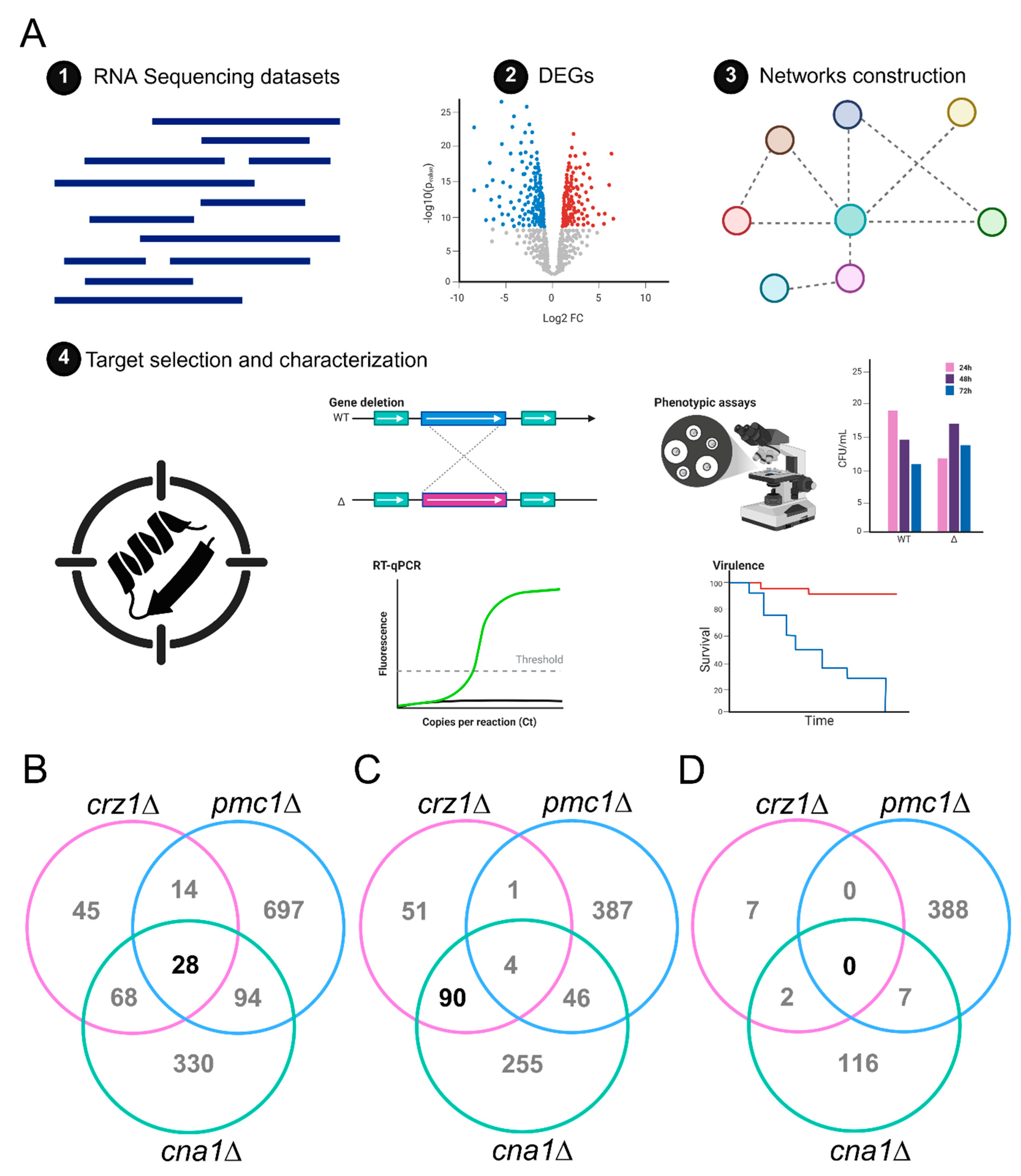
We employed an integrative workflow combining DEG analysis and network mapping to identify uncharacterized genes regulated by components of the C. neoformans calcium signaling system (Figure 1A). First, we analyzed previously published RNA-seq libraries from wild-type (C. neoformans H99) and three key pathway deletion mutants: cna1Δ, crz1Δ, and pmc1Δ. DEG analysis identified 520, 155, and 833 DEGs influenced by the absence of Cna1, Crz1, and Pmc1, respectively (Supplementary Table S5).
We observed a slight overlap of regulated genes among the cna1Δ, crz1Δ, and pmc1Δ mutants (Figure 1B). Notably, nearly 60% of the genes positively regulated by Crz1 were also positively regulated by Cna1 (Figure 1C). However, the overlap among the three DEGs datasets was minimal, with no negatively DEGs co-regulated comparing all datasets (Figure 1D), suggesting that a large proportion of regulated genes represent non-canonical or pathway-specific responses.
To identify relevant uncharacterized candidates, we constructed protein–protein interaction networks (PPINs) from the DEG datasets (Supplementary Figures S2–S4). This approach expanded the regulatory landscape by incorporating proteins with evidence of interaction in STRING. Overlapping the PPINs with Dynet highlighted common genes across networks. By cross-referencing these candidates with FungiDB annotations, we refined our selection. We prioritized genes based on three criteria: (1) functional novelty (hypothetical/unknown annotation), (2) presence of domains linked to calcium signaling, and (3) co-regulation across multiple PPINs (Supplementary Table S6). We first analyzed the 27 genes present across all networks, but none met all the established criteria. We then focused on genes present in two networks (Cna1 and Pmc1; Pmc1 and Crz1; or Cna1 and Crz1). From this analysis, the CNAG_00522 gene product emerged as the most compelling candidate, appearing in both the Cna1 and Pmc1 networks. All PPINs Cytoscape sessions can be found as Supplementary Files S1–S3.
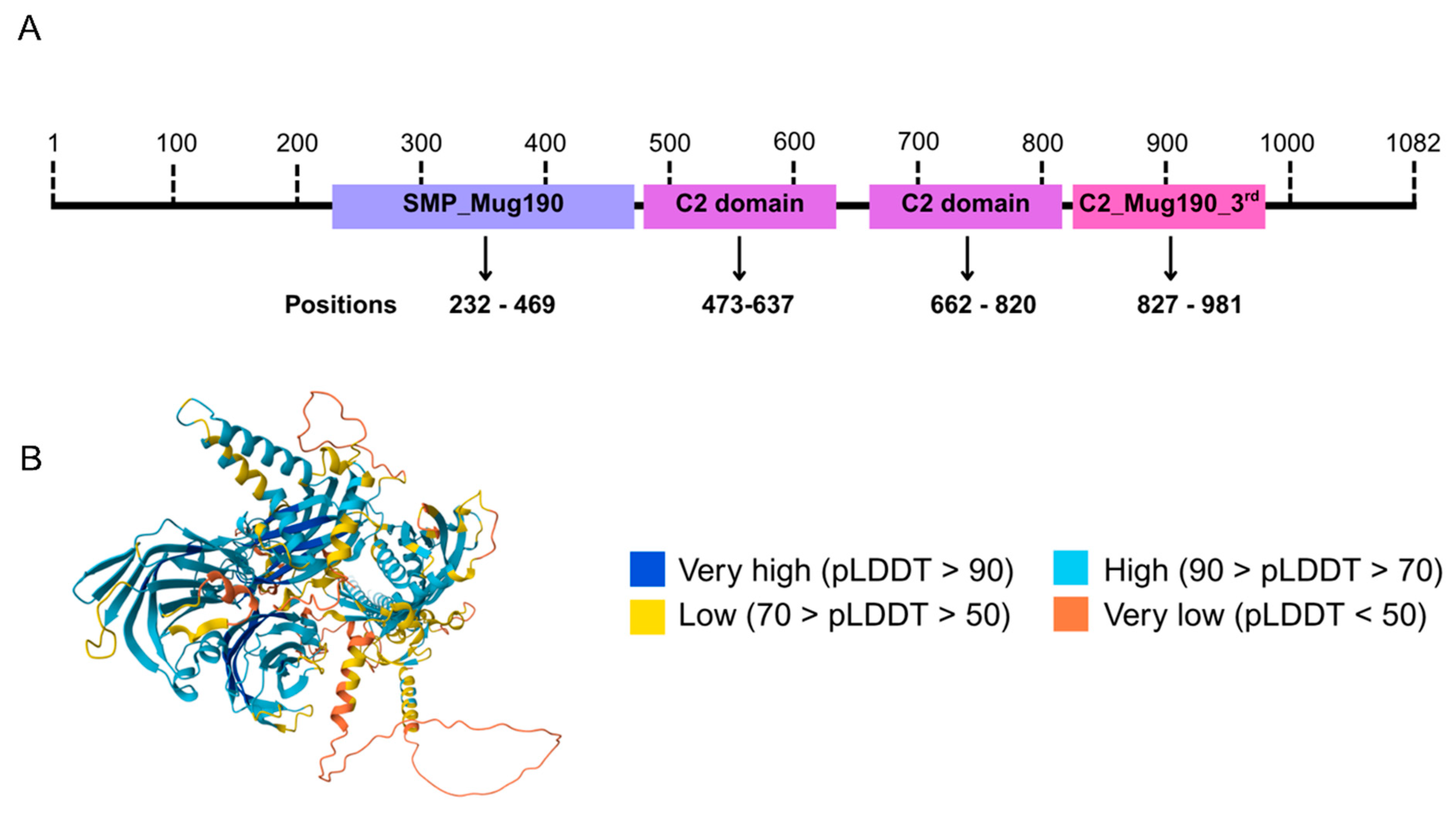
We designated this protein tricalbin 1 (Tcb1). Its sequence comprises one synaptotagmin-like mitochondrial lipid-binding (SMP) domain and three C2 domains (Figure 2A). The C2 domains are particularly noteworthy as they are associated with Ca2+-dependent membrane targeting and signal transduction [57,58]. Structural prediction also suggests the presence of these domains (Figure 2B). These features are consistent with the domain architecture observed in tricalbin orthologs from other fungi.
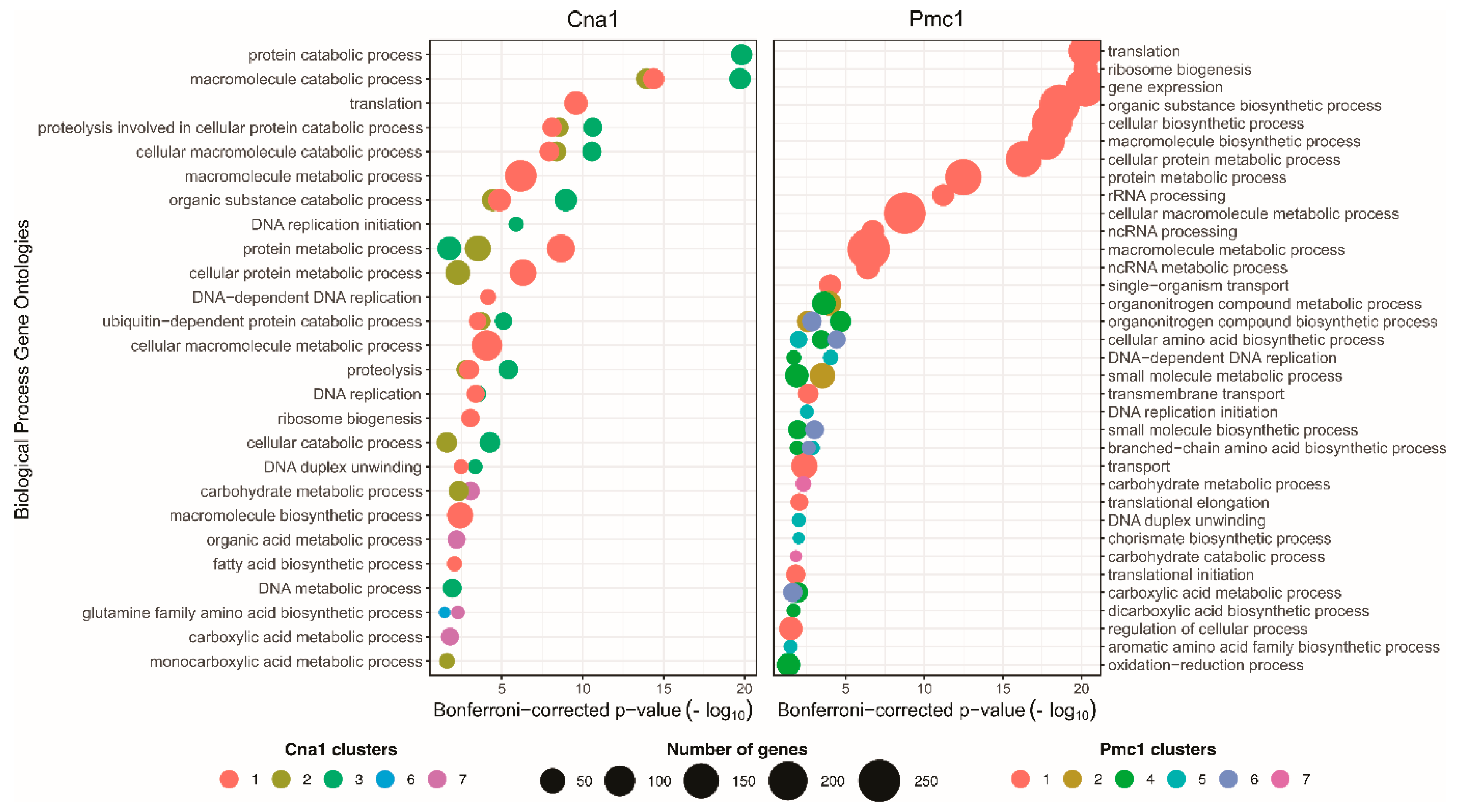
Centrality 46 Centrality analysis revealed that the Tcb1 (ortholog of C. neoformans JEC21 CNA05040) is a bottleneck in the Cna1 and Pmc1 PPINs. Further investigation of representative pathways by functional enrichment analysis from both networks demonstrated that Tcb1-containing clusters are associated with a diverse set of basal processes, including DNA replication, translation, and carbohydrate metabolism (Figure 3). The consolidation of these results strongly suggests a central, pleiotropic regulatory role for Tcb1, acting as an important connector within the overall networks.

3.2. External Transcriptomic Data Link TCB1 to Environmental Adaptation and Host Interaction

To gain further insight into the role of TCB1 in cryptococcal survival and fitness, we compiled transcriptomic datasets reporting its differential expression under distinct conditions (Supplementary Table S7). These data suggested that TCB1 may be important for survival in host-related environments [59,60,61,62]. This gene is upregulated in C. neoformans cells under conditions that induce titan cell formation, in cells phagocytosed by the amoeba Acanthamoeba castellanii, and in cells recovered from cerebrospinal fluid (CSF) of infected patients [59,60,62]. Furthermore, TCB1 expression is linked to other key regulators. It was identified as differentially expressed in a CCR4 knockout mutant strain (ccr4Δ), which affects thermal stress response [61]. TCB1 was also found to be positively regulated by Ada2 and Bzp4, transcription factors known to influence capsule formation [63] (Supplementary Table S7).

3.3. TCB1 Expression Is Controlled by Calcium Signaling and Core Regulators

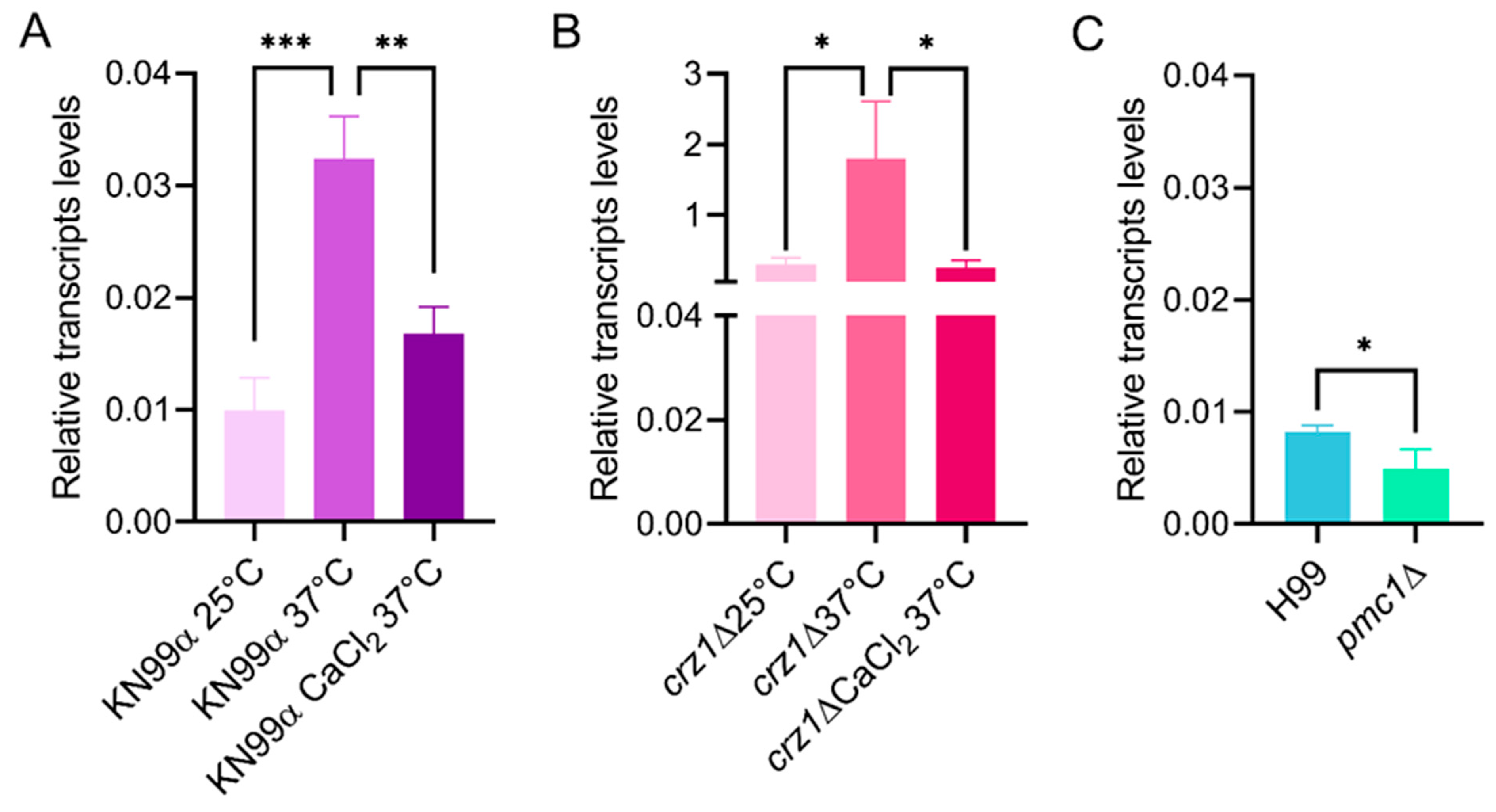
To validate TCB1 as a potential component of the calcium-calcineurin pathway, we performed qRT-PCR analysis to assess its expression under a condition that activates this signaling cascade (37 °C in the presence or absence of Ca2+), and in pmc1Δ and crz1Δ mutants. The relative transcript levels of TCB1 were increased in KN99α wild-type cells cultured at 37 °C compared to 25 °C (Figure 4A). The addition of Ca2+ led to decreased TCB1 transcript levels compared to those observed in control conditions (Figure 4A). The same pattern was observed for mutant cells lacking CRZ1 (Figure 4B), and we also found that proper expression of TCB1 depends upon the presence of the calcium transporter Pmc1 (Figure 4C).
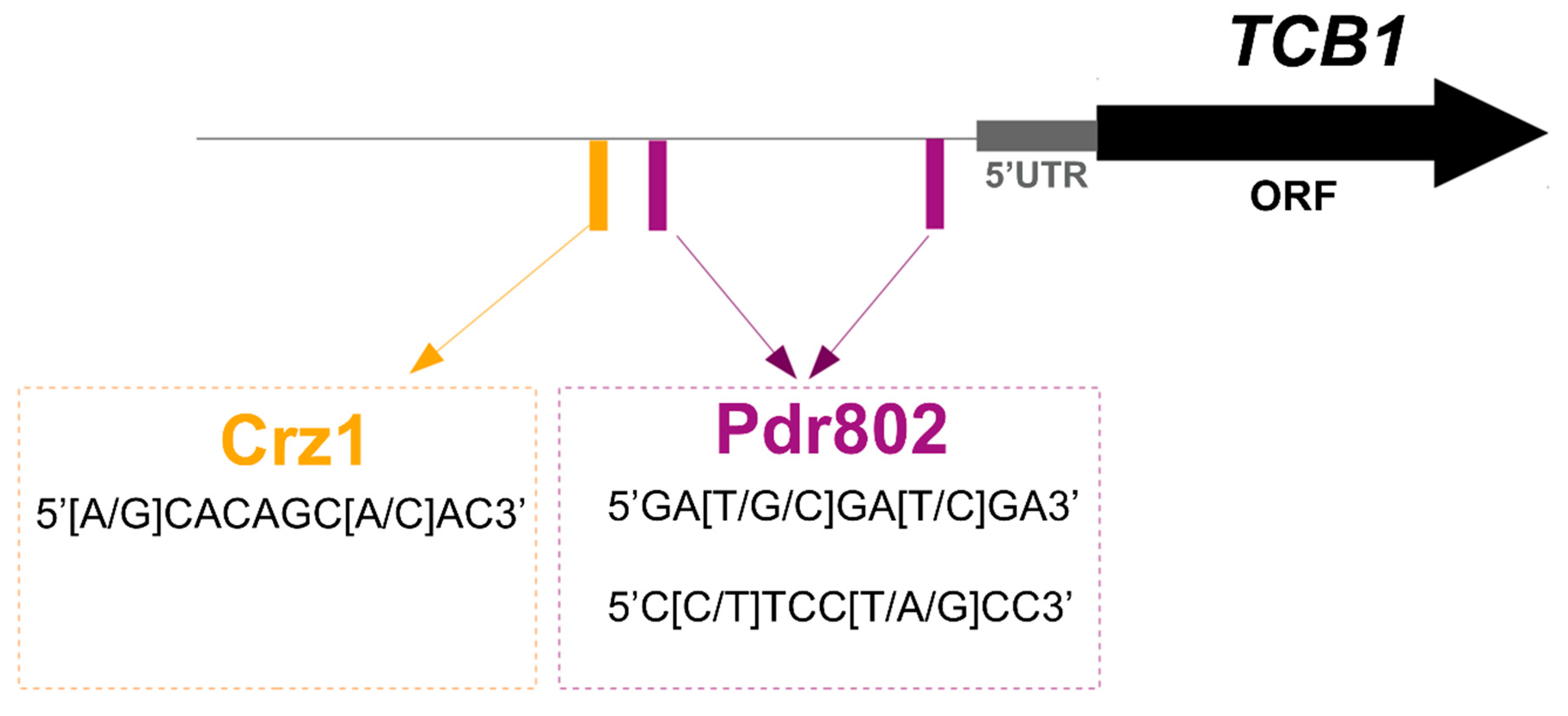
These expression patterns and dependency profiles prompted us to evaluate the presence of canonical sequences in the regulatory region of TCB1 that could indicate a direct regulation by Crz1 and/or other transcription factors. TCB1 promoter analysis identified putative binding sites for the transcription factors Crz1 and Pdr802 (Figure 5 and Supplementary Table S8). Crz1 is a central component of the calcium-calcineurin signaling pathway and directly regulates genes related to stress response and virulence [23,64,65,66,67]. Pdr802 is a transcription factor that negatively regulates Titan cell formation and is also essential for C. neoformans virulence. Direct targets of Pdr802 include the calcineurin targets Had1 and Pmc1, and pdr802Δ null mutant cells accumulate intracellular calcium [50]. These findings reinforce a possible participation of TCB1 in the calcium-calcineurin signaling pathway.

3.4. The TCB1 Deletion Modulates Specific Virulence Traits and Exhibits a Specialized Phenotypic Profile

To further investigate the role of TCB1 in C. neoformans stress adaptation and virulence, we generated a tcb1Δ knockout strain, in which the absence of TCB1 transcripts was confirmed by RT-PCR and qRT-PCR, and the absence of ectopic integration of the deletion cassette was confirmed by qPCR (Supplementary Figure S5). We analyzed the tcb1Δ mutant for general stress susceptibility against a panel of stressors. The tcb1Δ mutant demonstrated no significant difference from the wild-type strain in growth assays performed at different temperatures, in the presence of cell wall stressors (e.g., Congo Red, Calcofluor White), osmotic stressors (e.g., NaCl), or antifungal drugs (e.g., fluconazole, FK506) (Supplementary Figure S6A–D). The absence of broad stress sensitivity indicates that TCB1 operates in a specialized regulatory pathway rather than in a global stress response.
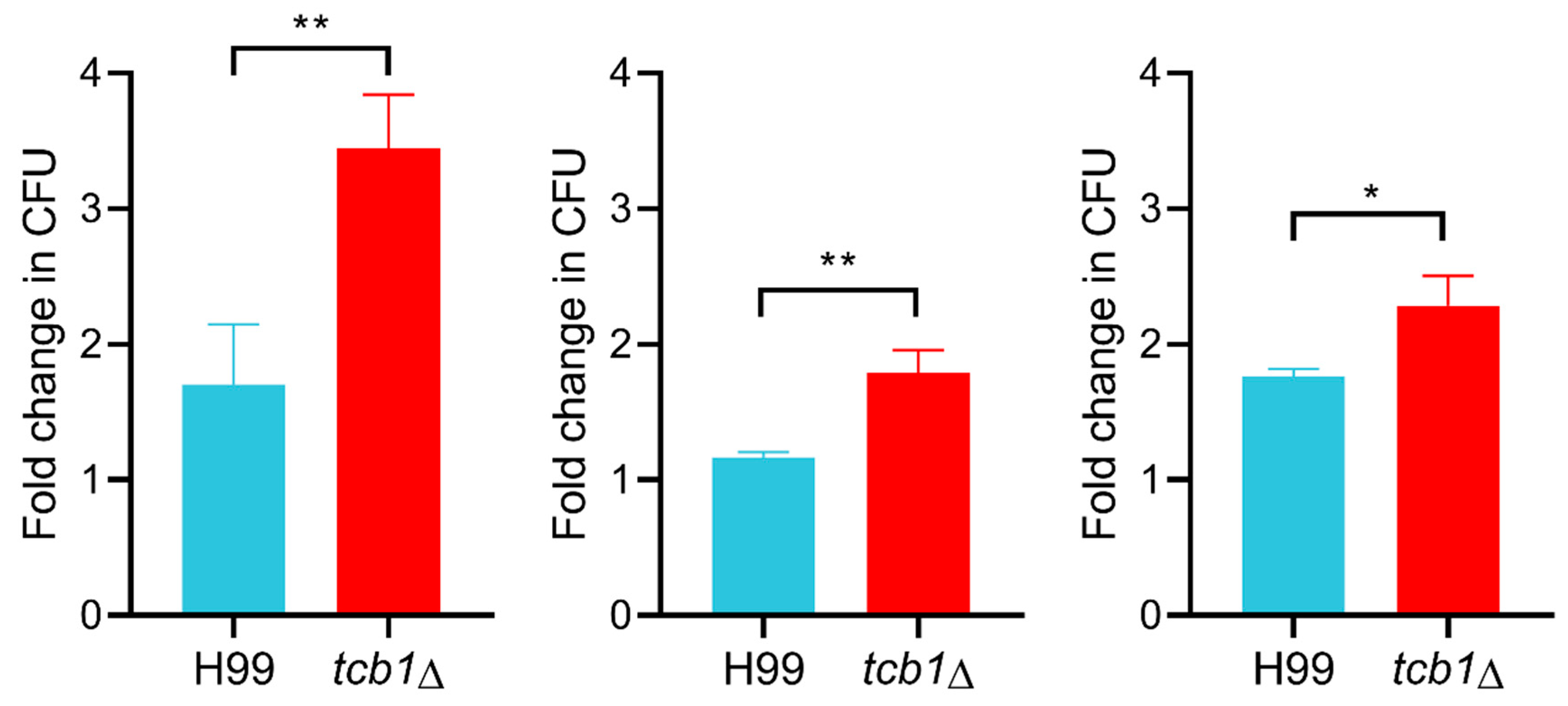
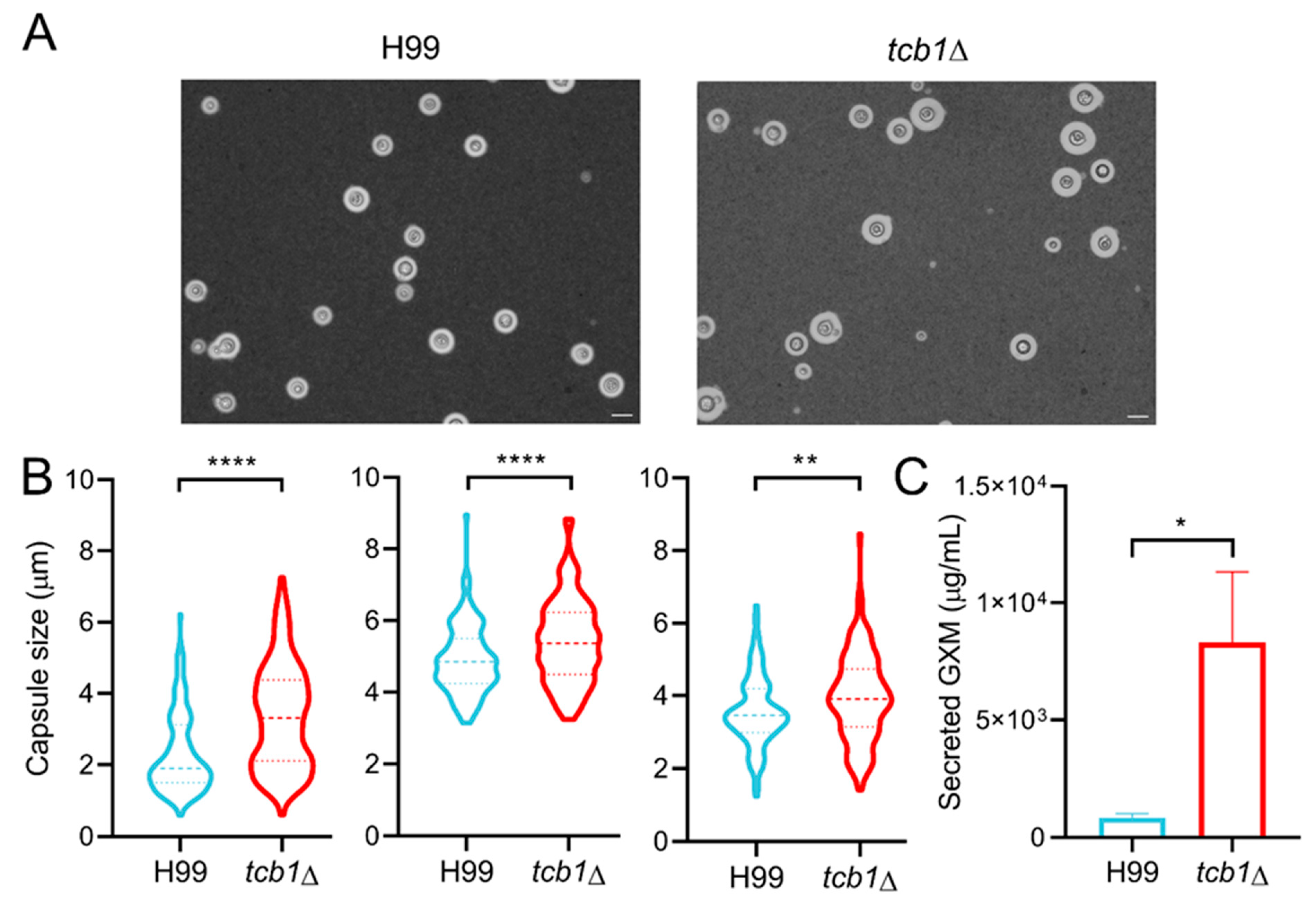
Despite lacking general stress susceptibility, the tcb1Δ mutant did exhibit altered virulence-associated traits in vitro. Based on our expression analysis and the presence of Crz1 and Pdr802 DNA-binding motifs on the TCB1 promoter region, we evaluated the role of TCB1 in survival under host-mimicking conditions. The fungal viability in DMEM at 37 °C and 5% CO2, condition that replicate the host environment, was assessed by comparing CFU counts between the mutant and wild-type strain. Interestingly, the tcb1Δ mutant exhibited increased viability compared to the wild-type (Figure 6). Given that the polysaccharide capsule is a major virulence factor of C. neoformans, we also performed a capsule induction assay. The mutant strain displayed an enlarged capsule compared to the wild-type, and secreted more GXM to the supernatant (Figure 7).
To determine the biological relevance of the observed in vitro phenotypes, we assessed tcb1Δ virulence in the T. molitor invertebrate model. The survival curve for the tcb1Δ mutant did not differ significantly from the wild-type control (Supplementary Figure S7), supporting the conclusion that TCB1 has a specific, non-essential regulatory function over select virulence traits rather than a global role in pathogenesis.

4. Discussion

The study of complex biological systems, such as those governing fungal pathogenesis, is advanced by the rise of multi-omics data and system biology approaches [68,69]. In this context, the integrative workflow employed in this study provides a valuable method to systematically identify previously uncharacterized regulators within intricate fungal signaling systems. As a direct result of our workflow, we selected the CNAG_00522 gene, designated as TCB1, a C. neoformans tricalbin, as a potential novel and influential component within the broad cryptococcal calcium signaling network. The function of tricalbins has been explored in the Ascomycota fungi Saccharomyces cerevisiae and Candida albicans [70,71,72,73]. In S. cerevisiae, tricalbins have been implicated in vacuolar morphology, glucose metabolism, and both calcium-dependent and calcium-independent lipid transport, related to plasma membrane integrity [70,71,72]. In the human pathogen C. albicans, tricalbin knockout strains were more sensitive to cell wall stress induced by caspofungin. They also exhibited reduced proteinase transport and attenuated virulence in mice [73]. These findings in other fungi suggest that tricalbins, including the putative C. neoformans ortholog Tcb1, may similarly contribute to stress responses and virulence-related processes.
The host environment challenges yeast survival, prompting the regulation of myriad biological processes related to stress and metabolism that directly impact virulence and adaptation [13]. The functional enrichment terms associated with Tcb1-containing clusters highlighted a diversity of basal processes essential to C. neoformans’ cell maintenance, survival within the host, and pathogenicity. This result is supported by the roles described for tricalbins in other fungi species [70,71,72,73]. Crucially, centrality analysis showed that Tcb1 is a bottleneck in both Cna1 and Pmc1 networks. Bottleneck proteins represent important connectors that may have an essential role in a network [74]. The fact that Tcb1 also clustered with proteins involved in carbohydrate metabolic processes within the C. neoformans Co-Expression Network (CryptoCEN) further supports the hypothesis that Tcb1 acts as a key connector in essential processes enabling C. neoformans to adapt to various stresses and the host environment [75].
The molecular data strongly support that the TCB1 gene responds to calcium dynamics. Considering the conserved domains identified within the TCB1 coding sequence, together with our results showing increased TCB1 expression at 37 °C and reduced expression in the presence of calcium, it is clear that TCB1 transcription is responsive to Ca2+ signals. The protein structure includes C2 and SMP domains, which are associated with Ca2+ detection and lipid-dependent membrane targeting [57,58]. TCB1 expression also depends on the vacuolar calcium transporter Pmc1, thereby directly corroborating the initial linkage suggested by the differential gene expression analysis. Pmc1 is a known participant in the calcium-calcineurin pathway, and the deletion of the PMC1 coding gene impairs CNS dissemination and capsule formation [18,19]. The influence of Pmc1 on TCB1 expression provides further support that TCB1 is responsive to calcium ions.
While the preliminary genetic screening aligned TCB1 with the calcineurin axis, our subsequent phenotypic analyses established a specialized regulatory role that differentiates TCB1 from canonical core pathway effectors. Mutants lacking the primary calcineurin phosphatase Cna1 or the Crz1 transcription factor typically display broad hypersensitivity to cell wall, thermal, and osmotic stressors [23]. In contrast, the tcb1Δ deletion mutant showed no significant susceptibility defects in these standard stress assays. This evidence indicates that the Tcb1 role differs phenotypically from that of the primary calcineurin-Crz1 stress effectors.
Instead, TCB1 appears to regulate specific cryptococcal virulence traits. TCB1 influences capsule size, a phenotype often linked to calcium homeostasis and GXM secretion [17,18], the major component of the cryptococcal capsule during infection, which plays immunoregulatory roles in the host [76,77,78]. In our capsule induction assay, the tcb1Δ mutant displayed a significantly enlarged capsule compared to the wild-type strain. Additionally, the GXM secretion assay in DMEM revealed that the tcb1Δ mutant sheds a higher amount of GXM compared to the wild type strain at 48 h of incubation period. These findings suggest a potential link between the TCB1 function with calcium signaling, capsule formation, and GXM production.
This modulatory role is supported by extensive external data. TCB1 expression is upregulated when internalized by the protozoan A. castellanii, a natural predator of C. neoformans in the environment, and in titan cells inducing conditions, a morphotype that enhances resistance to host conditions and contributes to C. neoformans virulence [60,62]. Additionally, TCB1 shows increased expression in CSF during infection, highlighting a role in host adaptation [59]. Its expression is negatively influenced by the Ccr4 deadenylase, which suggests TCB1 is regulated during the switch to thermal stress adaptation-related mRNA translation [61]. Furthermore, the positive regulation of TCB1 by the capsule-influencing transcription factors Ada2 and Bzp4 [63] is consistent with our finding that the tcb1Δ mutant forms a larger capsule and sheds more GXM compared to the wild-type strain. Collectively, these transcriptomic data suggest that TCB1 may play a crucial role in fungal survival and adaptation in both host and environmental conditions [59,60,61,62,63].
The TCB1 promoter region contains putative binding sites for the transcription factors Crz1 and Pdr802, further indicating a potential role in stress response and survival in C. neoformans [10,16,50]. While knockout mutant strains lacking the PDR802 gene grow poorly in DMEM at 37 °C and 5% CO2 [50], the tcb1Δ deletion mutant displays enhanced viability in the same host-like condition. However, similar to the pdr802Δ mutant, the tcb1Δ mutant also produces a thicker capsule. These contrasting and overlapping results indicate that TCB1 might participate in the Pdr802 regulatory network, further suggesting the importance of TCB1 to C. neoformans adaptation and survival in host-like conditions.
Finally, while the TCB1 deletion caused changes in key in vitro virulence traits (capsule size, GXM shedding, and DMEM viability), the survival curve for the tcb1Δ mutant in the T. molitor insect model did not differ significantly from the wild-type control. This phenotype, combined with the lack of general stress susceptibility, is the defining feature arguing that TCB1 has a highly specialized role in cryptococcal biology.

5. Conclusions

In conclusion, this study validates the utility of our integrative systems biology workflow for guiding the identification of specialized regulatory genes within complex fungal systems. TCB1 is involved in the key processes related to the adaptation of C. neoformans, acting as a specific calcium-responsive gene associated with capsule size, GXM shedding, and viability regulation. The accumulation of molecular and functional evidence, especially the absence of susceptibility to core stressors and the non-attenuating virulence phenotype, strongly suggests that TCB1 serves as a specialized node linking distinct signaling cascades, rather than participating as a canonical effector within the core calcineurin pathway. To our knowledge, this is the first study to investigate the role of tricalbins in C. neoformans biology, providing foundational insights for understanding the role of tricalbins as modulators of fungal adaptation.

Supplementary Materials

The following supporting information can be downloaded at https://www.mdpi.com/article/10.3390/microorganisms14010122/s1. Supplementary File S1: Pmc1 PPIN Cytoscape session; Supplementary File S2: Cna1 PPIN Cytoscape session; Supplementary File S3: Crz1 PPIN Cytoscape session. Supplementary Table S1: Tcb1 (CNAG_00522) protein sequence; Supplementary Table S2: Transcription factor binding motifs for Crz1 and Pdr802; Supplementary Table S3: TCB1 (CNAG_00522) promoter sequence; Supplementary Table S4: Primer sequences used in this study; Supplementary Table S5: Differentially expressed genes (DEGs); Supplementary Table S6: Cross-referencing Dynet PPIN overlaps with FungiDB annotations and conserved domain; Supplementary Table S7: Literature microarray and RNA-seq data evidence of possible TCB1 participation in C. neoformans virulence and survival; Supplementary Table S8: FIMO results for TFBS in TCB1 promoter region. Supplementary Figure S1: MultiQC STAR Alignment Scores plots; Supplementary Figure S2: Protein–protein interaction network of WT × pmc1Δ corresponding DEGs; Supplementary Figure S3: Protein–protein interaction network of WT × cna1Δ corresponding DEGs; Supplementary Figure S4: Protein–protein interaction network of WT × crz1Δ corresponding DEGs; Supplementary Figure S5: Construction of tcb1Δ mutant strain and confirmation; Supplementary Figure S6: Phenotypic stress susceptibility assays for tcb1Δ deletion mutant; Supplementary Figure S7: Virulence Assays of tcb1Δ and wild-type strains of C. neoformans in T. molitor.

Author Contributions

A.G.T.: Conceptualization, Investigation, Methodology, Visualization, Writing—original draft. J.C.V.R.: Conceptualization, Investigation, Methodology, Writing—original draft, review, and editing. H.M.: Conceptualization, Investigation, Methodology, Writing—original draft, review, and editing. E.D.S.: Investigation, Methodology, Writing—review and editing. R.S.A.S.: Methodology, Writing—review and editing. P.A.G.F.: Methodology, Writing—review and editing. M.d.S.C.: Methodology, Writing—review and editing. B.C.F.: Methodology, Writing—review and editing. M.H.V.: Resources, Writing—review and editing. C.C.S.: Conceptualization, Investigation, Methodology, Supervision, Writing—review and editing. L.K.: Conceptualization, Funding acquisition, Project administration, Resources, Supervision, Writing—review and editing. All authors have read and agreed to the published version of the manuscript.

Funding

This project was financially supported by Ministério da Ciência, Tecnologia e Inovação (MCTI), Fundo Nacional de Desenvolvimento Científico e Tecnológico (FNDCT), and Conselho Nacional de Desenvolvimento Científico e Tecnológico (CNPq, 408717/2022-0 and 312797/2021-4); Instituto Nacional de Ciência e Tecnologia (INCT FUNVIR, 405934/2022-0); Fundação de Amparo à Pesquisa do Estado do Rio Grande do Sul (FAPERGS, 22/2551-0000396-6); and the Coordenação de Aperfeiçoamento de Pessoal de Nível Superior (CAPES) fully supported Andrea Gomes Tavanti during this study through scholarships of Programa de Excelência Acadêmica (PROEX, 88882.346632/2019-01 and 88887.595440/2020-00).

Institutional Review Board Statement

Not applicable.

Informed Consent Statement

Not applicable.

Data Availability Statement

Raw C. neoformans RNA-seq sequence datasets used in this study were obtained from NCBI SRA database under accession code SRP120588.

Acknowledgments

We are grateful to Lucas Fialho Zawacki and Fábio Carrer Andreis for helping in the in silico experiments, and Daiane Acosta Falcão, and Julia Sperotto for assistance in the in vitro experiments. We are also grateful to Arnaldo Zaha, Fabiana Quoos Mayer, and Livia Fratini Dutra for their comments on the manuscript. The authors used OpenAI ChatGPT (version GPT-5.2) and Gemini (version 3 flash) to check English grammar, with caution. All text was reviewed and edited by the authors as needed, and they take full responsibility for the content of the publication.

Conflicts of Interest

The authors declare no conflicts of interest.

References

  1. Denning, D.W. Global incidence and mortality of severe fungal disease. Lancet Infect. Dis. 2024, 24, e428–e438. [Google Scholar] [CrossRef]
  2. Zavala, S.; Baddley, J.W. Cryptococcosis. Semin. Respir. Crit. Care Med. 2020, 41, 069–079. [Google Scholar] [CrossRef]
  3. Rajasingham, R.; Govender, N.P.; Jordan, A.; Loyse, A.; Shroufi, A.; Denning, D.W.; Meya, D.B.; Chiller, T.M.; Boulware, D.R. The global burden of HIV-associated cryptococcal infection in adults in 2020: A modelling analysis. Lancet Infect. Dis. 2022, 22, 1748–1755, Erratum in Lancet Infect. Dis. 2023, 23, E1. [Google Scholar] [CrossRef]
  4. May, R.C.; Stone, N.R.H.; Wiesner, D.L.; Bicanic, T.; Nielsen, K. Cryptococcus: From environmental saprophyte to global pathogen. Nat. Rev. Microbiol. 2016, 14, 106–117. [Google Scholar] [CrossRef]
  5. Molloy, S.F.; Chiller, T.; Greene, G.S.; Burry, J.; Govender, N.P.; Kanyama, C.; Mfinanga, S.; Lesikari, S.; Mapoure, Y.N.; Kouanfack, C.; et al. Cryptococcal meningitis: A neglected NTD? PLoS Negl. Trop. Dis. 2017, 11, e0005575. [Google Scholar] [CrossRef]
  6. WHO Fungal Priority Pathogens List to Guide Research, Development and Public Health Action; World Health Organization: Geneva, Switzerland, 2022; Available online: https://www.who.int/publications/i/item/9789240060241 (accessed on 1 September 2025).
  7. Abassi, M.; Boulware, D.R.; Rhein, J. Cryptococcal Meningitis: Diagnosis and Management Update. Curr. Trop. Med. Rep. 2015, 2, 90–99. [Google Scholar] [CrossRef]
  8. Tugume, L.; Ssebambulidde, K.; Kasibante, J.; Ellis, J.; Wake, R.M.; Gakuru, J.; Lawrence, D.S.; Abassi, M.; Rajasingham, R.; Meya, D.B.; et al. Cryptococcal meningitis. Nat. Rev. Dis. Prim. 2023, 9, 62. [Google Scholar] [CrossRef]
  9. Juvvadi, P.R.; Lee, S.C.; Heitman, J.; Steinbach, W.J. Calcineurin in fungal virulence and drug resistance: Prospects for harnessing targeted inhibition of calcineurin for an antifungal therapeutic approach. Virulence 2017, 8, 186–197. [Google Scholar] [CrossRef] [PubMed]
  10. Park, H.S.; Lee, S.C.; Cardenas, M.E.; Heitman, J. Calcium-Calmodulin-Calcineurin Signaling: A Globally Conserved Virulence Cascade in Eukaryotic Microbial Pathogens. Cell Host Microbe 2019, 26, 453–462. [Google Scholar] [CrossRef] [PubMed]
  11. Wall, G.; Lopez-Ribot, J.L. Current Antimycotics, New Prospects, and Future Approaches to Antifungal Therapy. Antibiotics 2020, 9, 445. [Google Scholar] [CrossRef]
  12. Denham, S.; Brown, J. Mechanisms of Pulmonary Escape and Dissemination by Cryptococcus neoformans. J. Fungi 2018, 4, 25. [Google Scholar] [CrossRef]
  13. Griffiths, E.J.; Kretschmer, M.; Kronstad, J.W. Aimless mutants of Cryptococcus neoformans: Failure to disseminate. Fungal Biol. Rev. 2012, 26, 61–72. [Google Scholar] [CrossRef]
  14. Zaragoza, O. Basic principles of the virulence of Cryptococcus. Virulence 2019, 10, 490–501. [Google Scholar] [CrossRef]
  15. Chow, E.W.L.; Clancey, S.A.; Billmyre, R.B.; Averette, A.F.; A Granek, J.; Mieczkowski, P.; E Cardenas, M.; Heitman, J. Elucidation of the calcineurin-Crz1 stress response transcriptional network in the human fungal pathogen Cryptococcus neoformans. PLoS Genet. 2017, 13, e1006667. [Google Scholar] [CrossRef] [PubMed]
  16. Park, H.S.; Chow, E.W.L.; Fu, C.; Soderblom, E.J.; Moseley, M.A.; Heitman, J.; E Cardenas, M. Calcineurin Targets Involved in Stress Survival and Fungal Virulence. PLoS Pathog. 2016, 12, e1005873. [Google Scholar] [CrossRef]
  17. Kmetzsch, L.; Staats, C.C.; Simon, E.; Fonseca, F.L.; de Oliveira, D.L.; Sobrino, L.; Rodrigues, J.; Leal, A.L.; Nimrichter, L.; Rodrigues, M.L.; et al. The Vacuolar Ca2+ Exchanger Vcx1 Is Involved in Calcineurin-Dependent Ca2+ Tolerance and Virulence in Cryptococcus neoformans. Eukaryot. Cell 2010, 9, 1798–1805. [Google Scholar] [CrossRef] [PubMed]
  18. Kmetzsch, L.; Staats, C.C.; Cupertino, J.B.; Fonseca, F.L.; Rodrigues, M.L.; Schrank, A.; Vainstein, M.H. The calcium transporter Pmc1 provides Ca2+ tolerance and influences the progression of murine cryptococcal infection. FEBS J. 2013, 280, 4853–4864. [Google Scholar] [CrossRef]
  19. Squizani, E.D.; Oliveira, N.K.; Reuwsaat, J.C.V.; Marques, B.M.; Lopes, W.; Gerber, A.L.; de Vasconcelos, A.T.R.; Lev, S.; Djordjevic, J.T.; Schrank, A.; et al. Cryptococcal dissemination to the central nervous system requires the vacuolar calcium transporter Pmc1. Cell. Microbiol. 2018, 20, e12803. [Google Scholar] [CrossRef]
  20. Roy, A.; Kumar, A.; Baruah, D.; Tamuli, R. Calcium signaling is involved in diverse cellular processes in fungi. Mycology 2020, 12, 10–24. [Google Scholar] [CrossRef]
  21. Fan, W.; Idnurm, A.; Breger, J.; Mylonakis, E.; Heitman, J. Eca1, a Sarcoplasmic/Endoplasmic Reticulum Ca2+ -ATPase, Is Involved in Stress Tolerance and Virulence in Cryptococcus neoformans. Infect. Immun. 2007, 75, 3394–3405. [Google Scholar] [CrossRef]
  22. Liu, M.; Du, P.; Heinrich, G.; Cox, G.M.; Gelli, A. Cch1 Mediates Calcium Entry in Cryptococcus neoformans and Is Essential in Low-Calcium Environments. Eukaryot. Cell 2006, 5, 1788–1796. [Google Scholar] [CrossRef] [PubMed]
  23. Lev, S.; Desmarini, D.; Chayakulkeeree, M.; Sorrell, T.C.; Djordjevic, J.T. The Crz1/Sp1 Transcription Factor of Cryptococcus neoformans Is Activated by Calcineurin and Regulates Cell Wall Integrity. PLoS ONE 2012, 7, e51403. [Google Scholar] [CrossRef]
  24. Yadav, V.; Heitman, J. Calcineurin: The Achilles’ heel of fungal pathogens. PLoS Pathog. 2023, 19, e1011445. [Google Scholar] [CrossRef] [PubMed]
  25. Deng, H.; Song, J.; Huang, Y.; Yang, C.; Zang, X.; Zhou, Y.; Li, H.; Dai, B.; Xue, X. Combating increased antifungal drug resistance in Cryptococcus, what should we do in the future? Acta Biochim. Biophys. Sin. 2023, 55, 540–547. [Google Scholar] [CrossRef]
  26. Iyer, K.R.; Revie, N.M.; Fu, C.; Robbins, N.; Cowen, L.E. Treatment strategies for cryptococcal infection: Challenges, advances and future outlook. Nat. Rev. Microbiol. 2021, 19, 454–466. [Google Scholar] [CrossRef]
  27. Barrett, T.; Wilhite, S.E.; Ledoux, P.; Evangelista, C.; Kim, I.F.; Tomashevsky, M.; Marshall, K.A.; Phillippy, K.H.; Sherman, P.M.; Holko, M.; et al. NCBI GEO: Archive for functional genomics data sets—Update. Nucleic Acids Res. 2012, 41, D991–D995. [Google Scholar] [CrossRef]
  28. Leinonen, R.; Sugawara, H.; Shumway, M.; on behalf of the International Nucleotide Sequence Database Collaboration. The Sequence Read Archive. Nucleic Acids Res. 2011, 39, D19–D21. [Google Scholar] [CrossRef]
  29. Cochrane, G.; Karsch-Mizrachi, I.; Nakamura, Y.; on behalf of the International Nucleotide Sequence Database Collaboration. The International Nucleotide Sequence Database Collaboration. Nucleic Acids Res. 2011, 39, D15–D18. [Google Scholar] [CrossRef]
  30. Andrews, S. FastQC: A Quality Control Tool for High Throughput Sequence Data. Published Online. 2010. Available online: http://www.bioinformatics.babraham.ac.uk/projects/fastqc (accessed on 1 September 2025).
  31. Martin, M. Cutadapt removes adapter sequences from high-throughput sequencing reads. EMBnet. J. 2011, 17, 10. [Google Scholar] [CrossRef]
  32. Bolger, A.M.; Lohse, M.; Usadel, B. Trimmomatic: A flexible trimmer for Illumina sequence data. Bioinformatics 2014, 30, 2114–2120. [Google Scholar] [CrossRef] [PubMed]
  33. Joshi, N.A.; Fass, J.N. Sickle: A Sliding-Window, Adaptive, Quality-Based Trimming Tool for FastQ Files. 2011. Available online: https://github.com/najoshi/sickle (accessed on 1 September 2025).
  34. Hannon, G.J. FASTX-Toolkit. Published Online 2010. Available online: http://hannonlab.cshl.edu/fastx_toolkit (accessed on 3 April 2025).
  35. Dobin, A.; Davis, C.A.; Schlesinger, F.; Drenkow, J.; Zaleski, C.; Jha, S.; Batut, P.; Chaisson, M.; Gingeras, T.R. STAR: Ultrafast universal RNA-seq aligner. Bioinformatics 2013, 29, 15–21. [Google Scholar] [CrossRef]
  36. Ewels, P.; Magnusson, M.; Lundin, S.; Käller, M. MultiQC: Summarize analysis results for multiple tools and samples in a single report. Bioinformatics 2016, 32, 3047–3048. [Google Scholar] [CrossRef]
  37. Li, H.; Handsaker, B.; Wysoker, A.; Fennell, T.; Ruan, J.; Homer, N. The Sequence Alignment/Map format and SAMtools. Bioinformatics 2009, 25, 2078–2079. [Google Scholar] [CrossRef]
  38. Anders, S.; Pyl, P.T.; Huber, W. HTSeq—A Python framework to work with high-throughput sequencing data. Bioinformatics 2015, 31, 166–169. [Google Scholar] [CrossRef] [PubMed]
  39. RStudio Team. RStudio: Integrated Development Environment for, R. RStudio. Published Online. 2020. Available online: http://www.rstudio.com (accessed on 1 September 2025).
  40. Love, M.I.; Huber, W.; Anders, S. Moderated estimation of fold change and dispersion for RNA-seq data with DESeq2. Genome Biol. 2014, 15, 550. [Google Scholar] [CrossRef] [PubMed]
  41. Szklarczyk, D.; Kirsch, R.; Koutrouli, M.; Nastou, K.; Mehryary, F.; Hachilif, R.; Gable, A.L.; Fang, T.; Doncheva, N.T.; Pyysalo, S.; et al. The STRING database in 2023: Protein–protein association networks and functional enrichment analyses for any sequenced genome of interest. Nucleic Acids Res. 2023, 51, D638–D646. [Google Scholar] [CrossRef]
  42. Basenko, E.Y.; Pulman, J.A.; Shanmugasundram, A.; Harb, O.S.; Crouch, K.; Starns, D.; Warrenfeltz, S.; Aurrecoechea, C.; Stoeckert, J.C.J.; Kissinger, J.C.; et al. FungiDB: An Integrated Bioinformatic Resource for Fungi and Oomycetes. J. Fungi 2018, 4, 39. [Google Scholar] [CrossRef]
  43. Shannon, P.; Markiel, A.; Ozier, O.; Baliga, N.S.; Wang, J.T.; Ramage, D.; Amin, N.; Schwikowski, B.; Ideker, T. Cytoscape: A Software Environment for Integrated Models of Biomolecular Interaction Networks. Genome Res. 2003, 13, 2498–2504. [Google Scholar] [CrossRef]
  44. Goenawan, I.H.; Bryan, K.; Lynn, D.J. DyNet: Visualization and analysis of dynamic molecular interaction networks. Bioinformatics 2016, 32, 2713–2715. [Google Scholar] [CrossRef] [PubMed]
  45. Bader, G.D.; Hogue, C.W. An automated method for finding molecular complexes in large protein interaction networks. BMC Bioinform. 2003, 4, 2. [Google Scholar] [CrossRef]
  46. Scardoni, G.; Petterlini, M.; Laudanna, C. Analyzing biological network parameters with CentiScaPe. Bioinformatics 2009, 25, 2857–2859. [Google Scholar] [CrossRef]
  47. Bindea, G.; Mlecnik, B.; Hackl, H.; Charoentong, P.; Tosolini, M.; Kirilovsky, A.; Fridman, W.-H.; Pagès, F.; Trajanoski, Z.; Galon, J. ClueGO: A Cytoscape plug-in to decipher functionally grouped gene ontology and pathway annotation networks. Bioinformatics 2009, 25, 1091–1093. [Google Scholar] [CrossRef] [PubMed]
  48. Ashburner, M.; Ball, C.A.; Blake, J.A.; Botstein, D.; Butler, H.; Cherry, J.M.; Davis, A.P.; Dolinski, K.; Dwight, S.S.; Eppig, J.T.; et al. Gene Ontology: Tool for the unification of biology. Nat. Genet. 2000, 25, 25–29. [Google Scholar] [CrossRef]
  49. Blum, M.; Andreeva, A.; Florentino, L.C.; Chuguransky, S.R.; Grego, T.; Hobbs, E.; Pinto, B.L.; Orr, A.; Paysan-Lafosse, T.; Ponamareva, I.; et al. InterPro: The protein sequence classification resource in 2025. Nucleic Acids Res. 2025, 53, D444–D456. [Google Scholar] [CrossRef]
  50. Reuwsaat, J.C.V.; Agustinho, D.P.; Motta, H.; Chang, A.L.; Brown, H.; Brent, M.R.; Kmetzsch, L.; Doering, T.L. The Transcription Factor Pdr802 Regulates Titan Cell Formation and Pathogenicity of Cryptococcus neoformans. mBio 2021, 12, e03457-20. [Google Scholar] [CrossRef] [PubMed]
  51. Grant, C.E.; Bailey, T.L.; Noble, W.S. FIMO: Scanning for occurrences of a given motif. Bioinformatics 2011, 27, 1017–1018. [Google Scholar] [CrossRef] [PubMed]
  52. Livak, K.J.; Schmittgen, T.D. Analysis of Relative Gene Expression Data Using Real-Time Quantitative PCR and the 2−ΔΔCT Method. Methods 2001, 25, 402–408. [Google Scholar] [CrossRef]
  53. Jung, K.; Lee, K.; So, Y.; Bahn, Y. Genetic Manipulation of Cryptococcus neoformans. Curr. Protoc. Microbiol. 2018, 50, e59. [Google Scholar] [CrossRef]
  54. Toffaletti, D.L.; Rude, T.H.; Johnston, S.A.; Durack, D.T.; Perfect, J.R. Gene transfer in Cryptococcus neoformans by use of biolistic delivery of DNA. J. Bacteriol. 1993, 175, 1405–1411. [Google Scholar] [CrossRef]
  55. Casadevall, A.; Mukherjee, J.; Scharff, M.D. Monoclonal antibody based ELISAs for cryptococcal polysaccharide. J. Immunol. Methods 1992, 154, 27–35. [Google Scholar] [CrossRef]
  56. Kmetzsch, L.; Joffe, L.S.; Staats, C.C.; de Oliveira, D.L.; Fonseca, F.L.; Cordero, R.J.; Casadevall, A.; Nimrichter, L.; Schrank, A.; Vainstein, M.H.; et al. Role for Golgi reassembly and stacking protein (GRASP) in polysaccharide secretion and fungal virulence. Mol. Microbiol. 2011, 81, 206–218. [Google Scholar] [CrossRef]
  57. Lu, S.; Wang, J.; Chitsaz, F.; Derbyshire, M.K.; Geer, R.C.; Gonzales, N.R.; Gwadz, M.; I Hurwitz, D.; Marchler, G.H.; Song, J.S.; et al. CDD/SPARCLE: The conserved domain database in 2020. Nucleic Acids Res. 2020, 48, D265–D268. [Google Scholar] [CrossRef] [PubMed]
  58. Lee, I.; Hong, W. Diverse membrane-associated proteins contain a novel SMP domain. FASEB J. 2006, 20, 202–206. [Google Scholar] [CrossRef]
  59. Chen, Y.; Toffaletti, D.L.; Tenor, J.L.; Litvintseva, A.P.; Fang, C.; Mitchell, T.G.; McDonald, T.R.; Nielsen, K.; Boulware, D.R.; Bicanic, T.; et al. The Cryptococcus neoformans Transcriptome at the Site of Human Meningitis. mBio 2014, 5, e01087-13. [Google Scholar] [CrossRef]
  60. Derengowski, L.D.S.; Paes, H.C.; Albuquerque, P.; Tavares, A.H.F.P.; Fernandes, L.; Silva-Pereira, I.; Casadevall, A. The Transcriptional Response of Cryptococcus neoformans to Ingestion by Acanthamoeba castellanii and Macrophages Provides Insights into the Evolutionary Adaptation to the Mammalian Host. Eukaryot. Cell 2013, 12, 761–774. [Google Scholar] [CrossRef]
  61. Bloom, A.L.M.; Jin, R.M.; Leipheimer, J.; Bard, J.E.; Yergeau, D.; Wohlfert, E.A.; Panepinto, J.C. Thermotolerance in the pathogen Cryptococcus neoformans is linked to antigen masking via mRNA decay-dependent reprogramming. Nat. Commun. 2019, 10, 4950. [Google Scholar] [CrossRef] [PubMed]
  62. Trevijano-Contador, N.; De Oliveira, H.C.; García-Rodas, R.; Rossi, S.A.; Llorente, I.; Zaballos, Á.; Janbon, G.; Ariño, J.; Zaragoza, Ó. Cryptococcus neoformans can form titan-like cells in vitro in response to multiple signals. PLoS Pathog. 2018, 14, e1007007. [Google Scholar] [CrossRef]
  63. Jang, E.H.; Kim, J.S.; Yu, S.R.; Bahn, Y.S. Unraveling Capsule Biosynthesis and Signaling Networks in Cryptococcus neoformans. Microbiol. Spectr. 2022, 10, e02866-22. [Google Scholar] [CrossRef] [PubMed]
  64. Schumacher, J.; De Larrinoa, I.F.; Tudzynski, B. Calcineurin-Responsive Zinc Finger Transcription Factor Crz1 of Botrytis cinerea Is Required for Growth, Development, and Full Virulence on Bean Plants. Eukaryot. Cell 2008, 7, 584–601. [Google Scholar] [CrossRef]
  65. Santos, M.; De Larrinoa, I.F. Functional characterization of the Candida albicans CRZ1 gene encoding a calcineurin-regulated transcription factor. Curr. Genet. 2005, 48, 88–100. [Google Scholar] [CrossRef]
  66. Cramer, R.A.; Perfect, B.Z.; Pinchai, N.; Park, S.; Perlin, D.S.; Asfaw, Y.G.; Heitman, J.; Perfect, J.R.; Steinbach, W.J. Calcineurin Target CrzA Regulates Conidial Germination, Hyphal Growth, and Pathogenesis of Aspergillus fumigatus. Eukaryot. Cell 2008, 7, 1085–1097. [Google Scholar] [CrossRef]
  67. Kim, S.; Hu, J.; Oh, Y.; Park, J.; Choi, J.; Lee, Y.-H.; A Dean, R.; Mitchell, T.K. Combining ChIP-chip and Expression Profiling to Model the MoCRZ1 Mediated Circuit for Ca2+/Calcineurin Signaling in the Rice Blast Fungus. PLoS Pathog. 2010, 6, e1000909. [Google Scholar] [CrossRef]
  68. Verli, H. Bioinformática: Da Biologia à Flexibilidade Molecular, 1st ed.; SBBq: São Paulo, Brazil, 2014; Available online: https://www.lume.ufrgs.br/handle/10183/166105 (accessed on 1 September 2025).
  69. Pinu, F.R.; Beale, D.J.; Paten, A.M.; Kouremenos, K.; Swarup, S.; Schirra, H.J.; Wishart, D. Systems Biology and Multi-Omics Integration: Viewpoints from the Metabolomics Research Community. Metabolites 2019, 9, 76. [Google Scholar] [CrossRef]
  70. Creutz, C.E.; Snyder, S.L.; Schulz, T.A. Characterization of the yeast tricalbins: Membrane-bound multi-C2-domain proteins that form complexes involved in membrane trafficking. Cell. Mol. Life Sci. CMLS 2004, 61, 1208–1220. [Google Scholar] [CrossRef] [PubMed]
  71. Qian, T.; Li, C.; He, R.; Wan, C.; Liu, Y.; Yu, H. Calcium-dependent and -independent lipid transfer mediated by tricalbins in yeast. J. Biol. Chem. 2021, 296, 100729. [Google Scholar] [CrossRef]
  72. Schlarmann, P.; Sakuragi, K.; Ikeda, A.; Yang, Y.; Sasaki, S.; Hanaoka, K.; Araki, M.; Shibata, T.; Kanai, M.; Funato, K. The tricalbin family of membrane contact site tethers is involved in the transcriptional responses of Saccharomyces cerevisiae to glucose. J. Biol. Chem. 2024, 300, 107665. [Google Scholar] [CrossRef] [PubMed]
  73. Yang, L.; Zhu, H.; Li, M.; Yu, Q. The Tricalbin-Family Endoplasmic Reticulum-Plasma Membrane Tethering Proteins Attenuate ROS-Involved Caspofungin Sensitivity in Candida albicans. Microbiol. Spectr. 2022, 10, e02079-22. [Google Scholar] [CrossRef] [PubMed]
  74. Yu, H.; Kim, P.M.; Sprecher, E.; Trifonov, V.; Gerstein, M. The Importance of Bottlenecks in Protein Networks: Correlation with Gene Essentiality and Expression Dynamics. PLoS Comput. Biol. 2007, 3, e59. [Google Scholar] [CrossRef]
  75. O’Meara, M.J.; Rapala, J.R.; Nichols, C.B.; Alexandre, A.C.; Billmyre, R.B.; Steenwyk, J.L.; Alspaugh, J.A.; O’meara, T.R. CryptoCEN: A Co-Expression Network for Cryptococcus neoformans reveals novel proteins involved in DNA damage repair. PLoS Genet. 2024, 20, e1011158. [Google Scholar] [CrossRef]
  76. Zaragoza, O.; Rodrigues, M.L.; De Jesus, M.; Frases, S.; Dadachova, E.; Casadevall, A. Chapter 4 The Capsule of the Fungal Pathogen Cryptococcus neoformans. Adv. Appl. Microbiol. 2009, 68, 133–216. [Google Scholar] [CrossRef]
  77. Rodrigues, M.L.; Nimrichter, L.; Oliveira, D.L.; Frases, S.; Miranda, K.; Zaragoza, O.; Alvarez, M.; Nakouzi, A.; Feldmesser, M.; Casadevall, A. Vesicular Polysaccharide Export in Cryptococcus neoformans Is a Eukaryotic Solution to the Problem of Fungal Trans-Cell Wall Transport. Eukaryot. Cell 2007, 6, 48–59. [Google Scholar] [CrossRef] [PubMed]
  78. Rodrigues, M.L.; Nakayasu, E.S.; Oliveira, D.L.; Nimrichter, L.; Nosanchuk, J.D.; Almeida, I.C.; Casadevall, A. Extracellular Vesicles Produced by Cryptococcus neoformans Contain Protein Components Associated with Virulence. Eukaryot. Cell 2008, 7, 58–67. [Google Scholar] [CrossRef] [PubMed]
Figure 1. Integrative transcriptomic and network analysis for identification of cryptococcal uncharacterized genes. (A) Workflow employed to select uncharacterized genes associated with the calcium signaling network in C. neoformans. The process comprises four main steps: (1) Selection of published RNA-Seq datasets of deletion mutants from the calcineurin signaling pathway (cna1Δ, crz1Δ, and pmc1Δ); (2) Identification of differentially expressed genes (DEGs); (3) Construction of protein–protein interaction networks, using STRING, FungiDB, and Cytoscape; (4) Target selection and characterization, through conserved domains search, gene expression analysis, knockout mutant construction, and phenotypic and virulence assays. Venn diagram comparing the total number of DEGs (B), positively regulated DEGS (C), and negatively regulated DEGs (D) for cna1Δ, crz1Δ, and pmc1Δ related to the wild-type strain (H99). In black are the numbers of genes coregulated in the three mutants (B); positively regulated by both Cna1 and Crz1 (C); and negatively regulated by the three mutants (D). Illustration created in BioRender.
Microorganisms 14 00122 g001
Figure 2. Primary and tertiary Tcb1 protein structure representations. (A). Schematic representation of conserved domains identified in the C. neoformans Tcb1 protein using InterProScan. Four domains were detected: one SMP_Mug190 domain, spanning residues 232–469, and three C2 domains. The first C2 domain extends from residues 473 to 637, the second from 662 to 820, and the third from 827 to 981. (B). Tridimensional representation of C. neoformans Tcb1 protein according to AlphaFold. Colors in protein structure indicate the per-residue model confidence score (pLDDT) between 0 and 100 generated by AlphaFold.
Microorganisms 14 00122 g002
Figure 3. Combined functional enrichment analysis of Tcb1-containing clusters within the Cna1 and Pmc1 networks. Functional enrichment analysis of clusters containing Tcb1 within the Cna1 (left panel) and Pmc1 (right panel) protein–protein interaction networks. The bubble plots show enriched Gene Ontology Biological Process terms associated with Tcb1-containing clusters in each network. GO terms are displayed on the Y-axis. The X-axis displays the −log10 of the Bonferroni-corrected p-values for the enrichment. Bubble color indicates the specific cluster number within each network, and the size of the bubble represents the number of genes associated with each enriched GO term.
Microorganisms 14 00122 g003
Figure 4. TCB1 expression is temperature-regulated in C. neoformans. Transcript levels of TCB1 were assessed by qRT-PCR in the KN99α strain (A), crz1Δ (B) samples at 25 °C or 37 °C with or without CaCl2 addition, and in H99 and pmc1Δ samples at 30 °C (C). Error bars indicate standard deviation. Statistical analysis was conducted using one-way analysis of variance (ANOVA) or Student’s t-test. * p < 0.05; ** p < 0.01; *** p < 0.001.
Microorganisms 14 00122 g004
Figure 5. TCB1 promoter region and transcription factor binding sites of Crz1 and Pdr802. The black line represents the TCB1 promoter region. Orange and purple rectangles represent Crz1 and Pdr802 binding sites, respectively.
Microorganisms 14 00122 g005
Figure 6. TCB1 deletion increases cryptococcal viability in DMEM. Graphs show three independent viability estimations via CFU counts of wild-type H99 and tcb1Δ samples grown in DMEM media at 37 °C and 5% CO2 for 72 h. Statistical analysis was conducted using Student’s t-test. * p < 0.05 and ** p < 0.01.
Microorganisms 14 00122 g006
Figure 7. TCB1 deletion promotes capsule enlargement and increases GXM shedding. (A). India ink staining to visualize the capsule of the indicated strains after growth in DMEM (at 37 °C, 5% CO2) for 72 h. Scale bars = 10 µm. (B). Graphs show the results of three independent capsule induction assays. Capsule size (µm) for wild-type H99 is compared to tcb1Δ strain. A total of 150 cells were measured for each strain (50 cells per biological replicate). Statistical analysis was conducted using the Mann–Whitney test. ** p < 0.01 and **** p < 0.0001. (C). Secreted GXM was measured after 48 h of growth in DMEM (at 37 °C, 5% CO2). The GXM was quantified in the cell-free supernatant via ELISA, using the anti-GXM antibody 18B7. Statistical analysis was conducted using Student’s t-test. * p < 0.05.
Microorganisms 14 00122 g007
Disclaimer/Publisher’s Note: The statements, opinions and data contained in all publications are solely those of the individual author(s) and contributor(s) and not of MDPI and/or the editor(s). MDPI and/or the editor(s) disclaim responsibility for any injury to people or property resulting from any ideas, methods, instructions or products referred to in the content.