Comparative Evaluation of Temperature, Bottle Type, and Amphotericin B on Fungal Detection in Corneal Preservation Media Using the BACT/ALERT System®

 , , , and
Abstract
1. Introduction
2. Materials and Methods
2.1. Fungal Strains
2.2. BACT/ALERT® System and Culture Bottles
2.3. Corneal Preservation Media
2.4. Sample and Control Preparation
2.5. Data Analysis
3. Results
3.1. Previous Considerations: BACT/ALERT® Performance
3.1.1. Growth Promotion Properties of BACT/ALERT® Bottles
3.1.2. Method Suitability
Specificity
Sensitivity
Effect of Inoculum
Reproducibility and Robustness
3.1.3. Effect of Incubation Temperature on Reference Strains
3.2. Fungal Detection: Comparative Analysis
3.2.1. Effect of Incubation Temperature
3.2.2. Effect of Culture Bottle Type
3.2.3. Effect of Amphotericin B
3.2.4. Overall Results
4. Discussion
5. Conclusions
Supplementary Materials
Author Contributions
Funding
Institutional Review Board Statement
Informed Consent Statement
Data Availability Statement
Acknowledgments
Conflicts of Interest
Abbreviations
| Ph. Eur. | European Pharmacopoeia |
| CFU | Colony-Forming Units |
| A | Amphotericin B |
| TTD | Time to Detection |
References
- Gain, P.; Jullienne, R.; He, Z.; Aldossary, M.; Acquart, S.; Cognasse, F.; Thuret, G. Global Survey of Corneal Transplantation and Eye Banking. JAMA Ophthalmol. 2016, 134, 167–173. [Google Scholar] [CrossRef]
- Tan, D.T.H.; Dart, J.K.G.; Holland, E.J.; Kinoshita, S. Corneal transplantation. Lancet 2012, 379, 1749–1761. [Google Scholar] [CrossRef]
- Melles, G.R.J.; Ong, T.S.; Ververs, B.; van der Wees, J. Descemet membrane endothelial keratoplasty (DMEK). Cornea 2006, 25, 987–990. [Google Scholar] [CrossRef] [PubMed]
- Anshu, A.; Price, M.O.; Price, F.W. Risk of corneal transplant rejection significantly reduced with Descemet’s membrane endothelial keratoplasty. Ophthalmology 2012, 119, 536–540. [Google Scholar] [CrossRef] [PubMed]
- Przybek-Skrzypecka, J.; Samelska, K.; Ordon, A.J.; Skrzypecki, J.; Izdebska, J.; Kołątaj, M.; Szaflik, J.P. Post-Keratoplasty Microbial Keratitis in the Era of Lamellar Transplants-A Comprehensive Review. J. Clin. Med. 2024, 13, 2326. [Google Scholar] [CrossRef] [PubMed]
- Song, A.; Deshmukh, R.; Lin, H.; Ang, M.; Mehta, J.S.; Chodosh, J.; Said, D.G.; Dua, H.S.; Ting, D.S.J. Post-keratoplasty Infectious Keratitis: Epidemiology, Risk Factors, Management, and Outcomes. Front. Med. 2021, 8, 707242. [Google Scholar] [CrossRef]
- Sabater-Cruz, N.; Otero, N.; Dotti-Boada, M.; Ríos, J.; Gris, O.; Güell, J.L.; Vilarrodona, A.; Casaroli-Marano, R.P. Eye bank and theatre factors for positive microbiological culture of corneoscleral rim and cornea storage medium in the real-world. Eye 2021, 35, 3087–3093. [Google Scholar] [CrossRef]
- Griffin, B.; Walkden, A.; Okonkwo, A.; Au, L.; Brahma, A.; Carley, F. Microbial Keratitis in Corneal Transplants: A 12-Year Analysis. Clin. Ophthalmol. 2020, 14, 3591–3597. [Google Scholar] [CrossRef]
- Thareja, T.; Kowalski, R.; Kamyar, R.; Dhaliwal, D.; Jeng, B.H.; Tu, E.; Jhanji, V. Fungal infection after keratoplasty and the role of antifungal supplementation to storage solution: A review. Br. J. Ophthalmol. 2020, 104, 1036. [Google Scholar] [CrossRef]
- Ittah-Cohen, I.; Knoeri, M.J.; Bourcier, T.; Merabet, L.; Bouheraoua, N.; Borderie, V.M. Infectious keratitis following corneal transplantation: A long-term cohort study. Clin. Exper Ophthalmol. 2024, 52, 402–415. [Google Scholar] [CrossRef]
- Meeraalam, Z.; Alreshidi, S.; ALBalawi, H.; Alali, N.; Hashem, F.; Kirat, O. Incidence and Implications of Culture-Positive Corneoscleral Rims in Corneal Transplantation. Infect. Drug Resist. 2025, 18, 847–853. [Google Scholar] [CrossRef]
- Farrell, P.L.; Fan, J.T.; Smith, R.E.; Trousdale, M.D. Donor Cornea Bacterial Contamination. Cornea 1991, 10, 381–386. [Google Scholar] [CrossRef]
- Brothers, K.M.; Shanks, R.M.Q.; Hurlbert, S.; Kowalski, R.P.; Tu, E.Y. Association Between Fungal Contamination and Eye Bank-Prepared Endothelial Keratoplasty Tissue: Temperature-Dependent Risk Factors and Antifungal Supplementation of Optisol-Gentamicin and Streptomycin. JAMA Ophthalmol. 2017, 135, 1184–1190. [Google Scholar] [CrossRef]
- Alshabeeb, R.S.; Aldayel, A.A.; Martinez-Osorio, H.; Ahad, M.A. Incidence and outcome of transplantation of fungal-culture-positive donor corneoscleral tissue in optical keratoplasty. Int. Ophthalmol. 2021, 41, 867–873. [Google Scholar] [CrossRef]
- Keyhani, K.; Seedor, J.A.; Shah, M.K.; Terraciano, A.J.; Ritterband, D.C. The incidence of fungal keratitis and endophthalmitis following penetrating keratoplasty. Cornea 2005, 24, 288–291. [Google Scholar] [CrossRef] [PubMed]
- Wilhelmus, K.R.; Hassan, S.S. The prognostic role of donor corneoscleral rim cultures in corneal transplantation. Ophthalmology 2007, 114, 440–445. [Google Scholar] [CrossRef]
- Vislisel, J.M.; Goins, K.M.; Wagoner, M.D.; Schmidt, G.A.; Aldrich, B.T.; Skeie, J.M.; Reed, C.R.; Zimmerman, M.B.; Greiner, M.A. Incidence and Outcomes of Positive Donor Corneoscleral Rim Fungal Cultures after Keratoplasty. Ophthalmology 2017, 124, 36–42. [Google Scholar] [CrossRef] [PubMed]
- Hassan, S.S.; Wilhelmus, K.R.; Medical Review Subcommittee of the Eye Bank Association of America. Eye-banking risk factors for fungal endophthalmitis compared with bacterial endophthalmitis after corneal transplantation. Am. J. Ophthalmol. 2005, 139, 685–690. [Google Scholar] [CrossRef] [PubMed]
- Ling, M.L.H.; Wells, M.; Petsoglou, C.; Luo, K.; Georges, P.; Devasahayam, R.; Hodge, C.; Treloggen, J.; Sutton, G.; Zhu, M. Factors Affecting Corneal Organ Culture Contamination: A 6-year Study at the New South Wales Tissue Bank. Cornea 2019, 38, 829–835. [Google Scholar] [CrossRef]
- Linke, S.J.; Fricke, O.H.; Eddy, M.-T.; Bednarz, J.; Druchkiv, V.; Kaulfers, P.-M.; Wulff, B.; Püschel, K.; Richard, G.; Hellwinkel, O.J.C. Risk Factors for Donor Cornea Contamination: Retrospective Analysis of 4546 Procured Corneas in a Single Eye Bank. Cornea 2013, 32, 141–148. [Google Scholar] [CrossRef]
- Röck, D.; Wude, J.; Bartz-Schmidt, K.U.; Yoeruek, E.; Thaler, S.; Röck, T. Factors influencing the contamination rate of human organ-cultured corneas. Acta Ophthalmol. 2017, 95, e706–e712. [Google Scholar] [CrossRef]
- Kezic, J.M.; Buckland, L.; Wiffen, S. Microbiological screening of corneas stored in organ culture medium at Lions Eye Bank of Western Australia from 2011 to 2022. Int. Ophthalmol. 2024, 44, 280. [Google Scholar] [CrossRef] [PubMed]
- Hermel, M.; Salla, S.; Hamsley, N.; Steinfeld, A.; Walter, P. Detection of contamination during organ culture of the human cornea. Graefe’s Arch. Clin. Exp. Ophthalmol. 2010, 248, 117–126. [Google Scholar] [CrossRef] [PubMed]
- Fabre, L.; Puyraveau, M.; Jeanvoine, A.; Thibaud, G.; Pizzuto, J.; Pouthier, F.; Delbosc, B.; Gauthier, A.S. Changes of Contamination Rate and Microorganism Evaluation in Organ-Cultured Human Corneas: A 14-Year Review From a French Regional Eye Bank. Cornea 2021, 40, 696. [Google Scholar] [CrossRef] [PubMed]
- Broniek, G.; Langwińska-Wośko, E.; Sybilska, M.; Szaflik, J.; Szaflik, J.P.; Wróblewska, M. Prevalence of bacteria and fungi in samples of cornea preservation fluid. Arch. Med. Sci. 2018, 14, 541–546. [Google Scholar] [CrossRef]
- Armitage, W.J. Preservation of Human Cornea. Transfus. Med. Hemother. 2011, 38, 143–147. [Google Scholar] [CrossRef]
- Li, G.-G.; Zhu, H.; Ji, C.-N.; Zang, X.-J. Microbiological contamination in donor corneas preserved for medium-term. Cell Tissue Bank. 2019, 20, 379–387. [Google Scholar] [CrossRef]
- Giurgola, L.; Rodella, U.; Gatto, C.; Rossi, O.; Honisch, C.; Ragazzi, E.; Ruzza, P.; Ferrari, S.; D’Amato Tóthová, J. Assessment of performance and safety of Corneal Chamber hypothermic storage medium and PSS-L corneal rinsing solution in human and porcine corneas. BMJ Open Ophthalmol. 2024, 9, e001453. [Google Scholar] [CrossRef]
- Putnam, N.E.; Lau, A.F. Comprehensive Study Identifies a Sensitive, Low-Risk, Closed-System Model for Detection of Fungal Contaminants in Cell and Gene Therapy Products. J. Clin. Microbiol. 2021, 59, e01357-21. [Google Scholar] [CrossRef]
- Camposampiero, D.; Fasolo, A.; Saccon, G.; Donisi, P.M.; Zanetti, E.; Ponzin, D. Gram stain and addition of amphotericin B to improve the microbial safety of human donor corneas. Cell Tissue Bank. 2022, 23, 707–715. [Google Scholar] [CrossRef]
- Giurgola, L.; Gatto, C.; Parel, J.-M.; Miller, D.; DʼAmato Tóthová, J. Antimycotic Efficacy and Safety of a New Cold Corneal Storage Medium by Time-Kill and Toxicity Studies. Cornea 2019, 38, 1314–1321. [Google Scholar] [CrossRef] [PubMed]
- Gray, K.C.; Palacios, D.S.; Dailey, I.; Endo, M.M.; Uno, B.E.; Wilcock, B.C.; Burke, M.D. Amphotericin primarily kills yeast by simply binding ergosterol. Proc. Natl. Acad. Sci. USA 2012, 109, 2234–2239. [Google Scholar] [CrossRef] [PubMed]
- Akinosoglou, K.; Rigopoulos, E.A.; Papageorgiou, D.; Schinas, G.; Polyzou, E.; Dimopoulou, E.; Gogos, C.; Dimopoulos, G. Amphotericin B in the Era of New Antifungals: Where Will It Stand? J Fungi 2024, 10, 278. [Google Scholar] [CrossRef] [PubMed]
- Perry, I.; Peterson, K.; Tóthová, J.D.; Tramber, M.; Botsay, S.; Tremblay, D. Performance of New Hypothermic Corneal Storage Media With an Antimycotic Tablet in Comparison to Traditional Hypothermic Media During Simulated Eye Bank Processing. Cornea 2020, 39, 1031–1039. [Google Scholar] [CrossRef]
- Giurgola, L.; Gatto, C.; Honisch, C.; Rossi, O.; Ragazzi, E.; D’Amato Tothova, J. Killing efficacy of a new hypothermic corneal storage medium against the micro-organisms frequently found in human donor cornea intended for transplantation. BMJ Open Ophthalmol. 2021, 6, e000833. [Google Scholar] [CrossRef]
- European Directorate for the Quality of Medicines & HealthCare—EDQM. Guide to the Quality and Safety of Tissues and Cells for Human Application. Available online: https://www.edqm.eu/en/guide-to-the-quality-and-safety-of-tissues-and-cells-for-human-application1 (accessed on 9 July 2025).
- Khuu, H.M.; Patel, N.; Carter, C.S.; Murray, P.R.; Read, E.J. Sterility testing of cell therapy products: Parallel comparison of automated methods with a CFR-compliant method. Transfusion 2006, 46, 2071–2082. [Google Scholar] [CrossRef]
- Plantamura, E.; Huyghe, G.; Panterne, B.; Delesalle, N.; Thépot, A.; Reverdy, M.E.; Damour, O.; Auxenfans, C. Validation of the BacT/ALERT®3D automated culture system for the detection of microbial contamination of epithelial cell culture medium. Cell Tissue Bank. 2012, 13, 453–459. [Google Scholar] [CrossRef]
- Breathnach, A.; Evans, J. Growth and detection of filamentous fungi in the BacT/Alert blood culture system. J. Clin. Pathol. 1995, 48, 670–672. [Google Scholar] [CrossRef]
- Sánchez-Serra, J. Fungal contamination in an implanted donor cornea and its fellow graft. in press.
- Thorpe, T.C.; Wilson, M.L.; Turner, J.E.; DiGuiseppi, J.L.; Willert, M.; Mirrett, S.; Reller, L.B. BacT/Alert: An automated colorimetric microbial detection system. J. Clin. Microbiol. 1990, 28, 1608–1612. [Google Scholar] [CrossRef]
- Rohner, P.; Pepey, B.; Auckenthaler, R. Comparison of BacT/Alert with Signal blood culture system. J. Clin. Microbiol. 1995, 33, 313–317. [Google Scholar] [CrossRef]
- Daane, L.; Jeffrey, S. Optimized mould detection using an automated rapid detection system. Cytotherapy 2021, 23, S203–S204. [Google Scholar] [CrossRef]
- bioMérieux. iFA Plus [Culture Bottle Insert]. Marcy-l’Étoile, France. Available online: https://resourcecenter.biomerieux.com/search/product/iFA%20plus (accessed on 3 November 2025).
- bioMérieux. iLYM [Culture Bottle Insert]. Marcy-l’Étoile, France. Available online: https://resourcecenter.biomerieux.com/search/product/iLYM (accessed on 3 November 2025).
- Lotfi, R.; Rojewski, M.T.; Zeplin, P.H.; Funk, W.; Pullig, O.; Nöth, U.; Schrezenmeier, H. Validation of Microbiological Testing of Cellular Medicinal Products Containing Antibiotics. Transfus. Med. Hemother. 2020, 47, 144–151. [Google Scholar] [CrossRef] [PubMed]
- Schroeter, J.; Wilkemeyer, I.; Schiller, R.A.; Pruss, A. Validation of the Microbiological Testing of Tissue Preparations Using the BACTECTM Blood Culture System. Transfus. Med. Hemother. 2012, 39, 387–390. [Google Scholar] [CrossRef] [PubMed]
- Vignola, R.; Mistò, R.; Giurgola, L.; Pateri, F.; Pocobelli, A.; D’Amato Tóthová, J. A two-centre validation study of sterility test of corneal storage media with elimination of interfering antimicrobials in compliance with the European Pharmacopoeia. Cell Tissue Bank. 2019, 20, 275–285. [Google Scholar] [CrossRef]
- Iatta, R.; Battista, M.; Miragliotta, G.; Boekhout, T.; Otranto, D.; Cafarchia, C. Blood culture procedures and diagnosis of Malassezia furfur bloodstream infections: Strength and weakness. Med. Mycol. 2018, 56, 828–833. [Google Scholar] [CrossRef]
- Peng, Y.; Chen, B. Role of cell membrane homeostasis in the pathogenicity of pathogenic filamentous fungi. Virulence 2024, 15, 2299183. [Google Scholar] [CrossRef]
- Sørensen, B.B.; Jakobsen, M. The combined effects of temperature, pH and NaCl on growth of Debaryomyces hansenii analyzed by flow cytometry and predictive microbiology. Int. J. Food Microbiol. 1997, 34, 209–220. [Google Scholar] [CrossRef]
- Sandle, T. Examination of the order of incubation for the recovery of bacteria and fungi from pharmaceutical-grade cleanrooms. Int. J. Pharm. Compd. 2014, 18, 242–247. [Google Scholar]
- Gordon, O.; Berchtold, M.; Staerk, A.; Roesti, D. Comparison of different incubation conditions for microbiological environmental monitoring. PDA J. Pharm. Sci. Technol. 2014, 68, 394–406. [Google Scholar] [CrossRef]
- Günther, S.-K.; Geiss, C.; Kaiser, S.J.; Mutters, N.T.; Günther, F. Microbiological Control of Cellular Products: The Relevance of the Cellular Matrix, Incubation Temperature, and Atmosphere for the Detection Performance of Automated Culture Systems. Transfus. Med. Hemother. 2020, 47, 254–263. [Google Scholar] [CrossRef]
- Portillo, M.E.; Corvec, S.; Borens, O.; Trampuz, A. Propionibacterium acnes: An Underestimated Pathogen in Implant-Associated Infections. BioMed Res. Int. 2013, 2013, 804391. [Google Scholar] [CrossRef]
- Sandoval-Denis, M.; Sutton, D.A.; Martin-Vicente, A.; Cano-Lira, J.F.; Wiederhold, N.; Guarro, J.; Gené, J. Cladosporium Species Recovered from Clinical Samples in the United States. J. Clin. Microbiol. 2015, 53, 2990–3000. [Google Scholar] [CrossRef]
- Bensch, K.; Groenewald, J.Z.; Meijer, M.; Dijksterhuis, J.; Jurjević, Ž.; Andersen, B.; Houbraken, J.; Crous, P.W.; Samson, R.A. Cladosporium species in indoor environments. Stud. Mycol. 2018, 89, 177–301. [Google Scholar] [CrossRef]
- Shatten, J.; Kamyar, R.; Dhaliwal, D.; Kowalski, R.P.; Jhanji, V. Incidence of Fungal Infection in Positive Donor Rim Cultures after Corneal Transplantation. Ocul. Immunol. Inflamm. 2022, 30, 864–868. [Google Scholar] [CrossRef]
- Tran, K.D.; Aldrich, B.T.; D’Amato Tóthová, J.; Skeie, J.M.; Kondratick, C.M.; Giurgola, L.; Gatto, C.; Reed, C.R.; Schmidt, G.A.; Terry, M.A.; et al. Efficacy and Safety of Various Amphotericin B Concentrations on Candida albicans in Cold Storage Conditions. Cornea 2020, 39, 110–117. [Google Scholar] [CrossRef]
- Das, S.; Mitra, S.; Garg, P.; Mallick, A.; Priyadarshini, S.R.; Sharma, S. Efficacy of voriconazole and amphotericin B in corneal preservative media. Indian J. Ophthalmol. 2022, 70, 90–94. [Google Scholar] [CrossRef] [PubMed]
- Lovern, D.; Katzin, B.; Johnson, K.; Broadwell, D.; Miller, E.; Gates, A.; Deol, P.; Doing, K.; van Belkum, A.; Marshall, C.; et al. Antimicrobial binding and growth kinetics in BacT/ALERT® FA Plus and BACTEC® Aerobic/F Plus blood culture media. Eur. J. Clin. Microbiol. Infect. Dis. 2016, 35, 2033–2036. [Google Scholar] [CrossRef] [PubMed]
- Mitteregger, D.; Barousch, W.; Nehr, M.; Kundi, M.; Zeitlinger, M.; Makristathis, A.; Hirschl, A.M. Neutralization of antimicrobial substances in new BacT/Alert FA and FN Plus blood culture bottles. J. Clin. Microbiol. 2013, 51, 1534–1540. [Google Scholar] [CrossRef] [PubMed]
- Posteraro, B.; Menchinelli, G.; Ivagnes, V.; Cortazzo, V.; Liotti, F.M.; Falasca, B.; Fiori, B.; D’Inzeo, T.; Spanu, T.; De Angelis, G.; et al. Efficient Recovery of Candida auris and Five Other Medically Important Candida Species from Blood Cultures Containing Clinically Relevant Concentrations of Antifungal Agents. Microbiol. Spectr. 2023, 11, e04104-22. [Google Scholar] [CrossRef]
- Nawrot, U.; Kowalska-Krochmal, B.; Sulik-Tyszka, B.; Kozak, M.; Świętek, K.; Pajączkowska, M.; Piątkowska, E.; Rosiak, D.; Swoboda-Kopeć, E. Evaluation of blood culture media for the detection of fungi. Eur. J. Clin. Microbiol. Infect. Dis. 2015, 34, 161–167. [Google Scholar] [CrossRef]
- England, M.R.; Stock, F.; Gebo, J.E.T.; Frank, K.M.; Lau, A.F. Comprehensive Evaluation of Compendial USP, BacT/Alert Dual-T, and Bactec FX for Detection of Product Sterility Testing Contaminants. J. Clin. Microbiol. 2019, 57, e01548-18. [Google Scholar] [CrossRef]
- Gebo, J.E.T.; Lau, A.F. Sterility Testing for Cellular Therapies: What Is the Role of the Clinical Microbiology Laboratory? J. Clin. Microbiol. 2020, 58, e01492-19. [Google Scholar] [CrossRef]



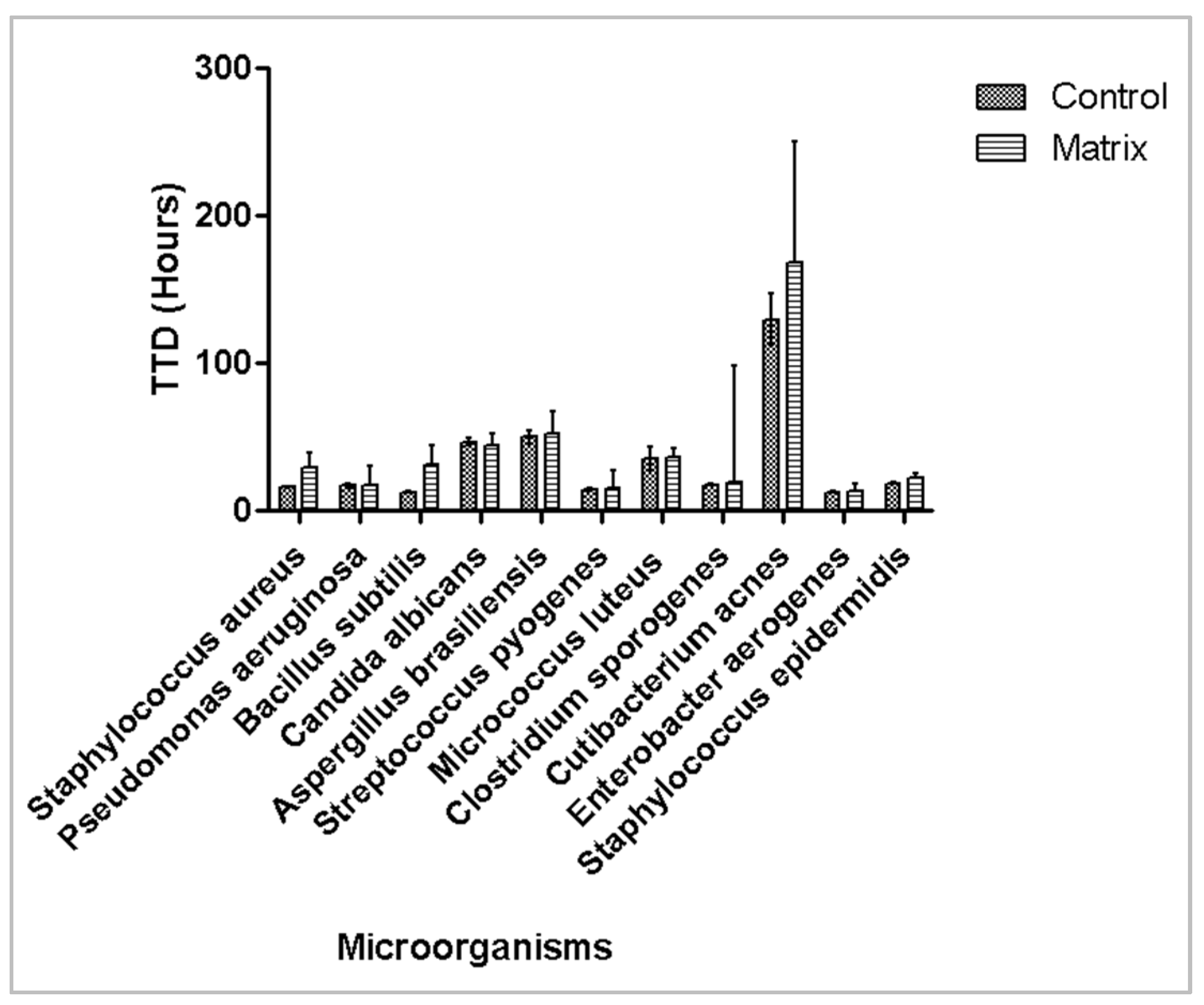
| Microorganism | CFU Inoculated (Mean ± SD) | Mean (Hours) | SD | CV (%) |
|---|---|---|---|---|
| Staphylococcus aureus | 31.7 ± 13.8 | 15.8 | 0.4 | 2.6 |
| Pseudomonas aeruginosa | 41.0 ± 12.1 | 16.7 | 1.3 | 7.6 |
| Bacillus subtilis subsp. spizizenii | 45.2 ± 9.9 | 12.4 | 0.4 | 3.6 |
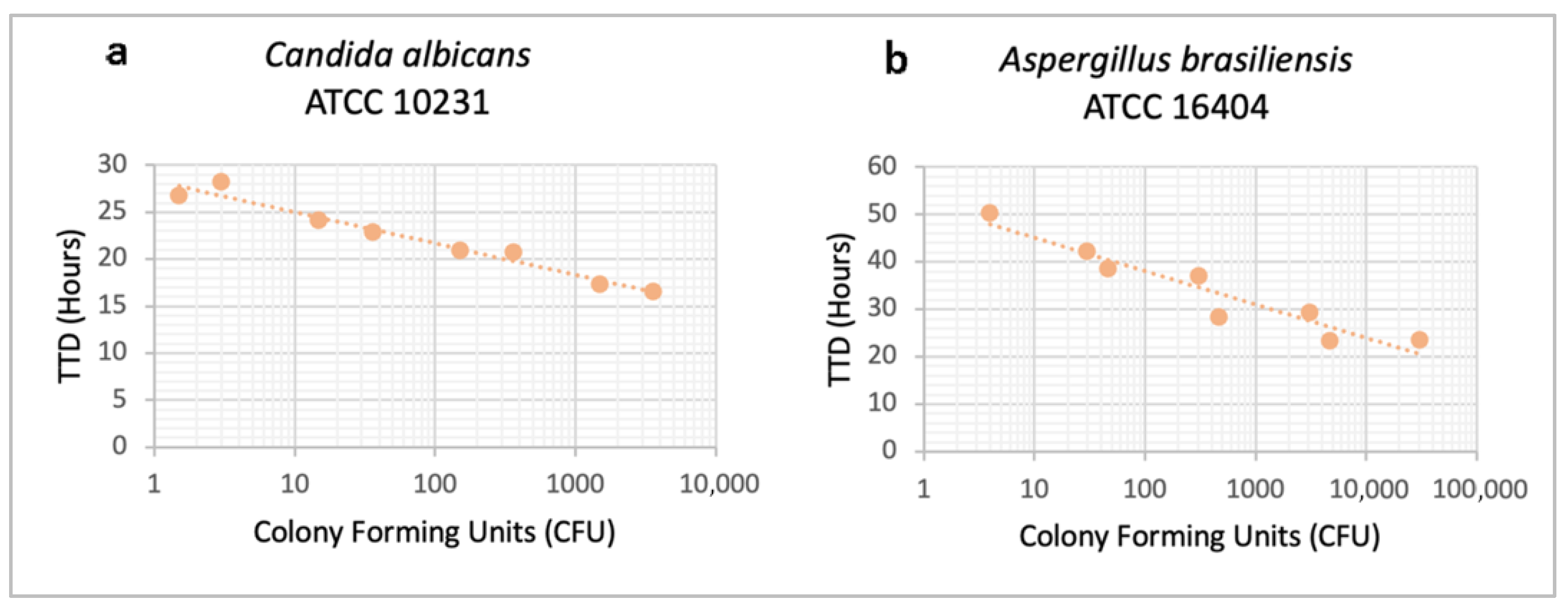
| Candida albicans | 51.2 ± 18.4 | 46.4 | 2.5 | 5.4 |
| Aspergillus brasiliensis | 38.0 ± 6.6 | 49.5 | 4.5 | 9.0 |
| Streptococcus pyogenes | 25.3 ± 2.5 | 14.1 | 0.4 | 2.9 |
| Micrococcus luteus | 19.7 ± 2.5 | 34.8 | 3.3 | 9.5 |
| Clostridium sporogenes | 22.3 ± 15.4 | 17.3 | 0.7 | 4.1 |
| Cutibacterium acnes | 49.5 ± 14.5 | 129.3 | 16.9 | 13.1 |
| Enterobacter aerogenes | 24.4 ± 2.4 | 12.4 | 0.1 | 1.1 |
| Staphylococcus epidermidis | 24.8 ± 1.6 | 18.2 | 0.4 | 2.5 |
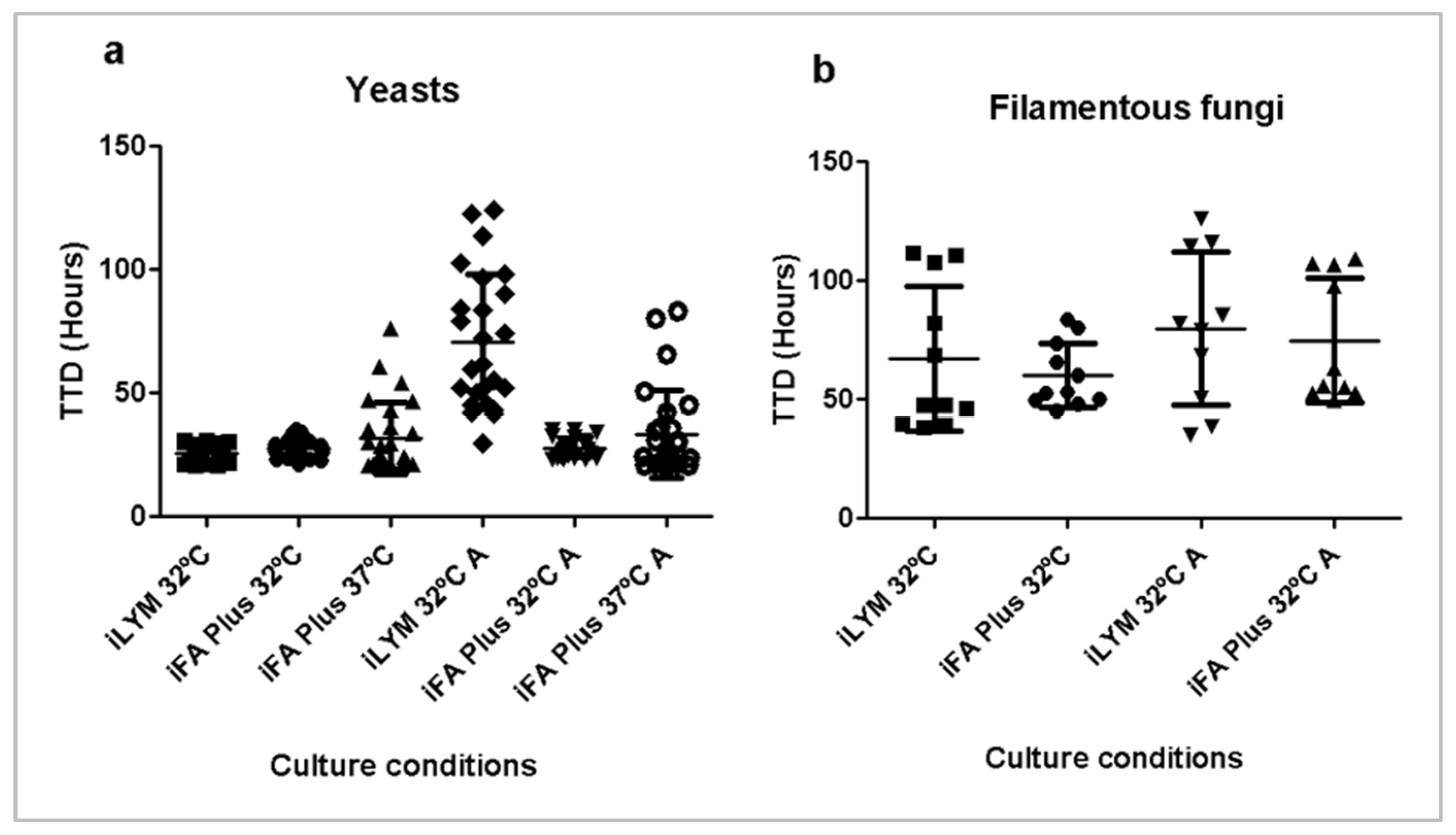
| Microorganism | Corneal Chamber | Corneal Chamber + A | |||||
|---|---|---|---|---|---|---|---|
| (a) Yeasts | CFU | iLYM 32 °C | iFA Plus 32 °C | iFA Plus 37 °C | iLYM 32 °C | iFA Plus 32 °C | iFA Plus 37 °C |
| Candida albicans ATCC | 23 | 25.4 | 29.9 | 45.6 | 114.3 | 29.4 | 45.8 |
| Candida albicans | 29 | 24.7 | 31.0 | 29.2 | 76.4 | 31.8 | 30.2 |
| Candida tropicalis | 15 | 20.7 | 22.3 | 20.6 | 42.2 | 23.2 | 21.0 |
| Candida parapsilosis | 17 | 30.1 | 34.2 | 34.9 | 54.5 | 34.6 | 35.4 |
| Candida glabrata | 32 | 23.6 | 24.7 | 20.9 | 90.7 | 24.6 | 20.8 |
| Clavispora lusitaniae | 37 | 28.9 | 25.4 | 22.9 | 61.9 | 25.7 | 23.0 |
| Pichia norvegensis | 13 | 24.9 | 27.0 | 24.0 | 43.6 | 26.9 | 24.3 |
| Pichia kudriavzevii | 39 | 21.5 | 22.9 | 21.4 | 44.9 | 23.4 | 21.7 |
| Wickerhamomyces anomalus | 52 | 29.9 | 28.9 | 63.6 | 90.2 | 29.4 | 76.1 |
| Debaryomyces hansenii | 15 | NEG | 121.2 | NEG | NEG | 112.2 | NEG |
| (b) Filamentous fungi | |||||||
| Aspergillus brasiliensis ATCC | 17 | 38.8 | 49.1 | 44.0 | 41.3 | 53.3 | 45.8 |
| Aspergillus fumigatus | 24 | 45.8 | 48.0 | 40.1 | 82.2 | 71.3 | 45.1 |
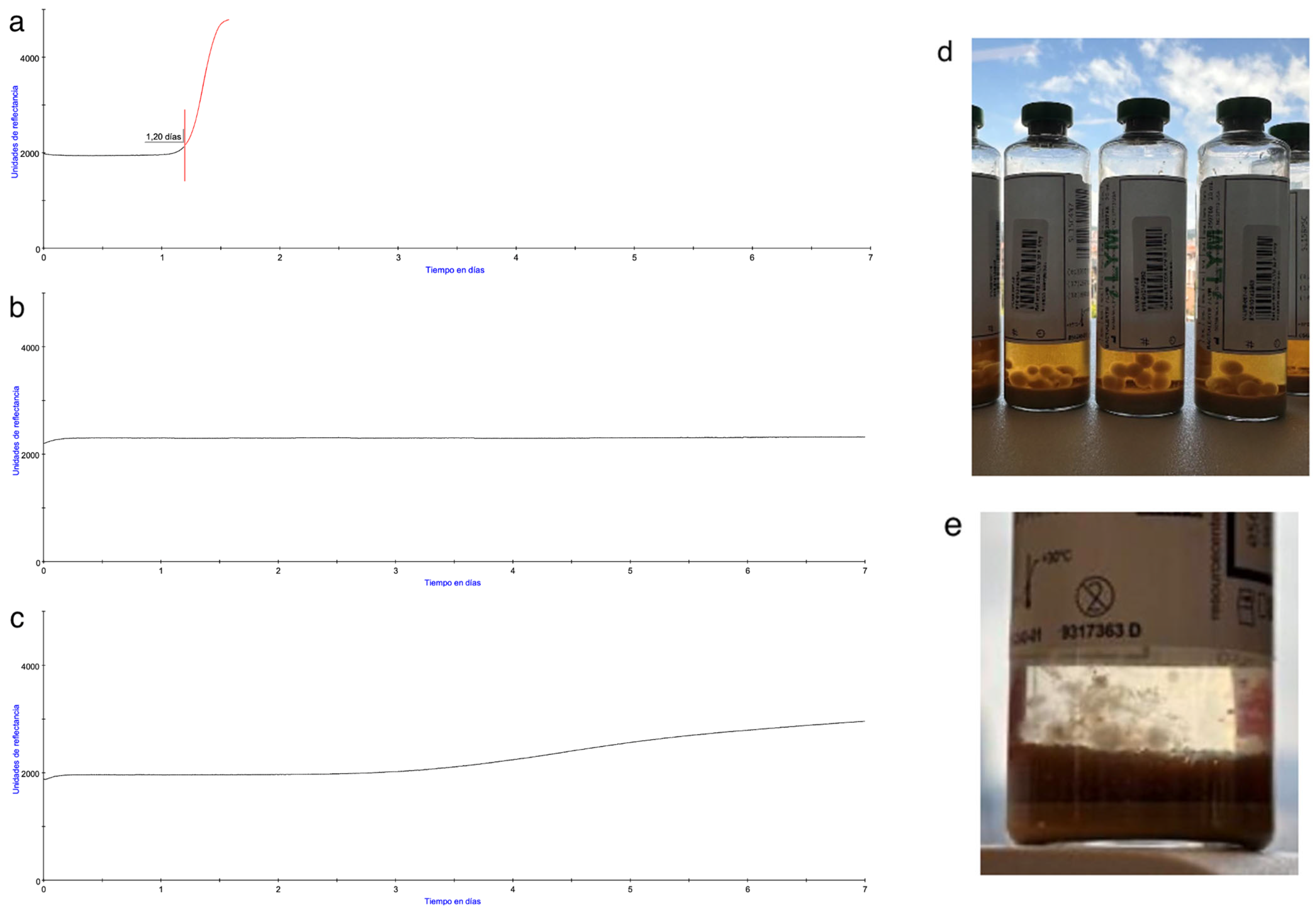
| Penicillium chrysogenum | 33 | VIS POS | 111.1 | NEG | VIS POS | 94.9 | NEG |
| Arthrinium arundinis | 10 | 78.9 | 109.8 | NEG | 118.9 | 103.6 | NEG |
| Cladosporium sphaerospermum | 25 | NEG | NEG | NEG | NEG | NEG | NEG |
| Stachybotrys chlorohalonata | 24 | NEG | 88.1 | NEG | NEG | 72.6 | NEG |
| Alternaria alternata | 12 | 82.2 | 60 | NEG | 68.6 | 62.9 | NEG |
| Curvularia sp. | 16 | 68.4 | 65.3 | NEG | VIS POS | 63.1 | NEG |
| Fungi | Corneal Chamber | Corneal Chamber + A | ||||
|---|---|---|---|---|---|---|
| iLYM 32 °C | iFA Plus 32 °C | iFA Plus 37 °C | iLYM 32 °C | iFA Plus 32 °C | iFA Plus 37 °C | |
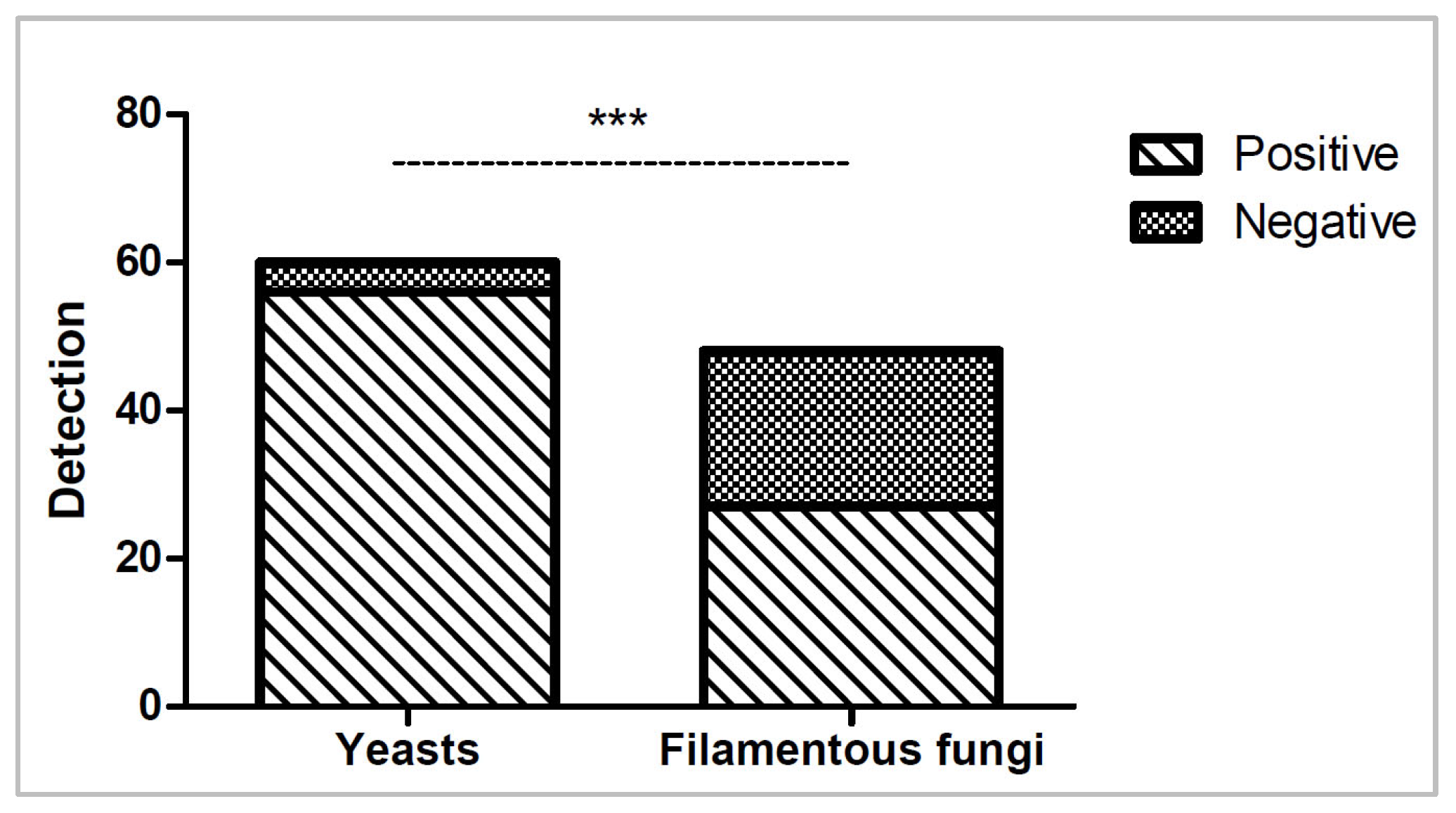
| Yeasts | 90.0 | 100.0 | 90.0 | 90.0 | 100.0 | 90.0 |
| Filamentous fungi | 62.5 | 87.5 | 25.0 | 50.0 | 87.5 | 25.0 |
| Total | 77.8 | 94.4 | 61.1 | 72.2 | 94.4 | 61.1 |
Disclaimer/Publisher’s Note: The statements, opinions and data contained in all publications are solely those of the individual author(s) and contributor(s) and not of MDPI and/or the editor(s). MDPI and/or the editor(s) disclaim responsibility for any injury to people or property resulting from any ideas, methods, instructions or products referred to in the content. |
© 2025 by the authors. Licensee MDPI, Basel, Switzerland. This article is an open access article distributed under the terms and conditions of the Creative Commons Attribution (CC BY) license (https://creativecommons.org/licenses/by/4.0/).
Share and Cite
Fernández, A.; Blanco, M.; Garcia, C.; Jallow, M.; Monge, S.; López, M.; Hortolà, M.; Agustí, E.; Vilarrodona, A.; Soria, G. Comparative Evaluation of Temperature, Bottle Type, and Amphotericin B on Fungal Detection in Corneal Preservation Media Using the BACT/ALERT System®. Microorganisms 2025, 13, 2562. https://doi.org/10.3390/microorganisms13112562
Fernández A, Blanco M, Garcia C, Jallow M, Monge S, López M, Hortolà M, Agustí E, Vilarrodona A, Soria G. Comparative Evaluation of Temperature, Bottle Type, and Amphotericin B on Fungal Detection in Corneal Preservation Media Using the BACT/ALERT System®. Microorganisms. 2025; 13(11):2562. https://doi.org/10.3390/microorganisms13112562
Chicago/Turabian StyleFernández, Aleix, Margarita Blanco, Cristina Garcia, Mariama Jallow, Sara Monge, Mar López, Marina Hortolà, Elba Agustí, Anna Vilarrodona, and Gloria Soria. 2025. "Comparative Evaluation of Temperature, Bottle Type, and Amphotericin B on Fungal Detection in Corneal Preservation Media Using the BACT/ALERT System®" Microorganisms 13, no. 11: 2562. https://doi.org/10.3390/microorganisms13112562
APA StyleFernández, A., Blanco, M., Garcia, C., Jallow, M., Monge, S., López, M., Hortolà, M., Agustí, E., Vilarrodona, A., & Soria, G. (2025). Comparative Evaluation of Temperature, Bottle Type, and Amphotericin B on Fungal Detection in Corneal Preservation Media Using the BACT/ALERT System®. Microorganisms, 13(11), 2562. https://doi.org/10.3390/microorganisms13112562