Article

Nitrogen Application and Rhizosphere Effect Exert Opposite Effects on Key Straw-Decomposing Microorganisms in Straw-Amended Soil


1
Soil and Fertilizer Institute, Academy of Agricultural and Forestry Sciences, Qinghai University, Xining 810016, China
2
State Key Laboratory of Efficient Utilization of Arid and Semi-Arid Arable Land in Northern China, The Institute of Agricultural Resources and Regional Planning, Chinese Academy of Agricultural Sciences, Beijing 100081, China
3
Key Laboratory of Plant Nutrition and Fertilizer, Ministry of Agriculture and Rural Affairs, Beijing 100081, China
*
Authors to whom correspondence should be addressed.
These authors contributed equally to this work.
Microorganisms 2024, 12(3), 574; https://doi.org/10.3390/microorganisms12030574

Submission received: 1 February 2024 / Revised: 8 March 2024 / Accepted: 11 March 2024 / Published: 13 March 2024
(This article belongs to the Special Issue Advances in Soil Microbial Ecology)

Abstract

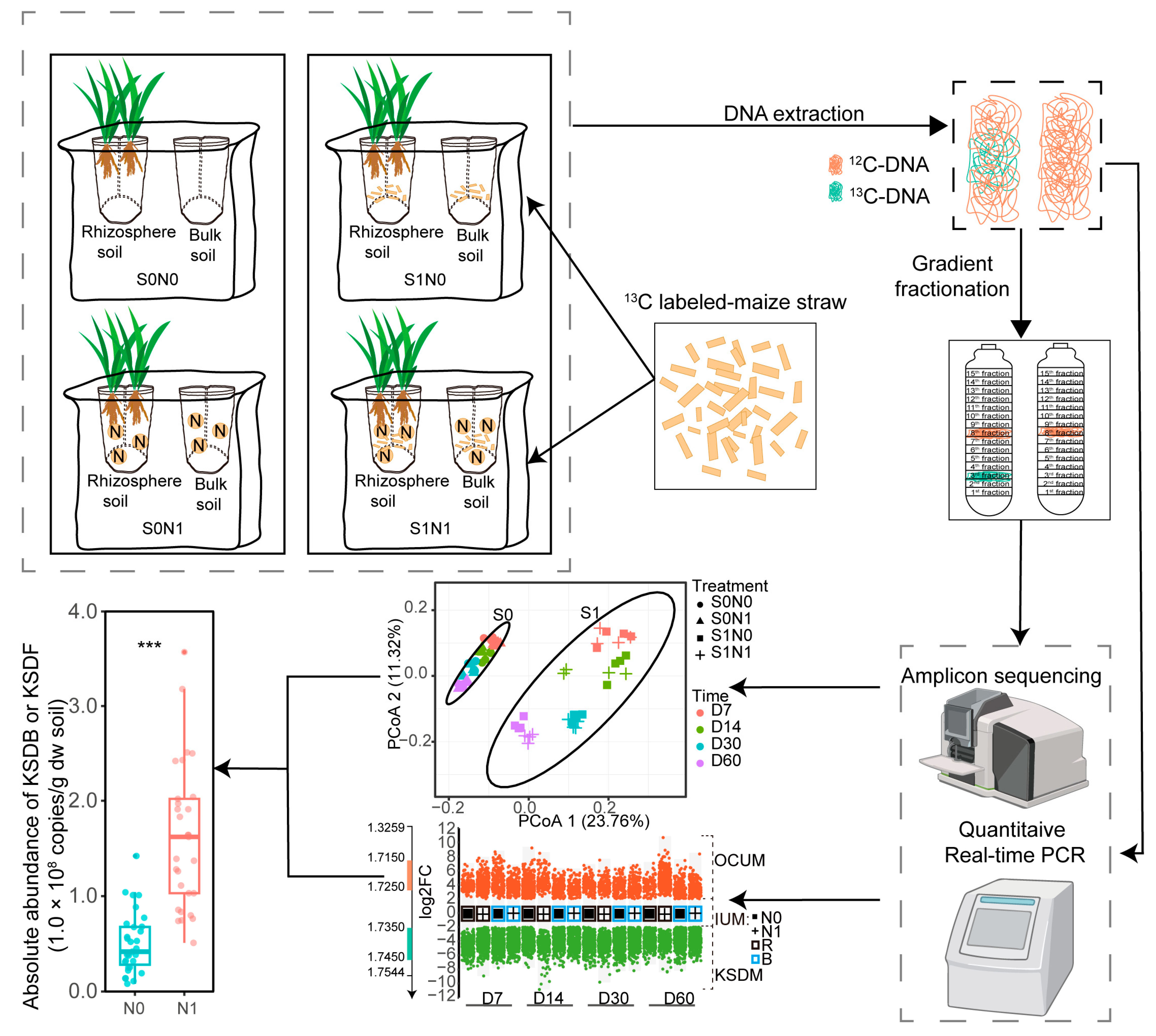
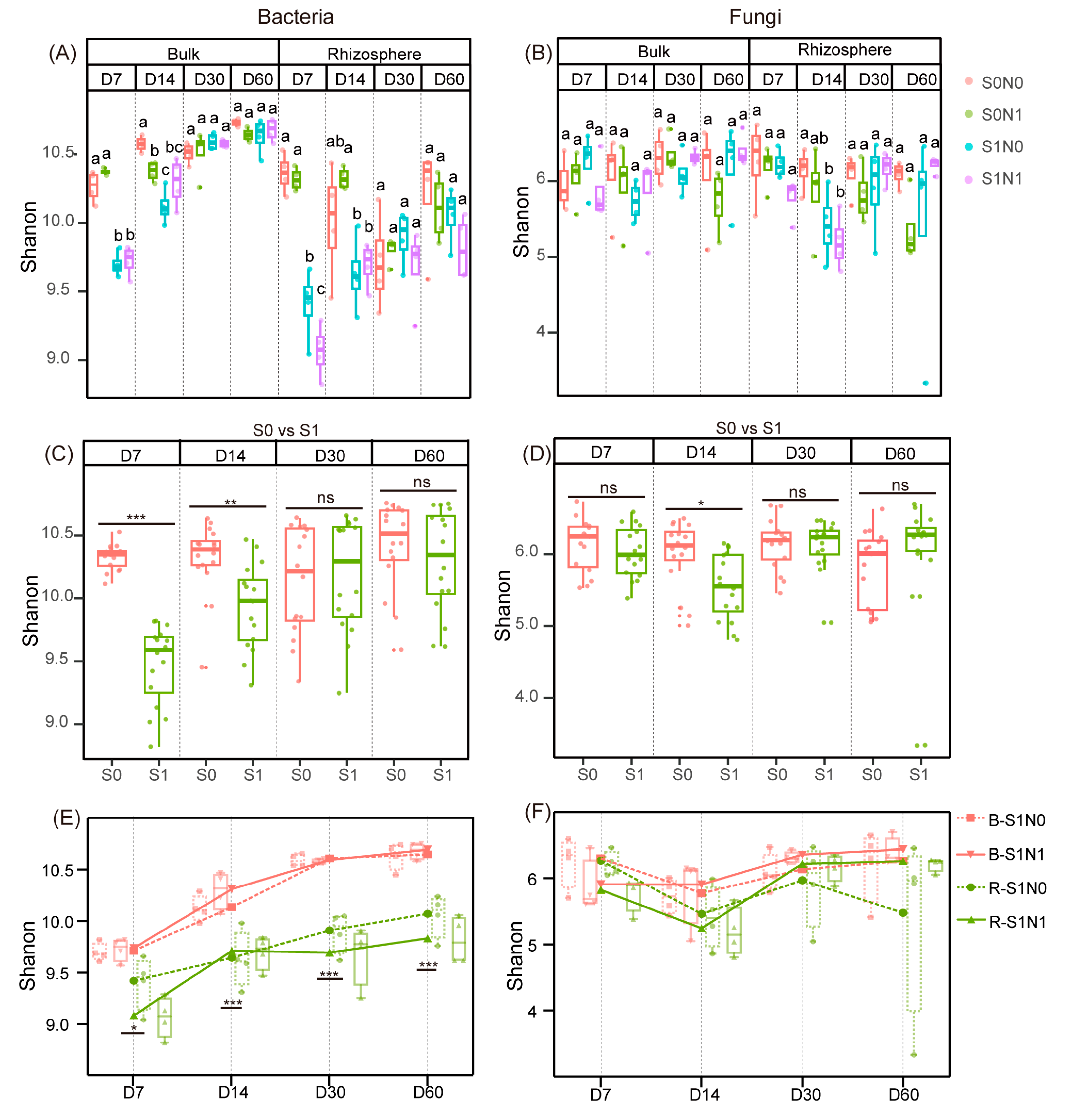
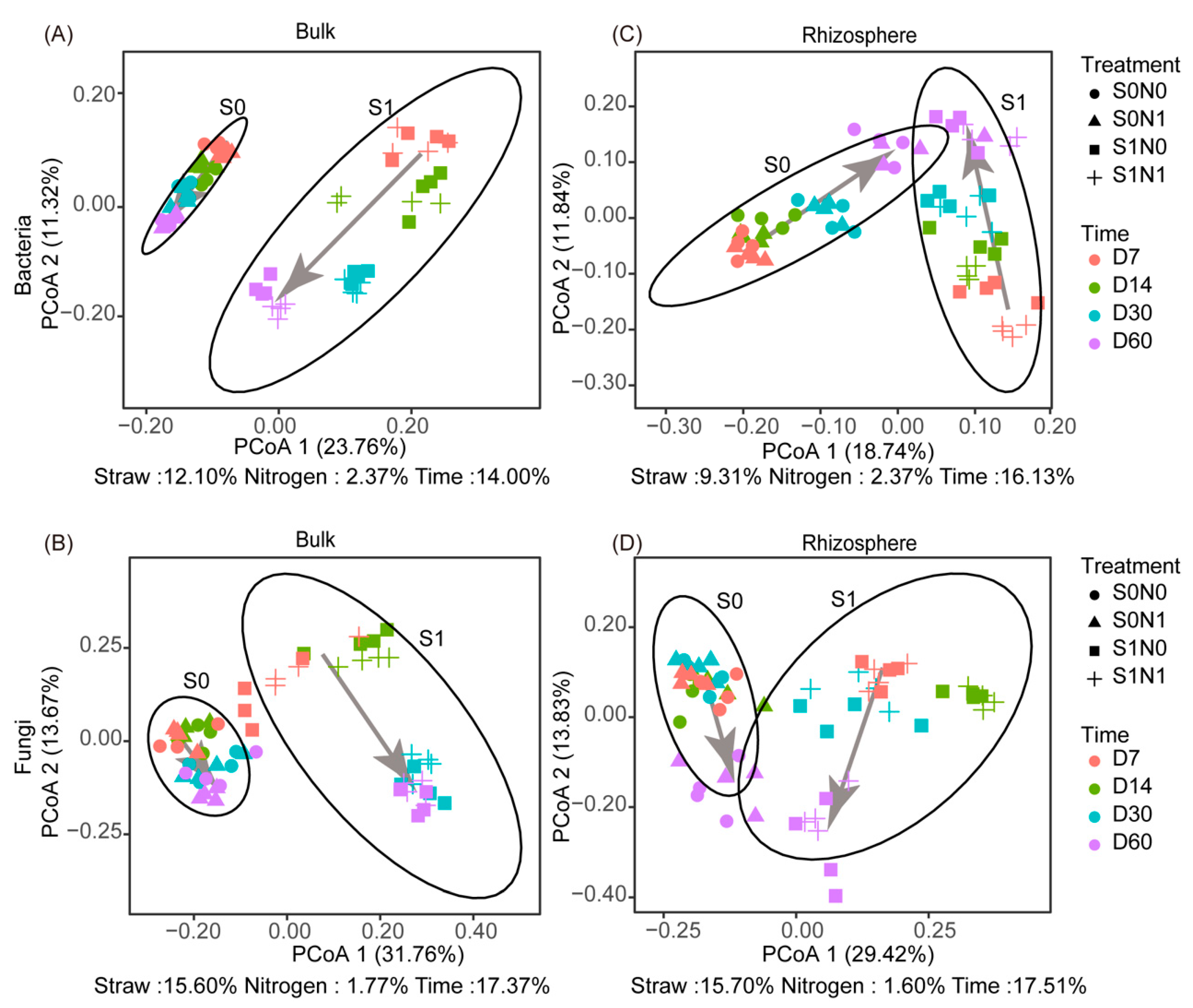
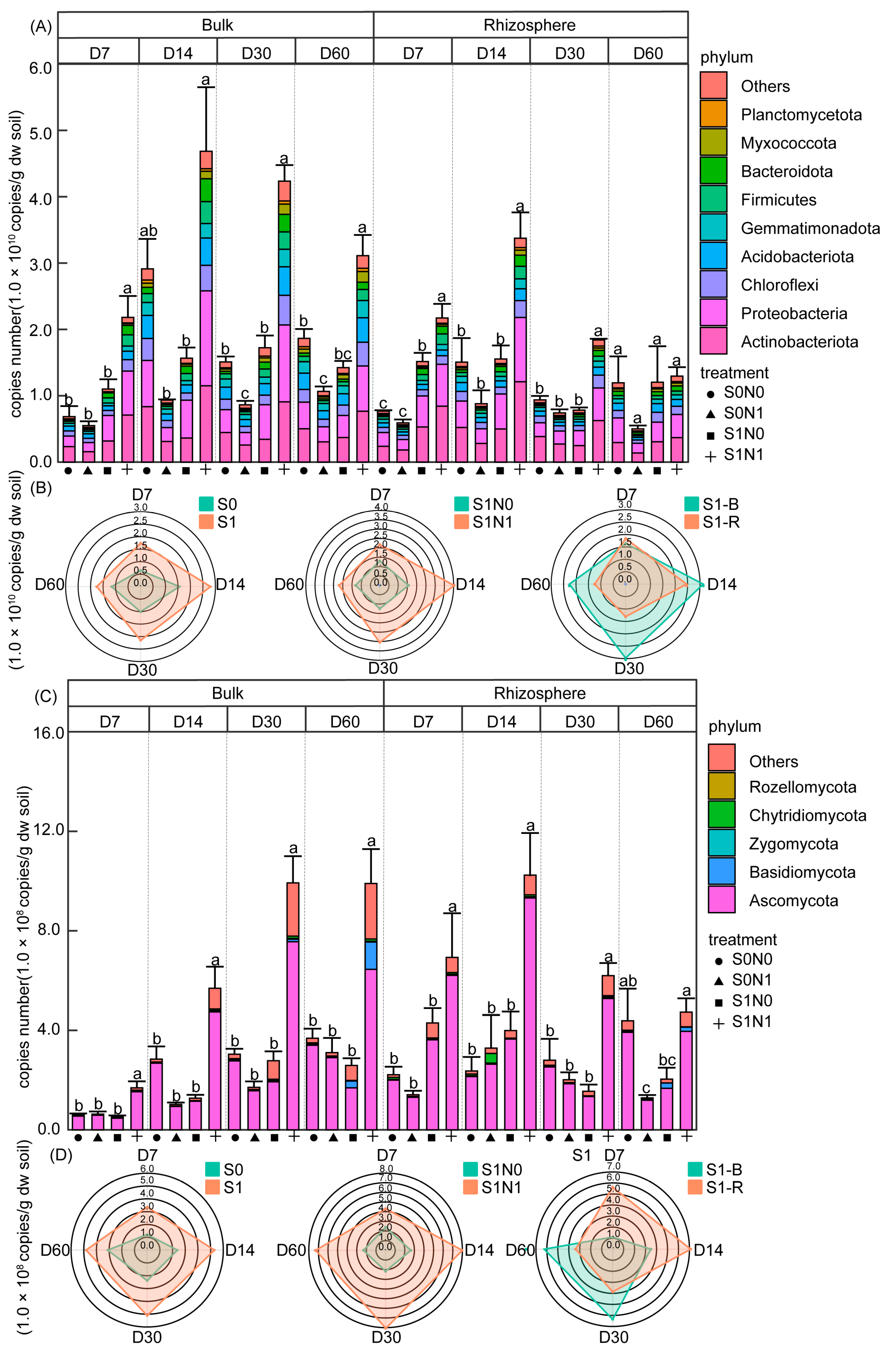
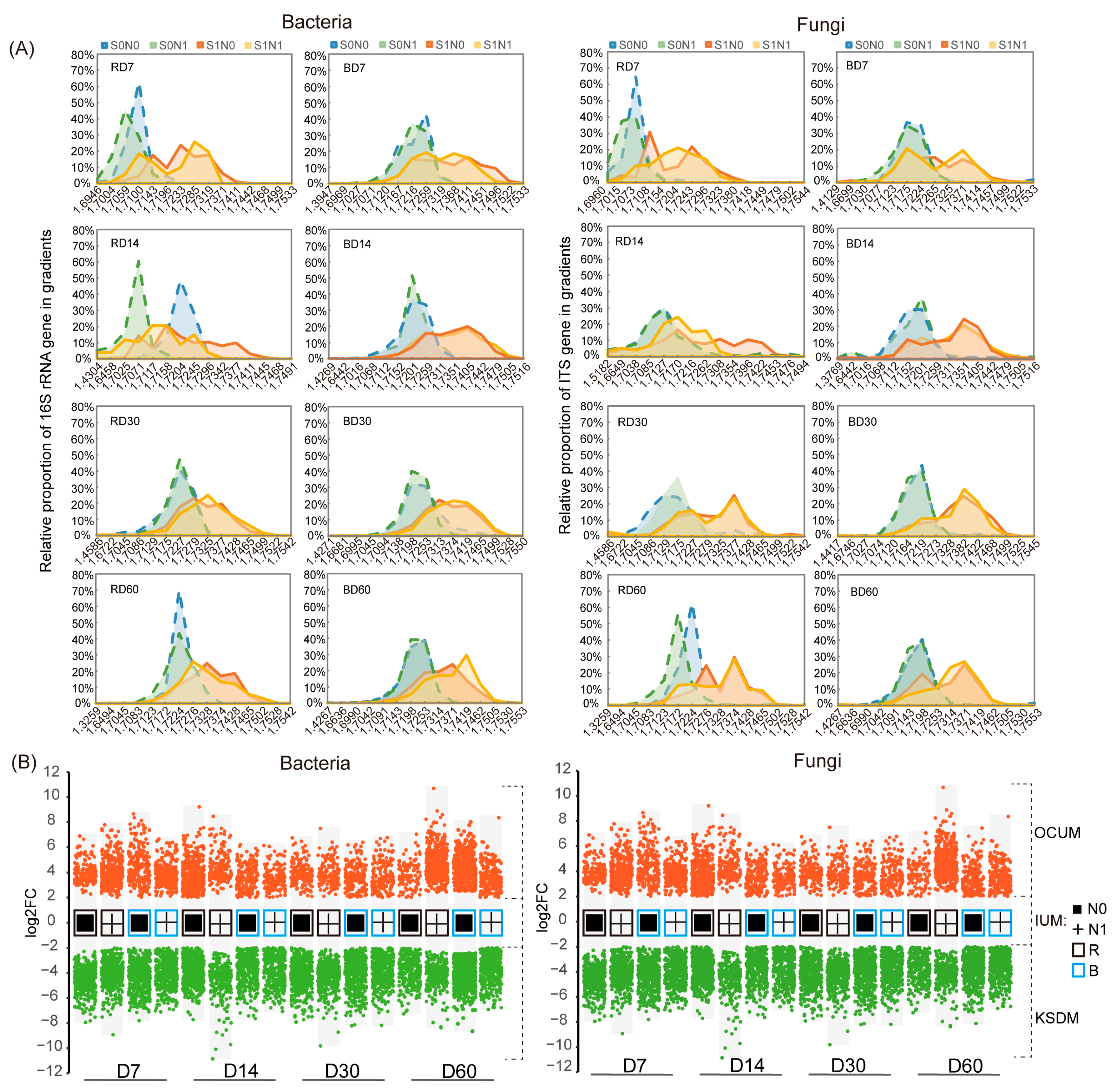
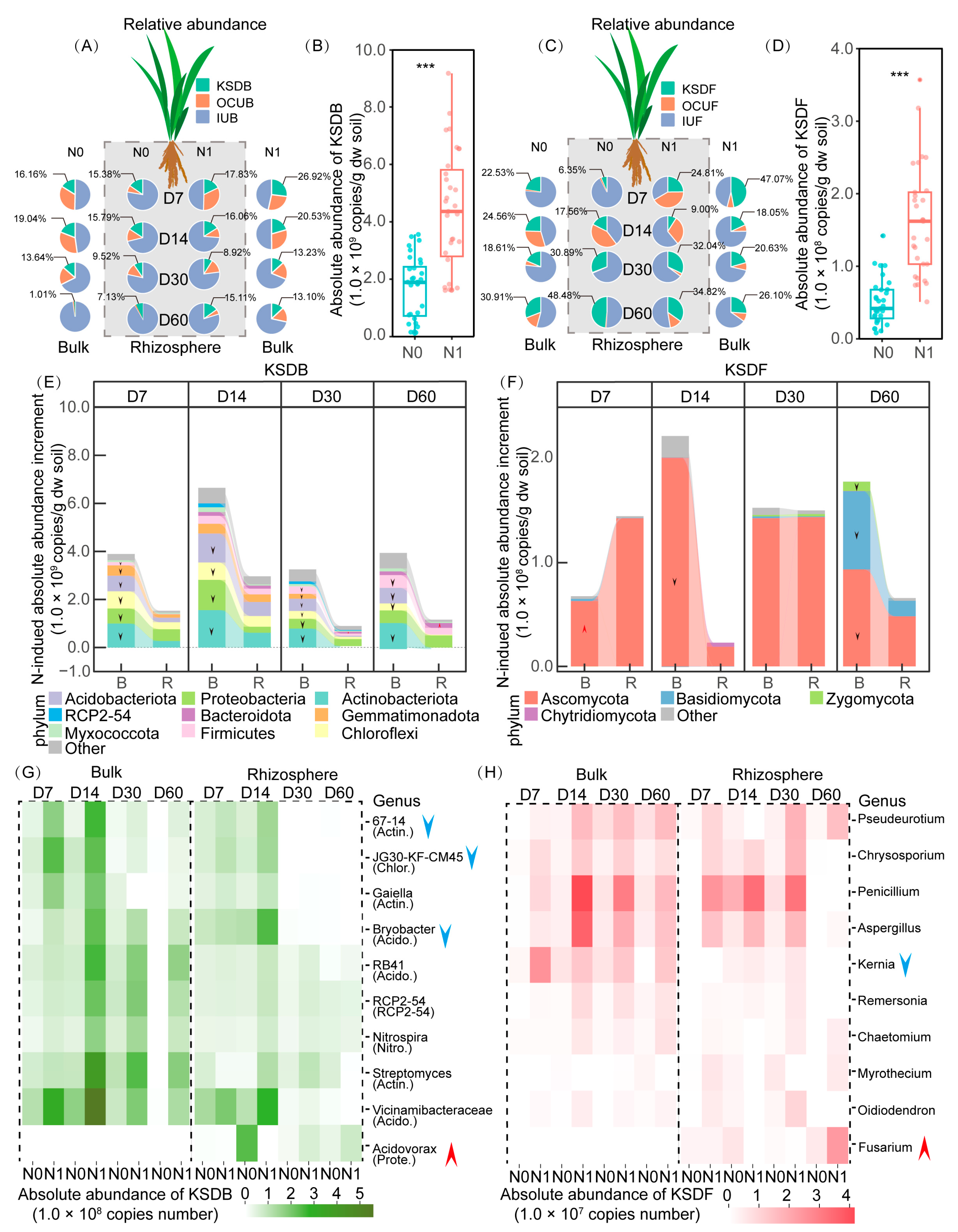
Crop residue decomposition is an important part of the carbon cycle in agricultural ecosystems, and microorganisms are widely recognized as key drivers during this process. However, we still know little about how nitrogen (N) input and rhizosphere effects from the next planting season impact key straw-decomposing microbial communities. Here, we combined amplicon sequencing and DNA-Stable Isotope Probing (DNA-SIP) to explore these effects through a time-series wheat pot experiment with four treatments: 13C-labeled maize straw addition with or without N application (S1N1 and S1N0), and no straw addition with or without N application (S0N1 and S0N0). The results showed that straw addition significantly reduced soil microbial alpha diversity in the early stages. Straw addition changed microbial beta diversity and increased absolute abundance in all stages. Growing plants in straw-amended soil further reduced bacterial alpha diversity, weakened straw-induced changes in beta diversity, and reduced bacterial and fungal absolute abundance in later stages. In contrast, N application could only increase the absolute abundance of soil bacteria and fungi while having little effect on alpha and beta diversity. The SIP-based taxonomic analysis of key straw-decomposing bacteria further indicated that the dominant phyla were Actinobacteria and Proteobacteria, with overrepresented genera belonging to Vicinamibacteraceae and Streptomyces. Key straw-decomposing fungi were dominated by Ascomycota, with overrepresented genera belonging to Penicillium and Aspergillus. N application significantly increased the absolute abundance of key straw-decomposing microorganisms; however, this increase was reduced by the rhizosphere effect. Overall, our study identified key straw-decomposing microorganisms in straw-amended soil and demonstrated that they exhibited opposite responses to N application and the rhizosphere effect.
Keywords: DNA-SIP; key straw-decomposing microorganisms; rhizosphere; straw decomposition DNA-SIP; key straw-decomposing microorganisms; rhizosphere; straw decomposition