Article

Anaerobic Feces Processing for Fecal Microbiota Transplantation Improves Viability of Obligate Anaerobes


by
Mèlanie V. Bénard
1,2,
Iñaki Arretxe
1,
Koen Wortelboer
3,
Hermie J. M. Harmsen
4,
Mark Davids
3,
Clara M. A. de Bruijn
1,5,6,
Marc A. Benninga
1,5,6,
Floor Hugenholtz
7,
Hilde Herrema
3,† and
Cyriel Y. Ponsioen
1,*,†
1
Department of Gastroenterology and Hepatology, Amsterdam Gastroenterology Endocrinology Metabolism (AGEM), Amsterdam UMC, University of Amsterdam, 1105 AZ Amsterdam, The Netherlands
2
Department of Endocrinology and Metabolism, Amsterdam Gastroenterology Endocrinology Metabolism (AGEM), Amsterdam UMC, University of Amsterdam, 1105 AZ Amsterdam, The Netherlands
3
Department of Experimental Vascular Medicine, Amsterdam Cardiovascular Sciences (ACS), Amsterdam Gastroenterology Endocrinology Metabolism (AGEM), Amsterdam UMC, University of Amsterdam, 1105 AZ Amsterdam, The Netherlands
4
Department of Medical Microbiology and Infection Prevention, University of Groningen, University Medical Center Groningen, 9700 RB Groningen, The Netherlands
5
Pediatric Gastroenterology, Hepatology and Nutrition, Emma Children’s Hospital, Amsterdam UMC, University of Amsterdam, 1105 AZ Amsterdam, The Netherlands
6
Amsterdam Reproduction & Development Research Institute, Emma Children’s Hospital, Amsterdam UMC, University of Amsterdam, 1105 AZ Amsterdam, The Netherlands
7
Center for Experimental and Molecular Medicine, Amsterdam Medical Center, Amsterdam UMC, University of Amsterdam, 1105 AZ Amsterdam, The Netherlands
*
Author to whom correspondence should be addressed.
These authors should be considered joint senior author.
Microorganisms 2023, 11(9), 2238; https://doi.org/10.3390/microorganisms11092238

Submission received: 31 July 2023 / Revised: 28 August 2023 / Accepted: 29 August 2023 / Published: 5 September 2023
(This article belongs to the Special Issue Impact of Fecal Microbiota Transplantation on Human Health 2.0)

Abstract

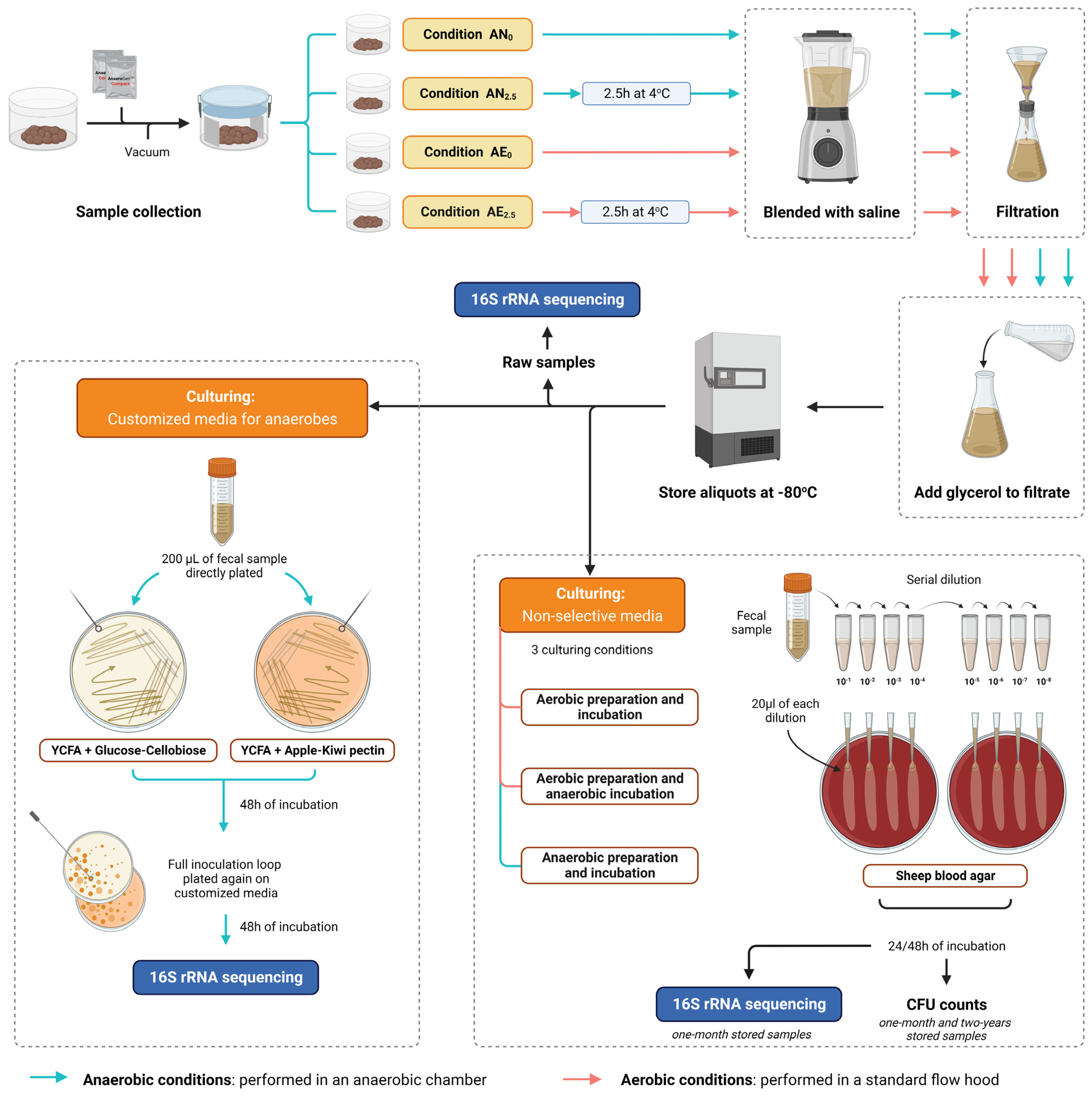
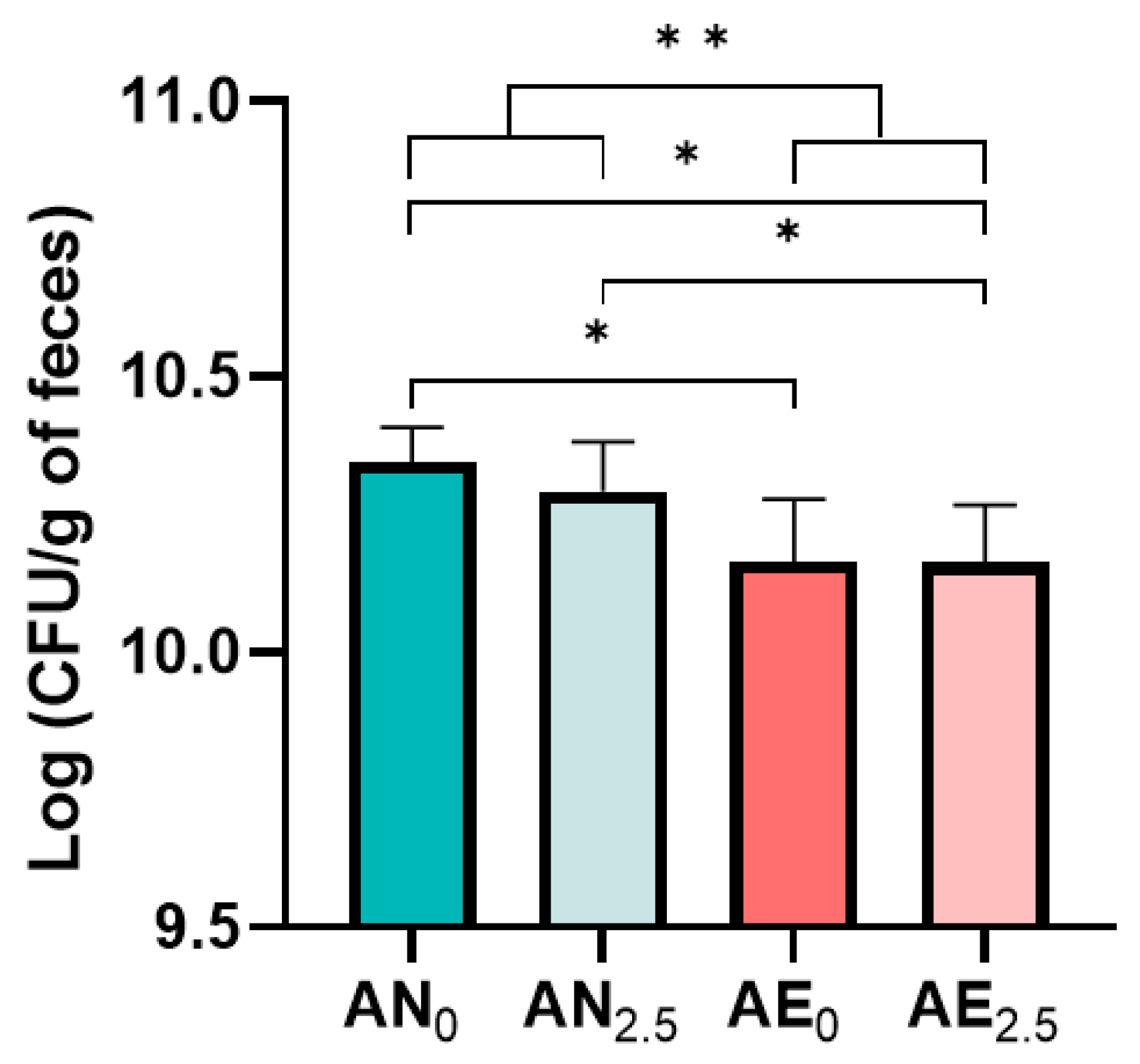
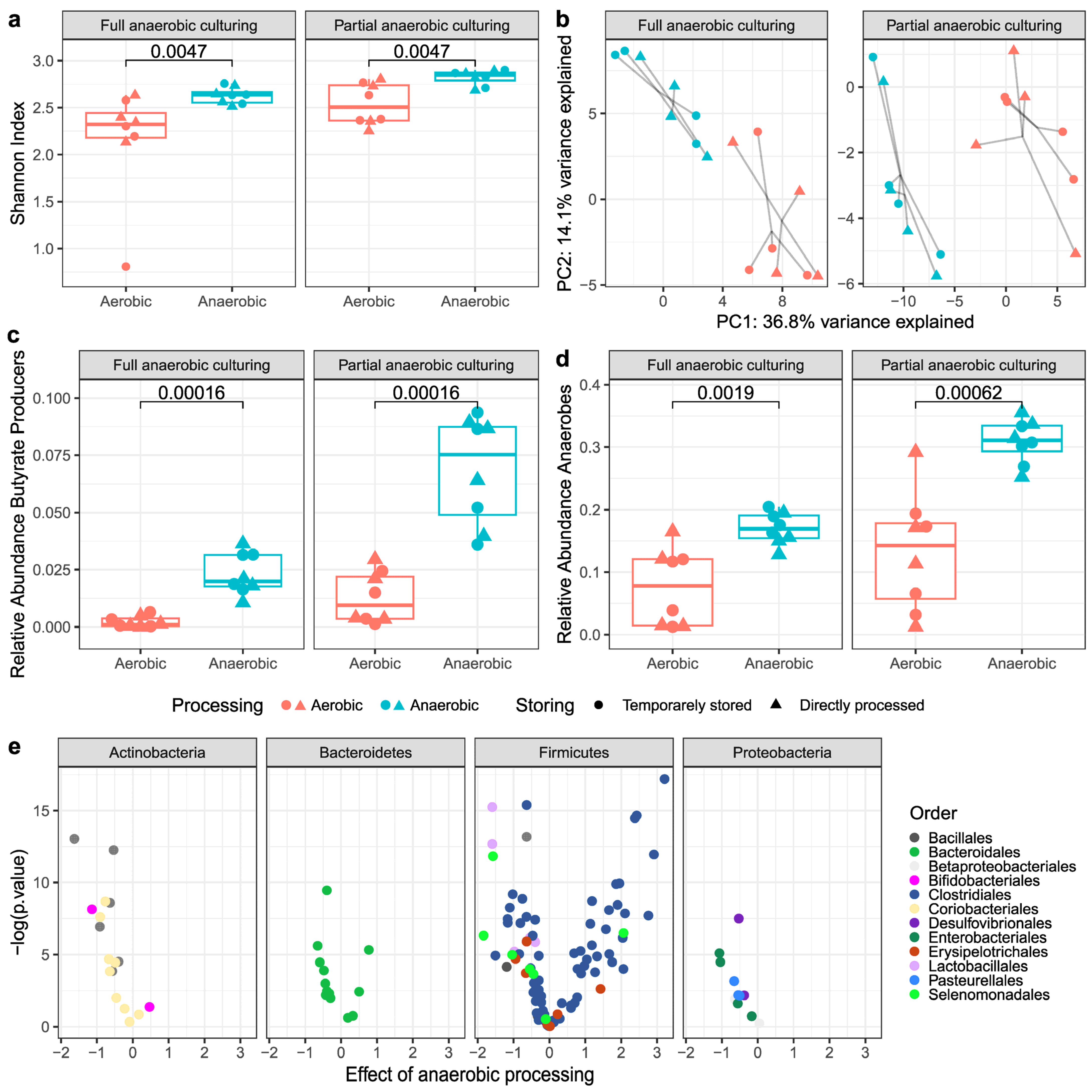
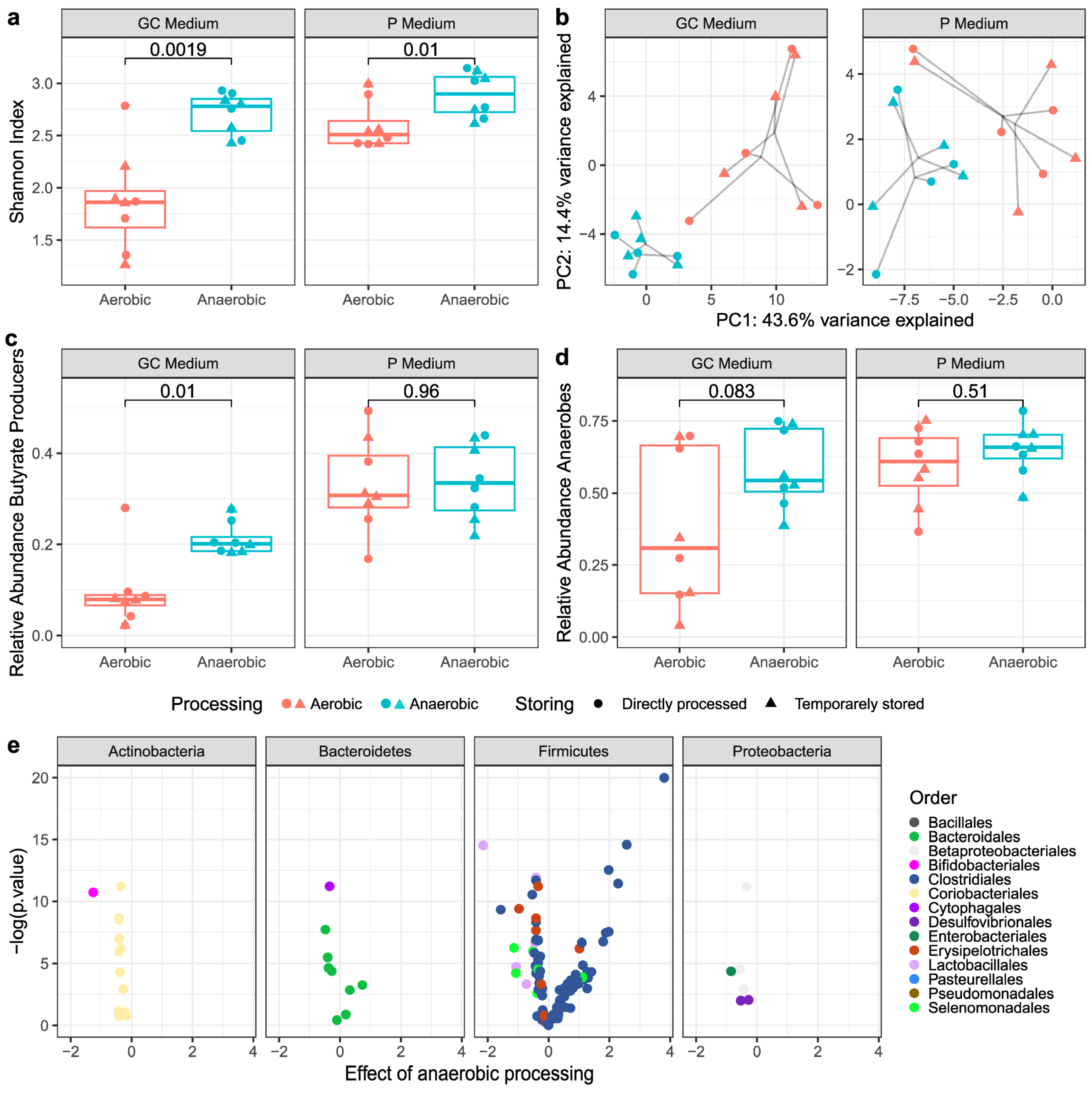
Fecal microbiota transplantation (FMT) is under investigation for several indications, including ulcerative colitis (UC). The clinical success of FMT depends partly on the engraftment of viable bacteria. Because the vast majority of human gut microbiota consists of anaerobes, the currently used aerobic processing protocols of donor stool may diminish the bacterial viability of transplanted material. This study assessed the effect of four processing techniques for donor stool (i.e., anaerobic and aerobic, both direct processing and after temporary cool storage) on bacterial viability. By combining anaerobic culturing on customized media for anaerobes with 16S rRNA sequencing, we could successfully culture and identify the majority of the bacteria present in raw fecal suspensions. We show that direct anaerobic processing of donor stool is superior to aerobic processing conditions for preserving the bacterial viability of obligate anaerobes and butyrate-producing bacteria related to the clinical response to FMT in ulcerative colitis patients, including Faecalibacterium, Eubacterium hallii, and Blautia. The effect of oxygen exposure during stool processing decreased when the samples were stored long-term. Our results confirm the importance of sample conditioning to preserve the bacterial viability of oxygen-sensitive gut bacteria. Anaerobic processing of donor stool may lead to increased clinical success of FMT, which should further be investigated in clinical trials.
Keywords: fecal microbiota transplantation; culturability; bacterial viability; gut microbiota; ulcerative colitis; anaerobic bacteria; sample processing; culturing of fecal microbiota; next-generation sequencing; frozen microbiota fecal microbiota transplantation; culturability; bacterial viability; gut microbiota; ulcerative colitis; anaerobic bacteria; sample processing; culturing of fecal microbiota; next-generation sequencing; frozen microbiota