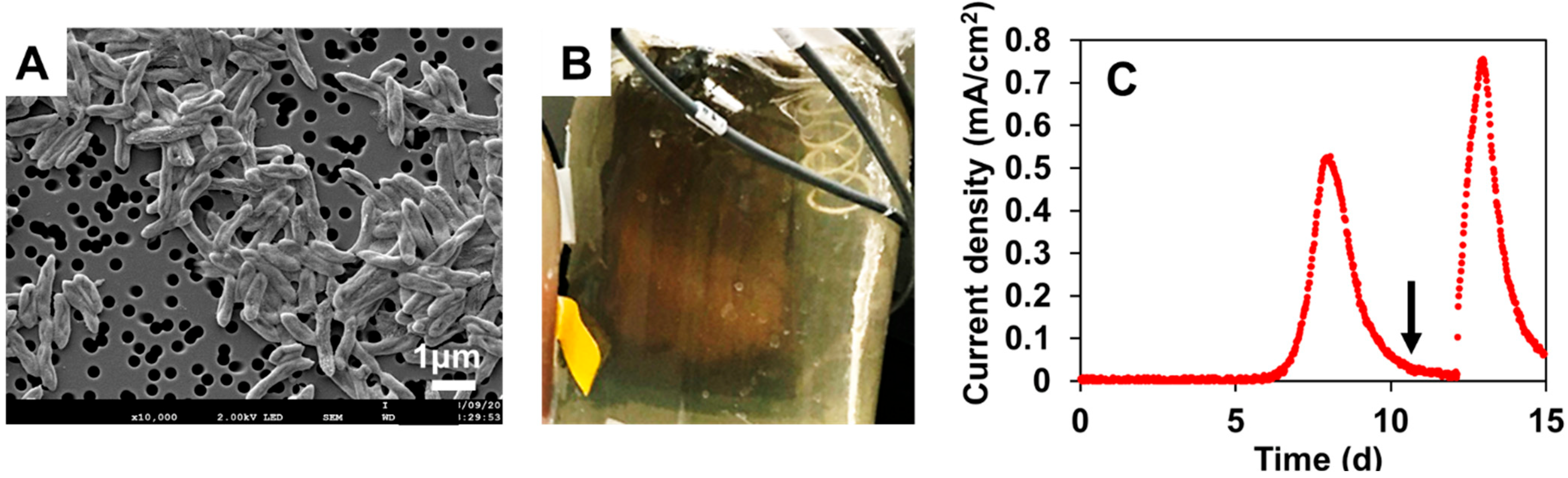
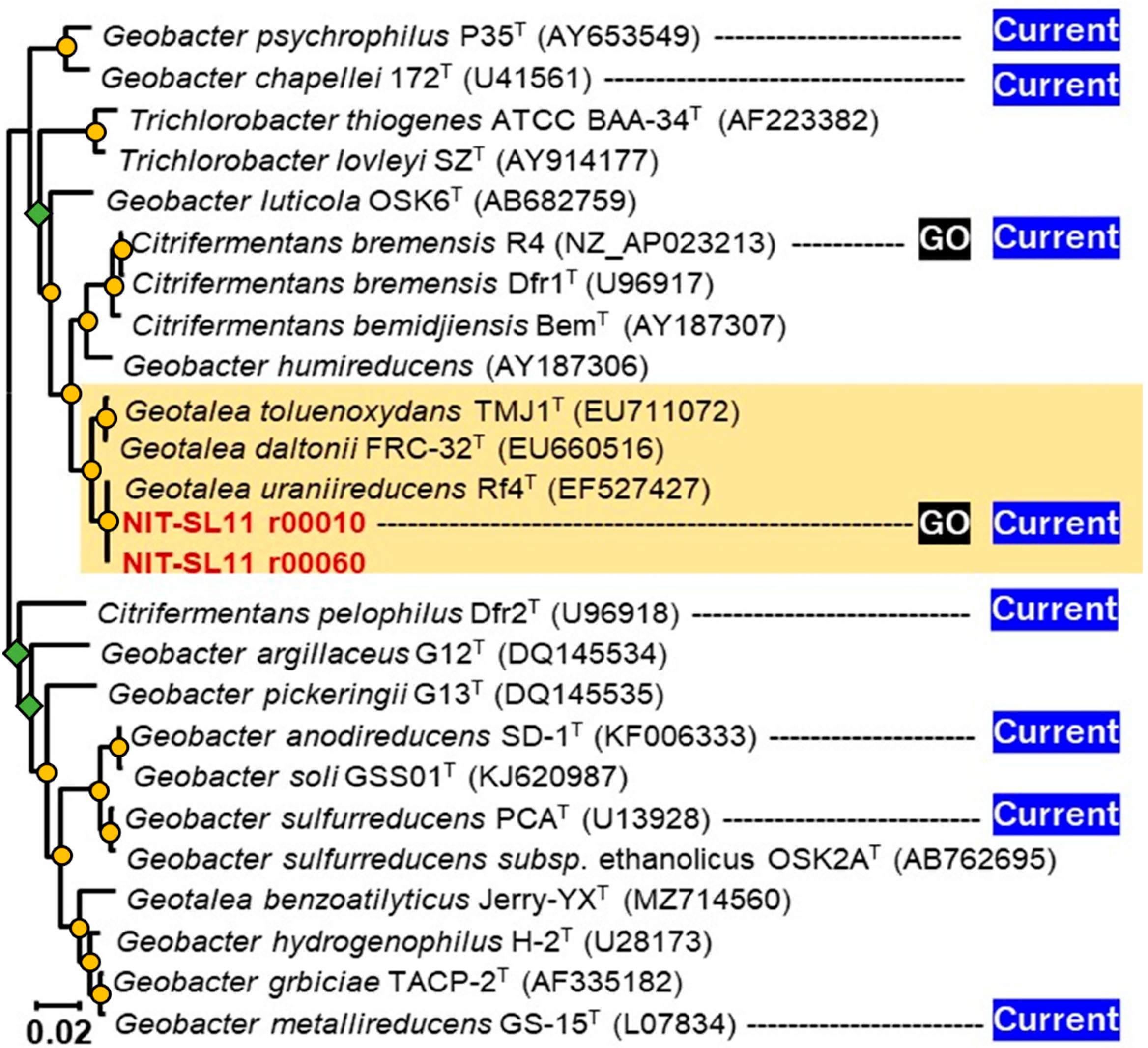
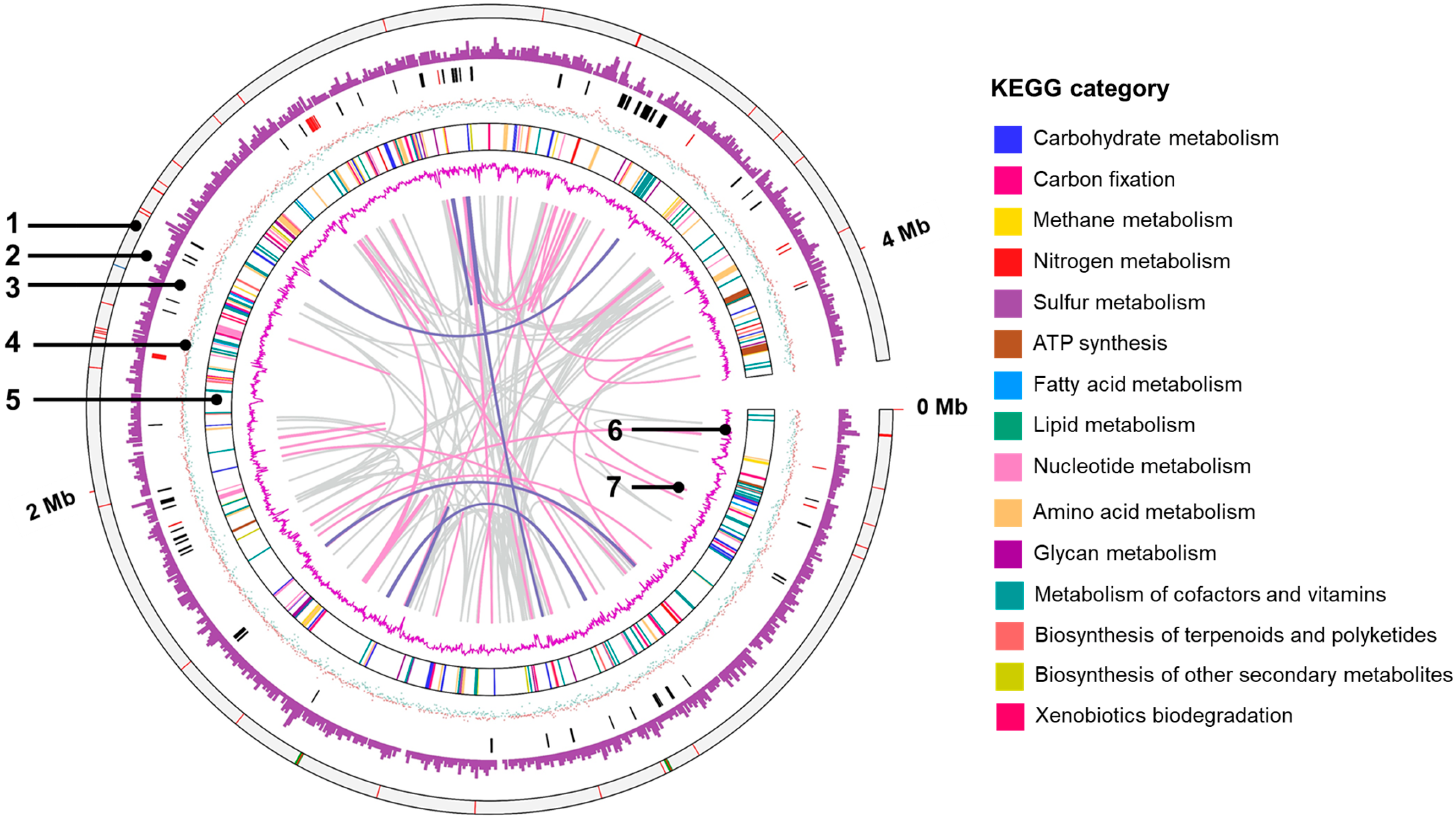
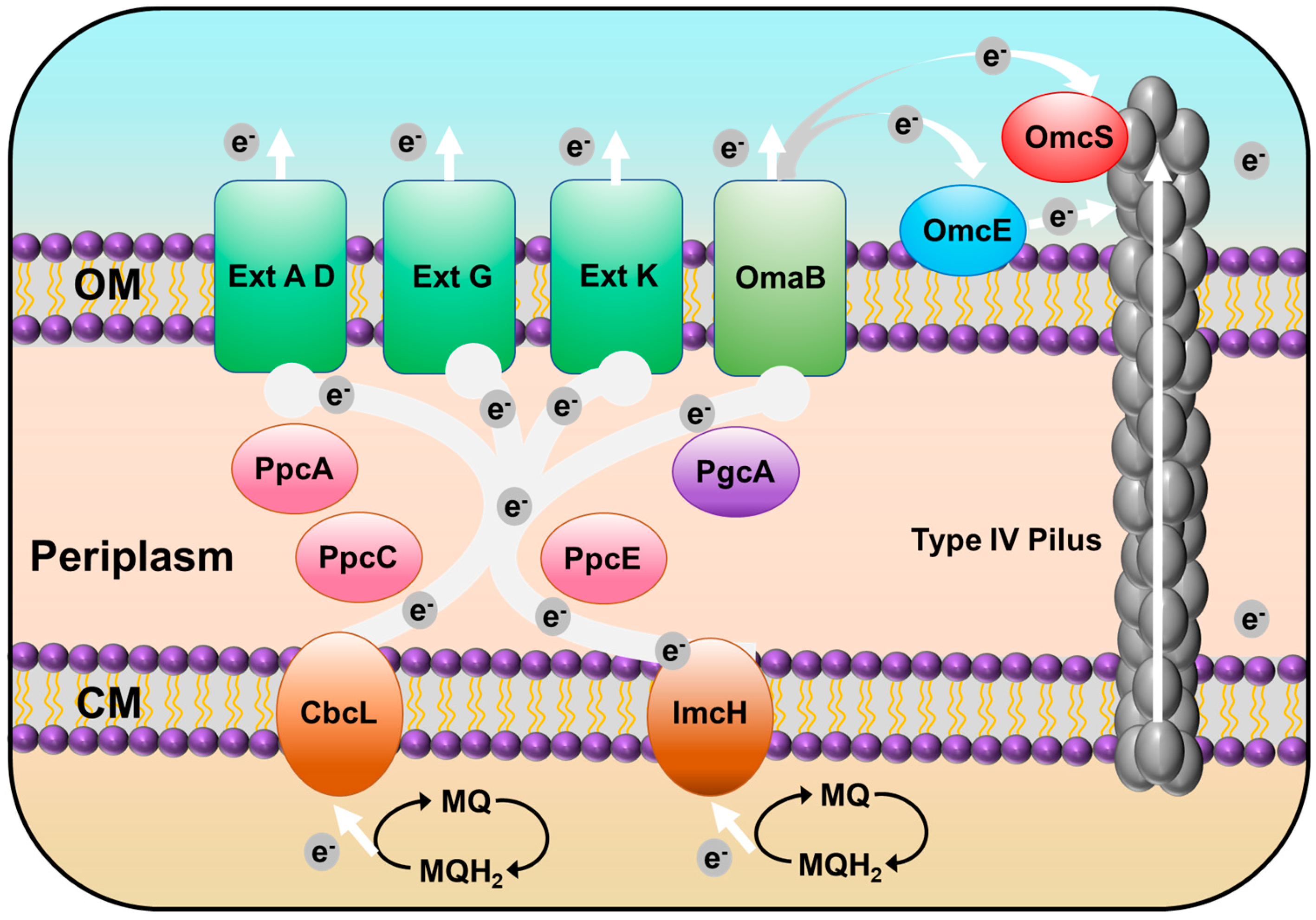
Polyphasic Characterization of Geotalea uranireducens NIT-SL11 Newly Isolated from a Complex of Sewage Sludge and Microbially Reduced Graphene Oxide


Abstract
Share and Cite
Xie, L.; Yoshida, N.; Meng, L. Polyphasic Characterization of Geotalea uranireducens NIT-SL11 Newly Isolated from a Complex of Sewage Sludge and Microbially Reduced Graphene Oxide. Microorganisms 2023, 11, 349. https://doi.org/10.3390/microorganisms11020349
Xie L, Yoshida N, Meng L. Polyphasic Characterization of Geotalea uranireducens NIT-SL11 Newly Isolated from a Complex of Sewage Sludge and Microbially Reduced Graphene Oxide. Microorganisms. 2023; 11(2):349. https://doi.org/10.3390/microorganisms11020349
Chicago/Turabian StyleXie, Li, Naoko Yoshida, and Lingyu Meng. 2023. "Polyphasic Characterization of Geotalea uranireducens NIT-SL11 Newly Isolated from a Complex of Sewage Sludge and Microbially Reduced Graphene Oxide" Microorganisms 11, no. 2: 349. https://doi.org/10.3390/microorganisms11020349
APA StyleXie, L., Yoshida, N., & Meng, L. (2023). Polyphasic Characterization of Geotalea uranireducens NIT-SL11 Newly Isolated from a Complex of Sewage Sludge and Microbially Reduced Graphene Oxide. Microorganisms, 11(2), 349. https://doi.org/10.3390/microorganisms11020349