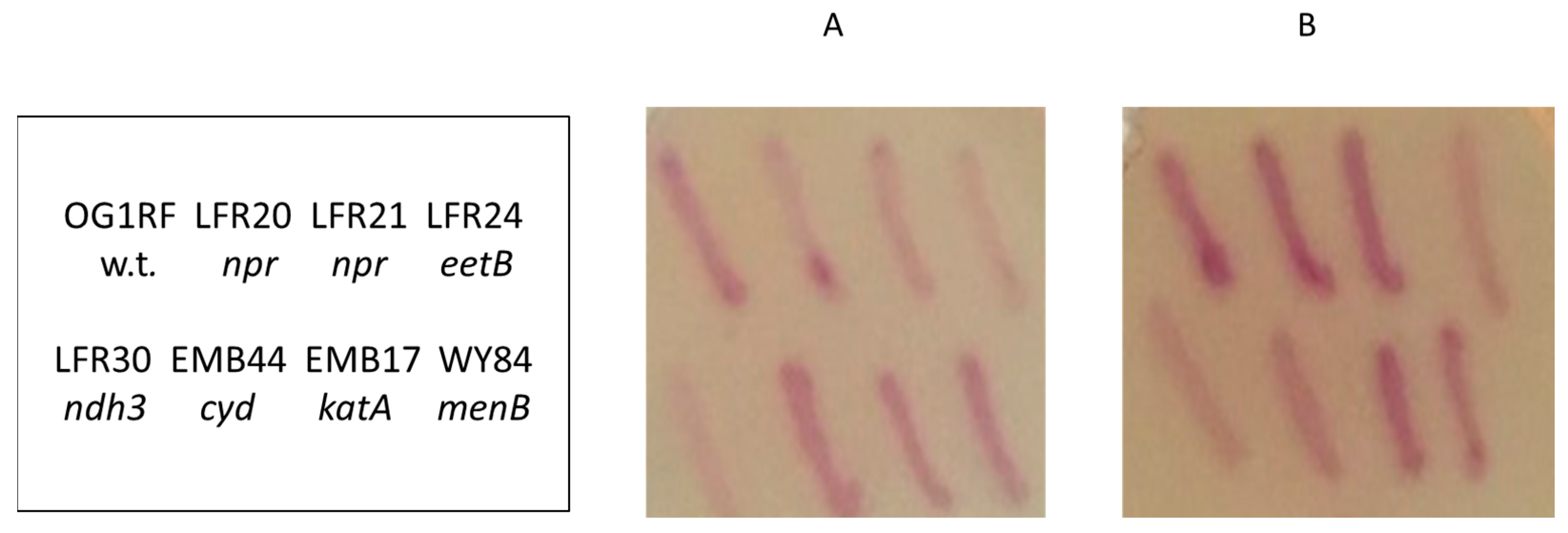
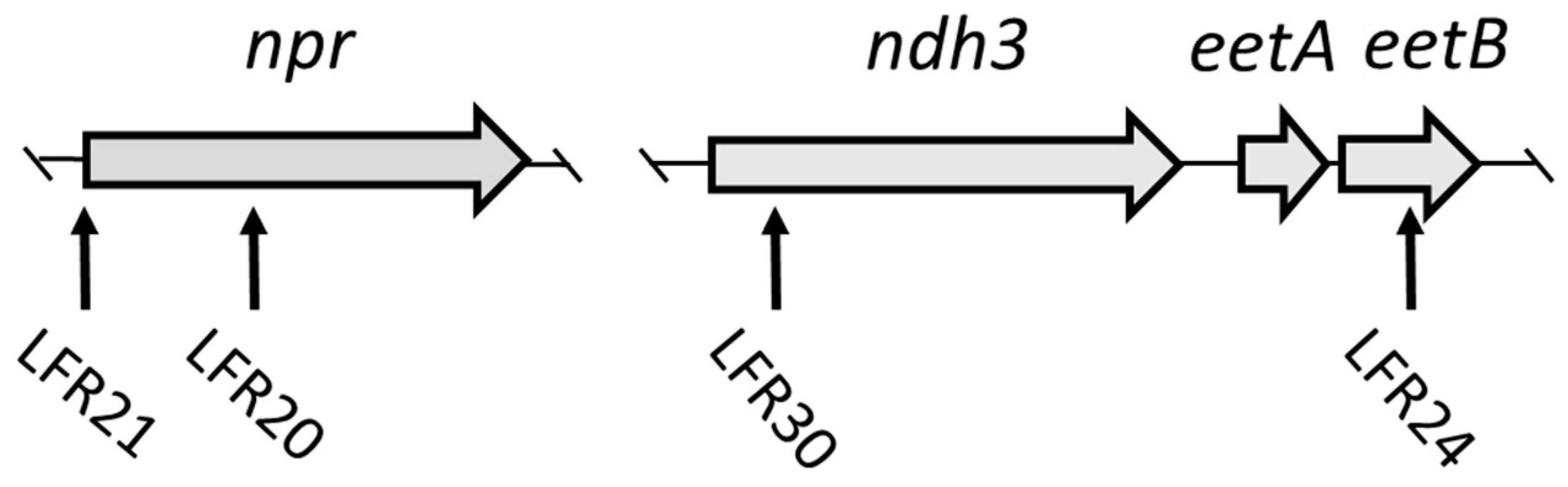
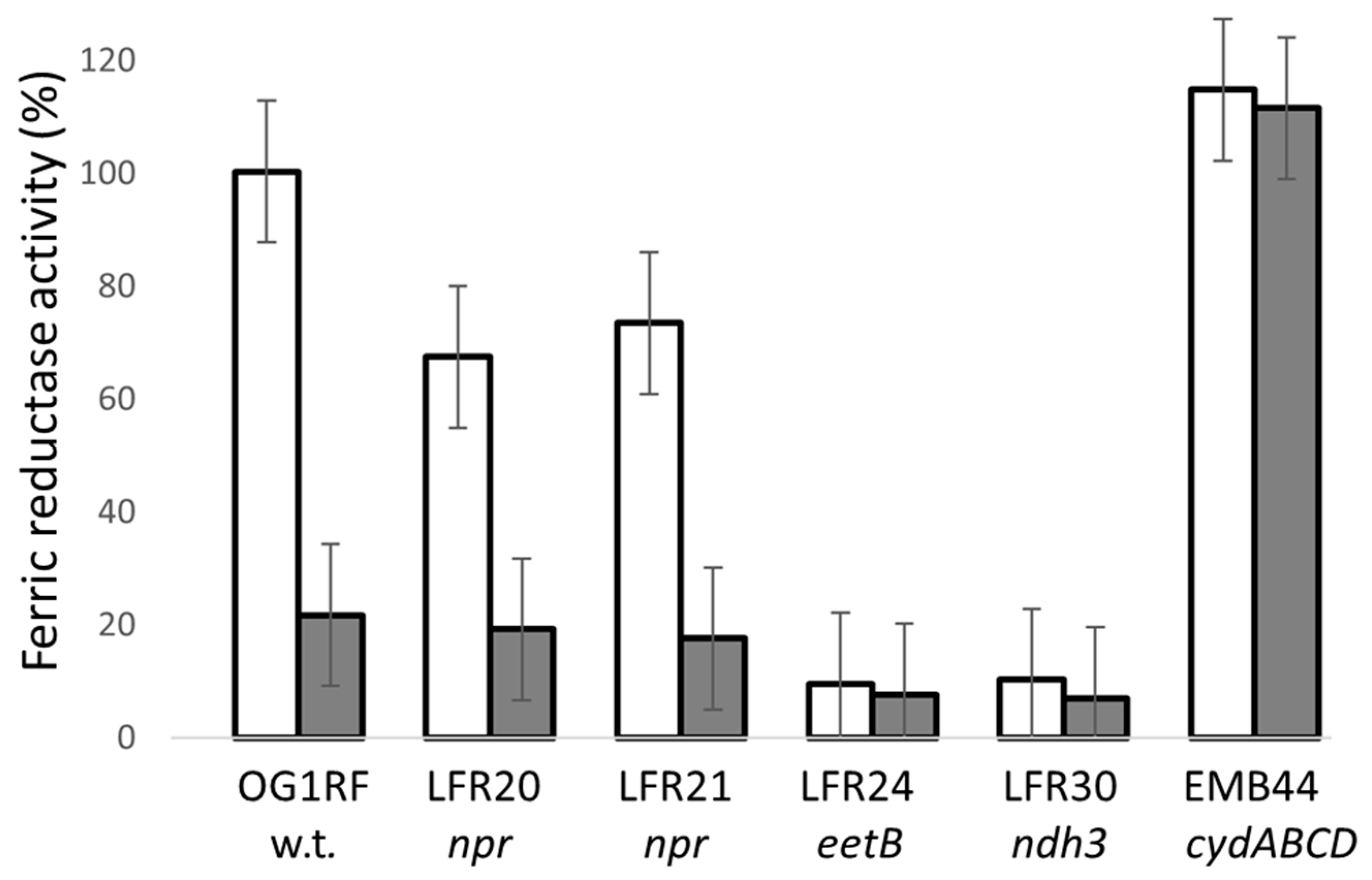
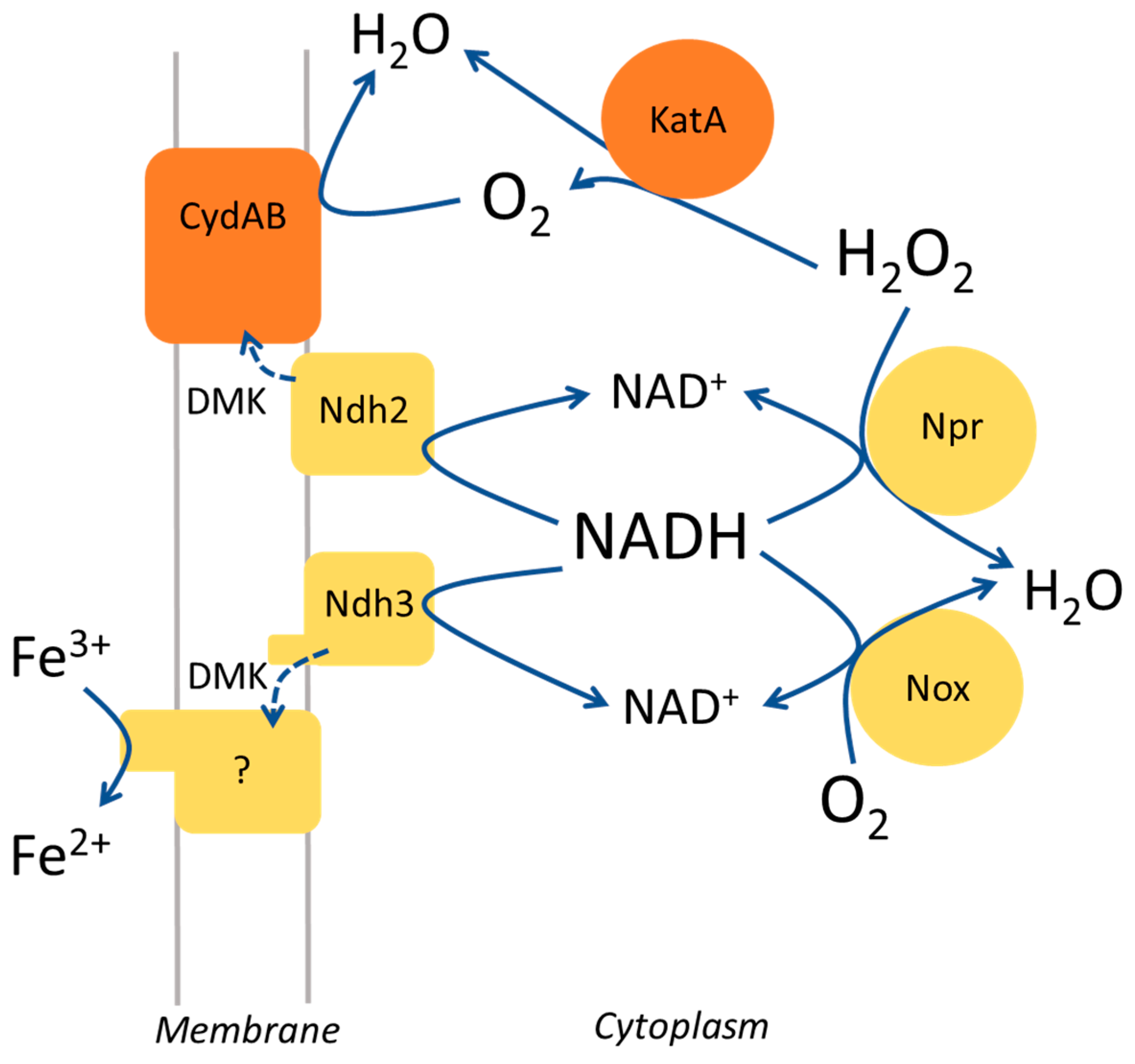
Enterococcus faecalis NADH Peroxidase-Defective Mutants Stain Falsely in Colony Zymogram Assay for Extracellular Electron Transfer to Ferric Ions


Abstract
Share and Cite
Hederstedt, L. Enterococcus faecalis NADH Peroxidase-Defective Mutants Stain Falsely in Colony Zymogram Assay for Extracellular Electron Transfer to Ferric Ions. Microorganisms 2023, 11, 106. https://doi.org/10.3390/microorganisms11010106
Hederstedt L. Enterococcus faecalis NADH Peroxidase-Defective Mutants Stain Falsely in Colony Zymogram Assay for Extracellular Electron Transfer to Ferric Ions. Microorganisms. 2023; 11(1):106. https://doi.org/10.3390/microorganisms11010106
Chicago/Turabian StyleHederstedt, Lars. 2023. "Enterococcus faecalis NADH Peroxidase-Defective Mutants Stain Falsely in Colony Zymogram Assay for Extracellular Electron Transfer to Ferric Ions" Microorganisms 11, no. 1: 106. https://doi.org/10.3390/microorganisms11010106
APA StyleHederstedt, L. (2023). Enterococcus faecalis NADH Peroxidase-Defective Mutants Stain Falsely in Colony Zymogram Assay for Extracellular Electron Transfer to Ferric Ions. Microorganisms, 11(1), 106. https://doi.org/10.3390/microorganisms11010106