
Article

Discriminating Vibrotactile Signals: The Relative Roles of Amplitude and Frequency

by
Ivan Makarov
1,
Árni Kristjánsson
1 and
Runar Unnthorsson
2,*
1
Faculty of Psychology, University of Iceland, 102 Reykjavik, Iceland
2
Faculty of Industrial Engineering, Mechanical Engineering and Computer Science, University of Iceland, 102 Reykjavík, Iceland
*
Author to whom correspondence should be addressed.
Actuators 2026, 15(3), 164; https://doi.org/10.3390/act15030164
Submission received: 4 February 2026 / Revised: 26 February 2026 / Accepted: 10 March 2026 / Published: 12 March 2026

Abstract

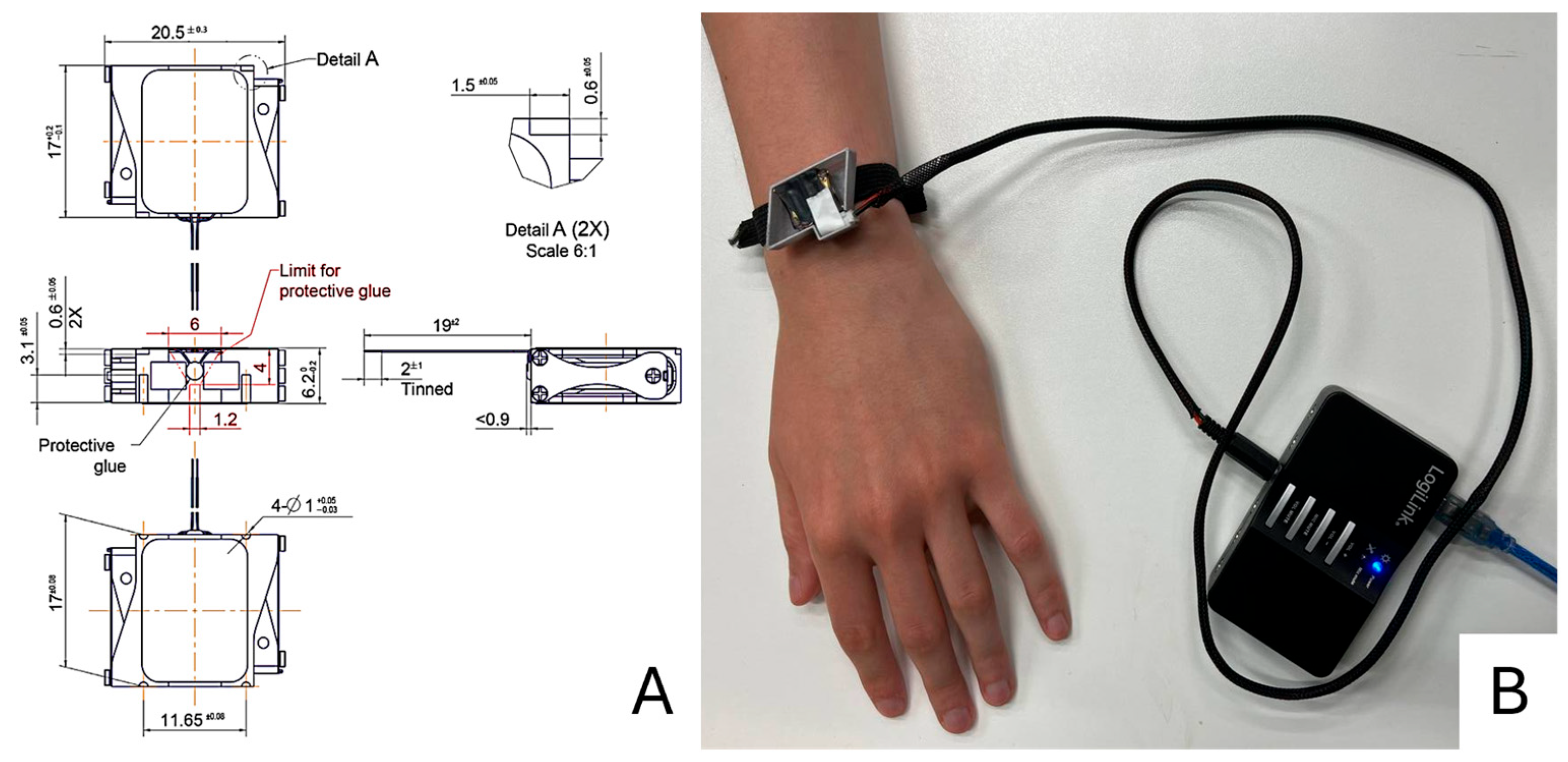
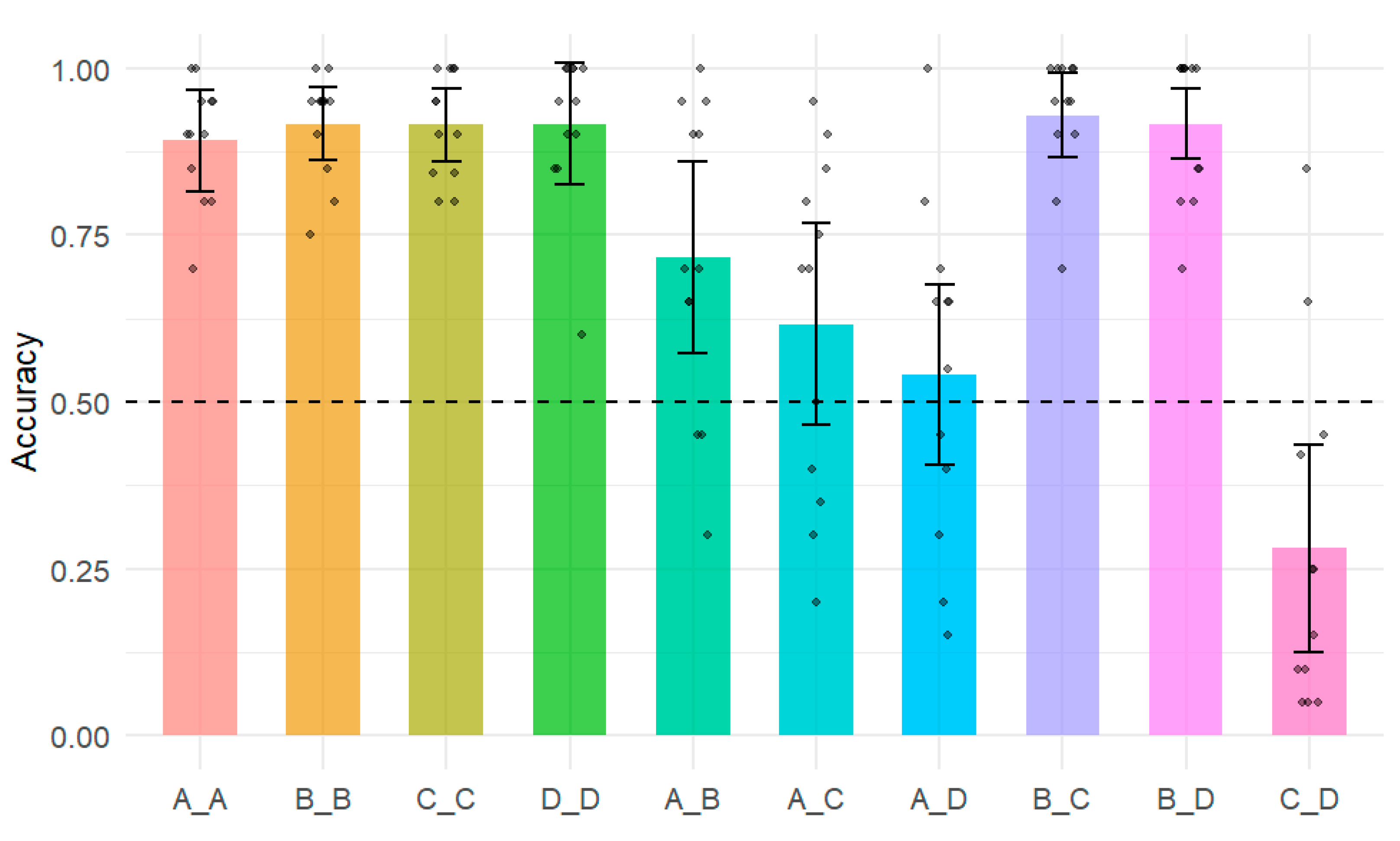
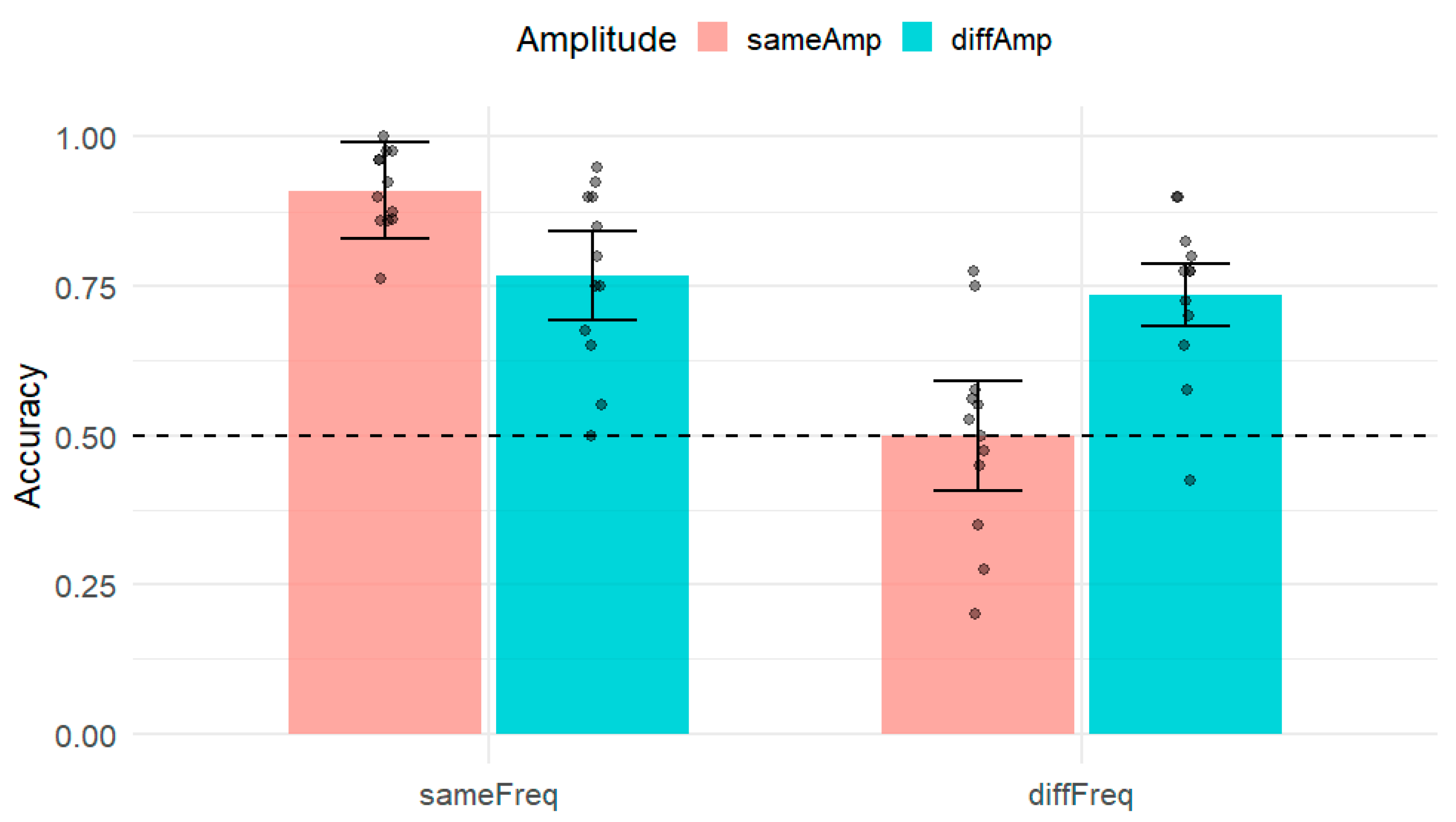
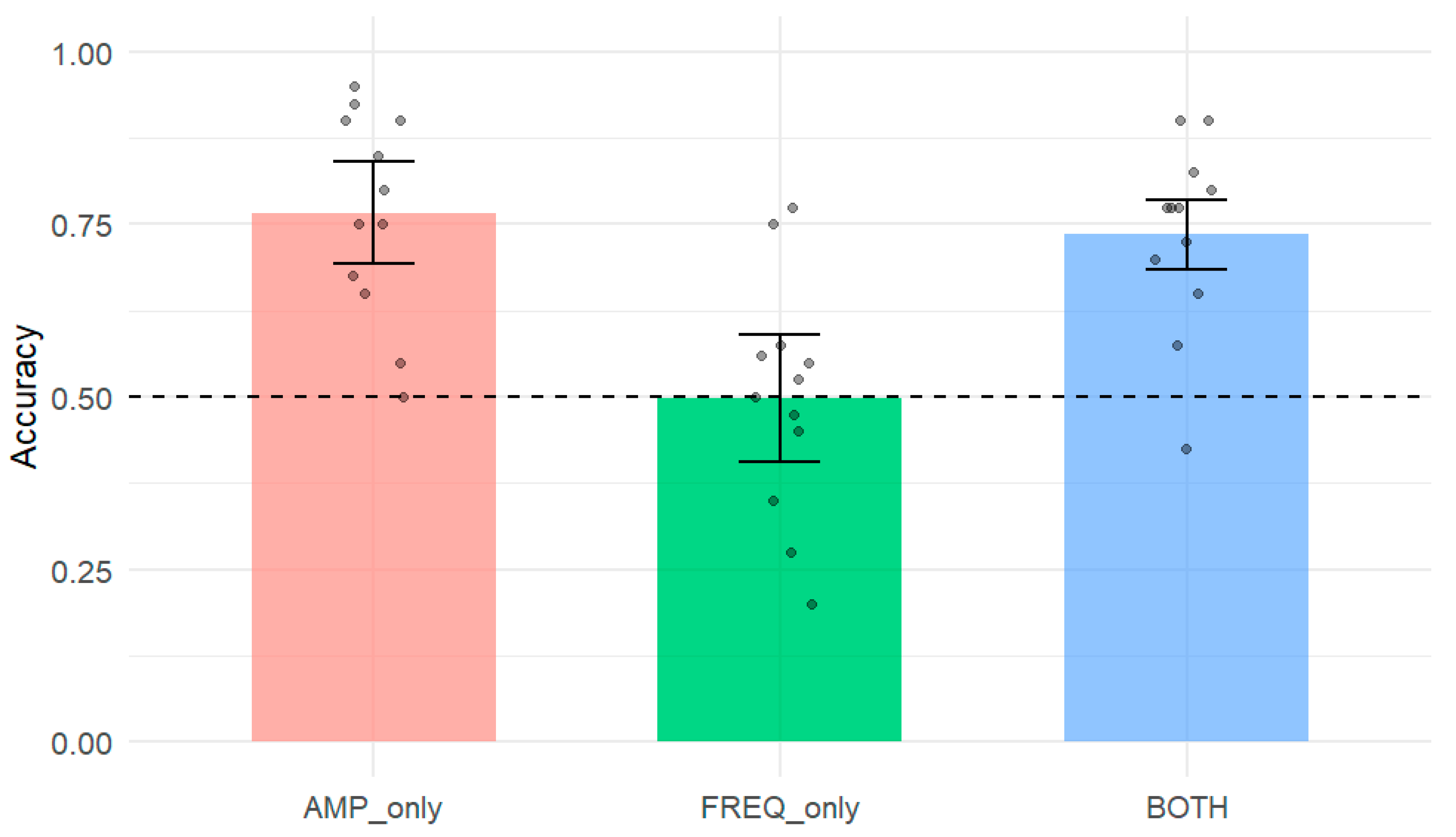
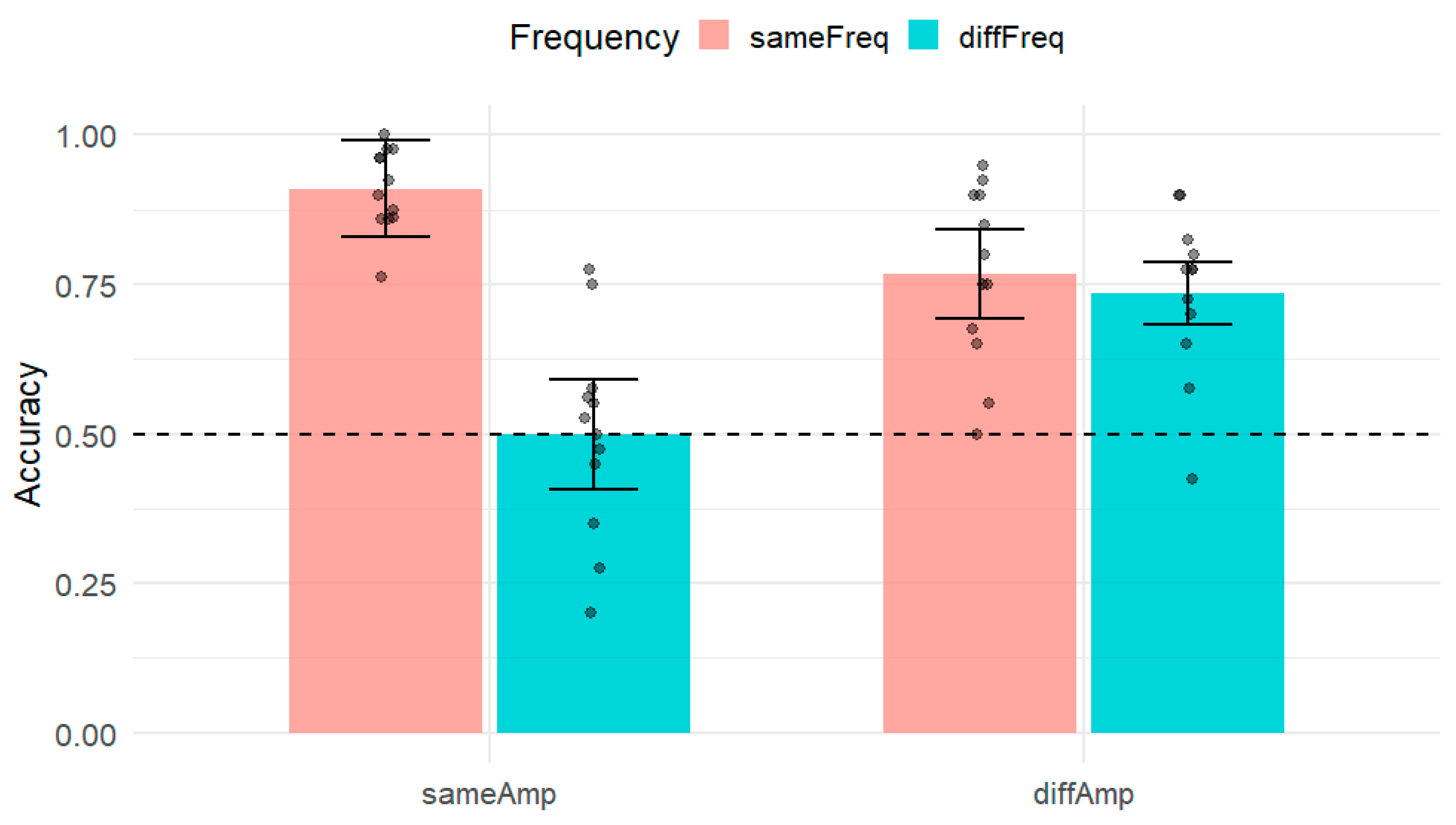
Vibrotactile interfaces commonly encode information using changes in stimulus amplitude and frequency, yet it remains unclear how reliably these parameters can be distinguished when spatial cues are unavailable. The present study examined discrimination of vibrotactile signals that differed in amplitude, frequency, or both, with sequential stimulation delivered to a single location on the wrist. Vibrotactile stimuli were presented through a wearable actuator, and participants judged whether pairs of signals were the same or different. Discrimination performance was high when stimuli differed in amplitude, whereas signals differing only in frequency were difficult to distinguish and often produced performance near chance. Importantly, adding frequency differences to amplitude differences did not improve discrimination beyond amplitude differences alone. These findings indicate that, under non-spatial and sequential presentation conditions, amplitude provides a robust cue for vibrotactile signal discrimination, whereas frequency modulations on their own offer limited benefits for perceptual discrimination. The results highlight basic constraints on vibrotactile perception that are relevant for the design of wearable tactile interfaces and sensory substitution devices.
Keywords: vibrotactile perception; tactile discrimination; amplitude; frequency; sensory substitution; haptic interfaces vibrotactile perception; tactile discrimination; amplitude; frequency; sensory substitution; haptic interfaces