Article

Hybrid Fuzzy-SMC Controller with PSO for Autonomous Underwater Vehicle

by
Mohammed Yousri Silaa
1,2,*,
Ilyas Rougab
3,
Oscar Barambones
2,* and
Aissa Bencherif
1
1
Telecommunications Signals and Systems Laboratory (TSS), Amar Telidji University of Laghouat, BP 37G, Laghouat 03000, Algeria
2
Engineering School of Vitoria, University of the Basque Country UPV/EHU, Nieves Cano 12, 1006 Vitoria, Spain
3
Laboratory for Analysis and Control of Energy Systems and Electrical Networks, Department of Electronic, University of Amar Telidji, Laghouat 03000, Algeria
*
Authors to whom correspondence should be addressed.
Actuators 2026, 15(2), 90; https://doi.org/10.3390/act15020090
Submission received: 24 December 2025 / Revised: 16 January 2026 / Accepted: 26 January 2026 / Published: 2 February 2026
(This article belongs to the Special Issue New Control Schemes for Actuators—2nd Edition)

Abstract

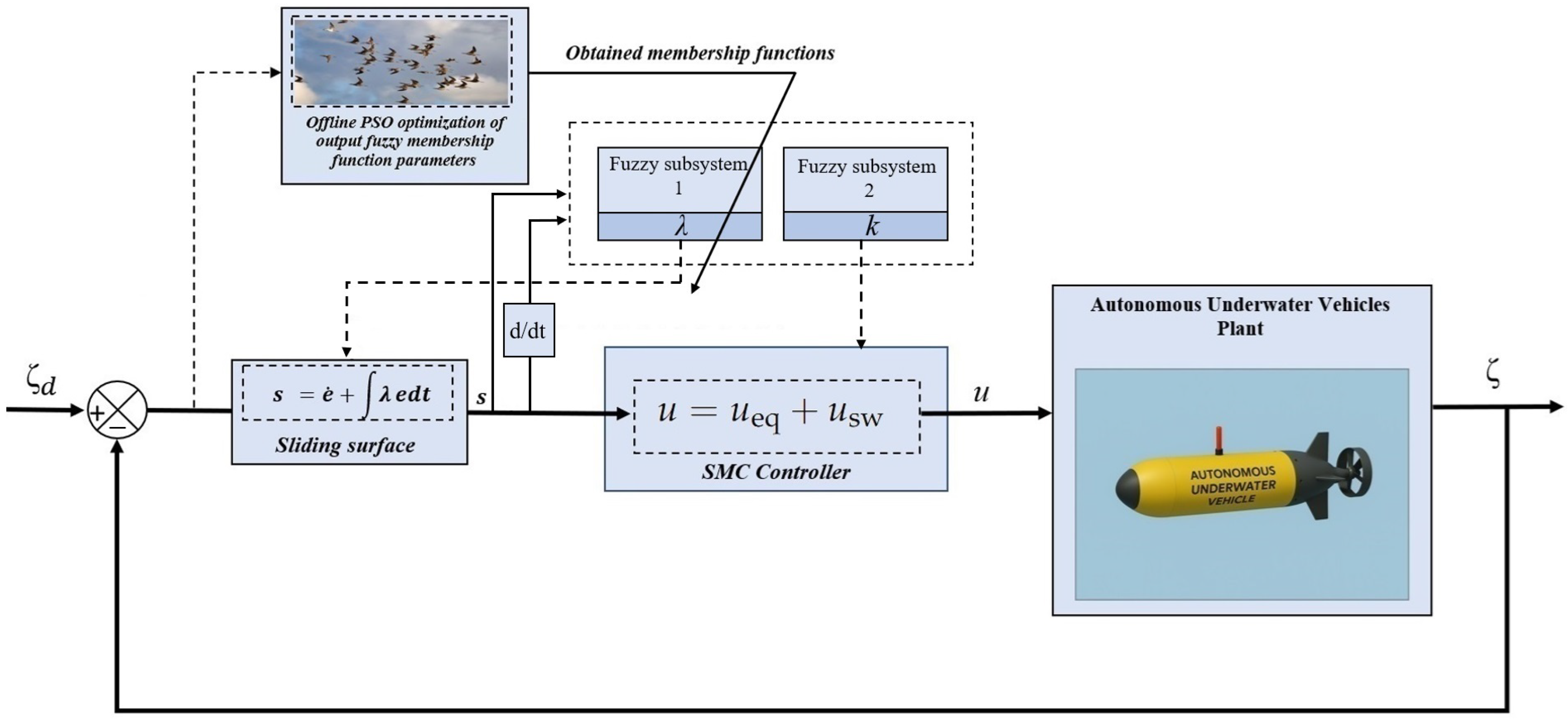
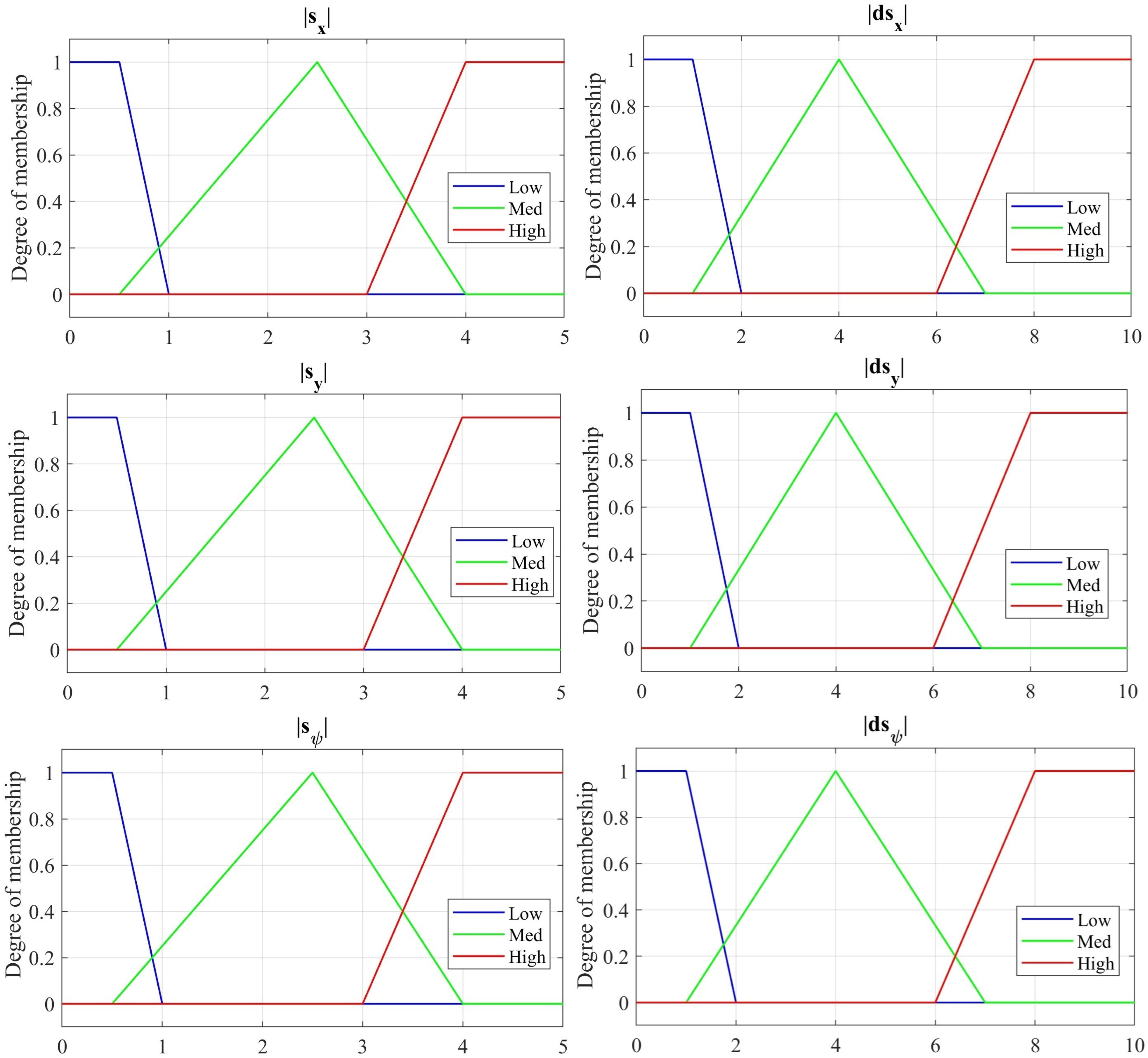
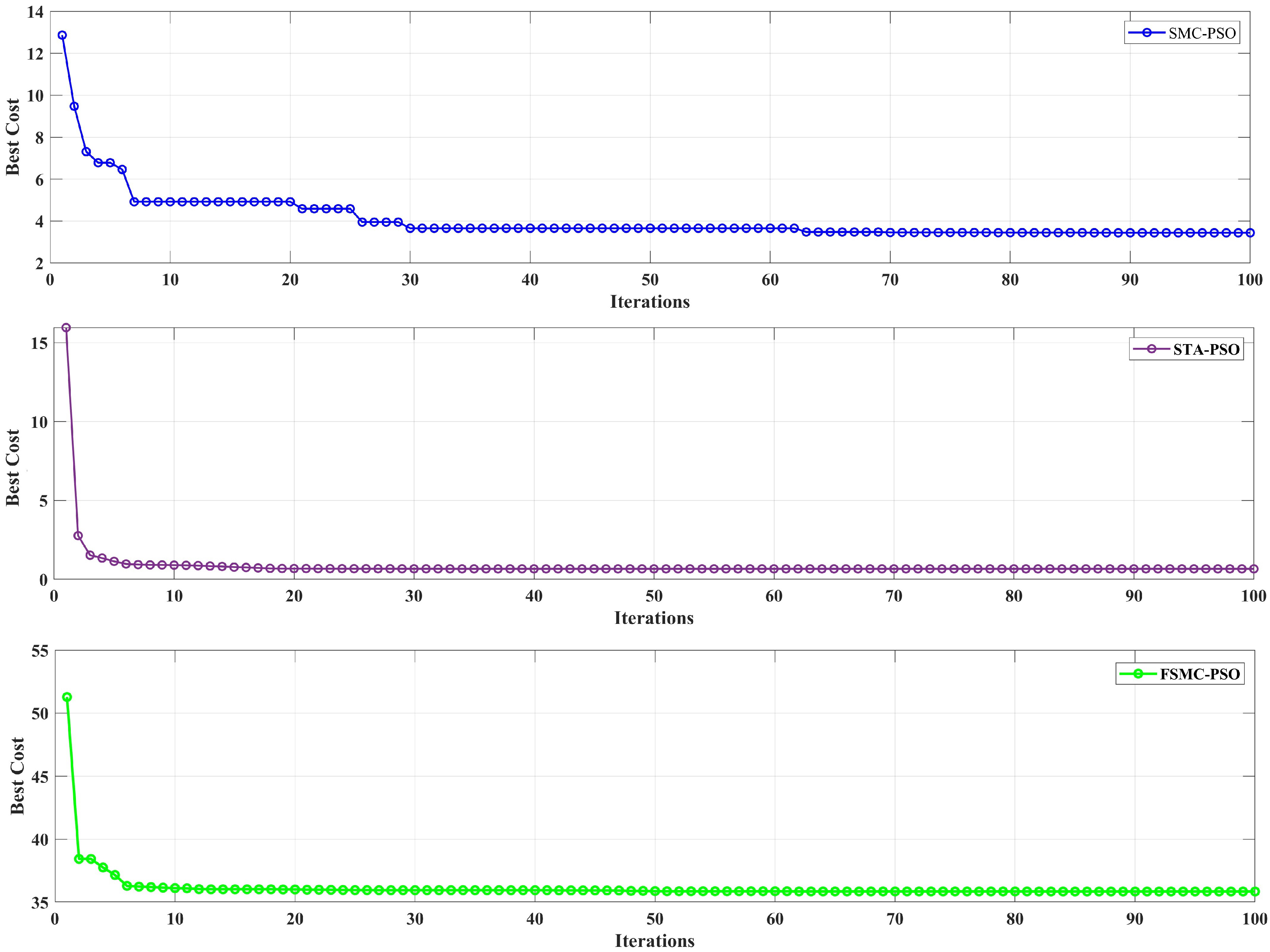
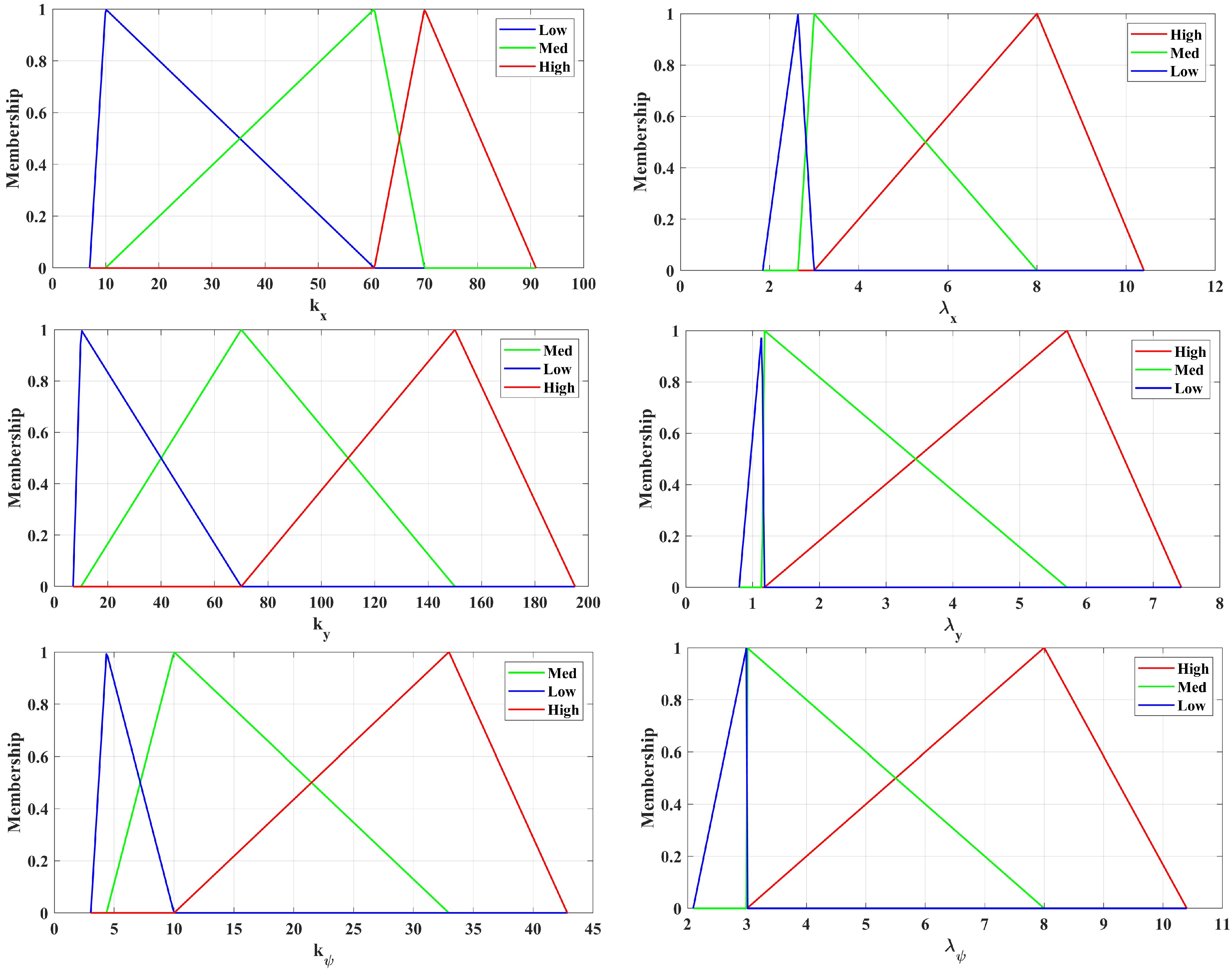
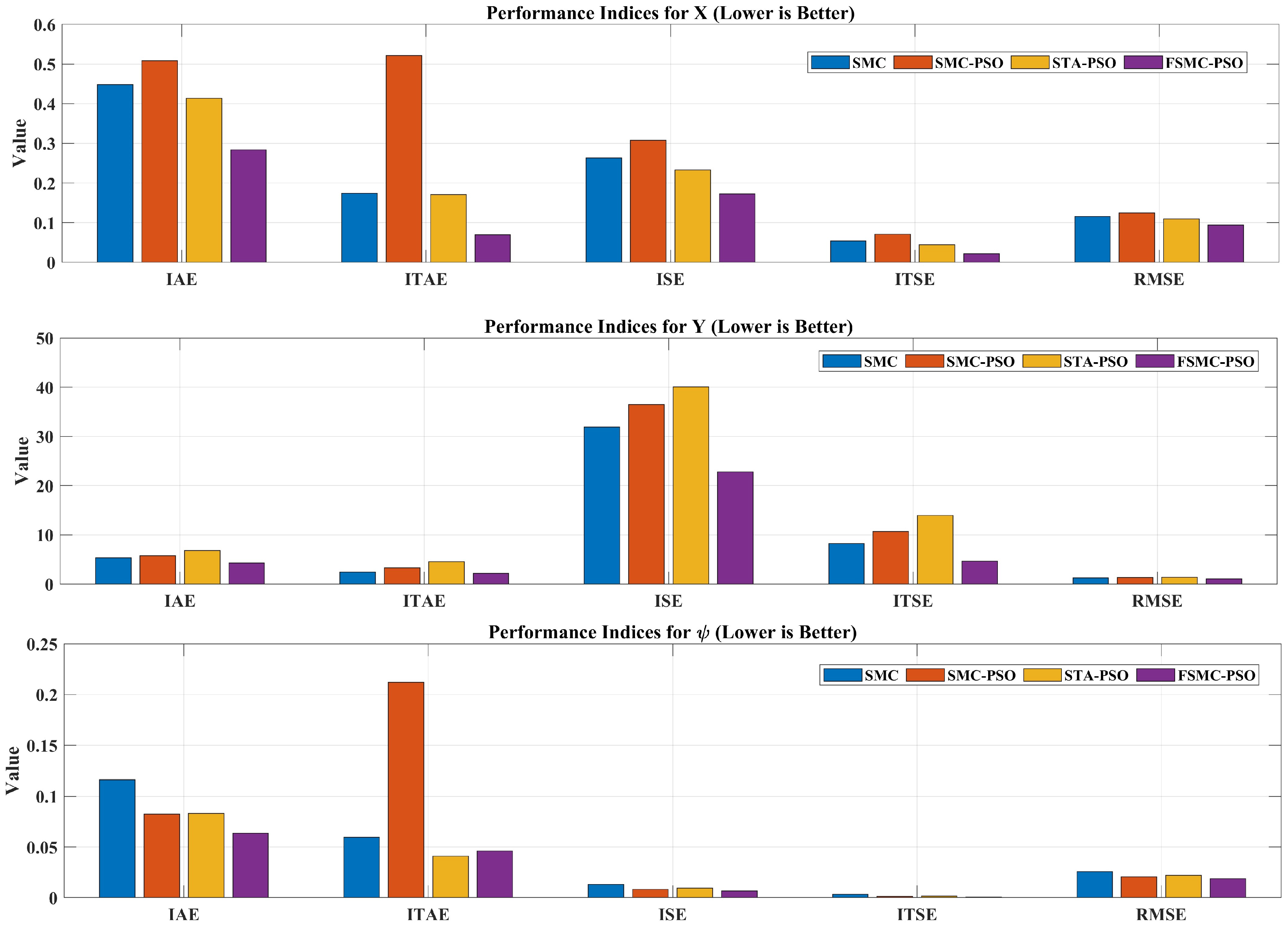
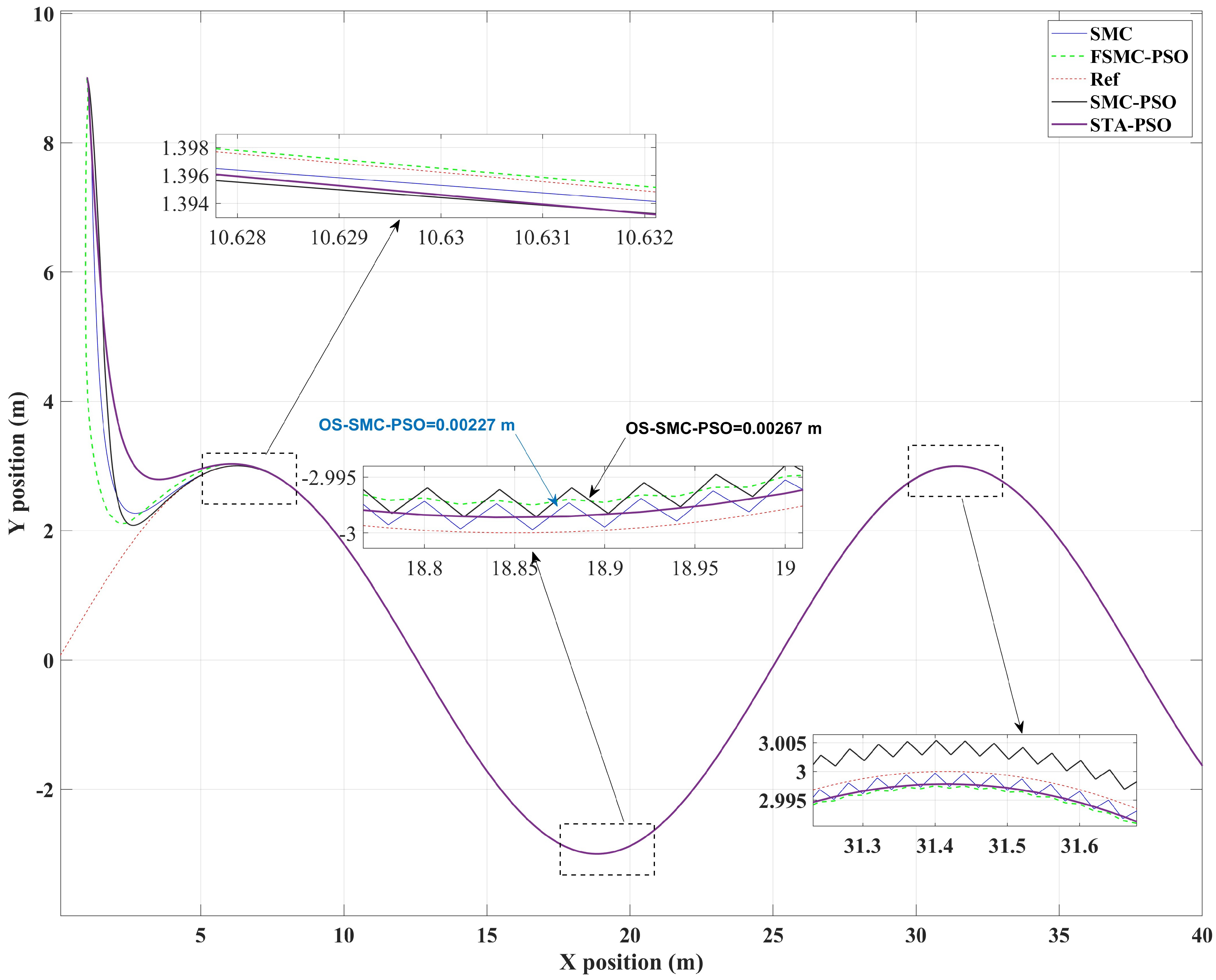
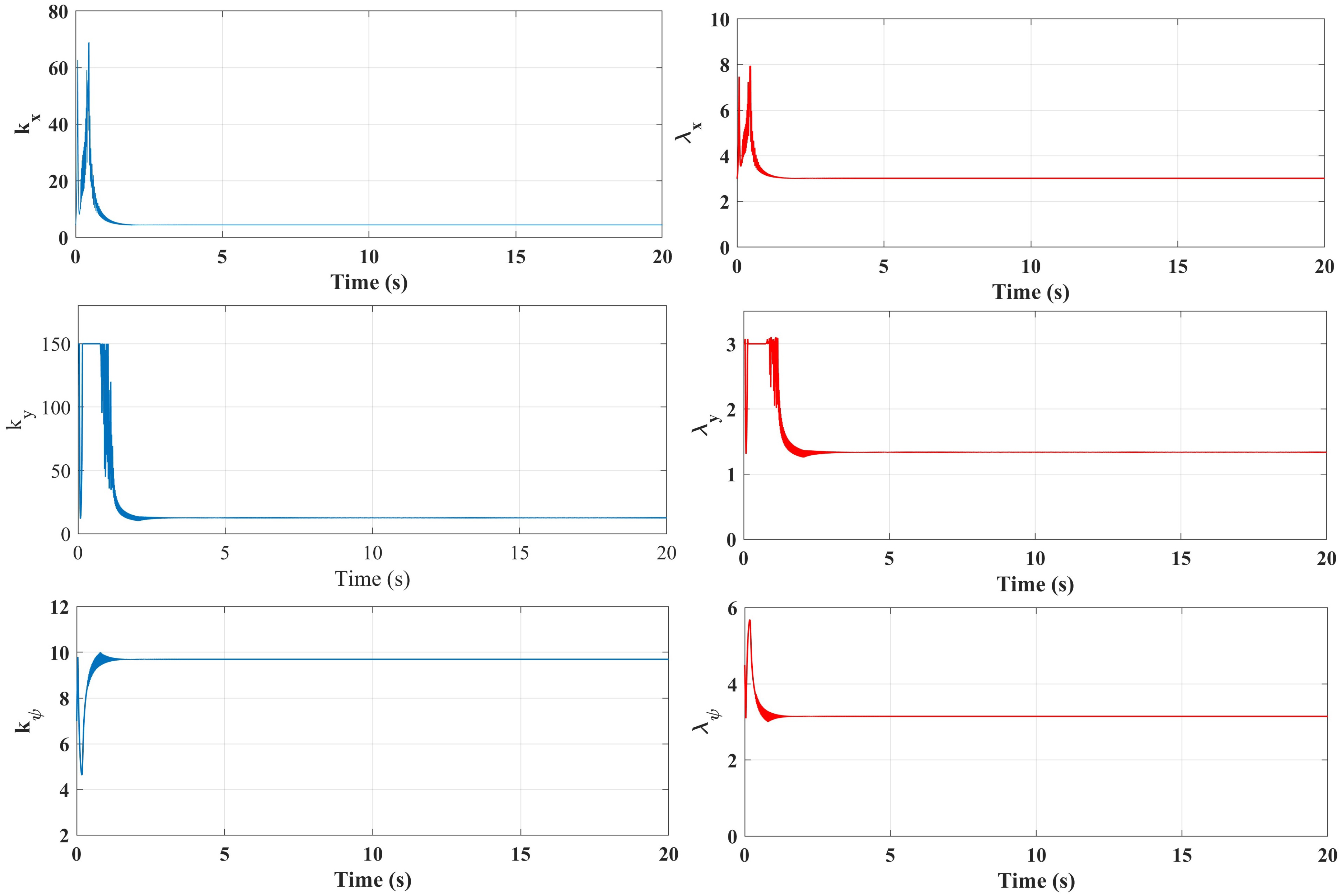
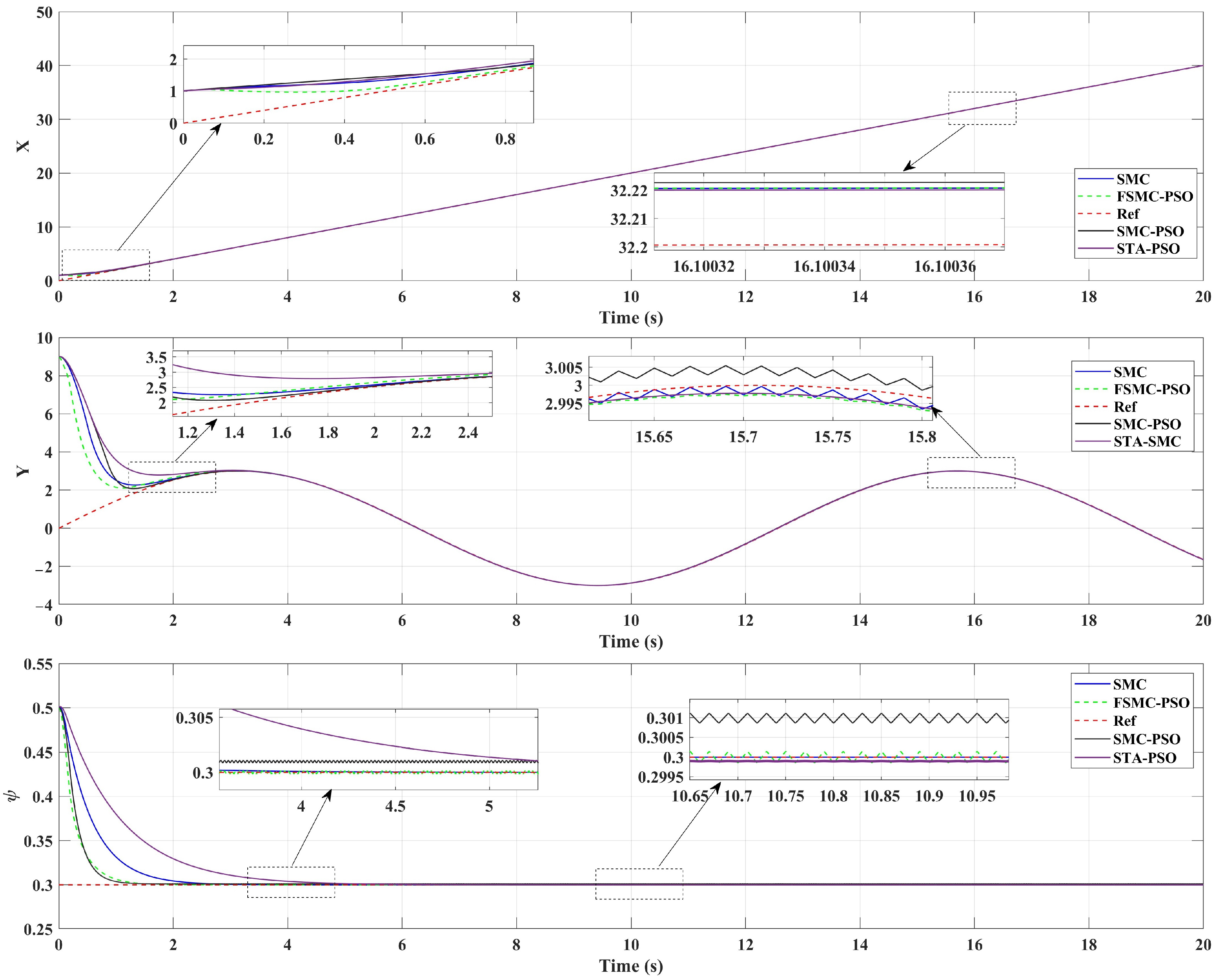
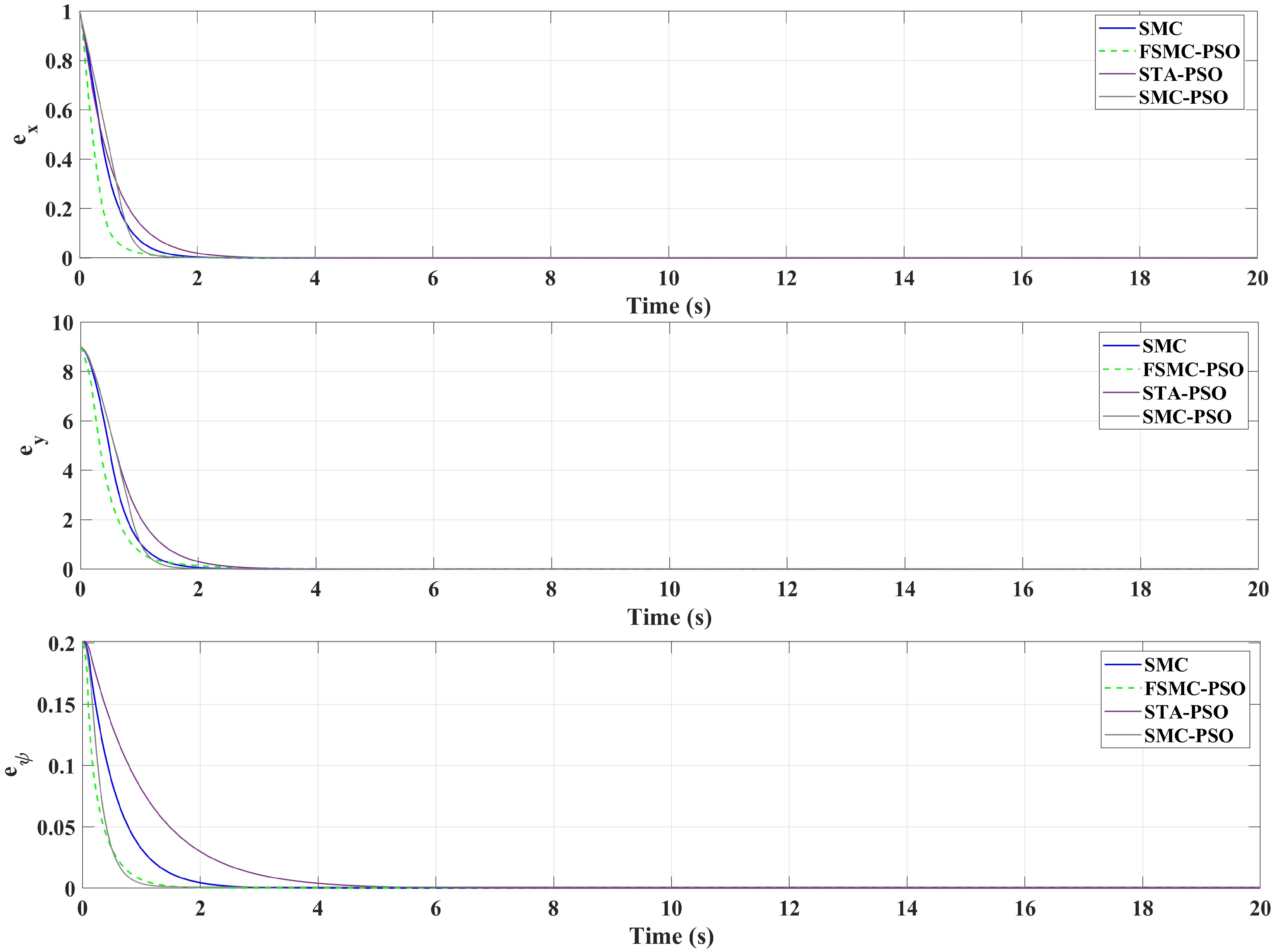
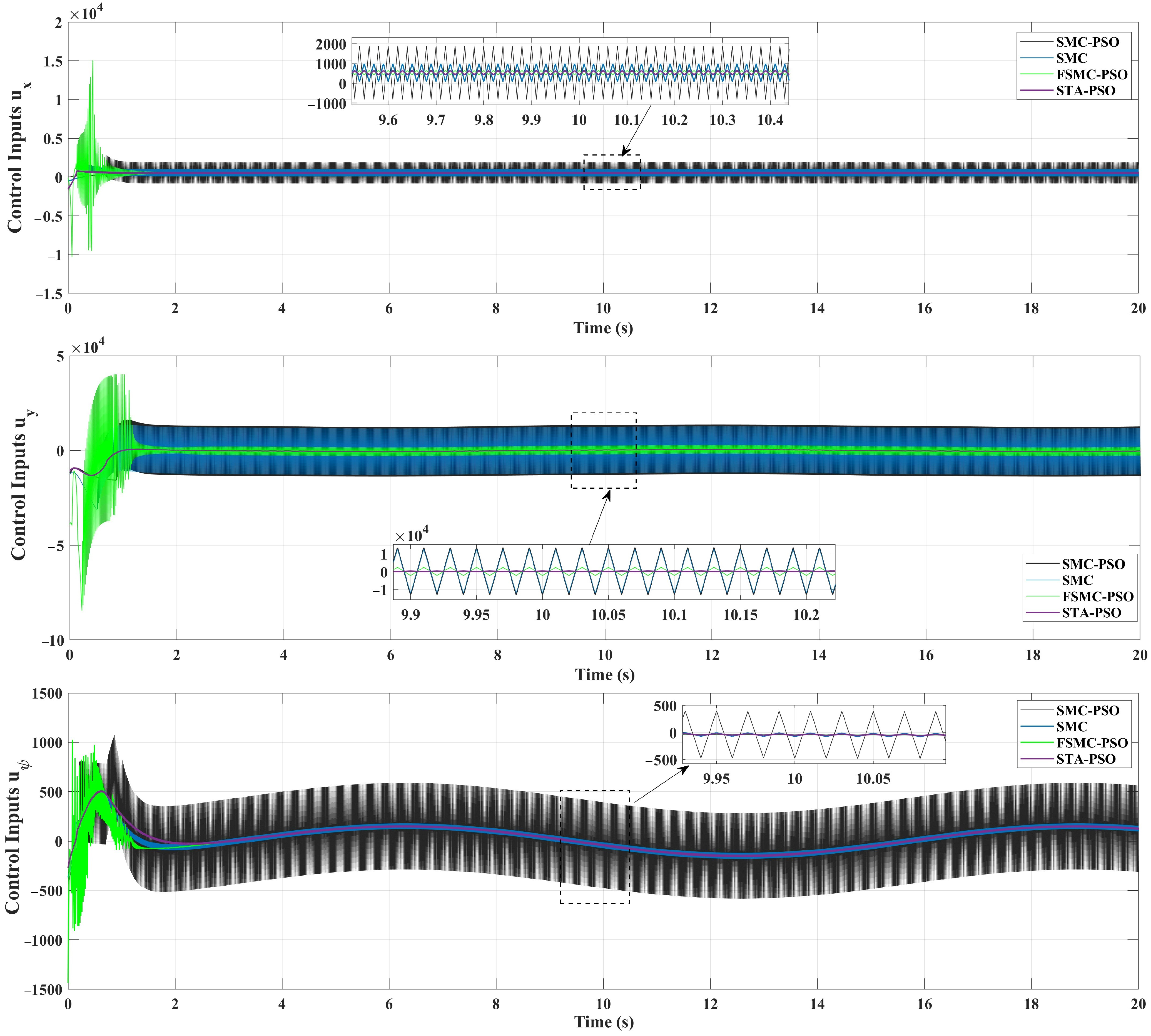
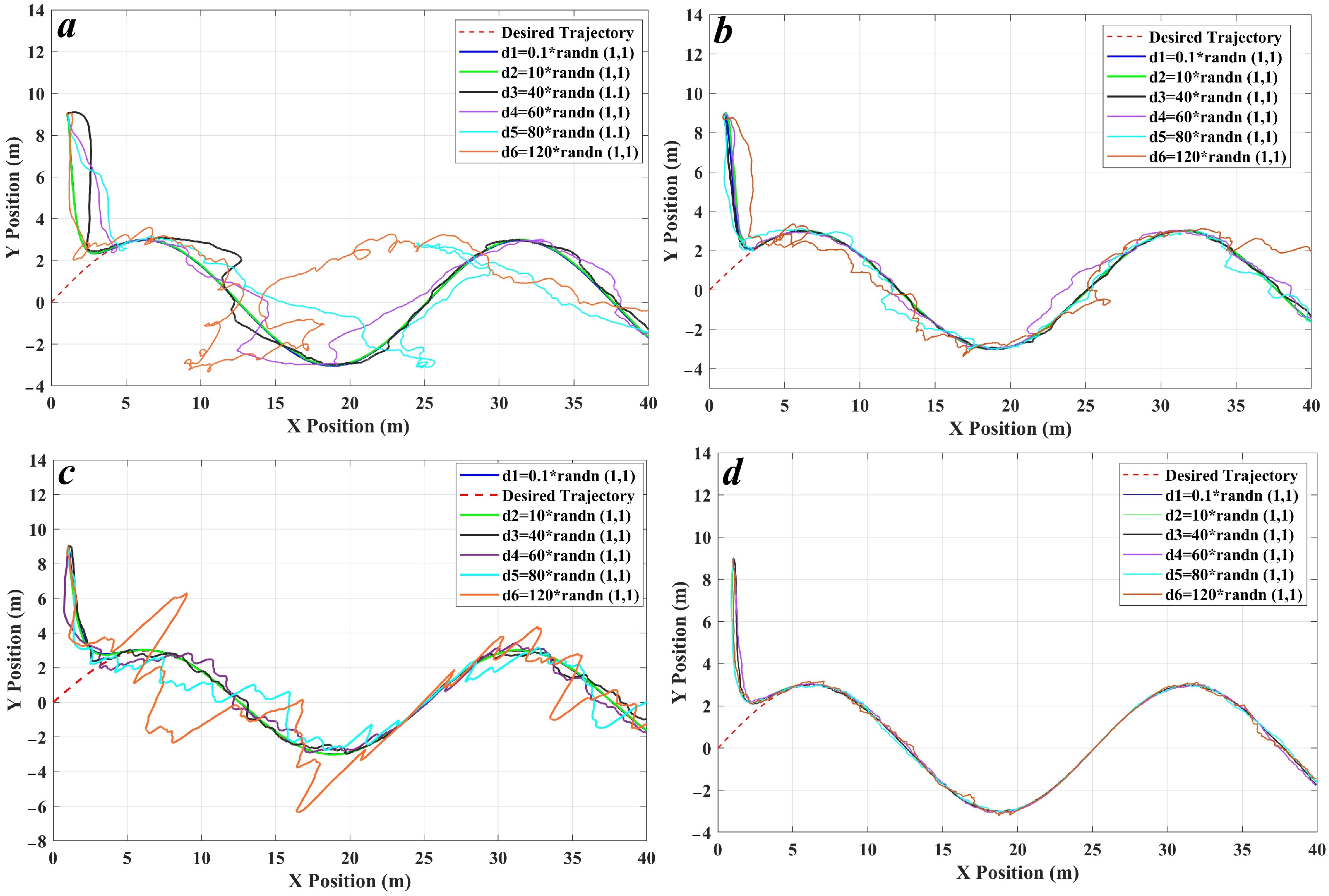
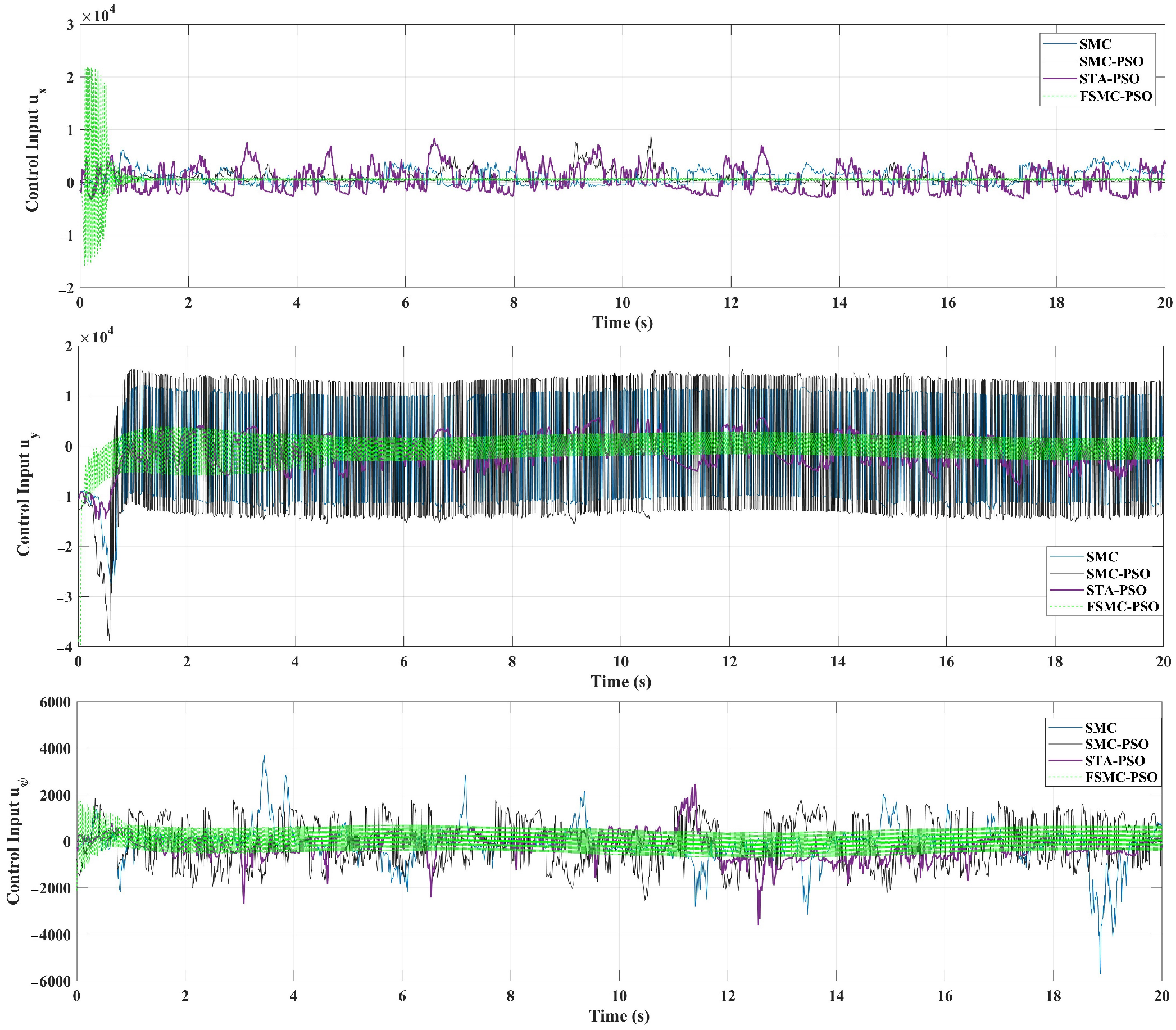
This paper proposes a fuzzy sliding mode controller optimized using particle swarm optimization (FSMC-PSO) for trajectory tracking of an autonomous underwater vehicle (AUV). Conventional sliding mode control (SMC) is well known for its robustness against external disturbances, unmodeled dynamics, and parameter uncertainties, ensuring stability under challenging operating conditions. In the proposed FSMC-PSO approach, fuzzy logic adaptively tunes the SMC parameters, while PSO optimizes the fuzzy output membership functions offline to improve tuning accuracy and overall control performance. During online operation, the optimized fuzzy system adaptively adjusts the SMC parameters with minimal computational cost. The effectiveness of the proposed method is evaluated through numerical simulations in the presence of random noise. Performance is assessed using standard tracking indices, including IAE, ITAE, ISE, ITSE, and RMSE. Comparative results show that FSMC-PSO achieves higher trajectory tracking accuracy, reduces steady-state and transient errors, and minimizes chattering compared to conventional SMC and SMC-PSO, as well as the super-twisting algorithm-based PSO (STA-PSO) controller.FSMC-PSO achieves up to an 86.58% reduction in ITAE and a 73.53% reduction in ITSE compared to classical SMC while also outperforming SMC-PSO and STA-PSO across all motion states (X, Y, and ψ). These results demonstrate the effectiveness of FSMC-PSO for high-precision and disturbance-resilient AUV trajectory tracking within the simulated scenarios.
Keywords: autonomous underwater vehicle; fuzzy sliding mode control; particle swarm optimization; trajectory tracking; chattering reduction autonomous underwater vehicle; fuzzy sliding mode control; particle swarm optimization; trajectory tracking; chattering reduction