Article

Adaptive Sliding Mode Control Based on a Peak-Suppression Extended State Observer for Angle Tracking in Steer-by-Wire Systems


1
School of Automotive and Traffic Engineering, Jiangsu University, Zhenjiang 212013, China
2
School of Engineering Informatics and Applied Sciences, Northern Arizona University, Flagstaff, AZ 86011, USA
*
Author to whom correspondence should be addressed.
Actuators 2026, 15(2), 128; https://doi.org/10.3390/act15020128
Submission received: 15 January 2026 / Revised: 12 February 2026 / Accepted: 17 February 2026 / Published: 19 February 2026

Abstract

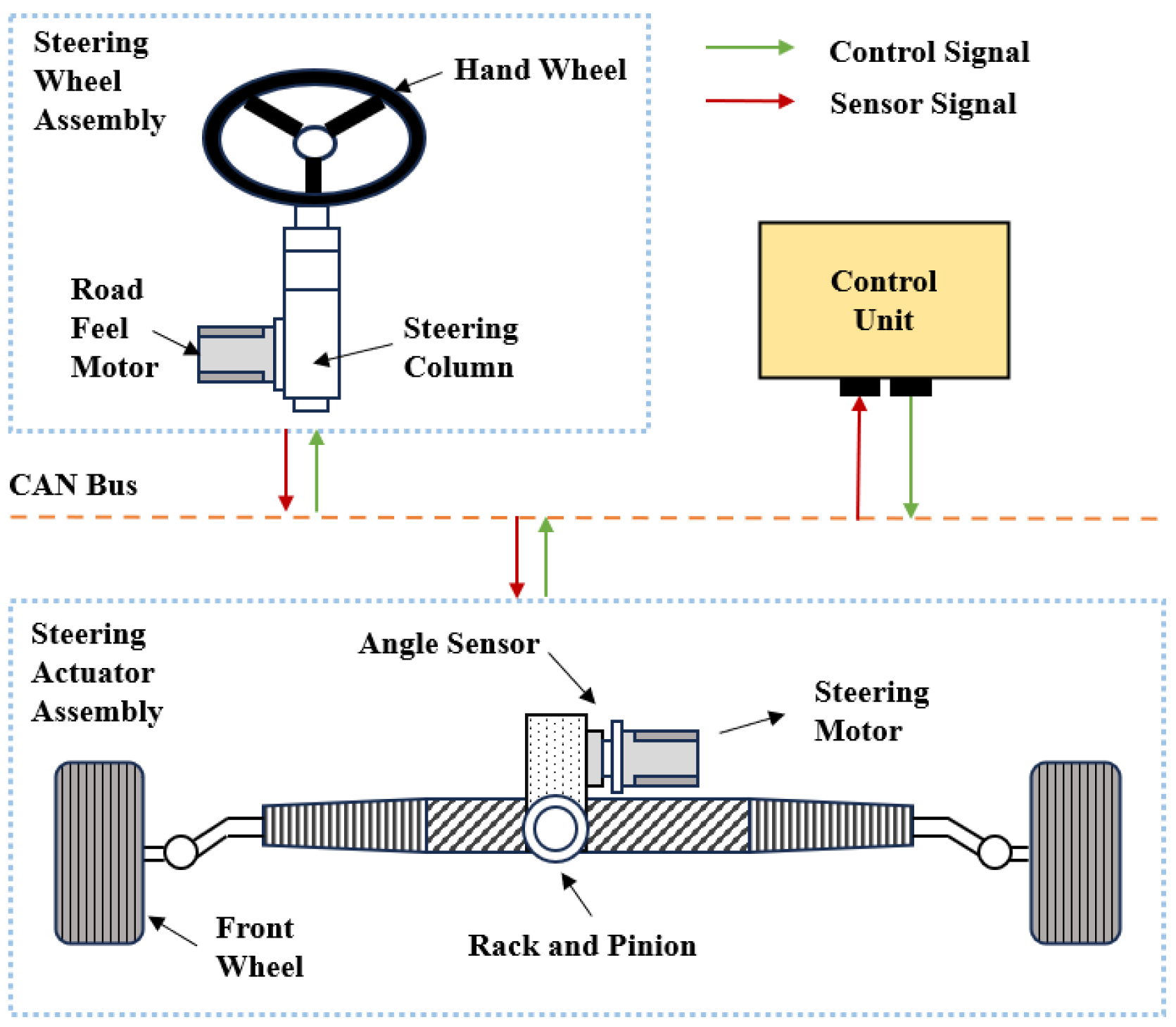
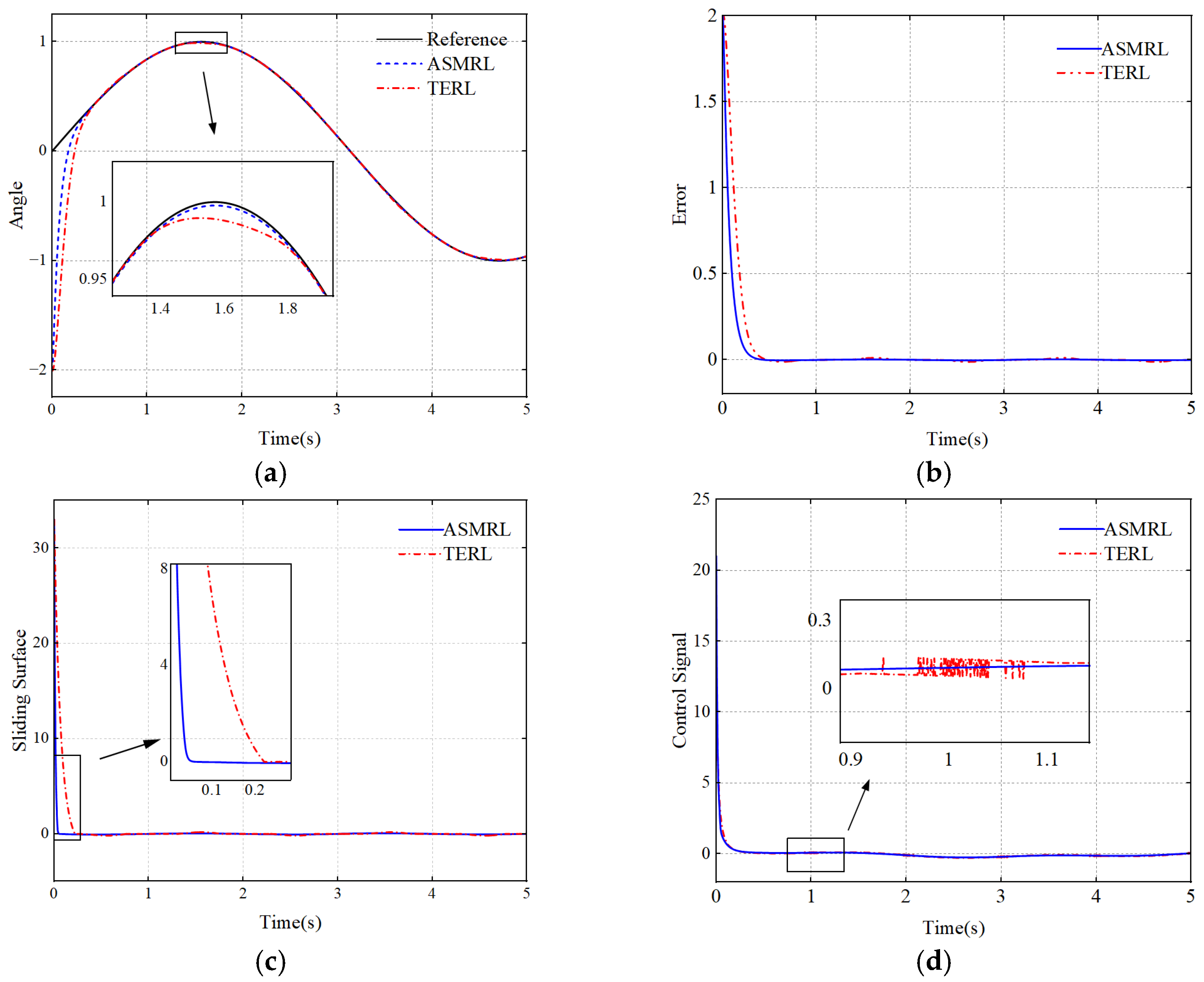
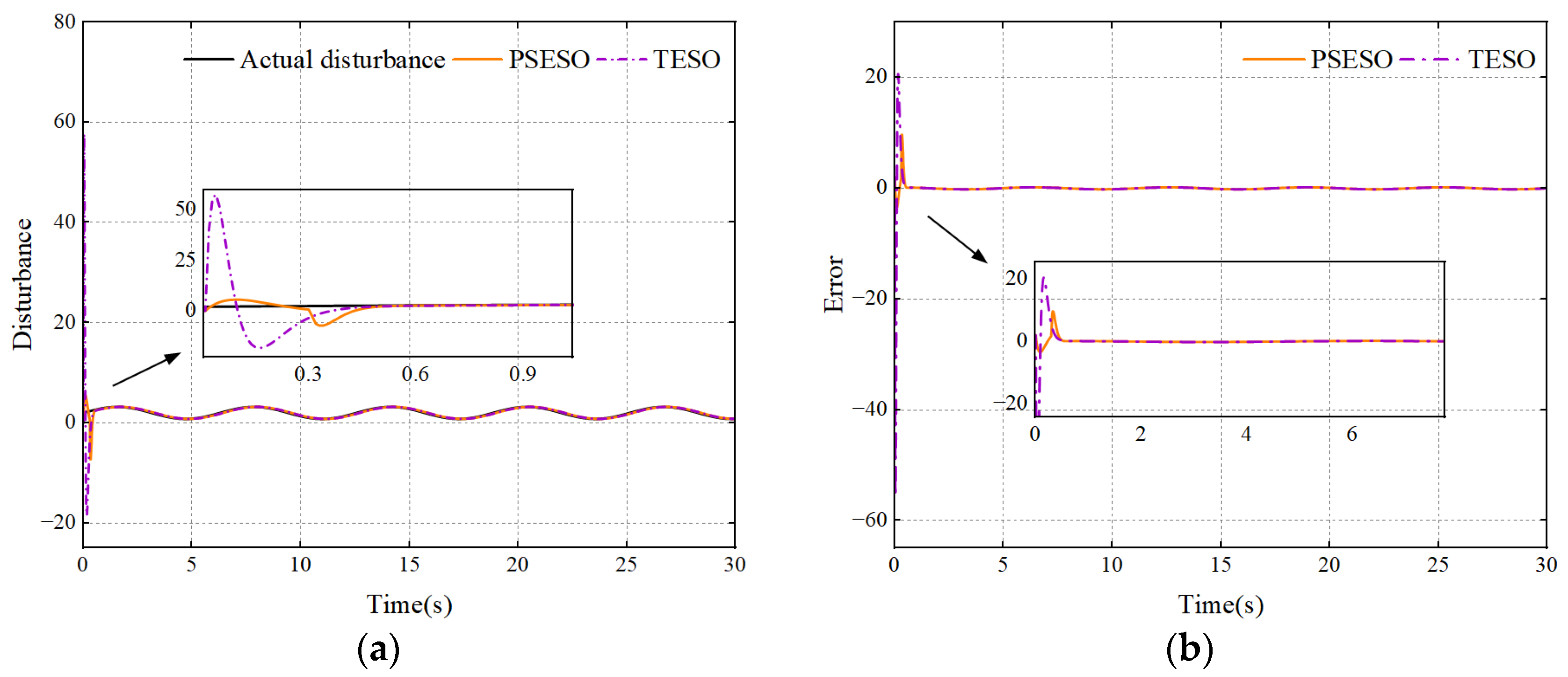
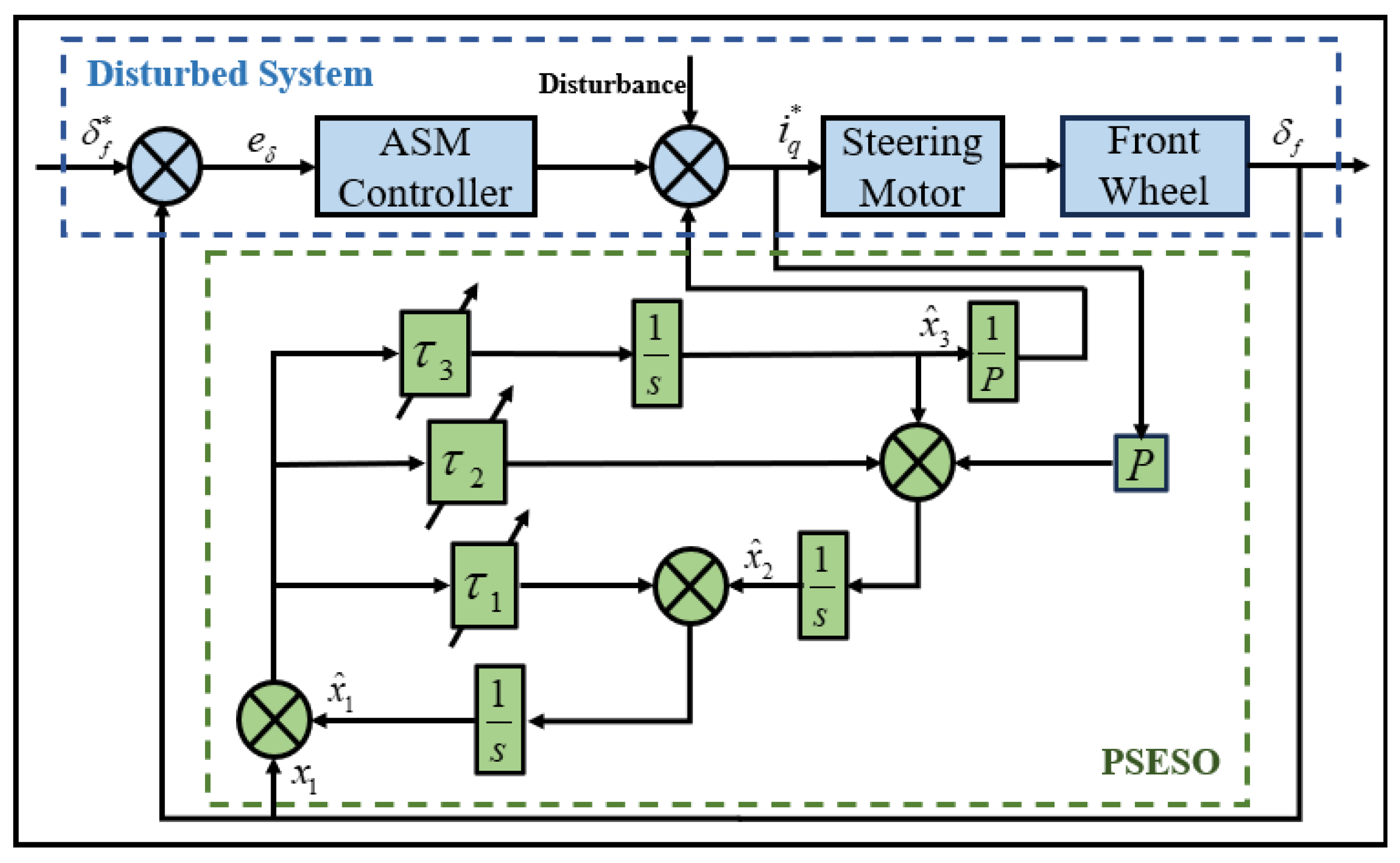
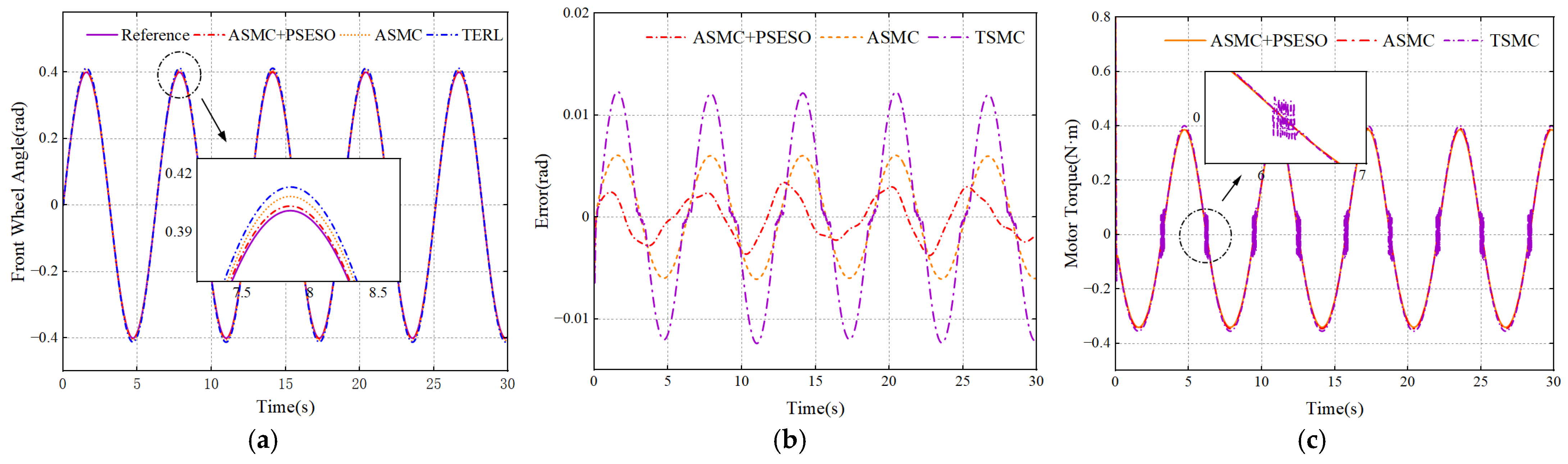
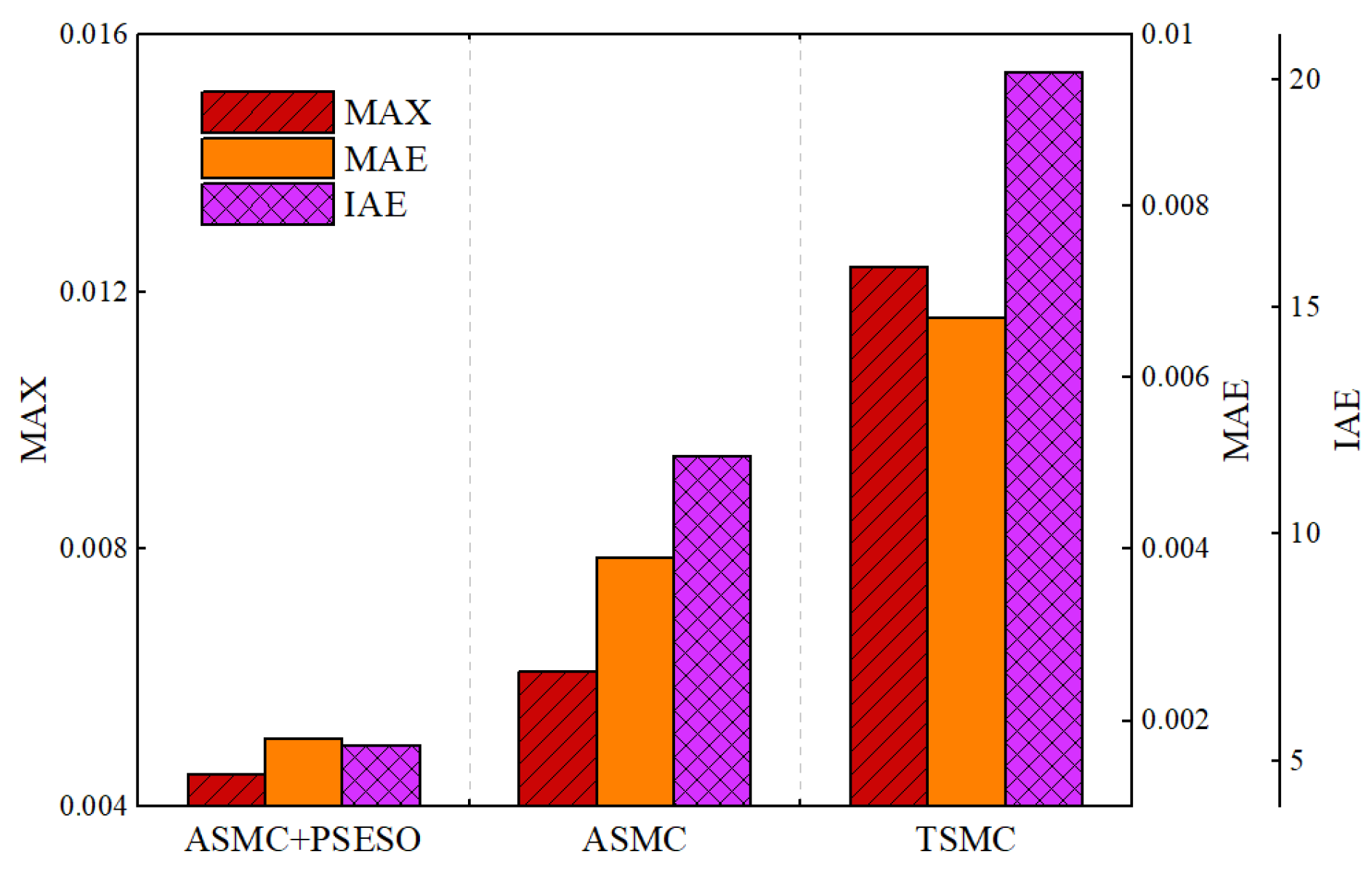
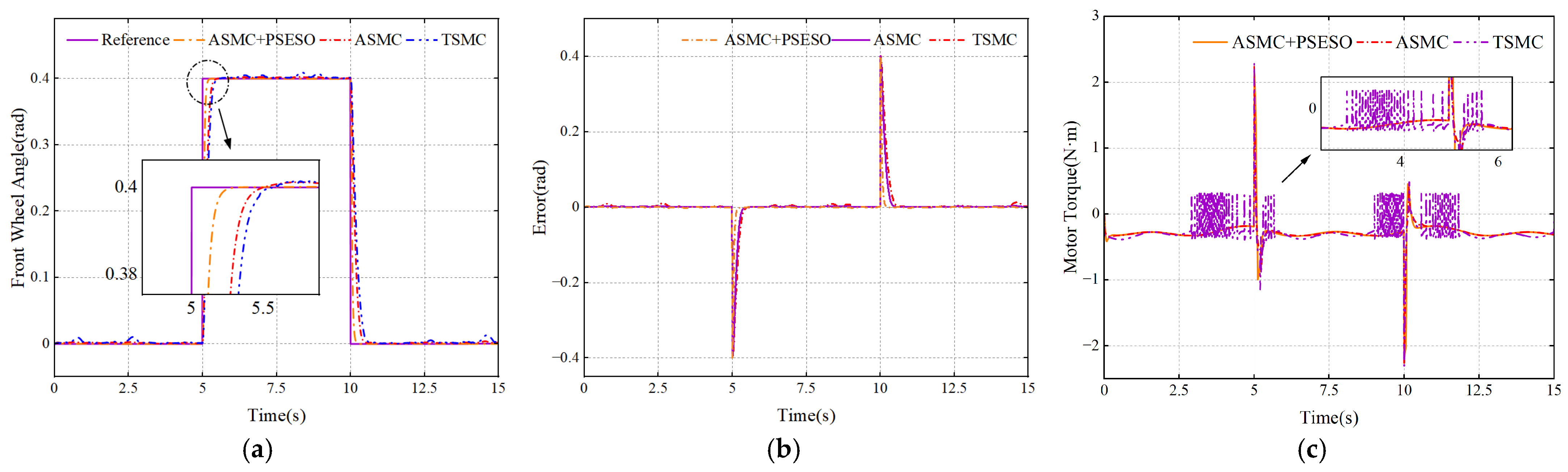
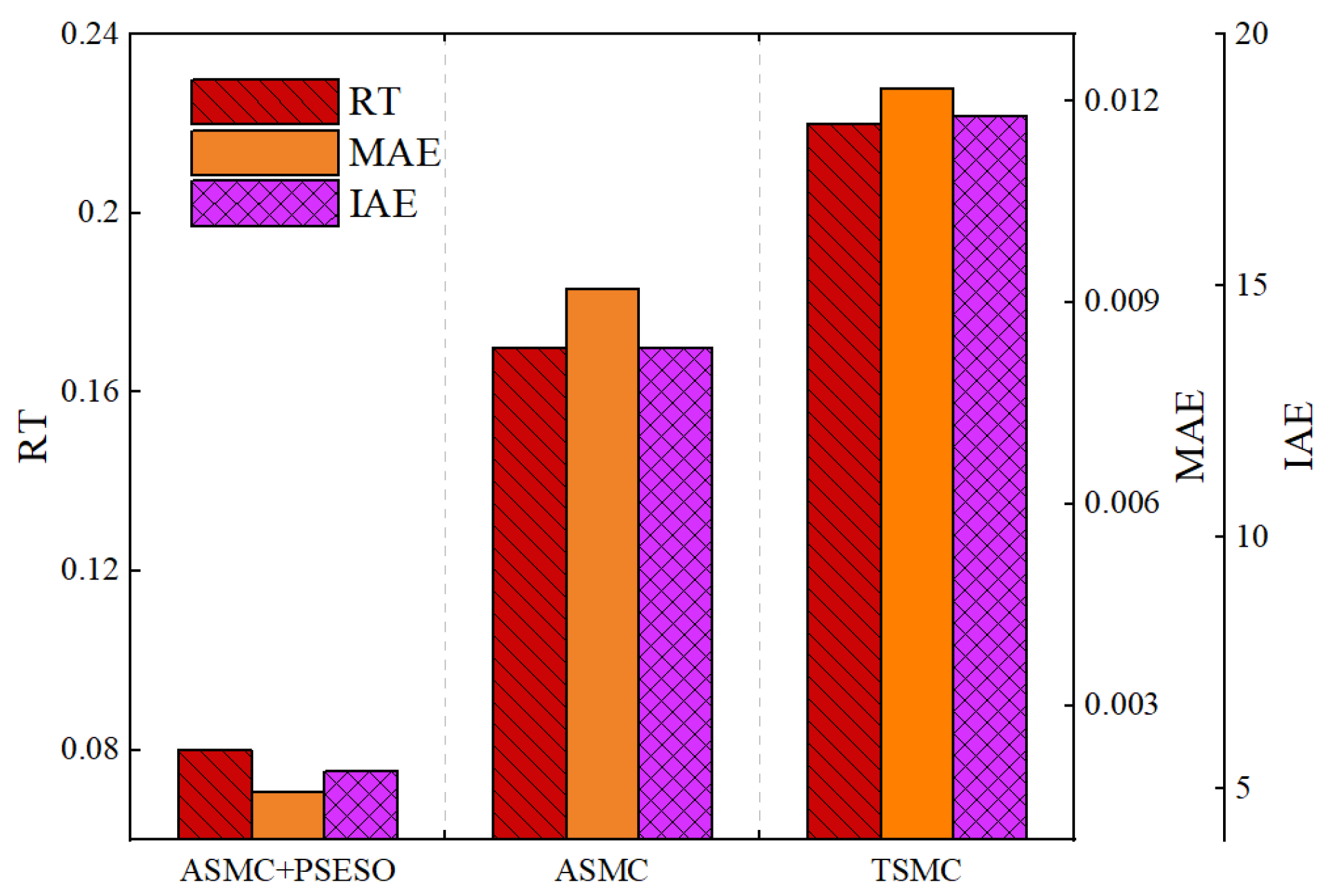
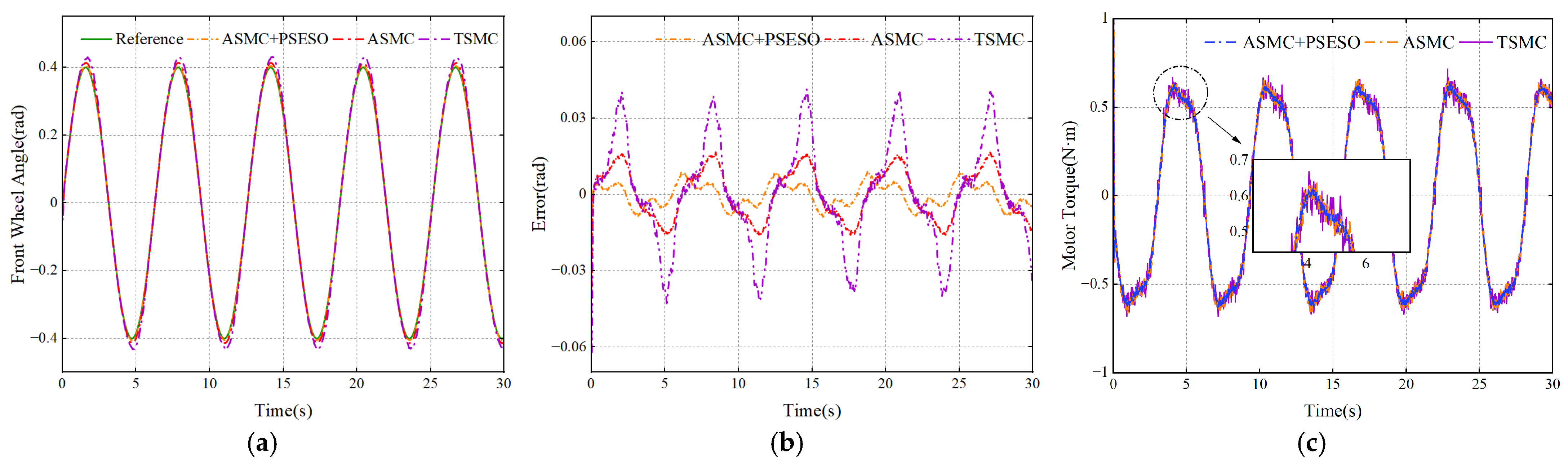
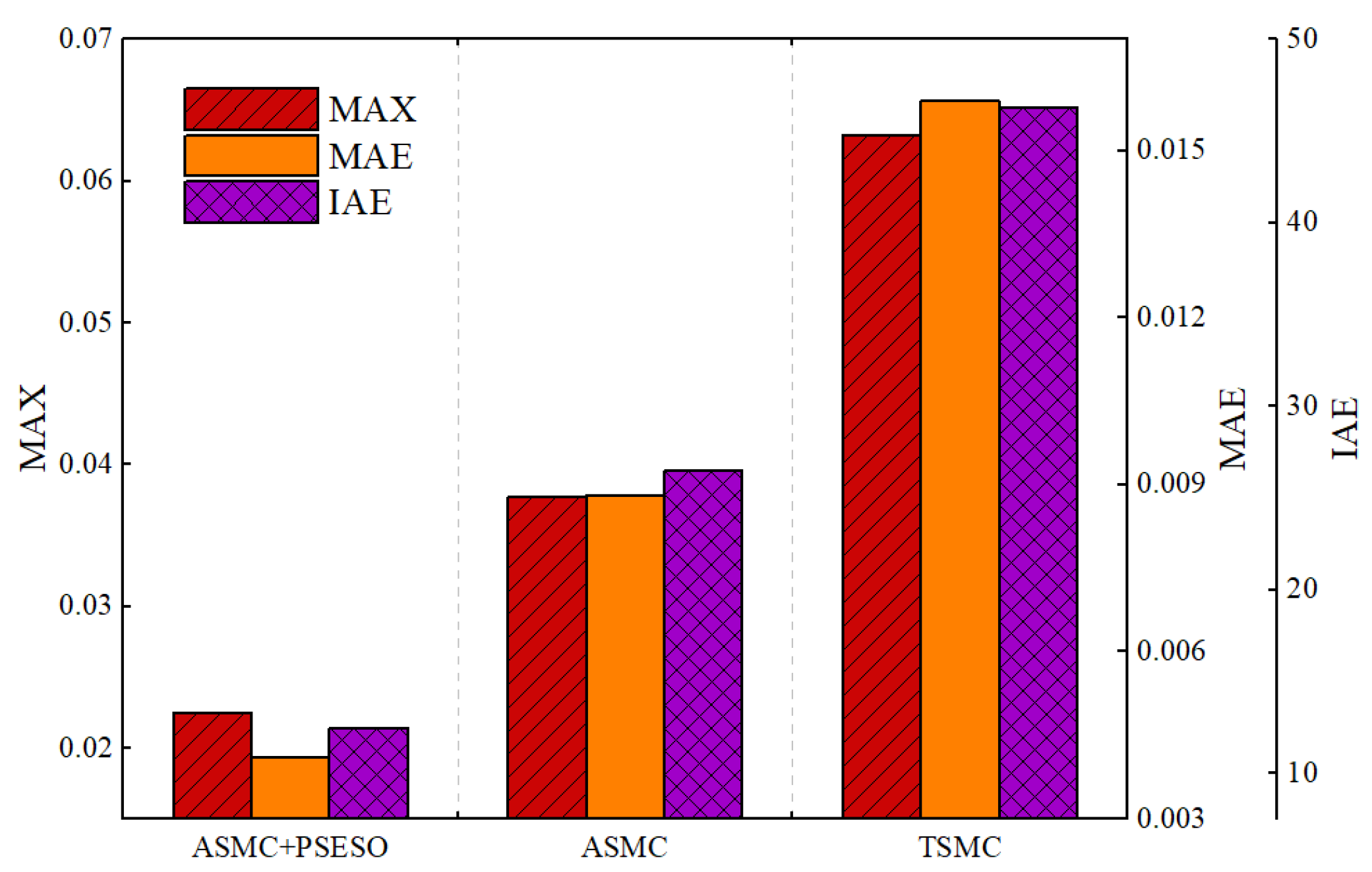
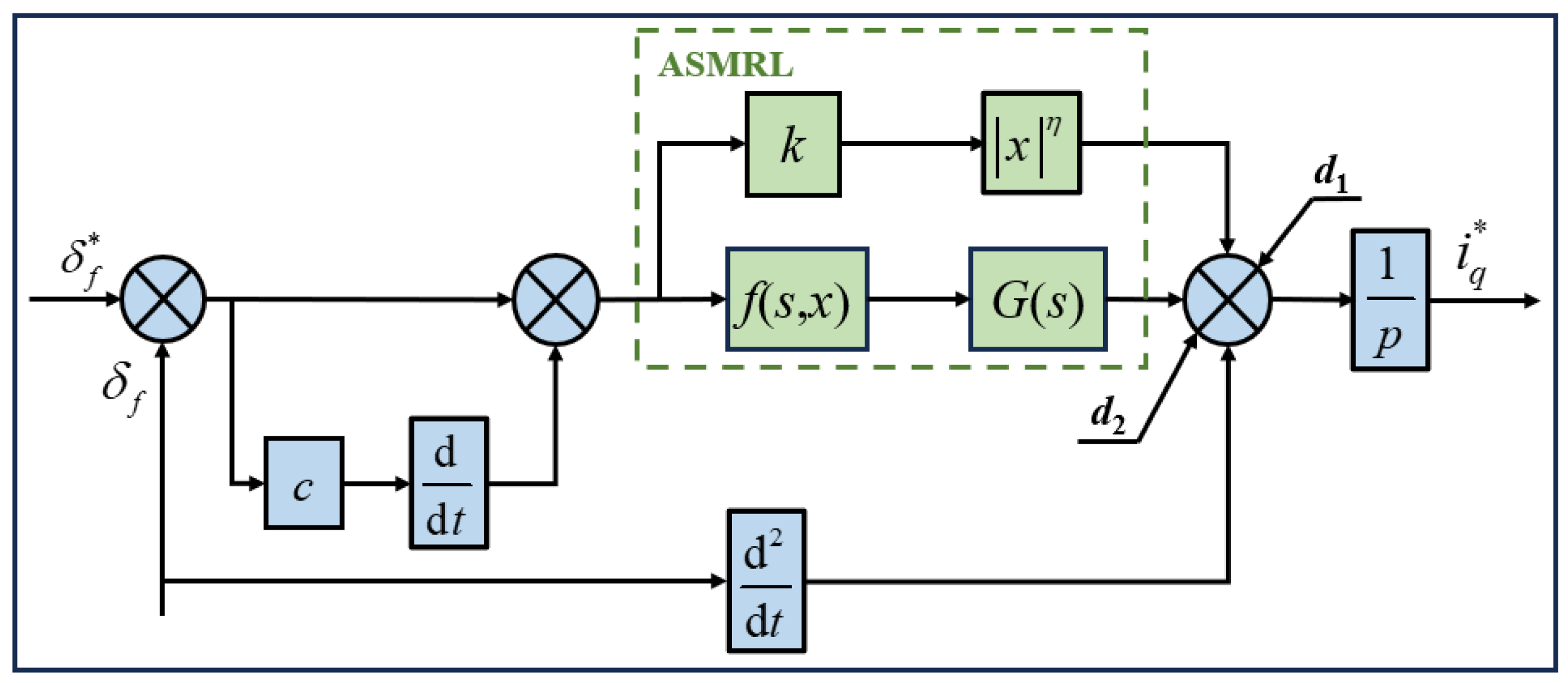
To address the degradation of angle tracking performance in steer-by-wire (SBW) systems caused by external disturbances and parameter uncertainties, this paper proposes a composite control strategy integrating adaptive sliding mode control (ASMC) and a peak-suppression extended state observer (PSESO). Firstly, a novel sliding mode reaching law is designed, which incorporates a dynamic adaptive gain function to achieve real-time adjustment of the control gain. This approach accelerates the reaching speed while effectively mitigating chattering. Secondly, to enhance the disturbance rejection capability of the system, a PSESO is developed to estimate the lumped disturbance in the SBW system in real time. By dynamically adjusting the observer bandwidth, the peak phenomenon in state estimation is suppressed, thereby avoiding saturation of the control signal. The disturbance estimate from the PSESO is then fed forward as a compensation term into the adaptive sliding mode (ASM) controller, forming a composite ASMC+PSESO controller that enables active compensation and suppression of disturbances. Finally, the proposed composite control strategy is validated through both simulations and experiments. Experimental results demonstrate that under sinusoidal signal tracking conditions, the proposed method reduces the maximum tracking error, the mean absolute error, and the integral absolute error by 64.4%, 74.2%, and 73.1%, respectively, compared to traditional sliding mode control (TSMC). These results fully underscore its superiority in angle tracking control and disturbance rejection for SBW systems.
Keywords: steer-by-wire; adaptive sliding mode control; extended state observer; angle tracking; disturbance rejection steer-by-wire; adaptive sliding mode control; extended state observer; angle tracking; disturbance rejection