1. Introduction
Actuators are crucial in the function of robots. Several actuators have been developed to suit different applications. For example, electromagnetic motors are commonly utilized in robots of various sizes, whereas hydraulic actuators are preferred for applications requiring high power output. In addition to conventional rigid actuators, many soft actuators have been developed recently, providing robots with new flexible motions that were previously unattainable with conventional rigid actuators.
Soft actuators are characterized by their flexibility and lightweight design. The former is achieved by utilizing flexible materials, such as silicone rubber, allowing the actuator to adapt to different objects and environments [
1,
2]. The latter was achieved using a pneumatic cavity structure. The interior of the actuator is filled with air, which provides the actuator with a significant deformation, despite its light weight [
3,
4]. The motion types between conventional rigid actuators and soft actuators also differ. Most electromagnetic motors produce rotary motion. Some hydraulic actuators offer linear motion, and others offer rotary motion. By contrast, soft actuators typically exhibit bending motion. Extending and contracting motions are also commonly offered by soft actuators.
The aforementioned advantages of soft actuators enhance the capabilities of small mobile robots, such as legged robots and climbing robots and provide a novel movement method. For example, utilizing extending motion allows a climbing robot to efficiently approach and grasp an object located at a distance, whereas contracting motion enables the robot to smoothly move its body toward the grasped object. Some climbing robots that can move through objects composed of pipes or move by hanging on a ladder have been developed [
5,
6]. These are examples of robots that have performed complex-flexible motions that are difficult for conventional rigid robots. The flexibility of soft robots also has positive implications for movement in complex environments. This flexibility makes them well-suited for tasks that require interaction with intricate structural objects, setting them apart from unmanned aerial vehicles, which struggle with physical contact.
Soft robots can move by interacting with their surroundings due to their flexibility, whereas their movements in complex environments involve problems stemming from their driven mechanism. As mentioned above, many soft robots are pneumatically driven, and they move while carrying tubes for air supply. In complex environments, snagging of these tubes can impede the movements of robots. In addition, the tension caused by the weight of the air supply tube or the tube caught on surrounding objects may apply force to the actuator and cause undesired deformation [
5]. To overcome this issue, some untethered soft mobile robots, such as crawling robot and jumping robot, equipped with pneumatic circuits have been developed [
7,
8]. While such mechanisms further enhance the adaptability of soft robots to their environment, to the best of our knowledge, no climbing robot capable of both three-dimensional movement and untethered operation has yet been developed.
Soft actuators require the following capabilities to achieve three-dimensional climbing movement utilizing structural objects as described above: (1) The actuator must maintain its shape during the extending motion to reach the target object, (2) it generates a significant contraction force to lift its own body incorporating a pneumatic circuit for untethered movement, (3) it has a large ratio of length change owing to its extending motion, and (4) it allows controlled length adjustment both during extension and contraction motions. However, to the best of our knowledge, few actuators satisfy all these capabilities. Pneumatic artificial muscle is the most common example of a soft actuator [
9,
10,
11]. Although they can generate a significant contraction force despite their compact size, they cannot generate sufficient extending force or allow controlled length adjustment during extension because their extending motion depends on the elastic deformation of their material. Other soft actuators that perform well in bending and contraction deformations cannot extend linearly while maintaining their shape because they require gravitational force for extension [
12,
13]. The inverse pneumatic artificial muscle, which undergoes extending deformation when subjected to high pressures, can generate a significant extending force [
14,
15]. However, their amount of deformation is largely affected by the magnitude of the external force because they rely on an elastic force to produce contraction deformation. Furthermore, applications to climbing robots, as mentioned above, require larger deformation.
Several actuators besides artificial muscle-type actuators can extend deformation. Actuators that employ origami structures to induce contracting deformation have been developed [
16,
17,
18]. Some origami-based actuators utilize the restoring force caused at the folded edges to contract [
16,
17]. These actuators can generate contraction motion with a simple structure alone, but they are strongly affected by external force. Other origami-based actuators that utilize a negative pressure for contracting motion [
18]. The mechanism with negative pressure allows motion control through internal pressure, minimizing the effect of external forces. However, contraction involves the uniform deformation of the entire body. Consequently, fine-tuning the length by combining extending and contracting motion is difficult. A reel-type pneumatic actuator is very lightweight and has a large extension ratio [
19]. The length of this actuator is also easily altered by external forces and internal pressures because it uses a torsion spring for its motion. Some soft-growing robots have a retraction mechanism and can be utilized as an extendable soft actuator [
20,
21,
22]. In recent years, although complex shape control methods have been developed based on fundamental mechanisms previously proposed [
23], the designs of these robots are unsuitable for use as components of climbing robots because they require a sealed container for their base and some actuators, which are quite bulky. The research, which minimizes components and mounts them as an extendable arm on a quadrotor, has also been conducted [
24]. The weight of the arm is extremely light, under 0.65 kg. However, its load capacity is not mentioned, possibly because their primary purpose is inspection. Thus, an actuator that fully satisfies the aforementioned capabilities has yet to be developed. We believe that developing actuators that satisfy these capabilities and employ a structure where the air supply tubes do not affect motion will contribute to the realization of novel climbing robots.
This study aims to develop a novel soft actuator capable of generating force and controlling its length during the extension and contraction motions. In addition, we propose a design in which the air supply tube does not obstruct the motion of the actuator. The main contributions of this study are as follows: (1) An actuator that allows easy length control was developed by combining an electromagnetic motor with an inflatable structure. (2) Models of the extending force and contracting force were developed. (3) A configuration incorporating the air flow path internally to deduce the effect of the air supply tube on actuator motion was developed. Moreover, some experiments were conducted to validate the performance of the proposed actuator. We confirmed that the extension and contraction forces generated by the actuator agreed with the developed models. The extension force was 28 N, and the contraction force was 87 N under the operating conditions applied. The experimental result indicated the proposed design reduced the effect of the air supply tube on the actuator deformation. In addition, the demonstration showed that the proposed gripper-equipped actuator can be operated as a climbing robot arm.
The remainder of this paper is organized as follows:
Section 2 presents the design of the extension and contraction mechanism. The force and tube deformation models are outlined in
Section 3. The fabricated actuator is outlined in
Section 4, and
Section 5 presents the experiments conducted using the fabricated actuator. A sample application is shown in
Section 6.
Section 7 discusses the performance of the proposed actuator. Finally,
Section 8 presents the conclusion.
5. Experiments and Results
5.1. Experiment on the Extension Force
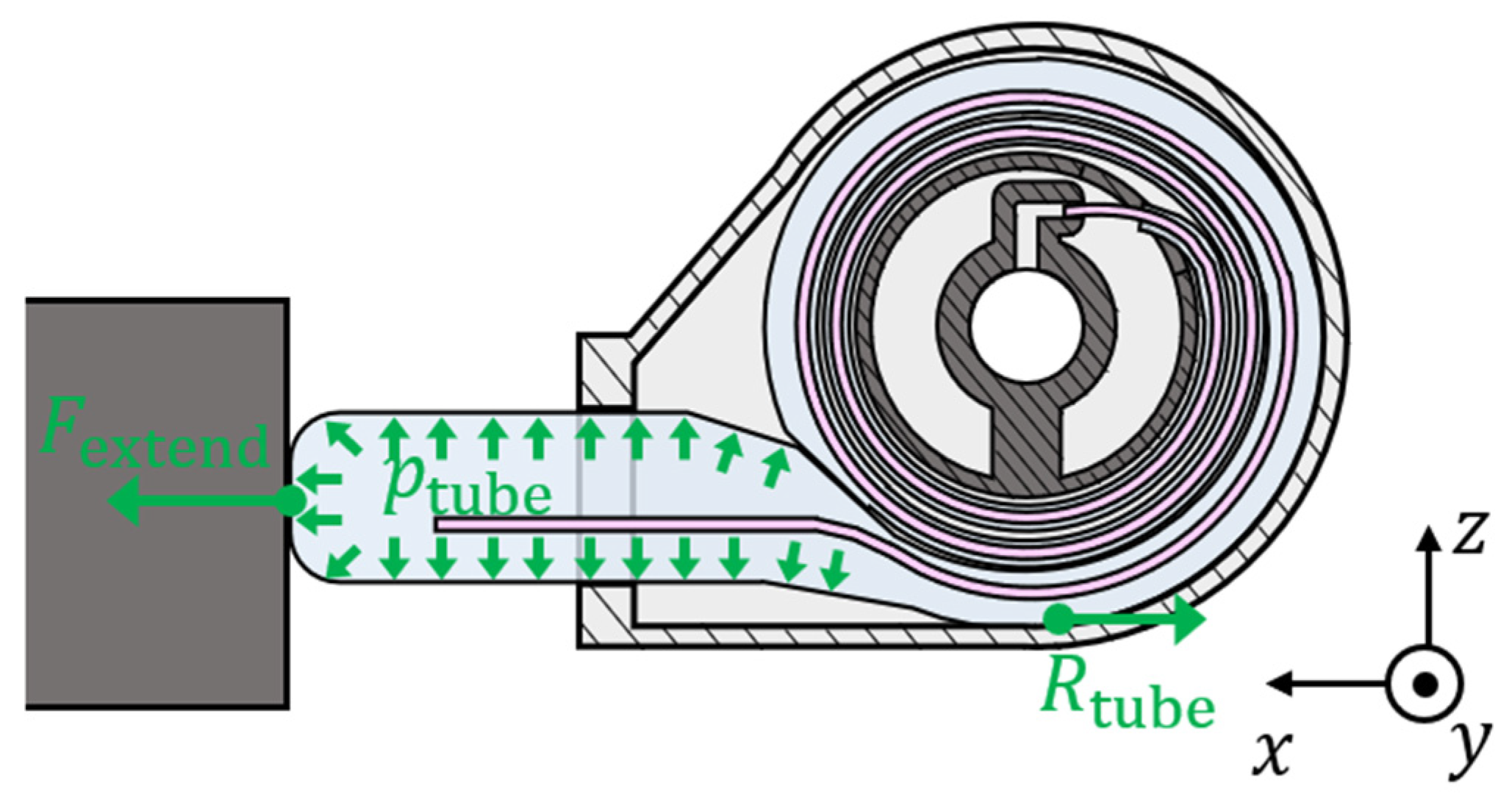
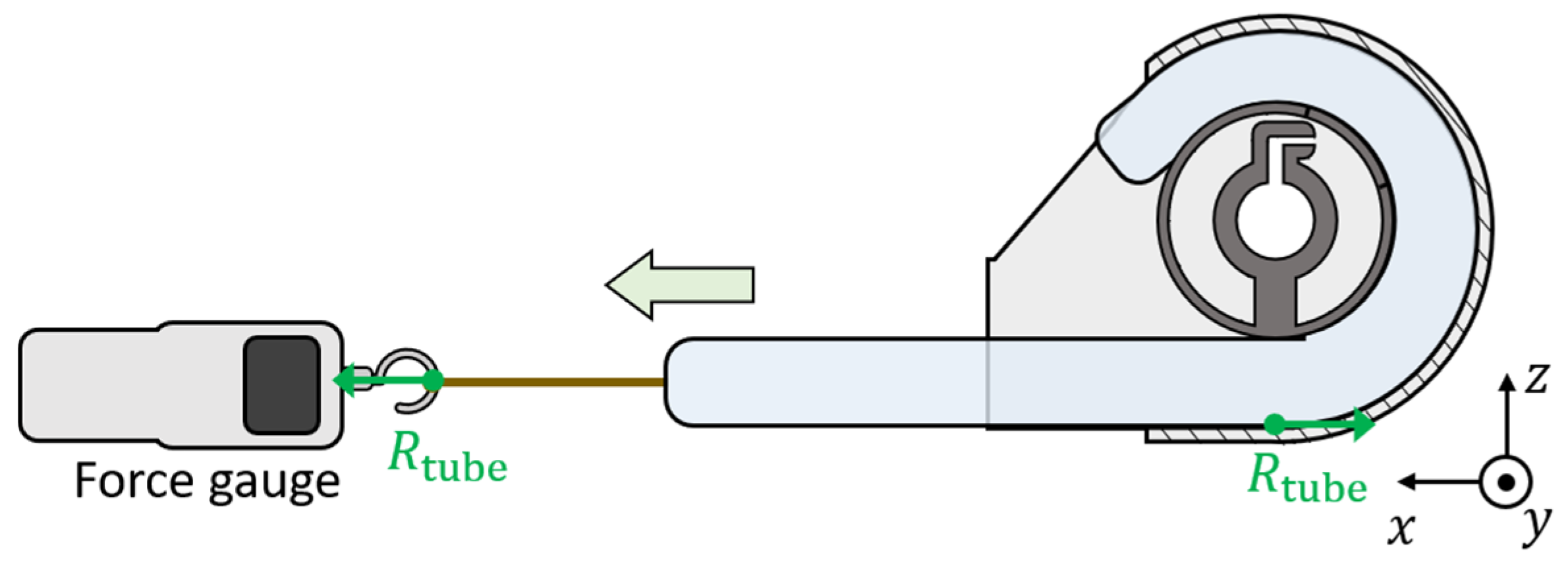
The experiment conducted to evaluate the extension force involved measuring the resistance force
Rtube and extension force
Fextend. First, an experiment to measure
Rtube was conducted. We removed the front cover of the actuator and secured the actuator to the stand with no inflatable tube to measure
Rtube. An inflatable tube was then inserted in a way that it folded back inside the case around the shaft. Once inflated, one end of the tube was pulled, and the force required for the tube to move through the case was measured using a digital force gauge (ZTS-500N, IMARA Co., Ltd., Aichi, Japan). The inner pressure was varied from 6 to 18 kPa in 2 kPa increments, with each measurement repeated six times.
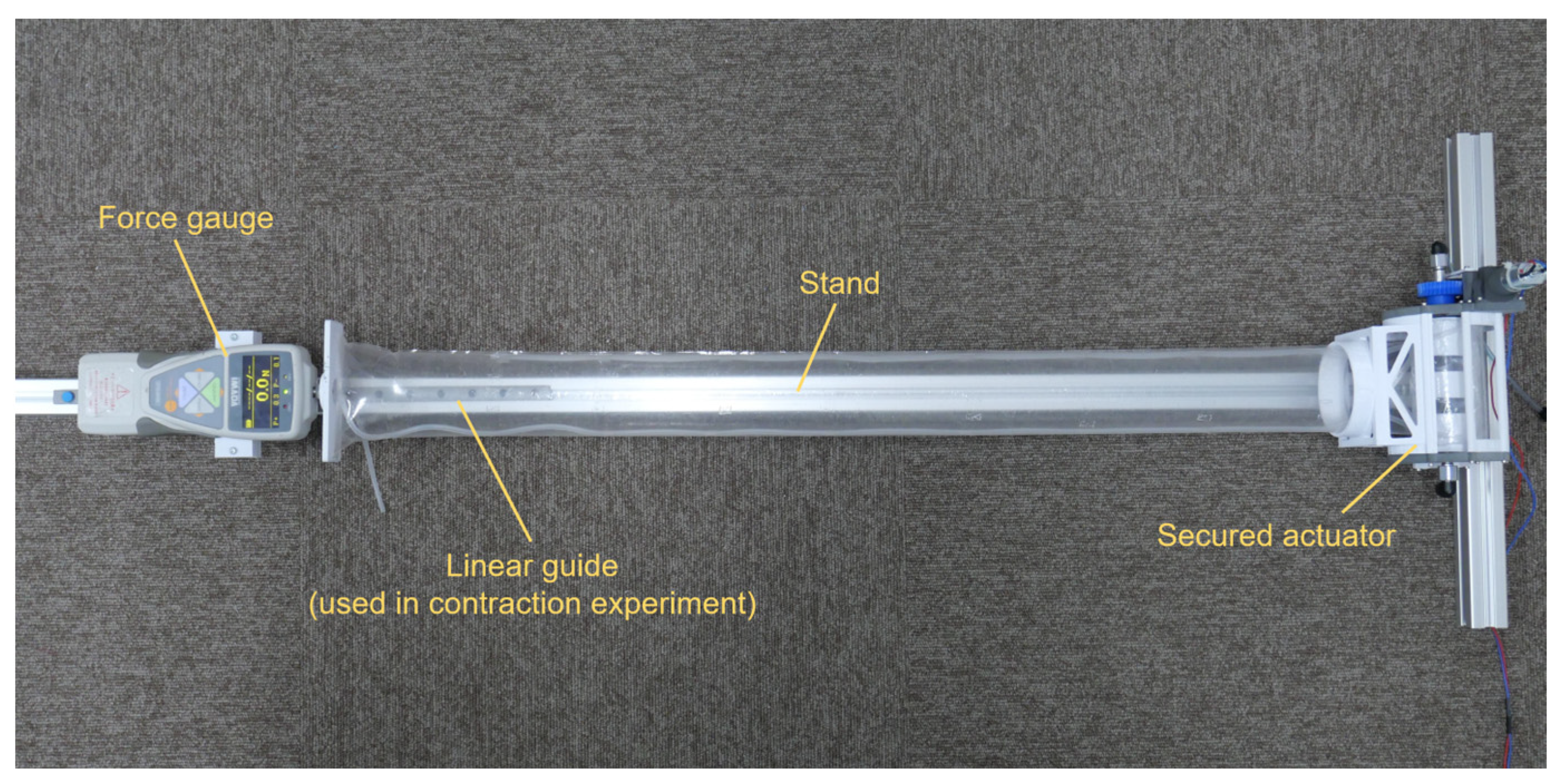
Figure 8 shows an overview of the experiment.
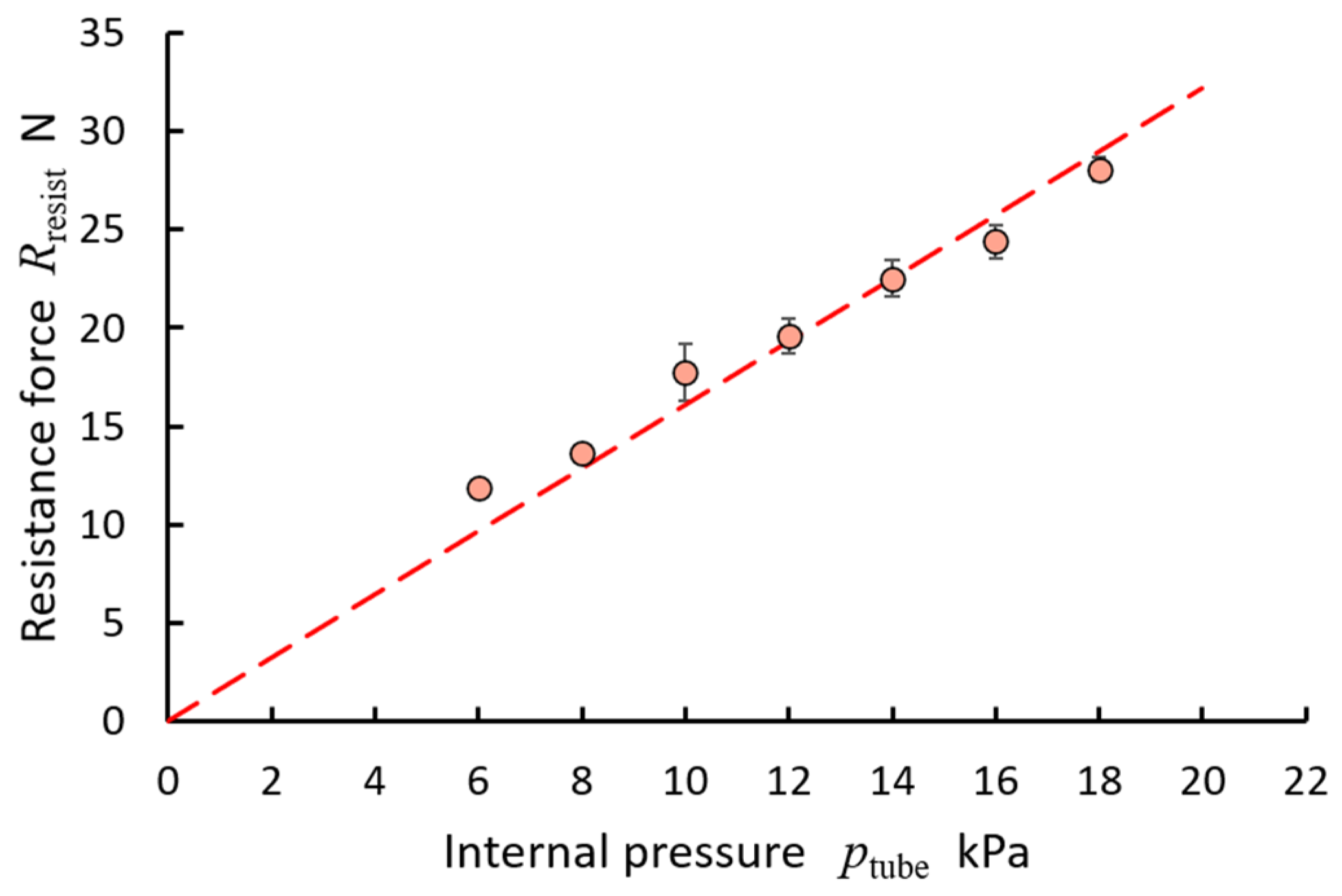
The measured resistance forces are shown in
Figure 9. Using this result for obtaining
αresist for model (2), as
αresist = 1.61 × 10
−3 N/Pa. This value was derived from fitting a line to the measured data. The broken line in
Figure 9 represents the model (2) with this
αresist.
Next, an experiment to measure
Fextend was conducted. The actuator was secured to the stand constructed from an aluminum frame. The actuator was supplied with 10 kPa of air, and the tube was extended by 0.20 m. The force gauge was positioned so that the tip of the gauge and that of the tube made contact. Subsequently, the actuator was slightly contracted. After that, the actuator was extended, and the maximum extension force
Fextend was measured. The tube length was varied from 0.20 to 0.90 m in increments of 0.10 m, with the internal pressure varied at 10, 14, and 18 kPa. Each experiment was repeated six times under each condition. The experimental equipment is shown in
Figure 10.
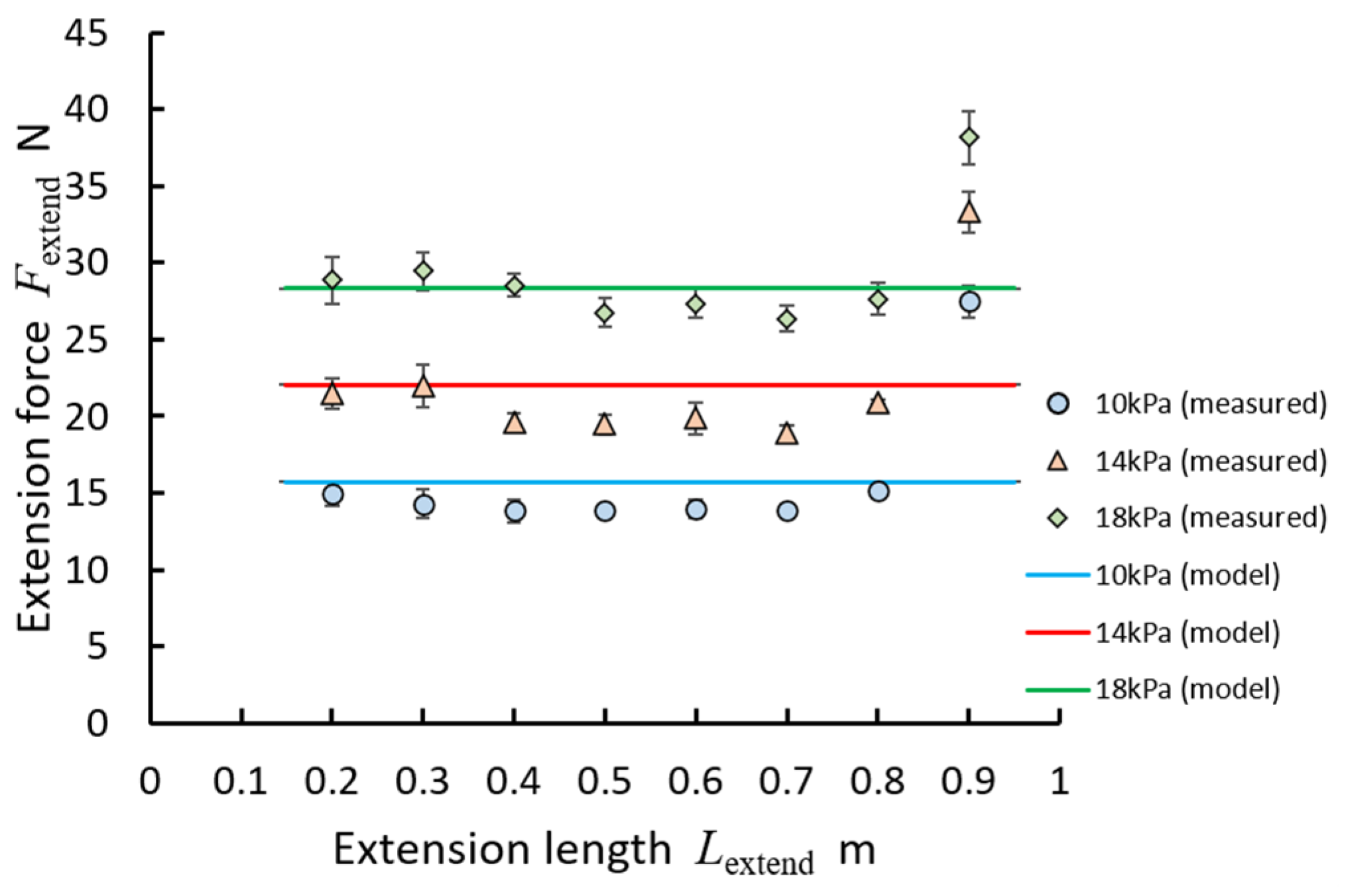
The measured extension forces are represented as plots in
Figure 11. The extension forces were almost identical regardless of the tube length from 0.20 to 0.80 m. The theoretical values of the extension force obtained from these results and models (1) and (2) are represented by solid lines in the figure. The extension forces were increased significantly at 0.9 m. When the length was 0.80 m or less, the actuator halted extension due to resistance. On the other hand, when the length was 0.90 m, the inflatable tube was buckled. The average lengths of the inflatable tubes when buckling occurred at pressures of 10 kPa, 14 kPa, and 18 kPa were 0.97 m, 0.98 m, and 1.00 m, respectively.
5.2. Experiment on the Contraction Force
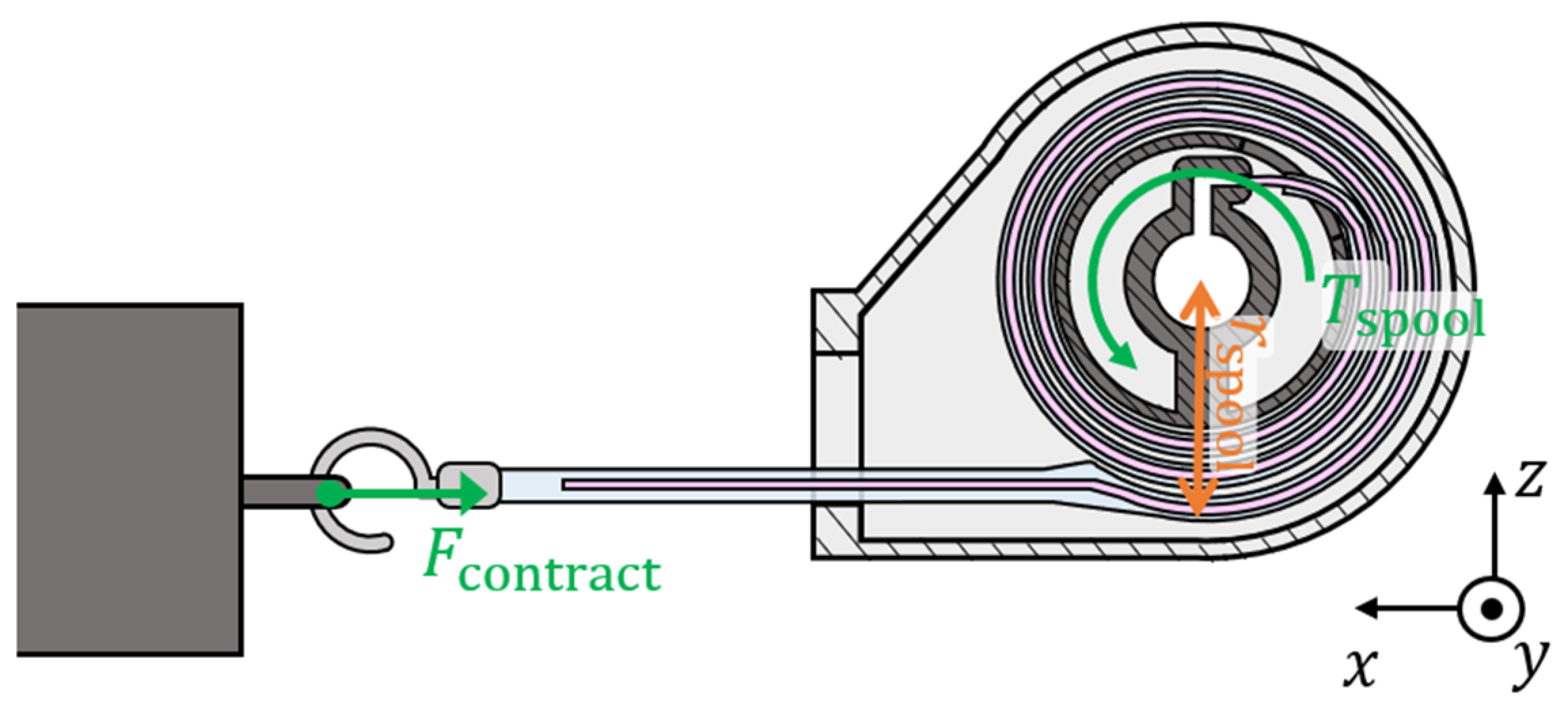
An experiment was conducted to evaluate the contraction force acting on the fabricated actuator. Initially, the inflatable tube was completely exhausted, and the actuator was fixed to a stand. The tube length Lextend was set to 0.20 m, and the tip of the tube was connected to a force gauge. Subsequently, the actuator contracted, and the maximum contraction force Fcontract was measured. The tube length was varied from 0.20 to 0.80 m in increments of 0.10 m, with upper current limits set to 0.4, 0.6, and 0.8 A. The measurements were repeated six times under each condition.
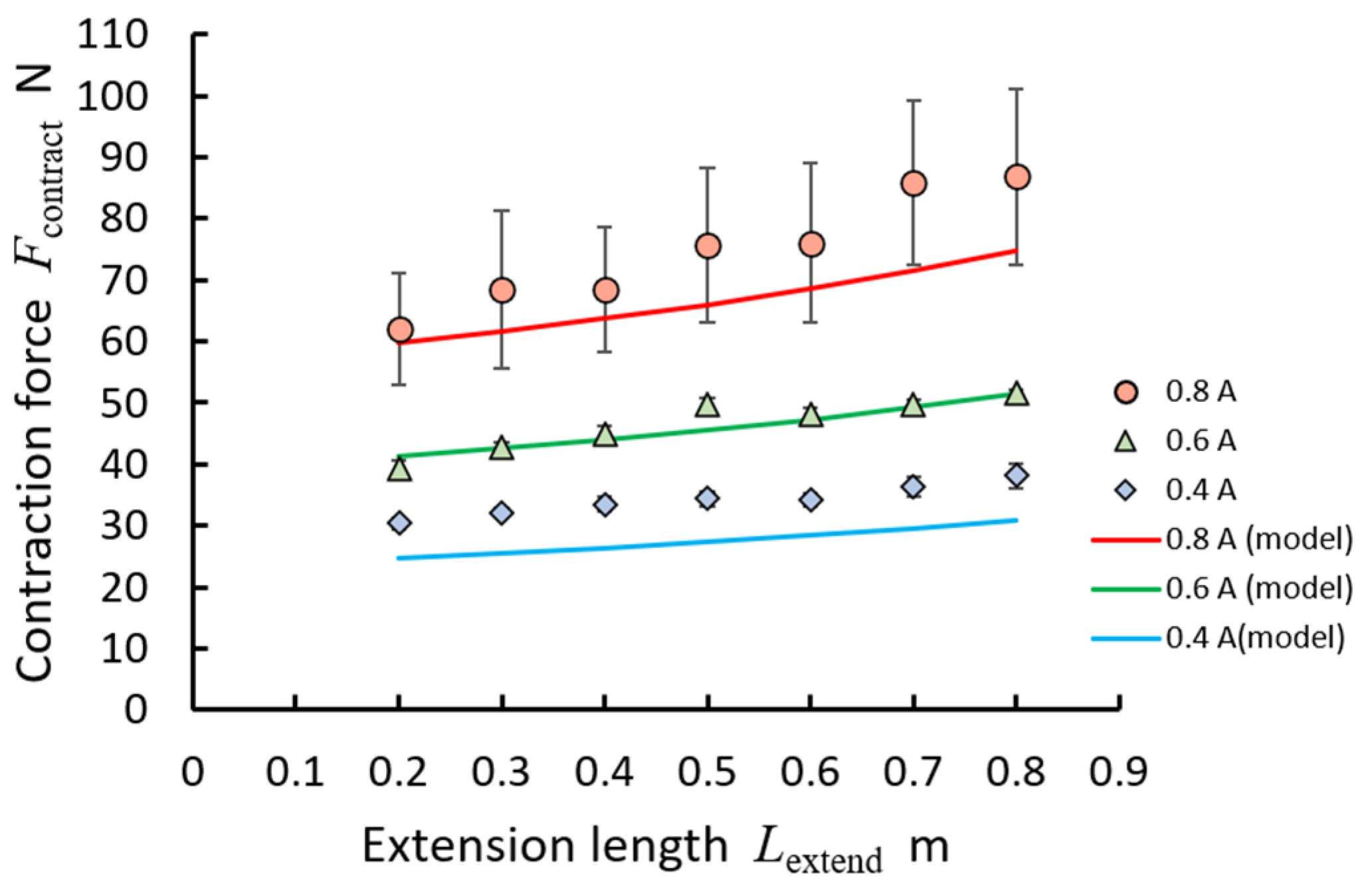
The results of the experiment are shown in
Figure 12. The contraction force increased as
Lextend and the input current increased. The solid lines in the figure represent theoretical values obtained from models (9) and (16).
5.3. Experiment on the Influence of the Air Supply Tubes
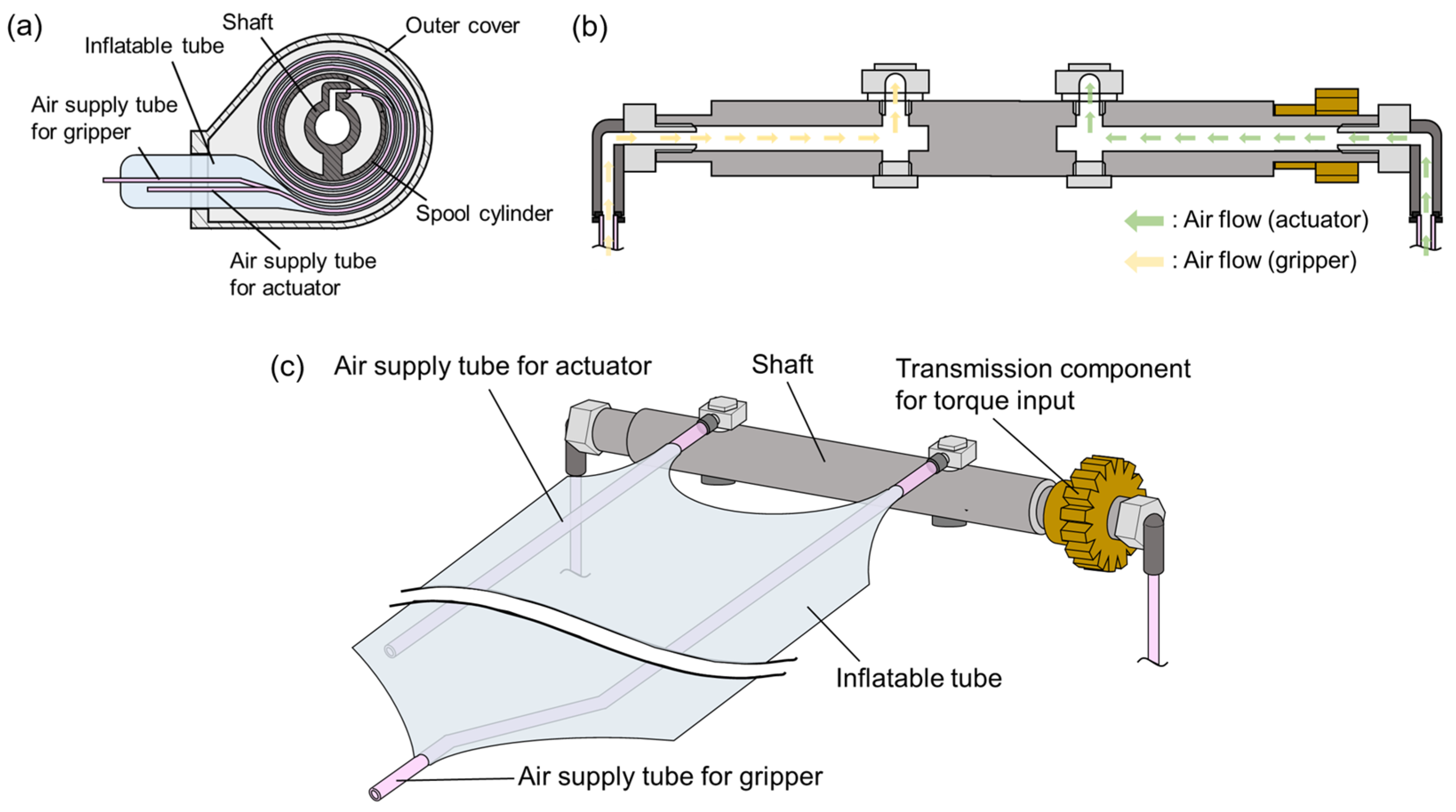
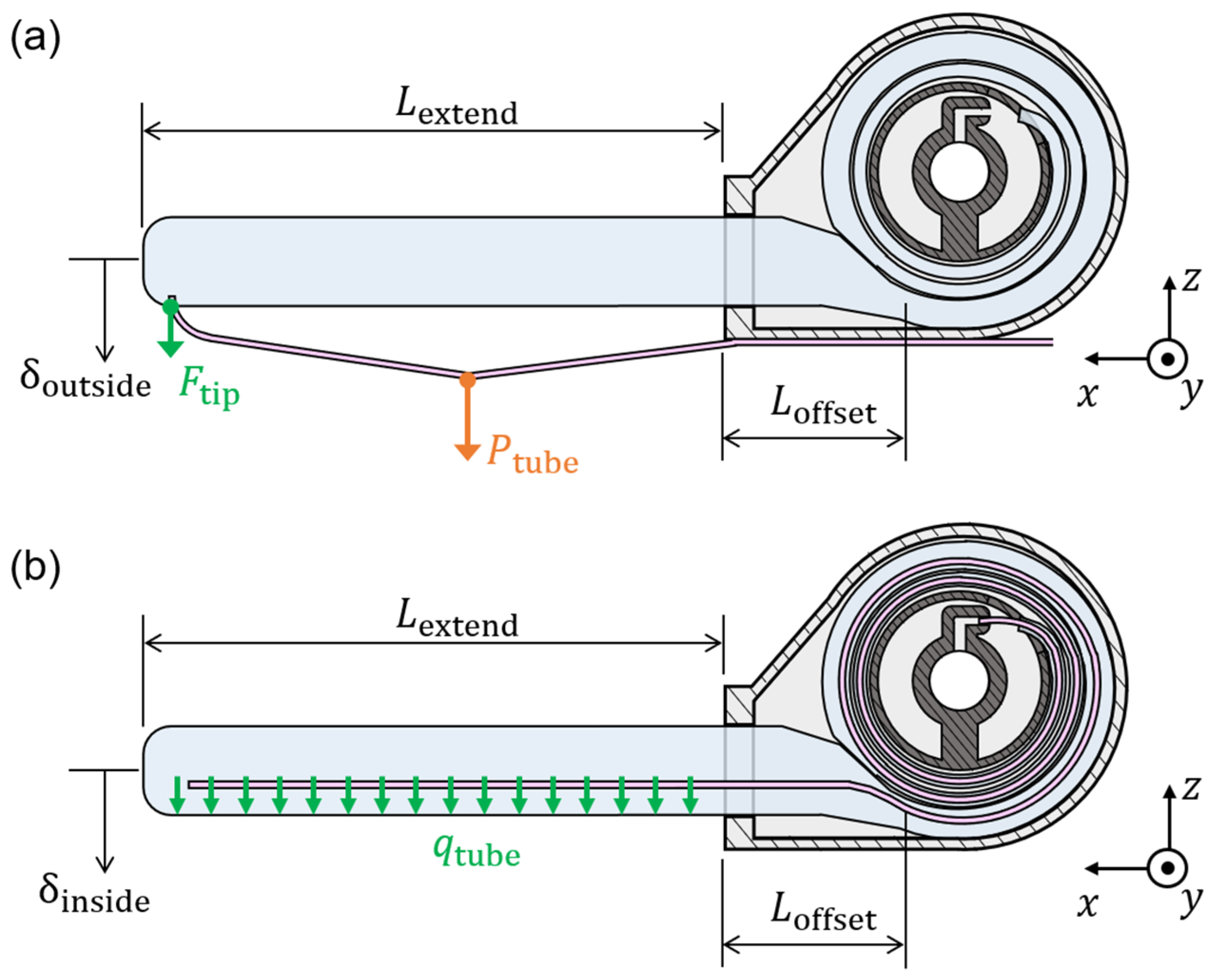
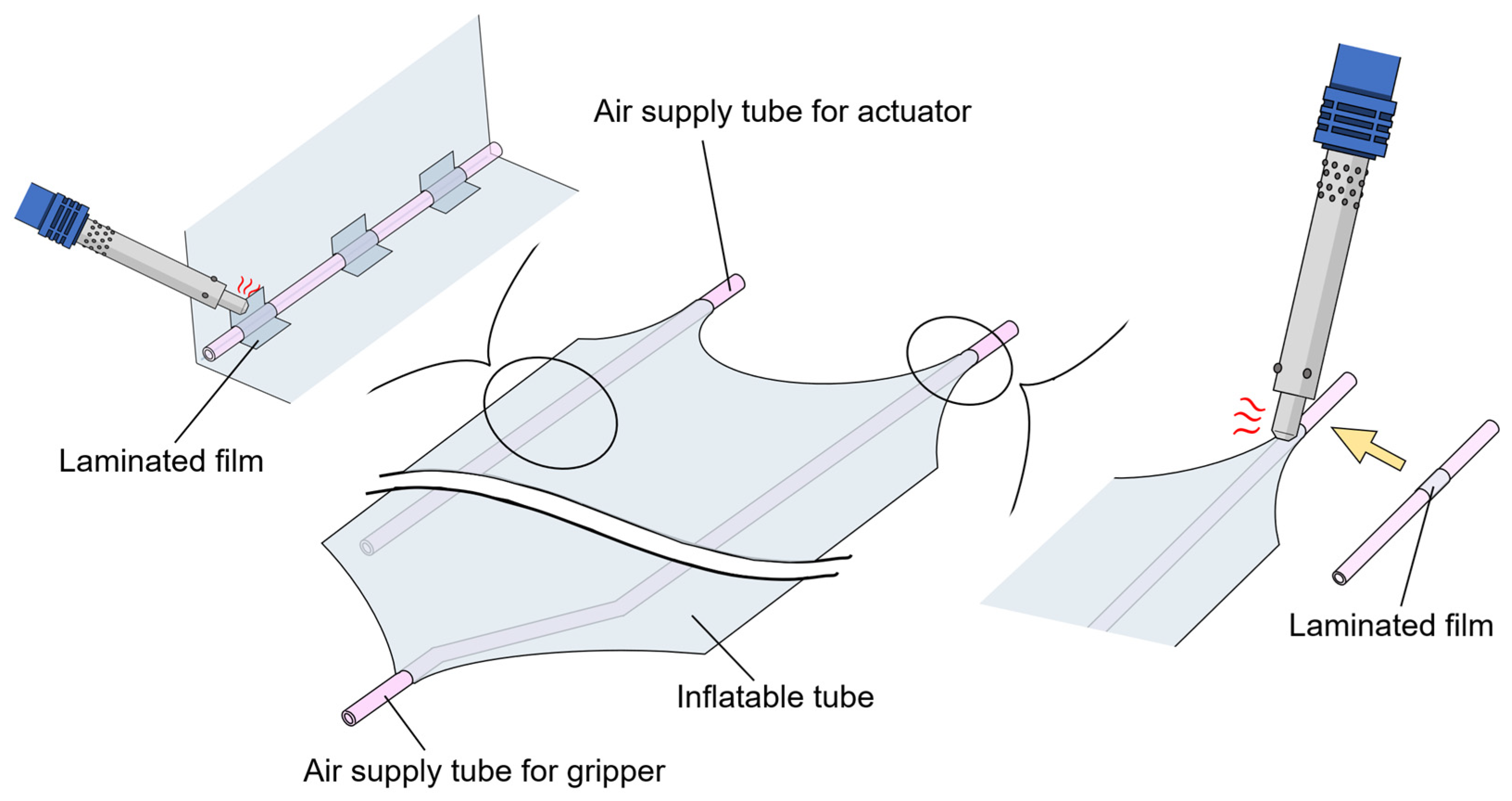
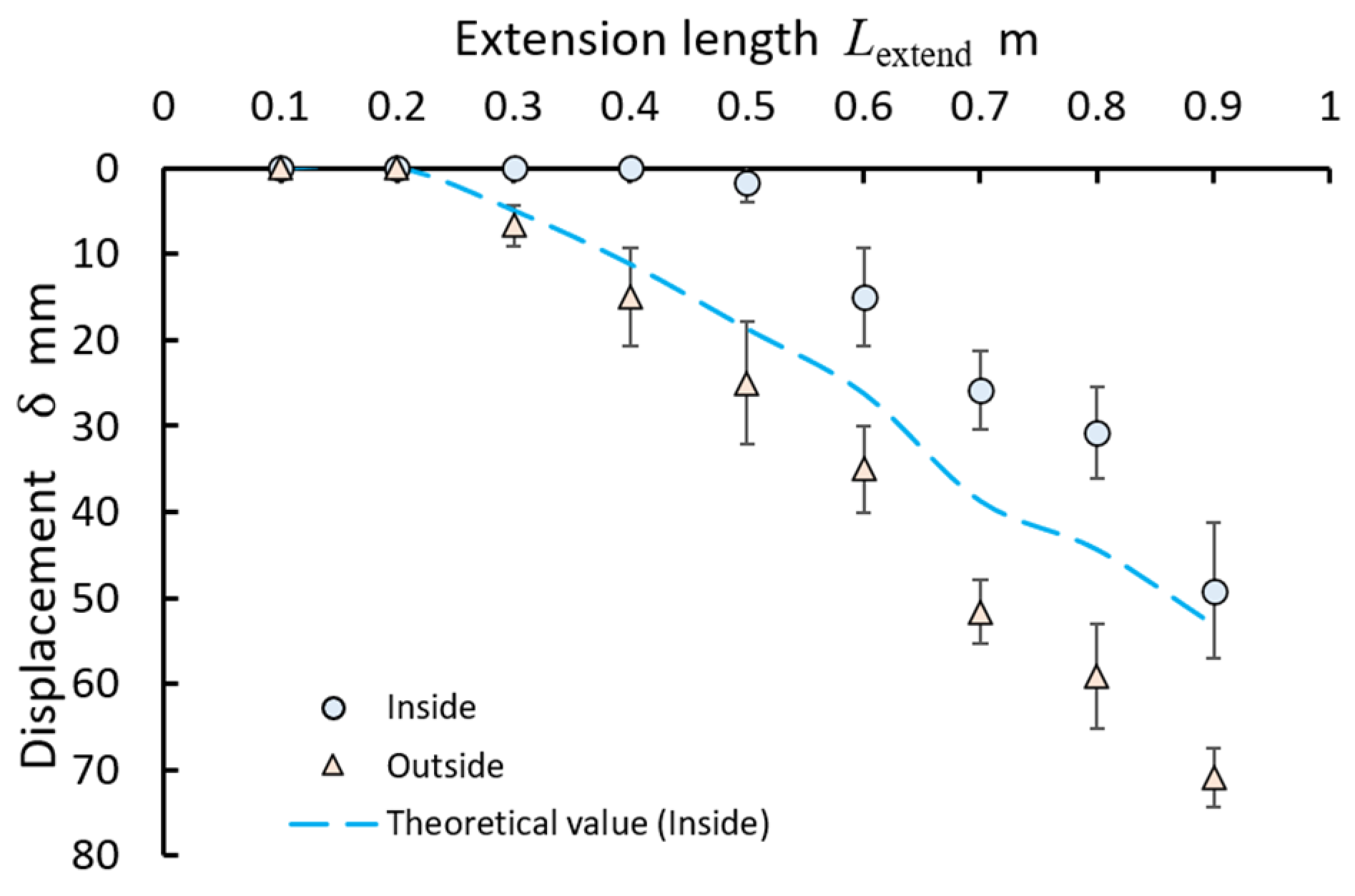
An experiment was conducted to evaluate the influence of the air supply tubes. Here, two types of inflatable tubes were prepared: one with an air supply tube fixed inside and another with an air supply tube connected outside, as shown in
Figure 4. The inflatable tube with an air supply tube incorporated internally was attached to the actuator. Next, the actuator was fixed to a stand. Subsequently, the actuator was extended horizontally by 0.10 m, and the vertical displacement at the tip of the inflatable tube was measured. The tube length was varied from 0.10 to 0.90 m in increments of 0.10 m. The same measurements were conducted on inflatable tubes with the air supply tube connected outside. The measurements were repeated six times under each condition.
The results of the experiment are shown in
Figure 13. The displacements of the inflatable tube increased as
Lextend increased. The inflatable tube, with the air supply tube connected outside, exhibited greater displacement than that with the air supply tube fixed inside. The broken line represents
δinside derived from model (15) using the value of
δoutside obtained in the experiment.
5.4. Experiment on the Speed
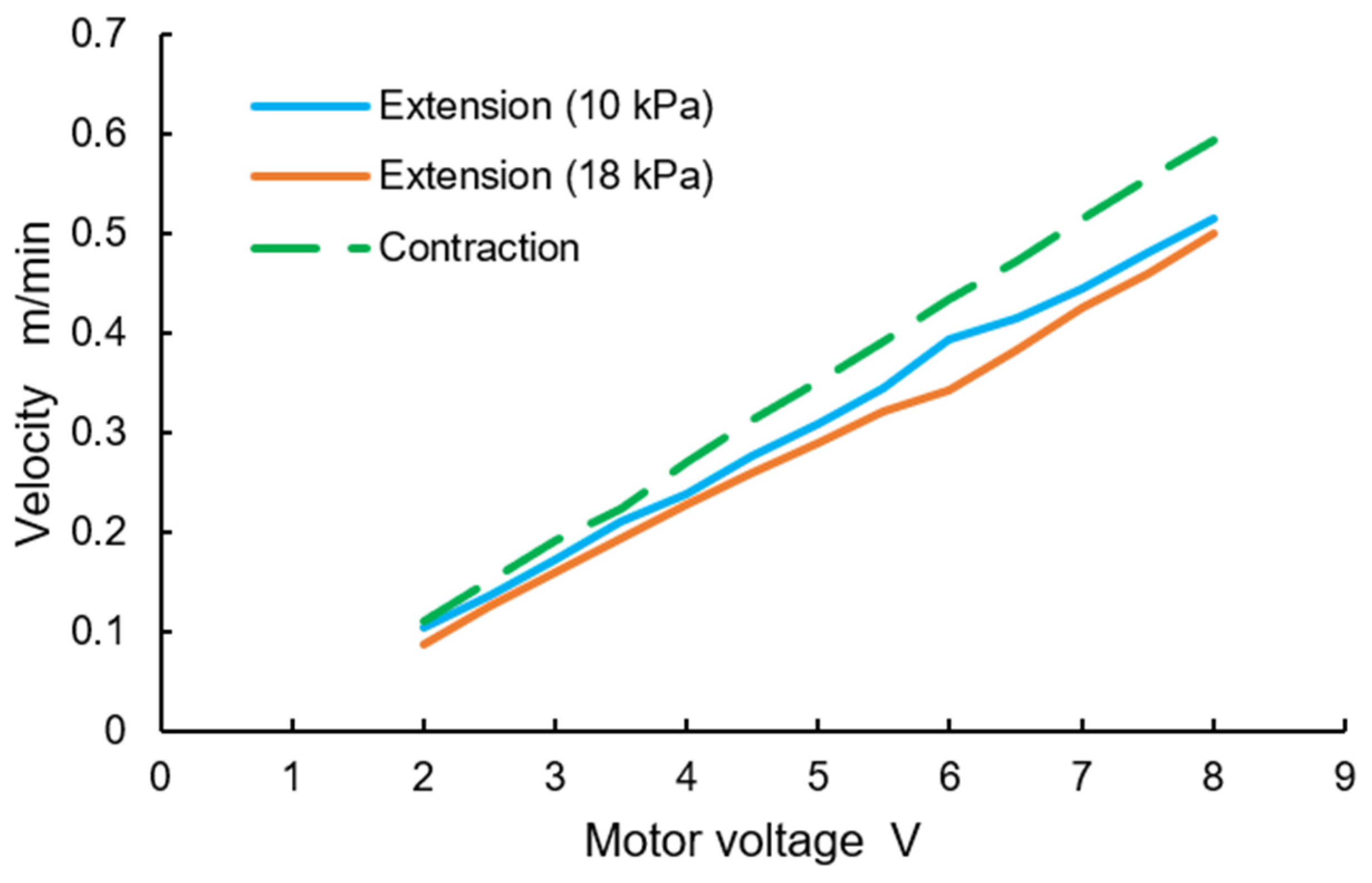
Some experiments were conducted to measure the extension and contraction speed of the actuator under various conditions. First, extension speed response to changes in input voltage to the motor was investigated. Initially, the actuator was fixed to a stand. The actuator was supplied with 10 kPa of air, and the tube was extended by 0.20 m. Then, the actuator was extended vertically by applying a 2.0 V voltage to the motor, and the time required for 0.50 m of extension was measured. The supplied voltage was varied from 2.0 to 8.0 V in increments of 0.5 V, with the internal pressure varied at 10 and 18 kPa. Each experiment was repeated six times under each condition.
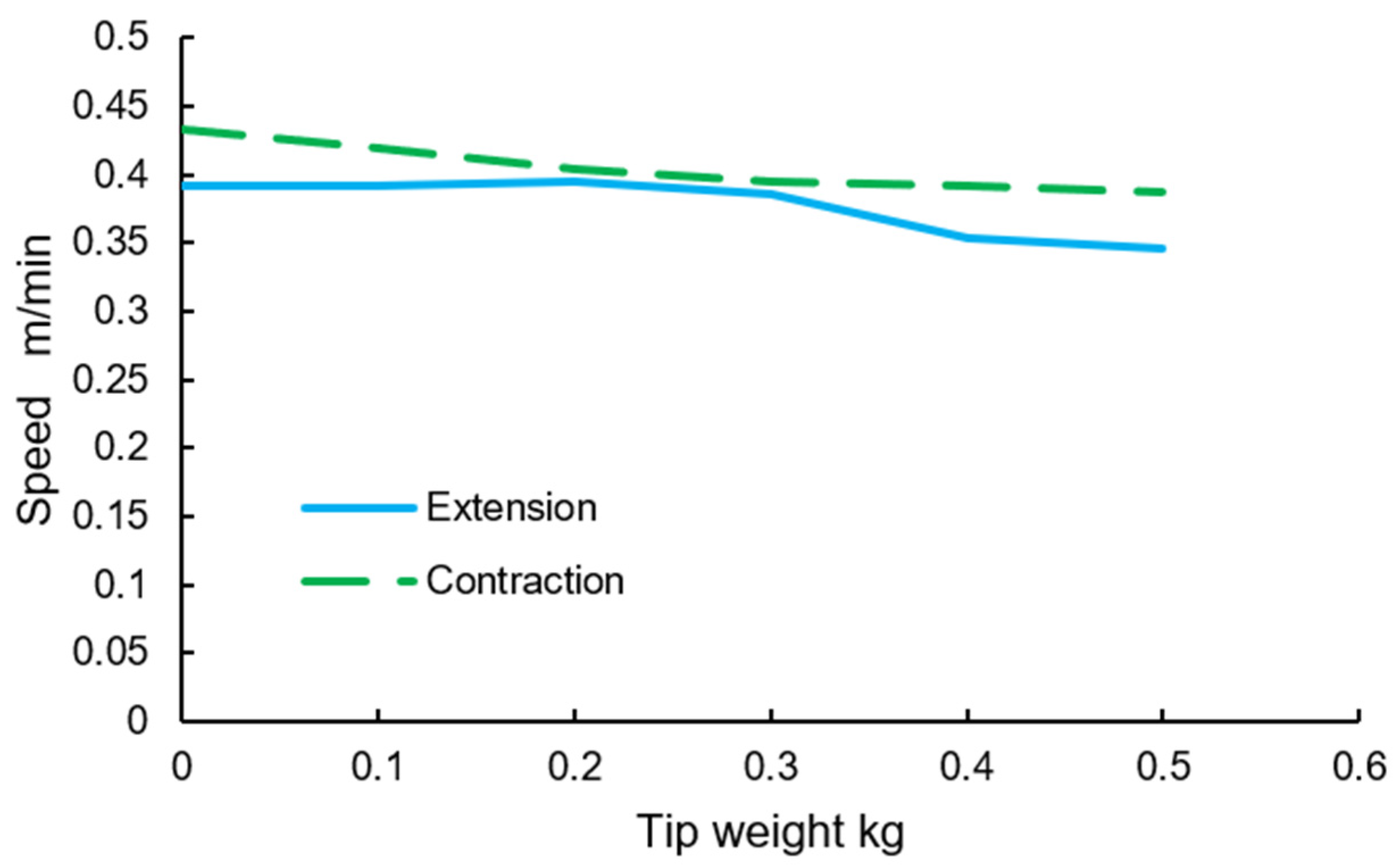
Extension speed response to changes in tip weight was also investigated. Initially, a 0.1 kg weight was attached to the tip of the actuator. The actuator was fixed to a stand. and supplied with 10 kPa of air. The actuator was supplied with 10 kPa of air, and the tube was extended by 0.20 m. The actuator was extended vertically by applying a 6.0 V voltage to the motor, and the time required for 0.5 m of extension was measured. The tip weight was varied from 0.1 to 0.5 kg in increments of 0.1 kg. Each experiment was repeated six times under each condition.
In addition, contraction speed response to changes in input voltage to the motor was investigated. Initially, the actuator was fixed vertically downward to a stand. The inflatable tube was completely exhausted, and the tube length was set to 0.7 m. Then, the actuator was contracted by applying a 2.0 V voltage to the motor, and the time required for 0.50 m of contraction was measured. The supplied voltage was varied from 2.0 to 8.0 V in increments of 0.5 V. Each experiment was repeated six times under each condition.
At last, contraction speed response to changes in tip weight was also investigated. Initially, a 0.1 kg weight was attached to the tip of the actuator. The actuator was fixed vertically downward to a stand. The inflatable tube was completely exhausted, and the tube length was set to 0.7 m. Then, the actuator was contracted by applying a 6.0 V voltage to the motor, and the time required for 0.50 m of contraction was measured. The tip weight was varied from 0.1 to 0.5 kg in increments of 0.1 kg. Each experiment was repeated six times under each condition.
The results of the first and third experiments are shown in
Figure 14. The speed increased as input voltage increased. Under the same input voltage conditions, the contraction motion exhibited the highest speed, while the extension motion at 18 kPa exhibited the lowest speed.
The results of second and fourth experiments are shown in
Figure 15. In the contraction motion, the speed decreased at a nearly constant rate as the tip weight increased. In the extension motion, the speed remained nearly constant until the tip weight reached 0.3 kg, and then decreased significantly when the tip load exceeded 0.3 kg. When the tip weight was 0.4 kg and 0.5 kg, the inflatable tube inflated fully inside the outer cover.
5.5. Experiment on Electrical Power Consumption
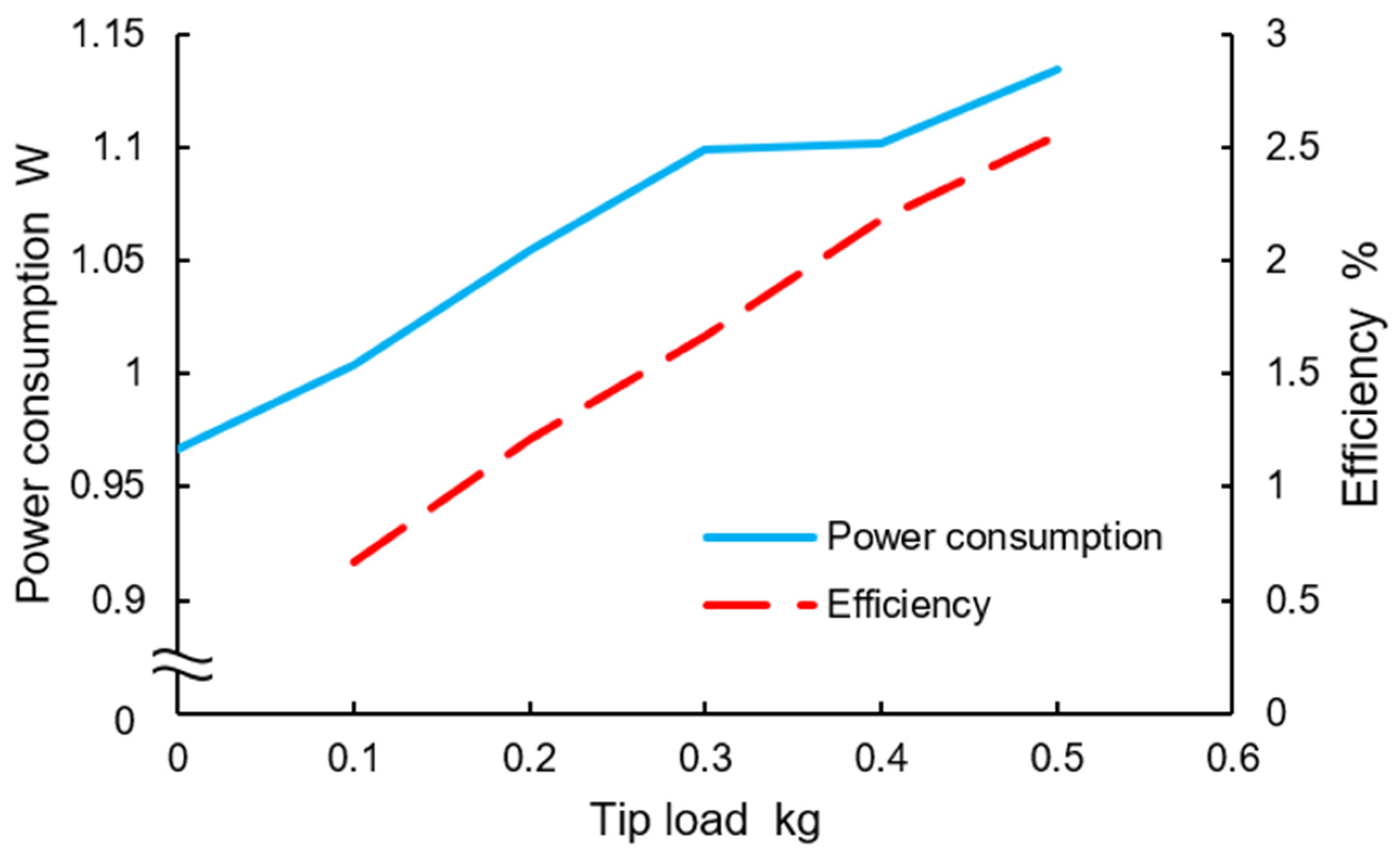
We conducted an experiment to measure electrical power consumption of the actuator. The actuator was fixed vertically downward to a stand. The inflatable tube was completely exhausted, and the tube length was set to 0.7 m. Then, applying a 6.0 V voltage to the motor, and the actuator contracted by 0.50 m. The current supplied to the motor was measured during the contraction motion. We applied weights ranging from 0.1 to 0.5 kg in 0.1 kg increments to the tip and conducted the same measurements. Each experiment was repeated six times under each condition. A current sensor (ACS712ELCTR-05B-T, Allegro MicroSystems, Manchester, NH, USA) was used to measure the current, with measurements taken at 10 Hz frequency. The tip weight varied from 0.1 to 0.5 kg in increments of 0.1 kg. Each experiment was repeated six times under each condition. Furthermore, efficiency was calculated from the results obtained.
The average electrical power consumption and efficiency are shown in
Figure 16. The electrical power consumption increased as tip load increased. The efficiency also increased as tip load increased.
7. Discussion
The primary contribution of this study is the development of an inflatable-extendable actuator with a novel structure that removes the influence of the air supply tube. This innovative actuator exerts a 28 N extension force at a pressure of 18 kPa, regardless of its length, and an 87 N contraction forces at an input current at 0.8 A. In addition, its length is easily controlled because extension and contraction motion can be stopped at any desired time and unaffected by external forces. This easy controllability is a characteristic not found in existing passive reel actuator [
19] or an actuator with an origami structure [
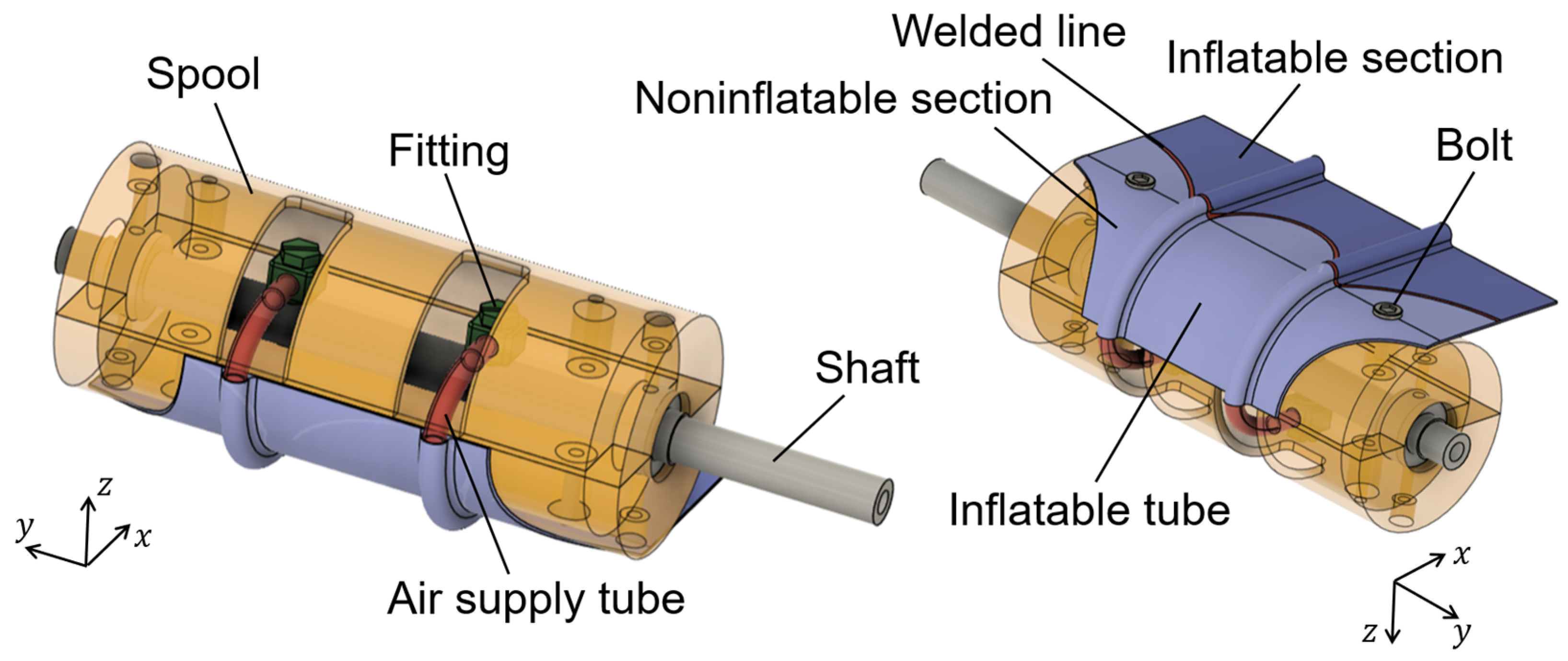
18]. Proposed spool mechanism incorporating air supply tubes within its body is also highly novel and not found in other inflatable robots. This actuator also enables the grasping of objects from a distance by attaching a gripper to its tip. The contraction motion of the actuator enables it to pull itself toward the grasped object, making it a valuable tool for both manipulators and climbing robots.
We proposed the model for the extension force, revealing that these forces remain largely unaffected by the length of the tube. The experimental results almost corroborate this finding, demonstrating that the forces are consistent regardless of tube length. This characteristic allows the magnitude of the force to be estimated independent of the state of the actuator, thereby facilitating a more intuitive operation. The extension force when Lextend = 0.9 m was significantly larger than in other cases. In this case, the extension of the inflatable tube did not stop until buckling occurred. This is presumably because the tube length wound on the spool was extremely small, resulting in Rresist being approximately zero. When Rresist = 0 N, the extension force Fextend derived from model (1) is 32 N, 45 N, and 57 N for internal pressures of 10 kPa, 14 kPa, and 18 kPa, respectively. Comparing these values with the experimental results, the results at 10 kPa are close to the theoretical values. In addition, the buckling loads Fcr derived using model (3) are 43 N, 42 N, and 41 N for internal pressures of 10 kPa, 14 kPa, and 18 kPa, respectively. Comparing Fcr and Fextend, Fcr is smaller for internal pressure of 14 kPa and 18 kPa. Therefore, the tube was presumed to have buckled before Fextend reached its theoretical value. Hence, unless the actuator is used near its maximum length, the extension force can be estimated from the proposed models. The Rresist used in the extension force model (1) is determined experimentally. Since Rtube consists of the frictional force occurring between the inflatable tube and the outer cover, and the force required for the bending deformation of the tube, Rresist changes when the actuator size changes. For example, when the curvature of the tube inflated inside the outer cover becomes smaller, the Rresist increases because the tube requires a larger bending. If a model for estimating Rresist under various conditions is successfully developed, we believe that the utility of the proposed actuator is significantly improved.
Furthermore, we developed the model for the contraction force. These models indicated that the force Fcontract increased as Lextend increased and depends on the input torque from a motor. The experimental results agreed with these models. Thus, these models enable us to select the motor for designing the actuator and determine the operating parameters of the current based on the usage situation.
The fabricated actuator generated extension and contraction forces of 28 N and 87 N, respectively, under experimental conditions. The force-to-weight ratios of the extension and contraction forces were 67 N/kg and 185 N/kg, respectively. Compared with other actuators with a large extension ratio, the contraction force-to-weight ratio of the actuator with an origami structure was 52 N/kg [
18]. Hence, the proposed actuator demonstrated a significantly higher contraction force-to-weight ratio. Conversely, the contraction force-to-weight ratio of the pneumatic reel actuator was 278 N/kg [
19], which is higher than that of the proposed actuator. The pneumatic reel actuator was very light because it comprised only passive components. However, the length of this actuator is easily altered by external forces and internal pressures. Conversely, the length of the proposed actuator can be easily controlled by sensing the rotation of the spool regardless of external forces. Hence, the proposed actuator is characterized by its ability to achieve both easy controllability and high output power.
The weight of the fabricated actuator excluding the inflatable tube and pneumatic circuit, was 0.42 kg. The weight of the soft vine arm mounted on the quadrotor is approximately 0.65 kg, which is not significantly different from the weight of proposed actuator. This result indicates that the proposed actuator can be mounted on mobile robots such as drones, meaning it can be used as a component of climbing robots. As described in
Section 1, its load capacity is not mentioned, but we believe that our proposed actuator can generate extension and contraction forces equal to or greater than that of the vine arm.
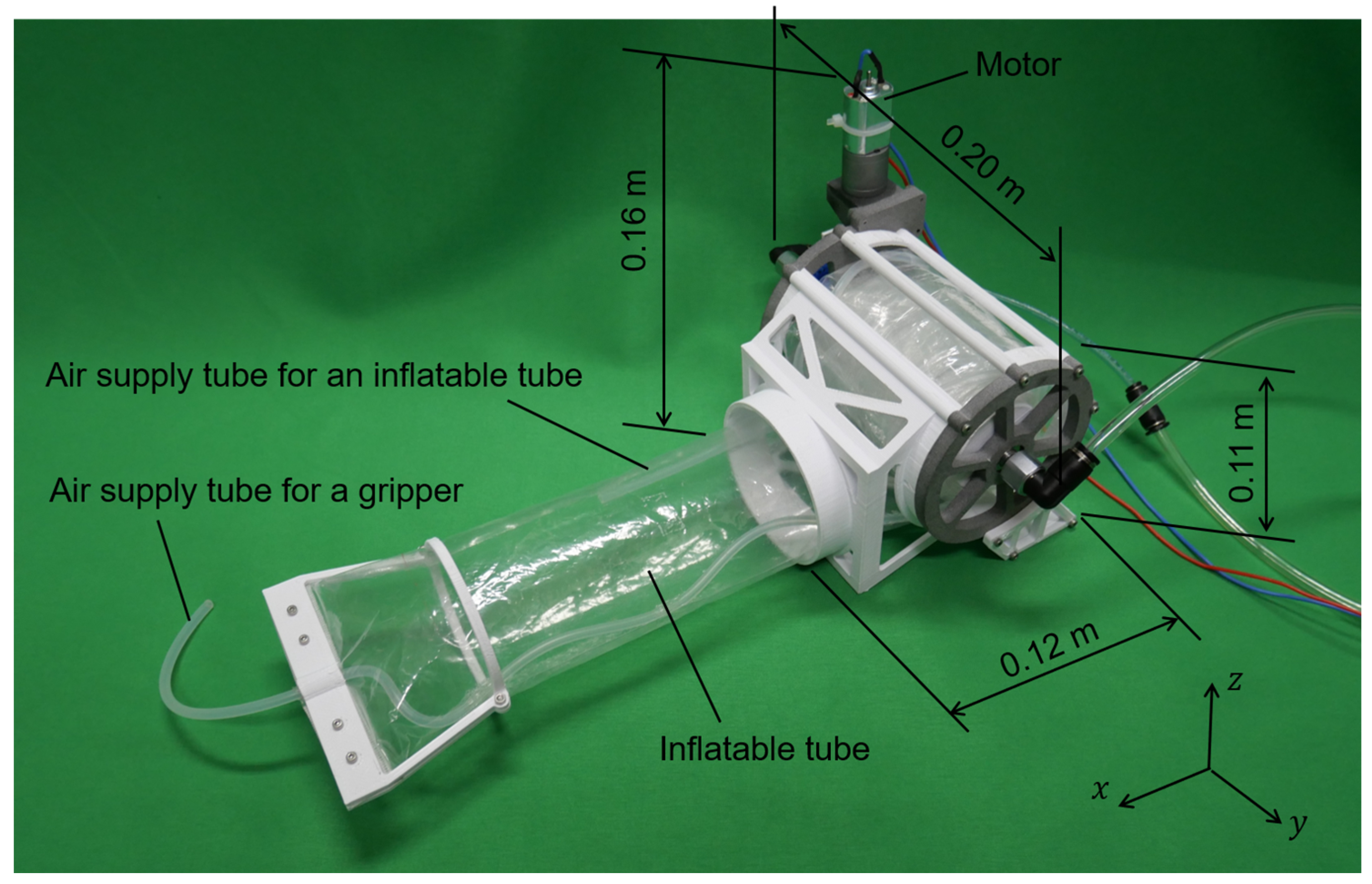
The length of the fabricated actuator with outer cover was 0.12 m, and the length of the mounted inflatable tube was 1.1 m. Therefore, the strain of the fabricated actuator considering the offset length
Loffset was approximately 800%. This value was almost the same as the value of the actuator used as the extendable arms of the climbing robot [
5,
18]. Hence, the fabricated actuator was also applicable as extendable arms for climbing robots.
This study proposed a novel structure for an inflatable actuator that removes the influence of the air supply tube. The experimental results showed that the proposed structure reduced the amount of deformation caused by gravity acting on the air supply tube. The proposed structure exhibited smaller values compared with the theoretical values obtained from model (15). This result is because the end of the inflatable tube was not perfectly fixed. Since the unfixed end of the tube cannot receive a counterforce, the tube is easily deformed by external forces. Therefore, the tip load caused by the air supply tube arranged outside the inflatable tube results in greater deformation than in the ideal cantilever beam model. Because the deformation was large when the air supply tube was arranged outside, the theoretical value for the deformation when the air supply tube was arranged inside, which was calculated using model (15), was greater than the experimental value. As mentioned previously, model (15) is not intended to predict the precise deformation of the inflatable tube, but rather to demonstrate the effect of the arrangement of the air supply tubes on deformation. Although we observed a difference between the theoretical and experimental values, the result demonstrated that the proposed structure reduced the influence on the inflatable tube, as we had expected. If a model that accurately estimates deformation is required, a coefficient to correct for the influence of non-fixed ends must be determined using finite element analysis or experimental analysis.
We investigated the extension and contraction speed of the actuator under various conditions. Both extension and contraction speed increased as the input voltage to the motor increased. Hence, the speed can be controlled by varying the input voltage. Since the motor used in this experiment had a rated voltage of 6.0 V, the maximum voltage was set to 8.0 V. If the rated voltage of the motor is higher, the range of controllable speeds will also be greater. However, a large air flow rate is required to immediately fill the extended tube with air. Under the same input voltage conditions, the contraction speed was the highest, while the extension speed at 18 kPa was the lowest. This difference in speed was due to deformation and friction occurring in the inflated tube inside the outer cover of the actuator, which impeded rotation. The extension speed and contraction speed showed different responses to the tip weight. While the contraction speed decreased at a nearly constant rate as the tip weight increased, the extension speed remained nearly constant until the tip weight reached 0.3 kg. The reason no change in extension speed was observed is thought to be because the resistance force exerted on the inflatable tube inside the outer cover of the actuator had a larger influence than the tip weight. Since speed is affected by disturbances such as tip weight, an encoder should be attached to the actuator to obtain the feed amount of the inflatable tube when precise control is required. Under no-load conditions, the extension speed at 6.0 V voltage and 18 kPa internal pressure was 0.34 m/min, and the contraction speed at 6.0 V was 0.45 m/min. These speeds are not sufficient for the operational speed of a climbing robot, but the slow operating speed is expected to be less of an issue if the operation is automated. In addition, operational stability is more important than operational speed for automation. The proposed actuator offers stability through its ability to finely control length. If the actuator requires a higher speed, as mentioned above, a motor capable of higher rotational speeds and an air supply with a higher flow rate are necessary.
We investigated the electrical power consumption and efficiency in contraction motion. We confirmed that the efficiency is far from high. Potential factors contributing to this low efficiency include the fact that the maximum efficiency of the motor used in fabricated actuator is only 28%, and the use of a worm gear, which is known for their low efficiency. We believe that this data on electrical power consumption and efficiency will contribute to the selection of a power source for the climbing robot.
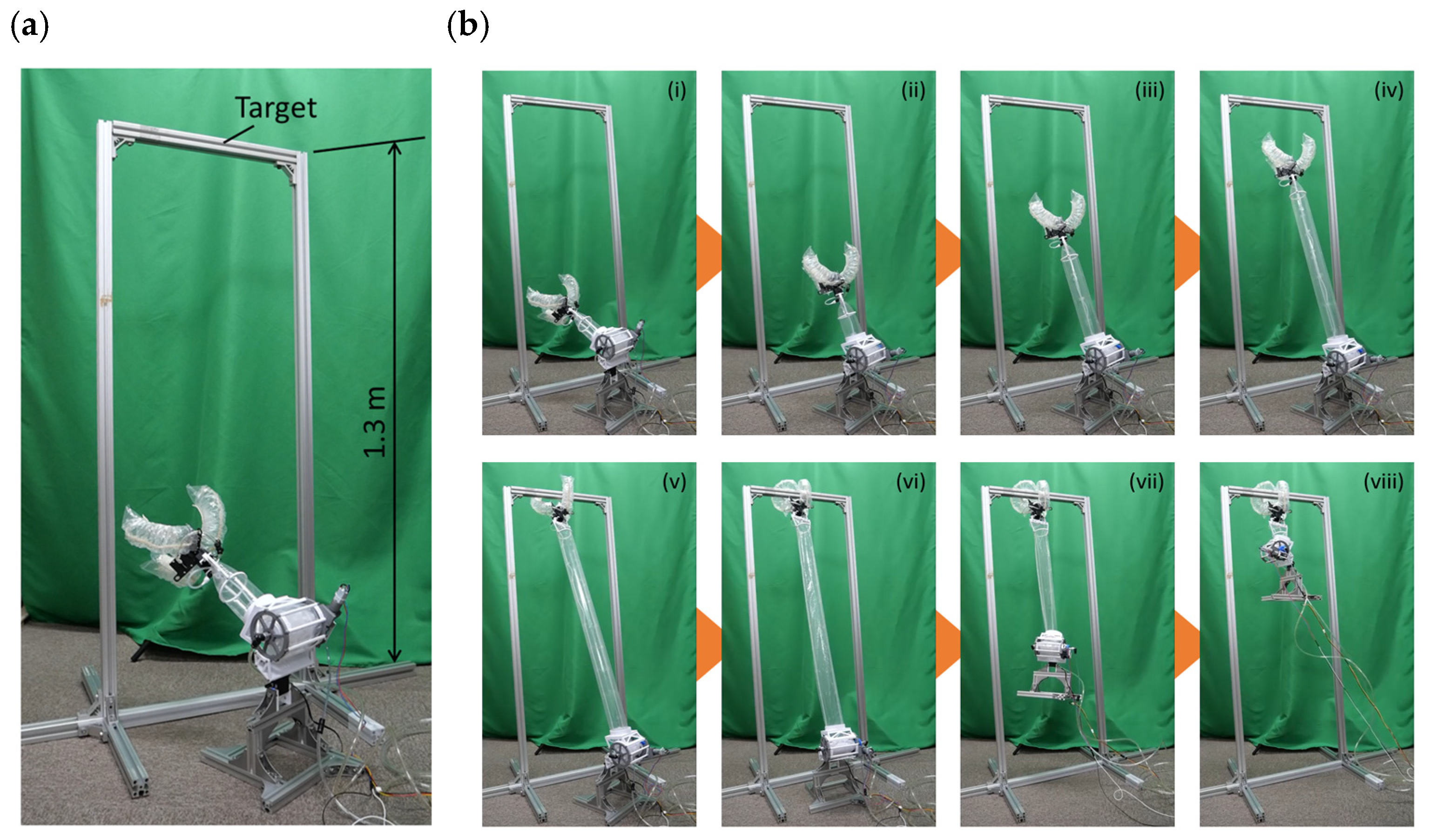
In the demonstration, we successfully executed a sequence of motions for controlling the extension direction, extension, grasping, and contraction. This indicates that the proposed actuator can provide the required motions for one arm of a bi-arm climbing robot. Notably, the proposed actuator offers the advantage of being able to stop extending and contracting at any time, as well as the ability to contract with significant force, distinguishing it from other actuators. Although its mass is larger than those of other inflatable actuators [
18,
19], the proposed actuator generates sufficient contraction force to compensate for the increased weight. Furthermore, the demonstration illustrated that directional control by the servomotors remained unaffected by the increased weight, showcasing the valuable ability of this actuator. The combined use of two of these actuators is expected to facilitate the design of a climbing robot. Although the proposed actuator is free from the influence of the air supply tube on the inflatable tube, the tubes connecting the actuator to the pneumatic circuit and the wires supplying current to the motor still exist. Removing these tubes and wires would further enhance mobility. For this purpose, mounting batteries and compact pumps directly onto the actuators is considered an effective approach.
In this study, the maximum pressure applied to the inflatable tube was set to 18 kPa because applying pressure exceeding 28 kPa caused deformation in the outer cover. Improving the rigidness of the outer cover allows the actuator to use higher pressure. However, the demonstration showed that the inflatable tube of the fabricated actuator has sufficient rigidity to function as the arm of a climbing robot. Therefore, we have investigated the characteristics of the actuator within the pressure range suitable for our objectives.