Article

Soft Robot Workspace Estimation via Finite Element Analysis and Machine Learning

by
Getachew Ambaye
*,
Enkhsaikhan Boldsaikhan
and
Krishna Krishnan
Industrial Systems and Manufacturing Engineering Department, Wichita State University, Wichita, KS 67260, USA
*
Author to whom correspondence should be addressed.
Actuators 2025, 14(3), 110; https://doi.org/10.3390/act14030110
Submission received: 16 January 2025 / Revised: 16 February 2025 / Accepted: 21 February 2025 / Published: 23 February 2025
(This article belongs to the Special Issue Bio-Inspired Soft Robotics)

Abstract

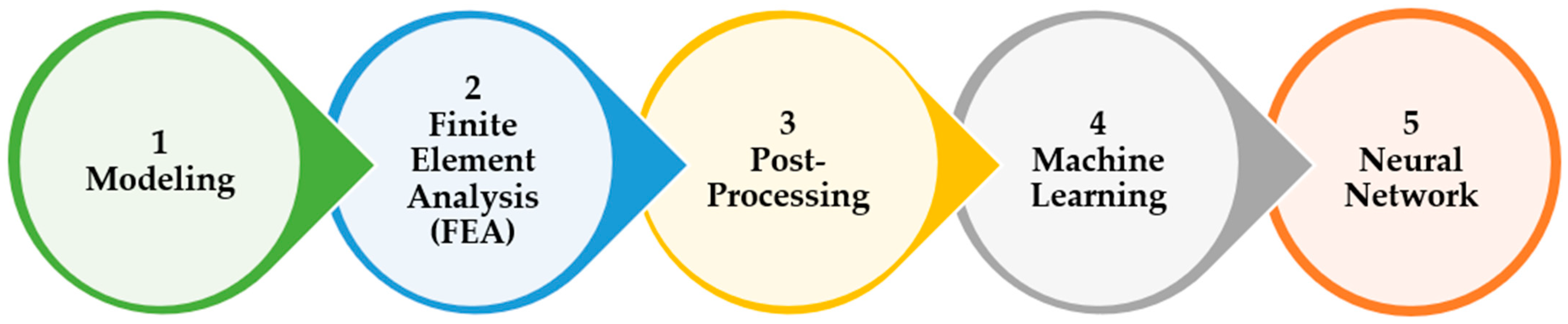
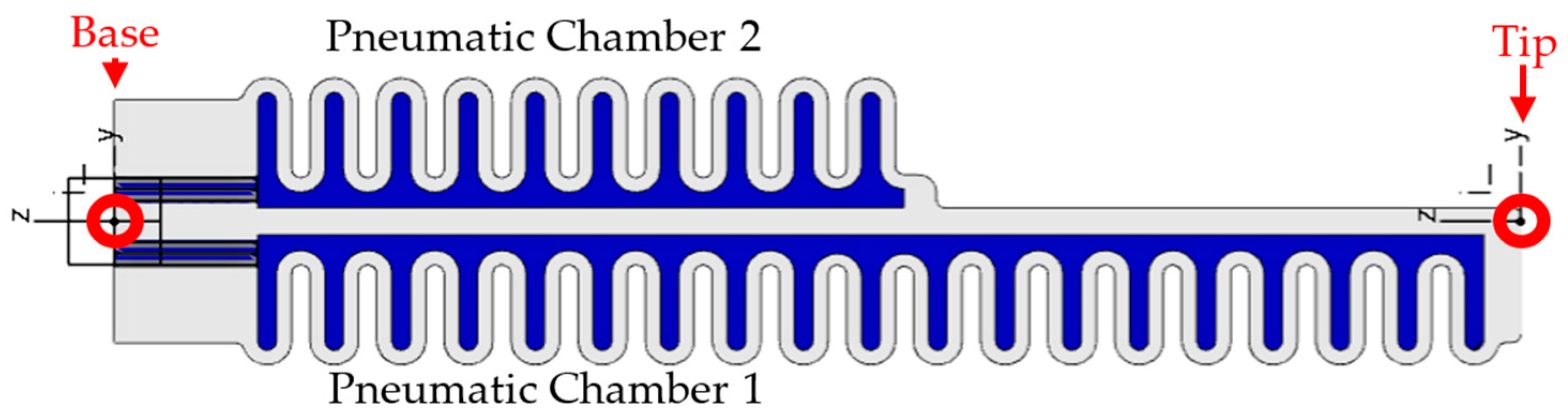
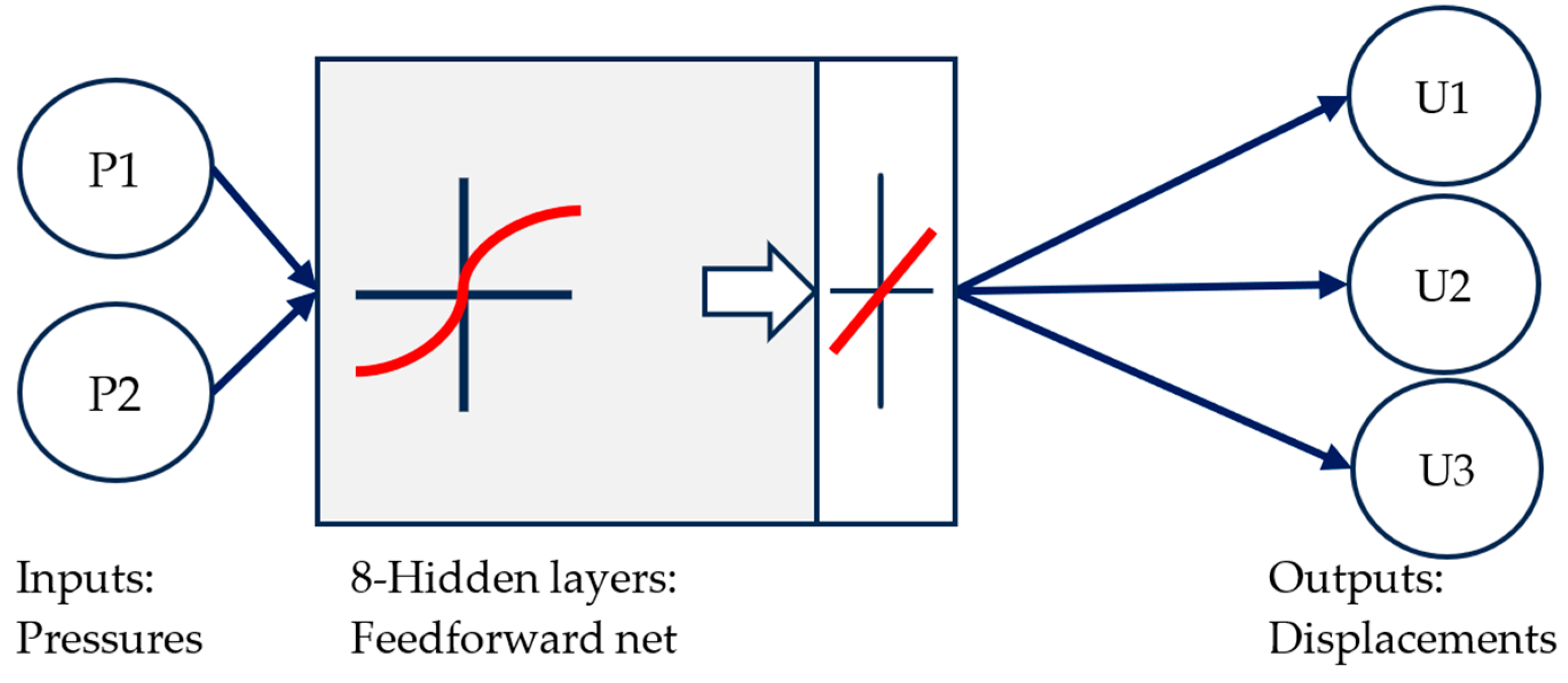
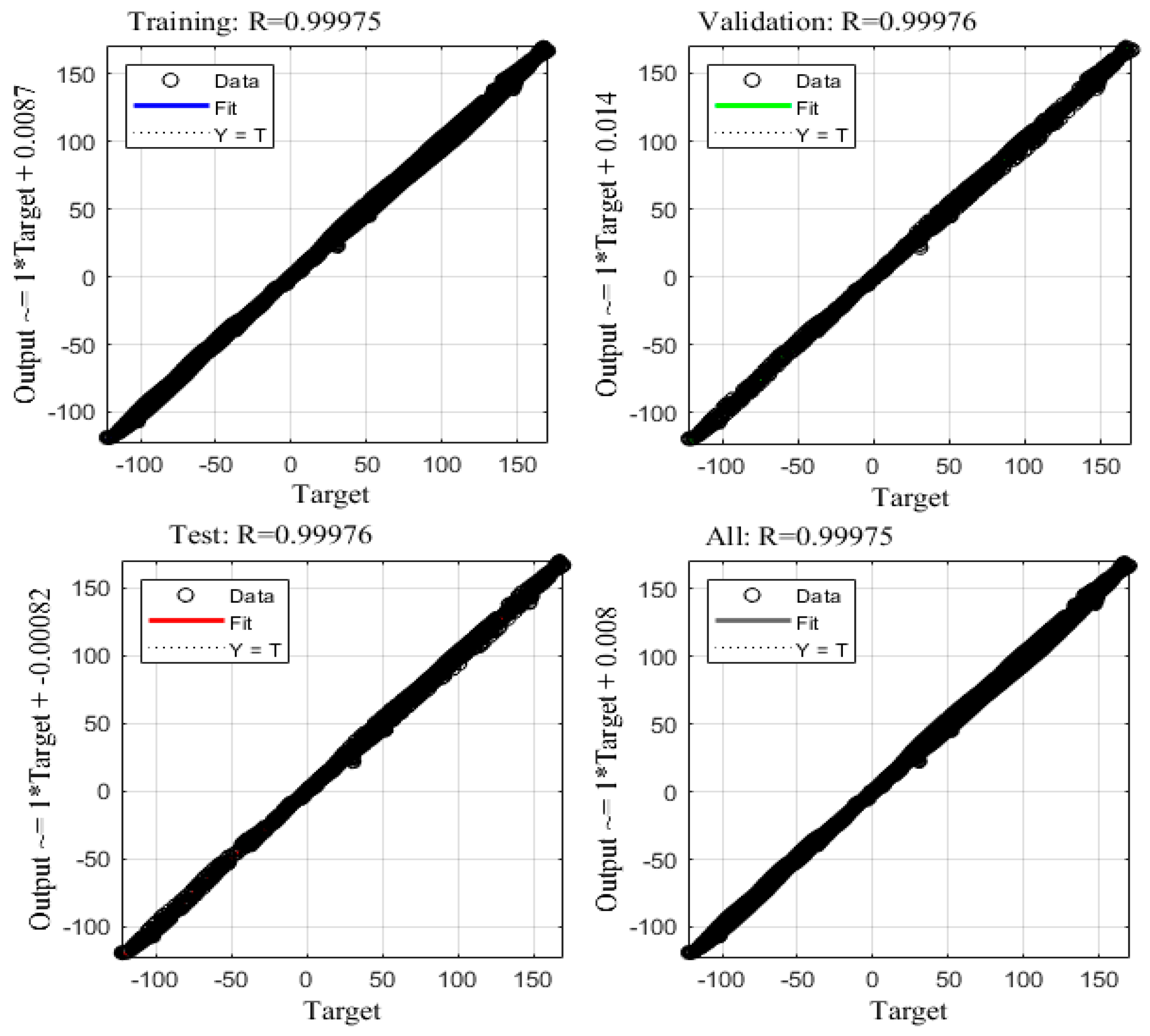
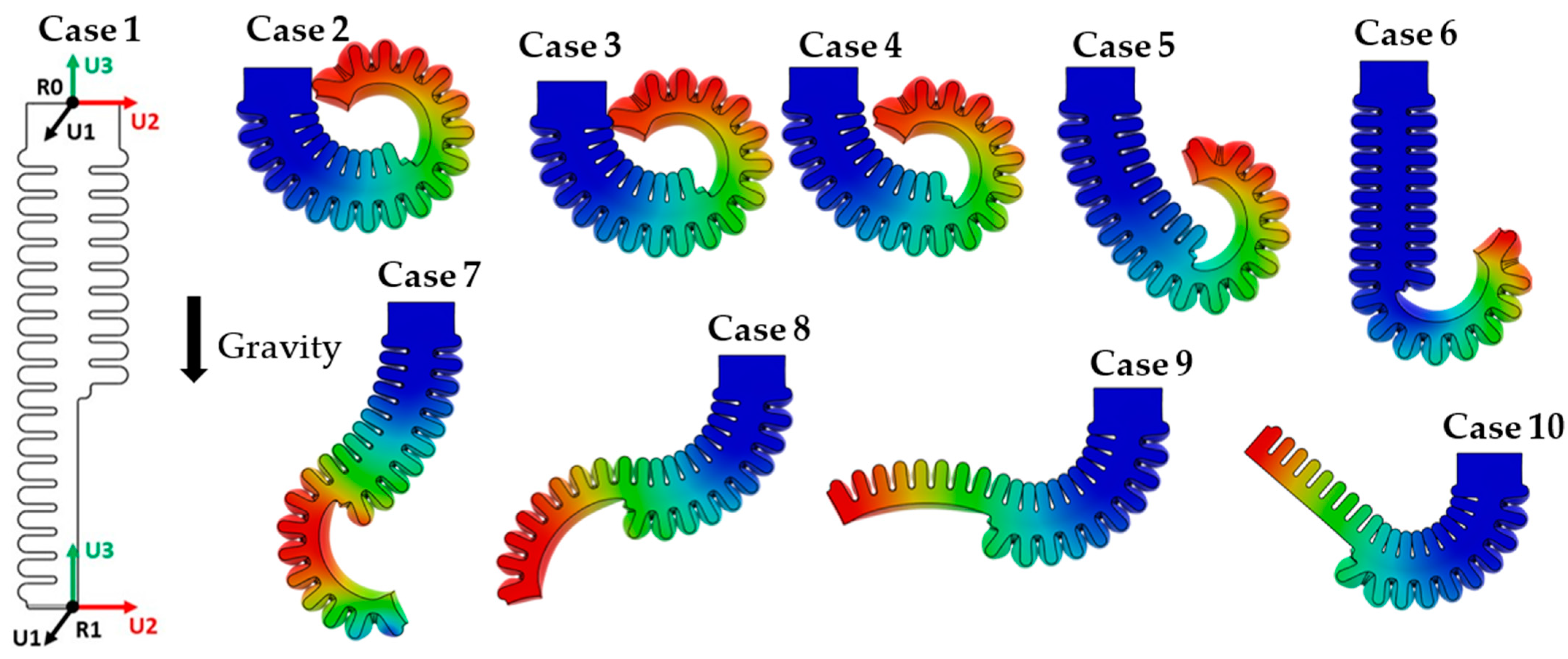
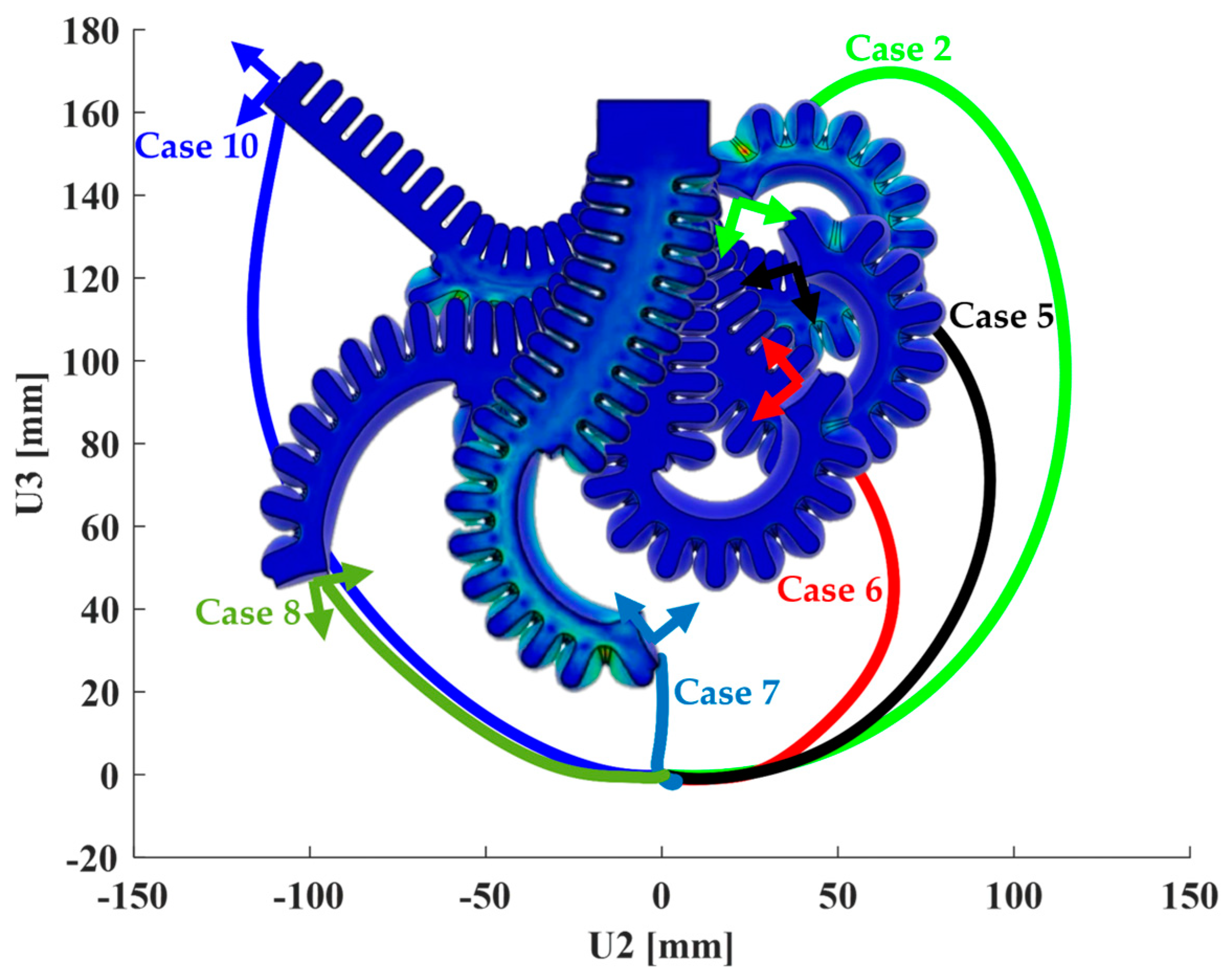
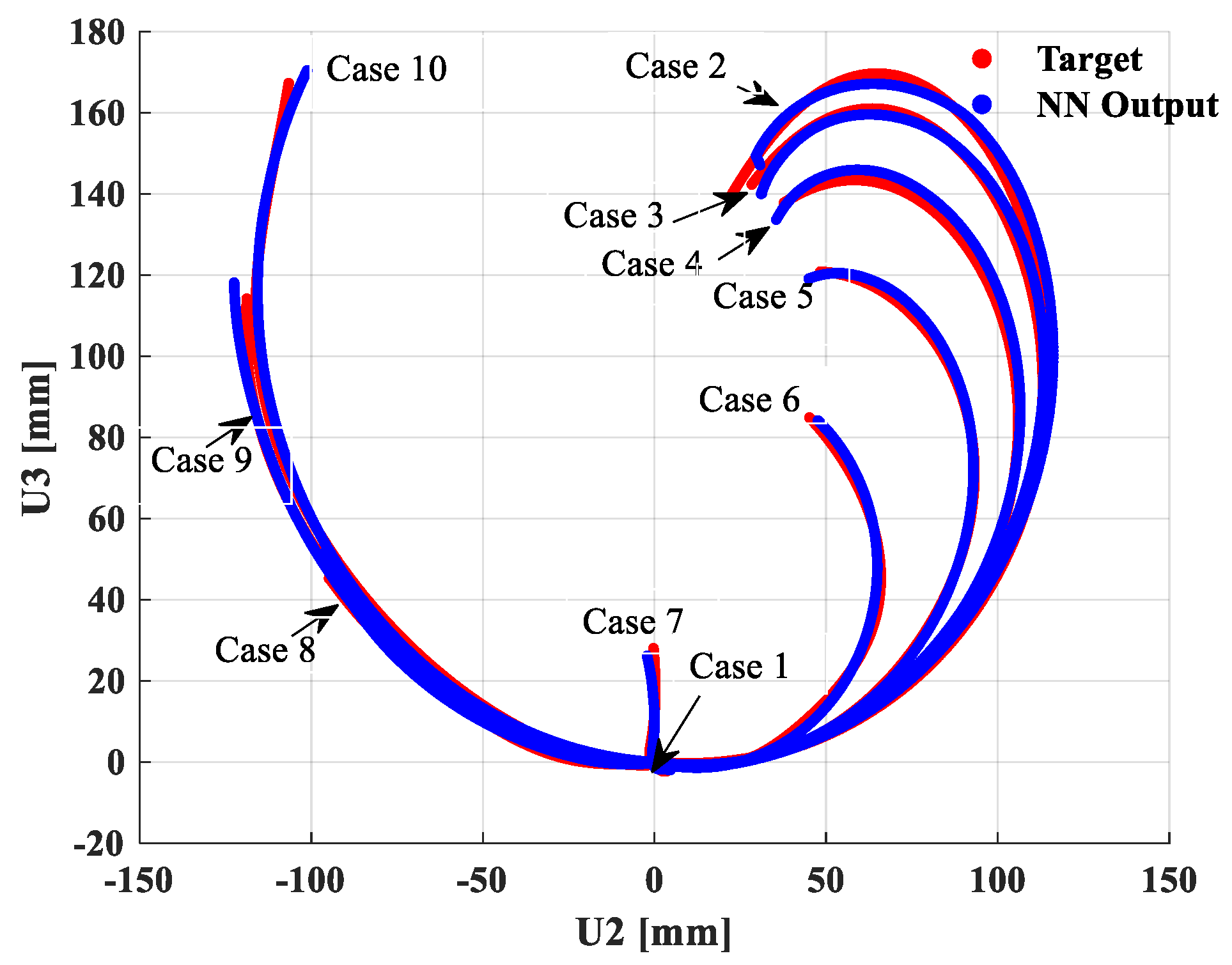
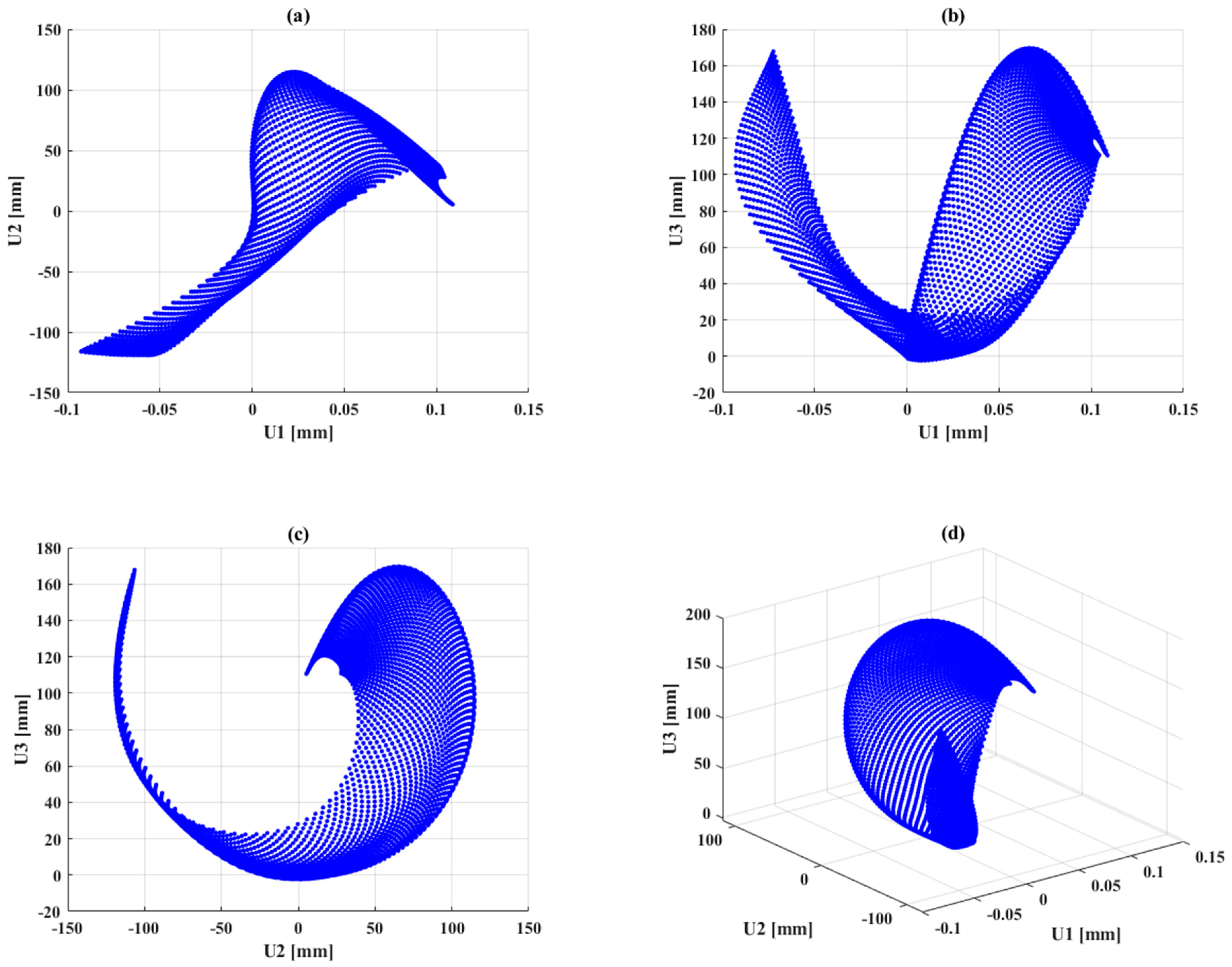
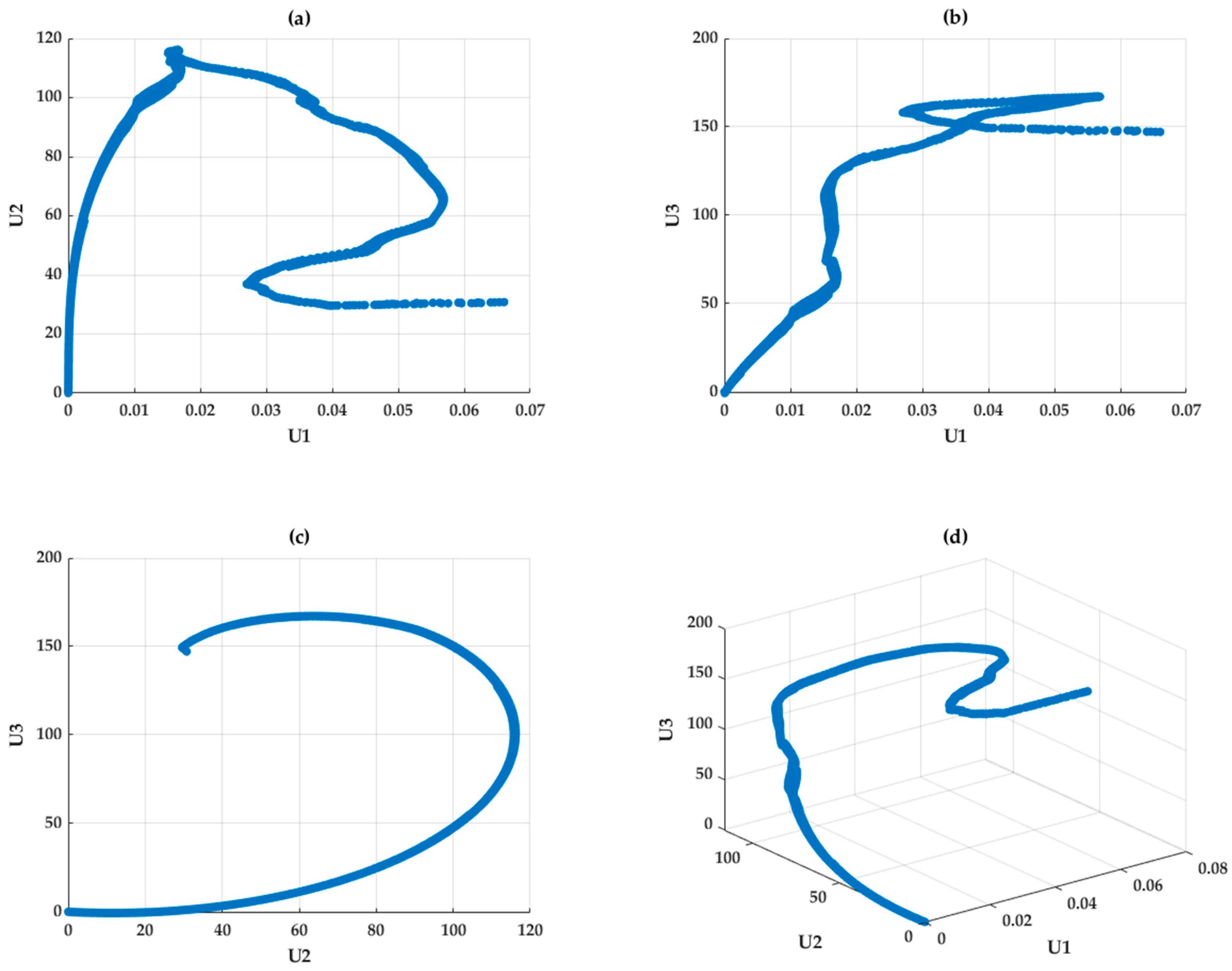
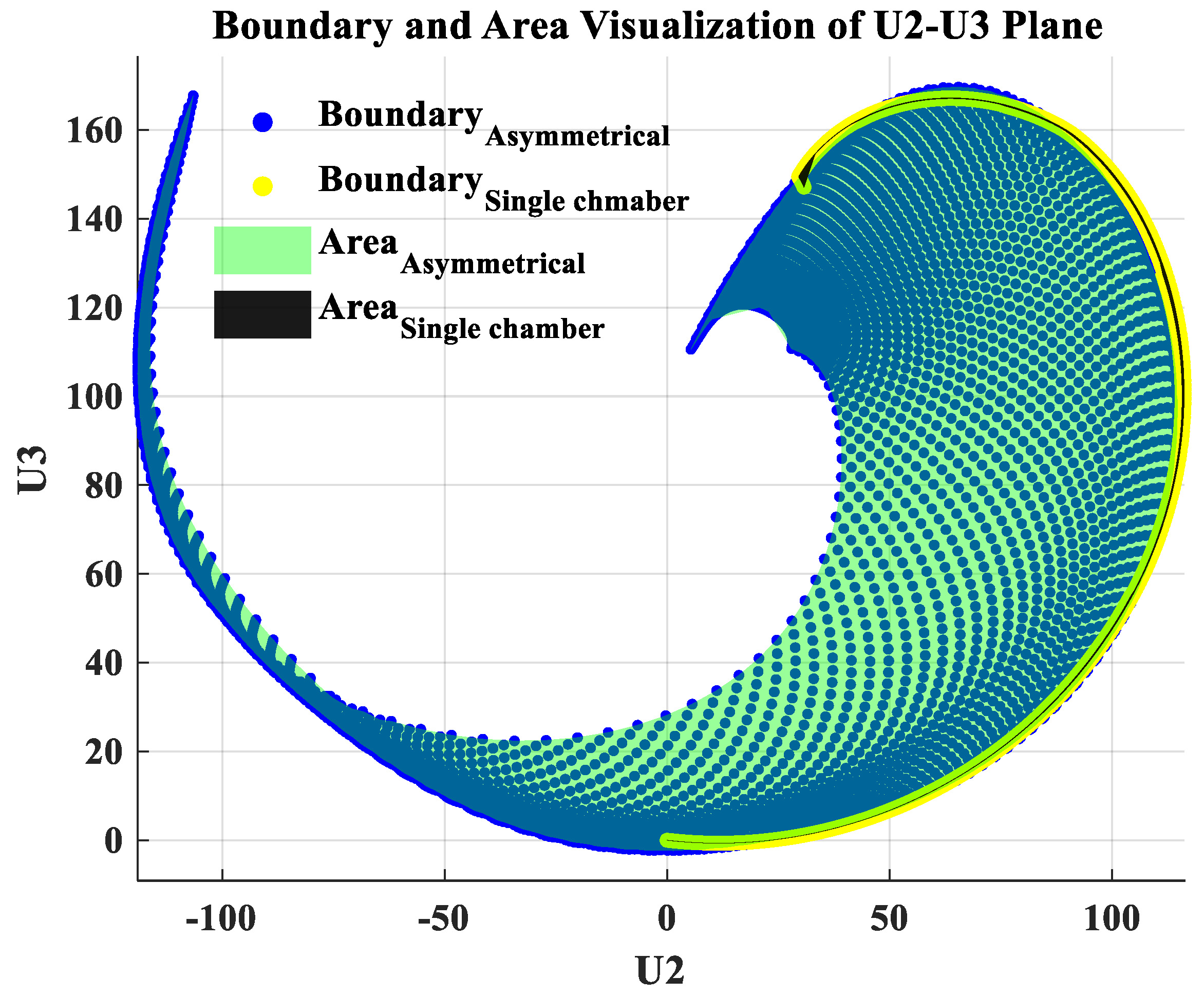
Soft robots with compliant bodies offer safe human–robot interaction as well as adaptability to unstructured dynamic environments. However, the nonlinear dynamics of a soft robot with infinite motion freedom pose various challenges to operation and control engineering. This research explores the motion of a pneumatic soft robot under diverse loading conditions by conducting finite element analysis (FEA) and using machine learning. The pneumatic soft robot consists of two parallel hyper-elastic tubular chambers that convert pneumatic pressure inputs into soft robot motion to mimic an elephant trunk and its motion. The body of each pneumatic chamber consists of a series of bellows to effectively facilitate the expansion, contraction, and bending of the body. The first chamber spans the entire length of the soft robot’s body, and the second chamber spans half of it. This unique asymmetric design enables the soft robot to bend and curl in various ways. Machine learning is used to establish a forward kinematic relationship between the pressure inputs and the motion responses of the soft robot using data from FEA. Accordingly, this research employs an artificial neural network that is trained on FEA data to estimate the reachable workspace of the soft robot for given pressure inputs. The trained neural network demonstrates promising estimation accuracy with an R-squared value of 0.99 and a root mean square error of 0.783. The workspaces of asymmetric double-chamber and single-chamber soft robots were compared, revealing that the double-chamber robot offers approximately 185 times more reachable workspace than the single-chamber soft robot.
Keywords: pneumatic soft robot; finite element analysis; asymmetric soft robot; machine learning pneumatic soft robot; finite element analysis; asymmetric soft robot; machine learning