
Article

Smooth-Switching Gain Based Adaptive Neural Network Control of n-Joint Manipulator with Multiple Constraints

1
College of Automation, Qingdao University, Qingdao 266071, China
2
Shandong Province Key Laboratory of Industrial Control Technology, Qingdao University, Qingdao 266071, China
3
State Grid Dongping Power Supply Company, State Grid, Taian 271000, China
4
School of Mechanical and Automotive Engineering, Qingdao University of Technology, Qingdao 271000, China
*
Author to whom correspondence should be addressed.
Actuators 2022, 11(5), 127; https://doi.org/10.3390/act11050127
Submission received: 1 February 2022 / Revised: 25 April 2022 / Accepted: 25 April 2022 / Published: 29 April 2022
(This article belongs to the Special Issue Dynamics and Control of Robot Manipulators)

Abstract

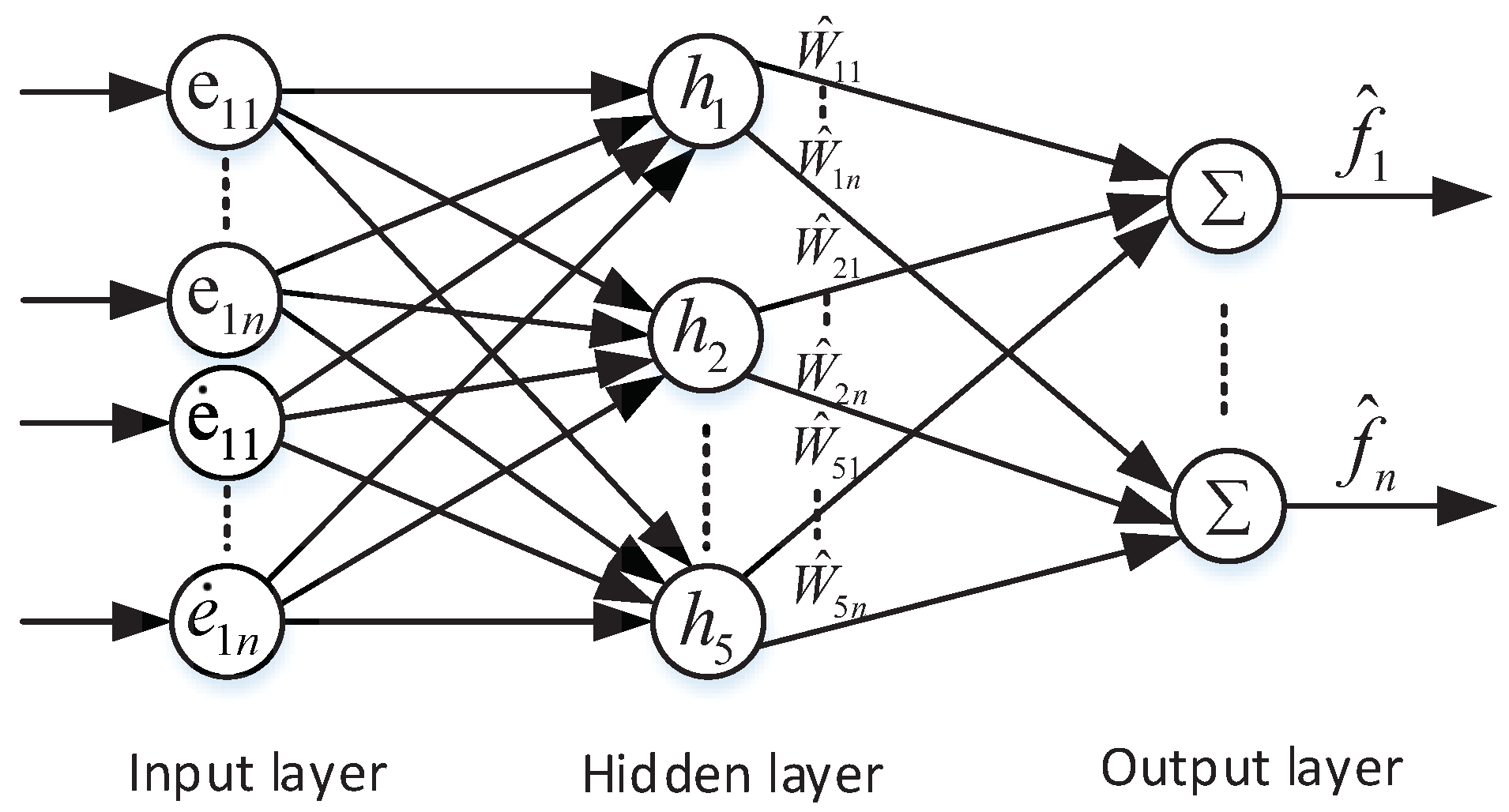
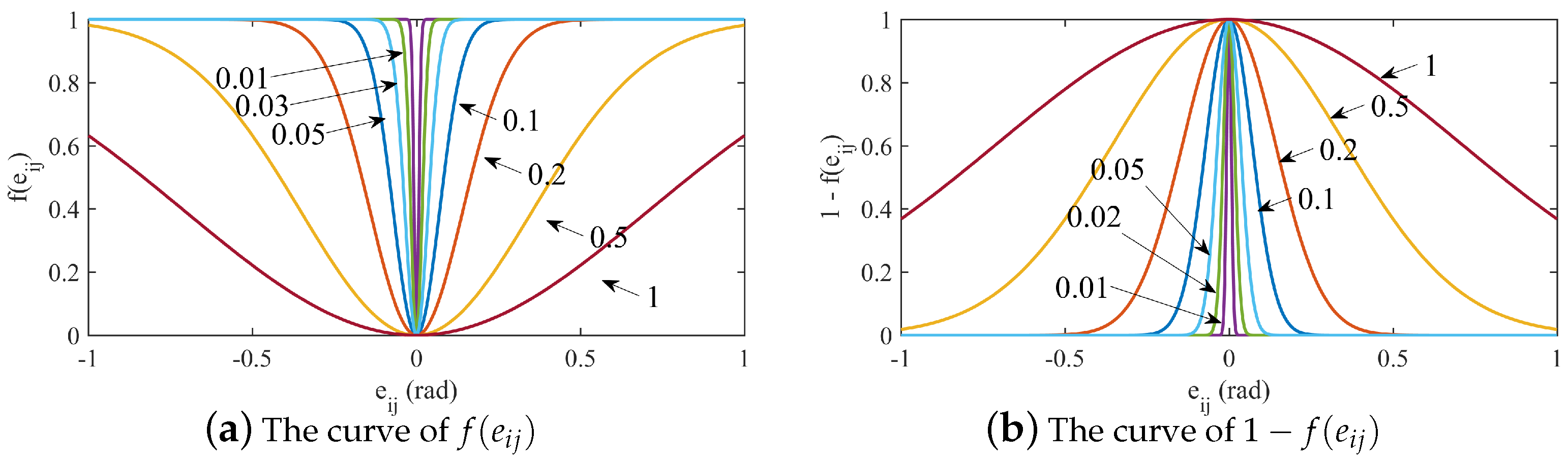
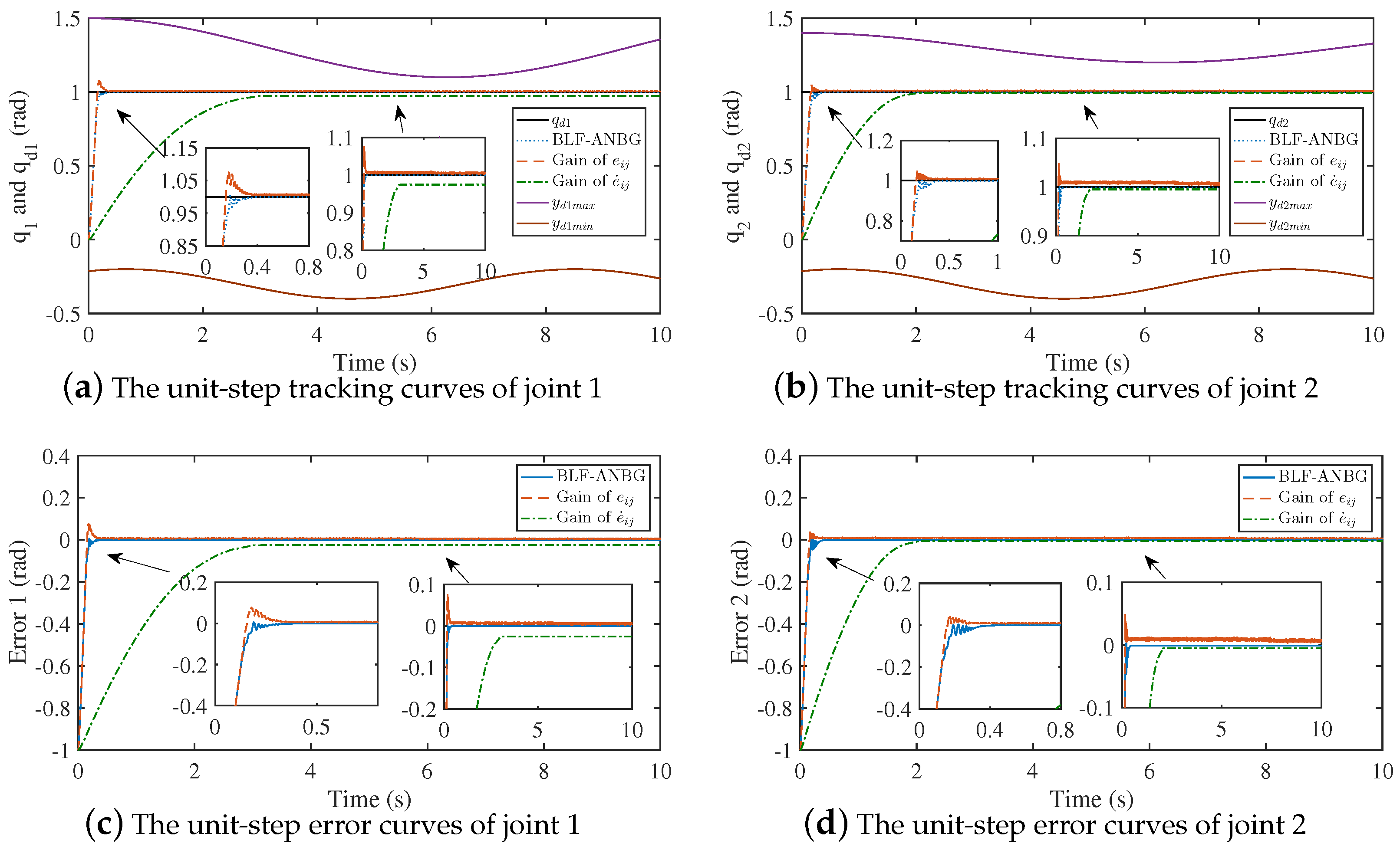
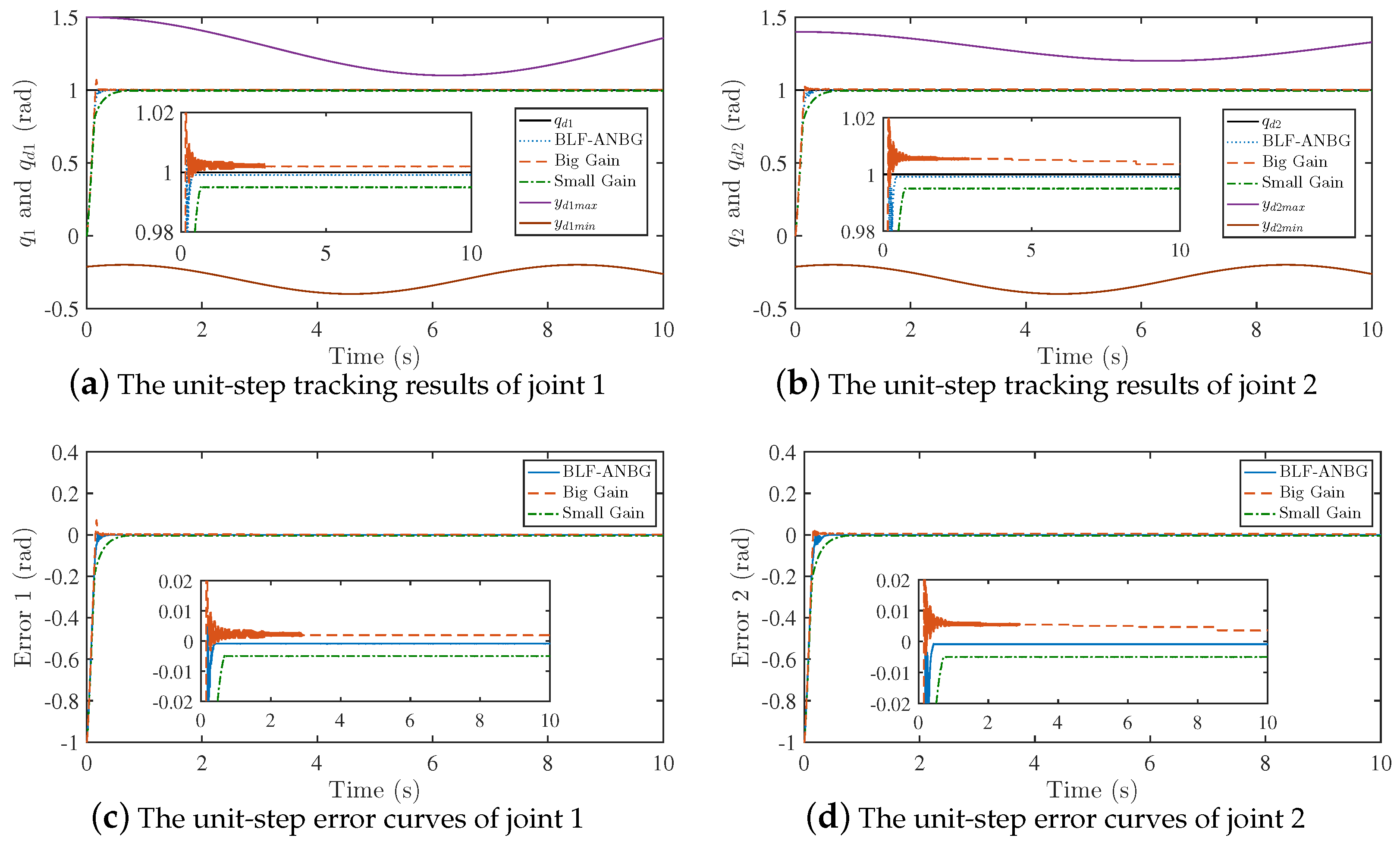
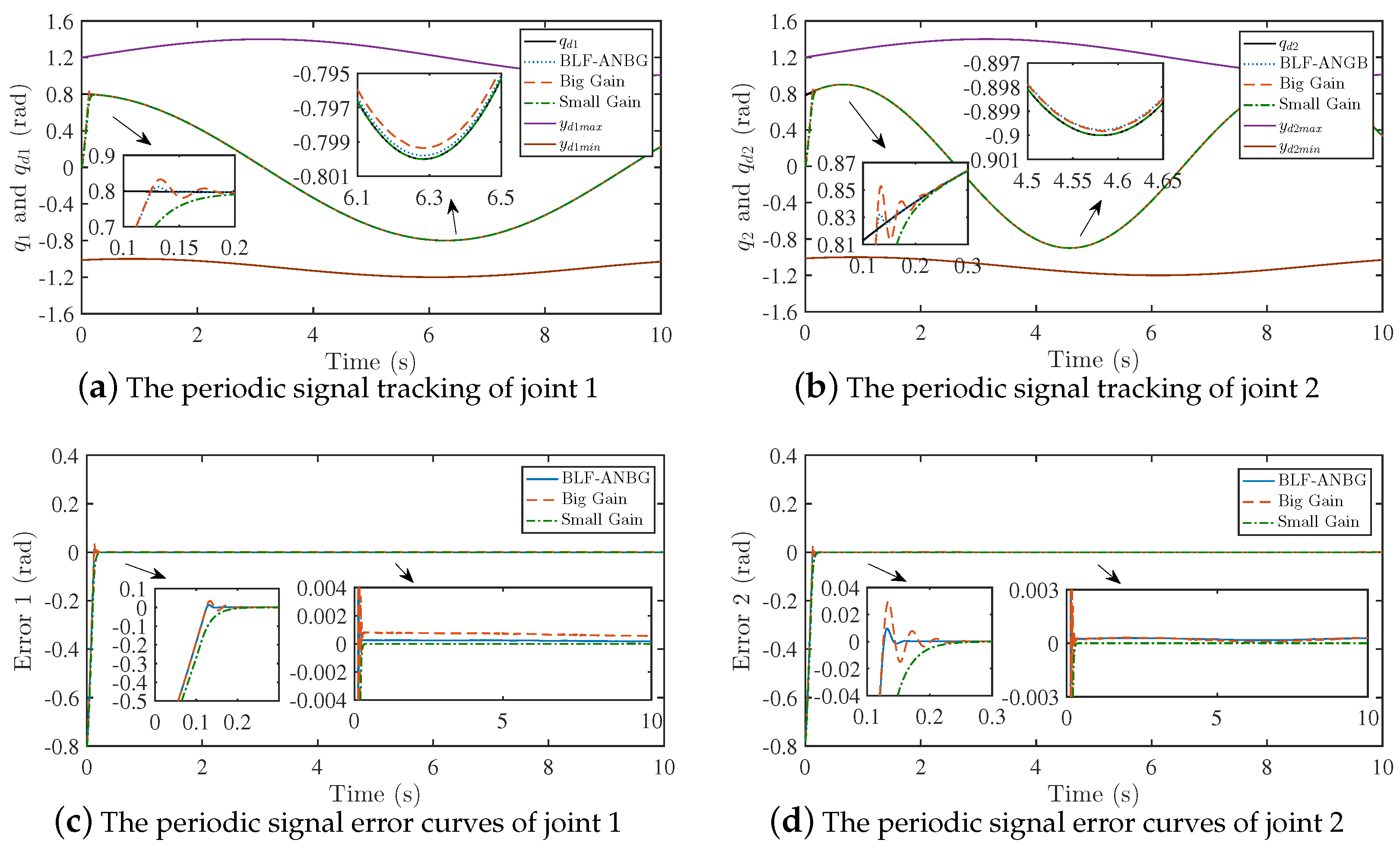
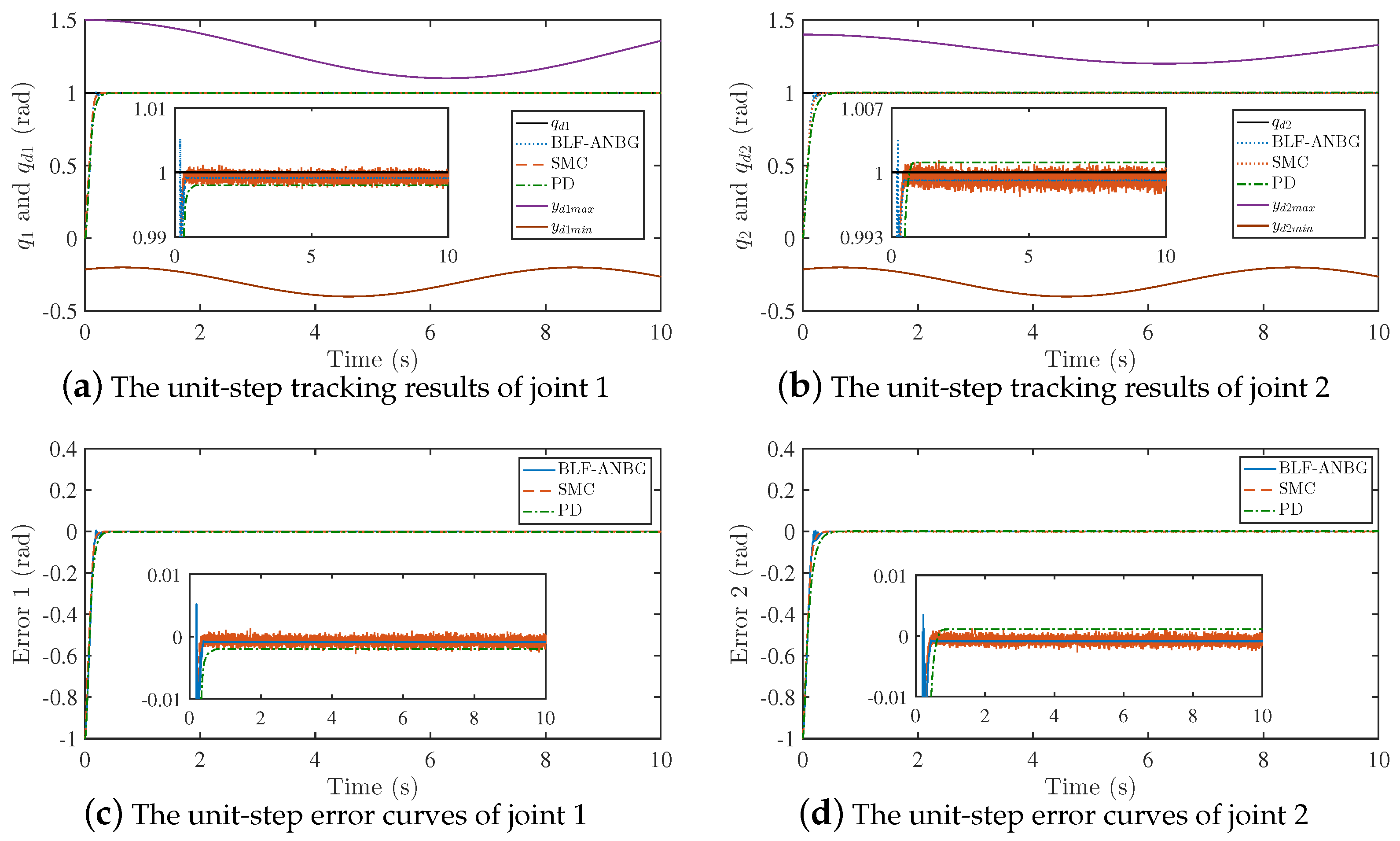
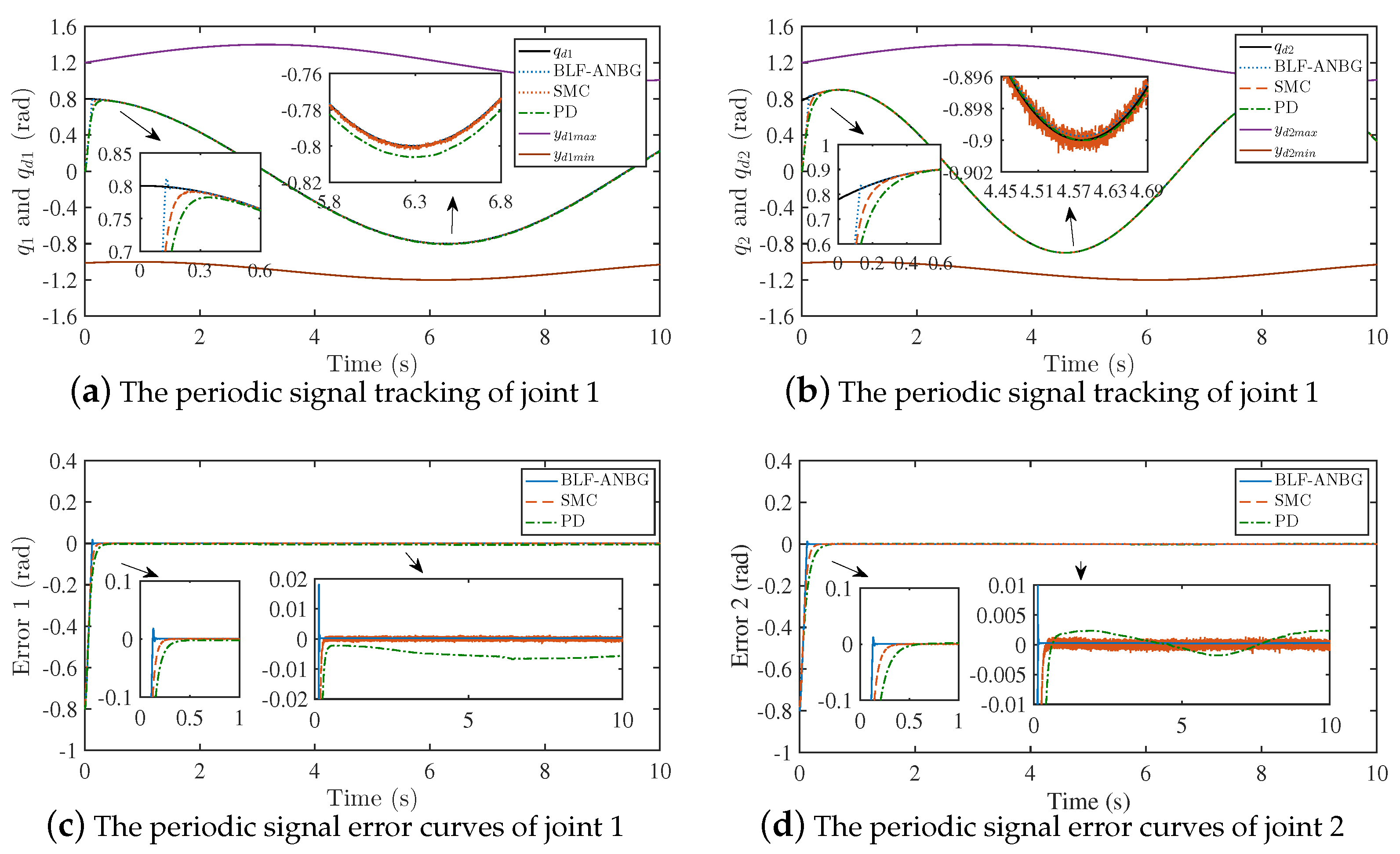
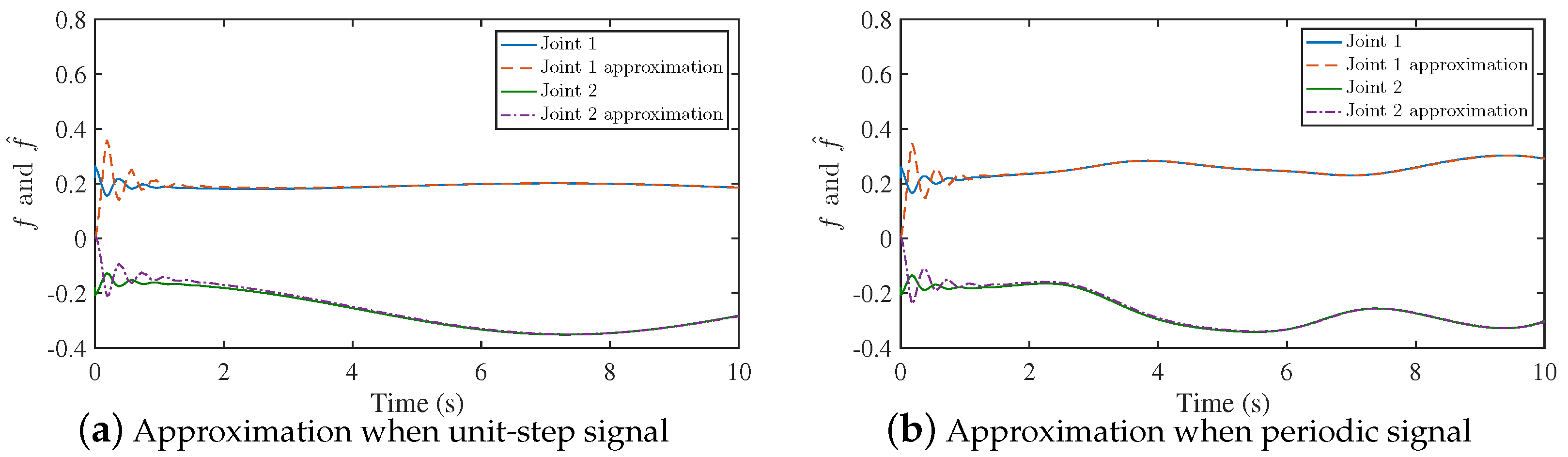
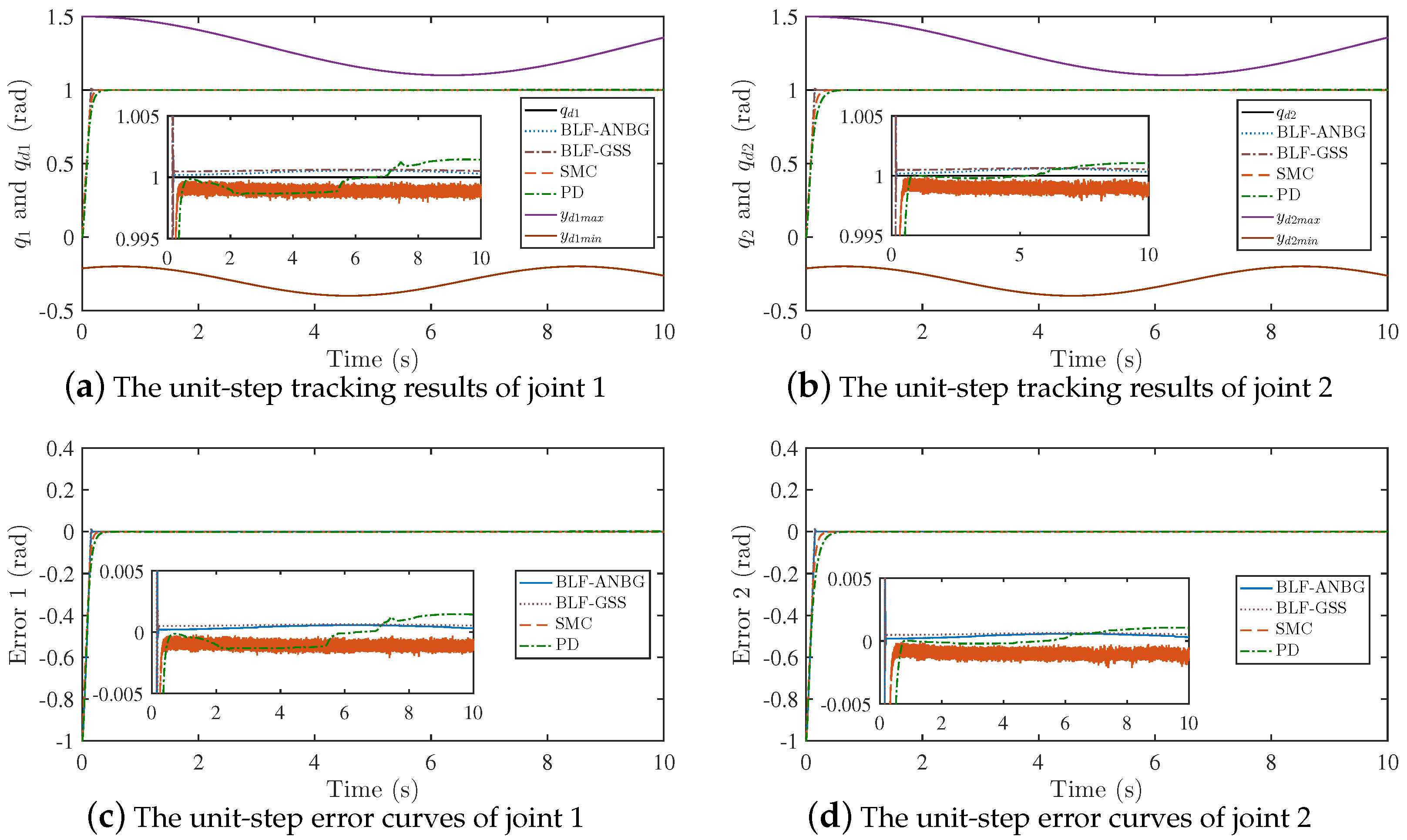
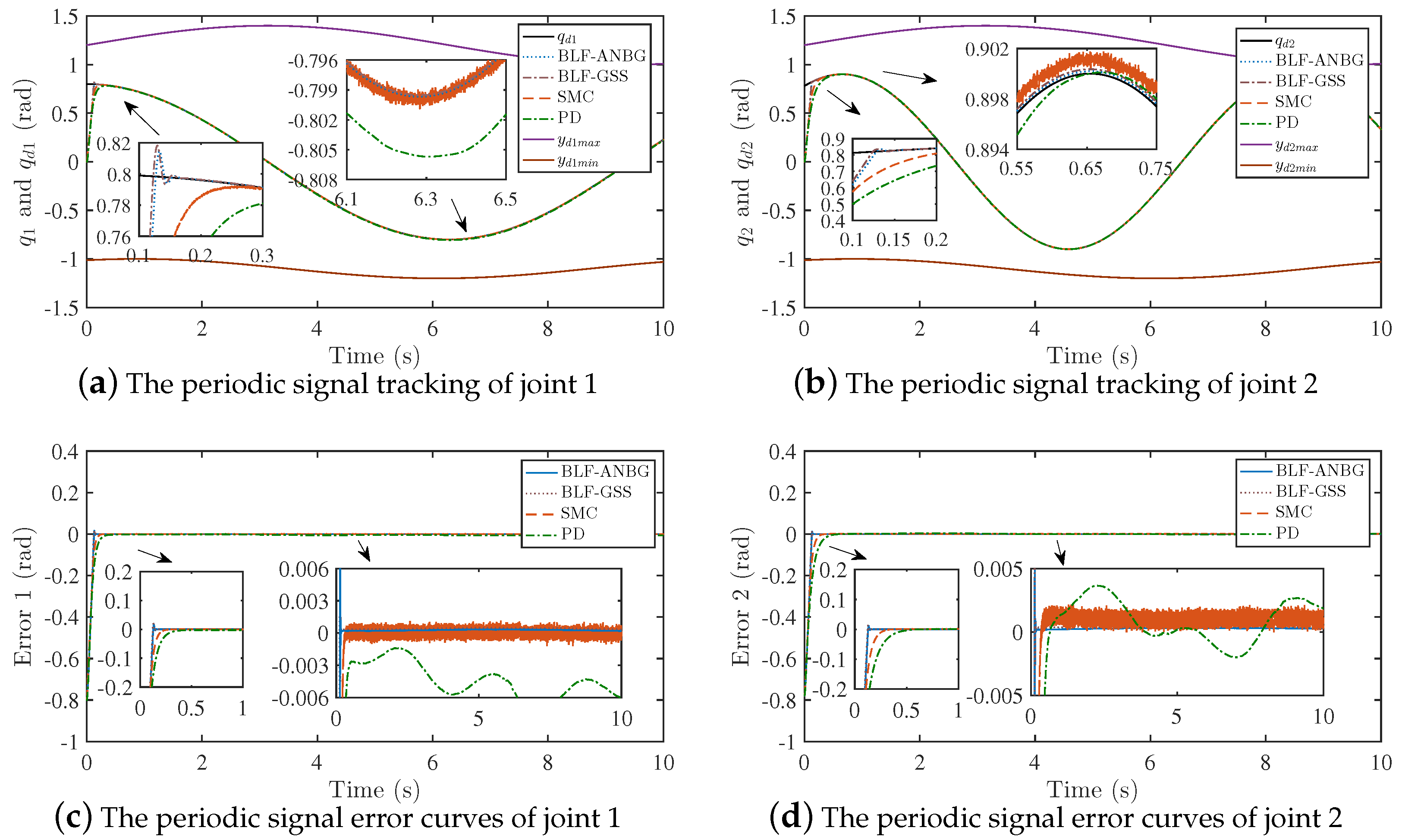
Modeling errors, external loads and output constraints will affect the tracking control of the n-joint manipulator driven by the permanent magnet synchronous motor. To solve the above problems, the smooth-switching for backstepping gain control strategy based on the Barrier Lyapunov Function and adaptive neural network (BLF-ANBG) is proposed. First, the adaptive neural network method is established to approximate modeling errors, unknown loads and unenforced inputs. Then, the gain functions based on the error and error rate of change are designed, respectively. The two gain functions can respectively provide faster response speed and better tracking stability. The smooth-switching for backstepping gain strategy based on the Barrier Lyapunov Function is proposed to combine the advantages of both gain functions. According to the above strategy, the BLF-ANBG strategy is proposed, which not only solves the influence of multiple constraints, unknown loads and modeling errors, but also enables the manipulator system to have better dynamic and steady-state performances at the same time. Finally, the proposed controller is applied to a 2-DOF manipulator and compared with other commonly used methods. The simulation results show that the BLF-ANBG strategy has good tracking performance under multiple constraints and model errors.
Keywords: manipulator; multiple constraints; adaptive neural network; smooth-switching for gain; Barrier Lyapunov Function manipulator; multiple constraints; adaptive neural network; smooth-switching for gain; Barrier Lyapunov Function