Review

An Update on Sexual Transmission of Zika Virus


by
Hercules Sakkas
1,*,†,
Petros Bozidis
1,*,†,
Xenofon Giannakopoulos
2,
Nikolaos Sofikitis
2 and
Chrissanthy Papadopoulou
1
1
Microbiology Department, Faculty of Medicine, School of Health Sciences, University of Ioannina, 45110 Ioannina, Greece
2
Department of Urology, Faculty of Medicine, School of Health Sciences, University of Ioannina, 45110 Ioannina, Greece
*
Authors to whom correspondence should be addressed.
These authors contributed equally to this study.
Pathogens 2018, 7(3), 66; https://doi.org/10.3390/pathogens7030066

Submission received: 13 June 2018 / Revised: 2 July 2018 / Accepted: 1 August 2018 / Published: 3 August 2018
(This article belongs to the Special Issue Virus-Host Interactions of Zika Virus)

Abstract

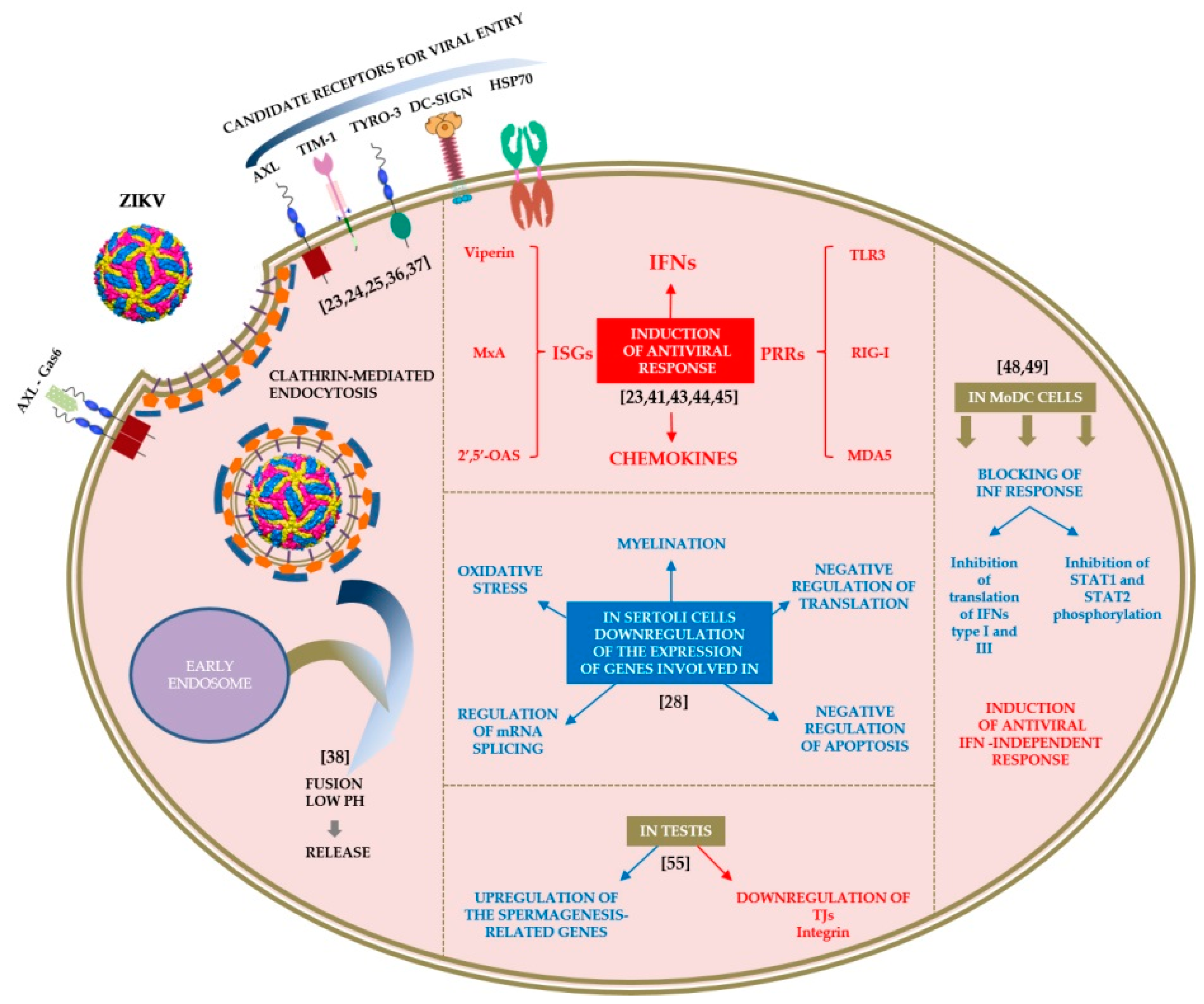
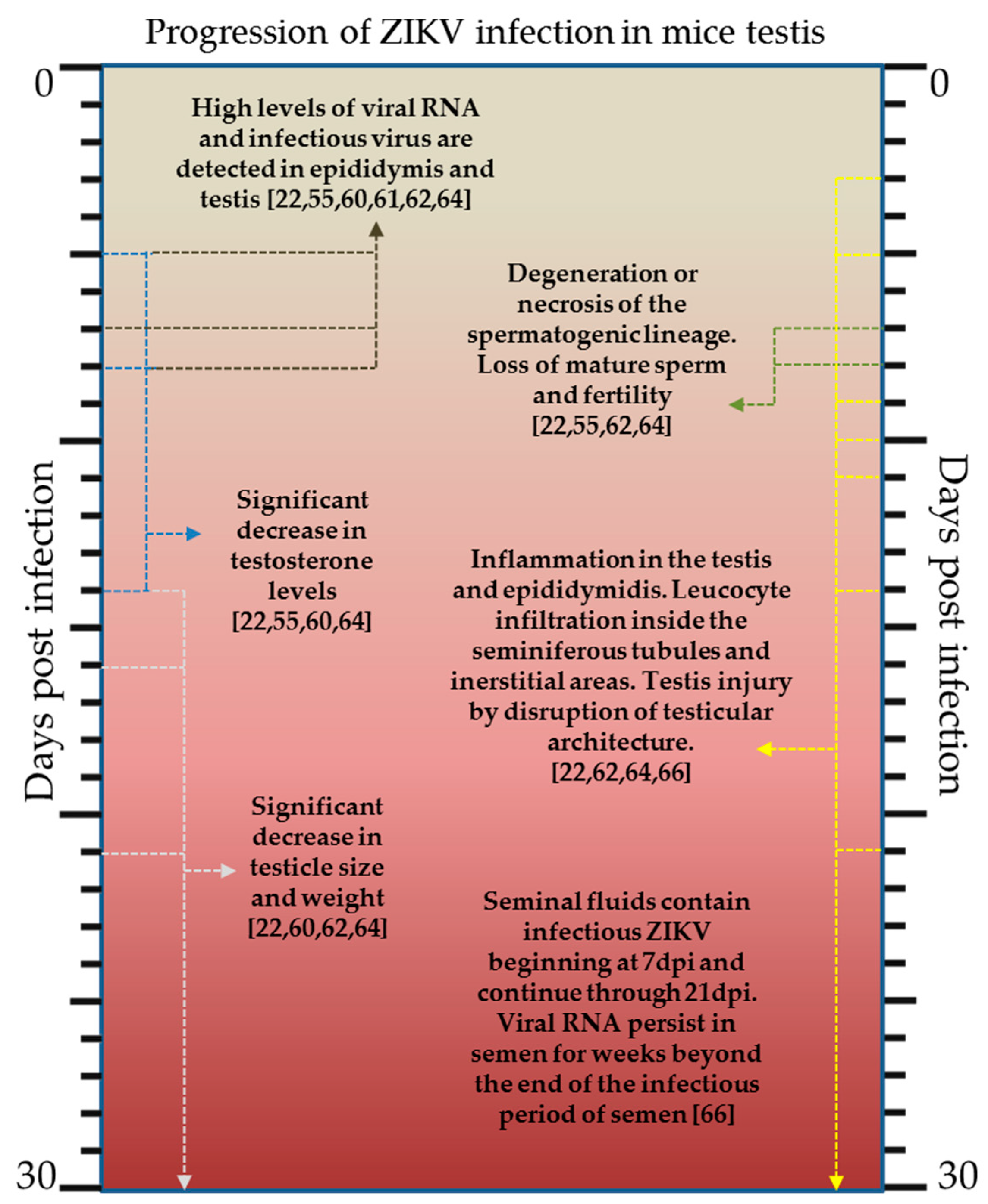
Zika virus (ZIKV) is a single-stranded RNA virus belonging to the arthropod-borne flaviviruses (arboviruses) which are mainly transmitted by blood-sucking mosquitoes of the genus Aedes. ZIKV infection has been known to be rather asymptomatic or presented as febrile self-limited disease; however, during the last decade the manifestation of ZIKV infection has been associated with a variety of neuroimmunological disorders including Guillain–Barré syndrome, microcephaly and other central nervous system abnormalities. More recently, there is accumulating evidence about sexual transmission of ZIKV, a trait that has never been observed in any other mosquito-borne flavivirus before. This article reviews the latest information regarding the latter and emerging role of ZIKV, focusing on the consequences of ZIKV infection on the male reproductive system and the epidemiology of human-to-human sexual transmission.
Keywords: Zika virus; flavivirus; Aedes; Host-virus interactions; testis; sexual transmission; epidemics Zika virus; flavivirus; Aedes; Host-virus interactions; testis; sexual transmission; epidemics