Host–Microbiome Immune Interaction Networks: A Comparative Evolutionary Perspective Across Worms, Mice, and Humans

Abstract
1. Introduction
Search Strategy and Selection Criteria
2. The Primitive Blueprint of Innate Immunity: Defense Networks of C. elegans
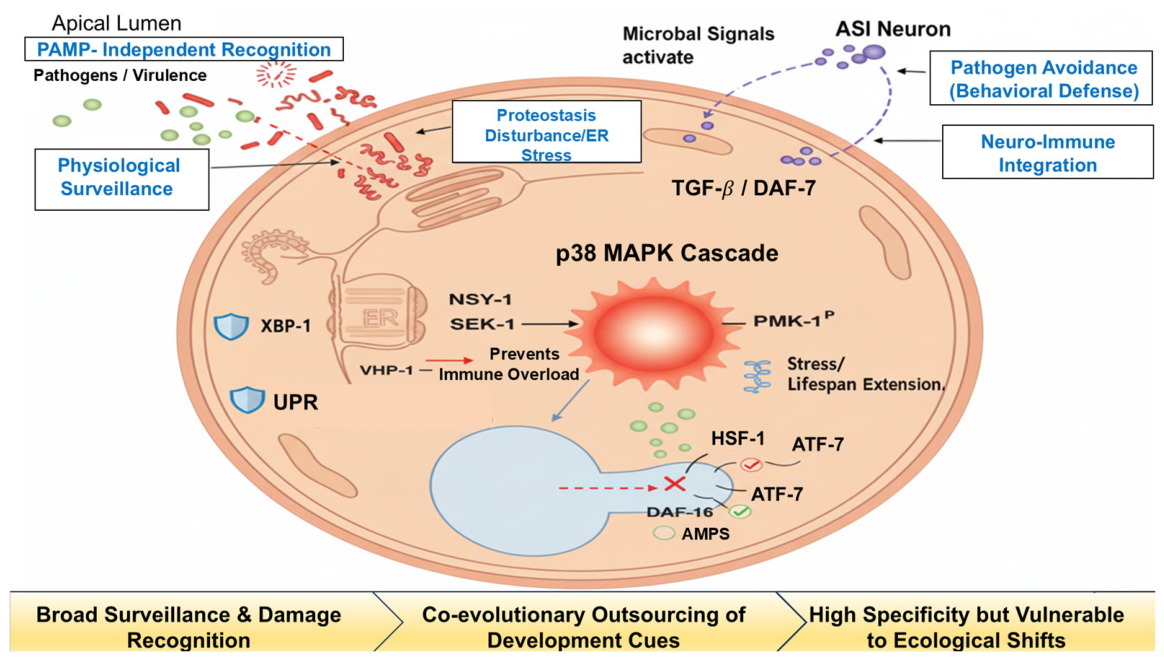
2.1. Pathogen-Induced Damage Surveillance and Epithelial Defense
2.2. Commensal Metabolic Signaling and Epigenetic Homeostasis
2.3. Neuroimmune Integration Systems and Behavioral Defense
2.4. Limitations of Extrapolating C. elegans to Mammals
3. Microbiota-Dependent Immune Shaping in Mouse Models
3.1. Anatomical Development of Gut Immune Tissues and Microecological Instructional Signals
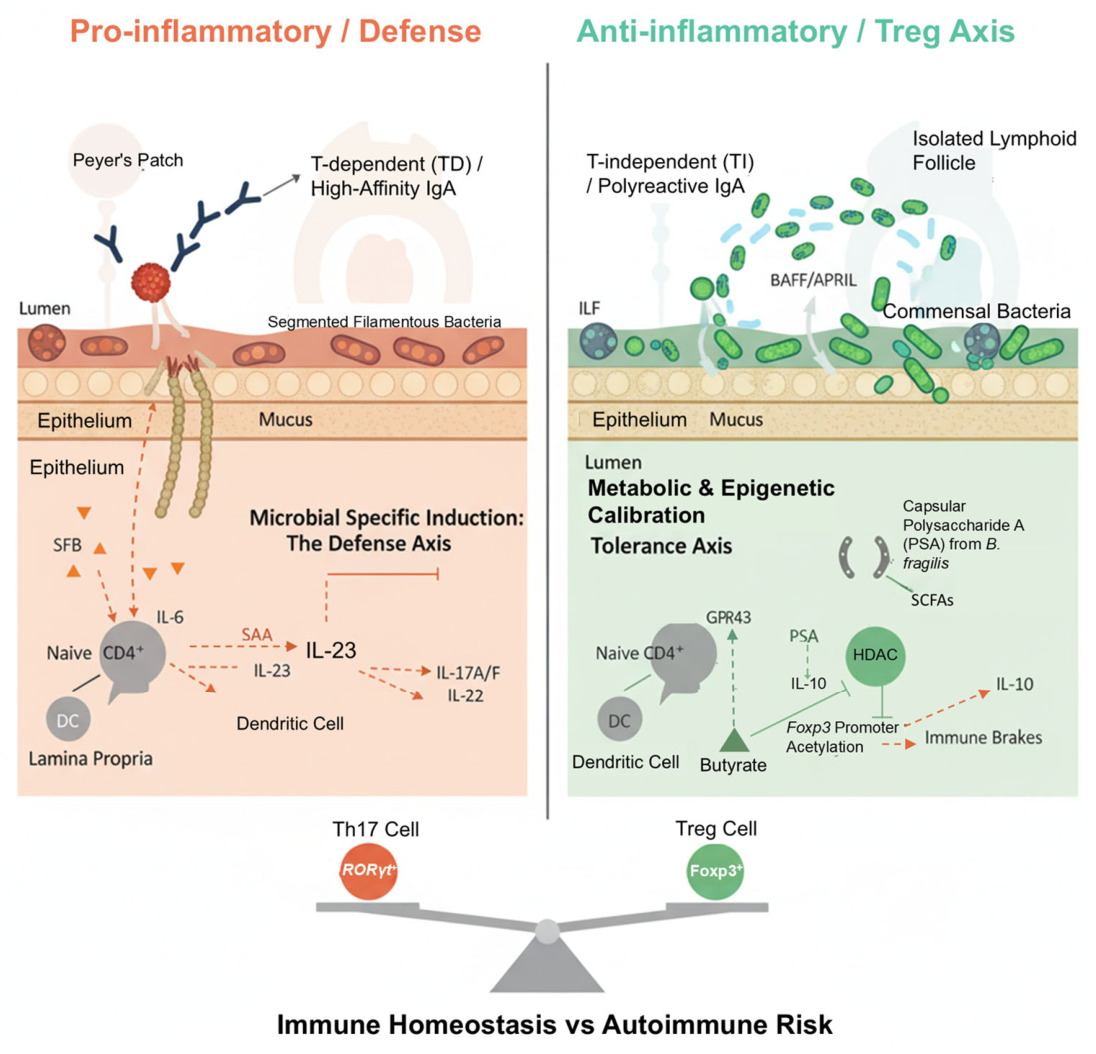
3.2. Directed Induction and Polarization of Helper T Cells by Specific Commensal Microbiota
3.3. Epigenetic Calibration of Immunosuppressive Signals and Metabolites
4. Clinical Complexity of the Modern Human System and Barriers in Translational Medicine
4.1. The Mucosal Developmental Window and Functional Redundancy of the Human Immune Axis
4.2. Host Genetic Heterogeneity and Mechanisms of Dysbiosis in Inflammatory Bowel Disease
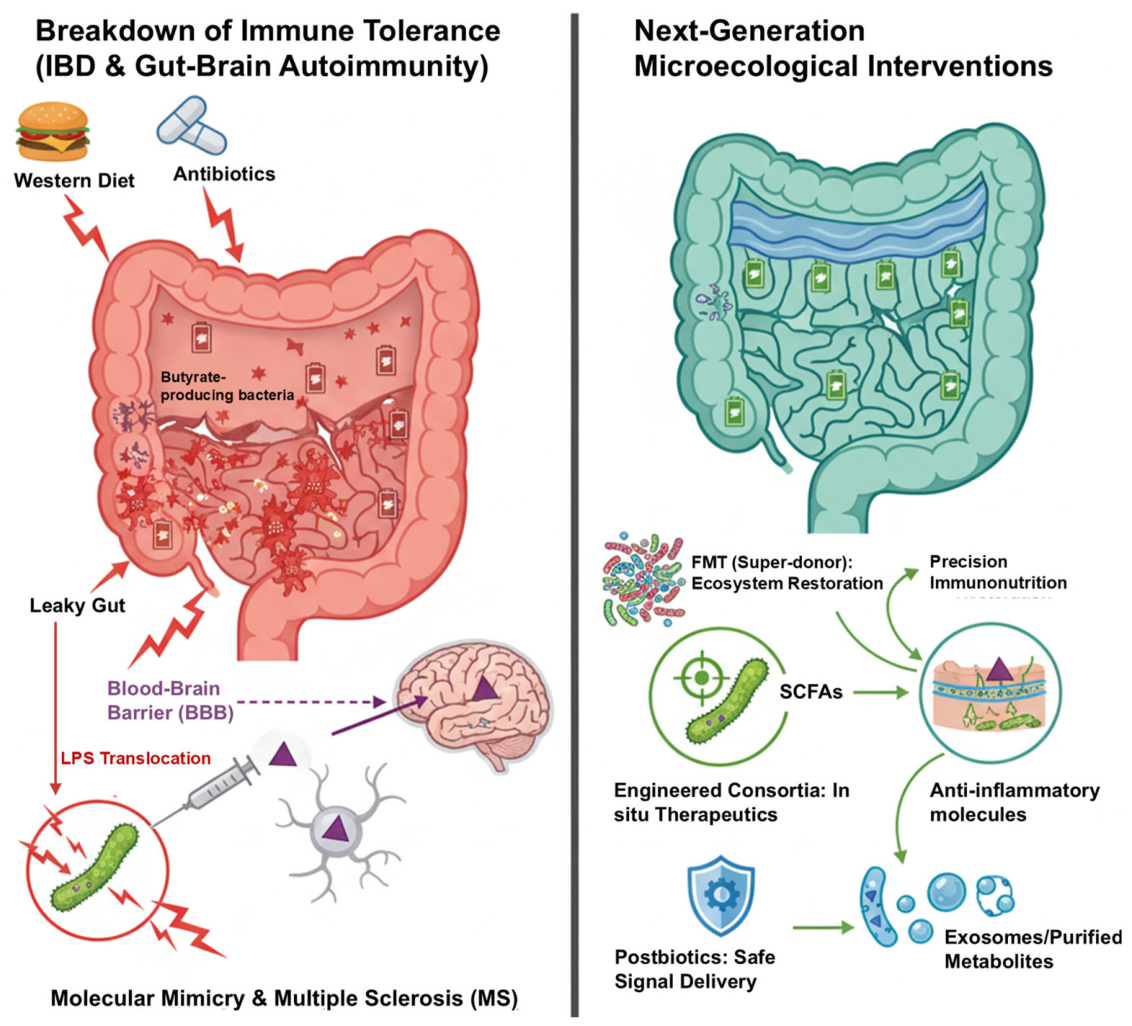
4.3. Cross-Kingdom Microbiome Reconstruction and Super-Donor Characteristics in Fecal Microbiota Transplantation
4.4. Gut–Brain Axis Dysbiosis and Central Nervous System Autoimmune Pathology
4.5. Next-Generation Microphysiological Research Models for Breaking Species Translation Bottlenecks
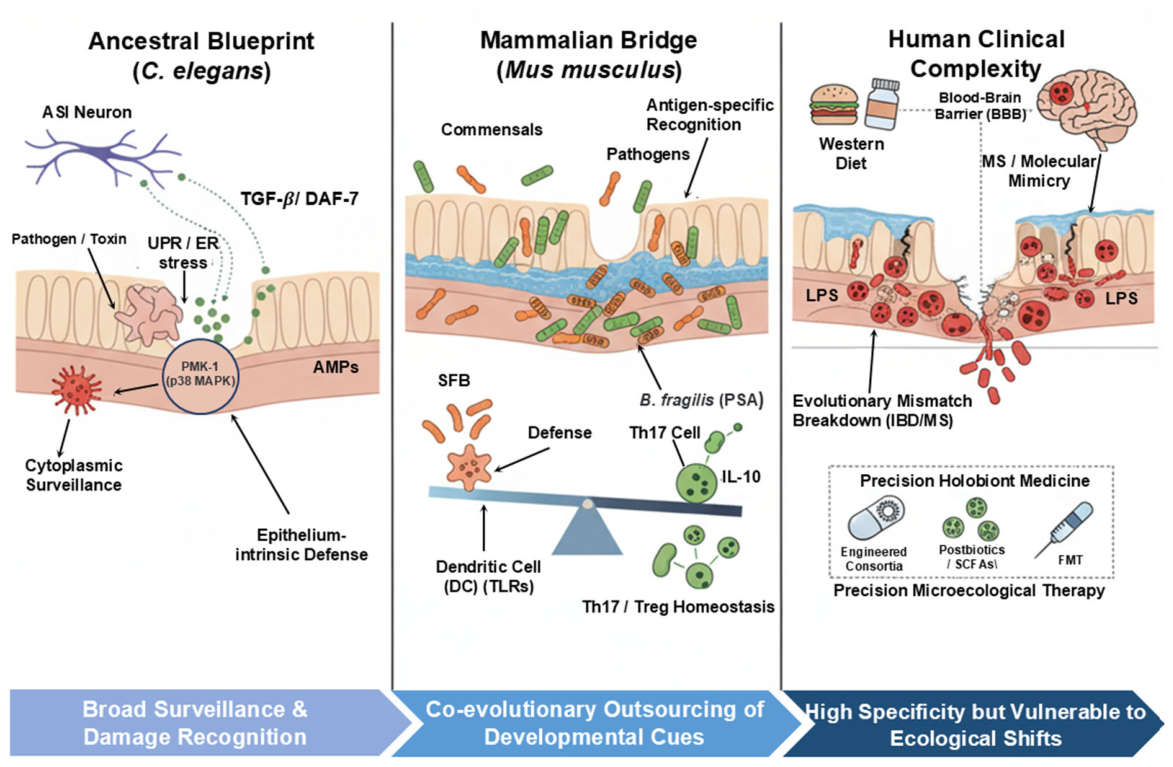
5. Comprehensive Analysis: The Evolutionary Synthesis and Translational Logic
5.1. Macro-Evolutionary Comparison: Scaling of Recognition and Dependence
5.2. The Pathology of Evolutionary Mismatch: A Multi-System Decompensation
5.3. Translational Frontiers: Precision Tools for Holobiont Restoration
5.4. Limitations of Current Frameworks and Model Systems
6. Concluding Remarks: Toward Holobiont Medicine
Author Contributions
Funding
Institutional Review Board Statement
Informed Consent Statement
Data Availability Statement
Acknowledgments
Conflicts of Interest
References
- Burnet, F.M. The Clonal Selection Theory of Acquired Immunity; Vanderbilt University Press: Nashville, TN, USA, 1959. [Google Scholar] [CrossRef] [Scilit]
- Gilbert, S.F.; Sapp, J.; Tauber, A.I. A symbiotic view of life: We have never been individuals. Q. Rev. Biol. 2012, 87, 325–341. [Google Scholar] [CrossRef] [Scilit] [PubMed]
- Takeuchi, T.; Nakanishi, Y.; Ohno, H. Microbial Metabolites and Gut Immunology. Annu. Rev. Immunol. 2024, 42, 153–178. [Google Scholar] [CrossRef] [Scilit] [PubMed]
- Zilber-Rosenberg, I.; Rosenberg, E. Role of microorganisms in the evolution of animals and plants: The hologenome theory of evolution. FEMS Microbiol. Rev. 2008, 32, 723–735. [Google Scholar] [CrossRef] [Scilit] [PubMed]
- Jaswal, K.; Todd, O.A.; Behnsen, J. Neglected gut microbiome: Interactions of the non-bacterial gut microbiota with enteric pathogens. Gut Microbes 2023, 15, 2226916. [Google Scholar] [CrossRef] [Scilit] [PubMed]
- Ivanov, I.I.; Atarashi, K.; Manel, N.; Brodie, E.L.; Shima, T.; Karaoz, U.; Wei, D.; Goldfarb, K.C.; Santee, C.A.; Lynch, S.V.; et al. Induction of intestinal Th17 cells by segmented filamentous bacteria. Cell 2009, 139, 485–498. [Google Scholar] [CrossRef] [Scilit] [PubMed]
- Sonnenburg, E.D.; Sonnenburg, J.L. The ancestral and industrialized gut microbiota and implications for human health. Nat. Rev. Microbiol. 2019, 17, 383–390. [Google Scholar] [CrossRef] [Scilit] [PubMed]
- Kriegel, M.A.; Sefik, E.; Hill, J.A.; Wu, H.J.; Benoist, C.; Mathis, D. Naturally transmitted segmented filamentous bacteria segregate with diabetes protection in nonobese diabetic mice. Proc. Natl. Acad. Sci. USA 2011, 108, 11548–11553. [Google Scholar] [CrossRef] [Scilit] [PubMed]
- Moazzam-Jazi, M.; Jafarinejad-Farsangi, S.; Najd-Hassan-Bonab, L.; Daneshpour, M.; Liu, Z.; Gupta, M.K.; Vadde, R. Interplay between obesity-associated insulin resistance and immune system through the lens of evolutionary medicine. Mol. Metab. 2026, 106, 102335. [Google Scholar] [CrossRef] [Scilit] [PubMed]
- Kim, D.H.; Feinbaum, R.; Alloing, G.; Emerson, F.E.; Garsin, D.A.; Inoue, H.; Tanaka-Hino, M.; Hisamoto, N.; Matsumoto, K.; Tan, M.-W.; et al. A conserved p38 MAP kinase pathway in Caenorhabditis elegans innate immunity. Science 2002, 297, 623–626. [Google Scholar] [CrossRef] [Scilit] [PubMed]
- Tjahjono, E.; Revtovich, A.V.; Kirienko, N.V. Box C/D small nucleolar ribonucleoproteins regulate mitochondrial surveillance and innate immunity. PLoS Genet. 2022, 18, e1010103. [Google Scholar] [CrossRef] [Scilit] [PubMed]
- Reddy, K.C.; Dror, T.; Sowa, J.N.; Panek, J.; Chen, K.; Lim, E.S.; Wang, D.; Troemel, E.R. An intracellular pathogen response pathway promotes proteostasis in C. elegans. Curr. Biol. 2017, 27, 3544–3553. [Google Scholar] [CrossRef] [Scilit] [PubMed]
- Troemel, E.R.; Chu, S.W.; Reinke, V.; Lee, S.S.; Ausubel, F.M.; Kim, D.H. p38 MAPK regulates expression of immune response genes and contributes to longevity in C. elegans. PLoS Genet. 2006, 2, e183. [Google Scholar] [CrossRef] [Scilit] [PubMed]
- Shivers, R.P.; Pagano, D.J.; Kooistra, T.; Richardson, C.E.; Reddy, K.C.; Whitney, J.K.; Kamanzi, O.; Matsumoto, K.; Hisamoto, N.; Kim, D.H. Phosphorylation of the conserved transcription factor ATF-7 by PMK-1 p38 MAPK regulates innate immunity in Caenorhabditis elegans. PLoS Genet. 2010, 6, e1000892. [Google Scholar] [CrossRef] [Scilit] [PubMed]
- Tse-Kang, S.; Wani, K.A.; Pukkila-Worley, R. Patterns of pathogenesis in innate immunity: Insights from C. elegans. Nat. Rev. Immunol. 2025, 25, 637–648. [Google Scholar] [CrossRef] [Scilit] [PubMed]
- Mizuno, T.; Hisamoto, N.; Terada, T.; Kondo, T.; Adachi, M.; Nishida, E.; Kim, D.H.; Ausubel, F.M.; Matsumoto, K. The Caenorhabditis elegans MAPK phosphatase VHP-1 mediates a novel JNK-like signaling pathway in stress response. EMBO J. 2004, 23, 2226–2234. [Google Scholar] [CrossRef] [Scilit] [PubMed]
- Richardson, C.E.; Kooistra, T.; Kim, D.H. An essential role for XBP-1 in host protection against immune activation in C. elegans. Nature 2010, 463, 1092–1095. [Google Scholar] [CrossRef] [Scilit] [PubMed]
- Gusarov, I.; Gautier, L.; Smolentseva, O.; Shamovsky, I.; Eremina, S.; Mironov, A.; Nudler, E. Bacterial nitric oxide extends lifespan of C. elegans. Cell 2013, 152, 818–830. [Google Scholar] [CrossRef] [Scilit] [PubMed]
- Moore, R.S.; Kaletsky, R.; Murphy, C.T. Piwi/PRG-1 Argonaute and TGF-β Mediate Transgenerational Learned Pathogenic Avoidance. Cell 2019, 177, 1827–1841.e12. [Google Scholar] [CrossRef] [Scilit] [PubMed]
- Chen, B.; Sun, L.; Zhang, X. Integration of microbiome and epigenome to decipher the pathogenesis of autoimmune diseases. J. Autoimmun. 2017, 83, 31–42. [Google Scholar] [CrossRef] [Scilit] [PubMed]
- Meisel, J.D.; Panda, O.; Mahanti, P.; Schroeder, F.C.; Kim, D.H. Chemosensation of bacterial secondary metabolites modulates neuroendocrine signaling and behavior of C. elegans. Cell 2014, 159, 267–280. [Google Scholar] [CrossRef] [Scilit] [PubMed]
- Zhang, Y.; Lu, H.; Bargmann, C.I. Pathogenic bacteria induce aversive olfactory learning in Caenorhabditis elegans. Nature 2005, 438, 179–184. [Google Scholar] [CrossRef] [Scilit] [PubMed]
- Marsh, E.K.; May, R.C. Caenorhabditis elegans, a Model Organism for Investigating Immunity. Appl. Environ. Microbiol. 2012, 78, 2075–2081. [Google Scholar] [CrossRef] [Scilit] [PubMed]
- Donaldson, D.S.; Bradford, B.M.; Artis, D.; Mabbott, N.A. Reciprocal regulation of lymphoid tissue development in the large intestine by IL-25 and IL-23. Mucosal Immunol. 2015, 8, 582–595. [Google Scholar] [CrossRef] [Scilit] [PubMed]
- Fan, T.; Tai, C.; Sleiman, K.C.; Cutcliffe, M.P.; Kim, H.; Liu, Y.; Li, J.; Xin, G.; Grashel, M.; Baert, L.; et al. Aberrant T follicular helper cells generated by TH17 cell plasticity in the gut promote extraintestinal autoimmunity. Nat. Immunol. 2025, 26, 790–804. [Google Scholar] [CrossRef] [Scilit] [PubMed]
- Pačes, J.; Malinská, N.; Tušková, L.; Knížková, K.; Grobárová, V.; Zadražil, Z.; Hudcovic, T.; Michl, A.; Šrůtková, D.; Schwarzer, M.; et al. Microbiota modulate immune cell populations and drive dynamic structural changes in gut-associated lymphoid tissue. Gut Microbes 2025, 17, 2543908. [Google Scholar] [CrossRef] [Scilit] [PubMed]
- Tian, K.; Jing, D.; Lan, J.; Lv, M.; Wang, T. Commensal microbiome and gastrointestinal mucosal immunity: Harmony and conflict with our closest neighbor. Immun. Inflamm. Dis. 2024, 12, e1316. [Google Scholar] [CrossRef] [Scilit] [PubMed]
- Wang, Y.; Yin, Y.; Chen, X.; Zhao, Y.; Wu, Y.; Li, Y.; Wang, X.; Chen, H.; Xiang, C. Induction of Intestinal Th17 Cells by Flagellins from Segmented Filamentous Bacteria. Front. Immunol. 2019, 10, 2750. [Google Scholar] [CrossRef] [Scilit] [PubMed]
- Gribonika, I.; Strömberg, A.; Lebrero-Fernandez, C.; Schön, K.; Moon, J.; Bemark, M.; Lycke, N. Peyer’s patch TH17 cells are dispensable for gut IgA responses to oral immunization. Sci. Immunol. 2022, 7, eabc5500. [Google Scholar] [CrossRef] [Scilit] [PubMed]
- Ko, H.; Kim, C.J.; Choi, S.; Noh, J.; Kim, S.W.; Lee, J.; Byun, S.; Lee, H.; Park, J.C.; Park, H.E.; et al. Commensal microbe-derived butyrate enhances T follicular helper cell function to boost mucosal vaccine efficacy. Microbiome 2026, 14, 37. [Google Scholar] [CrossRef] [Scilit] [PubMed]
- Flannigan, K.L.; Ngo, V.L.; Geem, D.; Harusato, A.; Hirota, S.A.; Parkos, C.A.; Lukacs, N.W.; Nusrat, A.; Gaboriau-Routhiau, V.; Cerf-Bensussan, N.; et al. IL-17A-mediated neutrophil recruitment limits expansion of segmented filamentous bacteria. Mucosal Immunol. 2017, 10, 673–684. [Google Scholar] [CrossRef] [Scilit] [PubMed]
- Najar, T.A.; Hao, Y.; Hao, Y.; Romero-Meza, G.; Dolynuk, A.; Almo, E.; Littman, D.R. Microbiota-induced T cell plasticity enables immune-mediated tumour control. Nature 2026, 651, 201–210. [Google Scholar] [CrossRef] [Scilit] [PubMed]
- Zhang, M.; Shi, S.; Feng, Y.; Zhang, F.; Xiao, Y.; Li, X.; Pan, X.; Feng, Y.; Liu, D.; Guo, Y.; et al. Synthetic microbial community improves chicken intestinal homeostasis and provokes anti-Salmonella immunity mediated by segmented filamentous bacteria. ISME J. 2025, 19, wraf076. [Google Scholar] [CrossRef] [Scilit] [PubMed]
- Lee, Y.K.; Menezes, J.S.; Umesaki, Y.; Mazmanian, S.K. Pro-inflammatory T-cell responses to gut microbiota promote experimental autoimmune encephalomyelitis. Proc. Natl. Acad. Sci. USA 2011, 108, 4615–4622. [Google Scholar] [CrossRef] [Scilit] [PubMed]
- Wu, H.J.; Ivanov, I.I.; Darce, J.; Hattori, K.; Shima, T.; Umesaki, Y.; Littman, D.R.; Benoist, C.; Mathis, D. Gut-residing segmented filamentous bacteria drive autoimmune arthritis via T helper 17 cells. Immunity 2010, 32, 815–827. [Google Scholar] [CrossRef] [Scilit] [PubMed]
- Flannigan, K.L.; Denning, T.L. Segmented filamentous bacteria-induced immune responses: A balancing act between host protection and autoimmunity. Immunology 2018, 154, 537–546. [Google Scholar] [CrossRef] [Scilit] [PubMed]
- Vasquez Ayala, A.; Hsu, C.Y.; Oles, R.E.; Matsuo, K.; Loomis, L.R.; Buzun, E.; Carrillo Terrazas, M.; Gerner, R.R.; Lu, H.H.; Kim, S.; et al. Commensal bacteria promote type I interferon signaling to maintain immune tolerance in mice. J. Exp. Med. 2024, 221, e20230063. [Google Scholar] [CrossRef] [Scilit] [PubMed]
- Carasso, S.; Zaatry, R.; Hajjo, H.; Kadosh-Kariti, D.; Ben-Assa, N.; Naddaf, R.; Mandelbaum, N.; Pressman, S.; Chowers, Y.; Gefen, T.; et al. Inflammation and bacteriophages affect DNA inversion states and functionality of the gut microbiota. Cell Host Microbe 2024, 32, 322–334.e9. [Google Scholar] [CrossRef] [Scilit] [PubMed]
- Furusawa, Y.; Obata, Y.; Fukuda, S.; Endo, T.A.; Nakato, G.; Takahashi, D.; Nakanishi, Y.; Uetake, C.; Kato, K.; Kato, T.; et al. Commensal microbe-derived butyrate induces the differentiation of colonic regulatory T cells. Nature 2013, 504, 446–450. [Google Scholar] [CrossRef] [Scilit] [PubMed]
- Laragione, T.; Harris, C.; Azizgolshani, N.; Beeton, C.; Bongers, G.; Gulko, P.S. Magnesium increases numbers of Foxp3+ Treg cells and reduces arthritis severity and joint damage in an IL-10-dependent manner mediated by the intestinal microbiome. eBioMedicine 2023, 92, 104603. [Google Scholar] [CrossRef] [Scilit] [PubMed]
- Lu, Y.; Yuan, H.; Liang, S.; Li, D.; Jiang, P.; Wang, X.; Zhang, K.; Liu, D. Microbial metabolite-driven immune reprogramming in tumor immunotherapy: Mechanisms and therapeutic perspectives. Front. Immunol. 2025, 16, 1603658. [Google Scholar] [CrossRef] [Scilit] [PubMed]
- Kiran, S.; Cruz, A.R.; Daniau, A.; Ma, B.; Marbouty, M.; Pipoli Da Fonseca, J.; Legrand, A.; Baudry, L.; Cokelaer, T.; Bensussan, M.; et al. Segmented filamentous bacteria are worldwide human gut commensals. Nat. Commun. 2026, 17, 4174. [Google Scholar] [CrossRef] [Scilit] [PubMed]
- Metwaly, A.; Jovic, J.; Waldschmitt, N.; Khaloian, S.; Heimes, H.; Häcker, D.; Ahmed, M.; Hammoudi, N.; Le Bourhis, L.; Mayorgas, A.; et al. Diet prevents the expansion of segmented filamentous bacteria and ileo-colonic inflammation in a model of Crohn’s disease. Microbiome 2023, 11, 66. [Google Scholar] [CrossRef] [Scilit] [PubMed]
- Illanes-Álvarez, F.; Márquez-Ruiz, D.; Campaña-Gómez, I.; Martín-Aspas, A.; Galán-Sánchez, F.; Márquez-Coello, M.; Cuesta-Sancho, S.; Girón-González, J.A. Dietary and microbial influences on intestinal immune activation in treated people living with HIV and a Th17-deficient mouse model. Clin. Sci. 2026, 140, 159–177. [Google Scholar] [CrossRef] [Scilit] [PubMed]
- Wong, D.P.G.H.; Good, B.H. Quantifying the adaptive landscape of commensal gut bacteria using high-resolution lineage tracking. Nat. Commun. 2024, 15, 1605. [Google Scholar] [CrossRef] [Scilit] [PubMed]
- Bunker, J.J.; Flynn, T.M.; Koval, J.C.; Shaw, D.G.; Meisel, M.; McDonald, B.D.; Ishizuka, I.E.; Dent, A.L.; Wilson, P.C.; Jabri, B.; et al. Innate and Adaptive Humoral Responses Coat Distinct Commensal Bacteria with Immunoglobulin A. Immunity 2015, 43, 541–553. [Google Scholar] [CrossRef] [Scilit] [PubMed]
- Gao, Y.; Nanan, R.; Macia, L.; Tan, J.; Sominsky, L.; Quinn, T.P.; O’Hely, M.; Ponsonby, A.L.; Tang, M.L.K.; Collier, F.; et al. The maternal gut microbiome during pregnancy and offspring allergy and asthma. J. Allergy Clin. Immunol. 2021, 148, 669–678. [Google Scholar] [CrossRef] [Scilit] [PubMed]
- Cannarozzi, A.L.; Latiano, A.; Massimino, L.; Bossa, F.; Giuliani, F.; Riva, M.; Ungaro, F.; Guerra, M.; Brina, A.L.D.; Biscaglia, G.; et al. Inflammatory bowel disease genomics, transcriptomics, proteomics and metagenomics meet artificial intelligence. United Eur. Gastroenterol. J. 2024, 12, 1461–1480. [Google Scholar] [CrossRef] [Scilit] [PubMed]
- Ogura, Y.; Bonen, D.K.; Inohara, N.; Nicolae, D.L.; Chen, F.F.; Ramos, R.; Britton, H.; Moran, T.; Karaliuskas, R.; Duerr, R.H.; et al. A frameshift mutation in NOD2 associated with susceptibility to Crohn’s disease. Nature 2001, 411, 603–606. [Google Scholar] [CrossRef] [Scilit] [PubMed]
- Shan, Y.; Lee, M.; Chang, E.B. The Gut Microbiome and Inflammatory Bowel Diseases. Annu. Rev. Med. 2022, 73, 455–468. [Google Scholar] [CrossRef] [Scilit] [PubMed]
- Parada Venegas, D.; De la Fuente, M.K.; Landskron, G.; González, M.J.; Quera, R.; Dijkstra, G.; Harmsen, H.J.M.; Faber, K.N.; Hermoso, M.A. Short Chain Fatty Acids (SCFAs)-Mediated Gut Epithelial and Immune Regulation and Its Relevance for Inflammatory Bowel Diseases. Front. Immunol. 2019, 10, 277. [Google Scholar] [CrossRef] [Scilit] [PubMed]
- Haifer, C.; Paramsothy, S.; Kaakoush, N.O.; Saikal, A.; Ghaly, S.; Yang, T.; Luu, L.D.W.; Borody, T.J.; Leong, R.W. Lyophilised oral faecal microbiota transplantation for ulcerative colitis (LOTUS): A randomised, double-blind, placebo-controlled trial. Lancet Gastroenterol. Hepatol. 2022, 7, 141–151. [Google Scholar] [CrossRef] [Scilit] [PubMed]
- Zuo, T.; Wong, S.H.; Lam, K.; Lui, R.; Cheung, K.; Tang, W.; Ching, J.Y.L.; Chan, P.K.S.; Chan, M.C.W.; Wu, J.C.Y.; et al. Bacteriophage transfer during faecal microbiota transplantation in Clostridium difficile infection is associated with treatment outcome. Gut 2018, 67, 634–643. [Google Scholar] [CrossRef] [Scilit] [PubMed]
- Shrivastav, K.; Pandey, M.; Gor, H.; Nema, V. Gut virome plays an extended role with bacteriome in neurological health and disease. J. Neurol. Sci. 2026, 481, 125754. [Google Scholar] [CrossRef] [Scilit] [PubMed]
- Ji, S.; Ahmad, F.; Peng, B.; Yang, Y.; Su, M.; Zhao, X.; Vatanen, T. Engrafting gut bacteriophages have potential to modulate microbial metabolism in fecal microbiota transplantation. Microbiome 2025, 13, 149. [Google Scholar] [CrossRef] [Scilit] [PubMed]
- Günther, C.; Rothhammer, V.; Karow, M.; Neurath, M.; Winner, B. The Gut-Brain Axis in Inflammatory Bowel Disease—Current and Future Perspectives. Int. J. Mol. Sci. 2021, 22, 8870. [Google Scholar] [CrossRef] [Scilit] [PubMed]
- Kujawa, D.; Laczmanski, L.; Budrewicz, S.; Pokryszko-Dragan, A.; Podbielska, M. Targeting gut microbiota: New therapeutic opportunities in multiple sclerosis. Gut Microbes 2023, 15, 2274126. [Google Scholar] [CrossRef] [Scilit] [PubMed]
- Berer, K.; Gerdes, L.A.; Cekanaviciute, E.; Jia, X.; Xiao, L.; Xia, Z.; Liu, C.; Klotz, L.; Stauffer, U.; Baranzini, S.E.; et al. Gut microbiota from multiple sclerosis patients enables spontaneous autoimmune encephalomyelitis in mice. Proc. Natl. Acad. Sci. USA 2017, 114, 10719–10724. [Google Scholar] [CrossRef] [Scilit] [PubMed]
- Dabrowski, W.; Siwicka-Gieroba, D.; Kotfis, K.; Zaid, S.; Terpilowska, S.; Robba, C.; Siwicki, A.K. The Brain-gut Axis-where are we now and how can we Modulate these Connections? Curr. Neuropharmacol. 2021, 19, 1164–1177. [Google Scholar] [CrossRef] [Scilit] [PubMed]
- Onaciu, A.; Munteanu, R.; Munteanu, V.C.; Gulei, D.; Raduly, L.; Feder, R.I.; Pirlog, R.; Atanasov, A.G.; Korban, S.S.; Irimie, A.; et al. Spontaneous and Induced Animal Models for Cancer Research. Diagnostics 2020, 10, 660. [Google Scholar] [CrossRef] [Scilit] [PubMed]
- Elzinga, J.; van der Oost, J.; de Vos, W.M.; Smidt, H. The Use of Defined Microbial Communities to Model Host-Microbe Interactions in the Human Gut. Microbiol. Mol. Biol. Rev. MMBR 2019, 83, e00054-18. [Google Scholar] [CrossRef] [Scilit] [PubMed]
- Khan, R.; Roy, N.; Ali, H.; Naeem, M. Fecal Microbiota Transplants for Inflammatory Bowel Disease Treatment: Synthetic- and Engineered Communities-Based Microbiota Transplants Are the Future. Gastroenterol. Res. Pract. 2022, 2022, 9999925. [Google Scholar] [CrossRef] [Scilit] [PubMed]
- Pothuraju, R.; Chaudhary, S.; Rachagani, S.; Kaur, S.; Roy, H.K.; Bouvet, M.; Batra, S.K. Mucins, gut microbiota, and postbiotics role in colorectal cancer. Gut Microbes 2021, 13, 1974795. [Google Scholar] [CrossRef] [Scilit] [PubMed]
- Wibisono, P.; Sun, J. Neuro-immune communication in C. elegans defense against pathogen infection. Curr. Res. Immunol. 2021, 2, 60–65. [Google Scholar] [CrossRef] [Scilit] [PubMed]
- Ivanov, I.I.; Frutos, R.d.L.; Manel, N.; Yoshinaga, K.; Rifkin, D.B.; Sartor, R.B.; Finlay, B.B.; Littman, D.R. Specific microbiota direct the differentiation of IL-17-producing T-helper cells in the mucosa of the small intestine. Cell Host Microbe 2008, 4, 337–349. [Google Scholar] [CrossRef] [Scilit] [PubMed]
- Marques, R.; Boneca, I.G. Expression and functional importance of innate immune receptors by intestinal epithelial cells. Cell. Mol. Life Sci. 2011, 68, 3661–3673. [Google Scholar] [CrossRef] [Scilit] [PubMed]
- Moraïs, S.; Winkler, S.; Zorea, A.; Levin, L.; Nagies, F.S.P.; Kapust, N.; Lamed, E.; Artan-Furman, A.; Bolam, D.N.; Yadav, M.P.; et al. Cryptic diversity of cellulose-degrading gut bacteria in industrialized humans. Science 2024, 383, eadj9223. [Google Scholar] [CrossRef] [Scilit] [PubMed]
- Saavedra, P.H.V.; Trzeciak, A.J.; Lipshutz, A.; Daman, A.W.; O’Neal, A.J.; Liu, Z.L.; Wang, Z.; Romero-Pichardo, J.E.; Rojas, W.S.; Zago, G.; et al. Broad-spectrum antibiotics disrupt homeostatic efferocytosis. Nat. Metab. 2024, 6, 1682–1694. [Google Scholar] [CrossRef] [Scilit] [PubMed]
- Vatanen, T.; Kostic, A.D.; d’Hennezel, E.; Siljander, H.; Franzosa, E.A.; Yassour, M.; Kolde, R.; Vlamakis, H.; Arthur, T.D.; Hämäläinen, A.M.; et al. Variation in Microbiome LPS Immunogenicity Contributes to Autoimmunity in Humans. Cell 2016, 165, 842–853. [Google Scholar] [CrossRef] [Scilit] [PubMed]
- Ansaldo, E.; Farley, T.K.; Belkaid, Y. Control of Immunity by the Microbiota. Annu. Rev. Immunol. 2021, 39, 449–479. [Google Scholar] [CrossRef] [Scilit] [PubMed]
- Wang, J.; Hou, Y.; Mu, L.; Yang, M.; Ai, X. Gut microbiota contributes to the intestinal and extraintestinal immune homeostasis by balancing Th17/Treg cells. Int. Immunopharmacol. 2024, 143, 113570. [Google Scholar] [CrossRef] [Scilit] [PubMed]
- Untersmayr, E.; Bax, H.J.; Bergmann, C.; Bianchini, R.; Cozen, W.; Gould, H.J.; Hartmann, K.; Josephs, D.H.; Levi-Schaffer, F.; Penichet, M.L.; et al. AllergoOncology: Microbiota in allergy and cancer—A European Academy for Allergy and Clinical Immunology position paper. Allergy 2019, 74, 1037–1051. [Google Scholar] [CrossRef] [Scilit] [PubMed]
- Schwartz, D.J.; Rebeck, O.N.; Dantas, G. Complex interactions between the microbiome and cancer immune therapy. Crit. Rev. Clin. Lab. Sci. 2019, 56, 567–585. [Google Scholar] [CrossRef] [Scilit] [PubMed]
- Rudiansyah, M.; Abdalkareem Jasim, S.S.; Azizov, B.; Samusenkov, V.; Kamal Abdelbasset, W.; Yasin, G.; Mohammad, H.J.; Jawad, M.A.; Mahmudiono, T.; Hosseini-Fard, S.R.; et al. The emerging microbiome-based approaches to IBD therapy: From SCFAs to urolithin A. J. Dig. Dis. 2022, 23, 412–434. [Google Scholar] [CrossRef] [Scilit] [PubMed]
- Jiang, Z.; Zhu, J.; Shen, Z.; Gao, L.; Chen, Z.; Zhang, L.; Wang, Q. The Microecological-Immune Axis in Pediatric Allergic Diseases: Imbalance Mechanisms and Regulatory Interventions. Nutrients 2025, 17, 2925. [Google Scholar] [CrossRef] [Scilit] [PubMed]
- Gómez de Cedrón, M.; Mouhid, L.; García-Carrascosa, E.; Fornari, T.; Reglero, G.; Ramírez de Molina, A. Marigold Supercritical Extract as Potential Co-adjuvant in Pancreatic Cancer: The Energetic Catastrophe Induced via BMP8B Ends Up with Autophagy-Induced Cell Death. Front. Bioeng. Biotechnol. 2020, 7, 455. [Google Scholar] [CrossRef] [Scilit] [PubMed]
- San-Cristobal, R.; Navas-Carretero, S.; Martínez-González, M.Á.; Ordovas, J.M.; Martínez, J.A. Contribution of macronutrients to obesity: Implications for precision nutrition. Nat. Rev. Endocrinol. 2020, 16, 305–320. [Google Scholar] [CrossRef] [Scilit] [PubMed]
- Samieri, C.; Yassine, H.N.; Melo van Lent, D.; Lefèvre-Arbogast, S.; van de Rest, O.; Bowman, G.L.; Scarmeas, N. Personalized nutrition for dementia prevention. Alzheimer’s Dement. J. Alzheimer’s Assoc. 2022, 18, 1424–1437. [Google Scholar] [CrossRef] [Scilit] [PubMed]



| Disease/Indication | Study Type/Cohort | Sample Size | Key Intervention/Association | Main Outcome | Ref |
|---|---|---|---|---|---|
| Ulcerative Colitis (IBD) | Randomized Controlled Trial (RCT) | Multi-donor FMT vs. Placebo | Significant clinical remission; associated with increased short-chain fatty acid (SCFA) producers. | [52] | |
| Multiple Sclerosis (MS) | Cohort Study | (twins) | Microbiota profiling | MS-derived microbiota transfers to mice exacerbate EAE; identified specific enrichment of Akkermansia. | [58] |
| Clostridioides difficile (CDI) | Clinical Trial | Lyophilized oral FMT | High rate of resolution for recurrent CDI compared to standard antibiotic therapy. | [53] |
| Feature | Ancestral (Worms) | Mammalian Bridge (Mice) | Human Clinical Complexity |
|---|---|---|---|
| Recognition Mode | Cytoplasmic Surveillance (monitoring proteostasis/mitochondria) [64] | Surface PRR/MHC (diversified receptor diversification) [65] | Epigenetic/Metabolic Calibration (long-term memory hubs) [66] |
| Microbial Role | Metabolic signal partners (e.g., NO) | Essential developmental instructors (e.g., SFB/Th17) | Threshold-setting “symbiotic frame of reference” |
| Vulnerability | High metabolic cost/Non-specific damage | Sensitivity to specific dysbiosis | Evolutionary Mismatch [67] |
| Intervention | Biological Logic | Representative Targets/Evidence | Maturity Level |
|---|---|---|---|
| FMT | Ecosystem Restoration | Super-donor selection; Phage-bacteriome interactions | High (for recurrent CDI); Moderate/Mixed (for IBD) |
| Engineered Consortia | Targeted Effector Release | In situ delivery of anti-inflammatory molecules [73,74] | Pre-clinical/Emerging |
| Postbiotics | Molecular Signaling | SCFAs, urolithin A, and membrane vesicles [74,75] | Early Clinical/Pre-clinical |
| Precision Nutrition | Epigenetic Calibration | Macronutrient/Polysaccharide substrate targeting [76,77] | Emerging [78] |
Disclaimer/Publisher’s Note: The statements, opinions and data contained in all publications are solely those of the individual author(s) and contributor(s) and not of MDPI and/or the editor(s). MDPI and/or the editor(s) disclaim responsibility for any injury to people or property resulting from any ideas, methods, instructions or products referred to in the content. |
© 2026 by the authors. Licensee MDPI, Basel, Switzerland. This article is an open access article distributed under the terms and conditions of the Creative Commons Attribution (CC BY) license.
Share and Cite
Tai, X.; Zhang, Y.; Yang, H.; Zou, W. Host–Microbiome Immune Interaction Networks: A Comparative Evolutionary Perspective Across Worms, Mice, and Humans. Pathogens 2026, 15, 733. https://doi.org/10.3390/pathogens15070733
Tai X, Zhang Y, Yang H, Zou W. Host–Microbiome Immune Interaction Networks: A Comparative Evolutionary Perspective Across Worms, Mice, and Humans. Pathogens. 2026; 15(7):733. https://doi.org/10.3390/pathogens15070733
Chicago/Turabian StyleTai, Xuanheng, Yiying Zhang, Huijie Yang, and Wei Zou. 2026. "Host–Microbiome Immune Interaction Networks: A Comparative Evolutionary Perspective Across Worms, Mice, and Humans" Pathogens 15, no. 7: 733. https://doi.org/10.3390/pathogens15070733
APA StyleTai, X., Zhang, Y., Yang, H., & Zou, W. (2026). Host–Microbiome Immune Interaction Networks: A Comparative Evolutionary Perspective Across Worms, Mice, and Humans. Pathogens, 15(7), 733. https://doi.org/10.3390/pathogens15070733