Review

Host–Microbiome Immune Interaction Networks: A Comparative Evolutionary Perspective Across Worms, Mice, and Humans

Yunnan Provincial Key Laboratory of Public Health and Biosafety, School of Public Health, Kunming Medical University, Kunming 650500, China
*
Authors to whom correspondence should be addressed.
Pathogens 2026, 15(7), 733; https://doi.org/10.3390/pathogens15070733

Submission received: 27 May 2026 / Revised: 25 June 2026 / Accepted: 9 July 2026 / Published: 13 July 2026
(This article belongs to the Special Issue Pathogen–Host Interactions: Death, Defense, and Disease)

Abstract

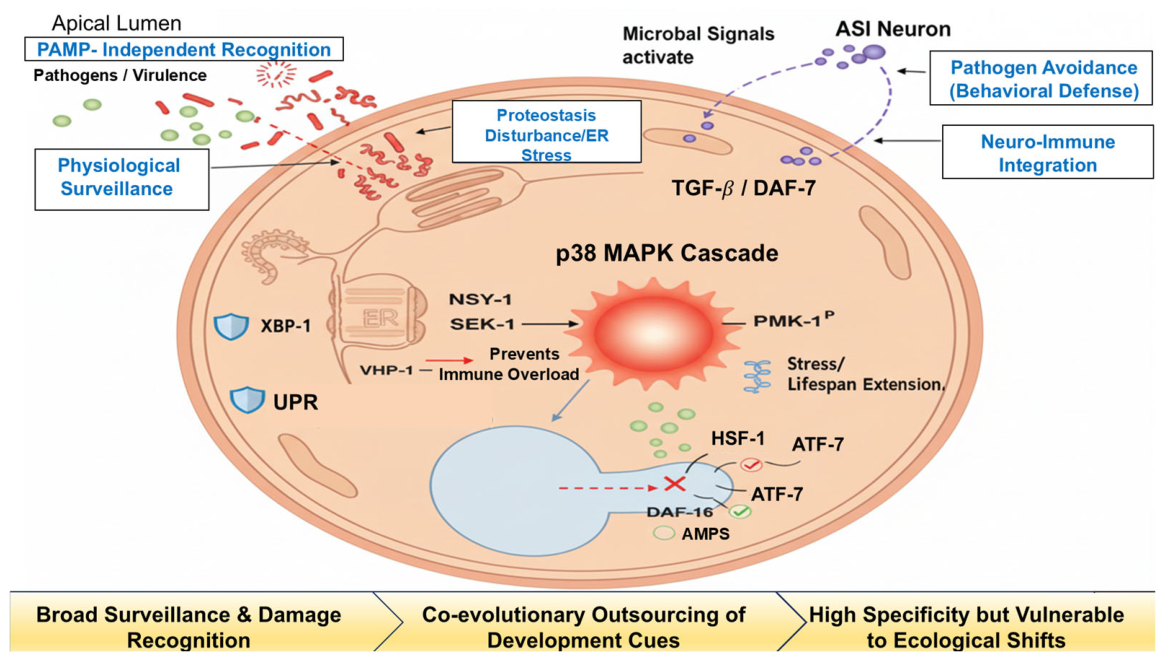
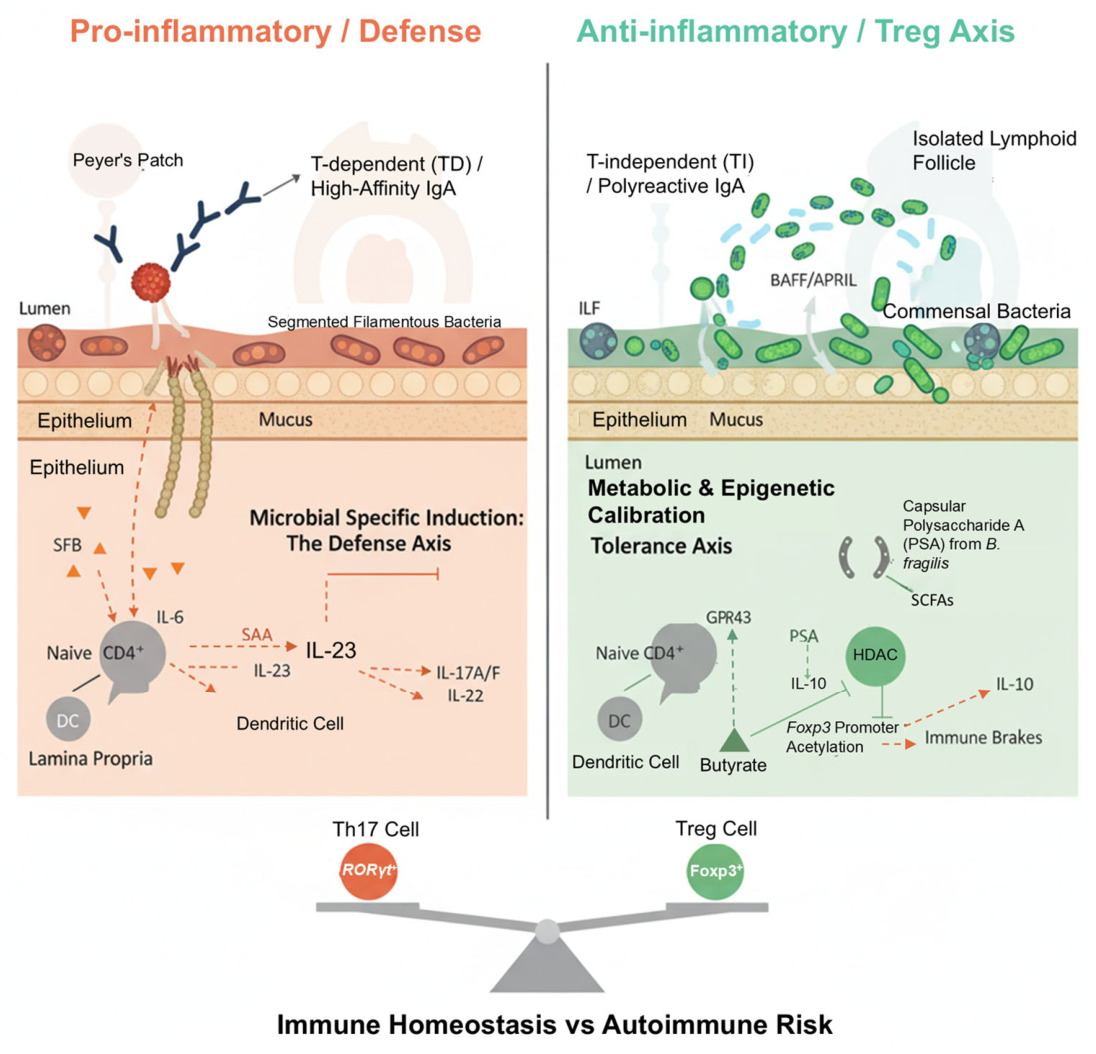
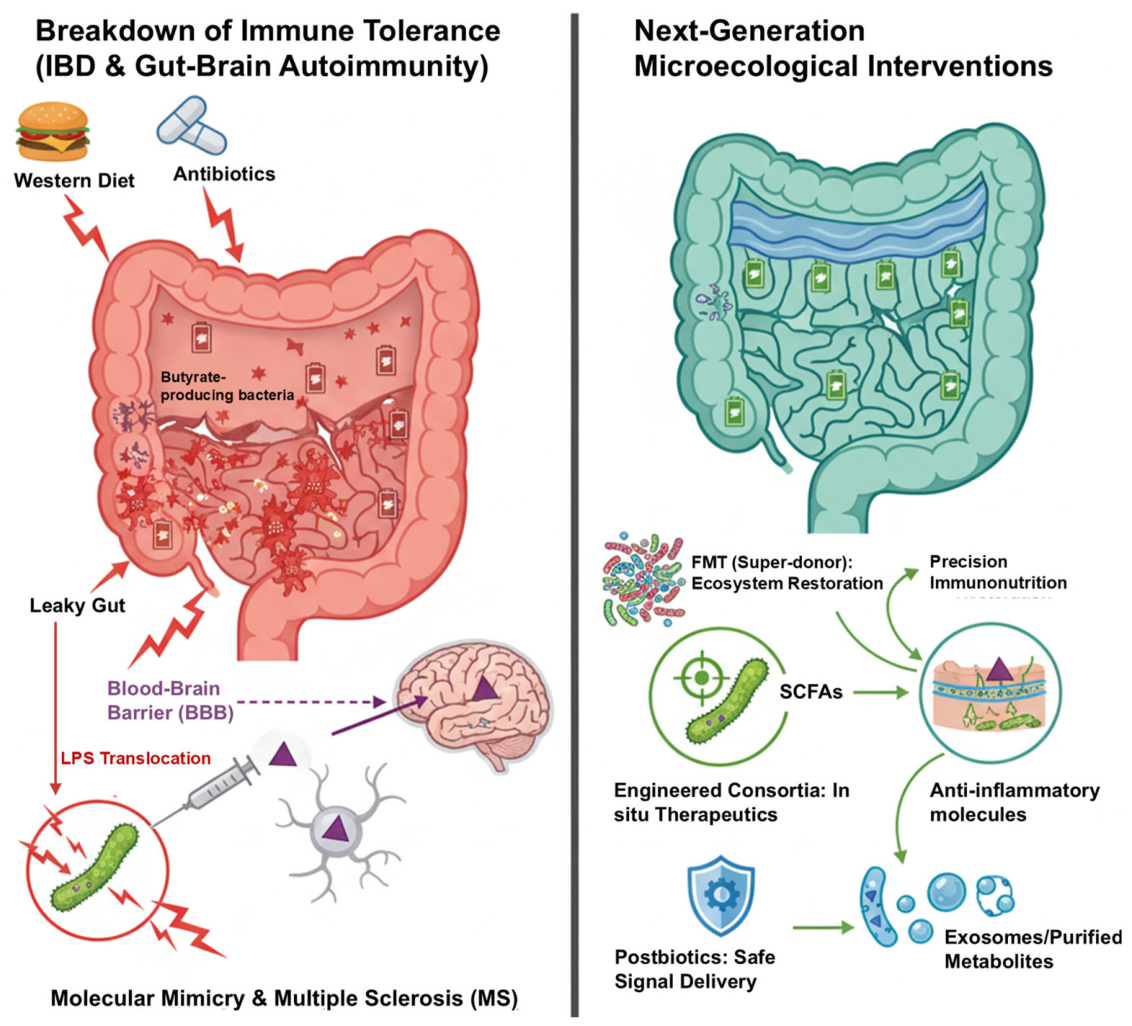
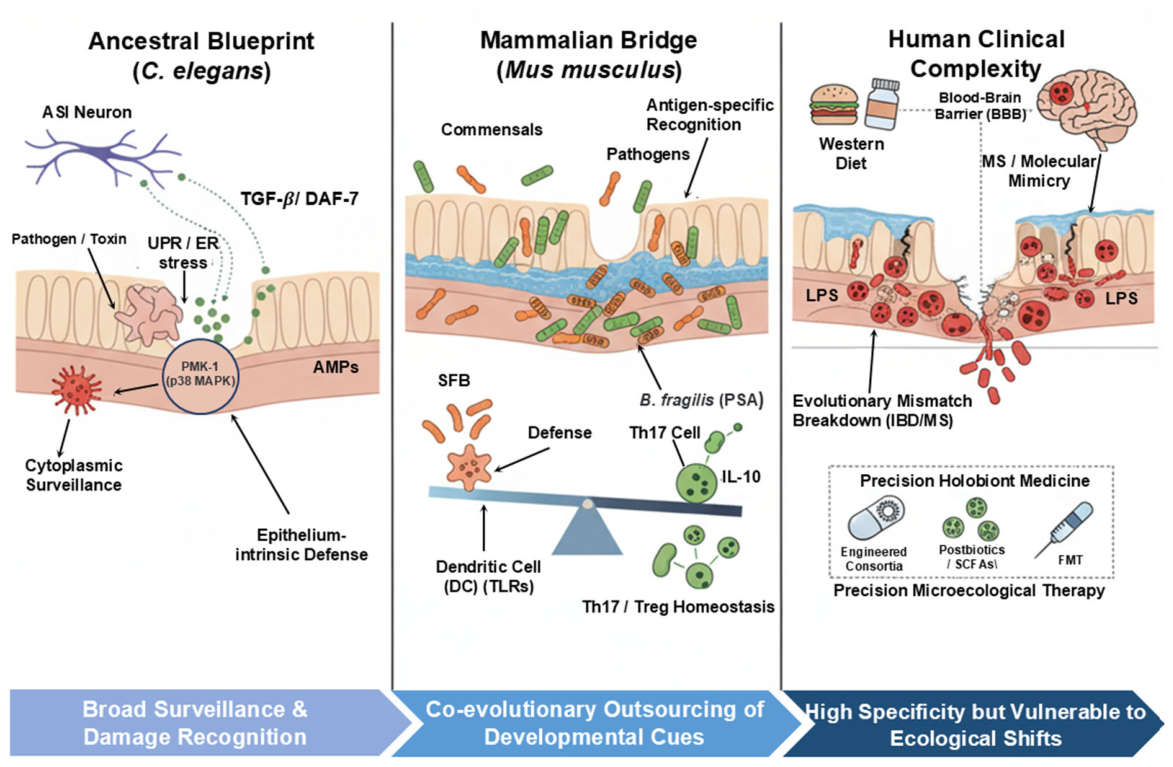
The immunological paradigm is undergoing profound shifts. Classic “self-nonself” recognition remains foundational, but microbiome research has expanded immunological models toward homeostasis, tolerance, and host–microbe co-regulation. Within this framework, gut microbiota act as the core drivers of the development and calibration of the host immune system. This review examines host–microbiome immune interactions across species from a macroevolutionary perspective. We use C. elegans, mouse models, and humans as comparative systems representing different levels of immune complexity and translational relevance. These include Caenorhabditis elegans (primitive innate immunity via cytosolic surveillance), mouse models (microbiota-driven shaping of adaptive immunity and homeostatic trade-offs), and the human system (modern lifestyle-induced “evolutionary mismatch” and inflammatory diseases). The immune system has evolved significantly over time. It has transitioned from independent cellular integrity monitoring to a complex network that is heavily reliant on external microbial cues. This potential integration of developmental signals from commensal microbes enhances environmental adaptability but may also increase host susceptibility to inflammatory disorders under modern ecological shifts. Deconstructing this cross-species interaction blueprint offers significant theoretical value. Furthermore, it provides the guiding logic for developing next-generation precision microbiome therapies that target the holobiont, such as engineered microbial consortia and personalized postbiotic interventions.
Keywords: holobiont; microbiome–immune interactions; evolutionary mismatch; immune homeostasis; surveillance immunity; and precision medicine holobiont; microbiome–immune interactions; evolutionary mismatch; immune homeostasis; surveillance immunity; and precision medicine