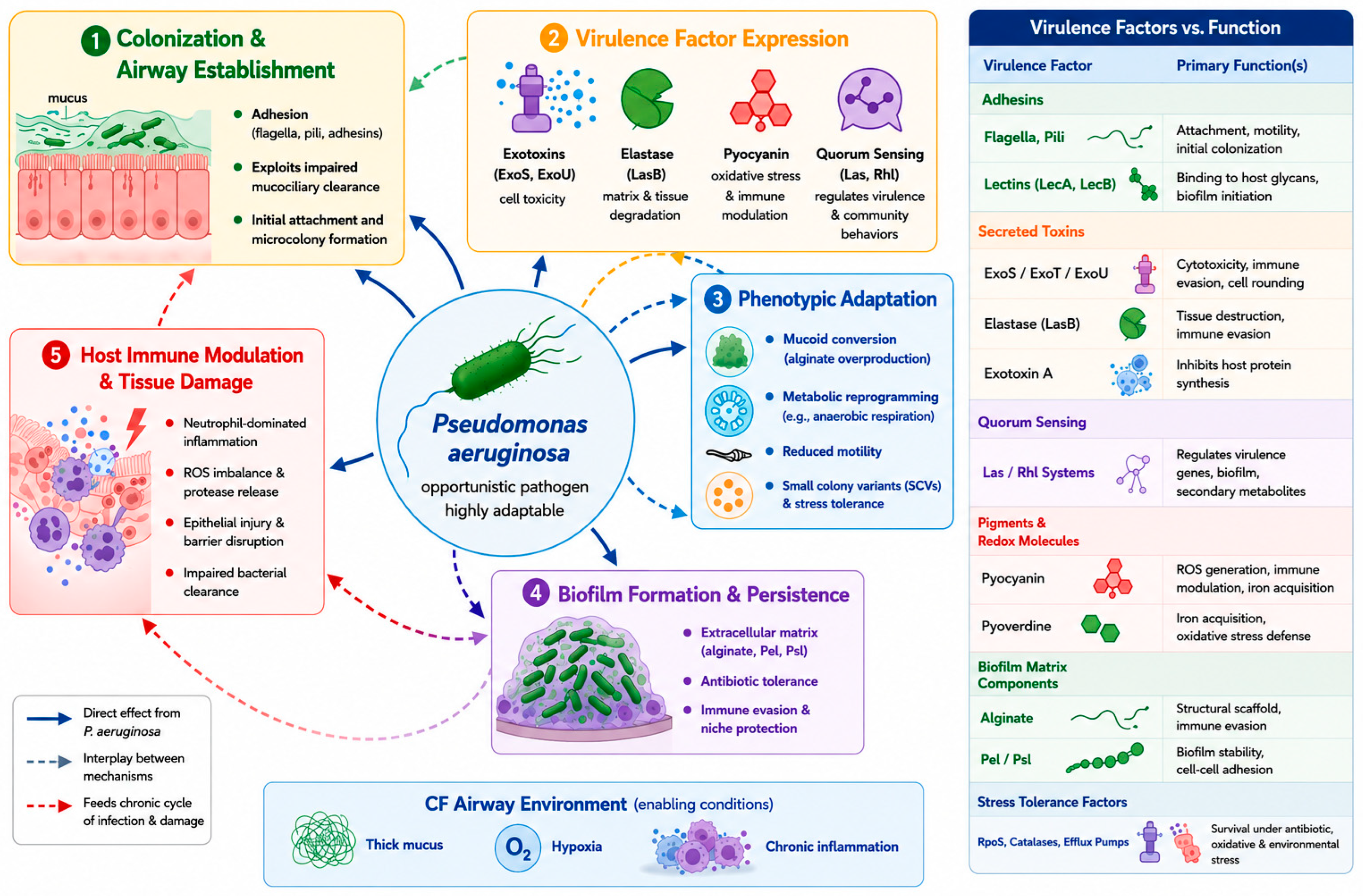
Host–Pathogen Interactions in Cystic Fibrosis Lung Disease: Adaptation, Persistence, and Clinical Implications of Pseudomonas aeruginosa

Abstract
1. Introduction
2. The Cystic Fibrosis Airway: A Unique Ecological Niche
2.1. Ion Channel Dysfunction and the Airway Microenvironment in Cystic Fibrosis
2.2. Immune Dysregulation in Cystic Fibrosis
3. Early vs. Chronic Infection: The Turning Point
3.1. Initial Acquisition of Pseudomonas aeruginosa
3.2. Adaptation and Phenotypic Switching
4. Biofilm Formation and Biofilm-Mediated Persistence
5. The Hyperinflammatory Loop and Immune Dysregulation in Cystic Fibrosis
6. Microbial Evolution and Community Interactions in the CF Airway
7. Impact of CFTR Modulator Therapy on Host–Pathogen Interactions
8. Therapeutic Strategies

| Strategy Phase and Category | Active Compound(s) | Mechanism of Action | MIC50/MIC90 (mg/L) | Key Reference(s) |
|---|---|---|---|---|
| I. Eradication Therapy (Early Infection) | ||||
| Inhaled Aminoglycoside | Tobramycin (TIS) | Inhibits protein synthesis by binding to the 30S ribosomal subunit. | 1/16–2/32 | [114,115,116,117] |
| Inhaled Polymyxin + Oral Quinolone | Colistin + Ciprofloxacin | Cell membrane disruption (Colistin) and DNA gyrase-topoisomerase IV inhibition (Cipro). | Colistin, 0.5/1–1/4; Cipro, 1/8–2/8 | [114,115,116] |
| Intravenous (IV) Combination | Ceftazidime + Tobramycin | Inhibits cell wall synthesis (Ceftazidime) | 2/64–4/64 | [116,117] |
| Broad-Spectrum IV Beta-Lactams | Piperacillin-Tazobactam/Cefepime | Inhibits cell wall synthesis by binding to PBPs | Piperacillin-Tazobactam, 4/128–8/256; Cefepime, 4/8–>128 | [116,117,118] |
| IV Carbapenem | Meropenem | High-affinity PBP binding; effective against many resistant strains. | 0.25/16–1/32 | [116,117,118] |
| Beta-lactam Combinations | Ceftazidime-Avibactam | Cephalosporin/BLI; Avibactam protects ceftazidime from Class A, C, and some D enzymes | 2/4–2/8 | [116,117,118,119] |
| Beta-lactam Combinations | Ceftolozane-Tazobactam | Novel Beta-lactam/BLI; Ceftolozane has high PBP affinity and AmpC stability | 1/2–1/16 | [114,116,117,120] |
| Beta-lactam | Cefiderocol | Siderophore cephalosporin; enters cell via iron transporters to inhibit PBPs | 0.12/2–1/6 | [114,119,121] |
| II. Suppressive Therapy (Established Chronic Infection) | ||||
| Maintenance Aminoglycoside | Tobramycin (TNS or DPI) | Sustained reduction in bacterial density and preservation of FEV1 | 1/16–2/32 | [114,115,116,117,118,120,122] |
| Maintenance Polymyxin | Inhaled Colistin | Acts as a cationic detergent to disrupt the bacterial outer membrane. | 0.5/1–1/4 | [114,115,116] |
| Inhaled Monobactam | Aztreonam Lysine | Binds to PBP3 to inhibit cell wall synthesis; targets chronic populations. | 8/64–8/128 | [116,117] |
| III. Adjuvants and Emerging Biologics | ||||
| CFTR Modulators | ETI | Restores ion transport, improves MCC, and normalizes airway pH to reduce pathogen niches. | [123] | |
| Anti-inflammatory/Immunomodulatory therapy | Long-term azithromycin | Immunomodulatory and anti-biofilm effects; quorum sensing interference | [124,125] | |
| Mucolytic therapy/biofilm-disrupting adjunct | Dornase alfa | Disrupts biofilm eDNA; ↓ mucus viscosity; ↑ airway clearance | [126,127] | |
| Iron-Mimetic Therapy | Gallium Nitrate | Mimics iron to disrupt bacterial metabolism and starve the pathogen. | [67] | |
| Bacteriophage Therapy | AP-PA02/BX004-A Cocktails | Target-specific lysis of MDR strains; disrupts biofilm to improve drug access. | [44] | |
| Persistence-Targeting Phage | Phage Paride | Hijacks (p)ppGpp circuits to replicate in and kill deep-dormant persister cells. | [44] | |
| Biofilm Modulators | D-amino acids (D-Met, D-Trp) | Triggers biofilm disassembly by interfering with matrix stability. | [106,128] |
8.1. Vaccine Development Strategies
8.2. Anti-Inflammatory Therapeutic Strategies
8.3. Bacteriophage Therapy
8.4. Limitations of Current Therapeutic Strategies
9. Conclusions
Funding
Institutional Review Board Statement
Informed Consent Statement
Data Availability Statement
Conflicts of Interest
Abbreviations
| ASL | airway surface liquid |
| CF | cystic fibrosis |
| CFTR | cystic fibrosis transmembrane conductance regulator |
| CFTRm | cystic fibrosis transmembrane conductance regulator modulator therapy |
| Cl− | chloride |
| DAMPs | damage-associated molecular patterns |
| DPP-1 | dipeptidyl peptidase-1 |
| ENaC | epithelial sodium channel |
| ETI | Elexacaftor/tezacaftor/ivacaftor |
| HCO3− | bicarbonate |
| MCC | mucociliary clearance |
| Na+ | sodium |
| NETs | neutrophil extracellular traps |
| NHERF1 | Na+/H+ exchanger regulatory factor-1 |
| pwCF | people with CF |
| P. aeruginosa | Pseudomonas aeruginosa |
| PAMP | pathogen-associated molecular patterns |
| ROS | reactive oxygen species |
| S. aureus | Staphylococcus aureus |
| Treg | regulatory T cells |
References
- Guo, J.; Garratt, A.; Hill, A. Worldwide rates of diagnosis and effective treatment for cystic fibrosis. J. Cyst. Fibros. 2022, 21, 456–462. [Google Scholar] [CrossRef]
- Stoltz, D.A.; Meyerholz, D.K.; Welsh, M.J. Origins of cystic fibrosis lung disease. N. Engl. J. Med. 2015, 372, 351–362. [Google Scholar] [CrossRef]
- Davies, J.C.; Alton, E.W.; Bush, A. Cystic fibrosis. BMJ 2007, 335, 1255–1259. [Google Scholar] [CrossRef] [PubMed]
- Matsui, H.; Grubb, B.R.; Tarran, R.; Randell, S.H.; Gatzy, J.T.; Davis, C.W.; Boucher, R.C. Evidence for periciliary liquid layer depletion, not abnormal ion composition, in the pathogenesis of cystic fibrosis airways disease. Cell 1998, 95, 1005–1015. [Google Scholar] [CrossRef] [PubMed]
- Sun, N.; Ogulur, I.; Mitamura, Y.; Yazici, D.; Pat, Y.; Bu, X.; Li, M.; Zhu, X.; Babayev, H.; Ardicli, S.; et al. The epithelial barrier theory and its associated diseases. Allergy 2024, 79, 3192–3237. [Google Scholar] [CrossRef]
- Cigana, C.; Lorè, N.I.; Riva, C.; De Fino, I.; Spagnuolo, L.; Sipione, B.; Rossi, G.; Nonis, A.; Cabrini, G.; Bragonzi, A. Tracking the immunopathological response to Pseudomonas aeruginosa during respiratory infections. Sci. Rep. 2016, 6, 21465. [Google Scholar] [CrossRef] [PubMed]
- Cigana, C.; Ranucci, S.; Rossi, A.; De Fino, I.; Melessike, M.; Bragonzi, A. Antibiotic efficacy varies based on the infection model and treatment regimen for Pseudomonas aeruginosa. Eur. Respir. J. 2020, 55, 1802456. [Google Scholar] [CrossRef]
- Jarzynka, S.; Makarewicz, O.; Weiss, D.; Minkiewicz-Zochniak, A.; Iwańska, A.; Skorupa, W.; Padzik, M.; Augustynowicz-Kopeć, E.; Olędzka, G. The Impact of Pseudomonas aeruginosa Infection in Adult Cystic Fibrosis Patients-A Single Polish Centre Study. Pathogens 2023, 12, 1440. [Google Scholar] [CrossRef]
- Durda-Masny, M.; Goździk-Spychalska, J.; John, A.; Czaiński, W.; Stróżewska, W.; Pawłowska, N.; Wlizło, J.; Batura-Gabryel, H.; Szwed, A. The determinants of survival among adults with cystic fibrosis-a cohort study. J. Physiol. Anthropol. 2021, 40, 19. [Google Scholar] [CrossRef]
- Pollak, M.; Gambazza, S.; Orenti, A.; Prais, D.; Kerem, E.; Mei-Zahav, M. Factors associated with sustained Pseudomonas aeruginosa infection following elexacaftor/tezacaftor/ivacaftor treatment: Real-world data from the European cystic fibrosis society patient registry. J. Cyst. Fibros. 2025, 24, 1098–1104. [Google Scholar] [CrossRef]
- Durfey, S.L.; Kapnadak, S.G.; Pena, T.; Willmering, M.M.; Godwin, J.D.; Teresi, M.E.; Heltshe, S.L.; Vo, A.T.; Villacreses, R.A.; Aliukonyte, I.; et al. Pseudomonas infections persisting after CFTR modulators are widespread throughout the lungs and drive lung inflammation. Cell Host Microbe 2025, 33, 1428–1445.e1424. [Google Scholar] [CrossRef]
- Cystic Fibrosis Foundation. Cystic Fibrosis Foundation Patient Registry 2024 Annual Data Report. 2025. Available online: https://www.cff.org/medical-professionals/patient-registry (accessed on 1 May 2026).
- Terlizzi, V.; Timitilli, E.; Fiumara, M.S.; Dolce, D.; Campana, S.; Chiappini, E. Detection of Pseudomonas aeruginosa in cystic fibrosis after initiation of CFTR modulators: A systematic review. Paediatr. Respir. Rev. 2026; in press. [CrossRef]
- Flume, P.A.; Vandevanter, D.R. Does it matter how cystic fibrosis transmembrane conductance regulator modulators reduce inflammation in cystic fibrosis? Ann. Am. Thorac. Soc. 2026, 23, 172–173. [Google Scholar] [CrossRef]
- Pescaru, C.C.; Crișan, A.F.; Marițescu, A.; Cărunta, V.; Marc, M.; Dumitrache-Rujinski, Ș.; Laitin, S.; Oancea, C. Effects of CFTR Modulators on Pseudomonas aeruginosa Infections in Cystic Fibrosis. Infect. Dis. Rep. 2025, 17, 80. [Google Scholar] [CrossRef] [PubMed]
- Hu, Y.; Bojanowski, C.M.; Britto, C.J.; Wellems, D.; Song, K.; Scull, C.; Jennings, S.; Li, J.; Kolls, J.K.; Wang, G. Aberrant immune programming in neutrophils in cystic fibrosis. J. Leukoc. Biol. 2024, 115, 420–434. [Google Scholar] [CrossRef]
- Capraz Yavuz, B.; Dogru, D.; Sunman, B.; Alboga, D.; Kayaoglu, M.Y.; Emiralioglu, N.; Yalcin, E.; Ozcelik, U. Hypochloremic Hypokalemic Metabolic Alkalosis as a Manifestation of CFTR-Related Disorder. Pediatr. Pulmonol. 2026, 61, e71555. [Google Scholar] [CrossRef] [PubMed]
- Boucher, R.C. Evidence for airway surface dehydration as the initiating event in CF airway disease. J. Intern. Med. 2007, 261, 5–16. [Google Scholar] [CrossRef] [PubMed]
- Ehre, C.; Mall, M.A.; McElvaney, G.N. Mucus and inflammation in the HEMT Era: Persistent barriers to complete airway normalization in cystic fibrosis. J. Cyst. Fibros. 2026; in press. [CrossRef]
- Touré, H.; Durand, N.; Orgeur, M.; Galindo, L.A.; Girard-Misguich, F.; Guénal, I.; Herrmann, J.L.; Szuplewski, S. ENaC is a host susceptibility factor to bacterial infections in cystic fibrosis context. Commun. Biol. 2025, 8, 653. [Google Scholar] [CrossRef]
- Pezzulo, A.A.; Tang, X.X.; Hoegger, M.J.; Abou Alaiwa, M.H.; Ramachandran, S.; Moninger, T.O.; Karp, P.H.; Wohlford-Lenane, C.L.; Haagsman, H.P.; van Eijk, M.; et al. Reduced airway surface pH impairs bacterial killing in the porcine cystic fibrosis lung. Nature 2012, 487, 109–113. [Google Scholar] [CrossRef] [PubMed]
- Balázs, A.; Mall, M.A. Role of the SLC26A9 Chloride Channel as Disease Modifier and Potential Therapeutic Target in Cystic Fibrosis. Front. Pharmacol. 2018, 9, 1112. [Google Scholar] [CrossRef]
- Najm, M.; Martignetti, L.; Cornet, M.; Kelly-Aubert, M.; Sermet, I.; Calzone, L.; Stoven, V. From CFTR to a CF signalling network: A systems biology approach to study Cystic Fibrosis. BMC Genom. 2024, 25, 892. [Google Scholar] [CrossRef]
- Rimessi, A.; Bezzerri, V.; Patergnani, S.; Marchi, S.; Cabrini, G.; Pinton, P. Mitochondrial Ca2+-dependent NLRP3 activation exacerbates the Pseudomonas aeruginosa-driven inflammatory response in cystic fibrosis. Nat. Commun. 2015, 6, 6201. [Google Scholar] [CrossRef] [PubMed]
- Vatareck, E.; Rick, T.; Oswaldo Gomez, N.; Bandyopadhyay, A.; Kramer, J.; Strunin, D.; Erdmann, J.; Hartmann, O.; Alpers, K.; Boedeker, C.; et al. Epigenetic cellular memory in Pseudomonas aeruginosa generates phenotypic variation in response to host environments. Proc. Natl. Acad. Sci. USA 2025, 122, e2415345122. [Google Scholar] [CrossRef] [PubMed]
- Pankonien, I.; Quaresma, M.C.; Rodrigues, C.S.; Amaral, M.D. CFTR, Cell Junctions and the Cytoskeleton. Int. J. Mol. Sci. 2022, 23, 2688. [Google Scholar] [CrossRef]
- Short, D.B.; Trotter, K.W.; Reczek, D.; Kreda, S.M.; Bretscher, A.; Boucher, R.C.; Stutts, M.J.; Milgram, S.L. An apical PDZ protein anchors the cystic fibrosis transmembrane conductance regulator to the cytoskeleton. J. Biol. Chem. 1998, 273, 19797–19801. [Google Scholar] [CrossRef]
- Rubino, R.; Bezzerri, V.; Favia, M.; Facchini, M.; Tebon, M.; Singh, A.K.; Riederer, B.; Seidler, U.; Iannucci, A.; Bragonzi, A.; et al. Pseudomonas aeruginosa reduces the expression of CFTR via post-translational modification of NHERF1. Pflugers Arch. 2014, 466, 2269–2278. [Google Scholar] [CrossRef]
- Chen, C.J.; Kono, H.; Golenbock, D.; Reed, G.; Akira, S.; Rock, K.L. Identification of a key pathway required for the sterile inflammatory response triggered by dying cells. Nat. Med. 2007, 13, 851–856. [Google Scholar] [CrossRef]
- Khan, T.Z.; Wagener, J.S.; Bost, T.; Martinez, J.; Accurso, F.J.; Riches, D.W. Early pulmonary inflammation in infants with cystic fibrosis. Am. J. Respir. Crit. Care Med. 1995, 151, 1075–1082. [Google Scholar] [CrossRef] [PubMed]
- Rodrigues, C.S.; Canto, M.; Torres, R.; Railean, V.; Ramalho, S.S.; Farinha, C.M.; Pankonien, I.; Amaral, M.D. CFTR ion transport deficiency primes the epithelium for partial epithelial-mesenchymal transition in cystic fibrosis. Front. Pharmacol. 2025, 16, 1655479. [Google Scholar] [CrossRef]
- Hagner, M.; Albrecht, M.; Guerra, M.; Braubach, P.; Halle, O.; Zhou-Suckow, Z.; Butz, S.; Jonigk, D.; Hansen, G.; Schultz, C.; et al. IL-17A from innate and adaptive lymphocytes contributes to inflammation and damage in cystic fibrosis lung disease. Eur. Respir. J. 2021, 57, 1900716. [Google Scholar] [CrossRef]
- Tiringer, K.; Treis, A.; Fucik, P.; Gona, M.; Gruber, S.; Renner, S.; Dehlink, E.; Nachbaur, E.; Horak, F.; Jaksch, P.; et al. A Th17- and Th2-skewed cytokine profile in cystic fibrosis lungs represents a potential risk factor for Pseudomonas aeruginosa infection. Am. J. Respir. Crit. Care Med. 2013, 187, 621–629. [Google Scholar] [CrossRef] [PubMed]
- Mulcahy, E.M.; Hudson, J.B.; Beggs, S.A.; Reid, D.W.; Roddam, L.F.; Cooley, M.A. High peripheral blood th17 percent associated with poor lung function in cystic fibrosis. PLoS ONE 2015, 10, e0120912. [Google Scholar] [CrossRef]
- Allegretta, C.; Montemitro, E.; Ciciriello, F.; Altieri, M.T.; Sabbioni, G.; Breveglieri, G.; Borgatti, M.; Cabrini, G.; Laselva, O. IL-17 family members exert an autocrine pro-inflammatory loop in CF respiratory epithelial cells ex vivo. Cell Immunol. 2025, 409–410, 104926. [Google Scholar] [CrossRef]
- Nickerson, R.; Thornton, C.S.; Johnston, B.; Lee, A.H.Y.; Cheng, Z. Pseudomonas aeruginosa in chronic lung disease: Untangling the dysregulated host immune response. Front. Immunol. 2024, 15, 1405376. [Google Scholar] [CrossRef]
- Zhang, D.; Zhang, W.; Hu, P.; Zhang, W. Dipeptidyl peptidase 1 inhibitors for inflammatory respiratory diseases: Mechanisms, clinical trials, and therapeutic prospects. Front. Pharmacol. 2025, 16, 1656316. [Google Scholar] [CrossRef]
- Flores-Vega, V.R.; Hernández-Martínez, G.; Cocotl-Yañez, M.; Ares, M.A.; Lincopan, N.; Ortiz-Navarrete, V.; Rosales-Reyes, R. Contribution of two-component regulatory systems to the acute-to-chronic infection transition of Pseudomonas aeruginosa in cystic fibrosis. J. Bacteriol. 2026, 208, e00471-25. [Google Scholar] [CrossRef]
- Cohen-Cymberknoh, M. Infection and Inflammation in the Cystic fibrosis (CF) airway. Pediatr. Pulmonol. 2025, 60, S82–S83. [Google Scholar] [CrossRef]
- Chen, G.; Sun, L.; Kato, T.; Okuda, K.; Martino, M.B.; Abzhanova, A.; Lin, J.M.; Gilmore, R.C.; Batson, B.D.; O’Neal, Y.K.; et al. IL-1β dominates the promucin secretory cytokine profile in cystic fibrosis. J. Clin. Investig. 2019, 129, 4433–4450. [Google Scholar] [CrossRef] [PubMed]
- Wellems, D.; Hu, Y.; Jennings, S.; Wang, G. Loss of CFTR function in macrophages alters the cell transcriptional program and delays lung resolution of inflammation. Front. Immunol. 2023, 14, 1242381. [Google Scholar] [CrossRef] [PubMed]
- Ribeiro, C.M.P.; Higgs, M.G.; Muhlebach, M.S.; Wolfgang, M.C.; Borgatti, M.; Lampronti, I.; Cabrini, G. Revisiting Host-Pathogen Interactions in Cystic Fibrosis Lungs in the Era of CFTR Modulators. Int. J. Mol. Sci. 2023, 24, 5010. [Google Scholar] [CrossRef]
- De, M.; Serpa, G.; Zuiker, E.; Hisert, K.B.; Liles, W.C.; Manicone, A.M.; Hemann, E.A.; Long, M.E. MEK1/2 inhibition decreases pro-inflammatory responses in macrophages from people with cystic fibrosis and mitigates severity of illness in experimental murine methicillin-resistant Staphylococcus aureus infection. Front. Cell Infect. Microbiol. 2024, 14, 1275940. [Google Scholar] [CrossRef] [PubMed]
- Hwang, W.; Yong, J.H.; Lenneman, B.R.; Yonker, L.M. Phage-Based Approaches to Chronic Pseudomonas aeruginosa Lung Infection in Cystic Fibrosis. Antibiotics 2026, 15, 125. [Google Scholar] [CrossRef] [PubMed]
- Agaronyan, K.; Sharma, L.; Vaidyanathan, B.; Glenn, K.; Yu, S.; Annicelli, C.; Wiggen, T.D.; Penningroth, M.R.; Hunter, R.C.; Dela Cruz, C.S.; et al. Tissue remodeling by an opportunistic pathogen triggers allergic inflammation. Immunity 2022, 55, 895–911.e810. [Google Scholar] [CrossRef] [PubMed]
- Stölting, H.; Lloyd, C.M. Pseudomonas aeruginosa: A pathogen making itself at home. Trends Immunol. 2022, 43, 497–499. [Google Scholar] [CrossRef]
- Chen, J.; Kinter, M.; Shank, S.; Cotton, C.; Kelley, T.J.; Ziady, A.G. Dysfunction of Nrf-2 in CF epithelia leads to excess intracellular H2O2 and inflammatory cytokine production. PLoS ONE 2008, 3, e3367. [Google Scholar] [CrossRef]
- Beharry, S.; Ackerley, C.; Corey, M.; Kent, G.; Heng, Y.M.; Christensen, H.; Luk, C.; Yantiss, R.K.; Nasser, I.A.; Zaman, M.; et al. Long-term docosahexaenoic acid therapy in a congenic murine model of cystic fibrosis. Am. J. Physiol. Gastrointest. Liver Physiol. 2007, 292, G839–G848. [Google Scholar] [CrossRef]
- White, N.M.; Corey, D.A.; Kelley, T.J. Mechanistic similarities between cultured cell models of cystic fibrosis and niemann-pick type C. Am. J. Respir. Cell Mol. Biol. 2004, 31, 538–543. [Google Scholar] [CrossRef]
- Lara-Reyna, S.; Holbrook, J.; Jarosz-Griffiths, H.H.; Peckham, D.; McDermott, M.F. Dysregulated signalling pathways in innate immune cells with cystic fibrosis mutations. Cell Mol. Life Sci. 2020, 77, 4485–4503. [Google Scholar] [CrossRef]
- Zhang, P.; Wang, J.; Miao, J.; Zhu, P. The dual role of tissue regulatory T cells in tissue repair: Return to homeostasis or fibrosis. Front. Immunol. 2025, 16, 1560578. [Google Scholar] [CrossRef]
- Westhölter, D.; Beckert, H.; Straßburg, S.; Welsner, M.; Sutharsan, S.; Taube, C.; Reuter, S. Pseudomonas aeruginosa infection, but not mono or dual-combination CFTR modulator therapy affects circulating regulatory T cells in an adult population with cystic fibrosis. J. Cyst. Fibros. 2021, 20, 1072–1079. [Google Scholar] [CrossRef]
- Jackson, L.; Waters, V. Factors influencing the acquisition and eradication of early Pseudomonas aeruginosa infection in cystic fibrosis. J. Cyst. Fibros. 2021, 20, 8–16. [Google Scholar] [CrossRef] [PubMed]
- Borisova, D.; Paunova-Krasteva, T.; Strateva, T.; Stoitsova, S. Biofilm Formation of Pseudomonas aeruginosa in Cystic Fibrosis: Mechanisms of Persistence, Adaptation, and Pathogenesis. Microorganisms 2025, 13, 1527. [Google Scholar] [CrossRef]
- Douglas, T.A.; Brennan, S.; Gard, S.; Berry, L.; Gangell, C.; Stick, S.M.; Clements, B.S.; Sly, P.D. Acquisition and eradication of P. aeruginosa in young children with cystic fibrosis. Eur. Respir. J. 2009, 33, 305–311. [Google Scholar] [CrossRef]
- Kidd, T.J.; Soares Magalhães, R.J.; Paynter, S.; Bell, S.C. The social network of cystic fibrosis centre care and shared Pseudomonas aeruginosa strain infection: A cross-sectional analysis. Lancet Respir. Med. 2015, 3, 640–650. [Google Scholar] [CrossRef]
- Carey, C.J.; Duggan, N.; Drabinska, J.; McClean, S. Harnessing hypoxia: Bacterial adaptation and chronic infection in cystic fibrosis. FEMS Microbiol. Rev. 2025, 49, fuaf018. [Google Scholar] [CrossRef]
- Reuven, A.D.; Katzenell, S.; Mwaura, B.W.; Bliska, J.B. ExoS effector in Pseudomonas aeruginosa Hyperactive Type III secretion system mutant promotes enhanced Plasma Membrane Rupture in Neutrophils. PLoS Pathog. 2025, 21, e1013021. [Google Scholar] [CrossRef]
- Scoffone, V.C.; Trespidi, G.; Chiarelli, L.R.; Barbieri, G.; Buroni, S. Quorum Sensing as Antivirulence Target in Cystic Fibrosis Pathogens. Int. J. Mol. Sci. 2019, 20, 1838. [Google Scholar] [CrossRef]
- Schelstraete, P.; Haerynck, F.; Van Daele, S.; Deseyne, S.; De Baets, F. Eradication therapy for Pseudomonas aeruginosa colonization episodes in cystic fibrosis patients not chronically colonized by P. aeruginosa. J. Cyst. Fibros. 2013, 12, 1–8. [Google Scholar] [CrossRef]
- Taccetti, G.; Terlizzi, V.; Campana, S.; Dolce, D.; Ravenni, N.; Fevola, C.; Francalanci, M.; Galici, V.; Neri, A.S. Antibiotic treatment of bacterial lung infections in cystic fibrosis. Eur. J. Pediatr. 2024, 184, 82. [Google Scholar] [CrossRef] [PubMed]
- Mitra, S.D.; Soneji, M.; Axline, C.M.R.; Hayden, H.S.; Radey, M.C.; Forsberg, C.M.; Ozer, E.A.; Wolter, D.J.; Pope, C.E.; Burns, J.; et al. Culture and Adaptation of Pseudomonas aeruginosa During Early Infection in Children With Cystic Fibrosis. J. Infect. Dis. 2026, 233, e67–e76. [Google Scholar] [CrossRef]
- Bartell, J.A.; Sommer, L.M.; Haagensen, J.A.J.; Loch, A.; Espinosa, R.; Molin, S.; Johansen, H.K. Evolutionary highways to persistent bacterial infection. Nat. Commun. 2019, 10, 629. [Google Scholar] [CrossRef]
- Liu, X.; Liu, F.; Ding, S.; Shen, J.; Zhu, K. Sublethal Levels of Antibiotics Promote Bacterial Persistence in Epithelial Cells. Adv. Sci. 2020, 7, 1900840. [Google Scholar] [CrossRef]
- Sultan, M.; Arya, R.; Kim, K.K. Roles of Two-Component Systems in Pseudomonas aeruginosa Virulence. Int. J. Mol. Sci. 2021, 22, 12152. [Google Scholar] [CrossRef] [PubMed]
- Bjarnsholt, T.; Jensen, P.; Jakobsen, T.H.; Phipps, R.; Nielsen, A.K.; Rybtke, M.T.; Tolker-Nielsen, T.; Givskov, M.; Høiby, N.; Ciofu, O. Quorum sensing and virulence of Pseudomonas aeruginosa during lung infection of cystic fibrosis patients. PLoS ONE 2010, 5, e10115. [Google Scholar] [CrossRef]
- Letizia, M.; Diggle, S.P.; Whiteley, M. Pseudomonas aeruginosa: Ecology, evolution, pathogenesis and antimicrobial susceptibility. Nat. Rev. Microbiol. 2025, 23, 701–717. [Google Scholar] [CrossRef] [PubMed]
- Iwańska, A.; Trafny, E.A.; Czopowicz, M.; Augustynowicz-Kopeć, E. Phenotypic and genotypic characteristics of Pseudomonas aeruginosa isolated from cystic fibrosis patients with chronic infections. Sci. Rep. 2023, 13, 11741. [Google Scholar] [CrossRef] [PubMed]
- Jennings, L.K.; Dreifus, J.E.; Reichhardt, C.; Storek, K.M.; Secor, P.R.; Wozniak, D.J.; Hisert, K.B.; Parsek, M.R. Pseudomonas aeruginosa aggregates in cystic fibrosis sputum produce exopolysaccharides that likely impede current therapies. Cell Rep. 2021, 34, 108782. [Google Scholar] [CrossRef]
- Thi, M.T.T.; Wibowo, D.; Rehm, B.H.A. Pseudomonas aeruginosa Biofilms. Int. J. Mol. Sci. 2020, 21, 8671. [Google Scholar] [CrossRef]
- Ren, L.; Yuan, Y.; Farea, K.; Feng, X.; He, J.; Liu, Y.; Zheng, B. The adaptability of Pseudomonas aeruginosa biofilm in oxygen-limited environments. Front. Cell Infect. Microbiol. 2025, 15, 1655335. [Google Scholar] [CrossRef]
- Wang, G.; Nauseef, W.M. Neutrophil dysfunction in the pathogenesis of cystic fibrosis. Blood 2022, 139, 2622–2631. [Google Scholar] [CrossRef]
- Wu, W.; Huang, J.; Xu, Z. Antibiotic influx and efflux in Pseudomonas aeruginosa: Regulation and therapeutic implications. Microb. Biotechnol. 2024, 17, e14487. [Google Scholar] [CrossRef]
- Guillaume, O.; Butnarasu, C.; Visentin, S.; Reimhult, E. Interplay between biofilm microenvironment and pathogenicity of Pseudomonas aeruginosa in cystic fibrosis lung chronic infection. Biofilm 2022, 4, 100089. [Google Scholar] [CrossRef]
- Elbehiry, A.; Marzouk, E.; Edrees, H.M.; Ibrahem, M.; Alzahrani, S.; Anagreyyah, S.; Abualola, H.; Alghamdi, A.; Alzahrani, A.; Jaber, M.; et al. Understanding Pseudomonas aeruginosa Biofilms: Quorum Sensing, c-di-GMP Signaling, and Emerging Antibiofilm Approaches. Microorganisms 2026, 14, 109. [Google Scholar] [CrossRef]
- Reyes Ruiz, L.M.; Williams, C.L.; Tamayo, R. Enhancing bacterial survival through phenotypic heterogeneity. PLoS Pathog. 2020, 16, e1008439. [Google Scholar] [CrossRef] [PubMed]
- Hirsch, M.J.; Hughes, E.M.; Easter, M.M.; Bollenbecker, S.E.; Howze Iv, P.H.; Birket, S.E.; Barnes, J.W.; Kiedrowski, M.R.; Krick, S. A novel in vitro model to study prolonged Pseudomonas aeruginosa infection in the cystic fibrosis bronchial epithelium. PLoS ONE 2023, 18, e0288002. [Google Scholar] [CrossRef] [PubMed]
- Secchi, E.; Savorana, G.; Vitale, A.; Eberl, L.; Stocker, R.; Rusconi, R. The structural role of bacterial eDNA in the formation of biofilm streamers. Proc. Natl. Acad. Sci. USA 2022, 119, e2113723119. [Google Scholar] [CrossRef] [PubMed]
- Zeng, W.; Song, Y.; Wang, R.; He, R.; Wang, T. Neutrophil elastase: From mechanisms to therapeutic potential. J. Pharm. Anal. 2023, 13, 355–366. [Google Scholar] [CrossRef]
- Boxio, R.; Wartelle, J.; Nawrocki-Raby, B.; Lagrange, B.; Malleret, L.; Hirche, T.; Taggart, C.; Pacheco, Y.; Devouassoux, G.; Bentaher, A. Neutrophil elastase cleaves epithelial cadherin in acutely injured lung epithelium. Respir. Res. 2016, 17, 129. [Google Scholar] [CrossRef]
- Voynow, J.A.; Shinbashi, M. Neutrophil Elastase and Chronic Lung Disease. Biomolecules 2021, 11, 1065. [Google Scholar] [CrossRef]
- Chalmers, J.D.; Mall, M.A.; Nielsen, K.G.; Chang, A.B.; Aliberti, S.; Blasi, F.; Korkmaz, B.; Lorent, N.; Taggart, C.C.; Loebinger, M.R. Neutrophil-derived biomarkers in bronchiectasis: Identifying a common therapeutic target. Eur. Respir. J. 2025, 66, 2500081. [Google Scholar] [CrossRef]
- Chalmers, J.D.; Elborn, S.; Greene, C.M. Basic, translational and clinical aspects of bronchiectasis in adults. Eur. Respir. Rev. 2023, 32, 230015. [Google Scholar] [CrossRef]
- Oriano, M.; Amati, F.; Gramegna, A.; De Soyza, A.; Mantero, M.; Sibila, O.; Chotirmall, S.H.; Voza, A.; Marchisio, P.; Blasi, F.; et al. Protease-Antiprotease Imbalance in Bronchiectasis. Int. J. Mol. Sci. 2021, 22, 5996. [Google Scholar] [CrossRef]
- Ghigo, A.; Prono, G.; Riccardi, E.; De Rose, V. Dysfunctional Inflammation in Cystic Fibrosis Airways: From Mechanisms to Novel Therapeutic Approaches. Int. J. Mol. Sci. 2021, 22, 1952. [Google Scholar] [CrossRef] [PubMed]
- Mayer, M.L.; Blohmke, C.J.; Falsafi, R.; Fjell, C.D.; Madera, L.; Turvey, S.E.; Hancock, R.E. Rescue of dysfunctional autophagy attenuates hyperinflammatory responses from cystic fibrosis cells. J. Immunol. 2013, 190, 1227–1238. [Google Scholar] [CrossRef] [PubMed]
- Yu, C.; Kotsimbos, T. Respiratory Infection and Inflammation in Cystic Fibrosis: A Dynamic Interplay among the Host, Microbes, and Environment for the Ages. Int. J. Mol. Sci. 2023, 24, 4052. [Google Scholar] [CrossRef]
- Bruscia, E.M.; Bonfield, T.L. Update on Innate and Adaptive Immunity in Cystic Fibrosis. Clin. Chest Med. 2022, 43, 603–615. [Google Scholar] [CrossRef] [PubMed]
- Purushothaman, A.K.; Nelson, E.J.R. Role of innate immunity and systemic inflammation in cystic fibrosis disease progression. Heliyon 2023, 9, e17553. [Google Scholar] [CrossRef]
- Vogne, C.; Aires, J.R.; Bailly, C.; Hocquet, D.; Plésiat, P. Role of the multidrug efflux system MexXY in the emergence of moderate resistance to aminoglycosides among Pseudomonas aeruginosa isolates from patients with cystic fibrosis. Antimicrob. Agents Chemother. 2004, 48, 1676–1680. [Google Scholar] [CrossRef] [PubMed]
- Thomas, S.R.; Ray, A.; Hodson, M.E.; Pitt, T.L. Increased sputum amino acid concentrations and auxotrophy of Pseudomonas aeruginosa in severe cystic fibrosis lung disease. Thorax 2000, 55, 795–797. [Google Scholar] [CrossRef]
- Elborn, J.S. Cystic fibrosis. Lancet 2016, 388, 2519–2531. [Google Scholar] [CrossRef]
- Coburn, B.; Wang, P.W.; Diaz Caballero, J.; Clark, S.T.; Brahma, V.; Donaldson, S.; Zhang, Y.; Surendra, A.; Gong, Y.; Elizabeth Tullis, D.; et al. Lung microbiota across age and disease stage in cystic fibrosis. Sci. Rep. 2015, 5, 10241. [Google Scholar] [CrossRef] [PubMed]
- Cuthbertson, L.; Walker, A.W.; Oliver, A.E.; Rogers, G.B.; Rivett, D.W.; Hampton, T.H.; Ashare, A.; Elborn, J.S.; De Soyza, A.; Carroll, M.P.; et al. Lung function and microbiota diversity in cystic fibrosis. Microbiome 2020, 8, 45. [Google Scholar] [CrossRef]
- Qu, J.; Yin, L.; Qin, S.; Sun, X.; Gong, X.; Li, S.; Pan, X.; Jin, Y.; Cheng, Z.; Jin, S.; et al. Identification of the Pseudomonas aeruginosa AgtR-CspC-RsaL pathway that controls Las quorum sensing in response to metabolic perturbation and Staphylococcus aureus. PLoS Pathog. 2025, 21, e1013054. [Google Scholar] [CrossRef]
- Mossop, M.; Ish-Horowicz, J.; Hughes, D.; Dobra, R.; Cunanan, A.G.; Rosenthal, M.; Carr, S.B.; Ramadan, N.; Nolan, L.M.; Davies, J.C. Chronicity Counts: The Impact of Pseudomonas aeruginosa, Staphylococcus aureus, and Coinfection in Cystic Fibrosis. Am. J. Respir. Crit. Care Med. 2024, 210, 240–242. [Google Scholar] [CrossRef]
- Swain, J.; Askenasy, I.; Rudland Nazeer, R.; Ho, P.M.; Labrini, E.; Mancini, L.; Xu, Q.; Hollendung, F.; Sheldon, I.; Dickson, C.; et al. Pathogenicity and virulence of Pseudomonas aeruginosa: Recent advances and under-investigated topics. Virulence 2025, 16, 2503430. [Google Scholar] [CrossRef]
- Keown, K.; Reid, A.; Moore, J.E.; Taggart, C.C.; Downey, D.G. Coinfection with Pseudomonas aeruginosa and Aspergillus fumigatus in cystic fibrosis. Eur. Respir. Rev. 2020, 29, 200011. [Google Scholar] [CrossRef]
- Hughes, D.A.; Rosenthal, M.; Cuthbertson, L.; Ramadan, N.; Felton, I.; Simmonds, N.J.; Loebinger, M.R.; Price, H.; Armstrong-James, D.; Elborn, J.S.; et al. An invisible threat? Aspergillus positive cultures and co-infecting bacteria in airway samples. J. Cyst. Fibros. 2023, 22, 320–326. [Google Scholar] [CrossRef] [PubMed]
- Lamoureux, C.; Guilloux, C.A.; Beauruelle, C.; Gouriou, S.; Ramel, S.; Dirou, A.; Le Bihan, J.; Revert, K.; Ropars, T.; Lagrafeuille, R.; et al. An observational study of anaerobic bacteria in cystic fibrosis lung using culture dependant and independent approaches. Sci. Rep. 2021, 11, 6845. [Google Scholar] [CrossRef]
- Ledger, E.L.; Smith, D.J.; Teh, J.J.; Wood, M.E.; Whibley, P.E.; Morrison, M.; Goldberg, J.B.; Reid, D.W.; Wells, T.J. Impact of CFTR Modulation on Pseudomonas aeruginosa Infection in People with Cystic Fibrosis. J. Infect. Dis. 2024, 230, e536–e547. [Google Scholar] [CrossRef] [PubMed]
- Pallenberg, S.T.; Zamarrón de Lucas, E.; Párniczky, A.; Lopes de Bragança, R. Cystic fibrosis year in review 2025. J. Cyst. Fibros 2026, 25, 198–203. [Google Scholar] [CrossRef]
- Pallenberg, S.T.; Pust, M.M.; Rosenboom, I.; Hansen, G.; Wiehlmann, L.; Dittrich, A.M.; Tümmler, B. Impact of Elexacaftor/Tezacaftor/Ivacaftor Therapy on the Cystic Fibrosis Airway Microbial Metagenome. Microbiol. Spectr. 2022, 10, e0145422. [Google Scholar] [CrossRef]
- Milczewska, J.; Syunyaeva, Z.; Żabińska-Jaroń, A.; Sands, D.; Thee, S. Changing profile of bacterial infection and microbiome in cystic fibrosis: When to use antibiotics in the era of CFTR-modulator therapy. Eur. Respir. Rev. 2024, 33, 240068. [Google Scholar] [CrossRef]
- Burgel, P.R.; Orenti, A.; Cromwell, E.; Macek, M.; Gutierrez, H.H.; Karadag, B.; Faro, A.; van Rens, J.G.; Naehrlich, L.; Bakkeheim, E.; et al. Global prevalence of CFTR variants with respect to their responsiveness to elexacaftor-tezacaftor-ivacaftor. J. Cyst. Fibros. 2025, 24, 1017–1026. [Google Scholar] [CrossRef]
- Langton Hewer, S.C.; Smith, S.; Rowbotham, N.J.; Yule, A.; Smyth, A.R. Antibiotic strategies for eradicating Pseudomonas aeruginosa in people with cystic fibrosis. Cochrane Database Syst. Rev. 2023, 6, Cd004197. [Google Scholar] [CrossRef]
- Elborn, J.S.; Blasi, F.; Burgel, P.R.; Peckham, D. Role of inhaled antibiotics in the era of highly effective CFTR modulators. Eur. Respir. Rev. 2023, 32, 220154. [Google Scholar] [CrossRef]
- Taccetti, G.; Francalanci, M.; Pizzamiglio, G.; Messore, B.; Carnovale, V.; Cimino, G.; Cipolli, M. Cystic Fibrosis: Recent Insights into Inhaled Antibiotic Treatment and Future Perspectives. Antibiotics 2021, 10, 338. [Google Scholar] [CrossRef] [PubMed]
- Principi, N.; Blasi, F.; Esposito, S. Azithromycin use in patients with cystic fibrosis. Eur. J. Clin. Microbiol. Infect. Dis. 2015, 34, 1071–1079. [Google Scholar] [CrossRef] [PubMed]
- Hewer, S.C.L.; Smyth, A.R.; Brown, M.; Jones, A.P.; Hickey, H.; Kenna, D.; Ashby, D.; Thompson, A.; Williamson, P.R. Intravenous versus oral antibiotics for eradication of Pseudomonas aeruginosa in cystic fibrosis (TORPEDO-CF): A randomised controlled trial. Lancet Respir. Med. 2020, 8, 975–986. [Google Scholar] [CrossRef]
- Kricker, J.A.; Page, C.P.; Gardarsson, F.R.; Baldursson, O.; Gudjonsson, T.; Parnham, M.J. Nonantimicrobial Actions of Macrolides: Overview and Perspectives for Future Development. Pharmacol. Rev. 2021, 73, 233–262. [Google Scholar] [CrossRef]
- Wallis, R.S.; O’Garra, A.; Sher, A.; Wack, A. Host-directed immunotherapy of viral and bacterial infections: Past, present and future. Nat. Rev. Immunol. 2023, 23, 121–133. [Google Scholar] [CrossRef]
- Buruiană, G.; Sima, C.M.; Anton-Păduraru, D.-T.; Bădescu, A.C.; Luncă, C.; Duhaniuc, A.; Dorneanu, O.S. Airway Microbiome in Children with Cystic Fibrosis: A Review of Microbial Shifts and Therapeutic Impacts. Medicina 2025, 61, 1605. [Google Scholar] [CrossRef]
- Maruri-Aransolo, A.; López-Causapé, C.; Hernández-García, M.; García-Castillo, M.; Caballero-Pérez, J.D.; Oliver, A.; Cantón, R. In vitro activity of cefiderocol in Pseudomonas aeruginosa isolates from people with cystic fibrosis recovered during three multicentre studies in Spain. J. Antimicrob. Chemother. 2024, 79, 1432–1440. [Google Scholar] [CrossRef]
- Mustafa, M.H.; Chalhoub, H.; Denis, O.; Deplano, A.; Vergison, A.; Rodriguez-Villalobos, H.; Tunney, M.M.; Elborn, J.S.; Kahl, B.C.; Traore, H.; et al. Antimicrobial Susceptibility of Pseudomonas aeruginosa Isolated from Cystic Fibrosis Patients in Northern Europe. Antimicrob. Agents Chemother. 2016, 60, 6735–6741. [Google Scholar] [CrossRef]
- Ekkelenkamp, M.B.; Cantón, R.; Díez-Aguilar, M.; Tunney, M.M.; Gilpin, D.F.; Bernardini, F.; Dale, G.E.; Elborn, J.S.; Bayjanov, J.R.; Fluit, A. Susceptibility of Pseudomonas aeruginosa Recovered from Cystic Fibrosis Patients to Murepavadin and 13 Comparator Antibiotics. Antimicrob. Agents Chemother. 2020, 64, e01541-19. [Google Scholar] [CrossRef]
- Lasko, M.J.; Huse, H.K.; Nicolau, D.P.; Kuti, J.L. Contemporary analysis of ETEST for antibiotic susceptibility and minimum inhibitory concentration agreement against Pseudomonas aeruginosa from patients with cystic fibrosis. Ann. Clin. Microbiol. Antimicrob. 2021, 20, 9. [Google Scholar] [CrossRef]
- Sader, H.S.; Duncan, L.R.; Doyle, T.B.; Castanheira, M. Antimicrobial activity of ceftazidime/avibactam, ceftolozane/tazobactam and comparator agents against Pseudomonas aeruginosa from cystic fibrosis patients. JAC Antimicrob. Resist. 2021, 3, dlab126. [Google Scholar] [CrossRef] [PubMed]
- López-Causapé, C.; Maruri-Aransolo, A.; Gomis-Font, M.A.; Penev, I.; Castillo, M.G.; Mulet, X.; de Dios Caballero, J.; Campo, R.D.; Cantón, R.; Oliver, A. Cefiderocol resistance genomics in sequential chronic Pseudomonas aeruginosa isolates from cystic fibrosis patients. Clin. Microbiol. Infect. 2023, 29, 537.e7–537.e13. [Google Scholar] [CrossRef] [PubMed]
- Kostoulias, X.; Chang, C.C.; Wisniewski, J.; Abbott, I.J.; Zisis, H.; Dennison, A.; Spelman, D.W.; Peleg, A.Y. Antimicrobial susceptibility of ceftolozane-tazobactam against multidrug-resistant Pseudomonas aeruginosa isolates from Melbourne, Australia. Pathology 2023, 55, 663–668. [Google Scholar] [CrossRef] [PubMed]
- Marner, M.; Kolberg, L.; Horst, J.; Böhringer, N.; Hübner, J.; Kresna, I.D.M.; Liu, Y.; Mettal, U.; Wang, L.; Meyer-Bühn, M.; et al. Antimicrobial Activity of Ceftazidime-Avibactam, Ceftolozane-Tazobactam, Cefiderocol, and Novel Darobactin Analogs against Multidrug-Resistant Pseudomonas aeruginosa Isolates from Pediatric and Adolescent Cystic Fibrosis Patients. Microbiol. Spectr. 2023, 11, e0443722. [Google Scholar] [CrossRef]
- Schülin, T. In vitro activity of the aerosolized agents colistin and tobramycin and five intravenous agents against Pseudomonas aeruginosa isolated from cystic fibrosis patients in southwestern Germany. J. Antimicrob. Chemother. 2002, 49, 403–406. [Google Scholar] [CrossRef] [PubMed][Green Version]
- Middleton, P.G.; Mall, M.A.; Dřevínek, P.; Lands, L.C.; McKone, E.F.; Polineni, D.; Ramsey, B.W.; Taylor-Cousar, J.L.; Tullis, E.; Vermeulen, F.; et al. Elexacaftor–Tezacaftor–Ivacaftor for Cystic Fibrosis with a Single Phe508del Allele. N. Engl. J. Med. 2019, 381, 1809–1819. [Google Scholar] [CrossRef]
- Gillis, R.J.; Iglewski, B.H. Azithromycin retards Pseudomonas aeruginosa biofilm formation. J. Clin. Microbiol. 2004, 42, 5842–5845. [Google Scholar] [CrossRef]
- Saiman, L.; Marshall, B.C.; Mayer-Hamblett, N.; Burns, J.L.; Quittner, A.L.; Cibene, D.A.; Coquillette, S.; Fieberg, A.Y.; Accurso, F.J.; Campbell, P.W., 3rd. Azithromycin in patients with cystic fibrosis chronically infected with Pseudomonas aeruginosa: A randomized controlled trial. JAMA 2003, 290, 1749–1756. [Google Scholar] [CrossRef]
- Fuchs, H.J.; Borowitz, D.S.; Christiansen, D.H.; Morris, E.M.; Nash, M.L.; Ramsey, B.W.; Rosenstein, B.J.; Smith, A.L.; Wohl, M.E. Effect of aerosolized recombinant human DNase on exacerbations of respiratory symptoms and on pulmonary function in patients with cystic fibrosis. The Pulmozyme Study Group. N. Engl. J. Med. 1994, 331, 637–642. [Google Scholar] [CrossRef] [PubMed]
- Martin, I.; Waters, V.; Grasemann, H. Approaches to Targeting Bacterial Biofilms in Cystic Fibrosis Airways. Int. J. Mol. Sci. 2021, 22, 2155. [Google Scholar] [CrossRef]
- Baral, P.K.; Dummer, J.; Pletzer, D.; Das, S.C. Inhaled Antibiotic and Biologic Formulations Targeting Pseudomonas aeruginosa. Pharmaceutics 2026, 18, 162. [Google Scholar] [CrossRef]
- Gonzaga, Z.J.C.; Merakou, C.; DiGiandomenico, A.; Priebe, G.P.; Rehm, B.H.A. A Pseudomonas aeruginosa-Derived Particulate Vaccine Protects against P. aeruginosa Infection. Vaccines 2021, 9, 803. [Google Scholar] [CrossRef] [PubMed]
- Cryz, S.J., Jr.; Lang, A.; Rüdeberg, A.; Wedgwood, J.; Que, J.U.; Fürer, E.; Schaad, U. Immunization of cystic fibrosis patients with a Pseudomonas aeruginosa O-polysaccharide-toxin A conjugate vaccine. Behring Inst. Mitt. 1997, 98, 345–349. [Google Scholar]
- Bianconi, I.; Alcalá-Franco, B.; Scarselli, M.; Dalsass, M.; Buccato, S.; Colaprico, A.; Marchi, S.; Masignani, V.; Bragonzi, A. Genome-Based Approach Delivers Vaccine Candidates Against Pseudomonas aeruginosa. Front. Immunol. 2018, 9, 3021. [Google Scholar] [CrossRef] [PubMed]
- Miyairi, S.; Tateda, K.; Fuse, E.T.; Ueda, C.; Saito, H.; Takabatake, T.; Ishii, Y.; Horikawa, M.; Ishiguro, M.; Standiford, T.J.; et al. Immunization with 3-oxododecanoyl-L-homoserine lactone-protein conjugate protects mice from lethal Pseudomonas aeruginosa lung infection. J. Med. Microbiol. 2006, 55, 1381–1387. [Google Scholar] [CrossRef]
- Takahara, M.; Hirayama, S.; Futamata, H.; Nakao, R.; Tashiro, Y. Biofilm-derived membrane vesicles exhibit potent immunomodulatory activity in Pseudomonas aeruginosa PAO1. Microbiol. Immunol. 2024, 68, 224–236. [Google Scholar] [CrossRef] [PubMed]
- Fantone, K.M.; Gokanapudi, N.; Rada, B. Neutrophil extracellular traps and interleukin-1β in cystic fibrosis lung disease. Front. Immunol. 2025, 16, 1595994. [Google Scholar] [CrossRef]
- Atalay, M.; Şen, B.; Dayangaç Erden, D. NLRP3 inflammasome as a novel target for cystic fibrosis treatment. Bull. Natl. Res. Cent. 2023, 47, 29. [Google Scholar] [CrossRef]
- Briottet, M.; Shum, M.; London, M.; Baillif, V.; Escabasse, V.; Dubourdeau, M.; Louis, B.; Urbach, V. Specialized pro-resolving mediators’ biosynthesis by cystic fibrosis airway epithelial cells and their impact on mucociliary clearance. ERJ Open Res. 2022, 8, 151. [Google Scholar] [CrossRef]
- Konstan, M.W.; Tolle, J.J.; DiMango, E.; Flume, P.A.; Usansky, H.; Teper, A.; Ramirez, C.N.; Flarakos, J.; Basso, J.; Li, S.; et al. A Phase IIa, Single-Blind, Placebo-Controlled, Parallel-Group Study to Assess Safety, Tolerability, and Pharmacokinetics/Pharmacodynamics of Brensocatib in Adults with Cystic Fibrosis. Clin. Pharmacokinet. 2025, 64, 1561–1574. [Google Scholar] [CrossRef]
- Chan, B.K.; Stanley, G.; Modak, M.; Koff, J.L.; Turner, P.E. Bacteriophage therapy for infections in CF. Pediatr. Pulmonol. 2021, 56, S4–S9. [Google Scholar] [CrossRef]
- Chan, B.K.; Stanley, G.L.; Kortright, K.E.; Vill, A.C.; Modak, M.; Ott, I.M.; Sun, Y.; Würstle, S.; Grun, C.N.; Kazmierczak, B.I.; et al. Personalized inhaled bacteriophage therapy for treatment of multidrug-resistant Pseudomonas aeruginosa in cystic fibrosis. Nat. Med. 2025, 31, 1494–1501. [Google Scholar] [CrossRef]
- Rossitto, M.; Fiscarelli, E.V.; Rosati, P. Challenges and Promises for Planning Future Clinical Research Into Bacteriophage Therapy Against Pseudomonas aeruginosa in Cystic Fibrosis. An Argumentative Review. Front. Microbiol. 2018, 9, 775. [Google Scholar] [CrossRef] [PubMed]
- Weiner, I.; Kahan-Hanum, M.; Buchstab, N.; Zelcbuch, L.; Navok, S.; Sherman, I.; Nicenboim, J.; Axelrod, T.; Berko-Ashur, D.; Olshina, M.; et al. Phage therapy with nebulized cocktail BX004-A for chronic Pseudomonas aeruginosa infections in cystic fibrosis: A randomized first-in-human trial. Nat. Commun. 2025, 16, 5579. [Google Scholar] [CrossRef]
- Nordstrom, H.R.; Evans, D.R.; Finney, A.G.; Westbrook, K.J.; Zamora, P.F.; Hofstaedter, C.E.; Yassin, M.H.; Pradhan, A.; Iovleva, A.; Ernst, R.K.; et al. Genomic characterization of lytic bacteriophages targeting genetically diverse Pseudomonas aeruginosa clinical isolates. iScience 2022, 25, 104372. [Google Scholar] [CrossRef] [PubMed]
- Saluzzo, F.; Riberi, L.; Messore, B.; Loré, N.I.; Esposito, I.; Bignamini, E.; De Rose, V. CFTR Modulator Therapies: Potential Impact on Airway Infections in Cystic Fibrosis. Cells 2022, 11, 1243. [Google Scholar] [CrossRef] [PubMed]
- Vaillancourt, M.; Fernandes, S.E.; Aguilar, D.; Milesi Galdino, A.C.; Jorth, P. A chronic Pseudomonas aeruginosa mouse lung infection modeling the mucus obstruction, lung function, and inflammation of human cystic fibrosis. Infect. Immun. 2025, 93, e0023025. [Google Scholar] [CrossRef]
- Rodgers, A.M.; Lindsay, J.; Monahan, A.; Dubois, A.V.; Faniyi, A.A.; Plant, B.J.; Mall, M.A.; Ekkelenkamp, M.B.; Elborn, S.; Ingram, R.J. Biologically Relevant Murine Models of Chronic Pseudomonas aeruginosa Respiratory Infection. Pathogens 2023, 12, 1053. [Google Scholar] [CrossRef]
- McCarron, A.; Donnelley, M.; Parsons, D. Airway disease phenotypes in animal models of cystic fibrosis. Respir. Res. 2018, 19, 54. [Google Scholar] [CrossRef] [PubMed]
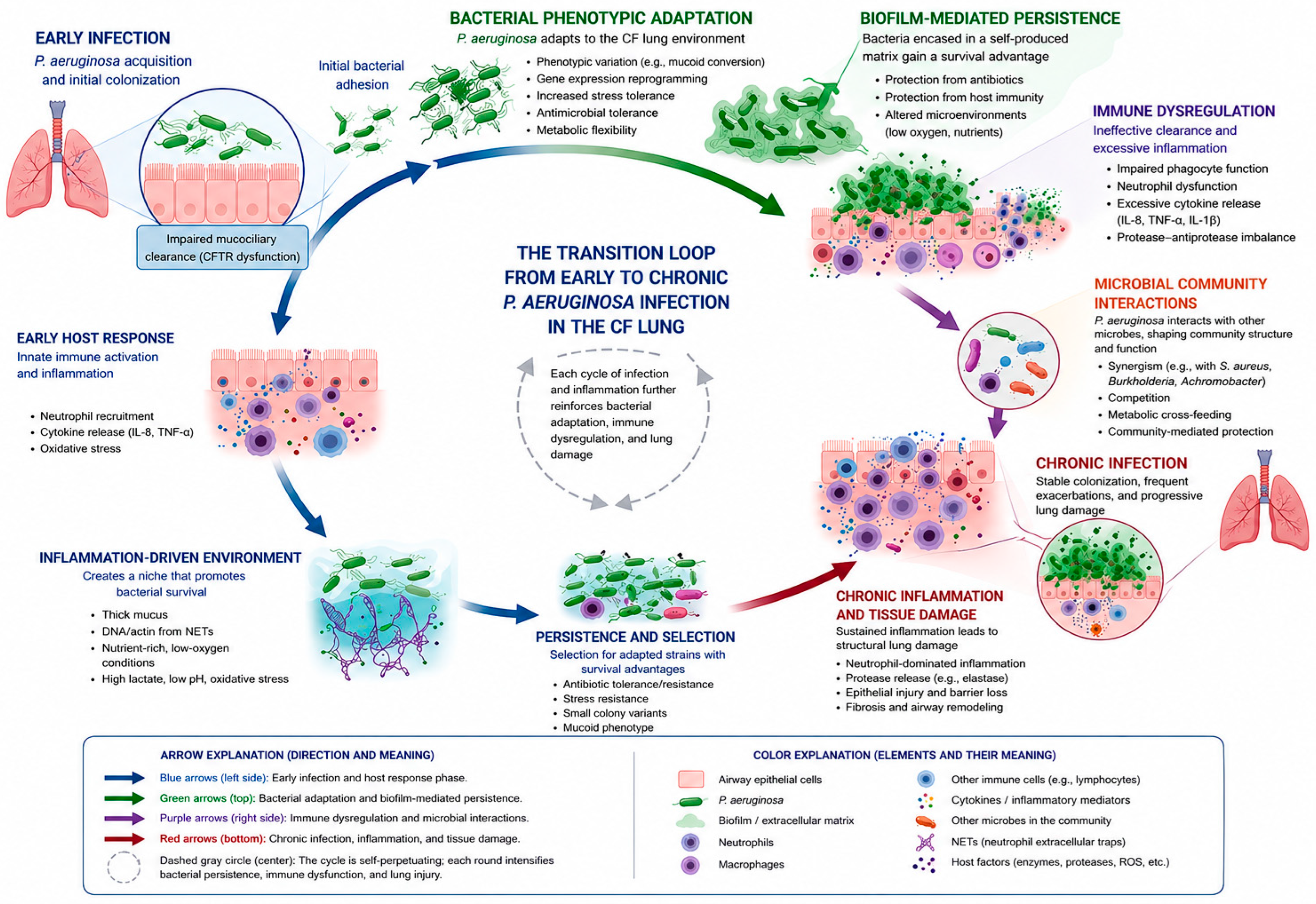

Disclaimer/Publisher’s Note: The statements, opinions and data contained in all publications are solely those of the individual author(s) and contributor(s) and not of MDPI and/or the editor(s). MDPI and/or the editor(s) disclaim responsibility for any injury to people or property resulting from any ideas, methods, instructions or products referred to in the content. |
© 2026 by the author. Licensee MDPI, Basel, Switzerland. This article is an open access article distributed under the terms and conditions of the Creative Commons Attribution (CC BY) license.
Share and Cite
Capraz Yavuz, B. Host–Pathogen Interactions in Cystic Fibrosis Lung Disease: Adaptation, Persistence, and Clinical Implications of Pseudomonas aeruginosa. Pathogens 2026, 15, 557. https://doi.org/10.3390/pathogens15050557
Capraz Yavuz B. Host–Pathogen Interactions in Cystic Fibrosis Lung Disease: Adaptation, Persistence, and Clinical Implications of Pseudomonas aeruginosa. Pathogens. 2026; 15(5):557. https://doi.org/10.3390/pathogens15050557
Chicago/Turabian StyleCapraz Yavuz, Burcu. 2026. "Host–Pathogen Interactions in Cystic Fibrosis Lung Disease: Adaptation, Persistence, and Clinical Implications of Pseudomonas aeruginosa" Pathogens 15, no. 5: 557. https://doi.org/10.3390/pathogens15050557
APA StyleCapraz Yavuz, B. (2026). Host–Pathogen Interactions in Cystic Fibrosis Lung Disease: Adaptation, Persistence, and Clinical Implications of Pseudomonas aeruginosa. Pathogens, 15(5), 557. https://doi.org/10.3390/pathogens15050557