Antifungal Potential of Bacillus spp., Streptomyces spp. and Trichoderma asperellum Against Phytopathogenic Fungi

 , , and
Abstract
1. Introduction
2. Materials and Methods
2.1. Microbial Strains
2.2. Culture Media and Growth Conditions
2.3. Dual-Culture Assay
2.4. Preparation of Microbial Suspensions
2.5. Agar Well Diffusion Assay
2.6. Assessment of Volatile and Soluble Metabolites of T. asperellum
2.7. Statistical Analysis
3. Results
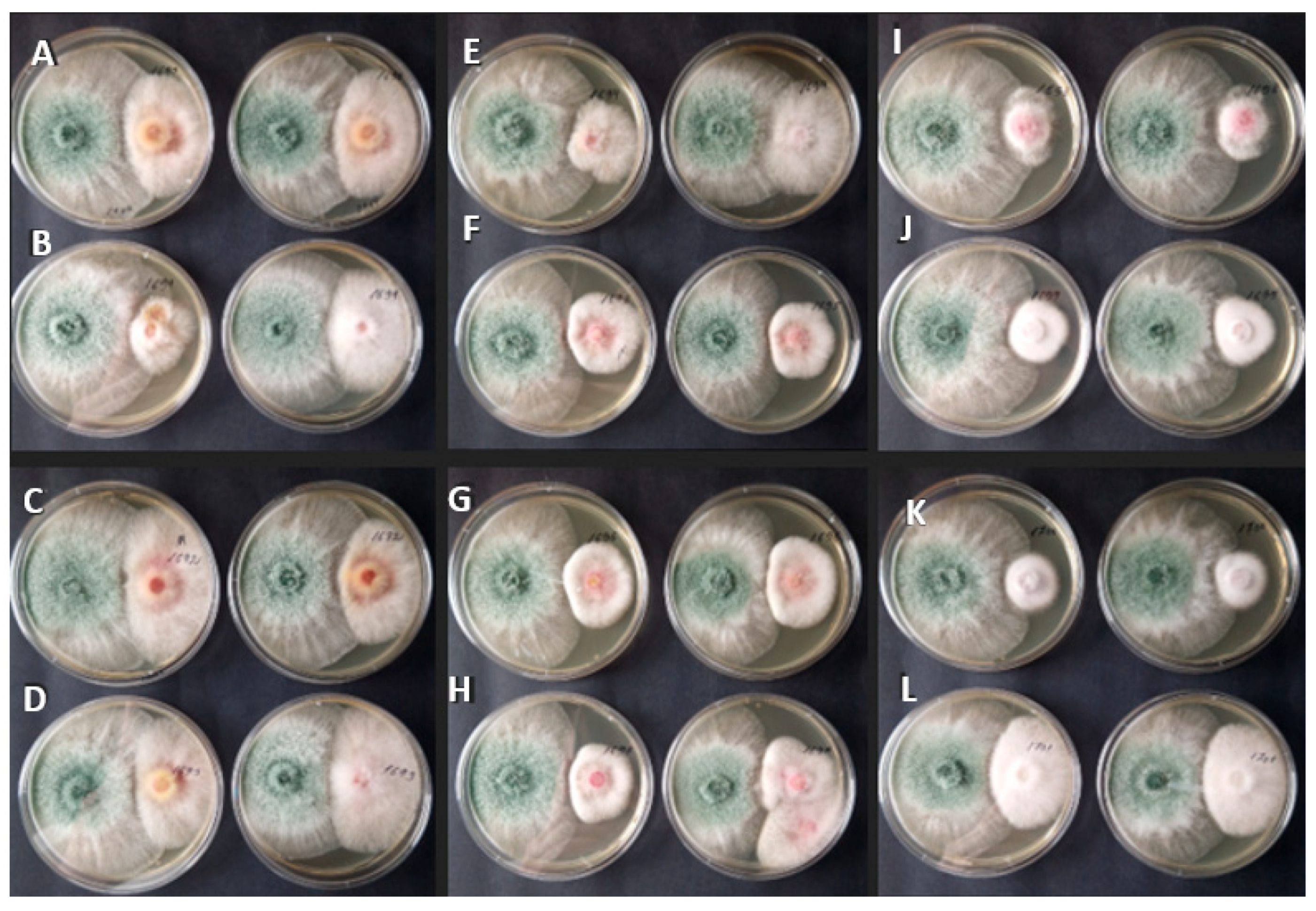
3.1. Antifungal Activity of Trichoderma asperellum Against Fusarium spp.
3.1.1. Dual-Culture Test
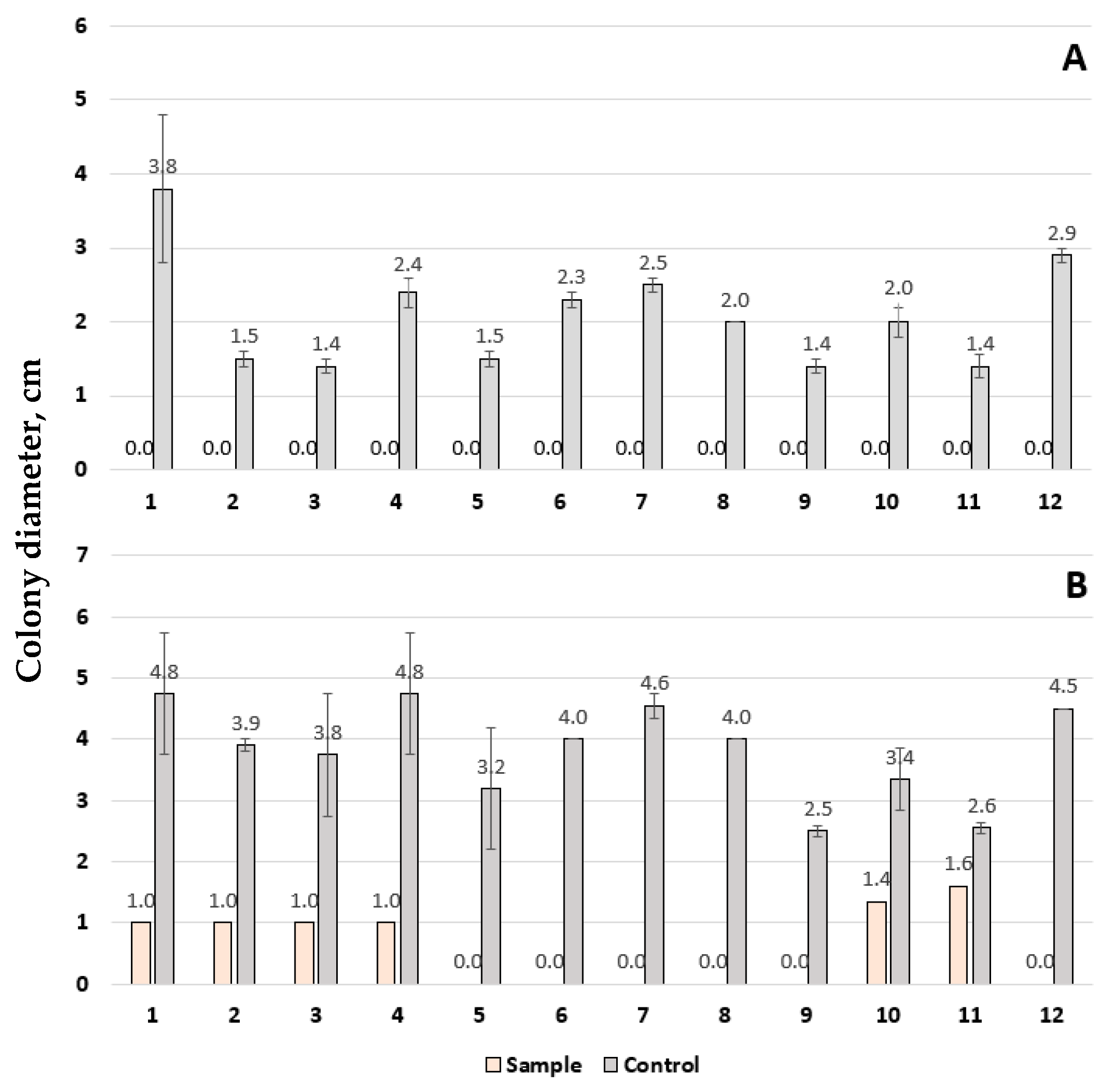
3.1.2. Contribution of Volatile Organic Compounds
3.1.3. Contribution of Soluble Metabolites
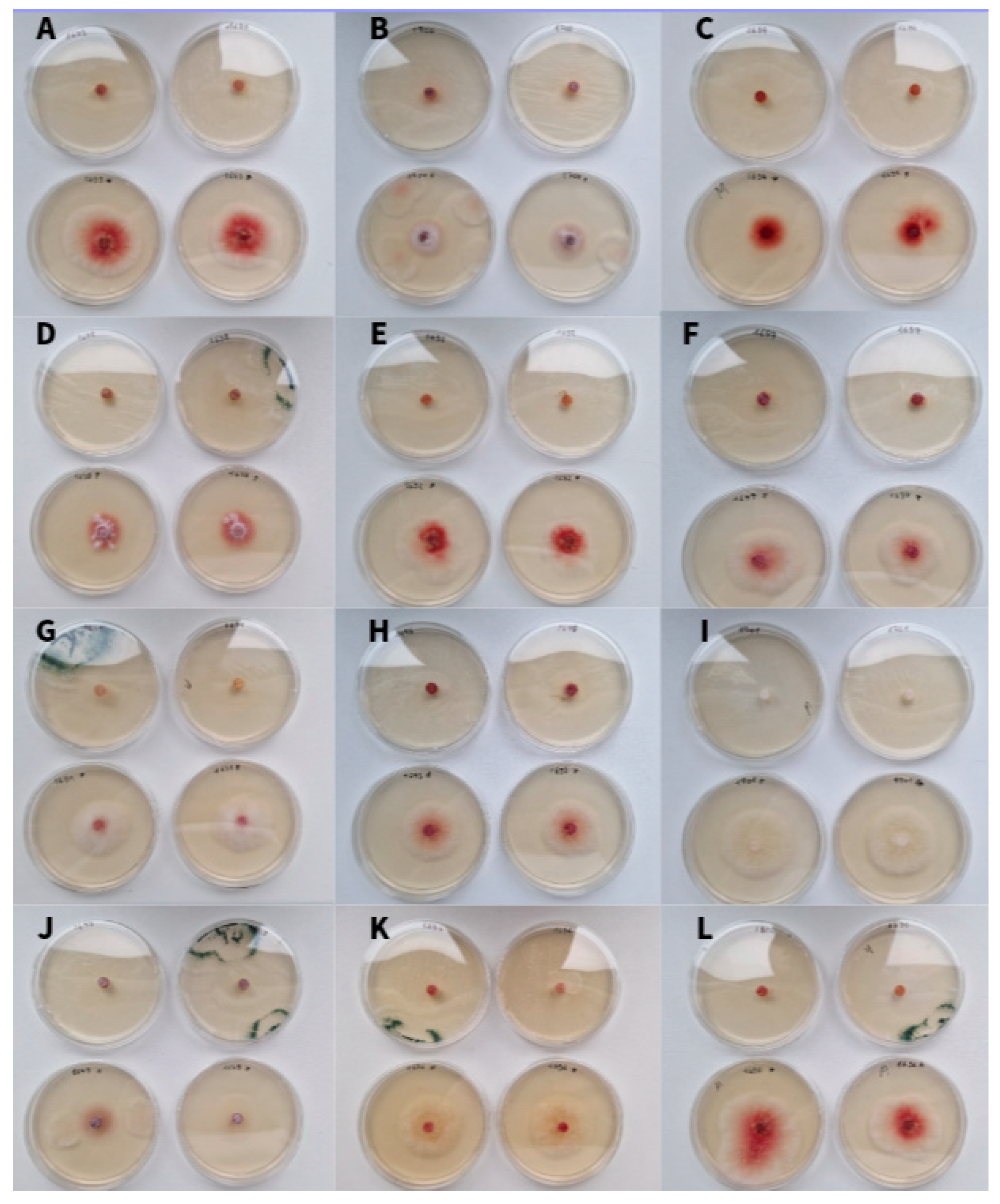
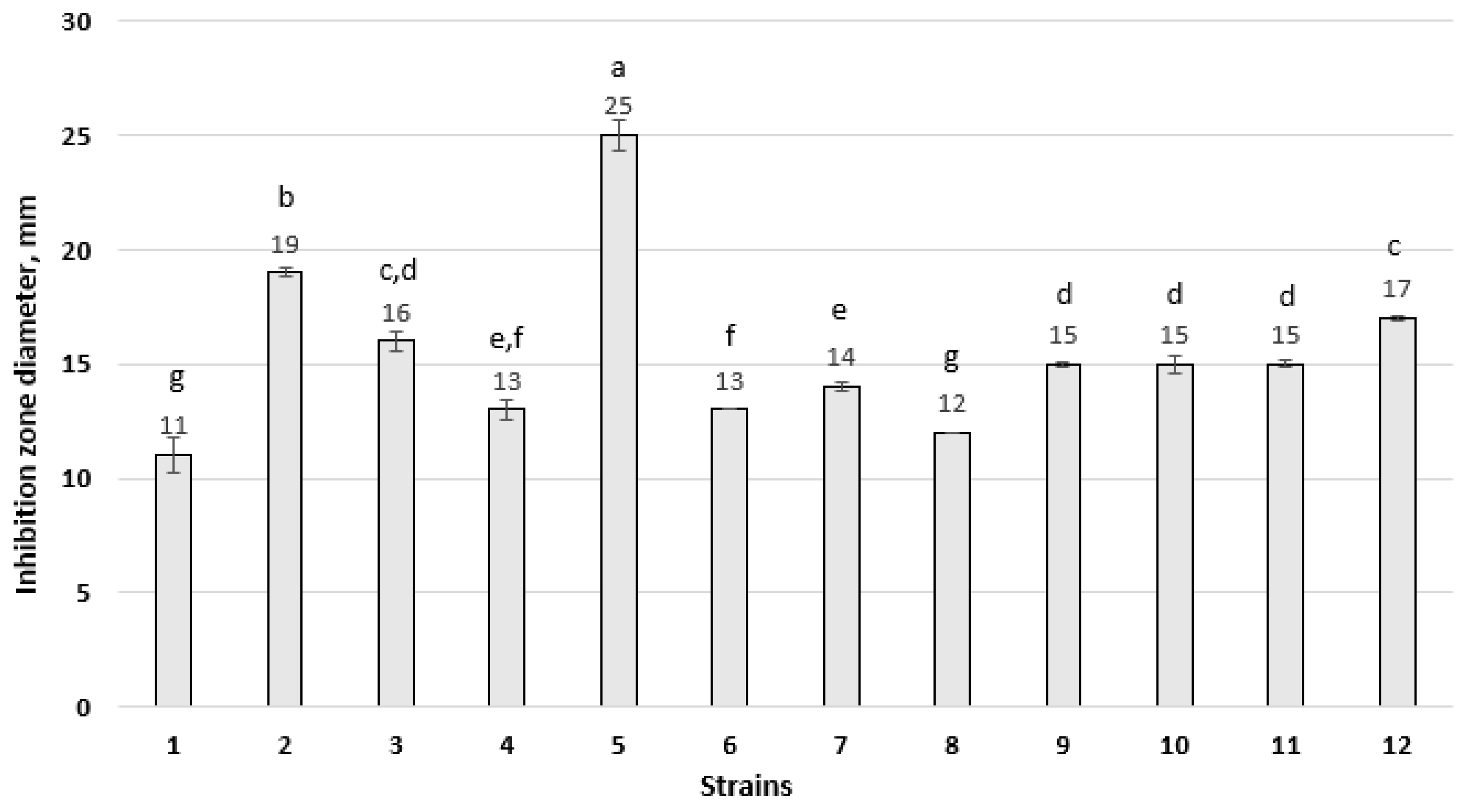
3.2. Antifungal Activity of Bacillus Species Against Fusarium spp.
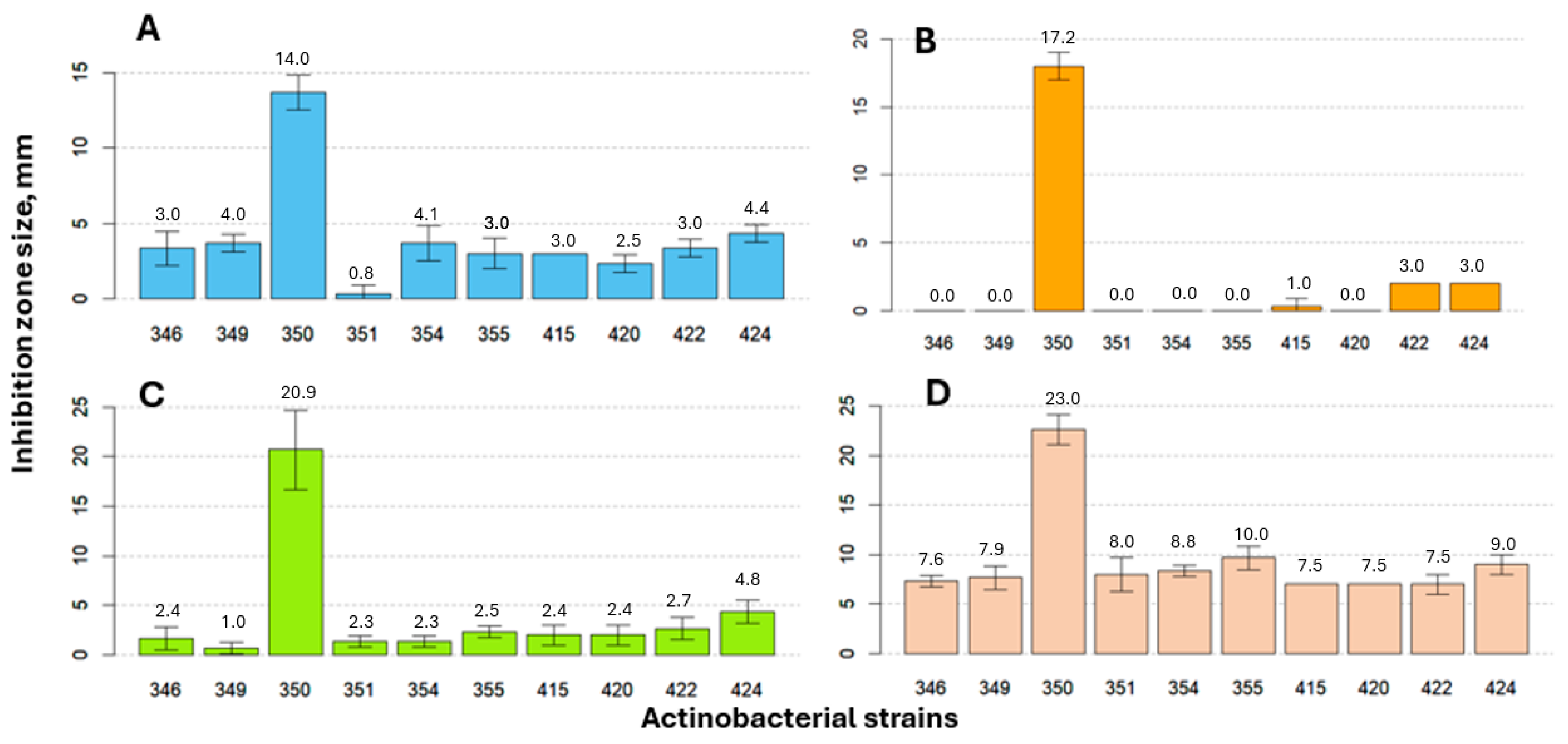
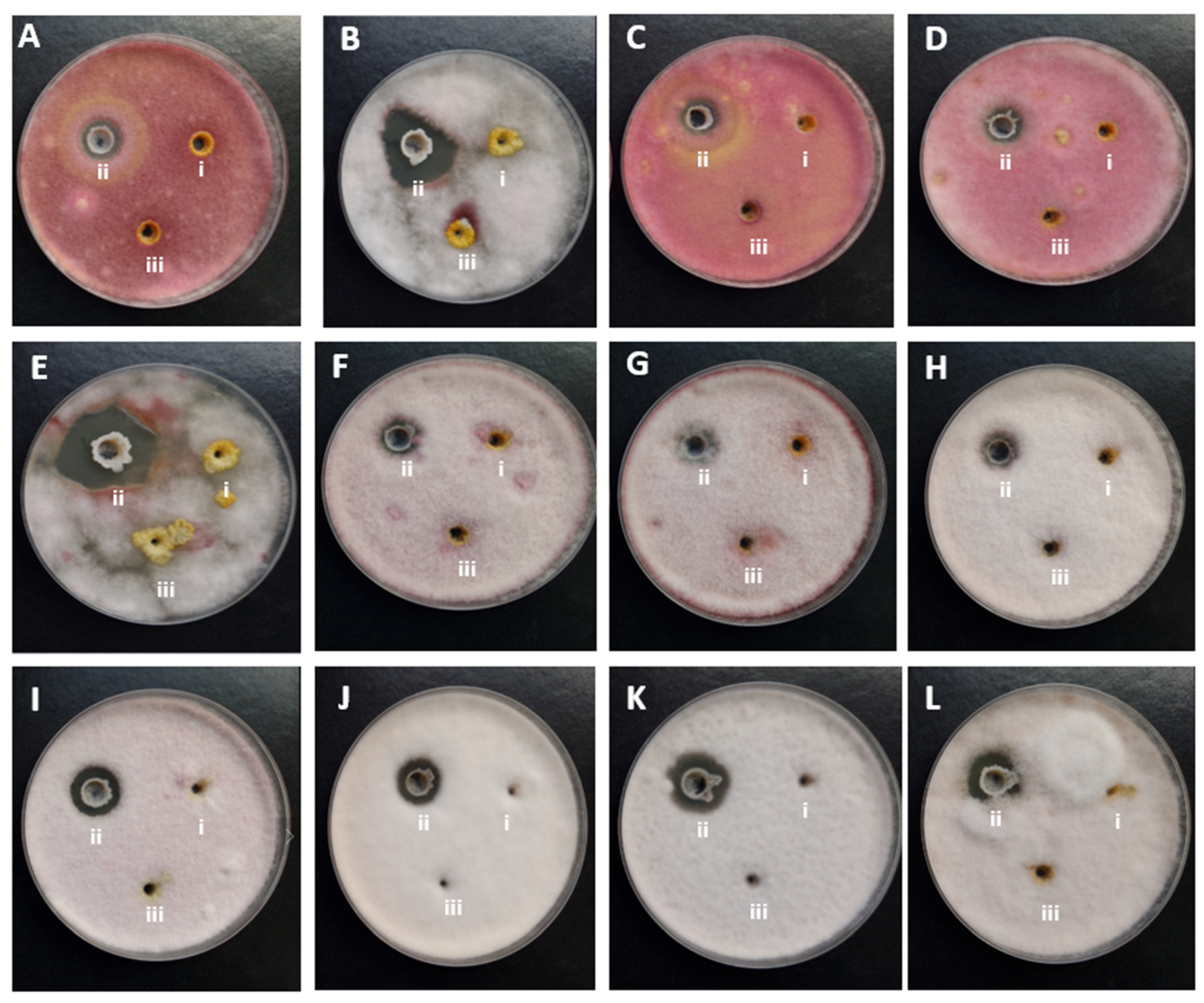
3.3. Antifungal Activity of Streptomyces spp. Against Selected Phytopathogenic Fungi
4. Discussion
4.1. Antifungal Mechanisms of Trichoderma asperellum
4.2. Strain-Specific Antifungal Activity of Bacillus spp.
4.3. Superior Antagonistic Potential of Streptomyces venezuelae
5. Conclusions
Author Contributions
Funding
Institutional Review Board Statement
Informed Consent Statement
Data Availability Statement
Conflicts of Interest
Abbreviations
| BCA | biocontrol agent |
| FHB | Fusarium head blight |
| MSCL | Microbial Strain Collection of Latvia |
| VOCs | volatile organic compounds |
References
- Coleman, J.J. The Fusarium solani Species Complex: Ubiquitous Pathogens of Agricultural Importance. Mol. Plant Pathol. 2016, 17, 146–158. [Google Scholar] [CrossRef]
- Michielse, C.B.; Rep, M. Pathogen Profile Update: Fusarium oxysporum. Mol. Plant Pathol. 2009, 10, 311–324. [Google Scholar] [CrossRef]
- Alisaac, E.; Mahlein, A.-K. Fusarium Head Blight on Wheat: Biology, Modern Detection and Diagnosis and Integrated Disease Management. Toxins 2023, 15, 192. [Google Scholar] [CrossRef] [PubMed]
- Xue, A.G.; Chen, Y.; Seifert, K.; Guo, W.; Blackwell, B.A.; Harris, L.J.; Overy, D.P. Prevalence of Fusarium Species Causing Head Blight of Spring Wheat, Barley and Oat in Ontario during 2001–2017. Can. J. Plant Pathol. 2019, 41, 392–402. [Google Scholar] [CrossRef]
- Treikale, O.; Javoisha, B.; Feodorova-Fedotova, L.; Grantina-Ievina, L.; Volkova, J. Occurrence of Fusarium Species on Small Cereals in Latvia. Commun. Agric. Appl. Biol. Sci. 2015, 80, 551–554. [Google Scholar]
- Doehlemann, G.; Ökmen, B.; Zhu, W.; Sharon, A. Plant Pathogenic Fungi. Microbiol. Spectr. 2017, 5, 701–726. [Google Scholar] [CrossRef] [PubMed]
- Han, X.; Kahmann, R. Manipulation of Phytohormone Pathways by Effectors of Filamentous Plant Pathogens. Front. Plant Sci. 2019, 10, 822. [Google Scholar] [CrossRef]
- Ji, F.; He, D.; Olaniran, A.O.; Mokoena, M.P.; Xu, J.; Shi, J. Occurrence, Toxicity, Production and Detection of Fusarium Mycotoxins: A Review. Food Prod. Process. Nutr. 2019, 1, 6. [Google Scholar] [CrossRef]
- Shabeer, S.; Tahira, R.; Jamal, A. Fusarium spp. Mycotoxin Production, Diseases and Their Management: An Overview. J. Agric. Res. 2021, 34, 278–293. [Google Scholar] [CrossRef]
- Dean, R.; van Kan, J.A.L.; Pretorius, Z.A.; Hammond-Kosack, K.E.; Di Pietro, A.; Spanu, P.D.; Rudd, J.J.; Dickman, M.; Kahmann, R.; Ellis, J.; et al. The Top 10 Fungal Pathogens in Molecular Plant Pathology. Mol. Plant Pathol. 2012, 13, 414–430. [Google Scholar] [CrossRef]
- WHO. WHO Fungal Priority Pathogens List to Guide Research, Development and Public Health Action; World Health Organization: Geneva, Switzerland, 2022. [Google Scholar]
- Chen, T.; Zhang, Z.; Chen, Y.; Li, B.; Tian, S. Botrytis cinerea. Curr. Biol. 2023, 33, R460–R462. [Google Scholar] [CrossRef] [PubMed]
- Usman, H.M.; Hussain, M.D.; Karim, M.M.; Nizamani, M.M.; Mubeen, M.; Hussain, S.; Kamran, A.; Wang, Y.; Liu, F.-Q. Colletotrichum: A Versatile Fungal Genus with Diverse Infection Strategies, Host Interactions, and Management Challenges. Phytopathol. Res. 2026, 8, 6. [Google Scholar] [CrossRef]
- Damm, U.; Cannon, P.F.; Woudenberg, J.H.C.; Crous, P.W. The Colletotrichum acutatum Species Complex. Stud. Mycol. 2012, 73, 37–113. [Google Scholar] [CrossRef] [PubMed]
- Manova, V.; Stoyanova, Z.; Rodeva, R.; Boycheva, I.; Korpelainen, H.; Vesterinen, E.; Wirta, H.; Bonchev, G. Morphological, Pathological and Genetic Diversity of the Colletotrichum Species, Pathogenic on Solanaceous Vegetable Crops in Bulgaria. J. Fungi 2022, 8, 1123. [Google Scholar] [CrossRef]
- Nguyen, H.T.; Pham, T.T.; Nguyen, P.T.; Dinh, N.C.G.; Le, M.T.; Nguyen, T.D.; Nguyen, T.T.; Nguyen, V.B. Microbial Biocontrol in Agriculture: From Mechanistic Understanding to Field Application. Discov. Plants 2025, 2, 334. [Google Scholar] [CrossRef]
- Harman, G.E.; Howell, C.R.; Viterbo, A.; Chet, I.; Lorito, M. Trichoderma Species—Opportunistic, Avirulent Plant Symbionts. Nat. Rev. Microbiol. 2004, 2, 43–56. [Google Scholar] [CrossRef]
- Mukhopadhyay, R.; Kumar, D. Trichoderma: A Beneficial Antifungal Agent and Insight into Its Mechanism of Biocontrol Potential. Egypt. J. Biol. Pest Control 2020, 30, 133. [Google Scholar] [CrossRef]
- Brunner, K.; Reithner, B.; Schumacher, R.; Peissl, I.; Seidl, V.; Krska, R.; Zeilinger, S. The G Protein Alpha Subunit Tga1 of Trichoderma atroviride is Involved in Chitinase Formation and Differential Production of Antifungal Metabolites. Fungal Genet. Biol. 2005, 42, 749–760. [Google Scholar]
- Vinale, F.; Sivasithamparam, K.; Ghisalberti, E.L.; Marra, R.; Woo, S.L.; Lorito, M. Trichoderma–Plant–Pathogen Interactions. Soil Biol. Biochem. 2008, 40, 1–10. [Google Scholar] [CrossRef]
- Diaz-Gutierrez, C.; Arroyave, C.; Llugany, M.; Poschenrieder, C.; Martos, S.; Pelaez, C. Trichoderma asperellum as a Preventative and Curative Agent to Control Fusarium Wilt in Stevia rebaudiana. Biol. Control 2021, 155, 104537. [Google Scholar] [CrossRef]
- Arakere, U.C.; Jagannath, S.; Krishnamurthy, S.; Chowdappa, S.; Konappa, N. Chapter 12—Microbial Bio-pesticide as Sustainable Solution for Management of Pests: Achievements and Prospects. In Biopestic; Elsevier: Amsterdam, The Netherlands, 2022; Volume 2, pp. 183–200. [Google Scholar] [CrossRef]
- Villarreal-Delgado, M.F.; Villa-Rodriguez, E.D.; Cira-Chavez, L.A.; Estrada-Alvarado, M.I.; Parra-Cota, F.I.; Santos-Villalobos, S. The Genus Bacillus as a Biological Control Agent and Its Implications in Agricultural Biosecurity. Mex. J. Phytopathol. 2018, 36, 95–130. [Google Scholar]
- Falardeau, J.; Wise, C.; Novitsky, L.; Avis, T.J. Ecological and Mechanistic Insights into the Antimicrobial Properties of Bacillus subtilis Lipopeptides on Plant Pathogens. J. Chem. Ecol. 2013, 39, 869–878. [Google Scholar] [CrossRef]
- Gong, M.; Wang, J.D.; Zhang, J.; Yang, H.; Lu, X.F.; Pei, Y.; Cheng, J.Q. Study of the Antifungal Ability of Bacillus subtilis Strain PY-1 and Identification of Its Antifungal Substance (Iturin A). Acta Biochim. Biophys. Sin. 2006, 38, 233–240. [Google Scholar] [CrossRef]
- Fgaier, H.; Eberl, H.J. Antagonistic Control of Microbial Pathogens under Iron Limitation by Siderophore-Producing Bacteria. J. Theor. Biol. 2011, 273, 103–114. [Google Scholar] [CrossRef]
- Kim, J.S.; Lee, J.; Lee, C.H.; Woo, S.Y.; Kang, H.; Seo, S.G.; Kim, S.H. Activation of Pathogenesis-Related Genes by the Rhizobacterium Bacillus sp. JS Inducing Systemic Resistance in Tobacco Plants. Plant Pathol. J. 2015, 31, 195–201. [Google Scholar] [CrossRef] [PubMed]
- Khan, N.; Martinez-Hidalgo, P.; Ice, T.A.; Maymon, M.; Humm, E.A.; Nejat, N.; Sanders, E.R.; Kaplan, D.; Hirsch, A.M. Antifungal Activity of Bacillus Species Against Fusarium and Analysis of Potential Biocontrol Mechanisms. Front. Microbiol. 2018, 9, 2363. [Google Scholar] [CrossRef] [PubMed]
- Iqbal, S.; Begum, F.; Rabaan, A.A.; Aljeldah, M.; Al Shammari, B.R.; Alawfi, A.; Alshengeti, A.; Sulaiman, T.; Khan, A. Classification and Multifaceted Potential of Secondary Metabolites Produced by Bacillus subtilis Group: A Comprehensive Review. Molecules 2023, 28, 927. [Google Scholar] [CrossRef]
- Mahajan, G.B.; Balachandran, L. Antibacterial Agents from Actinomycetes—A Review. Front. Biosci. 2012, 4, 240–253. [Google Scholar] [CrossRef] [PubMed]
- Barka, E.A.; Vatsa, P.; Sanchez, L.; Gaveau-Vaillant, N.; Jacquard, C.; Meier-Kolthoff, J.P.; Klenk, H.P.; Clément, C.; Ouhdouch, Y.; van Wezel, G.P. Taxonomy, physiology, and natural products of Actinobacteria. Microbiol. Mol. Biol. Rev. 2015, 80, 1–43. [Google Scholar] [CrossRef]
- Jeyaram, M.; Jeyaram, Y.; Ayyadurai, T.; Gurusamy, M. Exploration of Streptomycetes as Biocontrol Agents Against Plant Pathogens. In Streptomycetes: Biological Candidates for Sustainable Agriculture; Kaur, T., Kumar, H., Manhas, R.K., Eds.; Springer: Singapore, 2026. [Google Scholar] [CrossRef]
- Colombo, E.M.; Pizzatti, C.; Kunova, A.; Gardana, C.; Saracchi, M.; Cortesi, P.; Pasquali, M. Evaluation of In Vitro Methods to Select Effective Streptomycetes against Toxigenic Fusaria. PeerJ 2019, 7, e6905. [Google Scholar] [CrossRef]
- Prapagdee, B.; Kuekulvong, C.; Mongkolsuk, S. Antifungal Potential of Extracellular Metabolites Produced by Streptomyces hygroscopicus against Phytopathogenic Fungi. Int. J. Biol. Sci. 2008, 4, 330–337. [Google Scholar] [CrossRef]
- Malfent, F.; Zehl, M.; Kirkegaard, R.H.; Oberhofer, M.; Zotchev, S.B. Genomes and Secondary Metabolomes of Streptomyces spp. Isolated from Leontopodium nivale ssp. alpinum. Front. Microbiol. 2024, 14, 1408479. [Google Scholar] [CrossRef]
- Anh, D.N. Studying on Antifungal Activities of Streptomyces Isolated from Soil and Its Biocontrol Potential Against Fusarium of Chili’s Root Rot Disease. Int. J. Appl. Biol. 2024, 8, 14–28. [Google Scholar] [CrossRef]
- Ommati, F.; Zaker, M. In Vitro and Greenhouse Evaluations of Trichoderma Isolates for Biological Control of Potato Wilt Disease (Fusarium solani). Arch. Phytopathol. Plant Protect. 2012, 45, 1715–1723. [Google Scholar] [CrossRef]
- Sipiczki, M. Identification of Antagonistic Yeasts as Potential Biocontrol Agents: Diverse Criteria and Strategies. Int. J. Food Microbiol. 2023, 406, 110360. [Google Scholar] [CrossRef] [PubMed]
- Chávez-Avilés, M.N.; García-Álvarez, M.; Ávila-Oviedo, J.L.; Hernández-Hernández, I.; Bautista-Ortega, P.I.; Macías-Rodríguez, L.I. Volatile Organic Compounds Produced by Trichoderma asperellum with Antifungal Properties against Colletotrichum acutatum. Microorganisms 2024, 12, 2007. [Google Scholar] [CrossRef] [PubMed]
- Seņkovs, M.; Bērziņa, Z.; Nikolajeva, V.; Nakurte, I. Analysis of Lipopeptides Produced by Bacillus subtilis. Abstract of the 78th Scientific Conference of the University of Latvia. Environ. Exp. Biol. 2020, 18, 53. [Google Scholar]
- Balleux, G.; Höfte, M.; Arguelles-Arias, A.; Deleu, M.; Ongena, M. Bacillus Lipopeptides as Key Players in Rhizosphere Chemical Ecology. Trends Microbiol. 2025, 33, 80–95. [Google Scholar] [CrossRef]
- Dunlap, C.A.; Bowman, M.J.; Zeigler, D.R. Promotion of Bacillus subtilis subsp. inaquosorum, Bacillus subtilis subsp. spizizenii and Bacillus subtilis subsp. stercoris to Species Status. Antonie Van Leeuwenhoek 2020, 113, 1–12. [Google Scholar] [CrossRef] [PubMed]
- Jordan, M.L.; Schlimpert, S. Microbe Profile: Streptomyces venezuelae—A Model Species to Study Morphology and Differentiation in Filamentous Bacteria. Microbiology 2025, 171, 001541. [Google Scholar] [CrossRef]
- Schlimpert, S.; Elliot, M.A. The Best of Both Worlds—Streptomyces coelicolor and Streptomyces venezuelae as Model Species for Studying Antibiotic Production and Bacterial Multicellular Development. J. Bacteriol. 2023, 205, e00153-23. [Google Scholar] [CrossRef] [PubMed]




| Species | MSCL Number | Origin | Type of Identification |
|---|---|---|---|
| Antagonists | |||
| Bacillus subtilis | 1441 | Lupine soil, Latvia | biochemical |
| Bacillus subtilis | 49 | Unknown | biochemical |
| Bacillus stercoris | 897 | Commercial cleaner, Latvia | rRNA gene |
| Streptomyces anthocyanicus | 420 | Garden soil, Latvia | ANI |
| Streptomyces griseus | 346 | Garden soil, Latvia | rRNA gene, ANI |
| Streptomyces griseus | 351 | Garden soil, Latvia | rRNA gene, ANI |
| Streptomyces griseus | 422 | Garden soil, Latvia | ANI |
| Streptomyces griseus | 424 | Garden soil, Latvia | ANI |
| Streptomyces silvae | 354 | Garden soil, Latvia | rRNA gene |
| Streptomyces sp. | 355 | Garden soil, Latvia | rRNA gene |
| Streptomyces sp. | 415 | Garden soil, Latvia | micromorphological |
| Streptomyces sp. | 349 | Garden soil, Latvia | rRNA gene |
| Streptomyces venezuelae | 350 | Garden soil, Latvia | ANI |
| Trichoderma asperellum | 309 | Commercial preparation, Latvia | ITS |
| Pathogens | |||
| Botrytis cinerea | 433 | Liver paste, Sweden | unknown |
| Colletotrichum salicis | 850 | Rhododendron leaves, Riga | ITS, LSU, TUB2, ACT, CHS-1, GAPDH, HIS3 |
| Fusarium oxysporum | 259 | Unknown | unknown |
| Fusarium graminearum | 435 | Oat, Sweden | unknown |
| Fusarium culmorum | 1690 | Avena sativa, Latvia | micromorphological |
| Fusarium culmorum | 1692 | Avena sativa, Latvia | ITS, TEF |
| Fusarium culmorum | 1693 | Avena sativa, Latvia | ITS, TEF |
| Fusarium graminearum | 1691 | Avena sativa, Latvia | ITS, TEF |
| Fusarium graminearum | 1694 | Avena sativa, Latvia | ITS, TEF |
| Fusarium oxysporum | 1696 | Avena sativa, Latvia | micromorphological |
| Fusarium oxysporum | 1699 | Avena sativa, Latvia | ITS, TEF |
| Fusarium oxysporum | 1700 | Avena sativa, Latvia | ITS, TEF |
| Fusarium poae | 1701 | Avena sativa, Latvia | ITS, TEF |
| Fusarium sporotrichioides | 1695 | Avena sativa, Latvia | ITS, TEF |
| Fusarium sporotrichioides | 1697 | Avena sativa, Latvia | ITS, TEF |
| Fusarium tricinctum | 1698 | Avena sativa, Latvia | micromorphological |
| Fusarium Strains | Percentage of Inhibition Under Dual-Culture Conditions |
|---|---|
| Fusarium culmorum MSCL 1690 | 49.1 ± 4.4 c |
| Fusarium graminearum MSCL 1691 | 44.6 ± 10.5 c |
| Fusarium culmorum MSCL 1692 | 46.7 ± 5.8 c |
| Fusarium culmorum MSCL 1693 | 71.4 ± 4.5 a |
| Fusarium graminearum MSCL 1694 | 48.9 ± 9.4 b,c |
| Fusarium sporotrichioides MSCL 1695 | 71.0 ± 3.9 a |
| Fusarium oxysporum MSCL 1696 | 74.4 ± 5.6 a |
| Fusarium sporotrichioides MSCL 1697 | 78.4 ± 7.0 a |
| Fusarium tricinctum MSCL 1698 | 56.7 ± 3.3 b |
| Fusarium oxysporum MSCL 1699 | 56.7 ± 6.6 b |
| Fusarium oxysporum MSCL 1700 | 74.1 ± 3.5 a |
| Fusarium poae MSCL 1701 | 71.0 ± 4.1 a |
Disclaimer/Publisher’s Note: The statements, opinions and data contained in all publications are solely those of the individual author(s) and contributor(s) and not of MDPI and/or the editor(s). MDPI and/or the editor(s) disclaim responsibility for any injury to people or property resulting from any ideas, methods, instructions or products referred to in the content. |
© 2026 by the authors. Licensee MDPI, Basel, Switzerland. This article is an open access article distributed under the terms and conditions of the Creative Commons Attribution (CC BY) license.
Share and Cite
Seņkovs, M.; Nikolajeva, V.; Rubene, L.; Jauga, K.; Zemeca, L.; Jakobija, I. Antifungal Potential of Bacillus spp., Streptomyces spp. and Trichoderma asperellum Against Phytopathogenic Fungi. Pathogens 2026, 15, 458. https://doi.org/10.3390/pathogens15050458
Seņkovs M, Nikolajeva V, Rubene L, Jauga K, Zemeca L, Jakobija I. Antifungal Potential of Bacillus spp., Streptomyces spp. and Trichoderma asperellum Against Phytopathogenic Fungi. Pathogens. 2026; 15(5):458. https://doi.org/10.3390/pathogens15050458
Chicago/Turabian StyleSeņkovs, Māris, Vizma Nikolajeva, Luīze Rubene, Kristians Jauga, Līga Zemeca, and Inta Jakobija. 2026. "Antifungal Potential of Bacillus spp., Streptomyces spp. and Trichoderma asperellum Against Phytopathogenic Fungi" Pathogens 15, no. 5: 458. https://doi.org/10.3390/pathogens15050458
APA StyleSeņkovs, M., Nikolajeva, V., Rubene, L., Jauga, K., Zemeca, L., & Jakobija, I. (2026). Antifungal Potential of Bacillus spp., Streptomyces spp. and Trichoderma asperellum Against Phytopathogenic Fungi. Pathogens, 15(5), 458. https://doi.org/10.3390/pathogens15050458