Article

Antifungal Potential of Bacillus spp., Streptomyces spp. and Trichoderma asperellum Against Phytopathogenic Fungi


1
Microbial Strain Collection of Latvia, MIRRI-ERIC Consortium, Faculty of Medicine and Life Sciences, University of Latvia, Jelgavas Street 1, LV-1004 Riga, Latvia
2
Institute of Plant Protection Research “Agrihorts”, Latvia University of Life Sciences and Technologies, Paula Lejiņa Street 2, LV-3004 Jelgava, Latvia
*
Author to whom correspondence should be addressed.
Pathogens 2026, 15(5), 458; https://doi.org/10.3390/pathogens15050458
Submission received: 20 March 2026 / Revised: 15 April 2026 / Accepted: 22 April 2026 / Published: 23 April 2026
(This article belongs to the Special Issue Current Research in the Control of Plant Pathogenic Fusarium Species)

Abstract

The increasing demand for sustainable plant protection products has intensified interest in microbial biocontrol agents (BCAs). This study aimed to evaluate the antifungal activity of selected Streptomyces, Bacillus, and Trichoderma asperellum strains against phytopathogenic fungi and to assess their potential as BCAs under in vitro conditions. The antifungal activity of ten Streptomyces strains was first evaluated against Botrytis cinerea, Colletotrichum salicis, Fusarium oxysporum, and F. graminearum using a dual-culture assay. All isolates exhibited antifungal activity, with Streptomyces venezuelae MSCL 350 showing the strongest inhibition. In addition, the antifungal activity of T. asperellum MSCL 309 and three Bacillus strains was assessed against twelve Fusarium spp. isolates obtained from oats. T. asperellum demonstrated broad-spectrum inhibition, with growth inhibition ranging from 44.6% to 78.4%, primarily due to soluble metabolites, while volatile compounds showed no significant effect. Among the other tested Bacillus strains, only Bacillus subtilis MSCL 1441 exhibited antifungal activity, inhibiting all tested isolates. These results demonstrate strong strain-dependent antifungal activity and highlight T. asperellum MSCL 309, S. venezuelae MSCL 350, and B. subtilis MSCL 1441 as promising candidates for the development of environmentally friendly biocontrol agents.

1. Introduction

Phytopathogenic fungi represent one of the major constraints to global crop production, causing significant yield losses and compromising food safety. Among them, the genus Fusarium is particularly important due to its wide distribution in soils and plant residues and its ability to infect a broad range of agricultural crops. Species such as Fusarium oxysporum and F. solani are responsible for vascular wilt, root rot, and seedling diseases in cereals, vegetables, and fruit crops [1,2]. F. graminearum is a causal agent of Fusarium head blight (FHB) of wheat, barley, and other small-grain cereals worldwide [3]; however, other species are also involved. Over the past two decades, the most common species causing FHB in Canada were F. avenaceum, F. equiseti, F. graminearum, F. poae, and F. sporotrichioides. In Latvia, F. avenaceum, F. culmorum, F. graminearum, F. poae, and F. sporotrichioides [4] have been identified in populations causing FHB in both spring barley and oat [5].
Fusarium pathogenicity is associated with the secretion of cell wall-degrading enzymes, toxins, and effector molecules that facilitate host penetration, tissue maceration, and systemic colonization [6,7]. In addition to direct plant damage, many Fusarium species produce mycotoxins—including trichothecenes, zearalenone, and fumonisins—that pose serious risks to animal and human health [8,9]. F. graminearum and F. oxysporum, together with Botrytis cinerea and Colletotrichum spp., are ranked among the “top 10” most important fungal plant pathogens based on their scientific and economic impact on agriculture [10], affecting major crops such as cereals, fruits, and vegetables. The World Health Organization has also included Fusarium species among high-priority fungal pathogens due to their ability to cause invasive infections in humans and their potential resistance to antifungal agents [11].
Botrytis cinerea, a necrotrophic phytopathogenic fungus and the causal agent of gray mold, has a wide host range and causes damage both pre-harvest and during storage [12]. Colletotrichum species, which are hemibiotrophic fungi, are responsible for anthracnose diseases in a wide range of woody and herbaceous plants [13]. C. salicis, belonging to the C. acutatum species complex, is associated with anthracnose of woody hosts [14] and fruit rot in crops such as peppers and tomatoes [15].
Growing environmental and regulatory pressure to reduce synthetic fungicide use has intensified interest in biological control strategies. Soil microorganisms with antifungal properties are increasingly considered sustainable alternatives in integrated plant protection systems. These microorganisms suppress phytopathogens through multiple mechanisms, including antibiosis, competition for nutrients and ecological niches, secretion of lytic enzymes, and induction of plant defense responses. Among the most extensively studied and promising biocontrol agents (BCAs) are species of Trichoderma, Bacillus, and Streptomyces, which exhibit diverse and often complementary antifungal mechanisms [16]. Trichoderma species are well-documented antagonists of Fusarium spp. and other soil-borne pathogens. Their biocontrol activity is based on three principal mechanisms: mycoparasitism, antibiosis, and competition for nutrients and ecological niches [17,18]. During mycoparasitism, Trichoderma attaches to pathogen hyphae, forms appressorium-like structures, and secretes hydrolytic enzymes such as chitinases and β-1,3-glucanases, leading to cell wall degradation and growth inhibition [19,20]. In addition, T. asperellum produces secondary metabolites with antifungal activity and can induce systemic resistance in plants, thereby enhancing host tolerance to infection [21]. Commercially available products for agriculture already contain various Trichoderma species, including T. asperellum [22].
Members of the genus Bacillus are Gram-positive, endospore-forming bacteria widely distributed in soil environments and known for their stability and adaptability [23]. Their antifungal activity is mainly due to the production of various antifungal volatile and water-soluble compounds, including cyclic lipopeptides such as iturin, surfactin, and fengycin, which disrupt fungal cell membranes and cause leakage of cell contents [24,25]. Additional mechanisms include secretion of lytic enzymes, siderophore-mediated iron competition, and induction of plant defense-related genes [26,27]. Experimental studies have demonstrated significant inhibition of Fusarium growth and sporulation by various Bacillus strains. Bacillus subtilis is a model organism and one of the most widely used species in biotechnology. The bioactive metabolites produced by B. subtilis have been classified into five groups: nonribosomal peptides, polyketides, ribosomal peptides, hybrid compounds, and volatile metabolites [28,29].
Actinobacteria of the genus Streptomyces are dominant components of soil microbial communities and prolific producers of bioactive secondary metabolites. They account for a substantial proportion of clinically and agriculturally relevant antibiotics [30,31]. In agricultural systems, Streptomyces spp. suppress phytopathogenic fungi through competition, antibiosis, emission of volatile compounds, and secretion of cell wall-degrading enzymes [32,33,34]. The two primary classes of secondary metabolites produced by Streptomyces are nonribosomal peptides and polyketides [35]. Several isolates have demonstrated strong antagonistic activity against toxigenic Fusarium species and the potential to reduce mycotoxin accumulation [36].
In general, the literature indicates that Trichoderma, Bacillus, and Streptomyces species possess complementary antifungal mechanisms, including enzymatic degradation of fungal cell walls, membrane disruption, and competition for nutrients. Despite this, the effectiveness of these microorganisms is often strain-dependent and varies depending on the target pathogen species. Comparative studies evaluating multiple microbial groups against diverse phytopathogens, particularly using locally isolated strains, remain limited.
Given the diversity of mechanisms employed by microbial biocontrol agents, the combined evaluation of representatives from different taxonomic groups provides a more comprehensive understanding of their antifungal potential. Trichoderma, Bacillus, and Streptomyces species were selected in this study, as they represent three of the most widely studied and functionally distinct groups of BCAs, encompassing fungal, bacterial, and actinobacterial antagonists. These groups differ in their modes of action, including mycoparasitism, production of diffusible and volatile metabolites, and competition for ecological niches.
A comparative assessment of these microorganisms under identical experimental conditions allows for the identification of the most effective strains and provides insight into their relative performance against different phytopathogenic fungi. In addition, the use of locally isolated strains from the Microbial Strain Collection of Latvia (MSCL) enables the evaluation of their potential applicability under regional agroecological conditions.
The aim of this study was to evaluate and compare the antifungal activity of selected Streptomyces, Bacillus, and Trichoderma asperellum strains, including isolates from the Microbial Strain Collection of Latvia (MSCL), against phytopathogenic fungi and to assess their potential as biocontrol agents under standardized in vitro conditions.

2. Materials and Methods

2.1. Microbial Strains

The antifungal activity of 14 selected microbial strains was evaluated against 16 strains of phytopathogenic fungi (Table 1). All strains used in this study were obtained from the Microbial Strain Collection of Latvia (MSCL) and maintained under standardized laboratory conditions. Certain strains, including Trichoderma asperellum MSCL 309 and Bacillus stercoris MSCL 897, were originally isolated from commercial products before being deposited in the MSCL.

2.2. Culture Media and Growth Conditions

Fungi were cultured on Malt Extract Agar (MEA, Millipore, Bangalore, India), while bacterial strains were cultured on R2A agar (Millipore, Darmstadt, Germany). B. subtilis and B. stercoris were subcultured 3–4 days prior to testing to ensure active growth. Fungal cultures and Streptomyces were incubated for 7 days at 20–22 °C before antifungal assays. All experiments were performed using three independent biological replicates. Each treatment within an experiment was conducted in triplicate, resulting in a total of nine measurements per treatment. Control plates without antagonist microorganisms were included in all assays.

2.3. Dual-Culture Assay

The antifungal activity of antagonist strains was evaluated using a dual-culture assay. The following antagonistic microorganisms were tested: Trichoderma asperellum MSCL 309 and ten strains of Streptomyces spp. (MSCL 346, 349, 350, 351, 354, 355, 415, 420, 422, and 424). Agar discs (0.7 cm diameter) from actively growing margins of 5–7-day-old fungal and antagonist cultures were placed 4 cm apart on MEA plates. Plates were incubated at 20–22 °C for 7 days. Control plates were prepared by inoculating only the phytopathogenic fungus under identical conditions without the antagonist strain. Antifungal activity was quantified by measuring fungal colony diameter and calculating the growth inhibition percentage: (colony diameter in control − colony diameter in treatment) × 100/colony diameter in control [37]. Colony diameter was measured along two perpendicular axes, and the average value was used for further calculations. Each fungus–antagonist combination was performed in triplicate.

2.4. Preparation of Microbial Suspensions

Fusarium spp. suspensions were prepared from 7-day-old cultures grown on MEA plates. Fungal spores and mycelium were gently scraped from the agar surface and suspended in sterile distilled water. The suspension was homogenized by vortexing and adjusted to an optical density (OD540) of 0.16. Bacillus spp. suspensions were prepared from overnight cultures grown on R2A agar. Bacterial cells were collected and suspended in sterile distilled water, followed by adjustment to an optical density of 0.16 at 540 OD, corresponding approximately to 107–108 CFU/mL.

2.5. Agar Well Diffusion Assay

The antifungal activity of Bacillus spp. strains was evaluated using an agar well diffusion assay. Prepared Fusarium suspensions (0.16 at OD540) were uniformly spread on MEA plates using a sterile spreader. Wells (0.7 cm in diameter) were created in the agar and filled with 70 µL of Bacillus suspensions (0.16 at OD540). Control wells were filled with sterile distilled water to assess baseline fungal growth. Plates were incubated at 20–22 °C for 7 days. Antifungal activity was expressed as the inhibition zone diameter. It should be noted that live bacterial suspensions were used in this assay rather than cell-free supernatants. Therefore, the observed inhibition reflects the combined effect of bacterial growth and the production of diffusible antimicrobial compounds under the experimental conditions.

2.6. Assessment of Volatile and Soluble Metabolites of T. asperellum

To determine the contribution of volatile organic compounds (VOCs) produced by T. asperellum, a double-plate assay was performed according to Sipiczki et al. (2023) [38]. T. asperellum and the pathogen were inoculated on the surface of agar plates in separate Petri dishes. The lids were removed, and the bottom halves of the dishes were placed facing each other so that the inoculated agar surfaces were aligned. The paired dishes were sealed with several layers of Parafilm to prevent the escape of VOCs. Fungal growth inhibition was evaluated after 7 days of incubation at 20–22 °C. Control plates were prepared in the same manner, but without inoculation of the antagonist strain. The pathogen plate was paired with a sterile agar plate, allowing for the assessment of fungal growth under sealed conditions in the absence of volatile organic compounds.
The effect of soluble/diffusible metabolites of T. asperellum was evaluated using a cellophane overlay method [38]. T. asperellum was cultivated on MEA plates covered with sterile cellophane (Bright Ideas Crafts, Bury St. Edmunds, UK) for 7 days. After incubation, the fungal biomass together with the cellophane was removed, leaving the agar medium enriched with soluble/diffusible metabolites released by T. asperellum during growth. Colony diameter was measured after 48 h to 72 h at 20–22 °C, and growth inhibition percentage was calculated relative to untreated controls.

2.7. Statistical Analysis

Statistical analyses were conducted using RStudio (version 2024.12.1 + 563). Data were tested for normality prior to analysis. One-way ANOVA was applied to evaluate the effect of antagonist strain on fungal growth inhibition, while two-way ANOVA was used to assess interactions between antagonist strains and fungal species. Duncan’s multiple range test was used for post hoc comparisons. Differences were considered statistically significant at p < 0.05.

3. Results

3.1. Antifungal Activity of Trichoderma asperellum Against Fusarium spp.

3.1.1. Dual-Culture Test

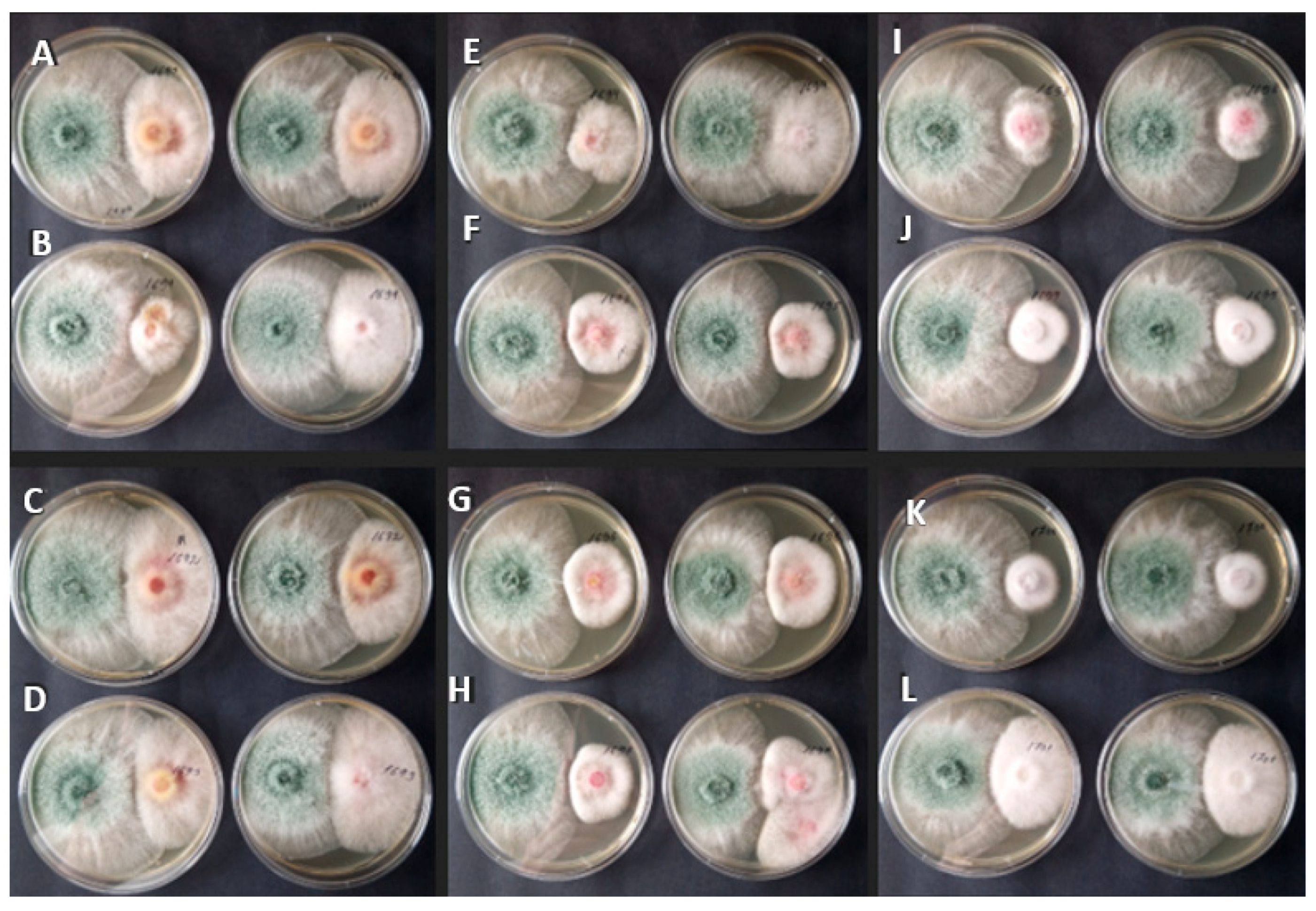
The antifungal activity of T. asperellum MSCL 309 against twelve phytopathogenic Fusarium isolates obtained from oats in Latvia was assessed using the dual-culture assay. After seven days of incubation, growth inhibition was observed for all tested isolates. The growth inhibition ranged from 44.6% to 78.4% (Table 2, Figure 1), indicating substantial variability in isolate susceptibility. The highest inhibition, 71.0–78.4%, was observed for both strains of F. sporotrichioides (MSCL 1697 and MSCL 1695), two strains of F. oxysporum (MSCL 1696 and MSCL 1700), F. culmorum MSCL 1693, and F. poae MSCL 1701. Both strains of F. graminearum (MSCL 1691 and MSCL 1694) exhibited significantly (p < 0.05) lower sensitivity. The consistent inhibition across all isolates indicates that T. asperellum possesses broad-spectrum antifungal potential against Fusarium spp., although the degree of inhibition is species- and/or isolate-dependent.

3.1.2. Contribution of Volatile Organic Compounds

The contribution of volatile organic compounds (VOCs) produced by T. asperellum to antifungal activity was evaluated using a sealed plate assay. After 72 h of incubation, no statistically significant differences (p > 0.05) in colony diameter were observed between treated and control plates for any of the tested Fusarium isolates. Although minor variations in radial growth were visually detectable in some cases, these differences were inconsistent and not statistically supported.
These results indicate that VOC-mediated inhibition was negligible under the experimental conditions used. The lack of a significant effect suggests that either VOCs were not produced in sufficient concentrations or that they did not exhibit strong antifungal activity against the tested isolates in this assay system.

3.1.3. Contribution of Soluble Metabolites

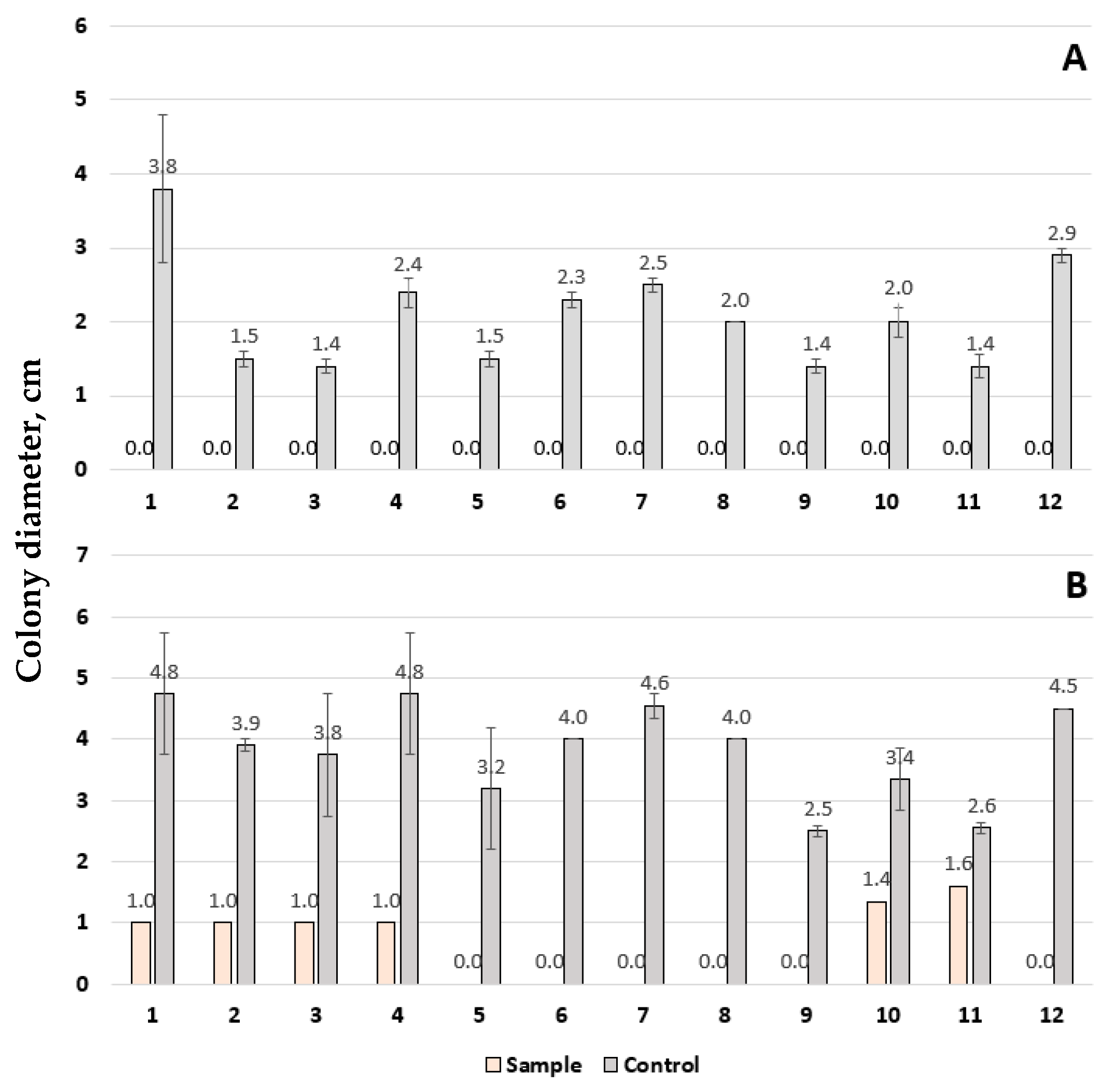
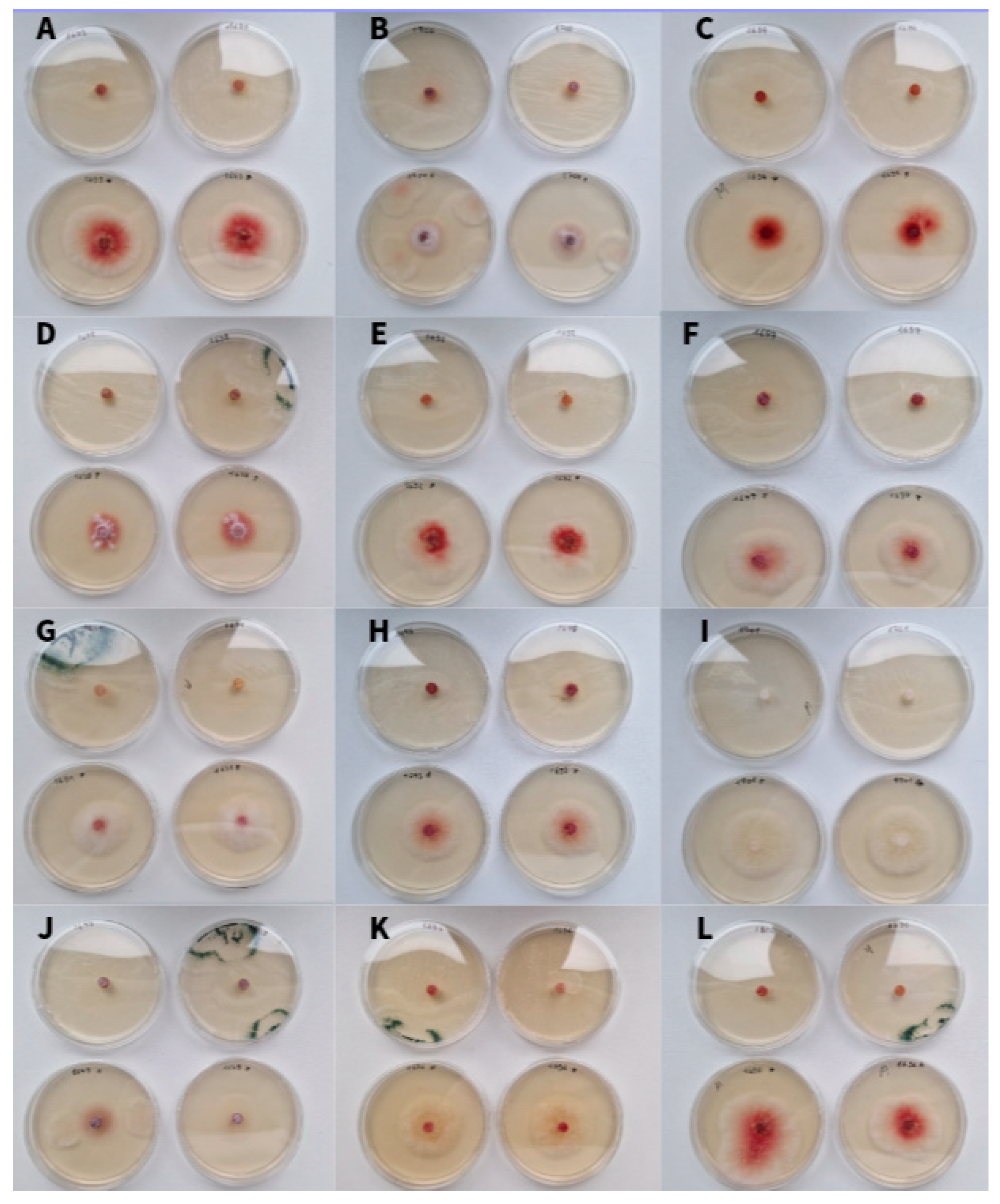
In contrast to VOCs, soluble metabolites produced by Trichoderma showed strong antifungal activity. After 48 h of incubation, colony diameters on control plates ranged from 1.4 to 3.8 cm, while plates pretreated with soluble T. asperellum metabolites showed complete growth inhibition (Figure 2A). After 72 h, the diameter of the control Fusarium colonies had increased 1.5–2-fold (Figure 2B). However, complete inhibition was still observed for isolates from F. graminearum MSCL 1694, both strains of F. sporotrichioides (MSCL 1695 and MSCL 1697), F. oxysporum MSCL 1696, F. tricinctum MSCL 1698, and F. poae MSCL 1701 on pretreated plates. The other isolates also had significantly reduced colony diameters (1.0–1.6 cm), consistent with significant growth inhibition. These results demonstrate that soluble metabolites are the primary contributors to the antifungal activity of T. asperellum at least under in vitro conditions (Table 2, Figure 2 and Figure 3).

3.2. Antifungal Activity of Bacillus Species Against Fusarium spp.

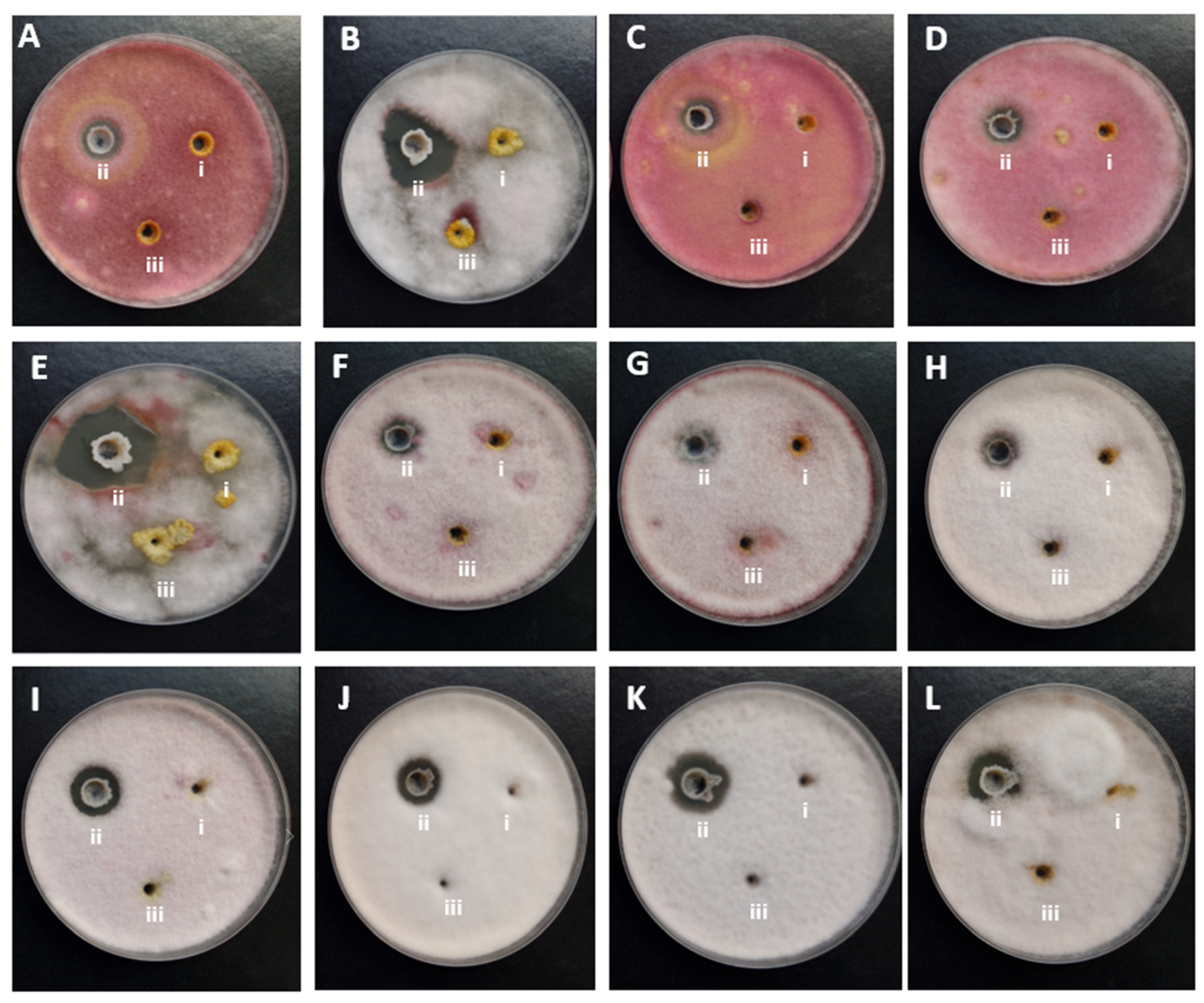
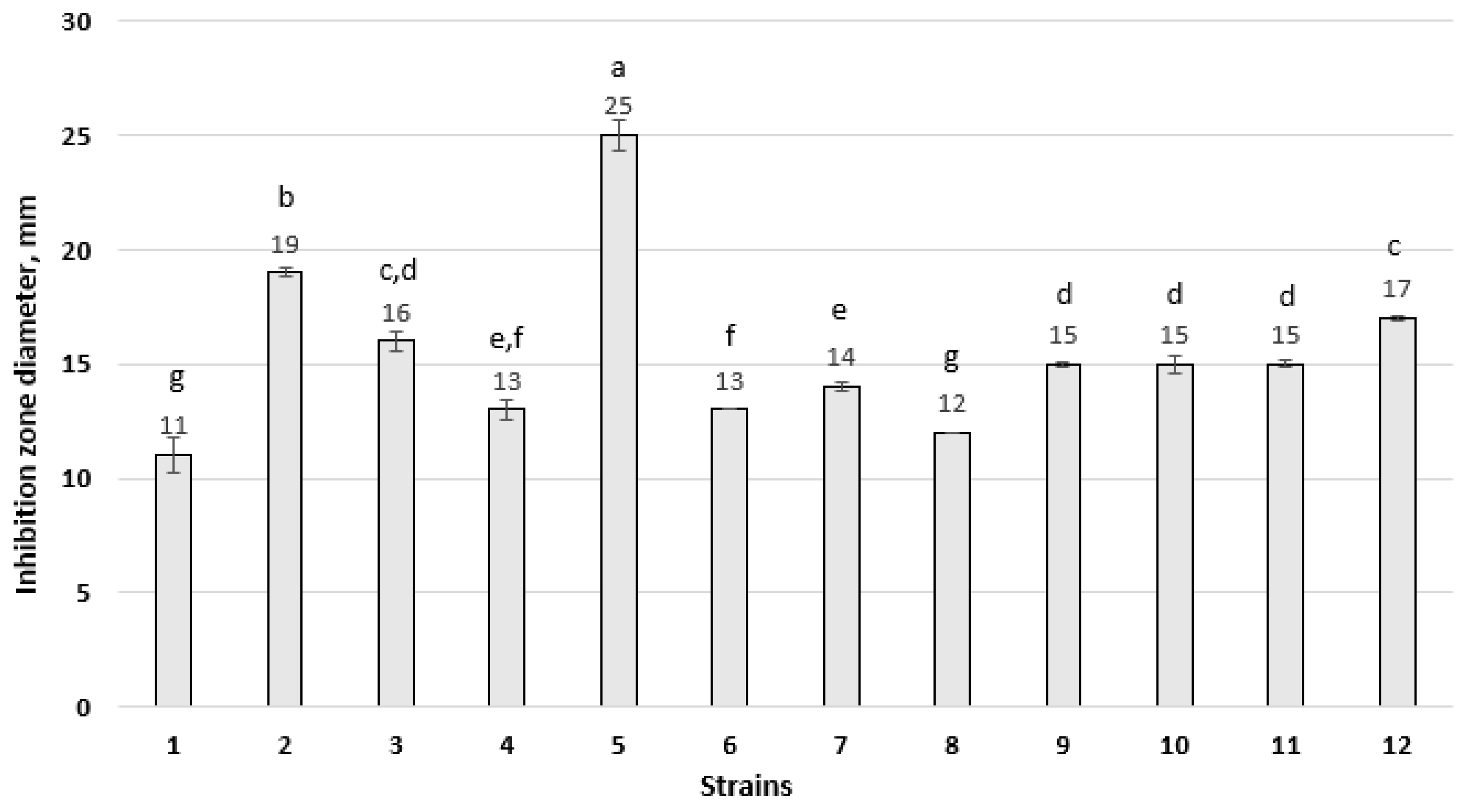
An experiment was conducted using two B. subtilis strains, MSCL 49 and MSCL 1441, and B. stercoris MSCL 897 to evaluate the antifungal activity of bacterial suspensions against twelve Fusarium spp. Isolates. Antifungal activity was observed in only one strain, B. subtilis 1441 (Figure 4 and Figure 5). The largest diameter of the zone of inhibition was observed for both F. graminearum strains, MSCL 1694 and MSCL 1691, at 25 mm and 19 mm, respectively. The lowest inhibition was observed for F. culmorum MSCL 1690 (11 mm) and F. sporotrichioides MSCL 1697 (12 mm).

3.3. Antifungal Activity of Streptomyces spp. Against Selected Phytopathogenic Fungi

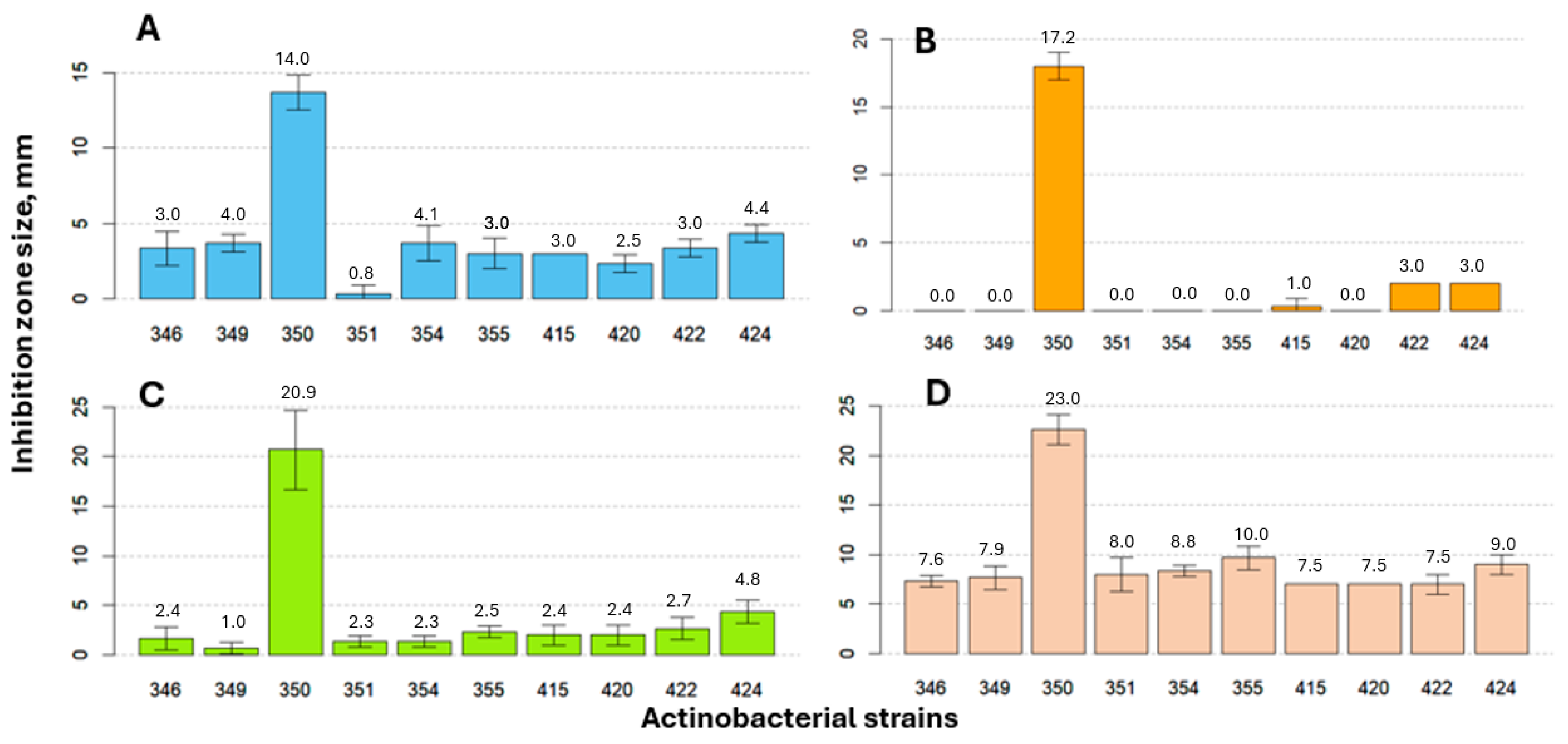
Ten Streptomyces strains were evaluated against four phytopathogenic fungi using the dual-culture assay. Antifungal activity varied markedly depending on both antagonist strain and fungal species (Figure 6). Across all tested Streptomyces strains, S. venezuelae MSCL 350 exhibited the highest antifungal activity against all pathogens, highlighting its superior antagonistic capacity. For F. oxysporum, the maximum inhibition zone diameter was 13.7 mm when paired with S. venezuelae. Other Streptomyces strains showed considerably weaker inhibition, ranging from 0.3 mm to 4.3 mm. F. graminearum demonstrated relatively high resistance, and significant inhibition was observed only in S. venezuelae (18.0 mm), while inhibition was minimal or absent for most other strains.
Botrytis cinerea showed moderate sensitivity. The strongest inhibition was again observed with S. venezuelae (20.7 mm), while the other strains produced inhibition zone diameters ranging from 1.3 mm to 4.3 mm.
The most sensitive species tested was Colletotrichum salicis. The diameter of the inhibition zone for S. venezuelae reached 22.7 mm, and other Streptomyces strains also caused significant inhibition (7.0–9.7 mm). This suggests a greater sensitivity of C. salicis to actinobacterial antagonism compared to F. graminearum and B. cinerea.
Two-way ANOVA supports the conclusion that antifungal activity depends not only on the antagonist strain but also on the intrinsic properties of the phytopathogenic fungus. These findings emphasize the importance of strain selection in BCA applications and suggest that S. venezuelae MSCL 350 represents a particularly promising candidate for further development.

4. Discussion

The present study demonstrates that antifungal activity is strongly dependent on both the antagonist strain and the phytopathogen species and strain. Among the tested microorganisms, Trichoderma asperellum MSCL 309 and Streptomyces venezuelae MSCL 350 exhibited the highest and most consistent antifungal activity, whereas the investigated Bacillus spp. showed comparatively moderate effects.

4.1. Antifungal Mechanisms of Trichoderma asperellum

The dual-culture assay revealed broad-spectrum inhibition of all tested Fusarium isolates by T. asperellum, supporting previous reports describing Trichoderma spp. as effective antagonists of soil-borne phytopathogens [17,18]. Experiments show that of the Fusarium species studied, F. graminearum is relatively difficult to control (Table 1). The observed isolate-dependent growth inhibition percentage is consistent with documented variability in susceptibility among Fusarium species and strains [1,2].
The absence of statistically significant inhibition in VOC assay suggests that VOCs played a limited role under the applied in vitro conditions. Although Trichoderma spp., including T. asperellum, are known to produce VOCs with antifungal properties [39], their efficacy may depend on environmental conditions and metabolite concentration [20]. The present findings suggest that the antagonism mediated by VOCs was negligible compared to other metabolites.
In contrast, soluble metabolites demonstrated strong antifungal activity, including the complete inhibition of several isolates. This observation aligns with established mechanisms of Trichoderma antagonism, which involve the secretion of hydrolytic enzymes (chitinases and β-1,3-glucanases) and secondary metabolites that degrade fungal cell walls or disrupt membrane integrity [19,20]. Such enzymatic and metabolite-driven inhibition likely represents the primary mechanism of antifungal activity observed in this study.

4.2. Strain-Specific Antifungal Activity of Bacillus spp.

B. subtilis MSCL 1441 showed significant antifungal activity, compared to B. subtilis MSCL 49 and B. stercoris MSCL 897, confirming the strain-dependent nature of the antagonism. Bacillus spp. are widely recognized for producing cyclic lipopeptides such as iturins, surfactins, and fengycins, which disrupt fungal cell membranes [24,25]. It has been found that both B. subtilis MSCL 1441 and B. stercoris MSCL 897 synthesize surfactins and fengycins, but not iturins [40]; however, the antagonistic activity differed significantly, indicating the involvement of additional factors.
These differences may be related to variation in the quantity of metabolite production, regulation of biosynthetic pathways, or the presence of other bioactive compounds. In addition to lipopeptide production, Bacillus spp. may contribute to pathogen inhibition through siderophore-mediated iron competition and induction of plant defense responses [26,27]. However, under the strictly in vitro conditions of this study, the dominant mechanism was most likely direct metabolite-mediated inhibition.
B. subtilis MSCL 1441 stood out among all tested antagonists in its ability to strongly inhibit F. graminearum (Figure 3), a species that was relatively resistant to other microorganisms examined in this study. This finding highlights the potential of specific Bacillus strains to target otherwise difficult-to-control phytopathogens.
B. stercoris belongs to the “subtilis group” and “subtilis subgroup” [41] and was originally identified as B. subtilis subsp. stercoris. Based on genomic analysis, it was later elevated to species level [42]. Despite this taxonomic proximity to B. subtilis, B. stercoris MSCL 897 did not exhibit antifungal activity under the conditions tested, indicating that taxonomic classification alone is not sufficient to predict biocontrol potential and emphasizing the importance of strain-level evaluation.
In the present study, the antifungal activity of Bacillus strains was evaluated using whole-cell suspensions, reflecting their overall antagonistic potential under in vitro conditions. In contrast, a more detailed mechanistic analysis was performed only for Trichoderma asperellum, which was selected as a model organism for investigating the contribution of volatile and soluble metabolites.
Although Bacillus spp. are well known to produce antifungal compounds such as cyclic lipopeptides, including surfactins and fengycins, the specific contribution of these metabolites was not directly assessed in this study. Such analyses would require the use of cell-free supernatants or purified compounds and were beyond the scope of the present work. Further studies are needed to characterize the role of individual metabolites in the observed antifungal activity.

4.3. Superior Antagonistic Potential of Streptomyces venezuelae

The dual-culture assay demonstrated that antifungal activity among Streptomyces spp. was species- or strain-dependent, with S. venezuelae MSCL 350 producing the largest inhibition zone diameters. This is consistent with the well-documented capacity of Streptomyces spp. to synthesize diverse bioactive secondary metabolites, including antibiotics with antifungal properties [30,31]. The strong antifungal activity observed for S. venezuelae MSCL 350 suggests the production of extracellular bioactive metabolites. Similar findings have been reported for other Streptomyces strains capable of suppressing phytopathogenic fungi through antibiotic production [33,34]. The variability in antifungal activity among the tested strains further highlights the importance of strain-specific properties in determining biocontrol potential.
Soil bacterium S. venezuelae is known as an antibiotic (chloramphenicol, jadomycin, and pikromycins) producer and differs from many other Streptomyces in its ability to complete its entire life cycle in liquid culture [43]. It is possible that this is what allowed this bacterium to display properties of its extracellular metabolites that were not possible for other Streptomyces under liquid cultivation. The expression of secondary metabolite biosynthesis gene clusters in Streptomyces spp. is associated with the complex morphological differentiation of the bacteria during the transition from vegetative to aerial mycelium and subsequent sporulation; therefore, these genes are called silent or cryptic, and under laboratory conditions, they are usually weakly expressed [44].
Species-dependent sensitivity was evident in this study. Colletotrichum salicis showed the highest sensitivity (Figure 5D), while Fusarium graminearum showed relatively higher resistance (Figure 5B), as in the case of T. asperellum (Table 1). Such differences may be linked to intrinsic pathogenicity mechanisms, cell wall architecture, and adaptive stress responses [6,7].
The consistent activity of S. venezuelae MSCL 350 against multiple phytopathogenic fungi suggests its potential as a broad-spectrum BCA.

5. Conclusions

This study demonstrates that antifungal activity against phytopathogenic fungi is strongly strain-dependent and varies among microbial groups. Among the tested antagonists, Trichoderma asperellum MSCL 309 and Streptomyces venezuelae MSCL 350 exhibited the most consistent and broad-spectrum antifungal activity, while Bacillus subtilis MSCL 1441 showed strong but more specific inhibition, particularly against Fusarium graminearum.
The results indicate that soluble metabolites are the primary contributors to the antifungal activity of T. asperellum under in vitro conditions, whereas volatile compounds had negligible effects. The observed variability in pathogen sensitivity highlights the importance of targeted strain selection for effective biocontrol strategies.
Overall, the identified strains represent promising candidates for the development of environmentally friendly biocontrol agents. Future research should focus on the characterization of antifungal metabolites and the validation of their efficacy under greenhouse and field conditions.

Author Contributions

Conceptualization, M.S. and V.N.; methodology, M.S. and V.N.; software, M.S., V.N. and L.R.; validation, V.N.; formal analysis, M.S. and V.N.; investigation, M.S., L.R., K.J., L.Z. and I.J.; resources, V.N.; data curation, M.S. and V.N.; writing—original draft preparation, M.S. and V.N.; writing—review and editing, M.S. and V.N.; visualization, M.S., V.N., L.R. and K.J.; supervision, V.N. All authors have read and agreed to the published version of the manuscript.

Funding

This research received no external funding.

Institutional Review Board Statement

Not applicable.

Informed Consent Statement

Not applicable.

Data Availability Statement

The original contributions presented in this study are included in the article. Further inquiries can be directed to the corresponding author.

Conflicts of Interest

The authors declare no conflicts of interest.

Abbreviations

The following abbreviations are used in this manuscript:
BCAbiocontrol agent
FHBFusarium head blight
MSCLMicrobial Strain Collection of Latvia
VOCsvolatile organic compounds

References

  1. Coleman, J.J. The Fusarium solani Species Complex: Ubiquitous Pathogens of Agricultural Importance. Mol. Plant Pathol. 2016, 17, 146–158. [Google Scholar] [CrossRef]
  2. Michielse, C.B.; Rep, M. Pathogen Profile Update: Fusarium oxysporum. Mol. Plant Pathol. 2009, 10, 311–324. [Google Scholar] [CrossRef]
  3. Alisaac, E.; Mahlein, A.-K. Fusarium Head Blight on Wheat: Biology, Modern Detection and Diagnosis and Integrated Disease Management. Toxins 2023, 15, 192. [Google Scholar] [CrossRef] [PubMed]
  4. Xue, A.G.; Chen, Y.; Seifert, K.; Guo, W.; Blackwell, B.A.; Harris, L.J.; Overy, D.P. Prevalence of Fusarium Species Causing Head Blight of Spring Wheat, Barley and Oat in Ontario during 2001–2017. Can. J. Plant Pathol. 2019, 41, 392–402. [Google Scholar] [CrossRef]
  5. Treikale, O.; Javoisha, B.; Feodorova-Fedotova, L.; Grantina-Ievina, L.; Volkova, J. Occurrence of Fusarium Species on Small Cereals in Latvia. Commun. Agric. Appl. Biol. Sci. 2015, 80, 551–554. [Google Scholar]
  6. Doehlemann, G.; Ökmen, B.; Zhu, W.; Sharon, A. Plant Pathogenic Fungi. Microbiol. Spectr. 2017, 5, 701–726. [Google Scholar] [CrossRef] [PubMed]
  7. Han, X.; Kahmann, R. Manipulation of Phytohormone Pathways by Effectors of Filamentous Plant Pathogens. Front. Plant Sci. 2019, 10, 822. [Google Scholar] [CrossRef]
  8. Ji, F.; He, D.; Olaniran, A.O.; Mokoena, M.P.; Xu, J.; Shi, J. Occurrence, Toxicity, Production and Detection of Fusarium Mycotoxins: A Review. Food Prod. Process. Nutr. 2019, 1, 6. [Google Scholar] [CrossRef]
  9. Shabeer, S.; Tahira, R.; Jamal, A. Fusarium spp. Mycotoxin Production, Diseases and Their Management: An Overview. J. Agric. Res. 2021, 34, 278–293. [Google Scholar] [CrossRef]
  10. Dean, R.; van Kan, J.A.L.; Pretorius, Z.A.; Hammond-Kosack, K.E.; Di Pietro, A.; Spanu, P.D.; Rudd, J.J.; Dickman, M.; Kahmann, R.; Ellis, J.; et al. The Top 10 Fungal Pathogens in Molecular Plant Pathology. Mol. Plant Pathol. 2012, 13, 414–430. [Google Scholar] [CrossRef]
  11. WHO. WHO Fungal Priority Pathogens List to Guide Research, Development and Public Health Action; World Health Organization: Geneva, Switzerland, 2022. [Google Scholar]
  12. Chen, T.; Zhang, Z.; Chen, Y.; Li, B.; Tian, S. Botrytis cinerea. Curr. Biol. 2023, 33, R460–R462. [Google Scholar] [CrossRef] [PubMed]
  13. Usman, H.M.; Hussain, M.D.; Karim, M.M.; Nizamani, M.M.; Mubeen, M.; Hussain, S.; Kamran, A.; Wang, Y.; Liu, F.-Q. Colletotrichum: A Versatile Fungal Genus with Diverse Infection Strategies, Host Interactions, and Management Challenges. Phytopathol. Res. 2026, 8, 6. [Google Scholar] [CrossRef]
  14. Damm, U.; Cannon, P.F.; Woudenberg, J.H.C.; Crous, P.W. The Colletotrichum acutatum Species Complex. Stud. Mycol. 2012, 73, 37–113. [Google Scholar] [CrossRef] [PubMed]
  15. Manova, V.; Stoyanova, Z.; Rodeva, R.; Boycheva, I.; Korpelainen, H.; Vesterinen, E.; Wirta, H.; Bonchev, G. Morphological, Pathological and Genetic Diversity of the Colletotrichum Species, Pathogenic on Solanaceous Vegetable Crops in Bulgaria. J. Fungi 2022, 8, 1123. [Google Scholar] [CrossRef]
  16. Nguyen, H.T.; Pham, T.T.; Nguyen, P.T.; Dinh, N.C.G.; Le, M.T.; Nguyen, T.D.; Nguyen, T.T.; Nguyen, V.B. Microbial Biocontrol in Agriculture: From Mechanistic Understanding to Field Application. Discov. Plants 2025, 2, 334. [Google Scholar] [CrossRef]
  17. Harman, G.E.; Howell, C.R.; Viterbo, A.; Chet, I.; Lorito, M. Trichoderma Species—Opportunistic, Avirulent Plant Symbionts. Nat. Rev. Microbiol. 2004, 2, 43–56. [Google Scholar] [CrossRef]
  18. Mukhopadhyay, R.; Kumar, D. Trichoderma: A Beneficial Antifungal Agent and Insight into Its Mechanism of Biocontrol Potential. Egypt. J. Biol. Pest Control 2020, 30, 133. [Google Scholar] [CrossRef]
  19. Brunner, K.; Reithner, B.; Schumacher, R.; Peissl, I.; Seidl, V.; Krska, R.; Zeilinger, S. The G Protein Alpha Subunit Tga1 of Trichoderma atroviride is Involved in Chitinase Formation and Differential Production of Antifungal Metabolites. Fungal Genet. Biol. 2005, 42, 749–760. [Google Scholar]
  20. Vinale, F.; Sivasithamparam, K.; Ghisalberti, E.L.; Marra, R.; Woo, S.L.; Lorito, M. Trichoderma–Plant–Pathogen Interactions. Soil Biol. Biochem. 2008, 40, 1–10. [Google Scholar] [CrossRef]
  21. Diaz-Gutierrez, C.; Arroyave, C.; Llugany, M.; Poschenrieder, C.; Martos, S.; Pelaez, C. Trichoderma asperellum as a Preventative and Curative Agent to Control Fusarium Wilt in Stevia rebaudiana. Biol. Control 2021, 155, 104537. [Google Scholar] [CrossRef]
  22. Arakere, U.C.; Jagannath, S.; Krishnamurthy, S.; Chowdappa, S.; Konappa, N. Chapter 12—Microbial Bio-pesticide as Sustainable Solution for Management of Pests: Achievements and Prospects. In Biopestic; Elsevier: Amsterdam, The Netherlands, 2022; Volume 2, pp. 183–200. [Google Scholar] [CrossRef]
  23. Villarreal-Delgado, M.F.; Villa-Rodriguez, E.D.; Cira-Chavez, L.A.; Estrada-Alvarado, M.I.; Parra-Cota, F.I.; Santos-Villalobos, S. The Genus Bacillus as a Biological Control Agent and Its Implications in Agricultural Biosecurity. Mex. J. Phytopathol. 2018, 36, 95–130. [Google Scholar]
  24. Falardeau, J.; Wise, C.; Novitsky, L.; Avis, T.J. Ecological and Mechanistic Insights into the Antimicrobial Properties of Bacillus subtilis Lipopeptides on Plant Pathogens. J. Chem. Ecol. 2013, 39, 869–878. [Google Scholar] [CrossRef]
  25. Gong, M.; Wang, J.D.; Zhang, J.; Yang, H.; Lu, X.F.; Pei, Y.; Cheng, J.Q. Study of the Antifungal Ability of Bacillus subtilis Strain PY-1 and Identification of Its Antifungal Substance (Iturin A). Acta Biochim. Biophys. Sin. 2006, 38, 233–240. [Google Scholar] [CrossRef]
  26. Fgaier, H.; Eberl, H.J. Antagonistic Control of Microbial Pathogens under Iron Limitation by Siderophore-Producing Bacteria. J. Theor. Biol. 2011, 273, 103–114. [Google Scholar] [CrossRef]
  27. Kim, J.S.; Lee, J.; Lee, C.H.; Woo, S.Y.; Kang, H.; Seo, S.G.; Kim, S.H. Activation of Pathogenesis-Related Genes by the Rhizobacterium Bacillus sp. JS Inducing Systemic Resistance in Tobacco Plants. Plant Pathol. J. 2015, 31, 195–201. [Google Scholar] [CrossRef] [PubMed]
  28. Khan, N.; Martinez-Hidalgo, P.; Ice, T.A.; Maymon, M.; Humm, E.A.; Nejat, N.; Sanders, E.R.; Kaplan, D.; Hirsch, A.M. Antifungal Activity of Bacillus Species Against Fusarium and Analysis of Potential Biocontrol Mechanisms. Front. Microbiol. 2018, 9, 2363. [Google Scholar] [CrossRef] [PubMed]
  29. Iqbal, S.; Begum, F.; Rabaan, A.A.; Aljeldah, M.; Al Shammari, B.R.; Alawfi, A.; Alshengeti, A.; Sulaiman, T.; Khan, A. Classification and Multifaceted Potential of Secondary Metabolites Produced by Bacillus subtilis Group: A Comprehensive Review. Molecules 2023, 28, 927. [Google Scholar] [CrossRef]
  30. Mahajan, G.B.; Balachandran, L. Antibacterial Agents from Actinomycetes—A Review. Front. Biosci. 2012, 4, 240–253. [Google Scholar] [CrossRef] [PubMed]
  31. Barka, E.A.; Vatsa, P.; Sanchez, L.; Gaveau-Vaillant, N.; Jacquard, C.; Meier-Kolthoff, J.P.; Klenk, H.P.; Clément, C.; Ouhdouch, Y.; van Wezel, G.P. Taxonomy, physiology, and natural products of Actinobacteria. Microbiol. Mol. Biol. Rev. 2015, 80, 1–43. [Google Scholar] [CrossRef]
  32. Jeyaram, M.; Jeyaram, Y.; Ayyadurai, T.; Gurusamy, M. Exploration of Streptomycetes as Biocontrol Agents Against Plant Pathogens. In Streptomycetes: Biological Candidates for Sustainable Agriculture; Kaur, T., Kumar, H., Manhas, R.K., Eds.; Springer: Singapore, 2026. [Google Scholar] [CrossRef]
  33. Colombo, E.M.; Pizzatti, C.; Kunova, A.; Gardana, C.; Saracchi, M.; Cortesi, P.; Pasquali, M. Evaluation of In Vitro Methods to Select Effective Streptomycetes against Toxigenic Fusaria. PeerJ 2019, 7, e6905. [Google Scholar] [CrossRef]
  34. Prapagdee, B.; Kuekulvong, C.; Mongkolsuk, S. Antifungal Potential of Extracellular Metabolites Produced by Streptomyces hygroscopicus against Phytopathogenic Fungi. Int. J. Biol. Sci. 2008, 4, 330–337. [Google Scholar] [CrossRef]
  35. Malfent, F.; Zehl, M.; Kirkegaard, R.H.; Oberhofer, M.; Zotchev, S.B. Genomes and Secondary Metabolomes of Streptomyces spp. Isolated from Leontopodium nivale ssp. alpinum. Front. Microbiol. 2024, 14, 1408479. [Google Scholar] [CrossRef]
  36. Anh, D.N. Studying on Antifungal Activities of Streptomyces Isolated from Soil and Its Biocontrol Potential Against Fusarium of Chili’s Root Rot Disease. Int. J. Appl. Biol. 2024, 8, 14–28. [Google Scholar] [CrossRef]
  37. Ommati, F.; Zaker, M. In Vitro and Greenhouse Evaluations of Trichoderma Isolates for Biological Control of Potato Wilt Disease (Fusarium solani). Arch. Phytopathol. Plant Protect. 2012, 45, 1715–1723. [Google Scholar] [CrossRef]
  38. Sipiczki, M. Identification of Antagonistic Yeasts as Potential Biocontrol Agents: Diverse Criteria and Strategies. Int. J. Food Microbiol. 2023, 406, 110360. [Google Scholar] [CrossRef] [PubMed]
  39. Chávez-Avilés, M.N.; García-Álvarez, M.; Ávila-Oviedo, J.L.; Hernández-Hernández, I.; Bautista-Ortega, P.I.; Macías-Rodríguez, L.I. Volatile Organic Compounds Produced by Trichoderma asperellum with Antifungal Properties against Colletotrichum acutatum. Microorganisms 2024, 12, 2007. [Google Scholar] [CrossRef] [PubMed]
  40. Seņkovs, M.; Bērziņa, Z.; Nikolajeva, V.; Nakurte, I. Analysis of Lipopeptides Produced by Bacillus subtilis. Abstract of the 78th Scientific Conference of the University of Latvia. Environ. Exp. Biol. 2020, 18, 53. [Google Scholar]
  41. Balleux, G.; Höfte, M.; Arguelles-Arias, A.; Deleu, M.; Ongena, M. Bacillus Lipopeptides as Key Players in Rhizosphere Chemical Ecology. Trends Microbiol. 2025, 33, 80–95. [Google Scholar] [CrossRef]
  42. Dunlap, C.A.; Bowman, M.J.; Zeigler, D.R. Promotion of Bacillus subtilis subsp. inaquosorum, Bacillus subtilis subsp. spizizenii and Bacillus subtilis subsp. stercoris to Species Status. Antonie Van Leeuwenhoek 2020, 113, 1–12. [Google Scholar] [CrossRef] [PubMed]
  43. Jordan, M.L.; Schlimpert, S. Microbe Profile: Streptomyces venezuelae—A Model Species to Study Morphology and Differentiation in Filamentous Bacteria. Microbiology 2025, 171, 001541. [Google Scholar] [CrossRef]
  44. Schlimpert, S.; Elliot, M.A. The Best of Both Worlds—Streptomyces coelicolor and Streptomyces venezuelae as Model Species for Studying Antibiotic Production and Bacterial Multicellular Development. J. Bacteriol. 2023, 205, e00153-23. [Google Scholar] [CrossRef] [PubMed]
Figure 1. Representative images of dual-culture assays showing the interaction between Trichoderma asperellum MSCL 309 (left side) and (A) Fusarium culmorum MSCL 1690, (B) F. graminearum MSCL 1691, (C) F. culmorum MSCL 1692, (D) F. culmorum MSCL 1693, (E) F. graminearum MSCL 1694, (F) F. sporotrichioides MSCL 1695, (G) F. oxysporum MSCL 1696, (H) F. sporotrichioides MSCL 1697, (I) F. tricinctum MSCL 1698, (J) F. oxysporum MSCL 1699, (K) F. oxysporum MSCL 1700, and (L) F. poae MSCL 1701 (right side) after seven days of incubation at 20–22 °C. Images illustrate the extent of growth inhibition observed under in vitro conditions. Two independent replicates are shown.
Pathogens 15 00458 g001
Figure 2. Colony diameter (cm ± SD) of Fusarium isolates grown on control medium and medium pretreated with soluble metabolites of Trichoderma asperellum MSCL 309 after 48 h (A) and 72 h (B) of incubation. Data represent the mean values of three independent experiments. Strain numbering corresponds to the following: 1. Fusarium culmorum MSCL 1690; 2. F. graminearum MSCL 1691; 3. F. culmorum MSCL 1692; 4. F. culmorum MSCL 1693; 5. F. graminearum MSCL 1694; 6. F. sporotrichioides MSCL 1695; 7. F. oxysporum MSCL 1696; 8. F. sporotrichioides MSCL 1697; 9. F. tricinctum MSCL 1698; 10. F. oxysporum MSCL 1699; 11. F. oxysporum MSCL 1700; 12. F. poae MSCL 1701.
Pathogens 15 00458 g002
Figure 3. Colony diameter (cm ± SD) of Fusarium isolates grown on control medium and medium pretreated with soluble metabolites of Trichoderma asperellum MSCL 309 after 48 h (the top two images next to each letter) and 72 h (the two images below each letter) of incubation. Data represent the mean values of three independent experiments. Strain numbering corresponds to the following: (A)—Fusarium culmorum MSCL 1690, (B)—F. graminearum MSCL 1691, (C)—F. culmorum MSCL 1692, (D)—F. culmorum MSCL 1693, (E)—F. graminearum MSCL 1694, (F)—F. sporotrichioides MSCL 1695, (G)—F. oxysporum MSCL 1696, (H)—F. sporotrichioides MSCL 1697, (I)—F. tricinctum MSCL 1698, (J)—F. oxysporum MSCL 1699, (K)—F. oxysporum MSCL 1700, and (L)—F. poae MSCL 1701. Two replicates are shown.
Pathogens 15 00458 g003
Figure 4. Diameter of the zone of inhibition of Fusarium (mm ± SD) after seven days of cultivation in an agar well assay with B. subtilis MSCL 1441. Strain transcription: 1. Fusarium culmorum MSCL 1690; 2. F. graminearum MSCL 1691; 3. F. culmorum MSCL 1692; 4. F. culmorum MSCL 1693; 5. F. graminearum MSCL 1694; 6. F. sporotrichioides MSCL 1695; 7. F. oxysporum MSCL 1696; 8. F. sporotrichioides MSCL 1697; 9. F. tricinctum MSCL 1698; 10. F. oxysporum MSCL 1699; 11. F. oxysporum MSCL 1700; 12. F. poae MSCL 1701. Numbers with different letters above the columns are significantly different (p < 0.05).
Pathogens 15 00458 g004
Figure 5. Effect of three Bacillus strains plated in agar wells on the growth of Fusarium spp. after seven days of cultivation. i—B. stercoris MSCL 897, ii—B. subtilis MSCL 1441, iii—B. subtilis MSCL 49. (A) Fusarium culmorum MSCL 1690, (B) F. graminearum MSCL 1691, (C) F. culmorum MSCL 1692, (D) F. culmorum MSCL 1693, (E) F. graminearum MSCL 1694, (F) F. sporotrichioides MSCL 1695, (G) F. oxysporum MSCL 1696, (H) F. sporotrichioides MSCL 1697, (I) F. tricinctum MSCL 1698, (J) F. oxysporum MSCL 1699, (K) F. oxysporum MSCL 1700, and (L) F. poae MSCL 1701. One of three replicates is shown.
Pathogens 15 00458 g005
Figure 6. Inhibition zone size (mm ± SD) of Fusarium oxysporum (A), F. graminearum (B), Botrytis cinerea (C), and Colletotrichum salicis (D) dependent on the opposite growing actinobacteria Streptomyces griseus MSCL 346, Streptomyces sp. MSCL 349, S. venezuelae MSCL 350, S. griseus MSCL 351, S. sylvae MSCL 354, Streptomyces sp. MSCL 355, Streptomyces sp. MSCL 415, S. anthocyanicus MSCL 420, S. griseus MSCL 422, and S. griseus MSCL 424 in three replicates after seven days of incubation.
Pathogens 15 00458 g006
Table 1. Microorganisms used in the study.
SpeciesMSCL NumberOriginType of Identification
Antagonists
Bacillus subtilis1441Lupine soil, Latviabiochemical
Bacillus subtilis49Unknownbiochemical
Bacillus stercoris897Commercial cleaner, LatviarRNA gene
Streptomyces anthocyanicus420Garden soil, LatviaANI
Streptomyces griseus346Garden soil, LatviarRNA gene, ANI
Streptomyces griseus351Garden soil, LatviarRNA gene, ANI
Streptomyces griseus422Garden soil, LatviaANI
Streptomyces griseus424Garden soil, LatviaANI
Streptomyces silvae354Garden soil, LatviarRNA gene
Streptomyces sp.355Garden soil, LatviarRNA gene
Streptomyces sp.415Garden soil, Latviamicromorphological
Streptomyces sp.349Garden soil, LatviarRNA gene
Streptomyces venezuelae350Garden soil, LatviaANI
Trichoderma asperellum309Commercial preparation, LatviaITS
Pathogens
Botrytis cinerea433Liver paste, Swedenunknown
Colletotrichum salicis850Rhododendron leaves, RigaITS, LSU, TUB2, ACT, CHS-1, GAPDH, HIS3
Fusarium oxysporum259Unknownunknown
Fusarium graminearum435Oat, Swedenunknown
Fusarium culmorum1690Avena sativa, Latviamicromorphological
Fusarium culmorum1692Avena sativa, LatviaITS, TEF
Fusarium culmorum1693Avena sativa, LatviaITS, TEF
Fusarium graminearum1691Avena sativa, LatviaITS, TEF
Fusarium graminearum1694Avena sativa, LatviaITS, TEF
Fusarium oxysporum1696Avena sativa, Latviamicromorphological
Fusarium oxysporum1699Avena sativa, LatviaITS, TEF
Fusarium oxysporum1700Avena sativa, LatviaITS, TEF
Fusarium poae1701Avena sativa, LatviaITS, TEF
Fusarium sporotrichioides1695Avena sativa, LatviaITS, TEF
Fusarium sporotrichioides1697Avena sativa, LatviaITS, TEF
Fusarium tricinctum1698Avena sativa, Latviamicromorphological
Table 2. Inhibitory effect of T. asperellum against twelve Fusarium strains. Numbers in a column followed by different letters are significantly different (p < 0.05).
Fusarium StrainsPercentage of Inhibition Under Dual-Culture Conditions
Fusarium culmorum MSCL 169049.1 ± 4.4 c
Fusarium graminearum MSCL 169144.6 ± 10.5 c
Fusarium culmorum MSCL 169246.7 ± 5.8 c
Fusarium culmorum MSCL 169371.4 ± 4.5 a
Fusarium graminearum MSCL 169448.9 ± 9.4 b,c
Fusarium sporotrichioides MSCL 169571.0 ± 3.9 a
Fusarium oxysporum MSCL 169674.4 ± 5.6 a
Fusarium sporotrichioides MSCL 169778.4 ± 7.0 a
Fusarium tricinctum MSCL 169856.7 ± 3.3 b
Fusarium oxysporum MSCL 169956.7 ± 6.6 b
Fusarium oxysporum MSCL 170074.1 ± 3.5 a
Fusarium poae MSCL 170171.0 ± 4.1 a
Disclaimer/Publisher’s Note: The statements, opinions and data contained in all publications are solely those of the individual author(s) and contributor(s) and not of MDPI and/or the editor(s). MDPI and/or the editor(s) disclaim responsibility for any injury to people or property resulting from any ideas, methods, instructions or products referred to in the content.