Article

The Antibacterial Efficacy of Far-UVC Light: A Combined-Method Study Exploring the Effects of Experimental and Bacterial Variables on Dose–Response

by
David T. Griffin
1,2,
Terence Gourlay
1 and
Michelle Maclean
1,2,*
1
Department of Biomedical Engineering, University of Strathclyde, Wolfson Building, 106 Rottenrow, Glasgow G4 0NW, UK
2
The Robertson Trust Laboratory for Electronic Sterilisation Technologies (ROLEST), Department of Electronic & Electrical Engineering, University of Strathclyde, Royal College Building, 204 George St, Glasgow G1 1XW, UK
*
Author to whom correspondence should be addressed.
Pathogens 2024, 13(8), 698; https://doi.org/10.3390/pathogens13080698

Submission received: 24 July 2024 / Revised: 7 August 2024 / Accepted: 8 August 2024 / Published: 19 August 2024
(This article belongs to the Section Epidemiology of Infectious Diseases)

Abstract

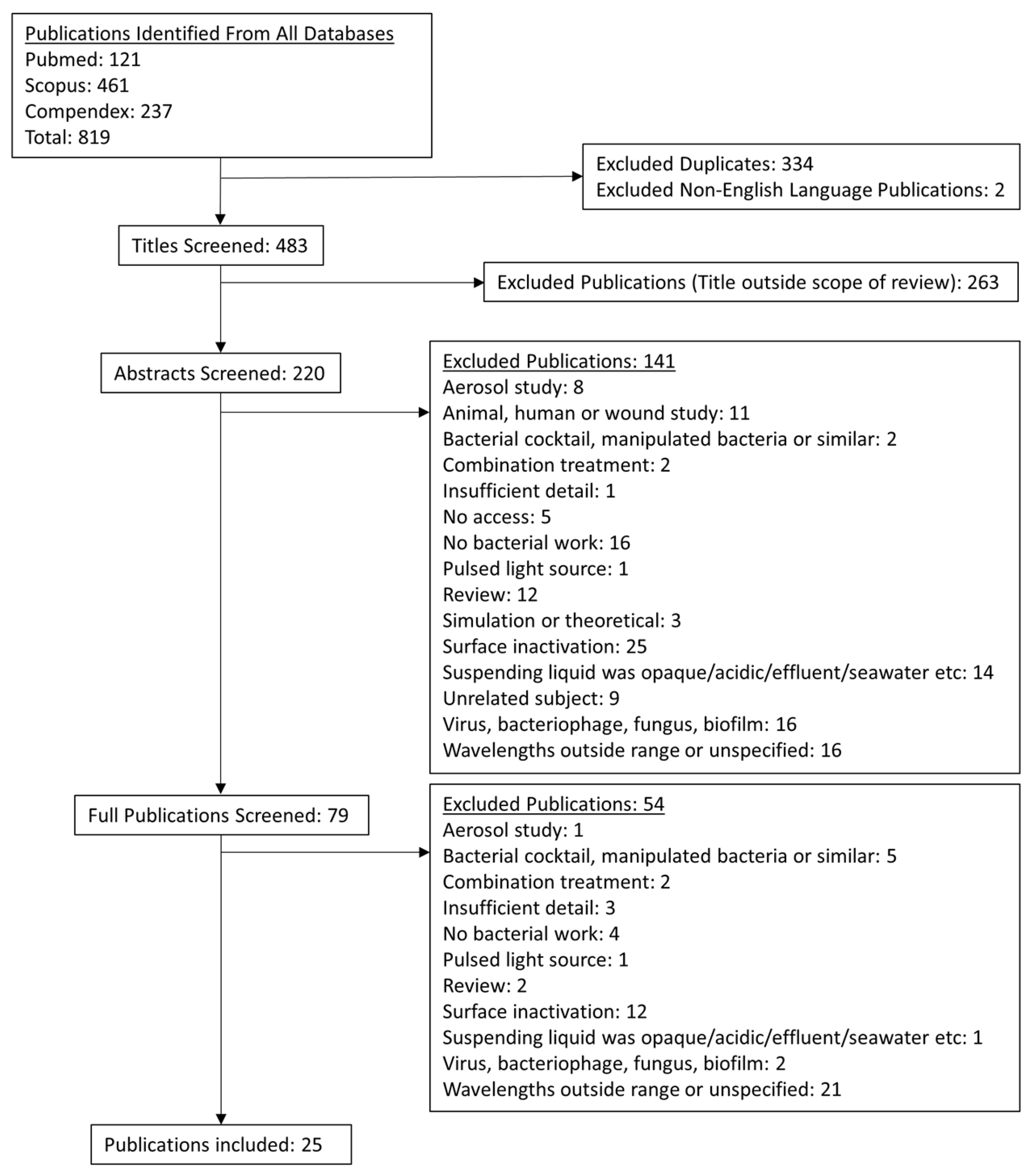
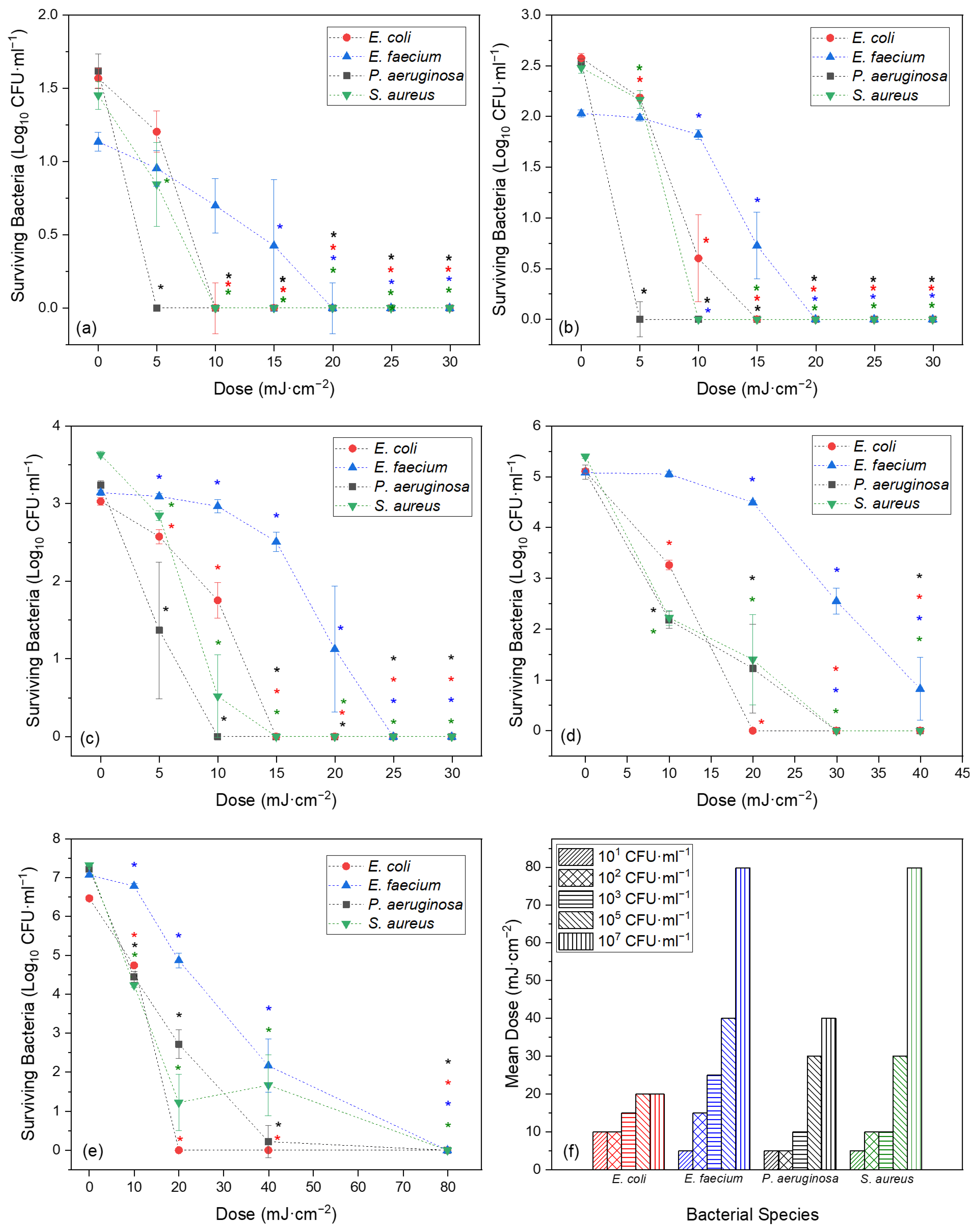
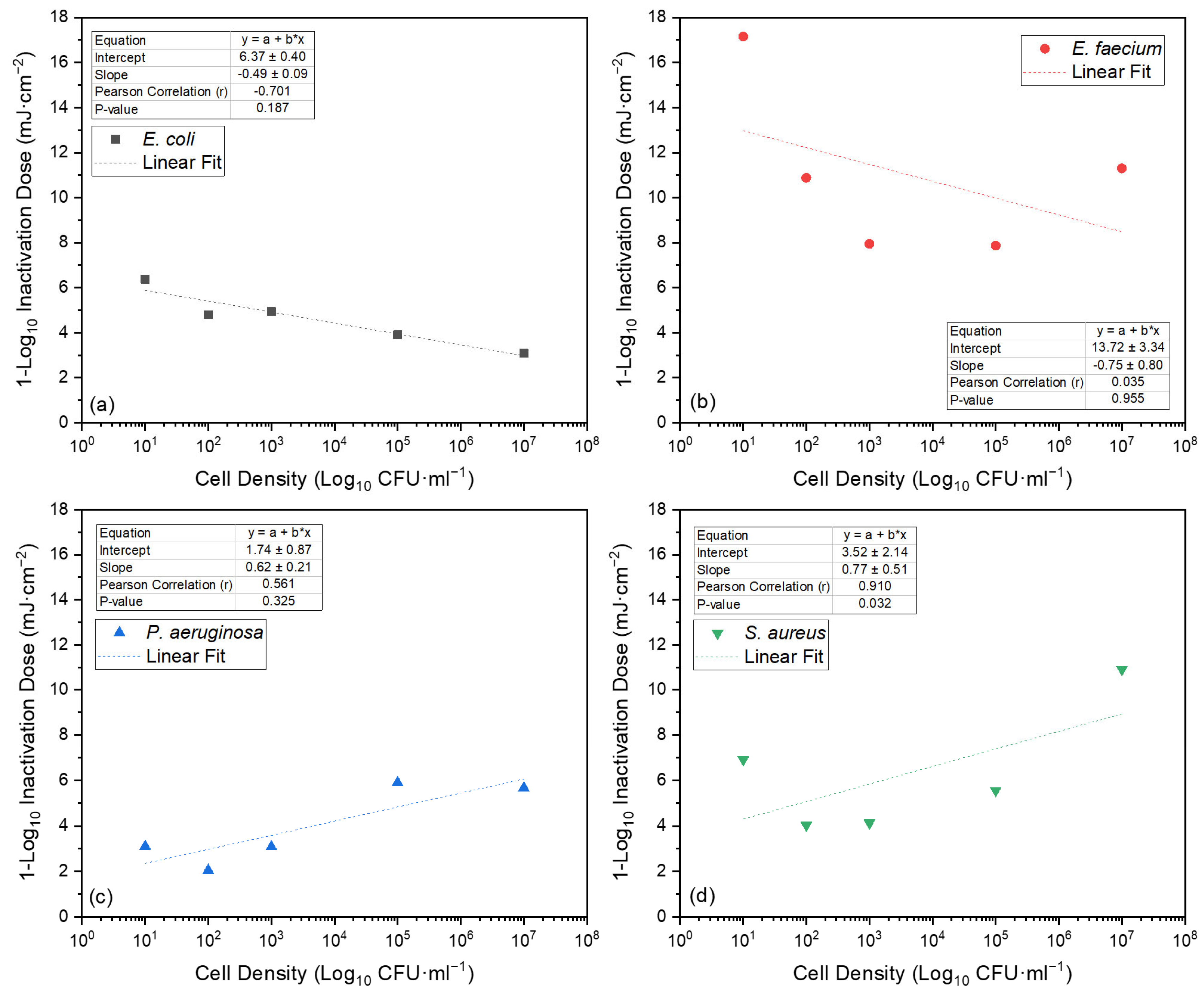
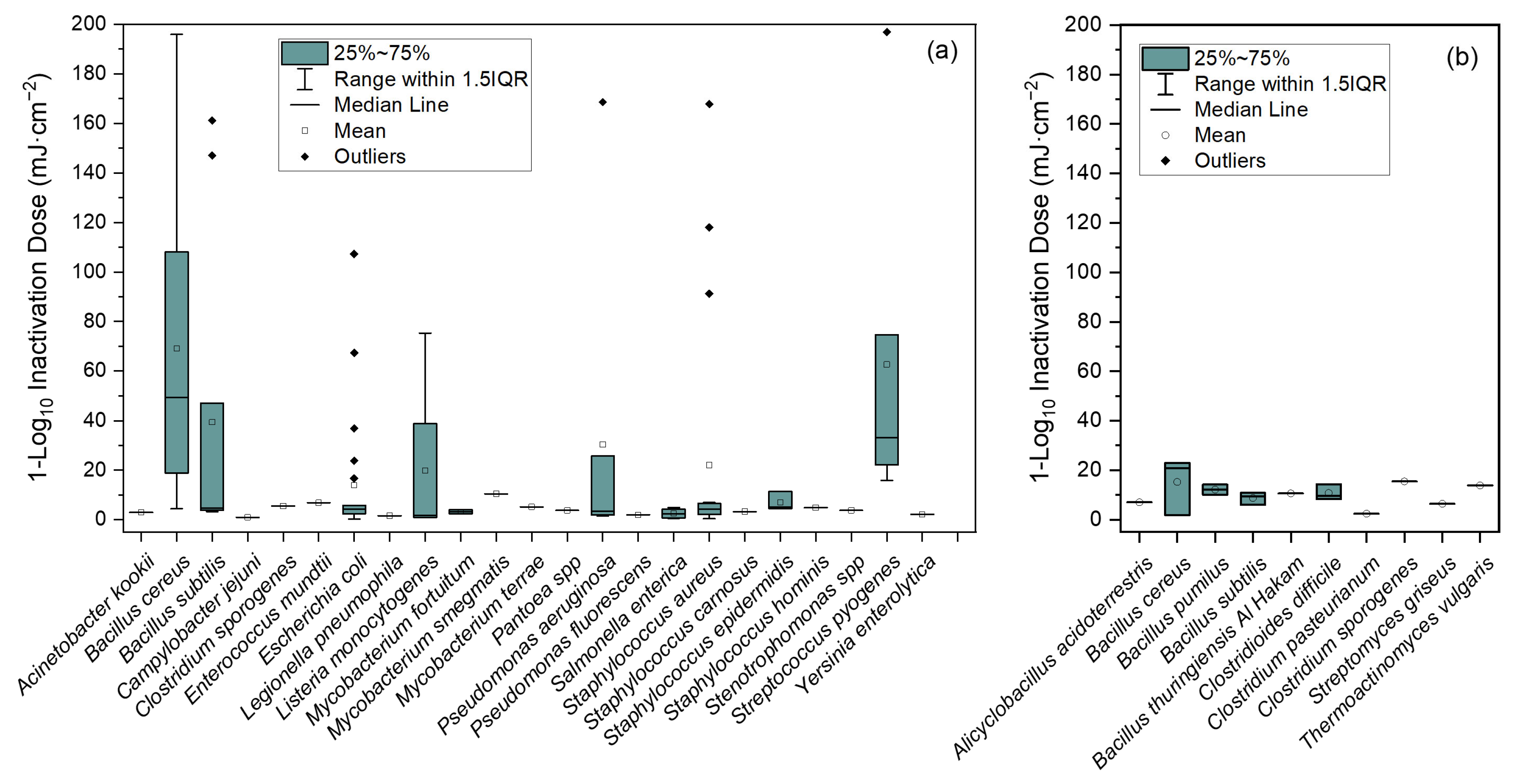
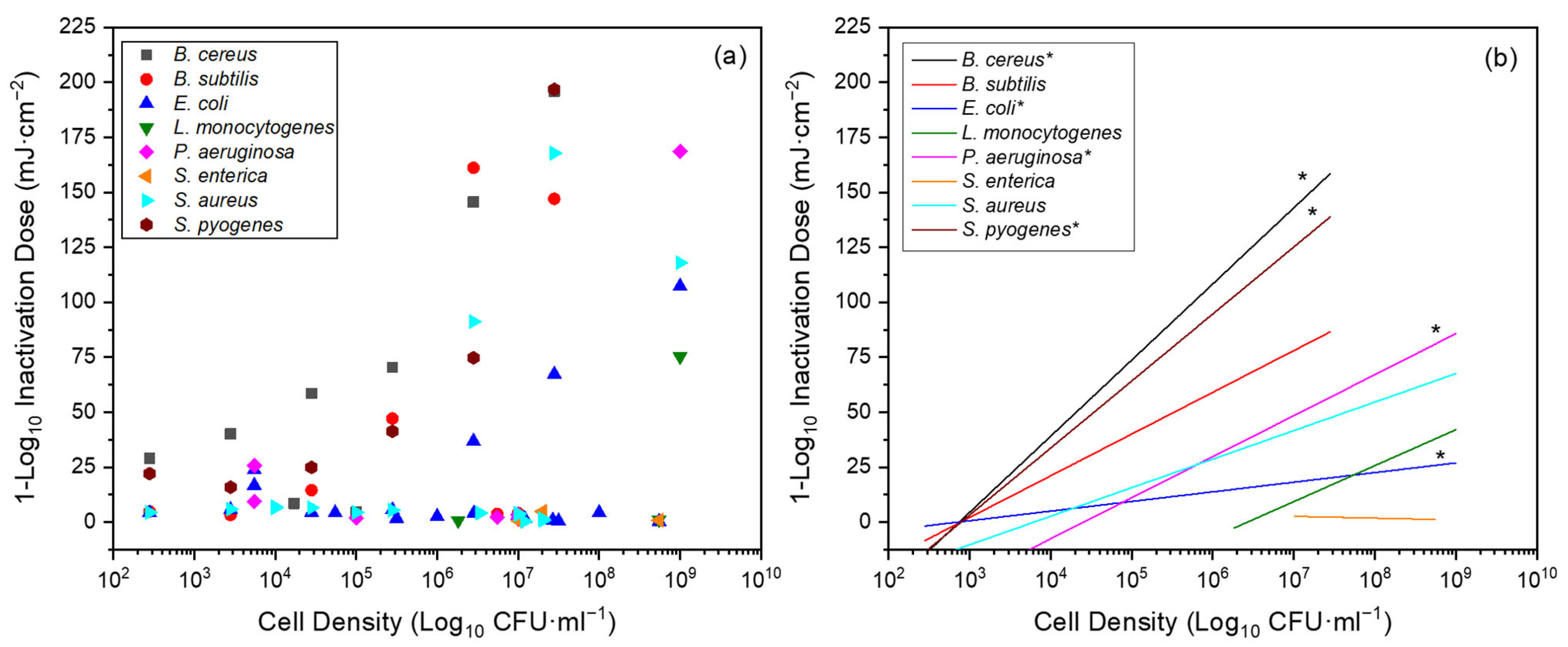
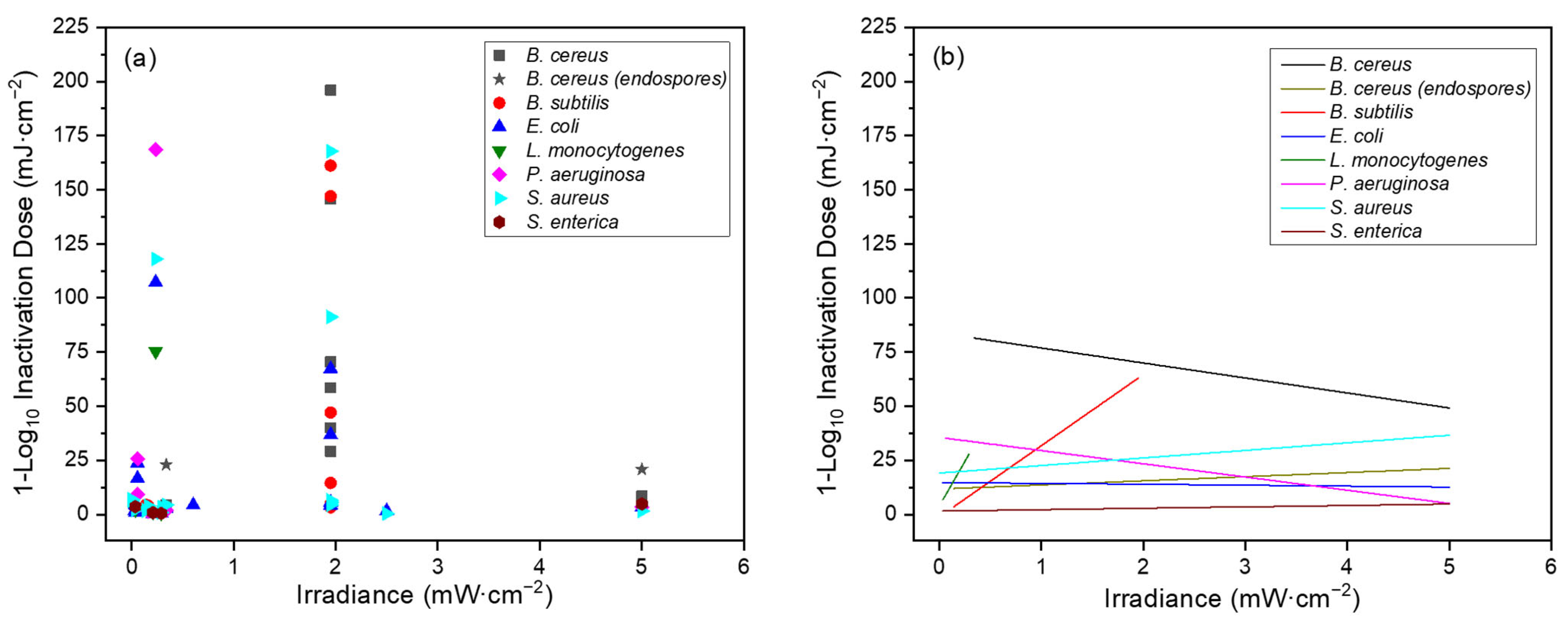
Far-ultraviolet C light, with a wavelength of 200–230 nm, has demonstrated broad-spectrum germicidal efficacy. However, due to increased interest in its use as an alternative antimicrobial, further knowledge about its fundamental bactericidal efficacy is required. This study had two objectives. Firstly, it investigated experimentally the Far-UVC dose–response of common bacteria suspended at various cell densities in transparent buffer, ensuring no influence from photosensitive suspending media. Increasing doses of Far-UVC were delivered to Enterococcus faecium, Escherichia coli, Pseudomonas aeruginosa and Staphylococcus aureus in PBS at 101, 102, 103, 105 and 107 CFU·mL−1, with surviving colony-forming units enumerated (n ≥ 3). Secondly, through a systematised literature review, this work sought to explore the impact of genus/species, Gram type, cell form, cell density and irradiance on dose–response. The screening of 483 publications was performed with 25 included in the study. Data for 30 species were collated, analysed and compared with the experimental results. Overall, Gram-positive species showed greater resilience to Far-UVC than Gram-negative; some inter-species and inter-genera differences in resilience were identified; endospores were more resilient than vegetative cells; the results suggested that inactivation efficiency may decrease as cell density increases; and no significant correlation was identified between irradiance and bactericidal dose effect. In conclusion, this study has shown Far-UVC light to be an effective decontamination tool against a vast range of bacterial vegetative cells and endospores.
Keywords: Far-UVC light; 222 nm; ultraviolet radiation; bacterial inactivation; transparent liquid suspension; ESKAPE pathogens; environmental decontamination Far-UVC light; 222 nm; ultraviolet radiation; bacterial inactivation; transparent liquid suspension; ESKAPE pathogens; environmental decontamination