Article

Sexual Dimorphism of the Neuroimmunoendocrine Response in the Spleen during a Helminth Infection: A New Role for an Old Player?

by
Karen Elizabeth Nava-Castro
1,
Lenin Pavón
2,
Luis Enrique Becerril-Villanueva
2,
María Dolores Ponce-Regalado
3,
Hugo Aguilar-Díaz
4,
Mariana Segovia-Mendoza
5 and
Jorge Morales-Montor
6,*
1
Laboratorio de Biología y Química Atmosférica, Departamento de Ciencias Ambientales, Instituto de Ciencias de la Atmósfera y Cambio Climático, Universidad Nacional Autónoma de México, Ciudad de Mexico 04510, Mexico
2
Laboratory of Psychoimmunology, National Institute of Psychiatry “Ramón de la Fuente Muñiz”, Mexico City 14370, Mexico
3
Centro Universitario de los Altos, Departamento de Ciencias de la Salud, Universidad de Guadalajara, Jalisco 47610, Mexico
4
Centro Nacional de Investigaciones Disciplinarias en Salud Animal e Inocuidad, Instituto Nacional de Investigaciones Forestales Agrícolas y Pecuarias (INIFAP), Morelos 50550, Mexico
5
Departamento de Farmacología, Facultad de Medicina, Universidad Nacional Autónoma de México, Ciudad de Mexico 00810, Mexico
6
Departamento de Inmunología, Instituto de Investigaciones Biomédicas, Universidad Nacional Autónoma de México, Ciudad de Mexico 04510, Mexico
*
Author to whom correspondence should be addressed.
Pathogens 2022, 11(3), 308; https://doi.org/10.3390/pathogens11030308

Submission received: 1 February 2022 / Revised: 18 February 2022 / Accepted: 24 February 2022 / Published: 1 March 2022
(This article belongs to the Special Issue Advances in the Immunobiology of Parasitic Diseases)

Abstract

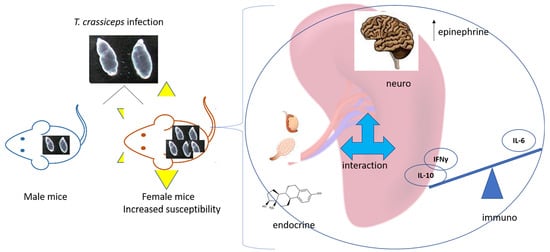
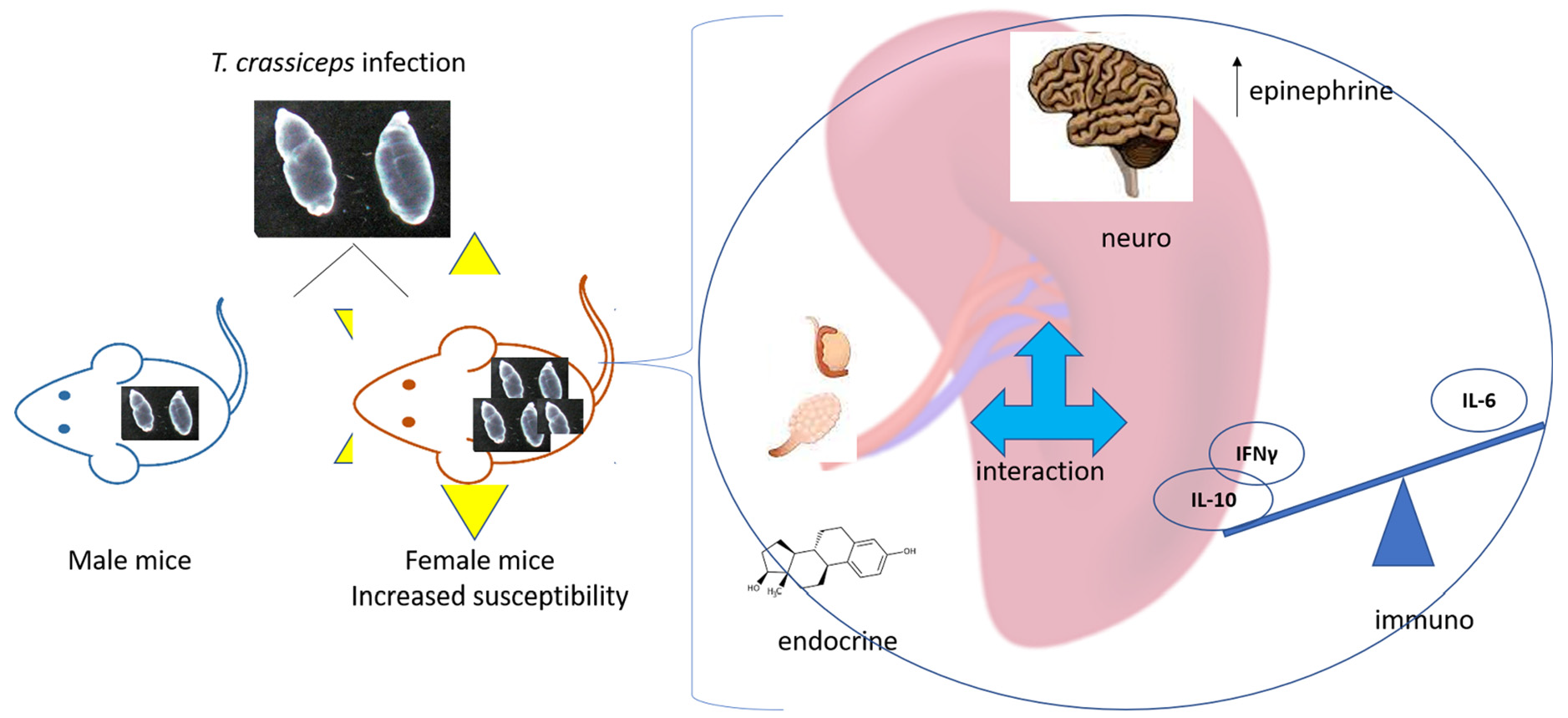
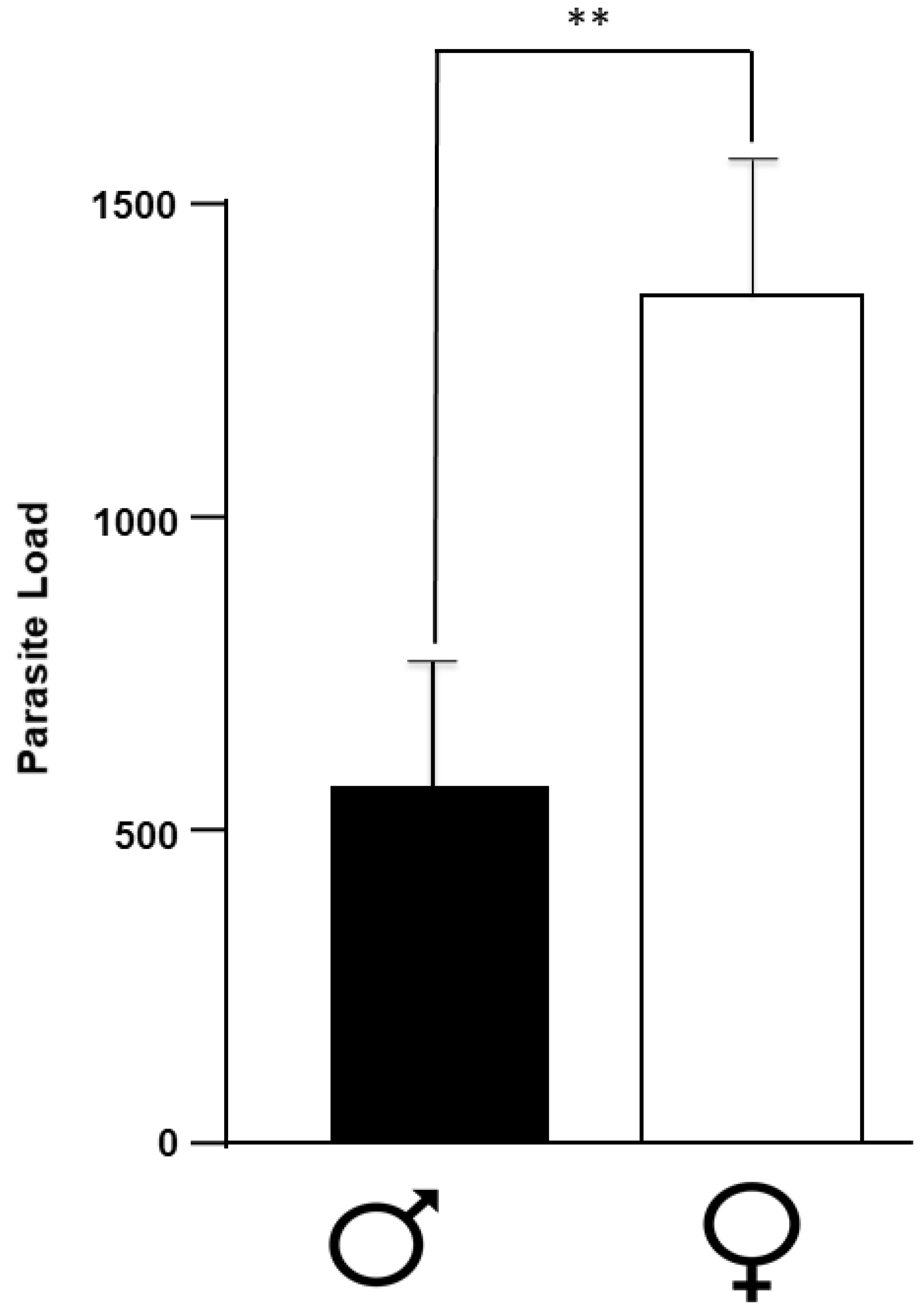
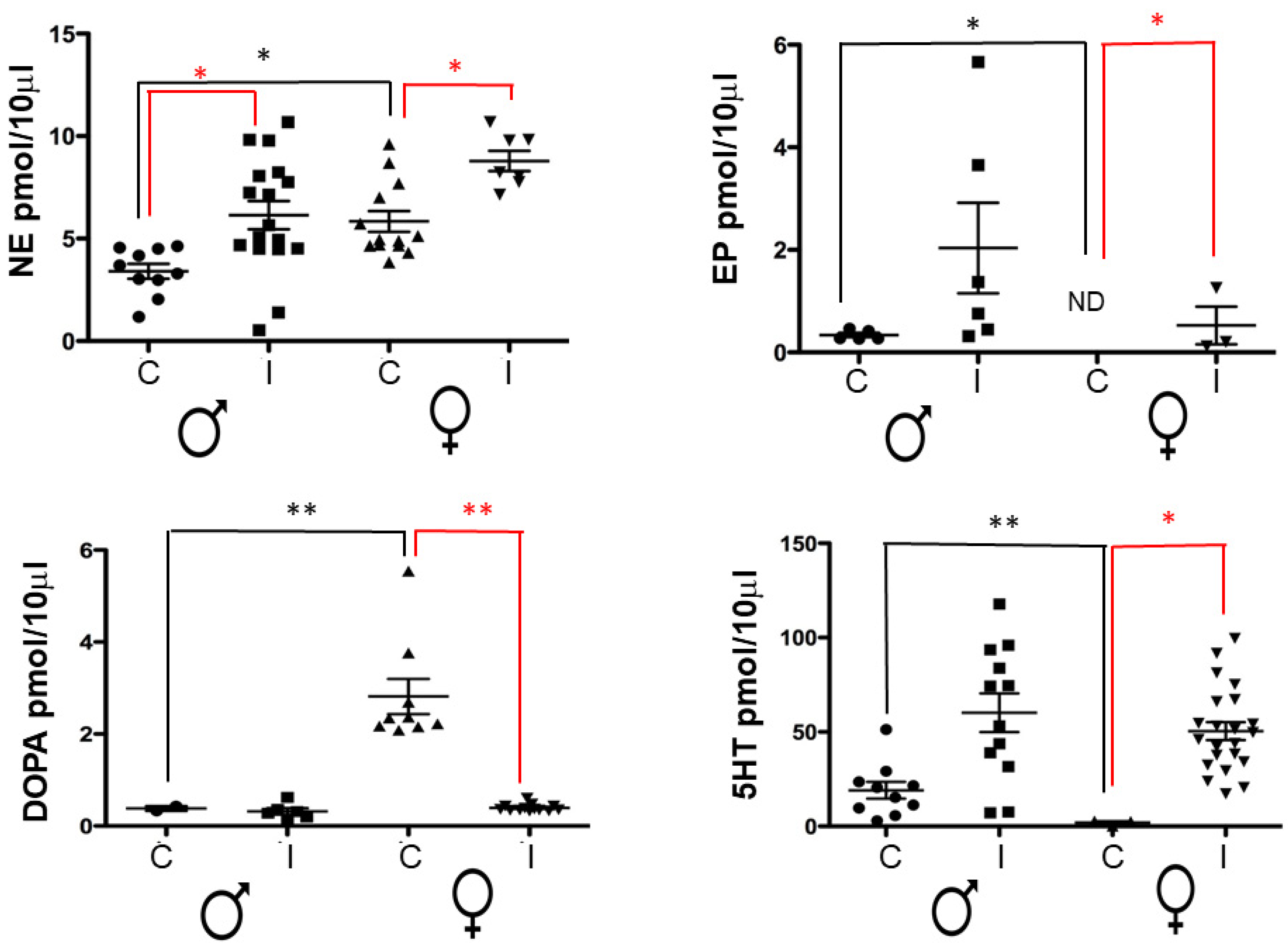
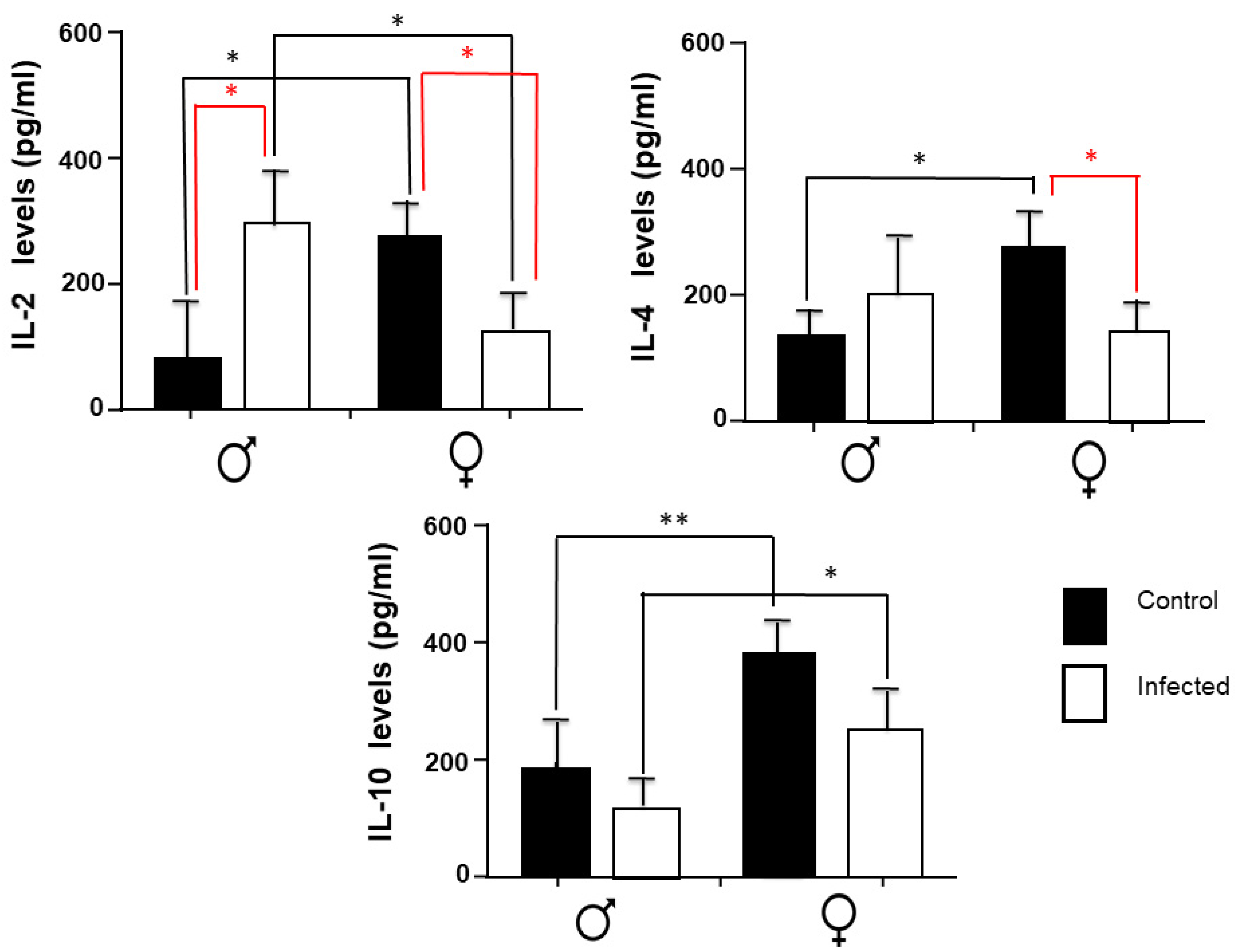
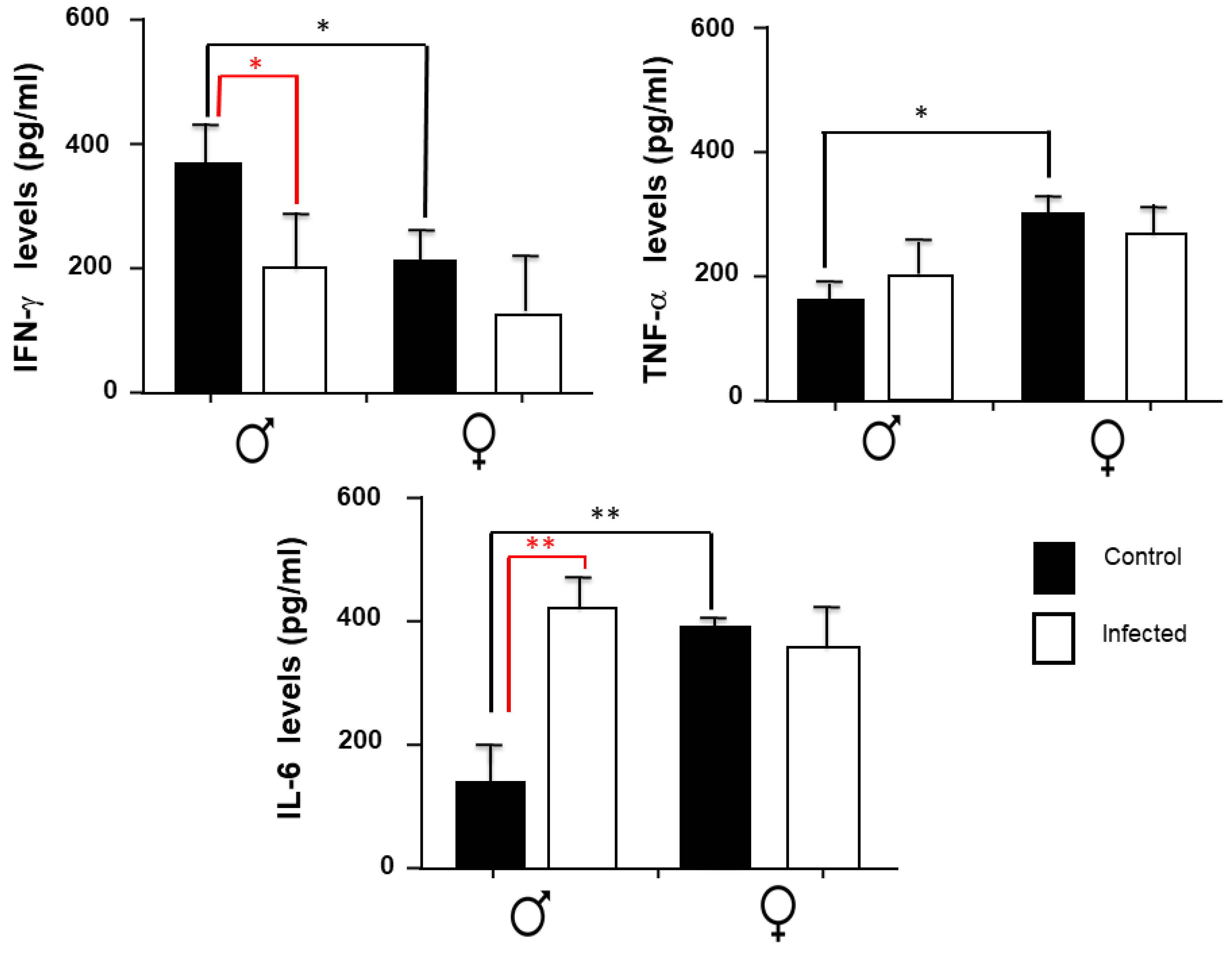
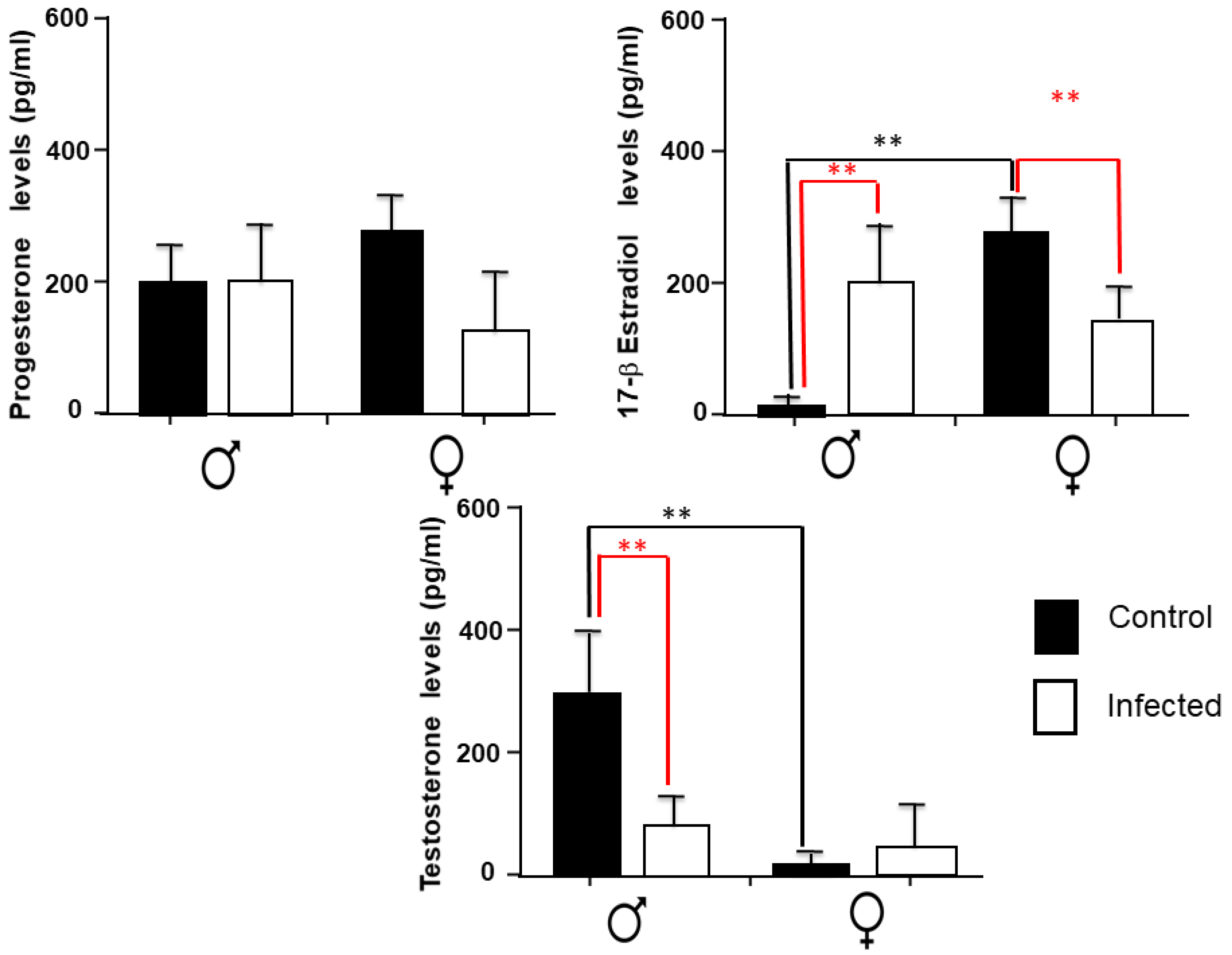
The interaction of the nervous, immune, and endocrine systems is crucial in maintaining homeostasis in vertebrates, and vital in mammals. The spleen is a key organ that regulates the neuroimmunoendocrine system. The Taenia crassiceps mouse system is an excellent experimental model to study the complex host–parasite relationship, particularly sex-associated susceptibility to infection. The present study aimed to determine the changes in neurotransmitters, cytokines, sex steroids, and sex-steroid receptors in the spleen of cysticercus-infected male and female mice and whole parasite counts. We found that parasite load was higher in females in comparison to male mice. The levels of the neurotransmitter epinephrine were significantly decreased in infected male animals. The expression of IL-2 and IL-4 in the spleen was markedly increased in infected mice; however, the expression of Interleukin (IL)-10 and interferon (IFN)-γ decreased. We also observed sex-associated differences between non-infected and infected mice. Interestingly, the data show that estradiol levels increased in infected males but decreased in females. Our studies provide evidence that infection leads to changes in neuroimmunoendocrine molecules in the spleen, and these changes are dimorphic and impact the establishment, growth, and reproduction of T. crassiceps. Our findings support the critical role of the neuroimmunoendocrine network in determining sex-associated susceptibility to the helminth parasite.
Keywords: neuroimmunoendocrinology; spleen; parasite immunity; sexual dimorphism; neurotransmitters; cytokines; Helminths; cysticercosis; Taenia crassiceps; immunity; infection neuroimmunoendocrinology; spleen; parasite immunity; sexual dimorphism; neurotransmitters; cytokines; Helminths; cysticercosis; Taenia crassiceps; immunity; infection
Graphical Abstract