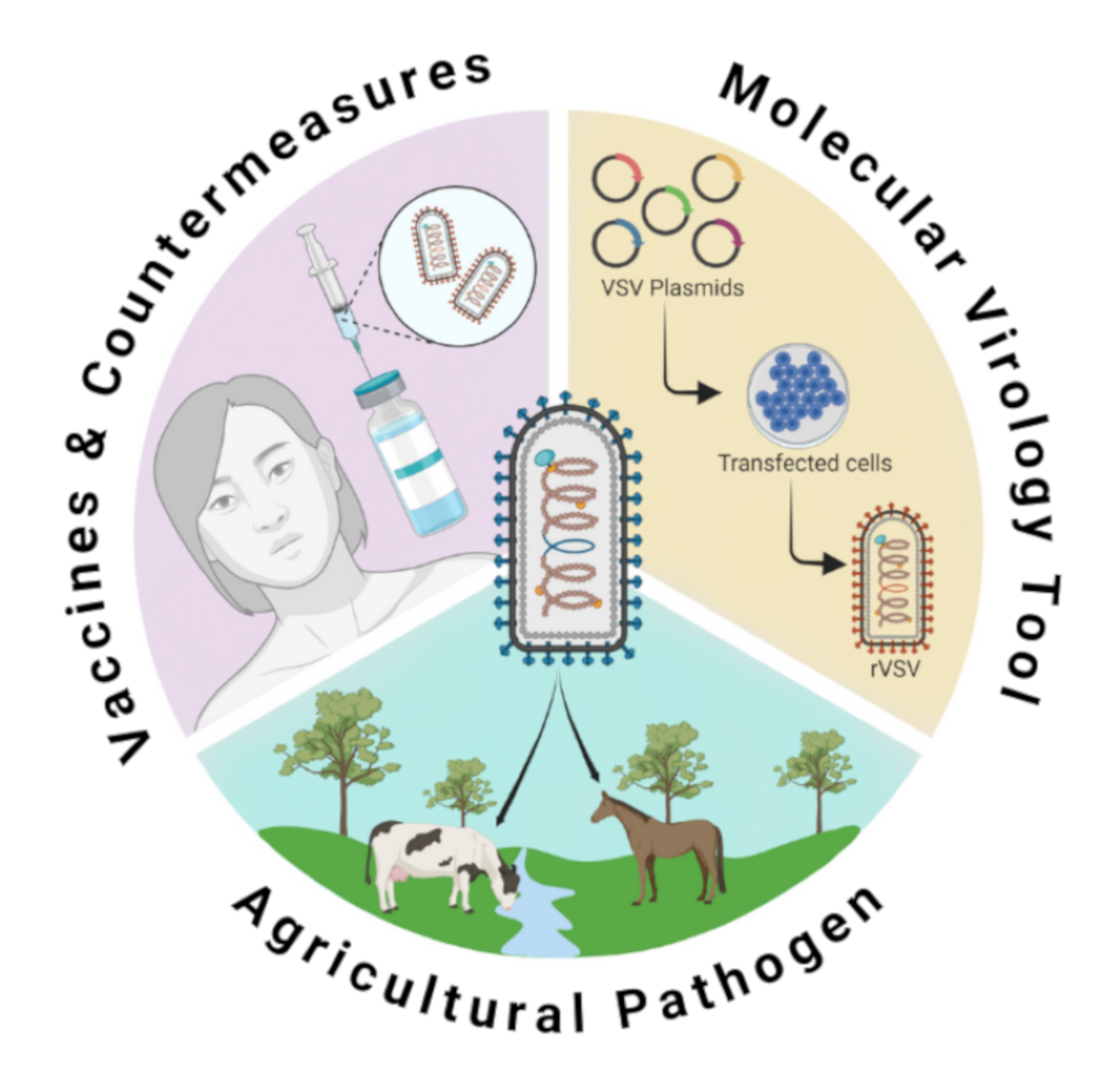
Vesicular Stomatitis Virus: From Agricultural Pathogen to Vaccine Vector
 ,
, 
Abstract
Share and Cite
Liu, G.; Cao, W.; Salawudeen, A.; Zhu, W.; Emeterio, K.; Safronetz, D.; Banadyga, L. Vesicular Stomatitis Virus: From Agricultural Pathogen to Vaccine Vector. Pathogens 2021, 10, 1092. https://doi.org/10.3390/pathogens10091092
Liu G, Cao W, Salawudeen A, Zhu W, Emeterio K, Safronetz D, Banadyga L. Vesicular Stomatitis Virus: From Agricultural Pathogen to Vaccine Vector. Pathogens. 2021; 10(9):1092. https://doi.org/10.3390/pathogens10091092
Chicago/Turabian StyleLiu, Guodong, Wenguang Cao, Abdjeleel Salawudeen, Wenjun Zhu, Karla Emeterio, David Safronetz, and Logan Banadyga. 2021. "Vesicular Stomatitis Virus: From Agricultural Pathogen to Vaccine Vector" Pathogens 10, no. 9: 1092. https://doi.org/10.3390/pathogens10091092
APA StyleLiu, G., Cao, W., Salawudeen, A., Zhu, W., Emeterio, K., Safronetz, D., & Banadyga, L. (2021). Vesicular Stomatitis Virus: From Agricultural Pathogen to Vaccine Vector. Pathogens, 10(9), 1092. https://doi.org/10.3390/pathogens10091092