Article

Relieving Depression in Older People Through Lighting Effects in Multiple Areas of Care and Attention Homes


1
Department of Architecture and Civil Engineering, College of Engineering, City University of Hong Kong, Tat Chee Avenue, Kowloon Tong, Hong Kong SAR, China
2
NUST Institute of Civil Engineering, School of Civil and Environmental Engineering, National University of Science and Technology, Islamabad 44000, Pakistan
*
Author to whom correspondence should be addressed.
Buildings 2026, 16(9), 1850; https://doi.org/10.3390/buildings16091850
Submission received: 4 April 2026 / Revised: 29 April 2026 / Accepted: 3 May 2026 / Published: 6 May 2026
(This article belongs to the Special Issue Healthy Aging and Built Environment)

Abstract

Depression has emerged as a prevalent psychological disease among older people, causing severe disruption to patients and society. Lighting in the built environment plays a powerful role in relieving depression. However, the varied impacts of different lighting effects and specific areas have not been clearly clarified or effectively implemented. This study established a Lighting Effects–Depression Model and investigated relationships between lighting effects in areas of care and attention homes and depression in older people. A quantitative survey was conducted through face-to-face interviews with older residents from care and attention homes. On-site observations were used to investigate lighting conditions and installations. Lighting effects (uniformity, navigation, colour, glare) of bedrooms, corridors, and dining rooms on depression (lack of energy, sleep disorders, task performance decline, low life satisfaction, low self-satisfaction, negative feelings) were analyzed. The results indicated significant influences of colour improving task performance, while glare induced sleep disorders across all areas examined. Furthermore, navigation and uniformity in bedrooms positively impacted depression via self-satisfaction and life satisfaction. Recommendations for utilizing lighting effects were proposed to relieve depressive symptoms in older people in care and attention homes.

1. Introduction

The psychological health of older people is attracting widespread research attention in the globally ageing society, given their high risk of mental illness [1]. More than 20% of older people experience depression [2], making it one of the most pressing psychological issues for older people, especially among those in poor health [3]. In addition to psychological pain, depression often exacerbates chronic diseases and cognitive impairments, leading to further deterioration [4]. Furthermore, both major and minor depression can trigger suicidal thoughts [5]. Approximately half of suicide cases suffered from depression [6], with about 30% of depressed elderly people having attempted suicide [7]. Depression, with its life-long recurrence and persistent disturbance, creates a heavy burden on older people, their families, and society as a whole [8].
The residential environment is recognized to profoundly impact the psychological well-being of older people [9]. To enhance psychological well-being and mitigate the severe consequences of depression, there is growing interest in the potential of the built environment, particularly lighting components, to alleviate depression in later life. In fact, lighting serves occupants in everyday life and produces an imperceptible long-term influence on mental health via the visual system and, thus, is believed to influence depression [10]. From the psychological care perspective, it is necessary to understand the needs of older people for lighting effects. Care and attention (C&A) homes, which provide comprehensive care services for older people to meet the rising demand, must ensure appropriate lighting effects within the built environment [11].
However, current lighting in C&A homes often fails to fulfil the needs for facilitating daily activities and promoting mental health. Documented lighting-related issues affecting older people include sudden changes in illumination, glare by reflection, and unwanted shadow. The needs of older people for lighting in different living areas have not been fully addressed. To make changes in this domain, it is crucial to elucidate the ways in which lighting effects influence depression in multiple areas and to enhance the lighting installations in C&A homes. This study identified key lighting effects in three primary living areas (bedrooms, corridors, and dining rooms; ref. [12]) and investigated the relationships between lighting effects and depression in older people. Practical recommendations are put forward to protect the mental health of older people.

1.1. Depressive Symptoms in Older People

Depression is a prevalent mental disorder characterized by both physical and psychological symptoms, including a lack of energy, sleeping disorders, task performance decline, decreased life- and self-satisfaction, and negative feelings [13,14,15]. Lack of energy, a somatic symptom closely related to depression, is widely reported among depressed older people and is notably high among those residing in C&A homes [16,17]. Abnormal neuron activities in the prefrontal cortex are commonly observed in depressed individuals, which influence metabolism and subsequently cause a sense of decreased energy [18,19]. Furthermore, the poor appetite and low-quality rest of depression patients also limit energy acquisition [20,21].
Sleep disorders also serve as an indicator of depression in older people [22]. Typical problems in older people include insomnia, frequent awakening during night-time sleep, daytime sleepiness, and early morning awakening [23,24]. Levels of cortisol, an important hormone associated with wakefulness, increase in individuals with depression, contributing to sleep disorders [24,25]. Depressed older people can be highly stress-sensitive and therefore may be affected by the daily pressure of age-related physical degeneration, which induces sleep issues [26,27]. Hence, sleep disorders can be regarded as a main symptom of depression in older people.
Task performance decline in older people is primarily attributed to age-related capacity reduction and appears worse among those with depression [13]. Task performance refers to an individual’s performance of daily self-care activities (e.g., bathing, dressing, toileting, feeding, walking) to maintain health and basic body functions [28]. Depression in older people is associated with memory loss and lack of concentration stemming from disrupted neural activities [29]. Limited by these issues, older people’s abilities to react, identify, and think decrease, complicating daily activities and ultimately leading to poor task performance.
Another symptom is low life satisfaction, which refers to older people’s comprehensive feelings about their circumstances, including the living environment, social relationships, and financial status [30]. It reflects the subjective disparity between real life and expectations [31]. Depression is a significant risk factor for life dissatisfaction, particularly among nursing home residents [30]. Due to mental health changes, depressed older people often adopt a negative perspective, overshadowing objective living conditions [15,32]. Furthermore, older people prefer to live in their own house as long as possible unless they encounter significant difficulties [33]. Moving into C&A homes compels older people to adapt to an unfamiliar living environment, increasing the chances of negative feelings. The gap between the real-life perceptions and an ideal life may be widened, and low life satisfaction is likely among depressed older people.
Compared with life satisfaction, self-satisfaction encompasses various domains reflecting an individual’s self-evaluation, including health, appearance, personality, and cognition [34]. Low self-satisfaction is commonly found among older residents living in care institutions and is worse in depressed older people [14]. Since depressed patients often possess high individual expectations yet are sensitive to negative feedback, it is not surprising that low self-satisfaction is observed among them [35]. The functional degeneration caused by ageing, such as an old appearance and personal disabilities, can change the behaviour of older people in many aspects of later life and further lowers their self-evaluation or may even cause self-loathing [36].
Depressed older people tend to experience negative feelings, such as sadness, anxiety, and hopelessness [36]. Abnormal cerebral activities in depressed older people typically lead to a lack of positive signals [37]. For instance, in depressed people, dopamine, a key neurotransmitter related to positive feelings, may be inhibited and fail to transmit mental stimulation, causing an increase in negative feelings [38,39]. Another process that may be responsible for negative feelings is aberrant activity in the lateral habenula neurons. These neurons regulate negative reward predictions, shaping negative expectations towards stressors or events [37]. This regulatory process tends to be disordered among depressed older people and intensifies negative feelings.

1.2. Lighting Effects

The therapeutic efficacy of lighting parameters in regulating mood and circadian rhythm has been documented [40,41,42]. Exposure to high-intensity illumination (e.g., over 10,000 lx) could modulate the suprachiasmatic nucleus (SCN), which coordinates the sleep–wake cycle and affective states [43]. The spectral power distribution of light has been shown to influence therapeutic outcomes for alleviating depression in older adults [44]. Grounded in clinical investigations, these inferences are mainly derived from randomized controlled trials and meta-analyses. However, associations between perceptions of the daily lighting environment and depressive symptoms remain relatively unexplored. In fact, ineffective lighting may exacerbate older adults’ living difficulties and increase their risk of depression [45]. Key lighting effects in C&A homes include uniformity, navigation, colour, and glare.
Uniformity, recognized as characteristic of light quality, describes the overall distribution of illumination in a room [46]. Given the complexity of artificial lighting and natural lighting in the rooms of a C&A home, sudden changes in lighting are not rare and may cause discomfort to older people [47]. The difference between maximum and minimum illuminance, known as the uniformity ratio, quantifies the level of uniformity [48]. Uniformity can provide an exemplary visual experience, particularly in a dim environment [49]. Therefore, consistent lighting with a low contrast ratio may be beneficial for older people [50]. By improving visual quality for older people, uniformity could have a positive influence on depression.
For older people, navigation comprises two main components: (1) planning and determining the right route and (2) moving towards the destination [51]. Navigation lamps or strips are useful for significant visual differences by utilizing distinct colour temperatures and illuminance [52]. This differentiation would probably embody the aesthetic of C&A homes and provide significant prompts regarding position and direction to assist older people in memorizing and distinguishing spaces, thereby enhancing their way-finding performance. For instance, it has been noted that females prefer navigation lights with high illuminance for their way-finding performance [53]. Good navigation lighting contributes to improving safety and independence and thus may relieve depressive symptoms.
Colour is fundamental in human life [54]. Generally, colour rendering is determined by the light colour, illuminance, the object characteristics, and the person’s vision. The colour rendering index (CRI) is commonly applied for quantifying this effect and represents the colour of an object under the current lighting and reference lighting [55]. As the CRI approaches its maximum of 100, the colour rendering quality improves [56], which can influence various life aspects for older people. With sensory deficits caused by depression, older people may find it convenient to memorize and differentiate an object under the contrasting colour, which may impact the psychological status and the reaction duration [57]. Colour perceptions and requirements of elderly people with depression may vary from those of elderly people who are not depressed.
Excessive illumination concentrated in a small area (e.g., 7500 cd/m2) may produce glare and negatively influence the activities of older people in different areas such as bedrooms, corridors, and dining rooms [46]. Objects with highly reflective surfaces may also increase the quantity of direct glare, and poor arrangement of light sources and working positions can lead to indirect glare [58]. Another form of glare, disability glare, causes temporary or permanent vision impairment [59], while discomfort glare creates a subjective perception of discomfort [60,61]. Long-term exposure to undesirable glare may diminish an individual’s sense of well-being.

2. Materials and Methods

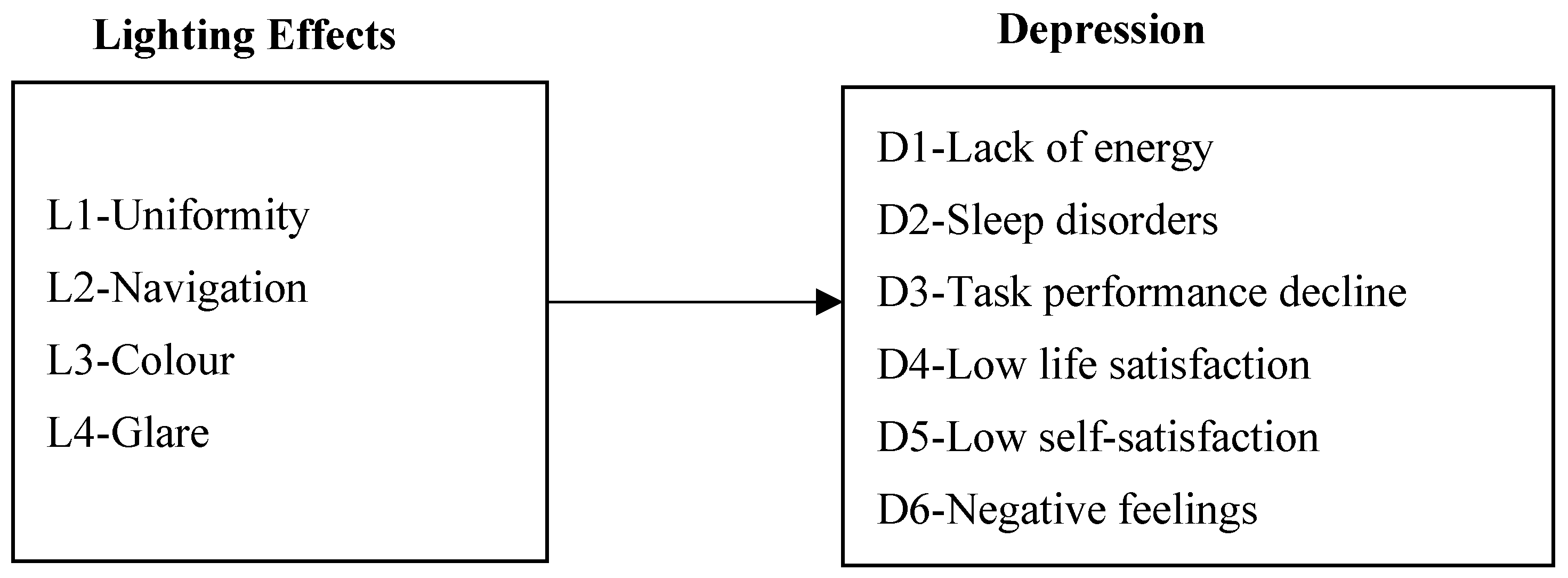
Following the literature review, a conceptual Lighting Effects–Depression Model was developed (Figure 1). Lighting effects consist of four main components (uniformity, navigation, colour, and glare). Typical symptoms of older patients suffering from depression were selected: lack of energy, sleep disorders, task performance decline, low life satisfaction, low self-satisfaction, and negative feelings. Key areas, including bedrooms, corridors, and dining rooms, were purposely selected based on their functional significance in the daily lives of older people residing in C&A homes. Specifically, bedrooms serve as private spaces and rest areas, while corridors support the transitional movement and wayfinding of older people. Dining rooms facilitate daily meals as well as substantial social interactions. These areas represent the primary activity settings where older residents spend most of their time and are therefore associated with considerable lighting exposure [62,63]. Focusing on the three areas enables a comprehensive and practical assessment of lighting effects.

2.1. Samples

To investigate the lighting effects on the depressive symptoms in older people, it is necessary to collect feedback from those living in C&A homes. Fifteen C&A homes, distributed in different geographic locations of Hong Kong and varying in ownership (government-subvented and private homes), were invited to participate in the questionnaire survey, while 11 of them (see Table 1) finally agreed. Among the selected samples, 9 out of 11 care and attention homes were built on lower floors of residential or commercial buildings rather than specifically built for the purpose of elderly care, which reflects the typical status in Hong Kong [63]. Different floor plans and room layouts of the selected homes ensure diversity in the physical environment.
Ethical approval for this study was obtained from the University Research Committee. Meanwhile, the questionnaire and survey procedures were verified and approved by the staff of all C&A homes before the formal survey. To ensure proper understanding and reliable feedback on the questions, a cognitive test using the Short Portable Mental Status Questionnaire (SPMSQ) was conducted to screen the participants [64]. Only older people with no cognitive impairment or mild dementia were able to participate in the survey. Detailed information about this study was explained to eligible participants in advance, and a consent letter was signed by each participant.

2.2. Measurement

The questionnaire was designed based on the conceptual model (Figure 1) and consisted of three components: (1) background information, including gender, age, eye disease, educational level, and length of living in the home; (2) satisfaction with lighting effects in multiple areas based on the developed lighting handbook [65]; (3) depressive symptoms in daily life, which were drawn from the well-developed WHOQOL scale [66]. All the lighting effects and depression instruments were rated using a five-point Likert scale from 1 (strongly dissatisfied/disagree) to 5 (strongly satisfied/agree).
The single-item measurement was adopted to assess depressive symptoms and perceived lighting effects. This approach was considered appropriate given the characteristics of the older population. The lengthy questionnaires may impose a considerable cognitive burden on respondents and reduce the reliability of evaluations. Previous research has suggested that single-item measures can provide valid assessments of subjective perceptions, especially for constructs like satisfaction and perceived health [67,68]. In this study, multiple single-item indicators were used to capture different dimensions of depressive symptoms and lighting effects. The combined use of items could partially reflect the multidimensional nature of these constructs.
Prior to formal data collection, the items were reviewed by the research team and refined through iterative discussions to ensure content validity and contextual relevance. Although single-item measures do not allow for internal consistency testing, their validity is supported by the theoretical basis in established instruments and prior empirical studies.

2.3. On-Site Observations

The physical environment of the 11 C&A homes was recorded, including the accommodated residents and room types. Existing lighting facilities in bedrooms, corridors, and dining rooms (i.e., number and type of main light sources, task lights, light colour, anti-reflection floors, and window fixtures) in each C&A home were investigated. The observed physical lighting facilities enhance the understanding of lighting environment in C&A homes, complementing subjective results, and laying a foundation for proposing applicable improvements.

3. Results

3.1. Demographics

In total, 133 older people from 11 C&A homes participated in the survey. Among the samples, 24.1% of the respondents were male and 75.9% were female. The number of respondents in each care and attention home ranged from 6 to 23, and the basic information of all participants is shown in Table 2. The proportions of three age groups (65 to 74; 75 to 84; over 85) were 18.8%, 33.8%, and 47.4% respectively. Only 32.3% of the respondents did not suffer from eye diseases, while the rest had at least one visual issue. Above 30% of respondents never received any education, 21.1% had a primary-level education, and 18.8% had a secondary-level education. This reveals an overall low-level educational attainment among older residents, which indicates an increasing possibility of depression [69,70]. More than four-fifths of respondents had been living in the homes for over one year, ensuring the reliable post-occupancy evaluation [71].

3.2. Observation and Measurement in C&A Homes

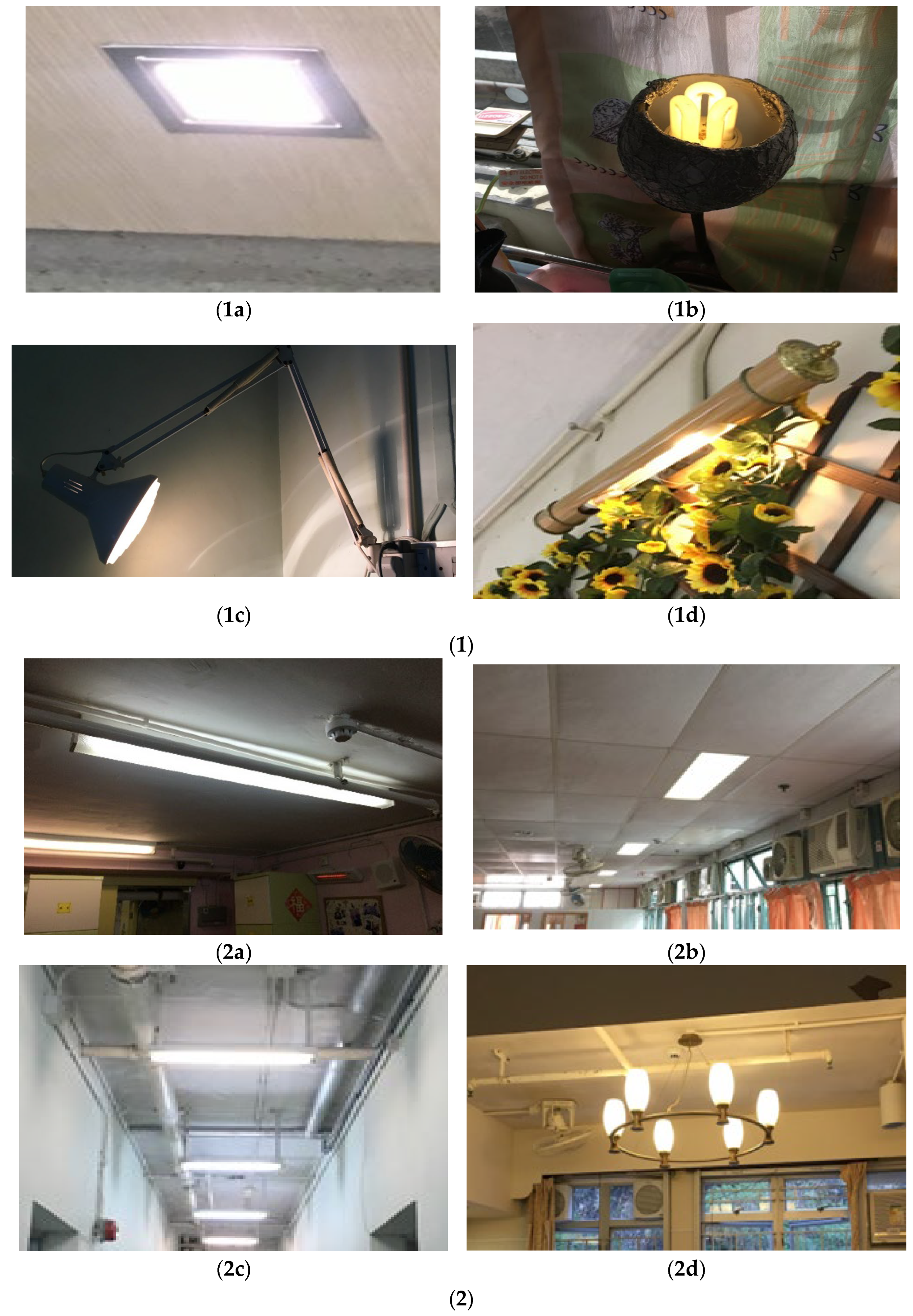
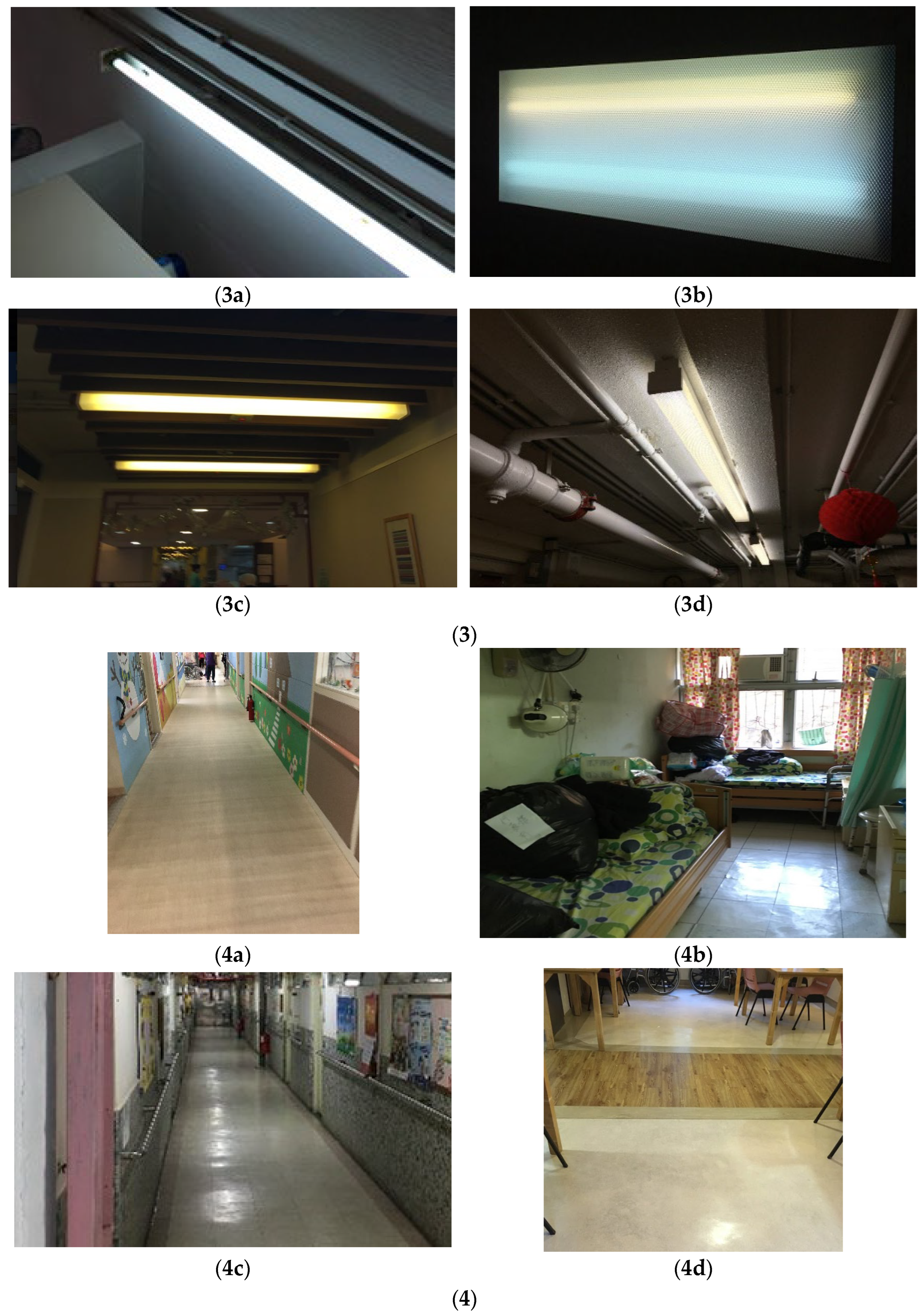
The physical lighting environment of C&A homes is listed in Table 3. In bedrooms, the number of lights was limited, while the installations of lights, such as night lights and bedside lamps (Figure 2(1a–1c)), were more diverse than in corridors and dining rooms. Apart from bedrooms, night lights were only observed in the dining room of one home (Figure 2(1d)). The most common light source in all areas was light tubes (Figure 2(2a,2c)), while light bulbs and grille lights were less in use (Figure 2(2b,2d)). Cold lighting was commonly adopted in the bedrooms of five C&A homes, followed by warm lighting and mixed lighting (Figure 2(3a,3b)). However, warm lighting was preferred over cold lighting and mixed lighting in both corridors and dining rooms (Figure 2(3c,3d)).
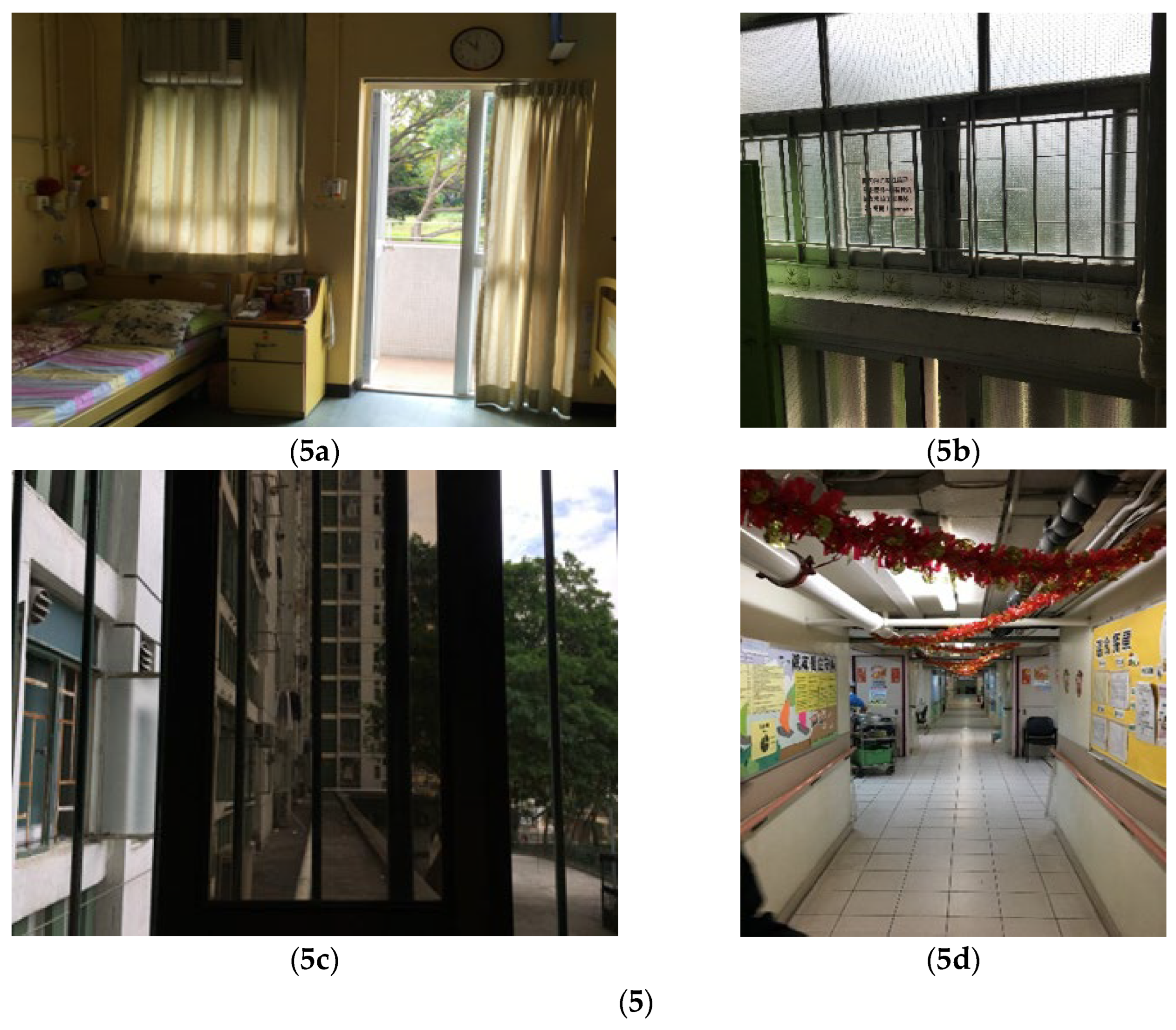
Around half of the bedrooms were laid with anti-reflection floors to avoid glare, and this proportion was similar in corridors and dining rooms (Figure 2(4a)). However, only three homes installed anti-reflection floors in all areas. The strong reflections from the floor could be observed in different areas (Figure 2(4b–4d)). Curtains (Figure 2(5a)) were largely applied to cover windows in bedrooms, corridors, and dining rooms. Frosted and tinted glasses (Figure 2(5b,5c)) were mainly set in bedrooms rather than other areas. In four C&A homes, the corridors were designed in the middle of bedroom areas without any windows (Figure 2(5d)).

3.3. Correlation and Regression Analysis

Correlation analysis using IBM SPSS 25.0 revealed significant one-to-one connections between lighting effects and depressive symptoms in older people (Table 4). To illustrate the comprehensive impact of different lighting effects, a stepwise regression analysis was conducted (Table 5). The existing guidance on subjective lighting predictors of depressive symptoms is limited, particularly in the context of residential care environments for older adults. Given the lack of a clear theoretical basis on the relative importance and selection of predictors, stepwise regression was employed as an exploratory modelling approach to identify the most influential lighting effects associated with depressive symptoms. To mitigate the risk of overfitting, only lighting effect variables identified from prior literature with a potential connection to depression in older people were included. The number of variables was limited relative to the sample size, which could also avoid over-parameterization.
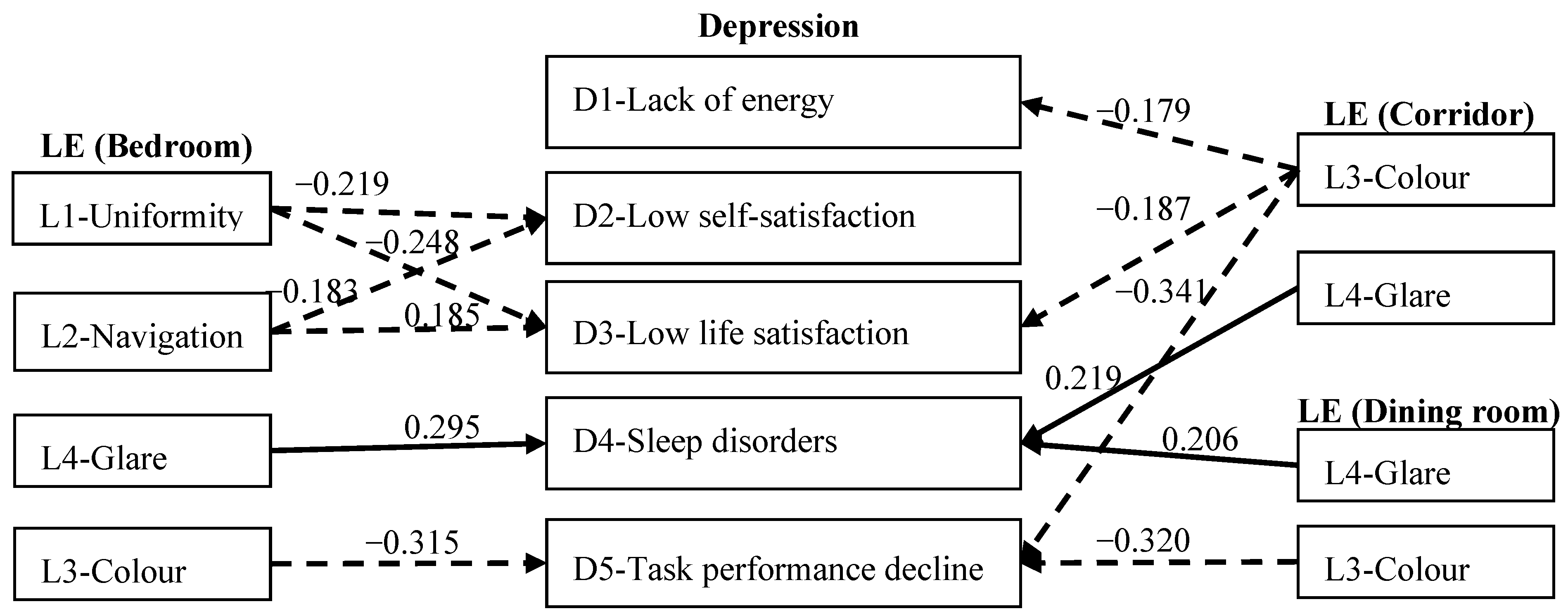
In both correlation and regression analyses, a negative relationship between colour and task performance decline was identified in all three areas. Similar findings included the negative influence of glare on sleep disorders, while low life satisfaction and low self-satisfaction could be negatively predicted by uniformity and navigation in bedrooms. Colour in bedrooms improved life satisfaction and was negatively connected to lack of energy and low life satisfaction in corridors.

4. Discussion

The final Lighting Effects–Depression Model followed the results confirmed by both correlation and regression analyses (Figure 3). Across the three functional rooms, variance and similarity were identified regarding interactions between lighting effects and depression among older people. Lighting effects are particularly significant in bedrooms compared to dining rooms and corridors. Older residents often spend more than half of the day in bedrooms, engaging in various activities, such as communicating, dressing, relaxing, and receiving medical treatment [72]. Moreover, older people with depression typically exhibit less social interest than those without depression [73]. Their daily range is likely to be confined to bedrooms, a relatively private area. Thus, bedroom lighting effects are particularly critical for managing depression. On-site observations in C&A homes show that bedrooms usually have more task lights other than the main light source, creating more diverse lighting effects than areas relying solely on the main lights. Therefore, bedroom lighting should be prioritized to relieve depression symptoms in older people, with a focus on lighting diversity and useful task lights as key factors in person-light interaction. For instance, given the light therapy utilizing bright light exposure, the illumination level in bedrooms is suggested to be enhanced to simulate the SCN and mitigate the depressive symptoms [43].
Glare affects sleep disorders in all areas. Impacted by nocturia or bladder instability, older people need to go to the toilet during the night frequently [74]. Depressed older people, who may experience retardation, pain, and weakness, spend longer on night-time urination. Prolonged exposure to glare in bedrooms and corridors confuses wayfinding to the toilet and expel drowsiness, inducing sleep disorders. Meanwhile, glare with high illuminance disturbs circadian rhythms at night or in the early morning [75]. As few C&A homes installed anti-reflection floors in all areas, it is highly possible that older people experience reflective glare in different areas, exacerbating sleep disorders and depression.
Likewise, colour across all areas positively influences task performance. The colour appearance of task-involved items (e.g., doors, furniture, food, and personal belongings) in all areas depends on lighting colour and illuminance. Inappropriate lighting could mislead depressed older people with limited sense of colour and worsen their task performance. For instance, warm lighting used in C&A homes does not provide sufficient clarity and causes difficulty in finding things [76]. Lighting colour also affects the surrounding atmosphere. The frequently used cold lighting in bedrooms, as indicated in observations, does not produce a comfortable ambience for depressed older residents to carry out activities. Instead, it keeps them alert and creates more stress. Poor task performance and a stressful visual environment aggravate symptoms in depressed older people. In contrast, success in identifying colours makes daily activities easy and convenient, relieving depressive symptoms.
Poor colour in corridors induces lack of energy and low life satisfaction. Impaired colour discrimination is closely related to visual fatigue in various scenarios of daily life, such as watching screens and moving [77,78]. More than two thirds of older respondents suffered from eye diseases. Without supportive colour-rendering, depressed older people, especially those with eye diseases, must exert greater effort to see objects and process visual information, which is energy-consuming. Warm light, used in most corridors of the C&A homes, may not provide the expected effects on colour discrimination (see Figure 2(3c)). Conversely, white and bluish light has shown a positive impact on the effectiveness of light therapy for alleviating depression while balancing age-related yellowish vision [79,80]. As the main pathway connecting areas, corridors facilitate mobility. An inability to identify signage and doors along the corridors discourages depressed older people from leaving their bedrooms. Therefore, a lack of physical exercise further weakens physical health and can induce a feeling of insufficient energy.
A primary motivation for older people moving to C&A homes is seeking a healthy and safe environment in later life [81,82]. However, the lighting colour that reduces contrast makes it challenging for older people to move through corridors and find destinations. The inconvenience decreases the satisfaction with life in C&A homes. Moreover, the corridors are usually unconnected to the outside natural environment (see Figure 2(4c,5d)). The absence of vibrant colours in corridors can render the visual environment oppressive and uninviting to older people. Patients with depression frequently report abnormal sensory issues, yet colour discrimination is usually neglected [57]. The current findings underscore the potential of effective lighting to enhance colour visibility and to relieve depressive symptoms in older people.
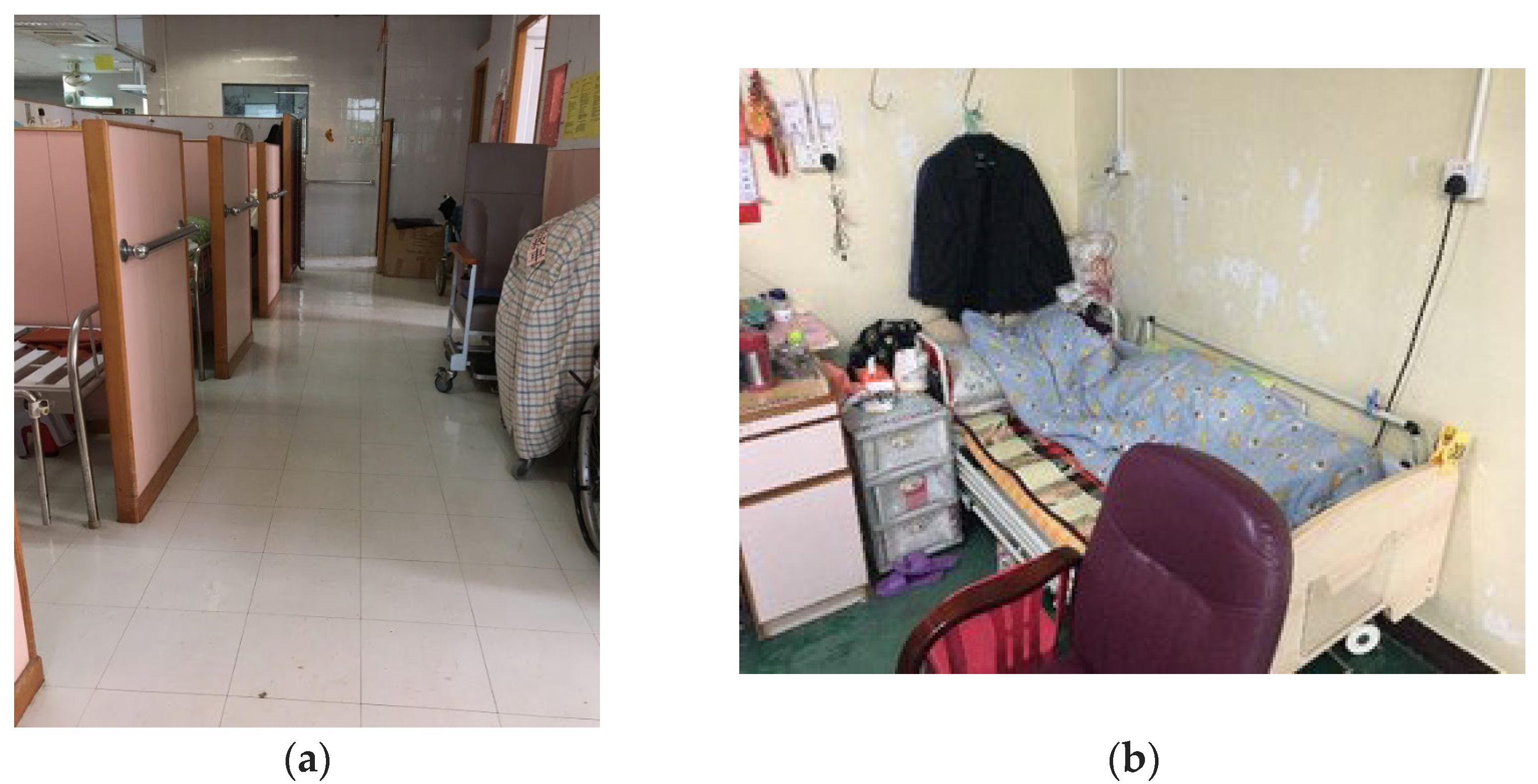
Uniformity in bedrooms prevents low self- and life satisfaction. Bedrooms typically contain various furniture (e.g., bed, bedside table, closet, partitions; Figure 4a,b). The complex arrangement can block even distribution of lighting, resulting in significant brightness disparities within the bedroom. The area near the window is usually much brighter than those farther away, reducing the uniformity. Optimal lighting uniformity should strike a balance to be neither too high nor too low. Excessive uniformity diminishes the necessary contrast that helps older people distinguish an area as well as determine their orientation, thereby leading to spatial perception difficulties and causing blinding and falls [83]. Insufficient uniformity results in unwanted shadows and can induce confusion [84,85]. Both situations are unsatisfactory and aggravate a sense of strangeness and distrust when viewing a bedroom, ultimately inducing low life-satisfaction. Additionally, sudden changes in illumination extend the time required for visual adaptation, which leads to self-blame in depressed older people for their degenerating vision. A series of psychological activities decreases self-satisfaction, and continuous low self-satisfaction reinforces negative self-evaluation, holding back the recovery process.
Good navigation of bedroom lighting improves self-satisfaction as well as life satisfaction in older people. Navigation lighting effectively supports older people to leave their bedroom and return after night-time toileting and showering [86]. While night lights for navigation were common in bedrooms, they were less in evidence in dining rooms and corridors as noted in on-site observations. Considering their somatic symptoms, depressed older people spend more time way-finding and may experience accidents under poor lighting conditions. It is not surprising that depressed older people lack trust in their wayfinding abilities if they struggle to reach destinations [53]. Self-satisfaction thus declines due to shame around disorientation. Additionally, the fear of falling fosters a sense of insecurity. This may exacerbate their complaints about living environment, leading to low life satisfaction. The resource allocation theory suggests that a safe and convenient environment probably elicits positive reactions from depressed older people [87,88]. This finding underscores the potential of bedroom navigation lighting, which has rarely been connected to depressed older people, in reducing daily difficulties and remitting depression.
Lighting effects presented no significant influence on the negative feelings of older people. In some works, negative moods were associated with lighting, supporting the widespread light therapy for mood regulation in depressive patients [89,90,91]. However, this study revealed that daily lighting in C&A homes, rather than intensive lighting exposure therapy, had only a limited impact on personal mood and feelings. Moreover, older people might underreport their negative feelings due to a sense of guilt, while some may perceive negative feelings as a natural part of ageing [92,93]. This also potentially explains the less prominent relationship between lighting effects and negative feelings among older people.
It should be noted that the adjust R2 value across the regression models are relatively low (i.e., 0.032 to 0.154), indicating that the explanatory power of the models is limited. This is not expected, as depressive symptoms among older adults are influenced by a wide range of factors beyond environmental conditions (e.g., physical health, mobility, medication use, and psychosocial status). Indoor lighting effects represent one component within the complex multifactorial system affecting the mental health of older people. The findings should be interpreted as associative rather than predictive regarding the depressive symptoms.

5. Practical Recommendations

Based on the Lighting Effects–Depression Model, practical recommendations on relieving depressive symptoms via lighting are proposed. Adaptive navigation lights should be considered as a necessary functional setting not only in bedrooms but also in corridors and dining rooms. Along the corridors, a sufficiently cool light scheme (i.e., 500 lx for ambient lighting and 2000 lx for activity spaces with a CCT over 4000 K) helps promote way-finding performance without excessive impacts on emotions during the daytime [52,94,95]. Blue lights allow for good visibility in dark environments and may be feasible for navigation tasks at night [96]. Regarding light sources, sensor lights reduce constant exposure to night-time lighting and disturbance. Small light-emitting diodes (LEDs) or lamp belts producing uniform light can be used along the routes to widely used locations (i.e., toilet and bathroom) during night-time to reduce the risk of falling.
Colour signals received by older people depend on the visual conditions, colour of light and background environment, and the rendering capacity of lights. As the light illuminance and CCT increase, the task performance and colour discrimination of older people also improve respectively [97]. Therefore, cold bright light (i.e., CCT of 6000 K and illuminance of 1000 lux) can be applied in task areas, such as tables, toilets, and closets, while personalized lights that can change colour are more suitable in resting areas to satisfy the diverse preferences of older people. Using contrast colour combinations of high saturation, such as red and yellow or orange and blue, to decorate areas and furnishings can be a feasible strategy. The white LEDs perform well in colour rendering and can be an option in replacing traditional light tubes and bulbs [98].
The amount of glare in all areas should be avoided to reduce harmful effects on the circadian rhythms of older people and to further maintain a stable mental status for older people. However, the control of glare should not interfere with older people’s enjoyment of natural lighting and window spaces. To achieve this goal, potential sources of glare, such as brightness, materials, and positions of indoor lights, need to be carefully designed [99,100,101]. Low-reflectivity materials (i.e., wood and carpet) are the preferred finishes and luminaires [102,103]. The combination of furniture and lights in a bedroom should create large viewing angles for older people in both the horizontal and vertical directions to reduce the perceived glare under low uniformity [100]. Point matrix LEDs positioned overhead are not suitable for the main light source, whereas LEDs producing even lighting should be used instead.
The lighting uniformity in resting areas should be higher than it is in task areas to create a comfortable ambience. For instance, high uniformity that increases vision comfort is preferred in positions near the bed but should be avoided around the side tables in bedrooms to promote the spatial perception of objects. The lighting set in areas between bedrooms and other parts of a facility should produce a smooth transition in terms of both illuminance and colour temperature. The contrast ratio should be equal to or lower than 3 to 1 [50]. For dark areas in bedrooms, extra lights are required to compensate for the lack of uniformity. Overall, designers need to consider the spatial perception of older people and reduce obstacles and improve harmony with the overall building environment when designing or renovating bedrooms.

6. Research Limitations and Further Study

During the data collection, a questionnaire survey was applied through face-to-face interviews with older respondents living in C&A homes. To mitigate natural biases of the research method, the respondents were screened via SPMSQ test, a brief and widely applied tool for cognitive screening with high specificity and average sensitivity [104,105]. It guaranteed the comprehension ability of respondents and minimized the misunderstanding errors. Additionally, the single-item questionnaire was meticulously developed and refined based on the literature. In the survey, interviewees were well-trained to clearly clarify each question to respondents consistently, reducing the data uncertainty. Nevertheless, the reliance on self-reports might still introduce response bias. Future studies are therefore encouraged to employ experimental or quasi-experimental designs. An intervention group exposed to different lighting conditions and a control group under comparable baseline settings can be incorporated. Comparing outcomes between groups over time would help strengthen causal inferences and enhance the robustness of the findings.
This study focused on lighting effects in bedrooms, corridors, and dining rooms, where older residents in C&A homes spend considerable time. However, some necessary activities that may influence depressive symptoms are carried out in other rooms. For example, bathing and toilet use may affect the self-satisfaction and task performance of older people and further alleviate or aggravate depression. Social interactions in common spaces such as the meeting room may contribute to mitigating depression. Future studies could explore and compare the detailed relationships between lighting effects in other basic rooms (i.e., meeting rooms, bathrooms, and toilets), as this would be useful for developing design strategies. Although lighting is a primary environmental factor influencing depressive symptoms in older people, multiple confounding variables, including the personal (e.g., visual conditions, physical and psychological status, social relations, and medication history) and environmental (e.g., climate, weather, and season) variables, can be included in future investigations to enhance the explanatory power of the model. Moreover, while stepwise regression was useful for exploratory purposes, it may introduce model instability. Future studies may adopt theory-driven modelling to further validate observed relationships.
To improve the representativeness of the results, the samples from different C&A homes in Hong Kong were combined and analyzed collectively, while this approach may have obscured variations among facilities. In addition, this study adopted the on-site observations of lighting facilities to investigate the current lighting settings of different C&A homes. The relatively short observation period and the limited lighting parameters considered might constrain the comprehensive understanding of the lighting environment. While this study focused on four perceived lighting effects, extra objective lighting parameters (i.e., illumination, correlated colour temperature, and contrast ratio) should be incorporated in future research. Longitudinal case studies with extended lighting monitoring and a broad set of lighting parameters are recommended. The results would provide diversified perspectives on the current research topic and verify the long-term effects of detailed lighting environments on depression.

7. Conclusions

Depression has become increasingly prevalent among older people in C&A homes; however, its relationship with current lighting effects remains inadequately understood, particularly across various areas within the environment. This study investigated the influence of multiple areas’ lighting effects on the depressive symptoms of older residents through a questionnaire survey and on-site observations. Key symptoms of depression, including lack of energy, sleep disorders, task performance decline, low life satisfaction, low self-satisfaction, and negative feelings, were selected to reflect the depression status of older people. Four main lighting effects were identified from a review of the previous literature: uniformity, navigation, colour, and glare. A Lighting Effects–Depression Model based on the results of the study was developed to illustrate the relationships between lighting effects and depression in older people in C&A homes. Specifically, lighting uniformity and navigation in bedrooms exhibited statistically negative associations with depressive symptoms. Meanwhile, colour and glare in bedrooms, corridors, and dining rooms were negatively related to depression in older residents living in C&A homes. However, these associations should be interpreted with caution, as reflected by the relatively low R2 values. While lighting effects, especially in bedrooms, contribute to relieving depression via cognitive and behavioural impacts, their influence represents only a partial component within the broad set of environmental and individual determinants.
In light of these results, we made practical recommendations on lighting design to protect the mental health of older people. For instance, adjustable lights could enhance navigation in different time periods, and blue lights are useful for indicating directions. Sensor lights can be applied for night-time use to avoid constant lighting. Cold bright light in task areas benefits the colour discrimination in older users, while personalized light in resting spaces caters to individual preferences. Without compromising natural lighting and window space, glare should be controlled via low-reflective materials for surfaces and luminaires. Large viewing angles created by lighting and furniture should be considered by both facility managers and architects. Furthermore, using uniform LEDs instead of point matrix LEDs helps to reduce overhead glare. This study contributes to the identification of relationships between lighting effects and depression in older people. Its findings should lead to an improvement in the lighting environment in C&A homes, thereby protecting the mental health of older people.
The findings of this study contribute to the existing literature by advancing the understanding of the relationship between indoor lighting effects and mental health in residential care settings. It lays the focus on perceived lighting effects, including uniformity, navigation, colour, and glare, emphasizing the human-centred perspective in evaluating lighting environments. Meanwhile, the study extends the built environment and facilities management research by linking the lighting effects of care environments to depressive symptoms among older adults. The practical recommendations are rooted in the identified key lighting effects and associated depressive symptoms. By implementing these recommendations, it is expected to create a supportive and psychologically beneficial environment for older people in C&A homes. Collectively, these contributions offer both theoretical and empirical insights that bridge environmental design and gerontological mental health.
Nevertheless, the findings should be interpreted with caution due to several limitations, including the single-item measure, reliance on self-report evaluation, focus on three functional areas, stepwise regression analysis, modest explanatory power relevant to lighting, and the mixture of different C&A homes. To address these limitations, future research is encouraged to adopt experimental and longitudinal designs, incorporate both subjective and objective lighting parameters and measurements, extend the investigated areas and confounding variables, and consider theory-driven modelling for data analysis. Such efforts will contribute to a deeper and more comprehensive understanding of long-term lighting effects on depression of older residents in care settings.

Author Contributions

Conceptualization, M.-y.L., Y.L., and K.A.; methodology, M.-y.L. and Y.L.; software, Y.L.; validation, Y.L.; formal analysis, Y.L.; investigation, M.-y.L.; resources, M.-y.L.; data curation, M.-y.L. and Y.L.; writing—original draft preparation, Y.L.; writing—review and editing, M.-y.L., Y.L., and K.A.; visualization, Y.L.; supervision, M.-y.L.; project administration, M.-y.L.; funding acquisition, M.-y.L. All authors have read and agreed to the published version of the manuscript.

Funding

The work was supported by the General Research Fund grants from the Research Grants Council of the Hong Kong Special Administrative Region, China (Project No. CityU 11210524 and No. CityU 11203920), and the National Natural Science Foundation of China (Grants No. 72174173).

Institutional Review Board Statement

This study received ethical approval from the Research Committee of City University of Hong Kong (Ref. No. 2-11-202003-02; Application No. H002191) on 27 March 2020.

Informed Consent Statement

Informed consent was obtained from all subjects involved in the study.

Data Availability Statement

The datasets presented in this article are not publicly available due to privacy restrictions. Requests to access the datasets should be directed to yueranli3-c@my.cityu.edu.hk.

Conflicts of Interest

The authors declare no conflicts of interest.

Abbreviations

The following abbreviations are used in this manuscript:
C&A homesCare and attention homes
CRIColour rendering index
LELighting effects
LEDsLight-emitting diodes

References

  1. Yoon, S.; Cummings, S. Factors protecting against suicidal ideation in South Korean community-dwelling older adults: A systematic literature review. J. Gerontol. Soc. Work. 2019, 62, 279–305. [Google Scholar] [CrossRef]
  2. Shikder, S.; Mourshed, M.; Price, A. Therapeutic lighting design for the elderly: A review. Perspect. Public Health 2012, 132, 282–291. [Google Scholar] [CrossRef]
  3. Richardson, R.; Westley, T.; Gariepy, G.; Austin, N.; Nandi, A. Neighborhood socioeconomic conditions and depression: A systematic review and meta-analysis. Soc. Psychiatry Psychiatr. Epidemiol. 2015, 50, 1641–1656. [Google Scholar] [CrossRef]
  4. Alexopoulos, G.S.; Meyers, B.S.; Young, R.C.; Mattis, S.; Kakuma, T. The course of geriatric depression with reversible dementia—A controlled-study. Am. J. Psychiatry 1993, 150, 1693–1699. [Google Scholar]
  5. Conwell, Y.; Duberstein, P.R.; Caine, E.D. Risk factors for suicide in later life. Biol. Psychiatry 2002, 52, 193–204. [Google Scholar] [CrossRef]
  6. Hawton, K.; Comabella, C.C.I.; Haw, C.; Saunders, K. Risk factors for suicide in individuals with depression: A systematic review. J. Affect. Disord. 2013, 147, 17–28. [Google Scholar] [CrossRef]
  7. O’Brien, E.; Whitman, K.; Buerke, M.; Galfalvy, H.; Szanto, K. Life-satisfaction, engagement, mindfulness, flourishing, and social support: Do they predict depression, suicide ideation, and history of suicide attempt in late life? Am. J. Geriatr. Psychiatry 2023, 31, 415–424. [Google Scholar] [CrossRef]
  8. WHO. Depression and Other Common Mental Disorders: Global Health Estimates; World Health Organization: Geneva, Switzerland, 2017. [Google Scholar]
  9. Rioux, L.; Werner, C. Residential satisfaction among aging people living in place. J. Environ. Psychol. 2011, 31, 158–169. [Google Scholar] [CrossRef]
  10. van Hoof, J.; Aarts, M.P.J.; Rense, C.G.; Schoutens, A.M.C. Ambient bright light in dementia: Effects on behaviour and circadian rhythmicity. Build. Environ. 2009, 44, 146–155. [Google Scholar] [CrossRef]
  11. Leung, M.Y.; Yu, J.Y.; Chong, M.L.A. Impact of facilities management on the quality of life for the elderly in care and attention homes—Cross-validation by quantitative and qualitative studies. Indoor Built. Environ. 2017, 26, 1070–1090. [Google Scholar] [CrossRef]
  12. Chung, S.-H.; Kim, J.H. Analysis of indoor residential environment satisfaction among social housing households in Seoul. Buildings 2023, 13, 2761. [Google Scholar] [CrossRef]
  13. Tollefson, G.D.; Souetre, E.; Thomander, L.; Potvin, J.H. Comorbid anxious signs and symptoms in major depression—Impact on functional work capacity and comparative treatment outcomes. Int. Clin. Psychopharmacol. 1993, 8, 281–293. [Google Scholar] [CrossRef]
  14. Chacon-Lopez, H.; Lopez-Justicia, M.D. Relationship between self-concept and depression level in people with retinitis pigmentosa. An. Psicol. 2016, 32, 820–827. [Google Scholar] [CrossRef]
  15. Mei, S.L.; Qin, Z.Y.; Yang, Y.; Gao, T.T.; Ren, H.; Hu, Y.Y.; Cao, R.L.; Liang, L.L.; Li, C.E.; Tong, Q. Influence of life satisfaction on quality of life: Mediating roles of depression and anxiety among cardiovascular disease patients. Clin. Nurs. Res. 2021, 30, 215–224. [Google Scholar] [CrossRef] [PubMed]
  16. Azzolino, D.; Marzetti, E.; Proietti, M.; Calvani, R.; Barreto, P.D.; Rolland, Y.; Cesari, M. Lack of energy is associated with malnutrition in nursing home residents: Results from the INCUR study. J. Am. Geriatr. Soc. 2021, 69, 3242–3248. [Google Scholar] [CrossRef]
  17. Cheng, H.; Gurland, B.J.; Maurer, M.S. Self-reported lack of energy (anergia) among elders in a multiethnic community. J. Gerontol. Ser. A—Biol. Sci. Med. Sci. 2008, 63, 707–714. [Google Scholar] [CrossRef] [PubMed]
  18. Zhou, X.T.; Bao, W.D.; Liu, D.; Zhu, L.Q. Targeting the neuronal activity of prefrontal cortex: New directions for the therapy of depression. Curr. Neuropharmacol. 2020, 18, 332–346. [Google Scholar] [CrossRef]
  19. Knapman, A.; Kaltwasser, S.F.; Martins-de-Souza, D.; Holsboer, F.; Landgraf, R.; Turck, C.W.; Czisch, M.; Touma, C. Increased stress reactivity is associated with reduced hippocampal activity and neuronal integrity along with changes in energy metabolism. Eur. J. Neurosci. 2012, 35, 412–422. [Google Scholar] [CrossRef]
  20. Peng, D.H.; Jiang, K.D.; Fang, Y.R.; Xu, Y.F.; Shen, T.; Long, X.Y.; Liu, J.; Zang, Y.F. Decreased regional homogeneity in major depression as revealed by resting-state functional magnetic resonance imaging. Chin. Med. J. 2011, 124, 369–373. [Google Scholar] [CrossRef]
  21. Wang, Y.J.; Ye, S.; Chen, L.; Tang, L.; Fan, D.S. Loss of appetite in patients with amyotrophic lateral sclerosis is associated with weight loss and anxiety/depression. Sci. Rep. 2021, 11, 9119. [Google Scholar] [CrossRef]
  22. Vandeputte, M.; de Weerd, A. Sleep disorders and depressive feelings: A global survey with the Beck depression scale. Sleep Med. 2003, 4, 343–345. [Google Scholar] [CrossRef]
  23. Figueiro, M.G.; Plitnick, B.A.; Lok, A.; Jones, G.E.; Higgins, P.; Hornick, T.R.; Rea, M.S. Tailored lighting intervention improves measures of sleep, depression, and agitation in persons with Alzheimer’s disease and related dementia living in long-term care facilities. Clin. Interv. Aging 2014, 9, 1527–1537. [Google Scholar] [CrossRef]
  24. Suzuki, K.; Miyamoto, M.; Hirata, K. Sleep disorders in the elderly: Diagnosis and management. J. Gen. Fam. Med. 2017, 18, 61–71. [Google Scholar] [CrossRef] [PubMed]
  25. Steiger, A.; Pawlowski, M. Depression and sleep. Int. J. Mol. Sci. 2019, 20, 607. [Google Scholar] [CrossRef] [PubMed]
  26. Ravindran, A.V.; Matheson, K.; Griffiths, J.; Merali, Z.; Anisman, H. Stress, coping, uplifts, and quality of life in subtypes of depression: A conceptual frame and emerging data. J. Affect. Disord. 2002, 71, 121–130. [Google Scholar] [CrossRef]
  27. Spielman, A.J.; Caruso, L.S.; Glovinsky, P.B. A behavioral perspective on insomnia treatment. Psychiatr. Clin. N. Am. 1987, 10, 541–553. [Google Scholar] [CrossRef]
  28. Simoes, E.J.; Kobau, R.; Kapp, J.; Waterman, B.; Mokdad, A.; Anderson, L. Associations of physical activity and body mass index with activities of daily living in older adults. J. Community Health 2006, 31, 453–467. [Google Scholar] [CrossRef]
  29. Wagner, S.; Kaschel, R.; Paulsen, S.; Knickenberg, R.; Bleichner, F.; Beutel, M. Cognitive impairment, depression, and work capacity of 50-59-year-old psychosomatic inpatients. Nervenarzt 2006, 77, 1338–1344. [Google Scholar] [CrossRef]
  30. Beutel, M.E.; Glaesmer, H.; Wiltink, J.; Marian, H.; Brahler, E. Life satisfaction, anxiety, depression and resilience across the life span of men. Aging Male 2010, 13, 32–39. [Google Scholar] [CrossRef] [PubMed]
  31. An, J.Y.; An, K.; O’Connor, L.; Wexler, S. Life satisfaction, self-esteem, and perceived health status among elder Korean women: Focus on living arrangements. J. Transcult. Nurs. 2008, 19, 151–160. [Google Scholar] [CrossRef]
  32. Ha, J.Y.; Park, H.J. Effect of life satisfaction on depression among childless married couples: A cross-sectional study. Int. J. Environ. Res. Public Health 2022, 19, 2055. [Google Scholar] [CrossRef]
  33. Coelho, C.; Steers, M.; Lutzler, P.; Schriver-Mazzuoli, L. Indoor air pollution in old people’s homes related to some health problems: A survey study. Indoor Air 2005, 15, 267–274. [Google Scholar] [CrossRef]
  34. Cecen, A.R. Self satisfaction scale (3S): Development and initial validation of a new measure of subjective well-being. Curr. Psychol. 2023, 42, 4555–4566. [Google Scholar] [CrossRef]
  35. Mueller, E.M.; Pechtel, P.; Cohen, A.L.; Douglas, S.R.; Pizzagalli, D.A. Potentiated processing of negative feedback in depression is attenuated by anhedonia. Depress. Anxiety 2015, 32, 296–305. [Google Scholar] [CrossRef]
  36. Vanderlind, W.M.; Millgram, Y.; Baskin-Sommers, A.R.; Clark, M.S.; Joormann, J. Understanding positive emotion deficits in depression: From emotion preferences to emotion regulation. Clin. Psychol. Rev. 2020, 76, 101826. [Google Scholar] [CrossRef]
  37. Yang, Y.; Wang, H.; Hu, J.; Hu, H.L. Lateral habenula in the pathophysiology of depression. Curr. Opin. Neurobiol. 2018, 48, 90–96. [Google Scholar] [CrossRef]
  38. Witkovsky, P. Dopamine and retinal function. Doc. Ophthalmol. 2004, 108, 17–40. [Google Scholar] [CrossRef] [PubMed]
  39. Dailly, E.; Chenu, F.; Renard, C.E.; Bourin, M. Dopamine, depression and antidepressants. Fundam. Clin. Pharmacol. 2004, 18, 601–607. [Google Scholar] [CrossRef] [PubMed]
  40. Tao, L.; Jiang, R.; Zhang, K.; Qian, Z.K.; Chen, P.; Lv, Y.L.; Yao, Y.Y. Light therapy in non-seasonal depression: An update meta-analysis. Psychiatry Res. 2020, 291, 113247. [Google Scholar] [CrossRef] [PubMed]
  41. Huang, X.F.; Kong, Q.Y.; Huang, Y.T.; Wang, X.X.; Wang, R.R.; Li, Y.Y.; Wu, Y.Q.; Guan, C.Y.; Wan, X.W.; Zhang, Y.Y. Relationship between sun exposure and seasonal affective disorder symptoms in rural older people with different personalities: A cross-sectional study. BMC Public Health 2024, 24, 2568. [Google Scholar] [CrossRef]
  42. Blume, C.; Garbazza, C.; Spitschan, M. Effects of light on human circadian rhythms, sleep and mood. Somnologie 2019, 23, 147–156. [Google Scholar] [CrossRef] [PubMed]
  43. Huang, X.; Tao, Q.; Ren, C. A comprehensive overview of the neural mechanisms of light therapy. Neurosci. Bull. 2024, 40, 350–362. [Google Scholar] [CrossRef]
  44. Seok, J.-W.; Kim, J.-D. Light therapy for older people with depressive symptoms: Systematic review and meta-analysis. J. Clin. Med. 2024, 13, 6982. [Google Scholar] [CrossRef]
  45. Bao, J.Y.; Song, X.B.; Li, Y.; Bai, Y.J.; Zhou, Q.X. Effect of lighting illuminance and colour temperature on mental workload in an office setting. Sci. Rep. 2021, 11, 15284. [Google Scholar] [CrossRef]
  46. Rea, M.S. The IESNA Lighting Handbook: Reference & Application; Illuminating Engineering Society of North America: New York, NY, USA, 2000. [Google Scholar]
  47. Noguchi, H.; Sakaguchi, T.; Sato, M. Physiological effects of sudden change in illuminance during dark-adapted state. Appl. Hum. Sci. J. Physiol. Anthropol. 1999, 18, 109–114. [Google Scholar] [CrossRef] [PubMed]
  48. Narendran, N.; Freyssinier, J.P.; Zhu, Y. Energy and user acceptability benefits of improved illuminance uniformity in parking lot illumination. Light. Res. Technol. 2016, 48, 789–809. [Google Scholar] [CrossRef]
  49. Hu, Y.; Luo, M.R.; Yang, Y.; CIE. Assessing uniformity of illuminance based on a led tunable system. In Proceedings of the 2016 Lighting Quality and Energy Efficiency, Melbourne, Australia, 3–5 March 2016; pp. 247–252. [Google Scholar]
  50. Noell-Waggoner, E. Lighting solutions for contemporary problems of older adults. J. Psychosoc. Nurs. Ment. Health Serv. 2004, 42, 14–20. [Google Scholar] [CrossRef]
  51. Montello, D.R.; Sas, C. Human factors of wayfinding in navigation. In International Encyclopedia of Ergonomics and Human Factors; CRC Press/Taylor & Francis, Ltd.: Boca Raton, FL, USA, 2006. [Google Scholar]
  52. Suzer, O.K.; Olgunturk, N. The aid of colour on visuospatial navigation of elderly people in a virtual polyclinic environment. Color Res. Appl. 2018, 43, 872–884. [Google Scholar] [CrossRef]
  53. Hidayetoglu, M.L.; Yildirim, K.; Akalin, A. The effects of color and light on indoor wayfinding and the evaluation of the perceived environment. J. Environ. Psychol. 2012, 32, 50–58. [Google Scholar] [CrossRef]
  54. Houser, K.; Mossman, M.; Smet, K.; Whitehead, L. Tutorial: Color rendering and its applications in lighting. Leukos 2016, 12, 7–26. [Google Scholar] [CrossRef]
  55. CIE (International Commission on Illumination). Method of Measuring and Specifying Colour Rendering Properties of Light Sources; Technical Report: CIE 13.3-1995; CIE (International Commission on Illumination): Vienna, Austria, 1995. [Google Scholar]
  56. Konigs, S.; Mayr, S.; Buchner, A. A common type of commercially available led light source allows for colour discrimination performance at a level comparable to halogen lighting. Ergonomics 2019, 62, 1462–1473. [Google Scholar] [CrossRef]
  57. Deisenhammer, E.A.; Strasser, A.; Kemmler, G. Reduced ability to discriminate colours—An under-recognised feature of depressive disorders? A pilot study. Int. J. Psychiatry Clin. Pract. 2022, 26, 321–326. [Google Scholar] [CrossRef] [PubMed]
  58. Awasthi, O.N. Fundamentals of Lighting; Alpha Science International, Limited: Bromley, UK, 2014; p. 454. [Google Scholar]
  59. Wolska, A.; Sawicki, D. Evaluation of discomfort glare in the 50+elderly: Experimental study. Int. J. Occup. Med. Environ. Health 2014, 27, 444–459. [Google Scholar] [CrossRef]
  60. Bargary, G.; Jia, Y.X.; Barbur, J.L. Mechanisms for discomfort glare in central vision. Investig. Ophthalmol. Vis. Sci. 2015, 56, 464–471. [Google Scholar] [CrossRef]
  61. Kim, Y.K.; Abdou, Y.; Abdou, A.; Altan, H. Indoor environmental quality assessment and occupant satisfaction: A post-occupancy evaluation of a UAE university office building. Buildings 2022, 12, 986. [Google Scholar] [CrossRef]
  62. Leung, M.Y.; Sieh, L.; Yin, R.Z. An integrated model for luminous environment and quality of life of older people in care and attention homes. Build. Environ. 2023, 244, 110821. [Google Scholar] [CrossRef]
  63. Tao, Y.; Gou, Z.; Yu, Z.; Fu, J.; Chen, X. The challenge of creating age-friendly indoor environments in a high-density city: Case study of Hong Kong’s care and attention homes. J. Build. Eng. 2020, 30, 101280. [Google Scholar] [CrossRef]
  64. Wolber, G.; Romaniuk, M.; Eastman, E.; Robinson, C. Validity of the short portable mental status questionnaire with elderly psychiatric-patients. J. Consult. Clin. Psychol. 1984, 52, 712–713. [Google Scholar] [CrossRef]
  65. Zumtobel Lighting GmbH. The Lighting Handbook; Zumtobel Lighting GmbH: Dornbirn, Austria, 2008. [Google Scholar]
  66. WHO. Programme on Mental Health: WHOQOL User Manual; World Health Organization: Geneva, Switzerland, 1998. [Google Scholar]
  67. Wanous, J.P.; Reichers, A.E.; Hudy, M.J. Overall job satisfaction: How good are single-item measures? J. Appl. Psychol. 1997, 82, 247. [Google Scholar] [CrossRef] [PubMed]
  68. Cullati, S.; Bochatay, N.; Rossier, C.; Guessous, I.; Burton-Jeangros, C.; Courvoisier, D.S. Does the single-item self-rated health measure the same thing across different wordings? Construct validity study. Qual. Life Res. 2020, 29, 2593–2604. [Google Scholar] [CrossRef]
  69. Adams, K.B.; Moon, H. Subthreshold depression: Characteristics and risk factors among vulnerable elders. Aging Ment. Health 2009, 13, 682–692. [Google Scholar] [CrossRef]
  70. Kurtovic, A.; Ivancic, H. Predictors of depression and life satisfaction in visually impaired people. Disabil. Rehabil. 2019, 41, 1012–1023. [Google Scholar] [CrossRef]
  71. Hassanain, M.A.; Alamoudi, A.; Al-Hammad, A.M.; Abdallah, A. Barriers to the implementation of POE practices in the Saudi Arabian building industry. Archit. Eng. Des. Manag. 2020, 16, 150–165. [Google Scholar] [CrossRef]
  72. Yang, A.C.H.; Lau, N.; Ho, J.C.F. The role of bedroom privacy in social interaction among elderly residents in nursing homes: An exploratory case study of Hong Kong. Sensors 2020, 20, 4101. [Google Scholar] [CrossRef]
  73. Kim, E.; Park, H.J.; Hogge, I. Examination of the Adlerian constructs of activity and social interest with depression among recent korean retirees: Meaning in life as a mediator. Arch. Gerontol. Geriatr. 2015, 61, 378–383. [Google Scholar] [CrossRef] [PubMed]
  74. Wolkove, N.; Elkholy, O.; Baltzan, M.; Palayew, M. Sleep and aging: 1. Sleep disorders commonly found in older people. Can. Med. Assoc. J. 2007, 176, 1299–1304. [Google Scholar] [CrossRef]
  75. Mishima, K.; Okawa, M.; Hishikawa, Y.; Hozumi, S.; Hori, H.; Takahashi, K. Morning bright light therapy for sleep and behavior disorders in elderly patients with dementia. Acta Psychiatr. Scand. 1994, 89, 1–7. [Google Scholar] [CrossRef]
  76. Yamagishi, M.; Yamaba, K.; Kubo, C.; Nokura, K.; Nagata, M. Effects of led lighting characteristics on visual performance of elderly people. Gerontechnology 2008, 7, 243. [Google Scholar] [CrossRef]
  77. Xie, X.J.; Song, F.H.; Liu, Y.; Wang, S.R.; Yu, D. Study on the effects of display color mode and luminance contrast on visual fatigue. IEEE Access 2021, 9, 35915–35923. [Google Scholar] [CrossRef]
  78. Zhang, L.; Li, X.; Li, C.Y.; Zhang, T.Y. Research on visual comfort of color environment based on the eye-tracking method in subway space. J. Build. Eng. 2022, 59, 105138. [Google Scholar] [CrossRef]
  79. Chang, C.H.; Liu, C.Y.; Chen, S.J.; Tsai, H.C. Efficacy of light therapy on nonseasonal depression among elderly adults: A systematic review and meta-analysis. Neuropsychiatr. Dis. Treat. 2018, 14, 3091–3102. [Google Scholar] [CrossRef]
  80. van Hoof, J.; Schoutens, A.M.C.; Aarts, M.P.J. High colour temperature lighting for institutionalised older people with dementia. Build. Environ. 2009, 44, 1959–1969. [Google Scholar] [CrossRef]
  81. Speare, A., Jr.; Meyer, J.W. Types of elderly residential mobility and their determinants. J. Gerontol. 1988, 43, S74–S81. [Google Scholar] [CrossRef] [PubMed]
  82. Bäumker, T.; Callaghan, L.; Darton, R.; Holder, J.; Netten, A.N.N.; Towers, A.-M. Deciding to move into extra care housing: Residents’ views. Ageing Soc. 2012, 32, 1215–1245. [Google Scholar] [CrossRef]
  83. Davis, R.G.; Garza, A. Task lighting for the elderly. J. Illum. Eng. Soc. 2002, 31, 20–32. [Google Scholar] [CrossRef]
  84. Martinsons, C. Guidebook on Energy Efficient Electric Lighting for Buildings; Guidebook on Energy Efficient Electric Lighting for Buildings IEA International Energy Agency Ecbcs; Energy Conservation in Buildings and Community Systems Annex 45; Energy Efficient Electric Lighting for Buildings; Aalto University: Aalto, Finland, 2010. [Google Scholar]
  85. Lindh, U.W.; Jagerbrand, A.K. Perceived lighting uniformity on pedestrian roads: From an architectural perspective. Energies 2021, 14, 3647. [Google Scholar] [CrossRef]
  86. Bliwise, D.L.; Foley, D.J.; Vitiello, M.V.; Ansari, F.P.; Ancoli-Israel, S.; Walsh, J.K. Nocturia and disturbed sleep in the elderly. Sleep Med. 2009, 10, 540–548. [Google Scholar] [CrossRef]
  87. Brown, G.W.; Adler, Z.; Bifulco, A. Life events and chronic depression. Br. J. Psychiatry 1988, 152, 487–498. [Google Scholar] [CrossRef]
  88. Nesse, R.M. Is depression an adaptation? Arch. Gen. Psychiatry 2000, 57, 14–20. [Google Scholar] [CrossRef] [PubMed]
  89. Wallace-Guy, G.M.; Kripke, D.F.; Jean-Louis, G.; Langer, R.D.; Elliott, J.A.; Tuunainen, A. Evening light exposure: Implications for sleep and depression. J. Am. Geriatr. Soc. 2002, 50, 738–739. [Google Scholar] [CrossRef]
  90. Thalen, B.E.; Kjellman, B.F.; Morkrid, L.; Wibom, R.; Wetterberg, L. Light treatment in seasonal and nonseasonal depression. Acta Psychiatr. Scand. 1995, 91, 352–360. [Google Scholar] [CrossRef] [PubMed]
  91. Bedrosian, T.A.; Nelson, R.J. Influence of the modern light environment on mood. Mol. Psychiatry 2013, 18, 751–757. [Google Scholar] [CrossRef]
  92. Devita, M.; De Salvo, R.; Ravelli, A.; De Rui, M.; Coin, A.; Sergi, G.; Mapelli, D. Recognizing depression in the elderly: Practical guidance and challenges for clinical management. Neuropsychiatr. Dis. Treat. 2022, 18, 2867–2880. [Google Scholar] [CrossRef]
  93. Shahpesandy, H. Different manifestation of depressive disorder in the elderly. Neuroendocrinol. Lett. 2005, 26, 691–695. [Google Scholar]
  94. Marquardt, G. Wayfinding for people with dementia: A review of the role of architectural design. HERD-Health Environ. Res. Des. J. 2011, 4, 75–90. [Google Scholar] [CrossRef]
  95. Suzer, O.K.; Olgunturk, N.; Guvenc, D. The effects of correlated colour temperature on wayfinding: A study in a virtual airport environment. Displays 2018, 51, 9–19. [Google Scholar] [CrossRef]
  96. Koch, N.; Niewiadomski, A.P.; Wrona, P. Influence of light wavelengths on visibility in smoke during a tunnel fire. Sustainability 2021, 13, 11599. [Google Scholar] [CrossRef]
  97. Wang, Y.; Huang, H.; Chen, G. Effects of lighting on ECG, visual performance and psychology of the elderly. Optik 2020, 203, 164063. [Google Scholar] [CrossRef]
  98. Zhang, L.; Guo, X.; Liang, T.; Gu, X.L.; Lin, Q.M.; Shen, G.D. Color rendering and luminous efficacy of trichromatic and tetrachromatic led-based white leds. Microelectron. J. 2007, 38, 1–6. [Google Scholar] [CrossRef]
  99. Calleja, H.; Ana; Pérez, R.; Fernando. Conditions Required for Visual Comfort. Available online: https://iloencyclopaedia.org/part-vi-16255/lighting/item/284-conditions-required-for-visual-comfort?tmpl=component&print=1 (accessed on 10 May 2025).
  100. Xia, L.; Tu, Y.; Liu, L.; Wang, Y.; Peng, S.; Knoop, M.; Heynderickx, I. A study on overhead glare in office lighting conditions. J. Soc. Inf. Disp. 2011, 19, 888–898. [Google Scholar] [CrossRef]
  101. Takahashi, H.; Kobayashi, Y.; Onda, S.; Irikura, T. Position index for the matrix light source. J. Light Vis. Environ. 2007, 31, 128–133. [Google Scholar] [CrossRef][Green Version]
  102. Hoffman, S.B.; Kaplan, M. Problems encountered in the implementation of dementia care programs. Am. J. Alzheimer’s Dis. 1998, 13, 197–202. [Google Scholar] [CrossRef]
  103. Torrington, J.M.; Tregenza, P.R. Lighting for people with dementia. Light. Res. Technol. 2007, 39, 81–97. [Google Scholar] [CrossRef]
  104. Demirovic, J.; Prineas, R.; Loewenstein, D.; Bean, J.; Duara, R.; Sevush, S.; Szapocznik, J. Prevalence of dementia in three ethnic groups: The south florida program on aging and health. Ann. Epidemiol. 2003, 13, 472–478. [Google Scholar] [CrossRef]
  105. Malhotra, C.; Chan, A.; Matchar, D.; Seow, D.; Chuo, A.; Do, Y.K. Diagnostic performance of short portable mental status questionnaire for screening dementia among patients attending cognitive assessment clinics in singapore. Ann. Acad. Med. Singap. 2013, 42, 315–319. [Google Scholar] [CrossRef] [PubMed]
Figure 1. A Conceptual Lighting Effects–Depression Model.
Buildings 16 01850 g001
Figure 2. (1) Task Lights. (1a) Night light in bedroom (Home F). (1b) Bedside lamps in bedroom (Home B). (1c) Bedside lamp in bedroom (Home L). (1d) Night light in dining room (Home C). (2) Main Light Sources. (2a) Light tubes in bedroom (Home J). (2b) Grille LED in bedroom (Home E). (2c) Light tubes in corridor (Home L). (2d) Light bulbs in dining room (Home F). (3) Colour of Main Light Sources. (3a) Cold lighting in bedroom (Home C). (3b) Mixed lighting in bedroom (Home E). (3c) Warm lighting in corridor (Home F). (3d) Warm lighting in dining room (Home K). (4) Floor Finishes and Reflections. (4a) Anti-reflection corridor floor (Home K). (4b) Reflection from bedroom floor (Home L). (4c) Reflection from corridor floor (Home G). (4d) Reflection from dining room floor (Home F). (5) Window Fixtures. (5a) Curtains in bedroom (Home A). (5b) Frosted glass in bedroom (Home G). (5c) Tinted glass in bedroom (Home C). (5d) Middle corridor (Home K).
Buildings 16 01850 g002aBuildings 16 01850 g002bBuildings 16 01850 g002c
Figure 3. Lighting Effects–Depression Model in Multiple Areas of Care and Attention Homes. Note: Buildings 16 01850 i001 Significant negative relationship; Buildings 16 01850 i002 Significant positive relationship.
Buildings 16 01850 g003
Figure 4. Bedrooms of Care and Attention Homes. (a) Bedroom partitions (Home E). (b) Bedroom furniture (Home G).
Buildings 16 01850 g004
Table 1. Background Information on Care and Attention Homes.
C & A HomesABCDEFGHJKL
LocationNorthNorthN.E.N.E.EastS.E.SouthS.W.WestN.W.N.W.
OwnershipSubve.Subve. Subve.PrivatePrivateSubve.Subve.PrivatePrivateSubve.Subve.
Building typePurpose.Non-pur.Non-pur.PurposeNon-pur.Non-pur.Non-pur.Non-pur.Non-pur.Non-pur.Non-pur.
Floor G-1FG-1F1-2FG-2FG-3F1-3F2-3FG-1FGFGF and 2FG-1F
Building Shape-Y-shapeI-shapeRectangle-L-shapeRectangle--RectangleCruciform block
Residents120807980719940858980157
Room types
(ppl./room)
3–4 2–43–41–41–4 &
Open plan
2–42–41 and Open plan1–4 &
Open plan
3–44–7
Note: N.E.—Northeast; S.E.—Southeast; S.W.—Southwest; N.W.—Northwest; Subve.—Government subvented homes; Purpose—Purposely built as C&A homes; Non-pur.—Non-purposely built as C&A homes.
Table 2. Background Information of Participants.
Background InformationCategoriesTotal Respondents = 133
Number%
GenderMale3224.1%
Female10175.9%
Age65–742518.8%
75–844533.8%
85 or above6347.4%
Educational levelNever educated4332.3%
Primary school2821.1%
Secondary school2518.8%
Diploma or higher3727.9%
Eye diseaseNo eye disease4231.6%
Single eye disease7959.4%
Multiple eye diseases129.0%
Years of living in the C&A home<1 year2619.5%
1–3 year5440.6%
>3 years5339.8%
Table 3. Observation of Lighting in C&A Homes.
C & A HomesABCDEFGHJKL
Bedroom
Main light source 8
Bulb, tube
4–5
Tube
4
Tube
1–2 Tube1
Grille LED
6
Tube
3
Tube
1–4
Tube
1–2
Grille LED
4
Tube
3
Tube
Task lightsSide lamp, night lightSide lampNight light-Side lampSide lamp, night light-Side lampSide lampSide lampSide lamp
ColourColdColdColdWarmMixedWarmWarmColdMixedWarmCold
Anti-ref. floor-YesYes--Yes-YesYesYes-
Window fixtureCurtainFrosted glass,
curtain
Tinted glass,
curtain
CurtainCurtainCurtainFrosted glass, curtainRoller
blind
Frosted glass, curtainCurtainFrosted glass,
curtain
Corridor
Main light source6
Bulb, tube
7–8
Tube
5
Tube
2
Tube
5
Tube
8
Tube
5–6
Tube
3
Bulb
3
Bulb, tube
8
Tube
6
Tube
Task lights-----------
ColourMixedWarmColdWarmMixedWarmWarmColdColdWarmMixed
Anti-ref. floorYesYesYes-----YesYes-
Window fixtureCurtainCurtainTinted glass-CurtainCurtainFrosted glass---Curtain
Dining room
Main light source15
Tube
4
Tube
6
Tube
1–2 Tube18
Tube
10
Bulb
10
Tube
15
Bulb
13
Grille LED
16
Tube
15
Tube
Task lights--Night light--------
Colour ColdWarmColdWarmMixedWarmWarmColdWarmWarmCold
Anti-ref. floorYesYesYes--Yes---Yes-
Window fixtureCurtainCurtainTinted glassBlindCurtainCurtainCurtainCurtain-CurtainFrosted glass, curtain
Note: Anti-ref. floor—anti-reflection floor.
Table 4. Pearson’s Correlation between Lighting Effects and Depression.
ItemsLack of EnergySleep DisordersTask Performance DeclineLow Life SatisfactionLow Self-SatisfactionNegative Feelings
Bedroom
Uniformity−0.130−0.051−0.062−0.248 **−0.219 *0.077
Navigation−0.069−0.141−0.132−0.185 *−0.183 *−0.017
Colour −0.124−0.100−0.315 **−0.194 *−0.058−0.081
Glare0.0220.295 **0.236 **0.1690.0930.003
Corridor
Uniformity−0.0730.011−0.107−0.163−0.1040.134
Navigation−0.0590.006−0.068−0.130−0.0860.110
Colour −0.179 *−0.047−0.341 **−0.187 *−0.050−0.026
Glare−0.0220.219 *0.0980.1600.0900.044
Dining room
Uniformity−0.087−0.014−0.092−0.154−0.160−0.079
Navigation−0.0070.0100.031−0.058−0.1090.142
Colour −0.166−0.039−0.320 **−0.143−0.001−0.018
L4-Glare−0.0900.206 *0.1120.1610.0800.051
Note: ** Significant at the 0.01 level (2-tailed); * Significant at the 0.05 level (2-tailed).
Table 5. Regression Analysis between Lighting Effects and Depression.
ModelBS.E.Sig.VIFRAdjusted R2ANOVA
FSig.
Depression ←Lighting Effects (Bedroom)
Sleep disorders
     Constant2.1200.1890.000 0.2950.08012.1920.001
     Glare0.2230.0640.0011.000
Task performance decline
     Constant4.0150.3420.000 0.3150.09914.1370.000
     Colour−0.3180.0840.0001.000
Low life satisfaction
     Constant4.8830.5770.000 0.3920.1547.6290.000
     Uniformity−0.2940.0780.0001.065
     Glare0.1570.0590.0091.058
     Navigation−0.2610.1080.0171.054
Low self-satisfaction
     Constant4.4200.5790.000 0.3010.0916.3410.002
     Uniformity−0.2200.0780.0051.011
     Navigation−0.2710.1110.0161.011
Depression ←Lighting Effects (Corridor)
Lack of Energy
     Constant2.2930.1830.000 0.1790.0324.2290.042
     Colour−0.1550.0610.0421.000
Sleep disorders
     Constant2.3200.1870.000 0.2190.0486.4280.012
     Glare0.1470.0610.0121.000
Task performance decline
     Constant4.0880.3350.000 0.3410.11616.8630.000
     Colour−0.3360.0820.0001.000
Low life satisfaction
     Constant3.8260.3510.000 0.1870.0354.6380.033
     Colour−0.1850.0830.0331.000
Depression ←Lighting Effects (Dining Room)
Sleep disorders
     Constant2.3200.1870.000 0.2060.0435.7260.018
     Glare0.1470.0610.0181.000
Task performance decline
     Constant4.0730.3560.000 0.3200.09514.6790.000
     Colour−0.3340.0870.0001.000
Disclaimer/Publisher’s Note: The statements, opinions and data contained in all publications are solely those of the individual author(s) and contributor(s) and not of MDPI and/or the editor(s). MDPI and/or the editor(s) disclaim responsibility for any injury to people or property resulting from any ideas, methods, instructions or products referred to in the content.