Life Cycle Assessment of Ternary Cement Production Based on Calcined Clay and Marble Residue

 , , and
Abstract
1. Introduction and Background
2. Materials and Methods
2.1. Definition of Goal and Scope
Evaluated Scenarios and System Boundary
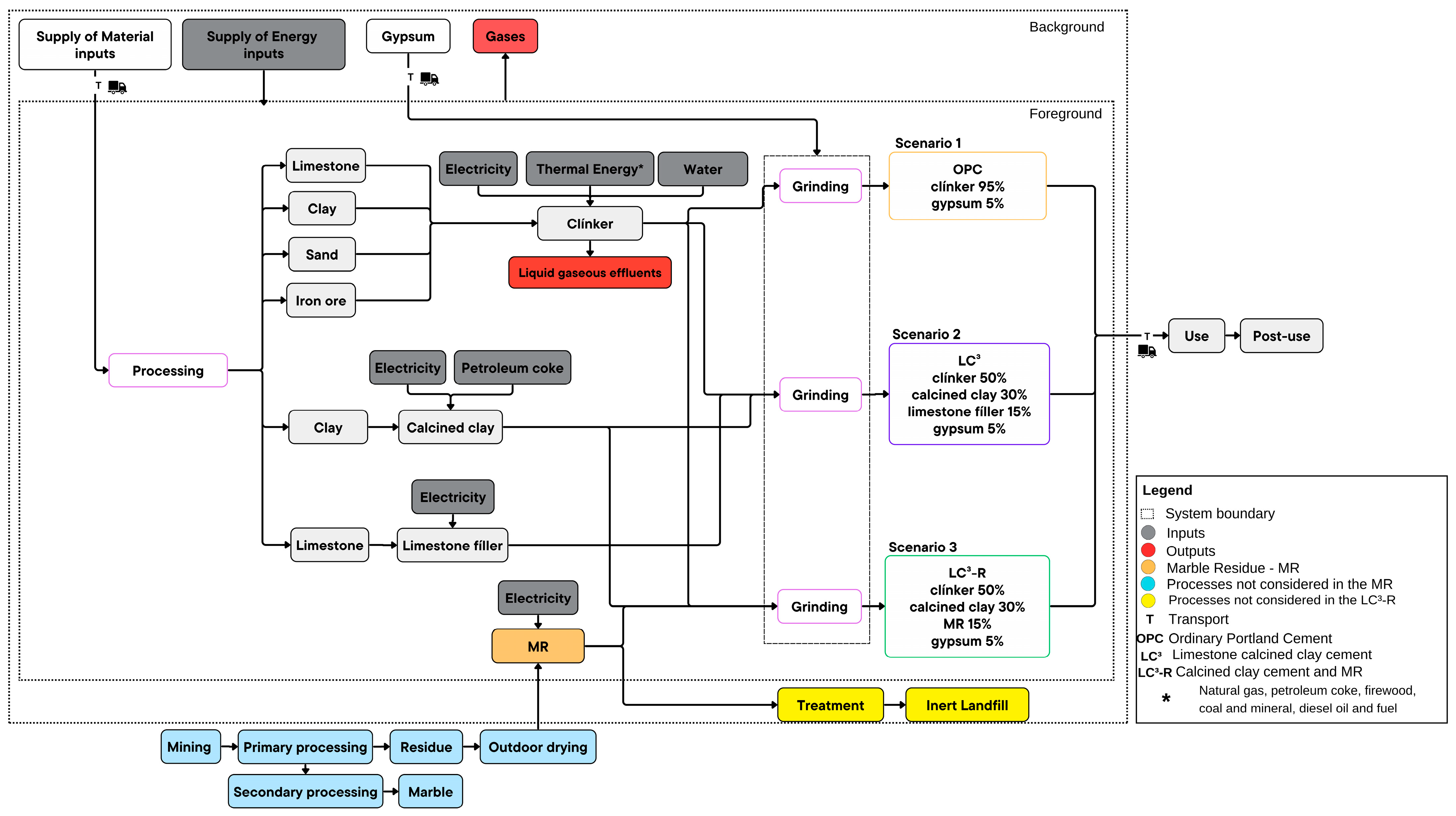
- ▪ OPC: composed of 95% clinker and 5% gypsum;
- ▪ LC3: composed of 50% clinker, 30% calcined clay, 15% limestone filler, and 5% gypsum;
- ▪ LC3-R: has the same composition as LC3, but with the limestone filler replaced by marble residue.
2.2. Inventory Analysis
2.2.1. Cements (OPC, LC3, and LC3-R)
2.2.2. Portland Clinker

| Sources | Energy Share (%) | GJ/t-Clinker | Fuel Quantity (FU-Fuel/t-Clinker) | |
|---|---|---|---|---|
| Petroleum coke | 67.4 | 2.431 | 0.069 | t |
| Charcoal | 2.9 | 0.103 | 0.004 | t |
| Mineral coal | 3.7 | 0.132 | 0.0043 | t |
| Firewood | 1.8 | 0.066 | 0.005 | t |
| Natural gas | 0.08 | 0.0029 | 0.00009 | m3 |
| Diesel oil | 1.1 | 0.039 | 0.00087 | t |
| Fuel oil | 0.3 | 0.011 | 0.0003 | t |
| Others * | 22.7 | 0.823 | - | t |
| Total | 100.0 | 3.605 | - | |
2.2.3. Gypsum, Calcined Clay, and Limestone Filler
2.2.4. Marble Residue (MR)
2.3. Life Cycle Impact Assessment
2.4. Sensitivity Analysis
3. Results
3.1. Life Cycle Impact Assessment
3.2. Sensitive Analysis
4. Discussion
4.1. Comparison with Literature
4.2. Opportunities and Challenges
5. Final Considerations
5.1. Conclusions
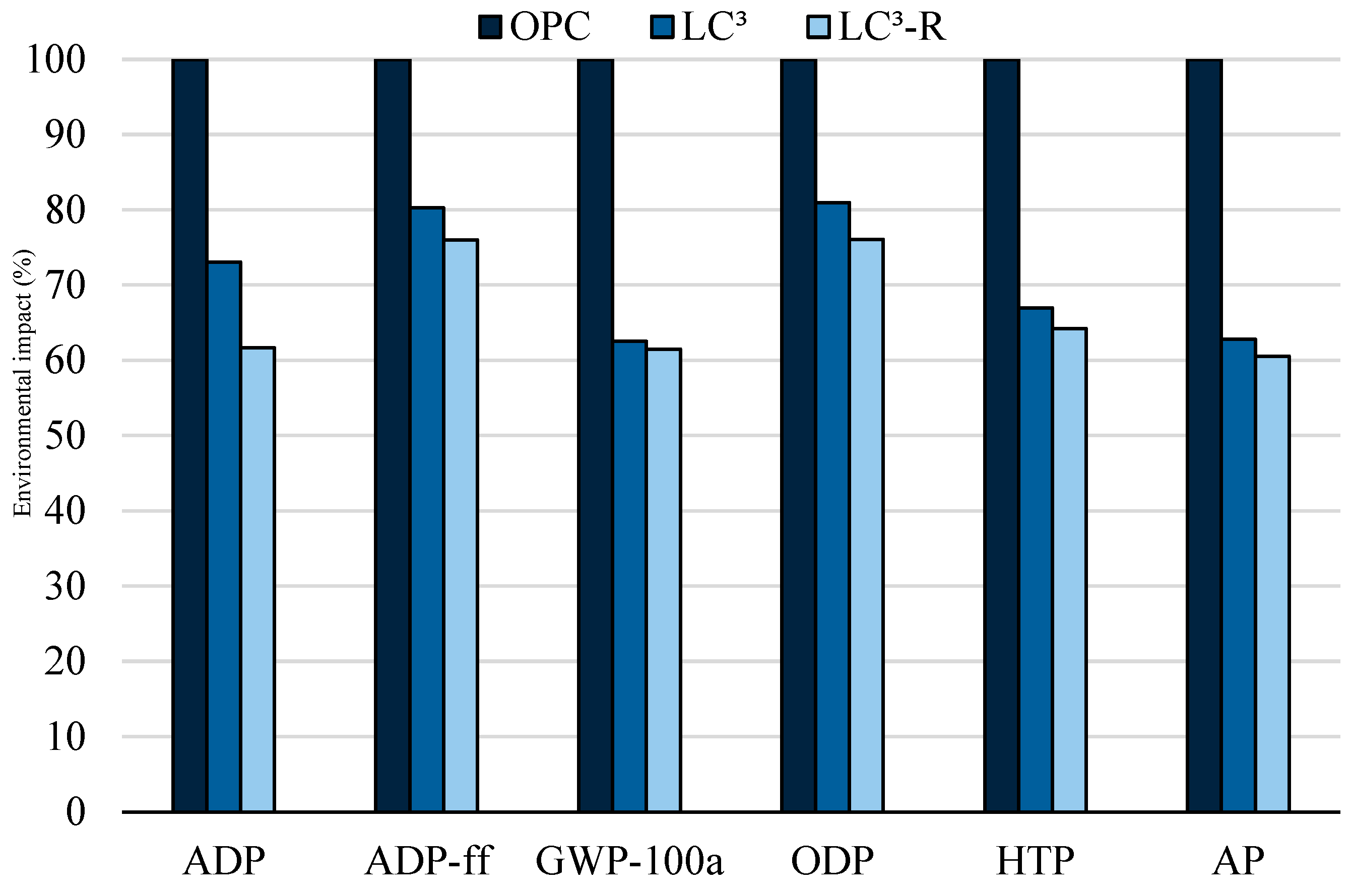
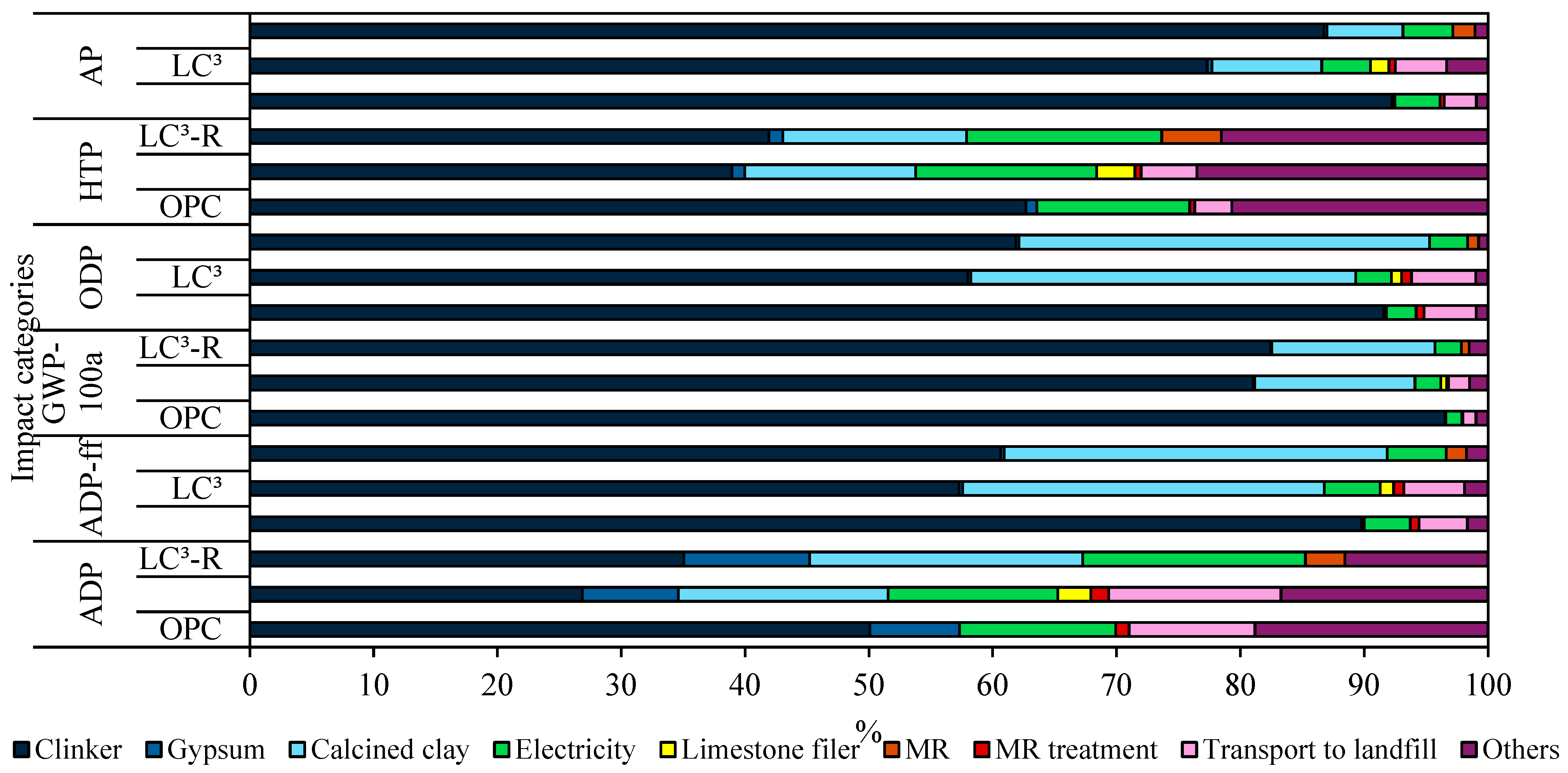
- Compared to OPC, LC3-R proved viable in all impact categories, with reductions of up to 38% in resource depletion categories (ADP; ADP-ff), 36% in human toxicity (HTP), and up to 39% in the remaining categories (GWP 100a; ODP; AP).
- Compared to LC3, LC3-R also showed viability across all impact categories, with reductions of up to 11% in resource depletion (ADP; ADP-ff), 3% in human toxicity (HTP), and up to 5% in general environmental impact categories (GWP 100a; ODP; AP).
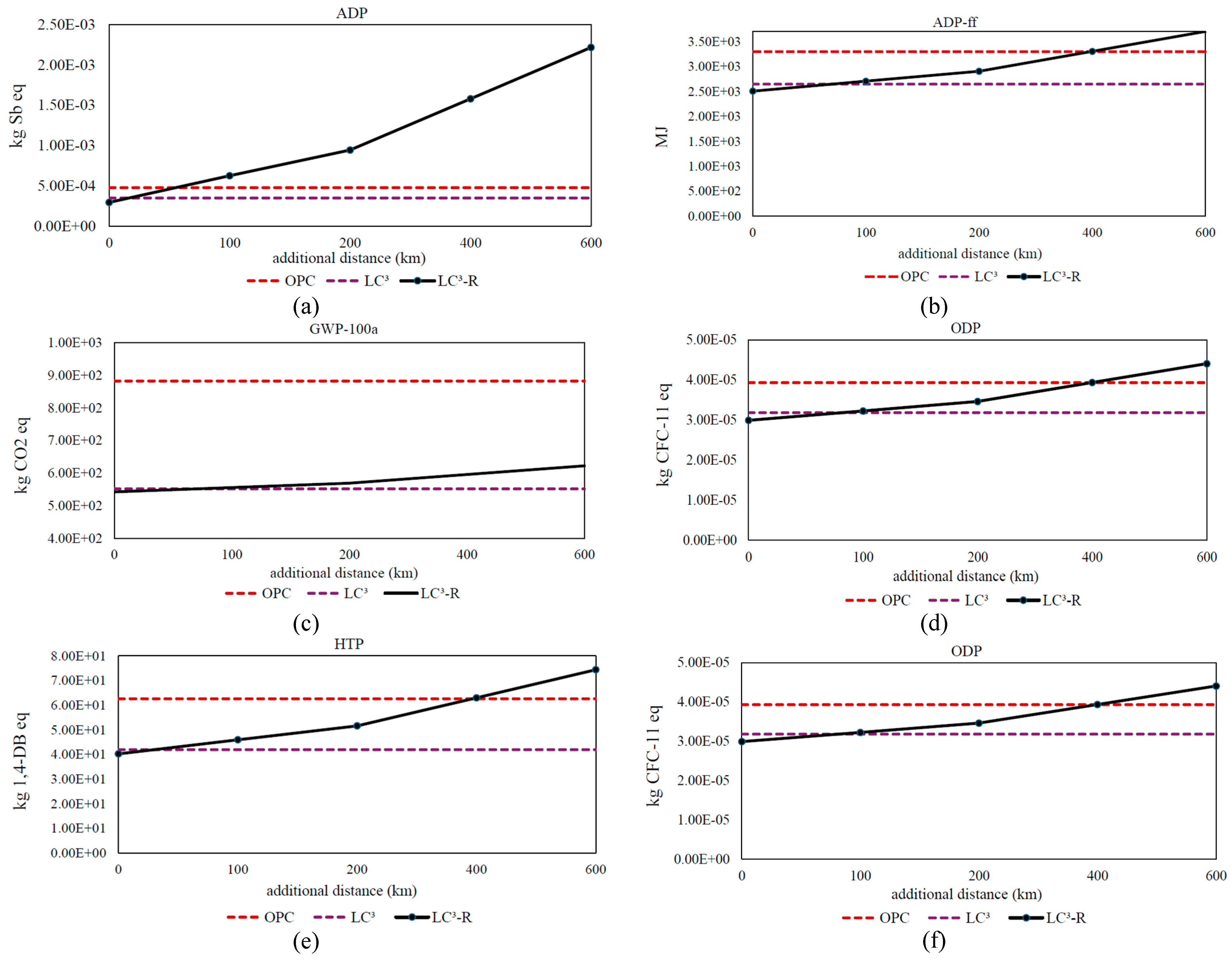
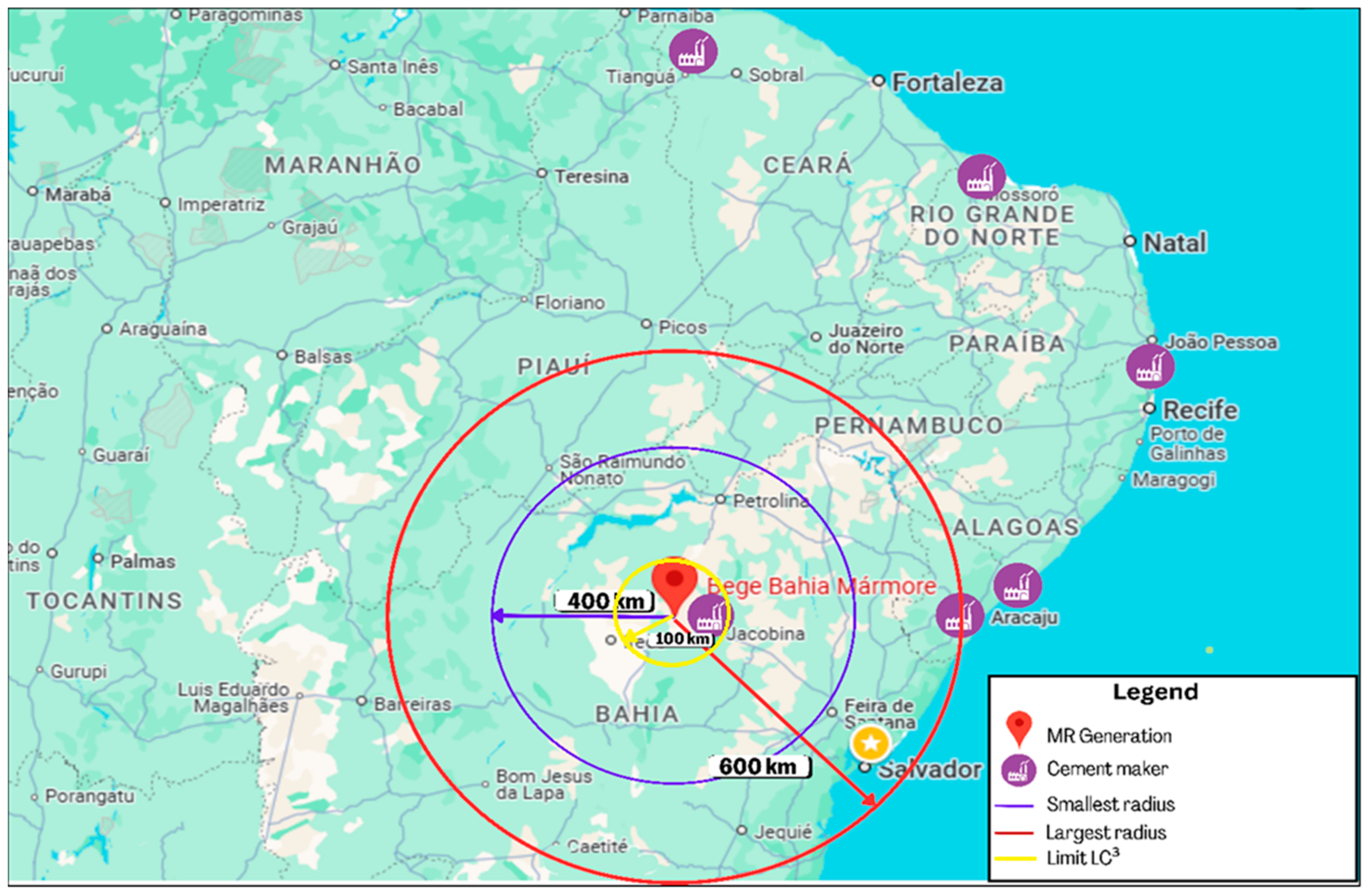
- MR is a viable alternative for reducing environmental impacts in the state of Bahia, for transport distances up to 400 km. Impacts remain lower than OPC in several categories, except ADP, making its use suitable for cement plants located within 400 km of the waste generation site.
- For distances greater than 600 km, the environmental impact associated with MR transport becomes significant. Although some categories still show improvements over OPC, the overall use becomes unfeasible due to additional transport-related impacts.
- Compared to LC3, LC3-R shows a lower transport threshold, being viable for distances up to 100 km in the analyzed categories. Increases of up to 2% were observed in GWP 100a, ODP, and AP; up to 10% in HTP; and up to 78% in the resource depletion group (ADP: 78% and ADP-ff: 2%).
- Regarding energy matrix composition, the use of 100% petroleum coke resulted in increases of 0.6% and 2% in ADP-ff and ODP, respectively, compared to LC3.
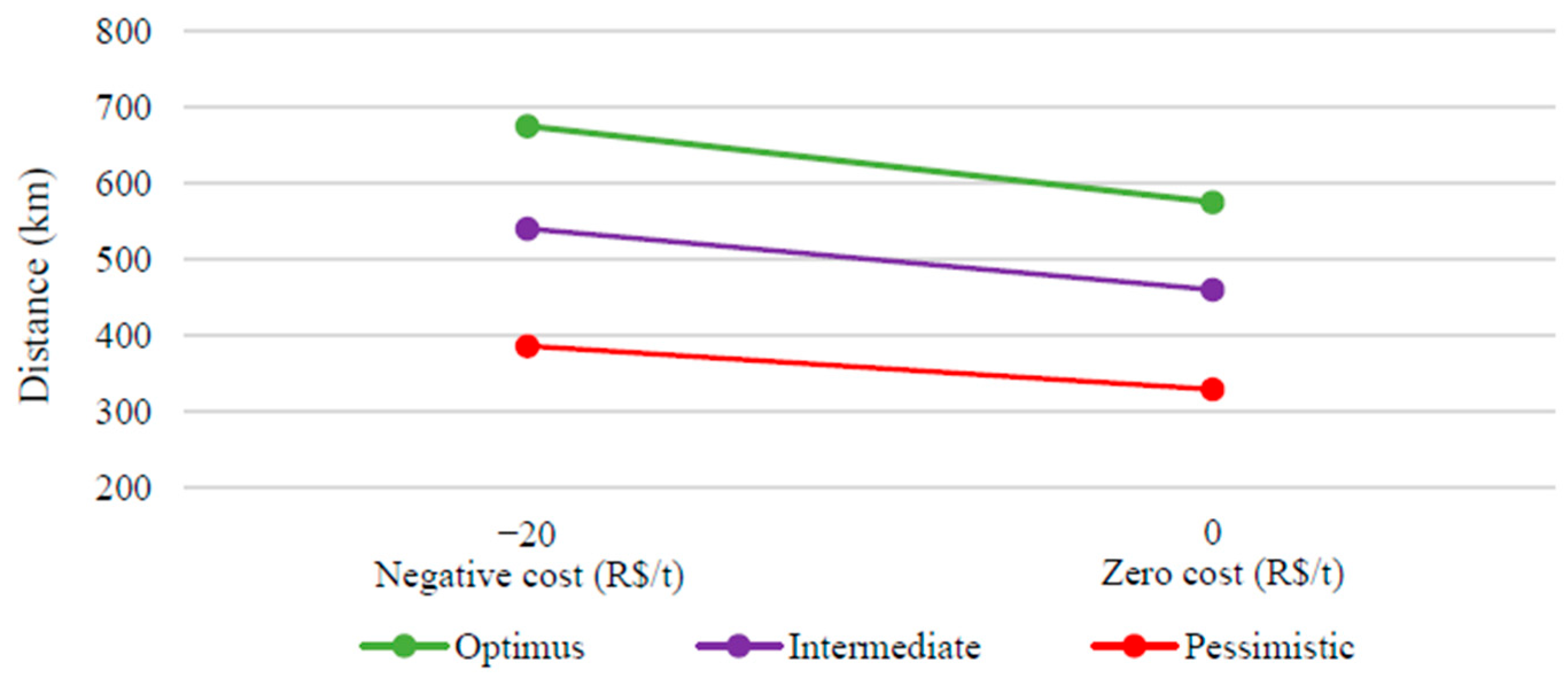
- MR supply was economically competitive compared with limestone, ranging from 329 to 675 km maximum MR transport distance among the transport and residue cost scenarios.
5.2. Limitations and Assumptions
- The use and end-of-life phases were not included in the study, assuming that all analyzed cements will have similar use and end-of-life considerations.
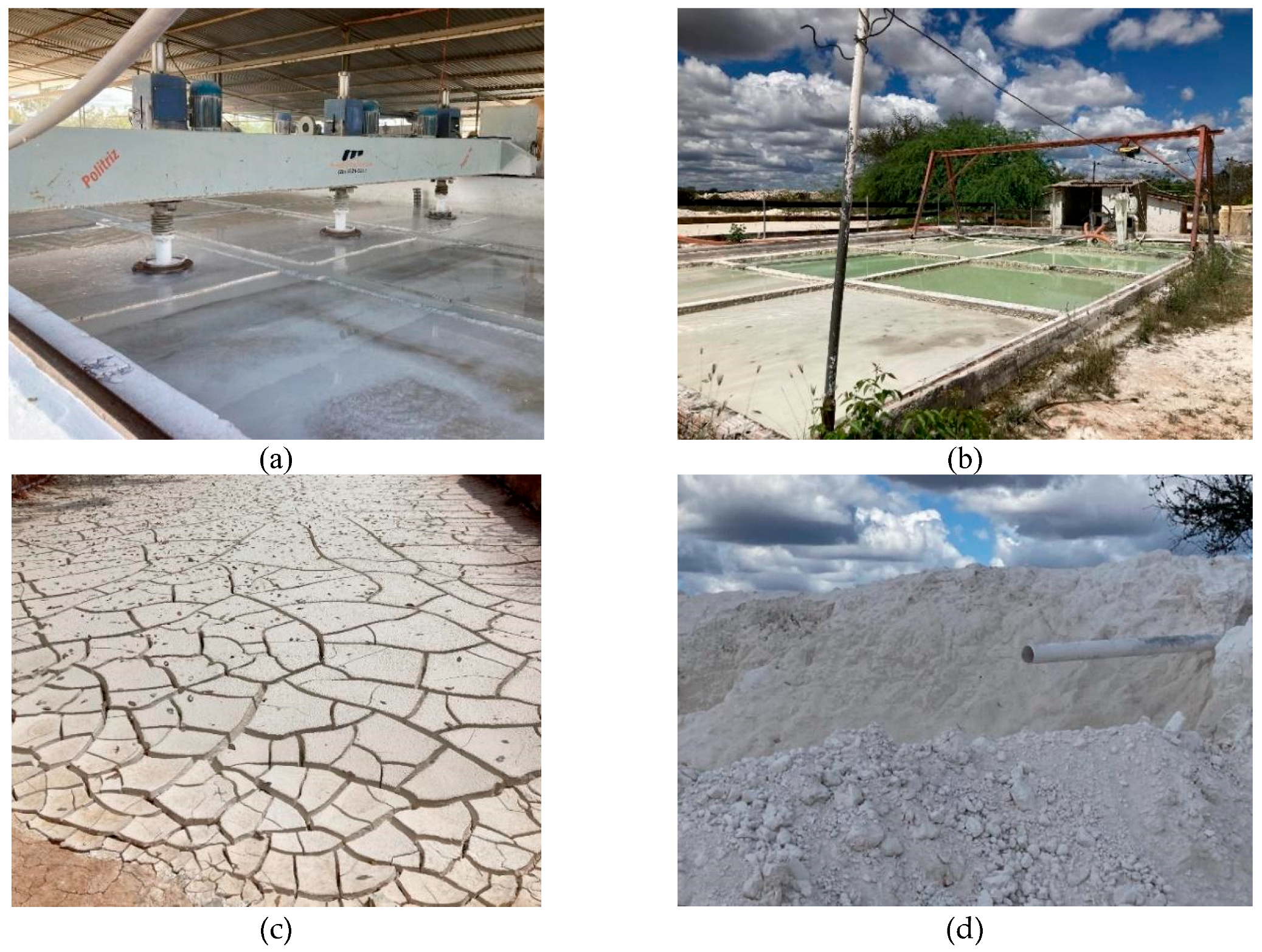
- It was considered that the generation of marble residue (MR) occurs exclusively in the region of Ourolândia, state of Bahia, and that its supply is restricted to this location.
- This study is characterized by regional specificity and reliance on secondary literature data.
- It was assumed that the transformation of MR into carbonate filler takes place at the same site where the residue is generated, eliminating the need for additional transport for this stage.
- The distance (50 km), treatment, and disposal of MR in inert landfill were incorporated into the OPC and LC3 scenarios, assuming that the residues are sent to these destinations when not reused in production.
- Sensitivities related to clinker factors and energy sources (e.g., tornado diagrams) were not conducted in this study.
5.3. Recommendations
- Applying LCA methodology to assess the incorporation of industrial residues and by-products not yet analyzed.
- Guiding future research to identify the most effective mitigation strategies suggested by this research, such as reducing abiotic depletion impacts.
- Conducting broader economic assessments of LC3-R production at an industrial scale.
- Encouraging the use of cleaner energy sources in the production of LC3-R, such as renewable electricity or alternative low-carbon thermal energy.
- Assessment of environmental impacts in different regions of Brazil, taking into account transportation logistics and the availability of marble waste.
- Further sensitivity and uncertainty analysis of the evaluated scenarios to cover the influence of more parameters and application contexts on the obtained results.
- Promotion of regulatory frameworks and financial incentives by government authorities to encourage the use of industrial residues, such as marble waste, in cement production.
- Development and updating of technical standards to support the incorporation of alternative materials in cementitious matrices.
- Implementation of waste management policies focused on the valorization and reuse of residues from the ornamental stone industry.
- Adoption of LCA as a decision-making tool by cement companies to reduce environmental impacts.
Supplementary Materials
Author Contributions
Funding
Data Availability Statement
Acknowledgments
Conflicts of Interest
Abbreviations
| MR | Marble Residue |
| OPC | Ordinary Portland Cement |
| LC3 | Limestone Calcined Clay Cement |
| LC3-R | Calcined Clay and Marble Residue Cement |
| LCA | Life Cycle Assessment |
| ADP | Abiotic Depletion |
| ADP-ff | Abiotic Depletion of Fossil Fuels |
| GWP | Global Warming Potential |
| ODP | Ozone Layer Depletion |
| HTP | Human Toxicity Potential |
| AP | Acidification Potential |
| CO2 | Carbon Dioxide |
| CaO | Calcium Oxide |
| CaCO3 | Calcium Carbonate |
| SMC | Supplementary Cementitious Material |
| CO | Carbon Monoxide |
| NOx | Nitrogen Oxides |
| SOx | Sulfur Oxides |
| PM | Particulate Matter |
References
- Scrivener, K.L.; John, V.M.; Gartner, E.M. Eco-efficient cements: Potential economically viable solutions for a low-CO2 cement-based materials industry. Cem. Concr. Res. 2018, 114, 2–26. [Google Scholar] [CrossRef]
- U.S. Geological Survey. Mineral Commodity Summaries. United States, 2024. Available online: https://pubs.usgs.gov/periodicals/mcs2023/mcs2023-cement.pdf (accessed on 15 January 2025).
- SNIC. Produção Nacional de Cimento por Regiões e Estados 2023. 2024. Available online: http://snic.org.br/assets/pdf/numeros/1720464031.pdf (accessed on 15 January 2025).
- Jyosyula, S.K.R.; Surana, S.; Raju, S. Role of Lightweight Materials of Construction on Carbon Dioxide Emission of a Reinforced Concrete Building. Mater. Today Proc. 2020, 27, 984–990. [Google Scholar] [CrossRef]
- Wolde, M.G.; Khatiwada, D.; Bekele, G.; Palm, B. A life cycle assessment of clinker and cement production in Ethiopia. Clean. Environ. Syst. 2024, 13, 100180. [Google Scholar] [CrossRef]
- EPE—Empresa de Pesquisa Energética. Atlas da Eficiência Energética; Relatório de Indicadores, Brasil; Empresa de Pesquisa Energética: Rio de Janeiro, Brazil, 2020. [Google Scholar]
- IEA. Global Thermal Energy Intensity of Clinker Production by Fuel in the Net Zero Scenario, 2010–2030; International Energy Agency (IEA): Paris, France, 2023; Available online: https://www.iea.org/data-and-statistics/charts/global-thermal-energy-intensity-of-clinker-production-by-fuel-in-the-net-zero-scenario-2010-2030 (accessed on 15 April 2025).
- Li, Y.; Liu, Y.; Gong, X.; Nie, Z.; Cui, S.; Wang, Z.; Chein, W. Environmental impact analysis of blast furnace slag applied to ordinary Portland cement production. J. Clean. Prod. 2020, 120, 221–230. [Google Scholar] [CrossRef]
- Arruda Junior, E.S. Cimentos de Baixo Impacto Ambiental (LC3) a Partir de Resíduos Cauliníticos da Amazônia. Master’s Thesis, Universidade Federal do Pará, Belém, Brazil, 2020. Available online: https://repositorio.ufpa.br/handle/2011/13815 (accessed on 28 June 2024).
- Scrivener, K.; Martirena, F.; Bishnoi, S.; Maity, S. Calcined clay limestone cements (LC3). Cem. Concr. Res. 2018, 114, 49–56. [Google Scholar] [CrossRef]
- Malacarne, C.S. Desenvolvimento e Caracterização de Cimentos LC3—Cimentos Ternários a Base de Argila Calcinada e Calcário—A Partir de Matérias Primas do Rio Grande do Sul -. Master’s Thesis, Pós-Graduação-Universidade Federal do Rio Grande do Sul, Porto Alegre, Brazil, 2020. Available online: https://www.scribd.com/document/724362940/Desenvolvimento-e-caracterizacao-de-cimento-LC3-Camila-S-Malacarne (accessed on 27 April 2026).
- Montani, C. XXXI Rapporto Marmo e Pietre Nel Mondo 2020; Aldus: Carrara, Italy, 2020; p. 151p. Available online: https://abirochas.com.br/biblioteca/relatorio-mundial/ (accessed on 4 February 2025).
- ABIRROCHAS—Associação Brasileira da Indústria de Rochas Ornamentais. O Desempenho Brasileiro no Setor de Rochas Ornamentais; ABIRROCHAS: Brasília, Brazil, 2021; Available online: https://abirochas.com.br/wp-content/uploads/2022/01/Informe-02_2021-Desempenho-do-Setor-v3-1.pdf (accessed on 12 May 2025).
- Vidal, F.W.H.; Azevedo, H.C.A.; Castro, N.F. (Eds.) Tecnologia de Rochas Ornamentais: Pesquisa, Lavra e Beneficiamento; CETEM/MCTI: Rio de Janeiro, Brazil, 2013; 700p. Available online: http://mineralis.cetem.gov.br/handle/cetem/1960 (accessed on 30 April 2025).
- Vidal, F.W.H. Rochas Ornamentais do Nordeste—Brasil. In Simpósio de Rochas Ornamentais do Nordeste; 3, 26 to 20 November 2002, Recife; CETEM/MCT: Rio de Janeiro, Brazil, 2002; pp. 146–153. Available online: http://mineralis.cetem.gov.br/handle/cetem/1447 (accessed on 14 July 2025).
- Ferreira, G.E.; Vidal, F.W.H.; Ribeiro, R.C.C. Viabilidade técnica-econômica do aproveitamento do resíduo do mármore bege bahia no setor polimérico. In Congresso Brasileiro de Rochas Ornamentais and Simpósio de Rochas Ornamentais do Nordeste; CETEM: Campina Grande, Brazil, 2012. Available online: http://master.cetem.gov.br/handle/cetem/3241 (accessed on 27 April 2026).
- Vieira, L.B. Avaliação do Uso de Resíduo de Mármore Bege Bahia Como Substituto do Calcário na Produção de Clínquer e como Material Carbonático para Cimento Portland. Ph.D. Thesis, Programa de Pós-Graduação, Centro Universitário SENAI CIMATEC, Salvador, Brazil, 2022; 123p. [Google Scholar]
- Ramos, J.C.R.; Passalini, P.G.S.; Holanda, J.N.F. Utilization of marble waste as a sustainable replacement for calcareous in the manufacture of red-firing wall tiles. Constr. Build. Mater. 2023, 377, 131115. [Google Scholar] [CrossRef]
- Sánchez, R.; Polo, M.S.; Rozalen, M. Waste marble dust: An interesting residue to produce cement. Constr. Build. Mater. 2019, 224, 99–108. [Google Scholar] [CrossRef]
- Singh, M.; Srivastava, A.; Bhunia, D. Long term strength and durability parameters of hardened concrete on partially replacing cement by dried waste marble powder slurry. Constr. Build. Mater. 2019, 198, 553–569. [Google Scholar] [CrossRef]
- Seghir, N.T.; Mellas, M.; Sadowski, L.; Żak, A. Effects of marble powder on the properties of the air-cured blended cement paste. J. Clean. Prod. 2018, 183, 858–868. [Google Scholar] [CrossRef]
- Essam, A.; Mostafa, S.A.; Khan, M.; Tahwia, A.M. Modified particle packing approach for optimizing waste marble powder as a cement substitute in high-performance concrete. Constr. Build. Mater. 2023, 409, 133845. [Google Scholar] [CrossRef]
- Macedo, D.B.G. Metodologia de Avaliação do Ciclo de Vida de Sistemas Construtivos: Aplicação em um Sistema Estruturado em Aço. Ph.D. Thesis, Universidade Federal de Minas Gerais, Belo Horizonte, Brazil, 2011. Available online: https://repositorio.ufmg.br/handle/1843/BUOS-9ACGQD (accessed on 30 April 2025).
- ABNT NBR ISO 14040; Gestão Ambiental—Avaliação do Ciclo de Vida—Princípios e Estrutura. ABNT—Associação Brasileira de Normas Técnicas: Rio de Janeiro, Brazil, 2009; Corrected Version: 2014a. Available online: https://www.scribd.com/document/830503627/ABNT-NBR-ISO-14040-2009-Versao-Corrigida-2014-ACVida (accessed on 20 March 2025).
- ABNT NBR ISO NBR 14044; Gestão Ambiental—Avaliação do Ciclo de Vida—Requisitos e. ABNT—Associação Brasileira de Normas Técnicas: Rio de Janeiro, Brazil, 2009.
- Thwe, E.; Khatiwada, D.; Gasparatos, A. Life cycle assessment of a cement plant in Naypyitaw, Myanmar. Clean. Environ. Syst. 2021, 2, 100007. [Google Scholar] [CrossRef]
- Guo, X.; Li, Y.; Shi, H.; She, A.; Guo, Y.; Su, Q.; Ren, B.; Liu, Z.; Tao, C. Carbon reduction in cement industry—An indigenized questionnaire on environmental impacts and key parameters of life cycle assessment (LCA) in China. J. Clean. Prod. 2023, 426, 139022. [Google Scholar] [CrossRef]
- Georgiades, M.; Shan, I.H.; Steubing, B.; Cheeseman, C.; Myers, R.J. Prospective life cycle assessment of European cement production. Resour. Conserv. Recycl. 2023, 194, 106998. [Google Scholar] [CrossRef]
- Malacarne, C.S.; Silva, M.R.C.; Danieli, S.; Maciel, V.G.; Kirchheim, A.P. Environmental and technical assessment to support sustainable strategies for limestone calcined clay cement production in Brazil. Constr. Build. Mater. 2021, 310, 125–261. [Google Scholar] [CrossRef]
- Ruviaro, A.S.; Silvestro, L.; Andrade Neto, J.S.; Gleize, P.J.P.; Pelisser, F. Eco-efficient cement production: Investigating water treatment plant sludge and eggshell filler use in LC3 systems. Constr. Build. Mater. 2023, 394, 132300. [Google Scholar] [CrossRef]
- SNIC—Sindicato Nacional das Indústrias de Cimento. Roteiro Tecnológico do Cimento para o Brasil—2019. Rio de Janeiro, Brazil. 2019. Available online: https://coprocessamento.org.br/wp-content/uploads/2019/11/Roadmap_Tecnologico_Cimento_Brasil_Book-1.pdf (accessed on 26 September 2023).
- EPE—Empresa de Pesquisa Energética. Balanço Energético Nacional 2023: Ano Base 2022. Rio de Janeiro, Brazil, 2023; 274p. Available online: https://www.epe.gov.br/sites-pt/publicacoes-dados-abertos/publicacoes/PublicacoesArquivos/publicacao-748/topico-687/BEN2023.pdf (accessed on 27 April 2026).
- Melllo, R.Z. Avaliação do Ciclo de Vida da Utilização do Resíduo do Beneficiamento de Rochas Ornamentais em Materiais de Construção Civil à Base de Cimento. Master’s Thesis, Universidade Federal do Espírito Santo, Vitória, Brazil, 2018. [Google Scholar]
- Vieira, D.R.; Calmon, J.L.; Zulcão, R.; Coelho, F.Z. Consideration of strength and service life in cradle-to-gate life cycle assessment of self-compacting concrete in a maritime area: A study in the Brazilian context. Environ. Dev. Sustain. 2018, 20, 1849–1871. [Google Scholar] [CrossRef]
- ABNT NBR 5732; Cimento Portland Comum. ABNT—Associação Brasileira de Normas Técnicas: Rio de Janeiro, Brazil, 1991. Available online: https://engenhariacivilfsp.wordpress.com/wp-content/uploads/2015/04/nbr-05732-1991-cimento-portland-comum.pdf (accessed on 7 May 2025).
- Weidema, B.P.; Bauer, C.; Hhischier, R.; Mutel, C.; Nemecek, T.; Reinhard, J.; Vadenbo, C.O.; Wernet, G. Overview and Methodology Data Quality Guideline for the Ecoinvent Database Version 3; Ecoinvent report 1(v3); The Ecoinvent Centre/Swiss Centre for Life Cycle Inventories: St. Gallen, Switzerland, 2013. [Google Scholar]
- IEA—International Energy Agency. Energy Technology Perspectives 2008: Scenarios & Strategies to 2050; International Energy Agency: Paris, France, 2008; 643p, Available online: https://www.iea.org/reports/energy-technology-perspectives-2008 (accessed on 7 May 2025).
- Zulcão, R.; Calmon, J.L.; Rebello, T.A.; Vieira, D.R. Life cycle assessment of the ornamental stone processing waste use in cement-based building materials. Constr. Build. Mater. 2020, 257, 119523. [Google Scholar] [CrossRef]
- Belizario-Silva, F.; Oliveira, L.A.; John, V.M. Relatório de Coleta de Dados para o Sistema de Informação do Desempenho Ambiental da Construção: Cimento; SIDAC: São Paulo, Brazil, 2022. [Google Scholar]
- Silva, F.B.; Cleto, F.R.; Diestelkamp, E.D.; Yoshida, O.S.; Oliveira, L.A.; Saade, M.R.M.; Gmünder, S. Life Cycle Inventories of Cement, Concrete and Related Industries—Brazil; Ecoinvent Association: Zurich, Switzerland, 2018; Available online: https://www.researchgate.net/publication/336231261_Life_Cycle_Inventories_of_Cement_Concrete_and_Related_Industries_-_Brazil (accessed on 12 July 2025).
- IEA—International Energy Agency. Transforming Industry Through CCUS; International Energy Agency: Paris, France, 2019; Available online: https://www.iea.org/reports/transforming-industry-through-ccus (accessed on 14 March 2025).
- SNIC—Sindicato Nacional das Indústrias de Cimento. Produção Nacional de Cimento por Regiões e Estados; SNIC—Sindicato Nacional das Indústrias de Cimento: Rio de Janeiro, Brazil, 2022; Available online: http://snic.org.br/assets/pdf/numeros/1691430860.pdf (accessed on 27 September 2023).
- Kellenberger, D.; Althaus, H.-J.; Künniger, T.; Lehmann, M. Life Cycle Inventories of Building Products; Final report ecoinvent data v2.0 No. 7 EMPA Dübendor; Swiss Centre for Life Cycle Inventories: Dübendorf, Switzerland, 2007; Available online: https://belglas.com/wp-content/uploads/2019/01/07_buildingproducts.pdf (accessed on 21 November 2024).
- Martineau, G. Ecoinvent 3.3 Dataset Documentation Limestone Production, Crushed, for Mill—CA-QC; Ecoinvent: Zürich, Switzerland, 2014. [Google Scholar]
- Martineau, G. Ecoinvent 3.3 Dataset Documentation Limestone Quarry Operation—CA-QC; Ecoinvent: Zürich, Switzerland, 2014. [Google Scholar]
- Alencar, C.R.A. Manual de Caracterização, Aplicação, Uso e Manutenção das Principais Rochas Comerciais no Espírito Santo: Rochas Ornamentais.. Instituto Euvaldo Lodi—IEL. Regional do Espírito Santo. Cachoeiro de Itapemirim/ES. 2013. Available online: https://inti.org.br/eventos/manual-de-caracterizacao-aplicacao-uso-e-manutencao-das-principais-rochas-comerciais-no-espirito-santo/ (accessed on 1 September 2025).
- Almeida, K.M.D.; Aguiar, M.C.D.; Gadioli, M.C.B.; Amorim, M.M.; Vidal, F.W.H. Estudo Bibliográfico da Aplicação dos Resíduos de Rochas Ornamentais; Série Tecnologia Ambiental; CETEM/MCTI: Rio de Janeiro, Brazil, 2023. Available online: http://mineralis.cetem.gov.br/handle/cetem/2767 (accessed on 1 September 2025).
- Çolak, A.; Laratte, B.; Elevli, B.; Çoruh, S. Abiotic depletion of boron: An update characterization factors for CML 2002 and ReCiPe. Minerals 2022, 12, 435. [Google Scholar] [CrossRef]
- IPCC; EFDB. Emission Factor Database. 2021. Available online: https://www.ipcc-nggip.iges.or.jp/EFDB/main.php (accessed on 3 September 2025).
- Silva, É.S. As ISO 50001 e ISO 14040 Aplicadas a Indústria Cimenteira: Comparação Entre Fontes Fóssil e Renovável de Energia Térmica. Master’s Thesis, Universidade de Brasília, Brasília, Brazil, 2017. [Google Scholar]
- Akhobadze, G.N. Ozone layer destruction and ways of its recovery. IOP Conf. Ser. Mater. Sci. Eng. 2020, 962, 042009. [Google Scholar] [CrossRef]
- Batista, M.R.P. Análise de Ciclo de Vida (ACV) de Óleos Refrigerantes para Transformadores: Comparação Entre Óleo Mineral e Óleo Vegetal. Master’s Thesis, Universidade Federal de Itajubá, Itajubá, Brazil, 2021. Available online: https://bdtd.ibict.br/vufind/Record/UFEI_25583cb1b8b35fa6023dfb3e37163185?print=1 (accessed on 9 October 2025).
- Posch, M.; Seppälä, J.; Hettelingh, J.P.; Johansson, M.; Margni, M.; Jolliet, O. The role of atmospheric dispersion models and ecosystem sensitivity in the determination of characterisation factors for acidifying and eutrophying emissions in LCIA. Int. J. Life Cycle Assess. 2008, 13, 477–486. [Google Scholar] [CrossRef]
- ABRACAL. Associação Brasileira dos Produtores de Calcário Agrícola. Available online: https://abracal.com.br/site/ (accessed on 2 March 2026).
- Sánchez, S.; Cancio, Y.; Sánchez, I.R.; Martirena, J.F.; Rosa, E.R.; Habert, G. Sustainability assessment in Cuban cement sector-a methodological approach. IOP Conf. Ser. Earth Environ. Sci. 2019, 323, 012128. [Google Scholar] [CrossRef]
- Rhaouti, Y.; Taha, Y.; Benzaacoua, M. Assessment of the Environmental Performance of Blended Cements from a Life Cycle Perspective: A Systematic Review. Sustain. Prod. Consum. 2023, 36, 32–48. [Google Scholar] [CrossRef]
- Arruda Junior, E.S.; Braga, N.T.S.; Barata, M.S. Life cycle assessment to produce LC3 cements with kaolinitic waste from the Amazon region, Brazil. Case Stud. Constr. Mater. 2023, 18, e01729. [Google Scholar] [CrossRef]
- Berriel, S.S.; Favier, A.; Domínguez, E.R.; Machado, I.R.S.; Heierli, U.; Scrivener, K.; Hernandéz, F.M.; Habert, G. Assessing the environmental and economic potential of Limestone Calcined Clay Cement in Cuba. J. Clean. Prod. 2016, 124, 361–369. [Google Scholar] [CrossRef]
- Srivastava, S.; Moukannaa, S.; Isteri, V.; Ramteke, D.D.; Perumal, P.; Adesanya, D.; Kinnunen, P.; Ohenoja, K.; Illikainen, M. Utilization of calcite-rich Green Liquor Dregs (GLD) by-products from pulp and paper industry: Cement clinker production and life cycle analysis. Case Stud. Constr. Mater. 2024, 20, e02870. [Google Scholar] [CrossRef]
- Akintayo, B.D.; Olanrewaju, O.A.; Olanrewaju, O.I. Life Cycle Assessment of Ordinary Portland Cement Production in South Africa: Mid-Point and End-Point Approaches. Sustainability 2024, 16, 3001. [Google Scholar] [CrossRef]
- Petroche, D.M.; Ramirez, A.D. The Environmental Profile of Clinker, Cement, and Concrete: A Life Cycle Perspective Study Based on Ecuadorian Data. Buildings 2022, 12, 311. [Google Scholar] [CrossRef]
- Gouw, J.A.; Parrish, D.D.; Frost, G.J.; Trainer, M. Reduced emissions of CO2, NOx, and SO2 from US power plants owing to switch from coal to natural gas with combined cycle technology. Earth’s Future 2014, 2, 75–82. [Google Scholar] [CrossRef]
- Cherni, M.; Sebei, A.; Amor, B.; Hssine, N.; Hajjaji, N. Critical reviews and benchmarking Tunisian clinker and cement with life cycle assessment results. Case Stud. Constr. Mater. 2024, 20, e03174. [Google Scholar] [CrossRef]
- Malladi, R.C.; Ajayan, A.S.; Chandran, G.; Selvaraj, T. Upcycling of construction and demolition waste: Recovery and reuse of binder and fine aggregate in cement applications to achieve circular economy. Clean. Eng. Technol. 2025, 24, 100864. [Google Scholar] [CrossRef]
- Vidal, F.W.H.; Ribeiro, L.D.; Alves, E.; Barreto, E.; Pinho, R. Apoio Técnico ao Arranjo Produtivo do Mármore Bege-Bahia. Relatório de Andamento de Realizações; Governo do Estado da Bahia: Salvador, Brazil, 2009. [Google Scholar]
- Magalhaes, A.C.F. Área de deposição de estoques remanescentes do mármore bege Bahia—ADERBEGE. In Anais do Simpósio de Geologia do Nordeste, 23, 2009, Fortaleza, CE; CETEM/MCTI: Rio de Janeiro, Brazil, 2009; pp. 1–15. Available online: http://mineralis.cetem.gov.br/handle/cetem/1471 (accessed on 13 October 2025).
- SEMA—Secretaria de Meio Ambiente. Inventário de Gases de Efeito Estufa: Estado da Bahia (2020–2022), 2nd ed.; SEMA—Secretaria de Meio Ambiente: Salvador, BA, Brazil, 2024. Available online: https://www.ba.gov.br/meioambiente/sites/site-sema/files/2024-10/INVENT%C3%81RIO%20DE%20GASES%20DE%20EFEITO%20ESTUFA%20BAHIA_20241008_145351_0000%20%281%29-compactado.pdf (accessed on 17 July 2025).
- Kanagaraj, B.; Anand, N.; Raj, R.S.; Lubloy, E. Techno-socio-economic aspects of Portland cement, Geopolymer, and Limestone Calcined Clay Cement (LC3) composite systems: A-State-of-Art-Review. Constr. Build. Mater. 2023, 398, 132484. [Google Scholar] [CrossRef]
- Barbhuiya, S.; Nepal, J.; Bhusandas, B. Properties, compatibility, environmental benefits and future directions of limestone calcined clay cement (LC3) concrete: A review. J. Build. Eng. 2023, 79, 107794. [Google Scholar] [CrossRef]
- Rosenbaum, R.K.; Bachmann, T.M.; Gold, L.S.; Huijbregts, M.A.; Jolliet, O.; Juraske, R.; Hauschild, M.Z. USEtox—the UNEP-SETAC toxicity model: Recommended characterisation factors for human toxicity and freshwater ecotoxicity in life cycle impact assessment. Int. J. Life Cycle Assess. 2008, 13, 532–546. [Google Scholar] [CrossRef]
- Ciroth, A.; Muller, S.; Weidema, B. Refining the pedigree matrix approach in Ecoinvent. GreenDelta. 2012. Available online: https://lca-net.com/files/Pedigree_report_final_May2012.pdf (accessed on 27 April 2026).


| Main Process | Flow Type | Flow | Quantity | Unit | |
|---|---|---|---|---|---|
| OPC | Inputs | Materials | Clinker | 9.50 × 10⁻¹ | t |
| Gypsum | 5.00 × 10⁻² | t | |||
| Electricity | Cement grinding (electricity, medium voltage) | 4.97 × 101 | kWh | ||
| Packing and loading (electricity, medium voltage) | 3.39 × 100 | kWh | |||
| Processing | Packing, cement | 1.00 × 100 | T | ||
| Outputs | Waste management Emissions | Transport to the landfill Marble residue in an inert landfill Particulates, <0.01 mm | 7.50 × 101 1.50 × 10⁻¹ 9.00 × 10⁻⁵ | t*km t t | |
| LC3 | Inputs | Materials | Clinker | 5.00 × 10⁻¹ | t |
| Gypsum | 5.00 × 10⁻² | t | |||
| Calcined clay | 3.00 × 10⁻¹ | t | |||
| Limestone filler | 1.50 × 10⁻¹ | t | |||
| Electricity | Cement grinding (electricity, medium voltage) | 4.97 × 101 | kWh | ||
| Packing and loading (electricity, medium voltage) | 3.39 × 100 | kWh | |||
| Processing | Packing, cement | 1.00 × 100 | t | ||
| Outputs | Waste management Emissions | Transport to the landfill Marble residue in an inert landfill Particulates, <0.01 mm | 7.50 × 101 1.50 × 10⁻¹ 9.00 × 10⁻⁵ | t*km t t | |
| LC3-R | Inputs | Materials | Clinker | 5.00 × 10⁻¹ | t |
| Gypsum | 5.00 × 10⁻² | t | |||
| Calcined clay | 3.00 × 10⁻¹ | t | |||
| Marble residue | 1.50 × 10⁻¹ | t | |||
| Electricity | Cement grinding (electricity, medium voltage) | 4.97 × 101 | kWh | ||
| Packing and loading (electricity, medium voltage) | 3.39 × 100 | kWh | |||
| Processing | Packing, cement | 1.00 × 100 | t | ||
| Outputs | Emissions | Particulates, <0.01 mm | 9.00 × 10⁻⁵ | t |
| Main Process | Flow Type | Flow | Quantity | Unit | |
|---|---|---|---|---|---|
| Clinker | Inputs | Materials | Limestone, crushed, for mill | 1.42 × 100 | t |
| Clay | 1.20 × 10⁻¹ | t | |||
| Iron ore, crude ore, 46% Fe | 6.07 × 10⁻³ | t | |||
| Sand | 8.34 × 10⁻³ | t | |||
| Water, unspecified natural origin | 2.43 × 10⁻¹ | m3 | |||
| Water, harvested from rainwater | 5.38 × 10⁻³ | t | |||
| Thermal energy | Petroleum coke | 6.90 × 10⁻² | t | ||
| Charcoal | 4.00 × 10⁻³ | t | |||
| Hard coal | 4.40 × 10⁻³ | t | |||
| Bundle, energy wood | 5.00 × 10⁻³ | t | |||
| Heavy fuel oil | 3.00 × 10⁻⁴ | t | |||
| Natural gas, low pressure | 9.00 × 10⁻⁵ | m3 | |||
| Diesel | 8.70 × 10⁻⁴ | t | |||
| Electricity | Raw material grinding (electricity, medium voltage) | 2.71 × 101 | kWh | ||
| Fuel grinding (electricity, medium voltage) | 4.52 × 100 | kWh | |||
| Kiln operation (electricity, medium voltage) | 2.94 × 101 | kWh | |||
| Outputs | Emissions | Carbon dioxide | 8.63 × 10⁻¹ | t | |
| Carbon monoxide, fossil | 7.66 × 10⁻⁴ | t |
| Main Process | Flow Type | Flow | Quantity | Unit | |
|---|---|---|---|---|---|
| MR | Inputs | Materials | Residue | 1.00 × 100 | t |
| Electricity | Grinding (electricity, medium voltage) | 6.33 × 101 | kWh | ||
| Outputs | Waste Management | Transport to the landfill | 0 | t*km | |
| Residue in an inert landfill | 0 | t |
Disclaimer/Publisher’s Note: The statements, opinions and data contained in all publications are solely those of the individual author(s) and contributor(s) and not of MDPI and/or the editor(s). MDPI and/or the editor(s) disclaim responsibility for any injury to people or property resulting from any ideas, methods, instructions or products referred to in the content. |
© 2026 by the authors. Licensee MDPI, Basel, Switzerland. This article is an open access article distributed under the terms and conditions of the Creative Commons Attribution (CC BY) license.
Share and Cite
Souza, S.M.C.; Moreira, L.D.; Medeiros, D.L.; Santos, T.A.; Costa, I.d.M. Life Cycle Assessment of Ternary Cement Production Based on Calcined Clay and Marble Residue. Buildings 2026, 16, 1848. https://doi.org/10.3390/buildings16091848
Souza SMC, Moreira LD, Medeiros DL, Santos TA, Costa IdM. Life Cycle Assessment of Ternary Cement Production Based on Calcined Clay and Marble Residue. Buildings. 2026; 16(9):1848. https://doi.org/10.3390/buildings16091848
Chicago/Turabian StyleSouza, Sheila Miranda Correia, Leilane Duarte Moreira, Diego Lima Medeiros, Tiago Assunção Santos, and Isabel das Mercês Costa. 2026. "Life Cycle Assessment of Ternary Cement Production Based on Calcined Clay and Marble Residue" Buildings 16, no. 9: 1848. https://doi.org/10.3390/buildings16091848
APA StyleSouza, S. M. C., Moreira, L. D., Medeiros, D. L., Santos, T. A., & Costa, I. d. M. (2026). Life Cycle Assessment of Ternary Cement Production Based on Calcined Clay and Marble Residue. Buildings, 16(9), 1848. https://doi.org/10.3390/buildings16091848