Article

Life Cycle Assessment of Ternary Cement Production Based on Calcined Clay and Marble Residue

by
Sheila Miranda Correia Souza
1,
Leilane Duarte Moreira
1,
Diego Lima Medeiros
2,
Tiago Assunção Santos
1 and
Isabel das Mercês Costa
1,3,*
1
Researcher in Programa de Pós Graduação em Engenharia Civil e Ambiental (PPGECEA), Universidade Estadual de Feira de Santana (UEFS), Av. Transnordestina, s/n, Novo Horizonte, Feira de Santana 44036-900, BA, Brazil
2
Researcher in Rede de Tecnologias Limpas (TECLIM), Universidade Federal do Maranhão (UFMA), MA-140 Highway, km 4, Balsas 65800-000, MA, Brazil
3
Researcher in Grupo de investigação em Competitividade, Inovação e Sustentabilidade da Unidade de Investigação em Governação, Competitividade e Políticas Públicas (GOVCOPP), Universidade de Aveiro, Campus Universitário de Santiago, 3810-193 Aveiro, Portugal
*
Author to whom correspondence should be addressed.
Buildings 2026, 16(9), 1848; https://doi.org/10.3390/buildings16091848
Submission received: 2 March 2026 / Revised: 28 April 2026 / Accepted: 28 April 2026 / Published: 6 May 2026
(This article belongs to the Section Building Materials, and Repair & Renovation)

Abstract

The cement industry has been seeking strategies to ensure the circularity of materials through the incorporation of solid waste into its processes, driven by the environmental challenges associated with cement production, such as high CO2 emissions and resource consumption. In this context, marble residue (MR) has been investigated for application in cementitious materials, including as a partial cement substitute, which also mitigates MR deposition as an inert waste in landfills. Although its technical feasibility has shown promising results, environmental justification is still necessary to validate this technology. This research presents a Life Cycle Assessment (LCA) of MR as a substitute for limestone filler in ternary cement production, promoting circular economy principles. The environmental impacts of three formulations were compared: Ordinary Portland Cement (OPC), used as the reference; limestone calcined clay cement (LC3), composed of calcined clay and limestone filler; and LC3-R, which incorporates 15% MR in place of limestone filler. The cradle-to-gate LCA included raw material extraction through to cement production, using OpenLCA (v2.3) and the Ecoinvent database (v3.6). The impact categories analyzed included abiotic depletion (ADP), abiotic depletion of fossil fuels (ADP-ff), global warming potential (GWP 100a), ozone layer depletion (ODP), human toxicity potential (HTP), and acidification potential (AP). Results showed that LC3-R had the lowest environmental impacts, with reductions up to 39% compared to OPC and 11% compared to LC3. A sensitivity analysis was conducted for environmental and economic dimensions to assess the influence of MR transportation distances in the LC3-R context. The LC3-R formulation remained environmentally viable up to an additional 400 km compared to OPC, and up to 100 km compared to LC3, being also competitive in the economic dimension. The results highlight the benefits of incorporating marble residue into LC3 cement, contributing to environmental impact reduction and promoting resource efficiency within a circular economy approach.

1. Introduction and Background

Portland cement is recognized as one of the essential materials in the construction industry and, on a global scale, ranks as the second most used product [1]. In 2023, global cement production was approximately 4.1 billion tons, with China dominating the market, producing around 2.1 billion tons, representing more than half of global production [2]. Other major producers include India, with approximately 410 million tons, followed by countries such as the United States, Turkey, and Vietnam. In Brazil, cement production in 2023 was estimated at around 66.5 million tons [3], placing the country among the world’s top ten producers [2]. The Northeast region of Brazil is the second-largest producer, accounting for 20% of this total. Located in the Northeast region, the state of Bahia is the fifth largest state in Brazil, with a territorial extension of approximately 564,760 km2 and a population of over 14 million inhabitants. In terms of cement production, Bahia ranks fourth in the Northeast region, contributing around 1.3 million tons in 2023 [3].
It is important to emphasize that cement production generates significant environmental impacts due to the intensive extraction of natural resources such as limestone, clay, gypsum, water, and fossil fuels [4], requiring approximately 1.6 tons of raw materials for each ton of clinker produced [5]. Additionally, high carbon dioxide (CO2) emissions, the primary greenhouse gas [6], and the high energy consumption required for clinker production position the cement industry among the five most energy-intensive sectors in the world [7]. The strengthening of the circular economy, and therefore the circularity of materials, has driven the cement industry to implement cleaner production practices and energy-saving technologies, highlighting the use of industrial waste as alternative materials and fuels [8]. In this sense, LC3 cement, composed of clinker, calcined clay, and limestone, emerges as a promising alternative for producing more sustainable cement, especially in light of the scarcity of other mineral additions [9,10,11].
Similarly, the ornamental stone industry has gained global prominence due to its large-scale production. In 2020, the gross world production of ornamental stones reached 155 million tons, extracted from 318 million tons of rock, with approximately 50% of this volume converted into waste [12]. Brazil ranks among the world’s leading producers of ornamental stones, being the fifth largest in extraction, with 8 million tons extracted in 2020 [13], particularly in the Southeast and Northeast regions, where states such as Espírito Santo, Minas Gerais, Bahia, Ceará, and Paraíba concentrate much of the production [14]. In this context, the processing of these rocks generates large volumes of waste, among which marble waste stands out, originating from the processing of ornamental stones.
In the State of Bahia, the extraction of marble has stood out [15]; however, large amounts of waste have been generated due to the mining, primary processing, and secondary processing stages. The waste from the processing of marble residue results from mining, primary processing, and secondary processing stages. The extraction of this material in the Bahia occurs in the municipality of Ourolândia, located in the Chapada Diamantina, within the Caatinga biome. With an annual production of approximately 420,000 tons of marble, extraction in the region generates about 294,000 tons of waste [16].
The Marble residue (MR) has characteristics similar to those of carbonate rocks since it is a byproduct of these rocks. It is mainly composed of calcium oxide (CaO) as its chemical component and calcium carbonate (CaCO3) as its mineralogical component, which are the same chemical and mineralogical components found in limestone. This similarity in chemical and mineralogical composition makes it feasible to partially replace natural limestone with MR as a raw material in cement production [17,18].
In the context of ternary cementitious systems, such as LC3, the use of MR as a carbonate source is particularly relevant, as it can perform a function analogous to limestone filler. Furthermore, the valorization of this waste contributes to reducing the extraction of natural resources and mitigating the environmental impacts associated with both limestone production and waste disposal, aligning with the principles of the circular economy.
The use of MR for manufacturing cementitious materials is an ongoing research topic, with technical studies demonstrating its positive impact on both mechanical properties and the durability of the resulting products. As a supplementary cementitious material (SCM), MR contributes to improving characteristics such as compressive strength [19] and durability [20] of cementitious matrices. Additionally, its addition can reduce clinker demand in cement, which in turn helps lower carbon dioxide (CO2) emissions [21,22].
Although research has already been conducted on the use of marble waste in cementitious materials, there are still few investigations that have quantified its benefits in terms of environmental impact indicators. The Life Cycle Assessment (LCA) techniques have been used to quantify the environmental impacts of products, processes, or services throughout their lifespan, from raw material extraction to post-use. Furthermore, this technique can identify critical points and opportunities for improvement to reduce environmental impacts [23,24,25].
Several studies have applied LCA to examine environmental issues related to Portland cement production [25,26,27,28]. Research has also been conducted to investigate the use of waste materials. For example, Malacarne et al. [29] investigated the use of clay waste in alternative cements, such as LC3 cement, showing a 38% reduction in CO2eq emissions, and Ruviaro et al. [30] analyzed limestone filler replacement with water treatment sludge and eggshells, revealing a 41% reduction in CO2 emissions.
Based on the analyzed literature, from structured searches conducted in relevant scientific databases (e.g., Scopus, Web of Science, and ScienceDirect), no specific Life Cycle Assessment (LCA) studies were identified addressing the use of marble residue (MR) in the production of ternary cement.
Thus, both to fill the existing gap in the literature and to contribute to the field of knowledge, the present study aims to: (i) evaluate the environmental impacts resulting from the use of marble residue (MR) in the formulation of ternary LC3 cement; (ii) assess the feasibility of using marble residue (MR), generated from the primary processing of carbonate rocks in the Ourolândia region, Bahia, as a substitute for limestone filler in ternary cement production (LC3-R); (iii) compare the environmental performance of Ordinary Portland Cement (OPC), Limestone Calcined Clay Cement (LC3), and LC3-R; and (v) conduct sensitivity and variability analyses to assess the influence of MR transport distances (100–600 km) in the context of LC3-R.
This study contributes to advancing knowledge by integrating LCA with the analysis of the use of marble residue in the production of ternary cement, an approach that is still scarcely explored in the literature. The added value of the research lies in quantifying the environmental impacts associated with this alternative, also considering the influence of logistical variables, such as transport distance. The results provide relevant insights for the cement industry in adopting alternative materials, for waste managers in defining valorization strategies, and for public policymakers focused on reducing emissions in the construction sector.
Among the potential beneficiary organizations of this study are the cement industry, due to its potential for reducing CO2 emissions; mining and ornamental stone companies, through the valorization of marble waste; waste management companies, by improving circular economy practices; and governmental and environmental agencies, due to their alignment with sustainable development strategies and waste mitigation policies.
This paper is structured as follows: Section 2 describes the Materials and Methods, encompassing the definition of goal and scope (Section 2.1), the life cycle inventory (Section 2.2), the life cycle impact assessment (Section 2.3), and the sensitivity analysis (Section 2.4). Section 3 presents the Results, including the outcomes of the life cycle impact assessment (Section 3.1) and the sensitivity analysis (Section 3.2). Section 4 discusses the findings in depth, providing a critical comparison with the existing literature (Section 4.1) and examining the main opportunities and challenges associated with the proposed approach (Section 4.2). Finally, Section 5 outlines the Final Considerations, comprising the study’s main conclusions (Section 5.1), its underlying assumptions and limitations (Section 5.2), and recommendations for future research (Section 5.3).

2. Materials and Methods

This research evaluated the feasibility of using marble residue (MR) as a carbonate source in ternary cement mixtures, replacing limestone filler. The environmental impacts of OPC, LC3, and LC3-R cements were analyzed. Life Cycle Assessment (LCA) was used to investigate the impacts along the cement supply chain, covering the cradle-to-gate approach in accordance with ISO 14040/44 guidelines [24,25]. The LCA consists of four phases: (a) goal and scope definition; (b) inventory analysis; (c) life cycle impact assessment; and (d) interpretation. The ISO 14040/44 guidelines were followed to ensure a standardized and internationally recognized approach to conducting the LCA. Adhering to these standards ensures the reliability, transparency, and comparability of the study, which is particularly relevant for evaluating environmental impacts in the cement industry and for facilitating comparisons with other LCA studies. The OpenLCA® software (v. 2.3) was used because it is widely employed in LCA studies, enabling the modeling of complex systems, integration with well-established databases, and ensuring transparency and reproducibility of the results.

2.1. Definition of Goal and Scope

Evaluated Scenarios and System Boundary

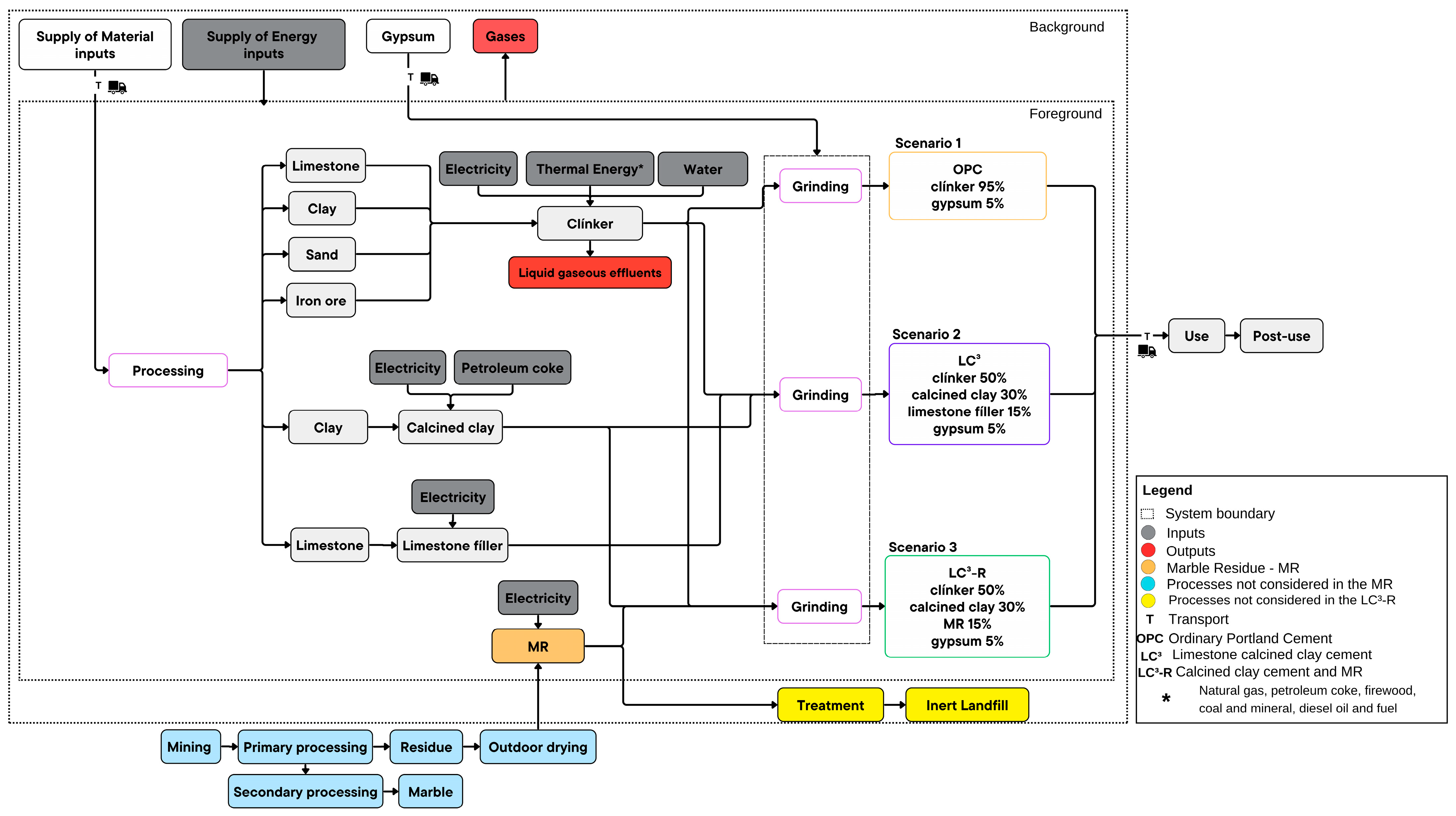
To analyze the different cement compositions, three distinct scenarios are considered, each with variations in formulations and production processes, as illustrated in Figure 1. The manufacturing process of the cements analyzed (Portland and ternary cements) involves input flows of clinker and gypsum, differing mainly in the proportions used depending on the type of cement. In the case of ternary cements, additional flows of calcined clay, limestone filler, and marble residue are included. Thus, the three scenarios of this study with their mass-based proportions are:
  • ▪ OPC: composed of 95% clinker and 5% gypsum;
  • ▪ LC3: composed of 50% clinker, 30% calcined clay, 15% limestone filler, and 5% gypsum;
  • ▪ LC3-R: has the same composition as LC3, but with the limestone filler replaced by marble residue.
Regarding the boundaries established for the comparative product systems, the system boundary is defined as cradle-to-gate, covering raw material extraction to the production of one ton of cement (Figure 1). The cradle-to-gate approach was adopted in this study because it is widely employed in Life Cycle Assessments of cementitious materials, as the cement production phase accounts for the majority of environmental impacts, particularly in terms of CO2 emissions and energy consumption. Furthermore, the objective of this work is to compare different cement formulations incorporating marble waste, for which differences in environmental performance are predominantly manifested during the production stage.
The use, end-of-life, and recycling phases were not included within the system boundaries, as they fall outside the defined scope and generally show lower sensitivity to variations in cement composition when compared to the production stage. However, it is acknowledged that these phases may influence the overall environmental performance of the system, and their inclusion is recommended in future studies adopting a cradle-to-grave approach.
For the purposes of this study, the transportation of raw materials was considered using the market-based provider selection approach from the Ecoinvent database, which includes transportation estimates for inputs within the relevant geographical area. In the inventory definition, material and energy flows associated with the construction, maintenance services, and decommissioning of the cement plant were disregarded. Moreover, the MR waste management with landfill disposal was not taken into account for LC3-R due to the use of MR.
The term “impact” used in this study refers to the degradation of environmental quality and resources, even when expressed as positive values. In LCA, it is standard practice to quantify environmental burdens (i.e., negative impacts on the environment) as positive values, while environmental benefits or credits are represented by negative values. This convention is adopted throughout the present study to ensure consistency with the LCA literature.

2.2. Inventory Analysis

The inventory was based on data collected from Brazilian average cement production statistics and national regulations [31,32], the Ecoinvent database, Mello [33] and Vieira et al. [34]. Table S1 (see in Supplementary Material) presents the detailed inventory of the cements analyzed, including information on their raw materials, the electrical and thermal energy required for production, as well as the gaseous and liquid effluents generated.
To define the cement compositions, materials described in the literature were used. The OPC was specified according to Technical Standard NBR 5732 [35]. Subsequently, the LC3 composition was defined based on the study by Scrivener et al. [10]. To assess the data quality of each process flow in the inventory, the Ecoinvent pedigree matrix [36] was used to estimate the reliability level of the data, as shown in Tables S2 and S3 (see the Supplementary Materials). In a Monte Carlo simulation with a lognormal distribution, the 5th and 95th percentiles define the interval in which 90% of the simulated values are concentrated, disregarding the extremes of the evaluated categories. In this study, 501 and 1001 iterations were considered in the OpenLCA® software, as described in Table S4 (see the Supplementary Materials).

2.2.1. Cements (OPC, LC3, and LC3-R)

The cements evaluated share clinker and gypsum as the main input materials, differing only in the quantities used between OPC and the LC3 variants. Differences are also observed in the ternary cements (LC3 and LC3-R) due to the proportions of limestone filler and MR. These proportions vary according to the scenarios defined for this study. The component percentages were obtained from Technical Standard NBR 5732 [35] for conventional cement and from Scrivener et al. [10] for the ternary cements.
Regarding energy consumption, the cement industry is widely known for its high demand for both electrical and thermal energy [37]. According to the Brazilian National Union of the Cement Industry [31], electricity consumption in Brazil is approximately 113 kWh/t-cement. In this study, electrical and thermal energy were analyzed in relation to both cement and clinker production processes. For cement production, the stages include grinding (43%) and bagging and loading (3%). Thus, the electrical energy allocated to these processes is approximately 48.6 kWh/t-cement and 3.4 kWh/t-cement, respectively, totaling 53.09 kWh/t-cement.
In comparison, the study by Zulcão et al. [38] considered an electricity consumption of 55.5 kWh/t-cement for the Brazilian scenario, dividing consumption equally between cement and clinker production processes, based on a total consumption of 111 kWh/t-cement for the year of study. According to the cement inventory developed by the Environmental Performance Information System for Construction—SIDAC [39], electricity consumption during cement manufacturing is 51 kWh/t-cement, which is similar to the consumption adopted in this study (53.09 kWh/t-cement).
On the other hand, in the study by Thwe, Khatiwada and Gasparatos [26], electricity consumption in the Myanmar scenario was 47.75 kWh/t-cement. In China, according to Wolde et al. [5], this consumption reaches 50.9 kWh/t-cement, varying according to the type of electricity used in each country. Given these differences, it is necessary to consider country-specific data for a more accurate analysis in the national context. For particulate emissions, the study by Mello [33] was considered. Table 1 presents a summary of the cement inventory analyzed in this study. The full inventory is presented in detail in Table S1 (see the Supplementary Materials).

2.2.2. Portland Clinker

The main component of cement is clinker. The amount of raw materials required to produce 1 ton of clinker was obtained from the Ecoinvent v.3.6 database, specifically from the process “clinker production—clinker—Cutoff, U—BR” [40].
Clinker production requires a high amount of both electrical and thermal energy [41]. According to the Brazilian Energy Research Office [32], the average energy consumption is 3.602 GJ/t-clinker, which was the value adopted in this study.
To quantify the raw materials required for thermal energy generation (Table 2), Equation (1) was used [33], considering the average fuel mix used in the Brazilian scenario. This includes: 67.4% petroleum coke, 2.9% charcoal, 0.3% fuel oil, 1.1% diesel oil, 1.8% firewood, 3.7% hard coal, and 0.1% natural gas on a mass basis [32]. The calorific values of each fuel (petroleum coke: 35 GJ/t; charcoal: 28 GJ/t; hard coal: 30 GJ/t; firewood: 14 GJ/t; fuel oil: 42 GJ/t; natural gas: 32 GJ/m3; diesel oil: 45 GJ/t) were determined based on data provided by EPE [32].
Q c o m b   i = C t e r m i P C i
where
Qcomb: quantity of fuel i (t);
Cterm: thermal consumption of fuel i for clinker production (GJ/t-clinker);
PC: calorific value of fuel i (GJ/t-fuel).
Table 2. Fuel consumption for clinker production.
SourcesEnergy Share (%)GJ/t-ClinkerFuel Quantity (FU-Fuel/t-Clinker)
Petroleum coke67.42.4310.069t
Charcoal 2.90.1030.004t
Mineral coal3.70.1320.0043t
Firewood1.80.0660.005t
Natural gas0.080.00290.00009m3
Diesel oil1.10.0390.00087t
Fuel oil0.30.0110.0003t
Others *22.70.823-t
Total100.03.605-
Note: GJ/t-clinker = gigajoules per metric ton of clinker; FU = functional unit. (*) Residual alternative fuels and biodiesel.
Regarding electricity consumption, as established by SNIC [42], the energy consumption for cement production in Brazil is 113 kWh per ton of cement. This energy is divided into two phases: clinker production (grinding of raw materials and fuel preparation) and cement production (clinker mixing and loading). In the clinker production phase, approximately 54% of the total electricity is consumed, corresponding to 61.02 kWh/t-clinker, while in the cement production phase, consumption represents 46% of the total, 53.09 kWh/t-cement.
As for emissions of air pollutants such as carbon dioxide (CO2), carbon monoxide (CO), nitrogen oxides (NOx), sulfur oxides (SOx), and particulate matter (PM), the data were obtained from the Ecoinvent v.3.6 database [40]. The clinker production inventory is presented in Table 3, with a detailed description provided in Table S1 (see the Supplementary Materials).
Table S5 (see Figure S1 in the Supplementary Materials) presents the environmental impacts of the categories analyzed in this study, considering the clinker flow modified by the amount of fuels used, in comparison with the data from the Ecoinvent database, referred to as “clinker production—clinker—Cutoff, U—BR”, without changes in the quantification of thermal energy.

2.2.3. Gypsum, Calcined Clay, and Limestone Filler

For the gypsum inventory, information was obtained from the Ecoinvent database [43], with the scope “Rest of World” and identified as “market for gypsum, mineral—gypsum, mineral—Cutoff, U—RoW”. Similarly, the inventory for calcined clay was developed based on data from the Ecoinvent v.3.6 database [40], under the identification “market for calcined clay—calcined clay—Cutoff, U—BR”. According to the database, the inventory was modeled based on parameters provided by a cement manufacturer located in Brazil. Regarding the production of limestone filler, data on extraction and crushing were obtained from the Ecoinvent database [44,45]. Since Ecoinvent does not provide a specific flow for limestone filler, data for crushed limestone were used, considering additional energy of 63.34 kWh/t-filler [33] for limestone filler production. The foreground inventory for the production of gypsum, calcined clay, and filler is presented in Table S1 (see the Supplementary Materials).

2.2.4. Marble Residue (MR)

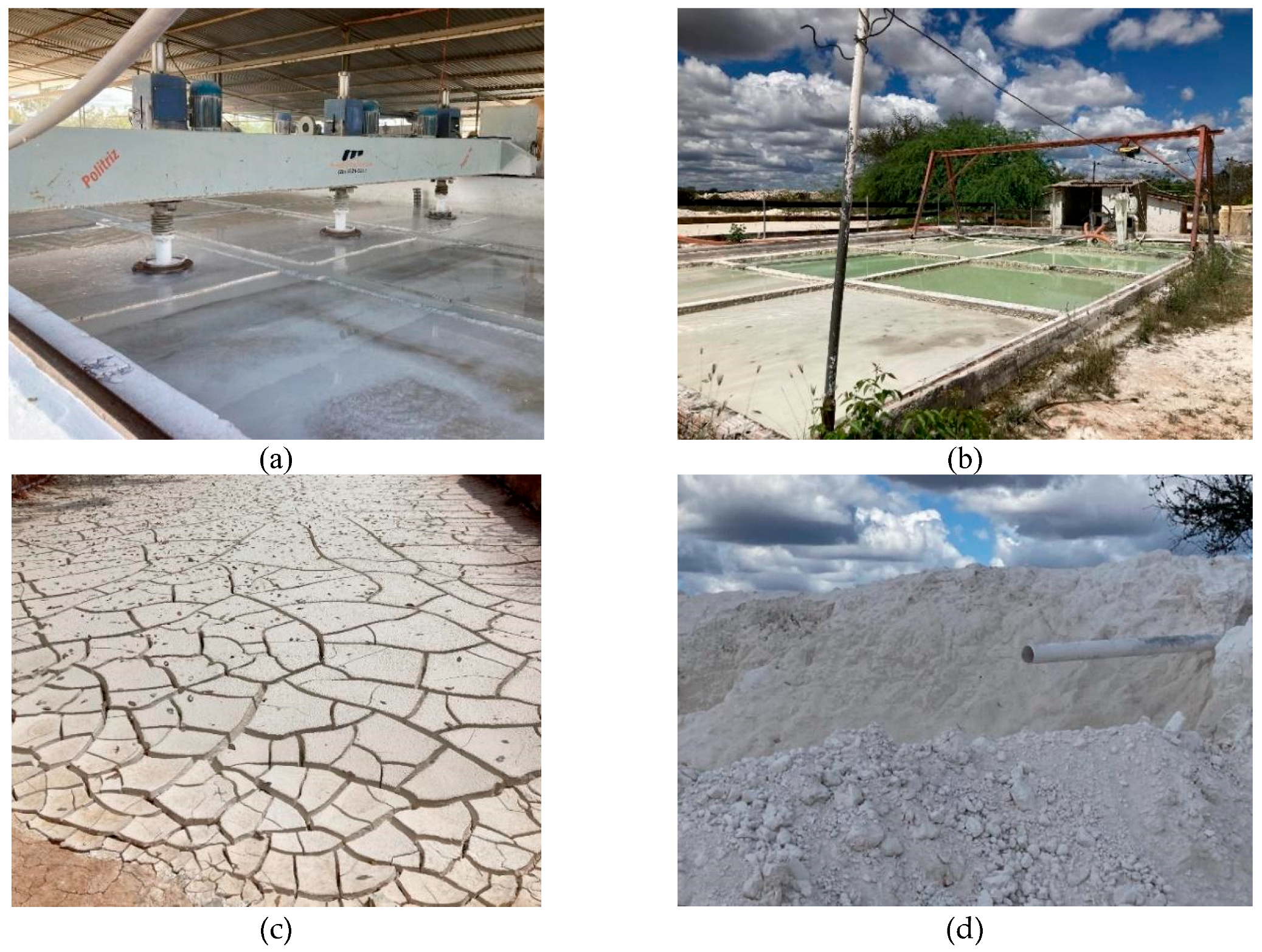
The production cycle of marble is divided into three stages: extraction, primary processing, and secondary processing. In all these stages, marble waste is generated [14]; however, the waste used in this study is produced during the primary processing stage, in which selected blocks are sawed into slabs or strips with near-final dimensions. This industrial process is carried out using specialized machinery, such as gang saws with diamond blades (Figure 2a) [46]. During sawing, friction generates dust, and the block is irrigated with water to cool the blade and transport the waste [14]. The resulting slurry, composed of rock residue, water, and steel fragments, is decanted (Figure 2b,c) [14]. However, the rock residue represents about 40% of the initial block mass, consisting of fine and coarse fragments (Figure 2d) [47].
The MR is already in suitable conditions for use in ternary cement, requiring only grinding (Table 4), which serves to eliminate clumps in the mixture (Figure 2d). It was assumed that the grinding of MR does not generate particulate emissions; therefore, associated mass losses were disregarded.
To calculate the impacts from the use of 0.15 t of MR in LC3-R compared to scenarios without waste utilization (OPC and LC3), transport inventories (50 km) and inert landfill with zero quantification were considered for this multifunctional scenario. The MR inventory is presented in Table 4, with details shown in Table S1 (see the Supplementary Materials).

2.3. Life Cycle Impact Assessment

This study prioritized the use of six environmental impact indicators based on the Centrum voor Milieukunde Leiden (CML) method, version 2016. The selected categories were as follows: abiotic depletion of natural resources (ADP) (kg Sb eq) [48]; abiotic depletion of fossil fuels (ADP-ff) (MJ) [48]; global warming potential (GWP) (kg CO2 eq) [49]; ozone layer depletion (ODP) (kg CFC-11 eq) [50,51]; human toxicity potential (HTP) (kg 1,4-DCB eq) [52]; and acidification potential (AP) (kg SO2 eq) [53]. These impact categories were chosen due to their main associated effects, such as climate change, depletion of material resources, and harm to human health.

2.4. Sensitivity Analysis

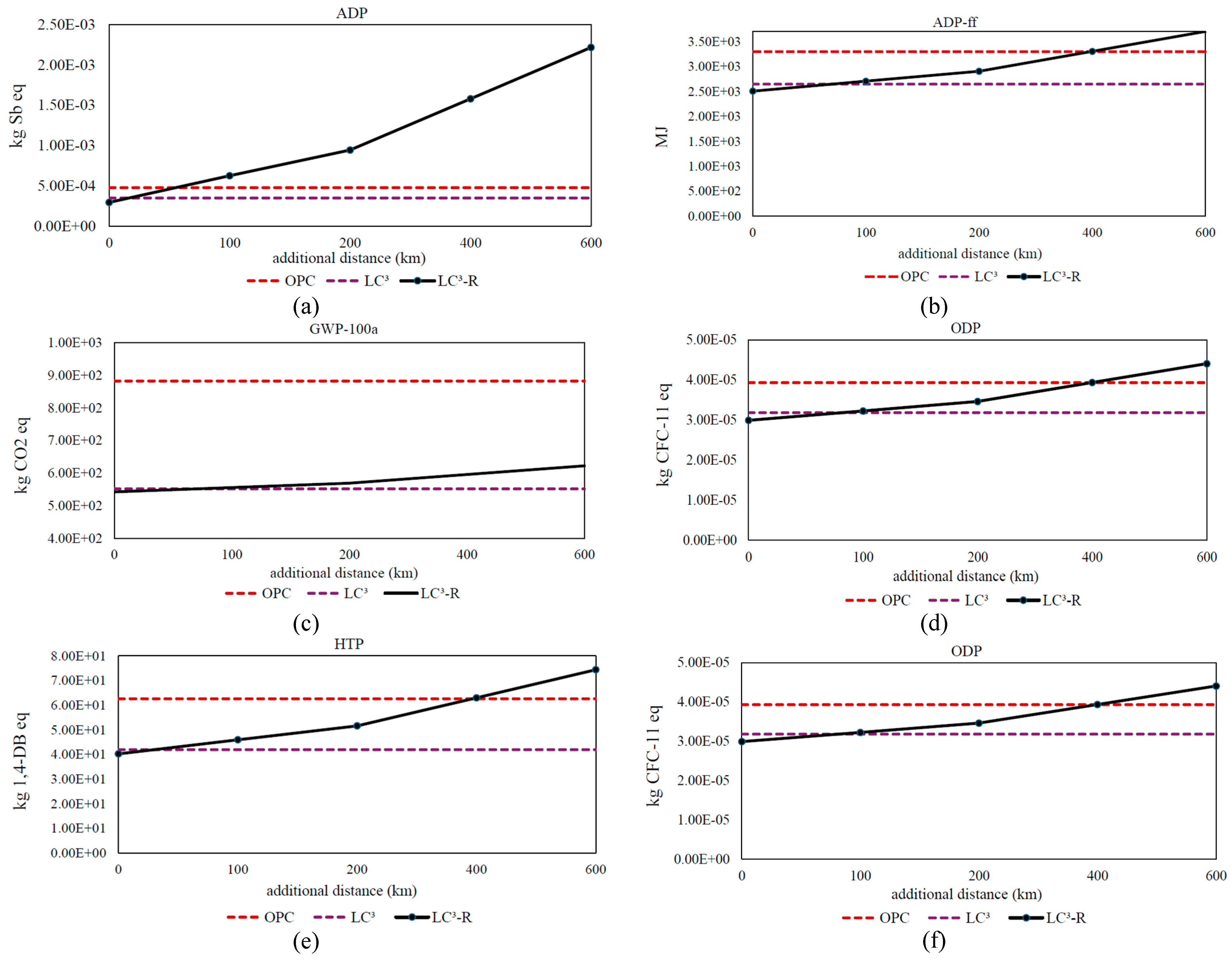
The first sensitivity analysis assessed the transportation scenario, in which the road transport of the residue delivery by truck was analyzed across different distances: 0 km, 100 km, 200 km, 400 km, and 600 km. This approach made it possible to identify the equilibrium point at which the environmental impacts of LC3-R do not exceed those of Ordinary Portland Cement (OPC) and limestone calcined clay cement (LC3). All other parameters were kept constant, with the transportation distance of MR being the only variable
Additionally, a second sensitivity analysis of the economic feasibility of using marble waste as a Supplementary Material in LC3 cement was evaluated based on a simplified cost model, considering raw material cost and transport distance as the main influencing parameters. The total cost associated with the use of MR was defined as a function of the residue cost and transportation cost, which could increase up to the limestone cost, as expressed in Equation (2):
C t o t a l = C r + d     c t ,   b e i n g   C t o t a l     C l i m e s t o n e
where
Ctotal: total cost of the material (BRL/t);
Cr: cost of the marble residue (BRL/t);
d: transport distance (km);
c t : unit transport cost (BRL/t·km);
Climestone: reference price of limestone (BRL/t).
The transport cost was estimated based on three freight rate scenarios reported in Brazil, adopting values of 0.20 BRL/t·km (optimistic scenario), 0.25 BRL/t·km (intermediate scenario), and 0.35 BRL/t·km (pessimistic scenario).
The residue cost (Cr) was treated as a variable parameter in the sensitivity analysis, considering two distinct and non-cumulative scenarios: (i) zero cost, following the cut-off approach commonly adopted in LCA studies; and (ii) negative cost, representing economic credits associated with avoided landfill disposal costs. These scenarios were defined to represent how different waste management strategies influence the overall system performance.
In this study, it was assumed that the processing cost of marble waste is equivalent to that of limestone, since both materials undergo similar comminution and handling processes, such as crushing and grinding. Therefore, processing costs were not explicitly included in the economic comparison, allowing the model to focus on the most relevant differentiating parameters. The reference price of limestone ( C l i m e s t o n e ) was assumed to be 115 BRL/t, based on data reported by the Brazilian Association of Agricultural Limestone Producers [54].
From this condition, the maximum economically viable transport distance (break-even distance) was determined as expressed in Equation (3):
  d m a x = C l i m e s t o n e C r c t

3. Results

3.1. Life Cycle Impact Assessment

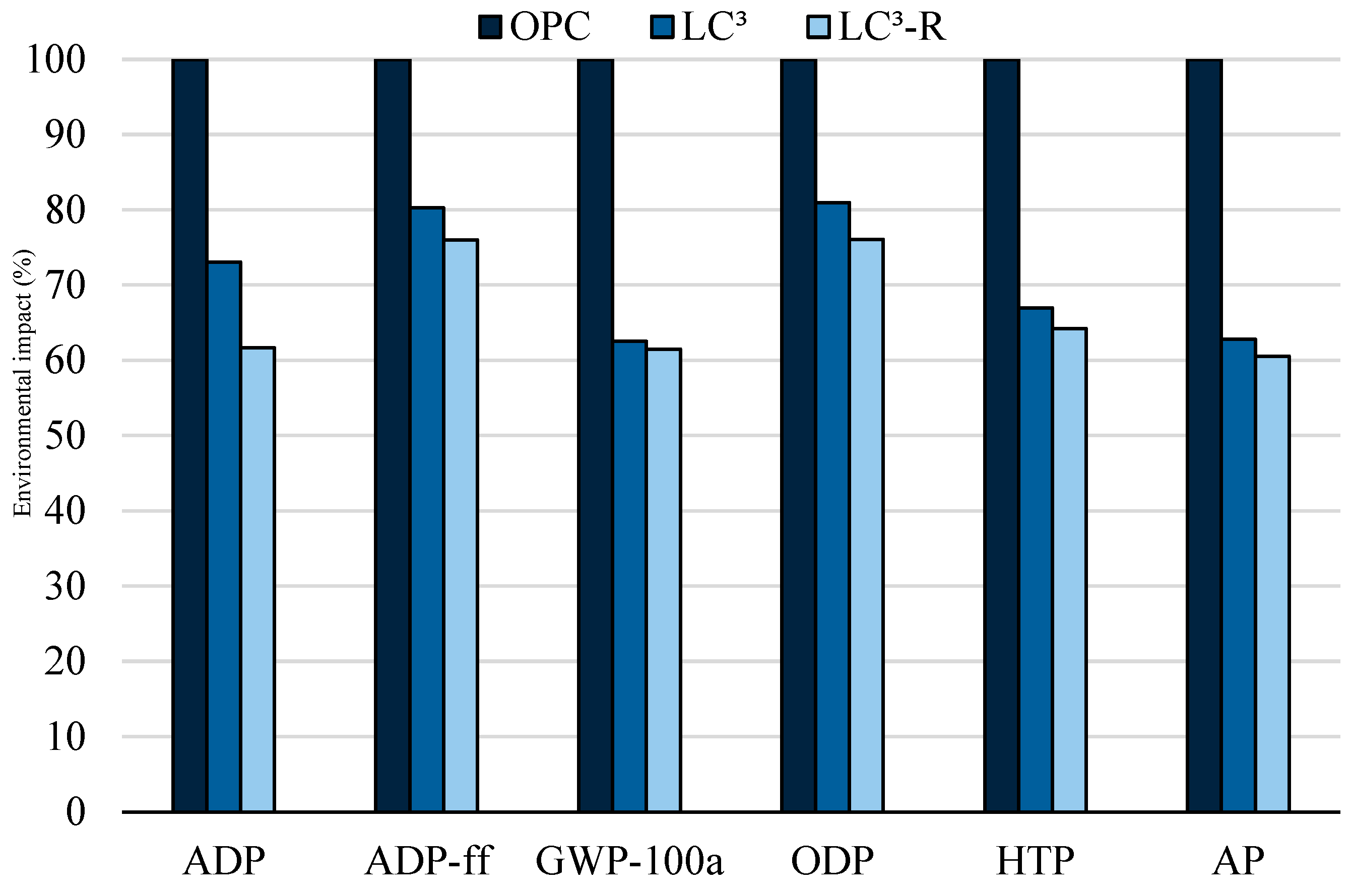
Figure 3 presents the relative results among the cements analyzed in this study, using Ordinary Portland Cement (OPC) as a reference. The cement based on calcined clay and marble residue (LC3-R) showed reductions in environmental impacts across the analyzed categories, with reductions of 38%, 24%, 39%, 24%, 36%, and 39% in the following categories: Abiotic Depletion Potential for mineral resources (ADP), Abiotic Depletion Potential for fossil fuels (ADP-ff), Global Warming Potential (GWP-100a), Ozone Depletion Potential (ODP), Human Toxicity Potential (HTP), and Acidification Potential (AP), respectively. Compared to LC3 cement, the LC3-R showed reduction percentages of 11%, 4%, 1%, 5%, 3%, and 2%, respectively.
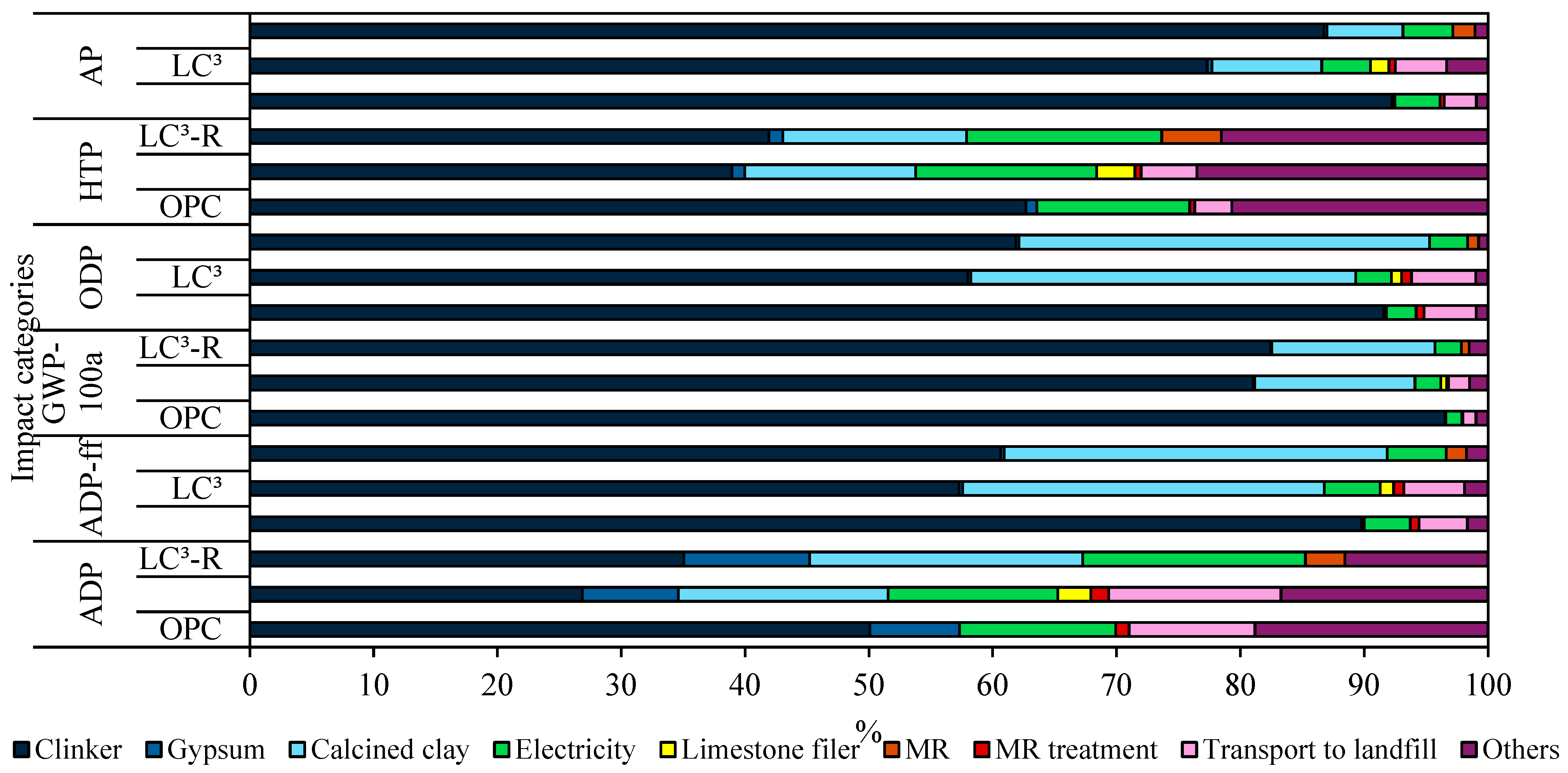
Figure 4 presents a detailed analysis of the percentage contribution of the production flows of the cements analyzed. The clinker flow is identified as the main contributor to the environmental impacts in the assessed categories.
Clinker substitution has played a significant role in reducing mineral resource consumption (ADP). LC3-R, with a lower clinker content compared to OPC and eliminating the need for limestone extraction as in LC3, showed reduced environmental impact, especially due to the use of MR as a limestone substitute. The calcination of clay also emerges as an important source of ADP, contributing around 13% to the total impact of LC3 and LC3-R cements, respectively. This contribution is directly related to the kaolinite content in the clays, as higher kaolinite content results in a more significant mass loss during calcination [29]. As a result, a greater amount of initial raw material is required to obtain the demanded amount of calcined clay, which corresponds to 30% of the total weight of the ternary cement. The MR flow contributed 2% in the ADP category due to the electricity consumption required for grinding the residue.
The consumption of energy from fossil fuels (ADP-ff) is directly related to clinker flow, as evidenced in the studies by Sánchez et al. [55] and Malacarne et al. [29]. These studies indicate that reducing clinker content results in less fuel burning and contributes to lower emissions of oxides into the atmosphere [56]. However, since LC3 and LC3-R have the same proportion of clinker and calcined clay, the difference between them is relatively small. A similar trend is observed in other impact categories, such as ADP, ODP, HTP, and AP, when compared to LC3.
The Global Warming Potential (GWP) category is the most significant, with CO2 emissions being the main contributors to environmental impact. In the case of OPC, clinker is the major contributor due to the limestone calcination (decarbonation) process and fossil fuel combustion, representing 97% of total emissions.
OPC showed the highest greenhouse gas emissions (GHG), around 882.57 kg CO2 eq./t-cement, which represents an increase of approximately 39% compared to LC3 and LC3-R cements, whose emissions were 551.81 kg CO2 eq./t-cement and 542.53 kg CO2 eq./t-cement, respectively. These results are similar to those reported by Malacarne et al. [29] and Arruda Junior, Braga and Barata [57], who observed an average difference of 38% in the environmental impact of OPC compared to LC3 cement. Furthermore, the study by Berriel et al. [58] recorded emissions of 524 kg CO2 eq./t of LC3 cement, a value close to that identified in this study, with a difference of only approximately 3%.
In ternary cements, the replacement of limestone filler with MR resulted in minimal variation, with only a 1% difference between them, showing that the emission reduction was practically negligible. A similar trend was observed in the study by Scrivasta et al. [59], which investigated the replacement of limestone with Green Liquor Dregs (GLD) in Portland clinker production. In this case, the substitution also did not lead to a significant reduction in GWP, as the CO2 present in GLD, which is composed of 85% calcite, maintained an environmental impact equivalent to that of limestone. Similarly, in this study, the replacement of limestone filler with MR did not promote relevant changes in CO2 emissions associated with raw materials due to its composition being similar to that of limestone [17,18].
The production of calcined clay also contributes to CO2 emissions, representing about 13% of the total impact of ternary cements, which is approximately 70.5 kg CO2/t-cement. According to Malacarne et al. [29], these emissions can vary significantly depending on the kaolinite content in the clay composition, with values ranging from 66 to 184 kg CO2 eq./t-cement.
Regarding the ODP impact category, in the study by Akintayo et al. [60], which conducted an LCA on cement production in South Africa using the Recipe 2008 method (different from this study), electricity use was identified as one of the main contributors to the ODP category, due to electricity being generated from fossil fuels, resulting in emissions that deplete the ozone layer. However, since the energy used in this study comes from renewable sources, the contribution of electricity to this impact category was significantly reduced, contributing only about 3% in the analyzed cements.
As for the human toxicity potential (HTP) category, clinker is the main contributor to the release of chemical residues harmful to human health. Lower values were observed in the ternary cements due to the reduction of the clinker flow. Additionally, electricity stands out as one of the flows that contribute the most, ranging from 6% to 22% in the different types of cement analyzed. The calcined clay flow contributes between 6% and 8%. Others also contribute, ranging from 8% to 18%, including flows such as packaging and waste treatment.
Acidification quantifies sulfur oxide (SOx) and nitrogen oxide (NOx) emissions, which occur mainly during the burning of fossil fuels in clinker production [61]. In OPC, the clinker flow is the main source of impact, as illustrated in Figure 4. In the ternary cements LC3 and LC3-R, the clinker flow had a reduction in contribution of approximately 15%, due to the replacement of clinker with calcined clay and limestone filler. As reported by the study by Rhaouti, Taha and Benzaazoua [56], the substitution of clinker with SMC reduces kiln activity and consequently SOx and NOx emissions. The calcined clay flow also contributes to acidification, although at lower levels, with a variation of 9% in both cements. The reduction could be even greater if petroleum-derived fossil fuels are replaced by natural gas [62].

3.2. Sensitive Analysis

Figure 5 presents the results of the sensitivity analysis regarding the transportation distance of MR by truck to the cement plant for the production of LC3-R, keeping all other parameters constant and varying only the transportation distance of MR. This analysis evaluates the behavior of all considered impact categories. For comparison purposes, the impacts of OPC and LC3 production are represented by a dashed line, which reflects the absence of the MR flow, resulting in constant values across the impact categories.
In the ADP category (Figure 5a), it is observed that the environmental impact of LC3-R, with an additional 100 km of transportation, shows an increase compared to OPC and LC3 of approximately 30% and 78%, respectively. That is, according to the ADP category, LC3-R is only viable when produced at the cement plant located in Campo Formoso. In Figure 5b (ADP-ff), LC3-R reaches the same environmental impact as OPC at a transportation distance of 400 km, which is a greater value than that observed in the previous category. When compared to LC3, the distance required to equalize both impacts is 100 km, with only a 2% higher value for LC3-R.
In the GWP 100a category, LC3-R did not surpass OPC at distances of up to 600 km. However, it was observed that emissions increase by an average of 2.5% for every 100 km of MR transportation, requiring 2500 km for LC3-R to reach the impact of OPC. In the study by Malacarne et al. [29], an increase of 3% in emissions was observed for all LC3 cements analyzed compared to OPC, which can be considered negligible when compared to the impacts of OPC production. Regarding LC3, LC3-R matched the impact of LC3 in most cases, with an additional distance of 100 km and only a 2% difference.
In the ODP category, the maximum distance at which LC3-R’s impact equaled that of OPC was 400 km (Figure 5d). When compared to LC3, it remains the same as in the GWP category (100 km). For the HTP category, the maximum allowable distance compared to OPC is 400 km, and in relation to LC3, LC3-R showed a higher impact, with an increase of approximately 10% when considering a distance of 100 km.
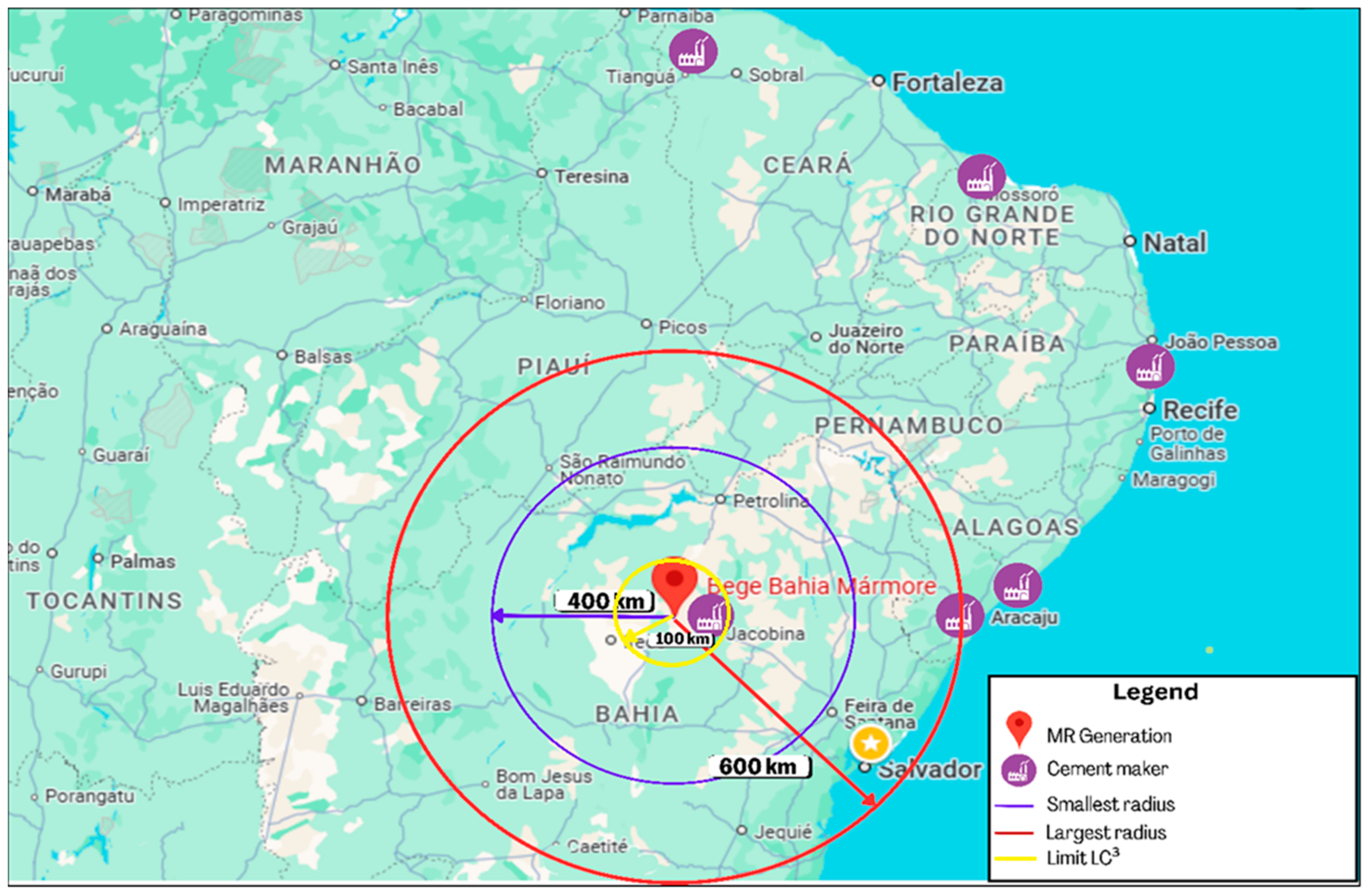
Finally, for the AP category, LC3-R did not surpass OPC at distances of up to 600 km (as also seen in the GWP category), and the average increase for every 100 km traveled was 7%, resulting in a distance of 950 km for the impact to match that of OPC. In comparison to LC3, LC3-R matched the impact with an additional 100 km of transportation distance. To facilitate visualization of this analysis, a map of Ourolândia City, which is the source of MR, is presented, along with the transportation distance radius for delivery to the cement plant, considering three scenarios: smallest radius, largest radius, and LC3 limit (Figure 6).
In the pessimistic scenario for the production of LC3-R considering MR transportation, the considered distance radius represents the upper limit of 600 km (red radius). In this context, the impact categories that exceeded the values for OPC included ADP, with an increase of 365%; ADP-ff, with an increase of 12%; HTP, with an increase of 19%; and ODP, with an increase of 12%. Meanwhile, other categories showed lower results: AP was 24% lower, and GWP 100a was 42% lower. The cement plants analyzed in this scenario are located in the regions of Campo Formoso, in the state of Bahia, and Pacatuba, in the state of Sergipe, approximately 100 km and 600 km from the MR source, respectively.
In the scenario with the smallest radius (400 km) for LC3-R production, considering MR transportation, only one impact category exceeded that of OPC, which was ADP. The cement plant analyzed in this case is located in the Campo Formoso region, Bahia. Due to the number of impact categories with values lower than those of OPC, this was considered the optimistic scenario for LC3-R cement production. Therefore, MR proves to be an excellent alternative for reducing environmental impact within the state of Bahia.
Regarding the comparison radius between the production of LC3-R and LC3, a limit of 100 km was established. It was found that cement production can occur at an additional distance of up to 100 km without exceeding the environmental impacts associated with LC3. In the specific case analyzed, the distance between the waste generation site and the cement plant in Campo Formoso is approximately 130 km. With the inclusion of this distance, an increase in environmental impacts of over 100% was observed in the ADP category, an increase of 10% was observed in the ADP-ff, ODP, and AP categories, an increase of 18% was observed in HTP, and an increase of 3.4% in observed in GWP 100a, according to the impact categories analyzed in this study.
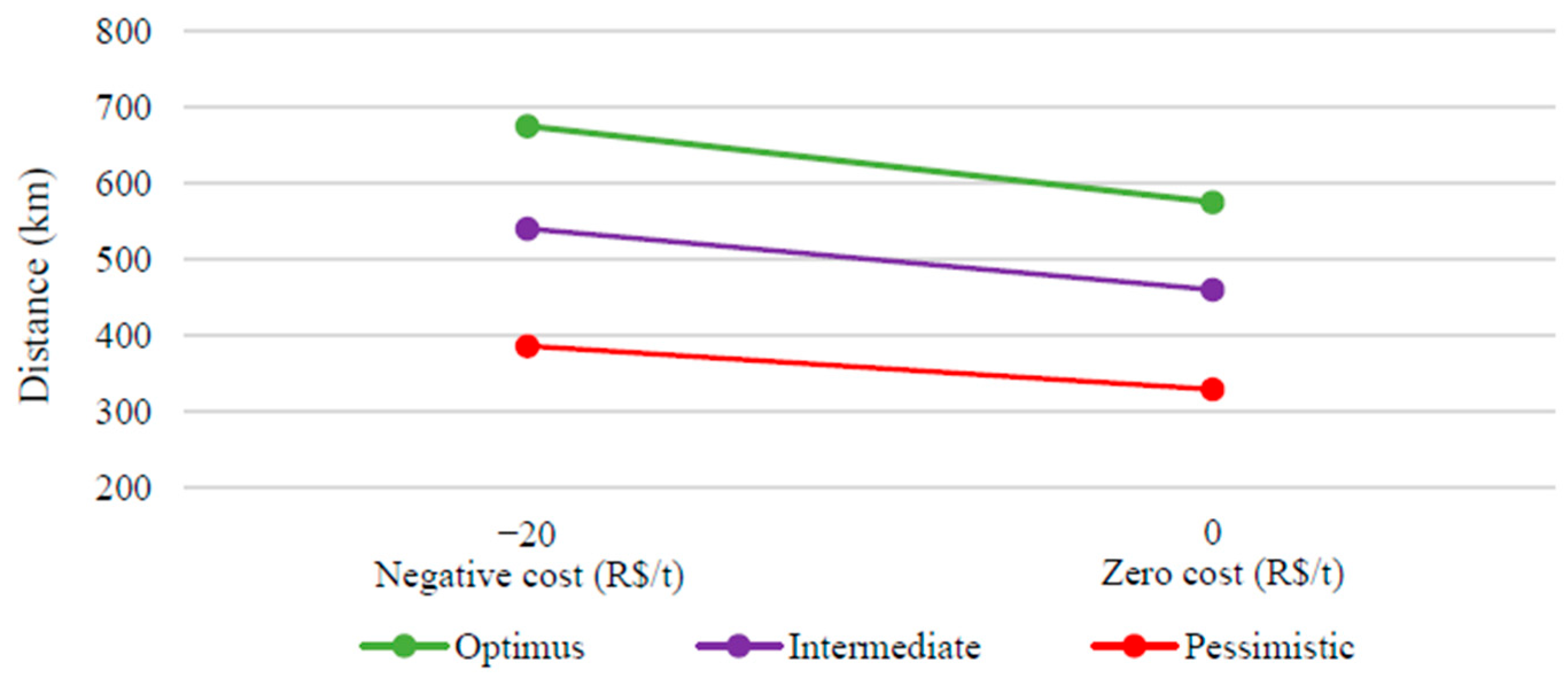
The results of the economic feasibility analysis are presented in Figure 7, for the optimistic scenario (0.20 BRL/t·km), the maximum transport distance reached 575 km in the base case ( C r = 0 ), increasing to 675 km when a negative residue cost was considered ( C r = 20 BRL/t). In the intermediate scenario (0.25 BRL/t·km), the maximum distances were 460 km and 540 km for the base and negative cost scenarios, respectively. For the pessimistic scenario (0.35 BRL/t·km), the feasible transport distances were significantly reduced to approximately 329 km ( C r = 0 ) and 386 km ( C r = 20 BRL/t).
These results demonstrate that transport cost is a critical parameter influencing the economic feasibility of marble waste recovery. The higher freight costs decrease the maximum viable transport distance, limiting the geographic range for economically competitive use of MR.
Overall, the results indicate that the economic feasibility of marble waste in LC3 cement is strongly dependent on logistical conditions and market factors. Even under conservative assumptions, the material remains economically viable within a radius of approximately 329 to 675 km, depending on the transport and residue cost scenarios.

4. Discussion

The analysis of the results enabled the identification of the main hotspots and the dominant factors (drivers) of the system. The clinker production stage was identified as the primary critical point across all evaluated impact categories, mainly due to CO2 emissions associated with limestone decarbonation and the high thermal energy demand required for kiln operation.
Furthermore, the transportation of marble waste emerged as a key driving factor in scenarios involving longer distances, significantly influencing impact categories such as abiotic resource depletion and fossil fuel consumption. The production of calcined clay also contributed substantially to the overall impacts, particularly due to the energy-intensive nature of the calcination process.
These findings indicate that the environmental performance of LC3-R is strongly influenced by the reduction of clinker content and by transportation logistics. This highlights the importance of optimizing these parameters in order to maximize the environmental benefits of the system.

4.1. Comparison with Literature

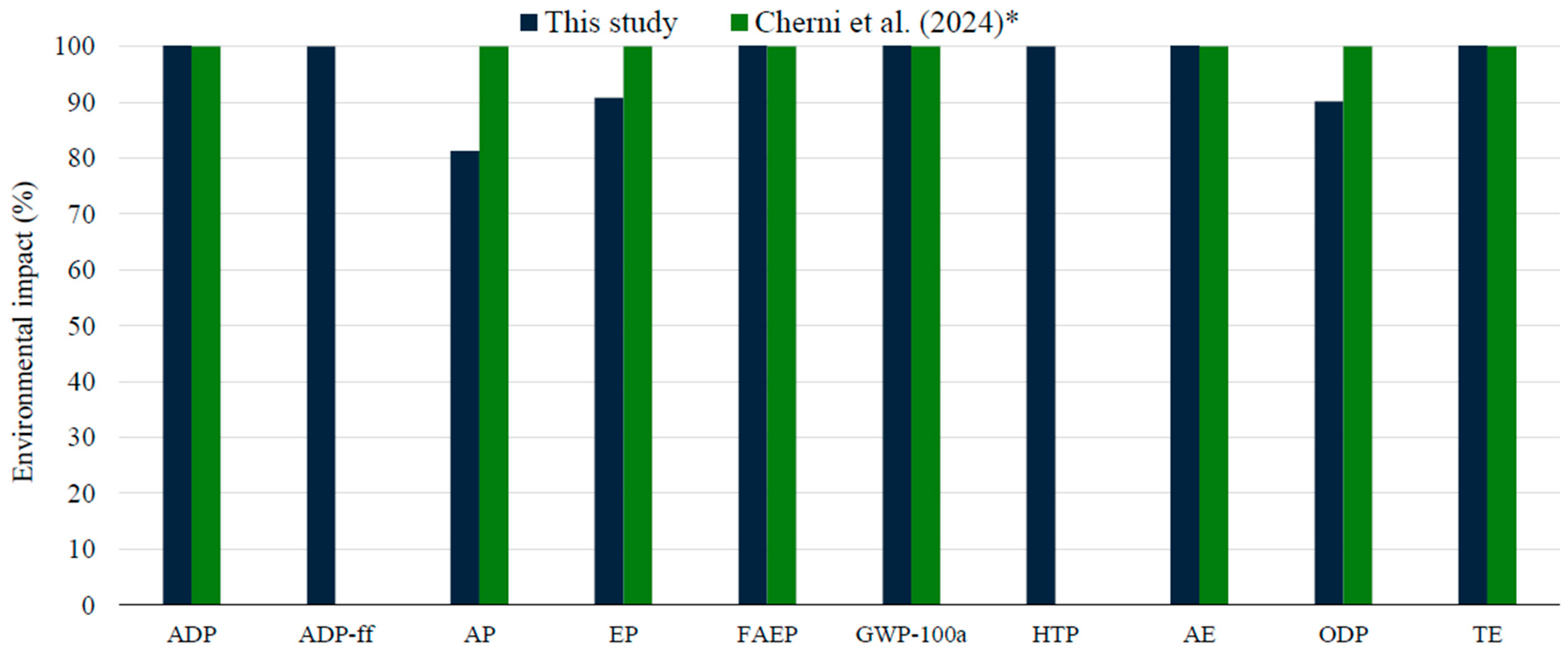
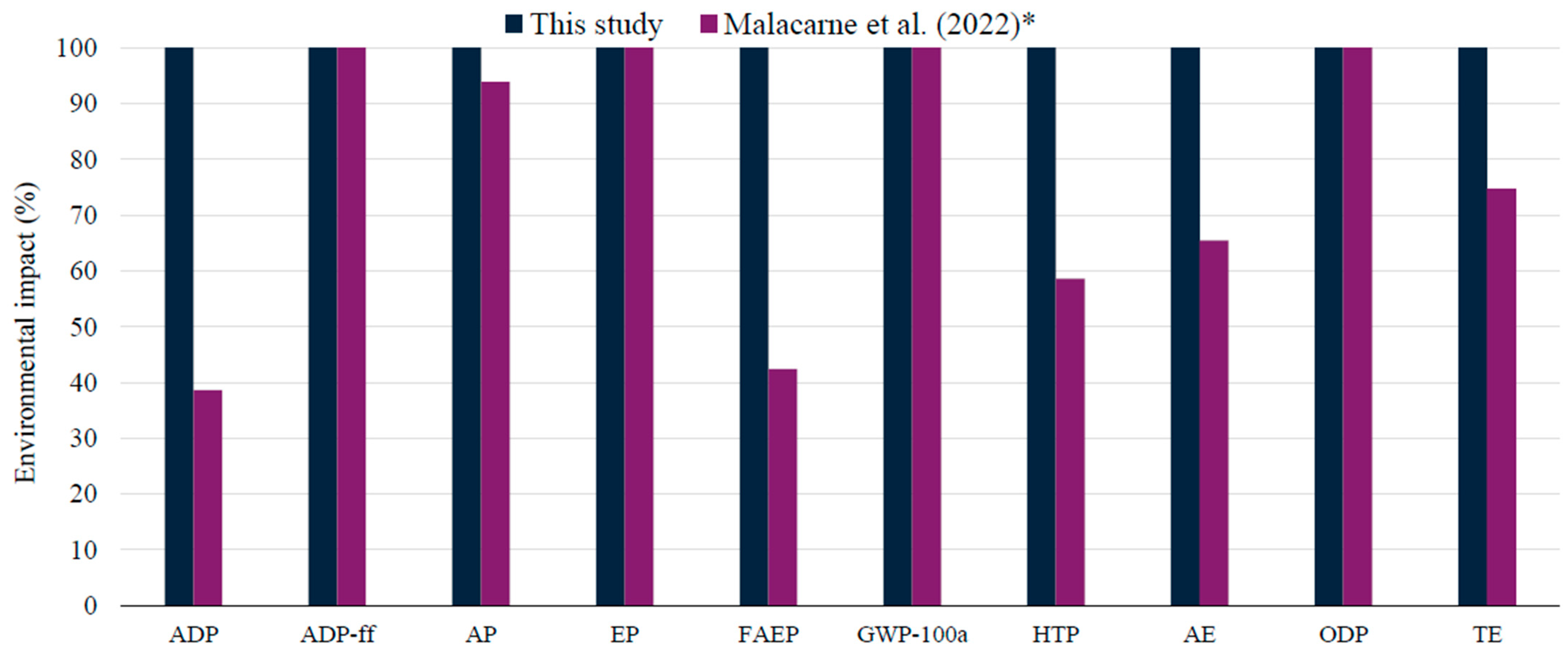
The OPC results analyzed in this study were compared with the data presented by Cherni et al. [63], as illustrated in Figure 8, and with the study by Malacarne et al. [29], as shown in Figure 9.
Regarding the study by Cherni et al. [63], this work presents similarities in the Life Cycle Impact Assessment (LCIA) methodology, such as the use of the CML-baseline impact assessment method, the Ecoinvent v.3.6 database, and the definition of the system boundary (cradle-to-gate). However, it differs in terms of the software used (SimaPro) and the composition of OPC.
As shown in Figure 8, some impact categories exhibited divergences from the literature, which may be attributed to regional differences between the analyzed contexts, since the study by Cherni et al [63]. was conducted in Tunisia.
The comparative analysis between the results of this study and those of Cherni et al. [63], as presented in the graph, reveals differences across several environmental impact categories, despite the application of the same method (CML-2016). The study did not report results for the ADP-ff and HTP categories.
These variations can be explained by regional factors, such as the energy matrix being more renewable in Brazil and more dependent on fossil fuels in Tunisia, which directly influences categories such as ADP-fossil and AP. Differences in HTP and AE reflect the chemical composition of the materials and the ecosystems considered, while variations in EP and ODP may be associated with local emissions and the use of region-specific substances, such as thermal energy sources for clinker production.
The LC3 results analyzed in this study were compared with the data presented by Malacarne et al. [29], developed in the regions of Rio Grande do Sul and Pará, Brazil. This study shows similarities in the LCIA methodology, such as the use of the CML-baseline impact assessment method, the definition of the system boundaries, and the composition of the ternary cement, LC3. However, it differs only in terms of the software used (SimaPro v.9) and the database version (Ecoinvent v.3.7), as shown in Figure 9.
The comparative analysis between the results of this study and those of Malacarne et al. [29], as presented in the graph, reveals similarities across several environmental impact categories, such as ADP-ff, AP, EP, GWP-100a, and ODP, in which the results showed similar percentage values, indicating consistency in the methods and data used in both studies.
However, in the remaining categories, a significant discrepancy was observed, with the values from the present study being considerably higher. This difference is mainly attributed to variations in the material inventories, such as the calcined clay flow, whose estimation in the study [29] was carried out by the authors themselves, as well as differences in the quantification of fuels used in clinker production, which showed divergences compared to the data in this study and to the specific characteristics of the software used for the analysis.
In this context, it is important to highlight that, in ternary cements, the replacement of limestone filler with MR resulted in minimal variation, with only a 1% difference between them, indicating that the reduction in emissions was practically negligible. A similar trend was observed in the study by Scrivasta et al. [59], which investigated the replacement of limestone with Green Liquor Dregs (GLD) in Portland clinker production. In that case, the substitution also did not lead to a significant reduction in GWP, as the CO2 present in GLD, composed of 85% calcite, maintained an environmental impact equivalent to that of limestone.
Similarly, in the present study, the replacement of limestone filler with MR did not promote relevant changes in CO2 emissions associated with raw materials, due to its composition being similar to that of limestone [17,18]. Moreover, the production of calcined clay also contributes to CO2 emissions, representing about 13% of the total impact of ternary cements (approximately 70.5 kg CO2/t-cement). According to Malacarne et al. [29], these emissions can vary significantly depending on the kaolinite content in the clay composition, with values ranging from 66 to 184 kg CO2 eq./t-cement.

4.2. Opportunities and Challenges

The proposal to transform waste into resources presents a sustainable solution by reusing discarded materials and converting them into valuable inputs [64]. This study highlights the potential of managing marble residue (MR) to reduce dependence on non-renewable resources, such as limestone, and to prevent environmental degradation. This approach is applied to the production of cement based on calcined clay and MR (LC3-R) in the Brazilian context, promoting a circular economy model.
It is estimated that, in Brazil, MR amounts to between 690,000 and 920,000 tons per year [18]. Considering that marble residue is extracted exclusively in the region of Ourolândia [65,66], and that cement production in the state of Bahia corresponds to 1.3 million tons per year ([3], if all cement production were destined for LC3-R, approximately 195,000 tons of MR would be required, corresponding to a 15% replacement of limestone filler. This substitution is technically feasible, given that the amount of waste generated in the region exceeds the required demand for LC3-R cement production by more than 300%, allowing for the sustainable utilization of this waste in the state of Bahia.
According to the Bahia State Environmental Department [67], greenhouse gas (GHG) emissions in Bahia reached 85.9 Mt CO2eq in 2020, increasing to 90.7 Mt CO2eq in 2021 and 91.4 Mt CO2eq in 2022. As a result, Bahia ranks ninth among Brazilian states in terms of gross GHG emissions. The industrial sector accounts for the fifth largest share of emissions in the state, totaling 1.45 Mt CO2eq in 2022. Within this sector, cement production accounts for 0.47 Mt CO2eq. As discussed earlier, the production of LC3-R cement in Bahia could result in reductions of approximately 40% in CO2 emissions (including transportation) compared to OPC, enabling an estimated reduction of 283 kg CO2 eq/t. This scenario reinforces the strategic role of LC3-R as a sustainable alternative aligned with emission reduction targets for the cement industry. However, the production of LC3-R may require the implementation of new infrastructure [68,69,70,71], which could result in higher initial implementation costs compared to OPC production.

5. Final Considerations

5.1. Conclusions

The use of marble residue (MR) in the Brazilian context led to reductions in all evaluated categories, covering abiotic depletion (ADP), abiotic depletion of fossil fuels (ADP-ff), global warming potential (GWP 100a), ozone layer depletion (ODP), human toxicity potential (HTP), and acidification potential (AP), with impacts reduced by up to 39% compared to ordinary Portland cement (OPC) and up to 11% compared to limestone calcined clay cement (LC3).
LC3-R proved to be a viable alternative, demonstrating environmental sustainability in the state of Bahia, Brazil. The volume of waste generated in the region not only exceeds the amount required to replace the limestone filler in LC3 production but also promotes a circular economy by reusing materials that would otherwise be discarded. This raw material substitution is economically competitive and eliminates the need for limestone extraction, which is an activity that causes significant environmental impacts, primarily due to the use of explosives and transport.
Specific conclusions regarding the environmental contributions associated with the production of OPC, LC3, and the calcined clay and marble residue cement (LC3-R) include:
  • Compared to OPC, LC3-R proved viable in all impact categories, with reductions of up to 38% in resource depletion categories (ADP; ADP-ff), 36% in human toxicity (HTP), and up to 39% in the remaining categories (GWP 100a; ODP; AP).
  • Compared to LC3, LC3-R also showed viability across all impact categories, with reductions of up to 11% in resource depletion (ADP; ADP-ff), 3% in human toxicity (HTP), and up to 5% in general environmental impact categories (GWP 100a; ODP; AP).
Regarding the sensitivity analyses, the following conclusions can be drawn:
  • MR is a viable alternative for reducing environmental impacts in the state of Bahia, for transport distances up to 400 km. Impacts remain lower than OPC in several categories, except ADP, making its use suitable for cement plants located within 400 km of the waste generation site.
  • For distances greater than 600 km, the environmental impact associated with MR transport becomes significant. Although some categories still show improvements over OPC, the overall use becomes unfeasible due to additional transport-related impacts.
  • Compared to LC3, LC3-R shows a lower transport threshold, being viable for distances up to 100 km in the analyzed categories. Increases of up to 2% were observed in GWP 100a, ODP, and AP; up to 10% in HTP; and up to 78% in the resource depletion group (ADP: 78% and ADP-ff: 2%).
  • Regarding energy matrix composition, the use of 100% petroleum coke resulted in increases of 0.6% and 2% in ADP-ff and ODP, respectively, compared to LC3.
  • MR supply was economically competitive compared with limestone, ranging from 329 to 675 km maximum MR transport distance among the transport and residue cost scenarios.

5.2. Limitations and Assumptions

The objective and scope of this study involved certain limitations and assumptions:
  • The use and end-of-life phases were not included in the study, assuming that all analyzed cements will have similar use and end-of-life considerations.
  • It was considered that the generation of marble residue (MR) occurs exclusively in the region of Ourolândia, state of Bahia, and that its supply is restricted to this location.
  • This study is characterized by regional specificity and reliance on secondary literature data.
  • It was assumed that the transformation of MR into carbonate filler takes place at the same site where the residue is generated, eliminating the need for additional transport for this stage.
  • The distance (50 km), treatment, and disposal of MR in inert landfill were incorporated into the OPC and LC3 scenarios, assuming that the residues are sent to these destinations when not reused in production.
  • Sensitivities related to clinker factors and energy sources (e.g., tornado diagrams) were not conducted in this study.

5.3. Recommendations

Recommendations for future research associated with the production of OPC, LC3, and LC3-R include:
  • Applying LCA methodology to assess the incorporation of industrial residues and by-products not yet analyzed.
  • Guiding future research to identify the most effective mitigation strategies suggested by this research, such as reducing abiotic depletion impacts.
  • Conducting broader economic assessments of LC3-R production at an industrial scale.
  • Encouraging the use of cleaner energy sources in the production of LC3-R, such as renewable electricity or alternative low-carbon thermal energy.
  • Assessment of environmental impacts in different regions of Brazil, taking into account transportation logistics and the availability of marble waste.
  • Further sensitivity and uncertainty analysis of the evaluated scenarios to cover the influence of more parameters and application contexts on the obtained results.
The practical recommendations for key stakeholders associated with the production of OPC, LC3, and LC3-R include:
  • Promotion of regulatory frameworks and financial incentives by government authorities to encourage the use of industrial residues, such as marble waste, in cement production.
  • Development and updating of technical standards to support the incorporation of alternative materials in cementitious matrices.
  • Implementation of waste management policies focused on the valorization and reuse of residues from the ornamental stone industry.
  • Adoption of LCA as a decision-making tool by cement companies to reduce environmental impacts.

Supplementary Materials

The following supporting information can be downloaded at https://www.mdpi.com/article/10.3390/buildings16091848/s1: Table S1: Inventory of the processes used in the evaluated scenarios and additional information; Table S2: Representativeness of foreground inventory data in this study; Equation (S1): Calculation of the combined uncertainty of the data; Equation (S2): Adjustments to confidence levels; Table S3 Basic and pedigree uncertainty of inventory flows for the proposed scenario; Table S4 Results of Monte Carlo simulation interactions for the scenarios under study in the evaluated categories; Table S5: Comparison of the environmental impacts of the analyzed cements using clinker from the database (Ecoinvent v.2.3) and clinker adapted for this study; Figure S1: Graphical representation of Table S1. OPC-BD: ordinary Portland cement (database); OPC: ordinary Portland cement; LC3-BD: limestone calcined clay cement (database); LC3: limestone calcined clay cement; LC3-R-BD: calcined clay and Beige Bahia marble waste cement (database); LC3-R: calcined clay and marble residue cement.

Author Contributions

S.M.C.S.: conceptualization, formal analysis, methodology, visualization, and writing—original draft. L.D.M. conceptualization, formal analysis, and methodology. D.L.M.: conceptualization, supervision, and writing—review and editing. T.A.S.: conceptualization, supervision, and writing—review and editing. I.d.M.C.: conceptualization, writing—review and editing, submission to the journal, and corresponding author. All authors have read and agreed to the published version of the manuscript.

Funding

This research was financed in part by the Coordenação de Aperfeiçoamento de Pessoal de Nível Superior—Brasil (CAPES)—Process 88887.017544/2024-00, the Fundação de Amparo à Pesquisa e ao Desenvolvimento Científico e Tecnológico do Maranhão (FAPEMA) (Process APP-02399/25) and the Unidade de Investigação em Governação, Competitividade e Políticas Públicas—(UID/04058) supported by national funds through the FCT—Fundação para a Ciência e a Tecnologia.

Data Availability Statement

The data produced and/or used to support this research may be requested directly from the corresponding author.

Acknowledgments

The authors express their gratitude to the Coordenação de Aperfeiçoamento de Pessoal de Nível Superior—Brasil (CAPES) for providing financial support for this research, as well as to the Programa de Pós Graduação em Engenharia Civil e Ambiental of the Universidade Estadual de Feira de Santana (UEFS). The authors have reviewed and edited the output and take full responsibility for the content of this publication.

Conflicts of Interest

The authors declare no conflicts of interest. The funders had no role in the design of the study; the collection, analysis, or interpretation of data; the writing of the manuscript; or the decision to publish the results.

Abbreviations

The following abbreviations are used in this manuscript:
MRMarble Residue
OPCOrdinary Portland Cement
LC3Limestone Calcined Clay Cement
LC3-RCalcined Clay and Marble Residue Cement
LCALife Cycle Assessment
ADPAbiotic Depletion
ADP-ffAbiotic Depletion of Fossil Fuels
GWPGlobal Warming Potential
ODPOzone Layer Depletion
HTPHuman Toxicity Potential
APAcidification Potential
CO2Carbon Dioxide
CaOCalcium Oxide
CaCO3Calcium Carbonate
SMCSupplementary Cementitious Material
COCarbon Monoxide
NOxNitrogen Oxides
SOxSulfur Oxides
PMParticulate Matter

References

  1. Scrivener, K.L.; John, V.M.; Gartner, E.M. Eco-efficient cements: Potential economically viable solutions for a low-CO2 cement-based materials industry. Cem. Concr. Res. 2018, 114, 2–26. [Google Scholar] [CrossRef]
  2. U.S. Geological Survey. Mineral Commodity Summaries. United States, 2024. Available online: https://pubs.usgs.gov/periodicals/mcs2023/mcs2023-cement.pdf (accessed on 15 January 2025).
  3. SNIC. Produção Nacional de Cimento por Regiões e Estados 2023. 2024. Available online: http://snic.org.br/assets/pdf/numeros/1720464031.pdf (accessed on 15 January 2025).
  4. Jyosyula, S.K.R.; Surana, S.; Raju, S. Role of Lightweight Materials of Construction on Carbon Dioxide Emission of a Reinforced Concrete Building. Mater. Today Proc. 2020, 27, 984–990. [Google Scholar] [CrossRef]
  5. Wolde, M.G.; Khatiwada, D.; Bekele, G.; Palm, B. A life cycle assessment of clinker and cement production in Ethiopia. Clean. Environ. Syst. 2024, 13, 100180. [Google Scholar] [CrossRef]
  6. EPE—Empresa de Pesquisa Energética. Atlas da Eficiência Energética; Relatório de Indicadores, Brasil; Empresa de Pesquisa Energética: Rio de Janeiro, Brazil, 2020. [Google Scholar]
  7. IEA. Global Thermal Energy Intensity of Clinker Production by Fuel in the Net Zero Scenario, 2010–2030; International Energy Agency (IEA): Paris, France, 2023; Available online: https://www.iea.org/data-and-statistics/charts/global-thermal-energy-intensity-of-clinker-production-by-fuel-in-the-net-zero-scenario-2010-2030 (accessed on 15 April 2025).
  8. Li, Y.; Liu, Y.; Gong, X.; Nie, Z.; Cui, S.; Wang, Z.; Chein, W. Environmental impact analysis of blast furnace slag applied to ordinary Portland cement production. J. Clean. Prod. 2020, 120, 221–230. [Google Scholar] [CrossRef]
  9. Arruda Junior, E.S. Cimentos de Baixo Impacto Ambiental (LC3) a Partir de Resíduos Cauliníticos da Amazônia. Master’s Thesis, Universidade Federal do Pará, Belém, Brazil, 2020. Available online: https://repositorio.ufpa.br/handle/2011/13815 (accessed on 28 June 2024).
  10. Scrivener, K.; Martirena, F.; Bishnoi, S.; Maity, S. Calcined clay limestone cements (LC3). Cem. Concr. Res. 2018, 114, 49–56. [Google Scholar] [CrossRef]
  11. Malacarne, C.S. Desenvolvimento e Caracterização de Cimentos LC3—Cimentos Ternários a Base de Argila Calcinada e Calcário—A Partir de Matérias Primas do Rio Grande do Sul -. Master’s Thesis, Pós-Graduação-Universidade Federal do Rio Grande do Sul, Porto Alegre, Brazil, 2020. Available online: https://www.scribd.com/document/724362940/Desenvolvimento-e-caracterizacao-de-cimento-LC3-Camila-S-Malacarne (accessed on 27 April 2026).
  12. Montani, C. XXXI Rapporto Marmo e Pietre Nel Mondo 2020; Aldus: Carrara, Italy, 2020; p. 151p. Available online: https://abirochas.com.br/biblioteca/relatorio-mundial/ (accessed on 4 February 2025).
  13. ABIRROCHAS—Associação Brasileira da Indústria de Rochas Ornamentais. O Desempenho Brasileiro no Setor de Rochas Ornamentais; ABIRROCHAS: Brasília, Brazil, 2021; Available online: https://abirochas.com.br/wp-content/uploads/2022/01/Informe-02_2021-Desempenho-do-Setor-v3-1.pdf (accessed on 12 May 2025).
  14. Vidal, F.W.H.; Azevedo, H.C.A.; Castro, N.F. (Eds.) Tecnologia de Rochas Ornamentais: Pesquisa, Lavra e Beneficiamento; CETEM/MCTI: Rio de Janeiro, Brazil, 2013; 700p. Available online: http://mineralis.cetem.gov.br/handle/cetem/1960 (accessed on 30 April 2025).
  15. Vidal, F.W.H. Rochas Ornamentais do Nordeste—Brasil. In Simpósio de Rochas Ornamentais do Nordeste; 3, 26 to 20 November 2002, Recife; CETEM/MCT: Rio de Janeiro, Brazil, 2002; pp. 146–153. Available online: http://mineralis.cetem.gov.br/handle/cetem/1447 (accessed on 14 July 2025).
  16. Ferreira, G.E.; Vidal, F.W.H.; Ribeiro, R.C.C. Viabilidade técnica-econômica do aproveitamento do resíduo do mármore bege bahia no setor polimérico. In Congresso Brasileiro de Rochas Ornamentais and Simpósio de Rochas Ornamentais do Nordeste; CETEM: Campina Grande, Brazil, 2012. Available online: http://master.cetem.gov.br/handle/cetem/3241 (accessed on 27 April 2026).
  17. Vieira, L.B. Avaliação do Uso de Resíduo de Mármore Bege Bahia Como Substituto do Calcário na Produção de Clínquer e como Material Carbonático para Cimento Portland. Ph.D. Thesis, Programa de Pós-Graduação, Centro Universitário SENAI CIMATEC, Salvador, Brazil, 2022; 123p. [Google Scholar]
  18. Ramos, J.C.R.; Passalini, P.G.S.; Holanda, J.N.F. Utilization of marble waste as a sustainable replacement for calcareous in the manufacture of red-firing wall tiles. Constr. Build. Mater. 2023, 377, 131115. [Google Scholar] [CrossRef]
  19. Sánchez, R.; Polo, M.S.; Rozalen, M. Waste marble dust: An interesting residue to produce cement. Constr. Build. Mater. 2019, 224, 99–108. [Google Scholar] [CrossRef]
  20. Singh, M.; Srivastava, A.; Bhunia, D. Long term strength and durability parameters of hardened concrete on partially replacing cement by dried waste marble powder slurry. Constr. Build. Mater. 2019, 198, 553–569. [Google Scholar] [CrossRef]
  21. Seghir, N.T.; Mellas, M.; Sadowski, L.; Żak, A. Effects of marble powder on the properties of the air-cured blended cement paste. J. Clean. Prod. 2018, 183, 858–868. [Google Scholar] [CrossRef]
  22. Essam, A.; Mostafa, S.A.; Khan, M.; Tahwia, A.M. Modified particle packing approach for optimizing waste marble powder as a cement substitute in high-performance concrete. Constr. Build. Mater. 2023, 409, 133845. [Google Scholar] [CrossRef]
  23. Macedo, D.B.G. Metodologia de Avaliação do Ciclo de Vida de Sistemas Construtivos: Aplicação em um Sistema Estruturado em Aço. Ph.D. Thesis, Universidade Federal de Minas Gerais, Belo Horizonte, Brazil, 2011. Available online: https://repositorio.ufmg.br/handle/1843/BUOS-9ACGQD (accessed on 30 April 2025).
  24. ABNT NBR ISO 14040; Gestão Ambiental—Avaliação do Ciclo de Vida—Princípios e Estrutura. ABNT—Associação Brasileira de Normas Técnicas: Rio de Janeiro, Brazil, 2009; Corrected Version: 2014a. Available online: https://www.scribd.com/document/830503627/ABNT-NBR-ISO-14040-2009-Versao-Corrigida-2014-ACVida (accessed on 20 March 2025).
  25. ABNT NBR ISO NBR 14044; Gestão Ambiental—Avaliação do Ciclo de Vida—Requisitos e. ABNT—Associação Brasileira de Normas Técnicas: Rio de Janeiro, Brazil, 2009.
  26. Thwe, E.; Khatiwada, D.; Gasparatos, A. Life cycle assessment of a cement plant in Naypyitaw, Myanmar. Clean. Environ. Syst. 2021, 2, 100007. [Google Scholar] [CrossRef]
  27. Guo, X.; Li, Y.; Shi, H.; She, A.; Guo, Y.; Su, Q.; Ren, B.; Liu, Z.; Tao, C. Carbon reduction in cement industry—An indigenized questionnaire on environmental impacts and key parameters of life cycle assessment (LCA) in China. J. Clean. Prod. 2023, 426, 139022. [Google Scholar] [CrossRef]
  28. Georgiades, M.; Shan, I.H.; Steubing, B.; Cheeseman, C.; Myers, R.J. Prospective life cycle assessment of European cement production. Resour. Conserv. Recycl. 2023, 194, 106998. [Google Scholar] [CrossRef]
  29. Malacarne, C.S.; Silva, M.R.C.; Danieli, S.; Maciel, V.G.; Kirchheim, A.P. Environmental and technical assessment to support sustainable strategies for limestone calcined clay cement production in Brazil. Constr. Build. Mater. 2021, 310, 125–261. [Google Scholar] [CrossRef]
  30. Ruviaro, A.S.; Silvestro, L.; Andrade Neto, J.S.; Gleize, P.J.P.; Pelisser, F. Eco-efficient cement production: Investigating water treatment plant sludge and eggshell filler use in LC3 systems. Constr. Build. Mater. 2023, 394, 132300. [Google Scholar] [CrossRef]
  31. SNIC—Sindicato Nacional das Indústrias de Cimento. Roteiro Tecnológico do Cimento para o Brasil—2019. Rio de Janeiro, Brazil. 2019. Available online: https://coprocessamento.org.br/wp-content/uploads/2019/11/Roadmap_Tecnologico_Cimento_Brasil_Book-1.pdf (accessed on 26 September 2023).
  32. EPE—Empresa de Pesquisa Energética. Balanço Energético Nacional 2023: Ano Base 2022. Rio de Janeiro, Brazil, 2023; 274p. Available online: https://www.epe.gov.br/sites-pt/publicacoes-dados-abertos/publicacoes/PublicacoesArquivos/publicacao-748/topico-687/BEN2023.pdf (accessed on 27 April 2026).
  33. Melllo, R.Z. Avaliação do Ciclo de Vida da Utilização do Resíduo do Beneficiamento de Rochas Ornamentais em Materiais de Construção Civil à Base de Cimento. Master’s Thesis, Universidade Federal do Espírito Santo, Vitória, Brazil, 2018. [Google Scholar]
  34. Vieira, D.R.; Calmon, J.L.; Zulcão, R.; Coelho, F.Z. Consideration of strength and service life in cradle-to-gate life cycle assessment of self-compacting concrete in a maritime area: A study in the Brazilian context. Environ. Dev. Sustain. 2018, 20, 1849–1871. [Google Scholar] [CrossRef]
  35. ABNT NBR 5732; Cimento Portland Comum. ABNT—Associação Brasileira de Normas Técnicas: Rio de Janeiro, Brazil, 1991. Available online: https://engenhariacivilfsp.wordpress.com/wp-content/uploads/2015/04/nbr-05732-1991-cimento-portland-comum.pdf (accessed on 7 May 2025).
  36. Weidema, B.P.; Bauer, C.; Hhischier, R.; Mutel, C.; Nemecek, T.; Reinhard, J.; Vadenbo, C.O.; Wernet, G. Overview and Methodology Data Quality Guideline for the Ecoinvent Database Version 3; Ecoinvent report 1(v3); The Ecoinvent Centre/Swiss Centre for Life Cycle Inventories: St. Gallen, Switzerland, 2013. [Google Scholar]
  37. IEA—International Energy Agency. Energy Technology Perspectives 2008: Scenarios & Strategies to 2050; International Energy Agency: Paris, France, 2008; 643p, Available online: https://www.iea.org/reports/energy-technology-perspectives-2008 (accessed on 7 May 2025).
  38. Zulcão, R.; Calmon, J.L.; Rebello, T.A.; Vieira, D.R. Life cycle assessment of the ornamental stone processing waste use in cement-based building materials. Constr. Build. Mater. 2020, 257, 119523. [Google Scholar] [CrossRef]
  39. Belizario-Silva, F.; Oliveira, L.A.; John, V.M. Relatório de Coleta de Dados para o Sistema de Informação do Desempenho Ambiental da Construção: Cimento; SIDAC: São Paulo, Brazil, 2022. [Google Scholar]
  40. Silva, F.B.; Cleto, F.R.; Diestelkamp, E.D.; Yoshida, O.S.; Oliveira, L.A.; Saade, M.R.M.; Gmünder, S. Life Cycle Inventories of Cement, Concrete and Related Industries—Brazil; Ecoinvent Association: Zurich, Switzerland, 2018; Available online: https://www.researchgate.net/publication/336231261_Life_Cycle_Inventories_of_Cement_Concrete_and_Related_Industries_-_Brazil (accessed on 12 July 2025).
  41. IEA—International Energy Agency. Transforming Industry Through CCUS; International Energy Agency: Paris, France, 2019; Available online: https://www.iea.org/reports/transforming-industry-through-ccus (accessed on 14 March 2025).
  42. SNIC—Sindicato Nacional das Indústrias de Cimento. Produção Nacional de Cimento por Regiões e Estados; SNIC—Sindicato Nacional das Indústrias de Cimento: Rio de Janeiro, Brazil, 2022; Available online: http://snic.org.br/assets/pdf/numeros/1691430860.pdf (accessed on 27 September 2023).
  43. Kellenberger, D.; Althaus, H.-J.; Künniger, T.; Lehmann, M. Life Cycle Inventories of Building Products; Final report ecoinvent data v2.0 No. 7 EMPA Dübendor; Swiss Centre for Life Cycle Inventories: Dübendorf, Switzerland, 2007; Available online: https://belglas.com/wp-content/uploads/2019/01/07_buildingproducts.pdf (accessed on 21 November 2024).
  44. Martineau, G. Ecoinvent 3.3 Dataset Documentation Limestone Production, Crushed, for Mill—CA-QC; Ecoinvent: Zürich, Switzerland, 2014. [Google Scholar]
  45. Martineau, G. Ecoinvent 3.3 Dataset Documentation Limestone Quarry Operation—CA-QC; Ecoinvent: Zürich, Switzerland, 2014. [Google Scholar]
  46. Alencar, C.R.A. Manual de Caracterização, Aplicação, Uso e Manutenção das Principais Rochas Comerciais no Espírito Santo: Rochas Ornamentais.. Instituto Euvaldo Lodi—IEL. Regional do Espírito Santo. Cachoeiro de Itapemirim/ES. 2013. Available online: https://inti.org.br/eventos/manual-de-caracterizacao-aplicacao-uso-e-manutencao-das-principais-rochas-comerciais-no-espirito-santo/ (accessed on 1 September 2025).
  47. Almeida, K.M.D.; Aguiar, M.C.D.; Gadioli, M.C.B.; Amorim, M.M.; Vidal, F.W.H. Estudo Bibliográfico da Aplicação dos Resíduos de Rochas Ornamentais; Série Tecnologia Ambiental; CETEM/MCTI: Rio de Janeiro, Brazil, 2023. Available online: http://mineralis.cetem.gov.br/handle/cetem/2767 (accessed on 1 September 2025).
  48. Çolak, A.; Laratte, B.; Elevli, B.; Çoruh, S. Abiotic depletion of boron: An update characterization factors for CML 2002 and ReCiPe. Minerals 2022, 12, 435. [Google Scholar] [CrossRef]
  49. IPCC; EFDB. Emission Factor Database. 2021. Available online: https://www.ipcc-nggip.iges.or.jp/EFDB/main.php (accessed on 3 September 2025).
  50. Silva, É.S. As ISO 50001 e ISO 14040 Aplicadas a Indústria Cimenteira: Comparação Entre Fontes Fóssil e Renovável de Energia Térmica. Master’s Thesis, Universidade de Brasília, Brasília, Brazil, 2017. [Google Scholar]
  51. Akhobadze, G.N. Ozone layer destruction and ways of its recovery. IOP Conf. Ser. Mater. Sci. Eng. 2020, 962, 042009. [Google Scholar] [CrossRef]
  52. Batista, M.R.P. Análise de Ciclo de Vida (ACV) de Óleos Refrigerantes para Transformadores: Comparação Entre Óleo Mineral e Óleo Vegetal. Master’s Thesis, Universidade Federal de Itajubá, Itajubá, Brazil, 2021. Available online: https://bdtd.ibict.br/vufind/Record/UFEI_25583cb1b8b35fa6023dfb3e37163185?print=1 (accessed on 9 October 2025).
  53. Posch, M.; Seppälä, J.; Hettelingh, J.P.; Johansson, M.; Margni, M.; Jolliet, O. The role of atmospheric dispersion models and ecosystem sensitivity in the determination of characterisation factors for acidifying and eutrophying emissions in LCIA. Int. J. Life Cycle Assess. 2008, 13, 477–486. [Google Scholar] [CrossRef]
  54. ABRACAL. Associação Brasileira dos Produtores de Calcário Agrícola. Available online: https://abracal.com.br/site/ (accessed on 2 March 2026).
  55. Sánchez, S.; Cancio, Y.; Sánchez, I.R.; Martirena, J.F.; Rosa, E.R.; Habert, G. Sustainability assessment in Cuban cement sector-a methodological approach. IOP Conf. Ser. Earth Environ. Sci. 2019, 323, 012128. [Google Scholar] [CrossRef]
  56. Rhaouti, Y.; Taha, Y.; Benzaacoua, M. Assessment of the Environmental Performance of Blended Cements from a Life Cycle Perspective: A Systematic Review. Sustain. Prod. Consum. 2023, 36, 32–48. [Google Scholar] [CrossRef]
  57. Arruda Junior, E.S.; Braga, N.T.S.; Barata, M.S. Life cycle assessment to produce LC3 cements with kaolinitic waste from the Amazon region, Brazil. Case Stud. Constr. Mater. 2023, 18, e01729. [Google Scholar] [CrossRef]
  58. Berriel, S.S.; Favier, A.; Domínguez, E.R.; Machado, I.R.S.; Heierli, U.; Scrivener, K.; Hernandéz, F.M.; Habert, G. Assessing the environmental and economic potential of Limestone Calcined Clay Cement in Cuba. J. Clean. Prod. 2016, 124, 361–369. [Google Scholar] [CrossRef]
  59. Srivastava, S.; Moukannaa, S.; Isteri, V.; Ramteke, D.D.; Perumal, P.; Adesanya, D.; Kinnunen, P.; Ohenoja, K.; Illikainen, M. Utilization of calcite-rich Green Liquor Dregs (GLD) by-products from pulp and paper industry: Cement clinker production and life cycle analysis. Case Stud. Constr. Mater. 2024, 20, e02870. [Google Scholar] [CrossRef]
  60. Akintayo, B.D.; Olanrewaju, O.A.; Olanrewaju, O.I. Life Cycle Assessment of Ordinary Portland Cement Production in South Africa: Mid-Point and End-Point Approaches. Sustainability 2024, 16, 3001. [Google Scholar] [CrossRef]
  61. Petroche, D.M.; Ramirez, A.D. The Environmental Profile of Clinker, Cement, and Concrete: A Life Cycle Perspective Study Based on Ecuadorian Data. Buildings 2022, 12, 311. [Google Scholar] [CrossRef]
  62. Gouw, J.A.; Parrish, D.D.; Frost, G.J.; Trainer, M. Reduced emissions of CO2, NOx, and SO2 from US power plants owing to switch from coal to natural gas with combined cycle technology. Earth’s Future 2014, 2, 75–82. [Google Scholar] [CrossRef]
  63. Cherni, M.; Sebei, A.; Amor, B.; Hssine, N.; Hajjaji, N. Critical reviews and benchmarking Tunisian clinker and cement with life cycle assessment results. Case Stud. Constr. Mater. 2024, 20, e03174. [Google Scholar] [CrossRef]
  64. Malladi, R.C.; Ajayan, A.S.; Chandran, G.; Selvaraj, T. Upcycling of construction and demolition waste: Recovery and reuse of binder and fine aggregate in cement applications to achieve circular economy. Clean. Eng. Technol. 2025, 24, 100864. [Google Scholar] [CrossRef]
  65. Vidal, F.W.H.; Ribeiro, L.D.; Alves, E.; Barreto, E.; Pinho, R. Apoio Técnico ao Arranjo Produtivo do Mármore Bege-Bahia. Relatório de Andamento de Realizações; Governo do Estado da Bahia: Salvador, Brazil, 2009. [Google Scholar]
  66. Magalhaes, A.C.F. Área de deposição de estoques remanescentes do mármore bege Bahia—ADERBEGE. In Anais do Simpósio de Geologia do Nordeste, 23, 2009, Fortaleza, CE; CETEM/MCTI: Rio de Janeiro, Brazil, 2009; pp. 1–15. Available online: http://mineralis.cetem.gov.br/handle/cetem/1471 (accessed on 13 October 2025).
  67. SEMA—Secretaria de Meio Ambiente. Inventário de Gases de Efeito Estufa: Estado da Bahia (2020–2022), 2nd ed.; SEMA—Secretaria de Meio Ambiente: Salvador, BA, Brazil, 2024. Available online: https://www.ba.gov.br/meioambiente/sites/site-sema/files/2024-10/INVENT%C3%81RIO%20DE%20GASES%20DE%20EFEITO%20ESTUFA%20BAHIA_20241008_145351_0000%20%281%29-compactado.pdf (accessed on 17 July 2025).
  68. Kanagaraj, B.; Anand, N.; Raj, R.S.; Lubloy, E. Techno-socio-economic aspects of Portland cement, Geopolymer, and Limestone Calcined Clay Cement (LC3) composite systems: A-State-of-Art-Review. Constr. Build. Mater. 2023, 398, 132484. [Google Scholar] [CrossRef]
  69. Barbhuiya, S.; Nepal, J.; Bhusandas, B. Properties, compatibility, environmental benefits and future directions of limestone calcined clay cement (LC3) concrete: A review. J. Build. Eng. 2023, 79, 107794. [Google Scholar] [CrossRef]
  70. Rosenbaum, R.K.; Bachmann, T.M.; Gold, L.S.; Huijbregts, M.A.; Jolliet, O.; Juraske, R.; Hauschild, M.Z. USEtox—the UNEP-SETAC toxicity model: Recommended characterisation factors for human toxicity and freshwater ecotoxicity in life cycle impact assessment. Int. J. Life Cycle Assess. 2008, 13, 532–546. [Google Scholar] [CrossRef]
  71. Ciroth, A.; Muller, S.; Weidema, B. Refining the pedigree matrix approach in Ecoinvent. GreenDelta. 2012. Available online: https://lca-net.com/files/Pedigree_report_final_May2012.pdf (accessed on 27 April 2026).
Figure 1. Product system of the scenarios under study, with the composition of cements on a mass basis.
Buildings 16 01848 g001
Figure 2. Generation process of marble residue (MR): (a) block sawing, (b) slurry produced during sawing, (c) slurry settling, and (d) drying of the residue into powder.
Buildings 16 01848 g002
Figure 3. Results of the analyzed impact categories: abiotic depletion of mineral resources (ADP), abiotic depletion of fossil fuels (ADP-ff), global warming potential (GWP-100a), ozone layer depletion (ODP), human toxicity (HTP), and acidification potential (AP), at midpoint level among the evaluated cement production scenarios. OPC: ordinary Portland cement, LC3: limestone calcined clay cement, LC3-R: calcined clay and marble residue cement.
Buildings 16 01848 g003
Figure 4. Percentage contribution of each process and raw material to the impact categories: abiotic depletion of mineral resources (ADP), abiotic depletion of fossil fuels (ADP-ff), global warming potential (GWP-100a), ozone layer depletion (ODP), human toxicity (HTP), and acidification potential (AP). OPC: ordinary Portland cement, LC3: limestone calcined clay cement, LC3-R: calcined clay and marble residue cement. Others: packaging and particulate matter emissions.
Buildings 16 01848 g004
Figure 5. Distance-to-target analysis of the evaluated impact categories. OPC: ordinary Portland cement, LC3: limestone calcined clay cement, LC3-R: calcined clay and marble residue cement. (a) abiotic depletion of mineral resources (ADP), (b) abiotic depletion—fossil fuels (ADP-ff), (c) global warming potential (GWP 100a), (d) ozone layer depletion (ODP), (e) human toxicity (HTP), and (f) acidification potential (AP).
Buildings 16 01848 g005
Figure 6. Distance radius of the marble residue (MR) to the nearest cement plants. Source: Author’s own elaboration based on Google Maps®. Google Chrome version 145.0.7632.45/46.
Buildings 16 01848 g006
Figure 7. Maximum economically viable transport distance (km) for marble residue (MR) under different transport costs (optimistic, intermediate, and pessimistic) and residue costs (zero and negative) scenarios.
Buildings 16 01848 g007
Figure 8. Comparison of environmental impact categories for the production of 1 ton of ordinary Portland cement (OPC) with the literature data. Note: * [63].
Buildings 16 01848 g008
Figure 9. Comparison of environmental impact categories for the production of 1 ton of limestone calcined clay cement (LC3) with the literature data. Note: * [29].
Buildings 16 01848 g009
Table 1. Summary of the foreground inventory for ordinary Portland cement (OPC), limestone calcined clay cement (LC3) and calcined clay and marble residue cement (LC3-R).
Main Process Flow TypeFlowQuantityUnit
OPCInputsMaterialsClinker9.50 × 10−1t
Gypsum5.00 × 10−2t
ElectricityCement grinding (electricity, medium voltage)4.97 × 101kWh
Packing and loading (electricity, medium voltage)3.39 × 100kWh
Processing Packing, cement1.00 × 100T
OutputsWaste management

Emissions
Transport to the landfill
Marble residue in an inert landfill
Particulates, <0.01 mm
7.50 × 101
1.50 × 10⁻¹

9.00 × 10⁻⁵
t*km

t

t
LC3InputsMaterialsClinker5.00 × 10−1t
Gypsum5.00 × 10−2t
Calcined clay3.00 × 10−1t
Limestone filler1.50 × 10−1t
ElectricityCement grinding (electricity, medium voltage)4.97 × 101kWh
Packing and loading (electricity, medium voltage)3.39 × 100kWh
Processing Packing, cement1.00 × 100t
OutputsWaste management


Emissions
Transport to the landfill

Marble residue in an inert landfill
Particulates, <0.01 mm
7.50 × 101

1.50 × 10⁻¹

9.00 × 10⁻⁵
t*km

t

t
LC3-RInputsMaterialsClinker5.00 × 10−1t
Gypsum5.00 × 10−2t
Calcined clay3.00 × 10−1t
Marble residue1.50 × 10−1t
ElectricityCement grinding (electricity, medium voltage)4.97 × 101kWh
Packing and loading (electricity, medium voltage)3.39 × 100kWh
ProcessingPacking, cement1.00 × 100t
OutputsEmissionsParticulates, <0.01 mm9.00 × 10−5t
Table 3. Foreground inventory for the production of 1 metric ton of clinker.
Main Process Flow TypeFlowQuantityUnit
ClinkerInputsMaterialsLimestone, crushed, for mill1.42 × 100t
Clay1.20 × 10−1t
Iron ore, crude ore, 46% Fe6.07 × 10−3t
Sand8.34 × 10−3t
Water, unspecified natural origin2.43 × 10−1m3
Water, harvested from rainwater5.38 × 10−3t
Thermal energyPetroleum coke6.90 × 10−2t
Charcoal4.00 × 10−3t
Hard coal4.40 × 10−3t
Bundle, energy wood5.00 × 10−3t
Heavy fuel oil3.00 × 10−4t
Natural gas, low pressure9.00 × 10−5m3
Diesel8.70 × 10−4t
ElectricityRaw material grinding (electricity, medium voltage)2.71 × 101kWh
Fuel grinding (electricity, medium voltage)4.52 × 100kWh
Kiln operation (electricity, medium voltage)2.94 × 101kWh
OutputsEmissionsCarbon dioxide8.63 × 10−1t
Carbon monoxide, fossil7.66 × 10−4t
Table 4. Foreground inventory for the production of 1 metric ton of marble residue (MR) for use.
Main Process Flow TypeFlowQuantityUnit
MRInputsMaterialsResidue1.00 × 100t
ElectricityGrinding (electricity, medium voltage)6.33 × 101kWh
OutputsWaste ManagementTransport to the landfill0t*km
Residue in an inert landfill0t
Disclaimer/Publisher’s Note: The statements, opinions and data contained in all publications are solely those of the individual author(s) and contributor(s) and not of MDPI and/or the editor(s). MDPI and/or the editor(s) disclaim responsibility for any injury to people or property resulting from any ideas, methods, instructions or products referred to in the content.