1. Introduction
CDW is the largest waste stream in the European Union (EU), making up about 37% of total solid waste, with annual volumes between 310 and 700 million tons [
1]. A major portion of CDW consists of inert materials such as concrete, bricks, ceramics, and gypsum, which are also the focus of this study. Proper classification and separation of these fractions are essential to improve recycling efficiency, reduce landfilling, and promote the sustainable reuse of the CDW constituent parts [
1]. Most CDW recycling plants start by crushing the waste and separating light materials such as plastics, paper, wood, and metals. This leaves an “inert CDW”, a fraction made up mostly of concrete, bricks, ceramics, gypsum and aggregates. These materials make up almost 76% of CDW, but their properties, like high porosity in bricks and ceramics or sulfate content (mainly caused by gypsum mixed in the material), can make recycled aggregates less useful. So, to get rid of harmful contaminants and make sure that recycled aggregates are safe to use in new concrete formulations, it is necessary to use effective separation methods [
2].
Policies for CDW follow the 3R/4R hierarchy (reduce, reuse, recycle, recover), which promotes the efficiency of resources and minimizes environmental impact related to construction and demolition activities [
3]. In the EU, set a minimum 70% (by weight) recovery/recycling target for non-hazardous CDW by 2030 [
4], which has driven member-state regulations and market demand for higher-quality materials, such as recycled aggregates [
5,
6]. Comparable frameworks exist worldwide: Germany mandates classification and reuse/recycling responsibilities for waste holders [
3]; Spain defines obligations for all actors in the construction chain [
7]; the UK emphasizes on-site sorting and recycling; Taiwan requires monitored transfer to treatment facilities [
8]; Australian state policies promote on-site reuse and sustainable building practices [
9]; the USA, Japan, Brazil, China, and Hong Kong have sector-specific rules that encourage or mandate recycled material use in infrastructure and demolition streams [
10]. Collectively, these policies create a regulatory push for scalable, quality-assured separation technologies that can deliver specification-compliant recycled aggregates.
The treatment plants of CDW, generally in Europe, rely on size separation, removal of light metal fractions, and crushing. Inert fractions, such as bricks, concrete, ceramics, and gypsum, remain mixed in CDW. The recycled aggregates generated by these processes are widely used in road sub-bases, landfills, etc. But in new concrete, its applications are limited because of the presence of contaminants, especially ceramics and gypsum materials, which are restricted to less than 1% according to European standards. The recent European research proposes sorting technologies, which include gravity concentration, just like jigging, improving the quality of recycled aggregates that ensures their sustainable reuse in applications of construction [
11]. The reuse of recycled RA in concrete is limited by the presence of contaminants that can lead to compromised durability and workability, and can inhibit the reuse, leading to this material being sent to landfill or reused in applications with low added value. Even small concentrations (above 1%) negatively affect RA properties, enabling the formation of chemical agents that can destabilize the concrete, reducing its durability and, depending on the environmental and anthropogenic conditions to which it is exposed, potentially causing cracks and loss of strength. Crushing CDW and classifying the materials into 5–20 mm fractions, followed by water jigging, offers an efficient route to concentrate dense particles and remove low-density impurities (gypsum, cement paste, ceramics, and bricks), generating aggregates suitable for reuse in concrete [
12,
13,
14,
15].
Despite the strong policy drive, technical evidence for the efficient separation of realistic, multi-material CDW mixtures remains limited. Much of the prior work, informing regulations and practice, addresses general recycling targets or single-material/simplified streams, while actual CDW contains heterogeneous blends (e.g., concrete, bricks, ceramics, gypsum, aggregates and other materials) that challenge conventional processing. Existing policies [
5,
9,
10] and national frameworks specify what should be achieved (high recovery, reduced landfilling) but provide little guidance on how to systematically separate materials with overlapping size and differing density/shape characteristics to meet aggregate quality constraints. Consequently, there is a clear gap for studies that quantify the layer-by-layer separation efficiency of density-based processes particularly water jigging on mixed streams containing concrete, bricks/ceramics, and gypsum, and that report recoveries, purities, and mass balances at a level suitable for compliance with these policy targets. This work addresses that gap. This study provides new experimental evidence on how water jigs partition CDW into dense/light fractions across bed layers, yielding quantitative recovery and purity, support recycled aggregates production that may comply with requirements of European Standard.
The main concern in using water jigs for CDW processing lies in ensuring that the separated material meets the required standards for reuse in concrete applications. Gypsum, due to its high sulfate content, can compromise the durability of recycled aggregates by triggering expansive reactions and reducing the long-term stability of concrete [
2]. Bricks, which represent a significant portion of CDW by volume, present low mechanical strength and high porosity; their inclusion as coarse aggregates reduces the compressive strength of concrete, restricting its use in structural applications. The challenge is therefore not only in separating contaminants but also in guaranteeing that the concentrated fraction, predominantly composed of concrete and ceramics, possesses sufficient purity and density to be safely reused. Water jigging offers a promising solution by exploiting density contrasts to remove these problematic fractions while recovering high-quality aggregates suitable for recycling.
According to Sampaio et al. [
14], the jigging concentration process is a density-based process in which a particle bed undergoes repeated expansion and compression cycles in a fluid medium, usually water or air. During these pulsations, particles of higher density percolate downward due to their greater settling velocity, while lighter particles concentrate in the top layers of the jig chamber. As noted by Sampaio [
16,
17,
18], although air jigging avoids water use, water-based jigging is generally more efficient in producing a clear density-based stratification.
The majority of water jigs have two primary parts: the separation chamber and the pulsation system. The pulsation system is responsible for subjecting the feed material to oscillatory water movement while it rests on a sieve, which creates vertical water flow that stratifies particles [
18]. A plunger or specialized valves may mechanically generate the pulsation by infusing water or air at regular intervals. Particle stratification may be achieved in some jig designs by simply moving the sieve vertically.
The “Jigging Potential Energy Theory”, proposed by [
19,
20], explains that stratification occurs due to differences in gravitational potential energy between a fully mixed bed and a stratified bed, with this energy difference driving the separation process.
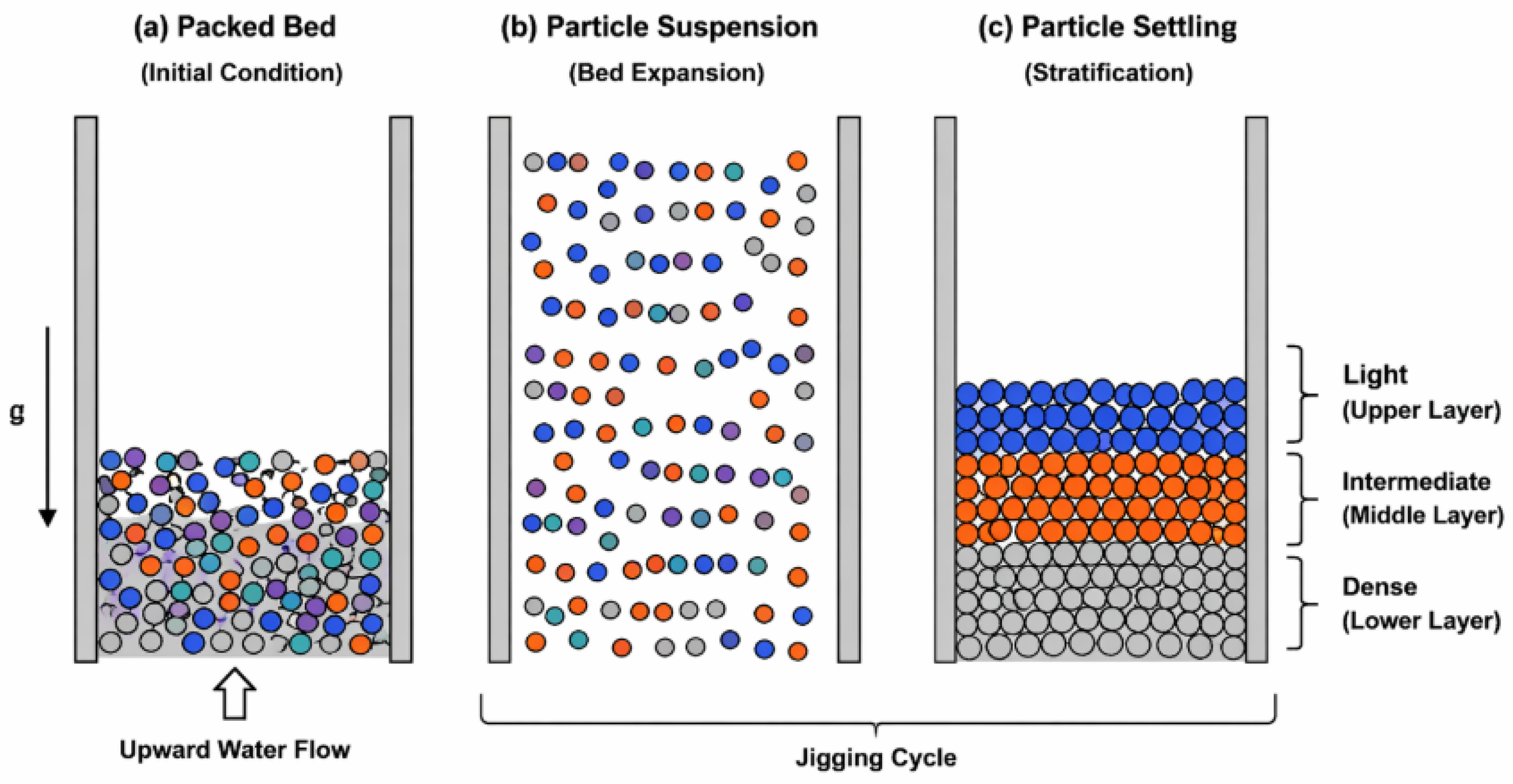
Figure 1 shows a jigging process in which a packed bed is fluidized with mixed particles (blue—light, orange—middle, gray—heavy), promoting stratification. Amplitude induces periodic particle suspension and a pulsating fluid flow at a controlled frequency.
As the construction sector moves towards sustainable practices, it also adopts circular-economy strategies; consequently, the importance of the ability to recover materials from CDW has increased. Among these materials, ceramics are a valuable fraction, as most research has focused on the management of general CDW rather than targeted separation [
15,
16,
17,
18]. The present experiments explore how water jigging can serve as a useful density-based method for enriching and recovering ceramic particles from mixed CDW. The study combines detailed physical characterization with jigging experiments to demonstrate how effectively ceramics, gypsum, concrete, and bricks can be concentrated, and how practical this technique is for recycling operations. The experiments aim to support the development of improved recycling processes for CDW and encourage its use as recycled aggregates in new construction applications.
Although previous studies investigated gravity-based separation of individual CDW material, the behavior of stratification of multi-component mixtures remains less understood. Particularly, ceramics separation, because of its intermediate density and morphology received limited attention. Therefore, this study provides evaluation of binary and ternary CDW mixtures, including the layer by layer analysis, purity, quantification of recovery, and mass balance.
2. Materials and Methods
The experimental samples were prepared to represent and emulate the composition of typical “Inert-CDW” and to include contaminants most commonly observed in RA. Four materials were chosen for this study: brick, concrete, gypsum, and ceramics. The bricks (red ceramic) were made from commercial ceramic blocks that were not intended for structural or refractory use. Conventional structural concrete (C16/20 MPa), manufactured with silicate-crushed gravel in accordance with Structural Concrete Instruction—EHE/08 [
20], was used, and the gypsum materials were manufactured in accordance with EN13297-1 [
21]. The ceramic (ceramic tiles) material used in the tests was regular coating building ceramics with no special glazes or treatments.
All materials were crushed using a jaw crusher (Wedag Española, Sociedad Anónima.) with a top size aperture of 20 mm. The resulting materials were sieved, and the 5–20 mm fraction was retained for testing as coarse aggregates. The fine fraction (<5 mm) was excluded from this study and retained for future analyses. The proportions of concrete, brick, gypsum, and ceramics after the jig tests were determined by manual sorting and weighing. After each jig separation, the material from each layer was oven-dried at 70 °C for approximately 8 h to remove residual moisture. Each component was then visually identified, manually separated, and weighed using a precision balance (±0.01 g). The manual sorting may introduce some operator-related uncertainty; it was minimized by applying consistent visual identification criteria and by the procedure under controlled laboratory conditions. Particularly, ceramics were distinguishable from the bricks because of the presence of a surface coating layer. The percentage content of each material was calculated relative to the total sample mass, ensuring consistent evaluation of material purity across all experiment.
2.1. Materials Characterization
2.1.1. Form Factor
The EN 933-4 standard [
13] was used to assess aggregate morphology. The guideline stipulates that 200 aggregate particles must be selected based on the mass fractions for the size ranges 9.5–12.7 mm and 12.7–19.5 mm. This maintains uniform representation across all samples. Since the standard is intended for the analysis of coarse aggregates, the 5–12.5 mm fraction is not analyzed in this analysis. A caliper measures the maximum length and minimum thickness of each selected particle. The form factor is determined by averaging the ratios of these two metrics across all particles. Ratios approaching 1 indicate spherical particles, whilst higher ratios suggest more flattened or lamellar particles.
2.1.2. Densimetric and Particle Size Distribution Analysis
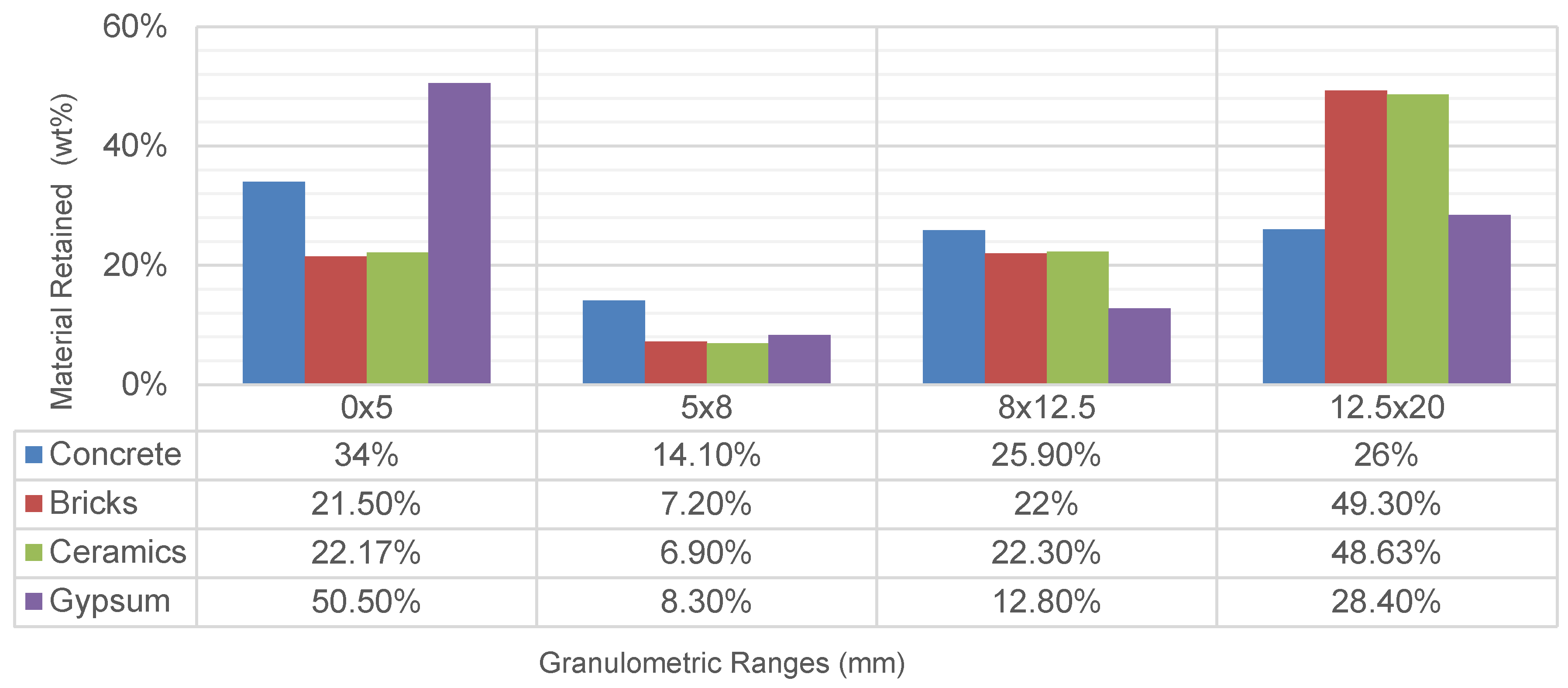
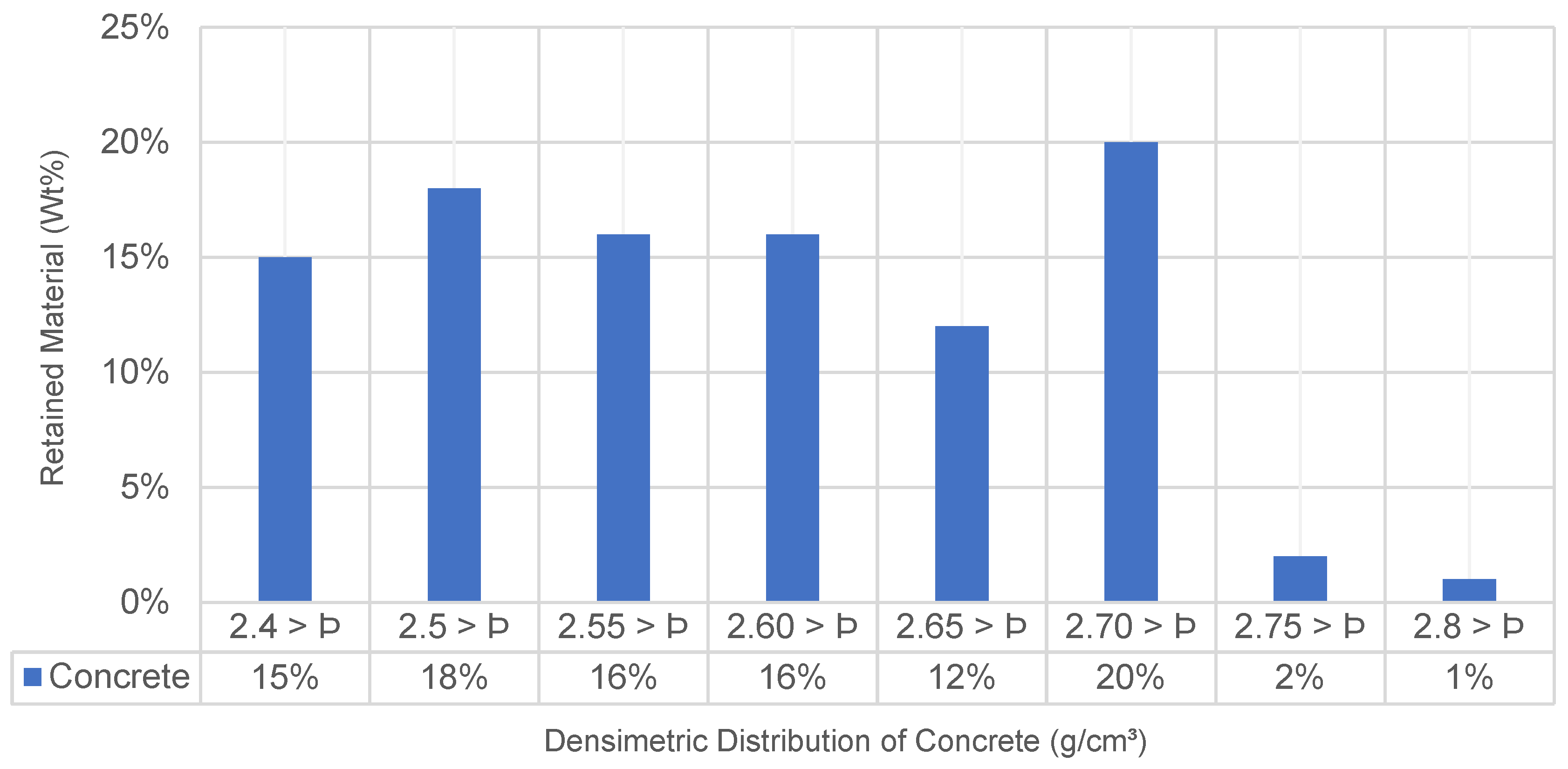
To determine the granulometric distribution of the material, dry sieving was performed using openings of 5 mm, 8 mm, 12.5 mm, and 20 mm. In the analysis, a solution of sodium polytungstate was used to conduct sink-and-float tests to determine the densimetric distribution of the concrete. The test was conducted using solutions of different densities—2.40 g/cm3, 2.50 g/cm3, 2.55 g/cm3, 2.60 g/cm3, 2.65 g/cm3, 2.70 g/cm3, 2.75 g/cm3, and 2.80 g/cm3—measured with a manual Anton Paar Density Meter (DMA 35).
The particle size distribution of the material was determined by sieving the samples and analyzing the material retained on the 20 mm, 12 mm, 8 mm, and 5 mm sieves, as well as the fine aggregate fraction with sizes under 5 mm.
The analysis was conducted for concrete, as it is the most compositionally heterogeneous and represents the densest material in studied system. Due to differences in aggregate content and cement paste, the internal variability of concrete may influence significantly its behavior of stratification. In contrast, ceramics, bricks and gypsum exhibit relatively narrower density ranges and homogeneous composition, that allows their behavior to be interpreted from specific gravity and bulk density measurements.
2.1.3. Specific Density (OD-Oven Dried), Saturated Specific Density (SSD), Apparent Density (OD-Oven Dried), and Water Absorption
The evaluation of densimetric properties and the influence of some parameters, such as porosity and water absorption at different concentration stages, requires the material to be tested in saturated and dry conditions. The presence of porous material (cement paste, gypsum, bricks, and ceramics) modifies several important physical properties when the material becomes saturated. For this reason, the determination of bulk density, specific gravity under saturated surface-dry (SSD) and oven-dry conditions (OD), and water absorption was carried out following the procedures described in ASTM C127-07 [
17,
22]. These measurements provide a basis for understanding how contaminants affect the physical behavior of recycled aggregates.
According to the standard testing procedure, the samples are first oven-dried at a temperature of 110 ± 5 °C until a constant mass is obtained. After drying, the material is allowed to cool under ambient laboratory conditions for approximately one to three hours. Aggregate samples with a nominal maximum particle size of 37.5 mm are used for the analysis, with adjustments applied when larger particles are present. The samples are then immersed in water at room temperature for a period of 24 ± 4 h in order to reach a saturated condition prior to further measurements.
The sample is returned to the oven and maintained at a temperature of 110 ± 5 °C until a constant mass is obtained. After drying, the sample is removed and allowed to cool under ambient laboratory conditions for approximately one to three hours, or it can be safely handled. Once cooled, the oven-dry mass is determined and recorded, enabling the completion of the calculations required for the determination of the densimetric parameters.
2.2. Concentration Criteria
Another way to observe the separation inside the jig is through the concentration criteria (CC) proposed by Taggart [
23]. CC measures the ratio between the densities of two particles with different densities being separated. When the process uses water, it is necessary to subtract the buoyancy force, as shown in Equation (1):
where
rd and
rl represent the densities of the dense and light constituents, respectively, and rf is the fluid’s density. A higher CC value indicates easier separation of particles in a fluid using a density-based process, such as jigging. This ratio applies across all flow regimes and is expressed by the quotient q, where q = 0.5 is for the Stokes regime, q = 1 is for the Newton regime (most common), and 0.5 < q < 1 is for intermediate regimes. In this study, q was taken as 1, which is corresponding to linear form of concentration criteria (CC) and it is commonly adopted for simplified evaluation of density-based separation.
A large CC value signifies a significant density difference between particles, leading to a greater reduction in potential energy and thus easier stratification. Conversely, particles with similar densities are more difficult to stratify than those with larger density differences [
20,
21,
24]
2.3. Jigging Equipment
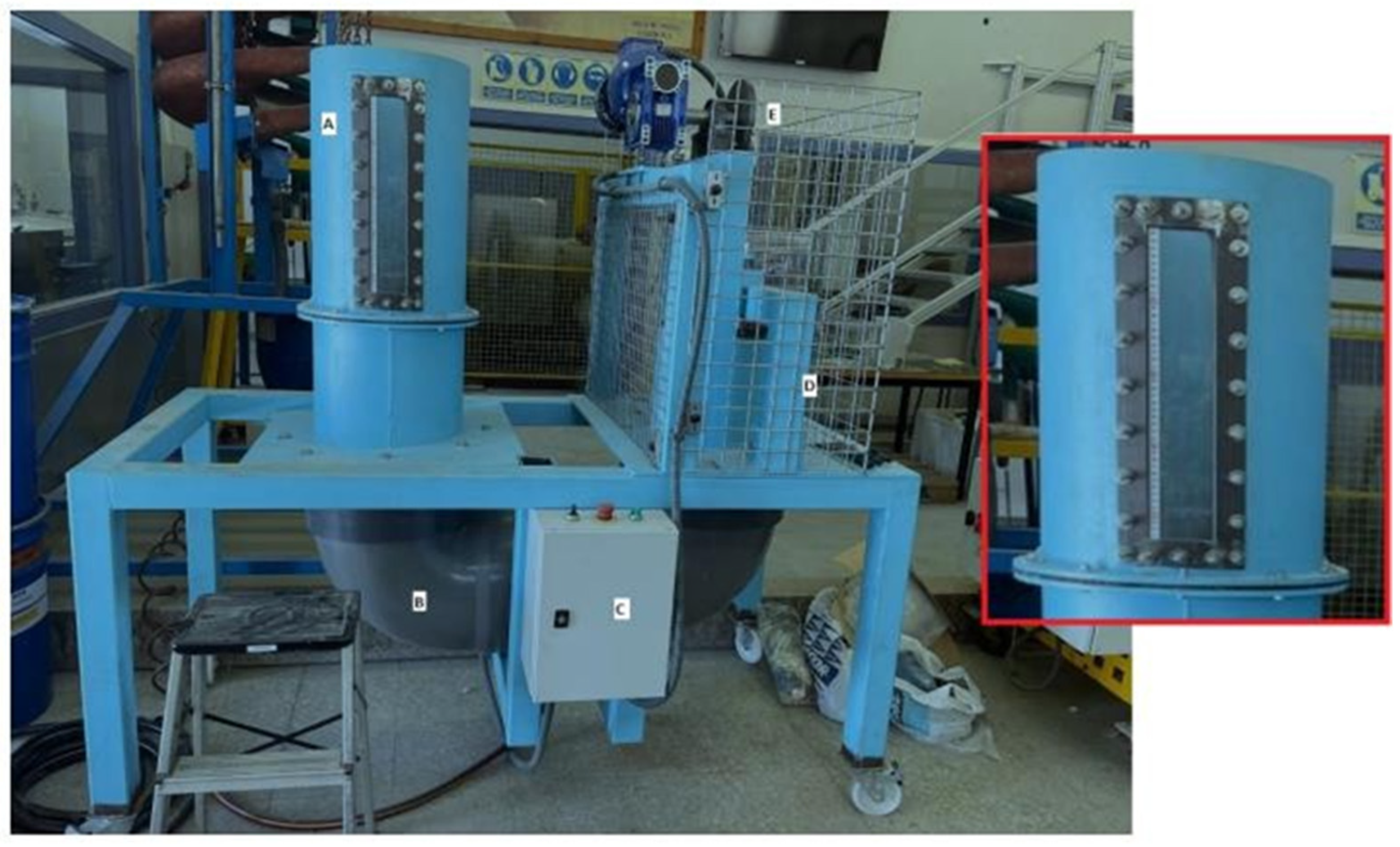
The experimental tests were performed using a pilot-scale water jig designed specifically for laboratory research (
Figure 2). In this apparatus, water circulation is driven by a piston (D) connected to a motor (E), which propels the flow through the water duct (B) into the jig chamber (A). The chamber, equipped with an observation window, allows visualization of the particle bed expansion and the range of bed heights within the equipment. Inside the jig chamber, the ascending and descending water pulses promote both expansion and compaction of the particle bed, resulting in stratification of the material according to particle density and spatial characteristics. After each test, the stratified layers are manually collected from the top of the chamber at heights predetermined for each experimental run.
Further details regarding the hydraulic jig mechanism and the forces responsible for the stratification process are available in the literature [
24,
25,
26]. Following preliminary efficiency assessments, the operational parameters of the jig were standardized as follows: pulse frequency of 35 cycles per minute, amplitude of 14 cm, and total test duration of 3 min.
The selected operating conditions were guided by preliminary exploratory tests and defined in previous studies on similar materials [
2], aimed to obtaining stable visible stratification and bed expansion. However, these tests were not designed as formal optimization study, therefore the sensitivity of amplitude, duration and separation performance remains a subject for future study work.
2.4. Jigging Experiments Design
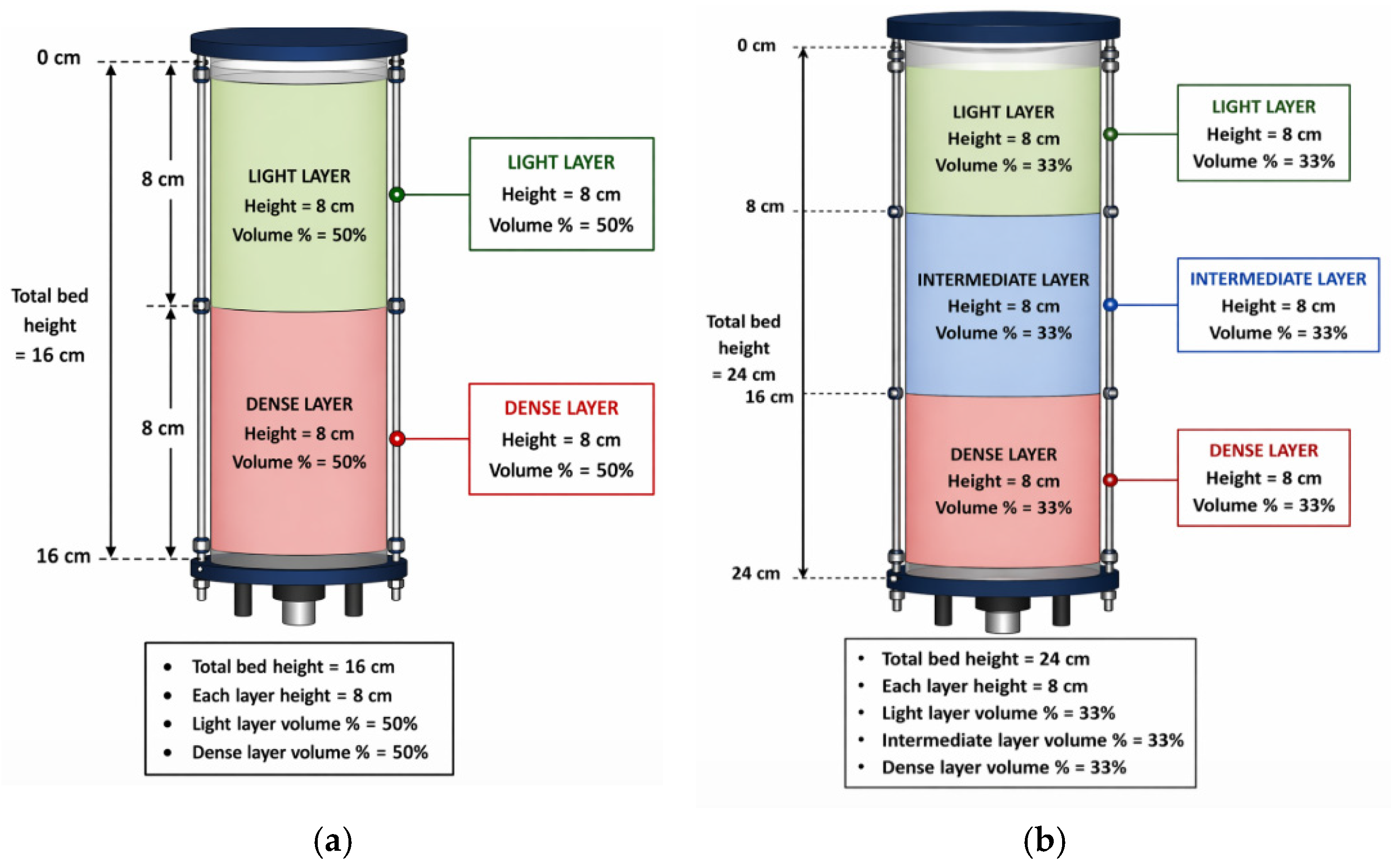
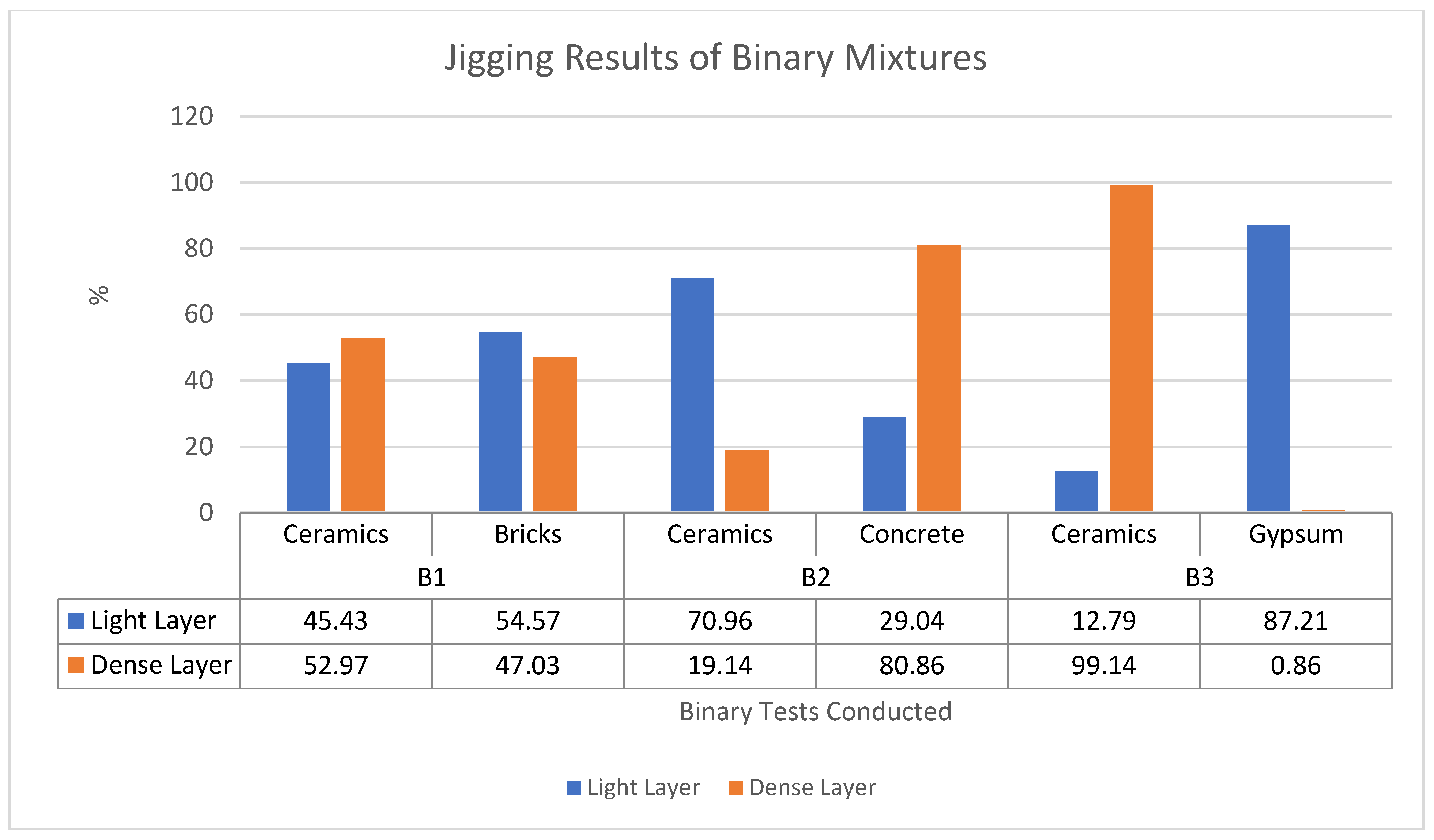
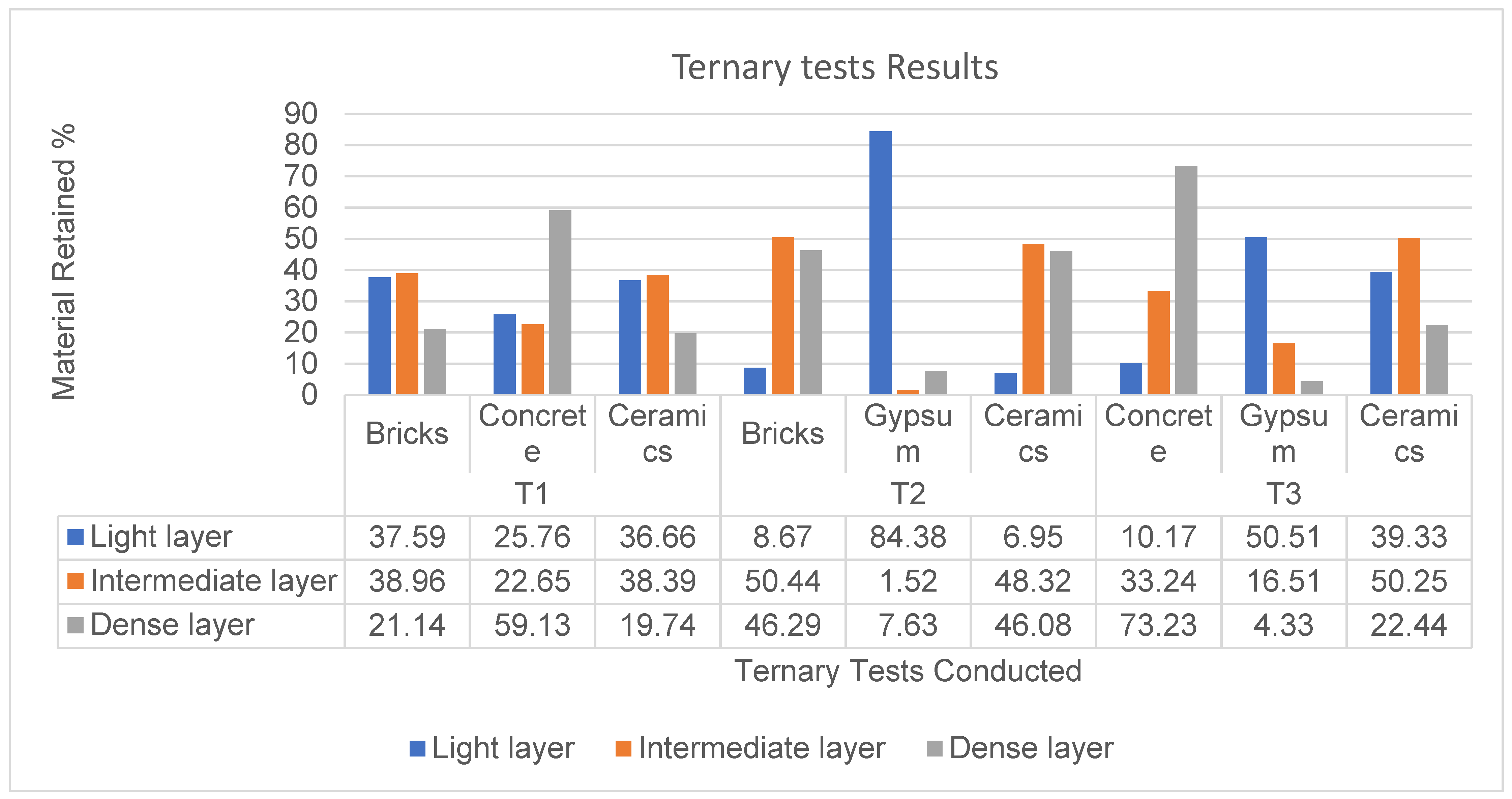
A total of six different jigging tests were designed to examine the stratification behavior of the generated materials under controlled conditions. These tests consisted of three experiments with a binary mixture (B1 to B3—
Table 1) of materials and three experiments with a ternary mixture (T1 to T3—
Table 1), selected to represent typical materials found in CDW. Each test was designed to simulate realistic CDW material interactions and to evaluate how differences in density and particle properties influence stratification efficiency during jigging. After each experiment, the stratified layers within the jig chamber were carefully dismantled. Materials were manually separated by their position in the bed, and parameters such as weight, bulk volume, and bed height for each component were recorded and summarized in
Table 1.
Figure 3 is the flowchart of the binary and ternary jigging process conducted in the study.
Use of controlled mixtures with equal bulk volume was intentionally designed to isolate the effect of the material properties on behavior of stratification. However real CDW streams are more heterogeneous, which enables a clearer understanding of mechanism of separation.
Each ternary and binary mixtures were subjected to a single stage jigging under the selected operating conditions. Therefore, the reported purities, separation efficiencies, and the recoveries should be interpreted as comparative exploratory observations under controlled laboratory conditions.
2.5. Separation Efficiency Calculations
In this study, the separation efficiency index of ceramic was defined on grade-recovery relationships, combining the ceramic recovery with the improvement in content of ceramic relative to feed. The parameter combines both recovery and improvement in their concentration relative with the feed.
Separation efficiency was calculated as:
where ‘R’ is the recovery of ceramics in considered layer (%), R = mass of ceramic in layer/total mass of ceramics in feed
‘Cp’ (is the ceramic content in that layer (%), Cp = mass of ceramic in the layer/total mass of that layer
‘Yc’ is content of ceramics yield relative to feed (%). Yc = mass of ceramic in layer/total feed mass.
Here, the term ‘100-Yc’ represents the maximum possible purity increase relative to the feed that corresponds to an ideal separation condition.
Use of Yc instead of ceramic grade feed was because the aim is to define layer-specific comparative index which combines recovery of ceramics and enrichment of ceramics within same product layer. The proposed index intended to compare relative effectiveness of different bed layers of jig under the tested conditions, rather than standard universal beneficiation metric.





 ,
,