


Abstract
Tunnels excavated in non-coal oil- and gas-bearing strata may experience the seepage and intermittent ingress of an oil–gas–water mixture during construction, creating aggressive corrosive conditions that can compromise the integrity of primary support and the safety margin of the final lining. However, the coupled degradation mechanism of primary support and its cascading effect on lining safety under such conditions remain poorly understood. Based on the Huaying Mountain Tunnel project, this study investigates the corrosion-driven damage evolution of primary support and its implications for the structural safety of the secondary lining under wet–dry cycling exposure. Accelerated wet–dry cycling tests were performed on concrete specimens using an on-site crude-oil–formation-water mixture collected during tunnelling, with exposure levels ranging from 0 to 120 cycles. Laboratory observations were then combined with inverse identification of degradation-dependent material parameters to establish a corrosion-informed mechanical description, which was implemented in numerical simulations for structural response assessment. Results show a staged evolution of mechanical properties, with an initial increase followed by progressive deterioration. After 120 cycles, compressive strength, tensile strength, and elastic modulus decreased by approximately 18.9%, 23.1%, and 17.4%, respectively. Degradation is more pronounced in the corroded zone, with tensile capacity and stiffness deteriorating earlier than compressive resistance. Numerical results indicate that corrosion leads to significant stress redistribution and damage development. The sidewall tensile stress reaches 2.80 MPa after 120 cycles, exceeding the post-corrosion capacity, while the safety factor drops below the code threshold at 90 cycles. The overall safety probability decreases from 1.0 to 0.4, accompanied by a degradation in safety grade from Level I to Level IV. These findings provide a quantitative basis for deterioration assessment, safety verification, and maintenance planning for tunnels subjected to oil–gas corrosive environments.
1. Introduction
With the expansion of infrastructure development into geologically complex mountainous regions, an increasing number of railway and highway tunnels inevitably intersect oil–gas-bearing strata. In such formations, construction activities frequently encounter the simultaneous presence and migration of oil, gas, and groundwater [1,2]. This multiphase corrosive environment not only increases the risk of hazardous fluid release during construction but also continues to affect support structures during long-term service, thereby accelerating lining deterioration and posing persistent threats to tunnel structural safety and operational reliability [3,4].
Regarding the corrosion-induced damage of support structures in the aforementioned complex geological environments, existing studies have shown that corrosive media such as sulphates and chlorides can significantly affect the mechanical properties and durability of concrete. For example, Li [5] analysed the corrosion behaviour and mechanical property changes in cast-in-place concrete under sulphate attack; Yang [6] investigated the durability performance of ultra-high-performance concrete under the coupled action of sulphate exposure and wet–dry cycles; Wan [7] explored the macroscopic performance evolution of concrete subjected to combined high-concentration sulphate and magnesium salt attack; Yang [8] studied the fatigue behaviour and fatigue life of concrete in corrosive environments; Liu [9] analysed the degradation behaviour of concrete under alternating wet–dry sulphate exposure and conducted life prediction; Li [10] carried out preliminary research on the corrosion resistance of high-sulphate-resistant cement concrete under combined sulphate and magnesium salt attack; Niu [11] analysed the performance deterioration of concrete under the combined action of sulphur dioxide and carbon dioxide; and Li [12] investigated concrete materials applied in marine environments with good oil resistance and anticorrosion performance. These studies mainly focused on the material scale and emphasised the microstructural evolution, chemical reaction mechanisms, and macroscopic mechanical degradation of concrete under corrosive environments, providing an important basis for understanding the influence of corrosion on concrete material performance. However, compared with conventional saline corrosion environments, the “oil–gas–water” system in oil- and gas-bearing strata involves multiphase media coexistence, and its corrosion effects exhibit more complex characteristics in terms of medium composition, spatial distribution, and evolution process. Related issues have received some attention in the field of deep energy engineering. For example, Tan [13] studied the resistance of oil-well cement-based composites to CO2 and H2S corrosion under high-temperature conditions; Agzamov [14] analysed the deterioration mechanism of hydrogen sulphide on cement stone in oil and gas wells; She [15] investigated the corrosion behaviour of cement slurry in hydrogen sulphide environments in natural gas wells; Guo [16] analysed the corrosion mechanism of hydrogen sulphide on cement stone in humid environments; Yan [17] conducted studies on the influence of hydrogen sulphide corrosion on cement stone; and Peng [18] investigated the corrosion mechanisms of cement stone in acidic environments and corresponding protection measures. Yin et al. [19] demonstrated that CO2 corrosion can alter the microstructure and durability of oil well cement under high-temperature conditions. Shill et al. [20] reported that hydrocarbon fluids can significantly degrade the mechanical properties of concrete under coupled environmental conditions. Although the above studies provide theoretical references for deep underground engineering, their research objects and service environmental conditions differ significantly from those of tunnel engineering, and the related findings are difficult to directly apply to tunnel structural systems [21].
Based on the above understanding of material degradation, the following section focuses on the structural response and safety performance of the lining system. As an essential component of the New Austrian Tunnelling Method system, the primary support plays a critical load-bearing and confinement role during both the construction and service stages [22,23]. When the primary support undergoes mechanical degradation under complex corrosive environments, its stress state and deformation characteristics inevitably change, and through structural interaction, adversely affect the stress distribution and safety reserve of the secondary lining [24,25]. Scholars have conducted a series of studies on this issue. In terms of engineering defects, Liu [26] reviewed the current status and development trends of tunnel lining disease diagnosis and treatment; Dong [27] analysed the defect distribution and characteristics of operating metro tunnels in Beijing; Wu [28] investigated the damage status, detection techniques, and evaluation methods of operating railway tunnels; Zhou [29] proposed an evaluation method for the health state of highway tunnel linings based on variable fuzzy set theory; Zhou [30] studied automated 3D detection and visualisation technology for shield tunnel lining defects; Li [31] analysed the influence of defect diseases on the structural safety of operating highway tunnel linings; Zhuang [32] analysed the corrosion deterioration mechanism of in-service tunnel linings in sulphate environments and carried out safety evaluation; and Kuang [33] studied the corrosion behaviour of tunnel linings under sulphate action. In terms of structural response, Wang [34] explored the deformation and stress redistribution of linings caused by voids behind the lining; Ye [35] analysed the three-dimensional mechanical effects of multiple voids behind the lining on tunnel structural behaviour; Zhang [36] investigated the cracking mechanism of linings and the crack distribution around voids behind the lining based on the extended finite element method; Zhang [37] analysed the distribution characteristics of voids behind highway tunnel linings and their influence on lining structures; Meguid [38] explored the influence of erosion-induced voids on existing tunnel linings; Leung [39] experimentally studied the effect of local contact loss on soil pressure distribution around existing tunnel linings; Wang [40] investigated a durability life prediction model for sulphate resistance of tunnel lining concrete; and Jiang [41] analysed the causes of sulphate corrosion damage in tunnel lining concrete in southwest China and proposed prevention measures. Overall, existing studies have mostly addressed this issue from a single perspective, focusing either on engineering defects or on structural response, and have mainly concentrated on the safety of the lining structure itself, without fully considering the coordinated behaviour of composite lining systems. However, composite lining structures are widely used in tunnel engineering, and safety analyses based solely on the lining structure itself are no longer sufficient to comprehensively reflect the actual service behaviour of composite lining systems under complex corrosive environments.
Based on the above considerations, this study takes the Huaying Mountain Tunnel, located in complex oil- and gas-bearing strata, as the engineering background to systematically investigate the damage evolution of primary support under corrosive conditions and its impact on lining structural safety. Laboratory wet–dry corrosion tests were conducted to characterise the degradation of mechanical properties of primary-support concrete. An equivalent structural parameter inversion was then performed using a dual-zone mechanical model consisting of corroded and intact regions. Combined with numerical simulations, the effects of primary-support deterioration on tunnel deformation, stress distribution, and safety-level evolution were elucidated. The results provide a theoretical basis for structural safety assessment and durability-oriented design of tunnels in complex oil–gas corrosive environments.
2. Engineering Background
The Huaying Mountain Tunnel investigated in this study is located in the central segment of the Huaying Mountain structural belt on the eastern margin of the Sichuan Basin, within the eastern Sichuan parallel fold-ridge zone. The regional structure is characterised by alternating anticlines and synclines, with intense tectonic activity and well-developed fractures, which provide favourable conditions for hydrocarbon generation, migration, and accumulation. The tunnel alignment mainly passes through non-coal-bearing sedimentary strata composed of carbonate and clastic rocks, which are characterised by distinct bedding and extensively developed tectonic, interlayer, and dissolution fractures, thereby forming effective seepage pathways. Controlled by regional anticline structures, crude oil, natural gas, and associated corrosive gases such as hydrogen sulphide and carbon dioxide are widely distributed in the strata, constituting a typical non-coal oil- and gas-bearing geological environment.
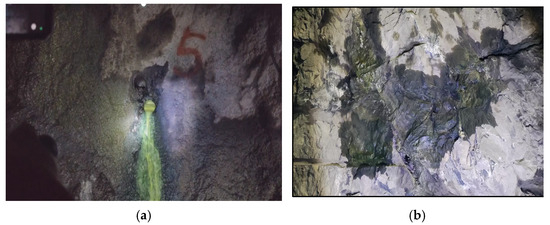
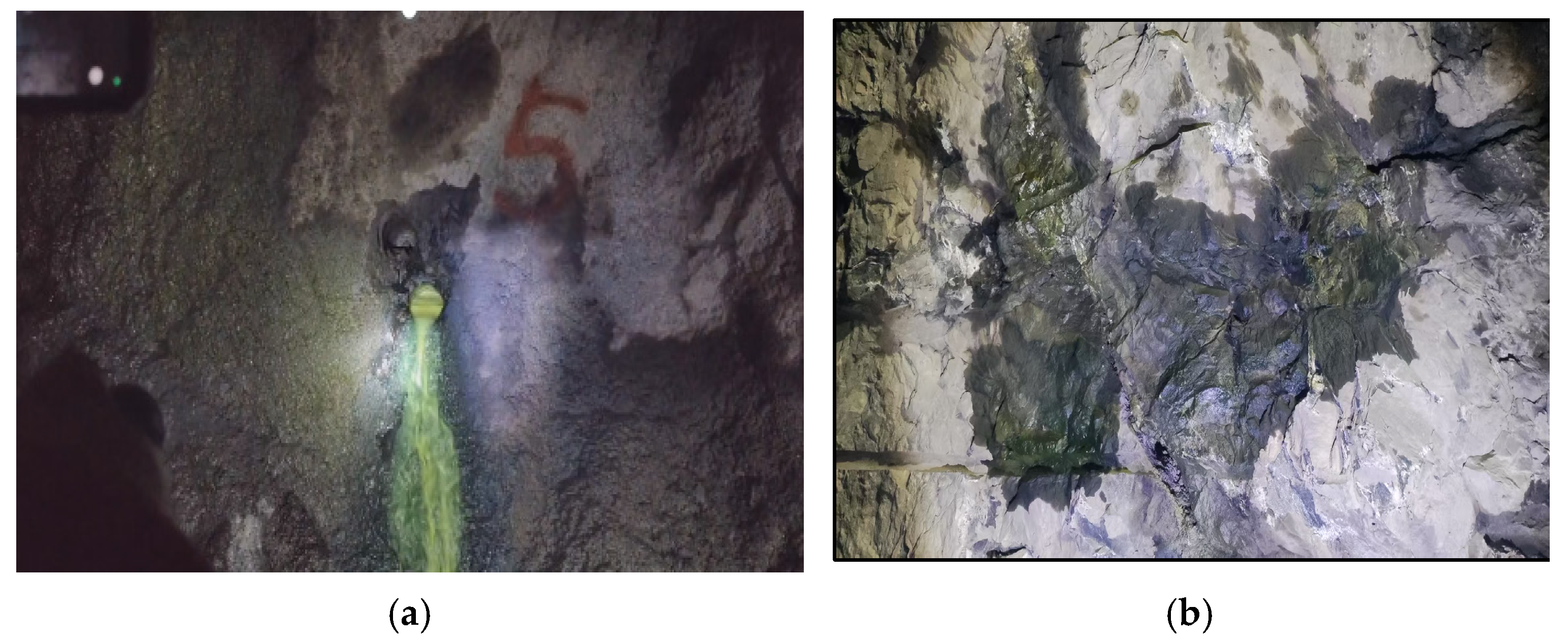
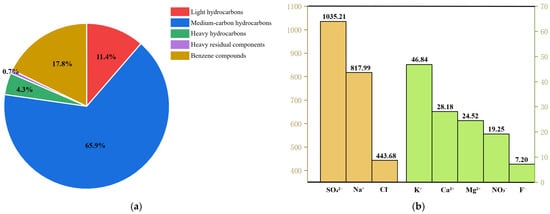
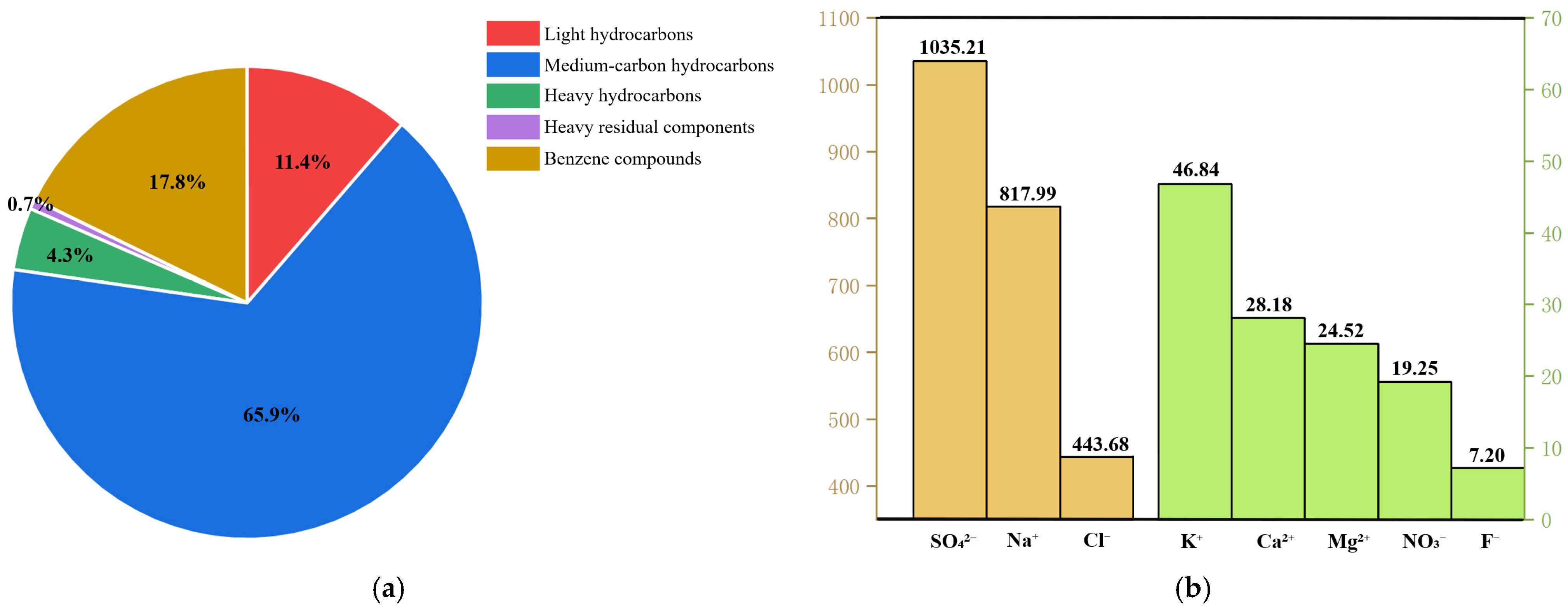
The Huaying Mountain Tunnel is a separated twin-tube deep mountain tunnel with a single-tube length of approximately 6.6 km and a maximum burial depth of about 900 m. Construction of the tunnel commenced in 2021. The right-line section K9+990–K10+500 was selected as the representative study segment. Construction exposure revealed repeated seepage and inflow of crude oil–formation water mixtures during excavation, locally accompanied by hydrogen sulphide emission. Crude oil mainly migrated along surrounding-rock joints and fractures as well as the primary support–rock interface, and evident oil leakage was observed at the tunnel face and sidewalls (as shown in Figure 1), indicating a complex multiphase corrosive environment involving coupled “oil–gas–water” media. The compositional analysis of the collected crude oil–formation water mixture is shown in Figure 2, demonstrating enrichment of medium- and low-carbon hydrocarbons, aromatic compounds, and strongly aggressive ions such as SO42− and Cl−. Under the combined influence of construction ventilation and surrounding-rock seepage conditions, the primary support structure is subjected to long-term crude-oil immersion, corrosive gas attack, and cyclic wetting–drying processes, which significantly accelerate support deterioration and structural damage. Given that existing studies have rarely addressed the coupled effects of the above complex corrosive environment on the progressive deterioration of primary support and the subsequent load redistribution within the composite lining system, a systematic investigation of corrosion mechanisms and structural safety in tunnels excavated in non-coal oil- and gas-bearing strata is critically needed.
Figure 1.
Field observations of oil leakage in the tunnel. (a). Oil–water mixture inflow at the tunnel face. (b). Crude oil seepage along the tunnel sidewall.
Figure 2.
Chemical composition of the crude oil–formation water mixture inflow in the tunnel. (a) Hydrocarbon and benzene-series distribution. (b) Inorganic ion concentrations (mg/L).
3. Concrete Corrosion Test and Performance Degradation Analysis
3.1. Experimental Program
3.1.1. Raw Materials and Specimen Preparation
The cementitious material used in this study was P·O 42.5 ordinary Portland cement produced by Huaxin Cement Co., Ltd., Wuhan, China. The 28-day compressive strength of the cement was not less than 52 MPa, with a density of approximately 2.5 g/cm3. The initial and final setting times were no earlier than 125 min and no later than 235 min, respectively. The main chemical composition of the cement is listed in Table 1. To improve the workability of the primary support concrete, a polycarboxylate-based superplasticiser and an alkali-free accelerator produced by Shanxi Feike New Materials Technology Co., Ltd., Taiyuan, China were incorporated. Tap water complying with the current national standard requirements was used for mixing [42].
Table 1.
Chemical composition of cement.
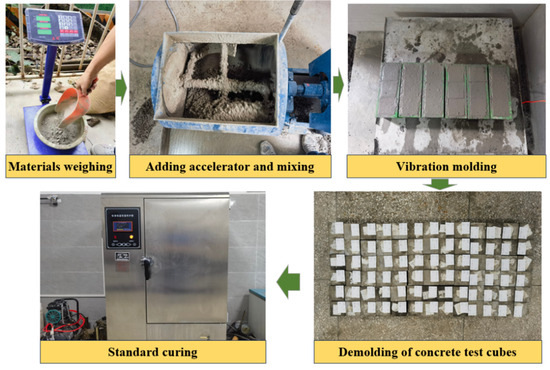
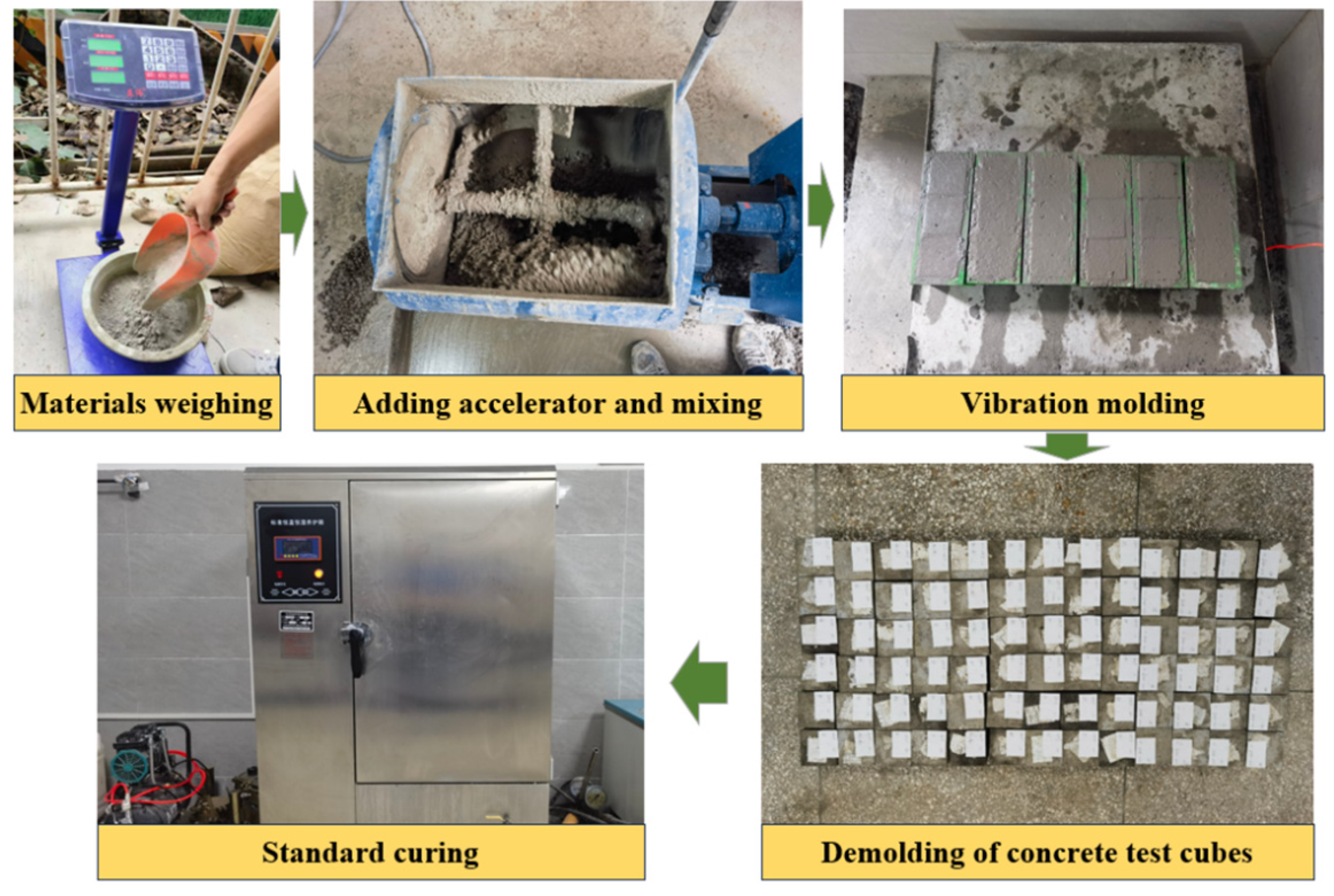
Specimen preparation followed the Standard for Test Methods of Mechanical Properties of Ordinary Concrete [43]. The mix proportions are presented in Table 2. The preparation procedure was as follows: coarse and fine aggregates were first dry-mixed for 30s to achieve a uniform distribution, followed by the addition of cement and further dry mixing for 1 min. Subsequently, the mixing water together with the superplasticiser was added and wet-mixed for 2 min. Finally, the accelerator was introduced and mixed for an additional 30 s. After mixing, the concrete was immediately cast into moulds, compacted on a vibrating table, and further densified by light tapping with a rubber hammer before surface finishing. Cubic specimens with dimensions of 150 mm × 150 mm × 150 mm were prepared. For each test condition, three specimens were used for compressive strength, tensile strength, and corrosion depth measurements, resulting in a total of 45 specimens. After demoulding, all specimens were cured under standard curing conditions until the designated age. The specimen preparation procedure is illustrated in Figure 3.
Table 2.
Mix proportion of shotcrete for tunnel lining (kg/m3).
Figure 3.
Flowchart of specimen preparation.
3.1.2. Experimental Design
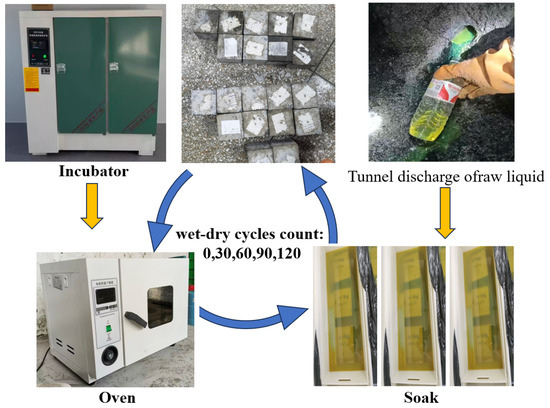
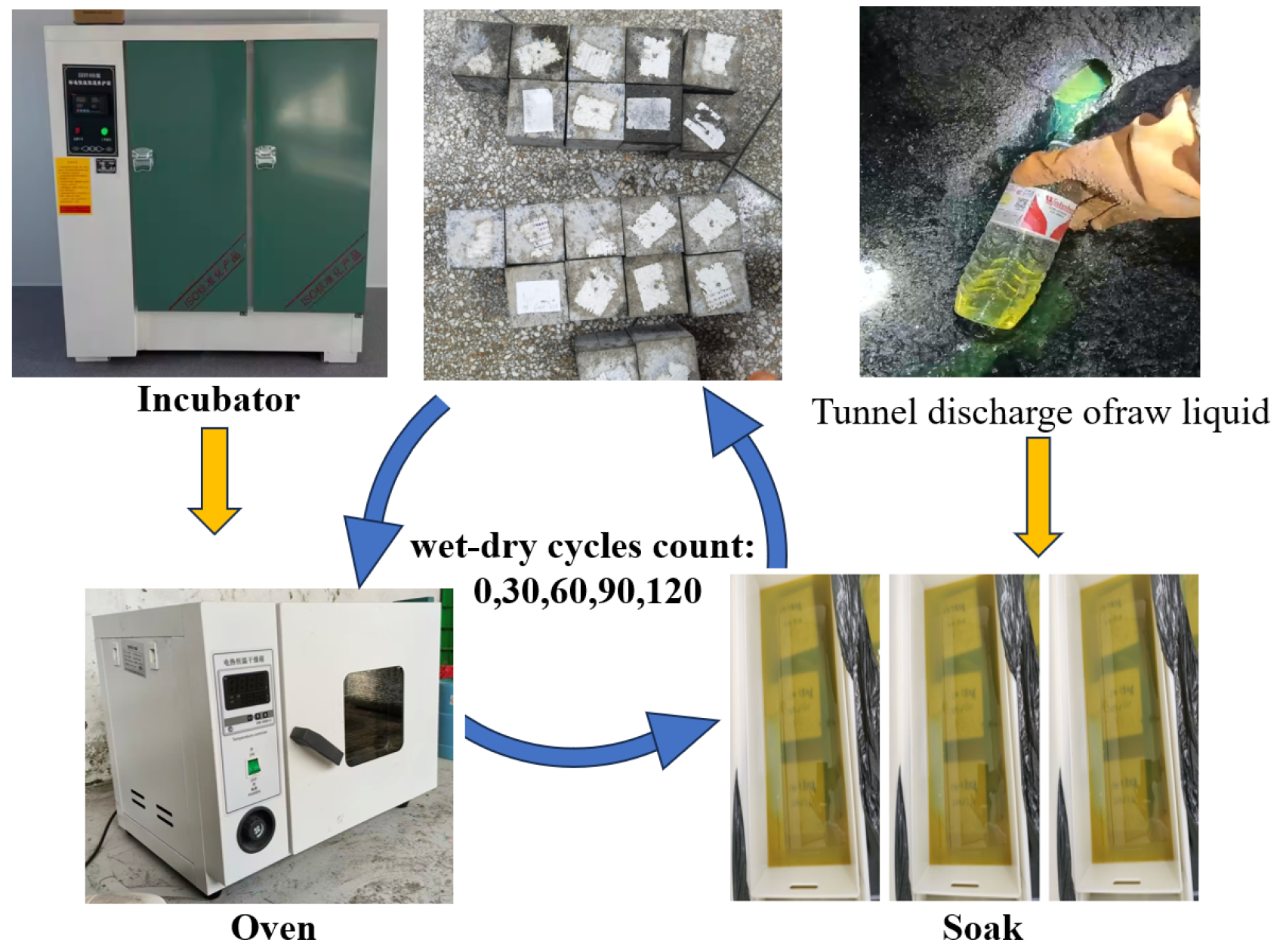
To simulate the actual service environment of primary support concrete in the investigated tunnel, the corrosion medium used in the test was the in situ oil–formation water mixture collected during construction of the Huaying Mountain Tunnel. Its chemical composition is presented in Figure 2. Five exposure conditions were established. All specimens were prepared with the same mix proportion and were differentiated by the number of dry–wet cycles, which were set at 0, 30, 60, 90, and 120 cycles to represent different stages of corrosion-induced deterioration. The dry–wet cycling regime was designed with reference to the sulphate attack procedure specified in the Standard for Test Methods of Long-Term Performance and Durability of Ordinary Concrete [44], with modifications introduced to accelerate corrosion. After standard curing for 26 d, the specimens were removed, surface-dried, and oven-dried at (80 ± 5) °C for 48 h. After cooling to room temperature in a dry environment, five faces of each specimen were coated with epoxy resin to ensure one-dimensional penetration from the exposed surface. The specimens were then immersed in the corrosion solution for 15 ± 0.5 h at a controlled solution temperature of 25–30 °C. After immersion, the specimens were removed and air-dried for 30 min, followed by oven drying for 6 h and cooling to 25–30 °C within 2 h, thus completing one dry–wet cycle. The dry–wet cycling procedure is illustrated in Figure 4.
Figure 4.
Dry–wet cycle test procedure.
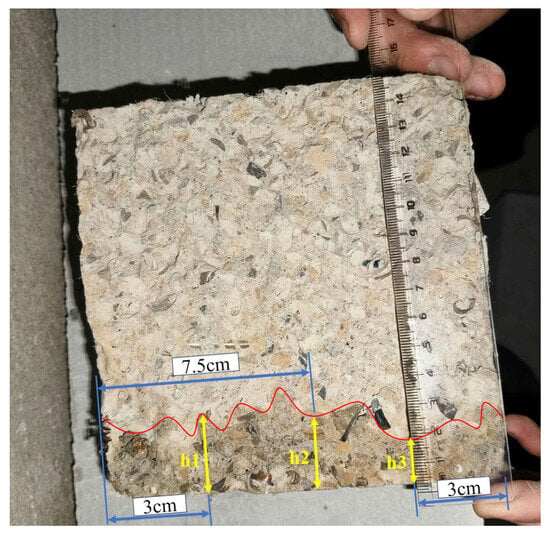
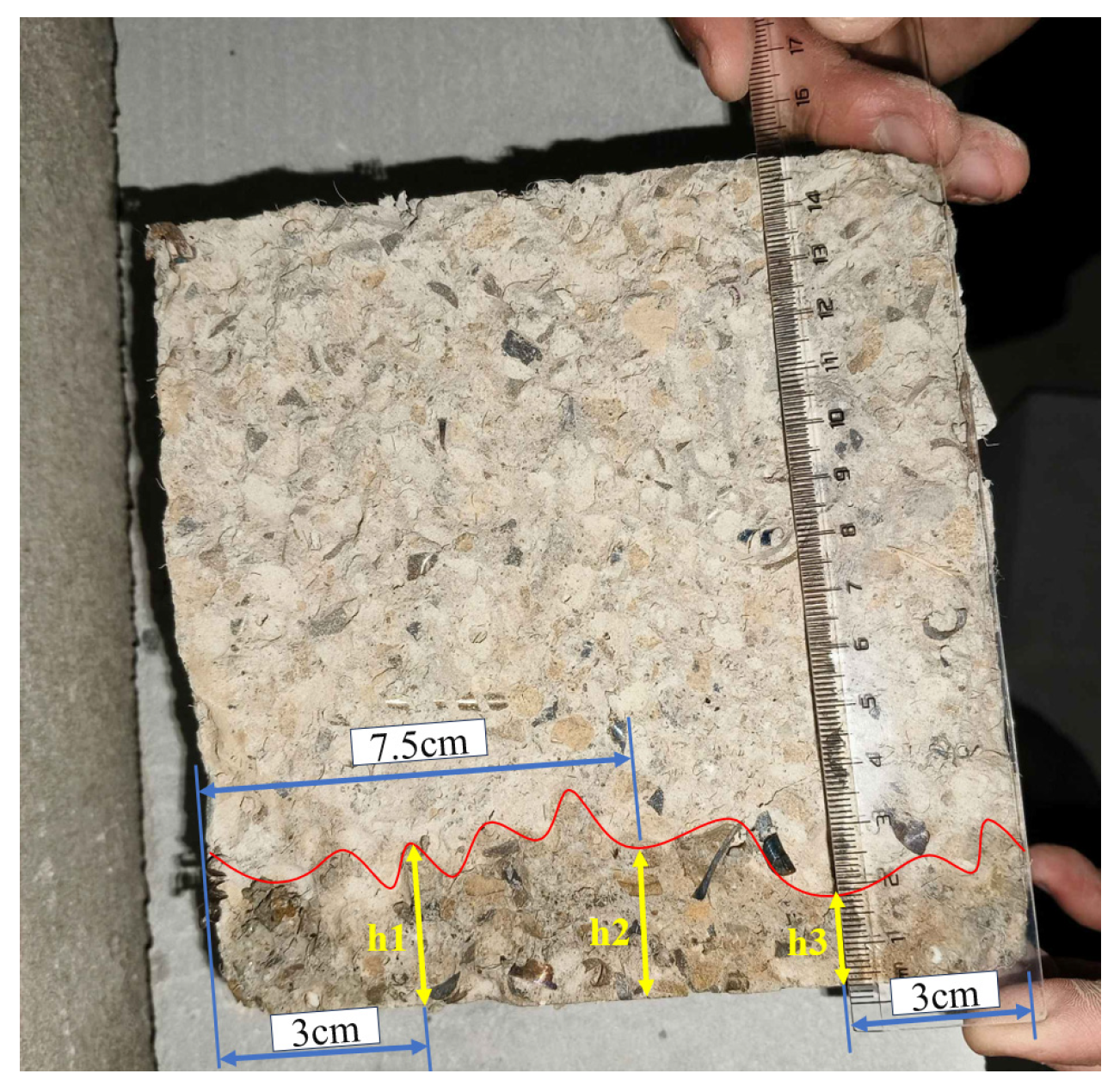
To systematically investigate the mechanical degradation of primary support concrete under oil–gas corrosion and its relationship with corrosion severity, specimens subjected to different numbers of dry–wet cycles were tested for mechanical properties and corrosion depth. Mechanical performance was evaluated using standard cubic specimens under uniaxial compression at a constant loading rate, from which the splitting tensile strength, compressive strength, and elastic modulus were obtained. The elastic modulus was calculated from the linear segment of the stress–strain curve to quantify stiffness degradation. Corrosion depth was determined using the splitting method. Each specimen was split perpendicular to the exposed corrosion surface using a splitting fixture in the testing machine, generating a through-crack that fully exposed the internal corrosion profile. Three penetration depths along the corrosion direction were measured on the exposed section using a ruler, and their average value was taken as the corrosion depth of the specimen. For each exposure condition, three specimens were measured, and the mean value was reported as the final corrosion depth for that condition. The corrosion depth measurement procedure is shown in Figure 5.
Figure 5.
Corrosion depth measurement.
3.1.3. Testing Equipment
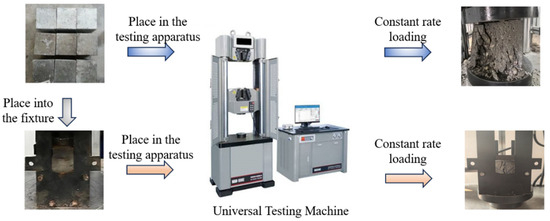
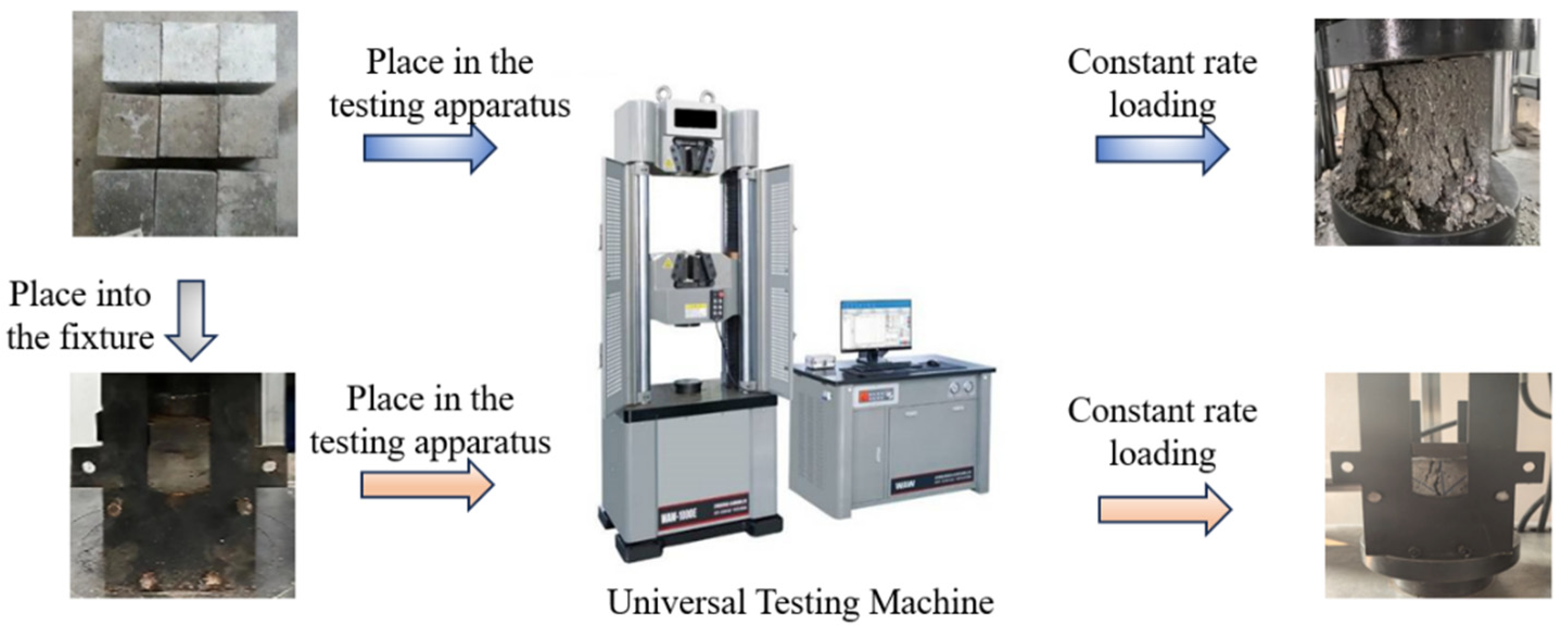
The testing equipment used in this study is shown in Figure 6. Macroscopic mechanical properties were measured in accordance with the Standard for Test Methods of Mechanical Properties of Ordinary Concrete (GB/T 50081-2019 [45]). A WAW-1000 microcomputer-controlled electro-hydraulic servo universal testing machine was employed, with a maximum axial load capacity of 1000 kN. The system enables synchronous acquisition of load and displacement data, allowing accurate determination of the uniaxial compressive strength and elastic modulus of concrete specimens. When equipped with a splitting tensile fixture, the apparatus was also used to measure the splitting tensile strength. Corrosion depth measurements were conducted using a Chenguang ARL96005 steel ruler with a resolution of 1 mm, which satisfies the dimensional measurement accuracy requirements specified in the relevant standard.
Figure 6.
Mechanical performance testing.
3.2. Results and Discussion
3.2.1. Mechanical Strength Evolution
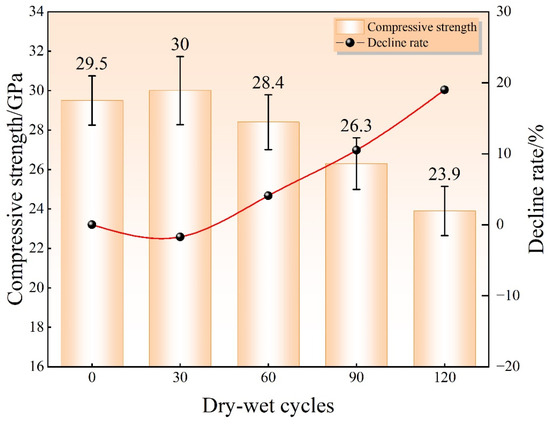
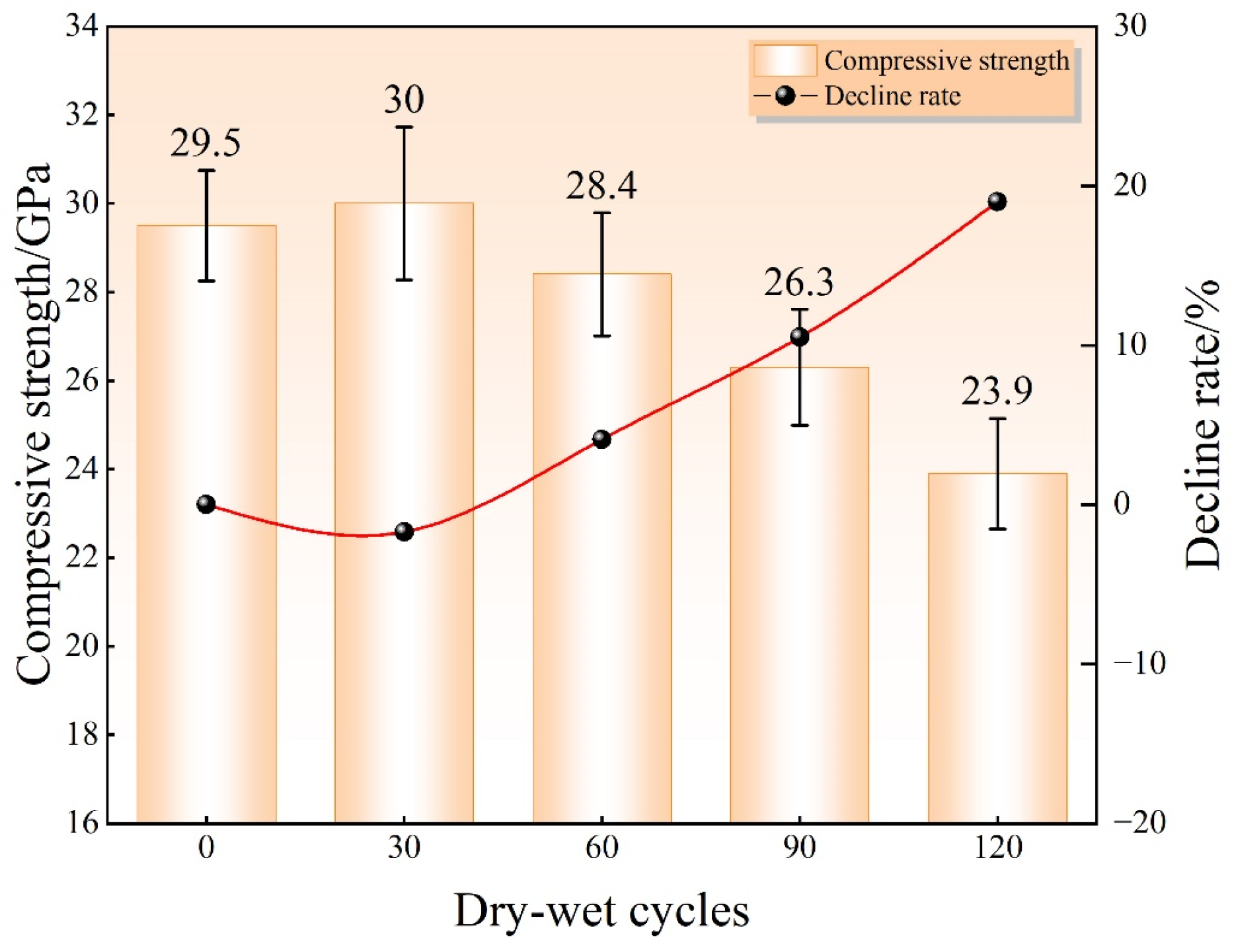
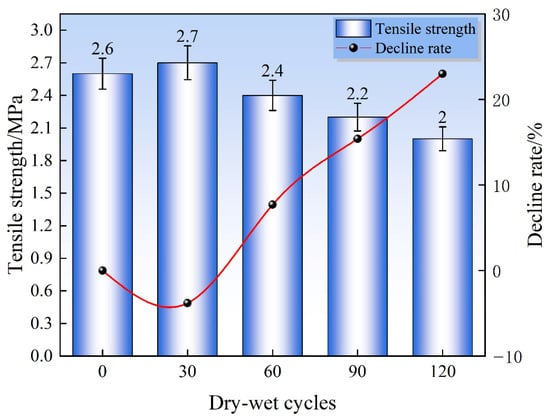
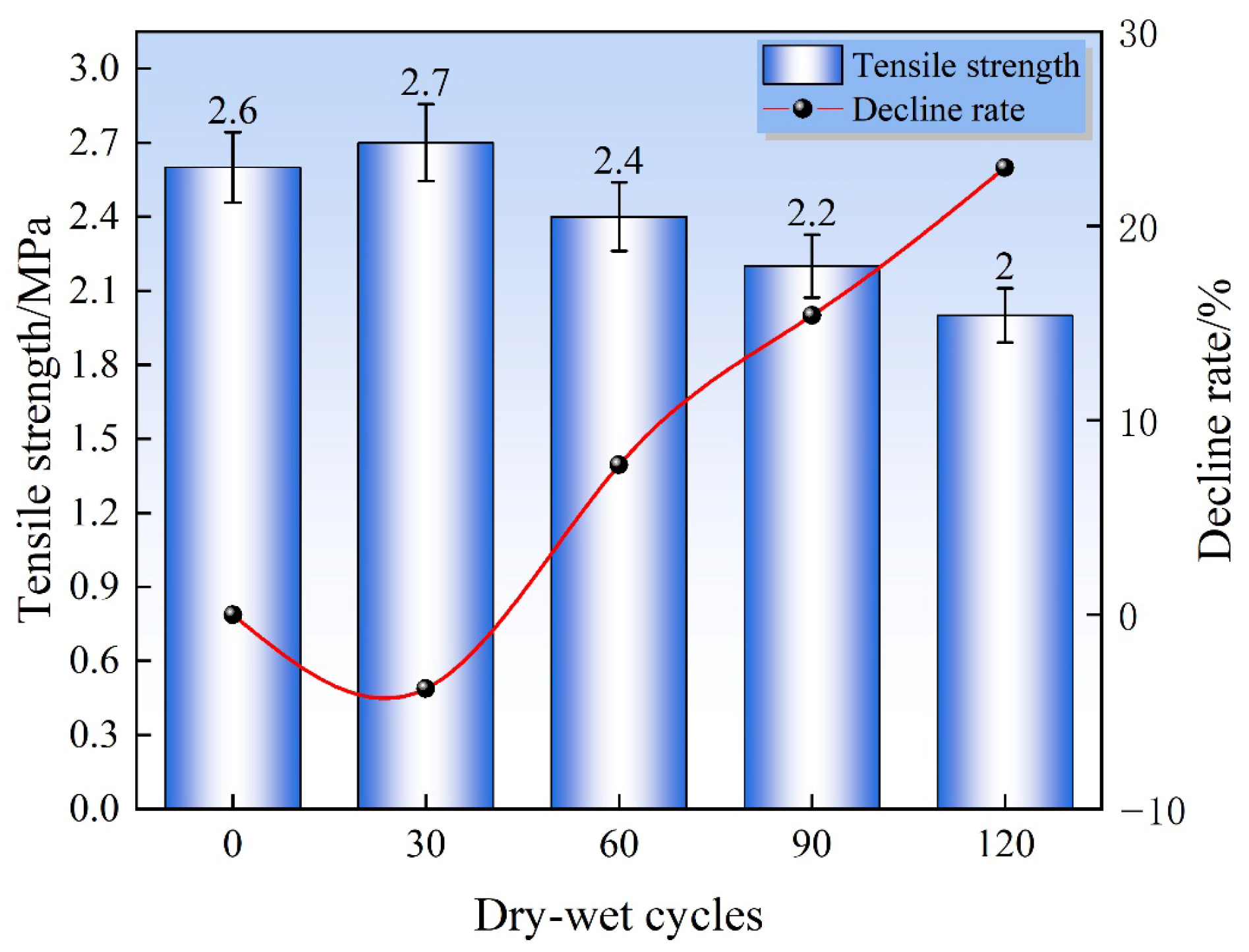
The variation in the compressive strength of concrete subjected to different numbers of dry–wet cycles is shown in Figure 7. As can be seen, at the early stage of corrosion, the compressive strength exhibits a slight compensatory increase. With the continued progression of dry–wet cycling, the strength gradually enters a pronounced degradation stage, showing an overall “increase–decrease” evolution trend. Under uncorroded conditions, the initial compressive strength of the specimens was 29.5 MPa. After 30 dry–wet cycles, the compressive strength slightly increased to 30.0 MPa, representing an increase of approximately 1.7%. As dry–wet exposure intensified, a clear reduction in strength occurred. After 60 cycles, the compressive strength decreased to 28.4 MPa, which was about 3.7% lower than the initial value. After 120 cycles, the compressive strength further deteriorated to 23.9 MPa, corresponding to a total reduction of approximately 18.9% relative to the uncorroded state. The evolution of tensile strength is presented in Figure 8. A broadly similar trend can be observed for tensile strength, but with a more pronounced rate of deterioration. The initial tensile strength of uncorroded specimens was 2.6 MPa. After 60 dry–wet cycles, it decreased slightly to 2.4 MPa. When the number of cycles reached 90, the tensile strength further declined to 2.2 MPa, corresponding to a reduction of 15.4%. After 120 cycles, the tensile strength degraded to 2.0 MPa, showing a total decrease of approximately 23.1% compared with the uncorroded condition.
Figure 7.
Variation in compressive strength with number of dry–wet cycles.
Figure 8.
Variation in tensile strength with number of dry–wet cycles.
Overall, although a short-term strengthening effect occurs at the early stage of corrosion, mechanical degradation of concrete accelerates significantly with continued dry–wet cycling. Moreover, the deterioration rate of tensile strength is higher than that of compressive strength. This indicates that tensile performance is more sensitive to the coupled effects of corrosive media and wet–dry alternation and is therefore more likely to become the governing indicator controlling long-term mechanical degradation of primary support concrete in oil–gas corrosive environments. Similar observations have been reported in previous studies; for instance, Hu et al. [46] found that under dry–wet cycling in sulphate-rich environments, concrete exhibited an initial increase followed by a decline in mechanical properties, with tensile strength showing a more pronounced deterioration than compressive strength.
3.2.2. Elastic Modulus Degradation
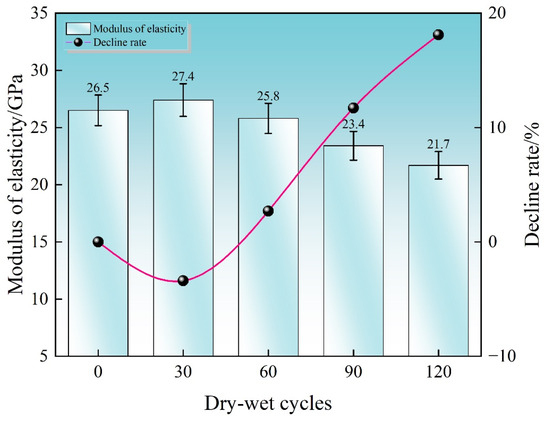
The evolution of the elastic modulus of concrete under different numbers of dry–wet cycles is presented in Figure 9. As can be seen, under the dry–wet corrosive environment, the elastic modulus shows an overall trend of a slight initial increase followed by a continuous decline. For the uncorroded specimens, the initial elastic modulus was 26.5 GPa. After 30 dry–wet cycles, the modulus increased slightly to 27.4 GPa, corresponding to an increase of approximately 3.4%. With a further increase in the number of cycles, a clear degradation stage emerged. At 60 cycles, the elastic modulus decreased to 25.8 GPa, which was about 2.7% lower than the initial value. When the number of cycles reached 90, it further declined to 23.4 GPa, representing a reduction of 11.7%. After 120 cycles, the elastic modulus deteriorated to 21.7 GPa, corresponding to a total decrease of approximately 18.1% relative to the uncorroded condition.
Figure 9.
Variation in elastic modulus with number of dry–wet cycles.
These results indicate that dry–wet cyclic corrosion progressively weakens the overall stiffness of concrete. The gradual reduction in elastic modulus reflects the continuous deterioration of microstructural integrity, including pore coarsening and microcrack development, thereby providing a mechanical basis for the subsequent structural deformation and stiffness degradation of the primary support under oil–gas corrosive environments.
3.2.3. Corrosion Depth Evolution and Analysis
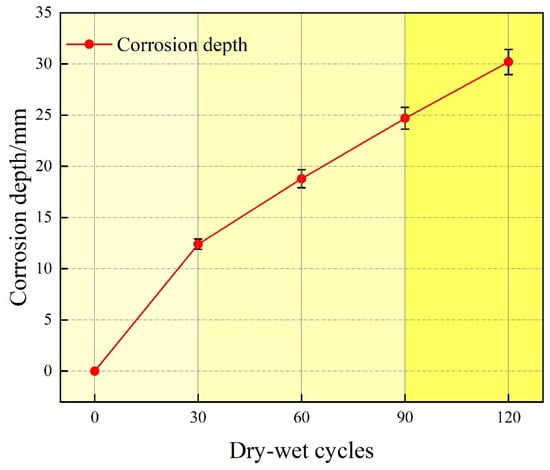
The experimental results indicate that the corrosion depth of concrete specimens exhibits pronounced stage-wise growth with increasing numbers of dry–wet cycles. As shown in Figure 10, after 30 cycles, the corrosion depth reached 12.4 mm, indicating that corrosion was mainly confined to the surface layer of the specimen. With a further increase in dry–wet exposure to 60 cycles, the corrosion depth increased to 18.8 mm, representing an increase of approximately 6.4 mm (51.6%) compared with the 30-cycle condition. When the number of cycles reached 90, the corrosion depth further developed to 24.7 mm, approximately double that at 30 cycles. After 120 dry–wet cycles, the corrosion front propagated to 30.2 mm, about 1.4 times that at 30 cycles.
Figure 10.
Variation in corrosion depth with number of dry–wet cycles.
These results demonstrate that, under sustained wet–dry alternation, the tunnel seepage fluid continuously penetrates into the concrete interior, driving the progressive inward advancement of the corrosion front compared with the early-stage condition. As a result, the corrosion-affected zone expands significantly, leading to cumulative material degradation of primary support concrete in oil–gas corrosive environments.
3.3. Back-Analysis of Mechanical Properties in the Corroded Zone
3.3.1. Layered Mechanical Model for Corrosion Partitioning
To quantify the deterioration of the corroded region after dry–wet cycling, a mathematical model is required to back-calculate the mechanical properties of the corrosion-affected zone. To ensure computational tractability, the following assumptions are adopted:
- (1)
- Layer-wise homogeneity assumption. Within the corrosion depth , the material properties of the concrete are assumed to be uniform. Equivalently, the strength assigned to a given layer is taken to represent the average residual strength over the corresponding depth interval.
- (2)
- Compatible deformation assumption. Under compressive loading, the corroded layer and the uncorroded core are assumed to deform compatibly; that is, they share the same axial strain. Stress concentrations and interfacial shear effects at the boundary between the two regions are neglected.
- (3)
- One-dimensional corrosion assumption. The epoxy coating is assumed to completely block ionic ingress through the sealed faces. Therefore, corrosion progresses strictly in the direction normal to the single exposed face, resulting in one-dimensional penetration.
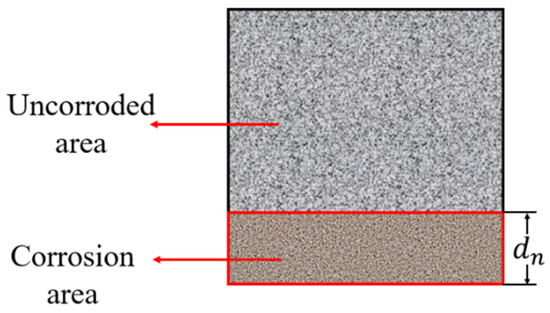
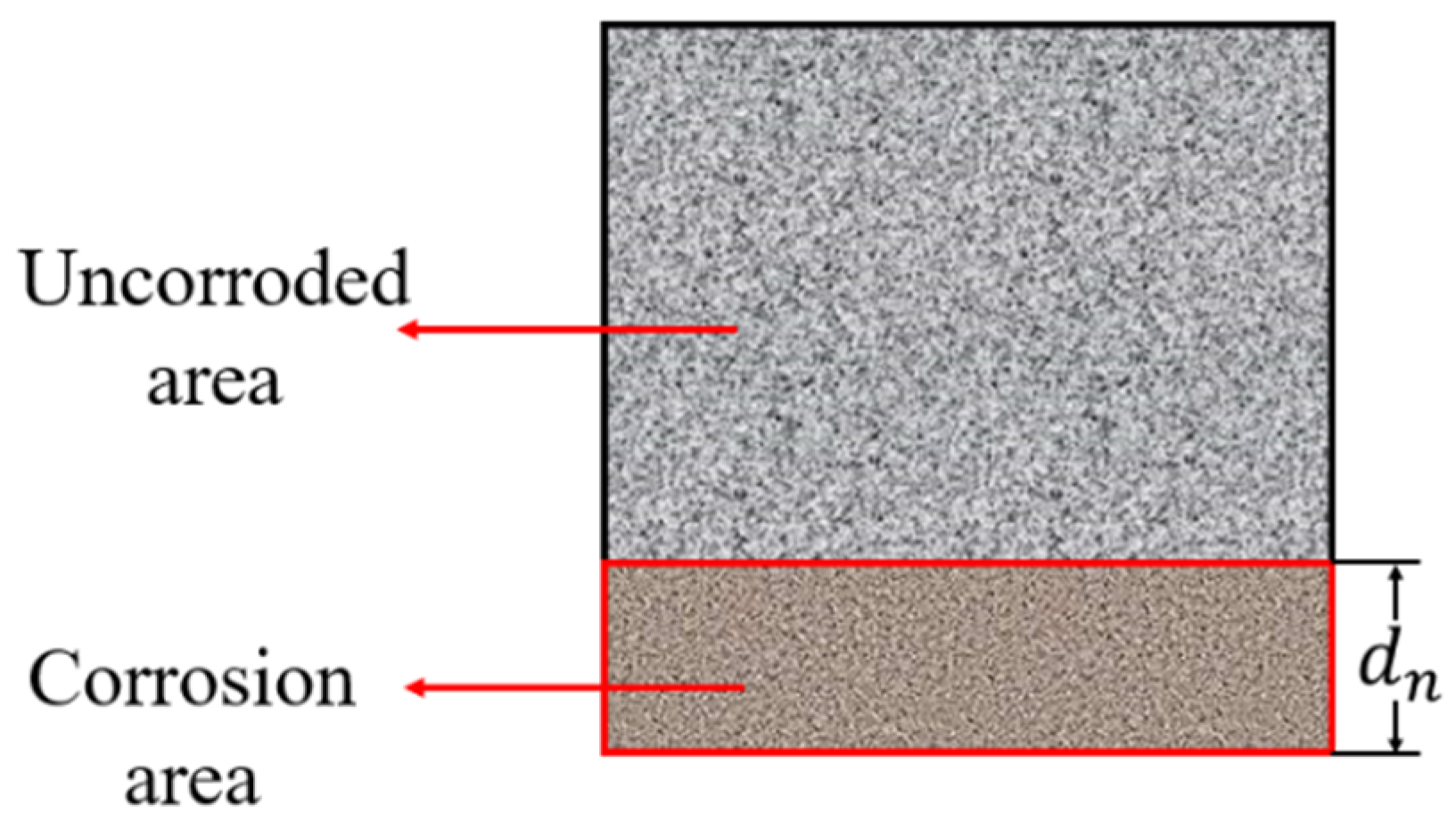
Based on the above assumptions, the specimen is idealised as a layered composite consisting of a corroded zone and an uncorroded core, as illustrated in Figure 11. Let the specimen side length be L = 150 mm; the total loaded cross-sectional area is =150 mm × 150 mm = 22,500 mm2. After the n-th dry–wet exposure, the corrosion depth is dn. The projected area of the corroded zone on the loaded section is Ad,n = Ldn and the remaining uncorroded core area is Au,n = L(L − dn).
Figure 11.
Schematic of corrosion zoning in concrete.
Let the initial compressive strength of uncorroded concrete be . The strength within the corroded region is assumed to vary continuously along the corrosion depth direction, and the local residual strength at depth from the exposed surface is denoted as . Under the compatible deformation assumption, the overall load capacity can be expressed as the sectional stress integral:
For single-sided corrosion, the nominal compressive strength of the specimen after n cycles can be expressed as the combined contribution of the corroded and uncorroded zones:
where is the local residual strength at depth , and is the sectional width weighting function representing the contribution of each depth layer to the overall load capacity.
Considering the lateral confinement induced by epoxy sealing on five faces and the Poisson’s ratio mismatch between the corroded and uncorroded zones, a confinement correction factor is introduced to modify the effective strength contribution of the corroded region.
Under the above assumptions, the specimen is treated as a two-zone composite consisting of a corroded zone and an uncorroded core. By adopting an equivalent uniform strength for the corroded zone and assuming the uncorroded core maintains , the nominal compressive strength after n cycles satisfies the area-weighted relation:
Solving for yields,
Introducing the sectional corrosion ratio and a confinement correction factor accounting for epoxy-induced lateral restraint and Poisson’s ratio mismatch, the back-calculated strength of the corroded zone becomes
Although the proposed model is mathematically closed-form solvable, several physical limitations remain: (1) The damage distribution within the corrosion depth is inherently non-uniform and exhibits a clear gradient. The model idealises the corroded zone as a homogeneous weakened layer, neglecting the severe deterioration near the exposed surface and the relatively intact interior region. Consequently, the actual degradation of surface concrete may be underestimated. (2) Single-sided corrosion induces an asymmetric distribution of material properties across the specimen thickness, causing misalignment between the centroid and stiffness centre. Under compression testing, this asymmetry may generate additional bending moments and eccentric loading effects. The present model assumes concentric compression and therefore does not account for the resulting stress redistribution. (3) During actual crushing, the uncorroded core provides lateral confinement to the outer corroded layer, placing the latter under a quasi-triaxial compression state. This confinement enhances the apparent load-carrying capacity beyond the intrinsic uniaxial material strength. The simple area-weighted approach cannot capture this confinement-induced strengthening, leading to back-calculated corroded-zone strengths that are typically lower than the true material properties.
3.3.2. Back-Calculated Strength of the Corroded Zone
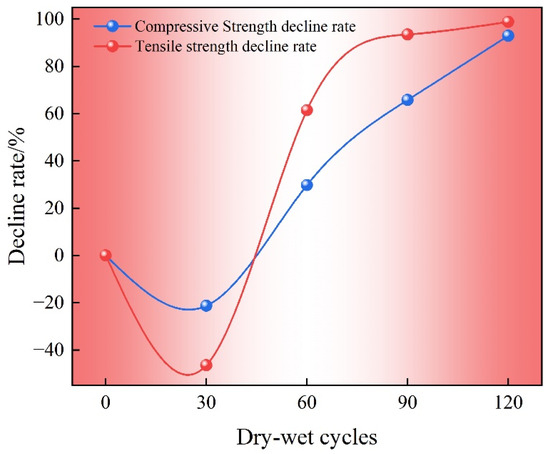
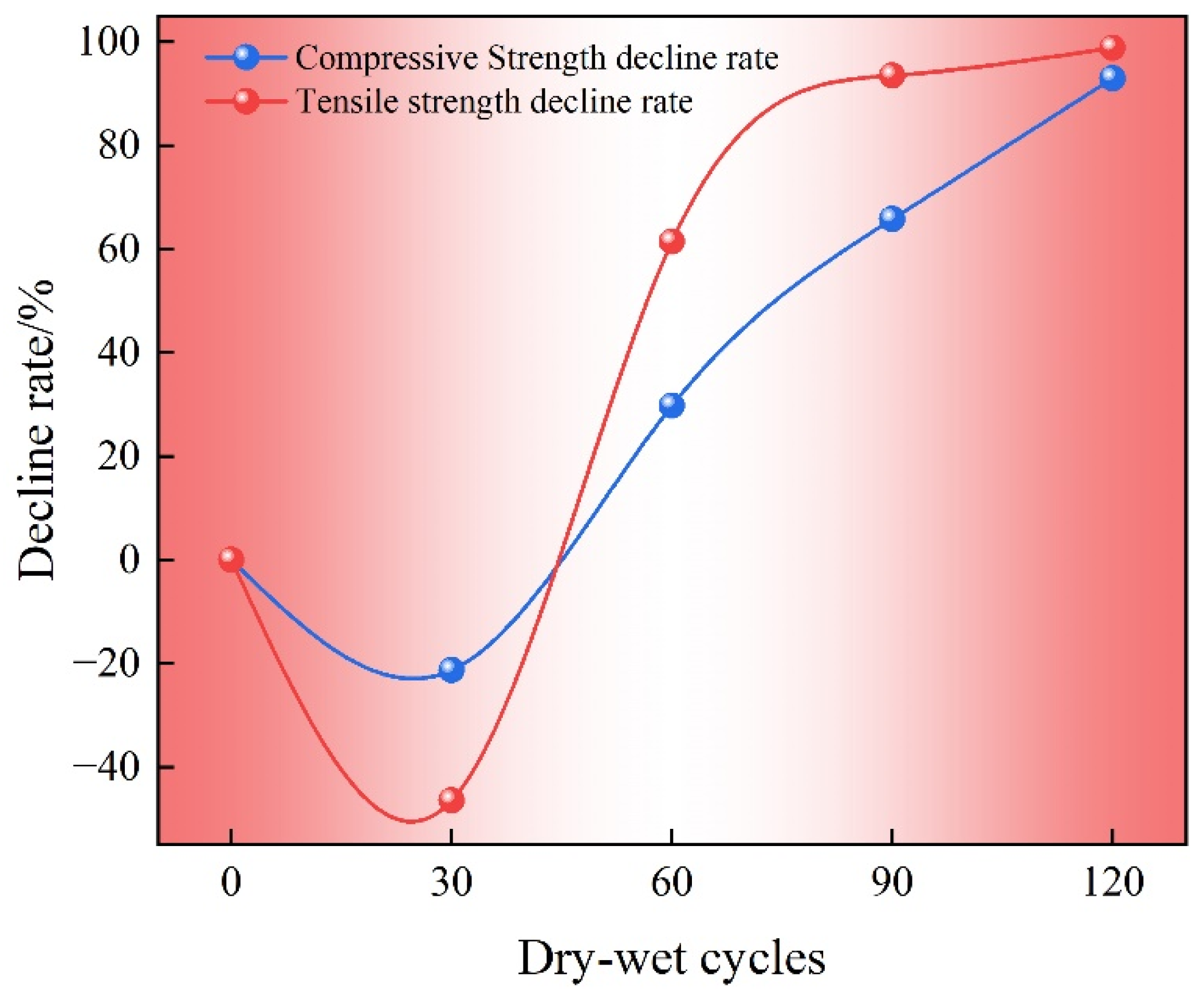
Based on the two-zone mechanical model (corroded zone–intact core), the compressive and tensile strengths of the corroded concrete were back-calculated for different levels of dry–wet exposure. The results are presented in Table 3 and Figure 12. The strength evolution of the corroded zone exhibits a distinct stage-wise pattern with increasing dry–wet cycles, characterised by initial enhancement followed by rapid deterioration. At 30 cycles, the back-calculated compressive strength of the corroded zone reached 35.79 MPa, representing an increase of approximately 21.3% relative to the initial value, indicating a pronounced early-stage strengthening effect. When the number of cycles increased to 60, the trend reversed and entered a stage of rapid degradation, with the compressive strength decreasing to 20.74 MPa, about 29.8% lower than the initial value. With continued exposure, the compressive strength dropped sharply to 1.69 MPa at 120 cycles, corresponding to an overall reduction of approximately 93%. The tensile strength of the corroded zone followed a similar stage-wise evolution, but deteriorated more severely. After 60 cycles, the tensile strength rapidly approached failure; at 90 cycles, it decreased to 0.17 MPa, representing a reduction of approximately 93.5%, indicating a near-complete loss of tensile load-bearing capacity.
Table 3.
Back-calculated compressive and tensile strengths of the corrosion zone.
Figure 12.
Strength degradation trend of the concrete corrosion zone.
Overall, the back-calculated results confirm that both the compressive and tensile strengths in the corroded zone exhibit pronounced stage-dependent evolution under dry–wet corrosion. Early-stage densification caused by pore filling with corrosion products leads to temporary strengthening, whereas the progressive ingress of corrosive media and the accumulation of expansion-induced damage during the later stages result in rapid structural degradation. Comparative analysis indicates that when the number of dry–wet cycles reaches 90 or more, the tensile strength of the corroded zone is nearly exhausted, while the compressive strength still retains limited residual capacity. This suggests that tensile degradation governs the ultimate load-bearing capacity of concrete in oil–gas corrosive environments.
3.3.3. Back-Calculated Elastic Modulus of the Corroded Zone
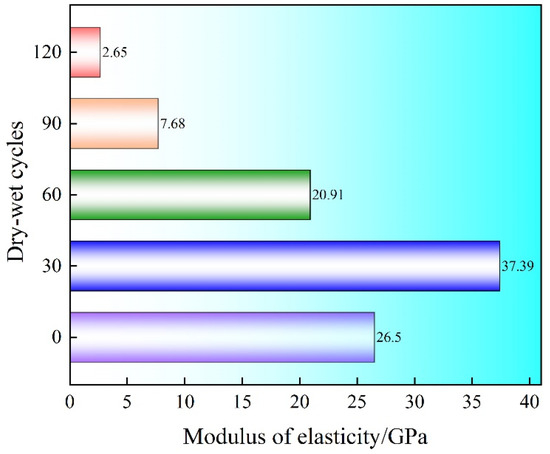
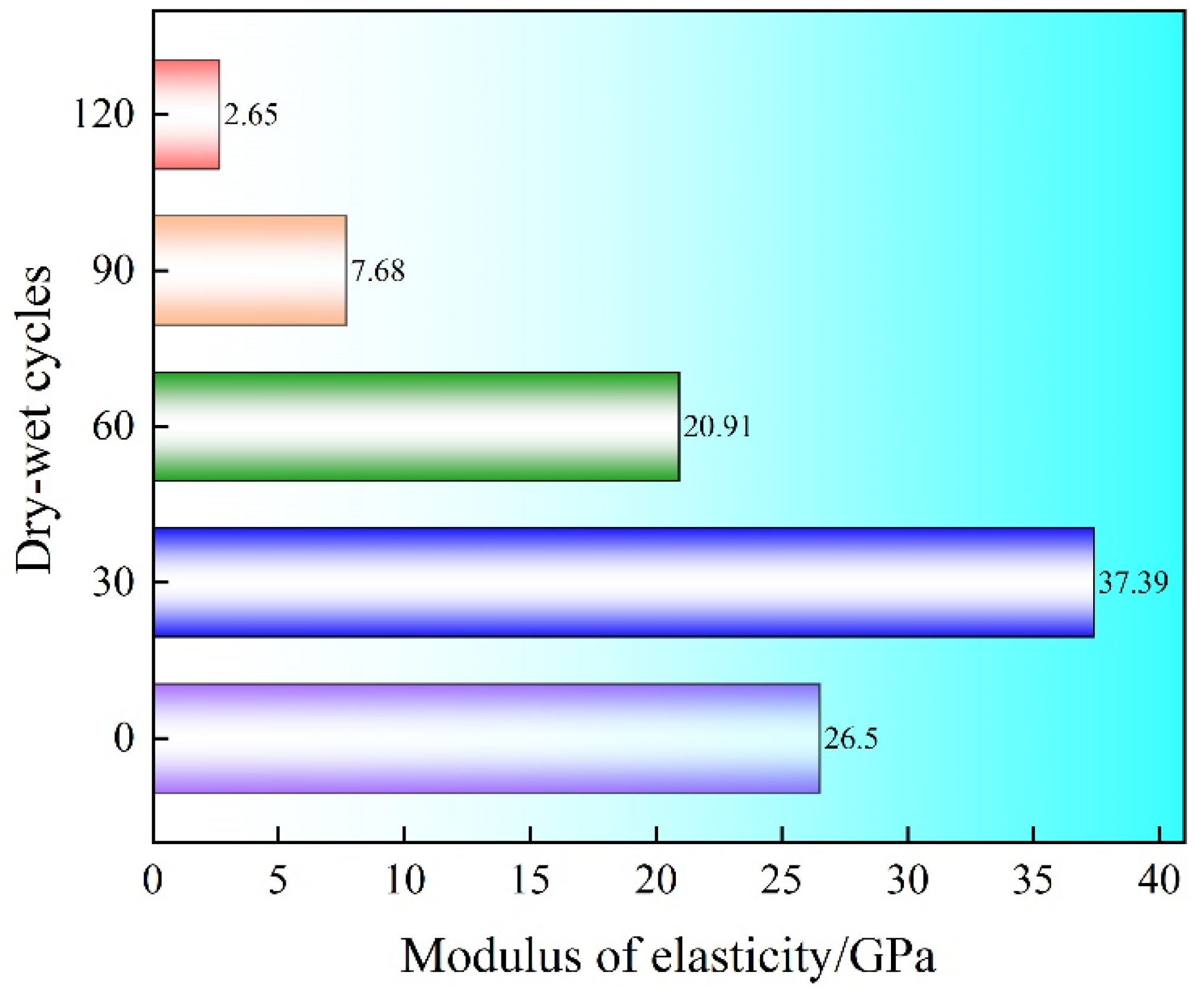
Figure 13 presents the evolution of the elastic modulus of the corroded zone, back-calculated using the two-zone mechanical model under different levels of dry–wet exposure. The results show that the elastic modulus of the corroded concrete exhibits a stage-wise trend similar to that of strength evolution, characterised by an initial increase followed by a rapid decline. For the uncorroded specimens, the elastic modulus was 26.5 GPa. After 60 dry–wet cycles, the back-calculated modulus decreased to 20.91 GPa, representing a reduction of approximately 21.1% relative to the initial value. When the number of cycles increased to 90, the modulus further declined to 7.68 GPa, corresponding to a reduction of about 70%, indicating severe stiffness degradation. After 120 cycles, the elastic modulus dropped to only 2.65 GPa, corresponding to an overall decrease of approximately 90%, implying a near-complete loss of load-bearing stiffness.
Figure 13.
Elastic modulus degradation of the corroded concrete zone.
From the perspective of stiffness deterioration, the elastic modulus of the corroded zone exhibits greater sensitivity to dry–wet corrosion than the strength parameters. Compared with the back-calculated tensile and compressive strengths, the modulus shows a significant reduction at earlier exposure stages and more drastic degradation at later stages, indicating that material stiffness responds more rapidly to corrosion-induced damage. These results suggest that, in oil–gas corrosive environments, stiffness degradation of concrete generally precedes strength failure and plays a dominant role in deformation amplification, crack propagation, and the evolution of structural stability.
4. Numerical Simulation of Tunnel Lining Structure
4.1. Numerical Model and Loading Scheme
4.1.1. Finite Element Model of the Tunnel Structure
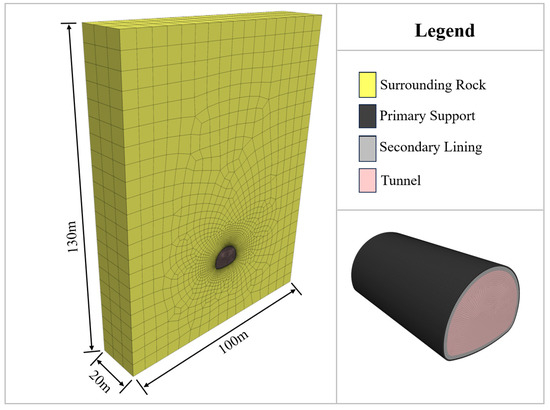
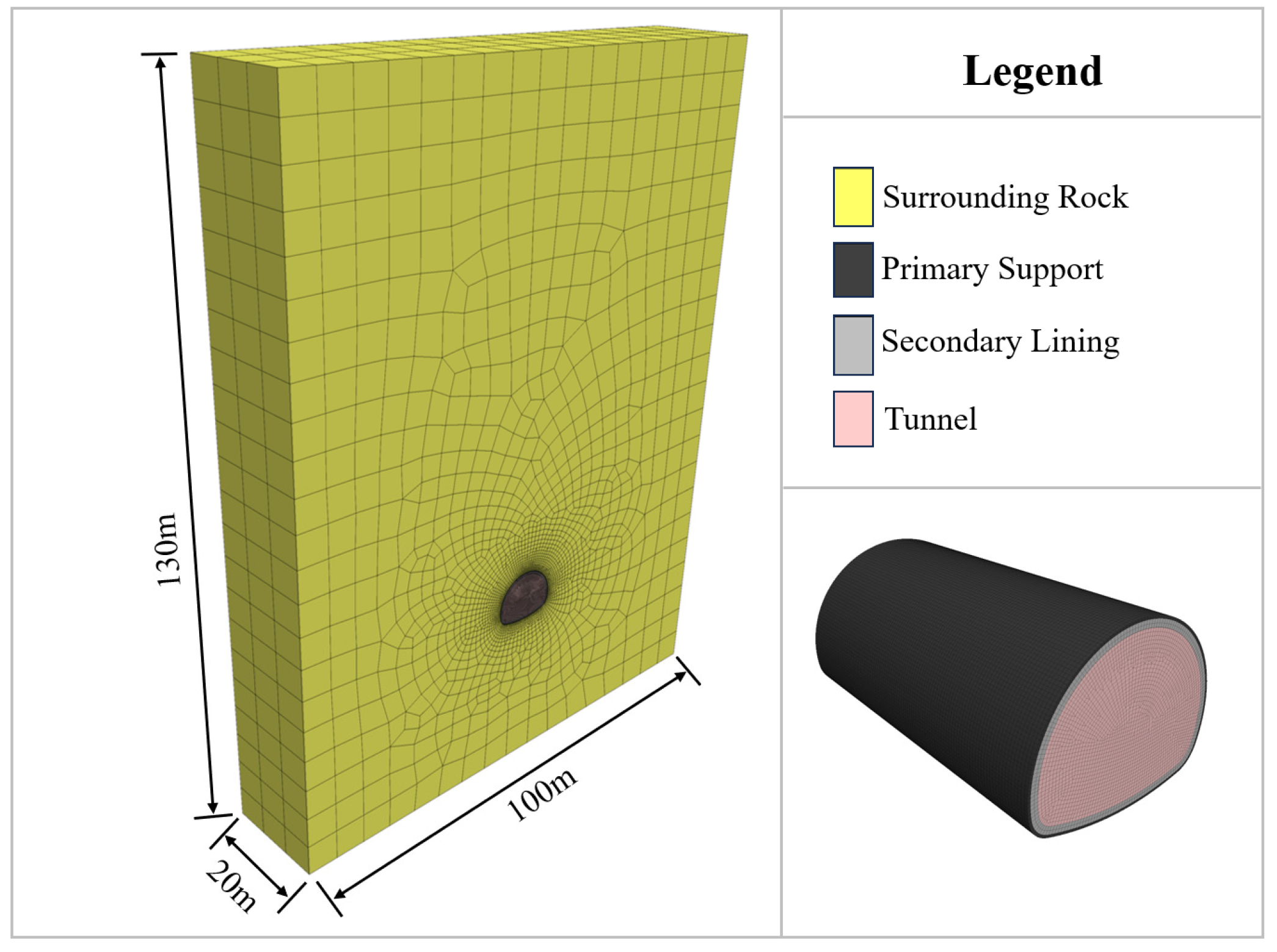
A three-dimensional finite element model was established using finite difference software based on the actual engineering conditions of the Huaying Mountain Tunnel to systematically investigate the influence of corrosion-induced degradation of the primary support on the mechanical behaviour and global stability of the tunnel lining under complex oil–gas corrosive environments. The model geometry, structural configuration, and computational domain were determined according to site geological surveys, design drawings, and relevant specifications to ensure engineering representativeness and reliability of the numerical results. According to the design section of the Huaying Mountain Tunnel, the excavation profile has an approximate height of 10 m and width of 12 m. The primary support consists of shotcrete with a thickness of 15 cm, while the secondary lining is cast-in-place concrete with a thickness of 40 cm. In tunnel numerical simulations, it is generally recommended that the distance between the model boundary and the tunnel contour should be no less than 3–5 times the tunnel span or diameter in order to minimise boundary effects. In the present study, the tunnel span is approximately 12 m, indicating that the lateral extent on one side should be at least 36–60 m according to this principle. The computational domain adopted in this study satisfies this requirement, ensuring that the influence of boundary conditions on the calculated stress and displacement fields is effectively minimised. The longitudinal calculation length of the tunnel was taken as 20 m. The final computational domain dimensions were 100 m (transverse) × 20 m (longitudinal) × 130 m (vertical), as shown in Figure 14. The model was discretised using three-dimensional solid elements, comprising 523,867 elements and 534,611 nodes. Local mesh refinement was applied in the primary support, secondary lining, and adjacent surrounding rock regions to improve the accuracy of stress, deformation, and damage responses of the lining. This discretisation enables realistic simulation of the three-dimensional mechanical behaviour and stability evolution of the lining structure under material degradation conditions.
Figure 14.
Numerical model of the tunnel.
4.1.2. Material Properties and Boundary Conditions
The material parameters of the surrounding rock and lining in the numerical model were determined based on site geological investigation data, laboratory mechanical test results, and tunnel design documents, together with the dry–wet corrosion experiments and back-calculated parameters obtained from the two-zone mechanical model. This approach ensures that the adopted parameters realistically represent the mechanical behaviour of the tunnel structure under complex oil–gas corrosive environments. The mechanical properties of the surrounding rock were obtained from the geological survey report for the investigated section, and a Mohr–Coulomb constitutive model was adopted. Both the primary support and the secondary lining were modelled using linear elastic constitutive relationships. The material parameters of the secondary lining were directly taken from the tunnel design specifications to represent its mechanical performance under normal service conditions. In contrast, the material parameters of the primary support were derived from the laboratory dry–wet corrosion tests and the back-calculation results of the two-zone mechanical model. Under uncorroded conditions, the primary support properties correspond to the measured initial experimental values. Under corroded conditions, the elastic modulus and strength parameters were progressively reduced with increasing dry–wet cycles to simulate material degradation induced by the corrosive environment. It should be noted that the linear elastic constitutive model adopted in this study provides an equivalent representation of the degraded mechanical properties of concrete. The corrosion-induced deterioration is incorporated through parameter reduction, while the explicit nonlinear cracking and damage evolution behaviour are not considered, which may be further addressed in future studies. The basic mechanical parameters used in the model are summarised in Table 4. Regarding the boundary conditions, the top boundary of the model was defined as a free surface, whereas the bottom and lateral boundaries were constrained in the normal direction to represent the in situ confinement of the deep-buried surrounding rock and to minimise boundary effects on the numerical results.
Table 4.
Material parameters used in the numerical model.
4.1.3. Loading Scheme and Monitoring Point Layout
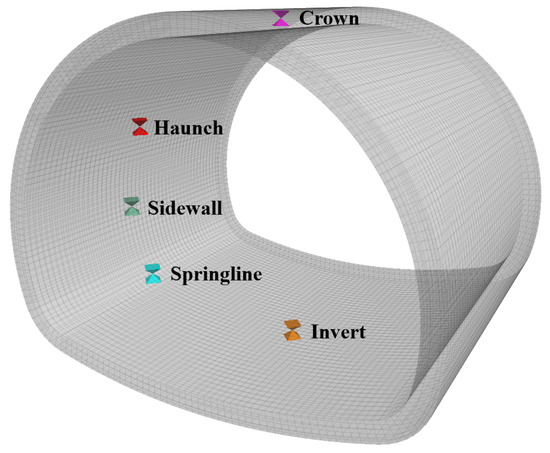
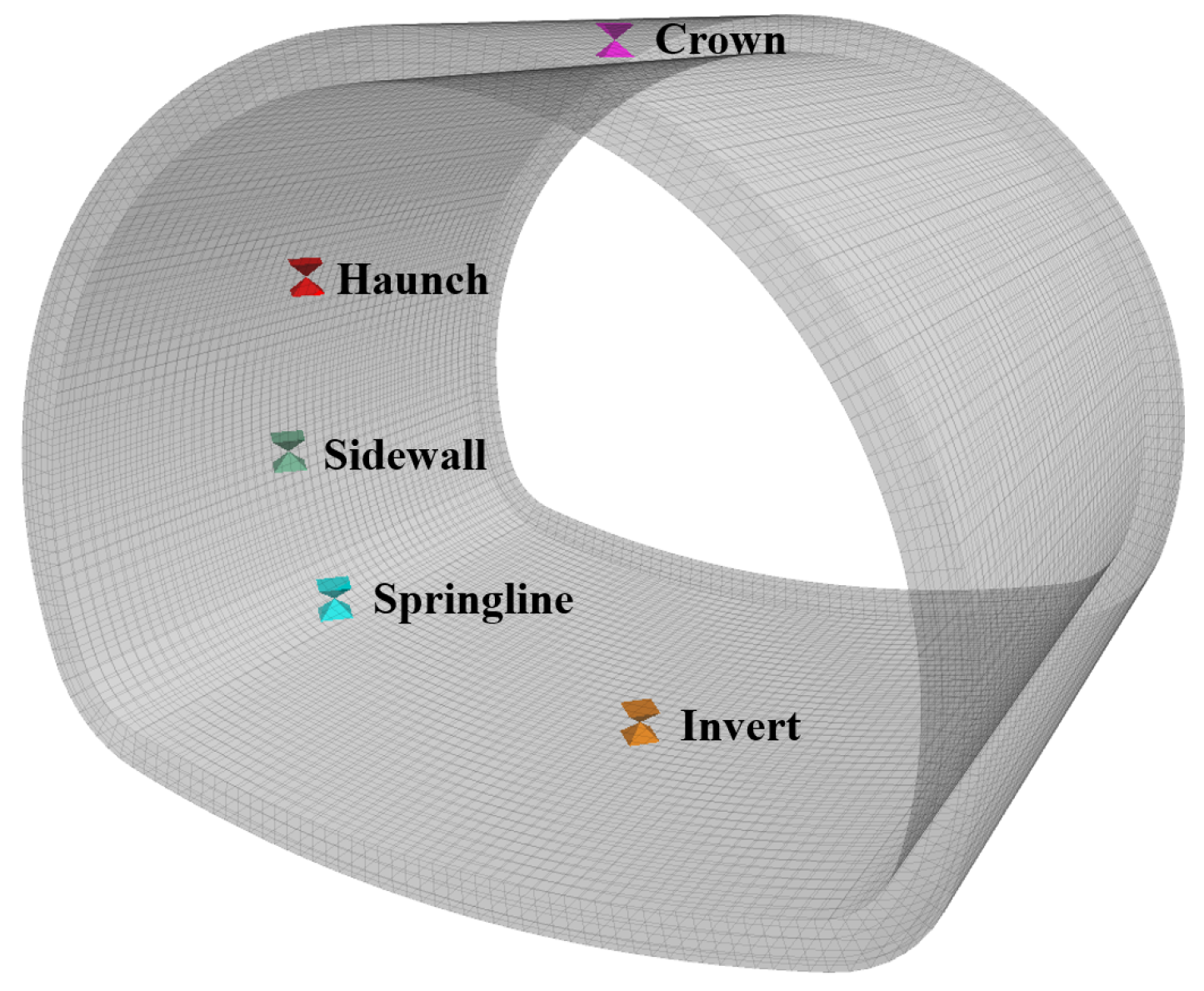
To systematically investigate the influence of corrosion-induced degradation of the primary support on the mechanical response and stability of the tunnel lining under oil–gas corrosive environments, five numerical simulation cases were defined according to the characteristic stages identified in the dry–wet corrosion experiments. These cases correspond to primary support conditions after 0, 30, 60, 90, and 120 dry–wet cycles. Case 1 represents the uncorroded baseline condition, in which both the primary support and secondary lining adopt uncorroded material parameters to simulate the mechanical state of the tunnel under ideal environmental conditions. Cases 2–5 represent corrosion-degraded conditions, in which the properties of the secondary lining remain unchanged, while the material parameters of the primary support are reduced according to the laboratory corrosion tests and the back-calculation results of the two-zone mechanical model. This setup enables evaluation of the effect of the progressive degradation of the primary support on the load-bearing safety of the tunnel lining. To capture the mechanical response of key lining components, stress monitoring points were arranged at representative locations in the primary support and secondary lining, including the crown, haunch, arch foot, sidewall, and invert. These points were used to extract the stress distribution and its evolution under different corrosion conditions. The detailed layout of the monitoring points is shown in Figure 15.
Figure 15.
Monitoring point layout of the tunnel model.
4.2. Mechanical Response and Damage Evolution of Primary Support
4.2.1. Stress Distribution Characteristics
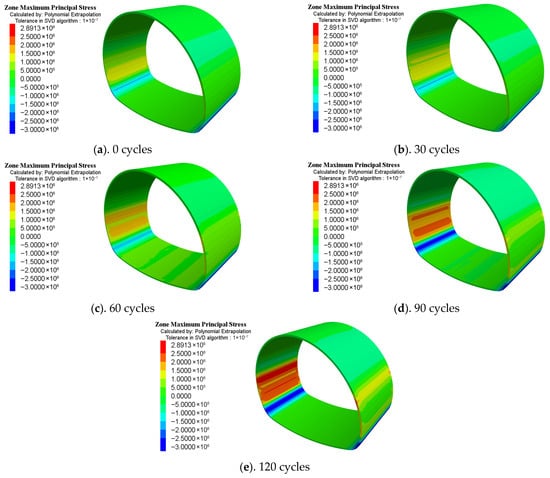
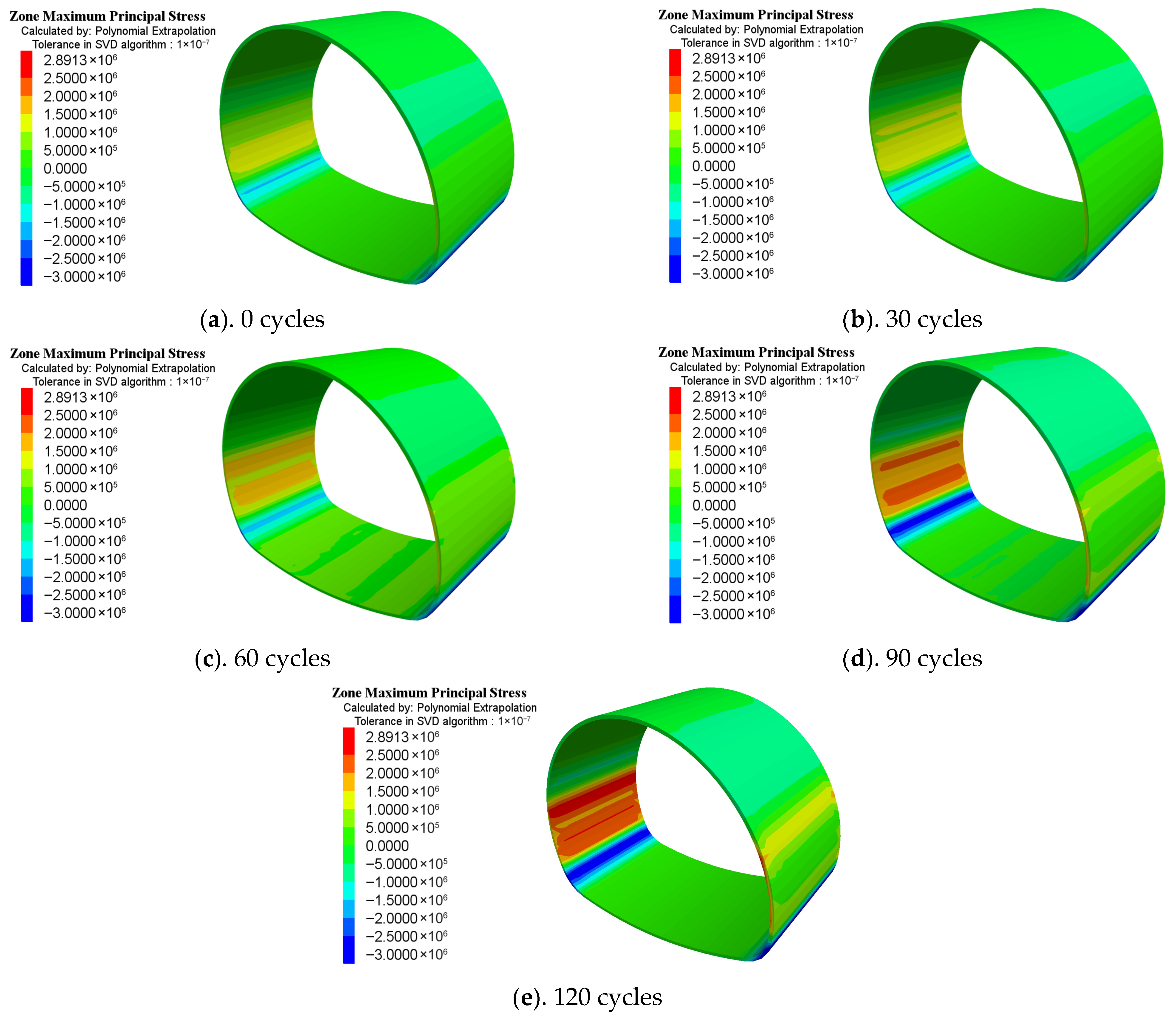
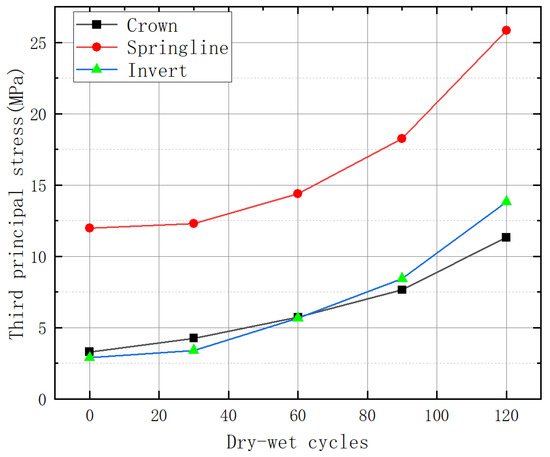
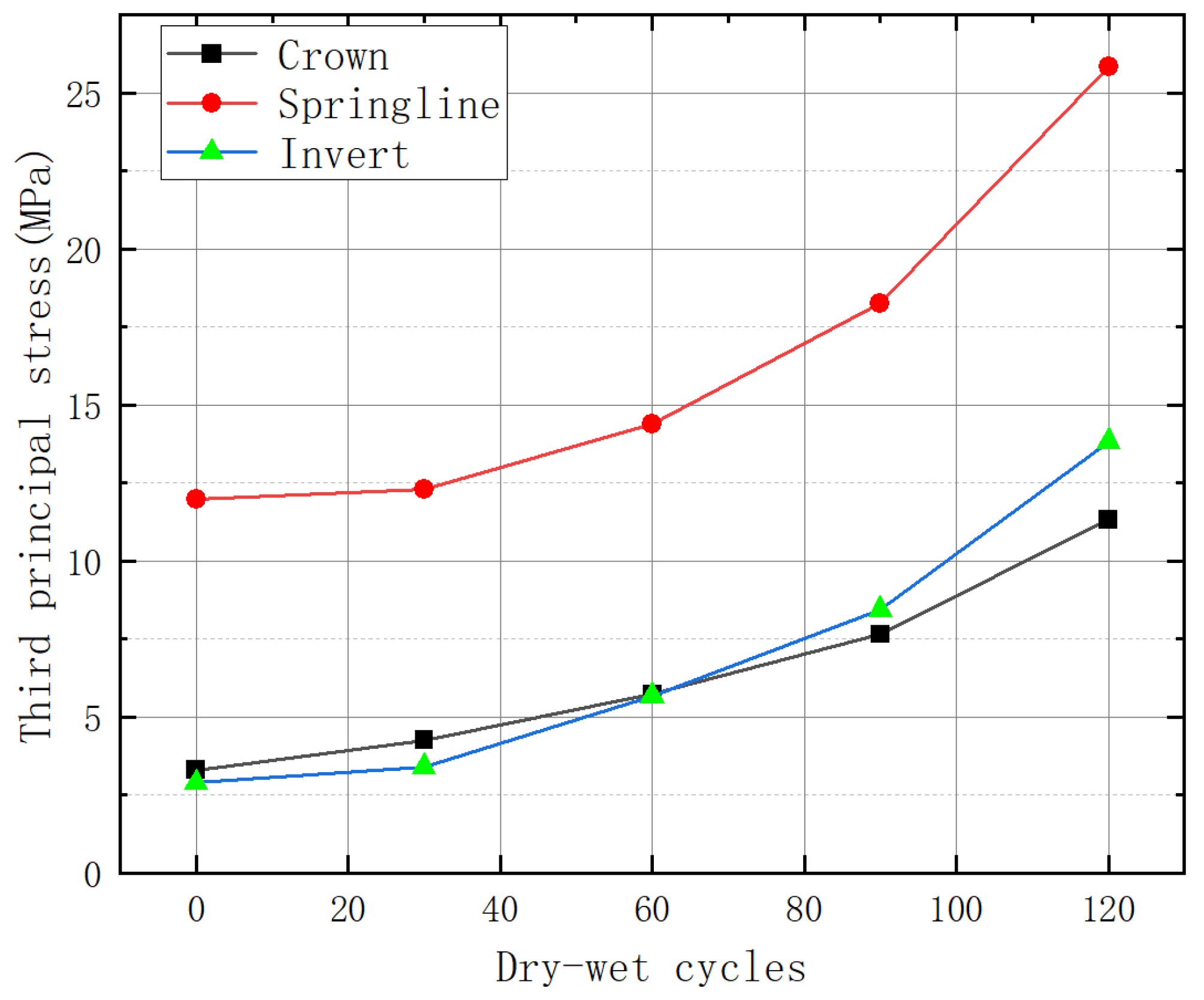
Table 5 presents the numerical tensile stresses at key locations of the primary support under different levels of dry–wet corrosion. Overall, the tensile stresses at all critical positions increase progressively with increasing corrosion severity. As shown in the tensile stress contours in Figure 16, when the number of dry–wet cycles does not exceed 60, the tensile stress at the sidewall remains below 1.54 MPa, which is lower than the tensile strength of the concrete, indicating that the primary support remains in a safe stress state. When the number of cycles increases to 90, the tensile stress at the sidewall reaches 2.05 MPa, approaching the tensile capacity of the corroded concrete and suggesting the initiation of local cracking. At 120 cycles, the tensile stress at the sidewall increases to 2.80 MPa, exceeding the tensile strength threshold of the corroded concrete, indicating that cracks have formed and may propagate along the haunch–sidewall region, thereby posing a significant threat to structural safety. In contrast, the tensile stresses at the arch foot remain relatively low throughout and do not pose a risk of tensile failure. Regarding compressive stress, Figure 17 shows that the inner arch foot is the primary compression-controlled zone of the primary support, where the compressive stress remains the highest among all locations and increases markedly with corrosion level, from 11.96 MPa to 25.85 MPa, representing an increase of about 116%. The compressive stresses at the crown and invert also increase synchronously, from 3.29 MPa to 11.34 MPa and from 2.89 MPa to 13.83 MPa, respectively. When the number of cycles does not exceed 60, the compressive stresses at all locations remain well below the compressive strength of the corroded concrete, and the structure remains in a safe load-bearing state. At 90 cycles, the compressive stress at the arch foot increases to 18.25 MPa, and the local load-bearing margin decreases significantly, indicating the onset of a potential crushing risk. At 120 cycles, the compressive stress at the arch foot approaches the compressive strength limit of the corroded concrete, suggesting that this region reaches a critical crushing state and may experience compressive failure under continued corrosion and long-term loading.
Table 5.
Tensile stress of the primary support under different dry–wet cycles (Mpa).
Figure 16.
Tensile stress contours of the primary support under different dry–wet cycles.
Figure 17.
Stress variation at key monitoring points of the primary support.
Overall, the combined tensile and compressive stress evolution indicates that dry–wet corrosion progressively drives the primary support from a safe stress state to a sequence of “crack initiation—crack propagation—local crushing-critical state”. At crack initiation, microcracks first appear at the interfacial transition zone due to corrosion expansion and dry–wet cyclic stress. As cracking propagates and connects, structural stiffness and bearing capacity degrade continuously, eventually leading to local crushing and the critical state. The haunch–sidewall region governs tensile cracking development, while the inner arch foot is the key compression-controlled failure zone.
4.2.2. Deformation Evolution of the Structure
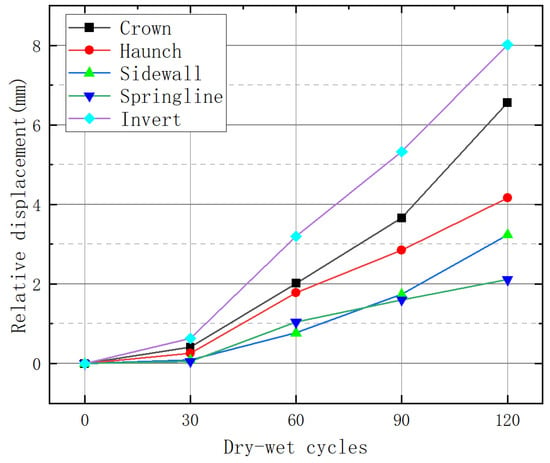
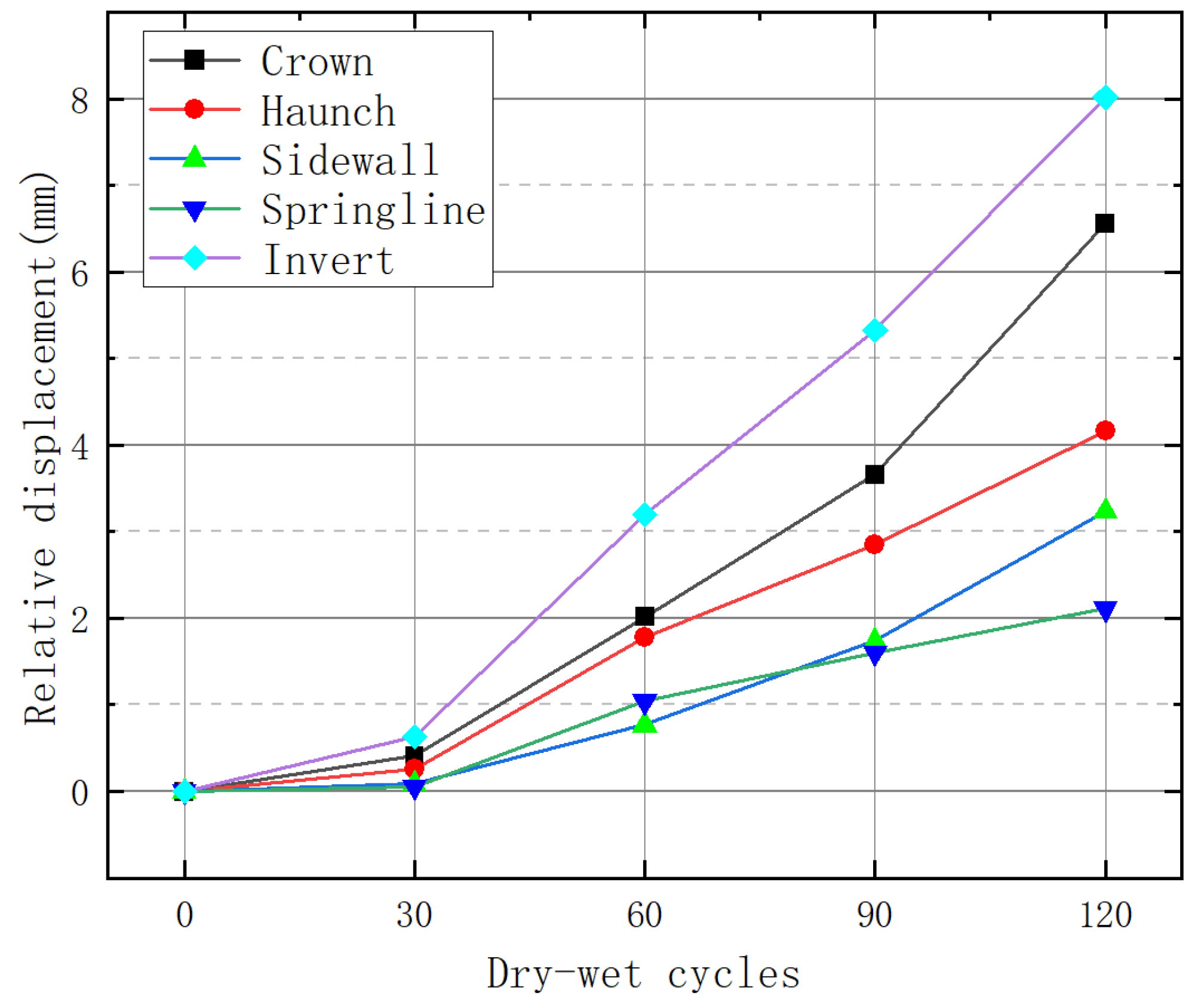
Figure 18 illustrates the displacement evolution at key locations of the primary support relative to the uncorroded state under different levels of dry–wet corrosion. Overall, the relative displacements at all critical positions exhibit pronounced nonlinear growth with increasing corrosion severity, indicating progressive stiffness degradation of the primary support and the corresponding amplification of structural deformation. The crown and invert show the most significant deformation response. After 30 dry–wet cycles, their relative displacements are 0.41 mm and 0.63 mm, respectively; at 120 cycles, these increase markedly to 6.56 mm and 8.02 mm, demonstrating substantial deformation amplification. The haunch and sidewall exhibit accelerated displacement growth during the later stages of corrosion, reaching 4.17 mm and 3.24 mm at 120 cycles. Combined with the tensile stress analysis, the haunch–sidewall region is identified as the tensile stress concentration zone and the primary location for crack initiation and propagation, indicating that the structural response has transitioned from elastic deformation to a stage dominated by damage accumulation and stiffness degradation. The arch foot shows relatively small displacement throughout, reaching only 2.11 mm at 120 cycles; however, the compressive stress analysis indicates that this region remains under sustained high compressive constraint, which limits its deformation.
Figure 18.
Displacement of the primary support under different dry–wet cycles.
Overall, dry–wet corrosion significantly amplifies deformation in key regions of the primary support. The crown and invert are mainly characterised by global deformation amplification; the haunch–sidewall region governs tensile cracking and damage propagation; and the arch foot, although exhibiting small displacement, still has a potential risk of compressive crushing under sustained high compressive stress.
4.2.3. Damage Factor Evolution
To quantify the degradation level and crack evolution of the primary support under dry–wet corrosion, a scalar damage factor d was introduced to characterise the material damage state, where d = 0 represents intact material and d = 1 denotes complete failure [47]. The damage factor is calculated using Equation (6):
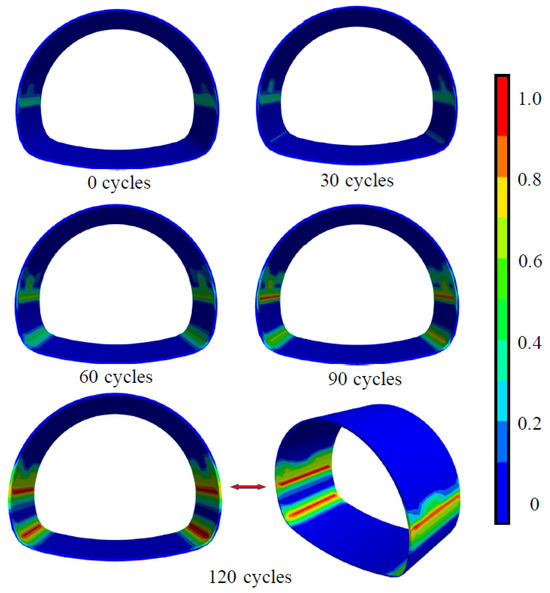
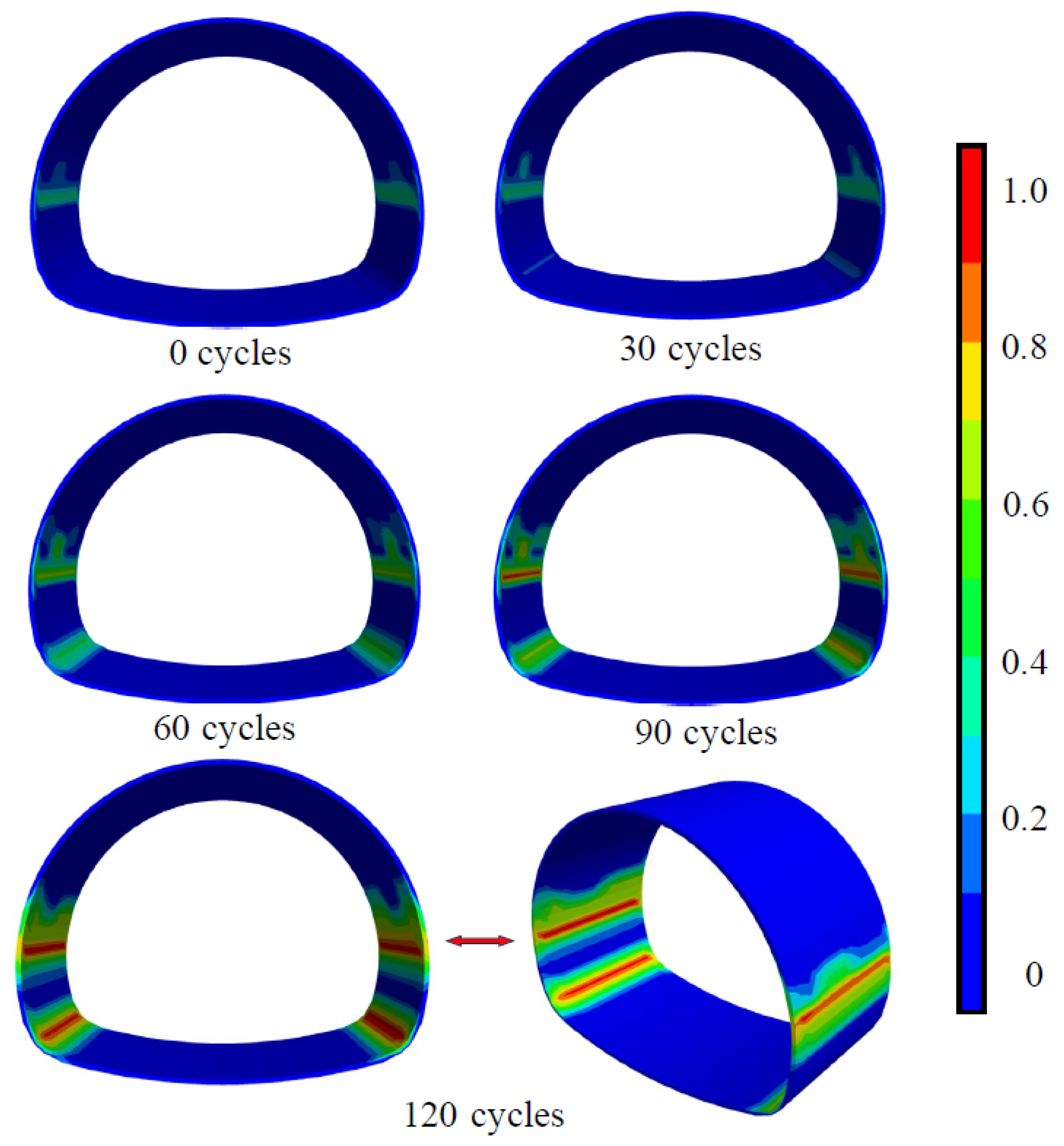
where is the principal stress, is the corresponding principal strain, and is the initial elastic modulus of uncorroded material. The damage factor distribution of the primary support under different numbers of dry–wet cycles, as obtained from the numerical simulations, is shown in Figure 19. Overall, the damage factor of the primary support increases progressively with corrosion severity, and the structural damage evolves from a slight-damage stage to a severe-damage stage, with the sidewall and arch foot identified as the dominant damage concentration zones. When the number of cycles does not exceed 30, the damage is minor and localised at the sidewall, with a maximum damage factor of about 0.3, indicating that the structure remains intact and in the elastic stage. At 60 cycles, the damage region expands significantly, with damage factors of approximately 0.5 at the sidewall and 0.4 at the arch foot, indicating the onset of cumulative damage and stiffness degradation, while structural continuity is still maintained. At 90 cycles, the damage factor at the inner sidewall rapidly increases to about 0.9, indicating severe material deterioration and crack formation, while the damage factor at the arch foot increases to about 0.7, suggesting intensified damage in the key compression-controlled region and reduced structural integrity. At 120 cycles, the damage factors on both sides of the sidewall exceed 0.9, indicating through-cracking and loss of integrity; the damage factor at the arch foot also approaches 0.9, implying a compression-critical state under the combined effects of high compressive stress and material degradation, and the primary support enters a severe damage stage.
Figure 19.
Damage contours of the primary support.
These results indicate that dry–wet corrosion significantly accelerates damage accumulation in the primary support, with the structural evolution following a staged pattern of “slight damage—damage expansion—crack formation—through failure”. The sidewall governs tensile cracking damage, while the arch foot is the key region for compression damage and potential crushing failure, which is consistent with the stress and deformation characteristics discussed above.
4.3. Safety Analysis of Secondary Lining
4.3.1. Evolution of Safety Factors at Key Lining Locations
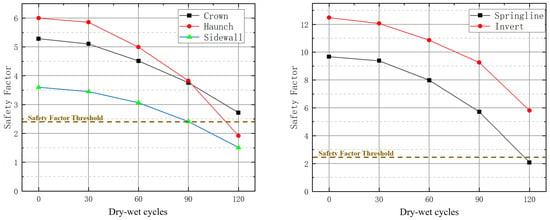
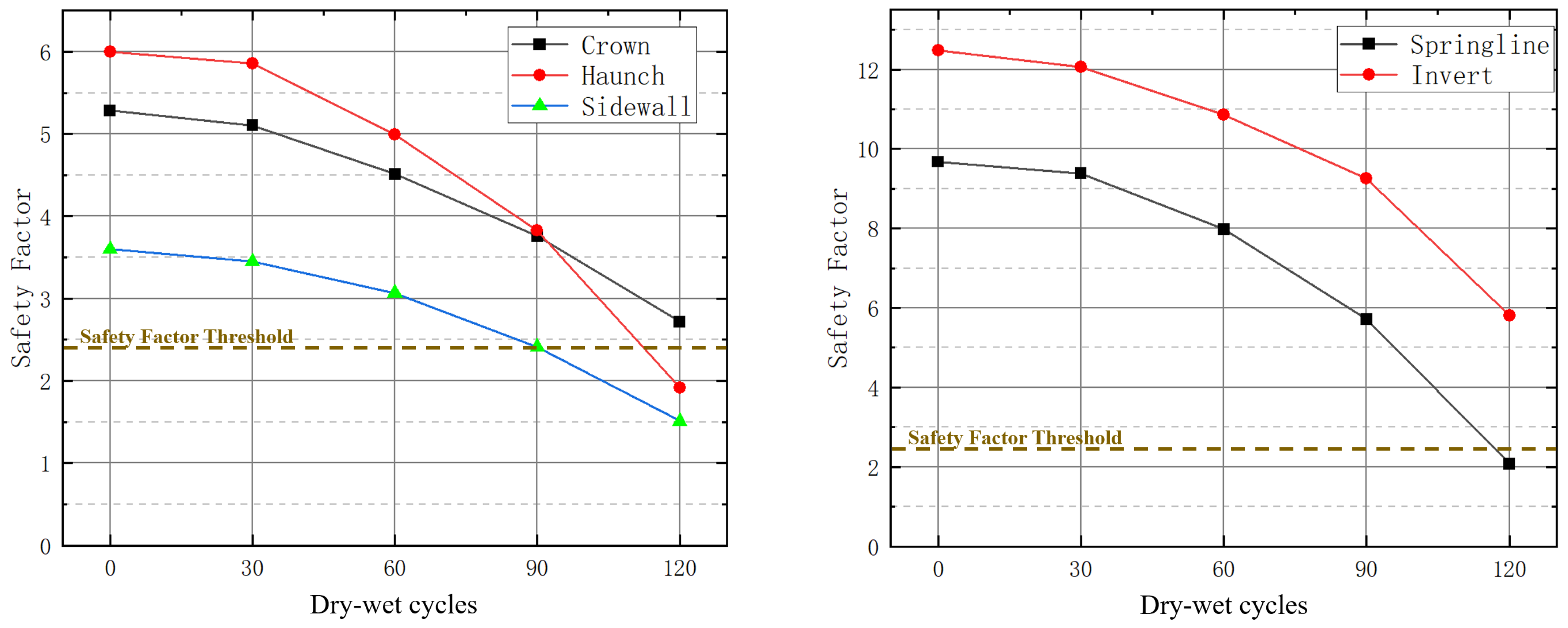
The evolution of safety factors at typical locations of the secondary lining under different degradation levels of the primary support induced by dry–wet corrosion is shown in Figure 20. The safety control line corresponds to the code-required safety factor of 2.4 for the tensile limit state of the secondary lining [48]. Overall, as the corrosion severity of the primary support increases, the safety factors at all lining locations gradually decrease, with a more rapid reduction during the later stages of corrosion, indicating a progressive loss of structural safety reserve. The crown and invert maintain relatively high safety levels despite noticeable reductions. The safety factor at the crown decreases from 5.3 to 2.7, representing a reduction of 49.1%, while that at the invert decreases from 12.5 to 5.8, corresponding to a reduction of 53.6%. Both remain above the code limit throughout all corrosion stages, indicating relatively low sensitivity to primary-support degradation and a retained safety margin. The haunch and sidewall are the most critical tensile-controlled regions. The safety factor at the haunch decreases from 6.0 to 1.9, representing a reduction of 68.3%. It enters a rapid degradation stage after 90 cycles and falls below the code limit at 120 cycles. The sidewall consistently exhibits the lowest safety factor, decreasing from 3.6 to 1.5, corresponding to a reduction of 58.3%. It reaches the code limit at 90 cycles and falls well below it at 120 cycles, indicating a complete loss of safety reserve and identifying the sidewall as the primary control location for secondary-lining safety. The arch foot exhibits the largest reduction, decreasing from 9.7 to 2.1. Although it initially has a high safety factor, it declines sharply during the later stages of corrosion and falls below the code limit at 120 cycles, indicating a significant reduction in load-bearing safety and a potential crushing risk under the combined effects of primary-support degradation and load redistribution.
Figure 20.
Safety factors at key locations of the secondary lining.
Overall, corrosion-induced degradation of the primary support leads to a progressive reduction in the safety factors of the secondary lining. The sidewall reaches and exceeds the code limit first and therefore governs structural safety; the haunch and arch foot become potential failure zones during the later stages; and although the crown and invert retain some safety margin, their safety reserve is significantly reduced. This evolution of safety factors is consistent with the stress concentration and damage patterns identified in the primary support.
4.3.2. Structural Safety Probability and Rating
The tunnel lining structure is a statically indeterminate system composed of multiple sections, and its deformation and failure are constrained by the surrounding rock. Therefore, in practical engineering, the failure of an individual section of the lining structure does not necessarily indicate the failure of the entire lining structural system [49]. The cross-section of the lining is divided into five subsystems forming a series structural system, in which the failure of any subsystem will lead to the overall failure of the tunnel at that cross-section. Each subsystem can be further divided into elements connected in parallel. The failure of individual elements within a subsystem does not necessarily result in subsystem failure; only when most elements in a subsystem fail will the subsystem be considered failed, which may subsequently lead to the failure of the entire lining structural system.Based on the previously calculated safety factors of the sections, it is possible to determine whether the elements within each subsystem have a risk of failure. The safety probability of each subsystem is denoted as and the overall safety probability P of the lining structural system can be calculated according to Equation (8):
where is the safety probability of the -th subsystem, P is the safety probability of the lining structural system, represents the number of dangerous sections in the -th subsystem, and represents the total number of sections in the -th subsystem.
According to the five-level safety classification specified in the code [50], the structural safety probability and corresponding safety grade of the secondary lining under different degradation levels of the primary support were determined, as shown in Table 6 and Table 7. When the primary support experienced 0 and 30 dry–wet cycles, the structural safety probability of the secondary lining was 1.0, corresponding to Grade I safety, indicating an intact structural state with high stability and sufficient safety reserve under uncorroded or slightly corroded conditions. As the number of cycles increased to 60, the safety probability decreased to 0.8 (Grade II), indicating moderate performance degradation while the structural state remained controllable. This stage is consistent with the progressive reduction in safety factors at key locations, reflecting the onset of the cumulative influence of primary-support deterioration on lining safety. At 90 cycles, the safety probability further decreased to 0.6 (Grade III), indicating moderate structural damage and a continued reduction in safety reserve, with defects showing a tendency to develop. At 120 cycles, the safety probability decreased to 0.4 (Grade IV), indicating severe structural deterioration, a significant reduction in load-bearing capacity and stability, and a potential risk to traffic safety, thereby requiring strengthening or rehabilitation measures.
Table 6.
Safety classification of tunnel lining under corrosion conditions.
Table 7.
Evolution of safety classification at key locations of the secondary lining.
Overall, with increasing corrosion-induced degradation of the primary support, the structural safety probability of the secondary lining exhibits a staged and irreversible decline, with the safety grade progressively deteriorating from Grade I to Grade IV. Degradation of the primary support reduces its stiffness and load-bearing capacity, causing progressive load transfer to the secondary lining and inducing internal force redistribution and local stress concentration, ultimately resulting in a continuous loss of safety reserve and accelerated performance deterioration.
5. Discussion
This study systematically investigates the evolution of mechanical properties of tunnel primary support concrete subjected to wet–dry cycles in a complex oil–gas corrosive environment, as well as its influence on the structural safety of the secondary lining. Relative to existing research, this work presents the following distinct features and innovative contributions:
First, at the material scale, prior studies have mostly concentrated on the performance degradation of concrete attacked by single corrosive media, such as sulphate, chloride, CO2, or H2S (e.g., Li [5], Tan [13], Guo [16]). While these investigations have clarified the effects of chemical corrosion on the microstructure and mechanical behaviour of concrete, they generally adopted artificially formulated corrosive solutions and overlooked the coupled impact of the in situ oil–gas–water multiphase medium and wet–dry cycling in real tunnels. In this research, accelerated wet–dry cycle tests were performed using crude-oil–formation-water mixture sampled from the construction site, which realistically replicates the deterioration process of concrete under the complex corrosive conditions during tunnel construction and long-term service. Second, regarding mechanical characterisation, a dual-zone mechanical model comprising a corroded layer and an uncorroded core was developed, and the evolution of mechanical parameters in both zones was derived via experimental back-analysis. The results demonstrate that the tensile strength and stiffness of concrete in the corroded zone deteriorate markedly earlier than the compressive strength. This outcome supplements the conventional single-parameter analyses based on bulk concrete (Zhuang [32], Wang [34], Ye [35]) and underscores the significance of differentiating mechanical properties between the corroded and intact regions. Third, from the perspective of structural response, numerical simulations were conducted to quantify the effects of primary support degradation on the stress, deformation, and safety factors of the secondary lining. The findings reveal that, as corrosion intensifies, the sidewall emerges as the critical load-bearing component, whose safety factor decreases below the code-specified threshold earlier than any other section. This analytical framework incorporates the interaction between primary support and secondary lining and captures the multi-stage evolution of structural safety risks, thereby providing a quantitative basis for safety evaluation of tunnel structures. It overcomes the limitations of earlier studies that analysed the lining in isolation or focused only on individual defects (Li [31], Kuang [33]).
Despite the above contributions, some limitations of the proposed method should be noted. First, the dual-zone mechanical model simplifies the actual non-uniform corrosion gradient into uniform corroded and intact zones, which may slightly underestimate the deterioration degree of the concrete surface layer. In addition, microstructural analyses, which are valuable for fully elucidating the deterioration mechanisms of concrete, were not conducted in this study. Second, the laboratory accelerated wet–dry cycle tests cannot fully reproduce the long-term in situ corrosion rate, multi-field coupling environment, or actual stress state of tunnel structures during service. Third, a linear elastic constitutive model was adopted in the numerical simulation, without considering the plastic damage development and time-dependent creep behaviour of concrete under long-term corrosion. These limitations will be further addressed in future research through the adoption of more refined models, long-term field monitoring data, and complementary microstructural characterisation.
6. Conclusions
- (1)
- Under the coupled action of multiphase oil–gas–water media and dry–wet cycles in non-coal oil- and gas-bearing strata, the mechanical properties of primary support concrete exhibit a pronounced stage-wise evolution. In the early stage, pore filling by corrosion products leads to temporary increases in compressive strength, tensile strength, and elastic modulus. With an increasing number of cycles, aggressive media progressively penetrate inward and degrade the microstructure, resulting in rapid deterioration. After 120 cycles, the overall compressive strength, tensile strength, and elastic modulus decrease by approximately 18.9%, 23.1%, and 17.4%, respectively.
- (2)
- Back-calculation based on the corrosion–intact dual-zone mechanical model shows that deterioration in the corroded zone is significantly more severe than that in the overall material and is more sensitive to dry–wet cycling. At 120 cycles, the compressive strength of the corroded zone decreases from 29.5 MPa to 1.69 MPa, the tensile strength from 2.6 MPa to 0.02 MPa, and the elastic modulus from a peak of 37.39 GPa to 2.65 GPa (approximately 90% reduction). These results indicate that the degradation of tensile capacity and stiffness precedes compressive failure and governs the load-bearing limit and deformation amplification of the primary support.
- (3)
- Numerical simulation demonstrates that degradation of primary support properties markedly amplifies structural stress, deformation, and damage responses. As the number of cycles increases from 0 to 120, the maximum tensile stress at the sidewall rises from 0.99 MPa to 2.80 MPa, exceeding the post-corrosion tensile strength, while the compressive stress at the arch foot increases from 11.96 MPa to 25.85 MPa (≈116%), indicating intensified stress concentration. The relative displacements at the crown and invert reach 6.56 mm and 8.02 mm, respectively, reflecting significant stiffness loss. Damage evolution shows a uniform-damage stage (d < 0.5) within 60 cycles, followed by a crack-dominated stage at 90 cycles when the sidewall damage factor exceeds 0.9 and through-cracks form, with the arch foot simultaneously entering the 0.7–0.9 range.
- (4)
- Corrosion-induced degradation of the primary support significantly reduces the structural safety of the secondary lining. The safety factor at the sidewall is the first to fall below the code limit of 2.4 at 90 cycles, making it the governing critical location, while the arch shoulder and arch foot deteriorate rapidly in the later stage. The overall safety probability of the secondary lining decreases from 1.0 to 0.4, and the safety grade progressively deteriorates from Grade I to Grade IV, indicating a potential risk to traffic safety. This evolution is essentially driven by the loss of stiffness and load-bearing capacity of the primary support, which transfers surrounding-rock loads to the secondary lining and induces internal force redistribution, thereby continuously reducing the safety reserve.
- (5)
- The results suggest that, in tunnels excavated in oil- and gas-bearing strata, corrosion protection and performance retention of the primary support during the construction and early operation stages should be prioritised. The adverse influence of primary-support degradation on the safety of the secondary lining should be explicitly considered in design and operational safety assessment. Practical measures, including material optimisation, protective coatings, and drainage improvement, are recommended to mitigate corrosion-induced degradation. It should be noted that this study is subject to certain limitations, including the use of accelerated laboratory conditions and simplified modelling assumptions. These aspects will be further addressed in future work.
Author Contributions
Methodology, J.H.; Software, J.H.; Validation, X.W.; Formal analysis, X.W. and Y.W. (Yukai Wu); Investigation, B.Y. and Y.W. (Yukai Wu); Resources, Q.Z.; Data curation, Q.Z.; Writing—original draft, B.Y.; Writing—review & editing, Y.W. (Yu Wang) and J.H.; Project administration, Y.W. (Yu Wang). All authors have read and agreed to the published version of the manuscript.
Funding
This research received no external funding.
Data Availability Statement
The data presented in this study are available on request from the corresponding author.
Conflicts of Interest
Author Baijun Yue and Yu Wang were employed by the company Sichuan Chuanjiao Road and Bridge Co., Ltd., Quanwei Zhu was employed by the company China Railway Southwest Research Institute Co., Ltd. The remaining authors declare that the research was conducted in the absence of any commercial or financial relationships that could be construed as a potential conflict of interest.
References
- Chen, Z.; Kou, H.; Yang, W.; He, C.; Li, Y. Case study on the mechanical behavior of tunnel support structures during construction in mountainous areas of southwestern China. Tunn. Constr. 2020, 40, 800–812. [Google Scholar] [CrossRef]
- Luo, S. Comparative Analysis of Hydrogeological Characteristics and Water Inflow in a Tunnel Project in Southwest China. Groundwater 2024, 46, 47–48+160. [Google Scholar]
- Zhang, K. Geological Evaluation of a Tunnel Project in Southwest China. Jiangxi Build. Mater. 2023, 210–211. [Google Scholar] [CrossRef]
- Ghobadi, M.H.; Firuzi, M.; Asghari-Kaljahi, E. Relationships between geological formations and groundwater chemistry and their effects on the concrete lining of tunnels (case study: Tabriz metro line 2). Environ. Earth Sci. 2016, 75, 987. [Google Scholar] [CrossRef] [Scilit]
- Li, F.; Wang, C.; Ge, G.; Wang, J.; Liu, X. Corrosion and Mechanical Properties of Cast-in-Situ Concrete under Sulfate Erosion. Concrete 2024, 57–63. [Google Scholar] [CrossRef]
- Yang, S. Durability of Ultra-High Performance Concrete under Sulfate-Dry-Wet Cycle Coupling Effects. Master’s Thesis, Xi’an University of Technology, Xi’an, China, 2023. [Google Scholar]
- Wan, Z.; Xiao, Z. Macroscopic Performance Evolution of Concrete Eroded by High-Concentration Sulfate and Magnesium Salts. Constr. Technol. Dev. 2024, 51, 8–10. [Google Scholar] [CrossRef]
- Yang, W. Study on Fatigue Performance and Fatigue Life of Concrete in Corrosive Environment. Master’s Thesis, East China Jiaotong University, Nanchang, China, 2023. [Google Scholar]
- Liu, P.; Zhang, R.; Xue, Y.; Wang, X.; Dou, X.; Zhang, X. Study on the degradation behavior and life prediction of concrete under alternating dry-wet sulfate action. Mater. Her. 2025, 39, 218–223. [Google Scholar]
- Li, L.; Tang, X.; Zhu, P.; Wang, H. Preliminary study on the dual erosion resistance of high-sulfate cement concrete against sulfate and magnesium salts. J. Hydraul. Eng. Archit. Eng. 2016, 14, 197–199+231. [Google Scholar] [CrossRef]
- Niu, D.; Yang, R.; Lü, Y.; Sun, X.; Cao, Z.; Wu, H. Study on the Performance Degradation of Concrete under the Combined Effects of SO2 and CO2. Mater. Her. 2025, 39, 152–158. [Google Scholar]
- Li, X.; Wang, Q.; Lei, L.; Shi, Z.; Zhang, M. Amphiphobic concrete with good oil stain resistance and anti-corrosion properties used in marine environment. Constr. Build. Mater. 2021, 299, 123945. [Google Scholar] [CrossRef] [Scilit]
- Tan, C.; Wang, M.; Chen, R. Study on the Oil Well Cement-Based Composites to Prevent Corrosion by Carbon Dioxide and Hydrogen Sulfide at High Temperature. Coatings 2023, 13, 729. [Google Scholar] [CrossRef] [Scilit]
- Agzamov, F.; Moldabayeva, G.; Syzdykov, A. Mechanism of Cement Stone Damage by Hydrogen Sulfide in Oil and Gas Wells. ES Mater. Manuf. 2025, 28, 1584. [Google Scholar] [CrossRef] [Scilit]
- She, C.; Zheng, Y.; Chen, L. Corrosion law of cement paste under hydrogen sulfide conditions in natural gas wells. Front. Mater. 2023, 10, 1247086. [Google Scholar] [CrossRef] [Scilit]
- Guo, X.; Gu, T.; Li, Z.; Cheng, X.; Zheng, Y. Corrosion mechanism of hydrogen sulfide on cement stone in wet environment. Nat. Gas Ind. 2015, 35, 93–98. [Google Scholar] [CrossRef]
- Yan, S.; Wang, J.; Qing, D. Study on the Corrosion of Cement Stone by Hydrogen Sulfide. Oilfield Chem. 2010, 27, 366–370+394. [Google Scholar]
- Peng, Q. Study on Corrosion Mechanisms and Anti-Corrosion Measures of Cement Stone in Acidic Environments. Master’s Thesis, Chongqing University of Science and Technology, Chongqing, China, 2024. [Google Scholar]
- Yin, Z.; Song, J.; Wang, X.; Xu, M. Improvement of the resistance to carbon dioxide corrosion of oil well cement by micron diabase powder in high-temperature environment. Constr. Build. Mater. 2024, 452, 138884. [Google Scholar] [CrossRef] [Scilit]
- Shill, S.K.; Al-Deen, S.; Ashraf, M.; Hossain, M.M. Residual properties of conventional concrete repetitively exposed to high thermal shocks and hydrocarbon fluids. Constr. Build. Mater. 2020, 252, 119072. [Google Scholar] [CrossRef] [Scilit]
- Chen, Z.; Cheng, G.; Yang, C. Reflections on Scientific Research Related to the Safety of Major Infrastructure Projects in China. J. Civ. Eng. 2016, 49, 1–5. [Google Scholar]
- Binke, C.; Zhiqiang, Z.; Yinjun, T. Study on structural mechanical characteristics and safety warning of NATM tunnel in aquifer. Mar. Georesources Geotechnol. 2024, 42, 88–103. [Google Scholar]
- Shi, J.; Ma, J.; Xu, Y. Study on Cracking Mechanism and Influencing Factors of Concrete Lining in Plateau Tunnels. Railw. Stand. Des. 2021, 1–11. [Google Scholar]
- Zhong, Z.; Zhou, L.; Shen, Z.; Wang, Q.; Zhou, X. Study on the influence of lining structure type on temperature and stress field of high rock temperature tunnel. Case Stud. Therm. Eng. 2025, 75, 107171. [Google Scholar] [CrossRef] [Scilit]
- Meng, G.; Liu, G.; Su, S.; Li, H.; Liang, J.; Zhu, X.; Cai, M. Optimization of reinforced—Steel fiber concrete secondary lining design for mountain tunnels: Field tests and numerical simulations. Constr. Build. Mater. 2025, 477, 141301. [Google Scholar] [CrossRef] [Scilit]
- Liu, D.; Zhong, F.; Huang, H. Present status and development trend of diagnosis and treatment of tunnel lining diseases. China J. Highw. Transp. 2021, 34, 178−199. [Google Scholar]
- Dong, F.; Fang, Q.; Zhang, D.; Xu, H.; Li, Y. Analysis on defects of operational metro tunnels in Beijing. China Civ. Eng. J. 2017, 50, 104−113. [Google Scholar]
- Wu, J.; Zhang, D.; Wang, M. Current damage situation of railway operation tunnels and their inspection and evaluation. China Saf. Sci. J. 2003, 13, 49. [Google Scholar]
- Zhou, S. Assessment Approach for Healthy Condition of Highway Tunnels Lining Structure based on Variable Fuzzy Sets Theory. Master’s Thesis, Chang’an University, Xi’an, China, 2015. [Google Scholar]
- Zhou, M.; Cheng, W.; Zhang, D. Automated 3D inspection and visualization of structural defects in shield tunnel linings. J. Basic Sci. Eng. 2021, 29, 1265. [Google Scholar]
- Li, B.; Lei, M.; Li, W. Influence of defects on structural safety of lining in operational highway tunnels. J. Railw. Sci. Eng. 2011, 8, 40. [Google Scholar]
- Zhuang, Y. Study on Corrosion Degradation Mechanism and Safety Evaluation of In-Service Tunnel Linings in Sulfate Environment. Ph.D. Thesis, Chongqing University, Chongqing, China, 2024. [Google Scholar]
- Kuang, N.; Peng, L.; Lei, M.; Xie, S. Study on the Corrosion Behavior of Tunnel Linings under Sulfate Action. Tunn. Constr. 2011, 31, 311–314. [Google Scholar]
- Wang, J.; Huang, H.; Xie, X.; Bobet, A. Void induced liner deformation and stress redistribution. Tunn. Undergr. Space Technol. 2014, 40, 263−276. [Google Scholar] [CrossRef] [Scilit]
- Ye, Z.; Yang, Y.; Ye, Y. Three-dimensional effects of multiple voids behind lining on the mechanical behavior of tunnel structure. Ain Shams Eng. J. 2023, 14, 101949. [Google Scholar] [CrossRef] [Scilit]
- Zhang, T.; Kou, Z.; Zhang, X.; Li, Y. Study on mechanism of lining cracking and distribution rule of void cracks behind lining based on XFEM. Mech. Adv. Mater. Struct. 2024, 31, 10695−10706. [Google Scholar] [CrossRef] [Scilit]
- Zhang, S.; Qi, X.; Liu, C. Distribution characteristics of voids behind lining of highway tunnel and its influence on lining structure. J. Archit. Civ. Eng. 2020, 37, 62−70. [Google Scholar]
- Meguid, M.A.; Dang, H.K. The effect of erosion voids on existing tunnel linings. Tunn. Undergr. Space Technol. 2009, 24, 278–286. [Google Scholar] [CrossRef] [Scilit]
- Leung, C.; Meguid, M.A. An experimental study of the effect of local contact loss on the earth pressure distribution on existing tunnel linings. Tunneling Undergr. Space Technol. 2011, 26, 139. [Google Scholar] [CrossRef] [Scilit]
- Wang, H.; Qiu, W.; Du, L.; Gong, L. Research on Prediction Model of Durability Life of Tunnel Liner Concrete Against Sulfate Erosion. Mod. Tunn. Technol. 2014, 51, 91–97. [Google Scholar]
- Jiang, Q.; Shi, L.; Liu, J. Analysis and Countermeasures of Sulfate Corrosion Damage in Tunnel Lining Concrete in Southwest China. Tunn. Constr. 2016, 36, 918–923. [Google Scholar]
- JGJ 63-2006; Standard for Water Used in Concrete. Ministry of Housing and Urban-Rural Development of the PRC: Beijing, China, 2006.
- GB/T 50081-2002; Standard for Test Methods of Mechanical Properties on Ordinary Concrete. China Academy of Building Research: Beijing, China, 2007.
- GB/T 50082-2009; Standard for Test Methods of Long-Term Performance and Durability of Ordinary Concrete. General Administration of Quality Supervision, Inspection and Quarantine of the PRC: Beijing, China, 2009.
- GB/T 50081-2019; Standard for Test Methods of Concrete Physical and Mechanical Properties. Chinese Standard Publishing: Beijing, China, 2019.
- Hu, Y.; Duan, F.; Zheng, M.; Dong, Y.; Zhu, Y.; Cai, Y.; Zhu, D. Deterioration and damage mechanisms of concrete under high-temperature and sulfate-rich environments. J. Build. Eng. 2025, 114, 114221. [Google Scholar]
- Zeng, Y.; Hu, L.M. Calculation, Conversion and Verification of Parameters for Concrete Plastic Damage Constitutive Model in ABAQUS. Water Resour. Power 2019, 37, 106–109. [Google Scholar]
- JTG 3370.1-2018; Specifications for Design of Highway Tunnels—Part 1: Civil Engineering. Transportation: Beijing, China, 2018.
- Chenghua, S.; Mingfeng, L.; Limin, P. Study on the Structural System Reliability of Tunnel Lining. J. Railw. Sci. Eng. 2010, 7, 20–24. [Google Scholar]
- Ministry of Railways. Interim Provisions for Safety Grade Evaluation of Lining in Operating Railway Tunnels; Ministry of Railways: Beijing, China, 2004. [Google Scholar]

Disclaimer/Publisher’s Note: The statements, opinions and data contained in all publications are solely those of the individual author(s) and contributor(s) and not of MDPI and/or the editor(s). MDPI and/or the editor(s) disclaim responsibility for any injury to people or property resulting from any ideas, methods, instructions or products referred to in the content. |
© 2026 by the authors. Licensee MDPI, Basel, Switzerland. This article is an open access article distributed under the terms and conditions of the Creative Commons Attribution (CC BY) license.