Synergizing Policy, Cost, and Technology in Green Building Renovation: A Multi-Stakeholder Satisfaction Perspective

Abstract
1. Introduction
2. Methods
3. Result
3.1. Analysis of the Main Factors Affecting the Green Transformation of Buildings
3.2. Multidimensional Obstacle Identification and Influence Mechanism Analysis of Green Building Renovation
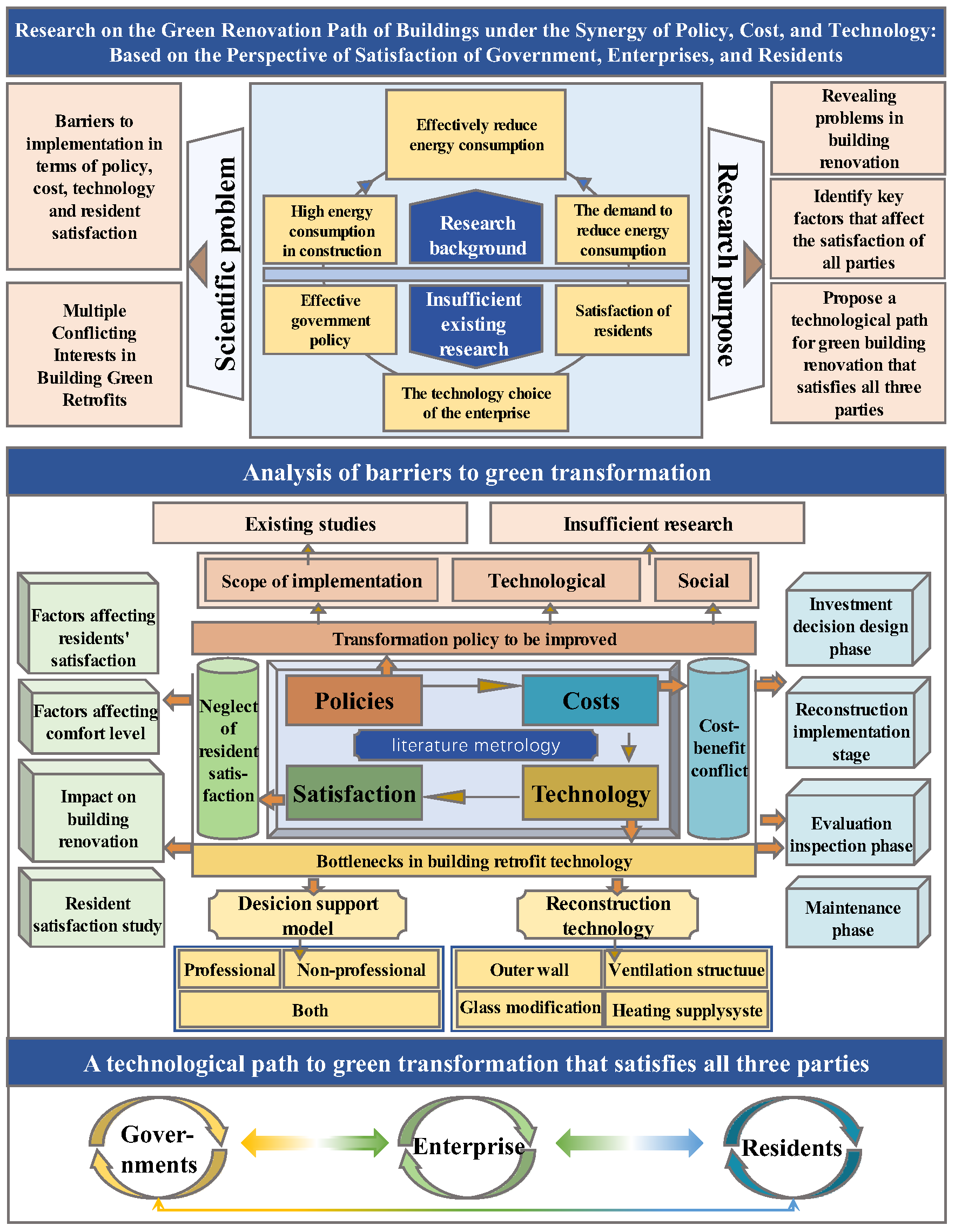
3.2.1. National Building Renovation Policy to Be Improved
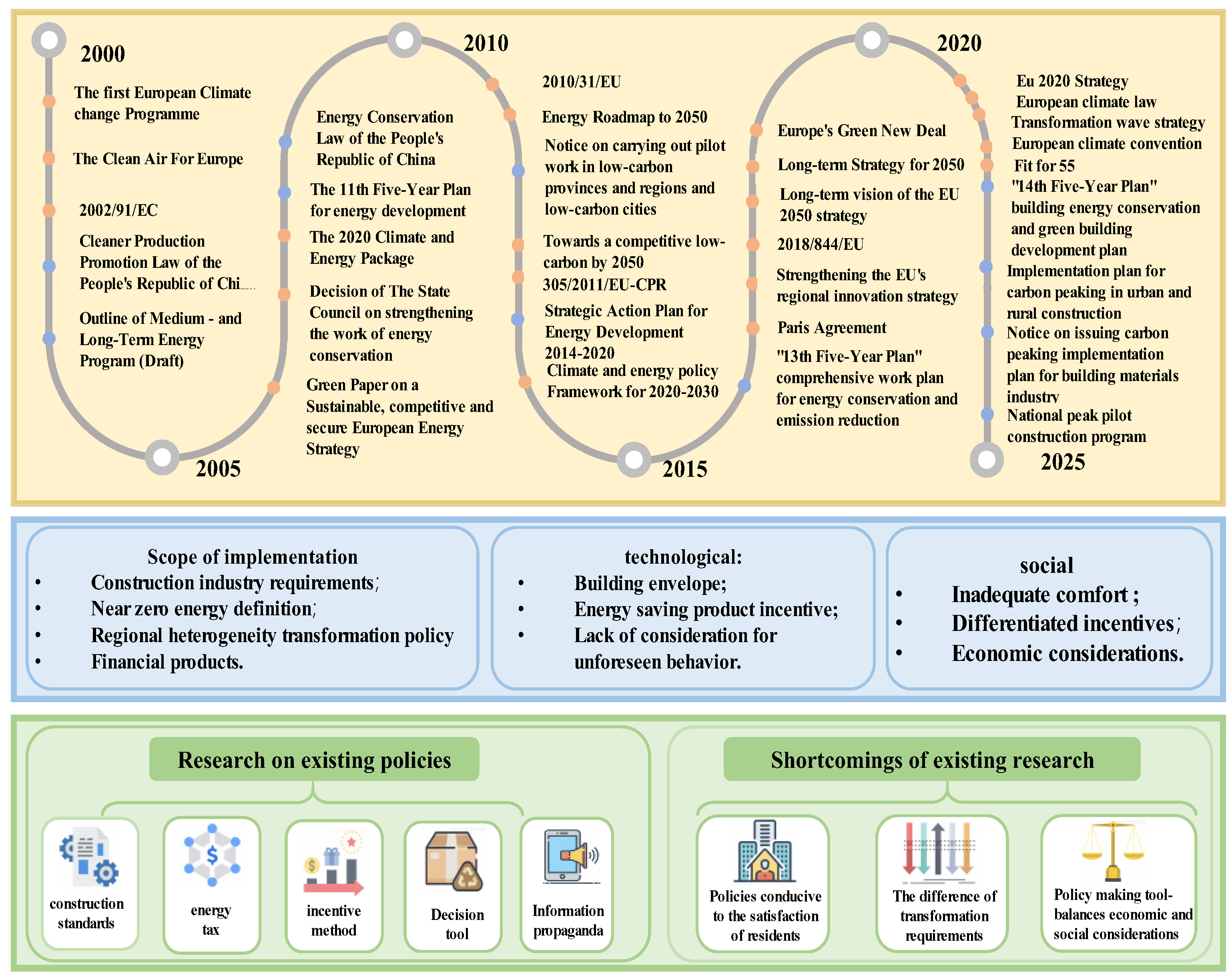
- In terms of the scope of policy implementation, except for the EU’s Energy Performance of Buildings Directive [1], there are fewer references to emissions reductions in the building sector, and there is a lack of clarity on the definition of near-zero energy consumption [64,65], leading to differences in the understanding of building retrofitting across countries [66]. Therefore, the definition of standards still needs further refinement [67]. Secondly, with economic development as well as regional differences across the EU countries and China, and with public policy formulation being the result of multiple stakeholders with different values, views, and preferences [68], it is difficult to realize EU carbon emissions reductions using only the same policies. For example, the EU Strategy on Adaptation to Climate Change recommends that the EU establish common climate scenarios and methodological standards, and requires that climate resilience be incorporated into policy-making [69]. However, significant disparities among EU member states in terms of economic development, risk exposure, and administrative capacity have led to marked variations in the effectiveness of implementing uniform policies. Therefore, regionally differentiated retrofit policies should be formulated according to economic conditions, climate change, and development status. In addition, the government’s policy support for developing financial products and technical support for enterprises with different strengths needs to be improved, which can promote the efficiency of green building transformation [70]. The China’s “Comprehensive Work Plan for Energy Conservation and Emission Reduction during the 13th Five-Year Plan Period” states that price formation mechanisms should be improved for households and tax incentive policies should be refined for enterprises [71]. However, it lacks guidance on how to resolve core conflicts of interest—such as cost sharing, benefit distribution, and risk sharing—that inevitably arise during the retrofitting process. The China’s “National Guidelines on Climate, Environmental Protection, and Energy Subsidies” permit subsidies to cover the “full incremental costs” of green investments [19]. However, the methodology for calculating “net incremental costs” is complex and relies on comparisons with “alternative projects.” This requirement may limit the participation of small and medium-sized enterprises and individual property owners with limited resources and capacity.
- Regarding technology policies, most current policies point out that energy upgrades for doors, home appliances, heating systems and so on are conducive to reducing energy waste in buildings. However, there is less support for retrofitting building envelopes [72]. In fact, improvements in the building envelope’s energy efficiency also contribute to realizing of cost-environmental benefits [73]. Second, the use of energy-saving technologies and products during renovation helps improve the energy efficiency of buildings [74]. However, incentive policies supporting these technologies and products need to be further refined to increase participation by businesses and residents. However, there is no incentive policy to support energy-saving technologies and products to increase the participation of enterprises and residents. Finally, there are fewer technical support policies for predicting the behavior of managers and construction workers in the process of green retrofitting of buildings [75], which tends to cause an increase in costs and thus increase the difficulty of retrofitting. Furthermore, the implementation of many macro-level policies leads to disparities among countries in terms of enforcement rigor and regulatory resources. For example, the EU’s Energy Performance of Buildings Directive (EPBD) must be transposed into national law. These disparities result in the fragmentation of internal market rules within the EU, affecting overall emission reduction progress and the level playing field. Additionally, the requirement for mandatory retrofitting of non-residential buildings with the lowest energy performance places financing pressures on small and medium-sized property owners [1].
- Regarding the social aspects of the policy, most policies are based on economic and environmental examinations and do not consider residents’ comfort. The study of residents’ comfort with the policy is not comprehensive enough, and there is a need to formulate policies based on residents’ health as well as their sense of experience [76]. For example, the policies outlined in the China’s 14th Five-Year Plan for Building Energy Efficiency and Green Building Development do not provide any incentives or funding guidance for investments aimed at enhancing the climate resilience of buildings, thereby neglecting the core need to ensure building safety and the health of occupants in the context of climate change [77]. Secondly, Baek and Park (2012) [41] suggest that financial support is vital in the renovation policy of residential buildings because there is usually a relatively high correlation between residents’ financial ability and housing quality. Moreover, based on the current domestic and international policies, it can be found that the subsidy policies still need to be continuously improved and still lack incentive strategies for building energy retrofits that apply to different building types, different income households, and different levels of regional development [78]. In addition, some of the policies lack economic incentives to increase business and user participation. At the same time, economic consideration and support for businesses and residents are still insufficient to address the problem of harmonizing the interests of businesses and residents [78]. The China’s “Decision of the State Council on Strengthening Energy Conservation” proposes “implementing effective incentive policies” and states that “localities with the necessary conditions may provide appropriate financial support for certified energy-saving products that meet advanced national energy efficiency standards”. However, it does not specify the exact form of such financial support, nor does it distinguish between the incentive needs of different sectors [79]. However, the China’s Interim Measures for the Administration of Energy Conservation and Emission Reduction Subsidies, the Energy Conservation Law, the General Specifications for Energy Conservation in Buildings and the Use of Renewable Energy, and the targets of the 14th Five-Year Plan are effective for China because robust central planning and administrative enforcement enable the rapid breakdown and implementation of national goals, resulting in high efficiency in promoting the large-scale construction of green buildings and infrastructure. These approaches should be maintained and optimized. The European Union has ensured the long-term stability of its low-carbon goals through a rigid legal framework, including the European Climate Act, the Energy Performance of Buildings Directive, the National Subsidies Guide on Climate, Environment, and Energy, and the European Climate Act. However, future efforts should focus on simplifying rule enforcement, reducing compliance costs, and ensuring cross-border capital flows to support less developed member states.
3.2.2. Cost–Benefit Conflicts in Building Renovation
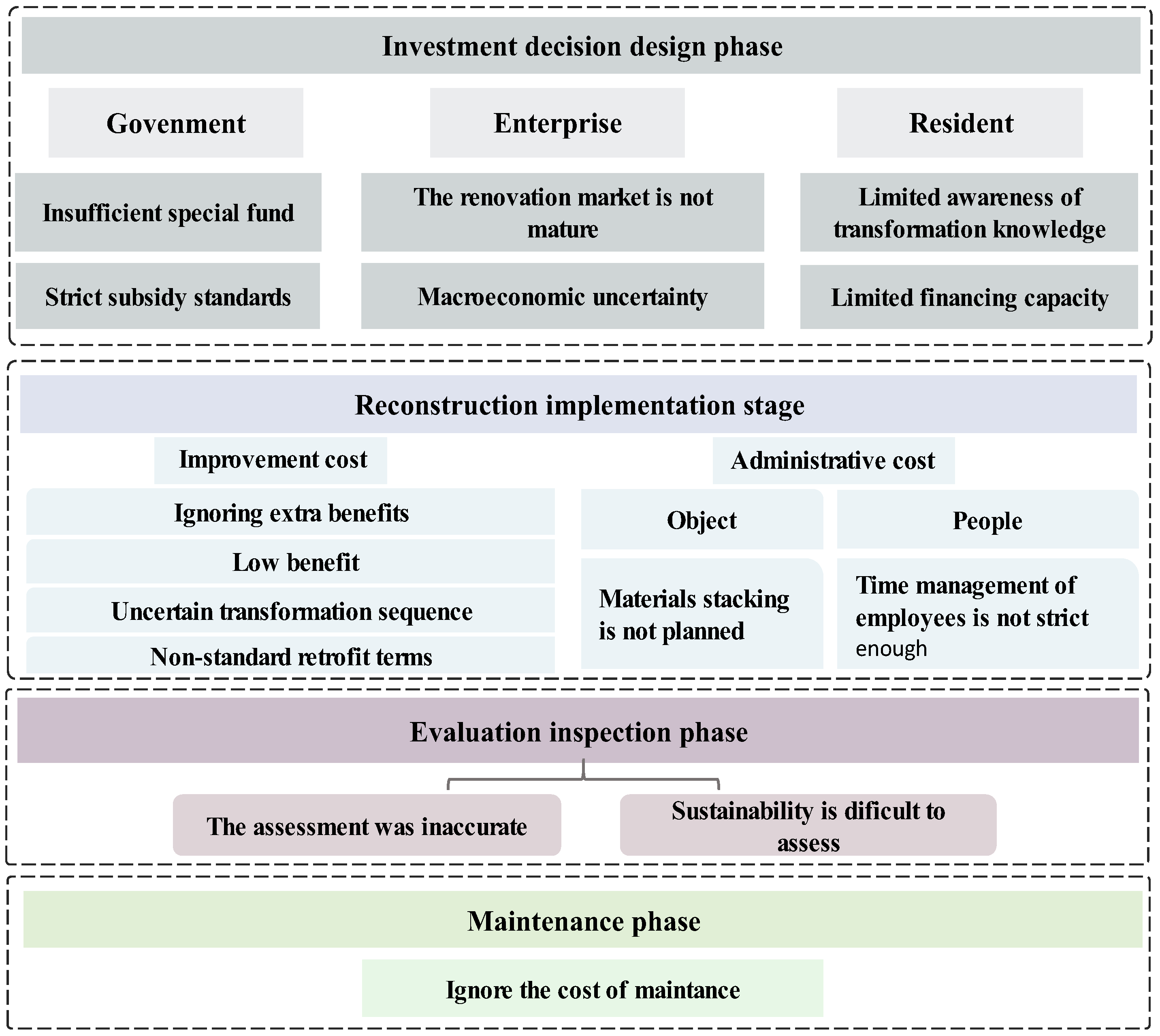
- Although the government is committed to promoting the sustainable development of the construction industry, it faces financial resource constraints; so, the special funds given by the government for retrofitting are not enough to achieve the goal of carbon peaking [87]. In addition, the government’s subsidy policy needs to be stronger, and the subsidy criteria are too strict [81]. For example, the government may provide subsidies for retrofitting only for those homes with poor retrofitting capacity and severe housing deterioration, and these subsidies are only a small portion compared to the overall retrofitting costs, directly affecting residents’ incentives to engage in green retrofitting. Therefore, governments must rationalize financing, address dedicated funding, and increase financial support to increase refurbishment rates and achieve retrofit emission reduction targets [88].
- For businesses, companies face a trade-off between high retrofit costs and long-term energy-saving payoffs. This trade-off significantly affects their incentives to participate in retrofit programs. As the remodeling market has yet to mature fully, many companies are wary of investing heavily in the remodeling market [89]. Secondly, macroeconomic uncertainty also significantly impacts firms’ investment decisions [90]. As argued by Morelli et al. (2014) [91] and Van Gulck et al. (2020) [14] investors place more importance on the economic aspects of retrofitting. The financial problems associated with the instability and immaturity of the retrofitting market may weaken firms’ incentives to retrofit, thus affecting the actual implementation of retrofitting projects and the cooperation between firms and the government.
- Residents tend to focus on the additional costs associated with retrofitting. In the trade-off between economic factors and environmental benefits, residents are more inclined to consider economic factors [92,93], but the limited financial capacity of residents results in a lack of ability to provide funding for retrofitting in their ability. For higher-income households, on the other hand, despite having the financial capacity to invest in home remodeling, they are often reluctant to invest too much effort in remodeling, partly due to their unwillingness to proactively acquire knowledge about remodeling or to raise awareness of remodeling [94]. Meanwhile, the lack of residents’ ability to assess their portfolios has become a significant difficulty in implementing home remodeling [95]. Together, these factors affect residents’ participation in green building retrofits and the success of retrofit projects.
- From the perspective of retrofitting technology costs, governments, firms, and residents tend to focus on the technology costs themselves during the retrofitting process, ignoring the benefits from the additional costs, such as indirect economic benefits in the form of job creation, increased tax revenues, and income from donations [90,96,97], and this bias in focus may affect the incentives for parties to participate. Secondly, retrofit technology requirements to guarantee the level of savings are the basis for stipulating energy performance contracts. At the same time, higher green building standards and codes set by the government, as well as lower subsidies and incentives, may cause retrofit firms to implement retrofits in pursuit of technological compliance with ever-increasing retrofit costs, resulting in lower economic efficiency [98,99,100], increasing the investment risk faced by firms [101]. Different economic levels of building materials, technological systems, labor, and energy prices also affect cost-effectiveness [102], and therefore, from an economic point of view only, retrofit companies may not choose to participate in the implementation of green retrofitting of buildings. In turn, residents are reluctant to participate in building remodeling, considering the impact of costs such as relocation when implementing the remodeling [90]. Further, the order in which the retrofitting is implemented also affects the cost outlay [86,103,104,105], but there is a lack of technical support that can ensure that the entire retrofitting process is cost-minimizing [106]. Finally, inconsistencies in the terminology used in many documents regarding retrofit implementation techniques and the terminology used in policy development, as well as the lack of standardized specifications, may increase the cost of retrofitting [107], reducing participation of retrofitting companies.
- In retrofit management, managers’ management of people and materials affects the effectiveness of retrofitting and is closely linked to the cost of green retrofitting. Lack of planning for the stacking of materials during the construction process reduces construction efficiency and increases the risk of safety accidents, which raises the cost of retrofitting businesses [108]. The retention of occupants during renovation may cause retrofit businesses schedule overruns and other safety hazards [109], as well as compromising resident safety and comfort [110], and relocation increases the cost of retrofitting for residents [90], all of which exacerbate the difficulty of balancing the interests of retrofitting firms and residents. In addition, the long-term lack of effective control of working hours and work efficiency in the management of grass-roots employees by retrofitting enterprises has led to the formation of bad habits among construction site personnel, which may affect the progress of remodeling and thus increase the cost of enterprises.
3.2.3. Bottlenecks in Building Renovation Technology
3.2.4. Resident Satisfaction Neglected in Building Renovation
3.3. Summary of Green Building Renovation Obstacles
4. An Analysis of Satisfactory Approaches for Multiple Stakeholders in Green Building Retrofits
4.1. Green Renovation Path for Government Buildings
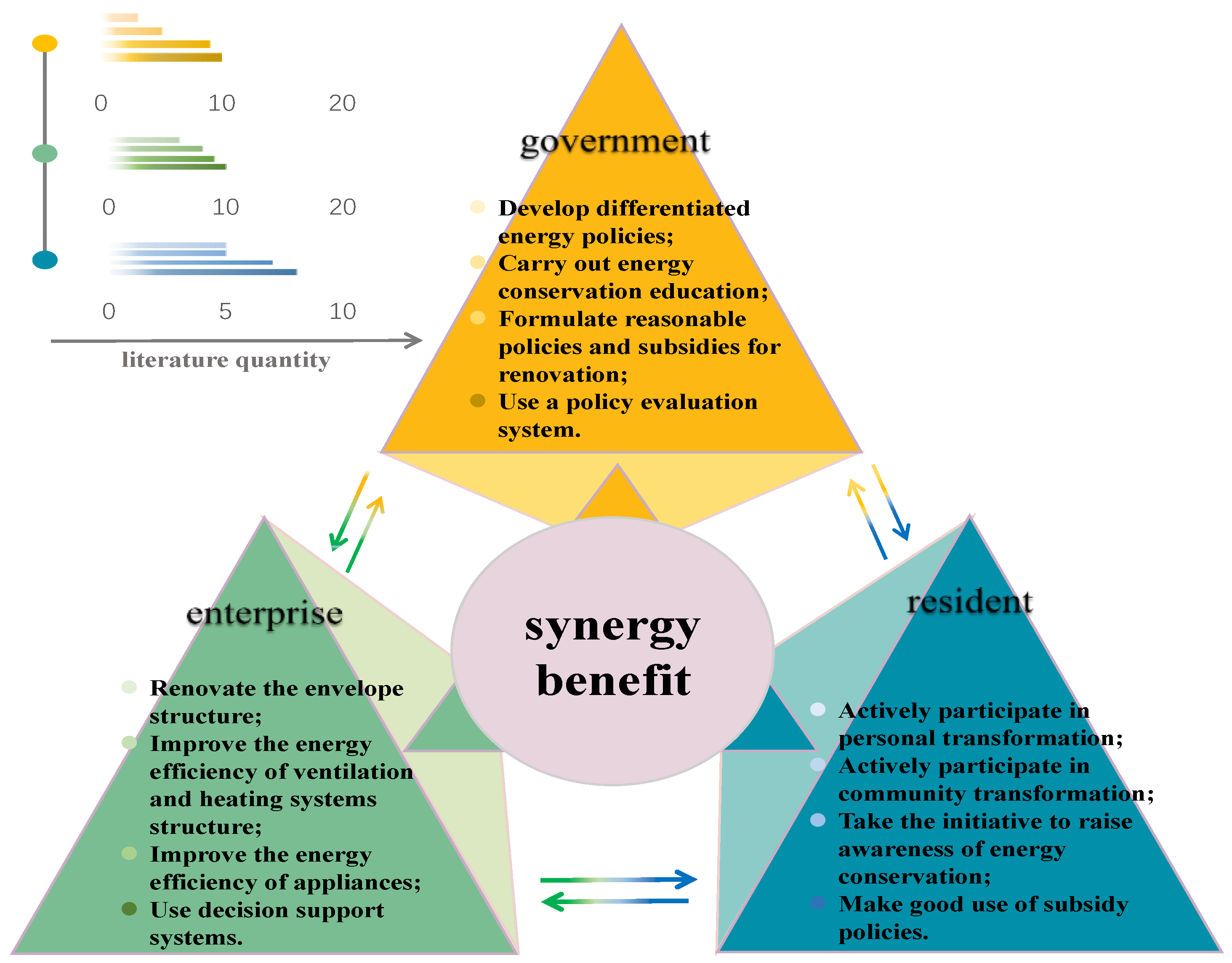
- Increased attention to the building sector and the introduction of differentiated retrofit and incentive policies: Firstly, policies need to take into account natural and social factors, such as climate and economic conditions, and introduce mandatory standards and codes that require new buildings to meet specific energy efficiency standards, as well as energy efficiency retrofitting of existing structures and defining regionally differentiated near-zero and minimum energy consumption standards for building retrofits [64,65], reducing unnecessary misunderstandings and differences in retrofit implementation. At the same time, financial incentives such as tax breaks, subsidies, and low-interest loans should be provided according to family composition and household income, with priority given to financial support for the low-income bracket to reduce the cost of energy-saving retrofitting for residents. It is also necessary to provide subsidies and incentives for energy-saving enterprises to lower the threshold of energy-saving renovation, for example, encouraging the organization of experts to advise enterprises on modifications at the planning and design stage and helping them complete the design of green building schemes. Enterprises also need to be provided with subsidized policy support for energy-efficient product development, with a suggested list of attractive mainstream financial instruments and subsidies based on a certain percentage. The government can also recognize and reward enterprises and residents who actively participate in energy-saving renovation to increase their motivation and sense of honor.
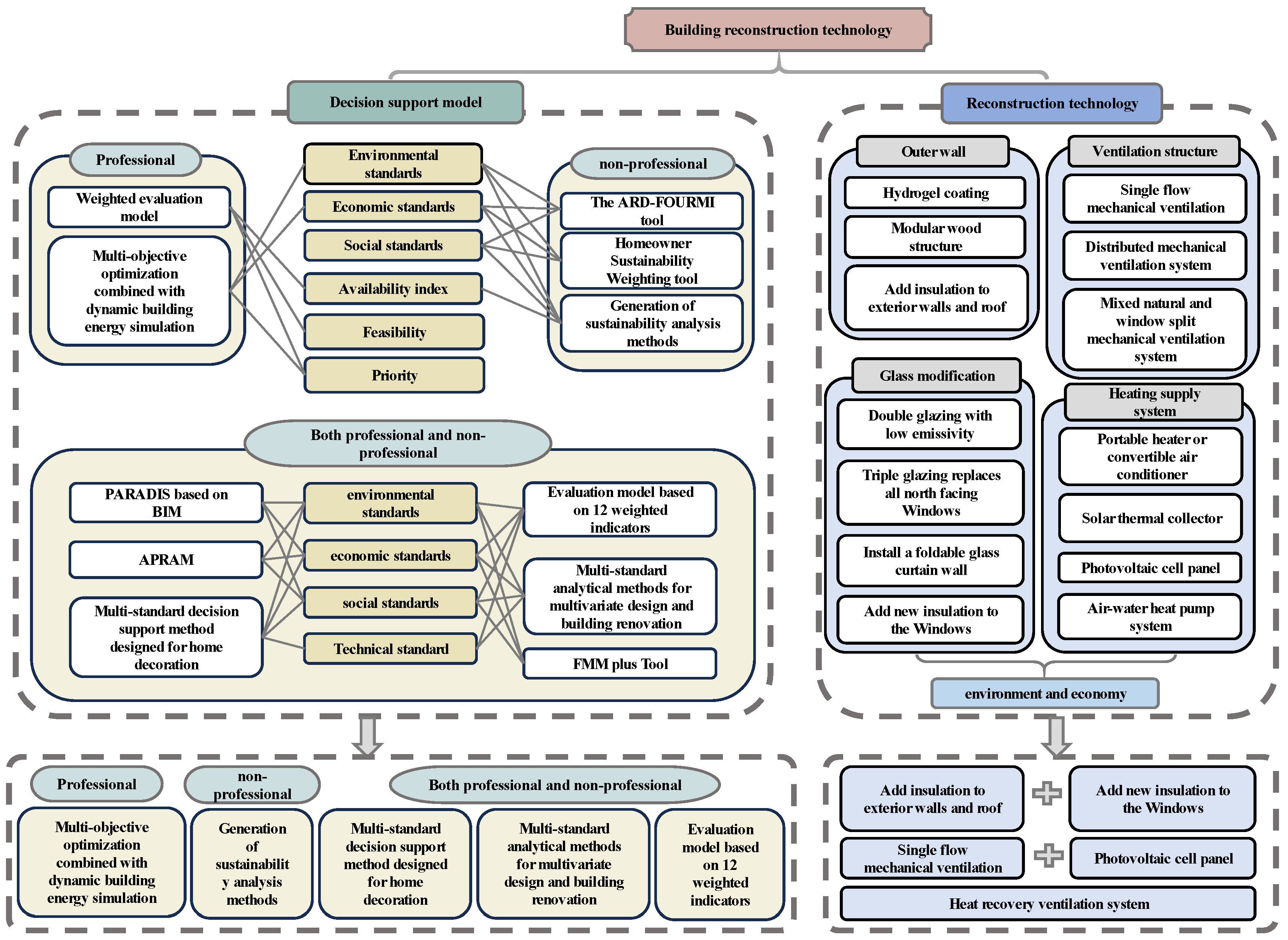
- Encouraging technological research and development and providing technological services: When formulating policies, governments can choose policymaking tools with more comprehensive criteria, promote the use of decision-making technologies, and try to take into account multidisciplinary and multi-stakeholder criteria, for example, the multi-standard decision support method designed for home decoration [112], multi-standard analytical methods for multivariate design and building renovation [131], and the evaluation model based on 12 weighted indicators [132] take into account multidimensional criteria such as economic, quality, technical, ecological, climatic and social conditions to conduct complex assessments and more accurately advise professionals and non-professionals on retrofitting decisions. In addition, governments need to encourage, through incentives, the participation of businesses and residents in the retrofitting and use of technologies such as envelope, rooftop photovoltaics, and heat recovery ventilation systems. However, these decision-making and retrofitting technologies have limitations such as incomplete standards, uncertainty of practical use, and unstable markets; so, governments should increase incentives and support for the research and development of new energy-saving technologies and smart technologies and promote the use of energy-efficient building materials, renewable energy, and energy management systems.
- Publicizing energy-saving knowledge and promoting information sharing: The government should encourage the promulgation and dissemination of knowledge documents on retrofitting for energy conservation and carry out community education on energy conservation knowledge to raise residents’ awareness of retrofitting; widely publicize the importance of energy conservation and retrofitting through various channels, including the media, the Internet, and community activities, to raise the public’s awareness of energy conservation; and provide technical guidance and advisory services to enterprises and residents to help them understand applicable energy conservation technologies and retrofitting options.
- Establishing cooperation mechanisms with appliance companies to promote resource integration: To mitigate the financial subsidies, the cost compensation for green building renovation can be obtained from the carbon trading market, and the economic burden can also be compensated through the cost replacement in the process of appliance replacement. Therefore, the government can cooperate with home appliance enterprises due to the government’s participation can increase the residents’ home appliance replacement behavior; at the same time, the home appliance enterprises respond to the policy in the form of low profit with more efficient low-carbon home appliances and residents to replace the aging appliances, the discarded appliances are used to sell, and the portion of the appliances that can be utilized is used for sustainable recycling, where the profit is used to compensate for the cost of the building renovation by the proportion of the rest of the costs through the rest of the costs are compensated by increased property fees and financial subsidies so that the funds for the sustainable development of the building can be continuously supplied. The rest of the funds can be subsidized by adjusting the price of electricity or improving tax policies.
4.2. Path to Green Transformation of Corporate Buildings
- Actively participating in government programs and complying with regulations and standards: First, retrofit companies should conduct energy audits of retrofitted buildings to assess the building’s energy use, identify energy-saving potentials, and formulate energy-saving retrofit plans; conduct detailed energy-saving return-on-investment analyses, and demonstrate the economic benefits of energy-saving retrofits to management and shareholders. Retrofit enterprises should actively participate in government-promoted energy-saving retrofit programs and take advantage of government financial subsidies and incentives to reduce retrofit costs. At the same time, they should comply with national and local energy-saving regulations and standards to ensure that new or renovated buildings meet energy-saving requirements.
- Increasing research and development of energy-saving technologies and adopting advanced new energy-saving technologies: According to the analysis in Section 3.2.3, the building envelope, including the exterior walls and windows, can be remodeled to increase the heat-insulating layer, avoid large-scale replacement of materials, and reduce the remodeling cost. Rooftop emission reduction measures take the installation of rooftop photovoltaic panels, but the installation of rooftop photovoltaics requires a certain degree of skill, and rooftop photovoltaics are affected by climate, direction, and sunlight; so, they require expert evaluation of implementation as well as the participation of the government. Considering only the ventilation system, companies can use single-flow mechanical ventilation systems, which is a critical way to improve residents’ satisfaction. Alternatively, renovation companies can adopt a heat recovery ventilation system, which promotes residents’ participation in retrofitting with low-cost and high-efficiency retrofitting effects, thus forming a virtuous cycle. However, other implementation technologies have disadvantages as described in Section 3.2.3 and the Appendix A and retrofit companies must increase their research and development of the technologies. Enterprises can reduce the energy consumption and carbon emissions of buildings by increasing the R&D of other structural energy-saving technologies and green energy utilization technologies. In addition, new intelligent technologies can be used in the retrofitting process, such as real-time monitoring of environmental data inside and outside the building using an intelligent environmental monitoring system, and optimization of energy use strategies using an intelligent building management system.
- Renovation enterprises need to carry out energy-saving training for their employees before the implementation of building renovation, improve their energy-saving awareness and skills, ensure that energy-saving measures are effectively implemented, and at the same time, strictly control the requirements to be met by the renovation, minimize the harm to human beings, and increase the satisfaction of the residents. To ensure the safety and effectiveness of construction, renovation companies must use energy-saving management systems, regularly monitor and evaluate energy-saving effects, and adjust and improve energy-saving measures according to the actual situation.
- Increased focus on appliance efficiency improvements: Rooftop photovoltaic power generation in cities corresponds to a small portion of the electricity supply, and the rest still needs to be compensated by appliance efficiency improvement. Therefore, appliance companies also need to improve the energy efficiency of appliances, focus on customer needs, and provide personalized energy-saving appliance selection solutions to improve customer satisfaction and market competitiveness. As residents become more energy-conscious, improving the energy efficiency of appliances will encourage residents to prefer energy-conscious appliances when purchasing appliances, thus reducing energy consumption in buildings.
4.3. Green Renovation Path for Residential Buildings
- Considering the initiative to raise awareness of energy conservation and utilize energy conservation incentives, residents can obtain the latest energy-saving technologies and retrofitting cases through information released by the government and research reports from professional organizations; learn and understand the basics of building energy efficiency through major websites, software, and corporate promotional activities; and participate in energy-saving publicity and educational activities organized by the community to share the experience and benefits of energy-saving retrofitting with other residents, encouraging more people to participate in energy-saving activities. In addition, learn about and make use of the government’s incentives, such as energy-saving subsidies and tax breaks, to reduce the financial burden of energy-saving retrofits.
- Active participation in individual and community retrofitting processes: Residents should actively participate in meetings related to energy-saving retrofitting organized by the community or the residents’ committee and make suggestions and comments on the retrofitting plan to ensure that the retrofitting plan meets the actual needs and interests of the residents. Second, energy-saving investments should be made, and energy-saving equipment and systems, such as high-efficiency appliances, insulation materials, and solar panels, should be considered, which can save energy costs in the long run. During the construction period of the energy-saving remodeling, actively cooperate with the construction team and comply with the construction regulations to ensure that the remodeling project is carried out smoothly. After the retrofit is completed, properly use and maintain the energy-efficient equipment and systems to ensure regular operation and energy-saving effect.
- Improving daily energy-saving behavior: Residents should adopt energy-saving measures in their daily lives, such as using energy-saving light bulbs, turning off unnecessary electrical appliances, adjusting the indoor temperature reasonably, and making full use of natural light, etc.; improve their water consumption habits by using water-saving sanitary ware and repairing leaks, to reduce unnecessary water consumption; recycle and reuse rubbish, to minimize environmental pollution; and reduce the use of private cars by using public transport, cycling, or walking, to reduce carbon emissions.
- Adopting smart technologies to reduce the energy consumption of home appliances. Residents can remotely control electrical appliances and equipment at home through smart home systems, such as smart home APPs, smart meters, and smart sockets, and automatically set the operating modes and times of the equipment according to the residents’ living habits and preferences, to achieve energy-saving effects. It is also possible to detect the real-time data of the room through the smart temperature control system and automatically adjust the operating power and mode of the air conditioner, fresh air system, and other equipment.
5. Conclusions and Future Directions
- From a policy perspective, this study reveals a lack of synergy among existing renovation policies in terms of standards, technical requirements, and incentives. Policy formulation requires the establishment of a “differentiated coordination” framework capable of simultaneously addressing government regulatory functions, corporate market demands, and residents’ individual needs. This implies that the government should strive to refine and unify technical standards, incorporate social indicators such as residents’ health and comfort into the policy evaluation system, and design differentiated economic incentive tools—including subsidy and loan schemes tailored to households of varying income levels, building types, and regions—to foster participation among both businesses and residents [155].
- From a cost perspective, the conflict between costs and benefits persists throughout the entire renovation lifecycle and constitutes the core economic obstacle hindering collaboration among the three parties. Research indicates that the key to resolving this issue lies in establishing a mechanism for cost-sharing and value recovery [156]. The government needs to innovate financing models, such as exploring compensation mechanisms linked to the carbon trading market [157]. Businesses must control costs throughout the entire process through refined management and technological optimization, while residents need to rationally bear a portion of the renovation costs based on expectations of long-term energy savings and asset appreciation. In particular, the “appliance replacement” model is key to balancing short-term expenditures with long-term benefits and enhancing the willingness of all parties to pay.
- From a technical perspective, on the one hand, there is a need to develop intelligent decision-support systems capable of deeply integrating economic, environmental, and social standards, as well as dynamically responding to the diverse preferences of governments, businesses, and residents, thereby transforming technology into a communication platform and quantitative tool for coordinating the objectives of these three parties. On the other hand, we should accelerate the development of cost-effective, market-stable technologies for building envelope retrofits and mechanical and electrical systems that can effectively improve indoor environmental quality, ensuring that technical solutions strike a balance between environmental benefits, economic benefits, and social acceptability.
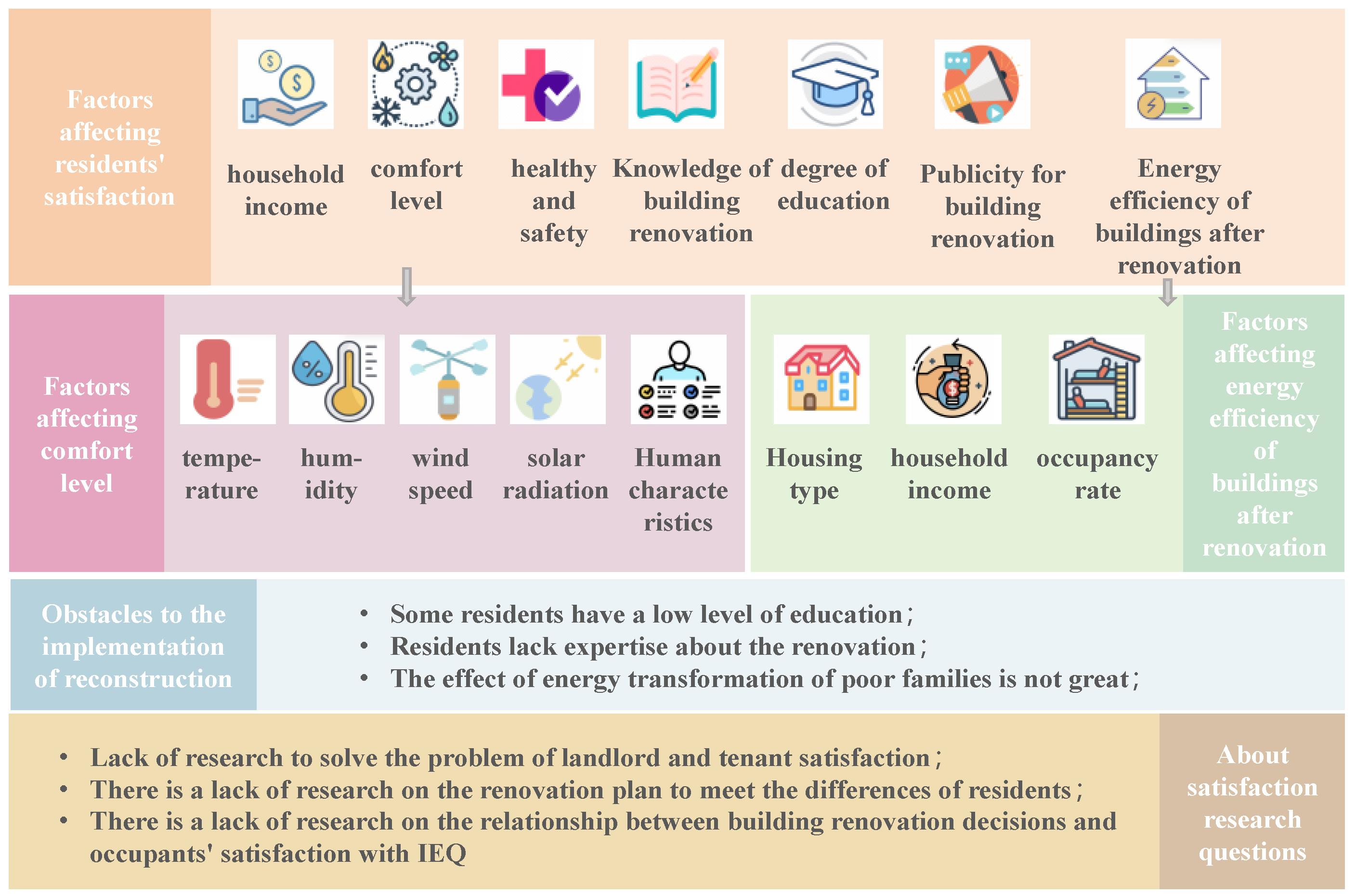
- In terms of resident satisfaction, satisfaction is not merely a passive outcome of renovation but rather the key to its success. Research indicates that improving satisfaction must be based on the personalized needs of residents, taking into account their educational background, income level, and lifestyle. Through effective community communication, public education, and participatory design, residents’ concerns regarding health, comfort, and affordability can be integrated into renovation decision-making and implementation. This approach stimulates residents’ willingness to participate, ensures the long-term sustainability of renovation outcomes, and ultimately creates a win–win situation where the government achieves effective governance, businesses gain market share, and residents enjoy improved living conditions.
Funding
Data Availability Statement
Conflicts of Interest
Appendix A

| Type of Technology | Technology | References | Advantages | Disadvantages |
|---|---|---|---|---|
| Decision support modeling techniques and systems | Building Information Modeling (BIM) based decision support system PARADIS; | [35] | A BIM-based decision support tool for residential retrofitting that facilitates discussions between expert and very expert stakeholders; | The technique lacks the support of a large number of refurbishment cases to ensure consistency in building codes; |
| Multi-criteria (multidisciplinary) decision-making (MCDM) framework; | [133] | Pairwise comparison of multiple stakeholders, balancing expert and non-expert selection criteria, and taking into account the preferences of stakeholders with different interests; | Only three environmental-social-economic disciplines were considered for comparison; | |
| ARD-FOURMI tool | [36] | Integration of project stakeholders’ perspectives based on in-depth interaction between experts and homeowners to help homeowners choose energy retrofit actions for their homes; | There is still research to be done on the accuracy of the application of this technology to be extended to more diverse assets; | |
| Decision support system based on (structural equation modeling) SEM | [43] | For an efficient building indoor air quality-sustainable building renovation process that enables decision makers to proactively assess the sustainability of their renovation programmes; | The technology does not take into account the inclusion of professionals and is less considerate of the environment; | |
| FMM plus Tool | [134] | Targeting passive low performance envelope systems to update key building metrics and predict the benefits of current refurbishment techniques to optimise energy efficiency, building performance and maintenance cycles; | The technology is limited to passive solutions for the building envelope, with insufficient consideration of technical | |
| A Multi-Criteria Decision Support Approach Specifically Designed for House Renovation | [112] | The identification of the most appropriate retrofitting strategies for housing managers, the technical, social and environmental and economic feasibility analyses of ten retrofitting factors support the decision-making of homeowners and promote feasible and appropriate actions with a multidisciplinary approach; | Dependence on user and homeowner engagement, lack of dynamic monitoring techniques; | |
| Value-based decision support tool REDIS | [135] | Specialist building owners provide support to support building owners in choosing which buildings to refurbish within their building portfolio; | Usage by non-specialist users was not considered, and the technology was based on a structured dialogue and lacked flexibility; | |
| PROMETHEE method | [136] | Ranking different refurbishment solutions in terms of economic, environmental, cultural and architectural aspects; | Lack of consideration of the social effects of the programme, taking into account the uncertainty of the assessment of the relevant criteria and the uncertainty of the relevant decision makers; | |
| SWAHO method | [112] | Increased willingness of non-professionals (homeowners) to pursue green renovations that take into account environmental and social impacts, address personal perceptions of sustainability, and prioritize according to homeowners’ budgets and sustainability criteria; | Lack of integrated consideration of professionals’ and non-professionals’ perceptions to deal with the relationship between multiple subjects of interest, which may lead to a number of legal issues and conflicts of interest; | |
| Assessment model based on 12 weighted indicators | [114] | Taking into account the technical-social-economic-environmental aspects, 12 novel weighted indicators were considered, specifically for the integrated urban retrofit of high-rise multifamily residential buildings; | Failure to validate the technology on other types of buildings and failure to consider social conditions in other countries; | |
| Reno-Inst Ontology | [137] | Focuses on the understanding of technology-related knowledge as a method for mapping knowledge, collecting heterogeneous data from multiple sources, and retrieving relevant information; | More focused on the technology itself and lack of social and environmental considerations; | |
| Accessibility assessment procedures for social housing for elderly residents | [138] | Appropriateness, prioritisation and feasibility have been considered to provide useful advice to developers, construction companies and policy makers; | The scope of application of the model is limited and lacks extensive validation of its implementation; | |
| Procedures for analyzing energy-efficient renovation of buildings at the regional scale | [139] | Focus on policy, economic, environmental and energy systems to evaluate and compare energy-efficient renovation programmes on a regional scale; | Lack of comprehensive comparative aspects and low transparency of technologies; | |
| Mixed-integer linear programming model | [110] | For the design of energy retrofits, considering the energy supply system and the adoption of energy efficiency measures-Building Energy Optimisation Modeling; | Insufficiently comprehensive consideration in technology, failure to consider refrigeration technology, and failure to consider technological uncertainty; | |
| Multi-objective optimisation (MOO) combined with dynamic building energy simulation | [140] | Helps owners prioritize portfolio refurbishment, taking into account time, economics, environmental; | Lack of consideration of the preferences of decision makers; | |
| A systematic and dynamic approach to driving energy performance | [158] | A dynamic energy model from a technical, economic and environmental point of view, taking into account various building envelope codes and energy supply system characteristics; | Lack of consideration of social factors and prioritisation of measures | |
| Modeling based on dynamic material flow analysis | [108] | Transparent characterisation of the building, taking into account technical, environmental and policy considerations; | Applies only to the Norwegian Zhuhai stock, is not universal and lacks social considerations; | |
| An iterative approach to sustainability analysis | [111] | Considers retrofit energy and technical performance, life cycle costs and homeowner preferences to help homeowners make quantitative as well as qualitative decisions. | No prioritisation of renovation strategy selection and analysis of technology universality. | |
| Adaptation of implementation techniques | Glass Modification | [37] | Low emissivity double glazing; | Reduces natural light in the room and is costly to maintain; |
| [38] | Replacement of all north-facing windows with triple glazing; | High cost and inconvenient operation; | ||
| [49] | Installation of collapsible glass curtain wall; | May produce light pollution; | ||
| [44] | Double or triple glazing; | High cost of triple glazing | ||
| Adding new insulation to windows. | Requires high level of construction technology and equipment. | |||
| External wall | [41] | Modular wood construction | Poor fire performance; | |
| [40] | Hydrogel Coating | Technology maturity to be developed; | ||
| [42] | Increased insulation of external walls and roofs | Requires specialised construction techniques and equipment, and the construction process may be complex; | ||
| Ventilation system | [37] | single-flow mechanical ventilation | Poor adaptability and prolonged use lead to increased energy consumption; | |
| Heating system | [142] | Decentralised mechanical ventilation systems | Occupancy of indoor space; | |
| [43] | Hybrid natural and window split mechanical ventilation systems | Complex control systems; | ||
| [42] | Heat recovery system with supply and exhaust air | Poorly adapted; | ||
| [37] | Portable heaters or convertible air conditioners | Limited heating area; | ||
| [44] | Solar collector | Higher dependence on weather; | ||
| [40] | Photovoltaic panel | Higher dependence on weather; | ||
| [78] | Heat pumps generate geothermal heat | High initial cost and long payback period; | ||
| [46] | Air-to-water heat pump systems | Installation is relatively complex and requires specialised knowledge and skills. |
References
- EPBD. Directive—EU—2024/1275—EN—EUR-Lex. 2024. Available online: https://eur-lex.europa.eu/eli/dir/2024/1275/oj/eng (accessed on 1 May 2025).
- Kylili, A.; Fokaides, P.A.; Jimenez, P.A.L. Key Performance Indicators (KPIs) approach in buildings renovation for the sustainability of the built environment: A review. Renew. Sustain. Energy Rev. 2016, 56, 906–915. [Google Scholar] [CrossRef]
- Bian, F.; Chong, H.-Y.; Zhang, W.; Ding, C. Government subsidy strategy for public-private-partnership retrofit buildings in China. Energy Build. 2021, 252, 111455. [Google Scholar] [CrossRef]
- Liu, Z.; Yu, C.; Qian, Q.K.; Huang, R.; You, K.; Visscher, H.; Zhang, G. Incentive initiatives on energy-efficient renovation of existing buildings towards carbon–neutral blueprints in China: Advancements, challenges and prospects. Energy Build. 2023, 296, 113343. [Google Scholar] [CrossRef]
- Baumhof, R.; Decker, T.; Roeder, H.; Menrad, K. Which factors determine the extent of house owners ’ energy-related refurbishment projects? A Motivation-Opportunity-Ability Approach. Sustain. Cities Soc. 2018, 36, 33–41. [Google Scholar] [CrossRef]
- Luddeni, G.; Krarti, M.; Pernigotto, G.; Gasparella, A. An analysis methodology for large-scale deep energy retrofits of existing building stocks: Case study of the Italian office building. Sustain. Cities Soc. 2018, 41, 296–311. [Google Scholar] [CrossRef]
- Bertone, E.; Stewart, R.A.; Sahin, O.; Alam, M.; Zou, P.X.W.; Buntine, C.; Marshall, C. Guidelines, barriers and strategies for energy and water retrofits of public buildings. J. Clean. Prod. 2018, 174, 1064–1078. [Google Scholar] [CrossRef]
- Hwang, B.G.; Shan, M.; Xie, S.J.; Chi, S. Investigating residents’ perceptions of green retrofit program in mature residential estates: The case of Singapore. Habitat Int. 2017, 63, 103–112. [Google Scholar] [CrossRef]
- Gupta, R.; Gregg, M. Do deep low carbon domestic retrofits actually work? Energy Build. 2016, 129, 330–343. [Google Scholar] [CrossRef]
- Karunathilake, H.; Hewage, K.; Sadiq, R. Opportunities and challenges in energy demand reduction for Canadian residential sector: A review. Renew. Sustain. Energy Rev. 2018, 82, 2005–2016. [Google Scholar] [CrossRef]
- Feng, H.; Liyanage, D.R.; Karunathilake, H.; Sadiq, R.; Hewage, K. BIM-based life cycle environmental performance assessment of single-family houses: Renovation and reconstruction strategies for aging building stock in British Columbia. J. Clean. Prod. 2020, 250, 119543. [Google Scholar] [CrossRef]
- Seddiki, M.; Anouche, K.; Bennadji, A.; Boateng, P. A multi-criteria group decision-making method for the thermal renovation of masonry buildings: The case of Algeria. Energy Build. 2016, 129, 471–483. [Google Scholar] [CrossRef]
- DB11/891-2020; Energy Efficiency Design Standard for Residential Buildings. Beijing Planning and Natural Resources Commission, Beijing Municipal Administration of Market Supervision: Beijing, China, 2024.
- Van Gulck, L.; Van de Putte, S.; Delghust, M.; Van den Bossche, N.; Steeman, M. Environmental and financial assessment of facade renovations designed for change: Developing optimal scenarios for apartment buildings in Flanders. Build. Environ. 2020, 183, 107178. [Google Scholar] [CrossRef]
- Konhäuser, K.; Rothdach, C.; Schwarz, N.; Werner, T. Assessing barriers for energy-efficient retrofits to derive purposive policy recommendations for the residential building sector. Energy Policy 2026, 214, 115264. [Google Scholar] [CrossRef]
- Li, B.; Li, J.; Huang, S. Influencing factors of low-carbon renovation of public buildings from the perspective of stakeholders. Energy 2025, 335, 137867. [Google Scholar] [CrossRef]
- Bobrova, Y.; Papachristos, G.; Chiu, L.F.; Tikhomirova, S.; Coon, T.M. Home for the Common Future (HCF): The use of home-meanings to promote domestic energy retrofit. Energy Res. Soc. Sci. 2024, 107, 103358. [Google Scholar] [CrossRef]
- SCIO. Special Report on the 2025 National People’s Congress and Chinese People’s Political Consultative Conference: The State Council on Strengthening Energy Conservation Efforts Decision of the Information Office of the State Council of the People’s Republic of China; SCIO: Beijing, China, 2025. [Google Scholar]
- EU. Communication from the Commission to the European Parliament, the Council, the European Economic and Social Committee and the Committee of the Regions a Renovation Wave for Europe—Greening Our Buildings, Creating Jobs, Improving Lives; EU: Luxembourg, 2020. [Google Scholar]
- Killip, G. Products, practices and processes: Exploring the innovation potential for low-carbon housing refurbishment among small and medium-sized enterprises (SMEs) in the UK construction industry. Energy Policy 2013, 62, 522–530. [Google Scholar] [CrossRef]
- Li, Y.; Wang, Z.; Liang, W.; Yang, F.; Wu, G. Green renovation of existing public buildings in China: A synergy mechanism of state-owned enterprises based on evolutionary game theory. J. Clean. Prod. 2024, 434, 140454. [Google Scholar] [CrossRef]
- Liu, P.; Zhou, Y.; Zhou, D.K.; Xue, L. Energy Performance Contract models for the diffusion of green-manufacturing technologies in China: A stakeholder analysis from SMEs ’ perspective. Energy Policy 2017, 106, 59–67. [Google Scholar] [CrossRef]
- Ren, X.Y.; Shao, H. Non-state shareholder governance and shadow banking business: Evidence from Chinese state-owned manufacturing enterprises. Res. Int. Bus. Financ. 2022, 60, 101631. [Google Scholar] [CrossRef]
- Jagarajan, R.; Asmoni, M.N.A.M.; Mohammed, A.H.; Jaafar, M.N.; Mei, J.L.Y.; Baba, M. Green retrofitting—A review of current status, implementations and challenges. Renew. Sustain. Energy Rev. 2017, 67, 1360–1368. [Google Scholar] [CrossRef]
- Yang, X.; Liu, S.; Ji, W.; Zhang, Q.; Eftekhari, M.; Shen, Y.; Yang, L.; Han, X. Issues and challenges of implementing comprehensive renovation at aged communities: A case study of residents’ survey. Energy Build. 2021, 249, 111231. [Google Scholar] [CrossRef]
- Schroderus, S.; Kuurola, P.; Kempe, M.; Fedorik, F.; Leivo, V.; Haverinen-Shaughnessy, U. Impacts of building energy retrofits on energy consumption, indoor environment, and hygrothermal performance in future climate scenarios. Energy Build. 2025, 347, 116413. [Google Scholar] [CrossRef]
- Achtnicht, M.; Madlener, R. Factors influencing German house owners’ preferences on energy retrofits. Energy Policy 2014, 68, 254–263. [Google Scholar] [CrossRef]
- Chen, W.; Lai, J.H.K. Development of an index model for assessing homeowners’ preferences in ageing residential building renovation in China. J. Build. Eng. 2025, 104, 112341. [Google Scholar] [CrossRef]
- Espinoza-Zambrano, P.; Marmolejo-Duarte, C. What Spanish households want: Insights into public acceptance of a novel energy renovation framework. Energy Res. Soc. Sci. 2025, 129, 104395. [Google Scholar] [CrossRef]
- Li, N.; Guo, Z.; Geng, W.Y.; Li, L.; Li, Z.W. Design strategies for renovation of public space in Beijing’s traditional communities based on measured microclimate and thermal comfort. Sustain. Cities Soc. 2023, 99, 104927. [Google Scholar] [CrossRef]
- Jensen, P.A.; Maslesa, E.; Berg, J.B.; Thuesen, C. 10 questions concerning sustainable building renovation. Build. Environ. 2018, 143, 130–137. [Google Scholar] [CrossRef]
- Tomaszewski, R. A study of citations to STEM databases: ACM Digital Library, Engineering Village, IEEE Xplore, and MathSciNet. Scientometrics 2021, 126, 1797–1811. [Google Scholar] [CrossRef]
- Mainali, B.; Mahapatra, K.; Pardalis, G. Strategies for deep renovation market of detached houses. Renew. Sustain. Energy Rev. 2021, 138, 110659. [Google Scholar] [CrossRef]
- Selin, H.; VanDeveer, S.D. Broader, Deeper and Greener: European Union Environmental Politics, Policies, and Outcomes. Annu. Rev. Environ. Resour. 2015, 40, 309–335. [Google Scholar] [CrossRef]
- Jiang, J.; Ye, B.; Liu, J. Research on the peak of CO2 emissions in the developing world: Current progress and future prospect. Appl. Energy 2019, 235, 186–203. [Google Scholar] [CrossRef]
- Zhang, S.; Wei, J.; Chen, X.; Zhao, Y. China in global wind power development: Role, status and impact. Renew. Sustain. Energy Rev. 2020, 127, 109881. [Google Scholar] [CrossRef]
- Kharseh, M.; Al-Khawaja, M. Retrofitting measures for reducing buildings cooling requirements in cooling-dominated environment: Residential house. Appl. Therm. Eng. 2016, 98, 352–356. [Google Scholar] [CrossRef]
- Andric, I.; Koc, M.; Al-Ghamdi, S.G. A review of climate change implications for built environment: Impacts, mitigation measures and associated challenges in developed and developing countries. J. Clean. Prod. 2019, 211, 83–102. [Google Scholar] [CrossRef]
- Sharbaf, S.A.; Schneider-Marin, P. Cost-benefit analysis of sustainable upgrades in existing buildings: A critical review. Energy Build. 2025, 328, 115142. [Google Scholar] [CrossRef]
- Akomea-Frimpong, I.; Kukah, A.S.; Jin, X.; Osei-Kyei, R.; Pariafsai, F. Green finance for green buildings: A systematic review and conceptual foundation. J. Clean. Prod. 2022, 356, 131869. [Google Scholar] [CrossRef]
- Baek, C.; Park, S. Policy measures to overcome barriers to energy renovation of existing buildings. Renew. Sustain. Energy Rev. 2012, 16, 3939–3947. [Google Scholar] [CrossRef]
- Sun, Y.; Hu, Y.-J.; Tao, Y.; Tang, B.-J. Multi-energy complementary optimization for low-carbon public buildings with thermal comfort and time-of-use electricity constraints: Life-cycle cost-benefit and global sensitivity analysis. Build. Environ. 2026, 291, 114222. [Google Scholar] [CrossRef]
- Kiss, B. Exploring transaction costs in passive house-oriented retrofitting. J. Clean. Prod. 2016, 123, 65–76. [Google Scholar] [CrossRef]
- Li, X.; Yi, B.; Peng, B. Evolutionary mechanism of construction enterprises’ construction and demolition waste management under dual effects of public attention. Dev. Built Environ. 2025, 24, 100766. [Google Scholar] [CrossRef]
- Shi, Y.; Wang, R.; Chen, P.F. Multi-criteria decision-making approach for energy-efficient renovation strategies in hospital wards: Balancing energy, economic, and thermal comfort. Energy Build. 2023, 298, 113575. [Google Scholar] [CrossRef]
- Kamari, A.; Kirkegaard, P.H.; Schultz, C. PARADIS—A process integrating tool for rapid generation and evaluation of holistic renovation scenarios. J. Build. Eng. 2021, 34, 101944. [Google Scholar] [CrossRef]
- Taillandier, F.; Mora, L.; Breysse, D. Decision support to choose renovation actions in order to reduce house energy consumption—An applied approach. Build. Environ. 2016, 109, 121–134. [Google Scholar] [CrossRef]
- Andric, I.; Pina, A.; Ferrao, P.; Lacarrière, B.; Le Corre, O. The impact of renovation measures on building environmental performance: An emergy approach. J. Clean. Prod. 2017, 162, 776–790. [Google Scholar] [CrossRef]
- Rose, J.; Kragh, J.; Nielsen, K.F. Passive house renovation of a block of flats—Measured performance and energy signature analysis. Energy Build. 2022, 256, 111679. [Google Scholar] [CrossRef]
- Run, K.; Cévaër, F.; Dubé, J.F. Does energy-efficient renovation positively impact thermal comfort and air quality in university buildings? J. Build. Eng. 2023, 78, 107507. [Google Scholar] [CrossRef]
- Wahi, P.; Konstantinou, T.; Tenpierik, M.J.; Visscher, H. Lower temperature heating integration in the residential building stock: A review of decision-making parameters for lower-temperature-ready energy renovations. J. Build. Eng. 2023, 65, 105811. [Google Scholar] [CrossRef]
- Amoruso, F.M.; Schuetze, T. Hybrid timber-based systems for low-carbon, deep renovation of aged buildings: Three exemplary buildings in the Republic of Korea. Build. Environ. 2022, 214, 108889. [Google Scholar] [CrossRef]
- Eriksson, M.; Akander, J.; Moshfegh, B. Development and validation of energy signature method—Case study on a multi-family building in Sweden before and after deep renovation. Energy Build. 2020, 210, 109756. [Google Scholar] [CrossRef]
- Fonseca, L.P.G.; Rey-Martínez, F.J.; Carlo, J.C. Potential of natural ventilation and active cooling systems for thermal comfort improvement of an educational building under climate change scenarios. Front. Archit. Res. 2026. [Google Scholar] [CrossRef]
- Ismaeel, W.S.E.; Mohamed, A.G. Indoor air quality for sustainable building renovation: A decision-support assessment system using structural equation modelling. Build. Environ. 2022, 214, 108933. [Google Scholar] [CrossRef]
- Aparicio-Gonzalez, E.; Domingo-Irigoyen, S.; Sánchez-Ostiz, A. Rooftop extension as a solution to reach nZEB in building renovation. Application through typology classification at a neighborhood level. Sustain. Cities Soc. 2020, 57, 102109. [Google Scholar] [CrossRef]
- Niemelä, T.; Kosonen, R.; Jokisalo, J. Cost-effectiveness of energy performance renovation measures in Finnish brick apartment buildings. Energy Build. 2017, 137, 60–75. [Google Scholar] [CrossRef]
- Feng, X.H.; Yan, D.; Wang, C.; Sun, H.S. A preliminary research on the derivation of typical occupant behavior based on large-scale questionnaire surveys. Energy Build. 2016, 117, 332–340. [Google Scholar] [CrossRef]
- La Fleur, L.; Moshfegh, B.; Rohdin, P. Measured and predicted energy use and indoor climate before and after a major renovation of an apartment building in Sweden. Energy Build. 2017, 146, 98–110. [Google Scholar] [CrossRef]
- Santangelo, A.; Yan, D.; Feng, X.; Tondelli, S. Renovation strategies for the Italian public housing stock: Applying building energy simulation and occupant behaviour modelling to support decision-making process. Energy Build. 2018, 167, 269–280. [Google Scholar] [CrossRef]
- Risholt, B.; Berker, T. Success for energy efficient renovation of dwellings-Learning from private homeowners. Energy Policy 2013, 61, 1022–1030. [Google Scholar] [CrossRef]
- Baek, C.H.; Park, S.H. Changes in renovation policies in the era of sustainability. Energy Build. 2012, 47, 485–496. [Google Scholar] [CrossRef]
- Liu, G.; Li, X.H.; Tan, Y.T.; Zhang, G.M. Building green retrofit in China: Policies, barriers and recommendations. Energy Policy 2020, 139, 111356. [Google Scholar] [CrossRef]
- Bonakdar, F.; Dodoo, A.; Gustavsson, L. Cost-optimum analysis of building fabric renovation in a Swedish multi-story residential building. Energy Build. 2014, 84, 662–673. [Google Scholar] [CrossRef]
- Iturriaga, E.; Campos-Celador, A.; Terés-Zubiage, J.; Aldasoro, U.; Alvarez-Sanz, M. A MILP optimization method for energy renovation of residential urban areas: Towards Zero Energy Districts. Sustain. Cities Soc. 2021, 68, 102787. [Google Scholar] [CrossRef]
- Monzón-Chavarrías, M.; López-Mesa, B.; Resende, J.; Corvacho, H. The nZEB concept and its requirements for residential buildings renovation in Southern Europe: The case of multi-family buildings from 1961 to 1980 in Portugal and Spain. J. Build. Eng. 2021, 34, 101918. [Google Scholar] [CrossRef]
- Stopps, H.; Thorneycroft, C.; Touchie, M.F.; Zimmermann, N.; Hamilton, I.; Kesik, T. High-rise residential building makeovers: Improving renovation quality in the United Kingdom and Canada through systemic analysis. Energy Res. Soc. Sci. 2021, 77, 102085. [Google Scholar] [CrossRef]
- Pombo, O.; Rivela, B.; Neila, J. Life cycle thinking toward sustainable development policy-making: The case of energy retrofits. J. Clean. Prod. 2019, 206, 267–281. [Google Scholar] [CrossRef]
- EU. Guidelines on State Aid for Climate, Environmental Protection and Energy (CEEAG); EU: Luxembourg, 2021. [Google Scholar]
- Zhang, L.; Wu, J.; Liu, H.Y. Policies to enhance the drivers of green housing development in China. Energy Policy 2018, 121, 225–235. [Google Scholar] [CrossRef]
- State Council of the PRC. The ‘13th Five-Year’ Comprehensive Work Plan for Energy Conservation and Emission Reduction; State Council of the PRC: Beijing, China, 2017.
- Huang, J.; Lv, H.; Gao, T.; Feng, W.; Chen, Y.; Zhou, T. Thermal properties optimization of envelope in energy-saving renovation of existing public buildings. Energy Build. 2014, 75, 504–510. [Google Scholar] [CrossRef]
- Ren, J.; Zhong, L. Optimization of PCM-enhanced residential building envelopes in cold climates: Energy performance and cost-effectiveness analysis. Results Eng. 2026, 29, 108544. [Google Scholar] [CrossRef]
- Amani, N.; Kiaee, E. Developing a two-criteria framework to rank thermal insulation materials in nearly zero energy buildings using multi-objective optimization approach. J. Clean. Prod. 2020, 276, 122592. [Google Scholar] [CrossRef]
- Rashid, K.M.; Behzadan, A.H. Risk Behavior-Based Trajectory Prediction for Construction Site Safety Monitoring. J. Constr. Eng. Manag. 2018, 144, 04017106. [Google Scholar] [CrossRef]
- Yang, S.; Pernot, J.G.; Jorin, C.H.; Niculita-Hirzel, H.; Perret, V.; Licina, D. Energy, indoor air quality, occupant behavior, self-reported symptoms and satisfaction in energy-efficient dwellings in Switzerland. Build. Environ. 2020, 171, 106618. [Google Scholar] [CrossRef]
- MOHURD. “14th Five-Year Plan” for Building Energy Efficiency and Green Building Development Released; MOHURD: Beijing, China, 2022.
- Bird, S.; Hernandez, D. Policy options for the split incentive: Increasing energy efficiency for low-income renters. Energy Policy 2012, 48, 506–514. [Google Scholar] [CrossRef]
- General Office of the State Council of the People’s Republic of China. Decision of the State Council on Strengthening Energy Conservation Efforts; General Office of the State Council of the People’s Republic of China: Beijing, China, 2006.
- Anastaselos, D.; Theodoridou, I.; Papadopoulos, A.M.; Hegger, M. Integrated evaluation of radiative heating systems for residential buildings. Energy 2011, 36, 4207–4215. [Google Scholar] [CrossRef]
- Galvin, R. Thermal upgrades of existing homes in Germany: The building code, subsidies, and economic efficiency. Energy Build. 2010, 42, 834–844. [Google Scholar] [CrossRef]
- Gram-Hanssen, K. Existing buildings—Users, renovations and energy policy. Renew. Energy 2014, 61, 136–140. [Google Scholar] [CrossRef]
- Caputo, P.; Pasetti, G. Boosting the energy renovation rate of the private building stock in Italy: Policies and innovative GIS-based tools. Sustain. Cities Soc. 2017, 34, 394–404. [Google Scholar] [CrossRef]
- Pagliaro, F.; Hugony, F.; Zanghirella, F.; Basili, R.; Misceo, M.; Colasuonno, L.; Del Fatto, V. Assessing building energy performance and energy policy impact through the combined analysis of EPC data-The Italian case study of SIAPE. Energy Policy 2021, 159, 112609. [Google Scholar] [CrossRef]
- van den Brom, P.; Meijer, A.; Visscher, H. Actual energy saving effects of thermal renovations in dwellings-longitudinal data analysis including building and occupant characteristics. Energy Build. 2019, 182, 251–263. [Google Scholar] [CrossRef]
- Dalla Mora, T.; Peron, F.; Romagnoni, P.; Almeida, M.; Ferreira, M. Tools and procedures to support decision making for cost-effective energy and carbon emissions optimization in building renovation. Energy Build. 2018, 167, 200–215. [Google Scholar] [CrossRef]
- Ziemele, J.; Gendelis, S.; Dace, E. Impact of global warming and building renovation on the heat demand and district heating capacity: Case of the city of Riga. Energy 2023, 276, 127567. [Google Scholar] [CrossRef]
- Kurnitski, J.; Kuusk, K.; Tark, T.; Uutar, A.; Kalamees, T.; Pikas, E. Energy and investment intensity of integrated renovation and 2030 cost optimal savings. Energy Build. 2014, 75, 51–59. [Google Scholar] [CrossRef]
- Mahapatra, K.; Gustavsson, L.; Haavik, T.; Aabrekk, S.; Svendsen, S.; Vanhoutteghem, L.; Paiho, S.; Ala-Juusela, M. Business models for full service energy renovation of single-family houses in Nordic countries. Appl. Energy 2013, 112, 1558–1565. [Google Scholar] [CrossRef]
- Mikulic, D.; Slijepcevic, S.; Buturac, G. Energy renovation of multi apartment buildings: Contributions to economy and climate changes. Energy Build. 2020, 224, 110247. [Google Scholar] [CrossRef]
- Morelli, M.; Harrestrup, M.; Svendsen, S. Method for a component-based economic optimisation in design of whole building renovation versus demolishing and rebuilding. Energy Policy 2014, 65, 305–314. [Google Scholar] [CrossRef]
- Albrecht, J.; Hamels, S. The financial barrier for renovation investments towards a carbon neutral building stock—An assessment for the Flemish region in Belgium. Energy Build. 2021, 248, 111177. [Google Scholar] [CrossRef]
- Yeatts, D.E.; Auden, D.; Cooksey, C.; Chen, C.-F. A systematic review of strategies for overcoming the barriers to energy-efficient technologies in buildings. Energy Res. Soc. Sci. 2017, 32, 76–85. [Google Scholar] [CrossRef]
- Taherkhani, R.; Hashempour, N.; Lotfi, M. Sustainable-resilient urban revitalization framework: Residential buildings renovation in a historic district. J. Clean. Prod. 2021, 286, 124952. [Google Scholar] [CrossRef]
- Österbring, M.; Camarasa, C.; Nageli, C.; Thuvander, L.; Wallbaum, H. Prioritizing deep renovation for housing portfolios. Energy Build. 2019, 202, 109361. [Google Scholar] [CrossRef]
- Ferreira, M.; Almeida, M.; Rodrigues, A. Impact of co-benefits on the assessment of energy related building renovation with a nearly-zero energy target. Energy Build. 2017, 152, 587–601. [Google Scholar] [CrossRef]
- Paiho, S.; Abdurafikov, R.; Hoang, H. Cost analyses of energy-efficient renovations of a Moscow residential district. Sustain. Cities Soc. 2015, 14, 5–15. [Google Scholar] [CrossRef]
- Dodoo, A.; Gustaysson, L.; Tettey, U. Final energy savings and cost-effectiveness of deep energy renovation of a multi-storey residential building. Energy 2017, 135, 563–576. [Google Scholar] [CrossRef]
- Mangold, M.; Österbring, M.; Wallbaum, H.; Thuvander, L.; Femenias, P. Socio-economic impact of renovation and energy retrofitting of the Gothenburg building stock. Energy Build. 2016, 123, 41–49. [Google Scholar] [CrossRef]
- Husiev, O.; Campos-Celador, A.; Alvarez-Sanz, M.; Terés-Zubiaga, J. Why district renovation is not leading the race? Critical assessment of building renovation potential under different intervention levels. Energy Build. 2023, 295, 113288. [Google Scholar] [CrossRef]
- Carpino, C.; Bruno, R.; Carpino, V.; Arcuri, N. Uncertainty and sensitivity analysis to moderate the risks of energy performance contracts in building renovation: A case study on an Italian social housing district. J. Clean. Prod. 2022, 379, 134637. [Google Scholar] [CrossRef]
- Niemelä, T.; Kosonen, R.; Jokisalo, J. Energy performance and environmental impact analysis of cost-optimal renovation solutions of large panel apartment buildingsin Finland. Sustain. Cities Soc. 2017, 32, 9–30. [Google Scholar] [CrossRef]
- Maia, I.; Kranzl, L.; Müller, A. New step-by-step retrofitting model for delivering optimum timing. Appl. Energy 2021, 290, 116714. [Google Scholar] [CrossRef]
- Patiño-Cambeiro, F.; Armesto, J.; Bastos, G.; Prieto-López, J.I.; Patiño-Barbeito, F. Economic appraisal of energy efficiency renovations in tertiary buildings. Sustain. Cities Soc. 2019, 47, 101503. [Google Scholar] [CrossRef]
- Sesana, M.M.; Salvalai, G. A review on Building Renovation Passport: Potentialities and barriers on current initiatives. Energy Build. 2018, 173, 195–205. [Google Scholar] [CrossRef]
- Junghans, L. Sequential equi-marginal optimization method for ranking strategies for thermal building renovation. Energy Build. 2013, 65, 10–18. [Google Scholar] [CrossRef]
- Shahi, S.; Esnaashary Esfahani, M.; Bachmann, C.; Haas, C. A definition framework for building adaptation projects. Sustain. Cities Soc. 2020, 63, 102345. [Google Scholar] [CrossRef]
- Li, W.; Li, Q.; Liu, Y.; Li, H.; Pei, X. Construction Safety Risk Assessment for Existing Building Renovation Project Based on Entropy-Unascertained Measure Theory. Appl. Sci. 2020, 10, 2893. [Google Scholar] [CrossRef]
- Aldanondo, M.; Barco-Santa, A.; Vareilles, E.; Falcon, M.; Gaborit, P.; Zhang, L. Towards a BIM Approach for a High Performance Renovation of Apartment Buildings. In Product Lifecycle Management for a Global Market; Fukuda, S., Bernard, A., Gurumoorthy, B., Bouras, A., Eds.; Springer: Berlin/Heidelberg, Germany, 2014; pp. 21–30. [Google Scholar] [CrossRef]
- Doukari, O.; Wakefield, J.; Martinez, P.; Kassem, M. An ontology-based tool for safety management in building renovation projects. J. Build. Eng. 2024, 84, 108609. [Google Scholar] [CrossRef]
- Farahani, A.; Wallbaum, H.; Dalenbäck, J.O. The importance of life-cycle based planning in maintenance and energy renovation of multifamily buildings. Sustain. Cities Soc. 2019, 44, 715–725. [Google Scholar] [CrossRef]
- Serrano-Jiménez, A.; Femenías, P.; Thuvander, L.; Barrios-Padura, Á. A multi-criteria decision support method towards selecting feasible and sustainable housing renovation strategies. J. Clean. Prod. 2021, 278, 123588. [Google Scholar] [CrossRef]
- Manfren, M.; Aste, N.; Leonforte, F.; Del Pero, C.; Buzzetti, M.; Adhikari, R.S.; Zhixing, L. Parametric energy performance analysis and monitoring of buildings—HEART project platform case study. Sustain. Cities Soc. 2020, 61, 102296. [Google Scholar] [CrossRef]
- Moschetti, R.; Brattebø, H.; Skeie, K.S.; Lien, A.G. Performing quantitative analyses towards sustainable business models in building energy renovation projects: Analytic process and case study. J. Clean. Prod. 2018, 199, 1092–1106. [Google Scholar] [CrossRef]
- Delmastro, C.; Martinsson, F.; Dulac, J.; Corgnati, S.P. Sustainable urban heat strategies: Perspectives from integrated district energy choices and energy conservation in buildings. Case studies in Torino and Stockholm. Energy 2017, 138, 1209–1220. [Google Scholar] [CrossRef]
- Au-Yong, C.P.; Chua, S.J.L.; Ali, A.S.; Tucker, M. Optimising maintenance cost by prioritising maintenance of facilities services in residential buildings. Eng. Constr. Archit. Manag. 2019, 26, 1593–1607. [Google Scholar] [CrossRef]
- Islam, R.; Nazifa, T.H.; Mohammed, S.F.; Zishan, M.A.; Yusof, Z.M.; Mong, S.G. Impacts of design deficiencies on maintenance cost of high-rise residential buildings and mitigation measures. J. Build. Eng. 2021, 39, 102215. [Google Scholar] [CrossRef]
- Seebauer, S. How to make building renovation work for low-income renters: Preferences for distributional principles and procedural options in Austria. Energy Res. Soc. Sci. 2021, 82, 102270. [Google Scholar] [CrossRef]
- Zhang, X.X.; Nie, S.Y.; He, M.G.; Wang, J.F. Energy-saving renovation of old urban buildings: A case study of Beijing. Case Stud. Therm. Eng. 2021, 28, 101632. [Google Scholar] [CrossRef]
- He, C.; Ho, Y.; Di, L.; Li, P. Visualized literature review on sustainable building renovation. J. Build. Eng. 2021, 44, 102622. [Google Scholar] [CrossRef]
- Paiho, S.; Wessberg, N.; Dubovik, M.; Lavikka, R.; Naumer, S. Twin transition in the built environment—Policy mechanisms, technologies and market views from a cold climate perspective. Sustain. Cities Soc. 2023, 98, 104870. [Google Scholar] [CrossRef]
- Abousaeidi, M.; Pignatta, G.; Nazarian, N.; Ghadiri, S.B. Balancing thermal comfort, construction feasibility, carbon emissions, and cost: Multi-criteria evaluation of passive retrofits for high-rise social housing. Energy Build. 2026, 359, 117269. [Google Scholar] [CrossRef]
- Keum, B. Do Stricter Green Standards Bring Higher Greenium? Evidence from Korea. Financ. Res. Lett. 2025, 85, 108297. [Google Scholar] [CrossRef]
- Kim, G.; Lim, H.S.; Kim, J.T. Sustainable lighting performance of refurbished glazed walls for old residential buildings. Energy Build. 2015, 91, 163–169. [Google Scholar] [CrossRef]
- Cecconi, F.R.; Manfren, M.; Tagliabue, L.C.; Ciribini, A.L.C.; De Angelis, E. Probabilistic behavioral modeling in building performance simulation: A Monte Carlo approach. Energy Build. 2017, 148, 128–141. [Google Scholar] [CrossRef]
- Kamari, A.; Peter Leslie Schultz, C. A combined principal component analysis and clustering approach for exploring enormous renovation design spaces. J. Build. Eng. 2022, 48, 103971. [Google Scholar] [CrossRef]
- Sartori, I.; Sandberg, N.H.; Brattebo, H. Dynamic building stock modelling: General algorithm and exemplification for Norway. Energy Build. 2016, 132, 13–25. [Google Scholar] [CrossRef]
- Sandberg, N.H.; Sartori, I.; Brattebo, H. Sensitivity analysis in long-term dynamic building stock modeling-Exploring the importance of uncertainty of input parameters in Norwegian segmented dwelling stock model. Energy Build. 2014, 85, 136–144. [Google Scholar] [CrossRef]
- Iturriaga, E.; Aldasoro, U.; Terés-Zubiaga, J.; Campos-Celador, A. Optimal renovation of buildings towards the nearly Zero Energy Building standard. Energy 2018, 160, 1101–1114. [Google Scholar] [CrossRef]
- Risholt, B.; Time, B.; Hestnes, A.G. Sustainability assessment of nearly zero energy renovation of dwellings based on energy, economy and home quality indicators. Energy Build. 2013, 60, 217–224. [Google Scholar] [CrossRef]
- Kaklauskas, A.; Zavadskas, E.K.; Raslanas, S. Multivariant design and multiple criteria analysis of building refurbishments. Energy Build. 2005, 37, 361–372. [Google Scholar] [CrossRef]
- Mercader-Moyano, P.; Camporeale, P.; Serrano-Jiménez, A. Integrated urban regeneration for high-rise multi-family buildings by providing a multidimensional assessment model and decision support system. J. Build. Eng. 2023, 76, 107359. [Google Scholar] [CrossRef]
- La Fleur, L.; Rohdin, P.; Moshfegh, B. Investigating cost-optimal energy renovation of a multifamily building in Sweden. Energy Build. 2019, 203, 109438. [Google Scholar] [CrossRef]
- Mikola, A.; Hamburg, A.; Kuusk, K.; Kalamees, T.; Voll, H.; Kurnitski, J. The impact of the technical requirements of the renovation grant on the ventilation and indoor air quality in apartment buildings. Build. Environ. 2022, 210, 108698. [Google Scholar] [CrossRef]
- Huo, H.; Deng, X.; Wei, Y.; Liu, Z.; Liu, M.; Tang, L. Optimization of energy-saving renovation technology for existing buildings in a hot summer and cold winter area. J. Build. Eng. 2024, 86, 108597. [Google Scholar] [CrossRef]
- Cuerda, E.; Guerra-Santin, O.; Sendra, J.J.; González, F. Comparing the impact of presence patterns on energy demand in residential buildings using measured data and simulation models. Build. Simul. 2019, 12, 985–998. [Google Scholar] [CrossRef]
- Berger, T.; Höltl, A. Thermal insulation of rental residential housing: Do energy poor households benefit? A case study in Krems, Austria. Energy Policy 2019, 127, 341–349. [Google Scholar] [CrossRef]
- Li, W.L.; Li, Q.; Liu, Y.J.; Wang, S.M.; Jia, L.X. Decision-making factors for renovation of old residential areas in Chinese cities under the concept of sustainable development. Environ. Sci. Pollut. Res. 2023, 30, 39695–39707. [Google Scholar] [CrossRef]
- Meijer, F.; Itard, L.; Sunikka-Blank, M. Comparing European residential building stocks: Performance, renovation and policy opportunities. Build. Res. Inf. 2009, 37, 533–551. [Google Scholar] [CrossRef]
- Tuominen, P.; Klobut, K.; Tolman, A.; Adjei, A.; de Best-Waldhober, M. Energy savings potential in buildings and overcoming market barriers in member states of the European Union. Energy Build. 2012, 51, 48–55. [Google Scholar] [CrossRef]
- Astmarsson, B.; Jensen, P.A.; Maslesa, E. Sustainable renovation of residential buildings and the landlord/tenant dilemma. Energy Policy 2013, 63, 355–362. [Google Scholar] [CrossRef]
- Silva, S.M.; Mateus, R.; Marques, L.; Ramos, M.; Almeida, M. Contribution of the Solar Systems to the nZEB and ZEB Design Concept in Portugal—Energy, Economics and Environmental Life Cycle Analysis. Sol. Energy Mater. Sol. Cells 2016, 156, 59–74. [Google Scholar] [CrossRef]
- Li, P.; Froese, T.M. A green home decision-making tool: Sustainability assessment for homeowners. Energy Build. 2017, 150, 421–431. [Google Scholar] [CrossRef]
- Jo, H.H.; Nam, J.; Choi, J.Y.; Kim, T.; Kim, S. Particulate matter in school buildings: Influence of influx control of outdoor PM particles and building renovation in summer. Environ. Pollut. 2023, 329, 121582. [Google Scholar] [CrossRef]
- Lee, J.-W.; Lee, S.-M.; Lee, S.-E. Importance of indoor environmental quality surveys for evaluating renovation effects. J. Build. Eng. 2023, 78, 107726. [Google Scholar] [CrossRef]
- Awada, M.; Srour, I. A genetic algorithm based framework to model the relationship between building renovation decisions and occupants’ satisfaction with indoor environmental quality. Build. Environ. 2018, 146, 247–257. [Google Scholar] [CrossRef]
- Földváry, V.; Bekö, G.; Langer, S.; Arrhenius, K.; Petrás, D. Effect of energy renovation on indoor air quality in multifamily residential buildings in Slovakia. Build. Environ. 2017, 122, 363–372. [Google Scholar] [CrossRef]
- Li, J.; Song, Y.; Lv, S.; Wang, Q. Impact evaluation of the indoor environmental performance of animate spaces in buildings. Build. Environ. 2015, 94, 353–370. [Google Scholar] [CrossRef]
- Chen, W.; Lai, J.H.K. Homeowners’ priorities in residential building renovation: The role of demographic and socioeconomic factors. Build. Environ. 2026, 287, 113791. [Google Scholar] [CrossRef]
- Fan, J.; Liu, Y.; Zhou, L.; Zhao, K.; Cai, S. Prefabricated building policy and low-carbon transformation of China’s construction industry. Energy Build. 2025, 347, 116328. [Google Scholar] [CrossRef]
- Yang, H.; Jin, C.; Li, T. Who gets the green, who feels the equity? Dual inequity in exposure and perception of green space in high-density built-up areas. Cities 2026, 168, 106416. [Google Scholar] [CrossRef]
- Nwafor, O. Integrated photovoltaic applications: Technological advancements, case studies, economic viability, policy implications, and environmental impact. Sol. Compass 2025, 15, 100136. [Google Scholar] [CrossRef]
- Choi, J.; Kim, J. Techno-economic feasibility study for deep renovation of old apartment. J. Clean. Prod. 2023, 382, 135396. [Google Scholar] [CrossRef]
- Mosgaard, M.A.; Kerndrup, S.; Riisgaard, H. Stakeholder constellations in energy renovation of a Danish Hotel. J. Clean. Prod. 2016, 135, 836–846. [Google Scholar] [CrossRef]
- Kuo, C.-F.J.; Lin, C.-H.; Hsu, M.-W.; Li, M.-H. Evaluation of of intelligent green building policies in Taiwan—Using fuzzy analytic hierarchical process and fuzzy transformation matrix. Energy Build. 2017, 139, 146–159. [Google Scholar] [CrossRef]
- Tan, Y.; Liu, G.; Zhang, Y.; Shuai, C.; Shen, G.Q. Green retrofit of aged residential buildings in Hong Kong: A preliminary study. Build. Environ. 2018, 143, 89–98. [Google Scholar] [CrossRef]
- Qian, Y.; Yu, X.; Shen, Z.; Song, M. Complexity analysis and control of game behavior of subjects in green building materials supply chain considering technology subsidies. Expert Syst. Appl. 2023, 214, 119052. [Google Scholar] [CrossRef]
- Jradi, M.; Veje, C.T.; Jørgensen, B.N. A dynamic energy performance-driven approach for assessment of buildings energy Renovation—Danish case studies. Energy Build. 2018, 158, 62–76. [Google Scholar] [CrossRef]


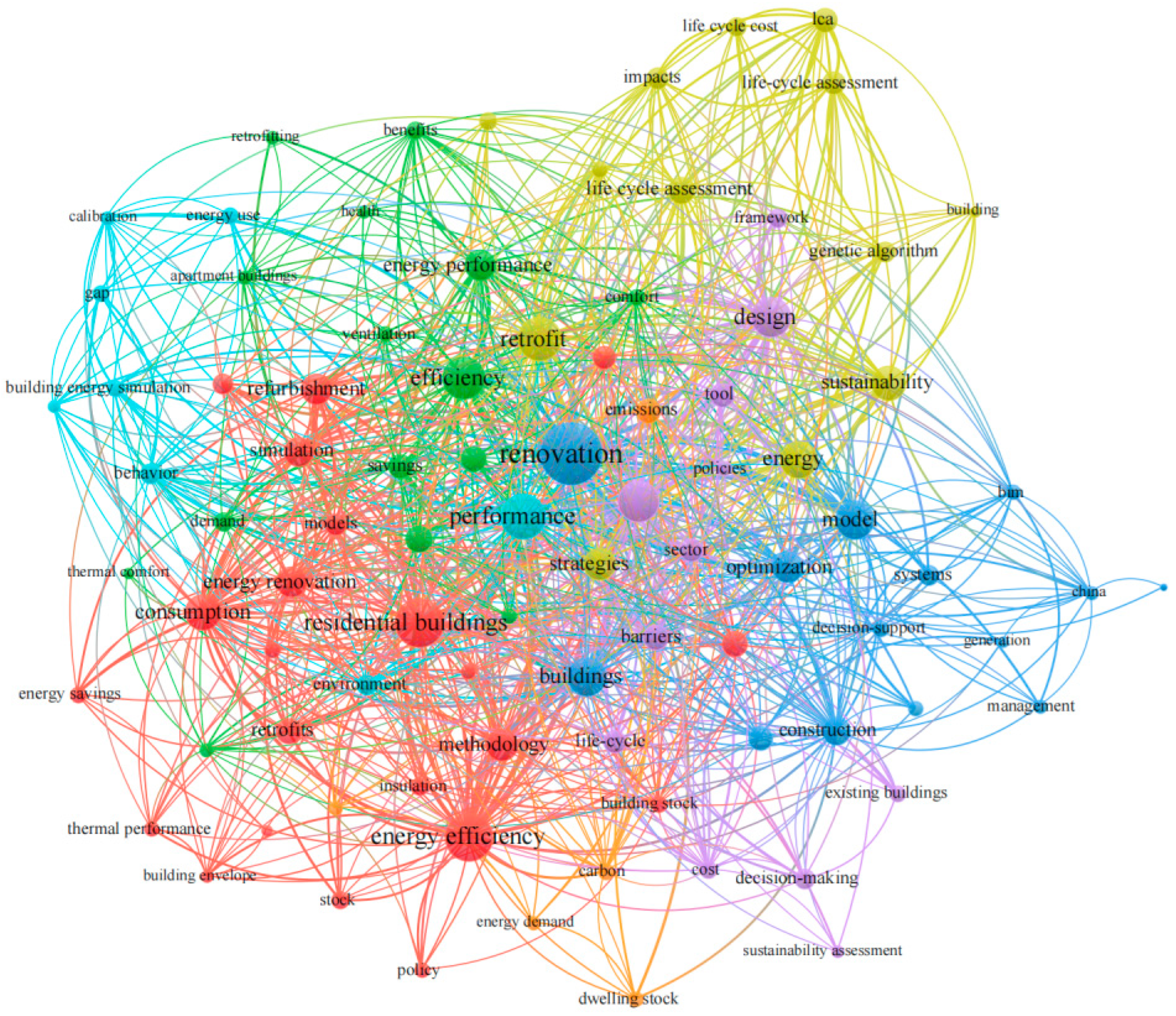


| Policy | Cost | Technique | Resident Satisfaction | Building Reconstruction | Energy-Related Concepts | Building | Other |
|---|---|---|---|---|---|---|---|
| policies policy management sector | cost-effectiveness life cycle cost cost benefits efficiency | deep renovation model BIM energy efficiency measures genetic algorithm system thermal insulation multi-objective optimization systems insulation optimization generation ventilation calibration design district heating tool methodology building envelope decision-support life cycle assessment simulation framework LCA building energy simulation strategies life-cycle models sustainability assessment decision-making | comfort thermal comfort health behavior demand performance thermal performance energy demand | renovation retrofit building renovation energy renovation retrofits retrofitting social housing energy-saving renovation refurbishment | environment energy efficiency zero-energy energy energy savings sustainability energy use consumption carbon energy performance climate change savings CO2 emissions emissions energy-consumption | residential buildings buildings construction stock dwellings building stock existing buildings dwelling stock apartment buildings building | impact barriers impacts gap challenges China selection |
Disclaimer/Publisher’s Note: The statements, opinions and data contained in all publications are solely those of the individual author(s) and contributor(s) and not of MDPI and/or the editor(s). MDPI and/or the editor(s) disclaim responsibility for any injury to people or property resulting from any ideas, methods, instructions or products referred to in the content. |
© 2026 by the authors. Licensee MDPI, Basel, Switzerland. This article is an open access article distributed under the terms and conditions of the Creative Commons Attribution (CC BY) license.
Share and Cite
Hu, Y.; Sun, Y. Synergizing Policy, Cost, and Technology in Green Building Renovation: A Multi-Stakeholder Satisfaction Perspective. Buildings 2026, 16, 1690. https://doi.org/10.3390/buildings16091690
Hu Y, Sun Y. Synergizing Policy, Cost, and Technology in Green Building Renovation: A Multi-Stakeholder Satisfaction Perspective. Buildings. 2026; 16(9):1690. https://doi.org/10.3390/buildings16091690
Chicago/Turabian StyleHu, Yujie, and Ya Sun. 2026. "Synergizing Policy, Cost, and Technology in Green Building Renovation: A Multi-Stakeholder Satisfaction Perspective" Buildings 16, no. 9: 1690. https://doi.org/10.3390/buildings16091690
APA StyleHu, Y., & Sun, Y. (2026). Synergizing Policy, Cost, and Technology in Green Building Renovation: A Multi-Stakeholder Satisfaction Perspective. Buildings, 16(9), 1690. https://doi.org/10.3390/buildings16091690