


Abstract
The temperature field characteristics of highway tunnels during fire conditions are investigated in this paper. Numerical simulations coupled with reduced-scale physical model tests were conducted to analyze the thermal characteristics of the tunnel interior and lining structure under various ventilation conditions. Taking the extra-long double-tube highway tunnel as a case study, a numerical model was established using FLUENT to simulate a 100 MW fire under different longitudinal ventilation velocities. Furthermore, a reduced-scale physical model with a geometric similarity ratio of 1:2.7 was fabricated to investigate the effect of lining moisture content on the heat transfer characteristics. It is indicated by the results that high-temperature zones above 800 °C are mainly concentrated within roughly 100 m of the fire source, extending approximately 20 m upstream and 80 m downstream. As the ventilation velocity rises, the high-temperature zone adjacent to the fire source is gradually reduced, the upstream smoke backflow length is shortened, and the downstream thermal influence range is expanded. Obvious spatial variations are observed in the cross-sectional temperature distribution: relatively uniform temperatures are found near the fire source, whereas higher temperatures are observed at the crown in upstream and downstream sections, followed by the haunch and sidewalls. A pronounced thermal lag effect is observed in the lining structure, with both slower heating rates and lower peak temperatures being exhibited at larger distances from the fire source and in linings with higher moisture content. A temperature plateau at around 100 °C is detected, which is mainly attributed to latent heat absorption during moisture evaporation. A more significant temperature gradient through the lining thickness is also caused by a higher moisture content. These findings provide valuable references for tunnel fire safety design, smoke control strategies, and evacuation safety analysis.
1. Introduction
Highway tunnels play an important role in modern transportation systems; however, fire accidents in tunnels remain one of the most dangerous types of traffic disasters. Although tunnel fires occur relatively infrequently, their consequences are often severe due to the enclosed environment, limited evacuation routes, and difficulties associated with firefighting operations [1,2]. During tunnel fires, large amounts of heat and toxic smoke rapidly accumulate within the tunnel space, giving rise to excessively high temperatures and hazardous gas emissions that seriously endanger occupants and rescue personnel. The causes of tunnel fires are multifaceted, including vehicle collisions, spontaneous vehicle combustion, equipment failure, and human factors [3,4,5,6]. Once a fire occurs, heat and smoke dissipation are restricted by the confined tunnel structure, causing a sharp temperature rise in a short time. In some cases, temperatures inside tunnels can exceed 1000 °C within minutes, leading to severe visibility reduction and significant difficulties in evacuation and emergency response [7,8]. In addition, fire suppression operations in tunnels are extremely challenging, as densely packed vehicles may induce secondary fires, further enlarging fire magnitude and damage severity [9,10,11,12].
To better understand thermal response in tunnels, extensive studies have been conducted using tests, reduced-scale experiments, and numerical simulations. The influence of longitudinal ventilation on different fire types was analyzed by Carvel et al. [13] using Bayesian probability methods combined with experimental data. Reduced-scale experiments performed by Li et al. [14] demonstrated that sidewall confinement and an increased fire source height can significantly increase crown temperatures and the probability of flame impingement. CFD (Computational Fluid Dynamics) simulations performed by Amouzandeh et al. [15] demonstrated that crown temperature variations were relatively minor at low ventilation velocities, and declined notably with rising wind velocity. Previous studies have also focused on the effects of ventilation conditions, tunnel geometry, and fire source characteristics on temperature distribution. Numerical investigations by Wan et al. [16] revealed that crown temperature was more sensitive to blockage ratio at low longitudinal ventilation. Using a reduced-scale experimental setup, Ingason et al. [17] investigated key parameters in tunnel fires—including heat release rate (HRR), crown gas temperature, smoke back-layering length, and flame length. Based on reduced-scale physical model tests, a segmented prediction model to characterize the peak temperature rise of gas beneath the tunnel crown under longitudinal ventilation conditions was developed by Yao et al. [18]. Full-scale experiments by Zhang et al. [19] indicated that shaft location exerts a significant influence on smoke extraction efficiency, while the critical longitudinal ventilation velocity required to control smoke propagation under multiple adjacent fire cases was explored by Tang et al. [20]. While previous studies were extensively conducted on gas behavior and environmental parameters such as ventilation and fire size, considerably less attention was paid to the thermal response of the tunnel lining itself. In particular, the effect of moisture content on heat transfer and thermal lag within concrete during prolonged fire exposure was warranted for further investigation, given its significant implications for structural safety.
Therefore, two complementary approaches were employed in this study to investigate the temperature field characteristics of highway tunnel fires. First, a numerical simulation was conducted to analyze the evolution of temperature distribution and smoke propagation under various longitudinal ventilation velocities (0.5–5.0 m/s) using a FLUENT (2025 R1)-based model with a 100 MW fire. Second, a reduced-scale physical model test was carried out under natural ventilation conditions to examine the effect of lining moisture content on heat transfer and thermal lag—a factor that is difficult to accurately capture numerically. The findings are expected to serve as valuable references for tunnel fire safety design, smoke control strategies, and evacuation safety evaluation, while contributing to a deeper understanding of the thermal behavior under the coupled effects of ventilation and lining material properties.
2. Numerical Simulation
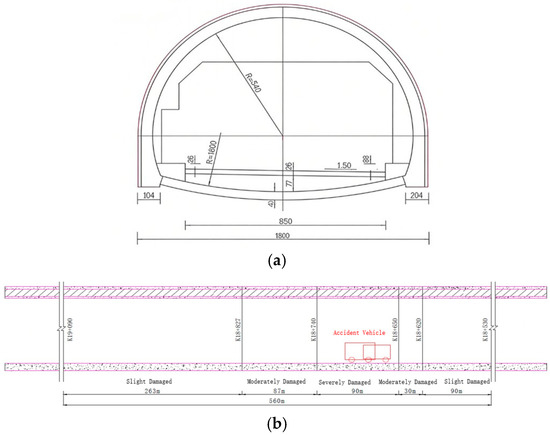
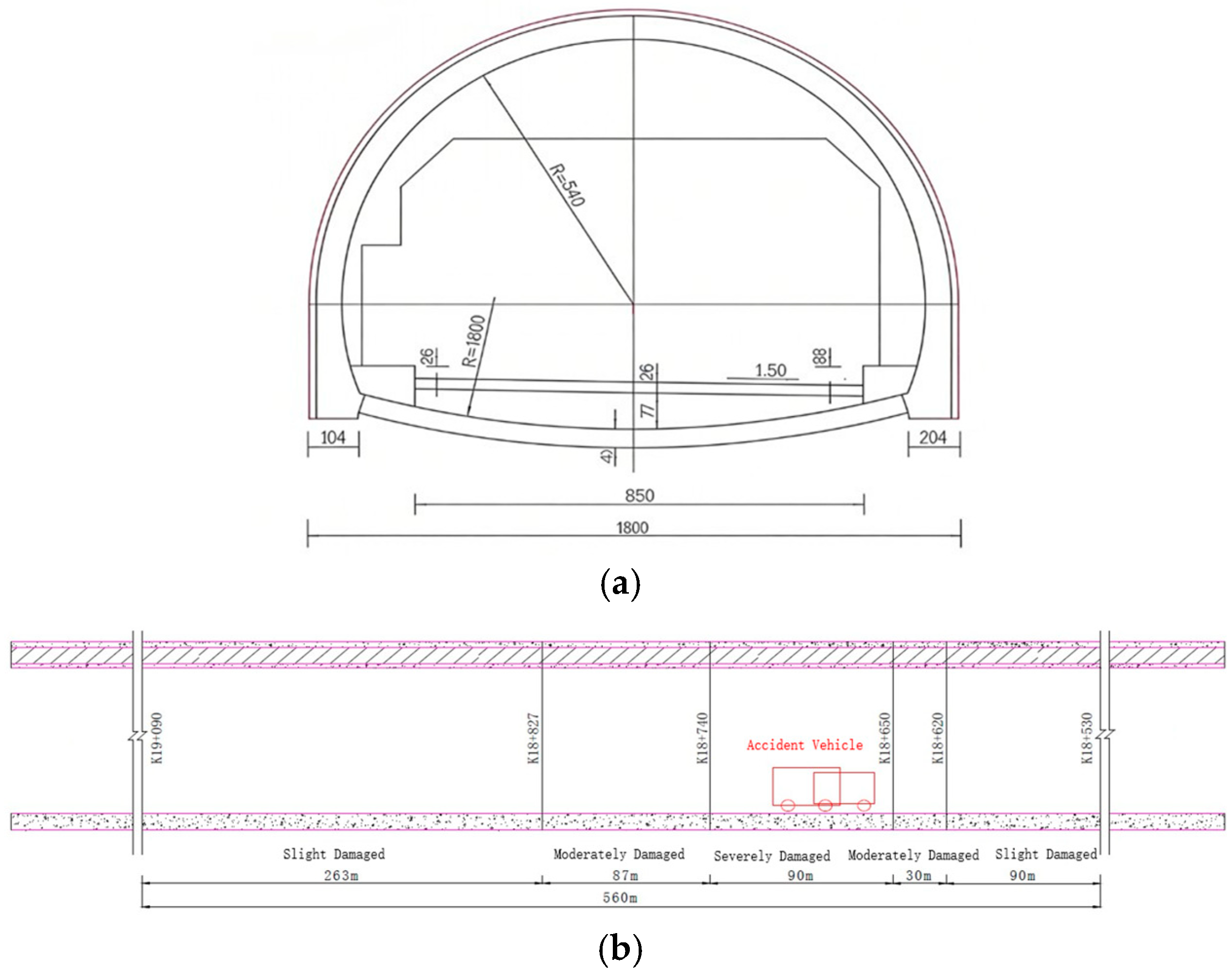
This paper adopted an extra-long highway tunnel as the engineering background for the numerical simulation. As shown in Figure 1, the tunnel featured a twin-tube separated configuration, with left and right tube lengths of 4003.19 m and 4070 m, respectively, a center-to-center distance of 45 m, and a design speed of 80 km/h. A single-center circular cross-section was employed, with an inner radius of 5.40 m, a crown height of 7.1 m, a clear width of 9.75 m, and a clear height of 5.0 m. The lining thickness was 62 cm. The longitudinal gradient was +2.05% for the uphill direction and +2.11% for the downhill direction. A combined ventilation system incorporating shafts and longitudinal jet fans was utilized.
Figure 1.
Tunnel Schematic Diagram: (a) Schematic Diagram of Tunnel Cross-section (unit: cm); (b) Schematic Diagram of Tunnel Fire Longitudinal Section.
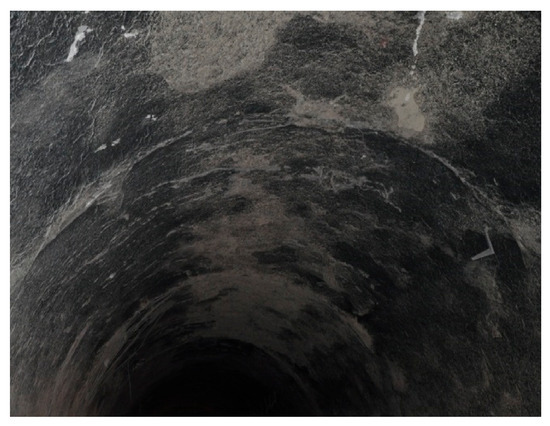
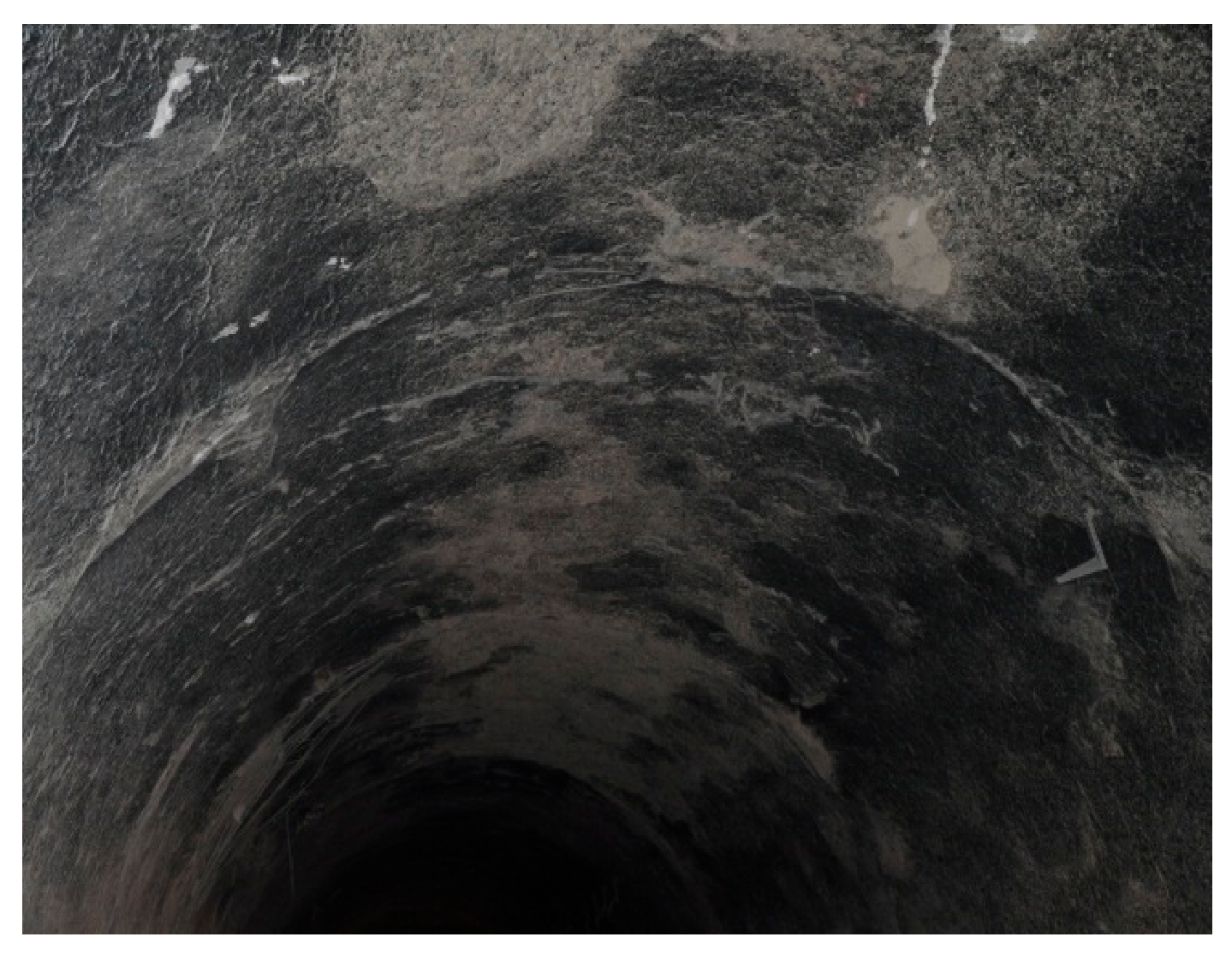
To analyze the temperature field evolution during a fire, a 1000 m-long section in the middle of the tunnel (chainage K18 + 530 to K19 + 090) was selected as the computational domain. The fire source, with a length of 90 m, was located between chainages K18 + 650 and K18 + 740. Based on statistical data from typical heavy-vehicle fires, the heat release rate (HRR) was set to 100 MW, and the fire duration was assumed to be 2 h. A baseline longitudinal ventilation velocity of 2.5 m/s was adopted, informed by data from actual tunnel fire investigations. Furthermore, a series of cases with ventilation velocities ranging from 0.5 to 5.0 m/s were designed to investigate the influence of ventilation speed, as shown in Figure 2.
Figure 2.
Damage to the Lining After a Tunnel Fire.
2.1. Geometric Model
The numerical simulation is devoted to analyze the smoke propagation and thermal distribution characteristics during a fire in the upstream segment of the Tunnel. The computational domain spans the tunnel section between chainages K18 + 290 and K19 + 290, with a total length of 1000 m. This range comprehensively encompasses the primary region affected by fire-generated smoke and heat. The fire source is located between chainages K18 + 665 and K18 + 685 and is idealized as a volumetric heat source with dimensions of 20 m × 2 m × 3 m. The tunnel portal is defined as a velocity inlet boundary condition, while the exit is assigned as a pressure outlet boundary condition. The concrete lining thickness of 62 cm is adopted, as thermal penetration beyond this depth is considered negligible within the fire duration. The thermophysical properties adopted in the simulation are as follows: the density and specific heat capacity of air are 1.225 kg/m3 and 1006.43 J/(kg·K), respectively; the corresponding values are 2400 kg/m3 and 1100 J/(kg·K) for concrete.
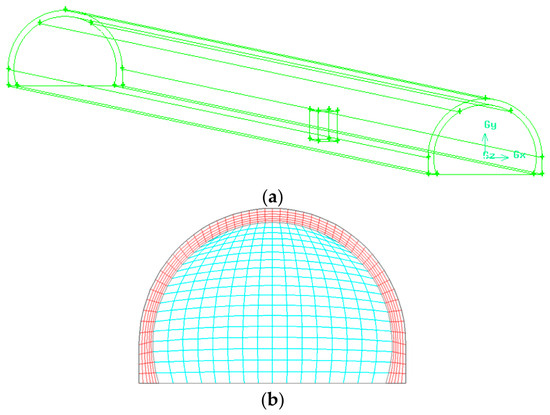
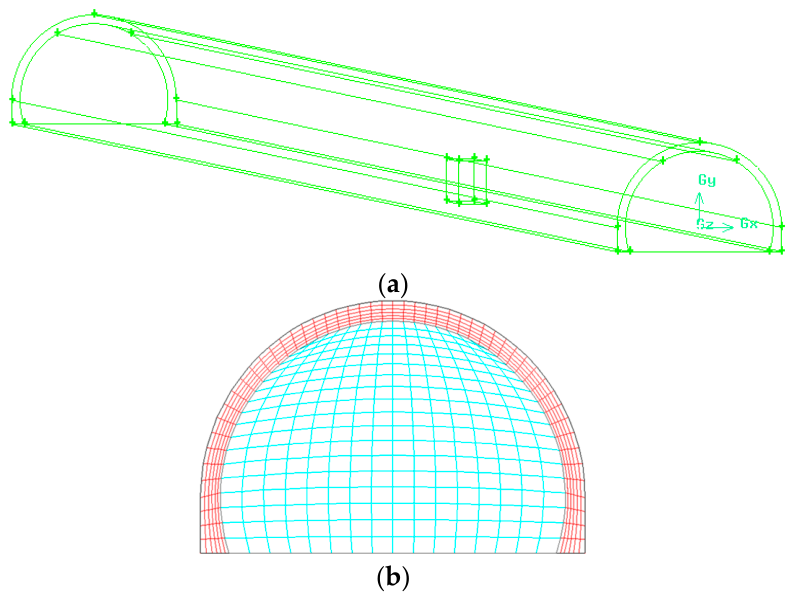
A right-handed Cartesian coordinate system is adopted, with the origin located at the center of the tunnel inlet portal. The tunnel extends along the positive z-axis with a longitudinal gradient of 2.05%, terminating at the outlet boundary. The geometric model of the tunnel is illustrated in Figure 3.
Figure 3.
Tunnel Mode: (a) Overall model of the tunnel; (b) Tunnel cross-sectional model.
2.2. Boundary Conditions and Assumptions
To accurately simulate the radiative heat transfer process under high-temperature fire scenarios, the Discrete Ordinates radiation model was selected for numerical calculations in this paper. A volumetric heat source model was adopted to simplify the representation of the fire source, which was equivalently treated as a fluid heat-generating region with a constant heat release rate of 100 MW, without considering combustion chemical reactions or the dynamic flame spread process. The smoke was modeled as hot air. Although the effects of soot radiation and toxic components were neglected, this simplification is deemed to offer sufficient engineering accuracy for analyzing temperature field distribution. To facilitate the numerical simulation of the fire, the following basic assumptions were made.
(1) The airflow field in the tunnel was assumed to be uniform before the fire;
(2) The tunnel walls were assumed to be dry and impermeable;
(3) The disturbance of airflow caused by vehicles and personnel was neglected;
(4) The effects of mechanical ventilation, environmental feedback, and oxygen concentration on combustion were disregarded.
The initial conditions for the calculation were set as follows: an initial temperature of 350 °C was specified for the fire source, and an initial air temperature of 27 °C, a density of 1.225 kg/m3, and a relative pressure of 0 Pa (with a reference atmospheric pressure of 101,325 Pa) were defined for the air inside the tunnel. The boundary conditions were configured as follows: a velocity inlet boundary was applied at the inlet, a pressure outlet boundary was specified at the outlet, and a no-slip solid wall boundary with a wall roughness coefficient of 0.01 was imposed at the walls. The fire source was implemented as a fluid source term. Although the VHS and hot-air approximation offers computational efficiency and sufficient engineering accuracy for analyzing the overall temperature field and smoke stratification driven by buoyancy and ventilation, it may lead to an underestimation of the peak radiative heat flux immediately surrounding the fire source. Future studies could benefit from incorporating more sophisticated combustion and radiation models, such as the eddy-dissipation concept (EDC) with a soot model, to capture these finer details.
2.3. Mesh Independence Verification
Mesh resolution is a critical factor governing the accuracy of tunnel fire simulations. Although a smaller mesh size generally enhances prediction accuracy, it correspondingly elevates computational cost. The characteristic fire diameter (D*) is widely adopted to determine an appropriate mesh size. Reliable simulation results are generally yielded when D* is 4–16 times the mesh size [21]. The characteristic fire diameter is calculated as presented in Equation (1):
where ρ∞ stands for the ambient air density (1.225 kg/m3), cp denotes the specific heat capacity at constant pressure of air (1.02 kJ/(kg·K)), T∞ refers to the ambient temperature (300 K), Q is HRR of the fire (100 MW), and g is the gravitational acceleration (9.81 m/s2).
From this equation, the characteristic fire diameter D* is computed as 5.95 m. Accordingly, an optimal mesh size range of 0.4–1.5 m is selected. Given the considerable longitudinal length of the tunnel and constraints on computational efficiency, a non-uniform meshing strategy is adopted. A refined mesh with a cell size of 0.5 m is applied to the region immediately adjacent to the fire source, while a coarser mesh of 1.0 m is utilized in regions far from the fire source.
2.4. Simulation Cases
To investigate the temperature field characteristics both within the tunnel bore and its lining structure under different longitudinal ventilation conditions, a total of ten simulation cases is designed. The fire HHR is fixed at 100 MW across all cases, whereas the longitudinal ventilation velocity is varied in the range of 0.5–5.0 m/s. These parametric conditions enable a systematic investigation into the effects of ventilation velocity on temperature distribution and smoke propagation characteristics within the tunnel. The corresponding simulation conditions are summarized in Table 1.
Table 1.
Simulation of Tunnel Fire Scenario.
3. Calculation Results and Analysis
3.1. Spatial Temperature Distribution Within the Tunnel
3.1.1. Longitudinal Temperature Distribution Along
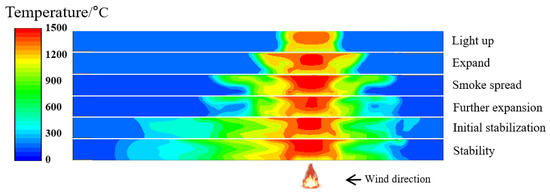
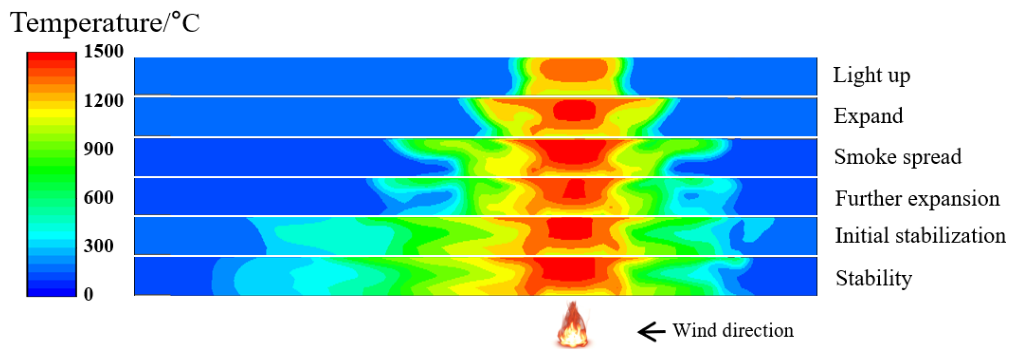
To investigate the longitudinal temperature distribution along the tunnel during fire propagation, Case 5 is chosen as the representative simulation case. The longitudinal ventilation velocity in this case is specified as 2.5 m/s, and the temperature distribution along the tunnel axis over the entire fire development process is presented in Figure 4.
Figure 4.
Longitudinal Temperature Contour Plot Over the Full Fire Process.
During the initial stage of the fire, the heat release rate rises rapidly, and high-temperature smoke is produced near the fire source. Driven by buoyancy effects, the hot smoke ascends quickly and impinges upon the tunnel crown, forming a typical ceiling jet. Under the coupled action of buoyancy and longitudinal ventilation, the smoke propagates along the tunnel crown and extends gradually downstream. Meanwhile, a limited smoke back-layering zone appears upstream of the fire source. As the fire evolves continuously, turbulence intensity in the fire source zone becomes more pronounced. The interaction between the fire plume and longitudinal ventilation flow enhances turbulent mixing of the hot smoke and surrounding ambient air, yielding a non-uniform and time-varying temperature distribution. Distinctly large thermal gradients are observed adjacent to the fire source, whereas temperature fluctuations in distal regions are mild.
Once the fire evolves into a quasi-steady stage, the temperature and flow fields within the tunnel gradually attain a state of dynamic equilibrium. Longitudinal ventilation flow effectively mitigates further upstream smoke back-layering, such that high-temperature smoke is primarily convected downstream. At this stage, the temperature field becomes sufficiently stable, with high-temperature zones concentrated below the tunnel crown downstream of the fire source. Thermal penetration toward the upstream section is significantly impeded.
3.1.2. Cross-Sectional Temperature Distribution
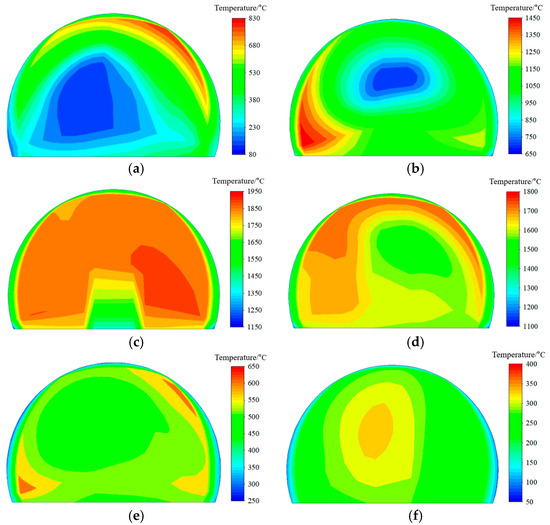
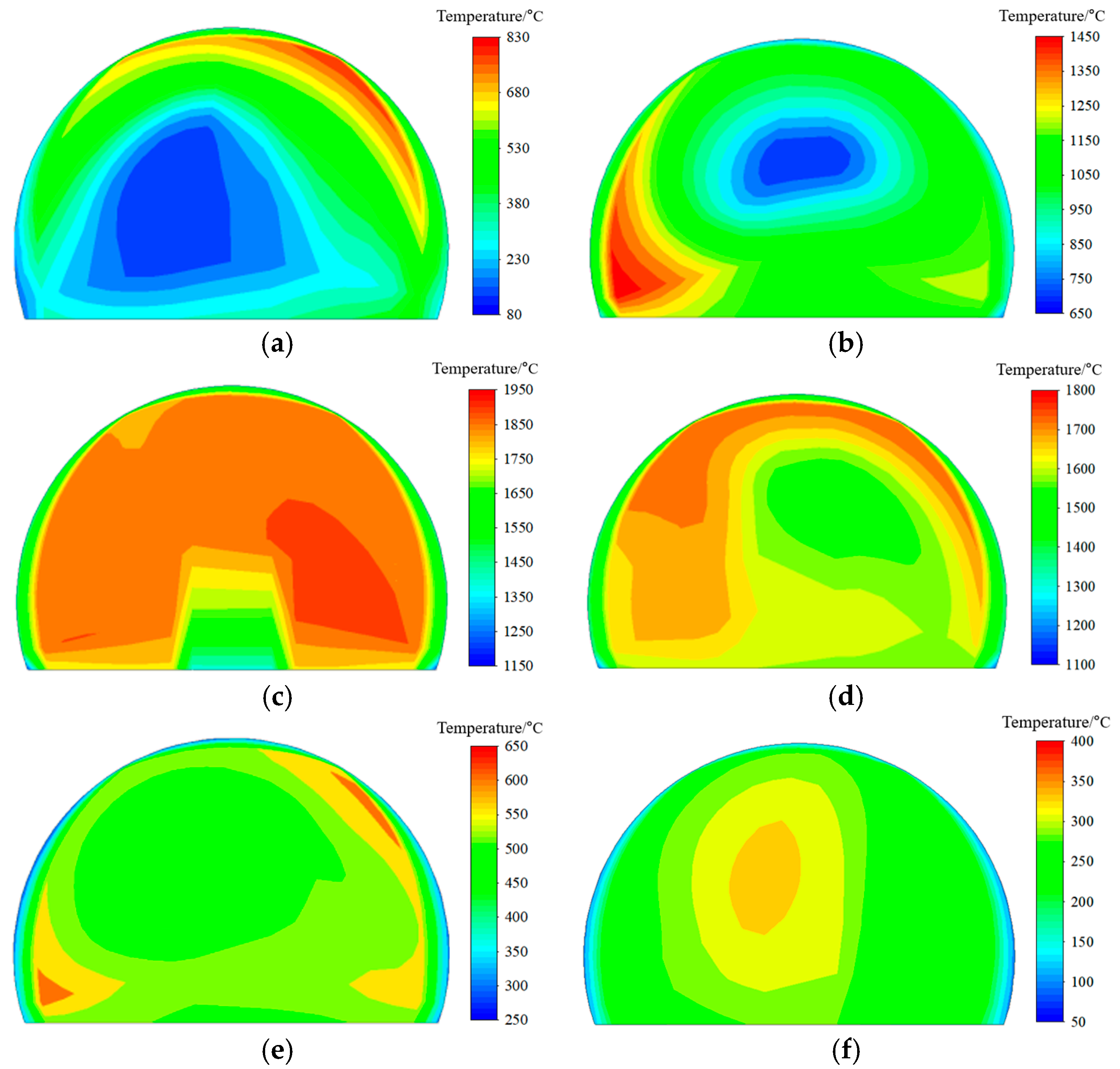
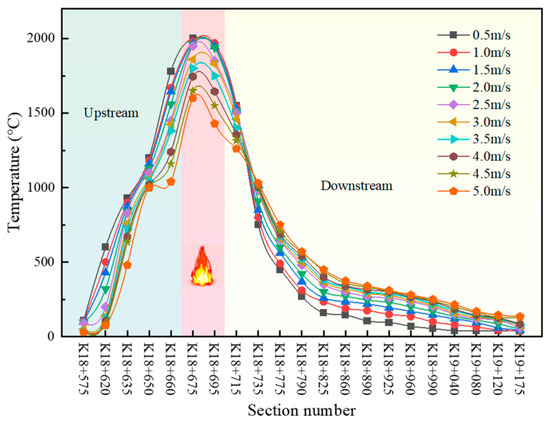
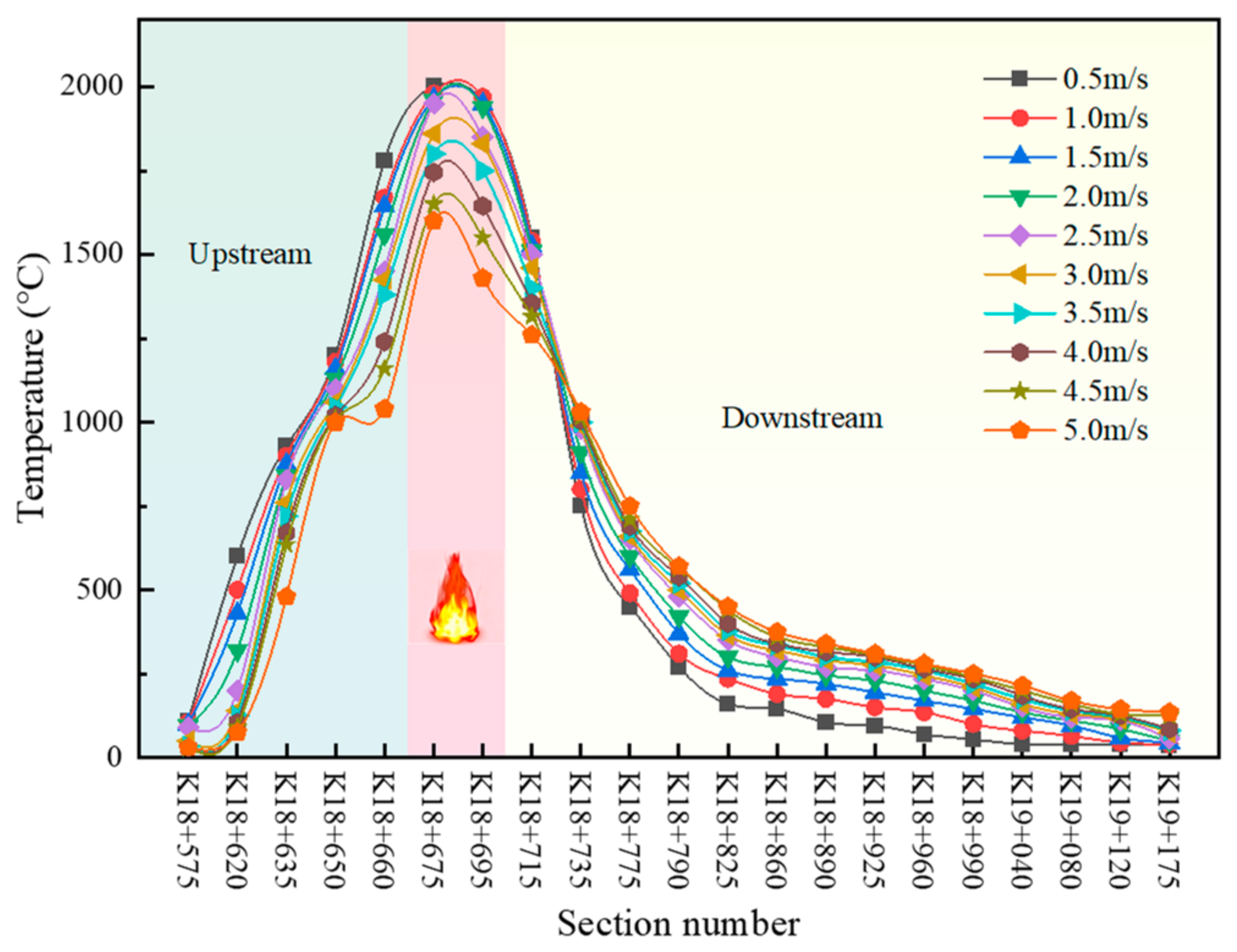
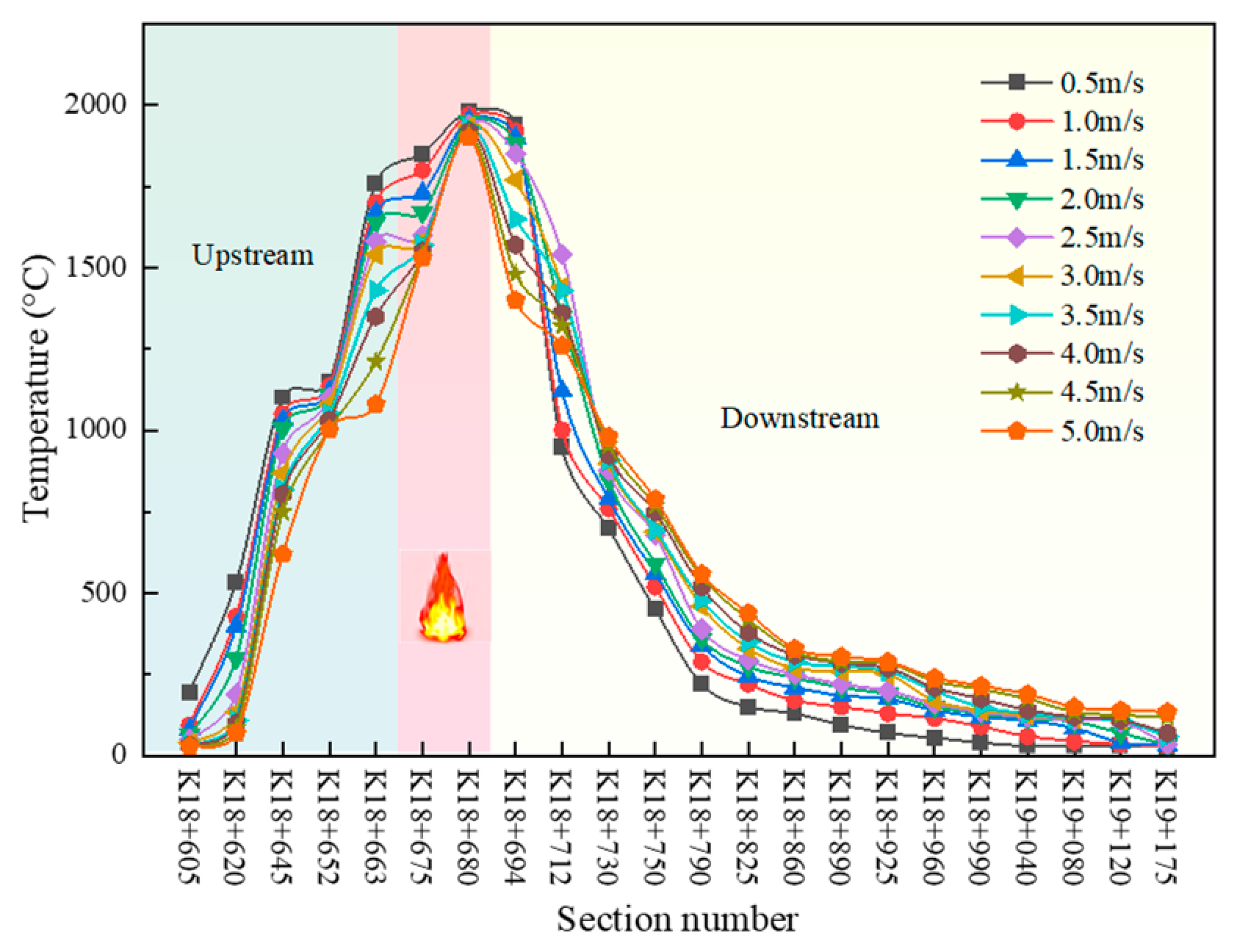
The temperature distribution across tunnel cross-sections located upstream, at the fire source and downstream under a ventilation velocity of 2.5 m/s is presented in Figure 5. The peak temperatures recorded at various cross-sections for all simulated ventilation cases are plotted in Figure 6.
Figure 5.
Cross-Sectional Thermal Contour Plot of the Tunnel: (a) 40 m upstream of the fire source; (b) 25 m upstream of the fire source; (c) the fire Source; (d) 20 m downstream of the fire source; (e) 60 m downstream of the fire source; (f) 100 m downstream of the fire source.
Figure 6.
Peak Temperatures at Internal Tunnel Cross-Sections.
As illustrated in Figure 5, the temperature field of a tunnel fire exhibits significant spatial differentiation along the longitudinal direction. In the upstream region, longitudinal ventilation restricts the spread of high-temperature smoke, which is primarily concentrated at the vault and the upper haunches, while temperatures near the sidewalls and pavement remain relatively low due to buoyancy effects. Near the fire source, intense heat release and turbulent mixing lead to a uniformly distributed high-temperature zone across the entire cross-section, with no apparent thermal stratification. In the downstream region, the high-temperature zone is again confined to the upper tunnel space, where elevated temperatures reappear at the vault and haunches, whereas lower sidewalls and pavement experience relatively low temperatures, indicating the re-establishment of thermal stratification. Notably, the high-temperature smoke exhibits a pronounced adherence effect on the lining surface: in the upstream region, the temperature field assumes an O-shaped pattern (low in the center, high at the periphery), whereas in the downstream region, it displays a convex upward distribution, with peak temperatures at the crown gradually decreasing downward.
As shown in Figure 6, the influence of ventilation velocity on the temperature field is also significant. At the fire source, the temperature gradually decreases as the ventilation velocity increases, dropping from approximately 1900 °C at 0.5 m/s to about 1500 °C at 5.0 m/s. At the upstream sections, relatively high temperatures are detected under low wind speeds (0.5–1.5 m/s), indicating the presence of significant smoke backflow. When the wind speed exceeds 3.5 m/s, the temperature upstream decreases markedly, suggesting that smoke backflow is effectively suppressed—a finding consistent with the critical velocity theory (approximately 3.7 m/s). The temperature variation in the downstream sections exhibits a two-stage pattern: at low wind speeds (0.5–2.0 m/s), an increase in wind speed enhances the efficiency of smoke transport, intensifies the adherence and accumulation effects of smoke, and results in insufficient mixing with cold air, leading to relatively high downstream temperatures. At medium to high wind speeds (2.5–5.0 m/s), the cooling effect due to smoke mixing becomes dominant. The high-velocity airflow promotes full mixing between high-temperature smoke and cold air, accelerating heat diffusion, and the downstream temperature slowly decreases as the ventilation velocity increases.
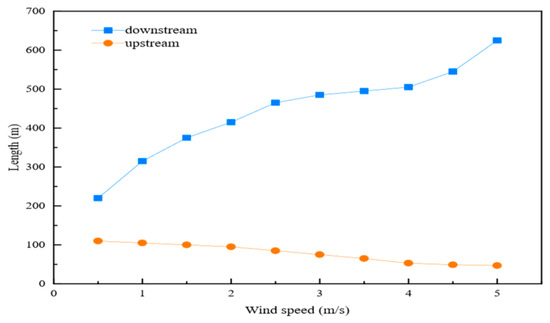
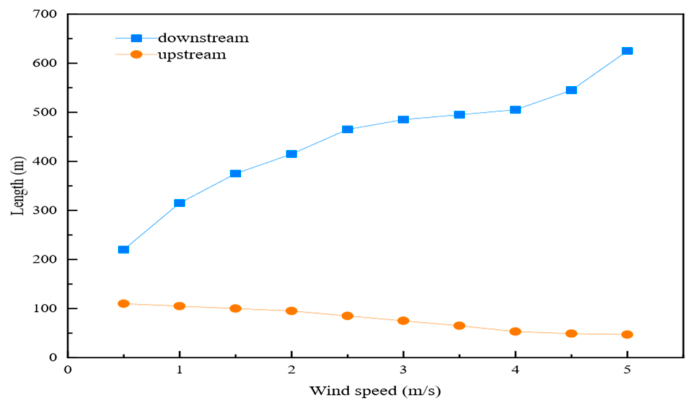
Based on the results presented in Figure 7, the impact range of a fire on the interior of the tunnel upstream of the fire source varies with different wind speeds. The fire impact range is smaller upstream of the fire source. Under the influence of wind dynamics, hot air propagates downstream. As the wind speed increases, the hot air propagates downstream more quickly. Therefore, the higher the wind speed, the smaller the impact of the fire on the upstream area. At a wind speed of 0.5 m/s, the impact length is approximately 110 m at its maximum, while at a wind speed of 5 m/s, the impact length is only about 45 m. Downstream of the fire source, under ventilated conditions, the influence of wind dynamics causes temperatures to propagate farther downstream, and the distance of temperature propagation downstream varies under different wind speed conditions. Consequently, the impact range of the fire downstream differs. When fuel at the fire source is abundant, the fire source continuously releases a large amount of heat, which is manifested in the form of temperature. The higher the wind speed, the faster the temperature propagates downstream, and the greater the distance it travels.
Figure 7.
The influence distance of the fire source on the upstream and downstream regions.
3.2. Spatial Temperature Distribution Within the Tunnel Lining
3.2.1. Simulation Results and Empirical Formula Comparison and Verification
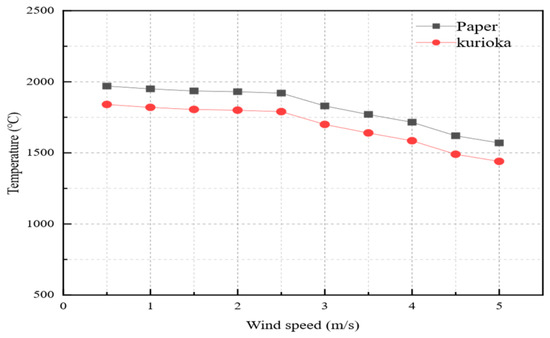
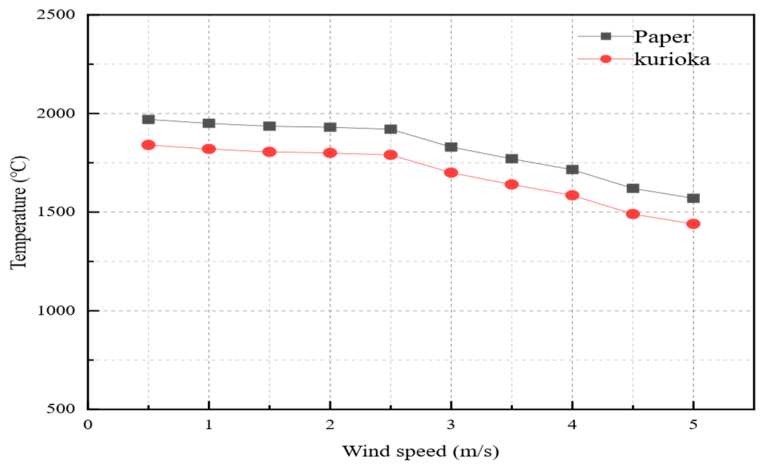
To assess the reliability of the numerical simulation, the simulated maximum ceiling temperature was compared with the ceiling maximum temperature rise model proposed by Kurioka. As shown in Figure 8 under a longitudinal wind speed of 2.5 m/s, a maximum ceiling temperature of approximately 1700 °C was predicted by the Kurioka model, whereas a maximum ceiling temperature of 1830 °C was obtained from the simulation, with an error of approximately 7.6%, thereby validating the reasonableness of the model in predicting peak temperatures.
Figure 8.
Max ceiling temperature: CFD and Kurioka.
Furthermore, the smoke back-layering length was compared with empirical formulas for critical velocity proposed by Heselden [22], Danziger et al. [23], and Kennedy et al. [24]. The critical velocity for the tunnel was calculated to be approximately 3.7 m/s. According to the simulation results, when the wind speed reached 3.5–4.0 m/s, the upstream back-layering phenomenon was essentially eliminated, which is in good agreement with the predicted values from the formulas, further validating the accuracy of the simulated smoke movement patterns under ventilation control.
3.2.2. Longitudinal Temperature Distribution
To investigate the thermal response of the tunnel lining during fire propagation, Case 5 is chosen as the representative case. The longitudinal temperature distribution along the inner surface of the tunnel lining is presented in Figure 9.
Figure 9.
Longitudinal Temperature Contour Plot Along the Tunnel Lining Over the Full Fire Process.
When a fire occurs, thermal energy liberated by the fire source is transferred via thermal radiation, convection, and conduction. Of these mechanisms, thermal radiation primarily affects regions in the vicinity of the fire source, whereas thermal convection allows high-temperature smoke to transport heat over longer distances along the tunnel. Thermal conduction is mainly responsible for heat propagation within the concrete lining.
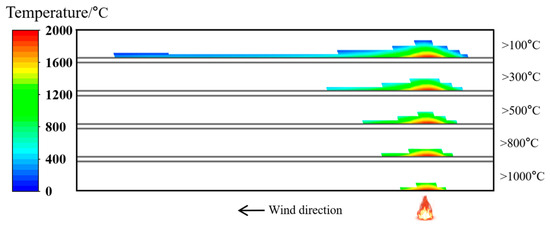
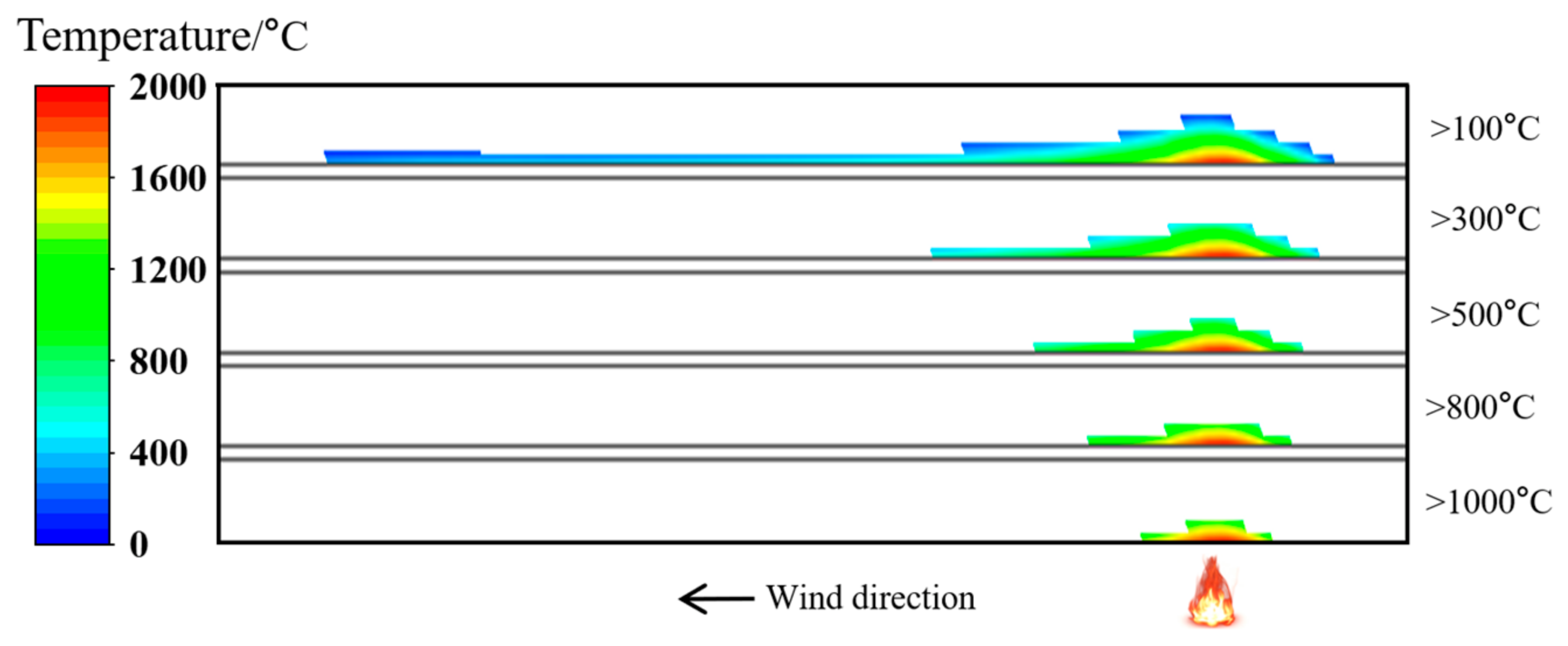
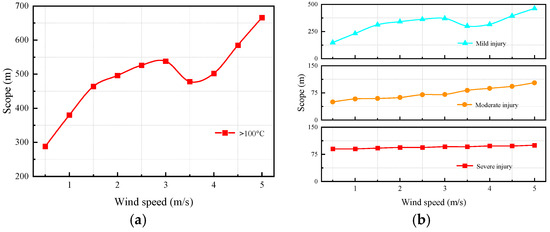
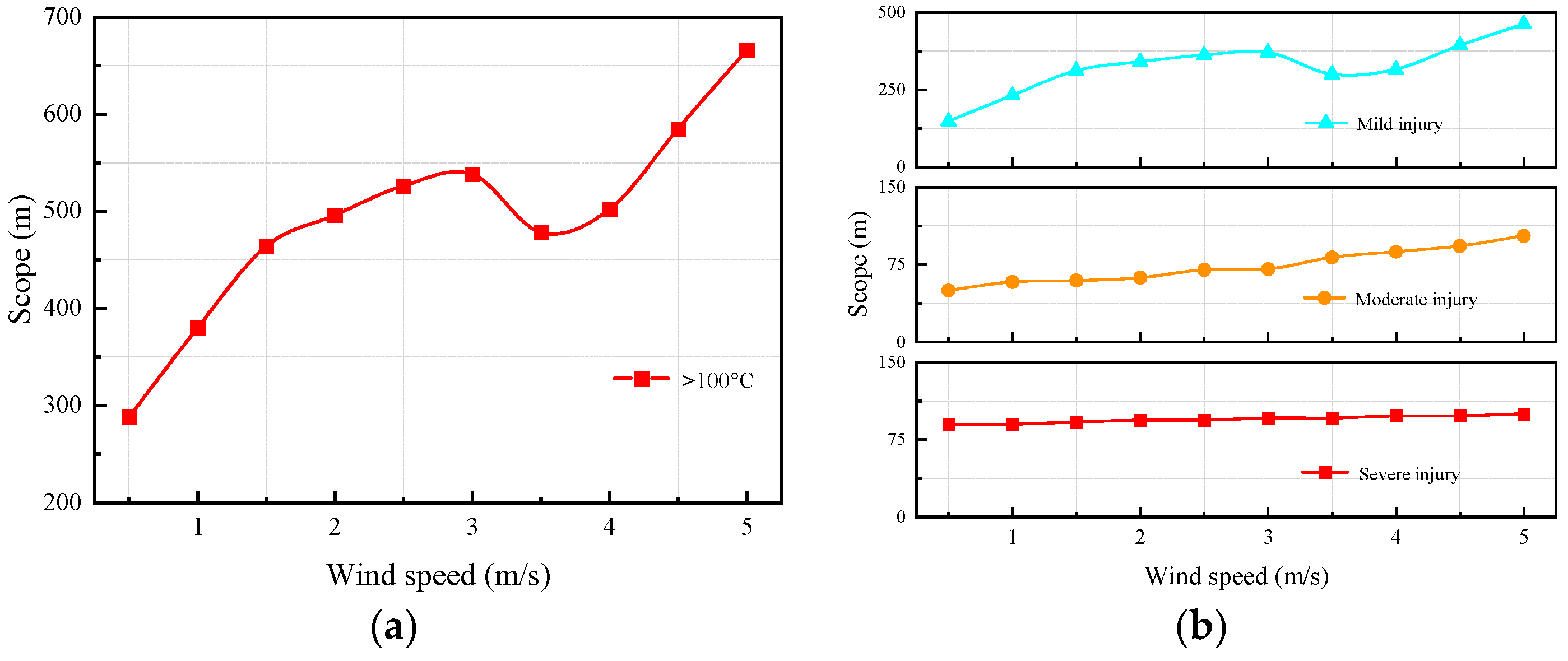
As shown in Figure 10. The results reveal that the most severely thermally impacted segment of the lining is located adjacent to the fire source. In this zone, the lining surface heat both from the hot smoke but also a substantial fraction of direct thermal radiation emitted by the fire. For a given fire size, the radiant heat input to the lining near the fire source remains nearly invariant, independent of the longitudinal ventilation velocity. As a result, the extent of severe thermal degradation in this region shows no significantly variation with changes in ventilation velocity. In contrast, segments remote from the fire source are governed primarily by convective heat transfer from the smoke. In these regions, ventilation velocity plays a more dominant role in determining the lining surface temperature level. A higher ventilation velocity reinforces downstream heat transport and mitigated upstream smoke back-layering, giving rise to heterogeneous temperature distributions. These findings indicate that fire size acts as the primary factor governing severe thermal distress of the lining, whereas ventilation velocity mainly affects the thermal influence range.
Figure 10.
Effect of Longitudinal Ventilation Velocity on Temperature Distribution of the Tunnel Lining: (a) Longitudinal Extent of Fire Thermal Influence; (b) Thermal Damage of the Tunnel Lining.
3.2.3. Temperature Distribution Inside the Lining
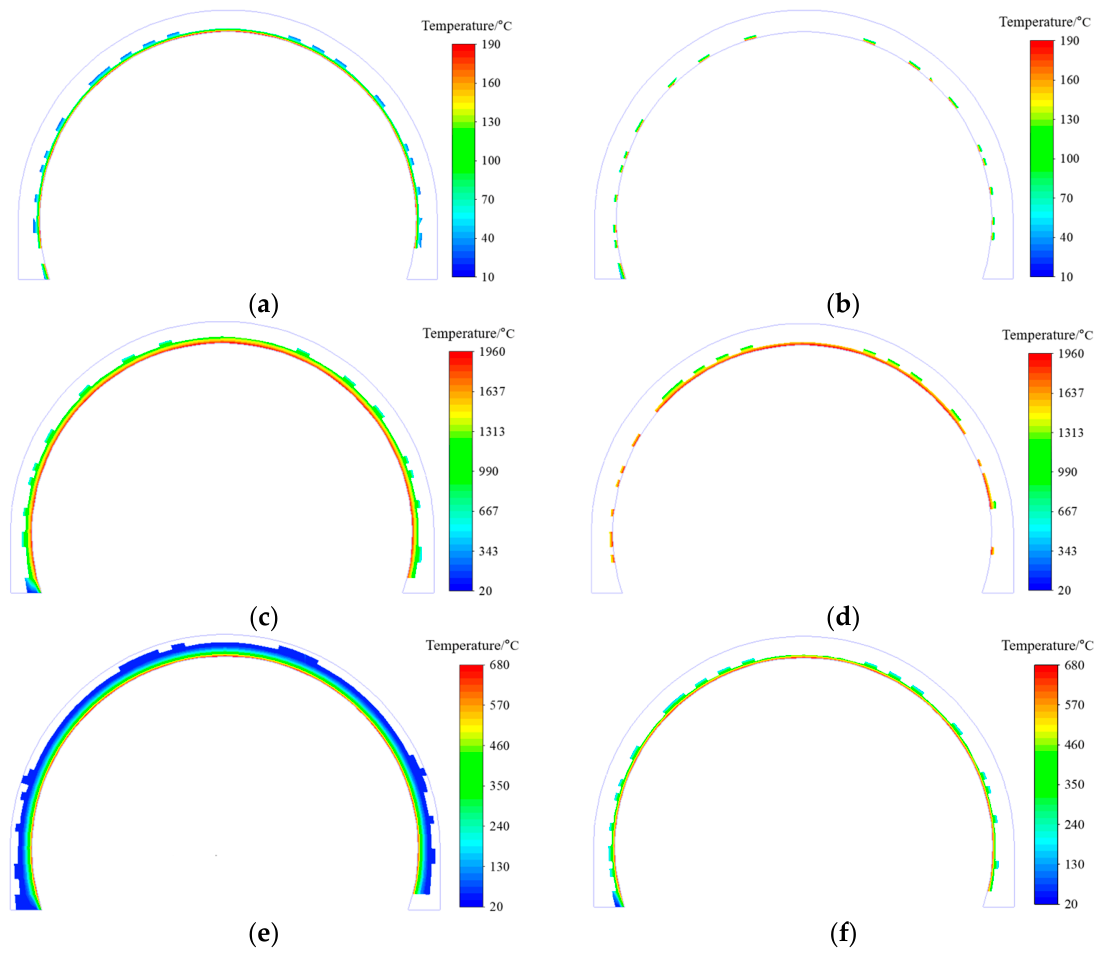
During a tunnel fire, heat transfer within the concrete lining is dominated by thermal conduction, while the inner lining surface is exposed to thermal radiation and convection. Consequently, the thermal response within the lining varies considerably with longitudinal distance from the fire source; moreover, crown lining, haunches and sidewall linings at the same cross-section exhibit non-uniform thermal responses to the fire. The thermal contours of the lining cross-section at three characteristic positions—upstream, at, and downstream of the fire source—under a longitudinal ventilation velocity of 2.5 m/s are presented in Figure 11 and Figure 12.
Figure 11.
Temperature Distribution Contour Map of the Lining Cross-Section: (a) K18 + 620 (>100°C); (b) K18 + 620 (>150 °C); (c) K18 + 680 (>800 °C); (d) K18 + 680 (>1940 °C); (e) K18 + 750 (>100 °C); (f) K18 + 750 (>500 °C).
Figure 12.
Maximum Temperature of the Lining Cross-Sections.
In the upstream region, smoke back-layering coupled with buoyancy drives the accumulation of hot gases beneath the tunnel crown. This leads to the most significant temperature increment in the crown lining, succeeded by the crown waist, while the sidewalls are least affected. A pronounced circumferential thermal gradient therefore forms across the lining cross-section, with temperatures decreasing monotonically from the crown to the sidewalls. At the fire source itself, intense combustion and strong turbulent mixing homogenize the high-temperature smoke throughout the tunnel cross-section. Additionally, the radial distances from the combustion zone to the crown, haunch, and sidewalls are roughly equivalent, resulting in similar levels of direct radiant heat uptake by the lining. As a result, the cross-sectional temperature distribution within the lining is highly uniform, and no discernible thermal gradient can be observed. In the downstream region, the temperature pattern is primarily controlled by longitudinal ventilation flow. Near the fire source, residual intense turbulence maintains a relatively even temperature distribution over the cross-section. As downstream distance increases, the smoke layer evolves into distinct thermal stratification: elevated temperatures are concentrated adjacent to the crown, intermediate values occur at the haunch, and relatively low temperatures persist at the sidewalls. This stratification pattern becomes increasingly marked with increasing distance from the fire source.
In summary, the longitudinal evolution of lining temperature maintains a consistent trend across all ventilation cases: maximum temperatures concentrated near the fire source and decay progressively in both upstream and downstream directions. Circumferentially, the thermal magnitude follows the general order of crown > crown waist > sidewalls, except the immediate fire source zone where thermal differences are minimal.
4. Similar Physical Model Tests
High temperatures generated during tunnel fires are transported along the tunnel by smoke flow, which can cause severe thermal damage to concrete linings including spalling, cracking, and even partial structural collapse due to thermal stress and strength degradation. However, direct measurement of thermal fields in full-scale tunnel fire incidents is extremely hazardous and technically challenging. Therefore, reduced-scale physical model testing provides an effective and reliable method for studying the thermal response of tunnel linings under fire conditions.
By applying similarity principles, reduced-scale model tests can safely reproduce the main characteristics of tunnel fires and reveal the temperature distribution and heat transfer characteristics of concrete lining structures under extreme thermal loading.
4.1. Similarity Theory
4.1.1. Selection of Similarity Criteria
The design of the reduced-scale tunnel fire model tests was based on the Froude similarity criterion. This criterion is applicable to buoyancy-driven fire smoke flow problems, and its core requirement was that the Froude number between the model and the prototype be equal, i.e., the ratio of inertial force to buoyancy force was maintained. The influence of the Reynolds number was neglected, as the flow was assumed to be in a fully developed turbulent state.
4.1.2. Similarity Constants and Relationships
The geometric similarity ratio was set as . where subscripts and denote model and prototype, respectively. Based on the Froude criterion, the similarity relationships for the main physical quantities were derived as Table 2.
Table 2.
Similarity Conditions and Similarity Parameters.
4.1.3. Similarity Design and Calibration of the Heat Release Rate
A full-scale fire size of 100 MW, representing a typical value for heavy vehicle fires, was adopted for the prototype. According to the similarity relationship, the theoretical HRR for the model was calculated as:
To verify whether the actual HRR met the similarity requirements, the combustion rate of the diesel–wood fuel combination was calibrated before the formal tests. By measuring the fuel consumption rate per unit time, the actual HRR was calculated to be approximately 8.1–8.7 kW, which was found to be in good agreement with the theoretical value.
4.2. Physical Model Test Materials
In this paper, a reduced-scale tunnel lining model with a geometric similarity ratio of 1:2.7 was established. The dimensions of the fire source were scaled in accordance with the same similarity ratio. The fire source device consisted of a fuel container made of 0.3 cm-thick steel plate, with internal dimensions of 80 cm × 120 cm × 50 cm. The actual tunnel fire was caused by a vehicle collision, which led to fuel leakage and ignition. Given that engine oil has a flash point of approximately 350 °C, and considering both experimental safety and feasibility, diesel fuel and wood were selected as alternative fuels in the model test. Specifically, 0# diesel fuel with a flash point close to 350 °C was adopted, with a total volume of 180 L, accompanied by 190 kg of wood. The combustion duration was determined in line with the time similarity criterion between the reduced-scale model and the actual tunnel fire.
According to the Highway Tunnel Design Code, the strength grade of concrete for tunnel lining shall not be lower than C20, and the strength grade of cement shall not be less than 32.5 MPa. To satisfy these code requirements and ensure representativeness, C25 concrete was adopted for the tunnel lining model, using ordinary Portland cement of strength grade 32.5 MPa.
4.3. Model Design and Fabrication
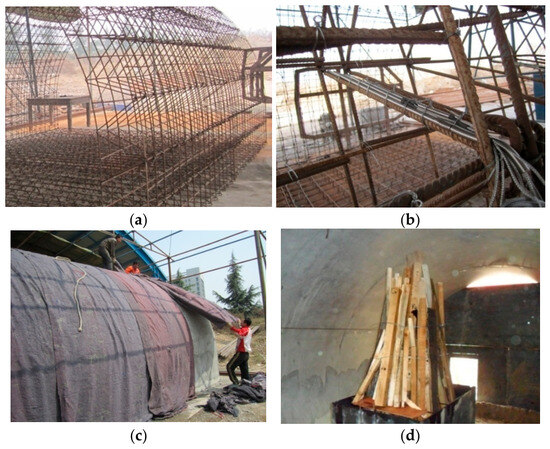
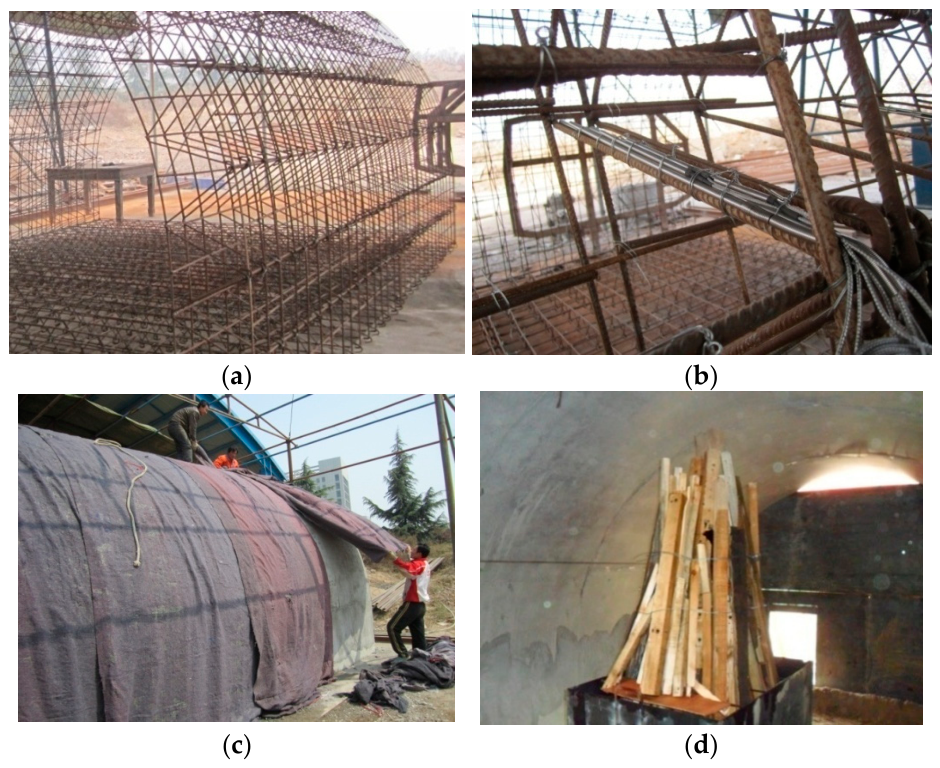
As can be seen in Figure 13. A 6 m-long tunnel lining model was fabricated using C25 concrete. To investigate the influence of moisture content on temperature distribution within the lining, the model was longitudinally divided into two segments: the front 3 m segment was designed with a moisture content of 8%, while the rear 3 m segment was prepared with a moisture content of 12%. The experiment was conducted to analyze temperature evolutions at different locations of the tunnel lining cross-section, including the crown, haunch and sidewalls. In addition, the heat transfer characteristics through the lining thickness were examined. During this test stage, ventilation effects were not considered, and the model was tested under natural ventilation with no external airflow.
Figure 13.
Model Preparation: (a) Model Setup; (b) Sensor Layout; (c) Model Curing; (d) Fire Source Placement.
To achieve the target moisture contents, tailored water-spraying and curing control measures were adopted during and after concrete curing. A moisture meter was used to monitor the concrete moisture, ensuring that the measured values met the design requirements before testing.
4.4. Measurement Layout and Test Conditions
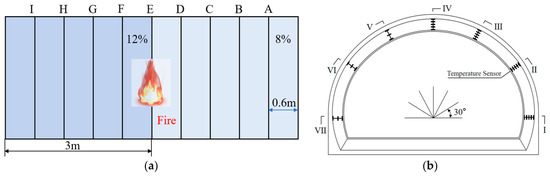
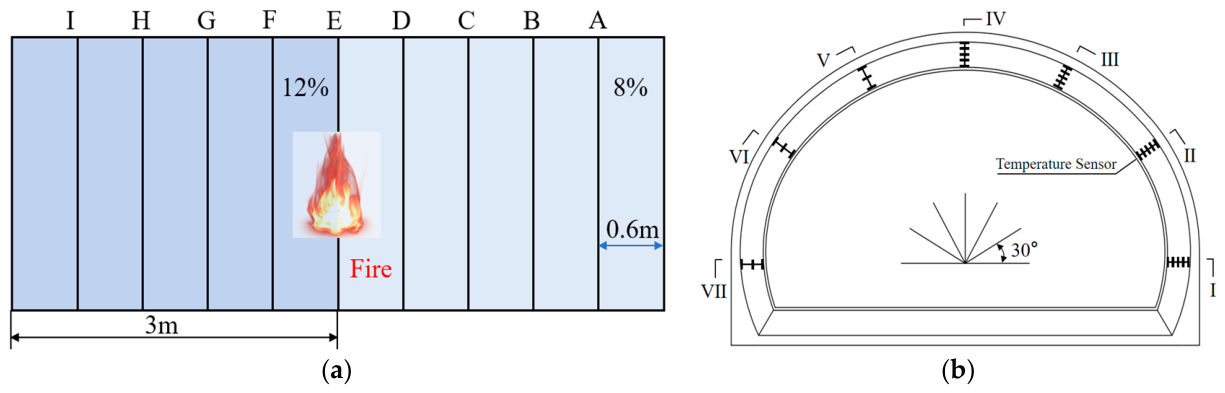
Temperature sensors were deployed along the longitudinal direction of the tunnel model at nine cross-sections (A–I), with a spacing of 60 cm between adjacent sections. Seven temperature sensors (I–VII) were installed at each cross-section, among which sensors placed on the left side were used to verify the measurements acquired from the right side. On the right side of each cross-section, sensors were embedded at 5 cm intervals to monitor temperature evolution through the lining thickness, whereas those on the left side were spaced at 10 cm intervals. Furthermore, the sensor closest to the fire source at each cross-section was used to measure the interior air temperature of the tunnel, while the remaining sensors recorded temperatures inside the lining structure. The detailed layout of the monitoring points is presented in Figure 14.
Figure 14.
Measurement Point Arrangement: (a) Monitoring section layout; (b) Temperature sensor arrangement.
4.5. Experimental Results and Analysis
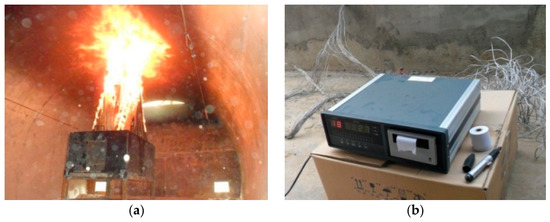
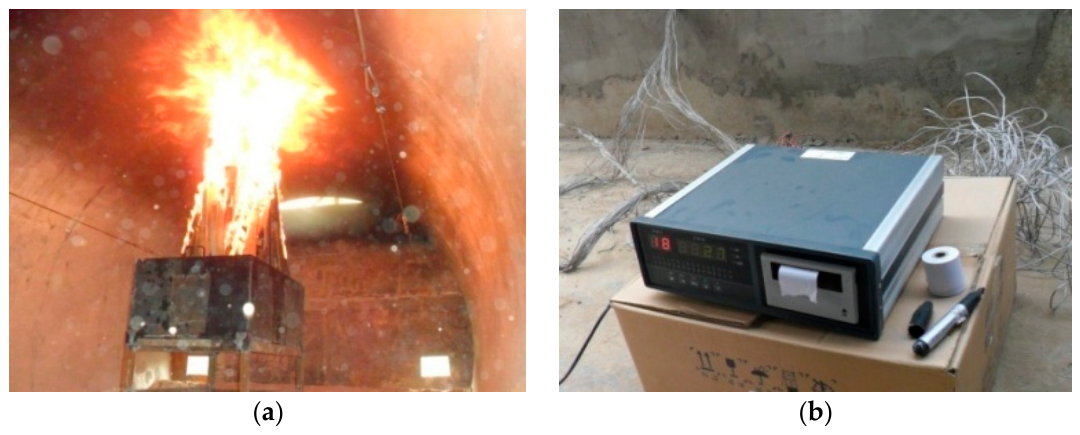
As shown in Figure 15, the fire source is simulated and the data are collected. The total duration of the experiment was 30 h, consisting of 6 h of fire exposure, followed by 24 h of cooling and post-fire observation. During the test, temperature sensors continuously monitored temperature evolutions at various locations within the lining. After the fire, visual inspections were performed to evaluate surface damage characteristics of the lining. The analysis focused on the temperature distribution along the lining inner surface, the internal heat transfer characteristics through different lining depths, and the influence of moisture content on the thermal response. By comparing results from different sections of the model, the effects of moisture content on peak temperature, heating rate, and thermal lag were systematically analyzed.
Figure 15.
Fire Source Simulation: (a) Fire Source Combustion; (b) Data Acquisition.
4.5.1. Temperature Distribution on Tunnel Lining Inner Surface
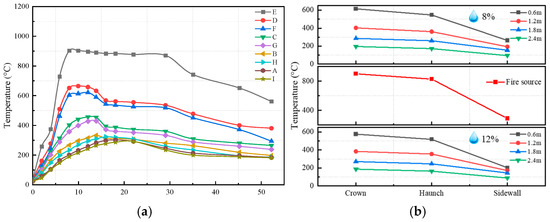
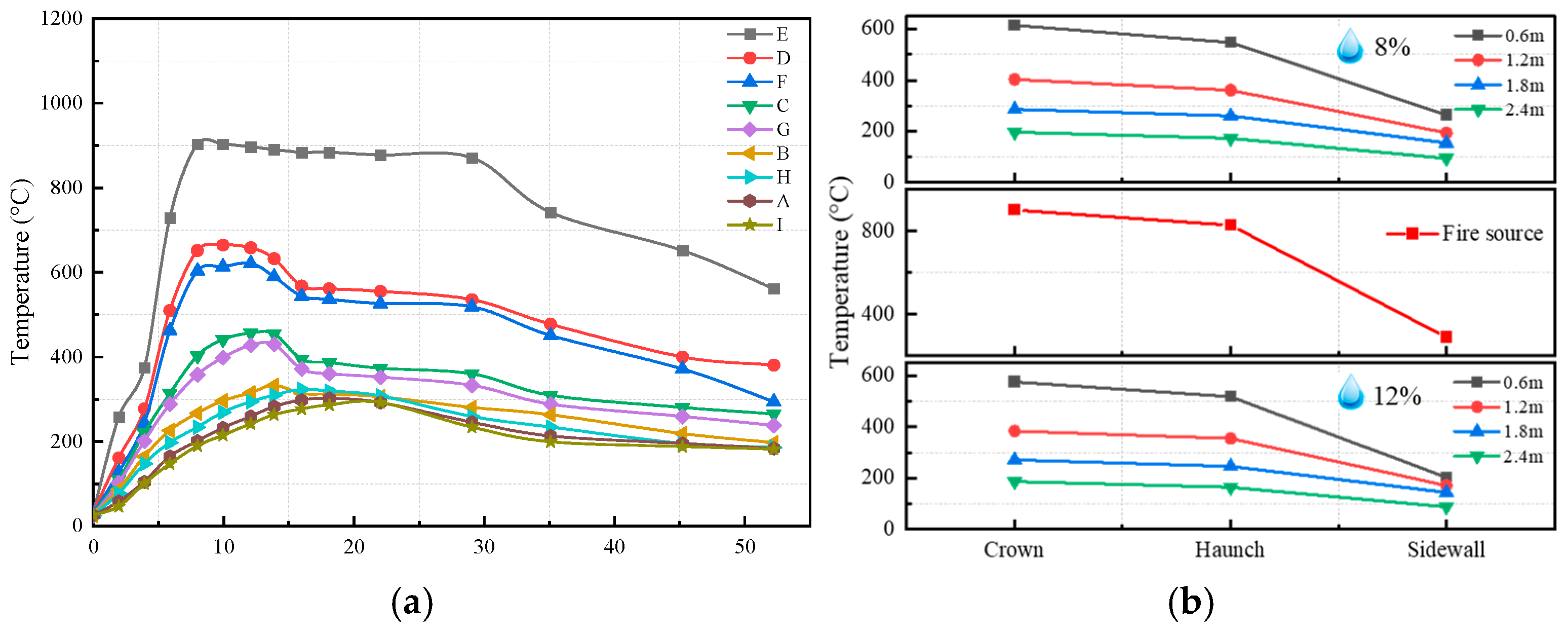
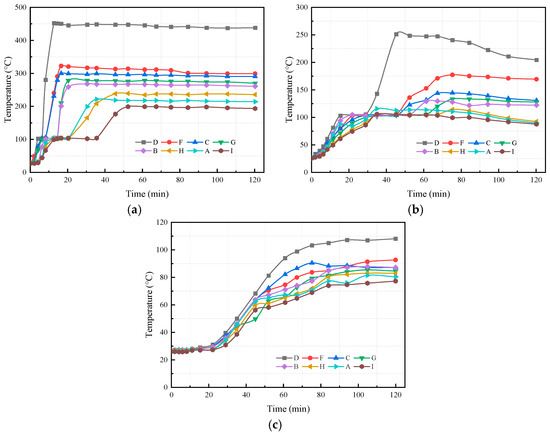
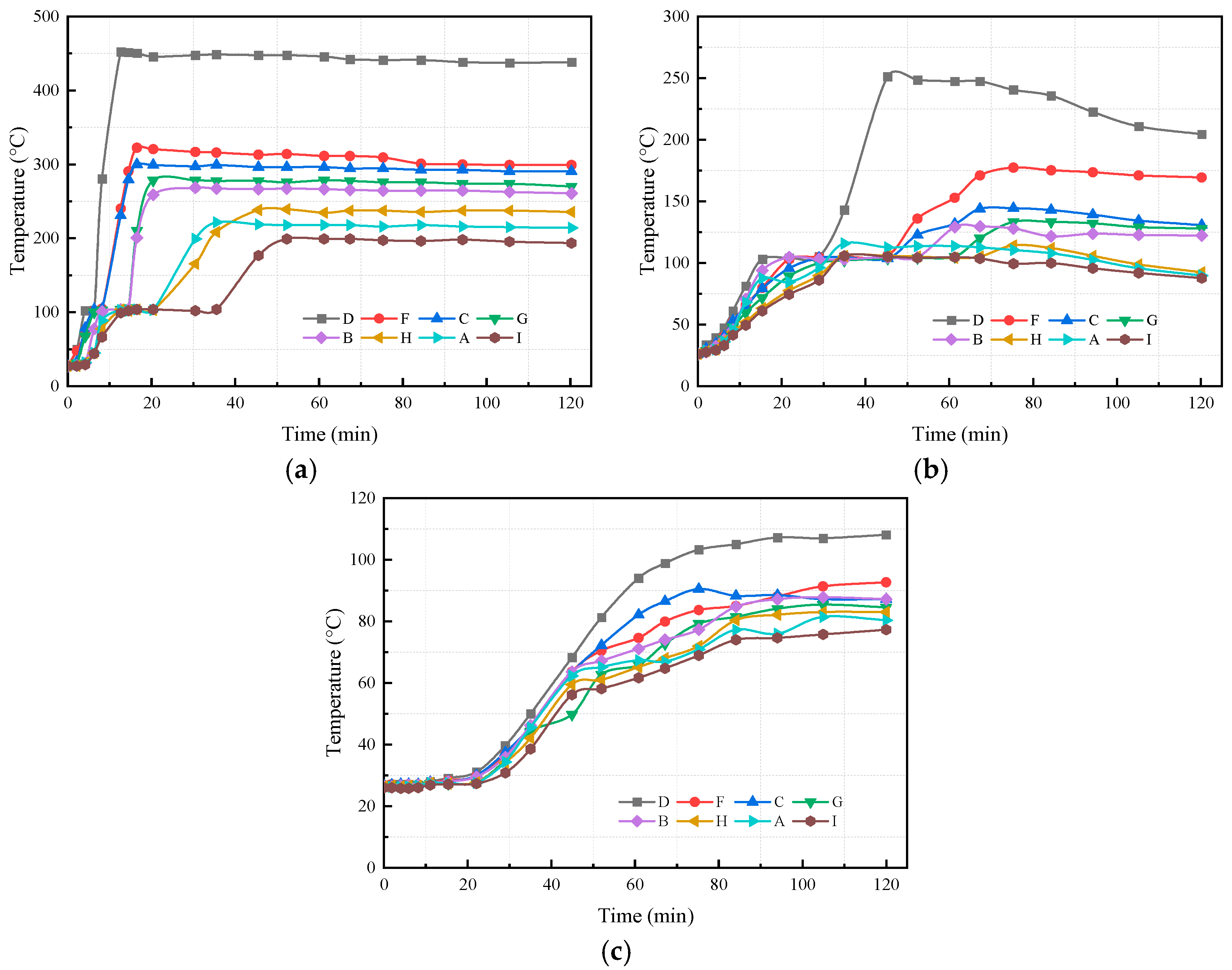
The temperature evolution curves of the tunnel lining inner surface at various locations during the fire test are illustrated in Figure 16. At the initial fire stage, sufficient fuel and oxygen led to a high heat release rate. Consequently, the temperature inside the model tunnel rose rapidly, and the lining inner surface absorbed a large amount of heat, reaching its peak temperature within approximately 10 min. Then, the lining surface temperature remained at a high level for about 20 min before gradually decreasing as the fire intensity weakened. The results indicate that the peak temperature of the lining surface decreases with increasing distance from the fire source. Sections closer to the fire source experience higher peak temperatures and faster heating rates, while sections farther away show slower temperature rise and lower maximum temperatures. The moisture content is found to have a significant influence on the thermal response of the lining. At an identical distance from the fire source, lining segments with a higher moisture content present lower peak temperatures and slower heating rates compared with those with a lower moisture content. This behavior is mainly attributed to the evaporation of moisture within the concrete, which absorbs a considerable amount of heat and thus delays temperature rise.
Figure 16.
Temperature Rise Curve of the Inner Surface of the Model Tunnel Lining: (a) Time; (b) Location.
The temperature distribution on the lining surface is governed by both thermal convection and thermal radiation. The crown zone, which is directly exposed to high-temperature smoke, absorbs the largest amount of convective heat and therefore reaches the highest temperature. As the smoke spreads from the crown toward the haunch and sidewalls, the intensity of convective heat transfer decreases, leading to progressively lower temperatures. Furthermore, thermal radiation from the fire source plays an important role near the fire zone, where the lining surface receives more radiant heat and heats up more rapidly.
4.5.2. Temperature Distribution Through the Tunnel Lining Thickness
Heat transfer within the concrete lining occurs mainly through thermal conduction. As the temperature of the inner surface rises, heat gradually propagates toward the interior of the lining, forming a temperature gradient across the lining thickness. The temperature gradient at different depths (5 cm, 10 cm, and 15 cm) within the crown lining at the fire source section is presented as Figure 17.
Figure 17.
Temperature Evolution at Different Depths within the Crown at the Fire Source Section (a) At 5 cm depth; (b) At 10 cm depth; (c) At 15 cm depth.
The results demonstrate that the internal thermal response of the lining exhibits a pronounced lag effect. Although the lining inner surface reached its peak temperature at approximately 10 min after ignition, the peak temperature at 5 cm depth was observed at around 15–60 min. For depths of 10 cm and 15 cm, the occurrence of peak temperature was further delayed to approximately 45–75 min and 80–120 min, respectively. This indicates that concrete possesses a high thermal mass and relatively low thermal conductivity, resulting in slow heat transfer within the lining. At the same distance from the fire source, lining segments with a higher moisture content exhibited lower internal peak temperatures and longer times to reach the peaks. This effect was particularly significant in sections close to the fire source, where heat input was the most intense.
In addition, temperature plateaus near 100 °C were observed in the temperature curves at 5 cm and 10 cm depths. These plateaus arose because a portion of the absorbed heat was consumed by moisture evaporation, restricting further temperature rise. The duration of the temperature plateau was influenced by several factors, including moisture content, distance from the fire source, and measurement depth. Higher moisture content, greater distance from the fire source, and increased depth within the lining all led to longer plateau durations. These observations further verify the important role of moisture evaporation in governing the thermal response of tunnel linings during fire exposure.
5. Conclusions
Based on numerical simulations and reduced-scale physical model tests, the temperature field characteristics of highway tunnel and the thermal response characteristics of tunnel lining structures under different ventilation conditions during fire were investigated in this paper. The main conclusions can be summarized as follows:
(1) Heat transfer mechanisms during tunnel fires exhibit distinct regional characteristics: convective heat transfer dominates within the tunnel space, thermal radiation significantly affects the lining surface near the fire source, and heat conduction governs the interior of the lining, resulting in slow heat propagation.
(2) Temperature field analysis reveals that zones exceeding 800 °C are concentrated within approximately 100 m of the fire source (20 m upstream and 80 m downstream). Increasing longitudinal ventilation velocity effectively suppresses upstream smoke backflow and reduces the high-temperature zone near the fire source, but expands the downstream thermal influence area. Cross-sectionally, temperatures are relatively uniform near the fire source, while upstream and downstream sections follow the pattern: crown > haunch > sidewalls.
(3) The heating rate and peak temperature of the lining inner surface are governed by both distance from the fire source and concrete moisture content—greater distances and higher moisture contents result in slower heating rates and lower peak temperatures. A pronounced thermal lag effect is observed within the lining, which becomes more significant with increasing moisture content, accompanied by a steeper temperature gradient across the lining thickness.
(4) The complementary use of numerical simulation and physical modeling reveals the multifaceted nature of tunnel fire thermal behavior. Numerically, it is found that longitudinal ventilation velocity critically governs the longitudinal extent and cross-sectional pattern of the temperature field. Experimentally, the physical model tests uniquely demonstrate the significant thermal lag and peak temperature reduction caused by concrete moisture content, a factor often oversimplified in numerical models.
Overall, the results of this paper provide valuable references for understanding the thermal characteristics of highway tunnels during fire. The findings can support the fireproof design of the tunnel structures, the optimization of ventilation and smoke control strategies, and the improvement of evacuation safety. Future research may further consider the coupled effects of ventilation control, material thermal degradation, and variable fire scales to enhance the applicability of the outcomes.
Author Contributions
Conceptualization, J.J. and Y.J.; methodology J.J. and Y.D.; software, J.J.; validation, Y.J. and P.W.; formal analysis, J.J. and Y.D.; investigation, Y.D. and P.W.; resources, Y.J.; data curation, J.J.; writing—original draft preparation, J.J.; writing—review and editing, J.J., Y.D., P.W., J.G. and Y.J.; visualization, J.J.; supervision, Y.D., P.W. and J.G.; project administration, J.J.; funding acquisition, J.J. All authors have read and agreed to the published version of the manuscript.
Funding
This study was supported by the Zhejiang Provincial Construction Research Project (2023K096). The authors wish to express their gratitude to Zhejiang Infrastructure Construction Group Co., Ltd. for financial support for this research.
Data Availability Statement
The original contributions presented in this study are included in the article material. Further inquiries can be directed to the corresponding author.
Conflicts of Interest
Authors Junan Ji and Yalong Dang were employed by the company Zhejiang Infrastructure Construction Group Co., Ltd. Author Pengfei Wang was employed by the company Hangzhou Branch, Ningbo Fenghua District Construction Investment Infrastructure Construction Co., Ltd. Author Yunpeng Jiang was employed by the company Ningbo Highway Municipal Design Co., Ltd. The remaining author declares that the research was conducted in the absence of any commercial or financial relationships that could be construed as a potential conflict of interest. The authors declare that this study received funding from Zhejiang Infrastructure Construction Group Co., Ltd. The funder was not involved in the study design, collection, analysis, interpretation of data, the writing of this article or the decision to submit it for publication.
References
- Lönnermark, A.; Ingason, H. Fire spread and flame length in large-scale tunnel fires. Fire Technol. 2006, 42, 283–302. [Google Scholar] [CrossRef] [Scilit]
- Casey, N. Fire incident data for Australian road tunnels. Fire Saf. J. 2020, 111, 102909. [Google Scholar] [CrossRef] [Scilit]
- Huang, Y.; Luo, C.; Yan, H.; Dong, B. Effect of asymmetric slope of mainline on smoke movement characteristic in bifurcated tunnel fire under natural ventilation. Case Stud. Therm. Eng. 2025, 74, 106959. [Google Scholar] [CrossRef] [Scilit]
- Huang, P.; Ye, S.; Xie, J.; Chen, M.; Liu, C.; Yu, L. Study on the maximum and longitudinal distribution of ceiling gas temperature in a naturally ventilated tunnel: The effect of longitudinal fire location. Int. J. Therm. Sci. 2023, 185, 108037. [Google Scholar] [CrossRef] [Scilit]
- Ji, J.; Wan, H.; Gao, Z.; Fu, Y.; Sun, J.; Zhang, Y.; Hostikka, S. Experimental study on flame merging behaviors from two pool fires along the longitudinal centerline of model tunnel with natural ventilation. Combust Flame 2016, 173, 307–318. [Google Scholar] [CrossRef] [Scilit]
- Li, B.; Zhu, H.; Qu, B.; Li, X.; Wang, J. Influence of transverse fire locations on hot smoke movement and critical driving force of bifurcated tunnel fire under forced ventilation. Case Stud. Therm. Eng. 2025, 77, 107596. [Google Scholar] [CrossRef] [Scilit]
- Shao, Z.; Bi, M.; Cong, H.; Bi, Y.; Ye, L.; Liu, J. Experimental study on ceiling maximum temperature and back-layering length in inclined tunnel fires. Int. J. Heat Mass Transf. 2025, 239, 126621. [Google Scholar] [CrossRef] [Scilit]
- Wang, X.; Yu, L.; Li, J.; You, Z.; Wang, M.; Liu, K.; Liu, Y. Experimental and analytical study on flame morphology over pool fires under the longitudinal ventilation in curved and inclined tunnels. Appl. Therm. Eng. 2025, 279, 127796. [Google Scholar] [CrossRef] [Scilit]
- Kurioka, H.; Oka, Y.; Satoh, H. Fire properties in the near field of a square fire source with longitudinal ventilation in tunnels. Fire Saf. J. 2003, 38, 319–340. [Google Scholar] [CrossRef] [Scilit]
- Ouyang, R.; Zhao, W.; Yang, L.; Jiao, A.; Xu, Z.; Fan, C. An experimental investigation of burning rate and flame geometric parameters of tunnel fires under canyon cross wind and longitudinal ventilation. Fire Saf. J. 2021, 26, 103474. [Google Scholar] [CrossRef] [Scilit]
- Beji, T.; Ukleja, S.; Zhang, J.; Delichatsios, M.A. Fire behavior and external flames in corridor and tunnel-like enclosures. Fire Mater. 2012, 36, 636–647. [Google Scholar] [CrossRef] [Scilit]
- Xu, L.; Guo, H.; Ding, C.; Lu, Y.; Liu, J. Impacts of longitudinal air velocity and fuel flow rate on flame radiative fraction in tunnel. Sustain. Cities Soc. 2020, 61, 102336. [Google Scholar] [CrossRef] [Scilit]
- Carvel, R.O.; Beard, A.N.; Jowitt, P.W. The influence of longitudinal ventilation systems on fires in tunnels. Tunn. Undergr. Space Technol. 2001, 16, 3–21. [Google Scholar] [CrossRef] [Scilit]
- Li, C.; Yan, W.; Jiang, L. Experimental study on the flame characteristics of temperature and morphology with various thermal source positions of restricted environments. Appl. Therm. Eng. 2025, 280, 128067. [Google Scholar] [CrossRef] [Scilit]
- Amouzandeh, A.; Zeiml, M.; Lackner, R. Real-scale CFD simulations of fire in single- and double-track railway tunnels of arched and rectangular shape under different ventilation conditions. Eng. Struct. 2014, 77, 193–206. [Google Scholar] [CrossRef] [Scilit]
- Wan, H.; Gong, W.; Li, M. Influences of longitudinal ventilation and two same obstacles placed upstream and downstream of the fire source on gas temperature distribution in a tunnel. Fire Saf. 2024, 143, 104077. [Google Scholar] [CrossRef] [Scilit]
- Ingason, H.; Li, Y.Z. Model scale tunnel fire tests with longitudinal ventilation. Fire Saf. 2010, 45, 371–384. [Google Scholar] [CrossRef] [Scilit]
- Yao, Y.; He, K.; Peng, M. The maximum gas temperature rises beneath the ceiling in a longitudinal ventilated tunnel fire. Tunn. Undergr. Space Technol. 2021, 108, 103672. [Google Scholar] [CrossRef] [Scilit]
- Zhang, G.; Peng, T.; Tong, Y. Full-scale experiments on the fire smoke extraction from naturally ventilated shafts for shallow-buried urban road tunnels in hot summer. Tunn. Undergr. Space Technol. 2024, 143, 105441. [Google Scholar] [CrossRef] [Scilit]
- Tang, F.; Deng, L.; Meng, N. Critical longitudinal ventilation velocity for smoke control in a tunnel induced by two nearby fires of various distances: Experiments and a revisited model. Tunn. Undergr. Space Technol. 2020, 105, 103559. [Google Scholar] [CrossRef] [Scilit]
- Chen, J.; Ma, Q.; Chen, Z.; Sun, Y. Effect of obstacle blockage on smoke temperature distribution below the ceiling in naturally ventilated tunnels under the condition of double fire sources. J. Therm. Anal. Calorim. 2025, 150, 19077–19094. [Google Scholar] [CrossRef] [Scilit]
- Heselden, A.J.M. Studies of fire and smoke behaviour relevant to tunnels. In Proceedings of the 2nd International Symposium on Aerodynamics and Ventilation of Vehicle Tunnels; British Tunnelling Society: Cambridge, UK, 1976; pp. 337–356. [Google Scholar]
- Danziger, N.H.; Kennedy, W.D.; Huber, G.H. Critical Velocity Equations for the SES Computer Program; U.S. Department of Transportation, Urban Mass Transportation Administration: Washington, DC, USA, 1982.
- Kennedy, W.D.; Parsons, B.; Walker, C.J. Critical velocity: Past, present and future. In Proceedings of the One-Day Seminar on Smoke and Critical Velocity in Tunnels; Chartered Institution of Building Services Engineers (CIBSE): London, UK, 1996; pp. 1–16. [Google Scholar]

Disclaimer/Publisher’s Note: The statements, opinions and data contained in all publications are solely those of the individual author(s) and contributor(s) and not of MDPI and/or the editor(s). MDPI and/or the editor(s) disclaim responsibility for any injury to people or property resulting from any ideas, methods, instructions or products referred to in the content. |
© 2026 by the authors. Licensee MDPI, Basel, Switzerland. This article is an open access article distributed under the terms and conditions of the Creative Commons Attribution (CC BY) license.