Synergistic Performance and Microscopic Mechanisms of Mortar Incorporating Recycled Brick Fine Aggregate and Brick Powder


Abstract
1. Introduction
2. Materials and Methods
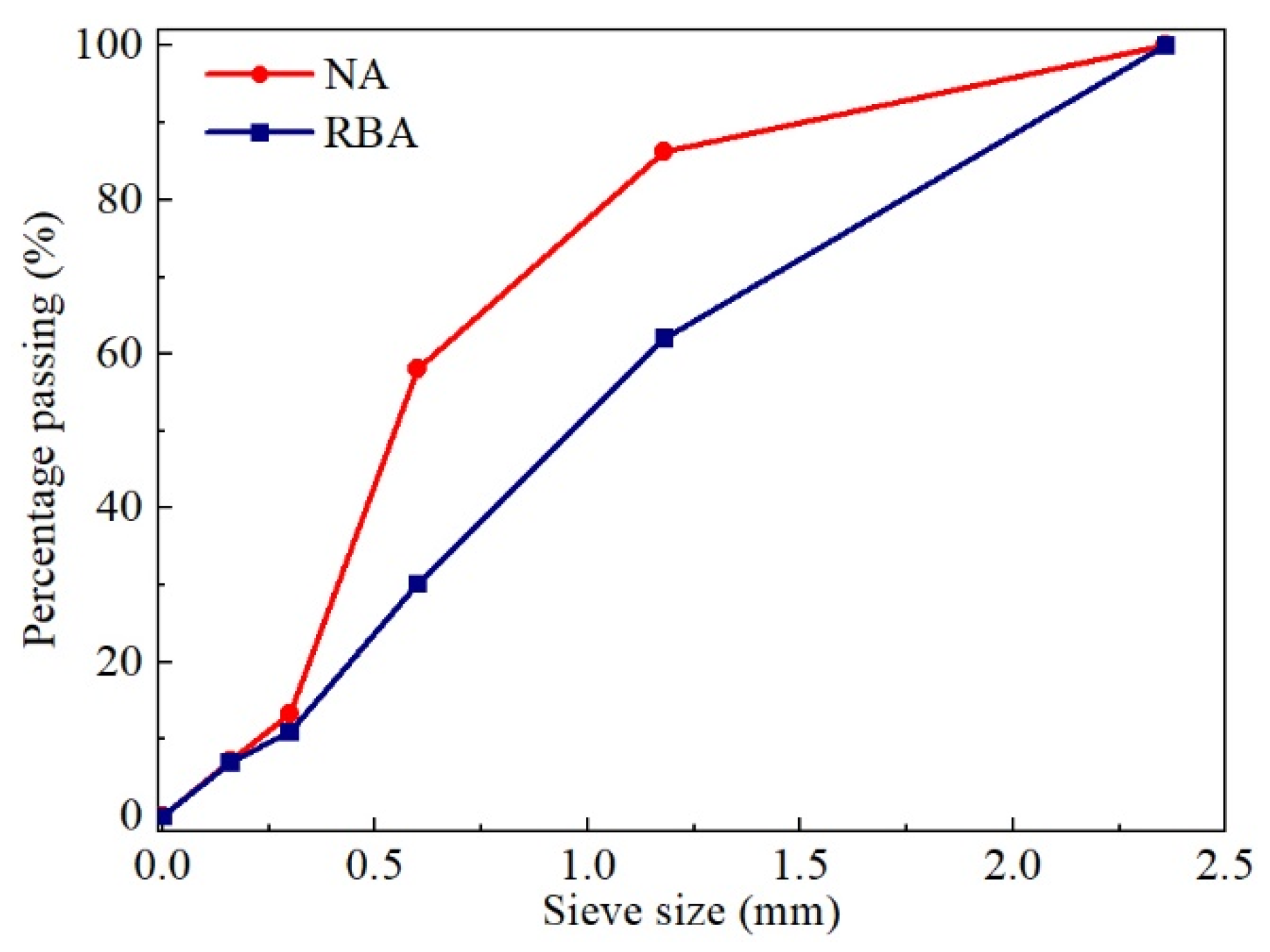
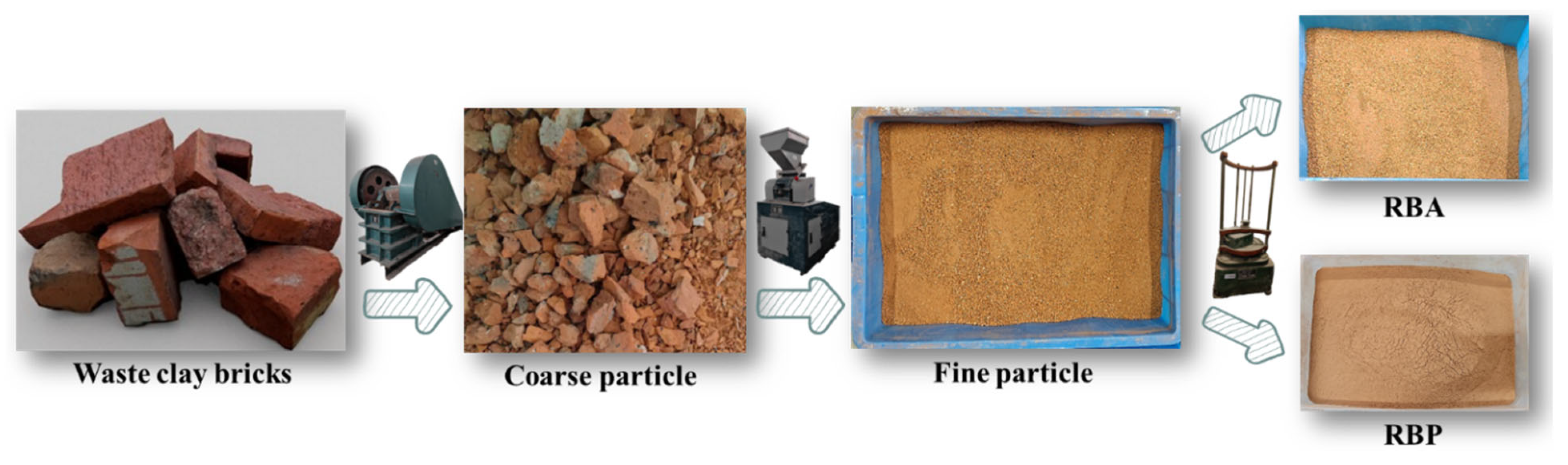
2.1. Materials
2.2. Mix Proportion
2.3. Specimen Preparation
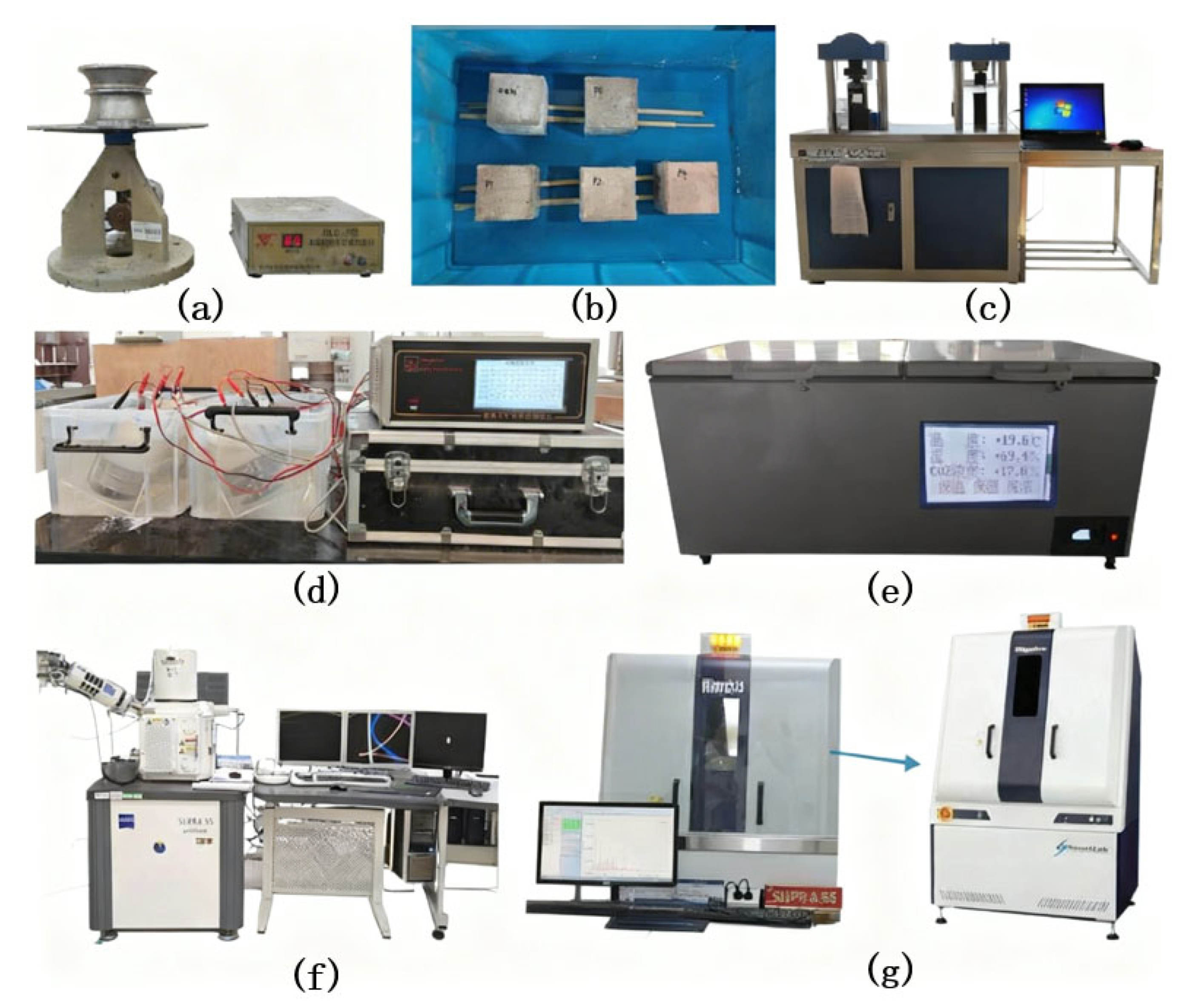
2.4. Measurements
2.4.1. Physical Properties
2.4.2. Mechanical Properties
2.4.3. Durability
2.4.4. Microscopic Performance
3. Results
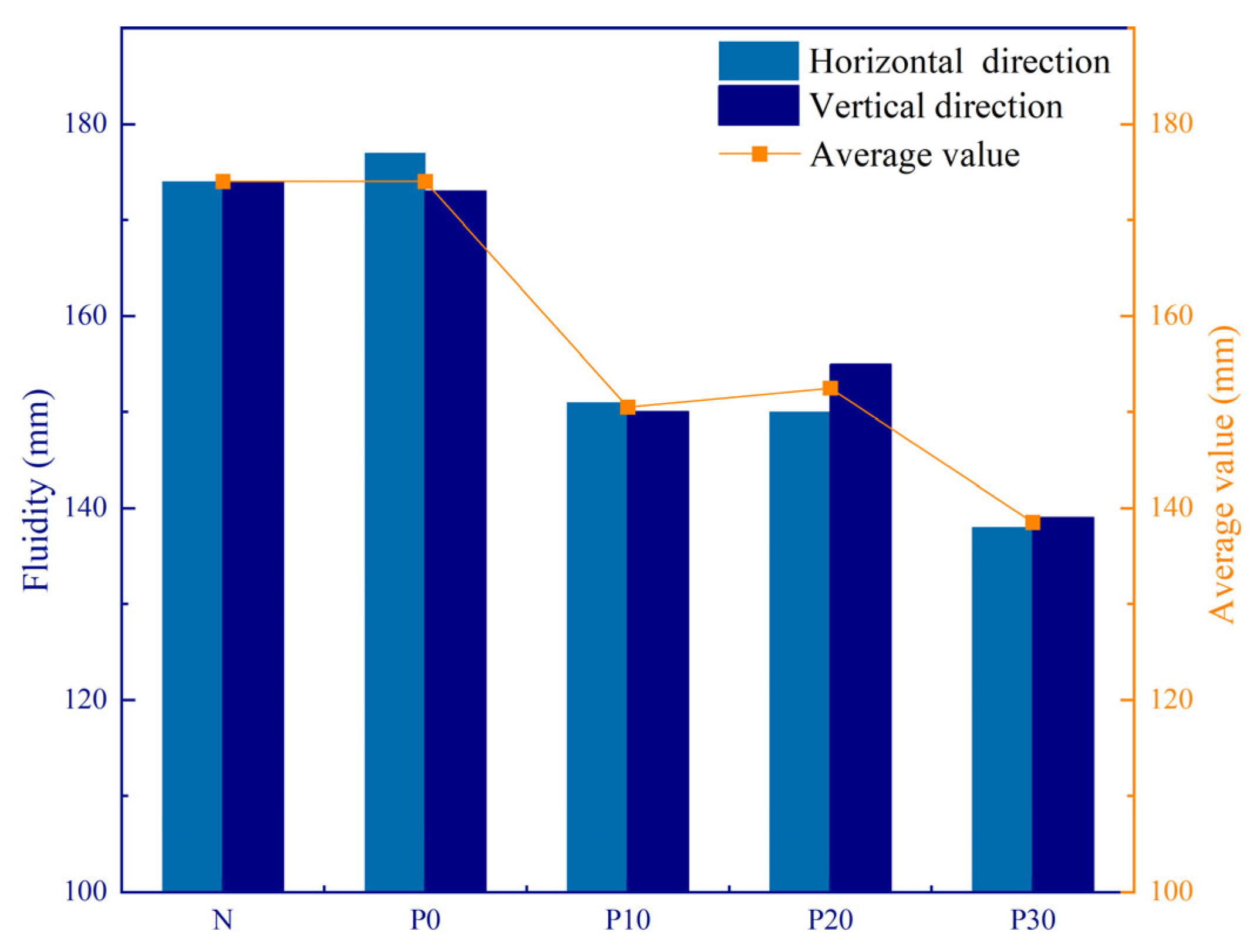
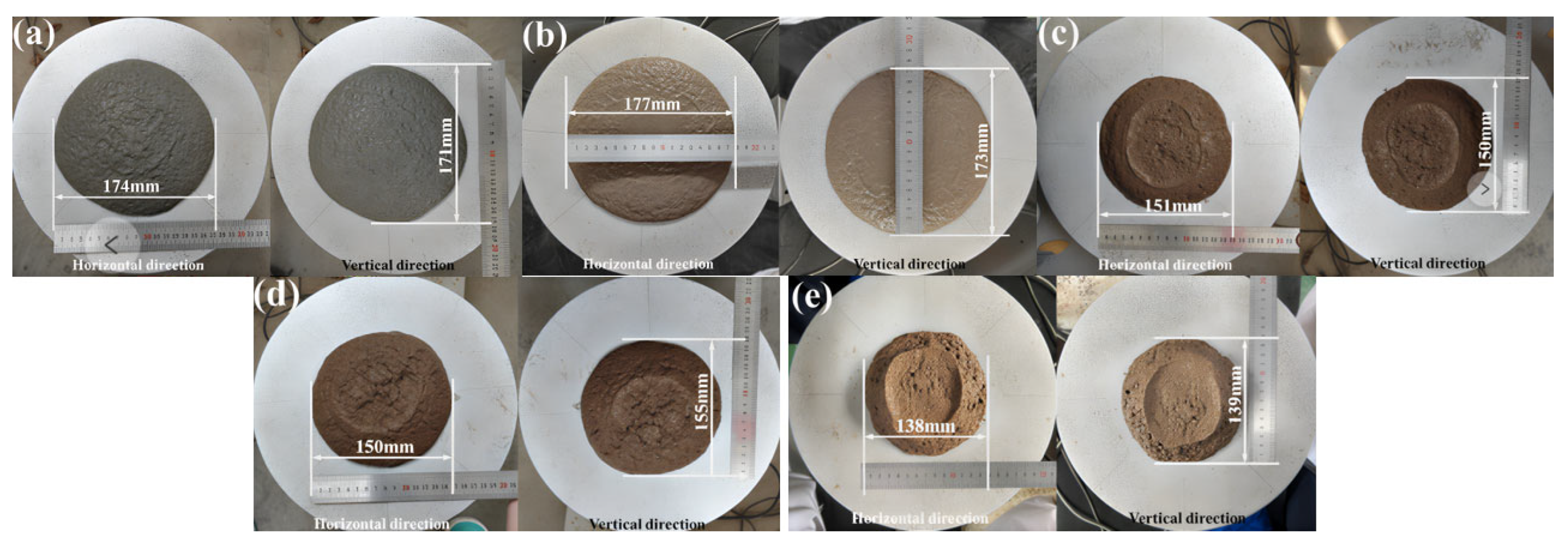
3.1. Fluidity of Mortar
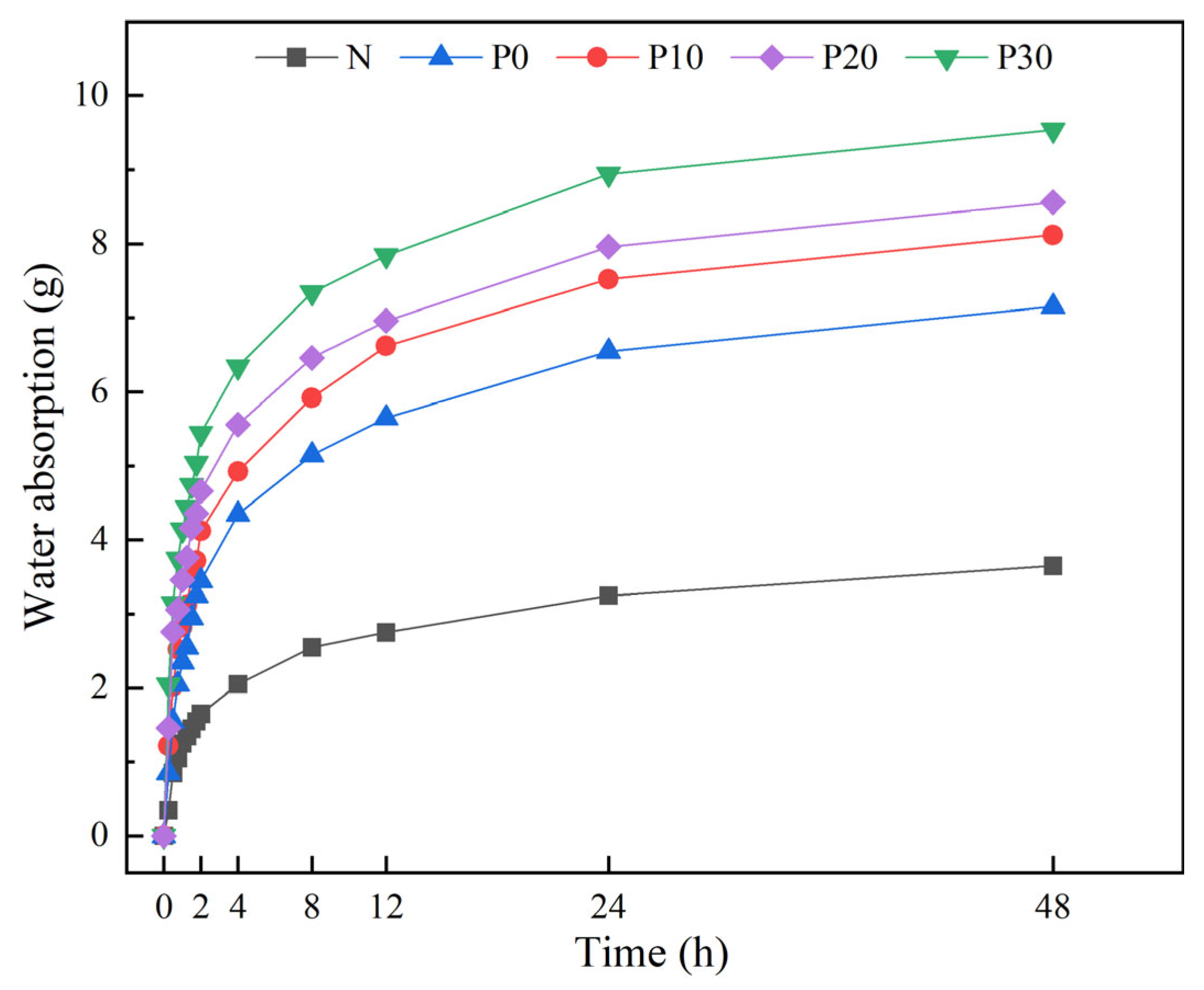
3.2. Capillary Water Absorption of Specimens
3.3. Mechanical Properties
3.3.1. Compressive Strength
3.3.2. Flexural Strength
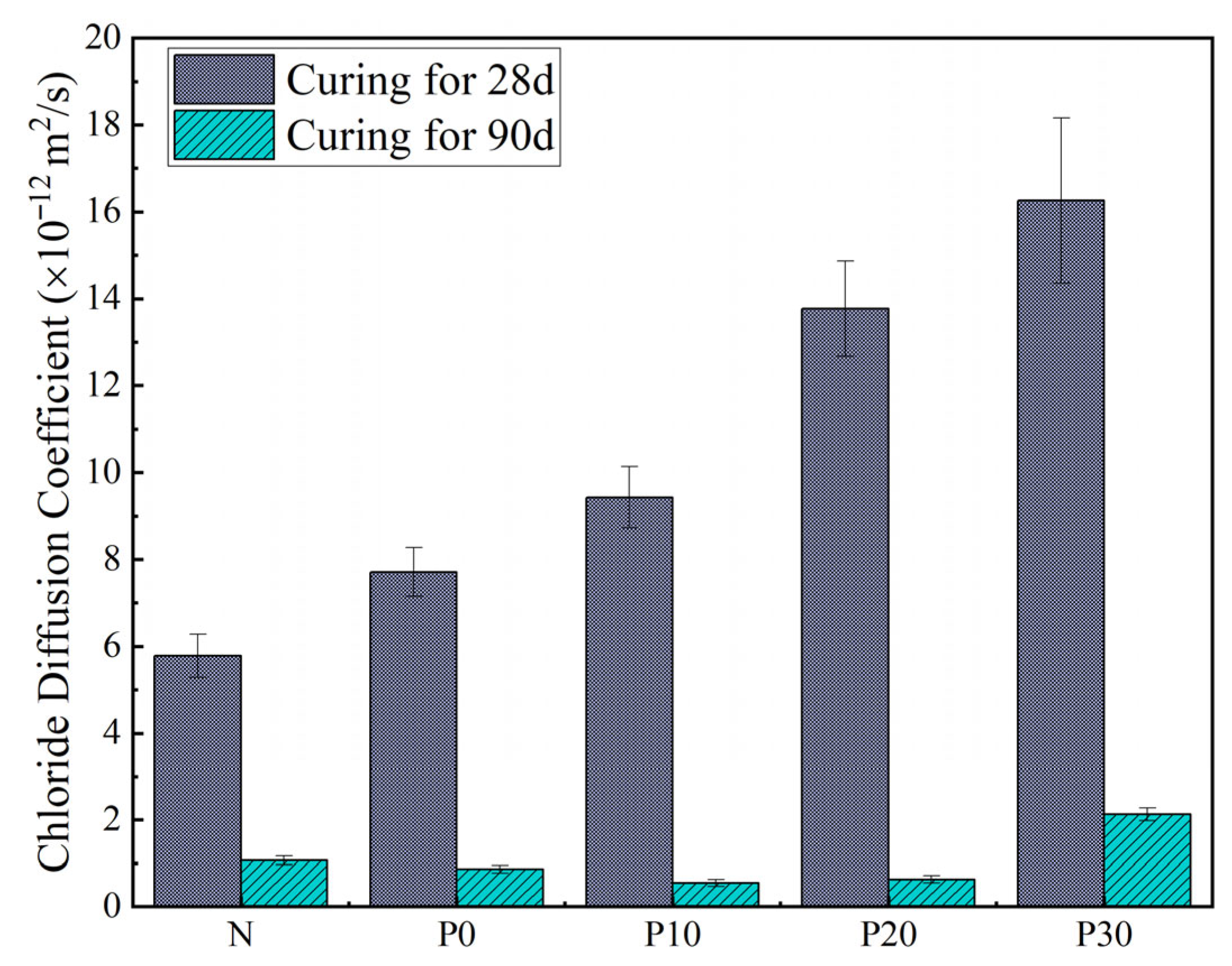
3.4. Chloride Penetration Resistance
3.5. Carbonization Resistance
3.6. Microscopic Performance
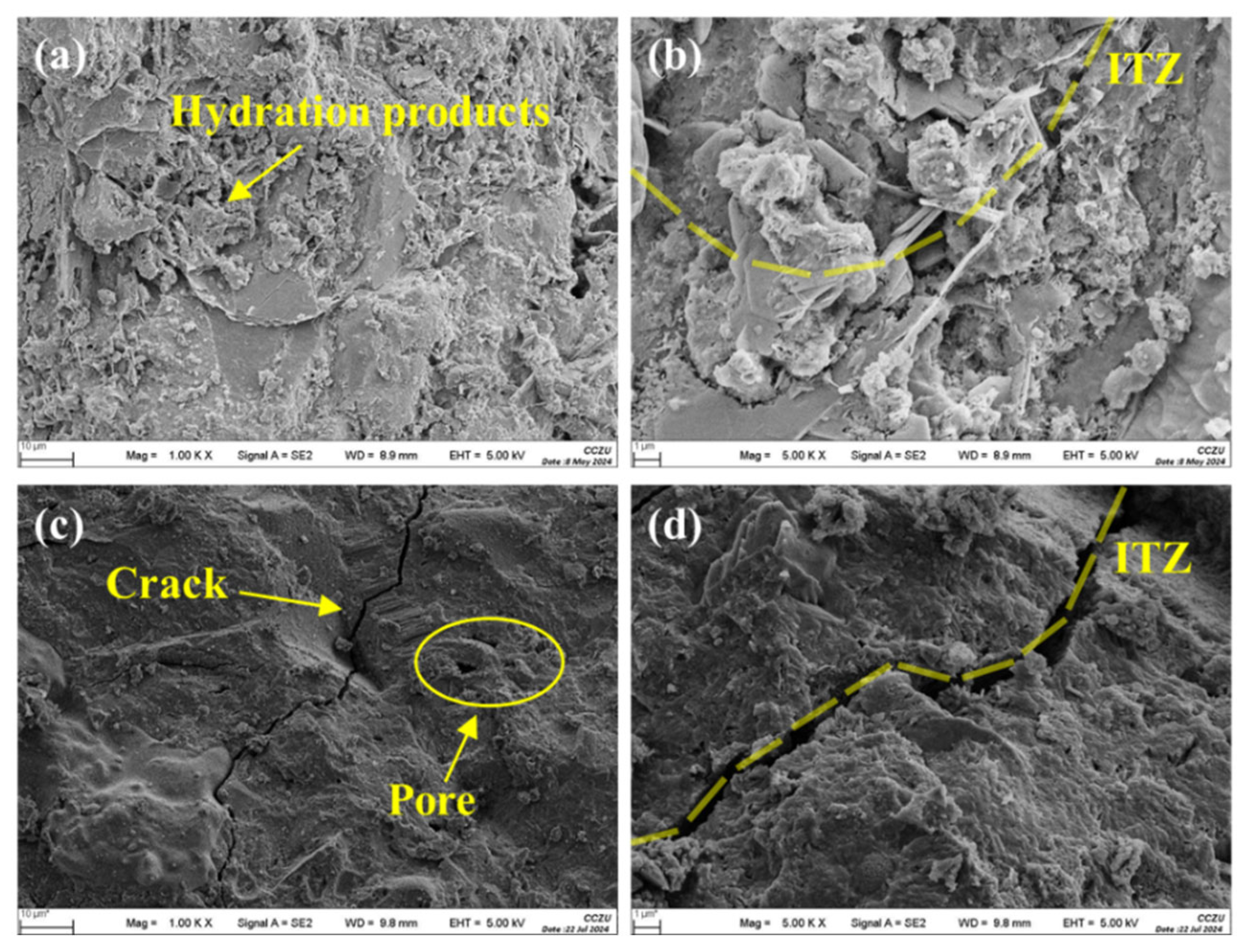
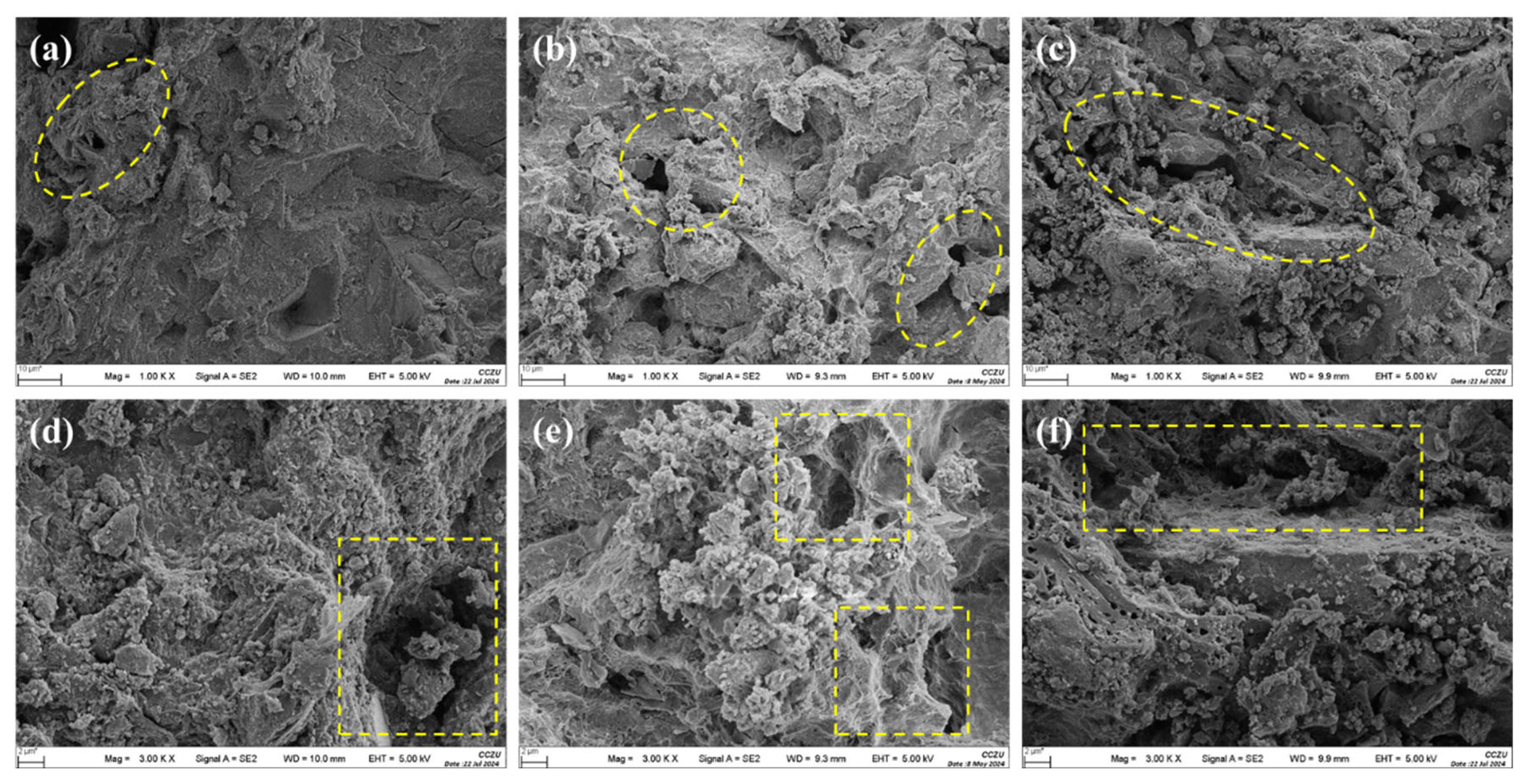
3.6.1. SEM Analysis
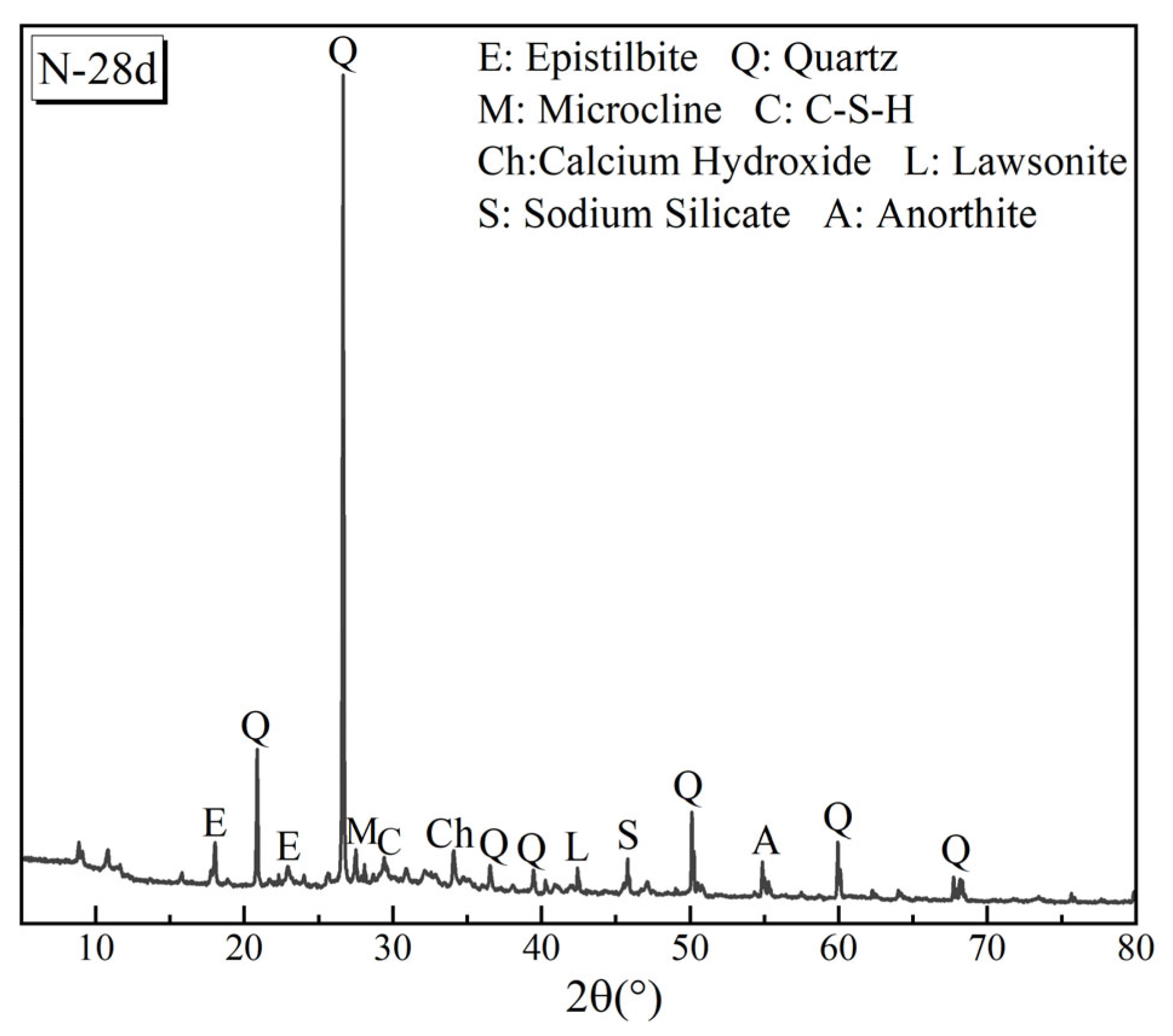
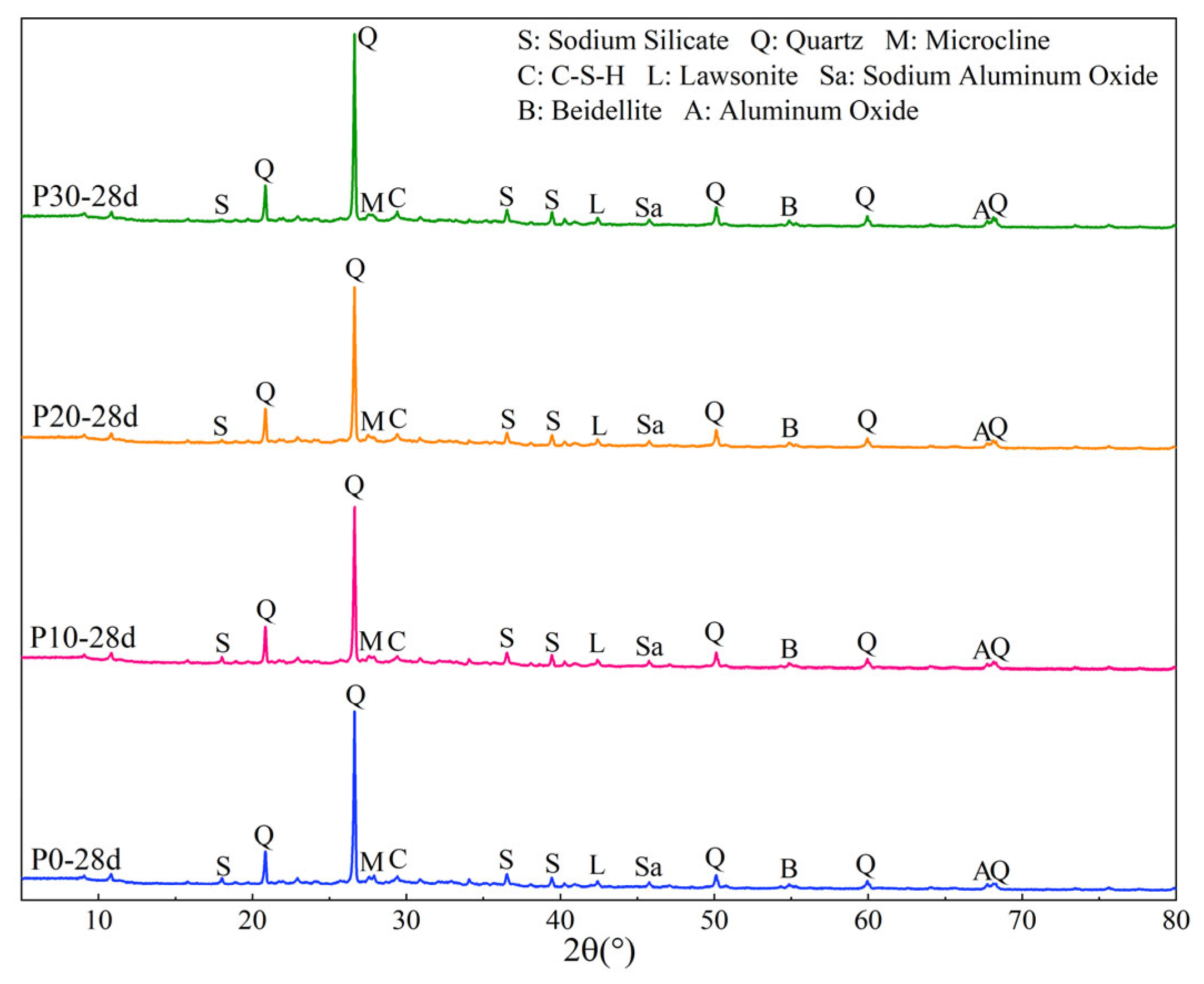
3.6.2. XRD and TGA
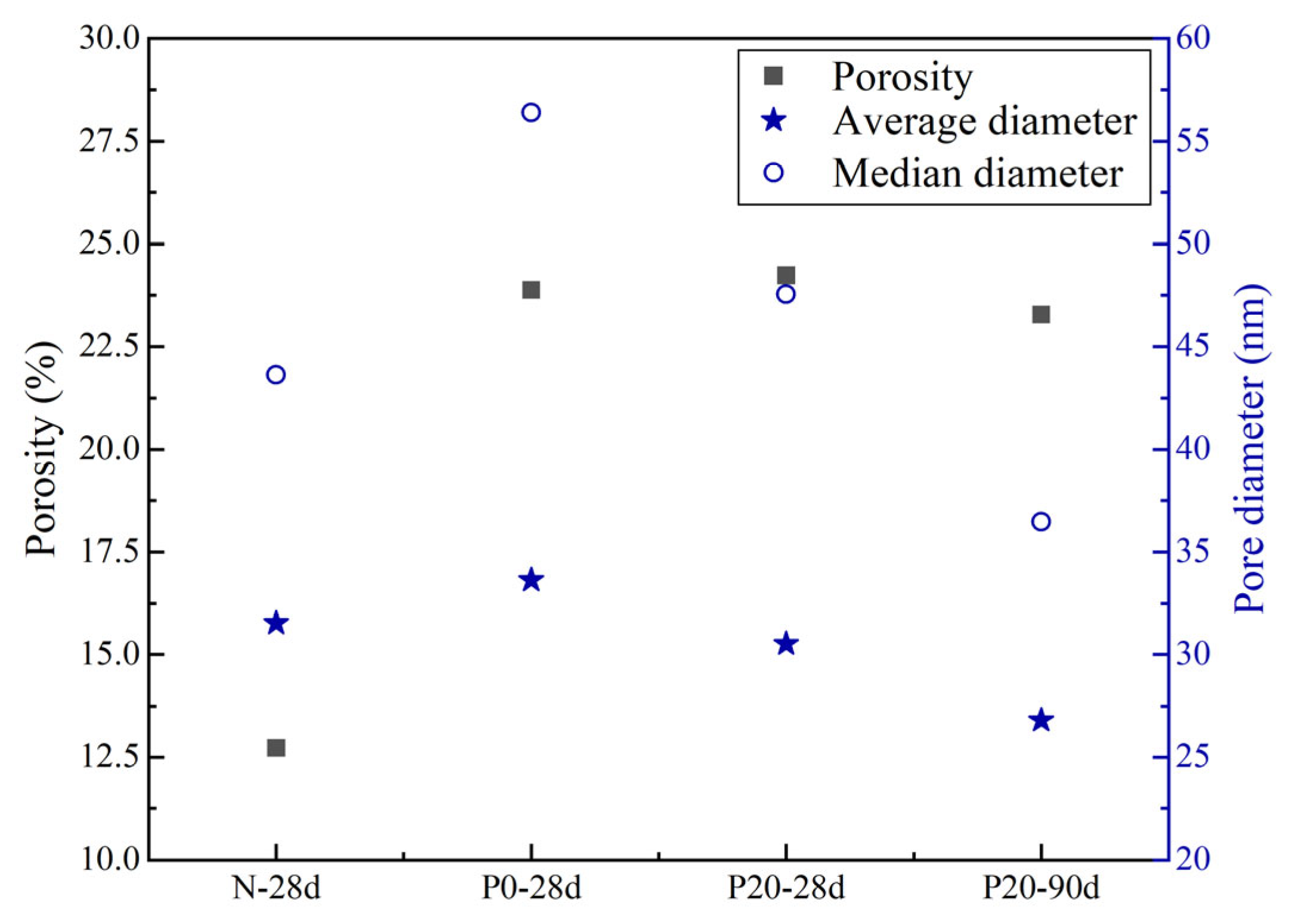
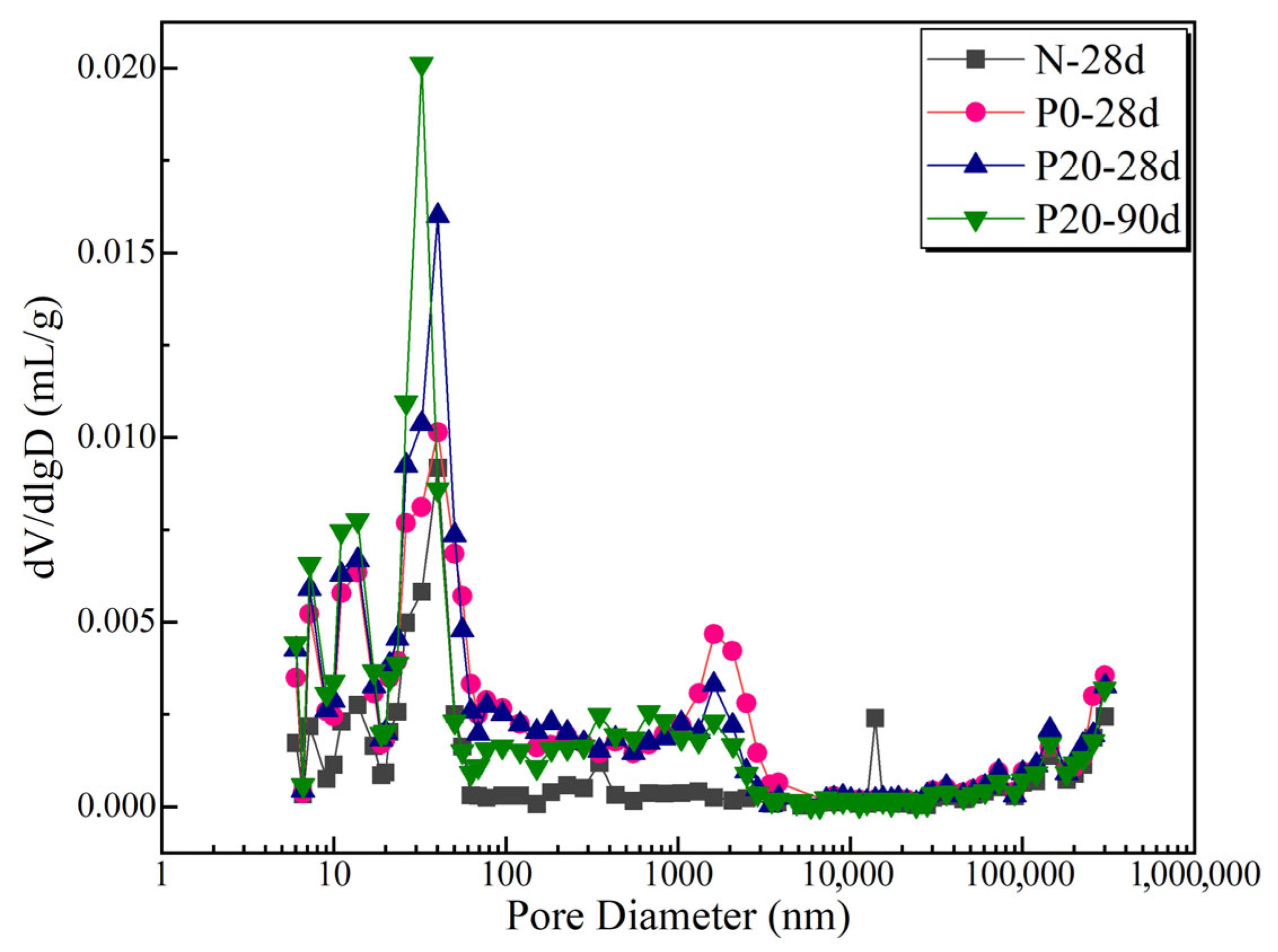
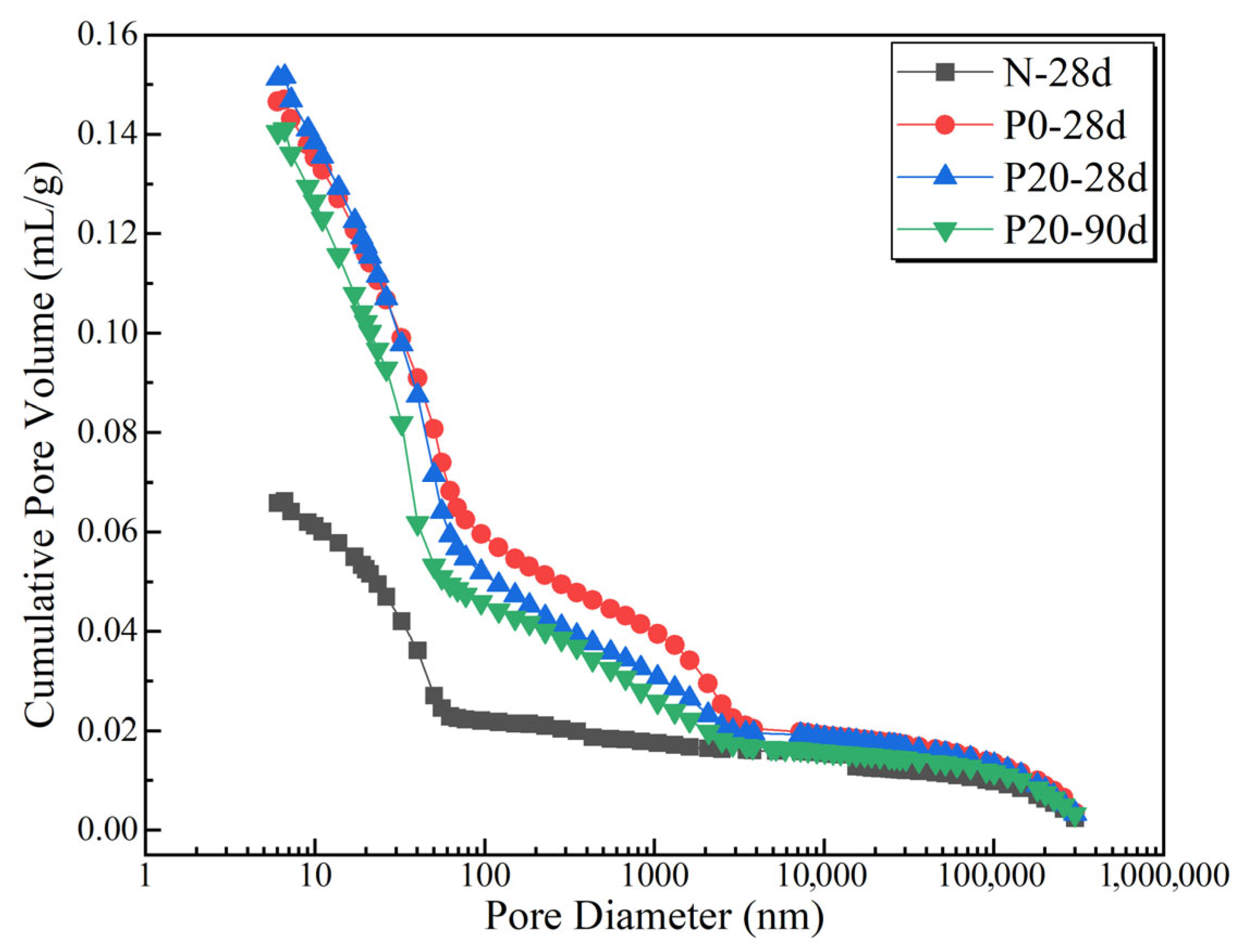
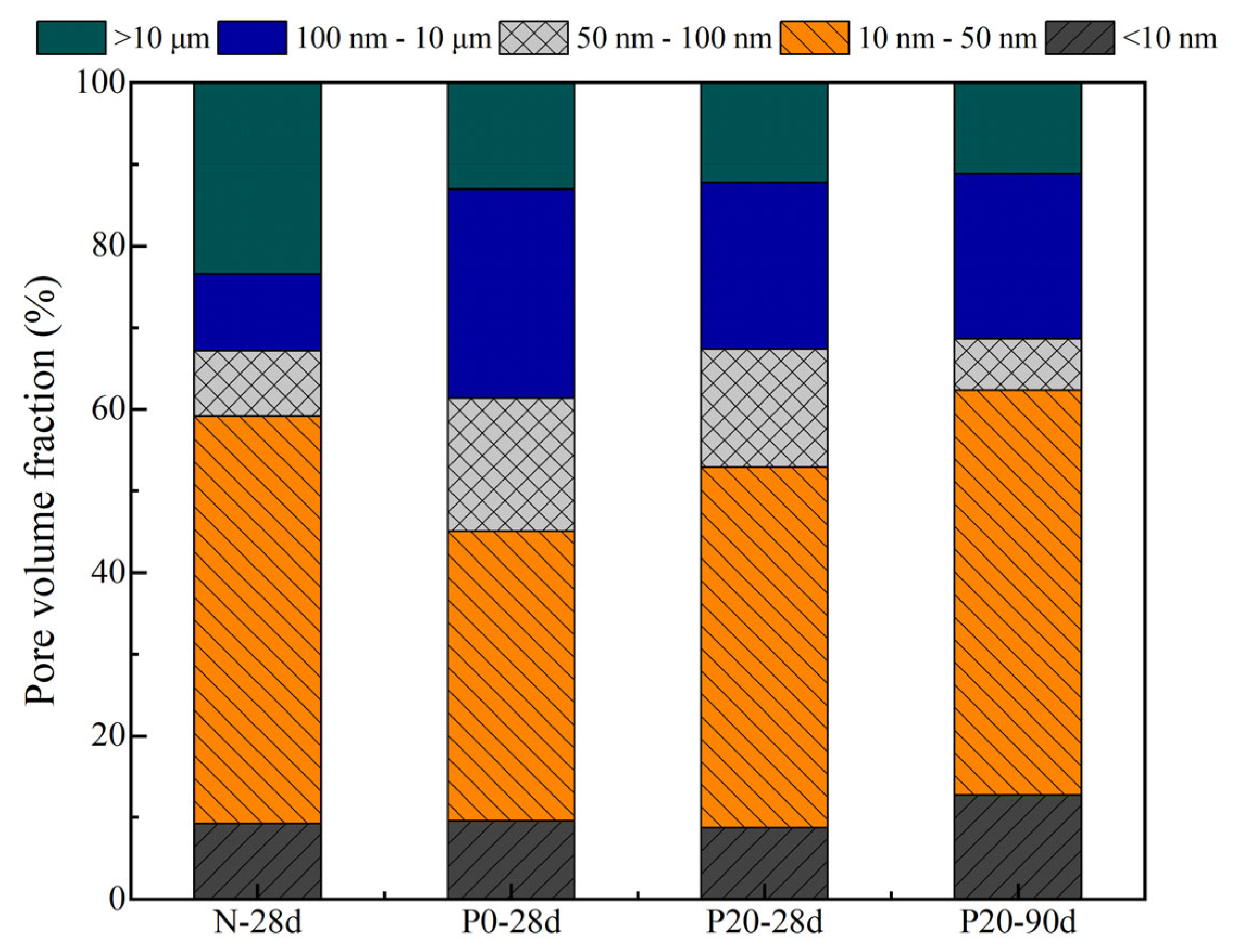
3.6.3. MIP Analysis
4. Discussion
4.1. Effect of RBP Substitution Rate on Mortar Performance
4.2. Effect of Curing Time on Mortar Performance
4.3. Microstructural Evolution Mechanism
4.4. Interpretation of Unusual Results
4.5. Comparison with Existing Literature
5. Conclusions
- (1)
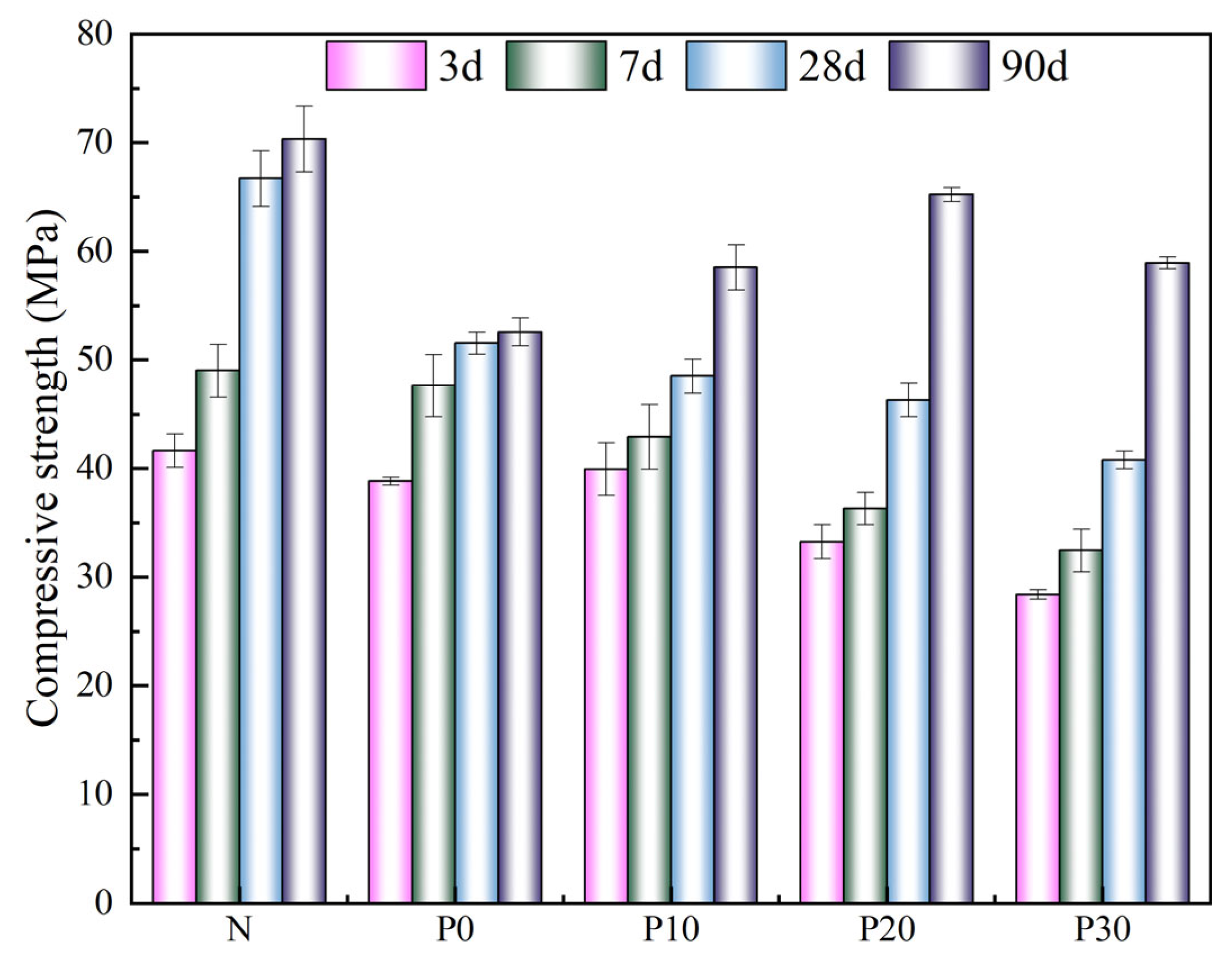
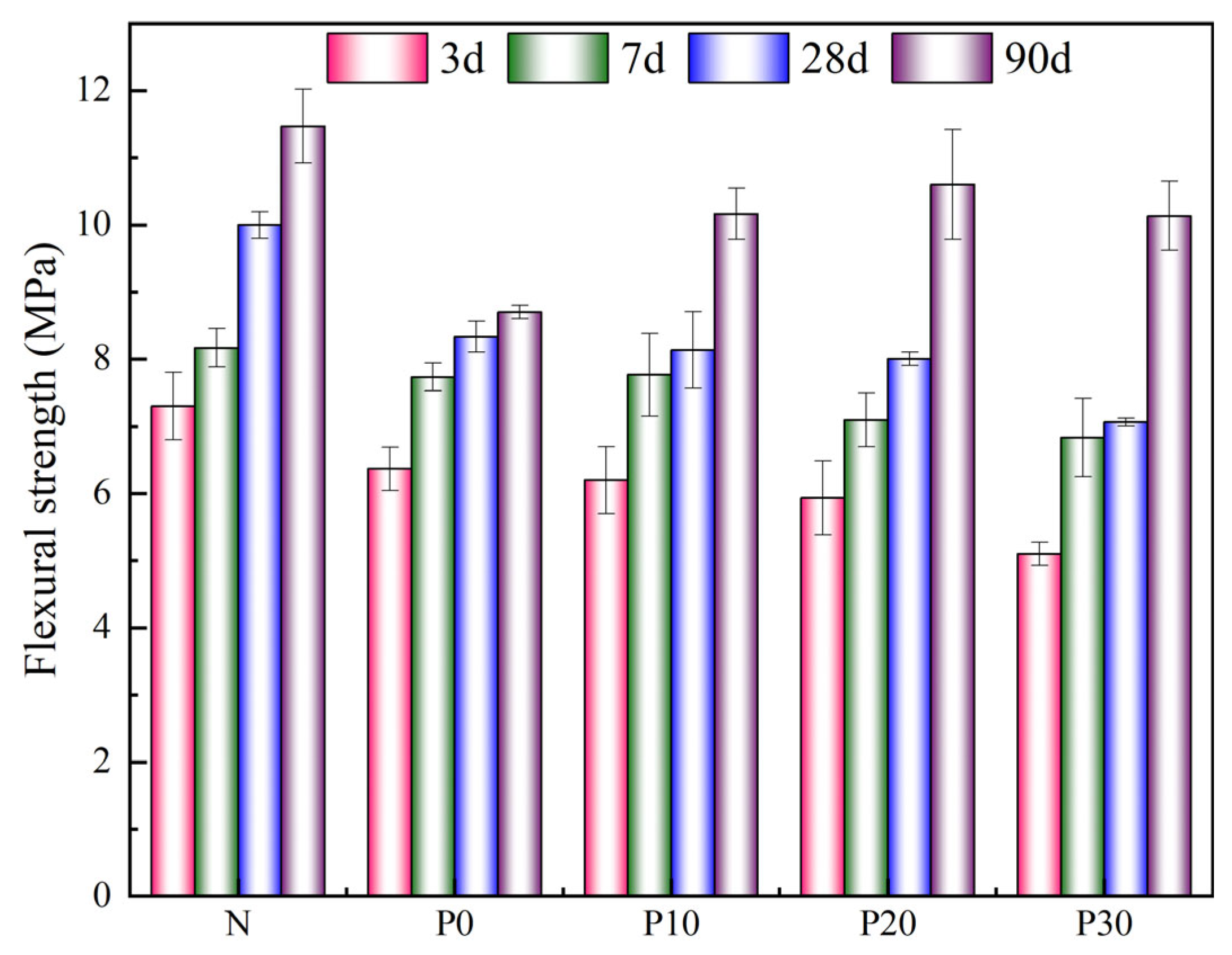
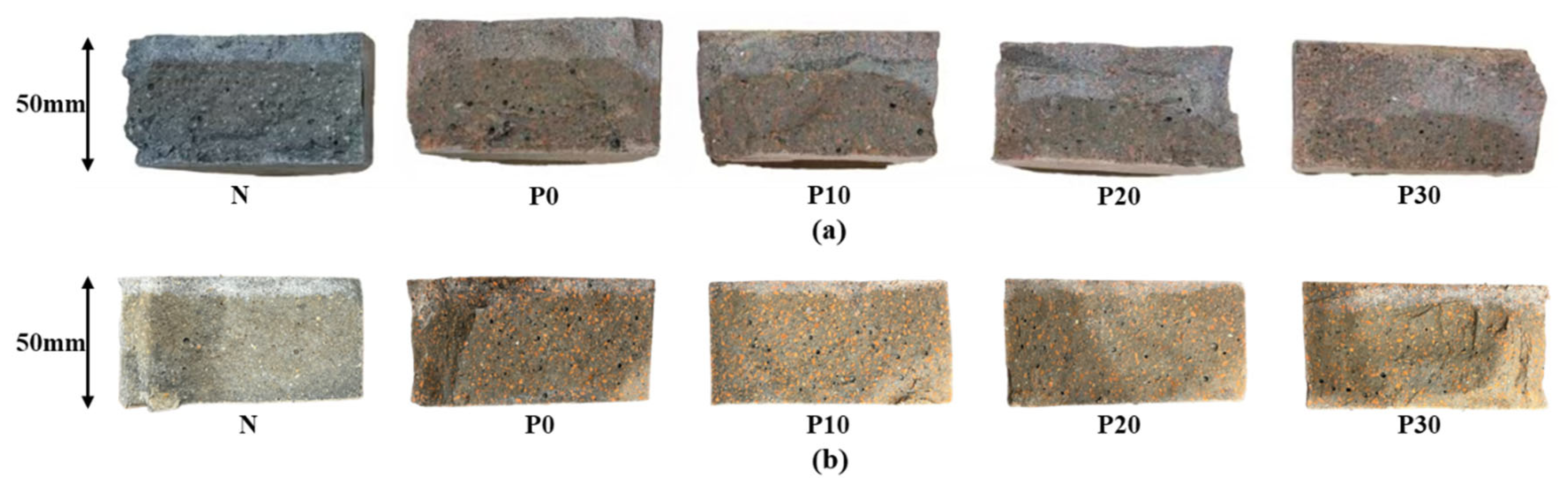
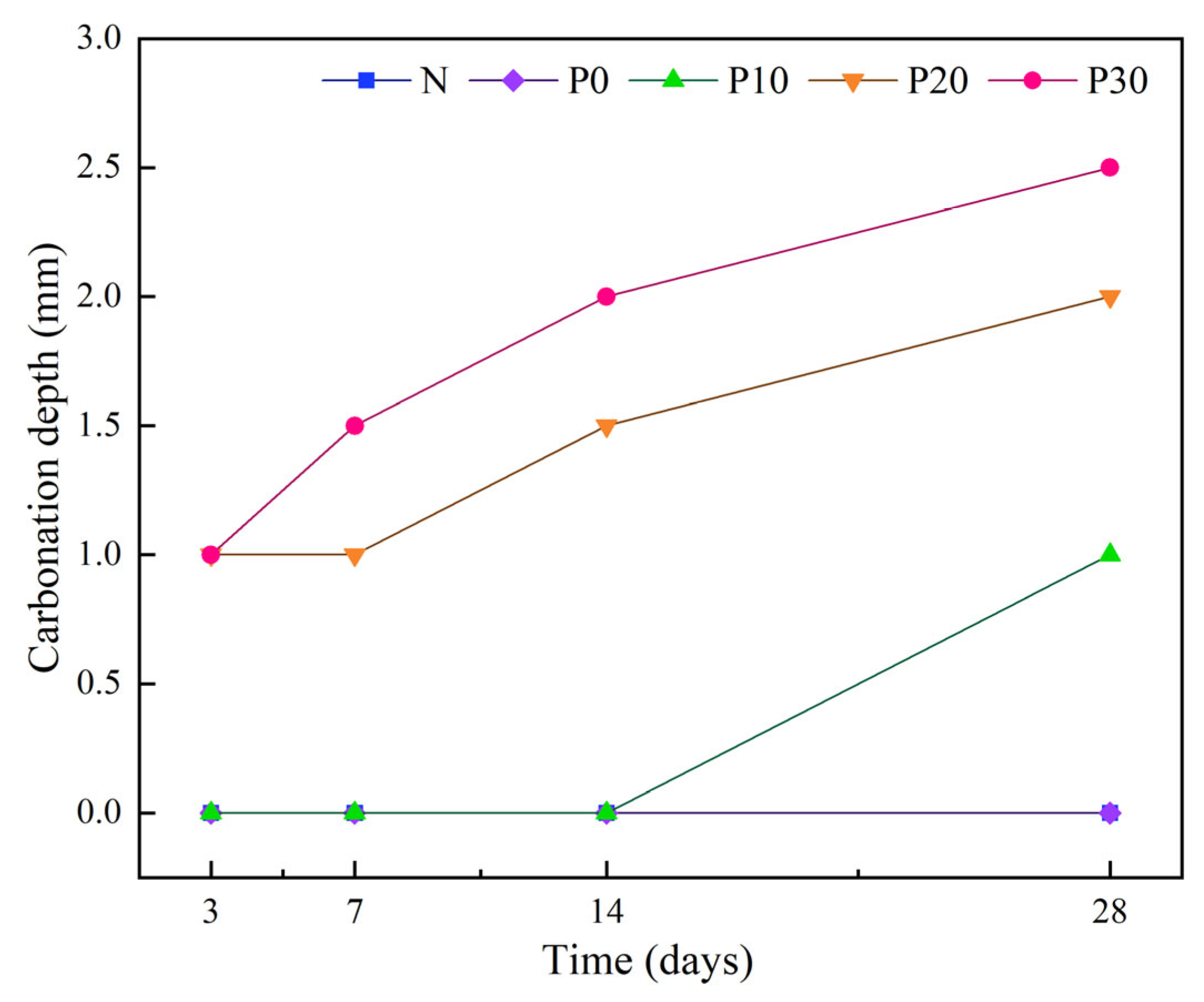
- The incorporation of 20% RBP achieves the optimal balance of performance. It maintains good flowability (130 mm), exhibits the highest 90-day compressive (63.5 MPa) and flexural (11.3 MPa) strengths, and improves chloride ion resistance (D = 0.3 × 10⁻¹² m2/s at 90 days) without significantly reducing carbonation resistance (3.5 mm at 28 days).
- (2)
- Long-term curing (≥90 days) is essential for RBAM with RBP. It promotes pozzolanic reaction and pore structure optimization, significantly improving mechanical strength and durability. The 90-day strength of P20 approaches that of natural mortar, indicating the potential for practical application.
- (3)
- RBP improves the microstructural characteristics of RBAM. It acts as a filler to reduce large pores and undergoes pozzolanic reaction to form additional C-S-H gel, densifying the matrix and ITZ. The 20% RBP substitution rate optimizes the pore structure, reducing the volume fraction of harmful pores (>100 nm) to 32.7%.
- (4)
- The synergistic effect of RBA and RBP is governed by filler and pozzolanic effects. RBA provides mechanical interlocking, while RBP optimizes the microstructure and enhances hydration. This study provides a theoretical basis for the high-value utilization of construction and demolition waste in cement-based materials.
Author Contributions
Funding
Data Availability Statement
Acknowledgments
Conflicts of Interest
References
- Wu, Y.-F.; Wang, X.; Hu, B.; Munir, M.J. Enhancing sustainability in concrete production: A novel compression casting technique for optimizing cement usage. J. Build. Eng. 2024, 95, 110215. [Google Scholar] [CrossRef]
- Chen, G.; Li, S.; Zhao, Y.; Xu, Z.; Luo, X.; Gao, J. Hydration and microstructure evolution of a novel low-carbon concrete containing recycled clay brick powder and ground granulated blast furnace slag. Constr. Build. Mater. 2023, 386, 131596. [Google Scholar] [CrossRef]
- Turk, O.; Yehia, S.; Abdelfatah, A.; Elchalakani, M. Sustainable concrete production: The potential of utilizing recycled waste materials. J. Build. Eng. 2024, 98, 111467. [Google Scholar] [CrossRef]
- Shanks, W.; Dunant, C.F.; Drewniok, M.P.; Lupton, R.C.; Serrenho, A.; Allwood, J.M. How much cement can we do without? Lessons from cement material flows in the UK. Resour. Conserv. Recycl. 2019, 141, 441–454. [Google Scholar] [CrossRef]
- Belaïd, F. How does concrete and cement industry transformation contribute to mitigating climate change challenges? Resour. Conserv. Recycl. Adv. 2022, 15, 200084. [Google Scholar] [CrossRef]
- Sbahieh, S.; Tahir, F.; Al-Ghamdi, S.G. Environmental and mechanical performance of different fiber reinforced polymers in beams. Mater. Today Proc. 2022, 62, 3548–3552. [Google Scholar] [CrossRef]
- Tahir, F.; Alzahrani, S.; Noori, Y.; Al-Ghamdi, S.G. Environmental impacts and the future prospects of waste utilization in the concrete production. Mater. Today Proc. 2024. [Google Scholar] [CrossRef]
- Lim, S.M.; He, M.; Hao, G.; Ng, T.C.A.; Ong, G.P. Recyclability potential of waste plastic-modified asphalt concrete with consideration to its environmental impact. Constr. Build. Mater. 2024, 439, 137299. [Google Scholar] [CrossRef]
- Malladi, R.C.; Ajayan, S.A.; Chandran, G.; Selvaraj, T. Upcycling of construction and demolition waste: Recovery and reuse of binder and fine aggregate in cement applications to achieve circular economy. Clean. Eng. Technol. 2025, 24, 100864. [Google Scholar] [CrossRef]
- Singh, M.; Singh, M.; Singh, S.K. Tackling municipal solid waste crisis in India: Insights into cutting-edge technologies and risk assessment. Sci. Total Environ. 2024, 917, 170453. [Google Scholar] [CrossRef]
- Huang, Q.; Zhu, X.; Xiong, G.; Wang, C.; Liu, D.; Zhao, L. Recycling of crushed waste clay brick as aggregates in cement mortars: An approach from macro- and micro-scale investigation. Constr. Build. Mater. 2021, 274, 122068. [Google Scholar] [CrossRef]
- Dang, J.; Liu, Y.; Zhao, J.; Xiao, J.; Li, F. Influence of fine inclusions in recycled fine aggregates from clay bricks on water transport and pore structure of concrete. Constr. Build. Mater. 2024, 444, 137796. [Google Scholar] [CrossRef]
- Dang, J.; Zhao, J.; Hu, W.; Du, Z.; Gao, D. Properties of mortar with waste clay bricks as fine aggregate. Constr. Build. Mater. 2018, 166, 898–907. [Google Scholar] [CrossRef]
- Zhao, Z.; Xiao, J.; Duan, Z.; Hubert, J.; Grigoletto, S.; Courard, L. Performance and durability of self-compacting mortar with recycled sand from crushed brick. J. Build. Eng. 2022, 57, 104867. [Google Scholar] [CrossRef]
- Li, L.G.; Lin, Z.H.; Chen, G.M.; Kwan, A.K.H. Reutilizing clay brick dust as paste substitution to produce environment-friendly durable mortar. J. Clean. Prod. 2020, 274, 122787. [Google Scholar] [CrossRef]
- Wu, H.; Gao, J.; Liu, C.; Guo, Z.; Luo, X. Reusing waste clay brick powder for low-carbon cement concrete and alkali-activated concrete: A critical review. J. Clean. Prod. 2024, 449, 141755. [Google Scholar] [CrossRef]
- Xu, K.; Deng, P.; Huang, P.; Xiao, A.; Guo, S. Experimental investigation on the mechanical properties of concrete utilizing pre-coated Brick-Concrete recycled coarse aggregates. Constr. Build. Mater. 2023, 403, 133113. [Google Scholar] [CrossRef]
- Zhao, Y.; Sun, S.; Liu, Y.; Liu, M. Study on performance deterioration and life prediction of reed straw-recycled brick aggregate concrete after freeze-thaw cycle. Case Stud. Constr. Mater. 2024, 21, e03728. [Google Scholar] [CrossRef]
- Zheng, Y.; He, B.; Xiao, Y. Strength and microstructure of geopolymer recycled brick aggregate concrete after high temperatures. Constr. Build. Mater. 2024, 448, 138263. [Google Scholar] [CrossRef]
- Ejaz, A.; Ruangrassamee, A.; Jirawattanasomkul, T.; Zhang, D. Experimental and analytical investigations on enhancing compressive stress vs. strain response of square-section recycled brick aggregate concrete by steel clamps. Case Stud. Constr. Mater. 2025, 22, e04645. [Google Scholar] [CrossRef]
- Bari, H.; Salam, M.A.; Safiuddin, M. Fresh and hardened properties of brick aggregate concrete including coconut shell as a partial replacement of coarse aggregate. Constr. Build. Mater. 2021, 297, 123745. [Google Scholar] [CrossRef]
- Sobuz, M.H.R.; Khan, M.H.; Islam, M.R.; Kabbo, M.K.I.; Alzlfawi, A.; Jameel, M.; Khan, M.M.H. Combined influence of crushed brick powder and recycled concrete aggregate on the mechanical, durability and microstructural properties of eco-concrete: An experimental and machine learning-based evaluation. J. Mater. Res. Technol. 2025, 36, 8757–8776. [Google Scholar] [CrossRef]
- Ahmed, M.M.; Ismail, M.K.; Elbayomy, M.S.; Ibrahim, H.H.A. Recycling crushed clay bricks for use in pervious concrete: Mechanical and hydraulic characteristics, clogging behavior, and maintenance. Constr. Build. Mater. 2025, 491, 142801. [Google Scholar] [CrossRef]
- Ge, Z.; Feng, Y.; Zhang, H.; Xiao, J.; Sun, R.; Liu, X. Use of recycled fine clay brick aggregate as internal curing agent for low water to cement ratio mortar. Constr. Build. Mater. 2020, 264, 120280. [Google Scholar] [CrossRef]
- Chen, G.; Gao, J.; Liu, C.; Li, S.; Zhao, Y.; Wu, H.; Guo, Z.; Luo, X.; Liu, Q.; Chen, X. Effect of waste clay brick powder and slag on mechanical properties and durability of concrete. Powder Technol. 2025, 453, 120623. [Google Scholar] [CrossRef]
- Aziez, M.N.; Achour, A.; Bahaz, A.; Lakhdari, Z. Effect of waste brick powder rich in SiO2 on the physical and mechanical properties of Portland cement concrete containing coarse recycled asphalt pavement aggregates (RAP). J. Build. Eng. 2023, 76, 107337. [Google Scholar] [CrossRef]
- Sahoo, P.; Dwivedi, A.; Tuppad, S.M.; Gupta, S. Sequestration and utilization of carbon dioxide to improve engineering properties of cement-based construction materials with recycled brick powder: A pathway for cleaner construction. Constr. Build. Mater. 2023, 395, 132268. [Google Scholar] [CrossRef]
- He, Z.-H.; Zhu, H.-N.; Zhang, M.-Y.; Shi, J.-Y.; Du, S.-G.; Liu, B. Autogenous shrinkage and nano-mechanical properties of UHPC containing waste brick powder derived from construction and demolition waste. Constr. Build. Mater. 2021, 306, 124869. [Google Scholar] [CrossRef]
- Navrátilová, E.; Rovnaníková, P. Pozzolanic properties of brick powders and their effect on the properties of modified lime mortars. Constr. Build. Mater. 2016, 120, 530–539. [Google Scholar] [CrossRef]
- Dai, T.; Liu, T.; Zheng, T.; Fang, C.; Zheng, S.; Lei, G. Effect of waste clay brick powder on microstructure and properties in blended oil well cement pastes at HTHP conditions. Geoenergy Sci. Eng. 2024, 237, 212823. [Google Scholar] [CrossRef]
- Alsaif, A. Utilization of ceramic waste as partially cement substitute–A review. Constr. Build. Mater. 2021, 300, 124009. [Google Scholar] [CrossRef]
- Ye, T.; Xiao, J.; Duan, Z.; Li, S. Geopolymers made of recycled brick and concrete powder–A critical review. Constr. Build. Mater. 2022, 330, 127232. [Google Scholar] [CrossRef]
- Luga, E.; Mustafaraj, E.; Corradi, M.; Dajko, M. Recycled red brick masonry demolition waste as a sustainable cement replacement alternative: A DoE-Based approach. J. Build. Eng. 2025, 100, 111787. [Google Scholar] [CrossRef]
- Wong, C.L.; Mo, K.H.; Yap, S.P.; Alengaram, U.J.; Ling, T.-C. Potential use of brick waste as alternate concrete-making materials: A review. J. Clean. Prod. 2018, 195, 226–239. [Google Scholar] [CrossRef]
- Ge, Z.; Wang, Y.; Sun, R.; Wu, X.; Guan, Y. Influence of ground waste clay brick on properties of fresh and hardened concrete. Constr. Build. Mater. 2015, 98, 128–136. [Google Scholar] [CrossRef]
- GB/T 2419-2005; Test Method for Fluidity of Cement Motar. Standardization Administration of China: Beijing, China, 2005.
- ASTM C1585; Standard Test Method for Measurement of Rate of Absorption of Water by Hydraulic-Cement Concretes. ASTM International: West Conshohocken, PA, USA, 2020.
- ASTM C293; Standard Test Method for Flexural Strength of Concrete. ASTM International: West Conshohocken, PA, USA, 2010.
- GB/T 50082-2009; Standard for Test Methods of Long-Term Performance and Durability of Ordinary Concrete. Standardization Administration of China: Beijing, China, 2009.
- Krishnan, A.K.; Wong, Y.C.; Zhang, Z.; Arulrajah, A. A transition towards circular economy with the utilisation of recycled fly ash and waste materials in clay, concrete and fly ash bricks: A review. J. Build. Eng. 2024, 98, 111210. [Google Scholar] [CrossRef]
- Xi, B.; Zhou, Y.; Yu, K.; Hu, B.; Huang, X.; Sui, L.; Xing, F. Use of nano-SiO2 to develop a high performance green lightweight engineered cementitious composites containing fly ash cenospheres. J. Clean. Prod. 2020, 262, 121274. [Google Scholar] [CrossRef]
- Yang, J.; Huang, J.; He, X.; Su, Y.; Tan, H.; Chen, W.; Wang, X.; Strnadel, B. Segmented fractal pore structure covering nano- and micro-ranges in cementing composites produced with GGBS. Constr. Build. Mater. 2019, 225, 1170–1182. [Google Scholar] [CrossRef]







| Chemical Composition | SiO2 | Al2O3 | Fe2O3 | CaO | K2O | MgO | Na2O | TiO2 |
|---|---|---|---|---|---|---|---|---|
| Cement | 24.99 | 8.26 | 4.03 | 51.42 | 0.80 | 3.71 | 0.26 | 0.37 |
| RBP | 64.95 | 18.01 | 7.12 | 2.93 | 2.49 | 1.41 | 1.19 | 1.08 |
| Code | Cement (kg/m3) | Sand (kg/m3) | RBA (kg/m3) | RBP (kg/m3) | Water/Binder Ratio | Polycarboxylate Superplasticizer (kg/m3) |
|---|---|---|---|---|---|---|
| N | 1000 | 1000 | 0 | 0 | 0.35 | 2 |
| P0 | 1000 | 0 | 1000 | 0 | 0.5 | 2 |
| P10 | 900 | 0 | 1000 | 100 | 0.5 | 2 |
| P20 | 800 | 0 | 1000 | 200 | 0.5 | 2 |
| P30 | 700 | 0 | 1000 | 300 | 0.5 | 2 |
Disclaimer/Publisher’s Note: The statements, opinions and data contained in all publications are solely those of the individual author(s) and contributor(s) and not of MDPI and/or the editor(s). MDPI and/or the editor(s) disclaim responsibility for any injury to people or property resulting from any ideas, methods, instructions or products referred to in the content. |
© 2026 by the authors. Licensee MDPI, Basel, Switzerland. This article is an open access article distributed under the terms and conditions of the Creative Commons Attribution (CC BY) license.
Share and Cite
Chen, Z.; Wu, C.; Jiang, Y.; Liu, H.; Chen, Z. Synergistic Performance and Microscopic Mechanisms of Mortar Incorporating Recycled Brick Fine Aggregate and Brick Powder. Buildings 2026, 16, 1667. https://doi.org/10.3390/buildings16091667
Chen Z, Wu C, Jiang Y, Liu H, Chen Z. Synergistic Performance and Microscopic Mechanisms of Mortar Incorporating Recycled Brick Fine Aggregate and Brick Powder. Buildings. 2026; 16(9):1667. https://doi.org/10.3390/buildings16091667
Chicago/Turabian StyleChen, Zelin, Can Wu, Yifan Jiang, Haizhen Liu, and Zhengfa Chen. 2026. "Synergistic Performance and Microscopic Mechanisms of Mortar Incorporating Recycled Brick Fine Aggregate and Brick Powder" Buildings 16, no. 9: 1667. https://doi.org/10.3390/buildings16091667
APA StyleChen, Z., Wu, C., Jiang, Y., Liu, H., & Chen, Z. (2026). Synergistic Performance and Microscopic Mechanisms of Mortar Incorporating Recycled Brick Fine Aggregate and Brick Powder. Buildings, 16(9), 1667. https://doi.org/10.3390/buildings16091667