1. Introduction
Cold-formed steel (CFS) structural elements offer several significant advantages over conventional reinforced concrete and hot-rolled steel systems. These include their light weight, their increased efficiency in roll-forming production under controlled indoor conditions, and their easy on-site assembly. This situation makes the demand for CFS systems increase. The thin-walled feature of cold-formed steel structures makes them susceptible to various instability mechanisms, such as local buckling and spherical buckling, especially under axial compressive loads. Li et al. [
1] experimentally investigated 21 combined CFS columns and compared the experimental results with numerical simulations. It was determined that the numerical models reliably predicted the ultimate compressive capacity, but assembly errors, especially in short columns, significantly affected the load-bearing behavior. Furthermore, it was shown that the Effective Width Method (EWM) approach could overestimate the capacity, local buckling could not be improved by plate overlap, and the effect of the connection arrangement on the failure load has not yet been clearly defined. Li and Craveiro [
2,
3] explain that CFS columns are constructed and used in both open and closed forms. These two studies highlight the need for new studies on the buckling conditions of CFS systems connected in different ways. Akchurin [
4] experimentally investigated the axial compression behavior of high-strength cold-formed lip channel columns with a yield strength of 690 MPa. Experimental findings, along with elastic buckling analysis, initial geometric defects, and material properties, revealed the limits of reliable application of existing design methods to such high-strength CFS sections. Luo et al. [
5] investigated the post-fire behavior of cold-formed steel back-to-back built-up columns focusing on local buckling, while Wang et al. [
6] experimentally and numerically examined the compressive behavior of a novel cold-formed steel built-up box section, proposing design recommendations. Ma [
7] experimentally and numerically studied the load-carrying capacity of built-up columns with high-strength material under compression. The results obtained highlight the need for further research on cold-formed steel elements with different material properties. According to Djafour [
8], only 93 finite element built-up models were created numerically, and the study found that stiffeners used as additional connection elements affected the load-carrying capacity. Xingyou [
9] experimentally and numerically tested 48 unequal-leg lipped angle column specimens. The most important result of this study was that cold-formed steel elements with unequal-leg lipped angle elements increased the risk of flexural–torsional buckling under compression load. This result is quite important for cold-formed steel elements produced with desired cross-sections in roll-forming machines. Li [
10] examined different column connections in prefabricated structures using parametric analysis. It was demonstrated that the stiffening connection plates used increased the system’s load capacity. It is noted that this is particularly important for cold-formed elements. Ma [
11] investigated the effect of openings in the web sections of cold-formed steel profiles on capacity using both experimental and numerical analyses. As a result, experimental studies supported the work with a dataset obtained from 3078 simulations and demonstrated that openings must be provided in a controlled manner. Wang [
12] aims to experimentally investigate the axial compression capacity of cold-formed steel (CFS) columns with a compressed (reduced diameter/shell-shaped) region in their end or middle section and to compare its accuracy with existing design methods. Compressed-section columns are a new section type developed for connection ease and rapid assembly in prefabricated light steel structures. However, the axial behavior of this section has not been sufficiently investigated in the literature. Experimental results show that swaged section columns exhibit a capacity reduction of 3.9–5.5% compared to straight sections, and the failure mode is local buckling in short columns and global buckling in long columns, depending on the column length.
Dai [
13] numerically investigated the behavior of built-up columns exposed to high temperatures under axial compression. Significant decreases in axial load-carrying capacity were observed with increasing temperature, and it was determined that the existing Effective Width Method (EWM) is insufficient, especially for medium and slender columns. Within the scope of the study, new design equations that provide more reliable axial capacity estimates for high-temperature conditions are proposed. Numerical results showed that axial capacity decreased by approximately 89–90% in lipped and unlipped sections with increasing temperature, revealing that current AISI and AS/NZS design approaches represent the high-temperature effect to a limited extent and therefore new design expressions are needed for more reliable capacity estimations. Qadir et al. [
14] optimised cold-rolled steel beam sections with web and flange stiffeners, Chen et al. [
15] experimentally investigated local–distortional interaction in cold-formed steel stiffened lipped channel columns, and Dündar and Nuraliyev [
16] conducted a parametric study on the local buckling behavior of perforated square hollow sections with non-uniform wall thickness under axial compression. Muriki et al. [
17] investigated the eccentric compression behavior of batten plate-laced cold-formed steel double-limbed lattice columns. The results showed that increasing equivalent slenderness ratio worsened the compression performance, and the failure mode evolved from local buckling to predominantly global buckling failure. Khalifa et al. [
18] examined the flexural buckling behavior of cold-formed lipped channel columns strengthened with sleeves, Mashaly et al. [
19] evaluated the local-plate buckling coefficient for cold-formed steel lipped channel sections through numerical simulations and design recommendations, and El-Taly and El-Shami [
20] investigated the structural performance of cold-formed steel face-to-face and back-to-back beams. Fratamico et al. [
21] investigated the buckling and collapse behavior of back-to-back lipped channel built-up cold-formed steel columns through 32 full-scale concentric compression tests conducted on columns with 16 different section sizes and two web fastener layouts. The results showed that local-global interaction is a prevalent failure mode, and rational design approaches based on the Direct Strength Method (DSM) were proposed and validated with test data. Shi et al. [
22] conducted an experimental and finite element (FE) study investigating the global stability of symmetric L-shaped box-T section beam-columns (SL-BTSC) under eccentric compression loads. Nine specimens were tested to examine failure modes, load–displacement curves, and strain distributions. The results demonstrated that mid-height stiffeners shifted the primary buckling mode from distortional to global buckling. A total of 2358 FE parametric cases were analysed, revealing that buckling resistance decreased with increasing compression area, width-to-thickness ratio, and slenderness ratio. Based on these findings, design methods consistent with Chinese code and Eurocode provisions were proposed for SL-BTSC under pure bending and eccentric loading conditions. Zhou et al. [
23] experimentally and numerically investigated the axially loaded performance of L-shaped box-T section columns. Twelve columns were tested under axial compression, and distortional buckling was found to reduce column buckling strength unless midspan transverse stiffeners were provided. Accordingly, the placement of a single stiffener at midspan was recommended. A parametric finite element study was subsequently conducted to evaluate the applicability of column design curves specified in Chinese, European, and American codes. Based on these findings, modified design curves were proposed in accordance with the theoretical frameworks of the Chinese and European codes. Shi et al. [
24] experimentally investigated the global buckling behaviour of T-shaped box-T section beam-columns (T-BTSC) under eccentric compression loads. Sixteen full-scale specimens constructed from 345 MPa steel, comprising both welded and hot-rolled sections, were tested. Failure modes, load–displacement curves, and buckling resistances were examined, and the plane section assumption was verified through strain measurements. The experimental results were compared with design resistance predictions of the Chinese code GB 50017, confirming its applicability to T-BTSCs. Furthermore, refined finite element models were developed and validated against the experimental data to facilitate subsequent parametric studies and design optimization. Compressive instability is a critical concern not only in cold-formed steel members but also in other thin-walled steel structures. For instance, Khalil et al. [
25] investigated the seismic fragility of cylindrical ground-supported steel silos, in which shell buckling under compressive and lateral loading governs the structural failure.
Although there is significant literature on cold-formed steel (CFS) joined elements, particularly conventional back-to-back channel configurations, this study aimed to contribute to the literature by experimentally and numerically investigating built-up columns created simultaneously using face-to-face, back-to-back, and 2 mm connecting elements, and using only screws. The load transfer mechanism provided by self-drilling screws in built-up columns remains insufficiently understood, introducing significant uncertainties in the accuracy and reliability of current design methods and numerical modeling approaches. To address this knowledge gap, the axial compression behavior of cold-formed steel built-up columns is investigated through an integrated methodology combining experimental testing and numerically validated finite element analyses.
2. Experimental Test Program
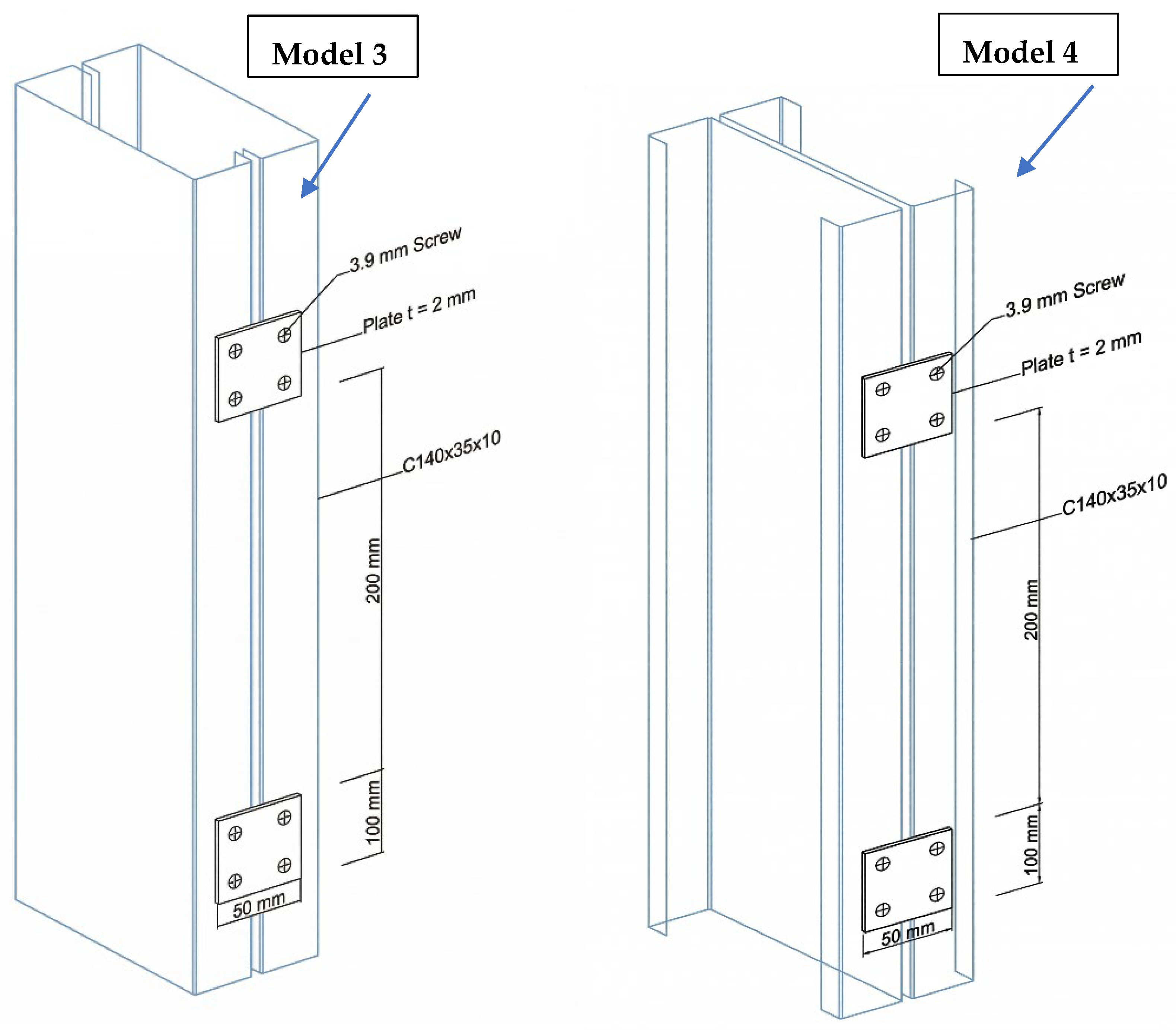
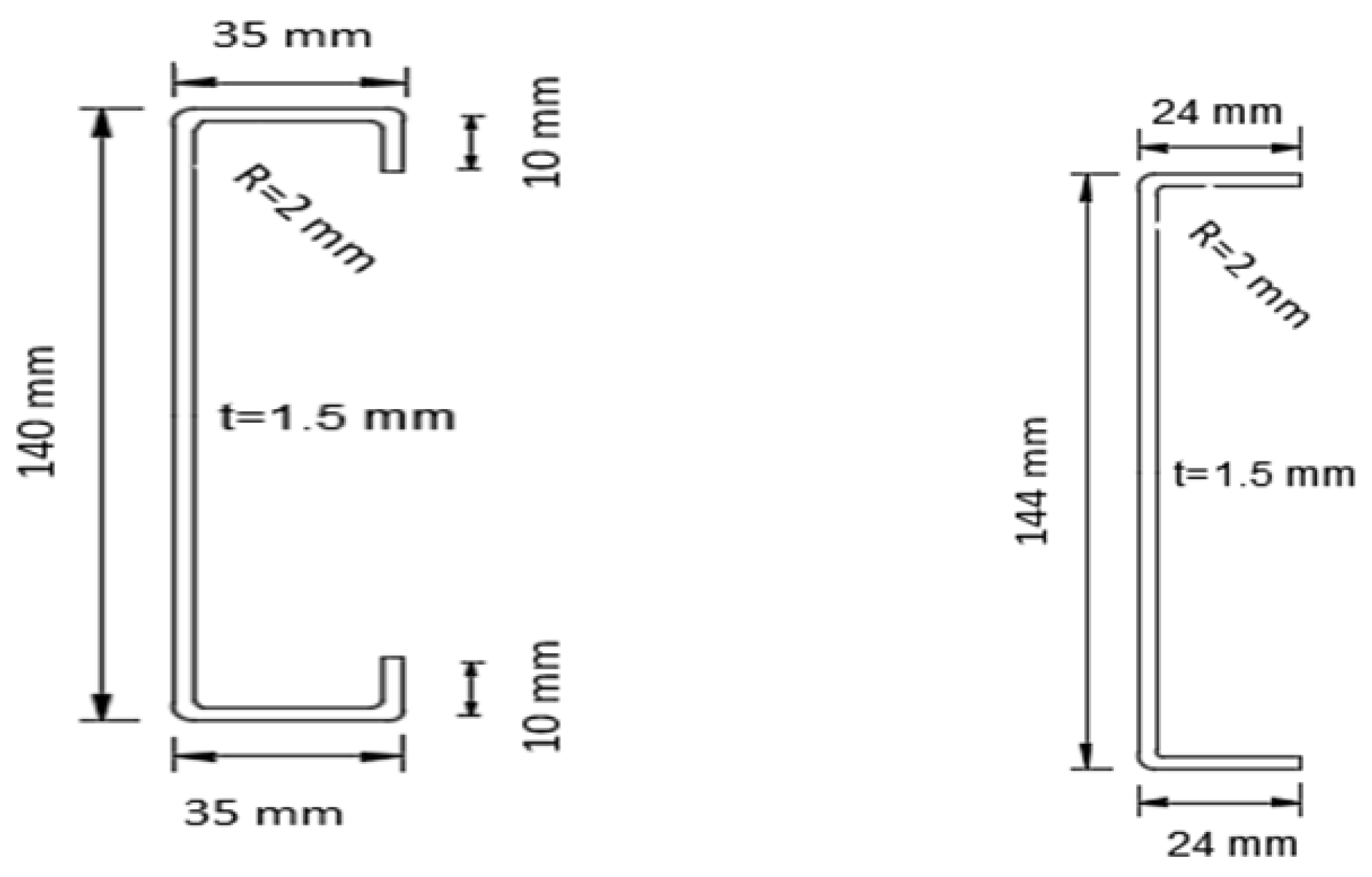
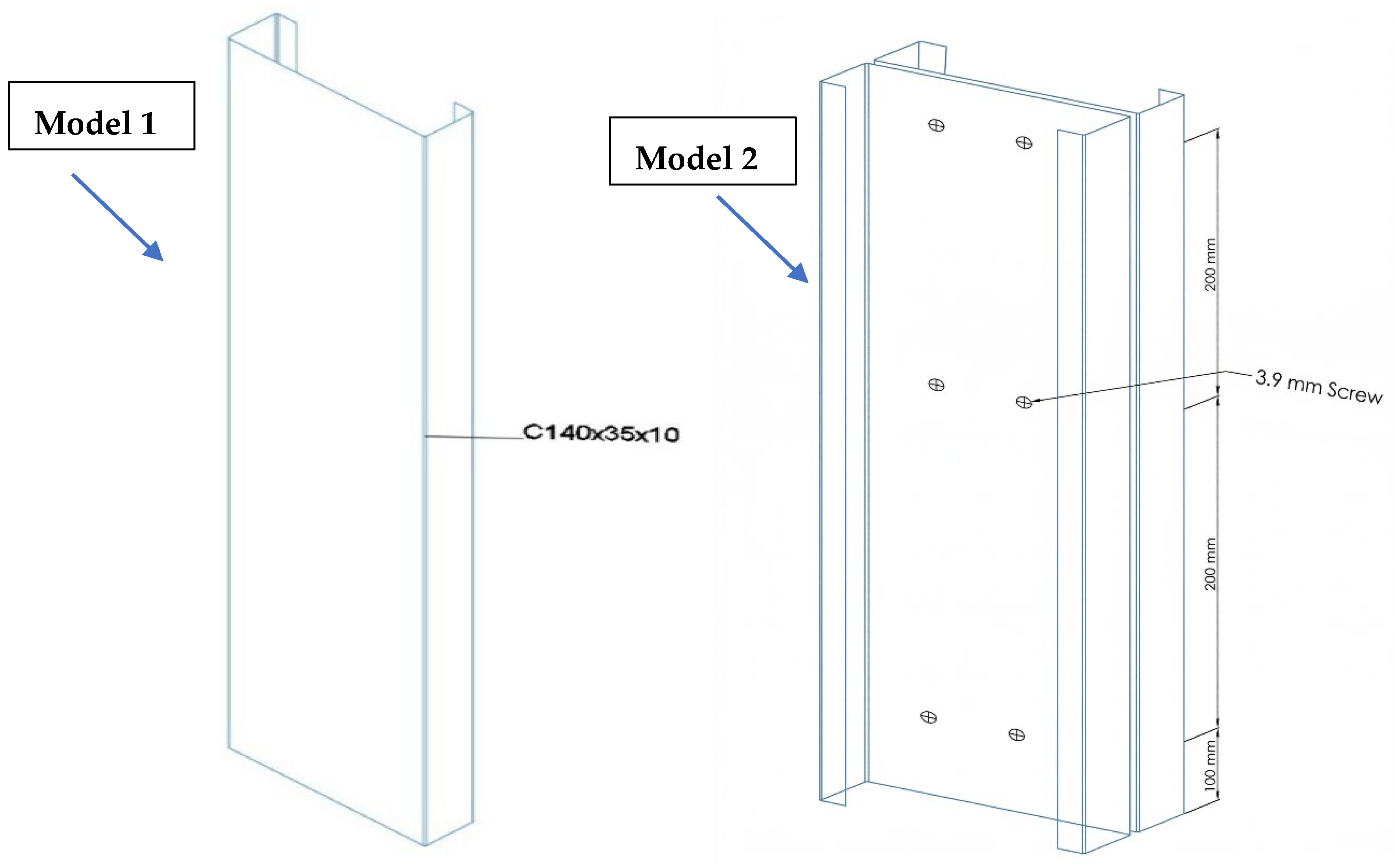
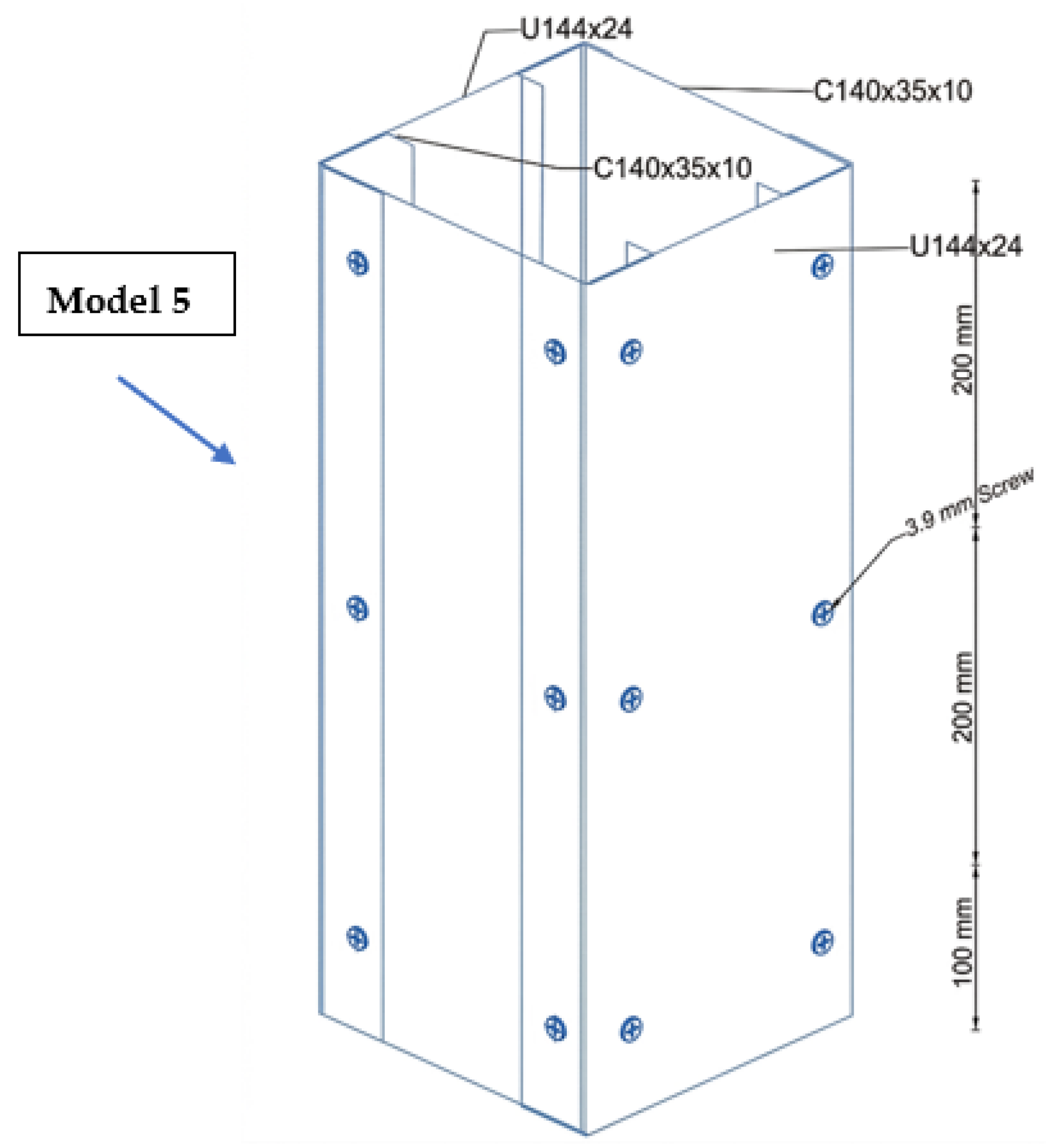
This study aims to investigate and compare the load-carrying capacities of built-up columns under compression using experimental and numerical methods. In the experimental studies, 2 m-long built-up columns with 5 different cross-sections were fabricated using C140 × 35 × 10 × 1.5 and U144 × 24 × 1.5 profiles, shown in
Figure 1. The built-up columns were joined using screws, as shown in
Figure 2,
Figure 3 and
Figure 4. During specimen fabrication, 3.9 mm diameter screws were used at 200 mm intervals. The selected intermediate fastener spacing of 200 mm is well within the limit permitted by AISI S100 Section D1.2. The maximum allowable spacing is 1000 mm, and the chosen value is only one-fifth of this limit. The condition a/r
i = 15.8 ≤ 79.0 is satisfied by a large margin, and the resulting modification to the slenderness ratio is negligible (0.5%). The spacing of 200 mm was chosen conservatively to ensure robust composite action between the two C-sections and to facilitate reliable field installation. In Model-3 and Model-4 designs, the screw connection was provided using 100 × 50 mm plates with a thickness of 2 mm and S355 GD quality.
The cross-sectional properties of the profiles used in the study are given in
Table 1 (A = Gross cross-sectional area, Ixx = Second area moment around the major (x) axis, Izz = Second area moment around the minor (z) axis, Ixz = Product moment of inertia, J = Saint-Venant torsional constant, Cw = Warping constant, Xs = x-coordinate of the shear center).
2.1. Material Properties
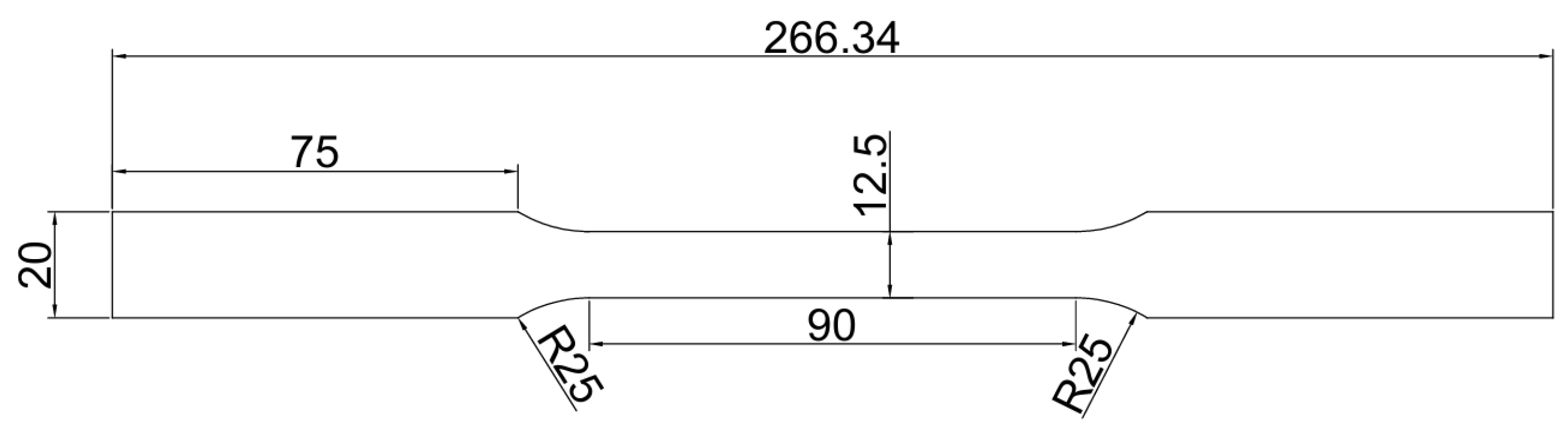
In the experimental study, four dog-bone (tensile) specimens with the dimensions shown in
Figure 5 were tested in accordance with the BS EN ISO 6892-1 standard [
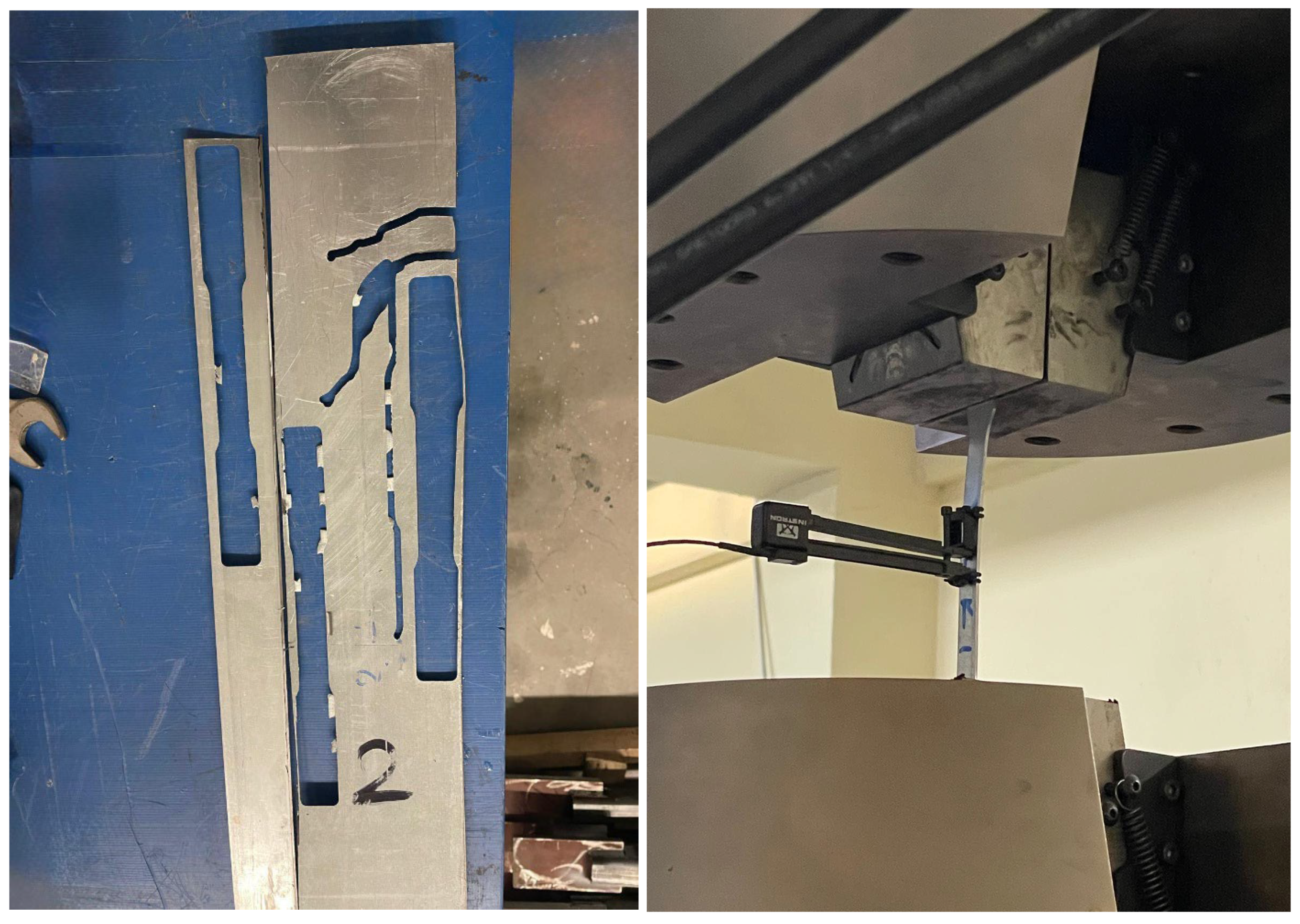
26]. Tensile tests were performed on dog-bone specimens made of galvanized sheet metal. As shown in
Figure 6, four dog-bone (tensile) specimens were taken from profiles consisting of two main bodies and two side panels, and tensile tests were performed in the structural laboratory at Yıldız Technical University.
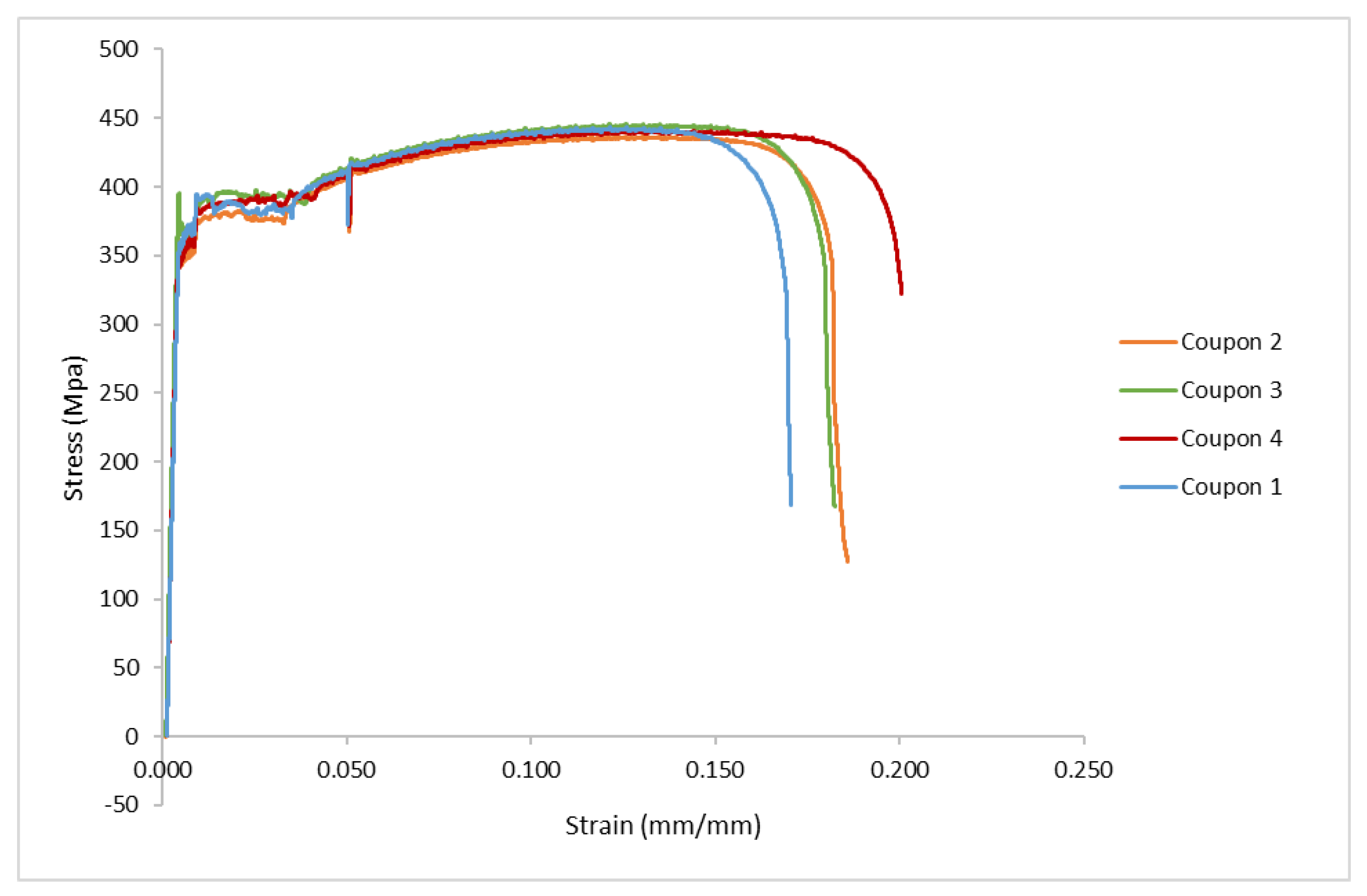
Figure 7 shows the tensile stress–strain graph obtained from the tests of the specimens. These values were defined as material properties in the Abaqus analysis program. As a result of the experiment, it was observed that yielding started at approximately 370–390 MPa stress levels, followed by a stable and gradual strain hardening region. The post-yield response is uniform, and it is observed that the stress continuously increases until it reaches the ultimate tensile strength of approximately 430–450 MPa. The overall ductile behavior was observed to be consistently maintained throughout all tests.
Engineering stress–strain curves were derived using load–extension data obtained from the tensile coupon tests.
Table 2 presents the key material properties obtained from tensile coupon tests. The strain values were calculated using the relation ε = ΔL/L0, based on an initial gauge length (L0) of 266.34 mm, as follows: The elastic modulus (E) was obtained from the slope of the initial linear portion of the stress–strain curve, as follows: The yield strength (fy) was determined using the 0.2% offset method, and the maximum stress achieved was considered the ultimate tensile strength (fu). The elongation after fracture (δ) was calculated as the strain value at the time of specimen rupture. As summarized in
Table 2, the average yield strength, ultimate tensile strength, and elastic modulus obtained from the four tensile coupons were 380 MPa, 440 MPa, and 202 GPa, respectively. The low coefficient of variation (COV) values demonstrate that the material properties were highly consistent across the specimens.
2.2. Built-Up Column Experimental Test
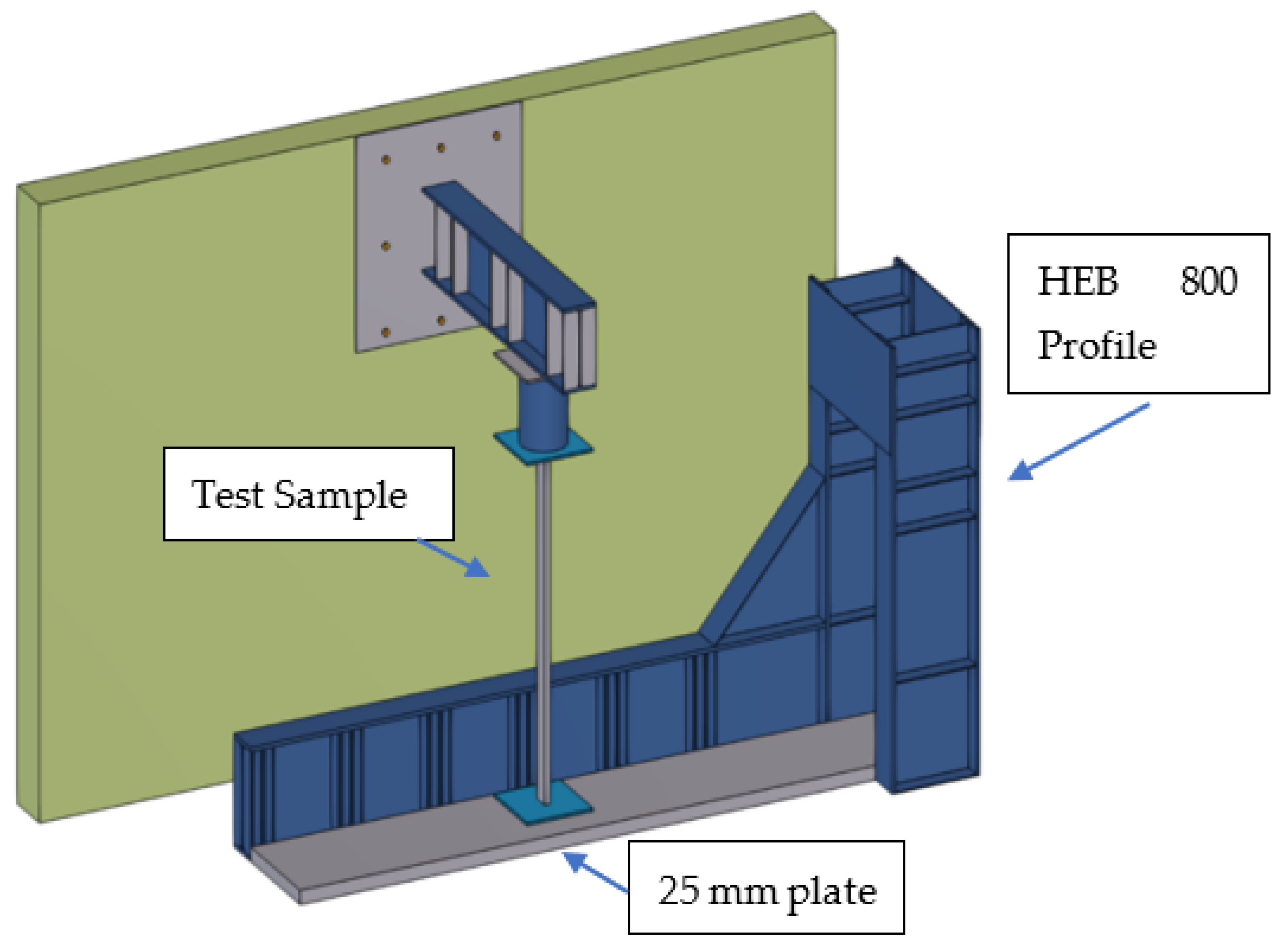
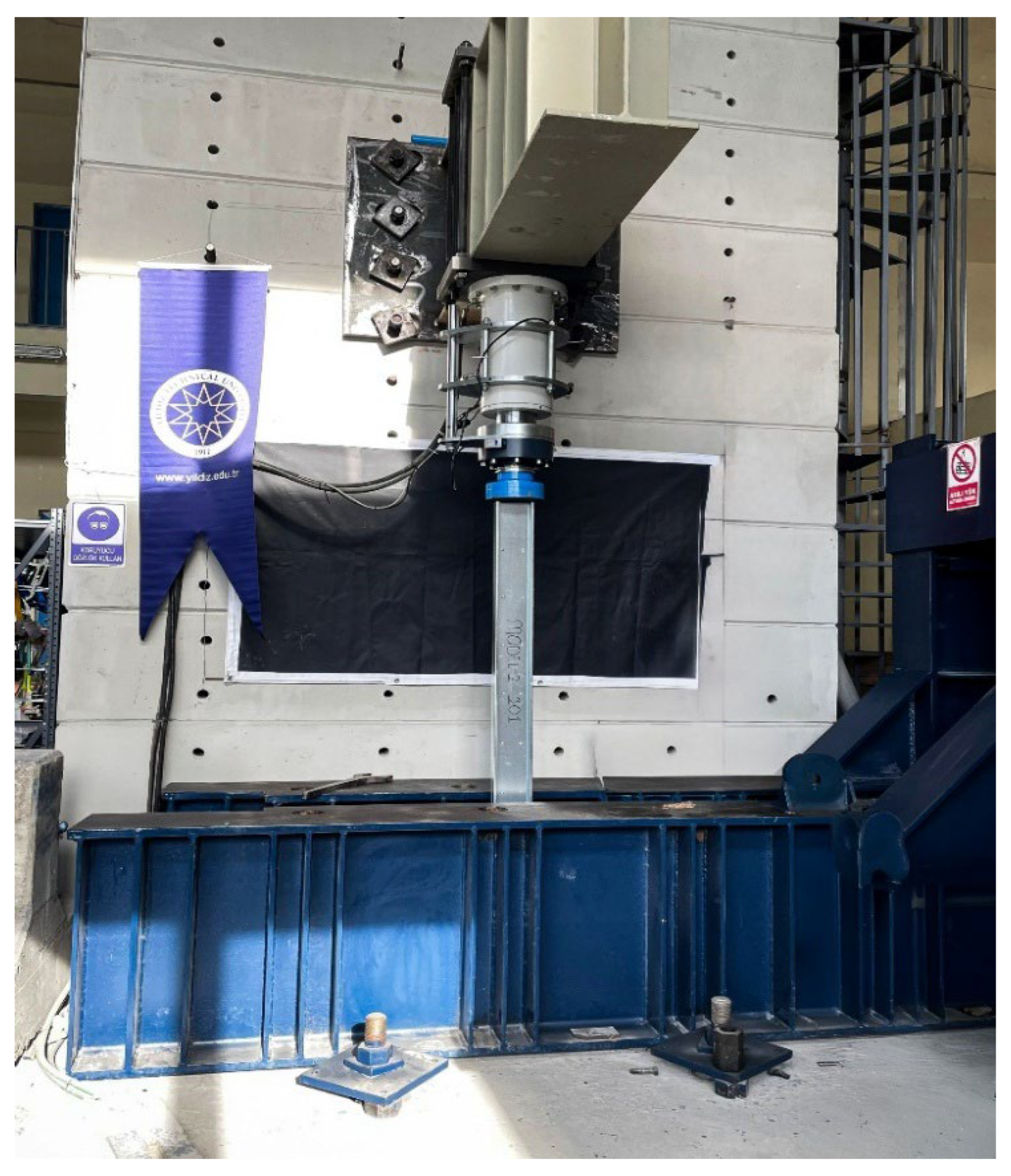
Axial compression tests were performed using a hydraulic universal testing machine with a closed-loop control system. The hydraulic actuator at the top of the testing machine was configured to apply a uniaxial, uniformly distributed compressive load of 500 kN to the specimen. The load was transmitted symmetrically along the specimen axis, and special attention was given to centering the specimen to minimize load misalignment during the test. Thanks to displacement-controlled loading, all phases of the column’s behavior, from elastic response to the onset of buckling and final failure, could be observed in detail. The experiments were conducted using the experimental setup shown in
Figure 8. A 3D model of this setup was shown in
Figure 9. In the experimental setup shown in
Figure 9, a 25 mm thick plate was placed at the ground level before the columns were positioned. During the experiment, these plates were placed between the specimens to restrict their movement. The cold-formed steel (CFS) column specimens were positioned vertically in the central region of the testing machine. The specimens were oriented to carry only axial compressive force during loading, and any additional bending moments from external influences were deliberately prevented. In this way, the column behavior was examined solely under axial compression, and the buckling mechanisms were clearly revealed. Pin-end (articulated) supports, allowing rotational freedom, were used at the top and bottom ends of the specimens. This support system limits moment transfer at the end of the column, enabling the experiment to be conducted under pure axial compression. With articulated support, no bending moments occurred at the end of the column, and the buckling behavior was observed under a limit condition close to the theoretically defined Euler buckling conditions. This limit condition enables clear differentiation of local, distortional, and global buckling modes, particularly in cold-formed steel columns. Thus, the experimental results provide a reliable basis for direct comparison with existing design methods and numerical models (e.g., DSM and finite element analyses).
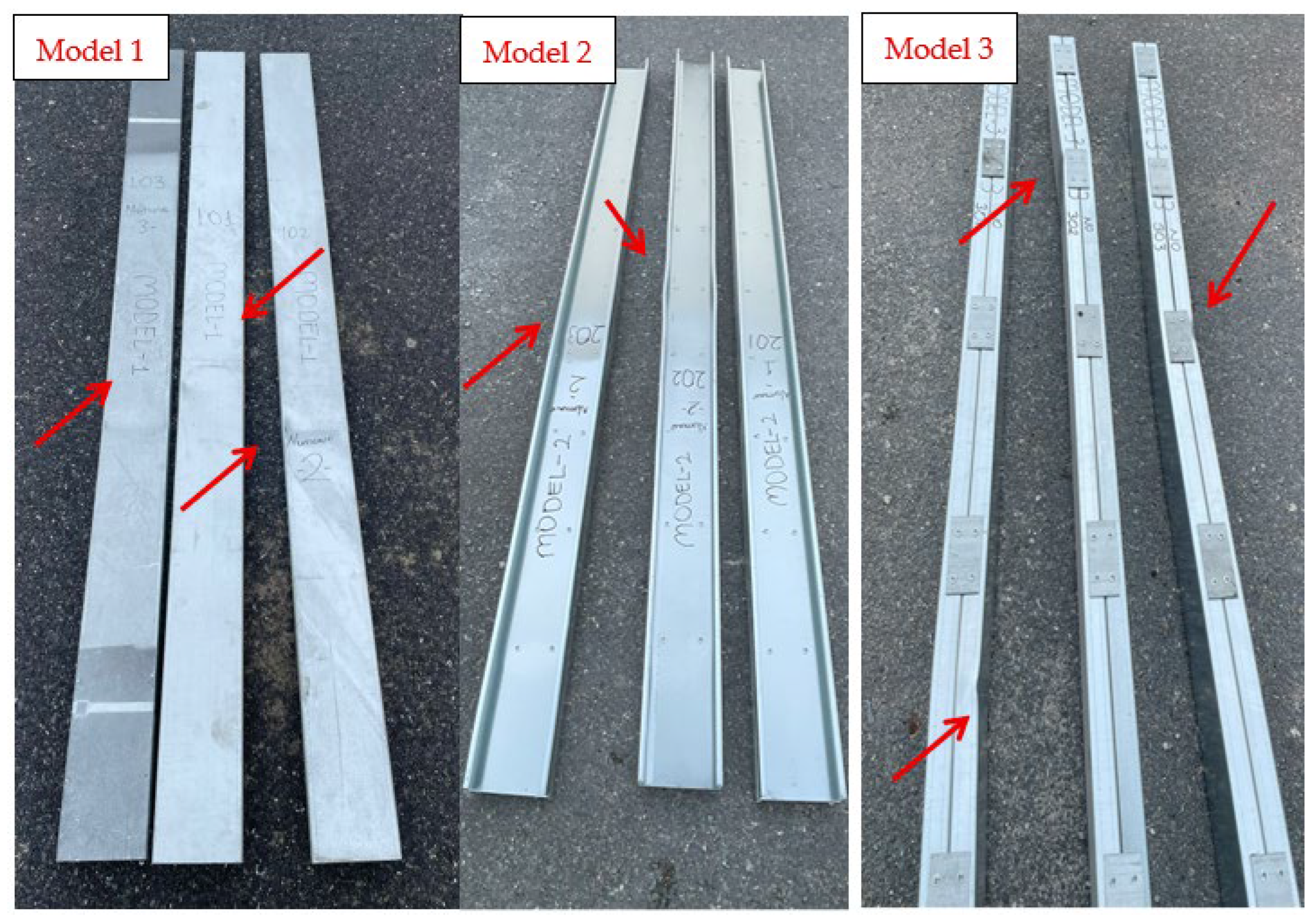
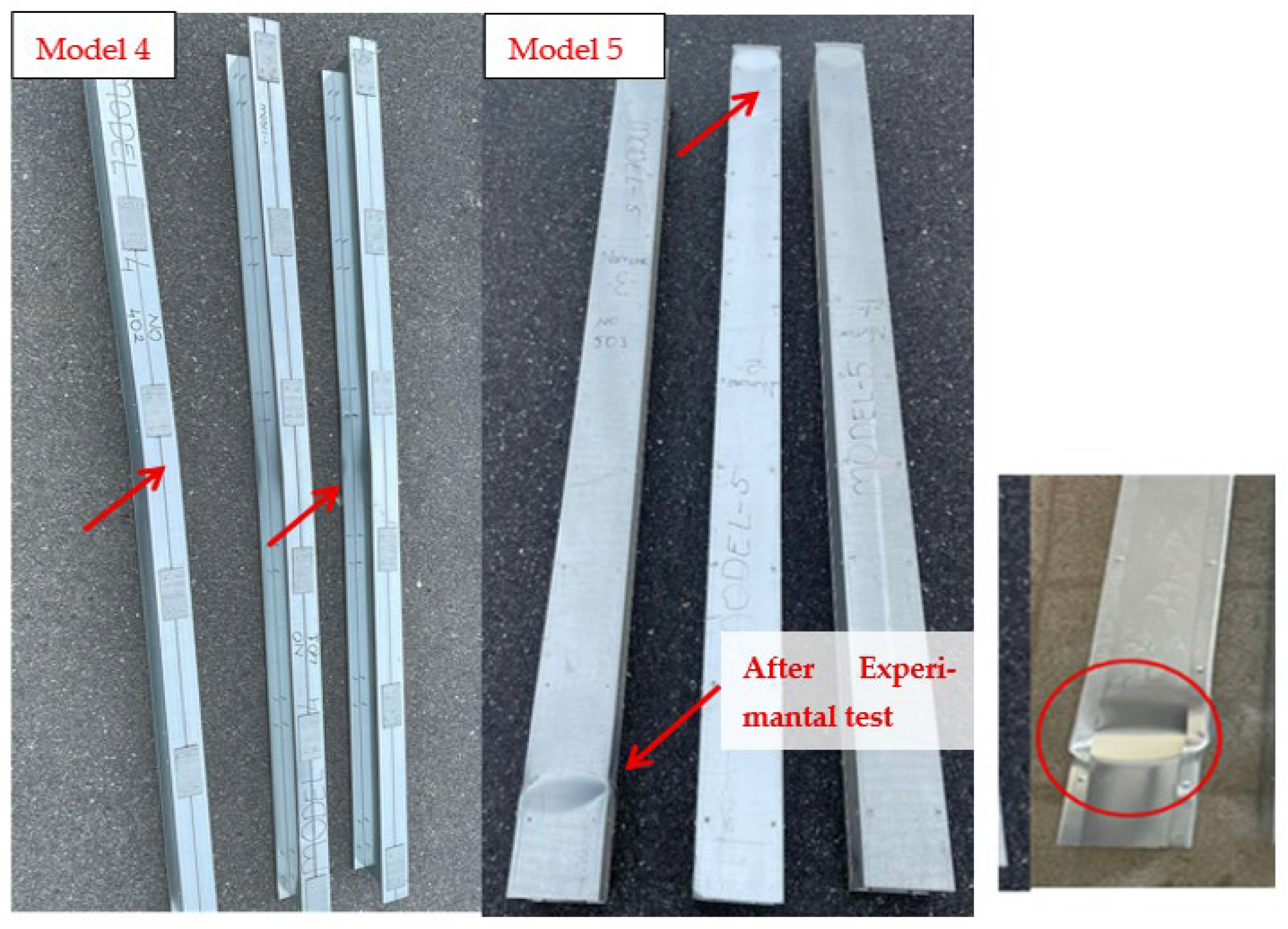
Figure 10 and
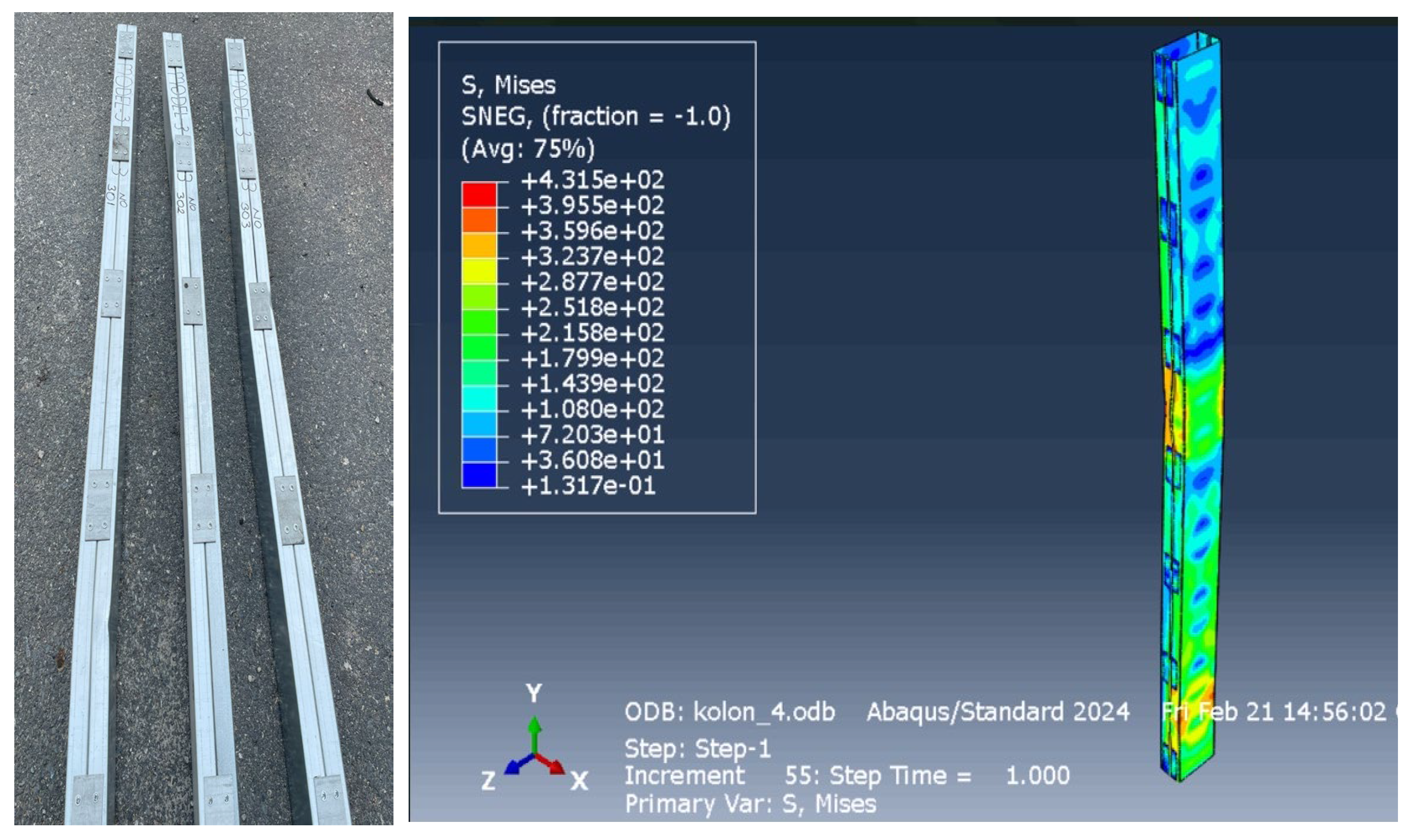
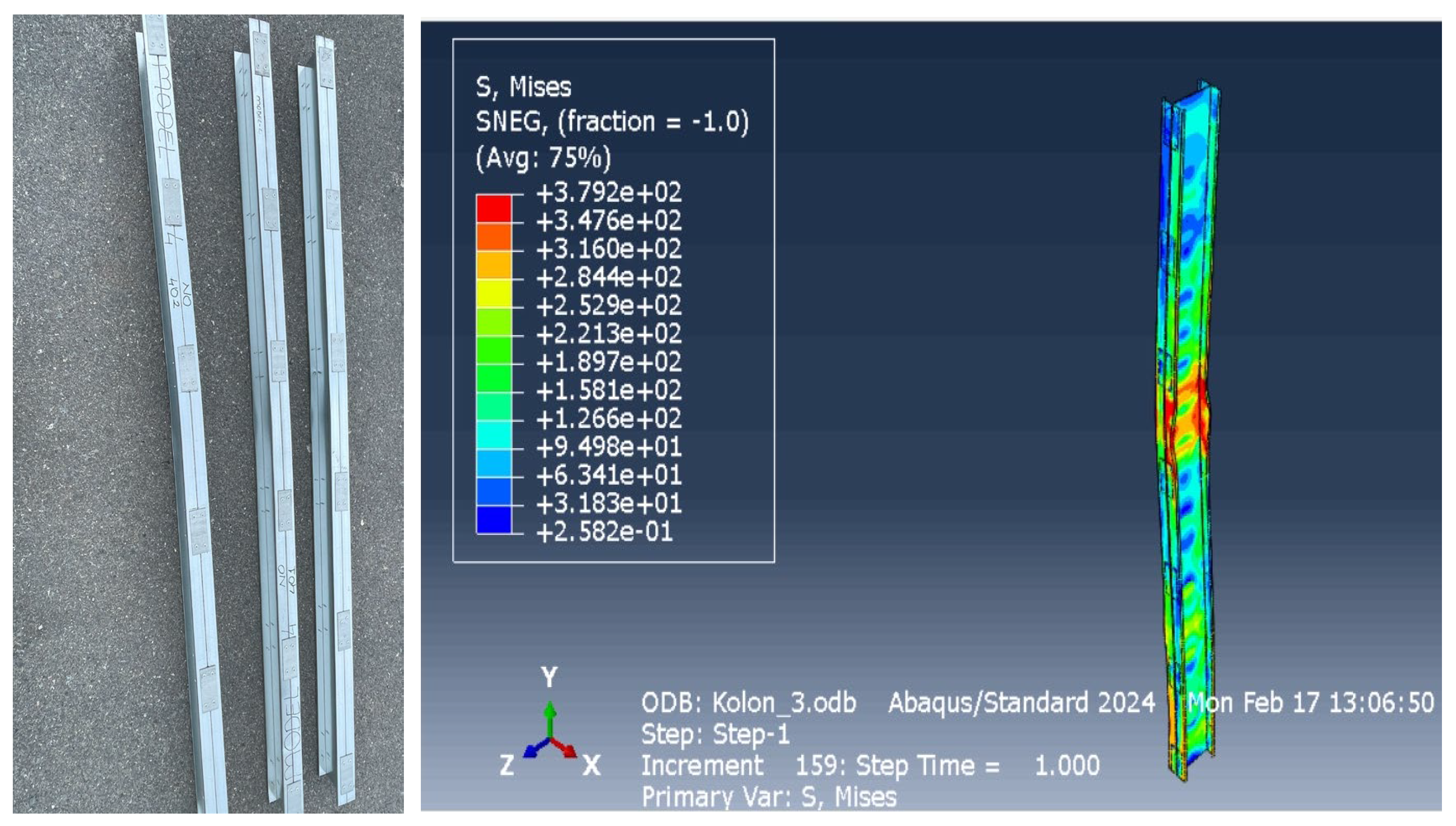
Figure 11 show the experimental analysis results for five built-up columns within the scope of the study. Three experimental tests were performed for each model, and significant results were obtained for cold-formed steel columns. Buckling conditions were observed in cold-formed steel columns under compressive load. According to the test results of the built-up columns, it was observed that buckling is quite significant in very thin elements such as light steel. In Model 1, local buckling occurs in the web region at different lengths for samples S101, S102, and S103, while in Model 2, both web and flange buckling are observed in sample S202. Local buckling occurs in the body regions of samples S201 and S203. In Model 3, buckling was not observed in the flanges because the plates were held from the sides; buckling occurred in the web of samples S301, S302, and S303. In the S301 specimen, buckling occurred closer to the support region, while in the S302 specimen, it occurred closer to the region where the load was applied. In the S303 specimen, local buckling occurred near the midpoint.
In Model 4, local buckling occurred in the flanges and body of samples S4021, S402, and S403, but the overall local buckling observed in the body was much less than in Model 2. In Model 5, buckling was observed to occur very close to the lower and upper support regions. In specimens S501, S502, and S503, buckling was observed in both the body and flanges in all four interconnected profiles.
Table 3 contains a summary of all the models.
2.3. Screw Experimental Test
Screws are widely used as fasteners in cold-formed steel structures. In this study, screws were used in all models except Model 1, which was tested without any fasteners, screws were used in the connection of a total of 12 built-up columns in Models 2, 3, 4, and 5. The primary aim of the screw connection testing was to evaluate their ultimate capacity and load-slip deformation response under shear. As the fasteners in the built-up columns primarily act to prevent relative longitudinal slip between the connected cold-formed steel components, characterizing their shear behavior is essential for understanding the degree of composite action developed in the built-up section. The self-drilling screws used in the assembly strictly comply with the ISO 898-1 standard [
27]. In this study, self-drilling screws of specification class 5.8 with a nominal diameter of 3.9 mm and a length of 19 mm were used. Studies conducted on screw connections at room temperature and high temperatures have shown that the number and arrangement of screws affect load transfer and group movement. Yin et al. [
28] investigated the mechanical behavior of bolted connections in cold-formed steel sheets at high temperatures through experimental tests and finite element modeling. The results observed that increasing temperature caused significant decreases in load-carrying capacity and hardness due to deterioration of material properties. Liu et al. [
29,
30] investigated pull-out behavior of corroded screw connections using accelerated salt-spray testing and finite-element models, finding that flaw corrosion reduces capacity and alters failure from thread shear to plate bending. In a companion study on pull-through behavior, increasing corrosion moved the failure location away from the screw hole and ultimately produced full loss of load-bearing capacity, with pitting corrosion having limited influence during initial splitting but a stronger effect during global tensile failure. Zhao et al. [
31] conducted cyclic tests on bolted connections used in corrugated steel-clad cold-formed steel (CFS) shear walls and evaluated their hysteretic behavior, strength, stiffness, and energy dissipation capacity. The results showed that the performance of bolted connections plays a decisive role in the seismic response of CFS shear walls and significantly affects their load-carrying and deformation capacities. Truong [
32] investigated the monotonic tensile behavior of force-driven fasteners connecting cold-formed steel sheets and evaluated their strength, hardness, and fracture modes. The study showed that the fastener type and sheet thickness significantly affected the load-carrying capacity and ductility of the connections.
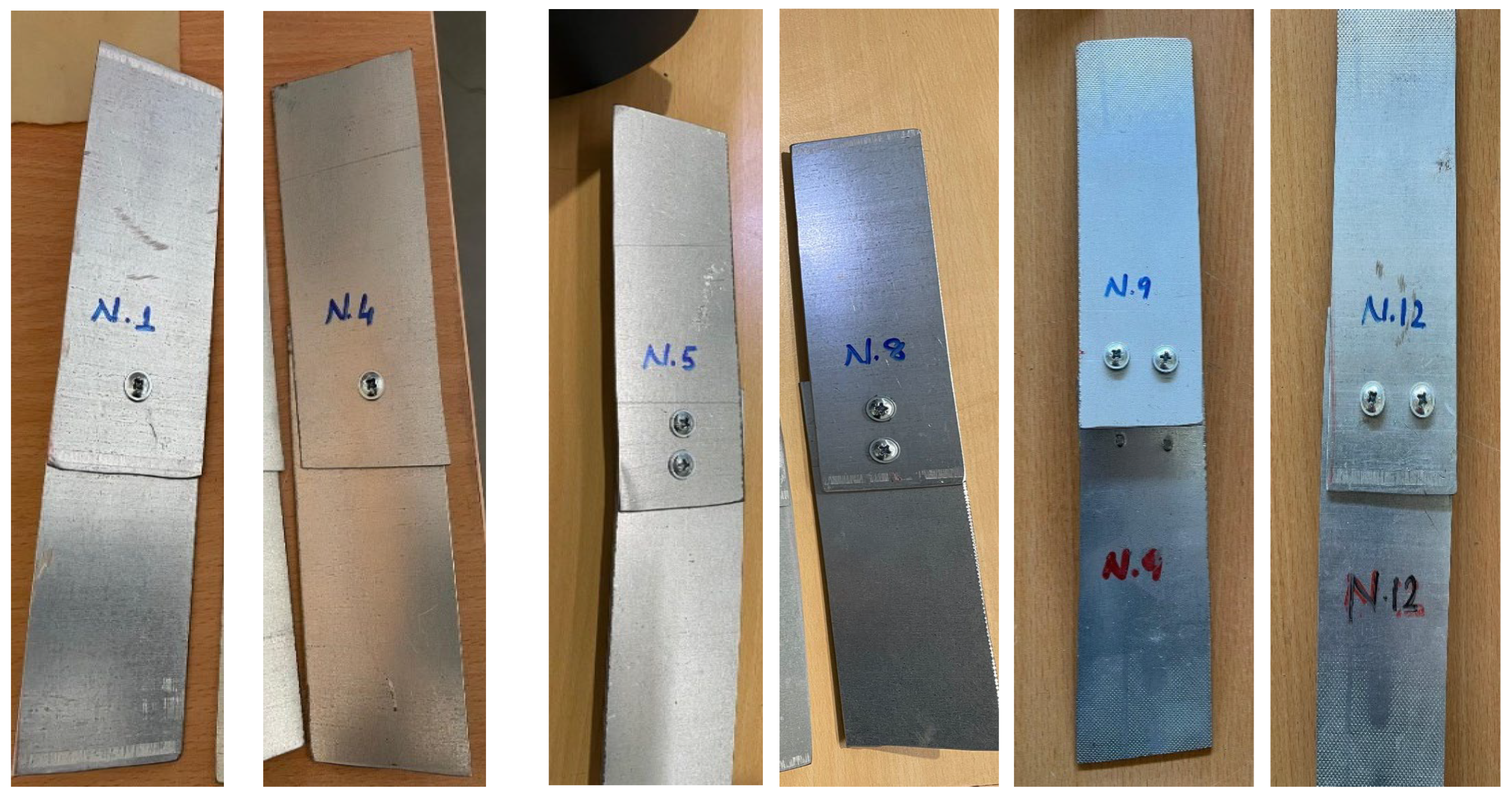
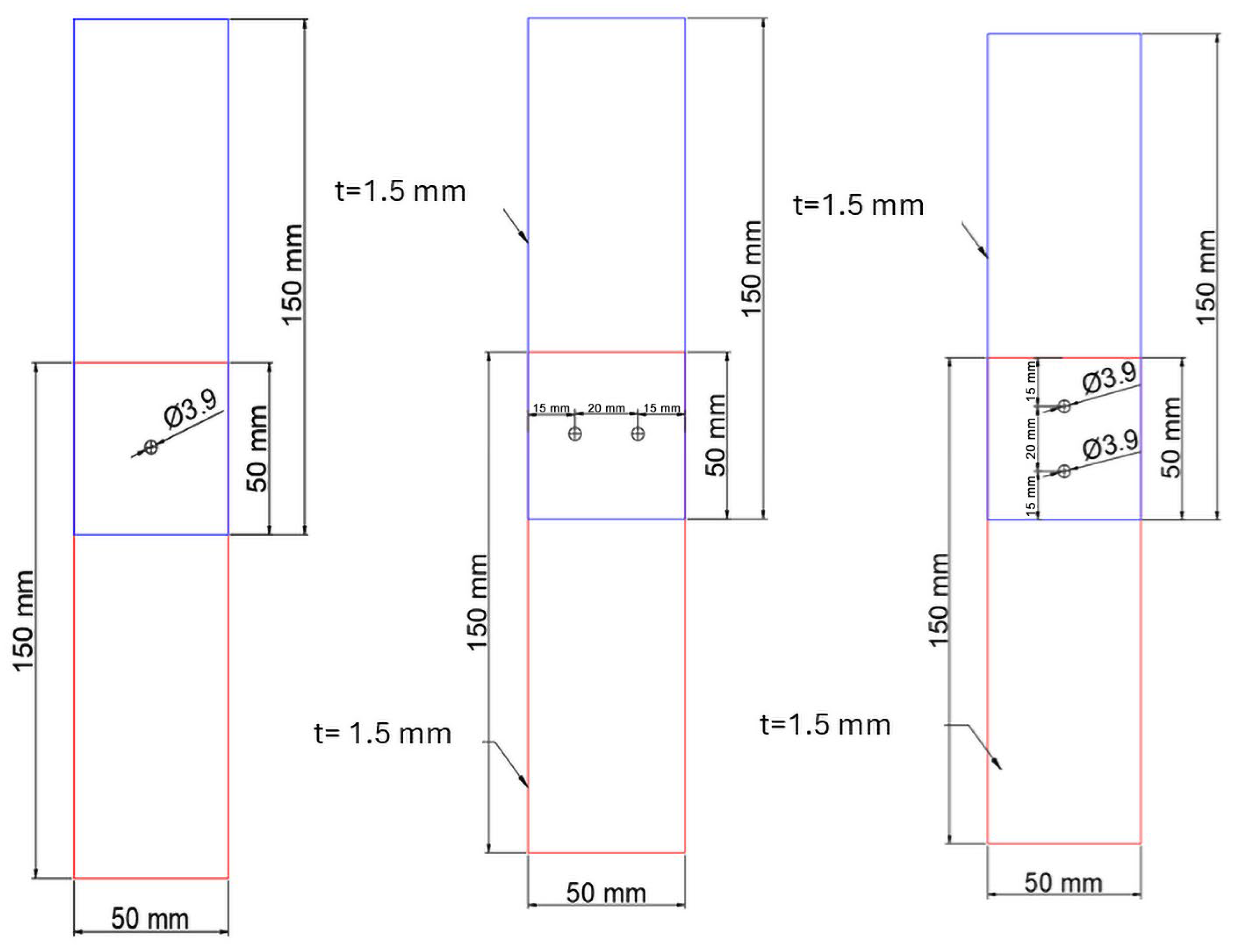
Studies highlight the need for further research into the interactive buckling mechanisms, specifically the interaction between local and global buckling modes and the degree of composite action developed in built-up cold-formed steel columns subjected to axial compression, as well as the influence of intermediate fastener spacing on their ultimate capacity. In this experimental study, six tensile test specimens were prepared by using galvanized steel plates made of 1.5 mm thick S355GD material and 3.9 mm diameter screws as shown in
Figure 12. The cross-sectional dimensions and screw placements of the samples are given in
Figure 13.
A total of six experimental specimens were prepared
Table 4. As illustrated in
Figure 14, specimens N1 and N4 were joined with a single screw; specimens N5 and N8 were joined with two screws along the
Y-axis; and specimens N9 and N12 were joined with two screws along the
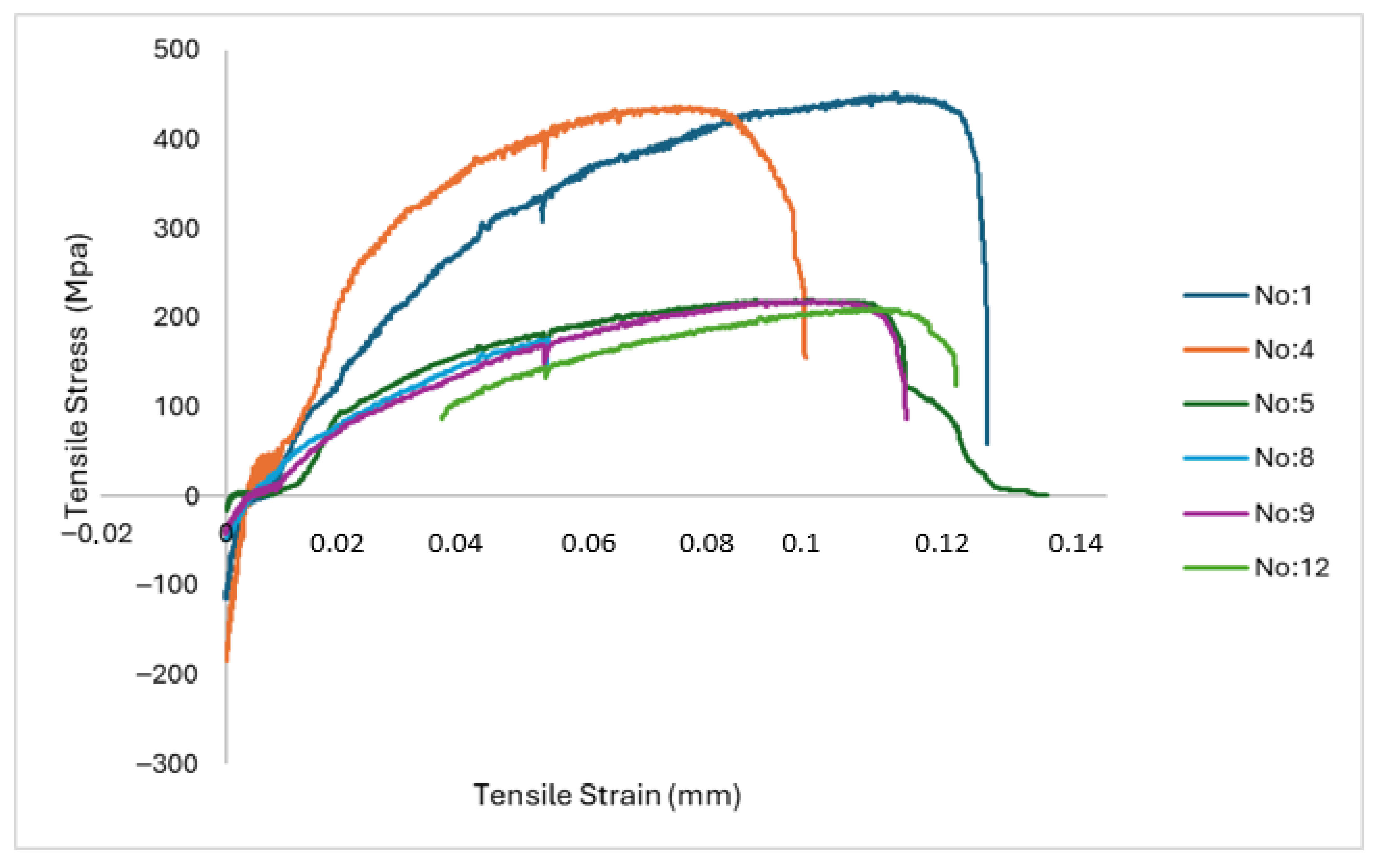
X-axis. Tensile tests were performed to investigate screw’s behavior under loading. The resulting stress–strain curve is shown in
Figure 14.
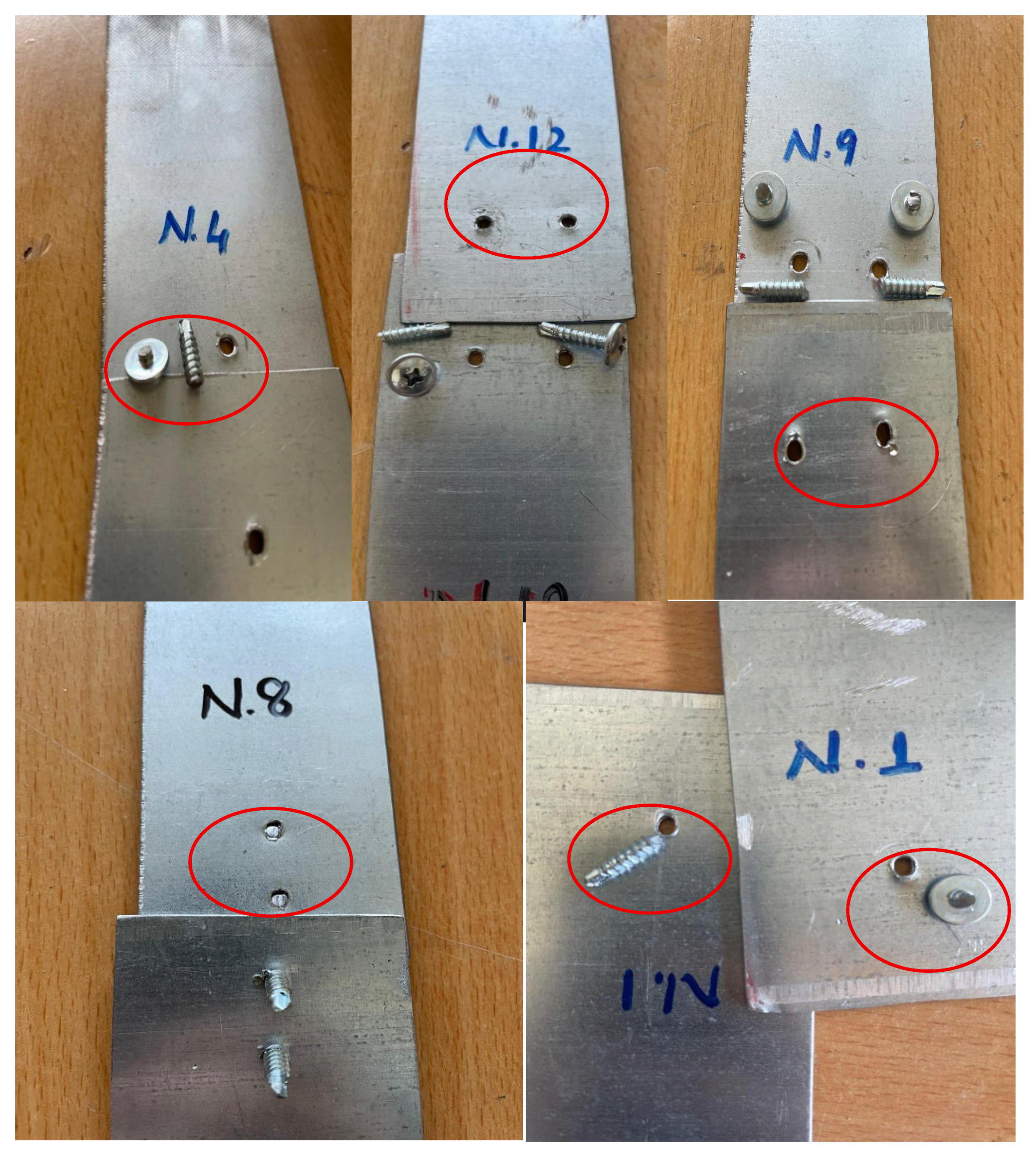
At the end of the experiment, no fractures were observed in the connection elements, but shear fractures were detected in the screws. Regarding fastener performance, while screw shear failure acts as a fundamental limit state in current design codes, the results of this study demonstrate that the actual shear demands developed in the screw bodies remain significantly lower than their ultimate capacities prior to column failure. This finding highlights the potential conservatism in the current code-prescribed fastener layouts (e.g., AISI S100) for built-up sections and indicates that adequate composite action can be maintained without the fasteners reaching their critical shear capacity, particularly when local buckling governs the failure mechanism.
Figure 15 also shows validation of the hole around the screw and traces of local plastic deformation on the plates. This indicates that, as the load increased, relative slip and bearing-induced local crushing first developed in the connection, followed by shear fracture in the screws and a sudden loss of capacity in the final stage, with an increase in shear forces. Therefore, the specimen’s failure mechanism exhibited mixed-mode behavior under tensile loading due to the interaction between bearing and screw shear. Specimens No. 1 and No. 4 reached load-carrying capacities of approximately 420–460 MPa, while peak stresses in specimens No. 5, No. 8, No. 9, and No. 12 remained in the 190–230 MPa range. Differences in the initial region of the curves indicate that the effects of bearing and slip in the connection are variable. Examining the post-peak behavior reveals that the sharp capacity drop observed in specimens No. 1 and No. 4 particularly indicates sudden ultimate failure consistent with screw shear. In lower-capacity specimens, however, flatter curves suggest that hole validation (bearing) and local plastic deformation play a decisive role.
2.4. Finite Element Analysis and Result
In the finite element analysis, the S9R5 shell element, a nine-node, quadratic, isoparametric finite element formulation available in ABAQUS V24 [
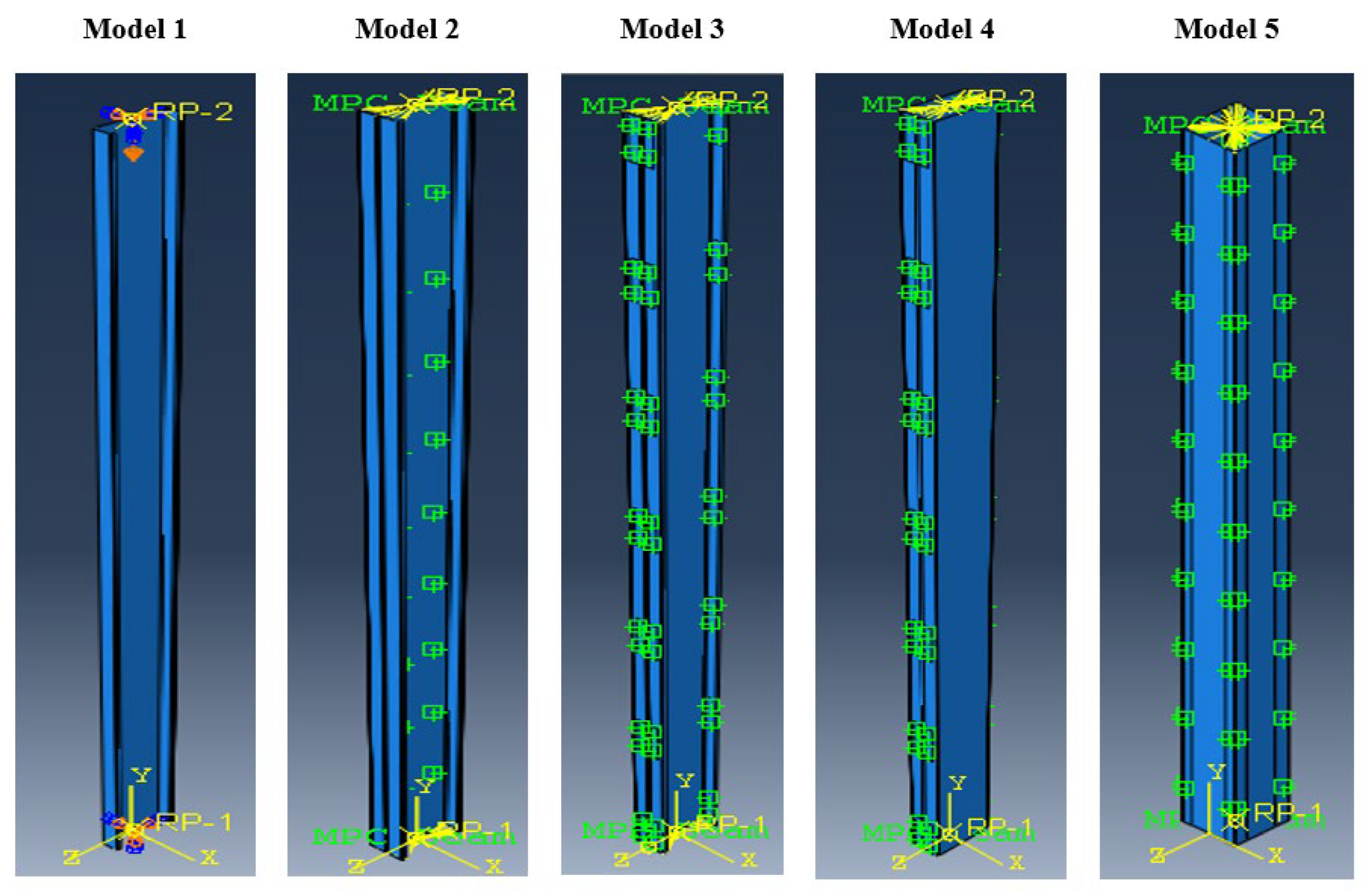
33], was used in the models. Reference points attached to the ends of the specimen were used to define the boundary conditions. The lower end was fully constrained with Ux = Uy = Uz = Urz = 0, while the upper end was constrained in U_x, U_y, and U_(z) directions and allowed axial displacement. As shown in
Figure 16, loading was applied via a reference point (RP) located at the center of gravity of the specimen, in accordance with the loading procedure adopted in the reference study [
11].
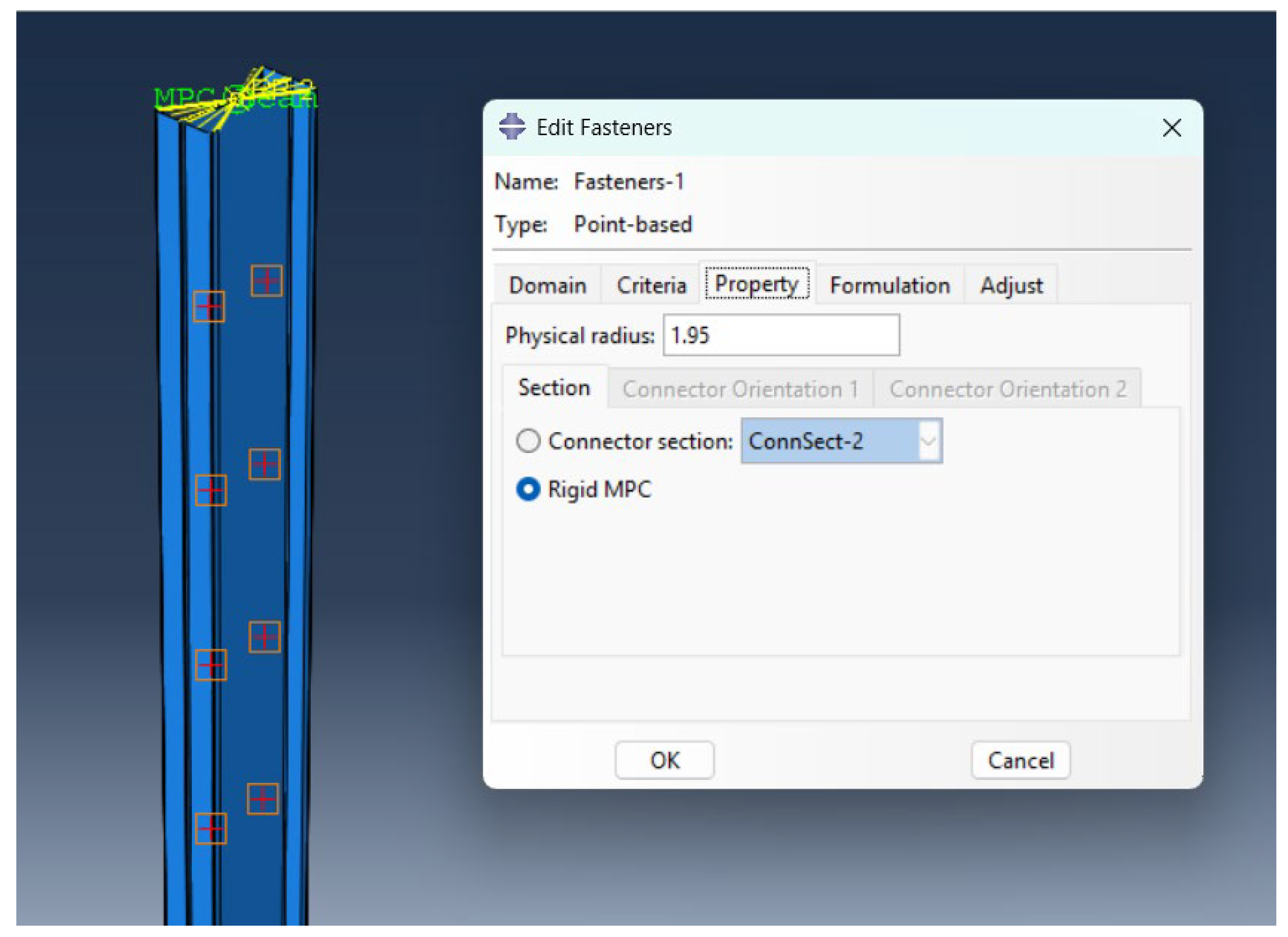
As shown in
Figure 17 of the models, elements connected using screws with a diameter of 3.9 mm are also defined in the finite element. The mechanical connections between the cold-formed steel members were modelled using point-based fasteners in ABAQUS. These fasteners were assigned a physical radius of 1.95 mm and were defined using a connector section. The rigid multi-point constraint (MPC) formulation was adopted to assume full rigidity at the connection points and prevent relative displacements between the connected surfaces. The same connection was used in all models shown in
Figure 16.
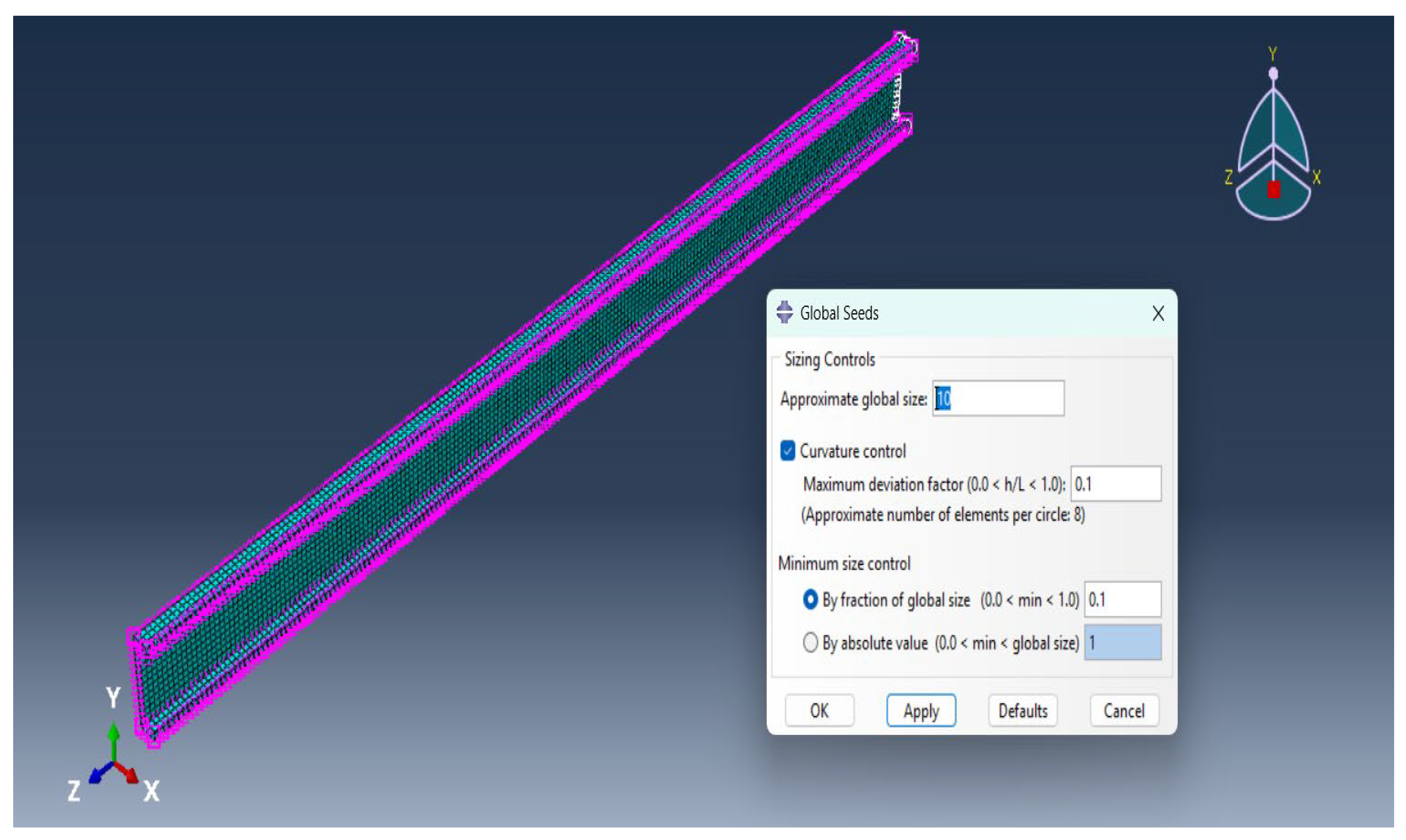
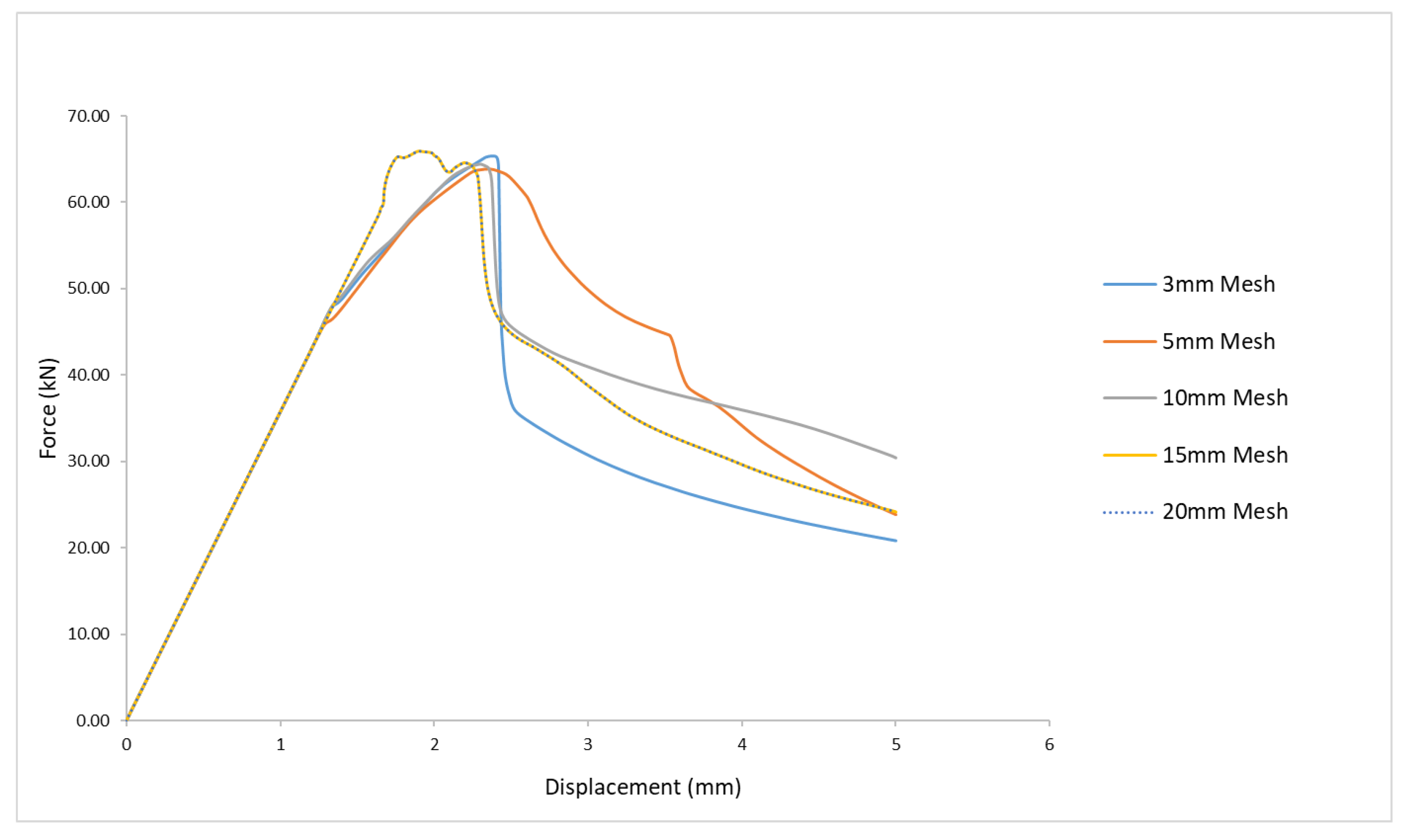
In this study, analyses were performed using different meshes via a finite element model to determine the appropriate mesh for cold-formed steel elements, as shown in
Figure 18. Five different mesh sizes (3 mm, 5 mm, 10 mm, 15 mm, and 20 mm) were used in ABAQUS to investigate the effect of mesh density on the predicted axial capacity and post-buckling response of the element. Specifically, S4R shell elements were used for all cross-sectional components, material nonlinearity was incorporated through a multilinear stress–strain relationship, geometric nonlinearity was accounted for using large displacement formulation, and initial geometric imperfections were introduced based on the lowest buckling mode shape.
Figure 19 shows the force-displacement responses obtained from finite element analyses of a 1m long cold-formed steel (CFS) C-section column subjected to axial compression. The results show that all models have almost the same initial stiffness. However, significant differences were obtained in terms of ultimate strength and post-peak softening behavior. The thinnest mesh models (3 mm and 5 mm) reach ultimate axial loads of approximately 63–65 kN and show a more abrupt drop in load-carrying capacity after the peak load. This sharp deterioration is attributed to more accurate representation of local buckling modes in shell and flange plates and precise capture of stress concentrations. Similar observations have been reported in previous numerical studies on thin-walled cold-formed steel elements; these studies have shown that small meshes are necessary to accurately predict local and deformational buckling behavior Schafer and Kwon [
21,
28,
29,
30,
31,
32,
33,
34,
35,
36,
37,
38,
39,
40,
41,
42,
43,
44,
45,
46,
47,
48].
Larger meshes (15 mm and 20 mm) lead to a slightly higher predicted displacement capacity and a more uniform post-peak response. This trend is primarily due to the coarse decomposition failing to adequately resolve local wavelengths. Similar overestimation of mesh-induced deformation capacity has also been reported by Ye [
47].
The 10 mm mesh model exhibits intermediate behavior and closely follows the responses of finer meshes, indicating that the solution begins to converge for element sizes equal to or smaller than 10 mm. This finding is consistent with common recommendations in the literature suggesting that element sizes should not exceed one to two times the plate thickness for reliable simulation of local buckling in thin-walled steel elements, as stated by Schafer [
21].
Cold-formed steel elements are known to be highly susceptible to initial geometric defects due to their thin-walled structures and high width-to-thickness ratios. Manufacturing processes such as cold rolling, punching, and forming inevitably generate local plate fluctuation, residual stresses, and slight spherical curvature, all of which significantly affect buckling and post-buckling behavior. Therefore, the inclusion of initial defects in finite element models is crucial for obtaining realistic predictions of structural performance.
To incorporate defects into the finite element model, the local and distortion buckling magnitudes were determined according to the cumulative distribution function (CDF) values of the defects proposed by Schafer and Peköz [
35]. For this purpose, a CDF value of 50% was selected, yielding local and distortion defect magnitudes of 0.34 t and 0.94 t, respectively (where t is the wall thickness). Recent studies on the general buckling behavior of steel pipe elements [
49,
50,
51] have emphasized the critical impact of initial geometric defects on structural stability and their accurate inclusion in finite element models, further validating the defect modeling strategy adopted in the present study.
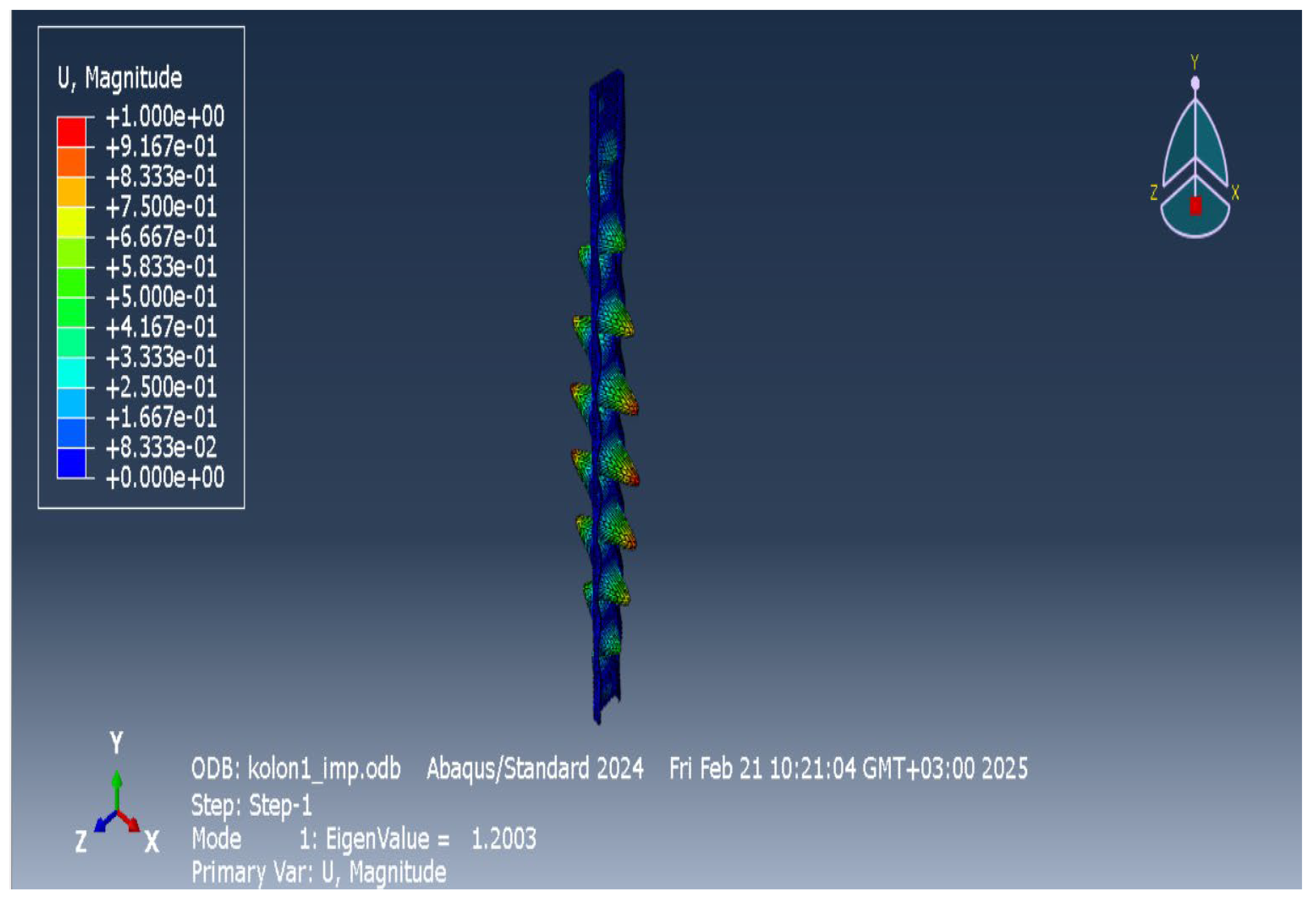
Figure 20 shows the first buckling mode obtained from the linear buckling analysis (i.e., eigenvalue analysis) performed in ABAQUS. This analysis presents the shape of the deformation based on the magnitude of the displacement (U) of the element. The calculated eigenvalue for the first mode is 1.2003, representing the factor at which the element reaches buckling instability under the applied reference load.
Examining the buckling mode shape reveals that deformations develop periodically and locally along the element. The displacements concentrated in the body and edge regions particularly indicate that the local buckling modes of the element are dominant. This is consistent with the local-global interactive buckling behavior commonly observed in thin-walled, cold-formed steel elements.
3. Discussion
The deformations and buckling conditions observed in the built-up columns from the experimental and finite element analyses are given in
Figure 21,
Figure 22,
Figure 23,
Figure 24,
Figure 25,
Figure 26,
Figure 27,
Figure 28,
Figure 29,
Figure 30 and
Figure 31. Similar buckling conditions were obtained in both results. This shows that the experimental study and finite element analysis yielded consistent results. The observed deformation results are similar to those previously reported in both experimental and numerical studies [
1,
2,
21]. The results showed good agreement between numerical predictions and experimental observations, providing information about the buckling behavior and ultimate capacity of cold-formed steel columns [
52].
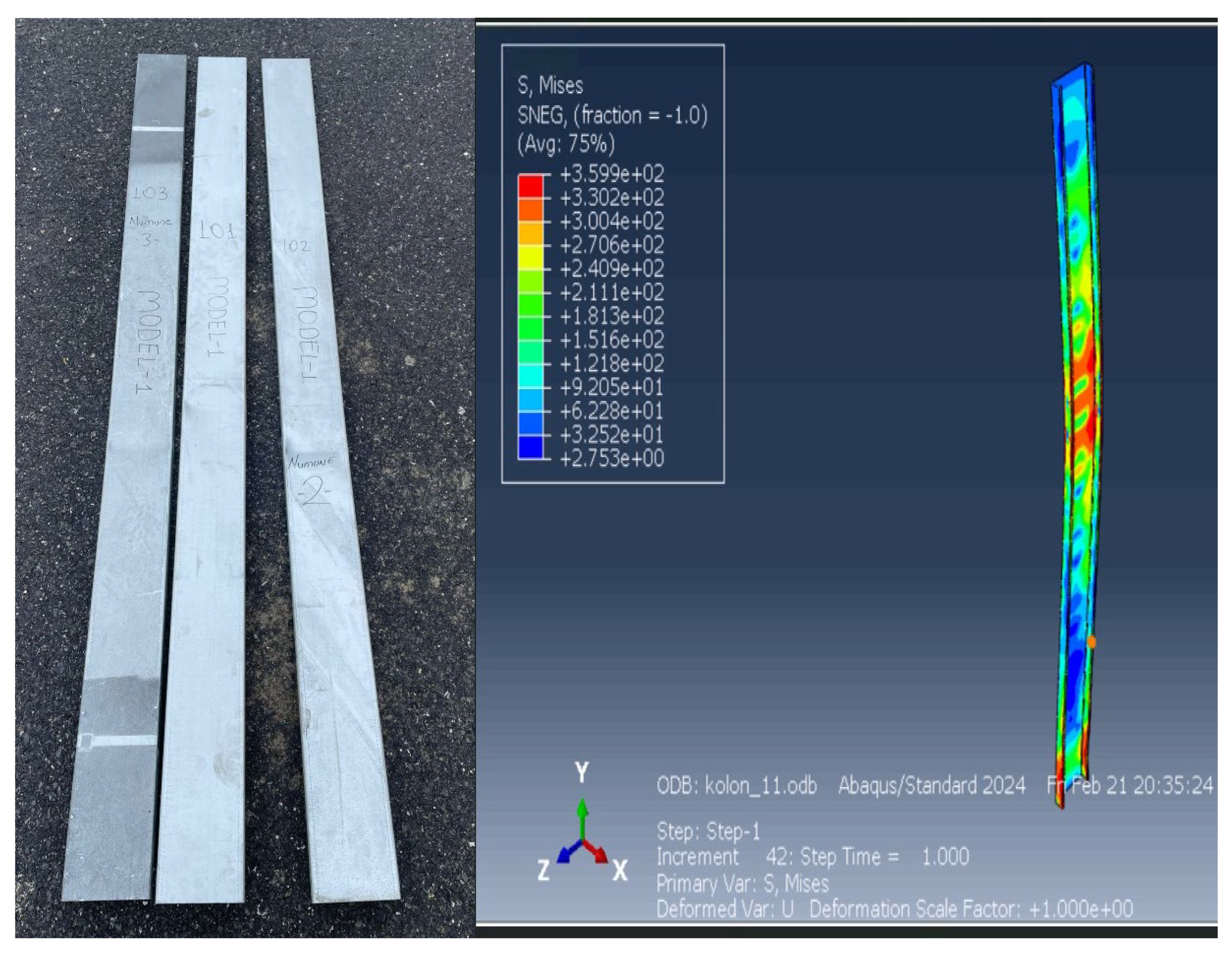
Figure 21 shows the stress distribution in a single C140 × 35 × 10 (t = 1.5 mm) cold-formed steel column under axial compression, as determined using the Abaqus program. The results reveal that the stresses are not uniform throughout the element, being concentrated especially in the mid-span and support regions. According to the numerical analysis, the maximum von Mises stress is approximately 360 MPa. When compared with the yield strength of the steel used (fy = 350 MPa), this indicates the onset of local yielding/plasticization in the critical regions of the element.
Due to the open and asymmetric geometry of the cross-section of the single C-profile, it was observed that the bending effects under axial load are more pronounced, with the stress distribution being locally concentrated in the web and flange regions.
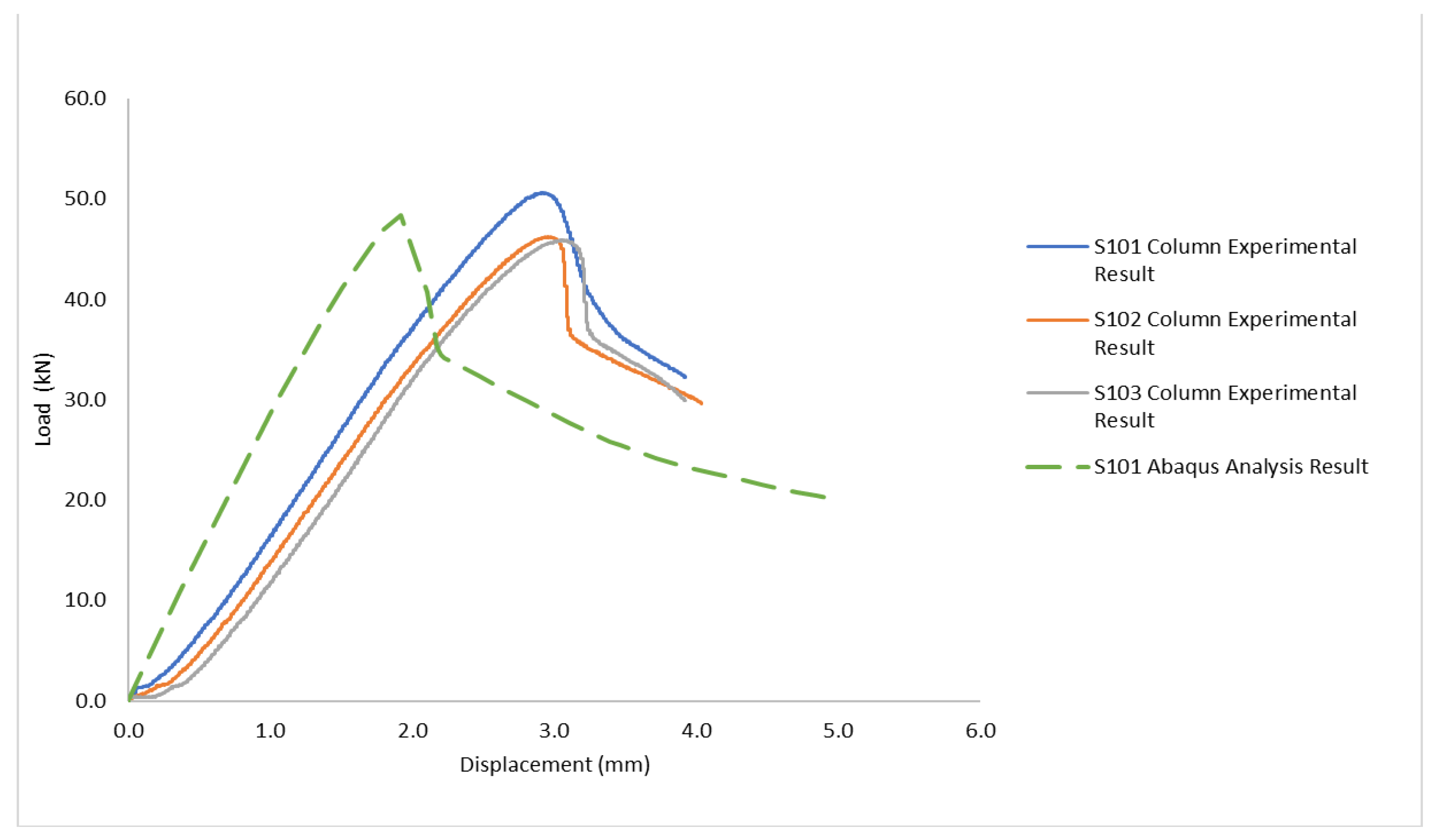
According to the results shown in
Figure 22, axial compression tests were performed on a series of cold-formed steel column specimens (designated S101, S102, and S103), yielding maximum load capacities of 50.62 kN, 46.24 kN, and 45.90 kN, respectively. For specimen S101, the nonlinear finite element model developed at Abaqus predicted a maximum load capacity of 48.43 kN. The maximum load of the S101 sample obtained through experimentation differs by approximately 4.3% from the numerical result, indicating a close agreement between the two methods. Compared to S101, the ultimate capacities of specimens S102 and S103 were approximately 8.7% and 9.3% lower than the analysis results, respectively. These differences highlight the susceptibility of cold-formed steel columns to geometric defects, manufacturing tolerances, and potential variations in local buckling initiation.
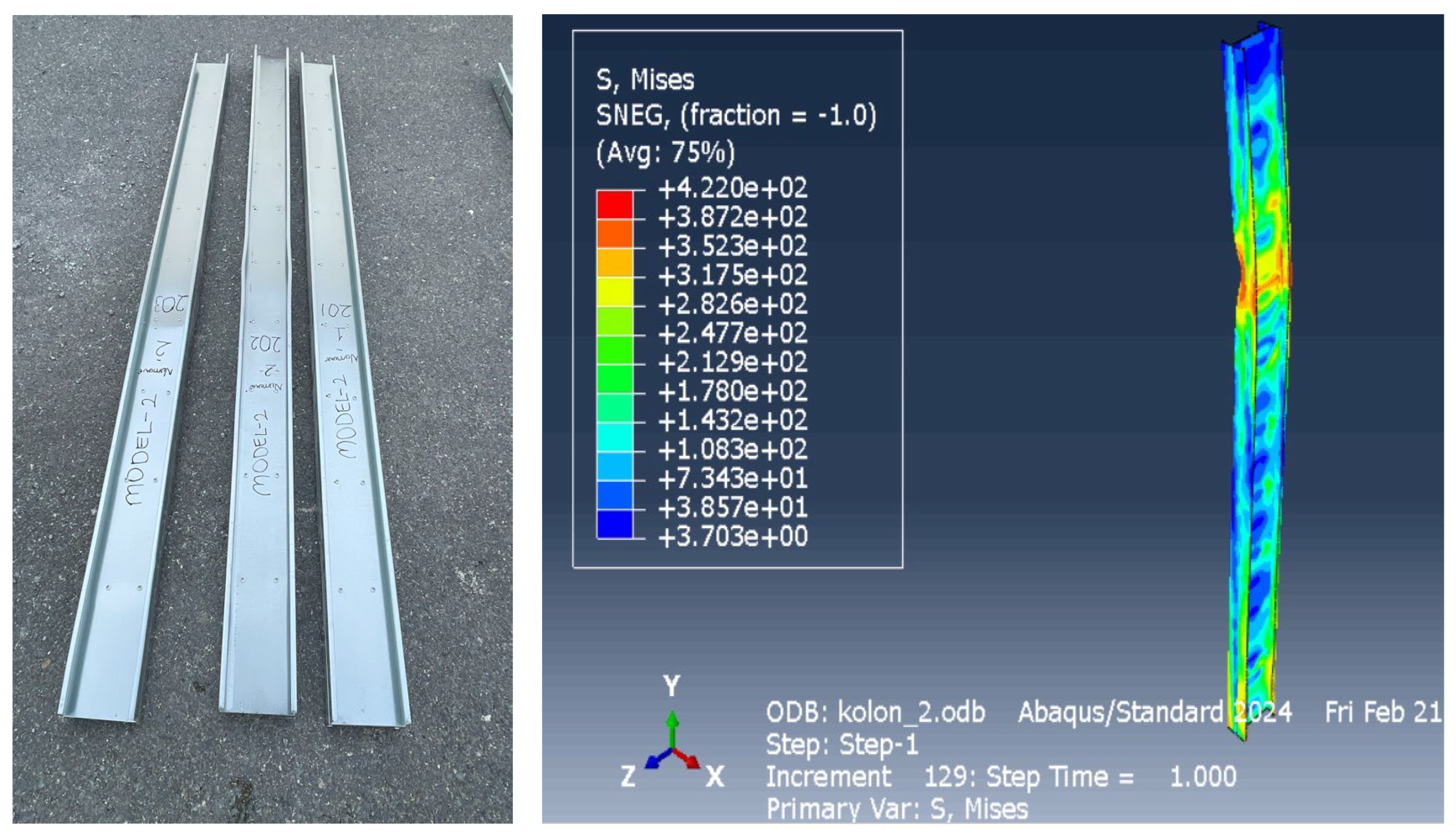
Figure 23 shows the stress distribution in a built-up column under axial compression for Model 2, formed by joining two C140 × 35 × 10 profiles back-to-back at 200 mm intervals using only screws, without plates. The analysis results show significant stress distribution in the mid-span region and around the contact/joint line of the two profiles. The maximum von Mises stress is approximately 420 MPa. When compared with the yield strength of the steel used (fy = 350 MPa), this indicates the onset of local plasticity in critical regions. Consequently, intense stress distribution is seen in the web and cap regions of the element, and local buckling occurs in the lips.
According to the results shown in
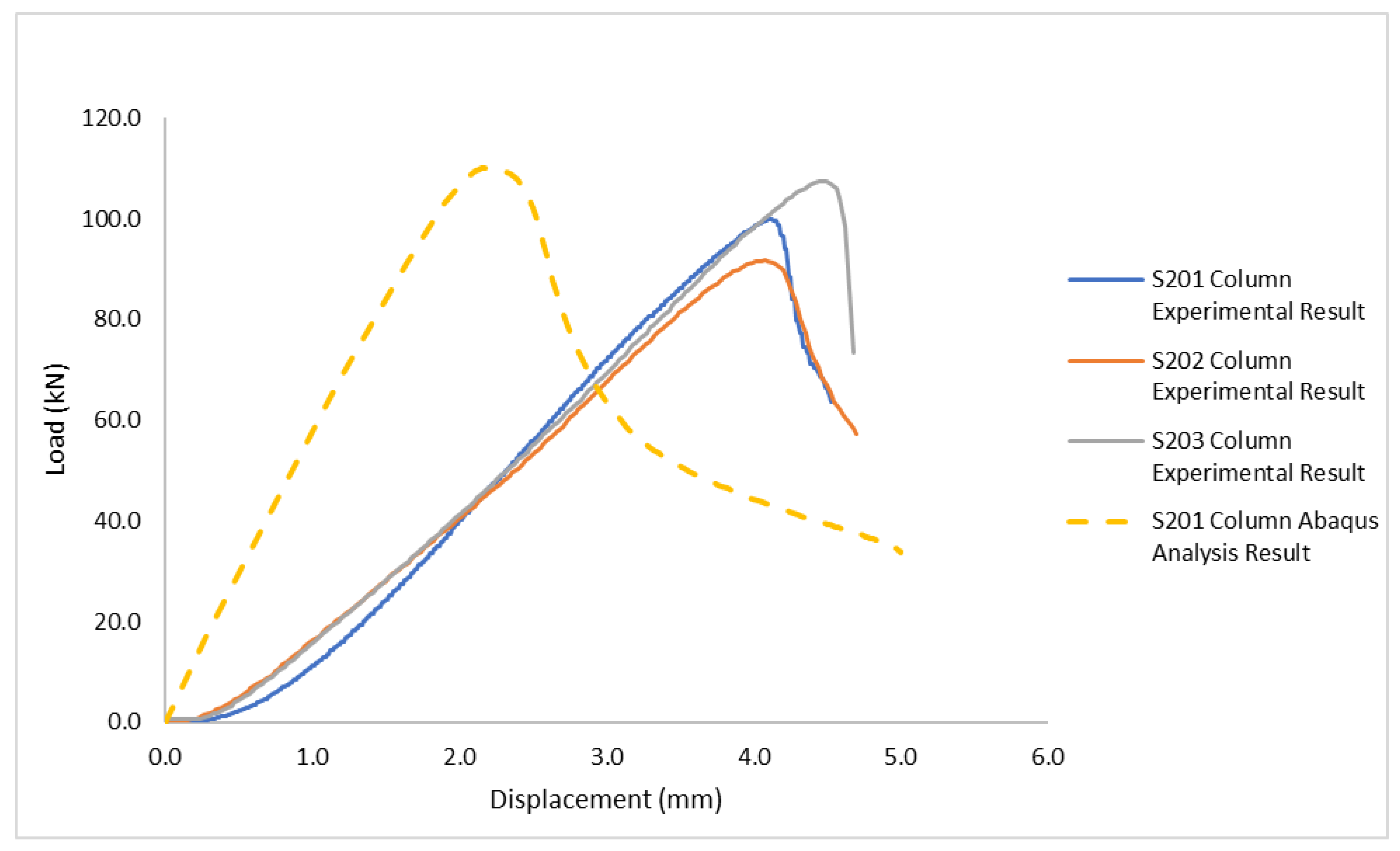
Figure 24, axial compression tests performed on cold-formed steel column specimens S201, S202, and S203 yielded maximum load capacities of 99.9 kN, 91.7 kN, and 107.48 kN, respectively. For specimen S201, the nonlinear finite element model developed at Abaqus predicted a maximum load capacity of 110 kN. The numerical prediction for S201 is approximately 10.1% higher than the experimental result. Despite this deviation, the overall agreement between experimental and numerical results remains within an acceptable range for nonlinear buckling analyses of cold-formed steel columns. Among the tested specimens, S203 showed the highest axial capacity (107.48 kN), while S202 showed the lowest capacity (91.7 kN), corresponding to a difference of approximately 17% between the minimum and maximum experimental values.
The numerical analysis results for Model 3 are given in
Figure 25. Analysis of the model shows that the stress distribution under axial compression in the built-up element formed by joining two C140 × 35 × 10 (t = 1.5 mm) cold-formed steel profiles face-to-face indicates that the applied load is not distributed homogeneously throughout the element. Significant stress concentrations particularly occur in regions where intermediate connection plates (100 × 50 mm, t = 2 mm) are located, as well as around the central span, as can be seen in
Figure 3.
According to the contour scale, the maximum von Mises stress is approximately 431 MPa. When this value is compared with the yield strength of the steel used (fy = 350 MPa), it can be concluded that local yielding and plastic deformation occurred in critical regions. Therefore, the behavior of the element under axial load is due not only to global buckling, but also to local stability losses and plastic deformation around the connection plates.
According to the results shown in
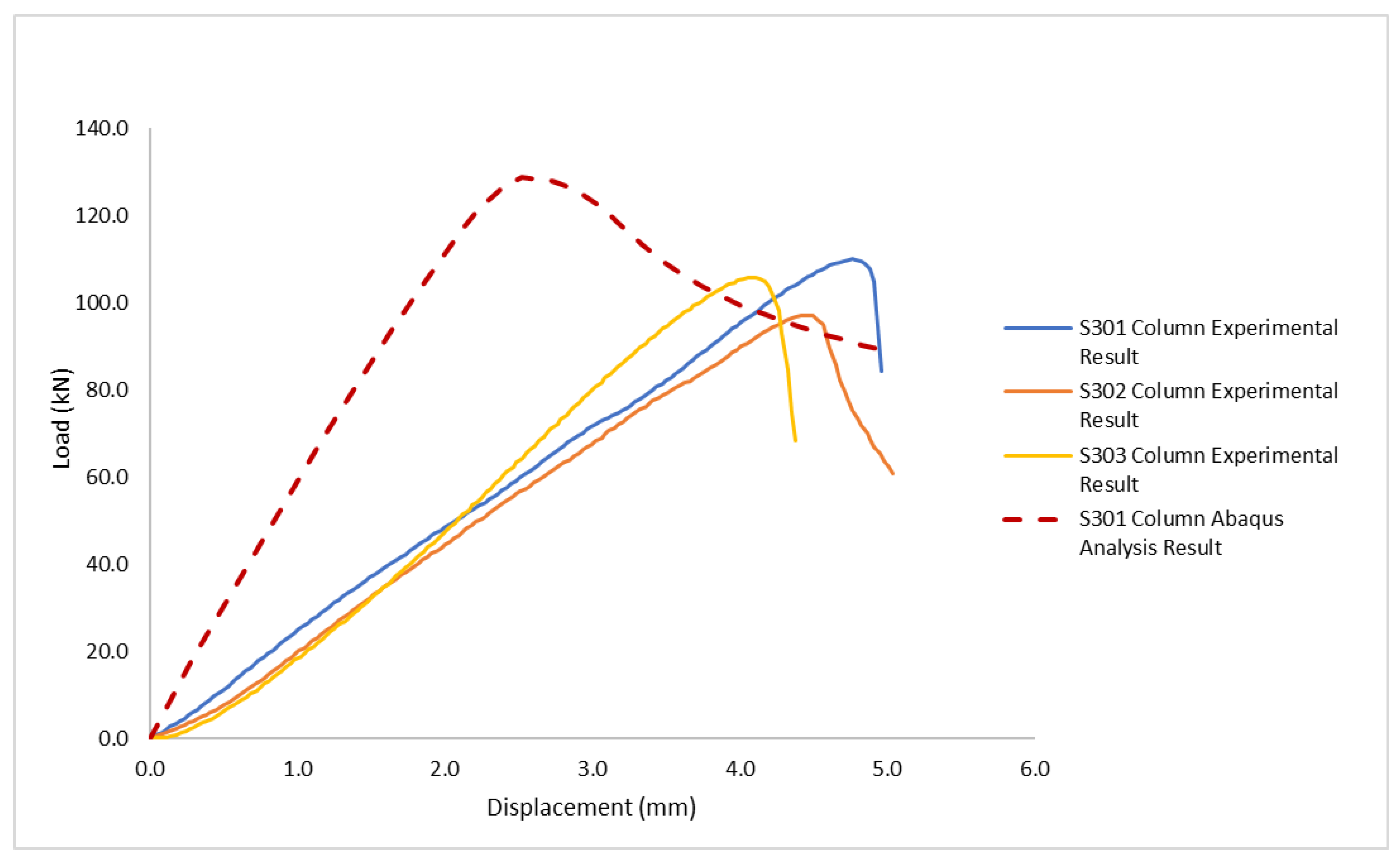
Figure 26, axial compression tests performed on cold-formed steel column specimens S301, S302, and S303 yielded maximum load-carrying capacities of 113.13 kN, 100.28 kN, and 106.59 kN, respectively. For specimen S301, the nonlinear finite element model predicted a maximum load-carrying capacity of 128.2 kN. The numerical prediction for S301 is approximately 13.3% higher than the corresponding experimental value. This difference is mainly attributed to idealized modeling assumptions, including simplified boundary conditions, homogeneous material properties, and the geometric defect pattern adopted in the finite element model. Among the experimental specimens, S301 showed the highest axial capacity, while S302 showed the lowest value, corresponding to a decrease of approximately 11.4% compared to specimen S301.
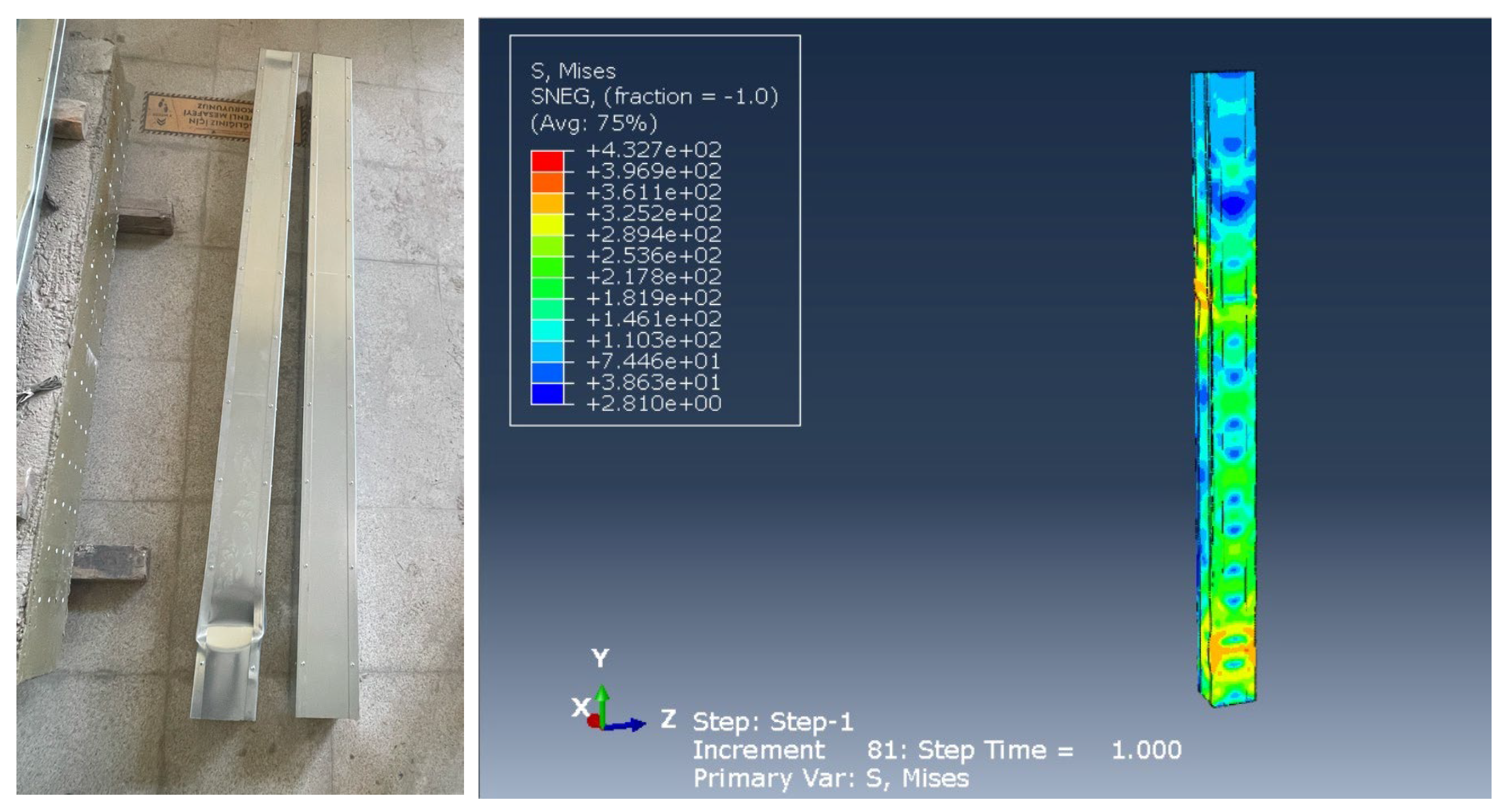
The experimental and analysis results for Model 4 are shown in
Figure 27. The analysis of the model shows the stress distribution under axial compression in a built-up column formed by joining profiles in a back-to-back configuration. While the stress distribution is more balanced along the element than with a single C-profile, significant stress concentrations develop in the mid-span region and around the connection line between the two profiles. The maximum von Mises stress is approximately 380 MPa. Compared to the yield strength of the steel used (fy = 350 MPa), this indicates the onset of local yielding/plasticization in critical regions. Local stress distributions occur in the back-to-back built-up column because load transfer under axial load takes place through the connection line and the thin-walled web regions. Therefore, while the behavior of the back-to-back built-up column is improved compared to a single C-profile, it produces more critical results in terms of local stability than the box configuration.
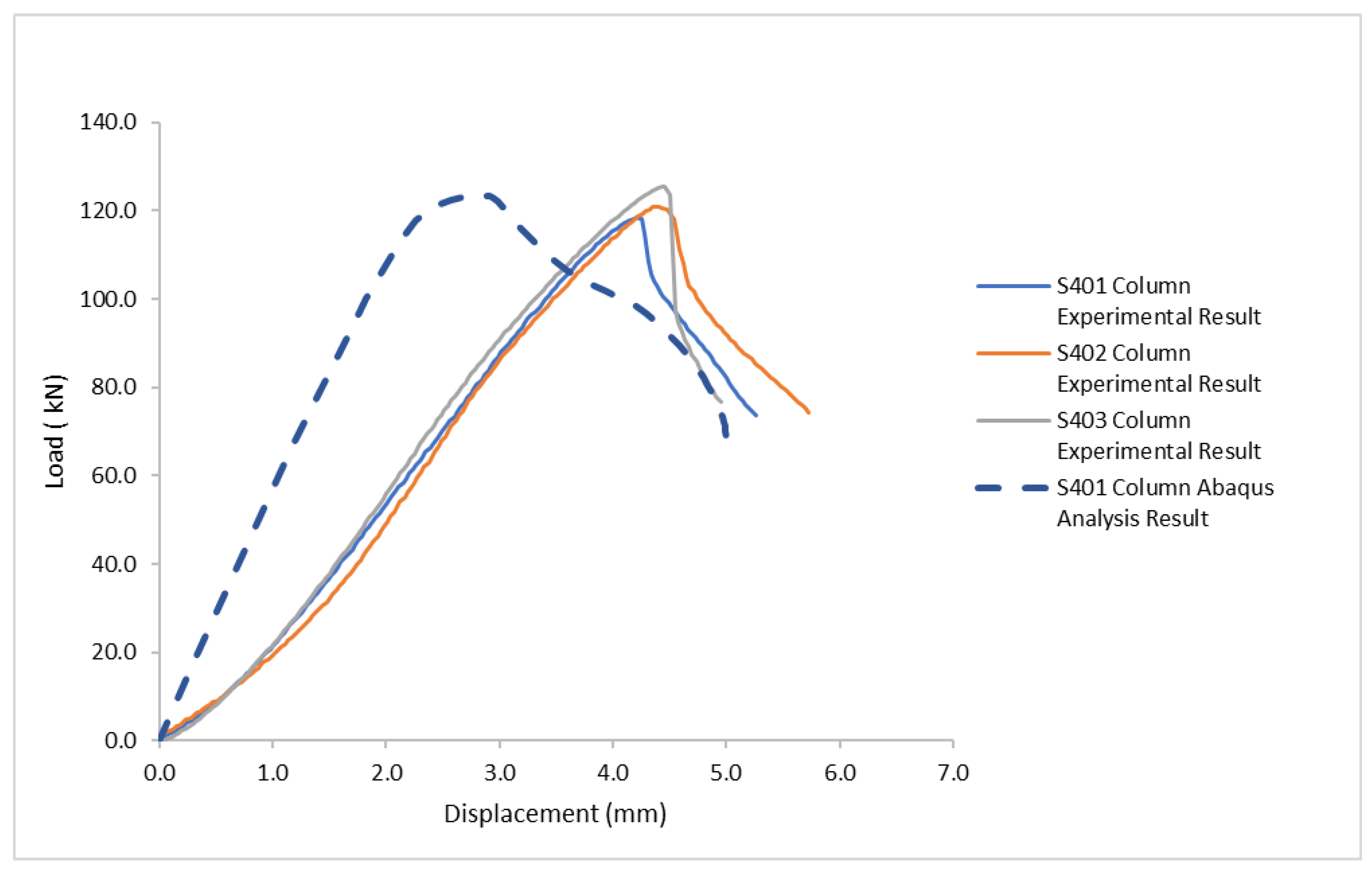
According to the experimental results shown in
Figure 28, axial compression tests performed on cold-formed steel column specimens S401, S402, and S403 yielded maximum load capacities of 119 kN, 121.5 kN, and 127.6 kN, respectively. For specimen S401, the nonlinear finite element model yielded a maximum load capacity of 123.55 kN. The numerical prediction for S401 is approximately 3.8% higher than the corresponding experimental result, indicating a very good agreement between the finite element model and the test data. This close correlation confirms the ability of the developed numerical model to accurately capture the axial compression behavior of cold-formed steel columns. Among the tested specimens, S403 gave the highest axial capacity, while S401 yielded the lowest. The difference between the minimum and maximum experimental values is approximately 7.2%.
The numerical analysis results for Model 5 are given in
Figure 29. The FE model shows the stress distribution for a box-section built-up column, formed by combining two U144 × 24 × 1.5 profiles and two C140 × 35 × 10 profiles (t = 1.5 mm), subjected to axial compression. While the analysis results reveal a more balanced stress distribution throughout the element, significant stress concentrations occur, particularly in the mid-span region and around the profile joint corners. The maximum von Mises stress is approximately 433 MPa. When compared with the yield strength of the steel used (fy = 350 MPa), this indicates the onset of local plasticity in critical regions. While the box-shaped built-up configuration offers increased torsional rigidity and global stability compared to other sections, it was observed that stresses under axial load concentrate at the corner joints and on the thin-walled surfaces. This suggests that load-carrying capacity is affected by local buckling rather than global buckling. Therefore, the axial compressive behavior of box-section built-up elements is limited by local stability losses and the thin-walled element-characteristic plasticization mechanisms, despite the increased section rigidity.
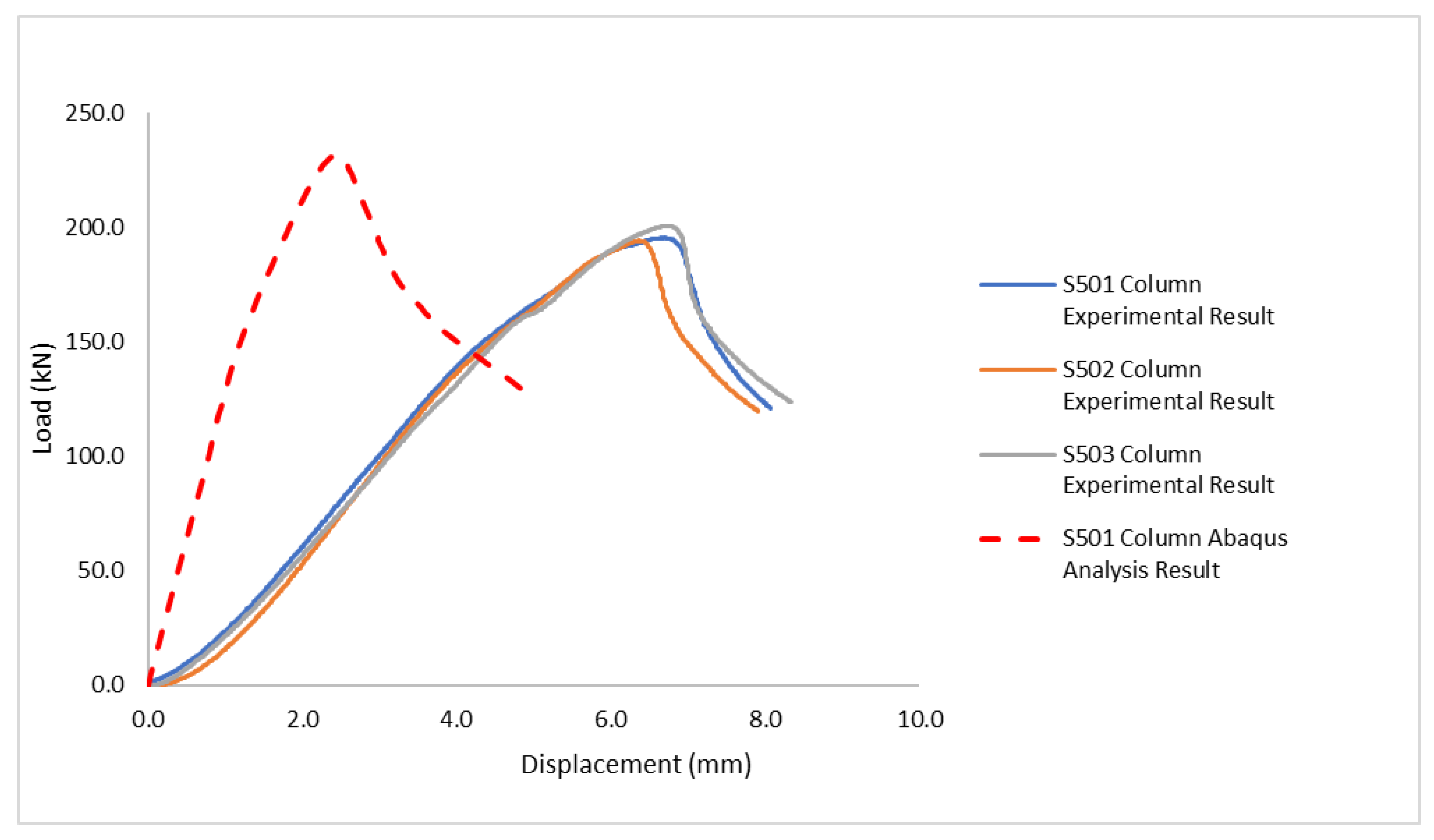
According to the experimental and numerical analysis results shown in
Figure 30, the axial compression tests performed on cold-formed steel column test specimens S501, S502, and S503 resulted in maximum load capacities of 195.5 kN, 194.18 kN, and 200.63 kN, respectively. For specimen S501, the nonlinear finite element model gave the maximum load capacity of 231.48 kN. The numerical prediction for S501 is approximately 18.4% higher than the corresponding experimental value. According to the results, the performance of box-shaped built-up columns was higher than that of Model 1, Model 2, Model 3, and Model 4, and the buckling conditions observed in the models during the experiments were also different.
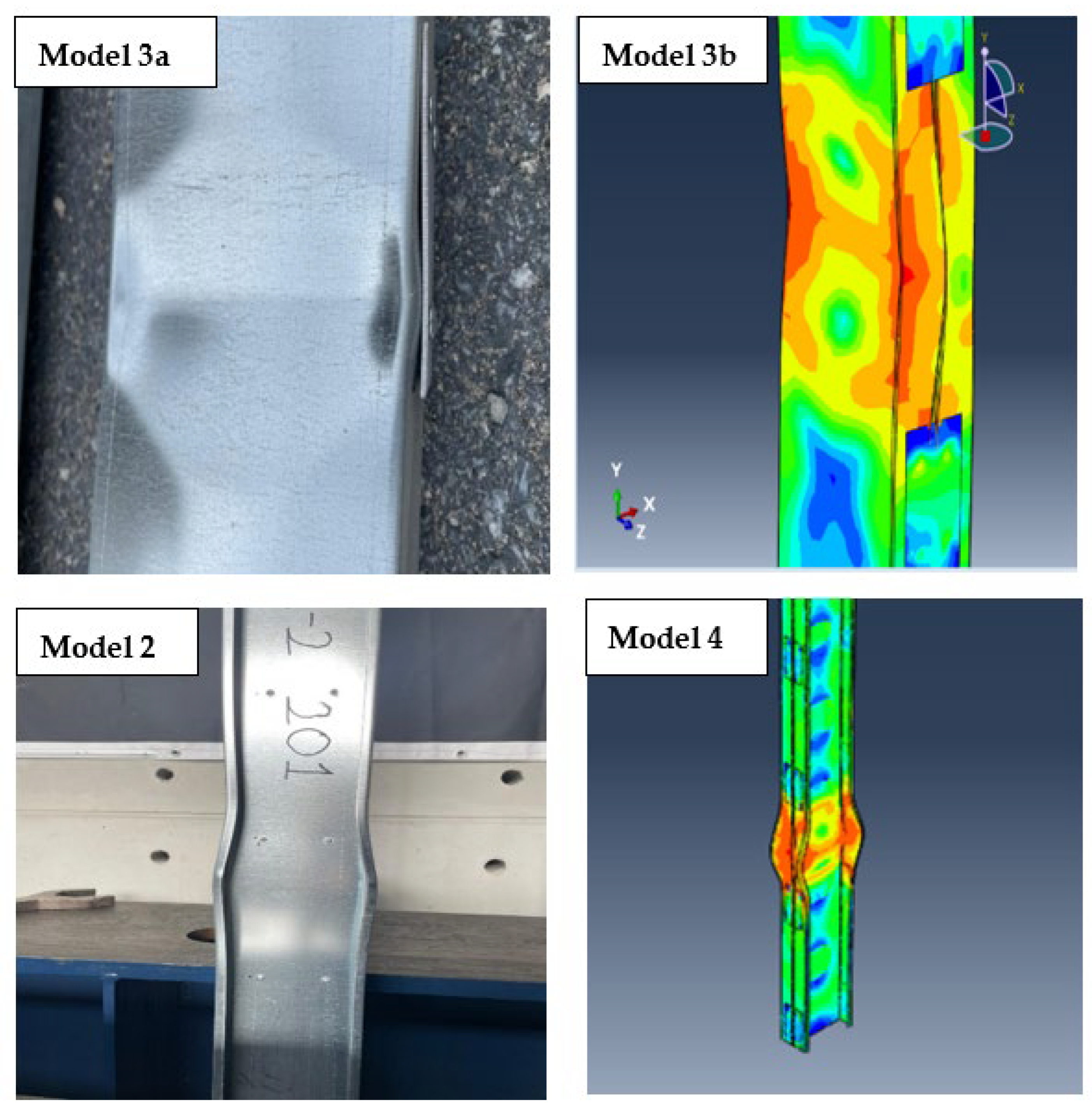
Specifically, as shown in
Figure 31, the buckling behavior of Model 3 and Model 4 specimens constructed using plates differs from that of Model 2 constructed without plates. Both in experimental and numerical studies, this difference is attributed to the use of plates and, additionally, the back-to-back and face-to-face connections of the C-profile, which affect the shape and type of buckling. In Model 3a and Model 3b, it is observed that buckling occurs in the body with the contribution of the plate in a face-to-face connection. In Model 2 and Model 4, however, it is observed that buckling occurs in the flanges, not the body, with a back-to-back connection.