1. Introduction
Reinforced Concrete (RC) buildings designed for gravity loads only or according to obsolete seismic codes constitute a large portion of the existing building stock in Mediterranean countries. Post-earthquake reconnaissance and experimental investigations have consistently highlighted the vulnerability of beam–column joint regions in such non-ductile RC frames, mainly due to poor detailing. The absence of transverse reinforcement in the joint core and deficiencies in the anchorage of beam longitudinal bars are among the most critical weaknesses that affect both local joint behavior and the global seismic response of RC frames [
1,
2,
3,
4,
5]. Since joint shear strains and fixed-end rotations caused by bond slip can significantly contribute to storey drift in the inelastic range, the modeling of joint flexibility has become a key issue in seismic assessment.
1.1. Background
During the last four decades, numerous experimental campaigns have investigated the cyclic behavior of RC joints. Exterior unreinforced connections attracted particular interest due to their higher seismic vulnerability compared to interior joints [
6,
7,
8,
9]. Most of the existing studies from the literature focused on unreinforced RC joints, by investigating the role of the main geometrical and mechanical parameters on the seismic performance of these vulnerable elements (e.g., [
10,
11,
12,
13]). They both focused on the joint shear strength assessment only (e.g., [
14,
15]), or on the whole nonlinear response of the beam-column sub-assembly to provide experimental data useful for numerically reproducing the seismic response of joints within RC frames (e.g., [
12,
13,
16]). In this context, a significant contribution has been provided by [
17,
18,
19,
20,
21,
22,
23,
24], who conducted extensive full-scale experimental studies on exterior RC joints, exploring both the seismic response of unreinforced joints and the effectiveness of innovative strengthening schemes, such as externally applied FRP ropes or sheets or pre-stressed stainless steel strips.
It is nevertheless worth noting that the amount of experimental data related to full-scale joint specimens is only a portion of the overall available experimental data in the literature, quite often realized in a reduced scale to contain costs and testing efforts.
On the other hand, several modeling approaches have been proposed in the literature, ranging from lumped plasticity formulations and multi-spring macro-models to detailed finite element simulations [
25,
26,
27,
28,
29,
30]. Some of them rely on a significant number of rigid bars, interior constraints, and rotational, axial, or translational springs, which aim at reliably representing the deformability contribution due to shear response of the joint panel, fixed-end rotation, flexural, and shear behavior of the adjacent members (e.g., [
25]). Additionally, past studies (e.g., [
31,
32]) highlight the importance of explicitly modeling bond-slip mechanisms even with refined modeling approaches to capture pinching effects and cyclic degradation in RC connections.
However, some of the existing models can result in accurate but computationally inefficient results. Thus, there is still no consensus on a widely accepted modeling framework for the nonlinear behavior of joints, especially when a significant amount of nonlinear analyses should be performed, as for the extensive assessment of existing building stocks in large-scale studies. Many of the existing models are either too simplified to capture the main mechanisms or computationally too expensive for large-scale parametric analyses. Simplified spring-based models, when calibrated and validated against reliable experimental data, have recently gained attention as they offer a practical balance between accuracy and efficiency [
32,
33,
34]. Within this context, the modeling approach proposed by De Risi et al. [
16] has provided significant insights into the nonlinear behavior of RC joints, emphasizing both the role of joint shear deformations and a reliable but computationally efficient model to reproduce their behavior also in extensive seismic analyses. After an empirical calibration phase, this model was then validated [
16] against some experimental data on deficient joints from the literature (e.g., [
10,
11]). Nevertheless, due to its empirical derivation, a further validation of such a model is certainly still necessary, especially considering full-scale (so, more realistic) specimens, like those described in the current manuscript, to enlarge its experimental basis and confirm its applicability to lightly reinforced beam-column RC joints.
1.2. Research Contribution and Novelty
Within this framework, the analysis of the seismic behavior of low-standard beam-column joints is certainly very important and still nowadays deserves further investigations, both in terms of (i) experimentally based analyses on full-scale specimens and (ii) numerical modeling of their contribution within a whole RC building model, aiming at a reliable but computationally efficient modeling approach.
The present study contributes to these main goals by combining full-scale experimental results where single input parameters are changed and analyzed in a systematic way, with computationally efficient numerical simulations. In particular, the main central research question of this study is whether and how much variations in joint and member reinforcement detailing govern the activation of shear-dominated versus flexure-dominated mechanisms in non-ductile exterior joints, and whether/how these mechanisms can be captured by a computationally efficient macro model suitable for large-scale seismic assessment.
The focus is placed on exterior beam-column joints representative of low-standard RC buildings, typically designed for gravity loads only or according to obsolete seismic codes. Such joint configurations are commonly found in Mediterranean countries and are characterized by the absence of transverse reinforcement in the joint core, inadequate anchorage of beam longitudinal reinforcement, and limited confinement, leading to increased seismic vulnerability. As a matter of fact, in a number of (even very seismic-prone) Mediterranean countries, the specific design of beam-column joints was not mandatory in past decades. This is, for example, the case of Italy, where stirrups in the joint core have been prescribed only after 1997 (D.M. 1997) [
35]. Similarly, in Greece, an explicit seismic design provision for RC beam–column joints became mandatory with the introduction of the Greek Seismic Code EAK 1995, while earlier constructions were typically designed without specific joint shear checks or transverse joint reinforcement.
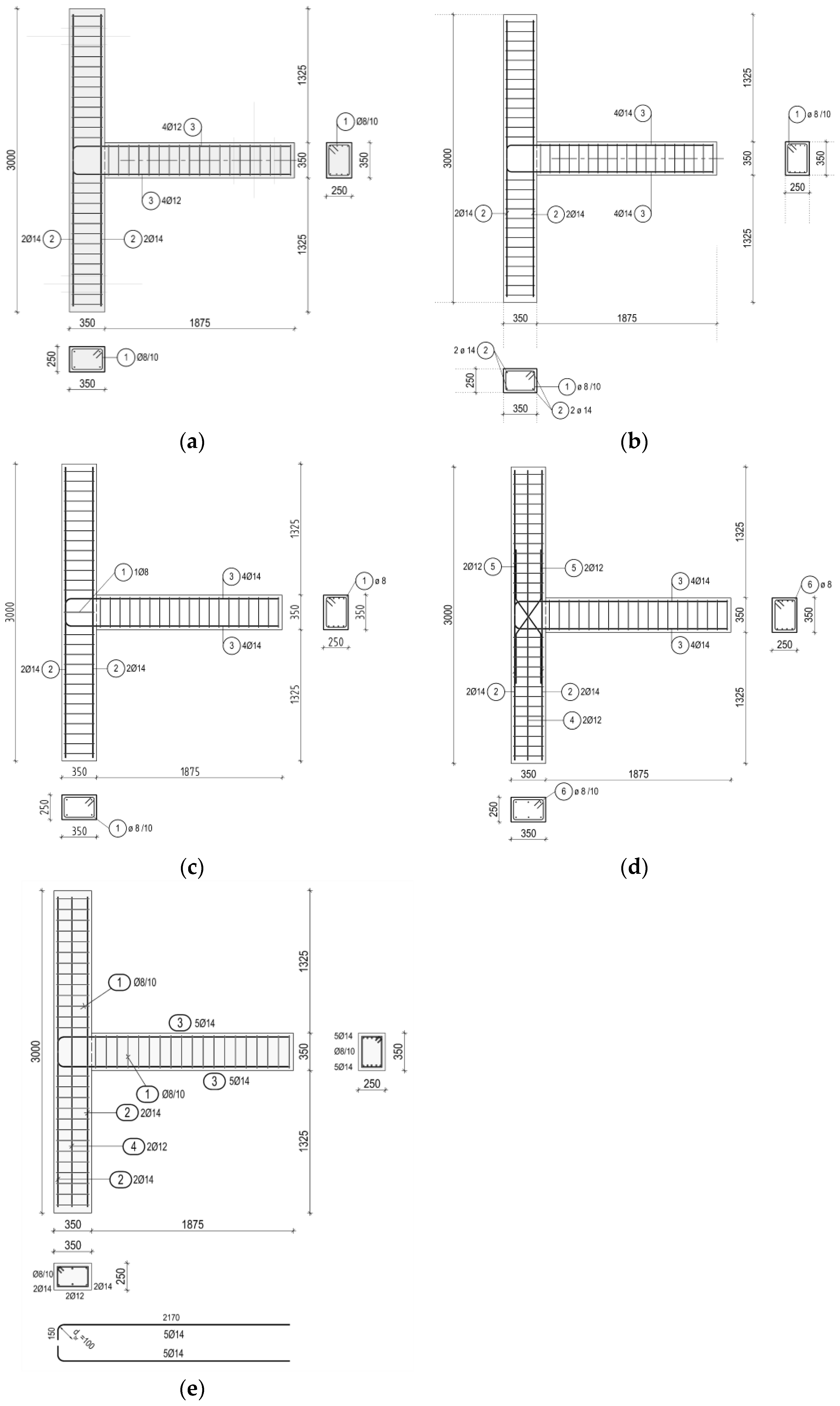
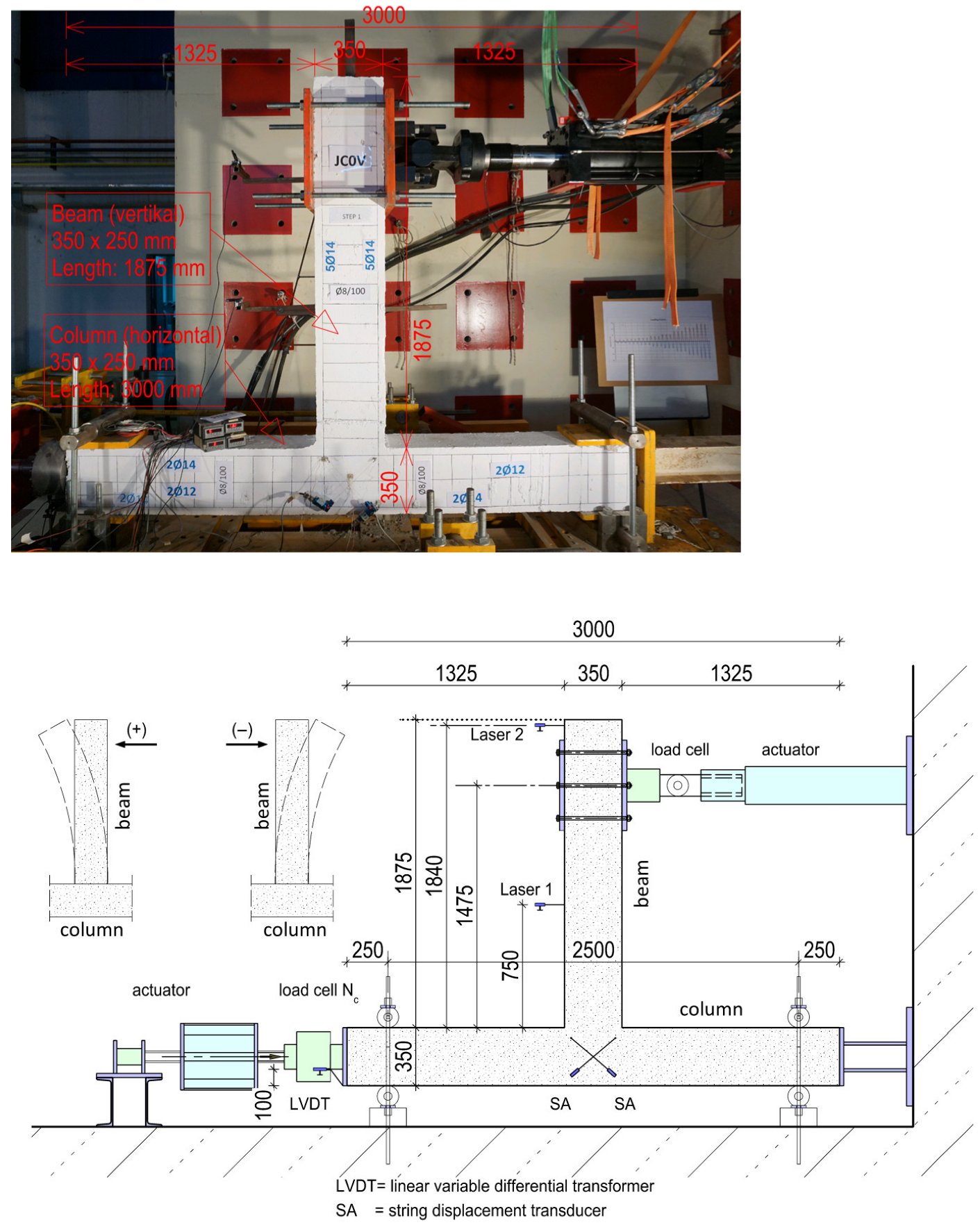
With the aim of analyzing existing low-standard RC buildings, the experimental program comprises five full-scale exterior beam–column joint sub-assemblages with identical geometry and material properties, while differing in the reinforcement detailing of beams, columns, and joint panel regions. All full-scale sub-assemblages (JA0, JB0, JB1, JB0XV, JC0V) were tested under quasi-static cyclic loading to investigate joint shear degradation, beam flexural response, and their interaction. More in detail, specimens JA0, JB0, and JC0V, which are completely missing transverse reinforcement within the joint core, are the most representative of existing low-standard RC constructions. Specimen JB1 includes a single stirrup within the joint panel and represents situations occasionally encountered in practice, where an isolated transverse bar is introduced for constructive or practical reasons, without any seismic design intent. Lastly, specimen JB0XV, with diagonal rebars crossing the joint panel, was intentionally included as a boundary and exploratory case to quantify the sensitivity of joint behavior to limited internal reinforcement and to provide a mechanical benchmark for comparison with unreinforced joints. Distinct failure mechanisms were identified and commented below depending on the presence or absence of slight transverse or diagonal reinforcement within the joint panel, and on the reinforcement layout within the beam and column.
Beyond reporting experimental results, this study provides a mechanistic interpretation of damage evolution and failure modes, explicitly linking global response parameters—such as stiffness degradation, strength deterioration, pinching behavior, and energy dissipation—to identifiable joint-related mechanisms. Parallel to the experimental program, indeed, numerical analyses were performed using the above-mentioned modeling approach proposed by [
16] and implemented in the OpenSees platform [
36], where joint panel deformability was represented by a quadrilinear shear spring calibrated on the basis of the experimental results. Although the adopted modeling approach is based on existing macro-model formulations, the contribution of the present study lies in its application and validation against full-scale experimental data on exterior beam–column joints representative of low-standard RC buildings, completely independent of the empirical calibration of the joint panel rotational spring model by [
16]. Additionally, contrary to what applied in [
16], the model is herein further enhanced through the use of a fully mechanically based definition of fixed-end and flexural contributions, enabling a consistent reproduction of the overall response, while maintaining computational efficiency.
Thus, the main contributions of this study can be summarized as follows:
- (i)
the experimental investigation of full-scale exterior RC joints with deficient detailing, where single input parameters are changed and analyzed systematically;
- (ii)
the validation of a computationally efficient macro-model against such experimental data, focusing on key response parameters, including stiffness degradation, energy dissipation, and failure mechanisms;
- (iii)
the critical assessment of modeling limitations, especially with respect to bond-slip effects and pinching behavior, within a framework suitable for large-scale seismic assessment applications. The limitations of the modeling approach are also explicitly discussed, providing useful insights for its application in the analysis of existing structures.
The overall results, therefore, provide new and valuable insights into the seismic assessment of non-ductile joints in existing RC frame structures, strengthening the link between full-scale experimental observations and analytical predictions. Accordingly, the manuscript is structured to address two closely related objectives:
- -
to experimentally identify the key detailing parameters that control damage evolution, stiffness degradation, and energy dissipation in non-ductile exterior joints, and
- -
to verify whether an independent and computationally efficient joint macro model can reproduce these mechanisms when applied to new full-scale experimental evidence.
3. Main Experimental Results
The flexural capacities of the beam (M
b) and column (M
c) members were first of all determined using mean experimental material strengths, along with geometric properties and reinforcement layout discussed in the previous section. Then, the column-to-beam overstrength ratio has been computed, as shown in
Table 2 for each specimen. It is worth observing that all sub-assemblies result in a weak beam-strong column strength hierarchy, i.e., 2M
c/M
b ratios in
Table 2 are always higher than unity.
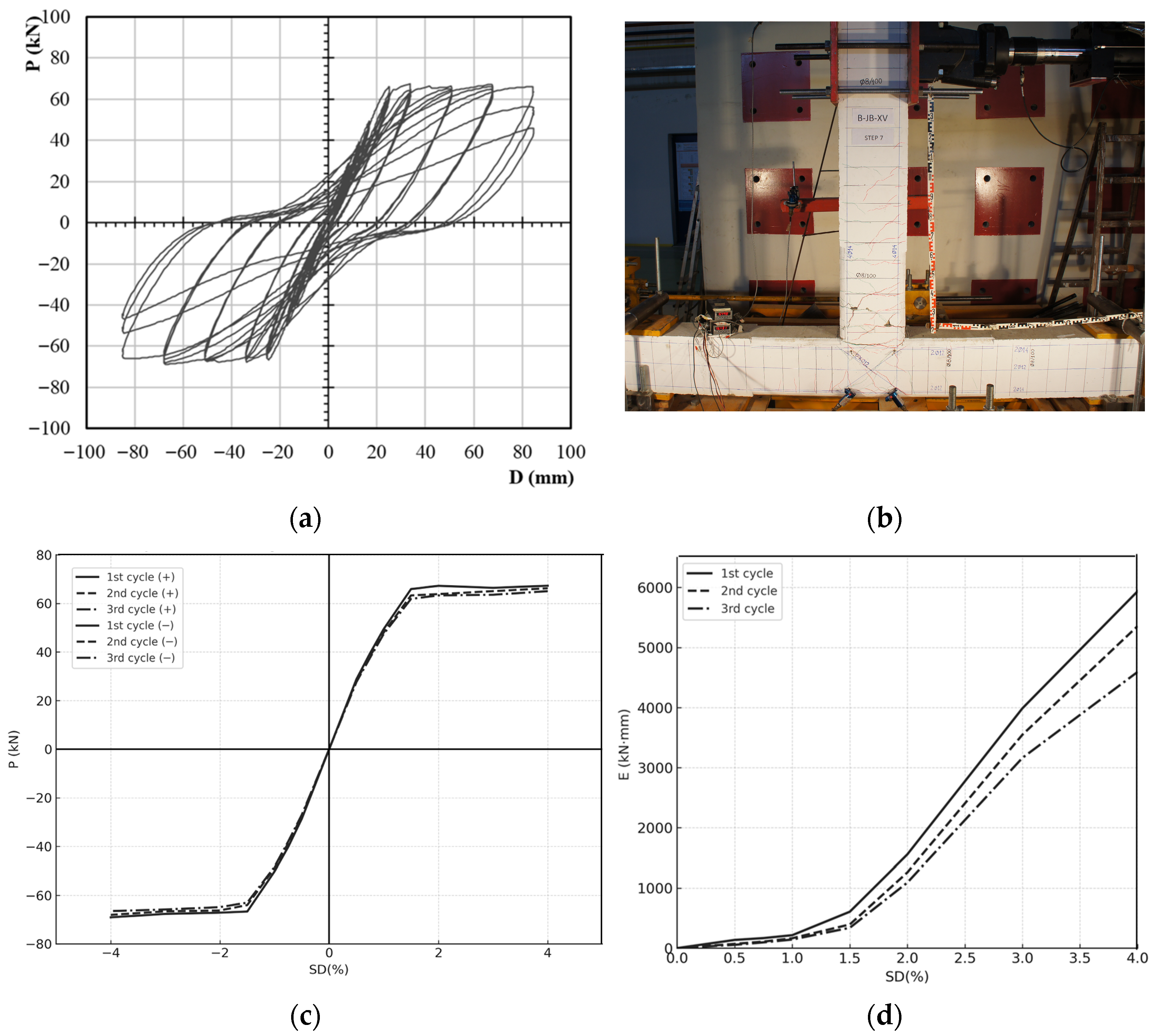
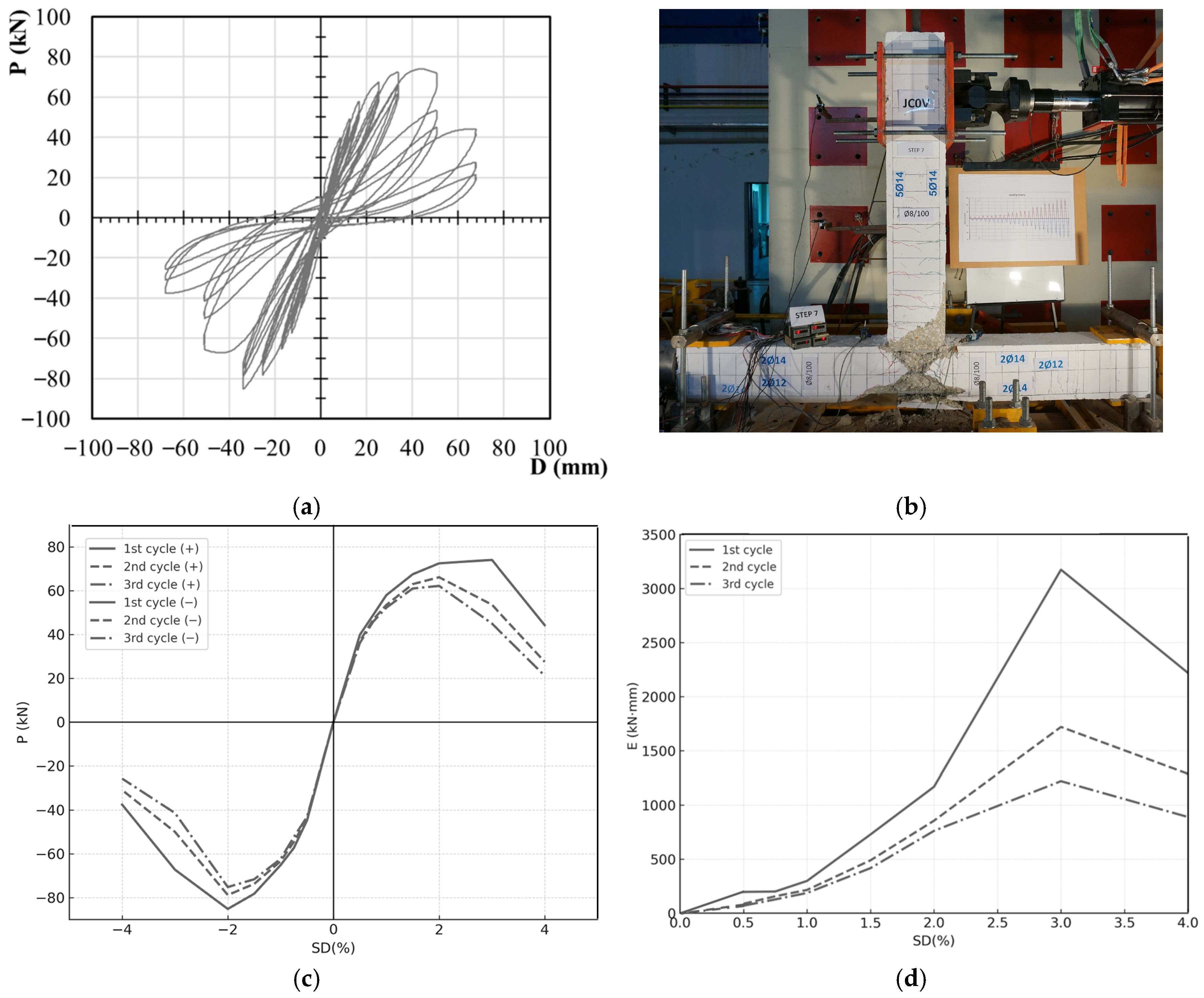
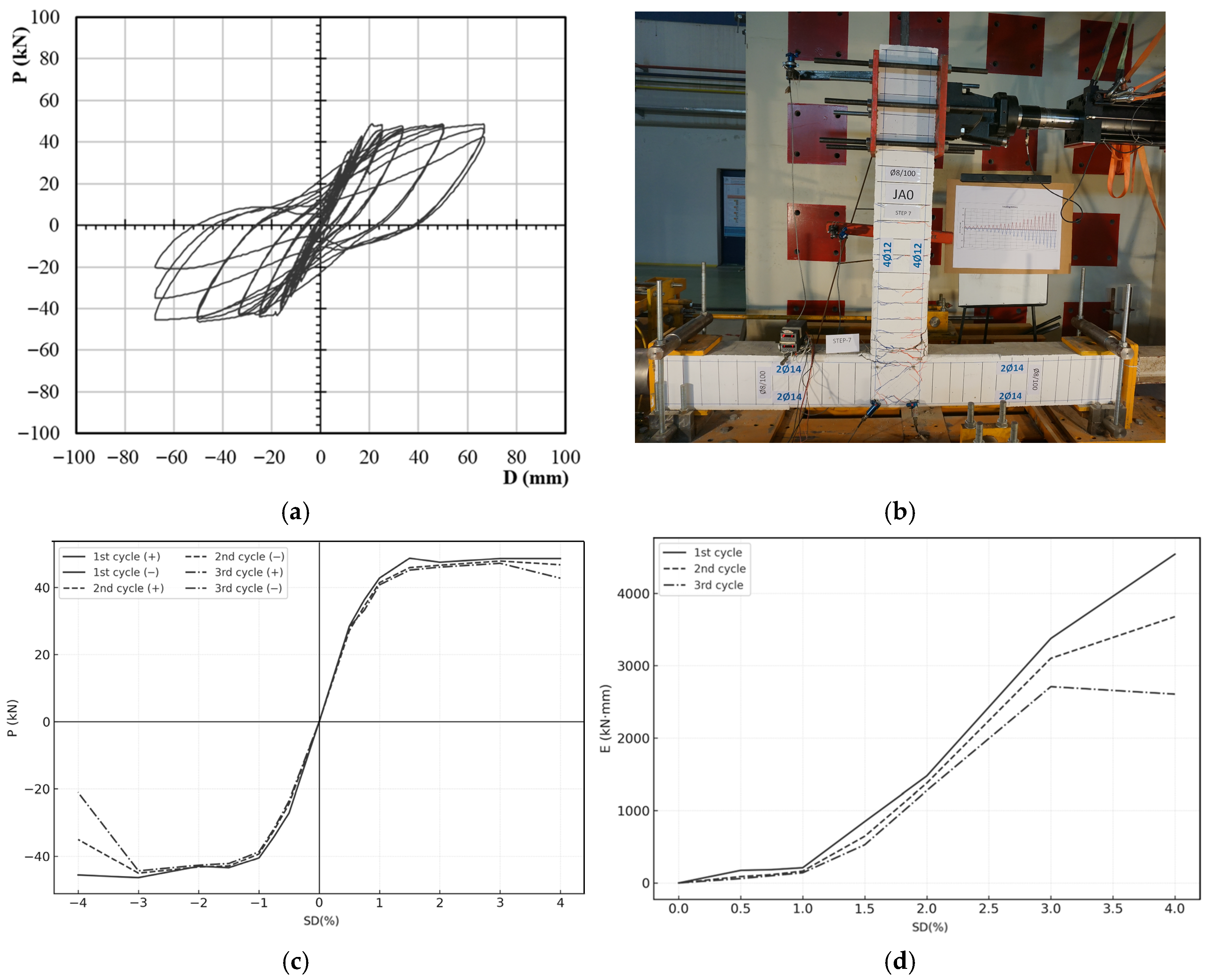
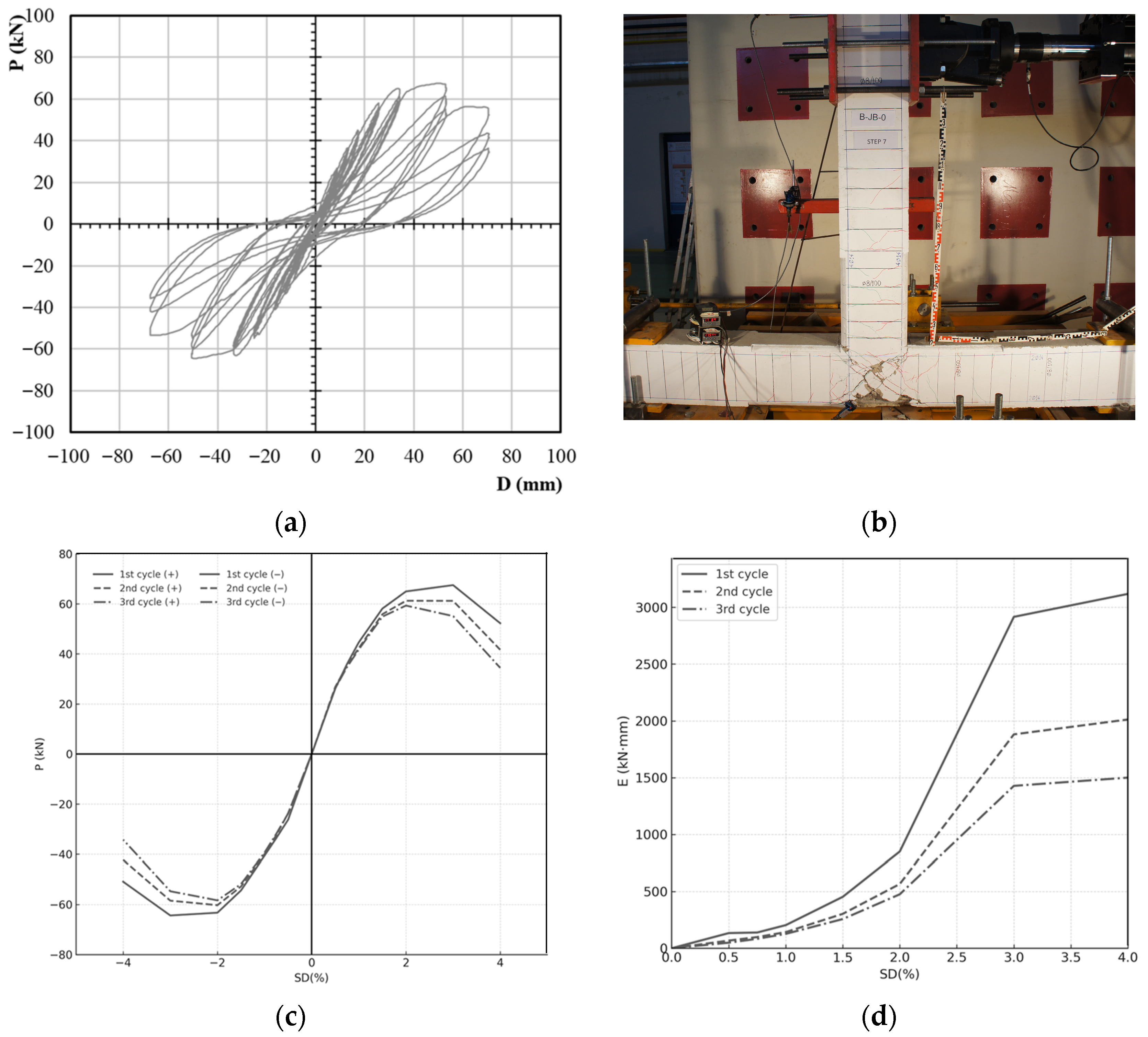
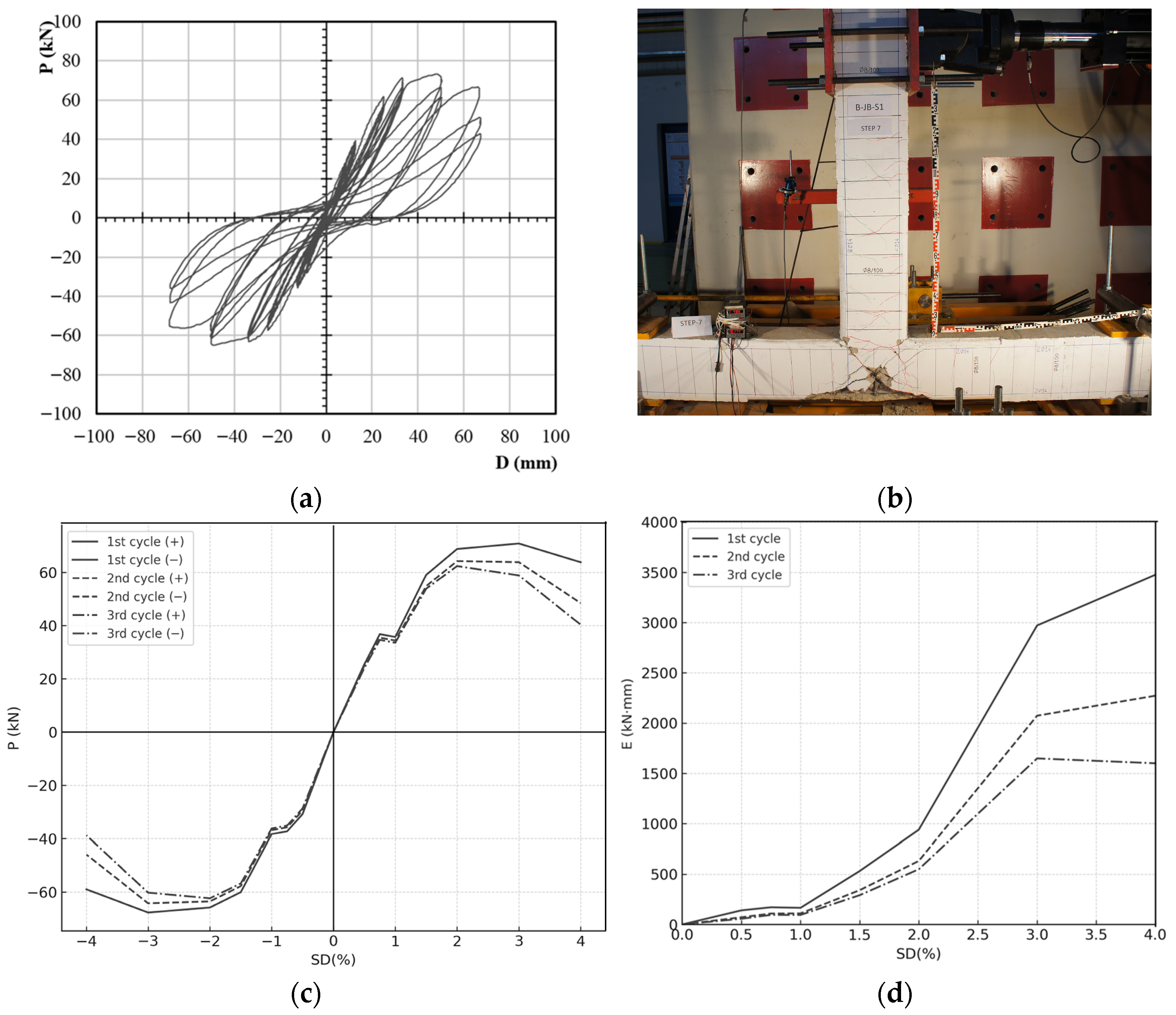
The load (P)—displacement (D) hysteresis curves obtained from the experimental tests, together with the diagrams of energy dissipation (E), and final damage state, provide a comprehensive picture of the seismic response of the tested specimens—see
Figure 4,
Figure 5,
Figure 6,
Figure 7 and
Figure 8. By the analysis of those figures, the load (P)—drift ratio (SD) envelopes clearly illustrate how the reinforcement layout, the use of transverse stirrups, and the inclusion of diagonal bars affect both sub-assembly strength and ductility. Generally speaking, the stiffness degradation trends confirm the gradual loss of lateral stiffness as drift increases. On the other hand, the energy dissipation results (calculated as the area underneath the load–displacement response for each sub-cycle of each applied drift level) point out the improved capacity of specimens that benefited from additional confinement or diagonal reinforcement.
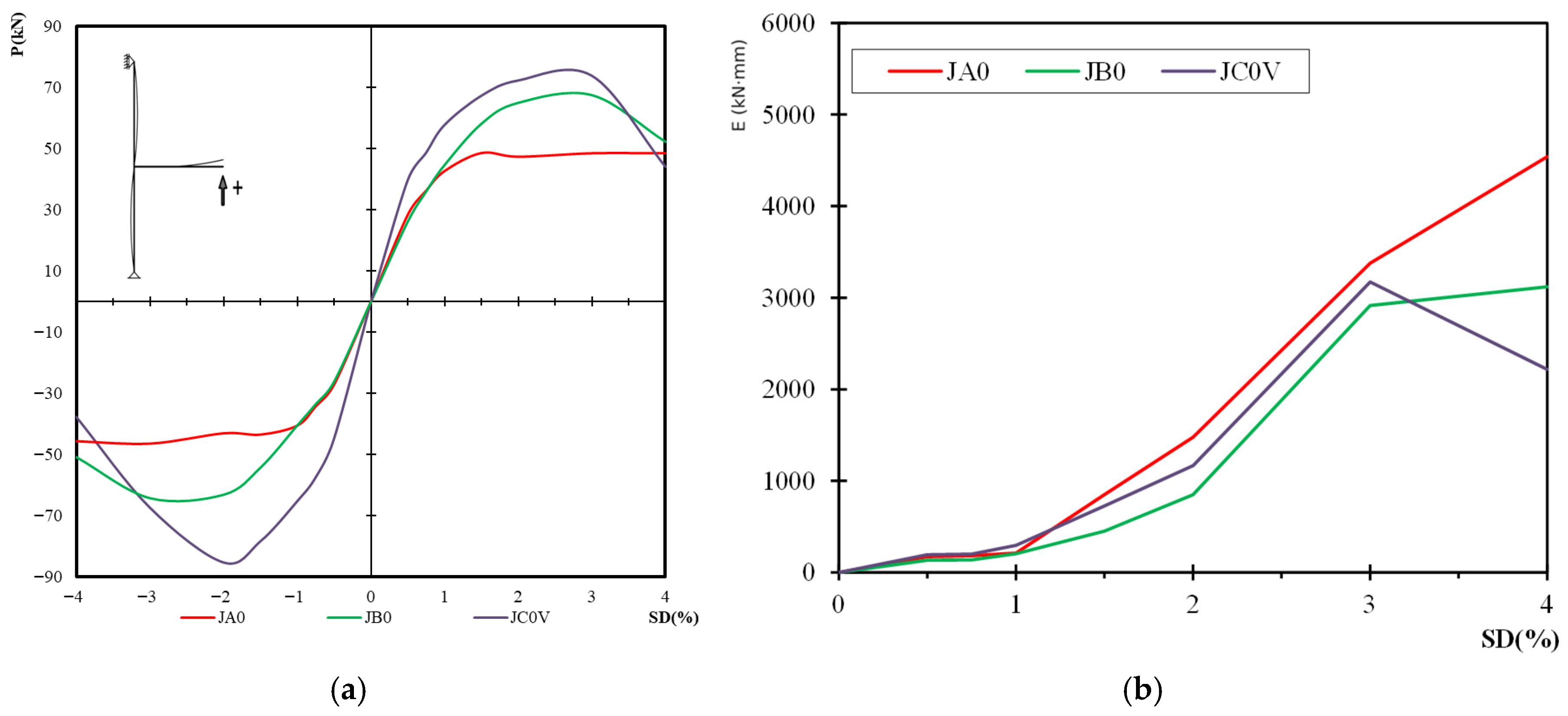
More in detail, for specimen JA0 (
Figure 4), the hysteresis response shows quite stable loops, even right after the joint shear cracking. The envelope curves indicate that the maximum load is 48.6 kN, with no significant further increment beyond 2% drift. Lateral load decay until 4% drift is not significant, since the main failure mode for this specimen involves the flexural response of the beam, which has the lowest longitudinal reinforcement amount. In tune, the energy dissipation capacity was limited and dropped in the second and third cycles, but mainly only after 3%.
Compared to specimen JA0, the experimental response of specimen JB0 (
Figure 5) highlights the impact of the absence of joint stirrups on the overall seismic performance in conjunction with a higher amount of beam rebars. Indeed, the hysteresis loops reveal pronounced pinching and a noticeable strength reduction after approximately 2% drift, indicating the limited ability of the joint sub-assembly to sustain large inelastic deformations. The envelope curves show that the peak load was reached at about 3% drift, followed by a gradual strength degradation. Energy dissipation is quite low. Overall, JB0 exhibited the typical behavior of non-ductile exterior joints, where insufficient confinement leads to early joint shear cracking, pronounced softening response, and limited energy absorption capacity.
The hysteresis curve of specimen JB1 (
Figure 6) shows a slightly stabler energy dissipation capacity with more limited pinching with respect to specimen JB0, reflecting the slight beneficial effect of the (very light) joint reinforcement. Compared with JB0, the envelope curves confirm slightly higher peak loads and delayed stiffness degradation. The energy dissipation plot highlights a significant increment during the first cycles. Overall, JB1 exhibited a very slightly more ductile response with respect to specimen JB0, sustaining larger inelastic deformations before strength deterioration became evident, proving that a single stirrup in the joint core cannot be enough for a fully ductile response of the sub-assembly.
On the contrary, the specimen JB0XV (
Figure 7) exhibits a stable and well-defined hysteretic response, with loops that remained relatively wide even at high drift levels. The envelope curves confirm that strength is effectively retained across successive cycles until 4% drift, showing minimal degradation compared to the other joints. This behavior can be attributed to the presence of the diagonal reinforcement, which—along with web column rebars—provided additional confinement and delayed shear softening in the joint panel. The dissipated energy values were notably higher than in the other specimens, underlining the improved ability of this configuration to absorb seismic input through repeated cycles. Overall, JB0XV demonstrated enhanced ductility and energy dissipation capacity, highlighting a possible beneficial role of diagonally placed rebars within exterior RC joints.
Lastly, the hysteretic response of JC0V (
Figure 8) highlights the increment of strength associated with an increment in the beam longitudinal reinforcement, along with the effect of the presence of web column rebars. Specimen JC0V sustains higher peak loads, with an increasing trend up to 2–3% drift. Nonetheless, at larger drift levels, a progressive decline in energy dissipation capacity is observed, accompanied by increased pinching, which indicates localized increasing cracking and bond deterioration within the joint core.
4. Comparisons and Discussion on Experimental Results
The experimental results described above confirm that the behavior of the joint panel region plays a decisive role in controlling the seismic response of non-ductile exterior beam–column joints. Although all sub-assemblages shared identical geometry and material properties, mainly variations in joint reinforcement detailing or in beam longitudinal reinforcement led to significant differences in seismic response.
First, to provide a clearer interpretation of damage evolution,
Table 3 summarizes the observed damage states at increasing drift ratio levels for all tested specimens. The progression of damage highlights the transition from initial cracking to more severe joint-related failure mechanisms, depending on the detailing and reinforcement configuration. As shown in
Table 3, specimens characterized by deficient joint detailing (JB0, JB1, JC0V) exhibit early joint cracking followed by shear damage and subsequent softening, eventually leading to failure. In contrast, specimens with improved detailing or reduced demand (JA0, JB0XV) demonstrate a more ductile response, with damage primarily concentrated in the beam and a stable post-yield behavior.
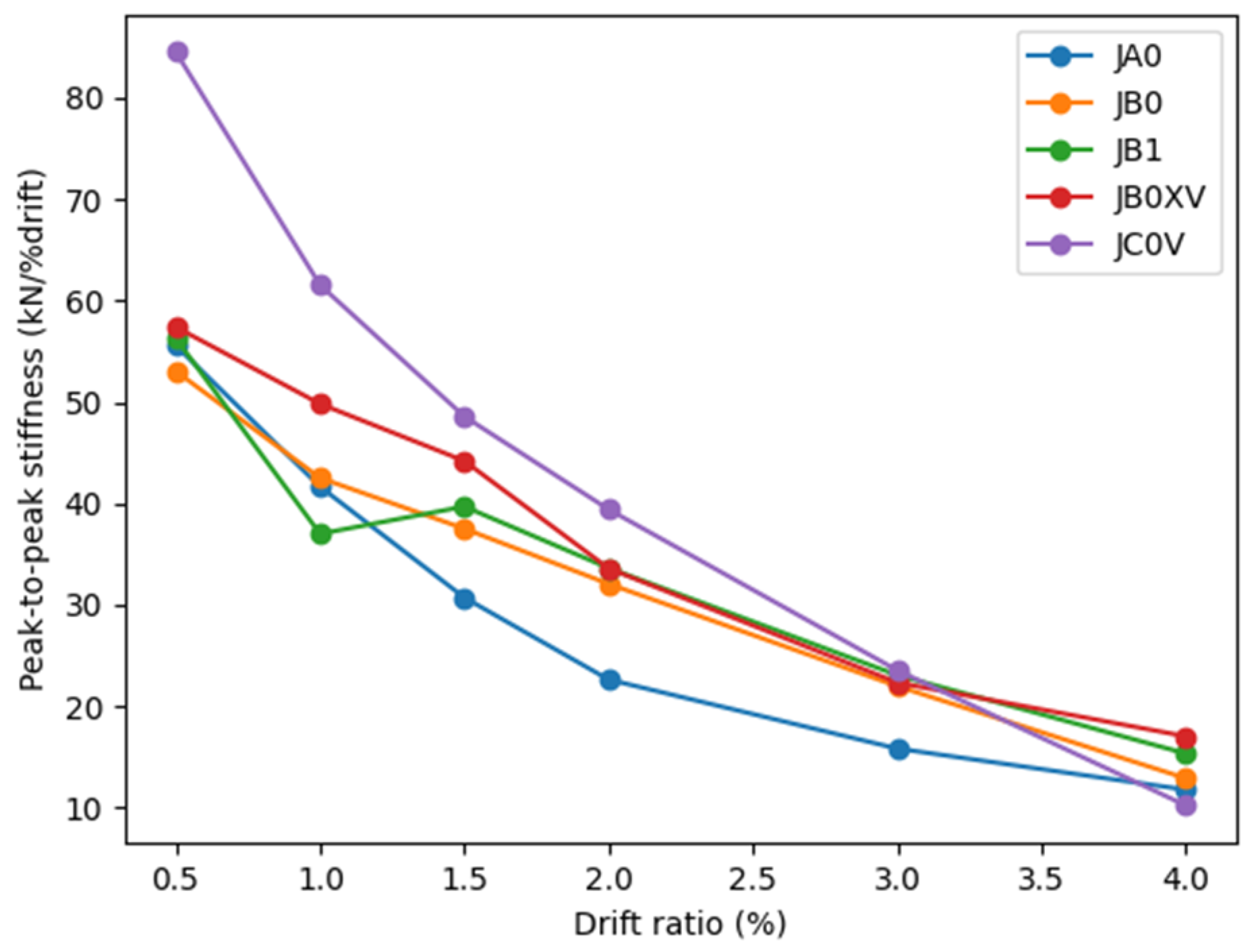
Additionally, to provide a clearer representation of cyclic performance degradation, stiffness degradation curves are presented in
Figure 9. These curves are expressed in terms of peak-to-peak stiffness as a function of drift ratio. The stiffness at each drift level was calculated based on the peak-to-peak force response, enabling a consistent and physically meaningful evaluation of cyclic degradation. The evolution of stiffness with increasing drift enables a direct comparison of degradation trends among the tested specimens, highlighting the influence of joint detailing and failure mechanisms on cyclic response. Indeed, as shown in
Figure 9, specimens exhibiting joint shear damage (e.g., JB0, JB1, JC0V) present a more pronounced stiffness degradation compared to those characterized by a more ductile response (JA0, JB0XV).
Τo then quantify the deformation capacity of the tested specimens, displacement ductility values were estimated as the ratio between ultimate and yielding displacement (μ = Δu/Δy)—see
Table 4. The yielding displacement was identified based on the intersection with the yielding load level, while the ultimate displacement was defined as the maximum attained displacement prior to significant strength degradation. The results indicate that specimens characterized by joint shear failure (JB0, JB1, JC0V) exhibit reduced ductility, with μ values ranging approximately between 2.5 and 3.0. In contrast, specimens with more favorable detailing (JA0, JB0XV) demonstrate enhanced ductility, with μ values exceeding 3.5. These findings are consistent with the observed damage mechanisms and confirm the detrimental effect of joint shear degradation on the deformation capacity of RC sub-assemblies.
Nevertheless, the above-reported findings also highlight that joint performance in existing RC structures should be mechanically interpreted within the broader context of member capacities and demand levels, rather than solely on the presence or absence of specific detailing provisions, since the mechanical interaction between beam flexural demand and joint shear resistance ultimately governs the global seismic response.
Therefore, to provide a systematic analysis of these experimental data, the discussion that follows focuses separately on the mechanical role of the mainly effective experimentally investigated parameters, namely: beam longitudinal reinforcement amount (
Section 4.1), joint transverse reinforcement (
Section 4.2), and presence of diagonal joint reinforcement (
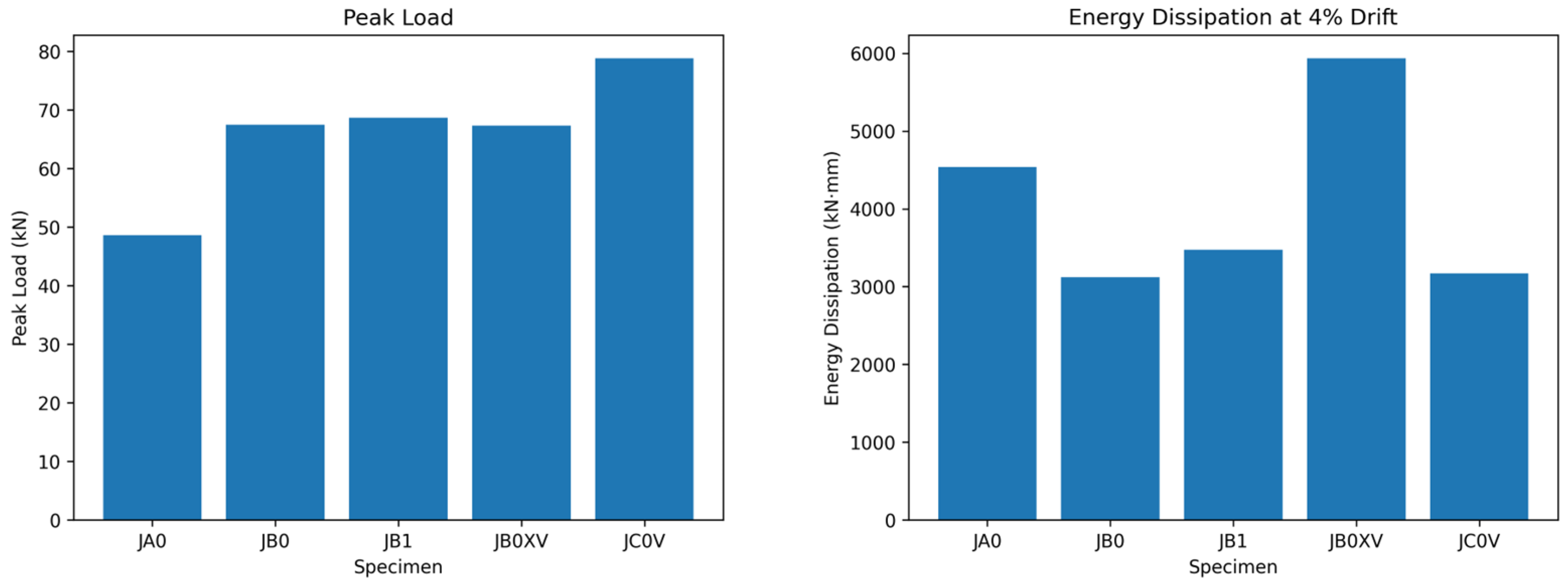
Section 4.3). The comparison is mainly carried out in terms of peak strength, deformation capacity, stiffness degradation, and energy dissipation. To help the following discussion,
Table 5 and
Figure 10 summarize the seismic performance of all tested specimens. On the other hand,
Table 6 reports the percentage variations in stiffness degradation, energy dissipation capacity, and peak strength among the analyzed tests.
It should also be noted that the adopted axial load ratio (approximately 5%) corresponds to a low-confinement condition, which may influence the observed joint response in terms of stiffness, strength, and deformation capacity. In particular, higher axial load levels are expected to potentially enhance joint shear strength and stiffness, while reducing ductility and promoting more brittle behavior. Therefore, the results presented herein should be interpreted within the context of low axial load conditions, representative of exterior columns in low-rise existing RC buildings.
4.1. Effect of Longitudinal Beam Reinforcement Amount
The influence of beam longitudinal reinforcement is clearly highlighted by comparing specimens JA0, JB0, and JC0V, which differ primarily in beam reinforcement ratio.
Specimen JC0V achieved the highest peak load among all tests, due to its higher beam longitudinal reinforcement amount, consistent with previous experimental evidence reported in the literature [
10,
11,
12]. Conversely, specimen JA0, characterized by the lowest beam reinforcement amount, exhibited the lowest peak strength. This trend is clearly illustrated by the envelope curves of the first loading cycles reported in
Figure 11a, where, in addition, specimen JB0 exhibits an intermediate response between JA0 and JC0V, consistent with its intermediate beam reinforcement level. This confirms the progressive influence of beam longitudinal reinforcement on peak strength and overall response, while joint shear-related mechanisms become more pronounced as beam flexural demand increases.
Figure 11b also highlights that higher beam strength does not necessarily result in increased energy dissipation capacity when joint shear damage governs the response. Indeed, despite the absence of transverse reinforcement within the joint panel, specimen JA0 developed a stable and ductile response over a wide drift ratio range. Experimental observations indicate that the relatively low flexural demand imposed by the beam mechanically prevented the joint panel from reaching its shear capacity during the early loading stages. As a result, beam flexural yielding governed the response in test JA0, while joint shear cracking developed only at higher drift levels (see
Table 3), without causing significant strength or stiffness degradation.
In contrast, specimen JC0V experienced a markedly different response. The increased beam flexural capacity led to higher shear demand within the joint panel, resulting in earlier joint cracking, more pronounced stiffness degradation, and a more abrupt post-peak response. Although peak strength increased by approximately 62% with respect to JA0 (see
Table 4), energy dissipation decreased (see also
Figure 11b) and stiffness degradation increased, indicating a shift toward a more brittle, joint-governed behavior.
In summary, these results highlight that increasing beam reinforcement, while beneficial in terms of strength, may be detrimental to deformation capacity and energy dissipation if joint shear resistance is not proportionally enhanced.
4.2. Effect of Light Transverse Reinforcement Within the Joint Panel
The comparisons of specimens with identical beam longitudinal reinforcement (JB0, JB1, JB0XV) allow the isolated assessment of the role of joint detailing on cyclic performance, independently of beam flexural capacity.
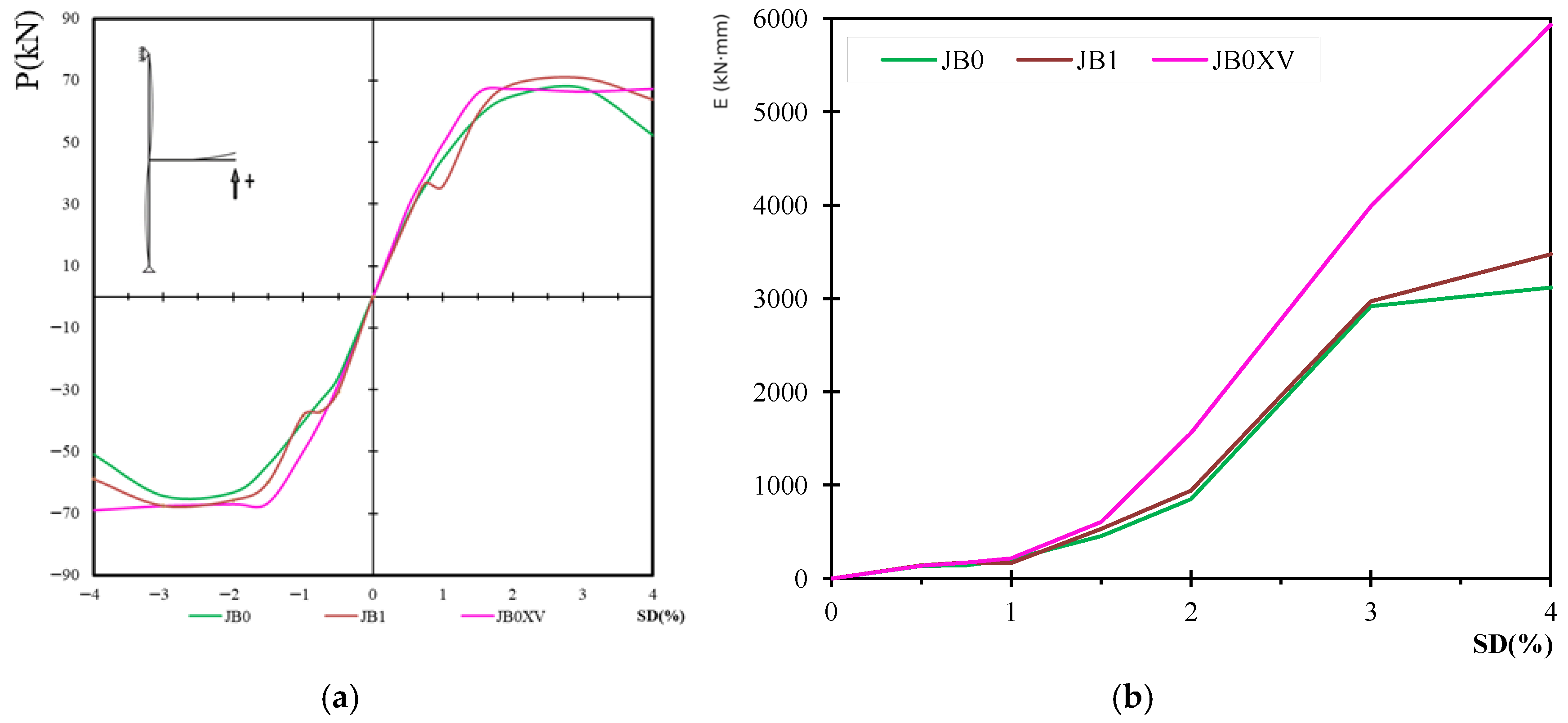
First, the comparison between specimens JB0 and JB1 is performed in this sub-section, since it allows assessing the effect of a limited amount of transverse reinforcement within the joint panel. Both specimens exhibited very similar peak strength, drift capacity, and overall energy dissipation (
Figure 12a,b), indicating that the presence of a single transverse hoop in specimen JB1 was insufficient to produce measurable changes in the dominant joint shear mechanisms. Crack patterns and damage evolution revealed that joint behavior in both specimens was governed by diagonal concrete cracking and bond deterioration of beam longitudinal reinforcement, even if joint cracking was delayed by the single stirrups within the joint panel (see
Table 3). Nevertheless, the limited transverse reinforcement did not provide adequate confinement to further restrain crack opening or to activate an effective truss mechanism within the joint core. Consequently, stiffness degradation, pinching behavior, and cyclic energy dissipation (see
Table 5 and
Figure 12b) remained comparable between the two specimens.
This comparison suggests that a marginal increment in joint transverse reinforcement does not necessarily translate into measurable improvements in seismic performance, unless a minimum threshold of confinement/strengthening is achieved.
4.3. Effect of Diagonal Bars as Joint Reinforcement
A markedly different response—with respect to specimens JB0 and JB1—was observed for specimen JB0XV (see
Figure 12), which incorporated diagonal reinforcement within the joint panel.
Compared to the reference specimen JB0, JB0XV exhibited a similar peak strength (
Figure 12a) but a substantially enhanced energy dissipation capacity (
Figure 12b). The presence of diagonal reinforcement resulted in more stable hysteretic loops, delayed joint cracking (
Table 3), and reduced stiffness degradation. In fact, peak-to-peak stiffness reduction between 1% and 3% drift was limited to approximately 55%, compared to values exceeding 60% for specimens without joint reinforcement (see
Table 5). As shown in
Table 5, compared to the reference specimen JB0, specimens JB1 and JB0XV exhibited reductions in stiffness degradation (again between 1% and 3% drift) of approximately 12% both. Nevertheless, a substantial increase in dissipated energy was observed only for specimen JB0XV (+90.3%), whereas the increase for specimen JB1 remained relatively modest (+11.5%). This indicates that the presence of diagonal reinforcement, as that adopted herein—along with the presence of light column web reinforcement—can lead to the activation of effective confinement and alternative force-transfer mechanisms, which promote an overall flexural response.
Overall, these comparisons confirm that joint reinforcement detailing primarily governs deformation capacity, stiffness retention, and energy dissipation, rather than peak strength, which was instead mainly controlled herein by beam flexural capacity. These findings emphasize that, in non-ductile exterior joints, improvements in joint detailing are most effective when they enhance the stability of post-cracking joint shear-resisting mechanisms.
5. Adopted Modeling Strategy
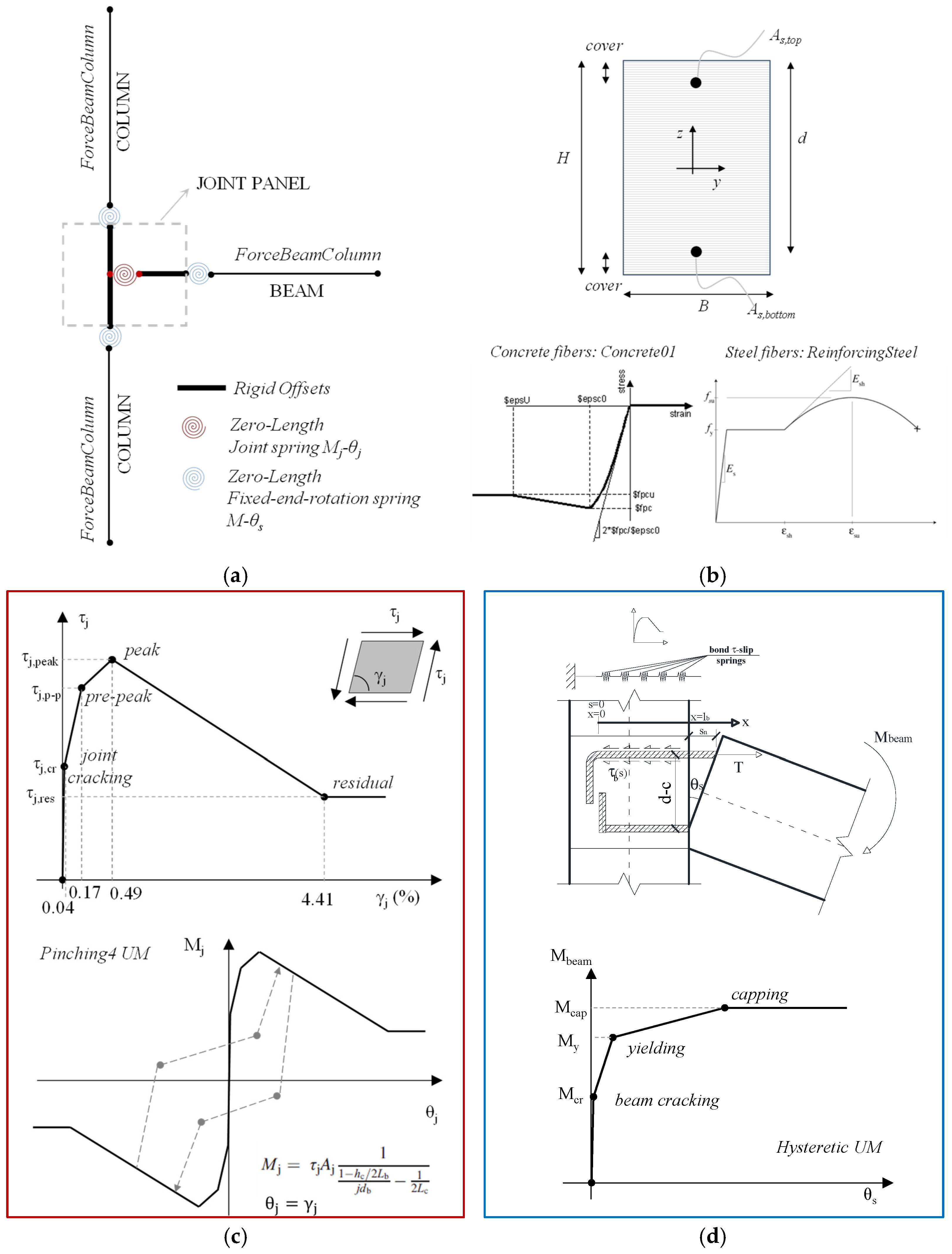
Numerical modeling has been performed in the OpenSees platform [
36] as shown in
Figure 13, according to suggestions reported in De Risi et al. [
16] for what concerns the beam-column joint panel only, and properly enhanced and integrated herein, as explained in what follows.
Herein, beams and columns are modeled by means of a distributed plasticity approach (
ForceBeamColumn elements in OpenSees v.3.7.0)—see
Figure 13a. Cross-sections discretization is shown in
Figure 13b, along with the adopted constitutive relationships for concrete (
Concrete01 Uniaxial Material (UM) in OpenSees) and steel (
ReinforcingSteel UM in OpenSees) fibers, both based on mechanical properties coming from the experimental materials characterization phase.
The intersecting portions of beams and columns are reproduced as rigid links within the semi-dimensions of the joint panel (see
Figure 13a), as suggested in the so-called “scissors model” [
37] adopted herein. Additionally, according to the adopted joint panel model [
16], two geometrically coincident nodes are introduced at the center of the panel (red nodes in
Figure 13a): one of them is linked to the rigid elements of the columns, whereas the other one is linked to the rigid element of the beam. The connection between these two nodes is provided by a zero-length rotational spring, which permits relative rotation only.
The joint spring behavior is governed by a constitutive law that captures the shear deformation of the joint panel region, expressed through a quadrilinear correlation between the joint shear stress (τ
j) and the corresponding shear strain (γ
j)—see
Figure 13c. Note that the adopted τ
j-γ
j relationship was empirically defined in [
16], calibrated, and then validated on experimental tests on non-conforming exterior joints representative of the low-standard joints in existing RC buildings, similar to those analyzed herein. Nevertheless, it is completely independent of the specific data related to the tests presented above, and it is applied herein to further check its reliability in reproducing other full-scale experimental results. The specific calibration of that joint spring is reported in [
16]. Anyway, for the sake of completeness, a summary of this calibration process is also reported herein. The joint shear spring has been calibrated based on ten low-code/pre-code exterior joint specimens from the past literature, which provided the experimental cyclic joint shear-stress response (i.e., [
11,
38,
39]). Based on these past experimental data, the joint shear spring has been defined by four characteristic points: cracking, pre-peak, peak, and residual strength. About the definition of shear stress to be used for each of these characteristic points:
- -
cracking strength is calculated according to Uzumeri [
40]’s proposal, which resulted in the best prediction model for that joint condition;
- -
pre-peak point is assumed as 90% of the peak stress or that corresponding to the beam/column yielding (whichever occurs first), to reproduce, on average, the post-cracking response of the experimental tests recalled above, within their ascending branch of response;
- -
peak point is associated with the joint shear strength—τ
j,peak in
Figure 13c—predicted by a strength model (that by Jeon et al. [
15] was suggested in [
16], since based on a large experimental database and characterized by a very good accuracy);
- -
residual stress is 40% of the peak stress, to reproduce, on average, the softening response of the experimental tests recalled above. After that, a constant branch develops (until any eventual joint axial failure, which is not explicitly modeled in [
16], nor herein).
Then, about γ
j, for each characteristic point, the experimental joint shear strain has been obtained from experimental data by [
11,
38,
39], and their average value has been assumed as the γ
j of that characteristic point within the joint panel spring (as reported in
Figure 13c).
The conversion from the τ
j-γ
j relationship and the corresponding joint moment (M
j)-joint rotation (θ
j) relationship is performed as reported in
Figure 13c [
16]. It is worth noting that the modeling proposal by [
16] suggests a joint shear strength estimation based on Jeon et al. [
15]’s strength model. In the numerical simulations of tests presented herein, instead, the value of τ
j,peak adopted for the joint spring peak load, is assumed equal to the experimental peak value of joint shear stress (averaged between positive and negative direction). In such a way, the numerical-to-experimental comparison can be depurated from the prediction error of the joint strength model, and any discrepancies in terms of hysteretic shapes or softening branch between numerical and experimental responses can be emphasized. Indeed, the literature presents several options about joint strength prediction, from mechanical to empirical or semi-empirical approaches, each validated or calibrated based on experimental data (bigger than those reported here). It is also worth noting that this issue could be treated separately from the numerical-to-experimental comparison performed herein, by using the most up-to-date and reliable strength model for the specific joint typology that the user prefers.
Lastly, at the beam (or columns)-to-joint panel interfaces, zero-length rotational springs are introduced to represent the fixed-end-rotation deformability contribution, which, generally speaking, becomes significant especially when the yielding of the beam (or column) is overcome. It is worth noting that this is a modification with respect to the previous study by [
16], which allows herein keeping the fixed-end-rotation response separated by the beams/columns flexural contribution (contributions that could also be reproduced together with a lumped plasticity modeling approach, as in [
16]). For these tests, the column-to-joint interfaces result not significantly affected by flexural cracks, so that the fixed-end-rotation contribution at the column-to-joint panel interfaces is negligible. Thus, only the nonlinear response of the fixed-end rotation from the beam side is accounted for herein. The beam moment (M
beam) versus—rotation (θ
s) spring is defined as in
Figure 13d with a
Hysteretic UM in OpenSees, at the cracking, yielding, and capping capacity of the beam. For each of these characteristic points, the relevant rotation θ
s is calculated as the ratio between tensile rebars’ slippage (s
n in
Figure 13d) at the element-to-joint interface (i.e., at x = l
b) and the distance between tensile and compressed reinforcement layers (d-c in
Figure 13d) (i.e., slip related to the compression rebars is assumed to be negligible). At each characteristic point (i.e., cracking, yielding and capping), s
n is computed in a mechanically based approach, by discretizing the anchorage length of the longitudinal rebars (l
b) into smaller portions, and assuming the bond stress (τ
b)-slip (s) relationship between rebars and surrounding concrete proposed by the Model Code (2010) [
41] (in case of pullout failure). Zero slip is assumed at x = 0 in
Figure 13d, namely at the anchorage point of the beam longitudinal rebars.
Adopted hysteretic parameters are those suggested in De Risi et al. [
16] for beam-column joint panel (extended herein to the fixed-end-rotation springs), as a result of the empirical calibration reported in [
16], as recalled above for the envelope response; whereas hysteretic parameters are “implicitly assumed” in the selection of UM chosen for concrete and steel fibers in OpenSees for what concerns the beams and columns elements.
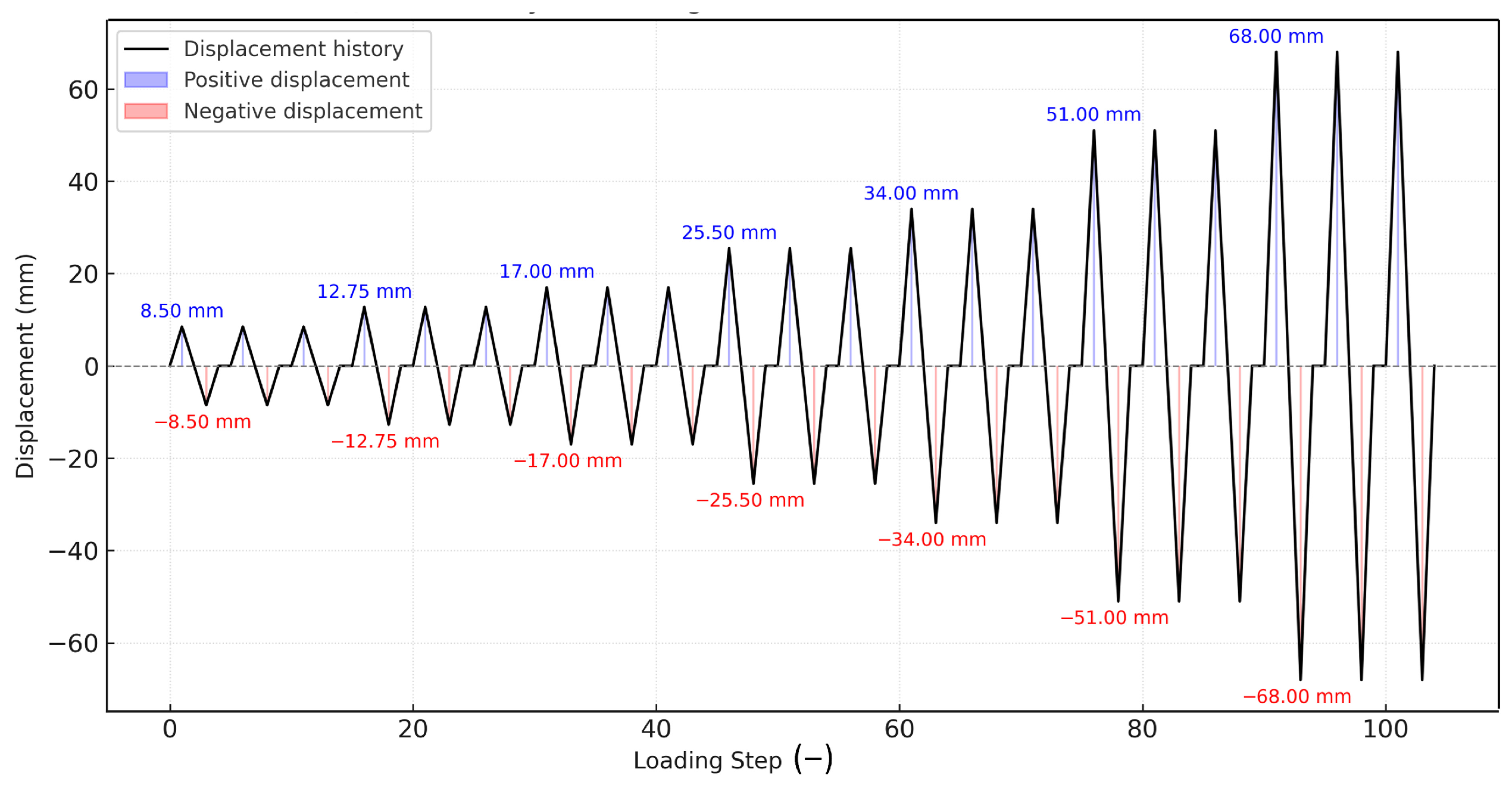
The displacement history shown in
Figure 3 is numerically applied at the end of the beam, after reproducing the exterior constraints at the columns’ ends and the constant column axial load application.
6. Experimental-Versus-Numerical-Comparisons
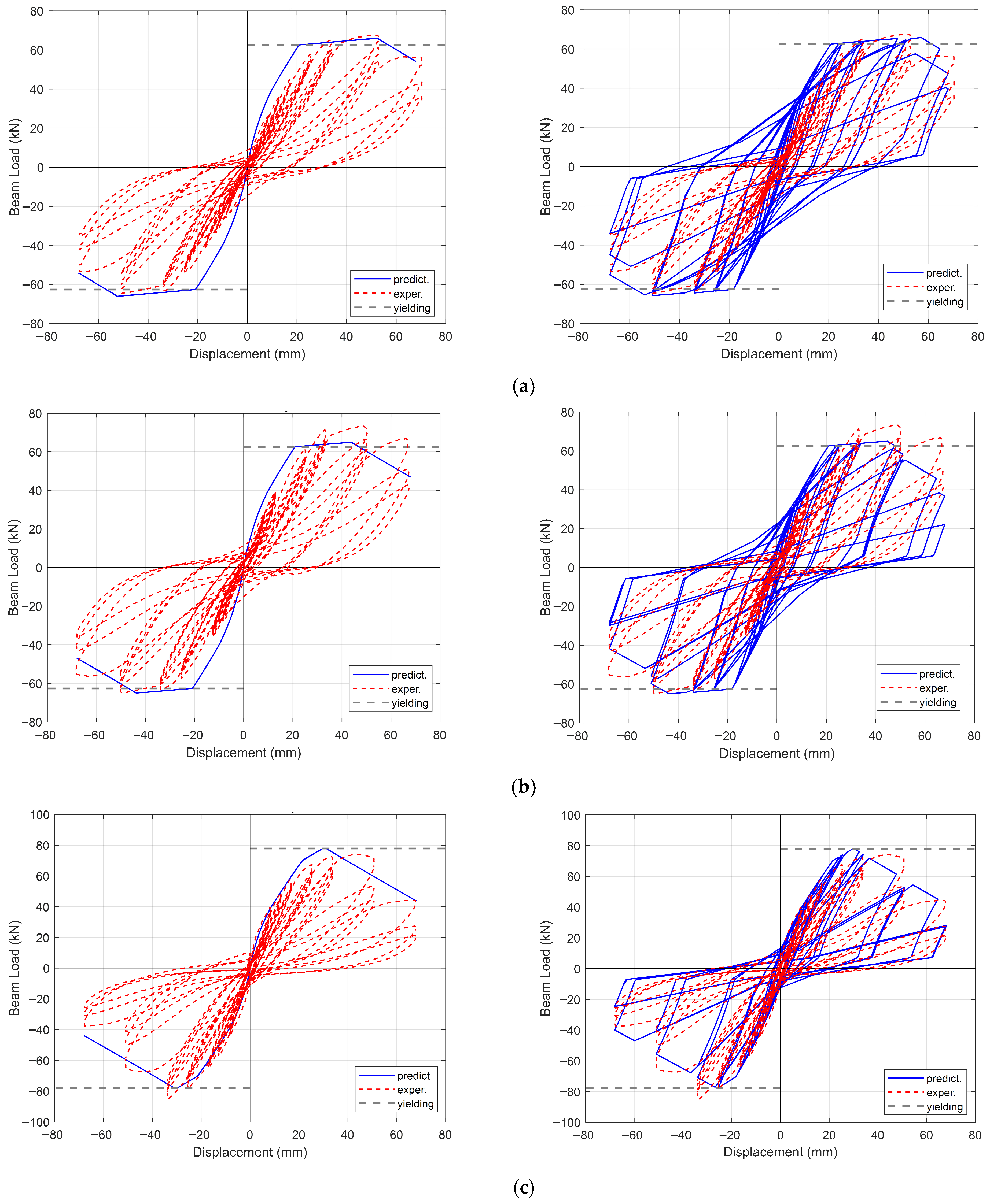
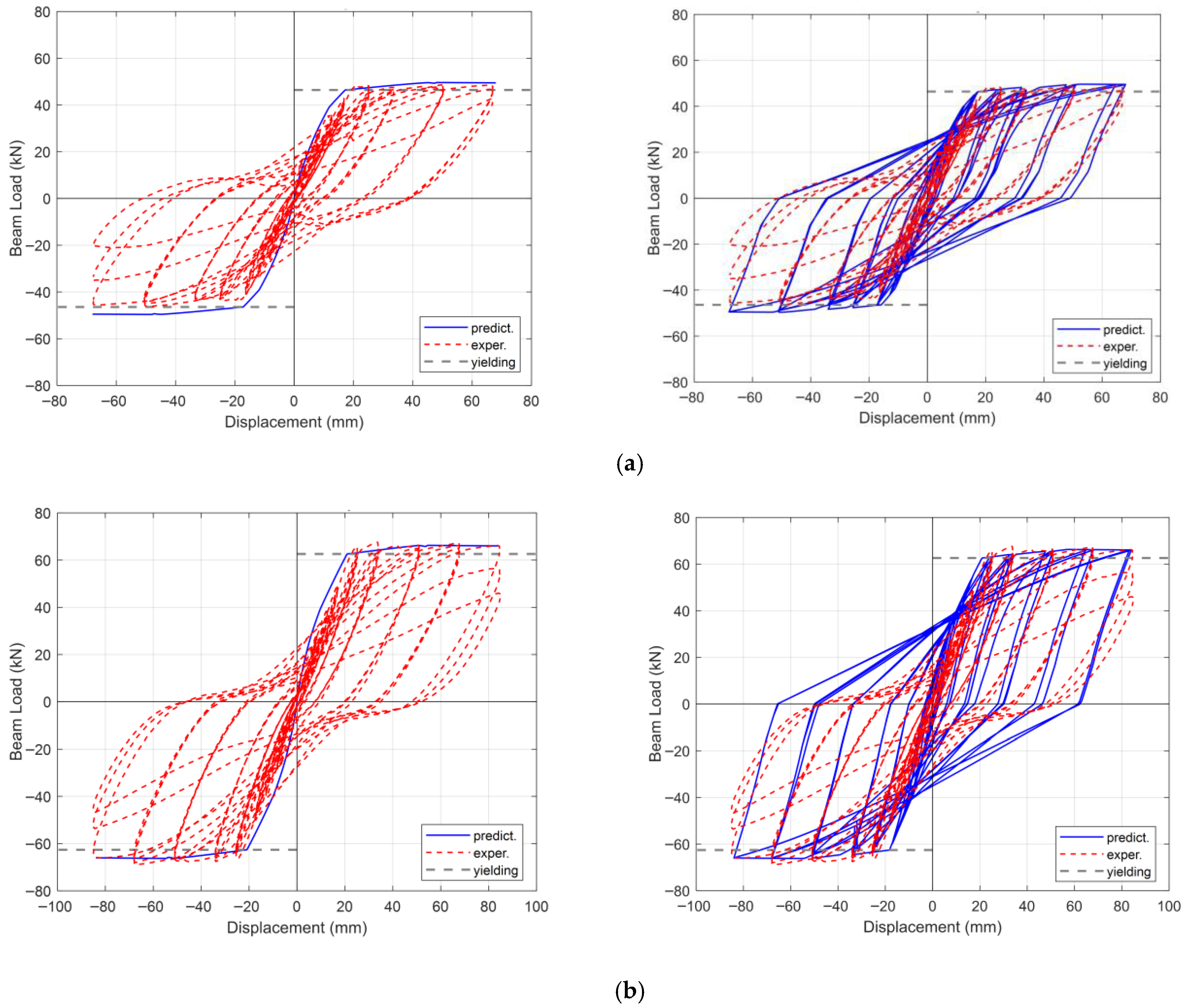
The resulting numerical (blue lines) versus experimental (red lines) comparison is reported and commented on in this section for all the investigated specimens (see
Figure 14 and
Figure 15), both in terms of monotonic and cyclic loading, the latter representing the real displacement history applied during the experimental tests. This comparison is specifically aimed at verifying whether the adopted modeling strategy can correctly reproduce the governing joint-related deformation mechanisms identified experimentally.
First of all, the yielding load is always reported in these figures (gray dotted lines in
Figure 14 and
Figure 15), so that it can be observed that all specimens reached the yielding condition (due to the beam yielding, since the beam is the weakest element). This outcome also leads to a significant influence of the fixed-end rotation of the beam-to-joint spring on the overall deformability of the numerical response.
In particular,
Figure 14 shows the numerical simulations of specimens that experimentally exhibited a significant shear damage within the joint panel (i.e., JB0, JB1, JC0V), after (or at the limit of) the beam yielding, as noted above (i.e., a “BJ-” failure mode is observed for those specimens).
More in detail, for specimens JB0 and JB1, the experimental response showed a softening phase mainly due to joint shear failure, along with some flexural cracks along the beam length, especially at the beam-to-joint interface, where yielding has experimentally occurred.
For these tests, the numerical modeling described in the previous section was able to reproduce the achievement of beam yielding and a softening branch that is mainly due to the softening response of the joint panel. The monotonic response is quite close to the experimental envelope, even if the numerical curve is slightly stiffer than the experimental one (
Figure 14a). Sub-assemblage deformability at the peak load is always very well caught. The numerical cyclic response results quite close to the experimental one, especially when the experimental response was less affected by the beam deformability contribution after yielding (as for specimen JB1 with respect to JB0); nevertheless, it could be argued that the pinching effect could be improved, especially for test JB0.
For specimen JC0V, the experimental damage showed a softening response mainly due to the joint shear failure. Some flexural cracks along the beam also appeared. For the obtained numerical response, the softening response was due to the joint softening (beam is at the very beginning of the yielding phase), and, as for specimen JB1, also hysteretic response and pinching effects (mainly due to the joint panel) are very well reproduced.
On the other hand, tests JA0 and JB0XV (see
Figure 15) exhibited a fully ductile response, due to the lower amount of longitudinal beam rebars (and thus a lower shear stress demand within the joint) (JA0) or to the presence of diagonally placed joint rebars (JB0XV).
For both these specimens (JA0 and JB0XV), the monotonic response is very close to the experimental envelope. The experimental damage mainly exhibited only a slight cracking of the joint panel and significant flexural damage on the beam end. Numerical modeling confirmed this outcome, with a quite constant post-yielding branch until the end of the test. When the peak load is numerically reached, the beam-column joint rotational spring, despite overcoming the cracking point, reached a maximum at the branch between pre-peak and the peak point, then started unloading, in full agreement with the experimentally observed damage. Also, for these two tests, as for the previously discussed JB0, the pinching effect could be improved, along with reloading stiffness degradation, mainly by calibrating the hysteretic response of the fixed-end-rotation spring or on the uniaxial materials selected to model concrete and steel fibers (which was out of the scope of this work).
In summary,
Table 7 provides numerical-to-experimental ratios in terms of: drift ratio at the peak load, dissipated energy until 4% drift ratio, and peak-to-peak stiffness at 1% and 3% drift ratio (same data already shown and commented in
Table 5 and
Table 6). For each of these quantities, the mean and coefficient of variation (CoV) of the numerical-to-experimental ratios are also shown.
It can be noted that the drift ratio at peak load is quite well caught (except for specimen JC0V, where the modeling error is −39%), with a mean numerical-to-predicted value of 0.92 (and a CoV of a bit more than 20%). Dissipated energy is instead overestimated on average by +38% (considering all the specimens), with a reduced CoV (12%). Peak-to-peak stiffness (K) is better predicted by the adopted numerical modeling, resulting in a slight overestimation with respect to experimental data, on average around 12–16% with a quite limited CoV (less than 17%). This outcome is true both for K at 1% and 3% drift ratio, namely at early (1%) and already quite extensively damaged (3%) conditions of the beam-column subassembly.
The comparison between experimental and numerical results highlights a systematic overestimation of dissipated energy, with an average increase of approximately 38% across all specimens (
Table 7). This discrepancy is primarily attributed to the simplified hysteretic formulation adopted for the joint panel and fixed-end rotation springs, which does not specifically address the bond-slip hysteretic response and the progressive degradation of anchorage conditions. As a result, the numerical response exhibits reduced pinching and higher energy dissipation compared to the experimental behavior, particularly in specimens where joint damage is governed by bond/anchorage deterioration. These limitations can be further interpreted in the context of more advanced modeling approaches available in the literature. It is worth noting that more refined modeling approaches, such as those proposed by Tazarv et al. [
31] and Tran et al. [
5], explicitly account for bond-slip mechanisms and have demonstrated an improved capability in reproducing pinching and cyclic degradation effects in RC members and connections. These approaches introduce additional degrees of freedom and require detailed calibration of bond-related parameters, allowing for a more accurate simulation of local bond deterioration phenomena.
It is worth emphasizing that the adopted modeling strategy is intentionally formulated within a computationally efficient macro-modeling framework, aiming at reproducing the global response of beam–column sub-assemblies rather than capturing local bond-related phenomena in detail. Within this context, the model adopted herein provides satisfactory predictions of envelope response, stiffness degradation, and post-peak softening, which are the primary parameters governing large-scale seismic assessment of existing RC structures. Such refined modeling approaches could improve the representation of hysteretic energy dissipation and pinching effects. However, such approaches typically require a significantly higher number of parameters and increased computational effort, which may limit their applicability in large-scale analyses. Therefore, the observed discrepancy should be interpreted as an inherent trade-off between modeling accuracy and computational efficiency, consistent with the intended scope of the present study.
It should be noted that the statistical indicators reported in
Table 7, including the Coefficient of Variation (CoV), are derived from a limited number of specimens (five full-scale tests). Therefore, they should not be interpreted as statistically representative values for large populations, but rather as indicative measures of the dispersion within the examined dataset. The primary objective of the present study is not statistical validation, but the mechanistic interpretation of the observed response and the assessment of the modeling approach.
7. Conclusions and Further Development
Low-standard exterior beam–column joints remain a widespread structural deficiency in existing reinforced concrete (RC) buildings worldwide, particularly in structures designed for gravity loads only or according to obsolete seismic codes. The seismic response of these critical regions often governs the global behavior of RC frames, promoting brittle mechanisms that prevent the effective exploitation of the ductility capacity of adjacent beams and columns. In this context, the present study investigated the seismic behavior of non-conforming exterior joints through a combined experimental and numerical approach. The primary contribution of this study is the identification of reinforcement-controlled joint mechanisms governing the transition between ductile and brittle response in non-ductile exterior joints, and the verification that these mechanisms can be captured by a simplified yet reliable macro-model.
From an experimental standpoint, five full-scale exterior beam–column joint sub-assemblages with identical geometry and material properties were tested under quasi-static cyclic loading, differing only in reinforcement detailing of beams/columns and joint panels. This controlled configuration allowed the influence of specific detailing deficiencies to be isolated and examined. As a result:
- -
The experimental data confirmed that an increase in beam (the weakest element of the sub-assembly herein) longitudinal reinforcement leads to higher peak load demands on the joint and to a more pronounced stiffness degradation when the joint is not properly reinforced. Indeed, in the absence of stirrups within the joint core, its diagonal cracking and shear failure become increasingly prevalent with increasing beam reinforcement.
- -
Specimen JA0 (that with the lowest beam reinforcement amount) exhibited flexural yielding of the beam and a stable, ductile response prior to joint shear failure, despite the absence of joint shear reinforcement. This behavior was observed under a low axial load ratio of 5%, representative of exterior or corner columns in low-rise existing RC buildings. The results indicate that, under favorable combinations of beam reinforcement level, anchorage conditions, and low axial load, certain non-ductile exterior joints may still develop ductile mechanisms before/without joint degradation becomes critical. This observation has direct implications for seismic assessment practice, suggesting that joint vulnerability should be evaluated in conjunction with member strength hierarchy, rather than assumed solely on the basis of detailing deficiencies.
- -
The comparison between specimens JB0 and JB1 (which only differ for the presence, JB1, or not, JB0, of one single joint stirrup) indicates that minimal joint shear reinforcement, such as a single transverse hoop, may be insufficient to produce a measurable improvement in seismic performance unless a minimum level of confinement within the joint panel is achieved.
- -
At the same time, the presence of even limited joint reinforcement—particularly when arranged diagonally within the joint core—significantly improved deformation capacity, mitigated stiffness deterioration, and enhanced energy dissipation, despite comparable beam reinforcement levels.
In parallel, a computationally efficient numerical modeling strategy was applied using the OpenSees platform, building upon an existing macro-modeling formulation for beam–column joints from the literature. While the adopted joint model was not newly formulated, its application:
- -
first, was extended and assessed against new full-scale experimental evidence that is independent of the original calibration dataset, a further necessary validation, and,
- -
moreover, it was enhanced by adopting a distributed fiber-based representation for beams and columns and a fully mechanically based modeling of fixed-end rotations at the beam–joint interface.
The experimental-to-numerical comparisons showed that:
- -
numerical simulations were able to reproduce with satisfactory accuracy the experimental monotonic envelopes, stiffness degradation, and post-peak response,
- -
while the cyclic response showed good agreement, particularly in cases where joint damage dominated the global behavior,
- -
some discrepancies in pinching and reloading stiffness remain, thus affecting the dissipated energy estimation, indicating aspects that warrant further refinement.
Overall, the study provides a coherent experimental dataset, a mechanistic interpretation of joint response, and a calibrated application of an efficient numerical modeling strategy to realistic full-scale joints. These elements contribute to a more reliable seismic assessment of existing RC buildings and support the use of simplified joint models in large-scale analytical studies. However, future developments of this research should focus on extending the proposed experimental–numerical framework to retrofitted existing exterior joints. Experimental investigations on strengthened specimens—using techniques such as C-FRP ropes, FRP wrapping, or prestressed steel systems—will be essential to further calibrate and validate joint modeling approaches and to support the reliable numerical simulation of retrofitted existing RC structures.