Article

Feng Shui as a Chinese Mediating Strategy in the Architectural Design of Tianjin Postal Museum

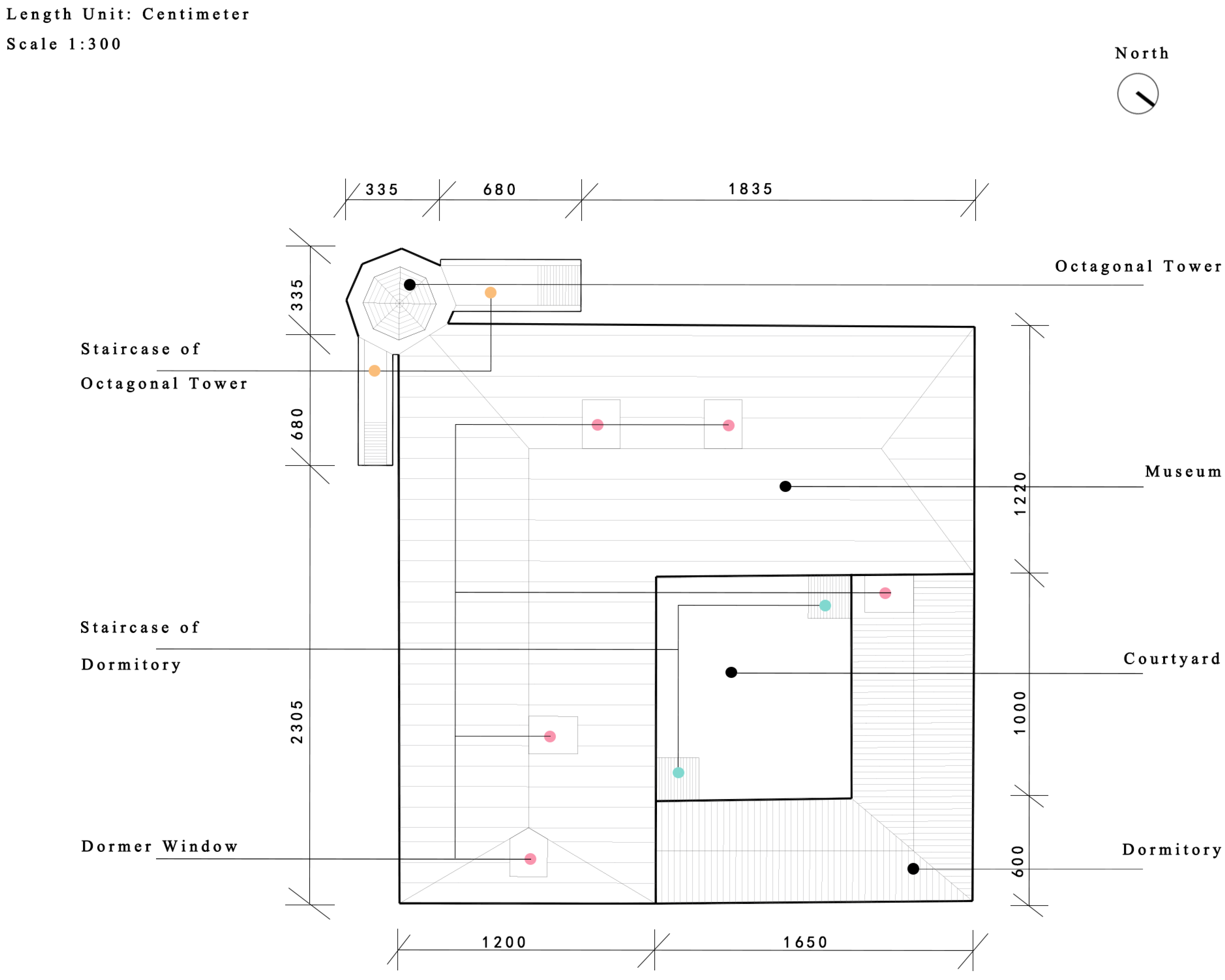
Product Design Department, Tianjin University of Science and Technology, Tianjin 300202, China
*
Author to whom correspondence should be addressed.
Buildings 2026, 16(8), 1593; https://doi.org/10.3390/buildings16081593
Submission received: 9 March 2026 / Revised: 13 April 2026 / Accepted: 14 April 2026 / Published: 17 April 2026
(This article belongs to the Section Architectural Design, Urban Science, and Real Estate)

Abstract

Existing scholarship on Sino-Western hybrid architecture (yanglou) has often treated Chinese elements as marginal, overlooking the agency of indigenous spatial logic. This study examines how traditional Chinese feng shui mediated the localization of Western architecture in the late Qing Dynasty through the case of the Tianjin Postal Museum. The research has three objectives: to distinguish Western architectural features from Chinese spatial rationales, to analyze the mediating mechanisms of feng shui, and to interpret the implications of this case for indigenous knowledge systems in the process of modernization. Using spatial semantic analysis based on UAV mapping and field surveys, the study finds that although the museum displays Western structural systems and proportional canons, its underlying spatial organization follows Chinese logic. This organization includes an enclosed courtyard, a north–south axis that structures dynamic and static zones, and re-signified elements such as the octagonal tower and parapet, which were repurposed to regulate qi and mitigate sha. The findings suggest that feng shui functioned as a pragmatic indigenous framework that enabled the creative appropriation of Western forms and challenged passive diffusion models of architectural modernization.

1. Introduction

Yanglou (洋楼 Western-style buildings Figure 1) emerged in China during the late Qing Dynasty. (In 1840 CE, China was in the late Qing Dynasty. During the First Opium War between China and Britain, the Qing government was defeated and forced to sign a series of unequal treaties with Britain and France. Among other provisions, these treaties allowed foreign powers to establish concessions in various Chinese port cities for foreigners to reside and work. The concessions were administered by the respective foreign powers, with no interference permitted from the Qing government. Foreign powers successively constructed buildings in their own national styles within these concessions, which came to be known as Western-style buildings.) As an architectural typology characterized by Western architectural styles, in recent years, these buildings have attracted extensive scholarly attention due to their distinctive appearances, rich historical associations, and functional adaptability. Research on yanglou has intensified particularly since the government proposed leveraging the city’s unique yanglou resources to develop high-quality cultural tourism integration [1]. Current scholarship ranges from aerial surveys of yanglou distribution patterns to linear summaries of their developmental history, from typological feature extraction of building categories to stylistic analysis of individual structures. These studies consistently acknowledge the Sino-Western architectural fusion embodied in yanglou, generally concluding that while Western architectural styles predominate, Chinese architectural elements remain marginalized [2]. Some scholars attribute this imbalance to societal progress demanding enhanced building functions [3,4]. Others contend that evolving social values challenged traditional ideological systems, with these transformations subsequently reflected in architectural expression [5].
Approached beyond the framework of cultural colonialism, yanglou architecture represents an architectural response to the direct confrontation between traditional culture and modernity. Chinese architectural styles unambiguously embody traditional culture, while Western architectural styles represent modernity. Analyzing the Sino-Western stylistic synthesis in yanglou thus assumes profound interpretive significance.
The central research questions are:
Which elements of the Tianjin Postal Museum reflect Western architectural systems and which reflect Chinese spatial logic?
Through what mechanisms (e.g., proportioning, courtyard organization, re-signification of architectural features) was feng shui enacted to mediate Western forms?
What does this case tell us about the agency of indigenous knowledge systems in processes of architectural modernization?
Answering these questions contributes to debates on cultural hybridity, the localization of modernity, and the interpretive potential of spatial semantic methods in architectural history.

1.1. Research Innovations

This study presents the following innovations: First, it articulates the confrontation between tradition and modernity in architectural design through the manifestation of Sino-Western architectural styles. Second, it reclassifies Chinese architectural elements by incorporating the distinctive social division of labor characteristic of China’s feudal period (China’s feudal ruling period began in 221 BC with the Qin Dynasty and ended in 1911 AD with the Xinhai Revolution, lasting a total of 2132 years.) Third, it situates architectural style analysis within the holistic architectural framework encompassing layout, orientation, and ornamentation, transcending examinations limited to discrete building components. Fourth, it provides an analytical framework of “architectural appearance—architectural style—architectural thought” for yanglou research, establishing a theoretical scaffold through integration with cultural hybridity theory. This study systematically integrates cultural hybridity theory with spatial semantics, proposing a quantitative–qualitative analytical method that can penetrate the superficial hybridity of architectural styles and demonstrate how Western forms are re-signified, functionally transformed, and spatially reorganized under the dominance of Chinese feng shui logic. This method enhances the operability and verifiability of research on architectural hybridity and also provides a new theoretical framework and analytical path for understanding the agency of indigenous knowledge systems in the process of modernization.

1.2. Research Contributions

This study contributes to the field in three significant ways: First, through in-depth analysis of the Tianjin Postal Museum complex, it expands the research horizons of yanglou scholarship. Second, by examining feng shui principles as a distinctive feature of traditional Chinese architectural design, it elucidates the mechanisms of integration with Western architectural forms, offering referential directions for contemporary architectural practice. Third, situated at the intersection of traditional and modern architectural discourse, this research provides pathways for developing globalized expressions imbued with national characteristics and modernized forms grounded in local particularities.

2. Historical Background and Case Selection

The Tianjin Post Office buildings (the post office) was an official venue of the Qing Post supervised by Li Hongzhang (1823–1901) (the background of the development of the modern postal system during the Qing Dynasty can be found in Appendix A), the influential Viceroy of Zhili who significantly elevated Tianjin’s political status by moving his seat of government there and fostered close ties with the concession authorities, and Robert Hart (1835–1911), the British Inspector General of the Chinese Maritime Customs Service, which was effectively controlled by foreign officials due to treaties signed after the Opium Wars (Figure 2). Meanwhile, Gustav von Detring (1842–1913), a German-born British merchant and the Tianjin Customs Commissioner who enjoyed a close personal and professional relationship with both Li and Hart, was entrusted to oversee the construction [6], embodying the collaboration and negotiation between Chinese construction officials and Western architects: the architectural structure, external decoration, building scale, and orientation layout therefore embody Chinese and Western architectural characteristics and ideological connotations.
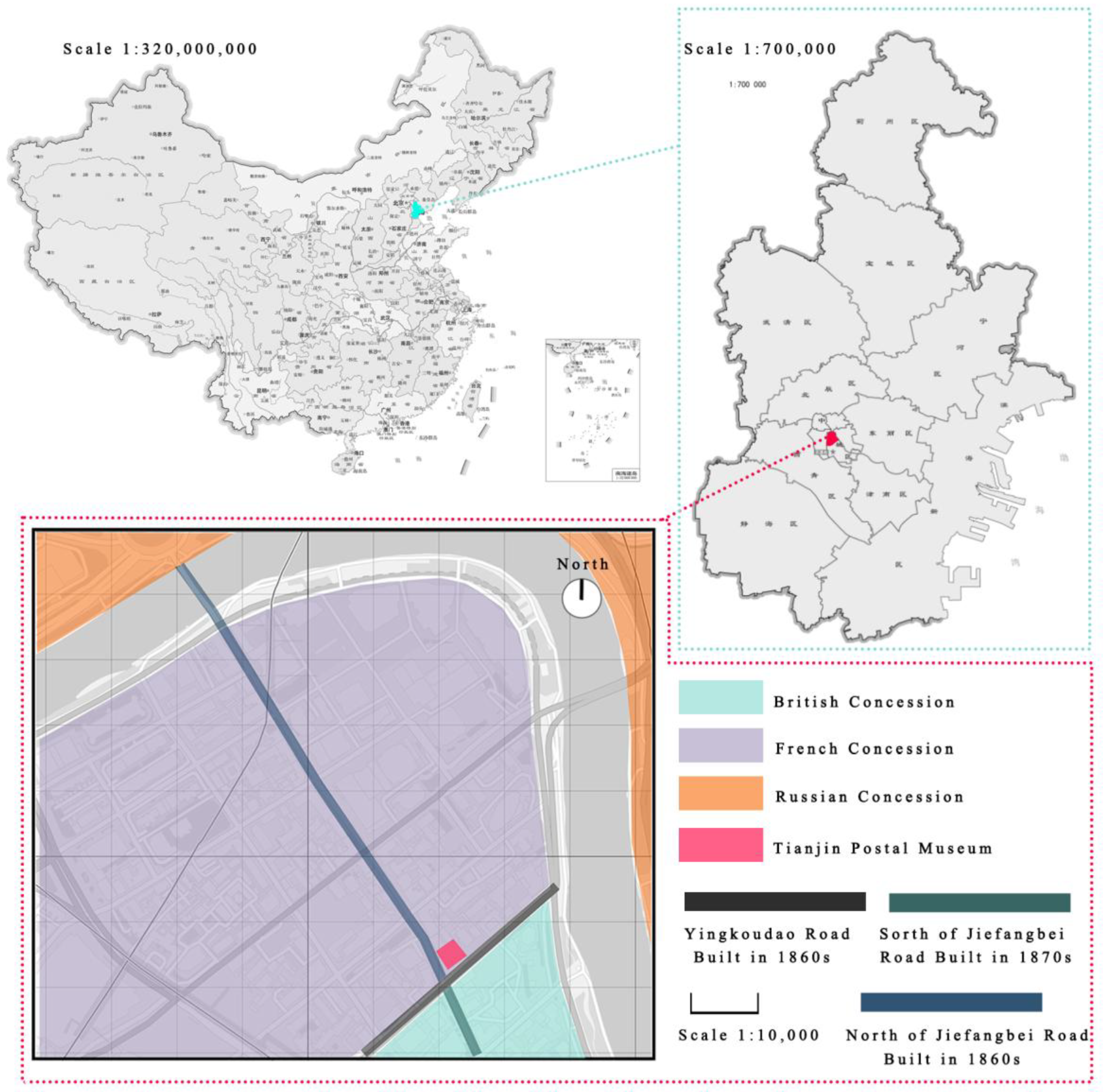
In 1878, appointed by Li Hongzhang, Governor of Zhili and Minister of Beiyang, and Robert Hart, Inspector General of Chinese Customs, Gustav von Detring, Commissioner of Tianjin Customs, founded the “Tianjin Customs Postal Office” in the main office of Tianjin New Customs (now No. 2 Yingkou Road, Heping District) on 23 March of that year, and began to handle mail for both Chinese and foreign publics [7]. In January 1880, the building was renamed “Tianjin Post Office” with an English plaque. As postal services developed, the original building could no longer meet the demand, so the designer of the Zizhulin Church (a Frenchman, whose name has not been traced) was commissioned to design and build a new building for postal use [8]. In 1884, the Tianjin Post Office moved into the current Tianjin Post Museum for office use. On 2 February 1897, the Tianjin Post Office was officially renamed “Tianjin Qing Post Office”, abbreviated as “Qing Post Tianjin Bureau”. The original English plaque was replaced by a Chinese plaque, with two additional English and French plaques hung beside it. In 1906, the Qing government established the “Ministry of Posts and Communications”. In 1911, the “Ministry of Posts and Communications” took over the postal service, and since then, the postal service has separated from the customs and become an independent system [9]. On 1 January 1912, “Qing Post” was renamed “Chinese Post”, and the Qing Post Tianjin Bureau was renamed Zhili Postal Administration, until it moved out in August 1915. After the French merchant Oye established the “Tianjin Yipin Loan Company” in Tianjin, the former site of “Qing Post Tianjin Bureau” became the property of this company until 1949 (Figure 3).
After the founding of the People’s Republic of China, the building was entrusted to the Tianjin Municipal People’s Government for management, with its ownership belonging to Belgium. In 1984, the municipal government allocated funds for its renovation. In June 1997, the building was listed as a cultural relic protection unit by the Tianjin Municipal People’s Government. In May 2000, Tianjin Post Office decided to purchase its ownership to establish the Tianjin Post Museum. In 2001, the Tianjin Municipal People’s Government signed an agreement with Tianjin Chemical and Light Industry Corporation to transfer the right to use the building to Tianjin Post Office for compensation. In 2008, the Tianjin Post Museum was renovated again to welcome the Beijing Olympic Games. In 2010, the Tianjin Postal Company carried out overall reinforcement and renovation and it was completed and opened to the public in October. The transformation of the usage of the post office buildings is shown in Appendix B.
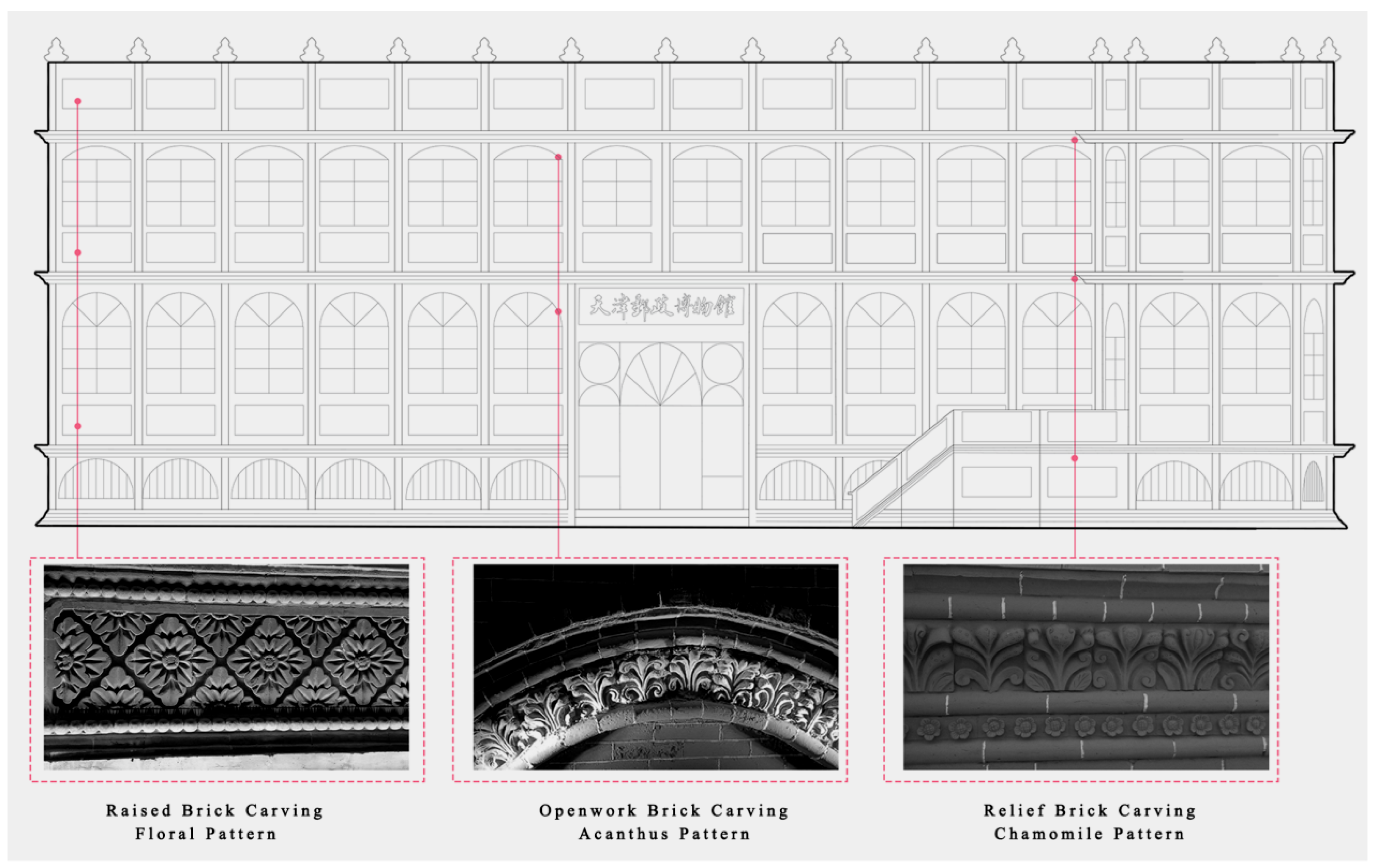
The Tianjin Post Museum is a two-story brick–wood-structured building with a basement, covering an area of 1 mu, 6 fen, and 7 li (approximately 1300 square meters). The building plan is L-shaped, with its exterior facade constructed in Chinese gray bricks, adorned with exquisite brick carvings and arched doors and windows. The columns adopt a Roman arch and order, and the continuous use of flat-arched doors/windows with pilasters endows the entire building with a strong sense of rhythm. The inter-window walls feature elaborate gray brick carvings, where traditional Chinese brick carving techniques are used to depict Western classical motifs such as ranunculus leaves, chamomiles, and bead decorations, as shown in Figure 4 (天津邮政博物馆 The Chinese character plaque in the figure reads: Tianjin Post Museum).
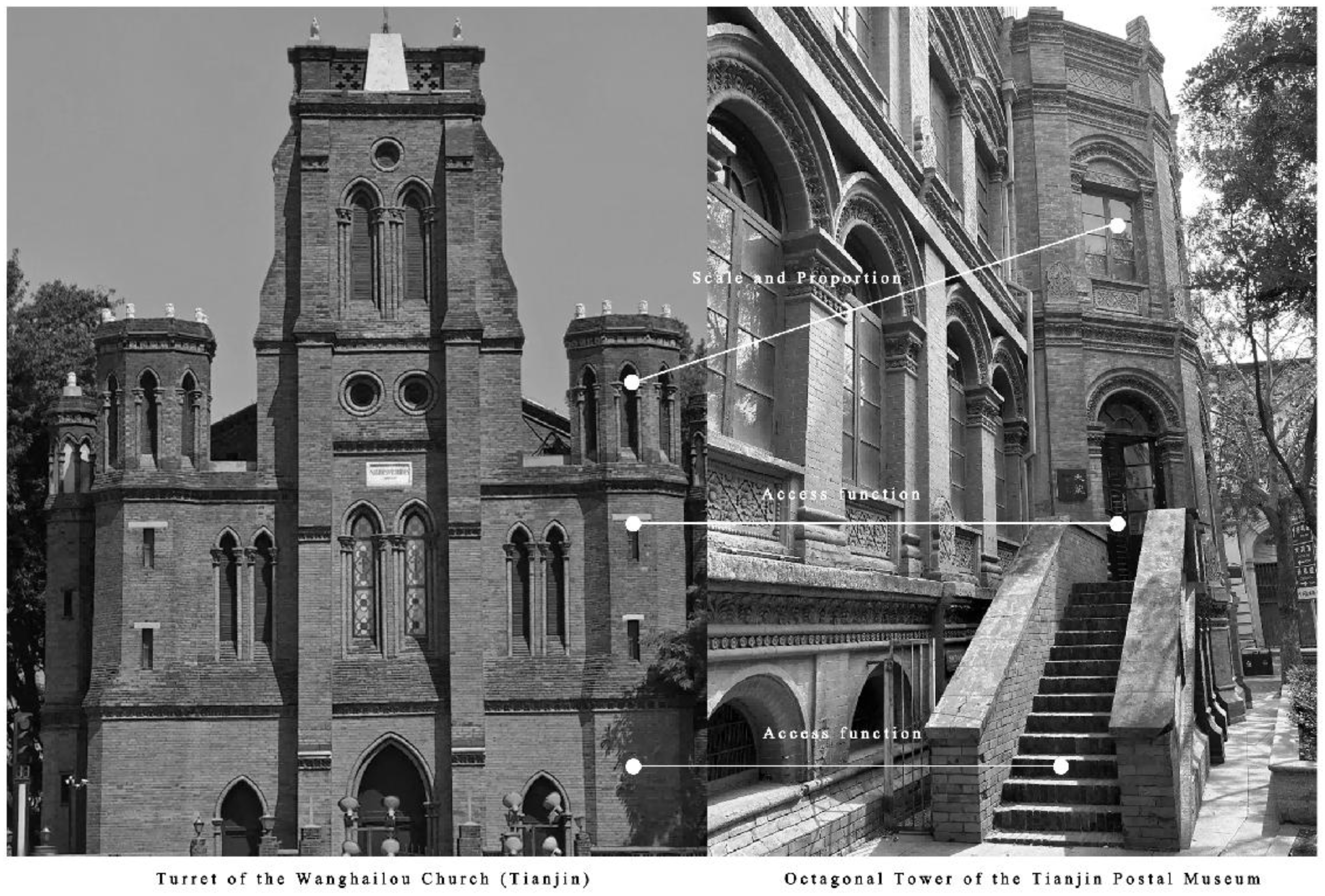
A critical aspect of the building’s original design was its functional circulation, which was intrinsically linked to its hybrid identity. Notably, the architectural form of the octagonal tower, while reminiscent of Western ecclesiastical turrets, diverged significantly in function and scale, suggesting an early adaptation during the design process (Figure 5). The current museum use of the building has necessitated alterations to this original circulation pattern; the entrance through the tower has been sealed to manage visitor flow, preserving its spatial character while altering its historical function.
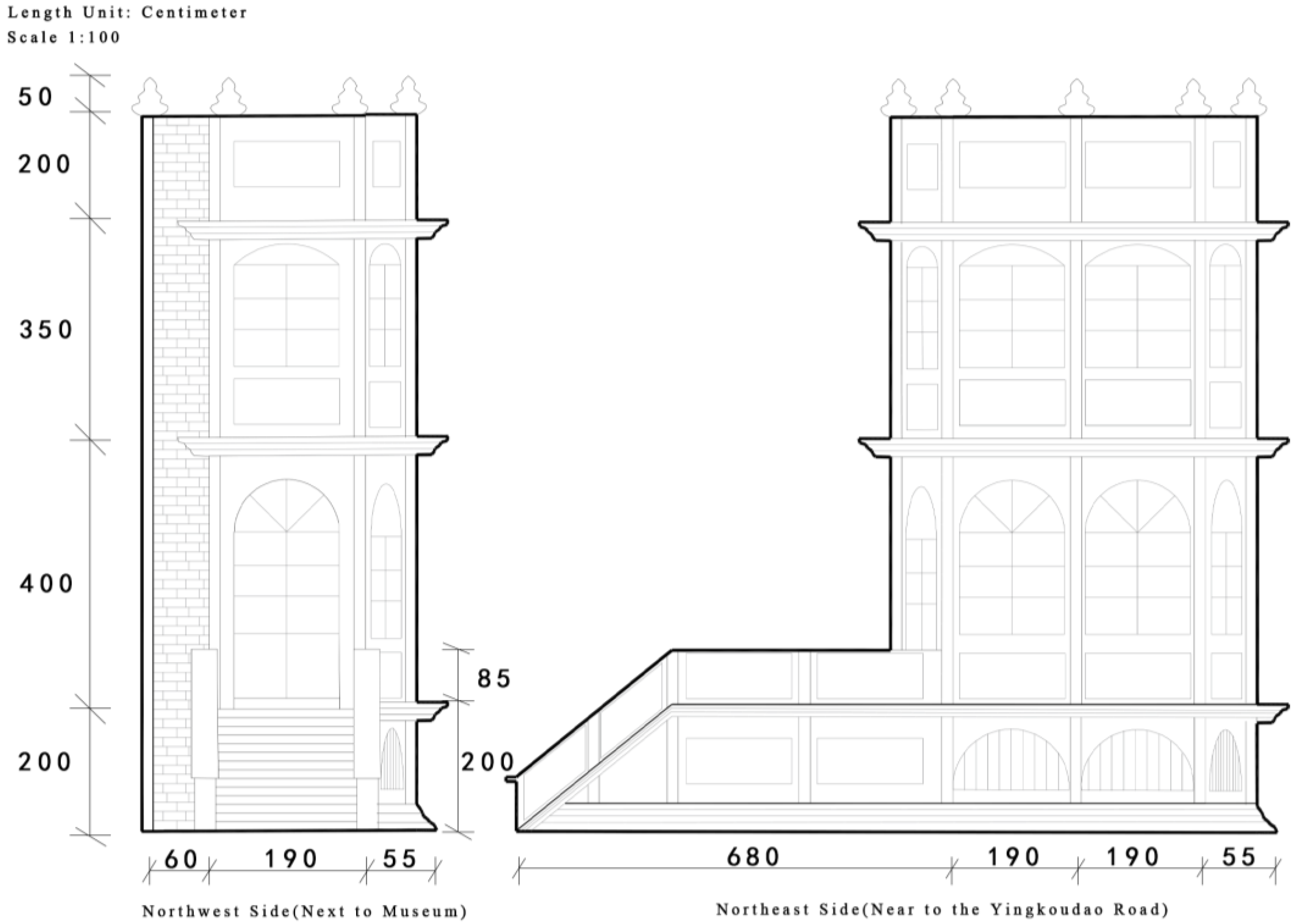
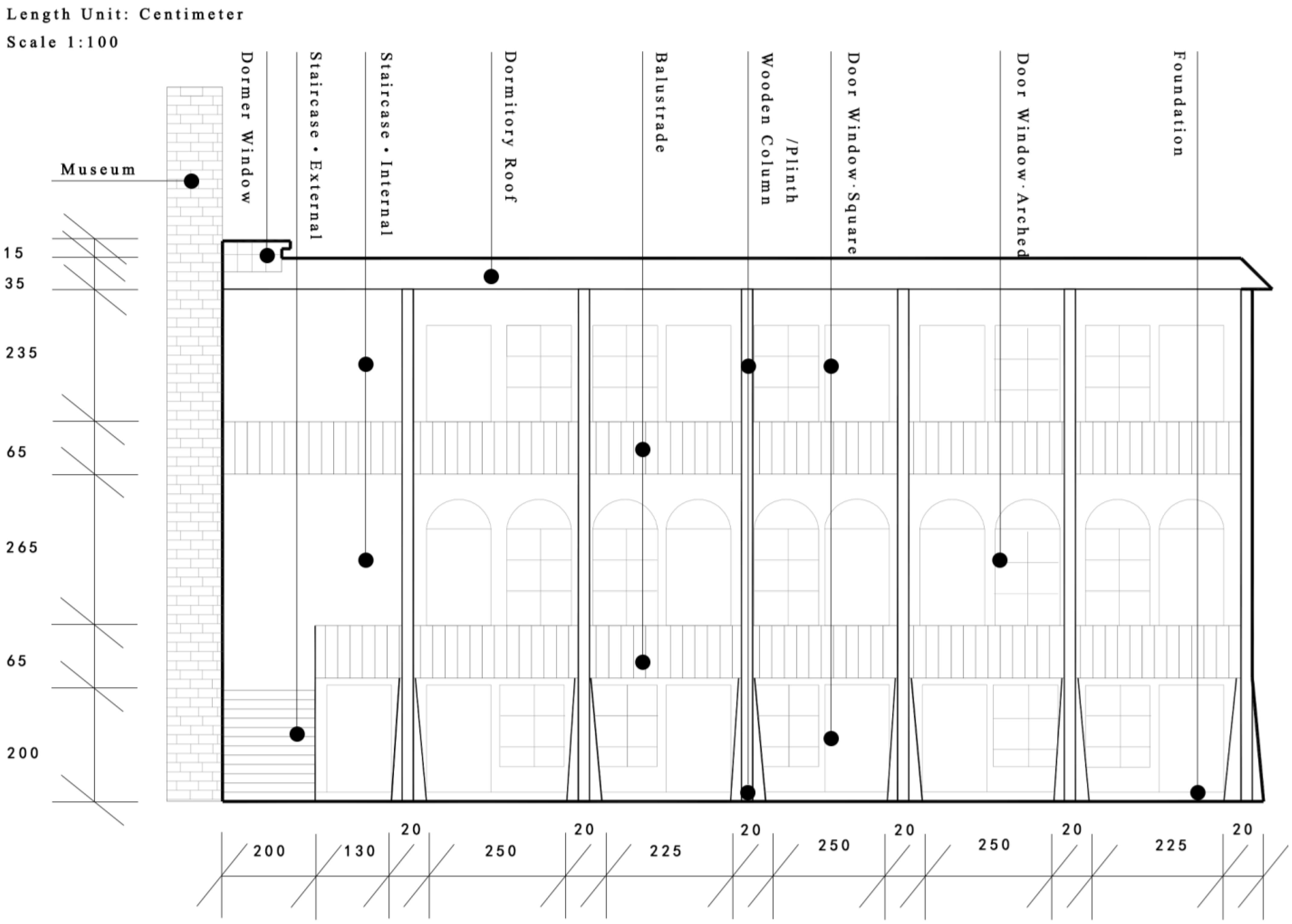
The octagonal tower, as the primary public entrance, was not merely a stylistic motif but a pivotal spatial organizer. It served as the dynamic access point for customers, directly connecting them to the operational heart of the post office within the museum building (Figure 6). This design created a clear and efficient hierarchy of access, segregating public, operational, and residential (private) zones.

3. Materials and Methods

3.1. Architectural Style as the Formal Basis

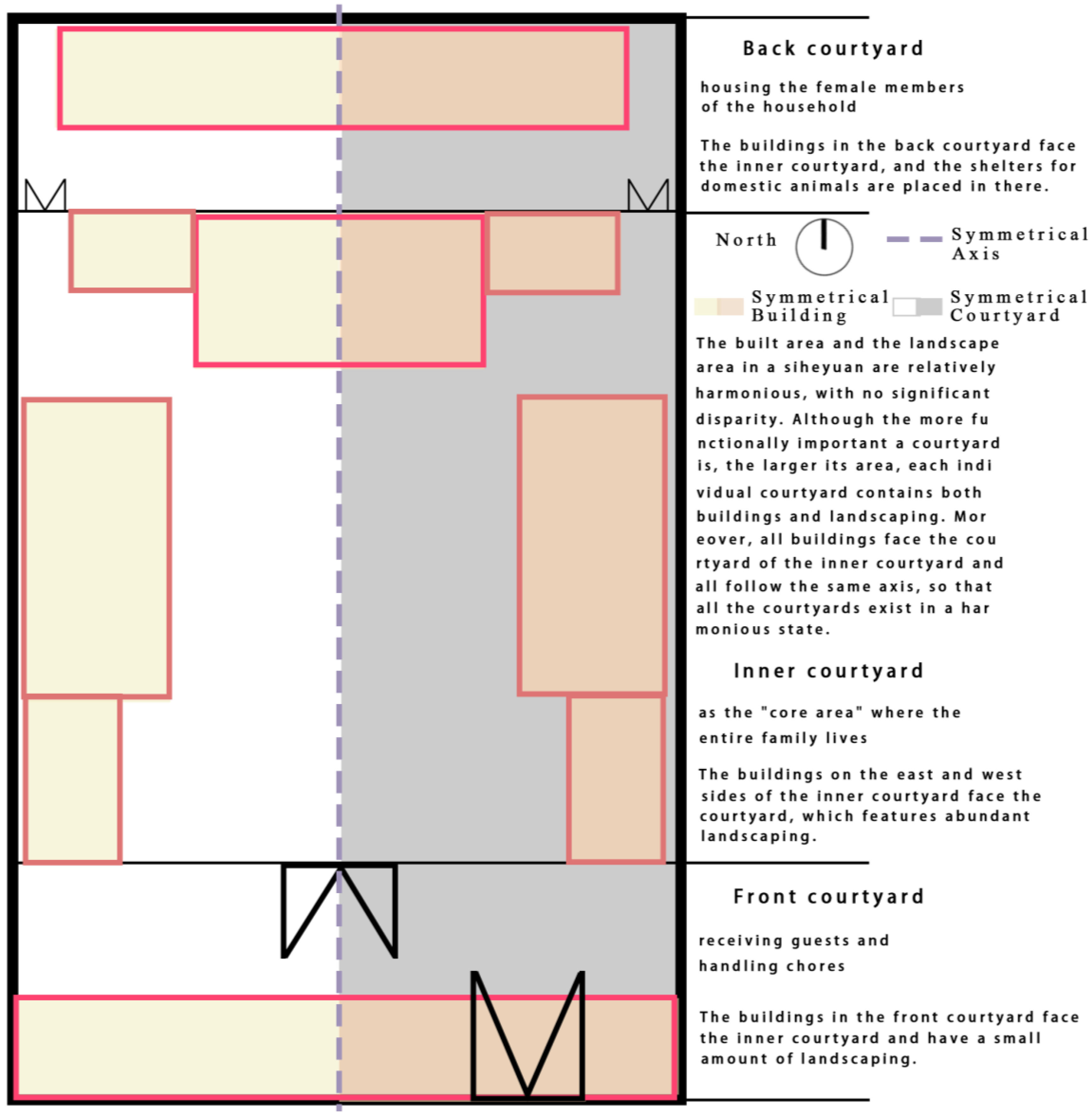
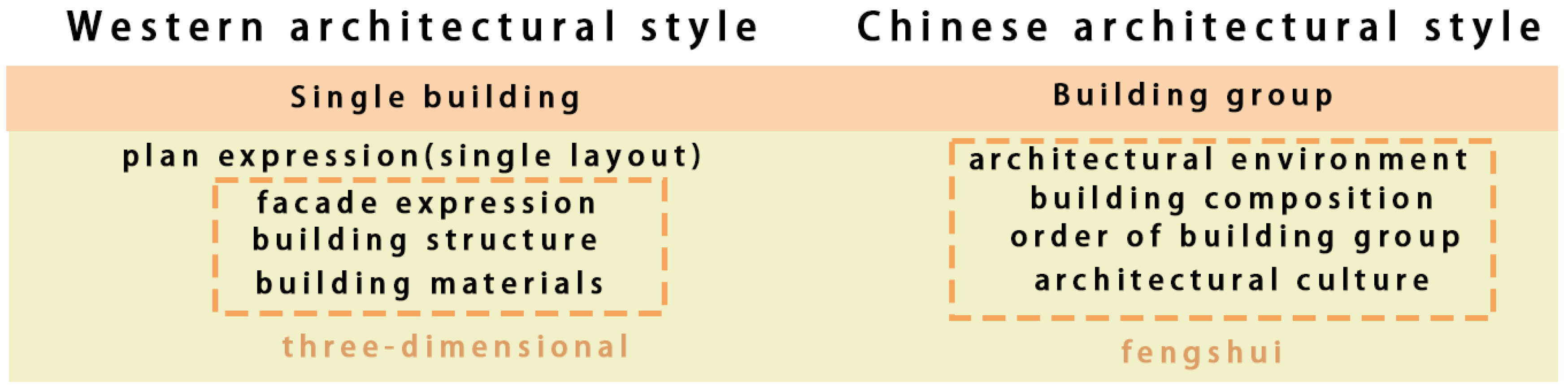
The research is fundamentally based on architectural style, which refers to the characteristics reflected in the content and appearance of architectural design. This includes the originality and artistic conception displayed in aspects such as the building plan layout, morphological composition, artistic treatment, and technique application. Traditional Chinese architectural style emphasizes the courtyard layout formed by building groups, prioritizing symmetry, spatial division, balance, and harmony with the environment over extreme expressiveness [10] (Figure 7). It embodies the cosmological ideas of heaven, earth, and humans, deeply involving the concept of “feng shui” [11]. In contrast, Western architectural style emphasizes a “three-dimensional perception and single layout” [12], pursuing special proportions in both plan and elevation in addition to the expression of structure and materials [13] (Figure 8). The analysis of stylistic elements provides the foundational formal language for identifying hybridity.

3.2. Cultural Hybridity as the Interpretive Lens

The study is conducted under the overarching framework of cultural hybridity theory [14]. Cultural hybridity refers to the new cultural forms that emerge from the collision and integration of different cultures [15]. It is neither purely local nor a simple copy of foreign culture [16], but rather a “third space” formed through negotiation, resistance, and compromise. This hybridity is a characteristic arising from the connection between regional and global culture [17]. The Tianjin Postal Museum, built during the early stage of China’s modernization, exemplifies this process, where rich traditional culture mixed with foreign influences, challenging the “authenticity” of tradition [18]. This theory provides the conceptual tool to understand the museum not as a mere stylistic collage, but as a site of active cultural negotiation and the production of new meaning.
Furthermore, the process of hybridity is not always a neutral or equitable exchange. As noted in existing scholarship, hybrid culture can also serve as a “packaging tool” for the spread of foreign culture [19], or in contexts of imperialism and feudalism, it may lead to the “non-purity” of culture due to profoundly unequal power dynamics [20]. As a foreign architectural form introduced during the concession era, Western-style buildings themselves were a product of such power imbalances. On one hand, they are distinctly different from traditional Chinese architecture in form and technique, on the other hand, they were inevitably influenced and reinterpreted by Chinese architectural thought and agency [21]. This tension and negotiation between unequal powers is precisely what drove their evolution into a distinct, third form of hybrid architectural style [14], making the Tianjin Postal Museum a critical case for examining this complex process.

3.3. Feng Shui as the Indigenous Spatial Rationale

Feng shui (风水) is identified as the core indigenous knowledge system and the primary agent of Chinese agency in this study. It is presented not merely as superstition, but as the spiritual sustenance and spatial rationale of traditional Chinese architecture [22]. Initially a method for selecting settlements, it developed into a concept of appropriate environmental modification and harmonious coexistence. Its purpose is to create a gentle flow and accumulation of qi (气 vital energy), with cang feng de shui (藏风得水) (hiding wind and obtaining water) being its essence [23]. Feng shui views the environment as an integral whole with humans at the center [24] and it is often realized through the design of courtyards. In the context of this research, feng shui is the operative Chinese spatial logic that actively mediated, appropriated, and reworked Western architectural forms to serve indigenous social functions and spatial logics, ultimately producing a distinct hybridity. A more detailed introduction to feng shui can be found in Appendix C.
The post office was built during the late Qing Dynasty, a period when the Chinese had not yet systematically studied Western architectural thought. Chinese architects were still divided into government architectural officials responsible for constructing official buildings and folk craftsmen who built private dwellings. The study has already noted the significant differences between ancient feng shui in official and folk contexts. At that time, Western architects in China designed buildings for private or colonial clients, all of which fell under the category of folk architecture. After drafting the designs, they would hire local folk craftsmen to carry out the construction, without the involvement of Qing officials (it was impossible for Qing officials to be hired on the open market with money). Although the post office was overseen by Westerners, these Europeans had applied to the Qing Emperor. After imperial approval, it was constructed in the name of a Qing government office. According to Qing laws and regulations, government buildings were not permitted to employ folk craftsmen during construction. Therefore, the officials involved in building the post office were government construction officials with extensive feng shui knowledge. Feng shui principles dominated the planar layout of the post office complex, influenced the facade expression of the Postal Museum, and transformed the building’s cultural meaning. The planar layout continues the traditional Chinese form of a building complex arrangement (the courtyard system), which fully accords with feng shui practice. However, the facade, while influenced by feng shui, does not fully comply with feng shui practices. Traditional Chinese architecture does not emphasize facade expression as much as Western architectural styles. Architectural components influenced by feng shui are expressed independently on the facade (e.g., Tai Shan Shi Gan Dang is used alone); components are not added for the sake of facade esthetics (as this would be criticized as neglecting substance). Chinese architectural culture emphasizes practicality and the Tao (道the Way) embodied in artifacts (qi yi zai dao 器以载道). The Tao of architecture includes the unity of heaven and humanity, hierarchical order, and harmony with nature—all of which are ultimate goals of feng shui philosophy. In contrast, European architecture places human needs in an absolutely paramount position, values the artificial beauty of architecture, and greatly enhances building practicality through unique structural systems. European architectural culture rarely engages with philosophical domains. Moreover, differences in building materials (European masonry materials are easily obtainable and reusable) and geographical climates mean that European architectural culture seldom concerns itself with the building microclimate and structural longevity that Chinese architectural culture emphasizes.
Thus, while the planar layout and facade design of the post office complex differ, both are influenced by feng shui thinking. The facade design not only serves the living space (e.g., the parapet’s decorative purpose is to ward off evil [bi sha], and although the efficacy of this purpose cannot be verified, it remains the reason for the parapet’s presence) but also adheres to Western architectural rules (facade esthetics). The architectural culture of the post office complex is unique. When touring this building or other yanglou in Tianjin or elsewhere in China, visitors may admire their exquisite appearances, but they rarely ask “why” as they do when visiting traditional Chinese architecture (where every component has a reason for existence, often related to feng shui). When visiting the post office, one can both appreciate its unique appearance and inquire into the reasons behind it—every design decision is supported by a definite philosophical belief, a quality rarely found in other Western-style buildings. Feng shui addresses the relationship between the post office complex and its environment. Other hybrid buildings, when handling this relationship, did not undergo systematic design (they paid little attention to it). Facade decorations here are also governed by feng shui principles; they are not merely ornamental but acquire an apotropaic (bi xie 辟邪) function in feng shui terms. It is difficult to determine the relationship between building hierarchy and feng shui, because both Chinese and Western architectural design focused on the museum building itself.
Due to the objectives of this study, the efficacy of feng shui’s effects was not verified. However, feng shui served as the design criterion for Chinese construction officials at the time. To accurately reconstruct their authentic design logic, a detailed introduction to feng shui is essential. The non-scientific functions of feng shui constituted their design intentions, while the resulting formal modifications were merely the means of realization. We contend that these formal modifications offer sufficient referential value for contemporary architectural design. Verifying the effects of feng shui, however, is a complex and challenging endeavor, and there is a lack of comparable yanglou cases that similarly embody feng shui principles. Therefore, this paper does not pursue this line of inquiry.
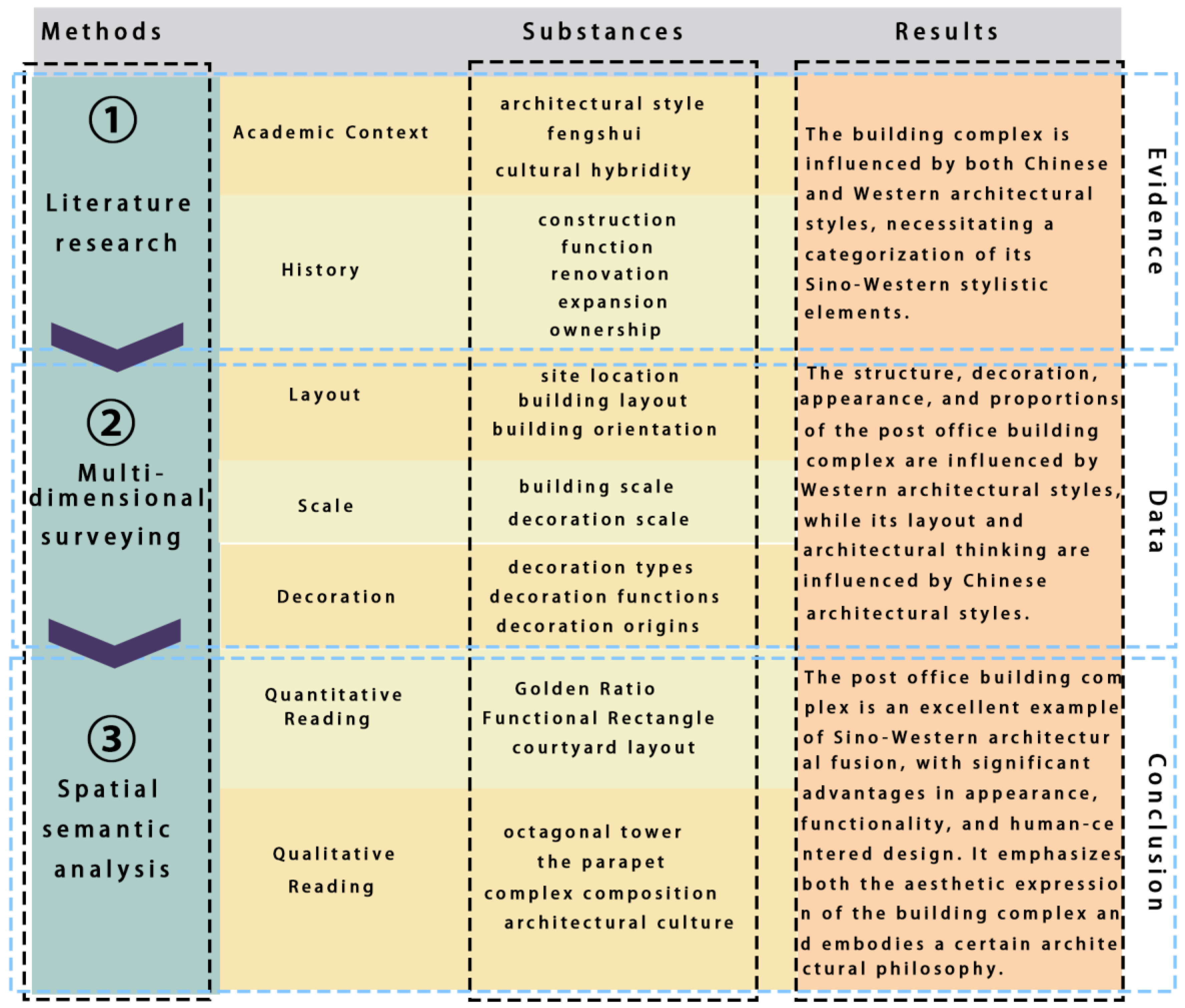
The analysis integrates two complementary moves. First, after extensive review of the relevant literature, and inspired by the theory of hybridity, the postal complex is defined as a “third space” where meaning and authority are negotiated. Second, spatial semantic analysis treats the architectural elements identified through multi-dimensional mapping—including courtyards, axes, towers, parapets, and staircases—as carriers of cultural significance. Their functions can be interpreted both quantitatively (in terms of proportion and ratio) and qualitatively (in terms of ritual, circulation, and qi regulation). Together, these approaches support multi-scale interpretation, linking proportional diagrams and measured floor plans with symbolic meanings and functional analysis (Figure 9).

3.4. Literature Research Method

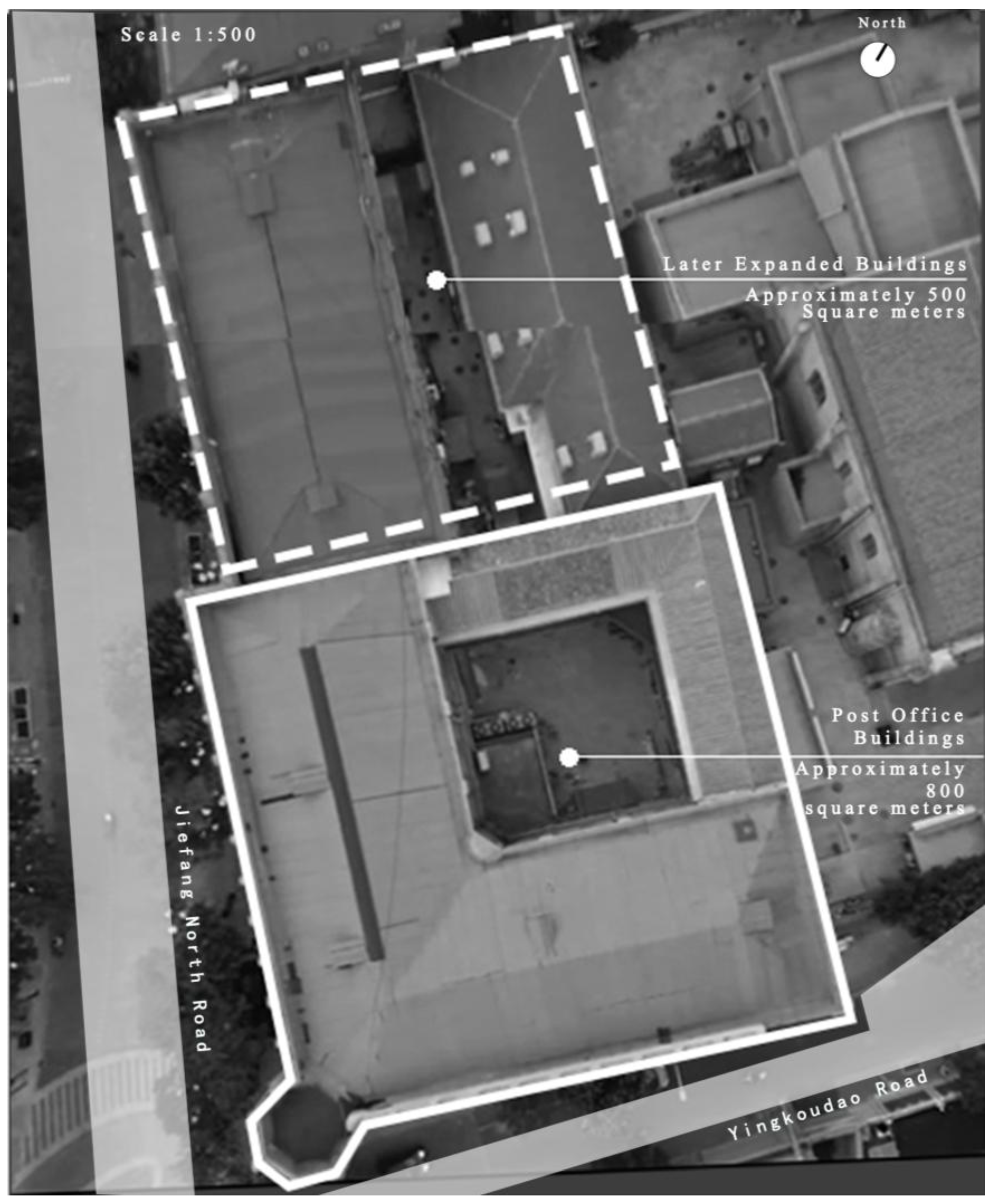
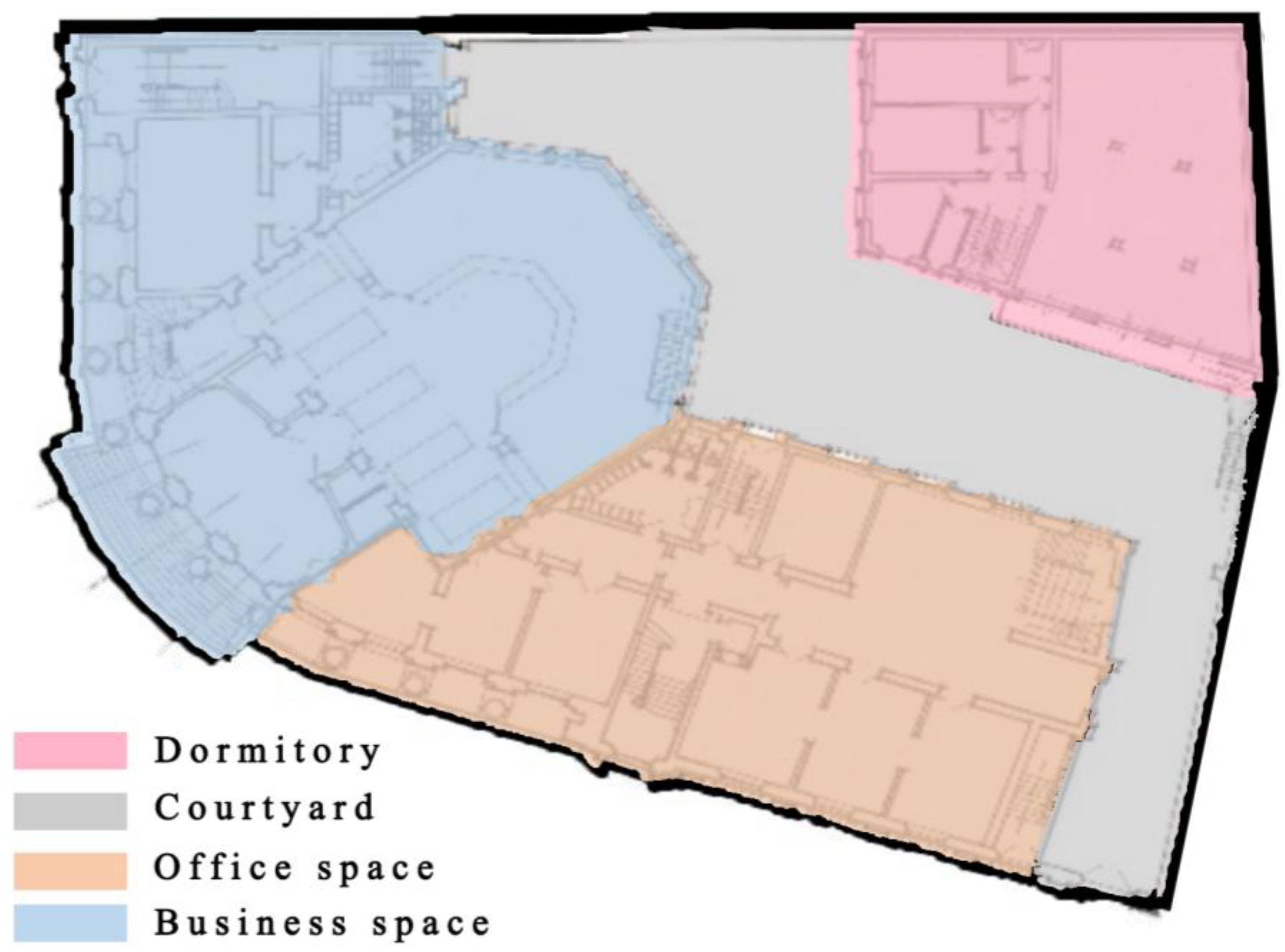
In this study we systematically sort out the academic context of architectural style theory, feng shui space theory, and cultural hybridity theory. We clarify the applicable boundaries and limitations of cultural hybridity theory and spatial semantics through the relevant domestic and foreign literature, providing support for the construction of a cross-theoretical analysis framework. At the same time, we comprehensively collect historical archives, renovation records, and existing academic discussions of the Tianjin Post Museum, focusing on sorting out core information such as building scale data and construction background, and establish a basic data system covering historical context, architectural technology, and ideological connotations to lay a textual foundation for subsequent empirical analysis. After reviewing the literature, it was found that there is controversy over the division of the current postal office building scope, with no clear distinction between the original building and the later expanded part. Figure 10 shows the scope of the original building and the later expanded part, and the protection and development progress of the original building complex also varies, with the development of the museum being significantly faster than that of the dormitories and courtyard.

3.5. Multi-Dimensional Surveying and Mapping Method

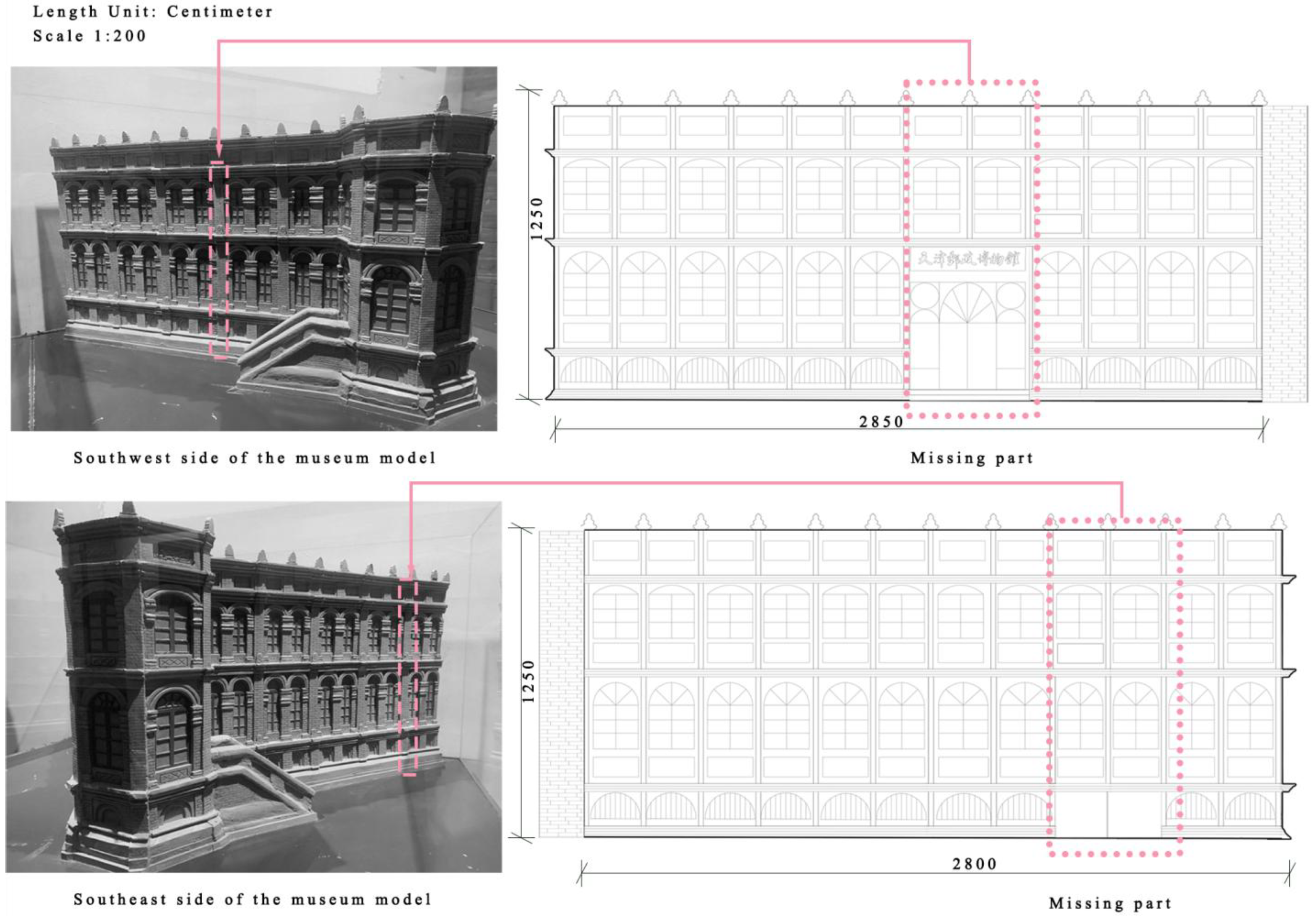
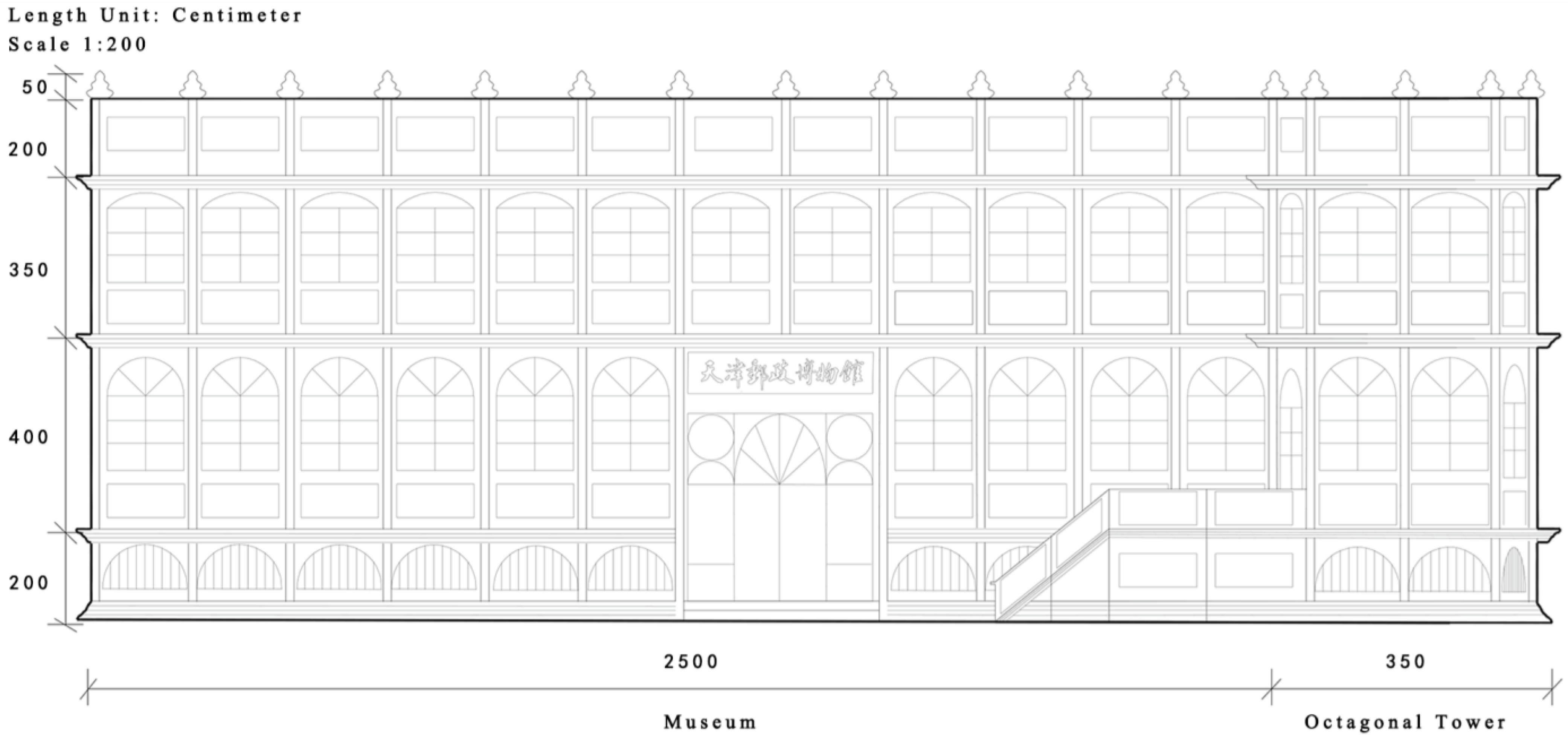
The existing historical records and literature regarding the architectural proportions of the building are notably incomplete and imprecise. To address this gap, a comprehensive multi-modal surveying strategy was implemented. Unmanned Aerial Vehicle (UAV) photogrammetry was first employed to capture high-resolution imagery of the entire building complex. UAV is one of the sources of research data, mainly used to survey building components beyond human scale such as rooftops. It was through the use of UAV that we discovered the parapet walls obscure the roof. Key architectural nodes were subsequently selected for detailed on-site measurement using traditional hand-measuring techniques. These empirically gathered data were then used to produce a full set of architectural drawings—including plans, elevations, and sections—through computer-aided design (AutoCAD 2020) software. This integrated process ensured the required accuracy for subsequent proportional verification and feng shui pattern analysis, thereby providing a robust empirical foundation for quantitatively examining the integration mechanisms of Chinese and Western architectural features. During on-site validation, it was observed that the architectural model displayed within the museum contains significant inaccuracies; specifically, the model omits approximately one-fifth of the actual structure, substantially distorting the building’s proportions, as visually documented in Figure 11.
To enhance the reliability of data for proportional and spatial semantic analysis, a two-phase surveying methodology was adopted. The initial phase relied on UAV-based photogrammetry to establish a primary dataset, offering a comprehensive overview of the site layout and spatial interrelations between buildings. However, due to limited interior access and ongoing restoration activities during the survey period, the deployment of high-precision laser measurement tools was not feasible for all structural elements—particularly the external staircases adjoining the dormitory block, as indicated in Figure 12.
Consequently, a second phase involving meticulous on-site inspection and manual measurement was conducted to refine and validate the initial UAV data. This stage utilized triangulation and offset measurement methods to corroborate critical dimensions. A notable adjustment was made concerning the dormitory block: aerial and ground-level examination confirmed that the initial length measurement incorporated external staircases. These were subsequently excluded to determine the authentic dimensions of the main building volume. All dimensional and proportional data cited in the Results Section originate from this validated dataset, guaranteeing a credible empirical basis for further interpretation.
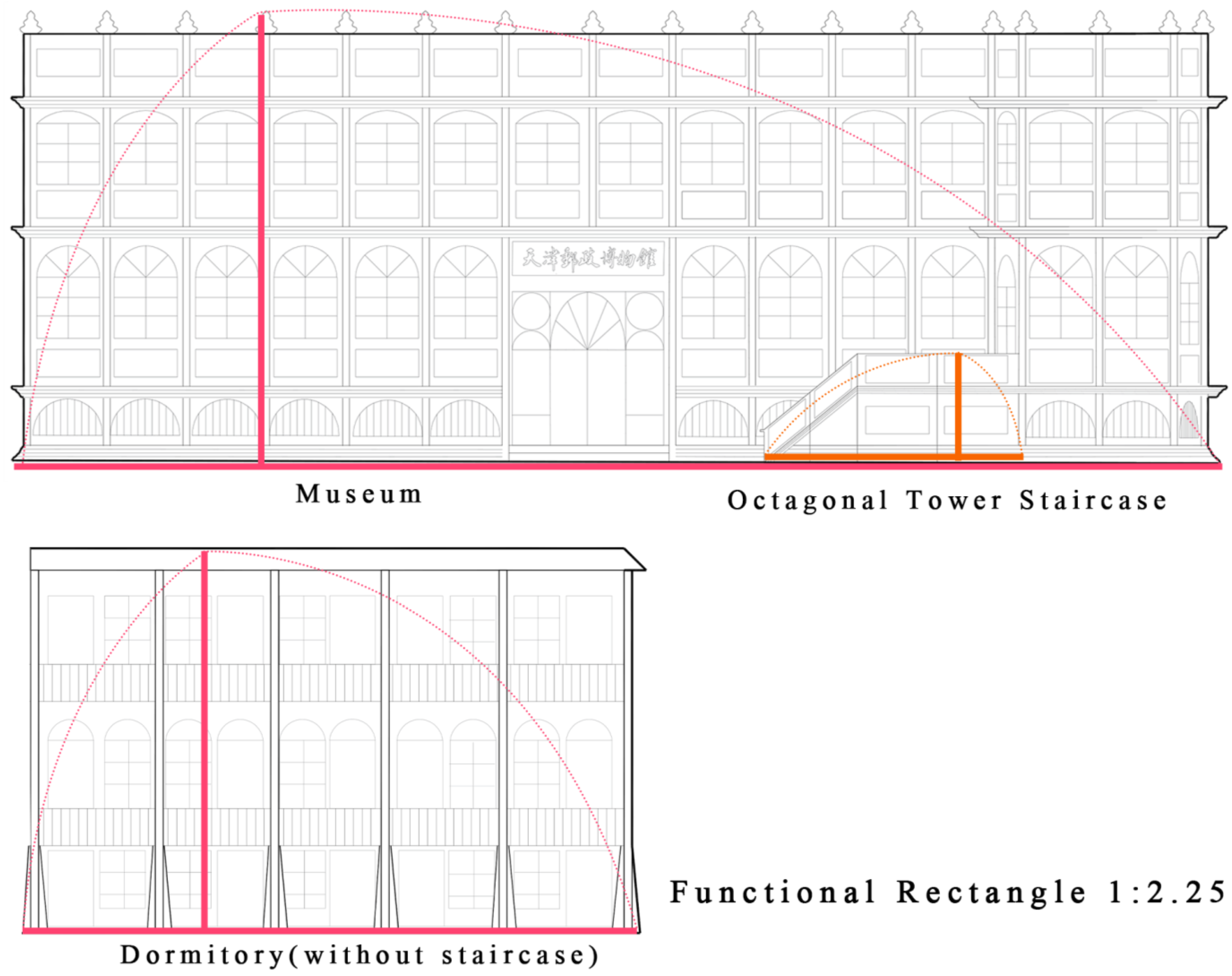
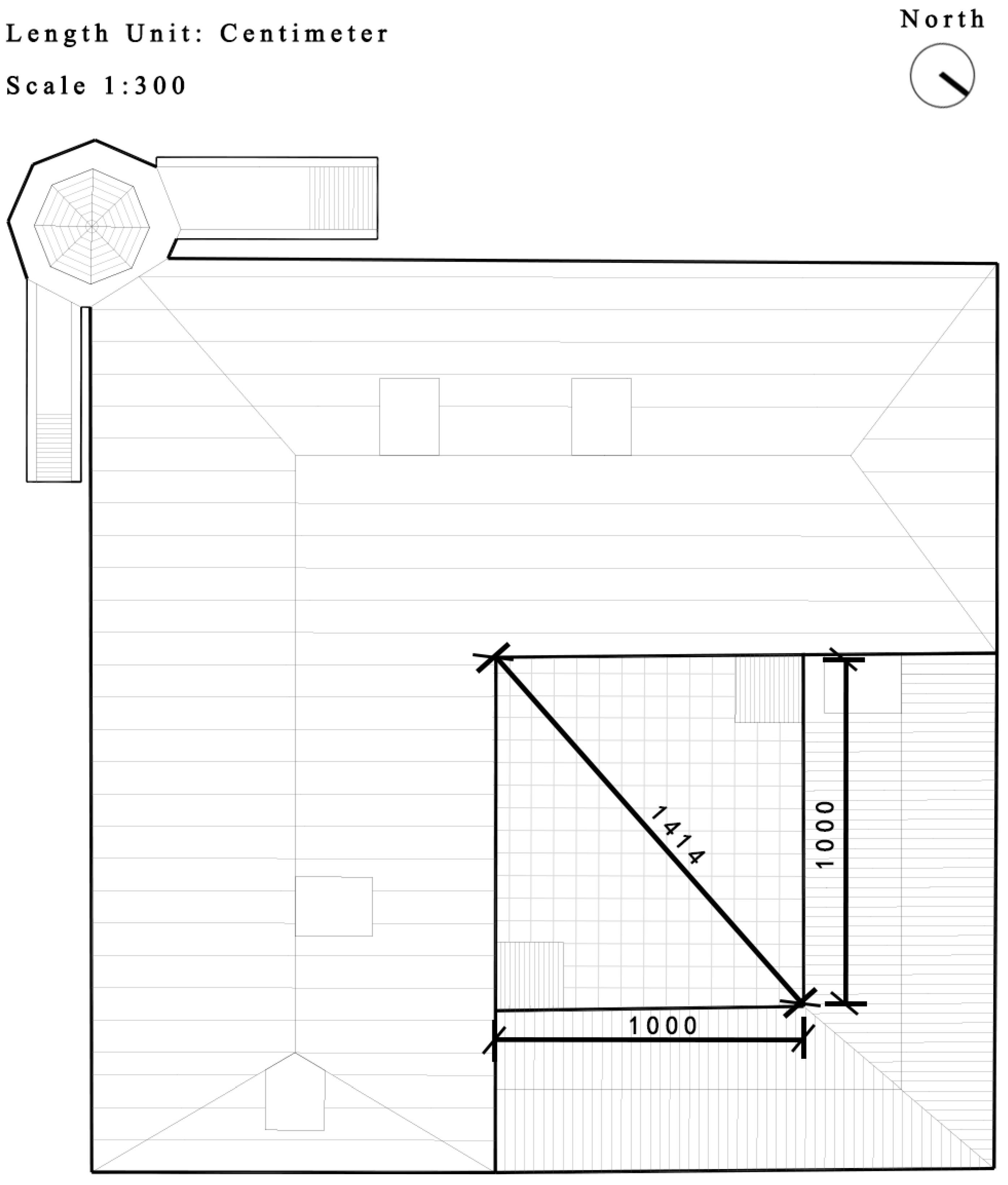
For example, particular effort was invested in accurately determining the proportions of the dormitory building. Preliminary measurements indicated a plan ratio inconsistent with established Western architectural norms. As shown in Figure 13, detailed field analysis confirmed that the initial survey included external staircases within the total length. Through annotated imaging and photogrammetric reassessment, these ancillary components were identified and their estimated extent (2.5 to 3 m) deducted to isolate the core building volume. This recalibration was essential to arriving at the corrected ratio of 2.25, which corresponds to the functional rectangle principle. This case exemplifies the rigorous methodology applied throughout the study to ensure that all proportional data presented reflect the most accurate interpretation of the building’s original design intent. Detailed dimensional data and proportional calculations are provided in Appendix D.

3.6. Spatial Semantic Analysis Method

This research employs spatial semantic analysis as its core interpretive method to decipher the cultural negotiations embedded within the architectural hybridity of the Tianjin Postal Museum. This approach treats architectural elements not merely as physical forms but as carriers of cultural meaning, whose functions and significance can be read through a dual lens: quantitatively through measurable data (proportions, ratios, dimensions) and qualitatively through embedded cultural concepts (ritual, circulation, social hierarchy, and notably, feng shui principles such as qi regulation and conflict mitigation). The interpretation of architectural space is generally carried out through specific signs—for example, mosaic glass patterns or classical column orders signal a unique spatial experience to the viewer. These signs represent a particular architectural style, have formed fixed patterns in design expression, and possess certain functions. However, due to the cultural hybridity of the post office complex, it is difficult to provide a conventional interpretation of elements such as the parapet and corner tower, because they are not purely traditional European architectural signs; they have more functions and cultural connotations. In order to analyze these signs in depth, the spatial semantic method is adopted. First, as much data as possible on the post office complex must be collected, including the composition of the building complex, dimensions, etc. Then, a primary direct identification is performed on these data, identifying those features with typical architectural styles. The atypical features are subjected to a secondary analysis, differentiating them through prototypes, modifications, and actual functions. Finally, the results are presented.
The analytical process involved three key steps.

3.6.1. Element Identification

Key architectural elements were identified for their potential as sites of cultural negotiation. These included the overall courtyard layout, the north–south axis, the octagonal tower, and the parapet. These elements were selected because they are fundamental to both Western architectural language and Chinese spatial philosophy, making them prime candidates for re-signification.

3.6.2. Dual-Layered Reading

Each element was subjected to a dual-layered analysis:
Quantitative reading: Precise measurements of the elements’ proportions, scales, and spatial relationships were conducted (as detailed in Section 4.2). This provided an objective, empirical basis for understanding their formal properties (e.g., the octagonal tower’s adjusted proportions, the courtyard’s near-square dimensions).
Qualitative (semantic) reading: The historical, functional, and cultural meanings of each element were investigated. This involved archival research to understand original functions and subsequent changes, and interpreting their roles through the theoretical frameworks of cultural hybridity and feng shui. For instance, the parapet was analyzed not just as a decorative feature but for its potential symbolic function in warding off evil (bi sha), while the octagonal tower was examined for its role in regulating qi and structuring narrative circulation.

3.6.3. Synthesis and Interpretation

The quantitative and qualitative readings were synthesized to reveal the process of re-signification. This step aimed to explain how and why a Western form was adapted—how its measurable form was altered to serve a new, culturally specific semantic function. For example, the analysis demonstrates how the quantitative adjustment of the dormitory’s proportions and the additional stairs of the octagonal tower were directly linked to fulfilling qualitative feng shui objectives and achieving a harmonious spatial narrative.
This method moves beyond superficial stylistic comparison to uncover the deep ideological and functional intentions behind the Sino-Western hybridity, revealing how Chinese spatial logics actively mediated and repurposed Western architectural forms.

4. Results

4.1. Western Architectural Features: The Surface Expression

The Western architectural characteristics of the Tianjin Postal Museum are immediately apparent in its structural systems, decorative vocabulary, and the proportional scales of its individual buildings.
Decoration and structure: The exterior is adorned with European-style gray brick carvings featuring curved plant motifs (e.g., ranunculus leaves, chamomiles), stylistically resonant with the Art Nouveau movement (Figure 4). Structurally, the load-bearing brick walls and columnar systems reflect Western construction techniques, distinct from traditional Chinese timber frames.
Proportional design: A rigorous, Western-derived proportional system governs the individual buildings. As presented in Figure 14, the plan and elevation ratios of both the museum and the adjusted dormitory buildings align closely with the “functional rectangle” (approx. 2.25:1) and the golden ratio (~0.618), principles championed in Western architectural theory for their rational and functional harmony [25].
These elements constitute the formal, surface-level language of Western architecture, which provided the material and stylistic substrate for the application of Chinese spatial logic.

4.2. Chinese Spatial Logics: The Underlying Framework

Beneath the Western exterior, the overall spatial organization is governed by deep-seated Chinese rationales, primarily informed by feng shui principles and traditional courtyard planning.
Courtyard layout and orientation (Figure 15): The practice of tightly enclosing buildings to form a courtyard derives from the traditional Chinese courtyard–house system. The L-shaped museum and dormitory buildings enclose a central, near-square courtyard (approx. 10 m × 10 m), epitomizing the traditional Chinese courtyard–house system (siheyuan). This layout is central to feng shui for “hiding wind and gathering energy” (cang feng ju qi) [26]. The placement of the dormitory (static, residential) in the north adheres to the principle of “embracing yin” (bei huai yin), while the main museum faces south to “embrace yang” (nan mian yang), conforming to cosmological conventions.
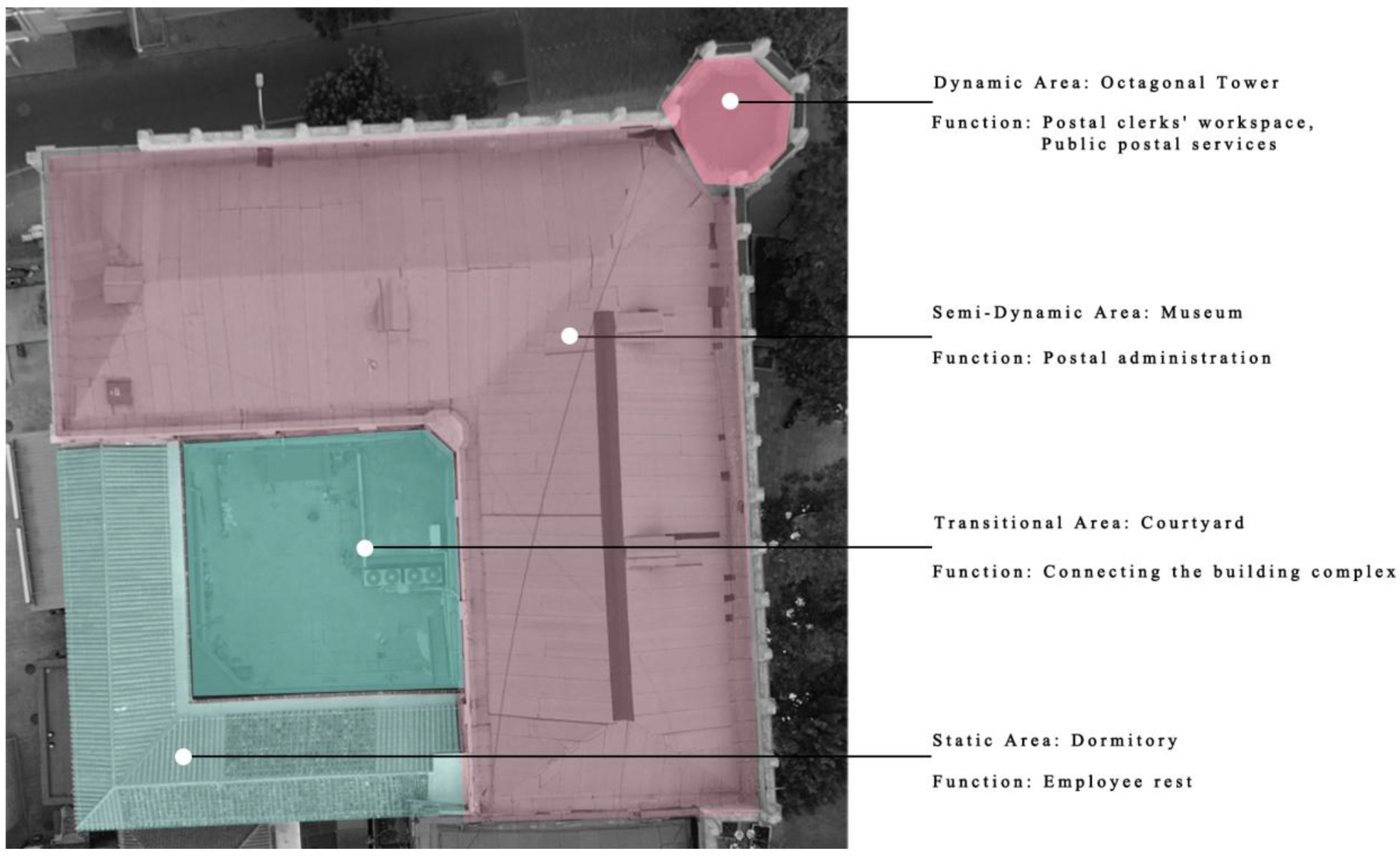
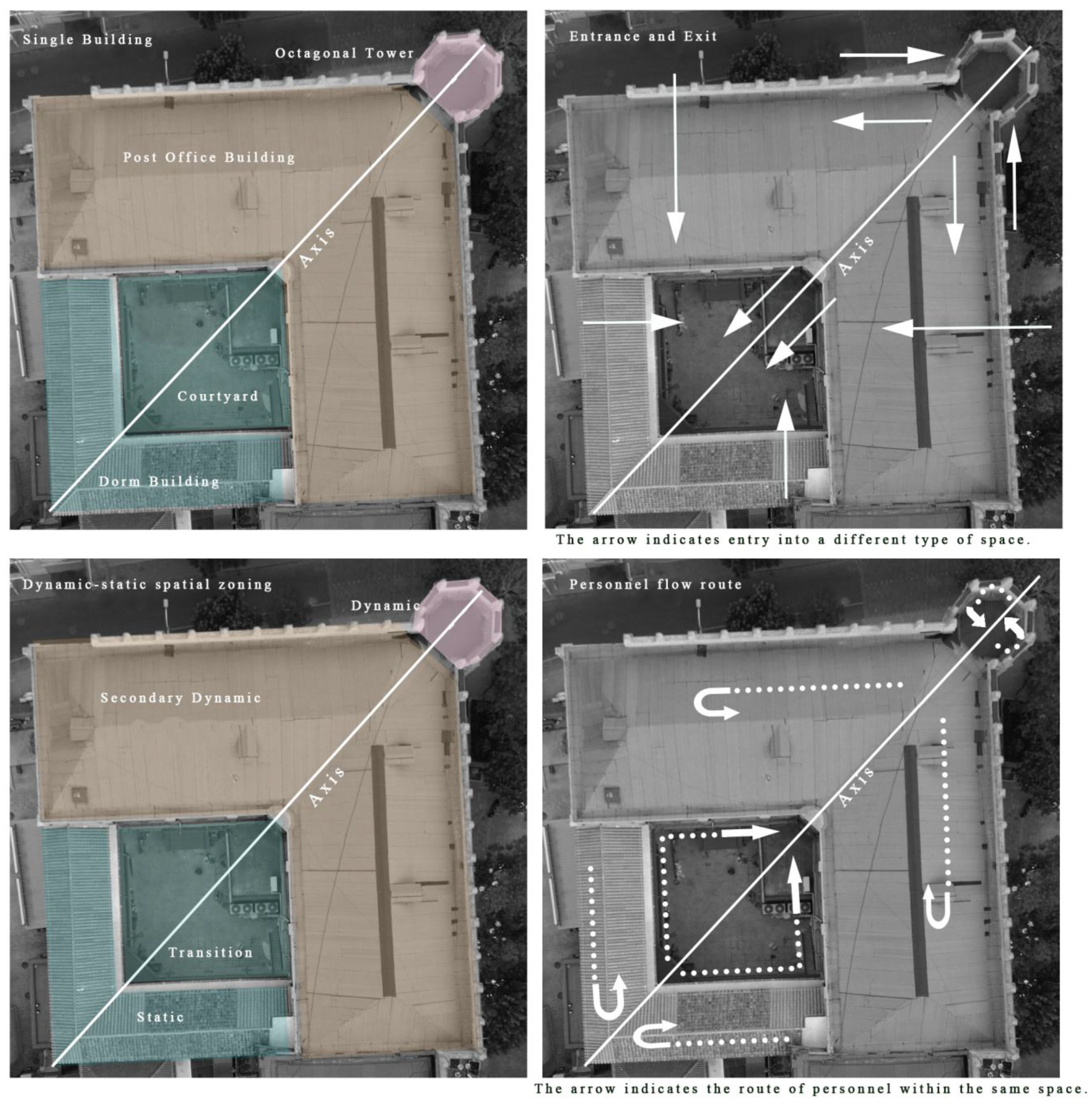
Axis and functional zoning: In traditional Chinese courtyard architecture, a symmetrical axis is often established along the central line of the building complex. the post office complex adheres to this convention, where a clear north–south axis structures a coherent spatial narrative and functional zoning. The axis orchestrates a sequence from the dynamic public area (octagonal tower) in the south, through the semi-dynamic office space (museum), across the transitional courtyard, to the static private area (dormitory) in the north (Figure 16). This sophisticated zoning strategy, segregating public, operational, and private zones, is a product of Chinese architectural thought shaping space for environmental and social harmony [27].
A particularly significant innovation lies in the manipulation of the architectural axis.
Departing from the traditional rigid central symmetry typical of Chinese official architecture, the design demonstrates a sophisticated adaptation. In Figure 17, the axis here functions not as a mere line of bilateral symmetry but as a unifying spatial organizer. It strategically integrates the symmetrical axes of individual Western-style buildings into a cohesive narrative sequence for the entire complex. This reimagined axis connects the octagonal tower (dynamic) in the south, progresses through the museum (semi-dynamic), transitions across the central courtyard, and culminates in the dormitory (static) in the north, thereby masterfully orchestrating the functional zoning between dynamic and static areas. Furthermore, by consolidating various traditional lines—including symmetry lines, circulation paths, and spatial dividing lines—onto this single, powerful organizing axis, the design achieves a remarkable unity of form, function, and circulation. This innovative approach to axial planning transcends mere formal composition; it unifies the building’s physical space with its spiritual space, demonstrating a creative evolution of Chinese spatial principles within a hybrid context.
This underlying framework demonstrates how Chinese spatial principles provided the organizational logic for the entire complex, effectively domesticating the Western forms within an indigenous spatial paradigm.

4.3. Re-Signification: The Octagonal Tower and Parapet as Mediating Elements

Since there is a lack of direct evidence to prove this, the following discussion is purely speculative. The most compelling evidence of intentional hybridity is found in the strategic re-signification of the octagonal tower and parapet. These elements were not merely stylistic borrowings but were semantically and functionally repurposed through feng shui logic to serve indigenous needs.
The octagonal tower:
Formal origin vs. functional innovation: While octagonal towers appear in Western ecclesiastical architecture as decorative spires, here one was transformed into a primary public access point and a functional office space—a role absent in Western prototypes.
Feng shui agency: Its position at the southern (huo 火 fire) end of the axis allowed it to perform critical feng shui functions. The polygonal form dissolves inauspicious shaqi from the road intersection (jiandaosha 剪刀煞 scissors evil). According to Five-Element theory (wuxing), its form (mu 木 wood) generates fire to restrain excessive water energy (from the site’s historical wetlands) and metal energy (from the roads), thereby enhancing prosperity (wang qi 旺气) [28,29]. The flanking staircases further facilitate the flow of qi into the complex.
The parapet:
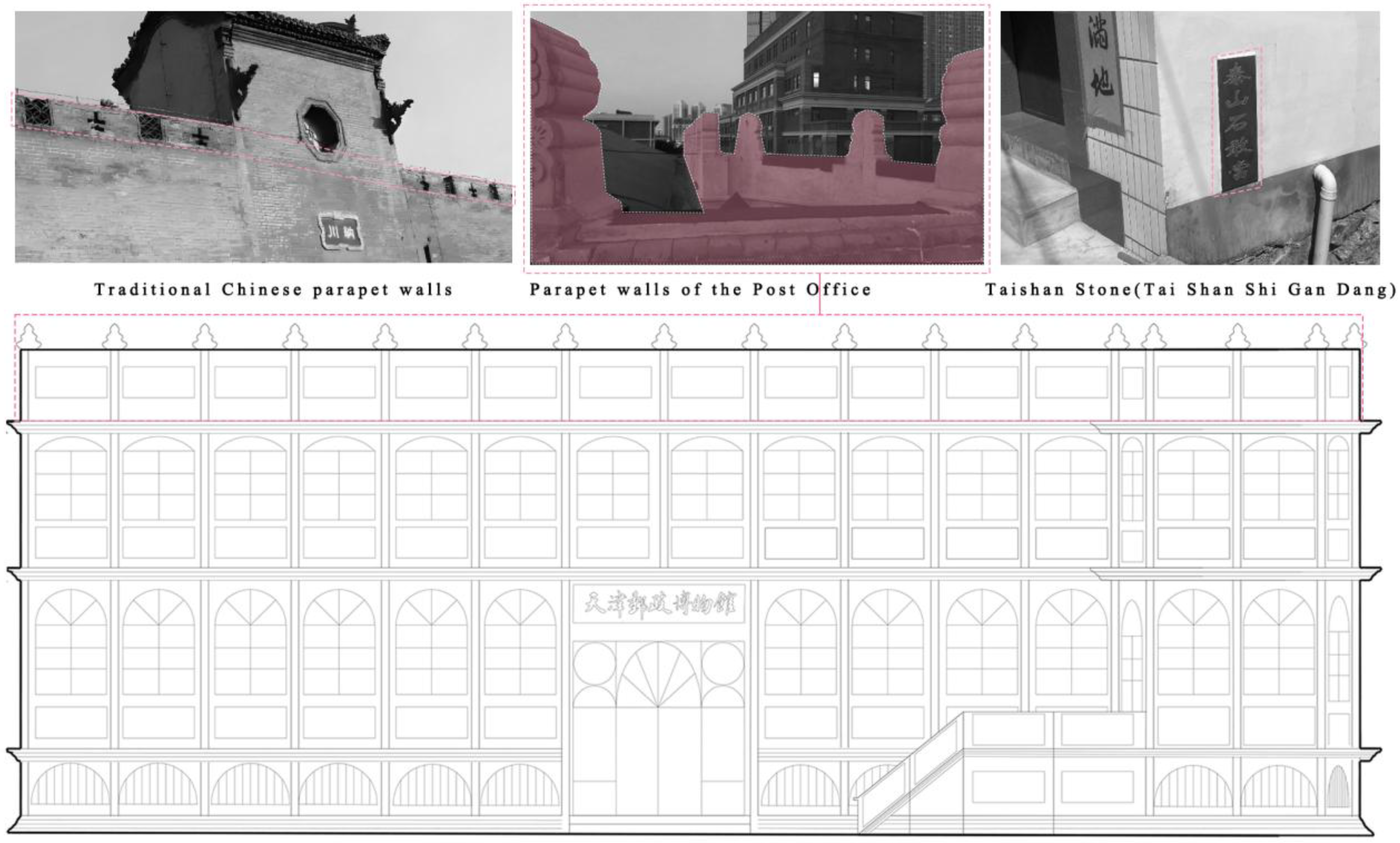
Reinterpreted symbolism: Historically a defensive element in both cultures, the parapet here is innovatively deployed on a commercial roof. Its primary purpose was to act as a symbolic barrier to ward off evil influences (bi sha), specifically the “scissors evil” affecting the residential dormitory.
Cultural negotiation: This represents a pragmatic compromise—using a Western-derived element with defensive connotations in both cultures to perform a feng shui function, avoiding overtly Chinese symbols like Tai Shan Shi Gan Dang (Tai Shan Stone) (a traditional Chinese stone tablet used to ward off evil influences at strategic locations), which might have been culturally incompatible for the foreign stakeholders (Figure 18).
This re-signification process reveals the active agency of Chinese builders and officials. They appropriated Western forms and imbued them with new meanings, creating a “third space” where both cultural systems coexist through intentional redesign. The design of these elements proves that the supposed division of labor—“Westerners for individual buildings, Chinese for overall layout”—was in fact a deeply integrated collaboration. Chinese thought made compromises in formal expression but asserted profound discursive power in shaping the spatial and semantic content of the architecture, ensuring a truly integrated stylistic unity.

5. Discussion

The Tianjin Post Office complex occupies a distinctive position among Western-style buildings (yanglou) in Tianjin and even across China. As a practice that synthesizes Chinese and Western architectural thought, the complex demonstrates unique advantages in architectural form and function. It offers considerable inspiration for contemporary architectural design, both methodologically and conceptually.
Constructed 141 years ago, the building complex’s structure remained intact after the Tangshan Earthquake [30]. In contrast, the Wanghailou Church [31] and the Gordon Hall [32], both brick masonry structures built in the 19th century, were damaged by the earthquake. This difference in resilience can be attributed to the post office complex’s restrained proportions, which prevented its destruction by the horizontal forces of the earthquake.
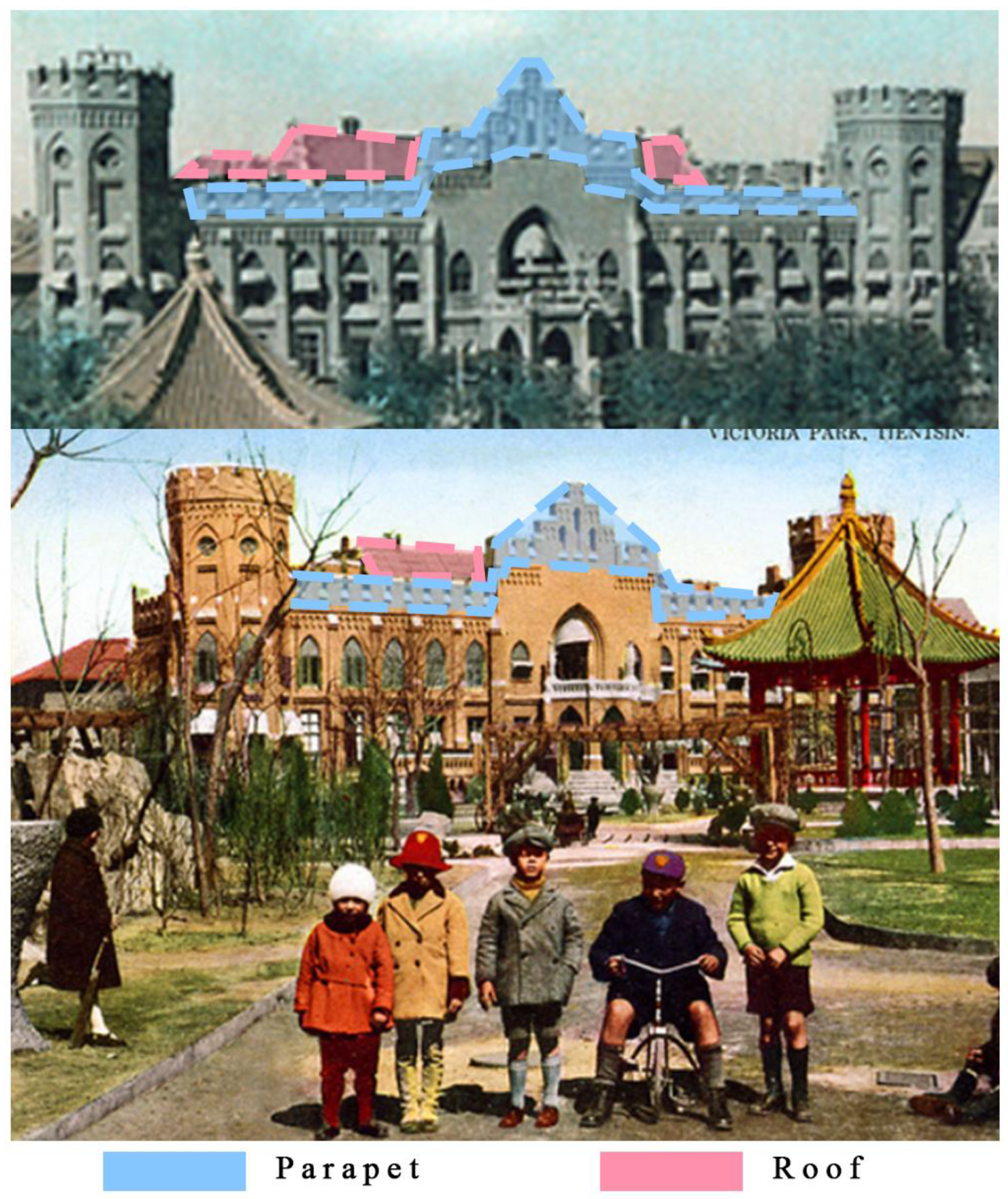
The formal modifications made to the building based on feng shui principles, besides their intended geomantic functions, also possess practical utility from an architectural design perspective. In Figure 19, the Gordon Hall design also incorporated a parapet. Compared to the parapet of the post office complex, which conceals the actual roof, the parapet of Gordon Hall served merely as a decorative feature. Visually, the roof and parapet of Gordon Hall overlap, making it less tidy and esthetically pleasing than the post office complex.
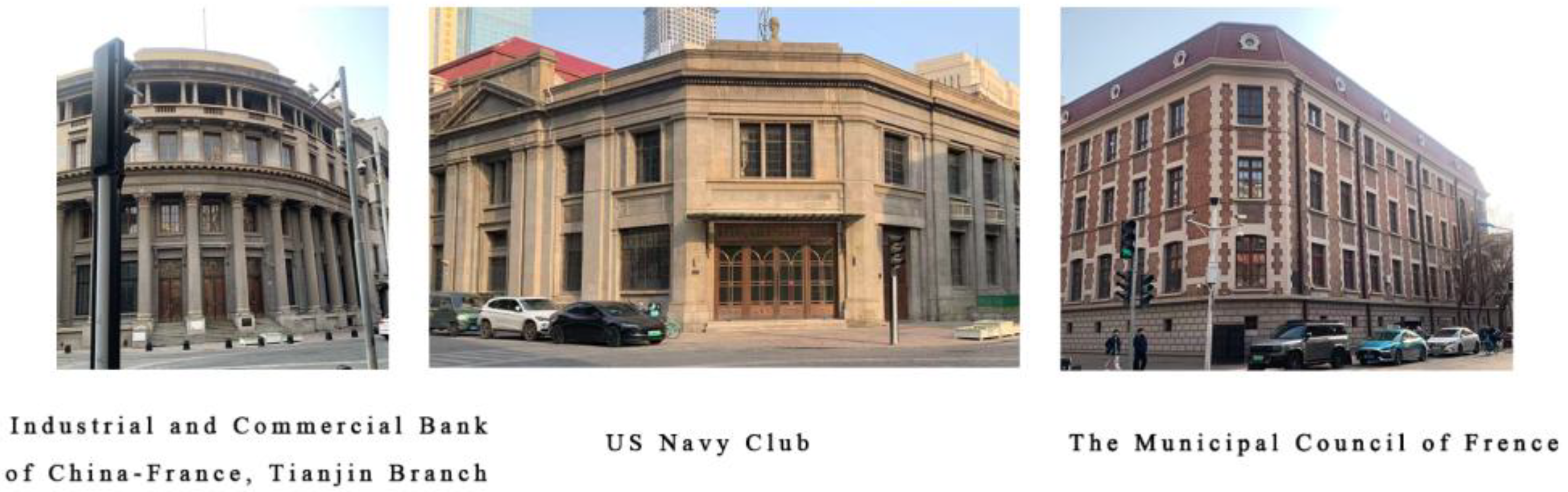
The polygonal form of the octagonal tower can also mitigate vehicle collisions at the street intersection. Similar transitional forms appear in the Industrial and Commercial Bank of China–France buildings (Tianjin Branch), the US Navy Club, and the Municipal Council of France (Figure 20). The first two buildings adopt a curved transitional form, which is esthetically elegant. However, this reduces usable floor area, constrains spatial layout, and imposes higher requirements on materials and construction techniques. The Municipal Council of France employs a polygonal form similar to the post office complex, but by merely chamfering the building’s right angle facing the street, it also reduces usable area while diminishing the building’s visual appeal. The specific form of the transition is not the most critical factor; the increase or decrease in usable floor area is more significant. Historical records indicate that the principal designers of all four building groups were European. Given the absence of relevant discourse in Western architectural sources and the clear articulation of such principles in Chinese feng shui architecture, it can be inferred that the reduction in floor area was likely aimed at preserving the building’s facade expression. In contrast, the Chinese architectural preference for increasing floor area reflects a traditional feng shui approach, particularly influenced by Buddhist and Taoist culture, which favored adding elements such as towers—akin to the construction of the octagonal tower in the post office complex.
The octagonal tower of the post office complex not only serves a practical function as customer service space but also optimizes spatial organization and enhances spatial efficiency. Compared to the Industrial and Commercial Bank of China–France buildings, another financial office compound, both building groups comprise customer service spaces, office spaces, and dormitory areas (Figure 21), with the customer service and office spaces interconnected in both. The key difference is that the Industrial and Commercial Bank of China–France buildings merges these two spaces without separation, leading to mixed functional circulation where office work could be disrupted by external visitors. In contrast, the post office complex separates the two spaces, confining visitor circulation to the octagonal tower, while maintaining an independent circulation and separate entrance for staff offices. Each function is thus concentrated, improving spatial experience and efficiency.
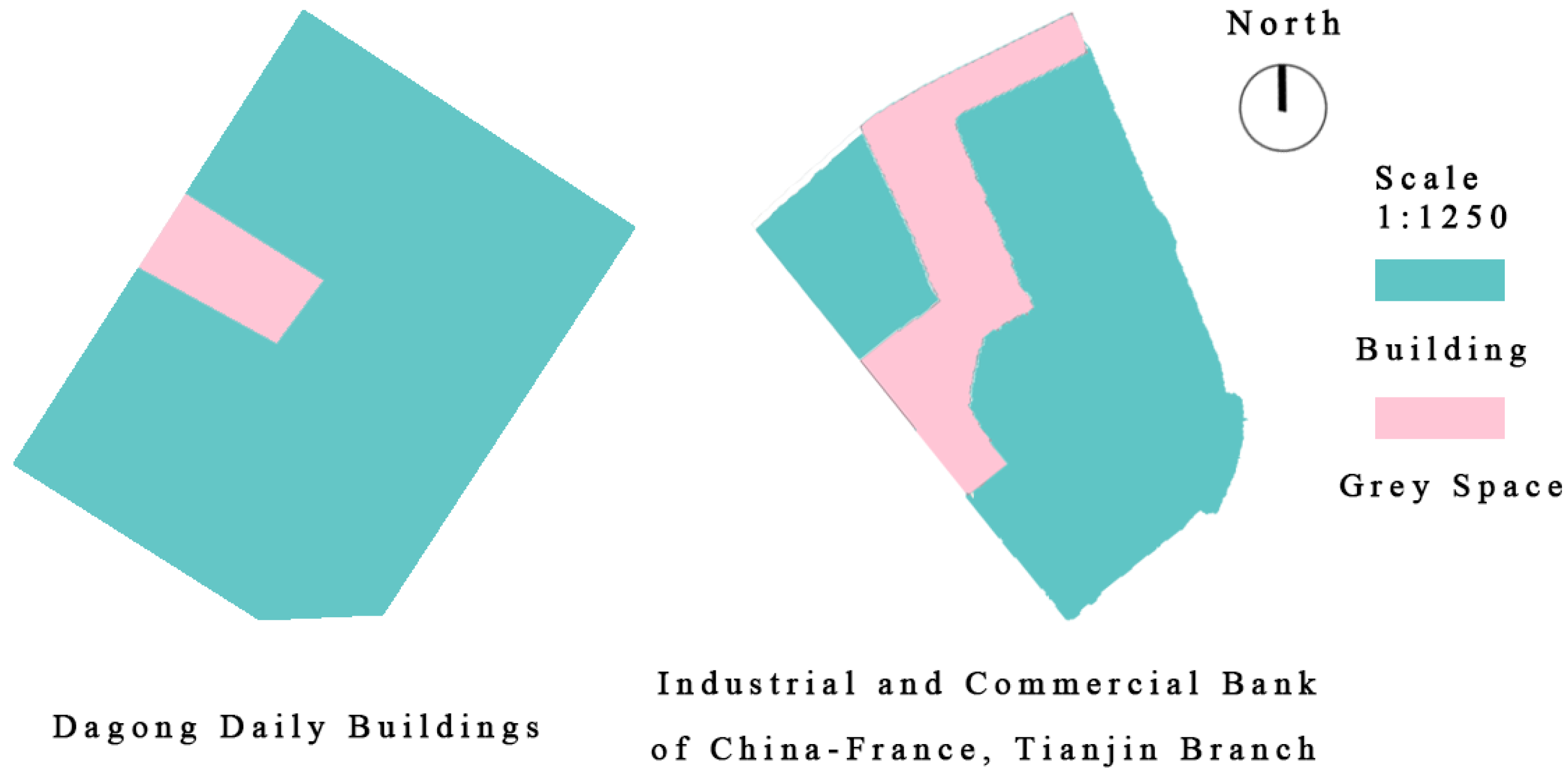
Furthermore, in a plan comparison with the Industrial and Commercial Bank of China–France buildings, the unique courtyard layout of the post office complex enhances its practicality. To ensure objectivity, the Dagongbao building complex is included as an additional comparison (Figure 22). The three complexes handle the transitional “gray space” between buildings differently. The gray space in the Dagongbao complex is too small to introduce sufficient sunlight and air. The Industrial and Commercial Bank of China–France has ample gray space, but it is uncovered, allowing wind to blow through unimpeded. The post office complex features a moderately sized, enclosed courtyard that introduces ample sunlight and air to the dormitory building while preventing wind penetration.
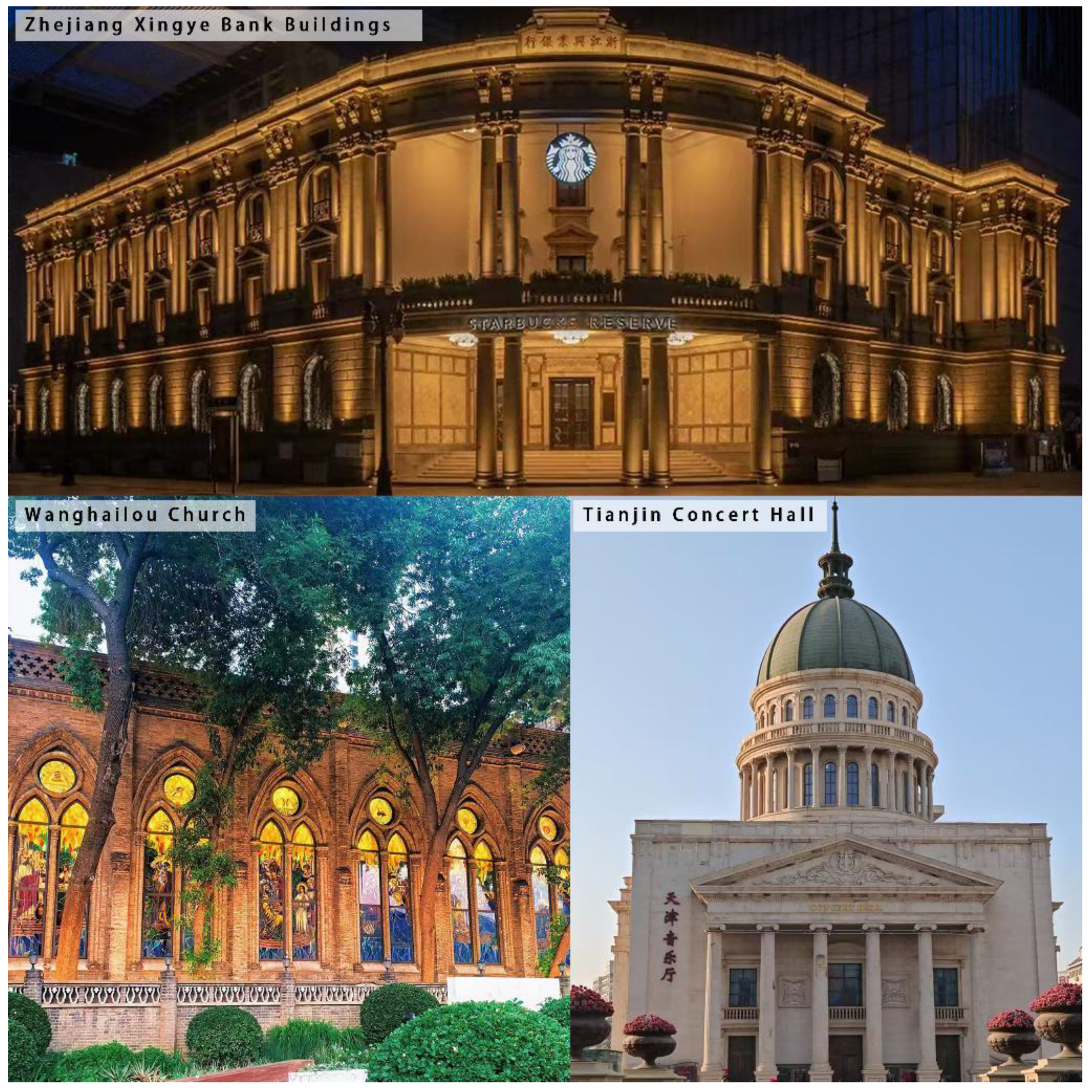
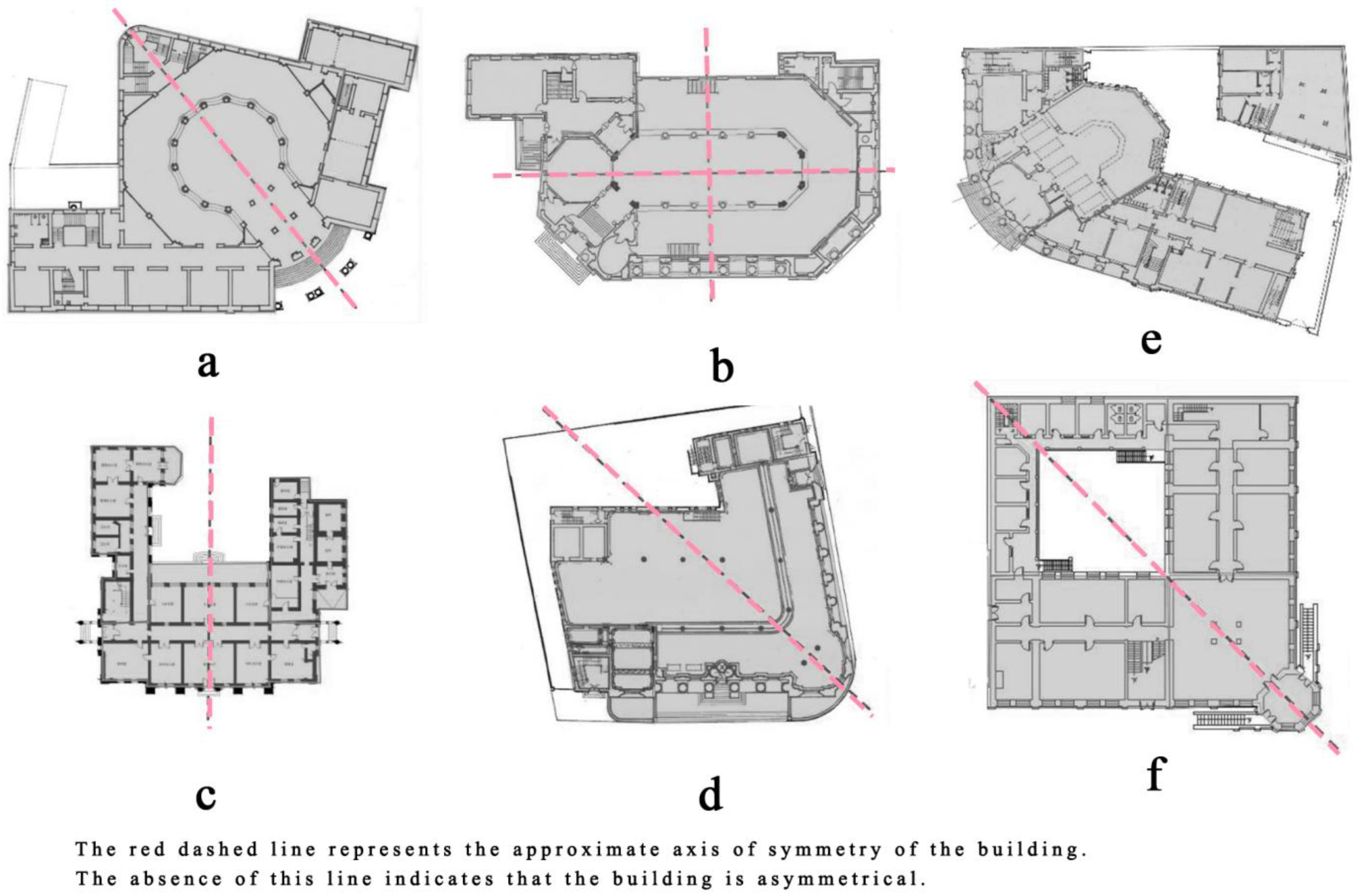
The presence of a designed axis lends further practicality to the post office complex. While axes appear in many of Tianjin’s yanglou, research by Zhang [33] shows that the Industrial and Commercial Bank of China–France buildings lack a symmetrical axis. Although the Salt Commercial Bank buildings, the Kincheng Banking Corporation buildings, the Zhejiang Xingye Bank buildings, and the Chartered Bank buildings (Figure 23) possess symmetrical axes, their designs do not strictly adhere to axial symmetry. The post office complex, however, not only has a symmetrical axis but also rigorously follows it in both visual composition and functional organization. Visual symmetry enhances a sense of solemnity, while functional symmetry establishes the axis as the spatial core, around which circulation, spatial distribution, and building functions are organized, creating architectural order. While not absolutely critical, this order optimizes the user experience.
The designs enhancing the complex’s practicality were realized through Chinese feng shui principles. However, these designs were built upon the basic functions enabled by the Western-style structures. The Western structural system improved spatial efficiency, meeting office needs without requiring additional buildings—a level of efficiency difficult to achieve with traditional Chinese structures. Consequently, the design practice of the post office complex becomes a cross-cultural and cross-temporal architectural discourse, capable of offering directional guidance for the development of contemporary architectural design.

6. Conclusions

This study has demonstrated that the Tianjin Postal Museum is not merely a superficial stylistic hybrid but a profound embodiment of cultural negotiation in architectural form. By employing a spatial semantic analysis within the framework of cultural hybridity theory, we have deciphered how traditional Chinese feng shui principles acted as a pragmatic mediating strategy for localizing Western architecture in the late Qing period. The findings reveal that Chinese officials and builders exercised significant agency by appropriating Western structural and decorative systems (biao 表: surface) and reworking them through the underlying (li 里: essence) rationales of indigenous spatial logic to produce a distinctive “third space” of modernity.
The core mechanism of this hybridity was re-signification. Key Western elements were semantically repurposed to serve Chinese cultural and environmental functions:
The octagonal tower, a Western motif, was transformed into a functional access point and a critical feng shui instrument to regulate qi, resolve inauspicious road alignments (sha), and enhance prosperity through Five-Element theory.
The parapet, historically a defensive feature in both cultures, was innovatively deployed as a symbolic barrier to ward off evil influences (bi sha), representing a pragmatic compromise that respected Western forms while fulfilling Chinese spiritual–environmental needs.
The overall layout, while constructed of Western-style buildings, was governed by a Chinese spatial framework: an enclosed courtyard for “gathering feng and qi” (cang feng ju qi), a north–south axis ordering dynamic and static zones, and a directional hierarchy reflecting cosmological principles.
This case study challenges the narrative of passive reception of Western architectural forms and instead highlights the active, creative role of indigenous knowledge systems in processes of modernization. Feng shui operated not as superstition but as a coherent system of spatial organization, enabling Chinese actors to maintain cultural “authenticity” and functional coherence while engaging with foreign material culture. The resulting architecture, with its innovative axial planning and spatial sequencing, exemplifies the principle of “Chinese learning as the foundation, Western learning for practical application” (Zhong xue wei ti, Xi xue wei yong 中学为体, 西学为用), showcasing an innovative path for traditional architecture to evolve under global influence.
Limitations and future research:
The typicality and limitations of this study stem from the involvement of official Chinese traditional craftsmen (yingzao officials) during the construction process, a feature absent in other Western-style buildings. Prior to the construction of the post office complex, Western-style buildings could not employ such yingzao officials due to the dominance of the traditional Chinese architectural system. After the post office complex, however, yingzao officials were again excluded from Western-style building projects as a result of warfare and the overwhelming dominance of Western culture. Over the century following the 1911 Revolution, feng shui principles in architecture were widely regarded as relics of the feudal Qing Dynasty and thus deemed obsolete and to be abandoned alongside its collapse. While this grants the complex a degree of representativeness, the scarcity of comparable buildings prevents more definitive comparative analysis.
In addition, due to technical limitations, this study did not verify all non-scientific elements of feng shui thinking, such as evil-dispelling practices. The research acknowledges that feng shui still contains certain superstitious elements, which constituted the sole starting point for feng shui practitioners in their design. Nevertheless, feng shui did produce unintended outcomes that are scientifically verifiable and useful yet overlooked by modern design methods. We believe this also provides valuable inspiration for architectural design.
In conclusion, the Tianjin Postal Museum stands as a testament to the ingenuity of a transitional era. It represents a sophisticated architectural project where Chinese spatial thought, particularly through the innovative reinterpretation of the axis, successfully domesticated Western forms to create a new, localized modernity, offering valuable historical insights for contemporary architectural practice facing similar challenges of globalization and cultural identity. This case also suggests that feng shui, as a form of geo-cultural strategy, played a role parallel to geopolitics in negotiating foreign influences within the local context.

Author Contributions

Conceptualization, W.L. and Q.W.; methodology, Q.W.; software, Q.W.; validation, W.L. and Q.W.; formal analysis, Q.W.; investigation, Q.W.; resources, W.L.; data curation, W.L.; writing—original draft preparation, Q.W.; writing—review and editing, W.L.; visualization, Q.W.; supervision, W.L.; project administration, W.L.; funding acquisition, W.L. All authors have read and agreed to the published version of the manuscript.

Funding

This research received no external funding.

Data Availability Statement

All data associated with this study are available from the corresponding author without undue reservation.

Acknowledgments

The following tools were employed in this study: An iPhone XR rear camera (Apple Inc, Zhengzhou, China) was used for capturing all photographs accessible at human height. A DJI MINI 3 (DJI Inc, Shenzhen, China) was utilized for documenting the planar layout of the building complex and architectural components beyond human reach. A compass was used for orientation and to assist in analyzing the five-phase (wuxing) orientation of the building complex. A laser rangefinder was used for measuring various lengths and heights within the building complex.

Conflicts of Interest

The authors declare no conflicts of interest.

Appendix A

In ancient China, there had always been an organization similar to the post office: the relay station (yizhan), which was primarily responsible for official information transmission, material transport, and rest for officials, but was not open to the public. After 1840, various European countries invaded China and established their institutions in Chinese provinces (mainly in the Beijing–Tianjin area, Shanghai–Suzhou area, Xiamen area, and Guangzhou area). Due to the long distances between these institutions, the transmission of information was inconvenient, thus creating a need for a modern postal system. China’s earliest modern postal system appeared in Shanghai, established by colonists as the Shanghai Local Post Office (Shanghai Gongbuju Shuxin Guan). However, the colonists were unwilling to bear the costs of maintaining the postal system. Therefore, some British colonists who held official positions in the Qing dynasty, such as Robert Hart and others (after the First Opium War, Britain emerged victorious and demanded that China open ports to be managed by the British; these managers then served in the Qing government, and the Qing government also paid them salaries), petitioned the Qing emperor to establish a modern postal system for the Qing dynasty. All expenses were borne by the Qing government. Although the system was intended to send and receive public letters, at that time Chinese society had not yet encountered modern commerce, and neither officials, commoners, nor merchants understood the postal system. Consequently, the post office was initially used only by foreign colonists. Later, after the Chinese public came to understand the function of the post office, it began to serve the entire society.

Appendix B

Table A1. Transformation of post office building use (Source: Complied by the author).
YearNamePurposeBuilding OwnershipLand Owner Ship
1878–1880Tianjin Customs Postal OfficeColonialThe UKFrench Concession
1880–1897Tianjin Post OfficeColonialThe UKFrench Concession
1897–1911Tianjin Qing Post OfficeColonialThe UKFrench Concession
1911–1912Tianjin Qing Post OfficeColonialThe UKFrench Concession
1912–1915Zhili Postal AdministrationPostal Chinese Postal ServiceFrench Concession
1915–1949Tianjin Yipin Loan CompanyMonetaryFrench merchantFrench Concession
1949–1999Closed DownNot for useBelgiumChina
2000–NowTianjin Post MuseumExhibitingTianjin Post OfficeChina

Appendix C

Feng shui was systematically proposed during the Song Dynasty, but its related practices (yin–yang balance, mutual generation and restraint of the Five Elements) had already existed as early as the Qin and Han Dynasties. During the Qing Dynasty, all Chinese-style buildings were constructed according to feng shui principles. Nevertheless, Qing laws and regulations restricted the scale, dimensions, and materials used in folk architecture. Consequently, the manifestation of feng shui in folk buildings was primarily reflected in the central axis symmetry (balance) of building complexes and the courtyard as the core (cang feng de shui). Apart from features like the Tai Shan Shi Gan Dang (泰山石敢当), it was difficult to create feng shui by adding or subtracting elements. In contrast, official buildings were rarely constrained by economic, legal, or material limitations. Beyond applying feng shui design to the building complex itself, large-scale modifications were also made to the physical environment surrounding the complex based on feng shui principles. Take the Forbidden City as an example: during its construction, the Yongle Emperor of the Ming Dynasty specifically ordered artisans to excavate the moat and pile up Jingshan Hill to create an ideal feng shui for the complex (as per the Book of Burial: “where mountains encircle and water embraces, there must be Qi”). All government offices placed great emphasis on feng shui cultivation, and different buildings had different construction characteristics. Thus, feng shui officials in ancient government offices were highly experienced. However, knowledge transmission in ancient times was primarily based on bloodlines, so such expertise was confined to the official class and rarely accessible to the public. Even if folk feng shui masters learned relevant knowledge, ancient laws and regulations restricting folk architecture prevented its application. Therefore, the feng shui design of ancient folk buildings was largely similar. Whether it is the Beijing siheyuan of northern folk houses, the Dikengyuan (地坑院 a unique underground courtyard house) of western Henan, or the Yunnan Yikeyin (云南一颗印 a unique courtyard house typology in Yunnan) in the south, their feng shui designs are highly analogous.
Overall, traditional Chinese architectural design was guided by the belief that auspicious feng shui could bring prosperity to a family. As a result, feng shui principles were implemented throughout the entire construction process, ranging from site selection to interior decoration [34]. Feng shui posits that qi is the fundamental life energy of all things in the world; all entities exist because of qi, and for all things to flourish, qi must flow. Therefore, buildings must have circulating qi for the inhabitants to be healthy and for the family to prosper [35]. However, some forms of qi are considered the basis for the existence of malevolent things; feng shui terms this type of qi as “sha” (煞 inauspicious energy). If a building is affected by the flow of “sha qi,” (煞气) it may also give rise to unfortunate events. Feng shui philosophy holds that qi is ubiquitous but must flow along pathways; qi following winding, curving paths is considered beneficial, whereas qi traveling along straight roads is deemed harmful. Feng shui assists buildings in mitigating the effects of sha by adopting specific strategies on the side of the building that faces a straight road [36].
After helping a building rid itself of sha, feng shui must still assist in creating a flow of living qi for the building. At this stage, feng shui practice incorporates traditional Chinese concepts of yin–yang (阴阳), the Five Elements (Wuxing 五行), and the Eight Trigrams (Bagua 八卦). A main gate is positioned at the “wind door” (feng men 风门) of the Bagua formation to channel wind inside, and then the principles of mutual generation and restraint among the Five Elements are employed to create circulation, thereby generating vitality (shengji 生机).
Extending from this, yin–yang, the Five Elements, and the Eight Trigrams constitute a systematic traditional Chinese philosophical worldview. Within this, yin–yang is the core of philosophical thought: yin represents the moon, yang represents the sun. The philosophy of yin–yang requires things to possess a harmonious relationship of unity and opposition [37]. The Five Elements theory systematizes the concepts of yin–yang into a structured framework. Philosophers summarized the myriad things in the world into five distinct attributes: metal, wood, water, fire, and earth [38]. They elucidated the characteristics of mutual generation and mutual restraint among these elements, thereby promoting yin–yang harmony. The mutual generation cycle of the Five Elements is: wood generates fire, fire generates earth, earth generates metal, metal generates water, water generates wood. The mutual restraint cycle is: water restrains fire, fire restrains metal, metal restrains wood, wood restrains earth, earth restrains water [37]. The Five Elements theory maintains that the world, despite the coexistence of a myriad of things, and maintains harmonious order precisely because of this mutual generation and restraint. The Five Elements enable the world in which all things operate to reach a state of freedom akin to the presence of nothingness. The operation of all things represents the flourishing yang state of the world, while emptiness represents the lifeless yin state. Achieving yin–yang balance through the Five Elements is what is called harmony. The theory of the Eight Trigrams provides a methodology for analyzing how the Five Elements achieve yin–yang harmony. The Eight Trigrams have different applications across various fields. In architecture, they are primarily used through the compass (罗盘luopan) to determine a building’s orientation, identify its strengths and weaknesses in terms of the Five Elements, and apply the principles of mutual generation and restraint to create yin–yang harmony for the building.
In the past, feng shui ideology was widespread in China and in the Southeast Asian cultural sphere influenced by Chinese culture (Japan, Korea, Thailand, etc.). A Korean scholar [39] summarized that Chinese feng shui thought employs the “additive method” (裨補bibu) to add components to buildings, such as constructing towers. The “repressive method” (厌胜yansheng), on the other hand, is the method used in Chinese feng shui to modify or reduce building components. The Korean scholar posits that the dual application of these two methods constitutes a significant difference between Chinese and Korean feng shui practice. Within Chinese feng shui research, such systematic formulations have not been explicitly proposed. Regardless of whether it is the additive method or the repressive method, both rely on the theories of the Eight Trigrams and Five Elements for their realization. Chinese feng shui places greater emphasis on achieving a building’s yin–yang balance and regulating its qi. Serious European recognition of feng shui began only around 1980, after universities such as the University of London introduced elective courses on Eastern architectural philosophy. Prior to that, Europe generally did not consider feng shui as a legitimate architectural design method. Consequently, feng shui principles are rarely found in European-style or hybrid-style buildings designed by Western architects.
Today, feng shui is no longer a mainstream ideology. The feng shui still popular in some regions of China (e.g., Hong Kong) has become quite similar to superstition, and this surviving feng shui is what was transmitted from folk practices in the past. The official methods of feng shui cultivation from ancient times are now very rare, and there are significant differences between the two. Although the officially cultivated feng shui carried many superstitious elements, it was still a rigorous architectural design methodology with valuable aspects worth studying and emulating. The research value of the post office complex lies not only in its rare background of official feng shui construction, but also in the integration of Chinese architectural design methods—dominated by the feng shui system—and Western architectural design approaches. This kind of design practice originated with the post office complex, and similar practices rarely reappeared thereafter due to the suppression of feng shui thinking.

Appendix D

This appendix provides the full dataset of field measurements and calculations that support the proportional analysis discussed in Section 4.1 of the main text. The data includes raw measurements, refined dimensions after on-site verification, and the calculated ratios that demonstrate the application of Western proportional canons (the functional rectangle and the golden ratio) in the individual buildings.
Table A2. Comprehensive architectural scale and ratio data (Source: Measured by the author).
ElementDimensionValue (m)NotesCalculated RatioTarget Ratio
Museum (SW Side)Length28.60Measured externally
Width12.20Measured externally2.344~2.25
Museum (SE Side)Length28.00Measured externally
Width12.50Measured externally2.240~2.25
Dormitory (Initial)Length16.50Includes staircases
Width6.00 ~2.75
Dormitory (Adjusted)Length13.50Staircases deducted2.250~2.25
Width6.00
Museum FacadeHeight12.20Total height
Width28.60SW side width~0.427 (H/W)~0.618 (φ)
Dormitory FacadeHeight8.80
Width13.50Adjusted length~0.652 (H/W)~0.618 (φ)
O.T. StaircaseLength6.20 2.400 (L/W)
Width2.50
Height2.86 2.168 (L/H)
Note: O.T. = octagonal tower; φ = golden ratio (~0.618). The functional rectangle target ratio is 2.25:1 (9:4).

References

  1. Tianjin Municipal People’s Government. Strengthening Deep Integration of Culture and Tourism to Promote High-Quality Tourism Development. Tianjin Government Web. 25 December 2024. Available online: http://www.tj.gov.cn/zwgk/dzhhxx/202412/t20241225_6814444.html (accessed on 13 April 2026).
  2. Yang, C.; Zhou, Z.; Lan, W. Interpreting the Architectural Style of Tianjin Wanghailou Catholic Church. J. Archit. 2013, 72–75. Available online: http://aj.org.cn/specialissue-299.aspx (accessed on 13 April 2026).
  3. Wang, W. A Study of Residential Architectural Style and Cultural Expression in Wuyi Folk Art: A Case Study of Taishan Rural Western-Style Buildings. Beauty Times (City Ed.) 2021, 19–20. [Google Scholar]
  4. Wei, Y.; Wu, Z. An Analysis of the Architectural Forms and Cultural Characteristics of Modern Wuxuan Manor Buildings in Guangxi. Tradit. Chin. Archit. Gard. 2025, 79–84. [Google Scholar]
  5. Wu, Y.; Wu, Y. A Study on the Facade Characteristics of Modern Western-Style Residential Buildings in Suzhou. Huazhong Archit. 2024, 42, 152–157. [Google Scholar]
  6. Tianjin Municipal Local Chronicles Compilation Committee. General Chronicles of Tianjin: Concessions Volume; Tianjin Academy of Social Sciences Press: Tianjin, China, 2004; pp. 315–363. [Google Scholar]
  7. Chen, X. Secret Archives of Chinese Customs; Zhonghua Book Company: Beijing, China, 1990; pp. 26–75. [Google Scholar]
  8. Ge, A.; Xie, J.; Yang, J. Structural System Analysis of Western-Style Historic Buildings: A Case Study of Tianjin Zizhulin Church. Build. Struct. 2011, 41, 1494–1497. [Google Scholar] [CrossRef]
  9. Qiu, R. Historical Materials of Tianjin Post; Beihang University Press: Beijing, China, 1988; pp. 19–51. [Google Scholar]
  10. Liu, T.; Butler, R.J.; Zhang, C. Evaluation of public perceptions of authenticity of urban heritage under the conservation paradigm of Historic Urban Landscape—A case study of the Five Avenues Historic District in Tianjin, China. J. Archit. Conserv. 2019, 25, 228–251. [Google Scholar] [CrossRef]
  11. Ruan, Y.S. Protection and Inheritance of Traditional Chinese Architectural Culture. Century Archit. 2003, 26–31. [Google Scholar]
  12. Dong, Q. Study on Typical Characteristics of Chinese and Western Ancient Architecture. Chin. Foreign Archit. 2010, 82–83. [Google Scholar]
  13. Connelly, J.B. The Parthenon Enigma; The Commercial Press: Shanghai, China, 2022; pp. 18–34. [Google Scholar]
  14. Bhabha, H.K. The Location of Culture; Routledge: London, UK, 2012; pp. 13–19. [Google Scholar]
  15. He, C. Research on Cultural Hybridity in the Context of Global Communication. Ph.D. Thesis, Wuhan University, Wuhan, China, 2013. [Google Scholar]
  16. Young, R.J.C. Colonial Desire: Hybridity in Theory, Culture and Race; Routledge: London, UK, 2005; pp. 23–28. [Google Scholar]
  17. Tomlinson, J. Globalization and Culture; University of Chicago Press: Chicago, IL, USA, 1999; pp. 21–36. [Google Scholar]
  18. Seidman, S. The New Social Theory Reader; Routledge: London, UK, 2008; p. 7. [Google Scholar]
  19. Wang, G.; Yeh, E.Y.Y. Globalization and hybridization in cultural products: The cases of Mulan and Crouching Tiger, Hidden Dragon. Int. J. Cult. Stud. 2005, 8, 175–193. [Google Scholar] [CrossRef]
  20. Said, E. Culture and Imperialism; Li, K., Translator; SDX Joint Publishing Company: Beijing, China, 2003; p. 192. [Google Scholar]
  21. Zhang, Q.N. History of Modern Chinese Architecture; China Architecture & Building Press: Beijing, China, 2004; pp. 127–132. [Google Scholar]
  22. Liang, S. A History of Chinese Architecture; Baihua Literature and Art Publishing House: Tianjin, China, 2005; pp. 126–153, 189–206. [Google Scholar]
  23. Chu, L. Fengshui and Residential Health. Natl. Stud. 2010, 60–61. [Google Scholar]
  24. Chen, H.; Zhou, H. Spatial Layout of Putian Traditional Dwellings Under the Influence of Traditional Fengshui. Hunan Packag. 2024, 39, 96–99+126. [Google Scholar]
  25. Wittkower, R. Architectural Principles in the Age of Humanism (No.1); WW Norton & Company: New York, NY, USA, 1971. [Google Scholar]
  26. Chu, L. I Ching, Feng Shui, Architecture; Xuelin Publishing House: Shanghai, China, 2003; pp. 64–91. [Google Scholar]
  27. Yi, X. The Ritual and Music Ethical Spirit in Traditional Chinese Vernacular Dwellings. J. Southeast Univ. (Philos. Soc. Sci. Ed. ) 2025, 27, 134–142+156. [Google Scholar] [CrossRef]
  28. Zhang, X. Collation and Annotation of Qingnang Xu. In Proceedings of the 17th National Academic Symposium on Ancient Medical Literature of the China Association of Chinese Medicine, Xi‘an, China, 4–6 August 2008; 2008, pp. 212–216. [Google Scholar]
  29. Wang, J. Illustrated Guide to Yangzhai Shishu; Hualing Publishing House: Beijing, China, 2009; pp. 8–34. [Google Scholar]
  30. Tianjin Cultural Information Network. The Former Site of “Tianjin Qing Post Office” is Considered a “National Treasure”. 13 October 2010. Available online: http://hhjyy.tjl.tj.cn/wwbl/wbjw/1010/10-10-13-dqyz.html (accessed on 13 April 2026).
  31. Tianjin Hebei District People’s Government. Wanghailou Church. 15 September 2015. Available online: http://www.tjhb.gov.cn/zjhb/whly/whyc/bkydww/202012/t20201207_4668908.html (accessed on 13 April 2026).
  32. Tianjin Municipal Administration of Culture and Tourism. Gordon Hall Site to Reopen with a New Look. 28 June 2025. Available online: https://whly.tj.gov.cn/tjswlzxw/sy1/rmzx/202506/t20250628_6968296.html (accessed on 13 April 2026).
  33. Zhang, Y. A Study of Modern Bank Buildings in the Tianjin Concession Area. Master’s Thesis, Beijing University of Civil Engineering and Architecture, Beijing, China, 2020. [Google Scholar] [CrossRef]
  34. Chen, B.X.; Nakama, Y. A summary of research history on Chinese Feng-shui and application of Feng-shui principles to environmental issues. Kyusyu J. For. Res. 2004, 57, 297–301. [Google Scholar]
  35. Guo, P. Zangshu (Book of Burial); Jiuzhou Press: Beijing, China, 1998; pp. 276–324. [Google Scholar]
  36. Xu, P. “Feng-shui” models structured traditional Beijing courtyard houses. J. Archit. Plan. Res. 1998, 271–282. [Google Scholar]
  37. Zeng, S. The Wisdom of the I Ching; China International Television Corporation: Beijing, China, 2009; pp. 45–68. [Google Scholar]
  38. Sun, X. Commentaries on Shangshu with Ancient and Modern Text Annotations; Zhonghua Book Company: Beijing, China, 2004; pp. 32–36. [Google Scholar]
  39. Hong, S.K.; Song, I.J.; Wu, J. Fengshui theory in urban landscape planning. Urban Ecosyst. 2007, 10, 221–237. [Google Scholar] [CrossRef]
Figure 1. Yanglou buildings in China. (Source: Photographed by the author).
Buildings 16 01593 g001
Figure 2. Floor plan of the post office buildings. (Source: Drawn by the author).
Buildings 16 01593 g002
Figure 3. The location of the post office complex. (Source: Drawn by the author).
Buildings 16 01593 g003
Figure 4. Brick carvings on the building facade. (Source: Drawn by the author).
Buildings 16 01593 g004
Figure 5. Comparative analysis of the turrets. (Source: Drawn by the author).
Buildings 16 01593 g005
Figure 6. Elevation of the octagonal tower (Source: Drawn by the author).
Buildings 16 01593 g006
Figure 7. The courtyard layout of siheyuan.
Buildings 16 01593 g007
Figure 8. Content of architectural form analysis. (Source: Drawn by the author).
Buildings 16 01593 g008
Figure 9. Methodological framework. (Source: Drawn by the author).
Buildings 16 01593 g009
Figure 10. Description of the post office buildings’ scope. (Source: Drawn by the author).
Buildings 16 01593 g010
Figure 11. Errors in the exhibited model. (Source: Drawn by the author).
Buildings 16 01593 g011
Figure 12. Elevation of the museum. (Source: Drawn by the author).
Buildings 16 01593 g012
Figure 13. Dormitory scale annotation. (Source: Drawn by the author).
Buildings 16 01593 g013
Figure 14. Building’s proportional design. (Source: Drawn by the author).
Buildings 16 01593 g014
Figure 15. Floor plan of the courtyard. (Source: Drawn by the author).
Buildings 16 01593 g015
Figure 16. Zonation of dynamic and static areas in the post office building complex. (Source: Drawn by the author).
Buildings 16 01593 g016
Figure 17. Unification of multiple axes in the post office. (Source: Drawn by the author).
Buildings 16 01593 g017
Figure 18. Factors of Sino-Western compromise in the parapet walls. (Source: Drawn by the author).
Buildings 16 01593 g018
Figure 19. The Gordon Hall building. (Source: University of Bristol—Chinese Historical Photographs, Reference No. Gr01-145&No. Gr01-117).
Buildings 16 01593 g019
Figure 20. The transition mode between the building complex and the street corner. (Source: Shot by Author).
Buildings 16 01593 g020
Figure 21. The spatial layout of the Industrial and Commercial Bank of China–France buildings. (Source: Drawn by Author).
Buildings 16 01593 g021
Figure 22. The distribution of gray space in the building complex. (Source: Drawn by Author).
Buildings 16 01593 g022
Figure 23. The axis distribution of different building complexes (Source: Drawn by Author) ((a)—the Industrial and Commercial Bank of China–France buildings, (b)—the Salt Commercial Bank buildings, (c)—the Kincheng Banking Corporation buildings, (d)—the Zhejiang Xingye Bank buildings, (e)—the Chartered Bank buildings, (f)—the post office complex).
Buildings 16 01593 g023
Disclaimer/Publisher’s Note: The statements, opinions and data contained in all publications are solely those of the individual author(s) and contributor(s) and not of MDPI and/or the editor(s). MDPI and/or the editor(s) disclaim responsibility for any injury to people or property resulting from any ideas, methods, instructions or products referred to in the content.