Rapid Evaluation of University Classrooms Using an MLP Classification Model Based on Daylight–Thermal Performance

Abstract
1. Introduction
1.1. Background
1.2. Related Work
1.2.1. Research on Classroom Daylighting and Energy Consumption
1.2.2. Multi-Objective Optimization
1.2.3. Machine Learning-Based Approaches for Building Performance Prediction
1.3. Research Gap and Contributions
- A rapid evaluation method was developed for classroom design in severe cold regions to support early-stage assessment of integrated daylight–thermal performance.
- Analysis of the Pareto-optimal scheme set identified optimal ranges of key design parameters, and SHAP analysis further revealed the major spatial factors influencing daylighting and heating energy performance.
- A classification model was introduced to provide a more intuitive evaluation of design scheme performance, extending beyond the predominant regression-based approaches used in previous studies.
2. Methodology
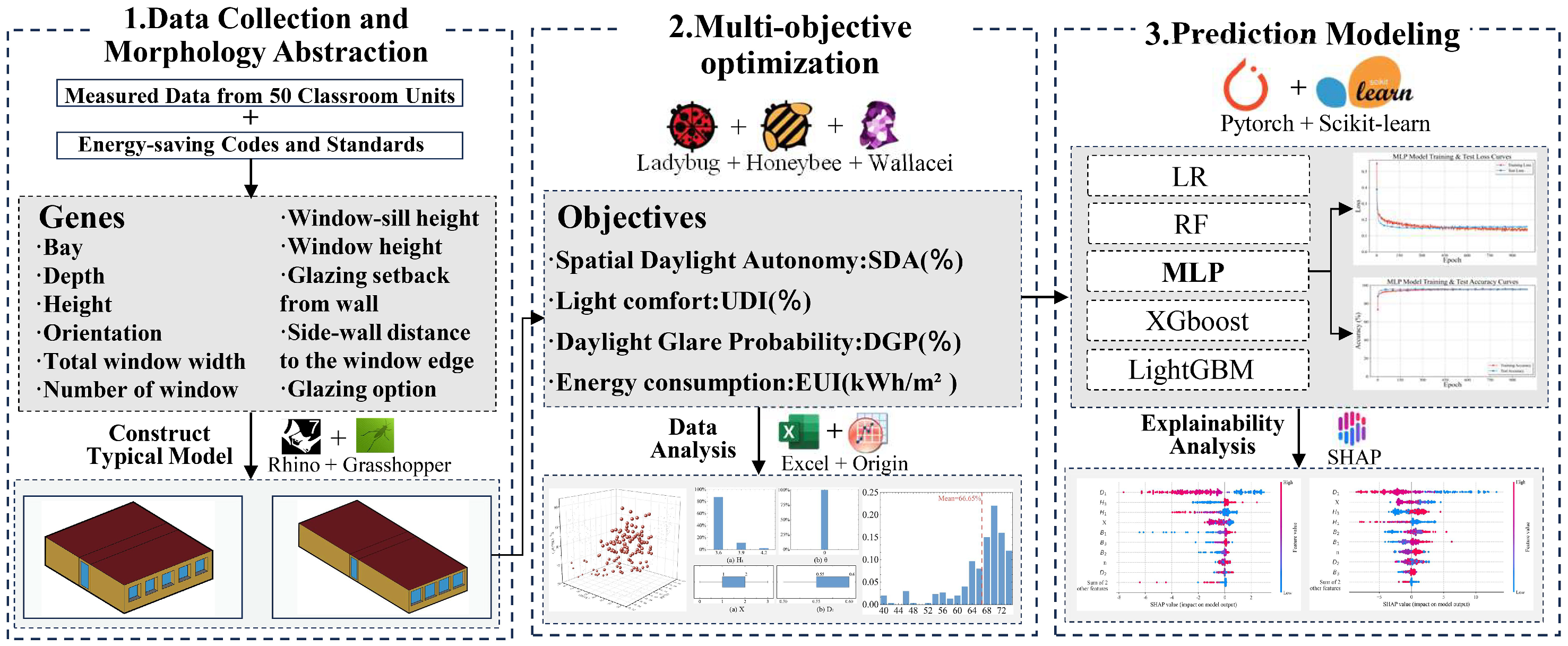
2.1. Overall Research Framework
2.2. Simulation of Daylighting and Heating Energy Performance
2.2.1. Daylight–Thermal Performance Metrics
- Daylighting Performance Metrics
- 2.
- Energy Performance Metric
2.2.2. Parameter Settings for the Building Envelope, Occupants, and Equipment
2.3. Multi-Objective Optimization Research
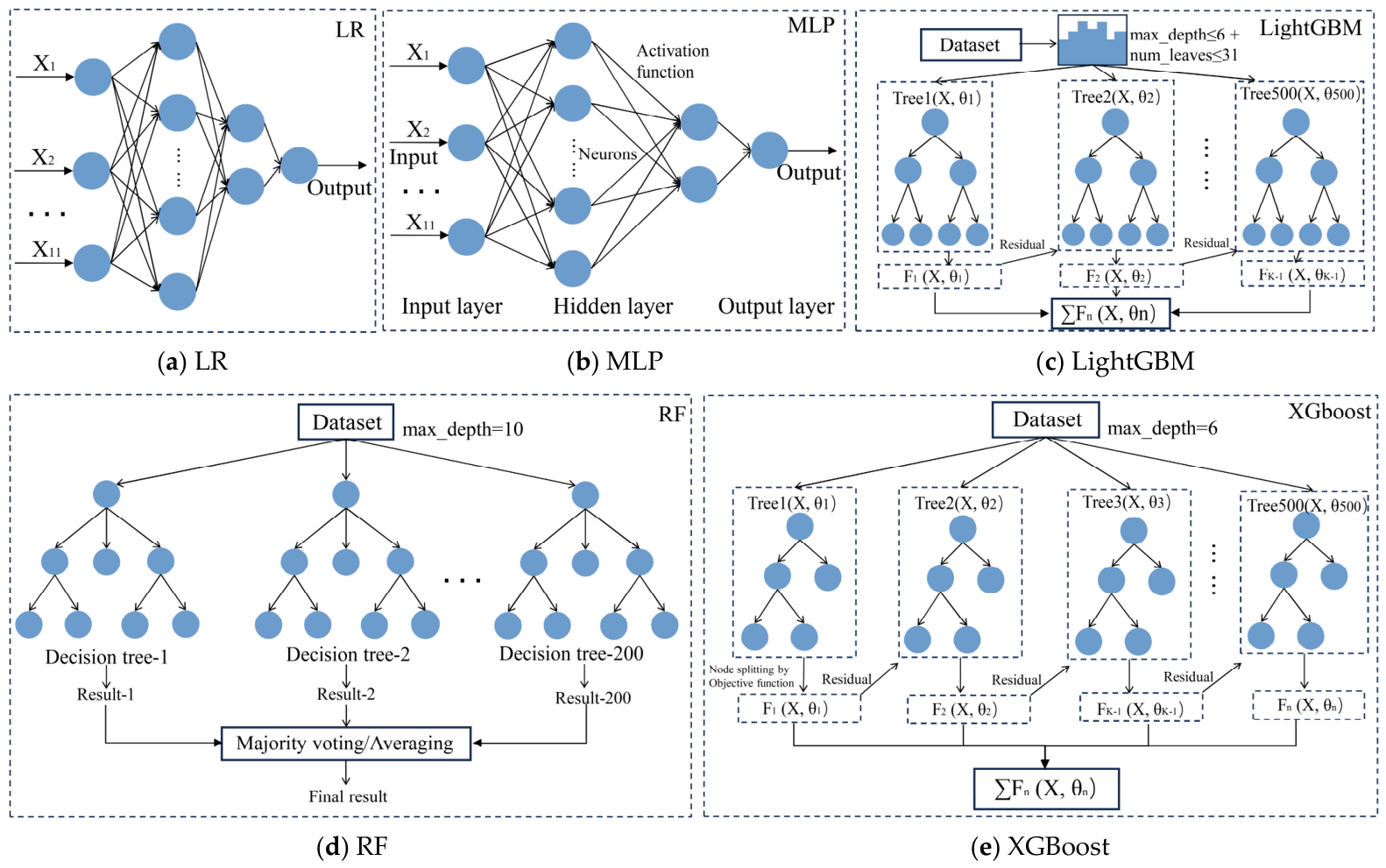
2.4. Classification Predictive Model
2.4.1. Dataset Construction
2.4.2. Model Training
2.4.3. Model Evaluation
3. Measurement and Validation
3.1. Case Background and Research Object
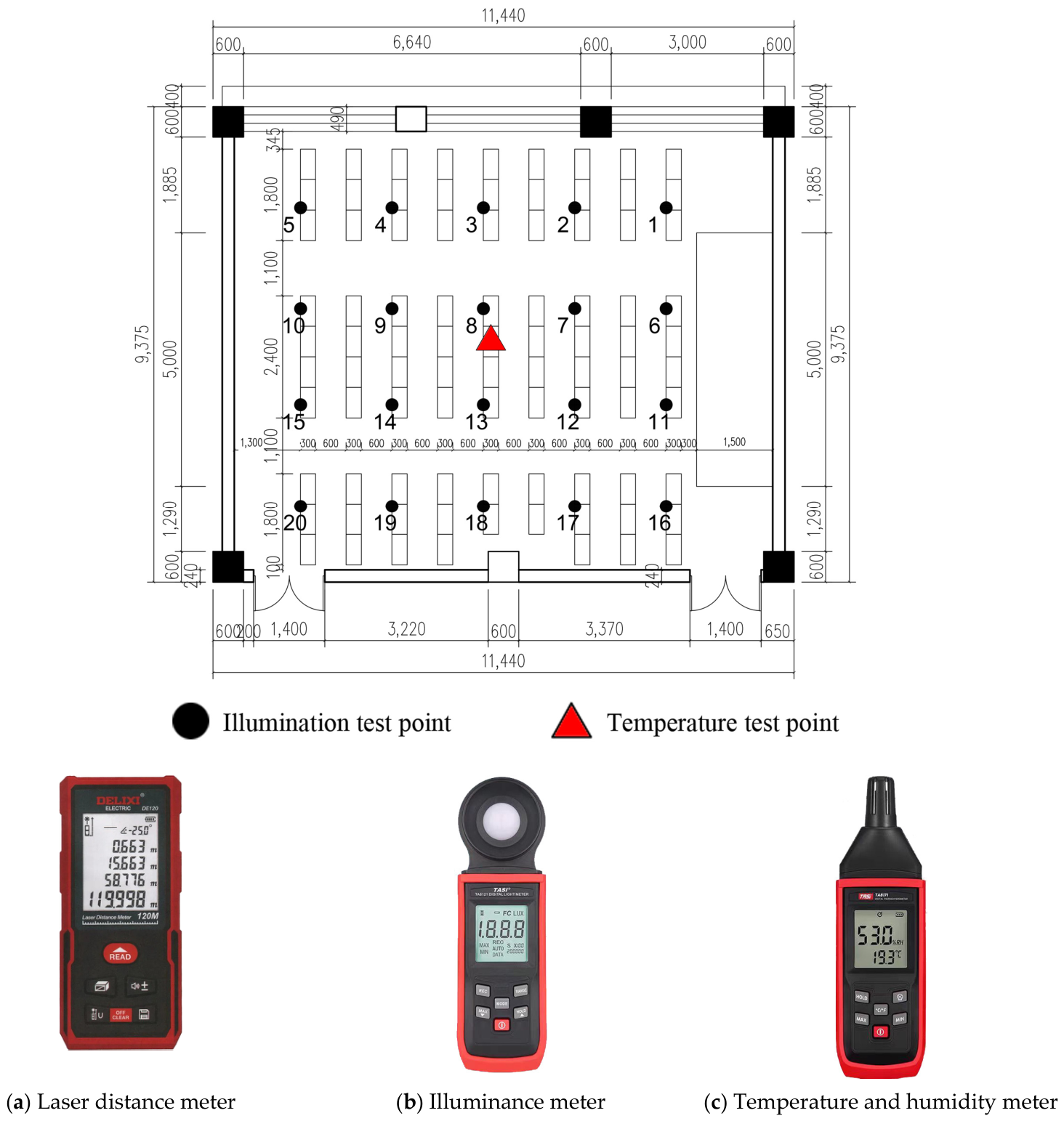
3.2. Field Measurements of the Daylighting and Thermal Environment in a Medium-Sized Classroom
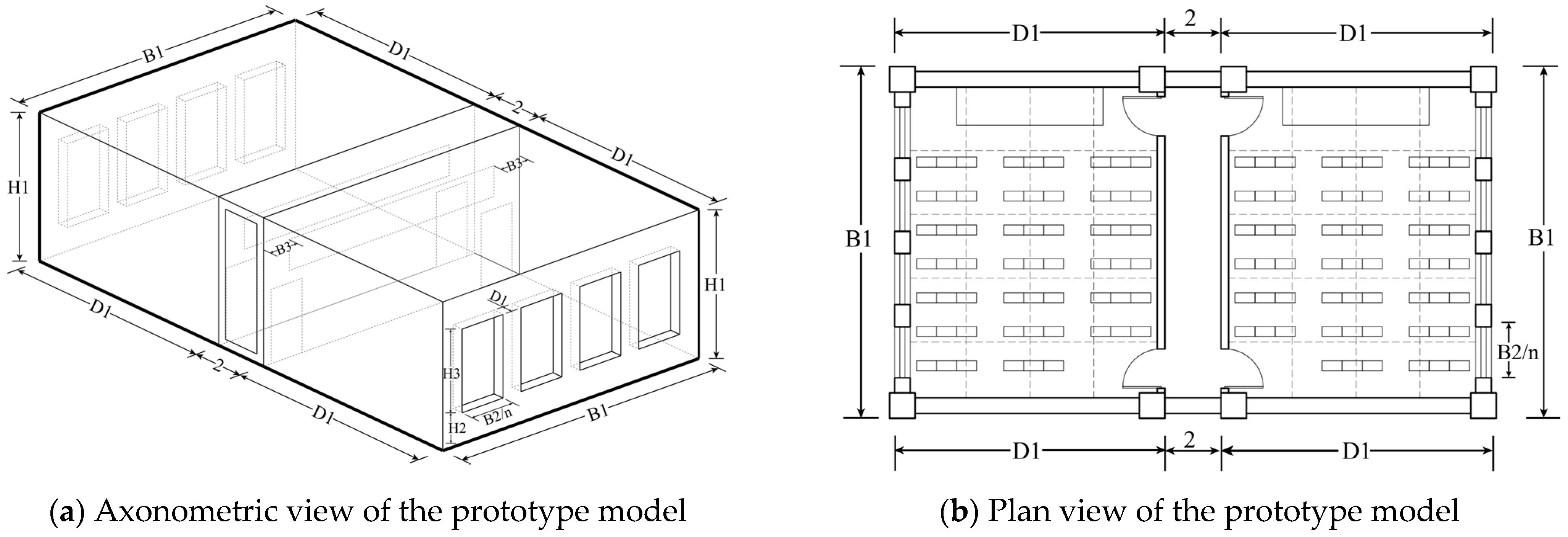
3.3. Establishment of the Prototype Model
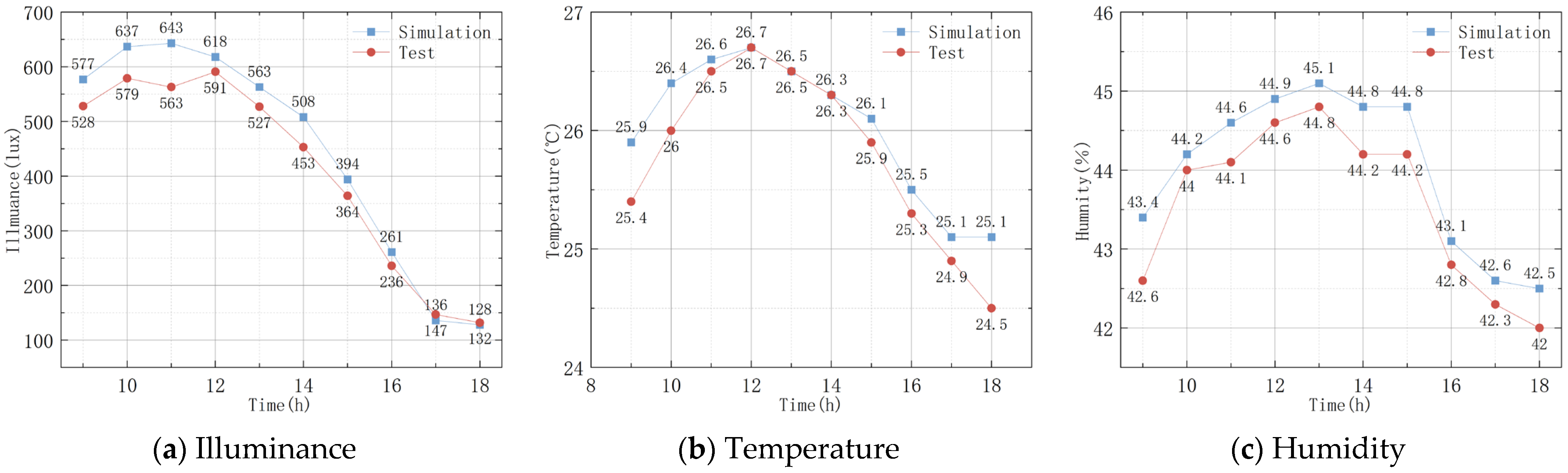
3.4. Verification of Simulation Accuracy
4. Result
4.1. Analysis of Multi-Objective Optimization Results
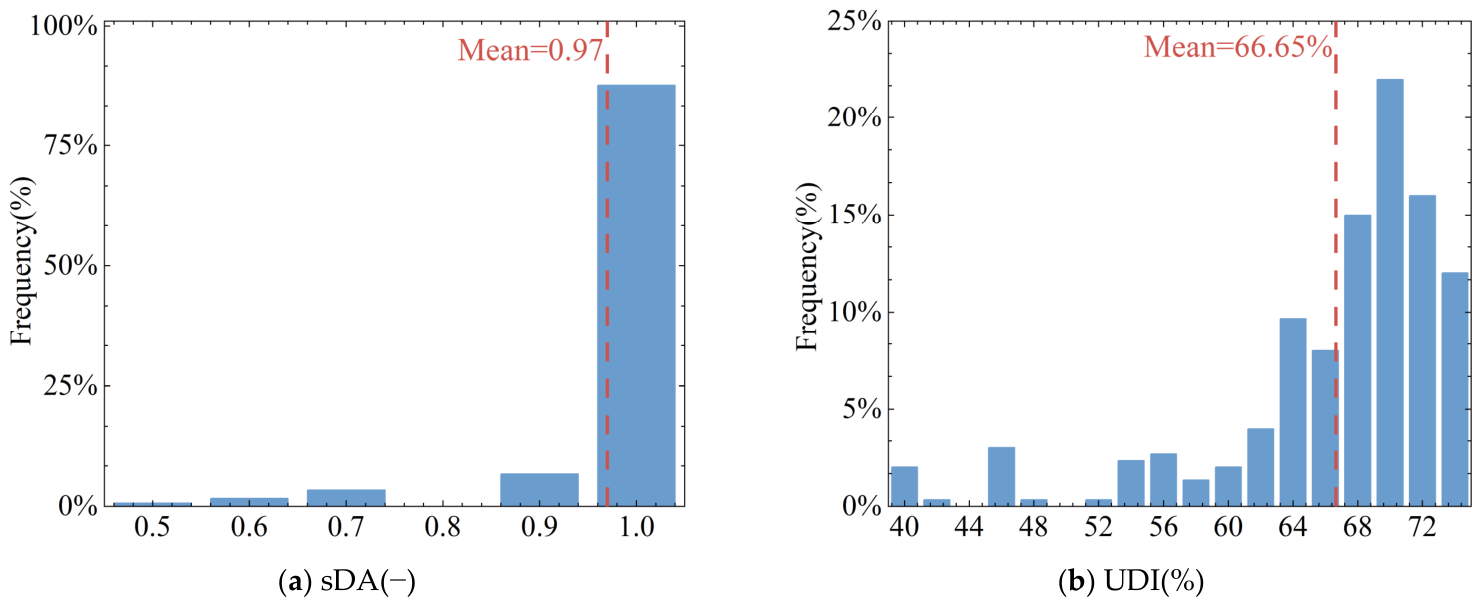
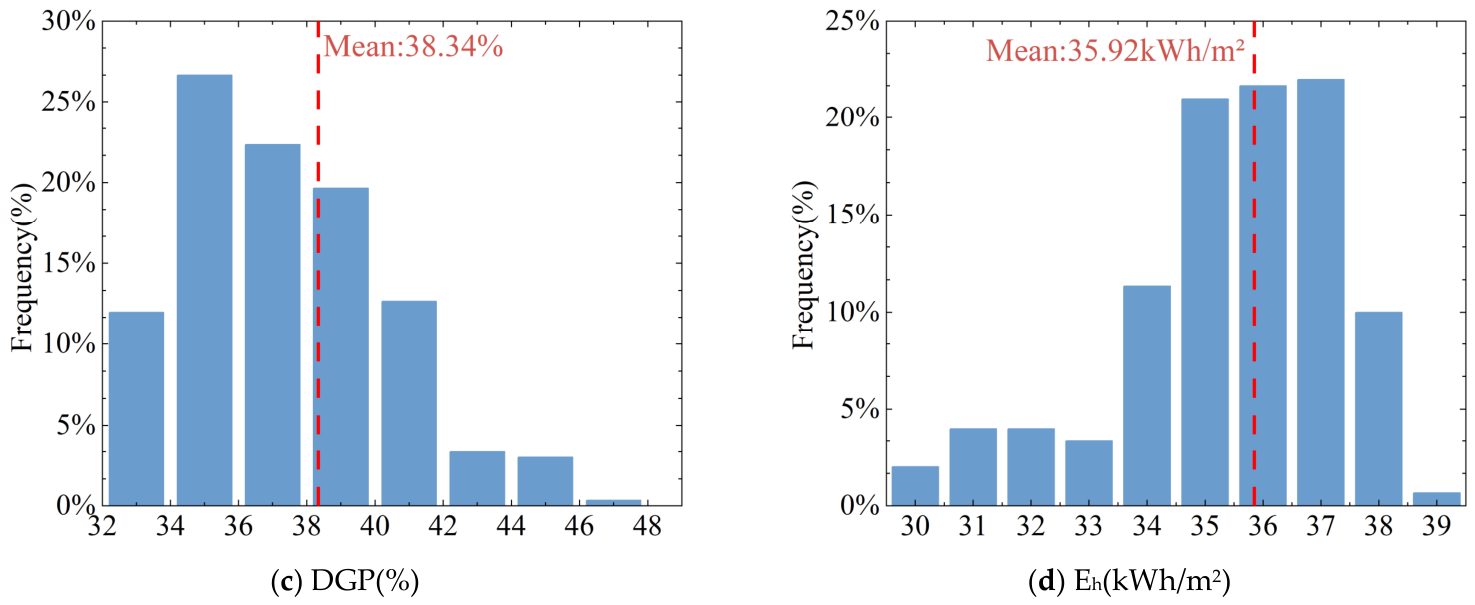
4.1.1. Analysis of the Pareto Historical Scheme Set
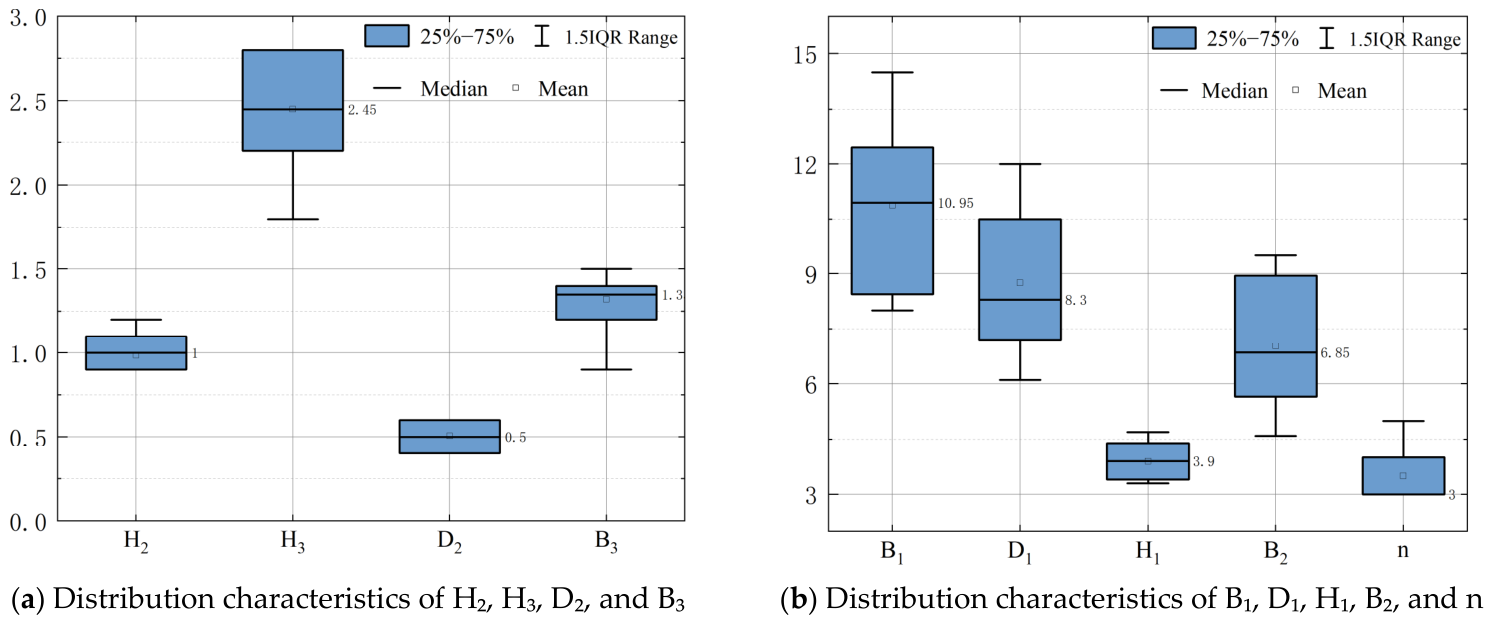
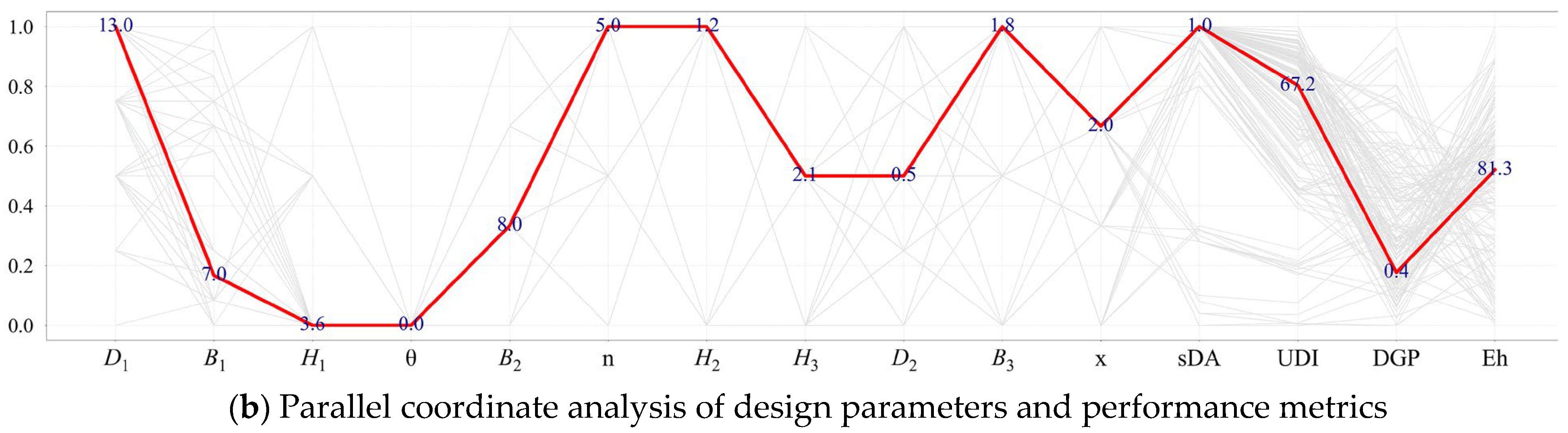
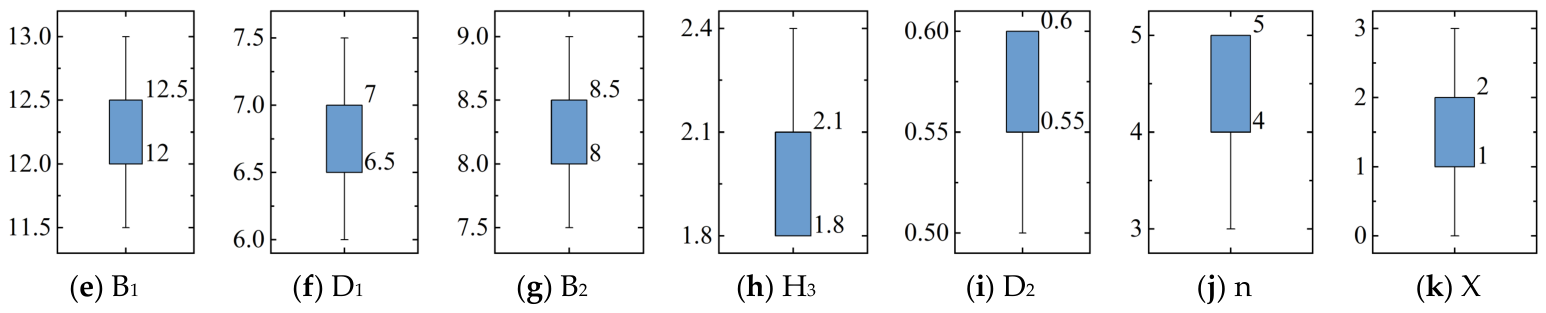
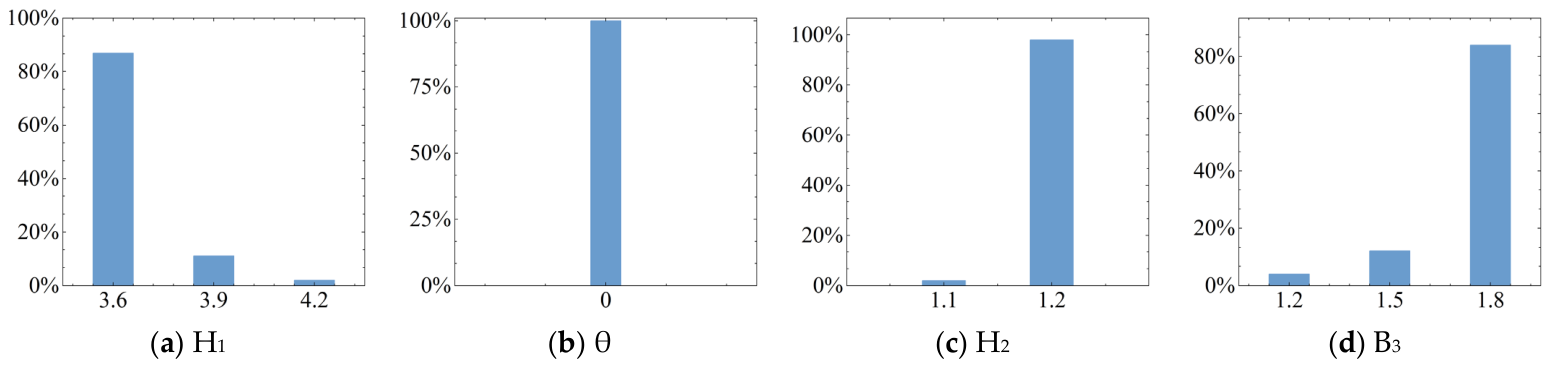
4.1.2. Optimal Ranges of Design Parameters
4.1.3. Performance Improvement and Comparison with the Baseline Model
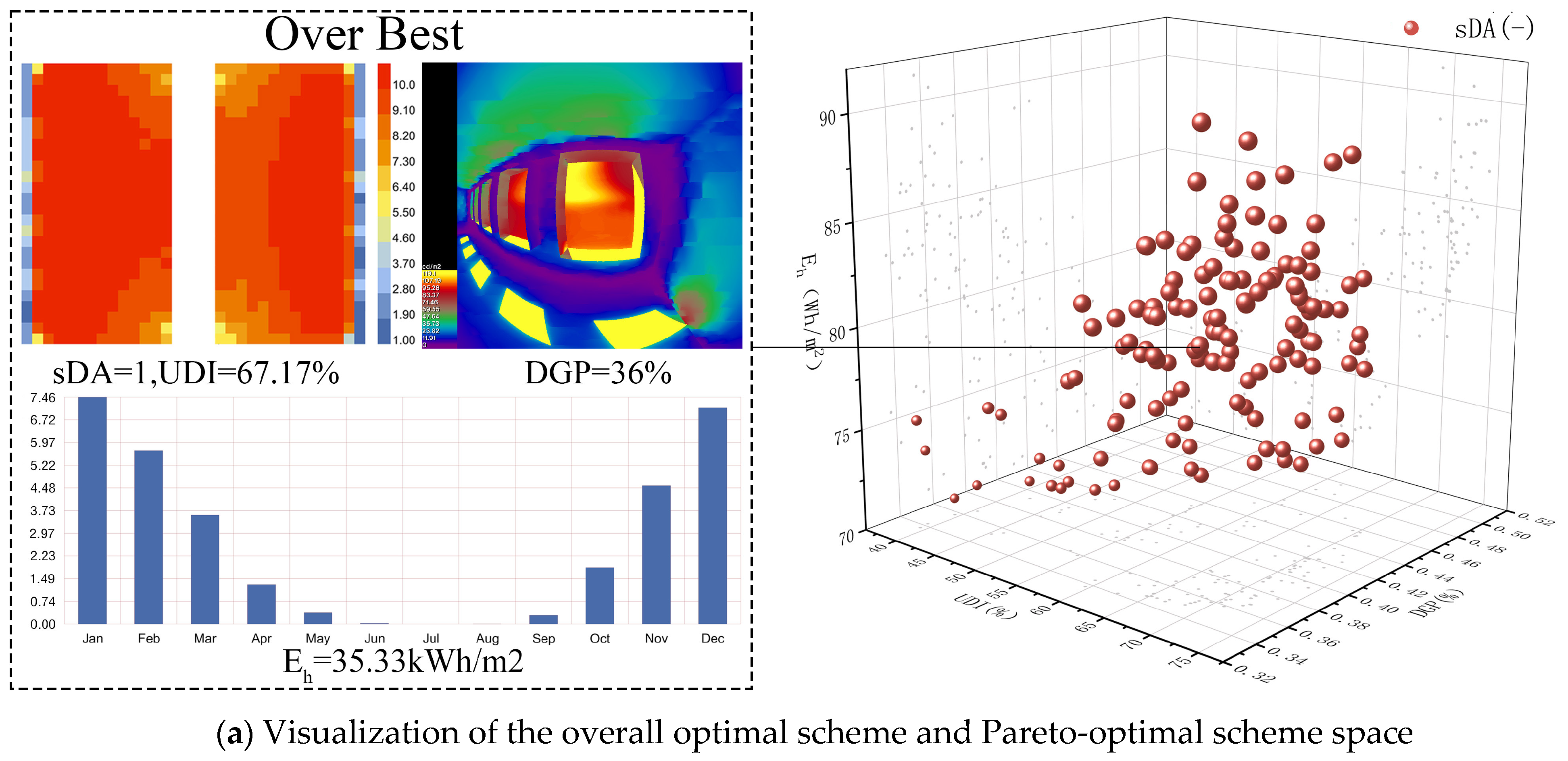
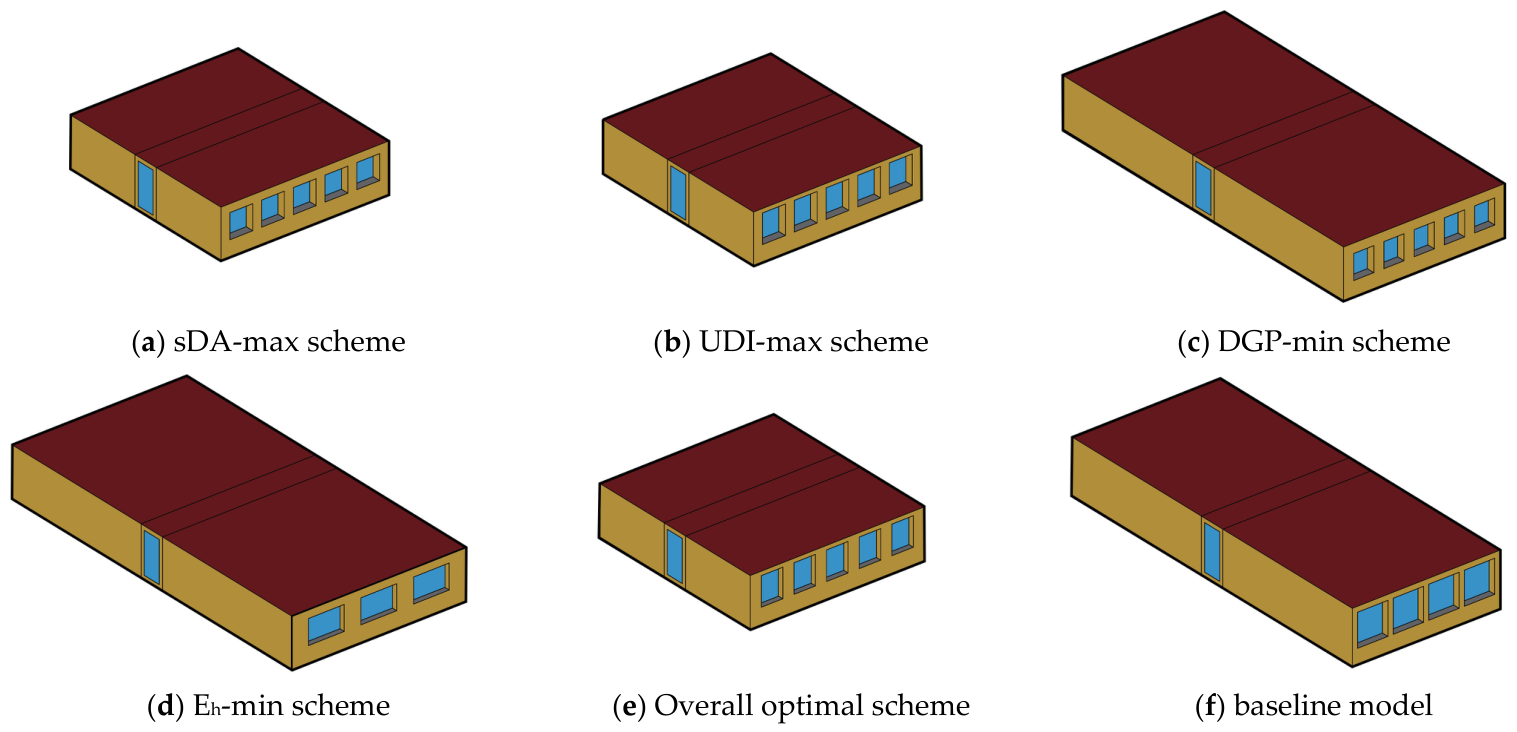
4.1.4. Comparison Between Extreme Schemes and the Overall Optimal Scheme
4.2. Analysis of the Results of the Performance Classification Model for Medium-Sized Classrooms
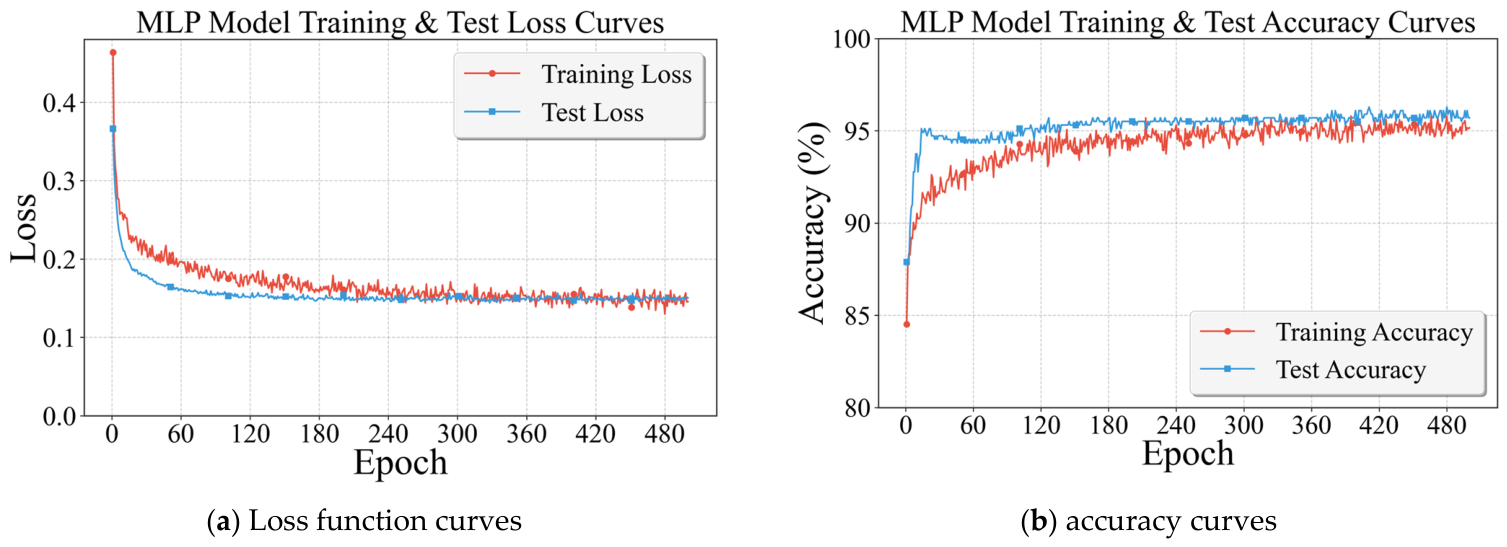
4.2.1. Model Accuracy Evaluation
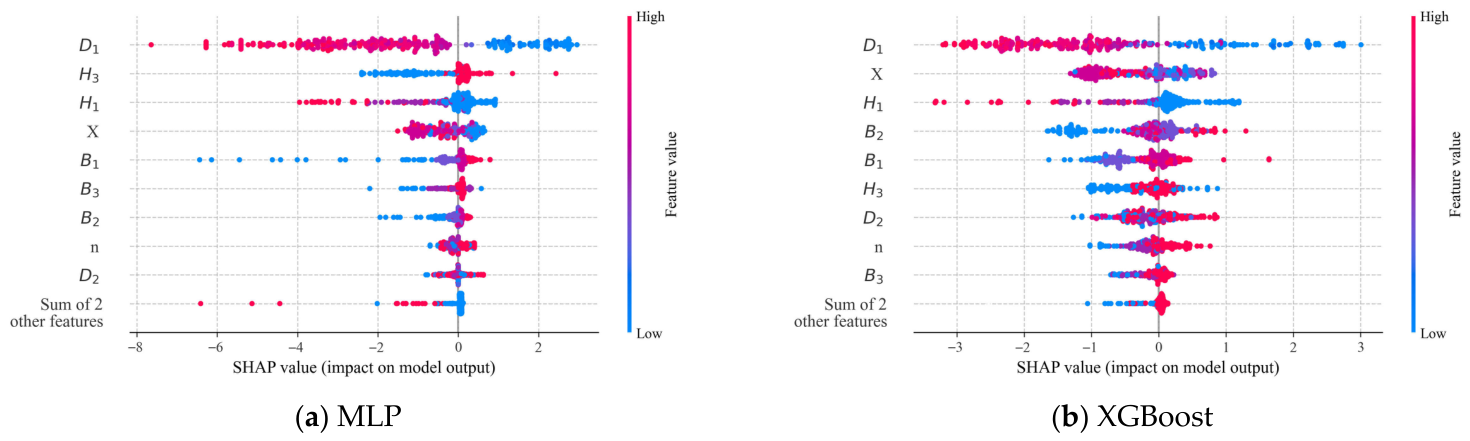
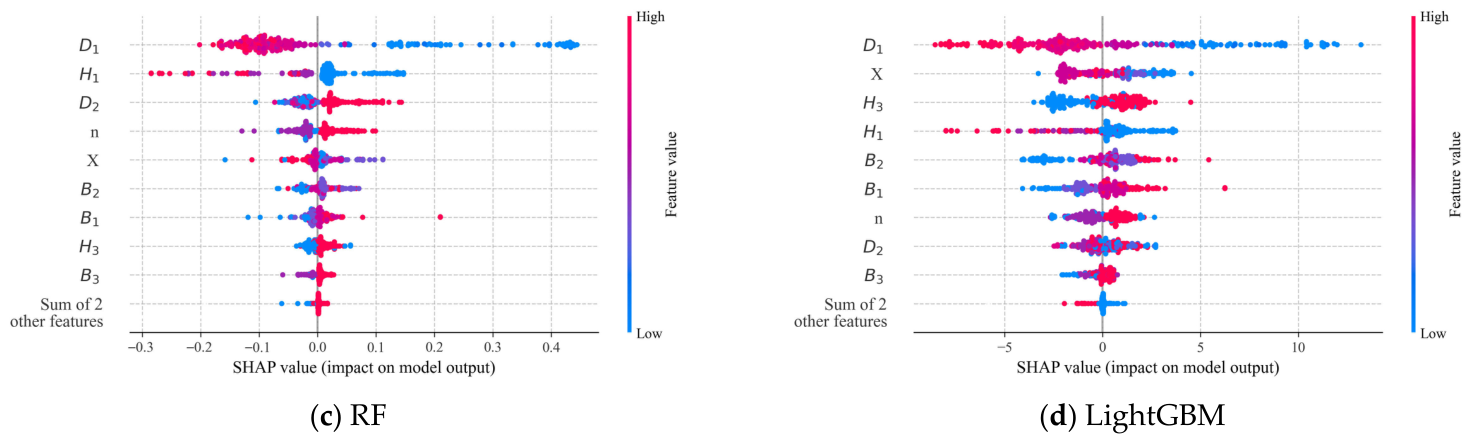
4.2.2. Model Interpretability Analysis
5. Discussion
5.1. Multi-Objective Optimization Results
5.2. MLP Model Prediction Results
5.3. SHAP Analysis
6. Conclusions
6.1. Key Findings and Contributions
6.2. Limitations and Future Work
Author Contributions
Funding
Data Availability Statement
Acknowledgments
Conflicts of Interest
Nomenclature
| sDA | Spatial Daylight Autonomy | B1 | Bay |
| UDI | Useful Daylight Illuminance | D1 | Depth |
| DGP | Daylight Glare Probability | H1 | Height |
| Eh | Heating Energy Consumption | θ | Orientation |
| ML | Machine Learning | B2 | Total Window Width |
| LR | Linear Regression | n | Number Of Windows |
| RF | Random Forest | H2 | Window-Sill Height |
| XGBoost | Extreme Gradient Boosting | H3 | Window Height |
| LightGBM | Light Gradient Boosting Machine | D2 | Glazing Setback From Wall |
| MLP | Multilayer Perceptron | x | Glazing Option |
| NSGA-II | Non-Dominated Sorting Genetic Algorithm II | B3 | Side-Wall Distance To The Window Edge |
References
- Xu, P.; Zhang, Y.; Yao, H.; Wen, Y. Research on the Impact of Demographic Factors on Carbon Emissions from Residential Buildings in Chongqing (China). Energy Build. 2025, 346, 116167. [Google Scholar] [CrossRef]
- Liu, Q.; Ren, J. Research on the Building Energy Efficiency Design Strategy of Chinese Universities Based on Green Performance Analysis. Energy Build. 2020, 224, 110242. [Google Scholar] [CrossRef]
- Alam, M.; Devjani, M.R. Analyzing Energy Consumption Patterns of an Educational Building through Data Mining. J. Build. Eng. 2021, 44, 103385. [Google Scholar] [CrossRef]
- Mishra, A.K.; Ramgopal, M. A Thermal Comfort Field Study of Naturally Ventilated Classrooms in Kharagpur, India. Build. Environ. 2015, 92, 396–406. [Google Scholar] [CrossRef]
- Samiou, A.I.; Doulos, L.T.; Zerefos, S. Daylighting and Artificial Lighting Criteria That Promote Performance and Optical Comfort in Preschool Classrooms. Energy Build. 2022, 258, 111819. [Google Scholar] [CrossRef]
- Nasrollahi, N.; Shokri, E. Daylight Illuminance in Urban Environments for Visual Comfort and Energy Performance. Renew. Sustain. Energy Rev. 2016, 66, 861–874. [Google Scholar] [CrossRef]
- Wang, Y.; Yang, W.; Wang, Q. Multi-Objective Parametric Optimization of the Composite External Shading for the Classroom Based on Lighting, Energy Consumption, and Visual Comfort. Energy Build. 2022, 275, 112441. [Google Scholar] [CrossRef]
- Lee, S.; Lee, K.S. A Study on the Improvement of the Evaluation Scale of Discomfort Glare in Educational Facilities. Energies 2019, 12, 3265. [Google Scholar] [CrossRef]
- Pradhan, S.; Jang, Y.; Chauhan, H. Investigating Effects of Indoor Temperature and Lighting on University Students’ Learning Performance Considering Sensation, Comfort, and Physiological Responses. Build. Environ. 2024, 253, 111346. [Google Scholar] [CrossRef]
- Konis, K.; Gamas, A.; Kensek, K. Passive Performance and Building Form: An Optimization Framework for Early-Stage Design Support. Sol. Energy 2016, 125, 161–179. [Google Scholar] [CrossRef]
- Gao, Y.; Zhao, S.; Huang, Y.; Pan, H. Multi-Objective Optimization of Daylighting–Thermal Performance in Cold-Region University Library Atriums: A Parametric Design Approach. Energies 2025, 18, 1184. [Google Scholar] [CrossRef]
- Zhang, A.; Bokel, R.; Van Den Dobbelsteen, A.; Sun, Y.; Huang, Q.; Zhang, Q. Optimization of Thermal and Daylight Performance of School Buildings Based on a Multi-Objective Genetic Algorithm in the Cold Climate of China. Energy Build. 2017, 139, 371–384. [Google Scholar] [CrossRef]
- Ding, J.; Zou, X.; Lv, M. Influence of Opposing Exterior Window Geometry on the Carbon Emissions of Indoor Lighting under the Combined Effect of Natural Lighting and Artificial Lighting in the City of Shenyang, China. Sustainability 2023, 15, 12972. [Google Scholar] [CrossRef]
- Shi, Z.; Liu, Q.; Zhang, Z.; Yue, T. Thermal Comfort in the Design Classroom for Architecture in the Cold Area of China. Sustainability 2022, 14, 8307. [Google Scholar] [CrossRef]
- Wang, Z.; Li, A.; Ren, J.; He, Y. Thermal Adaptation and Thermal Environment in University Classrooms and Offices in Harbin. Energy Build. 2014, 77, 192–196. [Google Scholar] [CrossRef]
- Jia, Y.; Liu, Z.; Fang, Y.; Zhang, H.; Zhao, C.; Cai, X. Effect of Interior Space and Window Geometry on Daylighting Performance for Terrace Classrooms of Universities in Severe Cold Regions: A Case Study of Shenyang, China. Buildings 2023, 13, 603. [Google Scholar] [CrossRef]
- Lin, Y.; Chen, C.-C. Strategies on Uniformity Lighting in Office Space under Energy-Saving Environment. Buildings 2023, 13, 1797. [Google Scholar] [CrossRef]
- Aliparast, S.; Onaygil, S. A Field Study of Individual, Energy-Efficient, and Human-Centered Indoor Electric Lighting: Its Impact on Comfort and Visual Performance in an Open-Plan Office Part 1. Buildings 2024, 14, 936. [Google Scholar] [CrossRef]
- Bai, W.; Guo, W.; He, Y.; Wu, Y.; Liang, S.; Zhang, S. Research on the Optimization Design of the Atrium Space Form in University Libraries Based on the Coupling of Daylighting and Energy Consumption. Buildings 2024, 14, 2715. [Google Scholar] [CrossRef]
- Cui, X.; Ahn, C.-W. Multi-Objective Optimization of Natural Lighting Design in Reading Areas of Higher Education Libraries. Buildings 2025, 15, 1560. [Google Scholar] [CrossRef]
- Wei, W.; Wargocki, P.; Zirngibl, J.; Bendžalová, J.; Mandin, C. Review of Parameters Used to Assess the Quality of the Indoor Environment in Green Building Certification Schemes for Offices and Hotels. Energy Build. 2020, 209, 109683. [Google Scholar] [CrossRef]
- Ma, X.; Chen, H.; Lu, Y.; Luo, Q.; Yan, F.; Li, T.; Zhao, J.; Ding, H. Evaluating Blue-Green Infrastructure for Outdoor Thermal Comfort and Energy Efficiency in a University Campus Microclimate: A Case Study from Xi’an, China. Energy Build. 2026, 350, 116640. [Google Scholar] [CrossRef]
- Qin, S.; Liu, Y.; Yu, G.; Li, R. Assessing the Potential of Integrated Shading Devices to Mitigate Overheating Risk in University Buildings in Severe Cold Regions of China: A Case Study in Harbin. Energies 2023, 16, 6259. [Google Scholar] [CrossRef]
- Zhai, Y.; Wang, Y.; Huang, Y.; Meng, X. A Multi-Objective Optimization Methodology for Window Design Considering Energy Consumption, Thermal Environment and Visual Performance. Renew. Energy 2019, 134, 1190–1199. [Google Scholar] [CrossRef]
- Liu, J.; Li, Z.; Zhong, Q.; Wu, J.; Xie, L. Multi-Objective Optimization of Daylighting Performance and Energy Consumption of Educational Buildings in Different Climatic Zones of China. J. Build. Eng. 2024, 95, 110322. [Google Scholar] [CrossRef]
- Lakhdari, K.; Sriti, L.; Painter, B. Parametric Optimization of Daylight, Thermal and Energy Performance of Middle School Classrooms, Case of Hot and Dry Regions. Build. Environ. 2021, 204, 108173. [Google Scholar] [CrossRef]
- Khani, A.; Khakzand, M.; Faizi, M. Multi-Objective Optimization for Energy Consumption, Visual and Thermal Comfort Performance of Educational Building (Case Study: Qeshm Island, Iran). Sustain. Energy Technol. Assess. 2022, 54, 102872. [Google Scholar] [CrossRef]
- Kwon, C.W.; Lee, K.J. Integrated Daylighting Design by Combining Passive Method with DaySim in a Classroom. Energies 2018, 11, 3168. [Google Scholar] [CrossRef]
- Somu, N.; Raman M R, G.; Ramamritham, K. A Deep Learning Framework for Building Energy Consumption Forecast. Renew. Sustain. Energy Rev. 2021, 137, 110591. [Google Scholar] [CrossRef]
- Luo, Z.; Sun, C.; Dong, Q.; Qi, X. Key Control Variables Affecting Interior Visual Comfort for Automated Louver Control in Open-Plan Office—A Study Using Machine Learning. Build. Environ. 2022, 207, 108565. [Google Scholar] [CrossRef]
- Thrampoulidis, E.; Mavromatidis, G.; Lucchi, A.; Orehounig, K. A Machine Learning-Based Surrogate Model to Approximate Optimal Building Retrofit Solutions. Appl. Energy 2021, 281, 116024. [Google Scholar] [CrossRef]
- Araújo, G.R.; Gomes, R.; Gomes, M.G.; Guedes, M.C.; Ferrão, P. Surrogate Models for Efficient Multi-Objective Optimization of Building Performance. Energies 2023, 16, 4030. [Google Scholar] [CrossRef]
- Zheng, H.; Yuan, P.F. A Generative Architectural and Urban Design Method through Artificial Neural Networks. Build. Environ. 2021, 205, 108178. [Google Scholar] [CrossRef]
- Chen, Z.; Cui, Y.; Cai, H.; Zheng, H.; Ning, Q.; Ding, X. Multi-Objective Optimization of Photovoltaic Facades in Prefabricated Academic Buildings Using Transfer Learning and Genetic Algorithms. Energy 2025, 328, 136470. [Google Scholar] [CrossRef]
- Zhang, W.; Ma, Z.; Qiu, H.; Pan, Y.; Shi, Y.; Zhang, L. Machine Learning-Boosted Multi-Objective Optimization of Integrated Shading Systems: Enhancing Daylight Availability, Glare Protection, and Energy Savings. Build. Environ. 2025, 280, 113124. [Google Scholar] [CrossRef]
- Shi, Z.; Huang, C.; Wang, J.; Yu, Z.; Fu, J.; Yao, J. Enhancing Performance and Generalization in Dormitory Optimization Using Deep Reinforcement Learning with Embedded Surrogate Model. Build. Environ. 2025, 276, 112864. [Google Scholar] [CrossRef]
- Ge, B.; Fan, Z.; Liu, J. Two-Stage Multi-Objective Optimization of Solar Roof Design for Railway-Station Represented Large-Space Public Buildings Considering Thermal Efficiency, Carbon Emissions, and Daylighting. Build. Environ. 2025, 280, 113084. [Google Scholar] [CrossRef]
- Wang, D.; Dong, Q.; Sun, C. Evaluating the Adaptation Potential and Retrofitting Effectiveness of Existing Residential Buildings in Severe Cold Regions of China under Climate Change. Build. Environ. 2025, 278, 112982. [Google Scholar] [CrossRef]
- Zi, Y.; Sun, C.; Han, Y. Sky Type Classification in Harbin during Winter. J. Asian Archit. Build. Eng. 2020, 19, 515–526. [Google Scholar] [CrossRef]
- Pellegrino, A.; Cammarano, S.; Lo Verso, V.R.M.; Corrado, V. Impact of Daylighting on Total Energy Use in Offices of Varying Architectural Features in Italy: Results from a Parametric Study. Build. Environ. 2017, 113, 151–162. [Google Scholar] [CrossRef]
- Mardaljevic, J.; Heschong, L.; Lee, E. Daylight Metrics and Energy Savings. Light. Res. Technol. 2009, 41, 261–283. [Google Scholar] [CrossRef]
- Sun, Y.; Liu, D.; Flor, J.-F.; Shank, K.; Baig, H.; Wilson, R.; Liu, H.; Sundaram, S.; Mallick, T.K.; Wu, Y. Analysis of the Daylight Performance of Window Integrated Photovoltaics Systems. Renew. Energy 2020, 145, 153–163. [Google Scholar] [CrossRef]
- Carlucci, S.; Causone, F.; De Rosa, F.; Pagliano, L. A Review of Indices for Assessing Visual Comfort with a View to Their Use in Optimization Processes to Support Building Integrated Design. Renew. Sustain. Energy Rev. 2015, 47, 1016–1033. [Google Scholar] [CrossRef]
- Krarti, M.; Erickson, P.M.; Hillman, T.C. A Simplified Method to Estimate Energy Savings of Artificial Lighting Use from Daylighting. Build. Environ. 2005, 40, 747–754. [Google Scholar] [CrossRef]
- Leng, H.; Chen, X.; Ma, Y.; Wong, N.H.; Ming, T. Urban Morphology and Building Heating Energy Consumption: Evidence from Harbin, a Severe Cold Region City. Energy Build. 2020, 224, 110143. [Google Scholar] [CrossRef]
- Liu, Z.; Hou, J.; Zhang, L.; Dewancker, B.J.; Meng, X.; Hou, C. Research on Energy-Saving Factors Adaptability of Exterior Envelopes of University Teaching-Office Buildings under Different Climates (China) Based on Orthogonal Design and EnergyPlus. Heliyon 2022, 8, e10056. [Google Scholar] [CrossRef] [PubMed]
- Eltaweel, A.; Su, Y. Controlling Venetian Blinds Based on Parametric Design; via Implementing Grasshopper’s Plugins: A Case Study of an Office Building in Cairo. Energy Build. 2017, 139, 31–43. [Google Scholar] [CrossRef]
- GB 55015-2021; General Code for Building Energy Conservation and Renewable Energy Utilization. China Architecture & Building Press: Beijing, China, 2022.
- GB 50176-2016; Code for Thermal Design of Civil Buildings. China Architecture & Building Press: Beijing, China, 2017.
- Zhang, Q.; Zhang, L.; Nie, J.; Li, Y. Techno-Economic Analysis of Air Source Heat Pump Applied for Space Heating in Northern China. Appl. Energy 2017, 207, 533–542. [Google Scholar] [CrossRef]
- GB 50033-2013; Standard for Daylighting Design of Buildings. China Architecture & Building Press: Beijing, China, 2013.
- GB 50189-2015; Design Standard for Energy Efficiency of Public Buildings. China Architecture & Building Press: Beijing, China, 2015.
- Dehghan, F.; Amores, C.P.; Khanmohammadi, L.; Labib, R. Evaluating Machine Learning Models for Sustainable Building Design: Energy, Emissions, and Comfort Metrics. Build. Environ. 2025, 285, 113582. [Google Scholar] [CrossRef]
- Zhou, C.; Wang, Z.; Wang, X.; Guo, R.; Zhang, Z.; Xiang, X.; Wu, Y. Deciphering the Nonlinear and Synergistic Role of Building Energy Variables in Shaping Carbon Emissions: A LightGBM-SHAP Framework in Office Buildings. Build. Environ. 2024, 266, 112035. [Google Scholar] [CrossRef]
- Cui, Y.; Zhou, X.; Fan, C.; Lin, H.; Deng, S. Application of Physics-Informed Neural Networks-Based Hybrid Prediction Models in Campus Thermal Environment Prediction. Build. Environ. 2026, 287, 113880. [Google Scholar] [CrossRef]
- Hou, F.; Cheng, J.C.P.; Ma, J.; Kwok, H.H.L.; Huang, C.; Wu, Z. Occupancy-Driven HVAC Control Optimization via LSTM and Deep Reinforcement Learning for Enhanced Indoor Air Quality, Thermal Comfort and Energy Efficiency. Build. Environ. 2025, 284, 113501. [Google Scholar] [CrossRef]
- Gao, N.; Shao, W.; Rahaman, M.S.; Zhai, J.; David, K.; Salim, F.D. Transfer Learning for Thermal Comfort Prediction in Multiple Cities. Build. Environ. 2021, 195, 107725. [Google Scholar] [CrossRef]
- Chen, Z.; Cui, Y.; Zheng, H.; Ning, Q. Optimization and Prediction of Energy Consumption, Light and Thermal Comfort in Teaching Building Atriums Using NSGA-II and Machine Learning. J. Build. Eng. 2024, 86, 108687. [Google Scholar] [CrossRef]
- Li, X.; Xu, J.; Zhang, J.; Tian, T.; Xu, R.; Gao, Y.; Li, P.; Zhou, X.; Luo, M. Using SHAP and Machine Learning for Dynamic Thermal Comfort Estimation during Temperature Ramp Conditions with Infrared Camera. Build. Environ. 2025, 275, 112824. [Google Scholar] [CrossRef]
- Li, X.; Rodrigues, E.; Du, C. Building Energy Prediction in a Changing Climate: An Interpretable Machine Learning Approach. Build. Environ. 2025, 283, 113420. [Google Scholar] [CrossRef]
- Kristiansen, T.; Jamil, F.; Hameed, I.A.; Hamdy, M. Predicting Annual Illuminance and Operative Temperature in Residential Buildings Using Artificial Neural Networks. Build. Environ. 2022, 217, 109031. [Google Scholar] [CrossRef]







| Enclosure Structure | Set Value | |
|---|---|---|
| U-value W/(m2·K) | Exterior Wall | 0.2 |
| Floor | 0.2 | |
| Roof | 0.2 | |
| Interior Wall | 0.5 | |
| Material Reflectance | Ceiling | 0.75 |
| Interior Walls | 0.75 | |
| Floor | 0.50 |
| Parameter | Setting |
|---|---|
| Occupant density (m2/person) | 1.5 |
| Room summer setpoint temperature (°C) | 26 |
| Room winter setpoint temperature (°C) | 18 |
| Fresh air volume [m3/(h·person)] | 30 |
| COP | 2.3 |
| Test grid size (m) | 2 m × 2 m |
| Illuminance sensor height (m) | 0.75 |
| Intensity of infiltration | 0.0003 m3/(s·m2) |
| Generation Size | Generation Count | Crossover Probability | Mutation Probability | Random Seed |
|---|---|---|---|---|
| 50 | 50 | 0.9 | 0.05 | 1 |
| Illuminance meter (TA8123) | Measurement range | 200,000 lx |
| Resolution | 0.1 lx | |
| Accuracy | ±3% | |
| Temperature and humidity meter (TA622B) | Temperature range | −10 °C to 50 °C |
| Temperature accuracy | ±1.5 °C | |
| Temperature resolution | 0.1 °C | |
| Humidity range | 5.0%RH to 98%RH | |
| Humidity accuracy | ±4%RH (41–80%RH) | |
| Humidity resolution | 0.1%RH | |
| Laser distance meter (SW-DA100) | Distance measurement accuracy | 1.5 mm |
| Design Parameter | Range (m) | Step (m) |
|---|---|---|
| Bay (B1) | 8.0–14.5 | 0.5 |
| Depth (D1) | 6.5–12.0 | 0.5 |
| Height (H1) | 3.6–5.4 | 0.3 |
| Orientation (θ) | 0–180° | 45° |
| Total window width (B2) | 4.5–9.0 | 0.5 |
| Number of windows (n) | 3–5 window | 1 |
| Window-sill height (H2) | 0.9–1.2 | 0.1 |
| Window height (H3) | 1.8–2.7 | 0.3 |
| Glazing setback from wall (D2) | 0.40–0.60 | 0.05 |
| Side-wall distance to the window edge (B3) | 0.9–1.8 | 0.3 |
| Glazing option (x) | 0–3 types | 1 |
| Glazing Option | Construction | Visible Transmittance | SHGC | U-Value [W/(m2·K)] |
|---|---|---|---|---|
| Clear glass | 6 mm clear glass + 12 mm air layer + 6 mm clear glass | 0.81 | 0.75 | 2.59 |
| Heat-absorbing glass | 6 mm heat-absorbing glass + 12 mm air layer + 6 mm clear glass | 0.68 | 0.49 | 2.60 |
| Low-E glass | 6 mm Low-E glass + 12 mm air gap + 6 mm clear glass | 0.68 | 0.46 | 1.72 |
| Heat-reflective glass | 6 mm heat-reflective glass + 12 mm air gap + 6 mm clear glass | 0.43 | 0.42 | 2.45 |
| R2 | MAPE | |
|---|---|---|
| Illuminance | 0.997 | 8.4% |
| Temperature | 0.979 | 0.89% |
| Humidity | 0.983 | 1.01% |
| sDA-Max Scheme | UDI-Max Scheme | DGP-Min Scheme | Eh-Min Scheme | Overall Optimal Scheme | Baseline Model | |
|---|---|---|---|---|---|---|
| B1 (m) | 13.0 | 12.5 | 12.0 | 13.0 | 13.0 | 11.0 |
| D1 (m) | 6.0 | 6.0 | 12.0 | 12.0 | 7.0 | 9.5 |
| H1 (m) | 3.6 | 3.6 | 3.6 | 3.6 | 3.6 | 3.9 |
| θ (°) | 0 | 0 | 0 | 0 | 0 | 0 |
| B2 (m) | 8.0 | 8.5 | 7.5 | 8.0 | 8.0 | 9.0 |
| n (−) | 5 | 5 | 5 | 3 | 5 | 4 |
| H2 (m) | 1.2 | 1.2 | 1.1 | 1.2 | 1.2 | 1.1 |
| H3 (m) | 1.8 | 2.1 | 1.8 | 1.8 | 2.1 | 2.4 |
| D2 (m) | 0.5 | 0.6 | 0.6 | 0.4 | 0.5 | 0.5 |
| B3 (m) | 1.8 | 1.8 | 1.2 | 1.8 | 1.8 | 1.8 |
| X (−) | 2 | 1 | 2 | 0 | 2 | 1 |
| sDA (−) | 1 | 1 | 0.48 | 0.73 | 1 | 0.85 |
| UDI (%) | 71.52 | 74.04 | 33.89 | 47.34 | 67.17 | 56.50 |
| DGP (%) | 37.54 | 39.52 | 33.65 | 48.45 | 36.54 | 52.89 |
| Eh (kWh/m2) | 36.45 | 37.61 | 31.88 | 29.60 | 35.33 | 41.53 |
| Evaluation Indicator | Medium-Sized Classroom (Train) | Medium-Sized Classroom (Test) | ||||
|---|---|---|---|---|---|---|
| Precision | Recall | F1-Score | Precision | Recall | F1-Score | |
| LR | 0.95 | 0.86 | 0.87 | 0.95 | 0.76 | 0.82 |
| XGBoost | 0.98 | 0.93 | 0.95 | 0.95 | 0.85 | 0.89 |
| RF | 0.97 | 0.89 | 0.93 | 0.96 | 0.85 | 0.89 |
| LightGBM | 0.98 | 0.94 | 0.95 | 0.95 | 0.84 | 0.88 |
| MLP | 0.95 | 0.95 | 0.95 | 0.95 | 0.95 | 0.95 |
Disclaimer/Publisher’s Note: The statements, opinions and data contained in all publications are solely those of the individual author(s) and contributor(s) and not of MDPI and/or the editor(s). MDPI and/or the editor(s) disclaim responsibility for any injury to people or property resulting from any ideas, methods, instructions or products referred to in the content. |
© 2026 by the authors. Licensee MDPI, Basel, Switzerland. This article is an open access article distributed under the terms and conditions of the Creative Commons Attribution (CC BY) license.
Share and Cite
Yan, J.; Gu, X.; Wu, G.; Wang, L.; Si, N.; Zhao, Y.; Han, D. Rapid Evaluation of University Classrooms Using an MLP Classification Model Based on Daylight–Thermal Performance. Buildings 2026, 16, 1566. https://doi.org/10.3390/buildings16081566
Yan J, Gu X, Wu G, Wang L, Si N, Zhao Y, Han D. Rapid Evaluation of University Classrooms Using an MLP Classification Model Based on Daylight–Thermal Performance. Buildings. 2026; 16(8):1566. https://doi.org/10.3390/buildings16081566
Chicago/Turabian StyleYan, Jin, Xingyi Gu, Guodong Wu, Lu Wang, Nian Si, Yongjian Zhao, and Dongchen Han. 2026. "Rapid Evaluation of University Classrooms Using an MLP Classification Model Based on Daylight–Thermal Performance" Buildings 16, no. 8: 1566. https://doi.org/10.3390/buildings16081566
APA StyleYan, J., Gu, X., Wu, G., Wang, L., Si, N., Zhao, Y., & Han, D. (2026). Rapid Evaluation of University Classrooms Using an MLP Classification Model Based on Daylight–Thermal Performance. Buildings, 16(8), 1566. https://doi.org/10.3390/buildings16081566