Article

Hydration Behavior and Environmental–Economic Performance of Portland Cement Incorporating Particle Board Waste Sludge

Department of Construction, Technical Sciences Vocation School, Isparta University of Applied Sciences, Isparta 32260, Turkey
Buildings 2026, 16(8), 1496; https://doi.org/10.3390/buildings16081496
Submission received: 16 February 2026 / Revised: 3 April 2026 / Accepted: 7 April 2026 / Published: 10 April 2026

Abstract

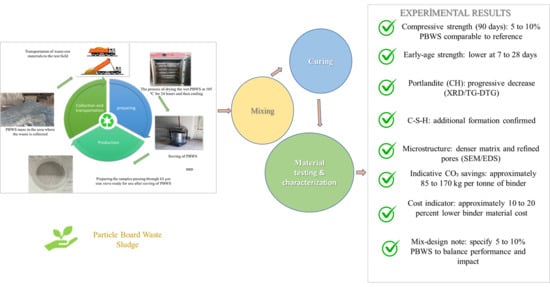
This study presents a source-specific experimental evaluation of particle board waste sludge (PBWS), a sludge-type industrial by-product from the wood-based panel industry, as a partial cement replacement in Portland cement paste systems. The hydration-related behavior of cement pastes containing 0%, 5%, 10%, and 20% PBWS at 7, 28, and 90 days was investigated using Fourier Transform Infrared Spectroscopy (FT-IR), X-Ray Diffraction (XRD), and Thermogravimetry/Derivative Thermogravimetry (TG/DTG). The results showed that PBWS affected phase development and thermal decomposition behavior depending on replacement level and curing age. In the TG/DTG analysis, mass losses in the 30–230 °C region were generally higher in the PBWS-containing mixtures than in the reference paste, particularly at 28 and 90 days, suggesting differences in dehydration-related phase development. FT-IR and XRD results further showed that PBWS modified the evolution of hydration-related phases in the blended systems. From an environmental perspective, increasing PBWS replacement reduced the calculated energy intensity, CO2 emissions, and production cost; at 20% replacement, these values decreased from 3300 to 2654 MJ/t, from 830 to 706.77 kg/t, and from 3400 to 2867.16 TL/t, respectively. Overall, the results indicate that PBWS has the potential to improve the environmental profile of cement-based production while influencing hydration-related phase evolution in blended paste systems.

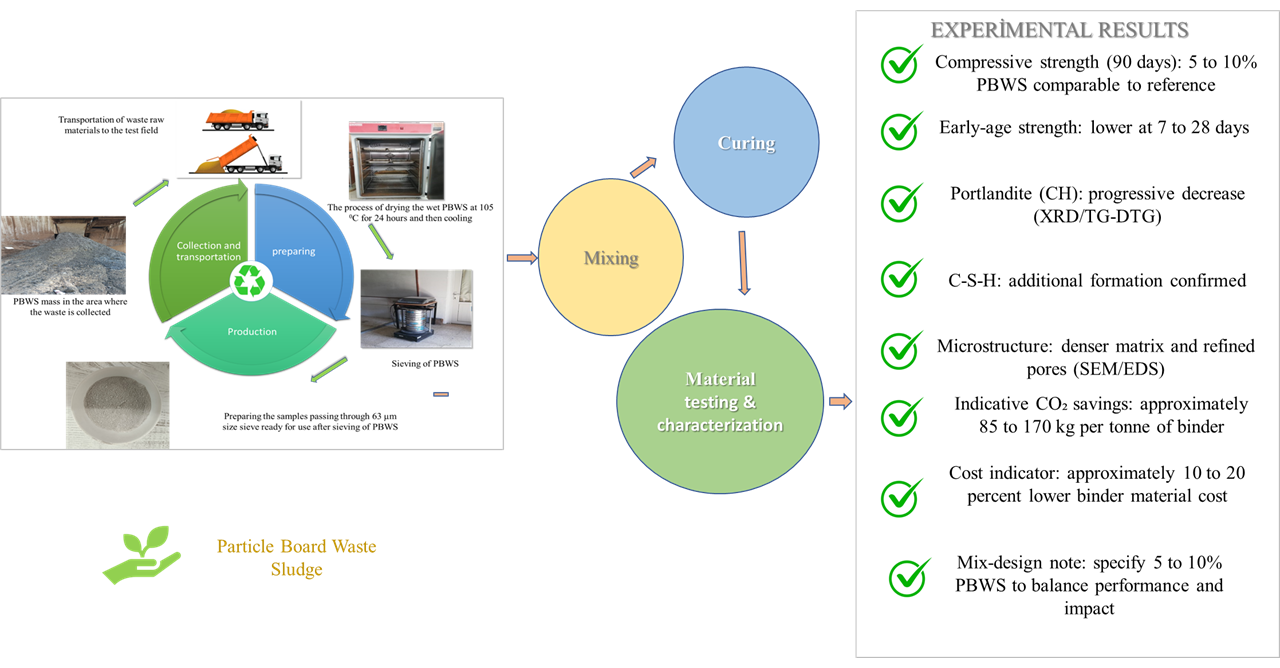
Graphical Abstract

1. Introduction

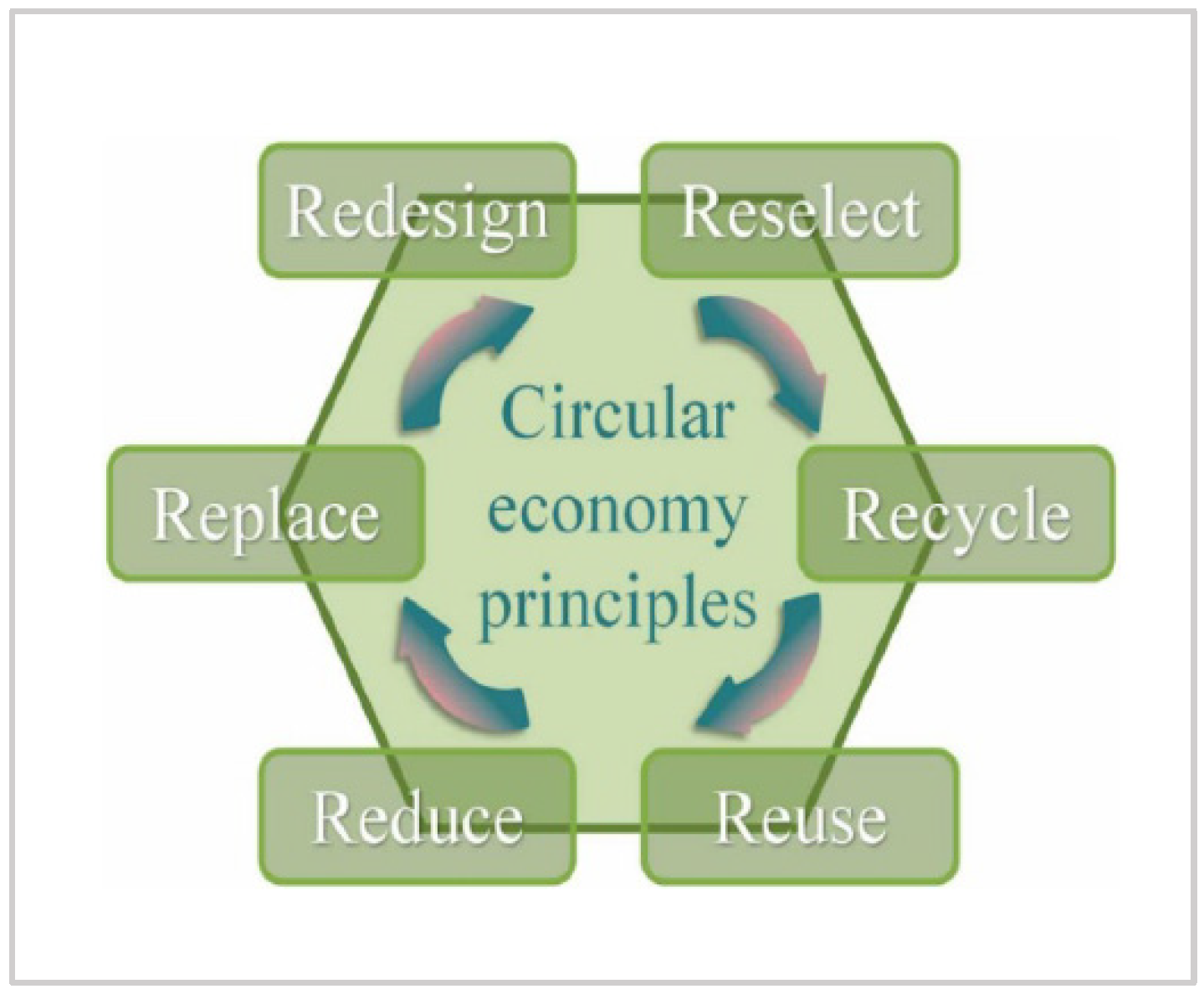
In recent decades, rapid urbanization and infrastructure expansion have driven a remarkable increase in the demand for construction materials, especially in developing countries [1,2]. Such extensive reliance on diverse building materials has, however, brought about significant environmental implications [3,4,5]. Within this framework, Portland cement and concrete stand out as the most prevalent binders and structural materials used across the globe [6,7]. Recent data reveal that global cement production amounted to nearly 3.89 billion tons in January 2025 [8], with forecasts indicating an additional 12–23% growth by the year 2050 compared to 2020 [9,10,11]. Based on these figures, the worldwide yearly utilization of concrete is estimated to exceed 12 billion tons, comprising roughly 9 billion tons of aggregate in various gradations and about 2.2 billion tons of freshwater [12]. This large-scale consumption imposes significant pressure on natural resources and contributes substantially to CO2 emissions from clinker production. As a result, the development of sustainable building materials that align with circular economy principles has become an urgent research priority (Figure 1) [10].
In line with these sustainability objectives, one of the most promising approaches is the partial replacement of Portland cement with supplementary cementitious materials (SCMs). This strategy not only reduces clinker demand and the associated CO2 emissions, but also enables the beneficial use of industrial by-products [13]. Common SCMs such as fly ash (FA) [14,15,16], ground granulated blast furnace slag (GGBS) [14,15,16], and silica fume (SF) [14,15,16] exhibit significant pozzolanic or latent hydraulic reactivity, allowing them to interact readily with calcium hydroxide and form additional calcium silicate hydrate (C–S–H) phases [8,9]. However, increasing global demand and the gradual decline in the availability of certain industrial by-products have restricted the supply of these highly reactive materials [16,17]. Consequently, researchers have been encouraged to explore alternative SCMs, including materials with relatively low reactivity or even largely inert characteristics [18,19,20].
In this context, the use of industrial sludge generated from different processes has attracted considerable research interest for incorporation into cement-based materials [21,22,23,24,25,26,27]. By-products from industries such as paper manufacturing [23,28,29], wastewater treatment [30,31,32], stone cutting [33,34,35], and power generation contain substantial mineral constituents that may make them suitable for use in cementitious systems. Their valorization not only alleviates waste-disposal problems but also contributes to lower clinker consumption in cement production and, consequently, lower overall CO2 emissions. Moreover, the use of regionally available residues can provide additional economic benefits by reducing transportation and raw-material costs.
When industrial sludges are incorporated as partial cement replacements, they may influence hydration and the resulting microstructure in different ways. Sludges rich in SiO2 and Al2O3 can promote the formation of additional hydration products in some systems, whereas wastes with high CaO content may affect early hydration behavior. In contrast, sludges with elevated organic matter or sulfate contents may adversely influence hydration, potentially leading to delayed ettringite formation, increased porosity, weak bonding, or irregular development of hydration products [36]. Therefore, when industrial sludges are used in cementitious systems, it is essential to examine not only mechanical performance but also hydration chemistry and microstructural evolution in detail. Recent studies on emerging supplementary cementitious materials have further emphasized that the depletion or regional scarcity of conventional SCMs makes the identification of new waste-based resources increasingly important for the decarbonization of cement production. At the same time, the performance of such alternative materials cannot be generalized solely based on waste category, because their hydration-related behavior depends strongly on source-specific physical, chemical, and mineralogical characteristics. For sludge-type materials in particular, preliminary characterization is essential before their suitability in cementitious systems can be assessed, since wastes generated from different industrial streams may differ substantially in composition, reactivity, and compatibility with cement hydration. Accordingly, there remains a clear need for source-oriented studies that evaluate less conventional industrial residues using detailed phases and thermal analyses.
Nevertheless, the wood-processing industry has recently faced significant challenges in terms of raw-material supply and sustainability. While the demand for industrial wood continues to increase, limited availability and the need to preserve ecological balance make the utilization of waste from this sector even more important. According to data from the Ministry of Agriculture and Forestry of Turkey, industrial wood production reached 23.18 million m3 in 2024 [37]. However, rising demand and resource constraints have created supply–demand imbalances. Such limitations in the availability of roundwood and industrial wood not only drive up production costs but also make the use of alternative raw materials and by-products within the sector increasingly necessary. Furthermore, environmental considerations such as forest conservation, biodiversity protection, and carbon balance highlight the importance of recycling waste generated by the wood-processing industry as a means of promoting sustainability.
At this point, the waste sludge generated by the wood-based panel industry (PBWS) emerges as a promising alternative. PBWS is a type of waste sludge formed through multiple processes involved in the processing of wood materials. In conventional practice, the sludge produced during particleboard manufacturing is predominantly disposed of in landfills or sent to waste treatment facilities, which poses potential environmental risks. In contrast, the utilization of PBWS as a partial replacement material in cementitious systems offers a dual benefit: it provides a sustainable solution for waste management while simultaneously reducing clinker consumption in cement production, thereby contributing to the mitigation of CO2 emissions.
It is also important to distinguish PBWS from other wood-derived wastes previously investigated in cement-based materials. Much of the existing literature has focused on relatively discrete lignocellulosic by-products such as sawdust, wood particles, wood ash, or bark-derived residues, as well as on wood–cement composite boards produced by directly combining wood elements with cementitious binders. In contrast, PBWS is a sludge-type industrial waste originating from particleboard manufacturing and therefore represents a more complex waste stream than conventional dry wood residues. This distinction is scientifically important because wood-related materials may influence cement hydration not only through particle-packing effects, but also through organic constituents and compatibility-related interactions, while long-term durability and performance remain recurring concerns in the broader wood–cement literature. Accordingly, PBWS should not be treated as directly equivalent to previously studied wood wastes, and its use as a partial cement replacement requires separate evaluation in terms of hydration-related phase evolution and thermal behavior.
Although previous studies have examined certain wood-derived wastes and particleboard-related dusts in cementitious systems [38,39,40,41], the behavior of PBWS as a sludge-type by-product from the wood-based panel industry has not yet been sufficiently elucidated. In particular, information remains limited on how this material affects hydration-related phase development, thermal decomposition behavior, and phase assemblage over time when used as a partial cement replacement. The present study was therefore designed to address this gap by systematically investigating cement pastes containing 0%, 5%, 10%, and 20% PBWS at curing ages of 7, 28, and 90 days using XRD, FT-IR, and TG/DTG analyses. Through this experimental framework, the study aims to provide a source-specific assessment of PBWS and to clarify its potential and limitations in cementitious systems.
Overall, this study was undertaken to provide a clearly defined scientific basis for evaluating PBWS as a partial cement replacement material rather than treating it as equivalent to previously studied wood-derived wastes. By combining thermal and mineralogical analyses with an environmental assessment based on clinker substitution, the research aims to clarify how this specific sludge-type waste affects hydration-related phase evolution and whether it offers measurable environmental advantages. In this way, the study contributes to the broader search for regionally available and less conventional waste streams that may support more resource-efficient and lower-carbon construction materials.

2. Materials and Methods

2.1. Raw Materials

2.1.1. Cement

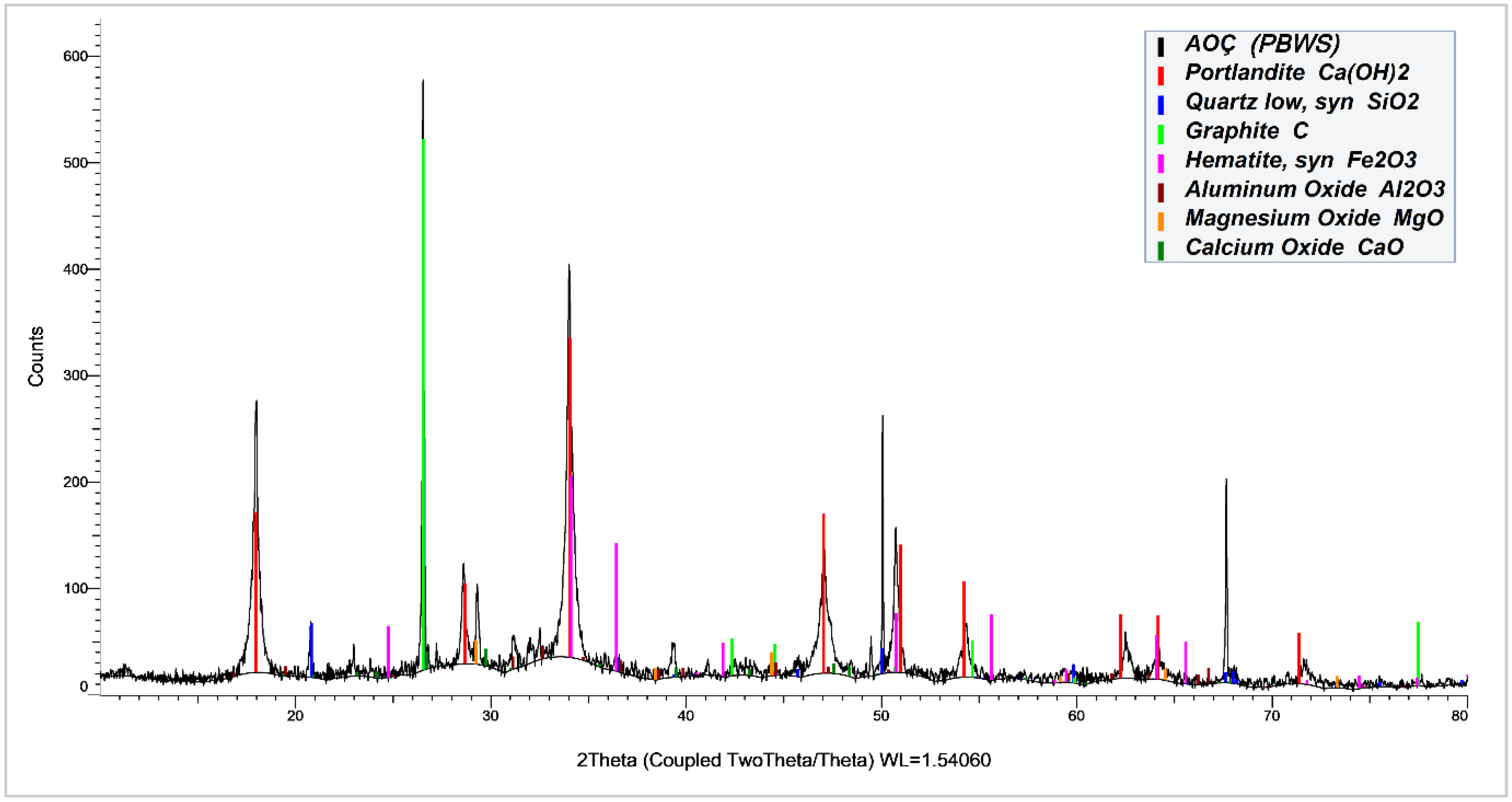
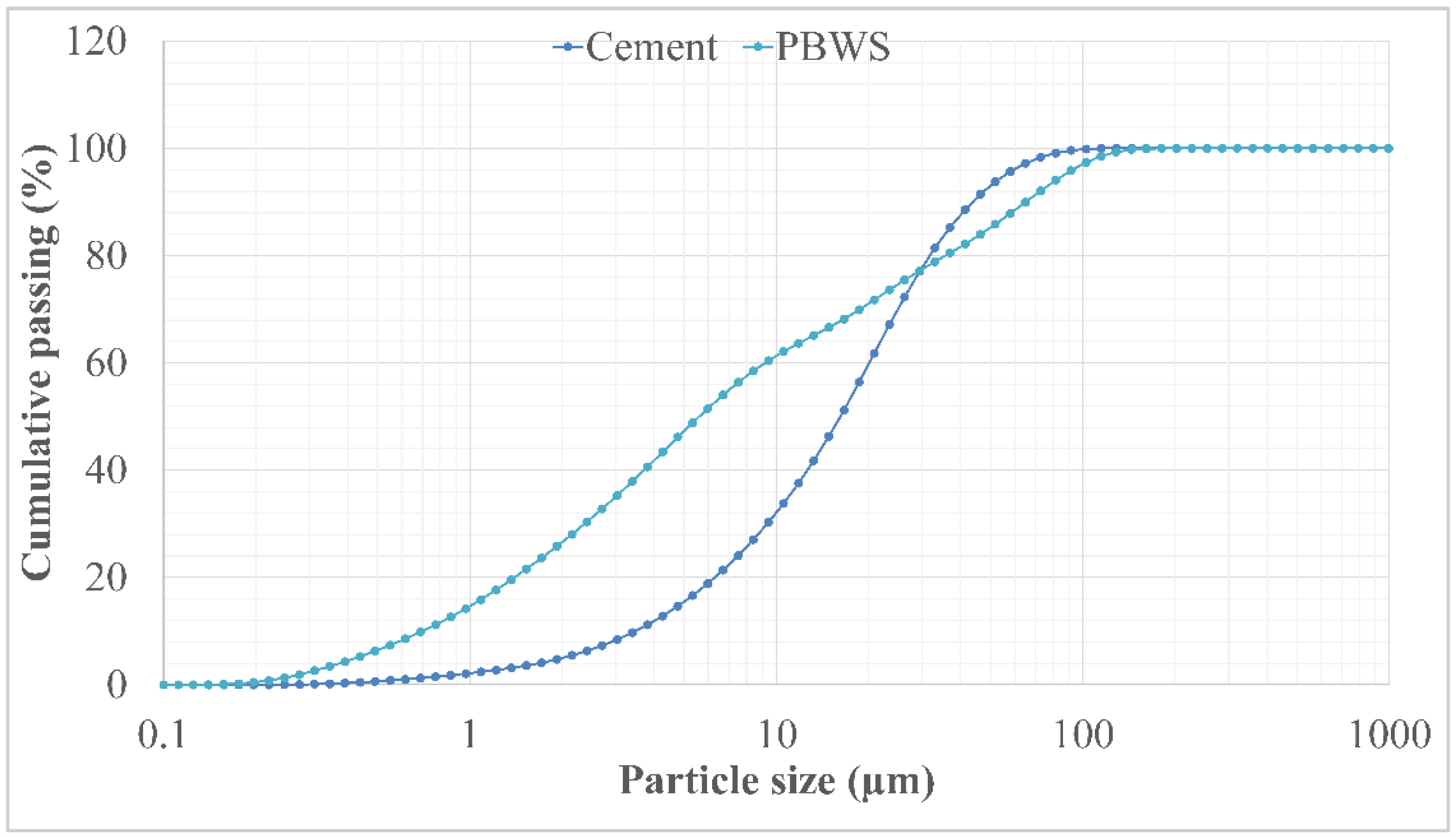
Portland Composite Cement (PC 42.5 R) was used as the main binder in this study. Figure 2 presents the X-ray diffraction (XRD) pattern of PBWS, while Table 1 summarizes the chemical compositions of cement and PBWS and Figure 3. shows their particle-size distributions. The density of the cement was 3.19 g/cm3. Owing to its high CaO content, the cement served as the main source of calcium for the formation of hydration products in the investigated paste systems.

2.1.2. Characteristics of PBWS

The PBWS (particleboard waste sludge) used in this study was obtained from a local particleboard manufacturing facility in Isparta, Turkey. As presented in Table 1, PBWS is characterized by a complex oxide composition, mainly consisting of SiO2, CaO, Al2O3, Fe2O3, and MgO, together with a relatively high loss on ignition (16.40%), which indicates the presence of a considerable organic fraction. This high LOI value suggests that PBWS differs markedly from conventional mineral supplementary cementitious materials and should instead be considered a heterogeneous organic-mineral industrial residue.
Although Table 1 shows measurable amounts of SiO2 and Al2O3 in PBWS, these oxides should not be directly interpreted as evidence of pozzolanic reactivity. As clearly indicated by the XRD pattern in Figure 2, the mineralogical structure of PBWS is dominated by crystalline phases. Since pozzolanic behavior is mainly associated with amorphous siliceous and aluminous phases, the oxide composition alone is insufficient to classify PBWS as a conventional pozzolanic material. Therefore, the potential contribution of PBWS to cementitious systems should not be explained solely on the basis of its SiO2 and Al2O3 contents.
Likewise, the CaO content reported in Table 1 should not be taken as direct evidence of hydraulic activity. In cementitious systems, calcium oxide may hydrate to form calcium hydroxide, but portlandite (CH) is not a primary strength-giving phase. In this respect, the presence of calcium-bearing phases in PBWS does not imply that the material can directly generate additional binding hydrates. Instead, its influence should be assessed more cautiously in relation to its overall phase composition and its interaction with the cement matrix.
The XRD results shown in Figure 2 indicate that PBWS has a heterogeneous and predominantly crystalline structure, reflecting its complex organic–mineral character. Semi-quantitative phase estimation suggested that graphite was the predominant phase (approximately 52.0%), followed by CH (31.3%), with smaller amounts of quartz (5.5%), hematite (5.6%), magnesium oxide (2.3%), aluminum oxide (1.5%), and calcium oxide (1.7%). The predominance of graphite is also consistent with the relatively high LOI value of PBWS given in Table 1 and indicates that the material contains a substantial carbonaceous fraction. The graphite-rich nature of PBWS may be important from a cementitious-materials perspective, since carbon-based additives have previously been reported to alter the microstructure and overall performance of cement-based composites [42]. Accordingly, the predominance of graphite in PBWS should not be interpreted as evidence of direct pozzolanic reactivity; rather, it suggests that the material may influence the cement matrix through source-specific physical and microstructural effects. However, these phase proportions should be interpreted cautiously, since they represent semi-quantitative estimation rather than full quantitative phase analysis. In addition, the presence of CH and other crystalline phases should not be interpreted as direct evidence of strong pozzolanic or hydraulic reactivity. Instead, the XRD findings suggest that PBWS should be regarded as a complex sludge-type industrial waste whose influence on cementitious systems is more likely related to source-specific physical effects and indirect modification of hydration-related behavior than to strong direct chemical reactivity.
The particle-size distribution curves presented in Figure 3 show that PBWS is finer than cement, which may influence particle packing and the spatial distribution of solids in the paste matrix.
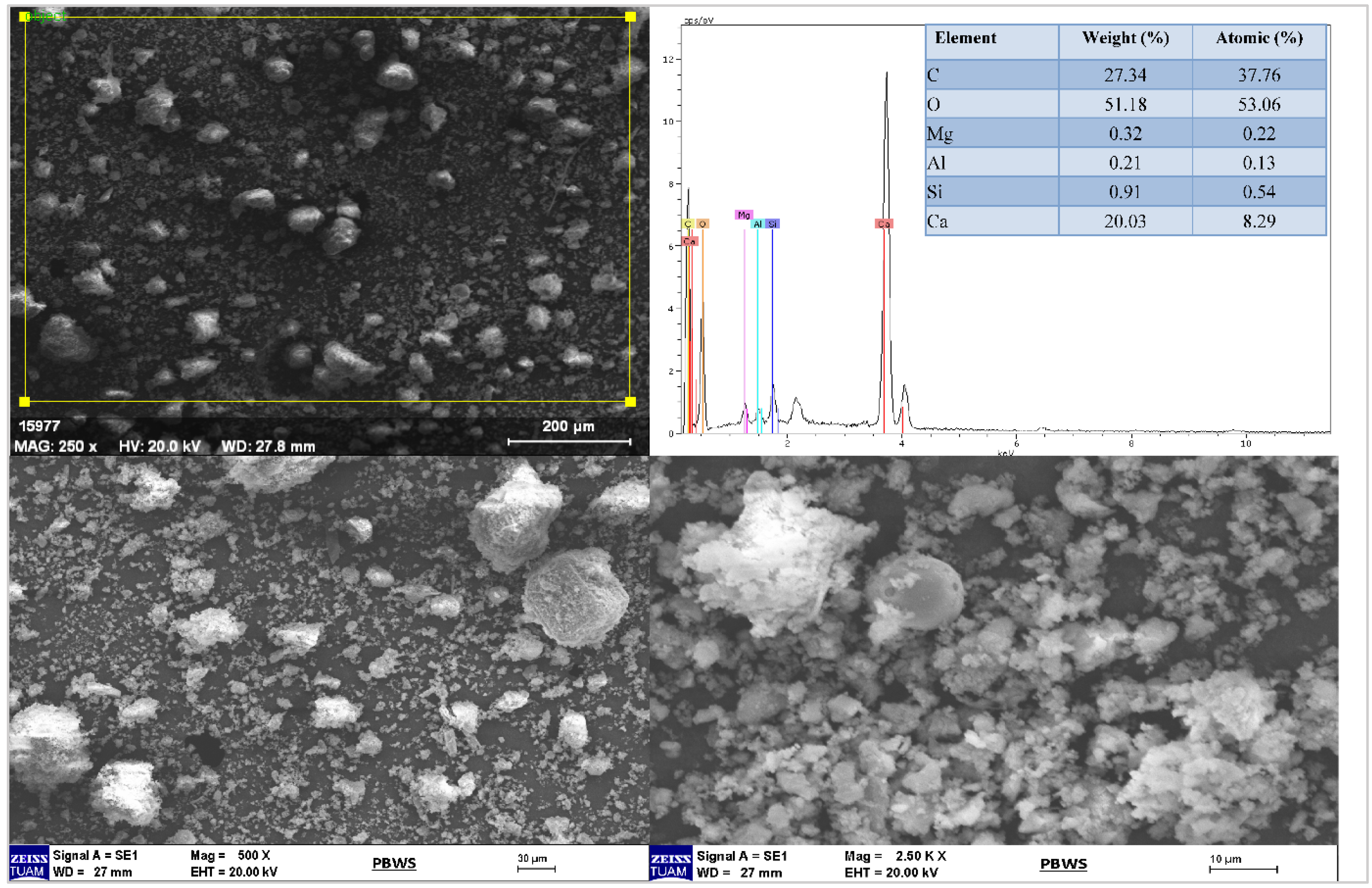
Furthermore, the SEM/EDS observations in Figure 4 reveal that PBWS particles have irregular and flaky morphologies together with a heterogeneous elemental distribution. These features suggest that PBWS may affect cementitious systems mainly through filler effect, packing modification, and indirect influence on hydration and phase evolution rather than through strong direct pozzolanic or hydraulic reactivity.
Overall, the combined chemical, mineralogical, and morphological results presented in Table 1 and Figure 2, Figure 3 and Figure 4 indicate that PBWS should be treated as a complex sludge-type industrial by-product rather than as a conventional pozzolanic additive. Accordingly, its role in cementitious systems is more appropriately discussed in terms of filler action, particle-packing modification, and indirect effects on hydration behavior and microstructural development.
In addition, the particle-size distribution results (Figure 3) indicate that PBWS is finer than cement, while the SEM/EDS images (Figure 4) show that PBWS particles have irregular and flaky morphologies with heterogeneous elemental distribution. These characteristics suggest that PBWS may influence the hydration process mainly through filler effect, particle-packing modification, and indirect effects on phase development.

2.1.3. Pre-Treatment of PBWS

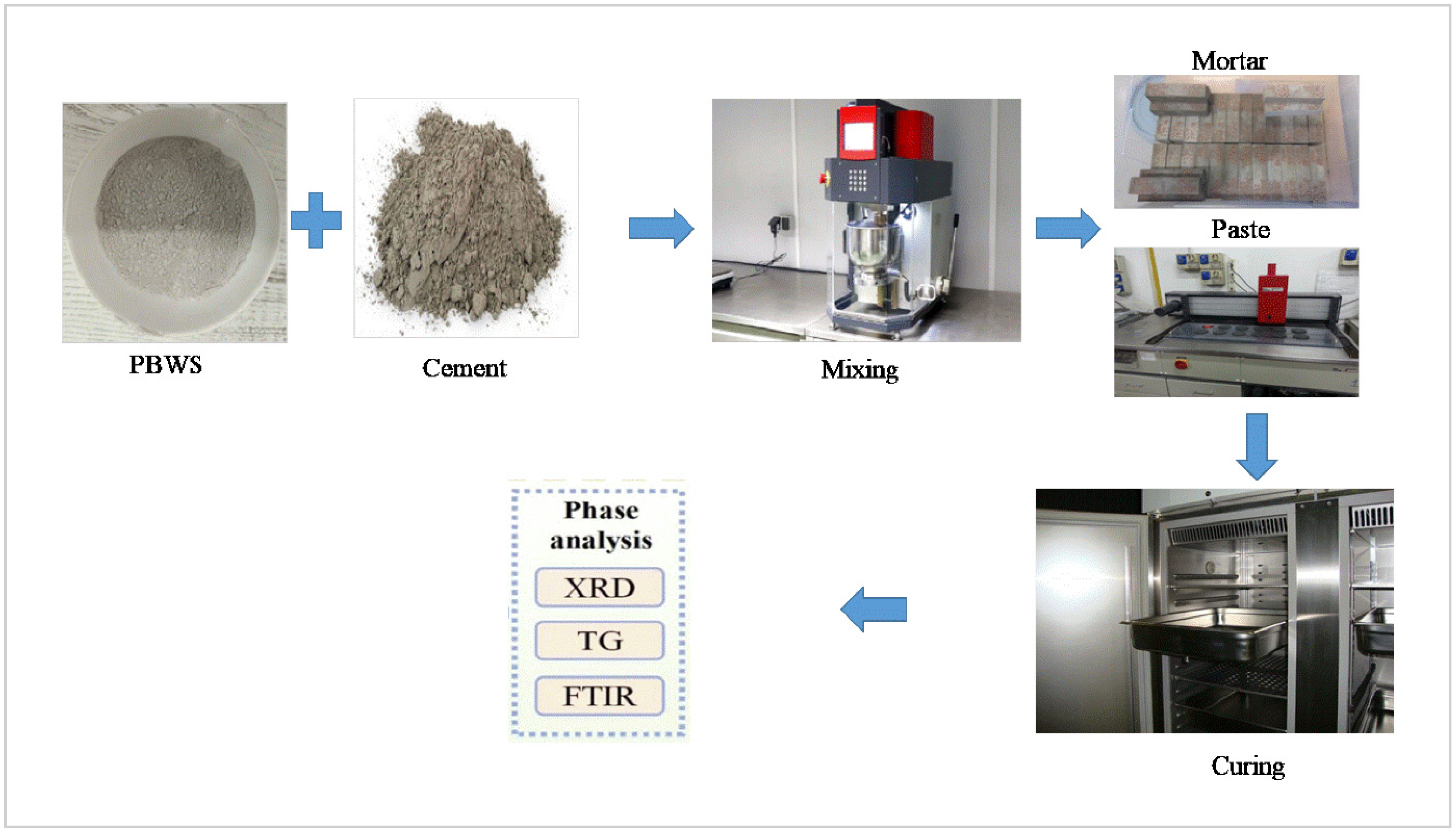
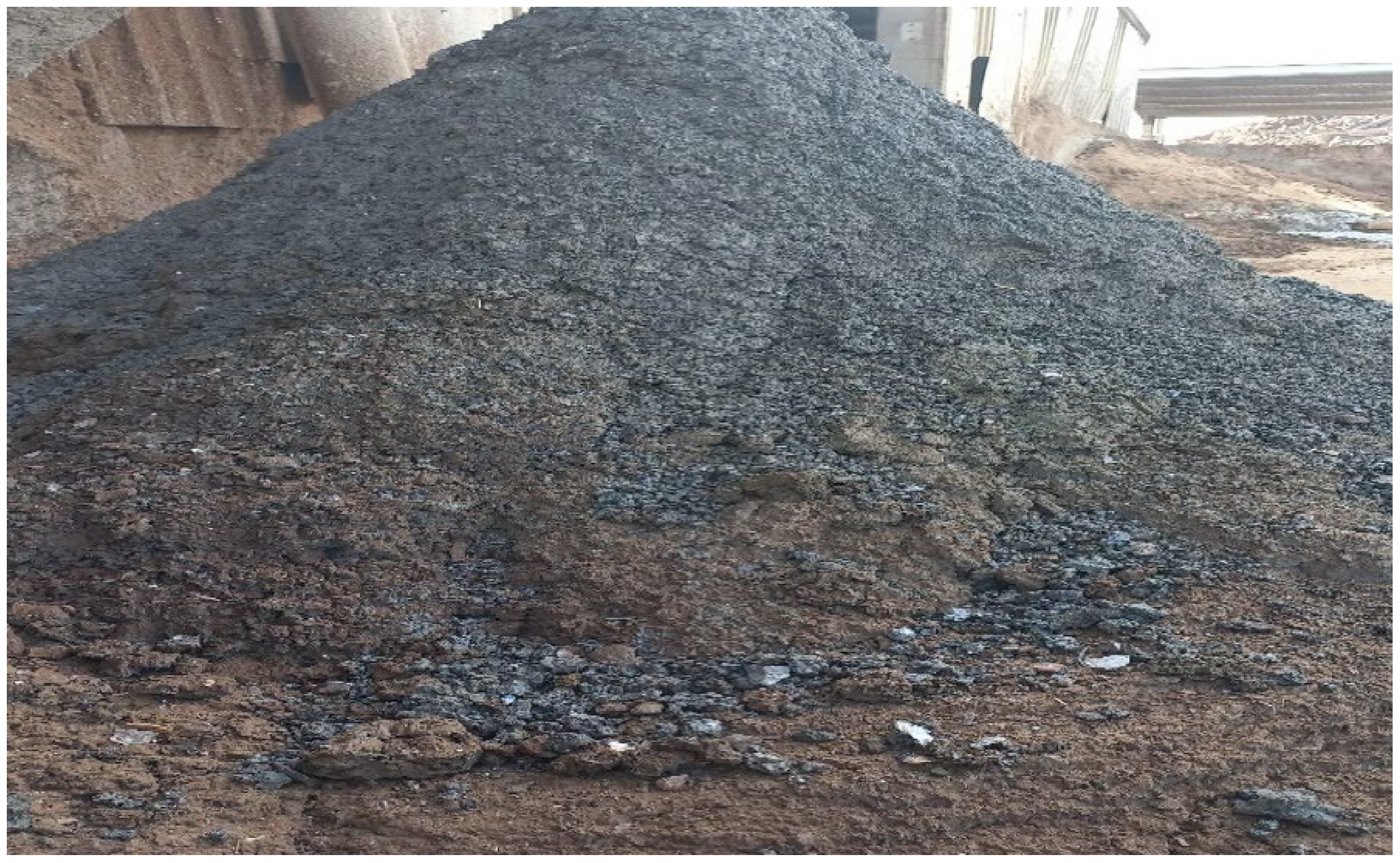
Before use, PBWS was oven-dried at 105 ± 5 °C for 24 h, cooled to room temperature, and sieved through a 63 µm sieve; only the fraction passing 63 µm was used in the experimental program [43]. This approach was adopted based on the conclusion that washing alone was insufficient to fully remove fine particles [5]. A representative image of the raw PBWS in Figure 5.

2.2. Mixture Design and Sample Preparation

Four cement paste mixtures were prepared in this study: a control mixture without PBWS (Reference) and three blended mixtures in which cement was replaced by PBWS at 5%, 10%, and 20% by mass (PBWS5, PBWS10, and PBWS20). The mixture proportions are given in Table 2.
For each mixture, the required amounts of cement and PBWS were first dry-mixed to ensure homogeneity. Then, the predetermined amount of water was gradually added, and mixing was continued until a uniform paste was obtained. The same water-to-binder ratio was used for all mixtures. Since the study focused on hydration-related phase evolution and microstructural development, paste specimens without sand were prepared for all analyses.
After mixing, the fresh pastes were placed into appropriate containers or molds, kept under laboratory conditions for 24 h, then demolded and cured in water at 20 ± 2 °C until the testing ages of 7, 28, and 90 days. For XRD, FT-IR, and TG/DTG analyses, cured paste samples were dried and ground into fine powder. For SEM/EDS analysis, small fragments taken from the inner part of the cured specimens were used. A schematic illustration of the preparation route and experimental stages is shown in Figure 6, while representative material-related images are presented in Figure 2, Figure 3, Figure 4 and Figure 5.
To improve clarity and reproducibility, the sample usage for each analysis is summarized as follows:
  • XRD analysis: powdered material prepared from cured paste samples;
  • FT-IR analysis: finely ground powder obtained from cured paste samples;
  • TG/DTG analysis: representative powdered portions taken from cured paste samples.
Thus, all analytical techniques were carried out on cement paste specimens without sand to evaluate the intrinsic influence of PBWS on phase evolution, thermal decomposition behavior, and microstructural development without interference from aggregate phases.

2.3. Analytical Methods

2.3.1. X-Ray Diffraction (XRD)

XRD analysis was conducted to identify the crystalline phases present in PBWS and in the blended cement paste samples after curing. For this purpose, the cured paste specimens were dried, finely ground, and analyzed using an X-ray diffractometer (Empyrean, PANalytical, Almelo, The Netherlands) with Cu-Kα radiation (λ = 1.5406 Å), operating in the 5–70° (2θ) scanning range at a scanning rate of 2°/min. The resulting diffraction patterns were used to assess the evolution of hydration-related and residual crystalline phases in the reference and PBWS-containing systems.

2.3.2. Fourier Transform Infrared Spectroscopy (FT-IR)

FT-IR analysis was employed to identify the main functional groups and hydration-related bands in the paste samples. For each mixture and curing age, representative powder samples were prepared from the cured pastes and examined using a FT-IR spectrometer (400 FT-IR/FT-NIR Spectrometer Spotlight 400 Imaging System, PerkinElmer, Waltham, MA, USA) over the wavenumber range of 4000–400 cm−1. The obtained spectra were interpreted with reference to hydroxyl-, silicate-, sulfate-, and carbonate-related absorption bands in order to evaluate changes in hydration products and phase development.

2.3.3. Thermogravimetric/Differential Thermogravimetric Analysis (TG/DTG)

TG/DTG analysis was performed to investigate the thermal decomposition behavior of the hydration products formed in the reference and PBWS-blended paste systems. Representative powdered samples were obtained from the cured pastes and examined using a simultaneous thermal analyzer (STA 7300, Hitachi, Tokyo, Japan) under a nitrogen atmosphere in the temperature range of 25–800 °C, with a heating rate of 10 °C/min. The recorded mass losses within the intervals corresponding to dehydration-related phases, calcium hydroxide decomposition, and carbonate decomposition were used to assess phase evolution as a function of PBWS replacement level and curing age.

2.3.4. Scanning Electron Microscopy/Energy-Dispersive Spectroscopy (SEM/EDS)

SEM/EDS analysis was performed to investigate the morphology and elemental distribution of PBWS as well as the microstructural characteristics of the cured paste samples. For this purpose, small fragments taken from the interior of the specimens were selected in order to minimize the influence of surface carbonation or external contamination. The observations were carried out using a field-emission scanning electron microscope equipped with energy-dispersive spectroscopy (GEMINI 500, ZEISS, Oberkochen, Germany). Before analysis, the specimens were coated with gold to provide sufficient surface conductivity. SEM images were used to assess hydration-product morphology and matrix compactness, whereas EDS analysis was used to determine the local elemental composition of selected micro-areas.

2.3.5. X-Ray Fluorescence (XRF)

The chemical composition of the raw materials was determined by X-ray fluorescence analysis using an XRF spectrometer (Axios Advanced, PANalytical, Almelo, The Netherlands). The resulting oxide compositions were used to identify the major and minor constituents of cement and PBWS and to provide complementary information for the interpretation of the mineralogical and hydration-related findings.

3. Results and Discussion

3.1. Chemical Analysis Results

The oxide-based chemical compositions of Portland cement (PC), particle board waste sludge (PBWS), and the blended cements produced at different substitution levels are presented in Table 3. As shown in the table, the major components of PC are CaO (62.89%) and SiO2 (18.95%), whereas PBWS contains substantial amounts of CaO (45.46%), SiO2 (23.65%), and Al2O3 (5.17%). In addition, PBWS exhibits a notably high loss on ignition (LOI) value of 16.40%, which indicates the presence of a considerable amount of volatile matter and is consistent with the organic-rich nature of the material.
The relatively high SiO2 and Al2O3 contents of PBWS reflect its siliceous–aluminous composition; however, given the predominantly crystalline nature of these phases, this should not be interpreted directly as evidence of pozzolanic reactivity. The lower CaO content compared with Portland cement may contribute to a dilution effect during early hydration and may influence the rate at which calcium-rich binding phases develop. In addition, the elevated LOI highlights the presence of organic matter, which may affect hydration kinetics and early phase development.
When the blended cements containing 5%, 10%, 15%, 20%, and 25% PBWS are evaluated collectively, SiO2 and CaO remain the dominant oxides in all mixtures. Furthermore, the sum of SiO2 + Al2O3 + Fe2O3 in PBWS is approximately 31.81%, which is well below the 50% threshold defined in ASTM C618 for conventional pozzolanic materials [44]. This result supports the view that PBWS should not be classified as a conventional, highly reactive SCM solely based on oxide composition.
These chemical observations are consistent with the XRD, TG/DTG, and FT-IR results, which indicate that PBWS exhibits limited early reactivity while influencing phase development through source-specific physical and compositional effects. In addition, the lower density and higher LOI of PBWS should be considered when assessing its influence on the overall behavior of blended cement systems.

3.2. Phase Analysis

3.2.1. X-Ray Diffraction (XRD) Analysis

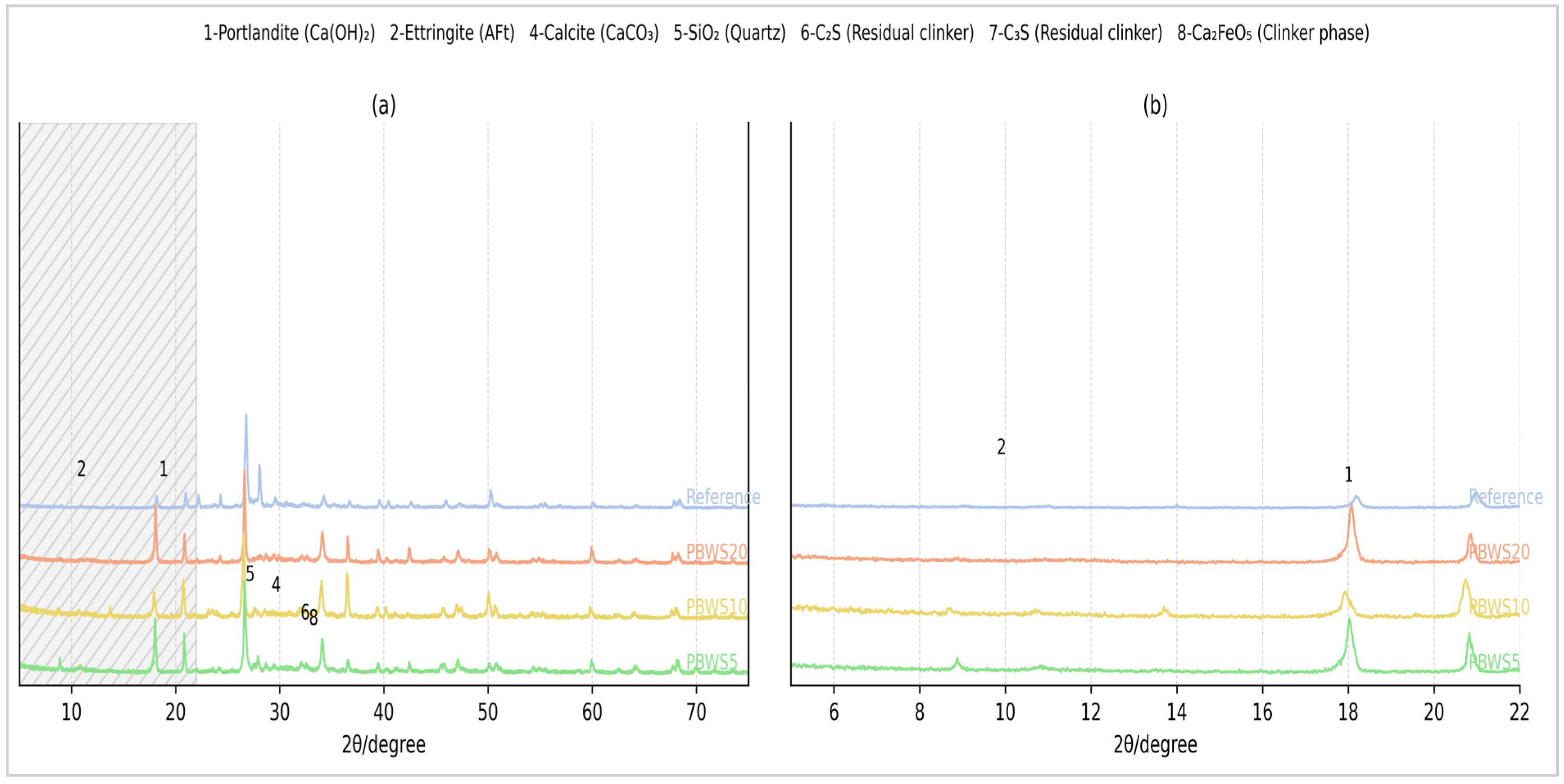
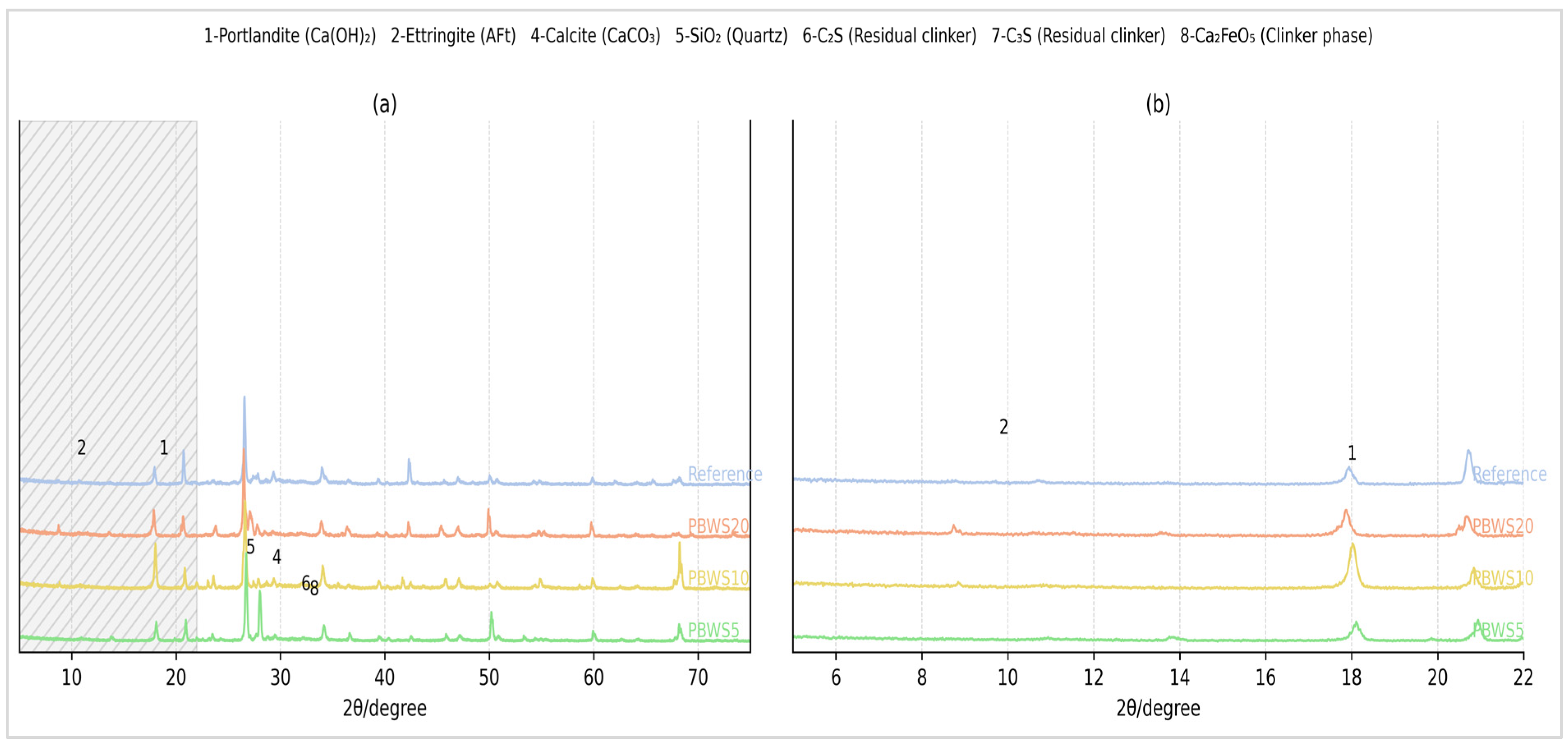
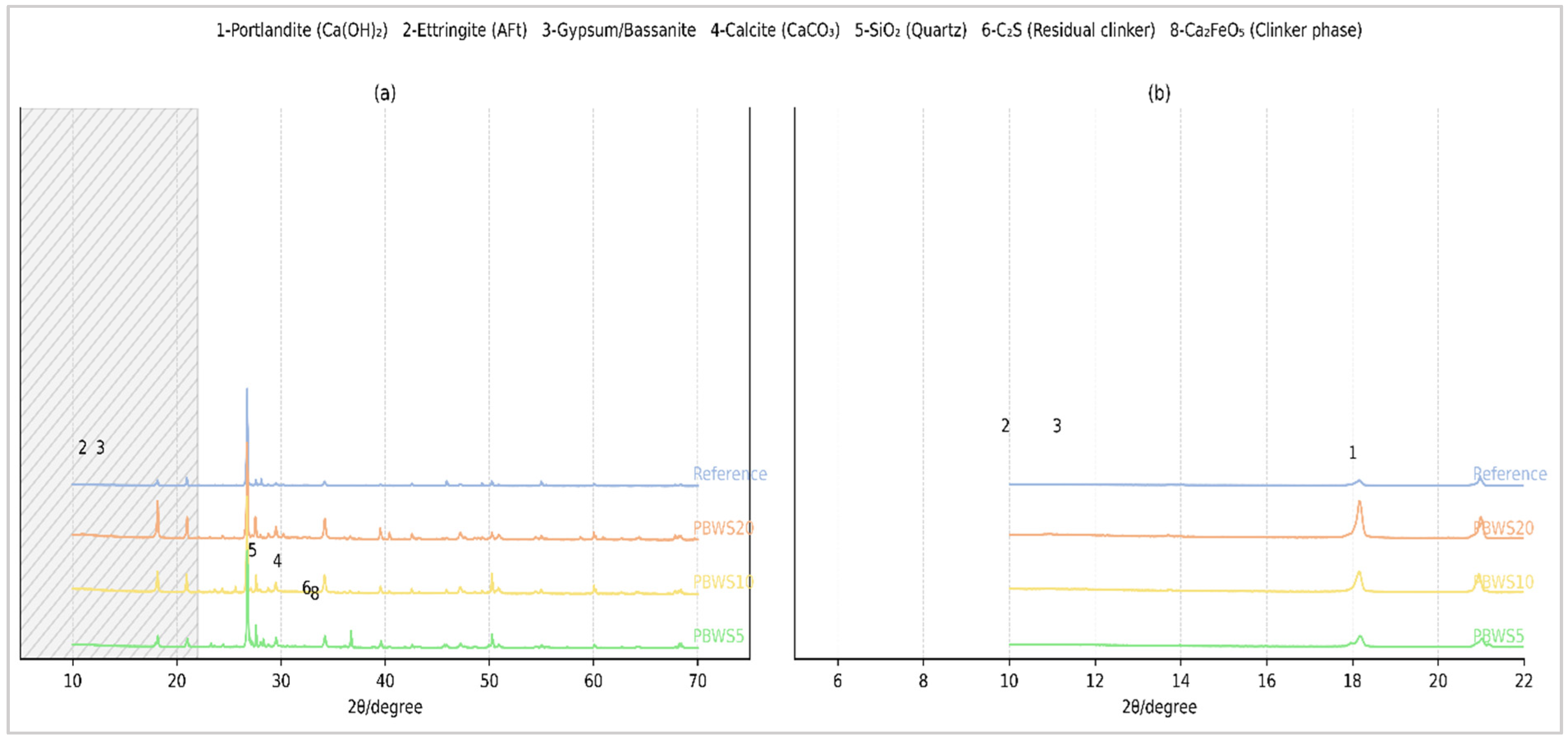
The development of crystalline phases in reference and PBWS-incorporated cement pastes after 7, 28, and 90 days of hydration was investigated by XRD analysis. The diffractograms obtained at each curing age are presented in Figure 7, Figure 8 and Figure 9, covering the 2θ ranges of 5–80° and 5–22° to capture both dominant and weak phase signals.
7-Day Hydration
As shown in Figure 7a,b, the XRD patterns at 7 days reveal the presence of typical hydration products together with residual clinker phases in the studied cement systems. The identified phases include CH, ettringite (AFt), calcite (CaCO3), and unhydrated silicate phases such as C3S and C2S. A diffraction peak observed at approximately 2θ ≈ 18.0° is assigned to portlandite, a characteristic hydration product of Portland cement. The reflections observed around 2θ ≈ 9.1° correspond to ettringite, indicating the formation of sulfate-bearing hydration products at early ages.
The intensity of the CH-related peak is lowest in the reference mixture and increases with increasing PBWS content. Therefore, the reflections at this curing age do not support a progressive CH-consumption mechanism. Instead, the observed differences may be related to variations in phase assemblage, hydration development, and cement replacement effects within the blended systems.
In addition, the persistence of reflections in the 29–34° region is consistent with the continued presence of residual clinker-related silicate phases, particularly C3S and C2S, suggesting that clinker hydration is still ongoing at 7 days. The reflection attributed to CaCO3 is centered at approximately 2θ ≈ 29.4° and is commonly associated with limited carbonation during sample preparation, storage, or curing of cementitious materials.
28-Day Hydration
As shown in Figure 8, the XRD patterns at 28 days indicate the continued presence of typical hydration products together with residual clinker-related phases in all mixtures. The identifiable reflections include AFt at approximately 2θ = 9.1°, CH at 2θ = 18.0°, CaCO3 near 2θ = 29.4°, and residual silicate phases assigned to C3S/C2S in the approximate 29–34° region. These phase assignments are consistent with recent XRD-based studies on hydrated cementitious systems using Cu-Kα radiation [45,46].
The CH-related peak remains detectable in all mixtures at 28 days, and the observed differences in peak intensity do not support a straightforward interpretation in terms of progressive CH consumption. Instead, these variations are more appropriately associated with differences in phase assemblage, hydration development, and cement replacement effects within the blended systems. The persistence of AFt reflections confirms that sulfate-bearing hydration products are still present at this curing age, whereas the continued detection of C3S/C2S-related reflections suggests that clinker hydration has not yet been completed [46,47].
Reflections attributed to CaCO3 remain observable in all mixtures. In hydrated Portland cement systems, calcite at this stage is commonly associated with limited carbonation during sample preparation, storage, or curing, rather than being interpreted as definitive evidence of a distinct reaction pathway. Therefore, differences in calcite peak intensity should be interpreted cautiously and should not be used alone to infer carbonation resistance.
90-Day Hydration
As shown in Figure 9, the XRD patterns at 90 days still exhibit reflections associated with typical hydration products together with residual clinker-related phases in all mixtures. The identifiable phases include CH at approximately 2θ = 18.0°, AFt around 2θ = 9.1°, CaCO3 near 2θ = 29.4°, and residual silicate phases assigned to C3S/C2S in the approximate 29–34° region. These phase assignments are consistent with recent XRD-based studies on hydrated cementitious systems using Cu-Kα radiation [46,48].
The CH-related reflection remains clearly detectable in all mixtures at 90 days, and the relative peak intensities do not support the interpretation that CH is nearly eliminated in the PBWS-blended systems. In particular, the CH peak remains pronounced in the PBWS-containing mixtures, especially in PBWS20. Therefore, the 90-day XRD data should not be interpreted as direct evidence of extensive CH consumption or advanced pozzolanic reactivity. Instead, the observed differences among mixtures are more appropriately related to variations in hydration development, cement replacement level, and relative phase assemblage within the blended systems. This interpretation is also consistent with recent literature showing that CH peak intensity in cement-based systems may remain strongly affected by phase distribution and preferred orientation, and therefore should be evaluated cautiously when used as an indicator of reaction progress [46,49].
Reflections attributed to CaCO3 remain observable in all mixtures. In hydrated cementitious materials, calcite at this stage is commonly associated with limited carbonation during sample preparation, storage, or curing, rather than being interpreted as definitive evidence of a distinct reaction pathway. Therefore, differences in calcite peak intensity should be interpreted cautiously and should not be used alone to infer improved carbonation resistance or long-term phase stabilization [48,50].

3.2.2. FT-IR Analysis

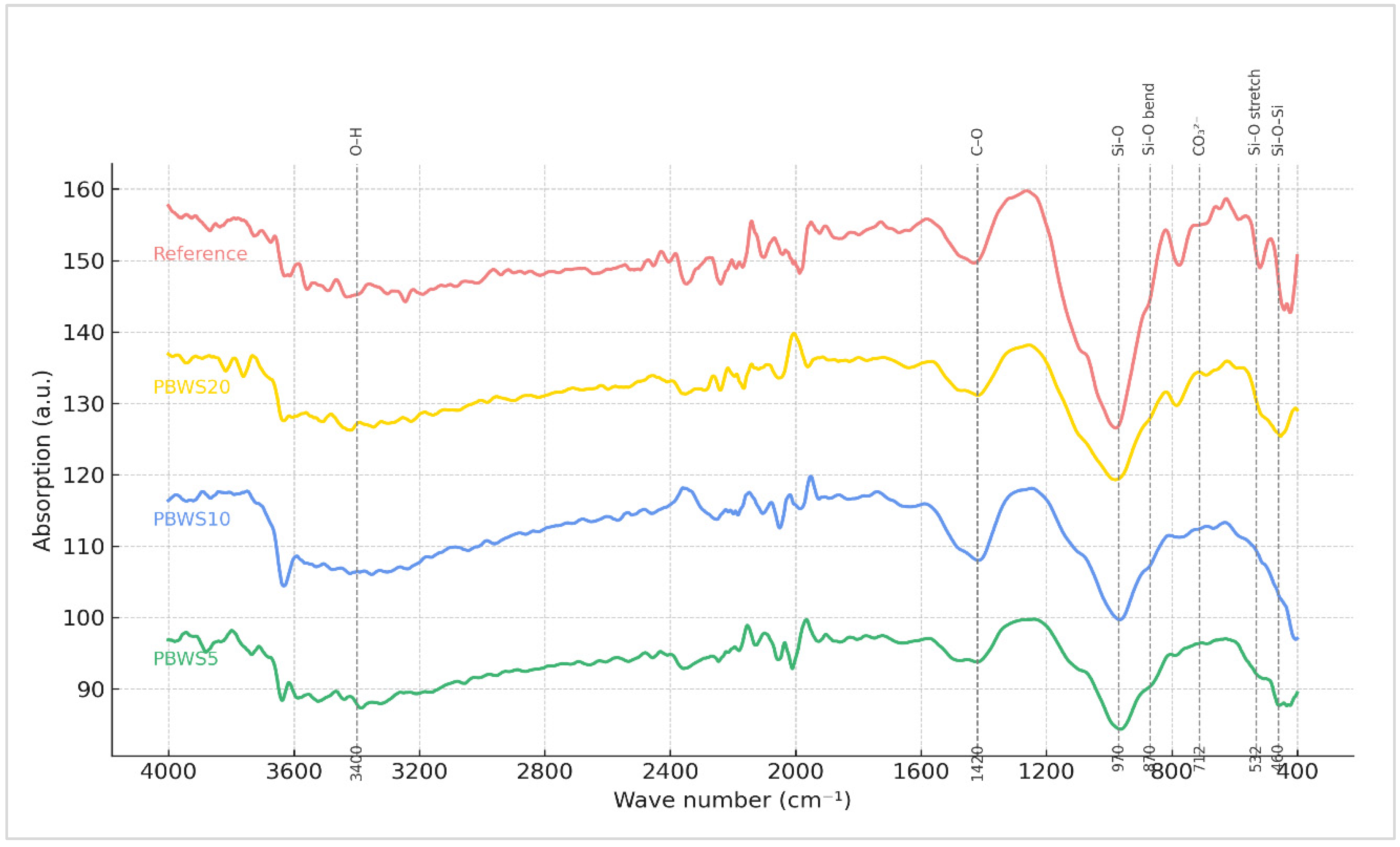
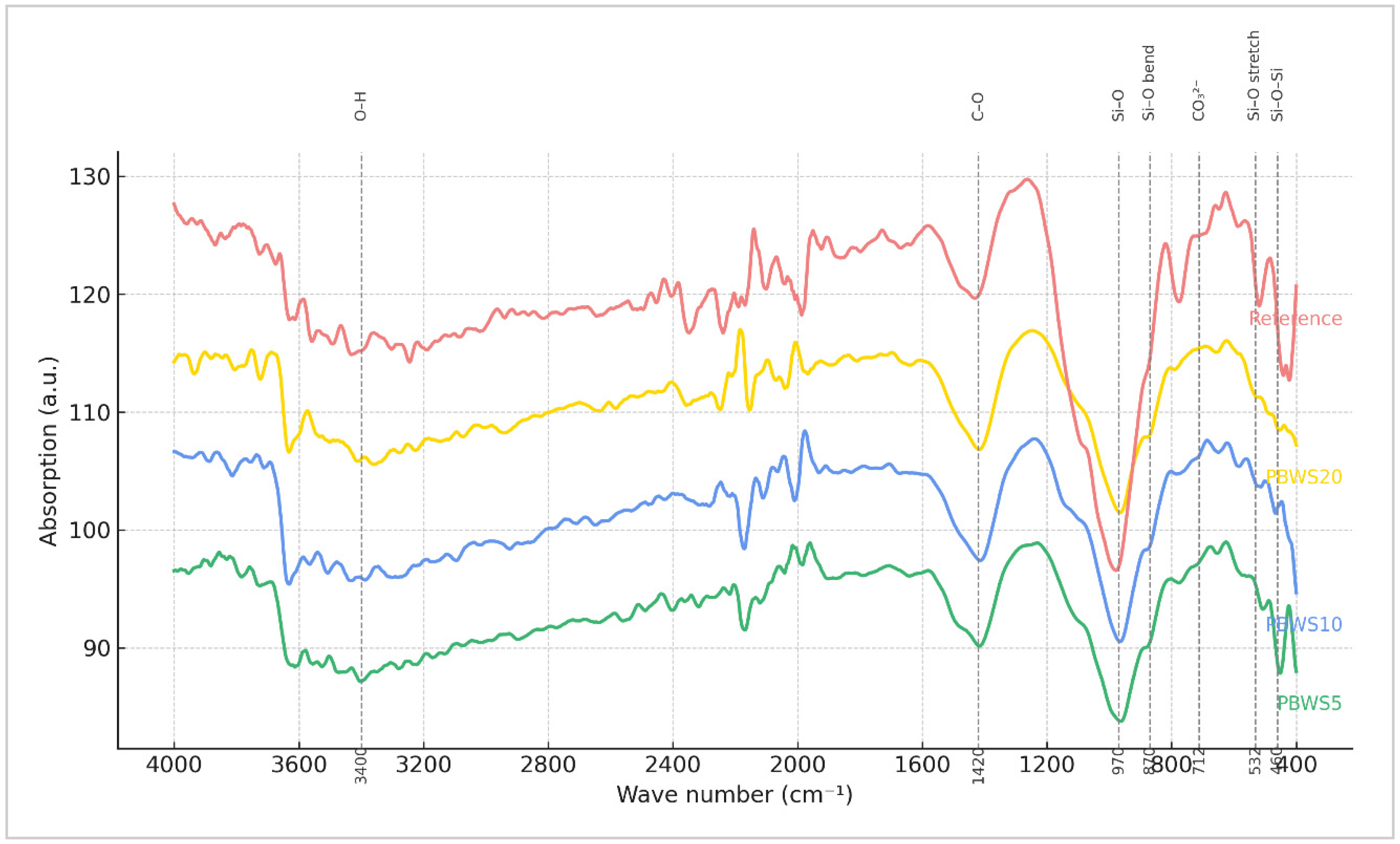
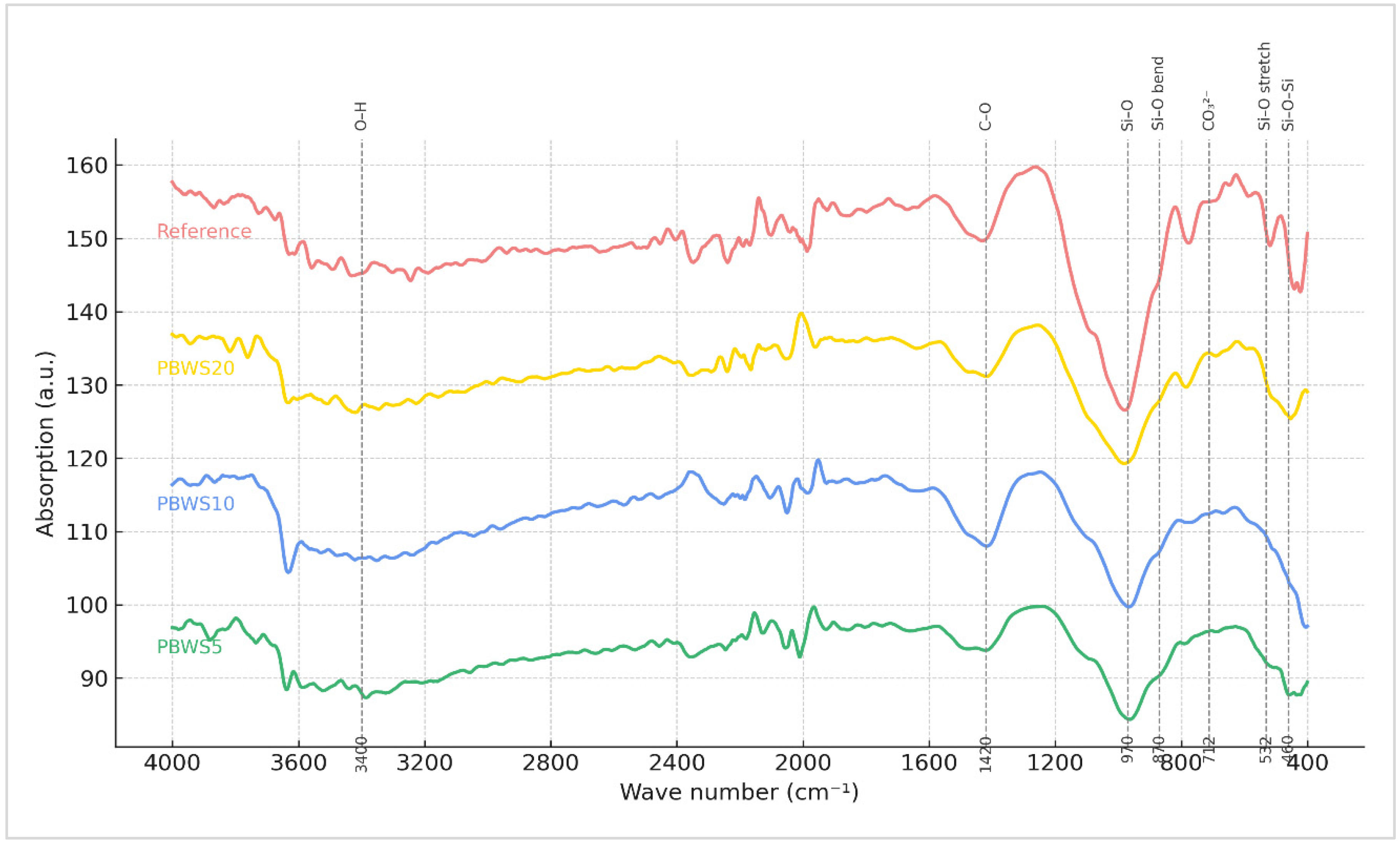
Figure 10, Figure 11 and Figure 12 present the FT-IR spectra of cement pastes containing PBWS after curing for 7, 28, and 90 days, respectively. The broadly similar FT-IR band patterns observed across all samples indicate comparable chemical characteristics in terms of the main hydration-related functional groups, while differences in band intensity and sharpness reflect variations in phase development among the mixtures.
The Fourier Transform Infrared (FT-IR) spectra of all samples exhibited broad and distinct absorption bands around 3450 cm−1 and 1640 cm−1, corresponding to the stretching and bending vibrations of O–H bonds, respectively. These bands are associated with both bound and free water within the hydrated cement matrix and indicate the presence of hydration-related products [51,52,53].
Strong absorption bands were also observed around 980 cm−1 and 450 cm−1, which are assigned to the vibrational modes of Si–O–T bonds in [SiO4]4− tetrahedra [54,55]. These bands are generally related to silicate-based phases, including quartz and C–S–H gels. Their persistence and gradual evolution with curing age suggest continuing silicate reorganization within the hydrated systems.
A band near 3640 cm−1, commonly attributed to the O–H stretching vibration of CH [52,56], was identified in all spectra. However, contrary to the initial interpretation, Figure 10 shows that this band is not lowest in the PBWS-containing samples; rather, the reference cement paste exhibits the weakest CH-related absorption at 7 days. This observation indicates that the CH-related FT-IR band should not be interpreted as showing a simple monotonic decrease with increasing PBWS content.
The S–O vibration bands in the 1110–1153 cm−1 region were more pronounced in the 7-day samples, indicating the formation of AFt during the early stages of hydration [57,58,59]. Their lower intensity at 28 and 90 days may reflect changes in sulfate-bearing phases over time; however, such changes should be interpreted cautiously because FT-IR alone does not provide definitive evidence of AFm formation.
In addition, the bands observed near 1420 cm−1 and 870 cm−1 were assigned to the deformation vibrations of C–O bonds in calcium carbonate (CaCO3), indicating the presence of carbonation products [60,61]. Variations in the intensity of these bands with curing time reflect ongoing microstructural evolution and possible differences in carbonation-related behavior among the mixtures.
Overall, the FT-IR results confirm the progressive evolution of hydration products in both the reference and PBWS-containing cementitious systems. The spectra indicate continuing hydration, changes in sulfate-bearing phases, and the development of silicate-based gel structures over time. When interpreted together with the XRD and TG/DTG results, the FT-IR findings support a cautious, multi-technique assessment of phase evolution in the blended systems.

3.2.3. TG/DTG Analysis

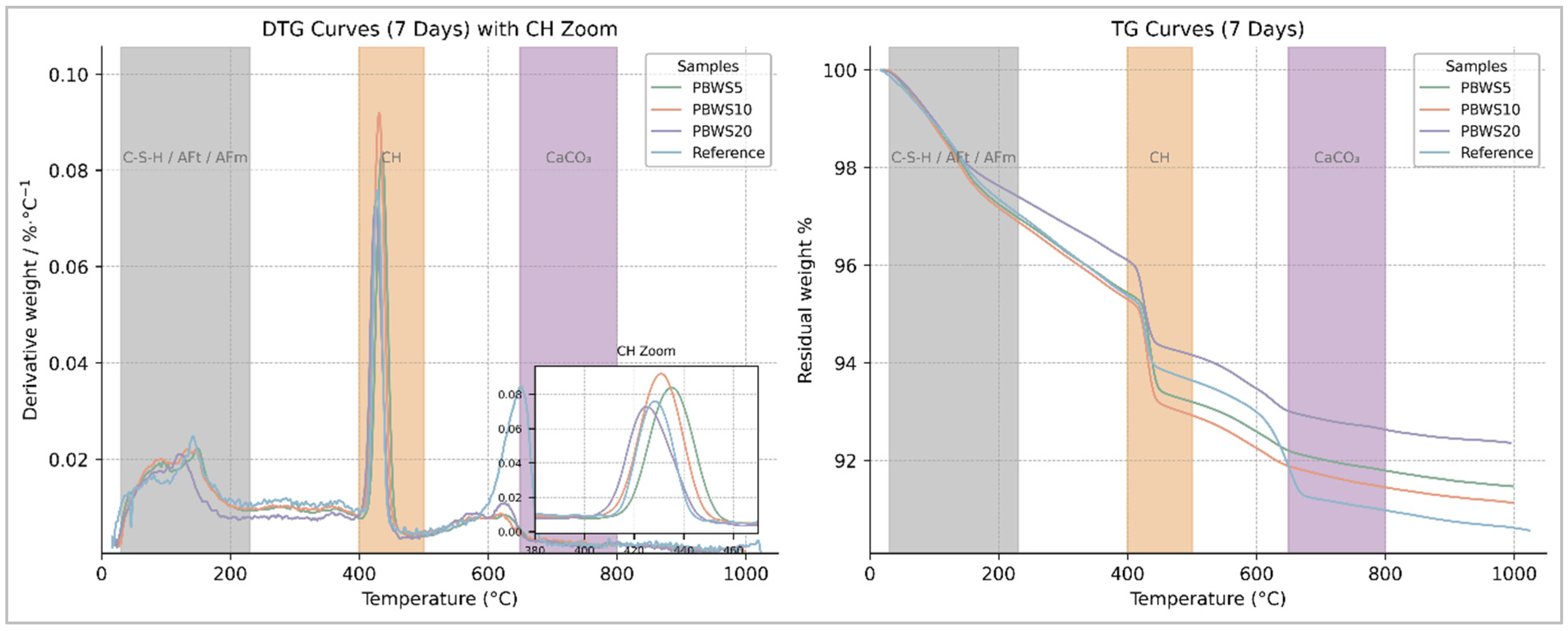
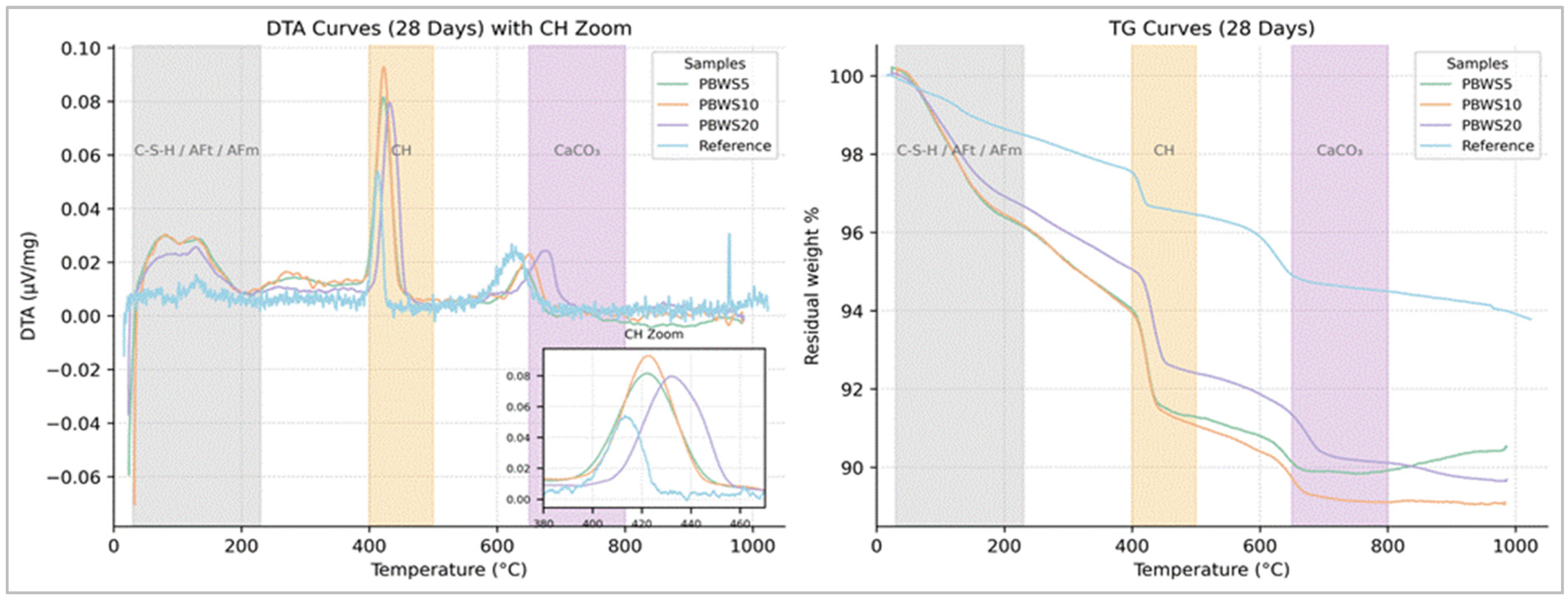
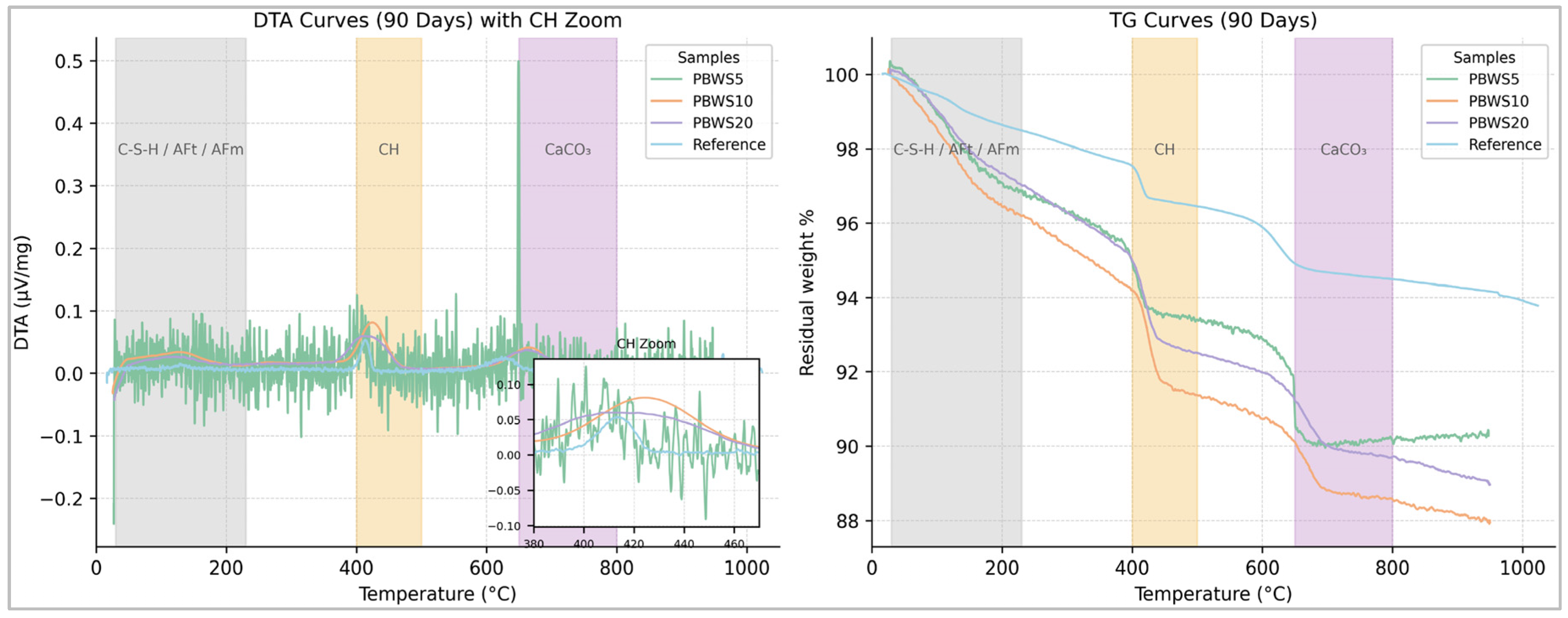
Figure 13, Figure 14 and Figure 15 present the TG and DTA/DTG curves of the reference and PBWS-blended pastes cured for 7, 28, and 90 days. The thermal decomposition profiles exhibit the characteristic mass-loss regions generally observed in hydrated cementitious systems. In the present analysis, the first region, extending approximately from 30 to 230 °C, was associated mainly with the dehydration of physically bound water and hydration products such as C–S–H, AFt, and monosulfate-like phases (AFm), while the second region, located within approximately 400–500 °C, was assigned to the dehydroxylation of CH [62]. The third region, observed broadly between approximately 650 and 800 °C, was associated with the decarbonation of calcium carbonate (CaCO3), although the exact peak position may vary depending on the carbonate polymorph and matrix characteristics [63,64]. These temperature intervals are consistent with recent thermogravimetric approaches used to quantify bound water, CH, and carbonate phases in blended cement systems [63,64]. Nevertheless, phase assignments based on TG/DTA–DTG curves should be interpreted cautiously, since partial overlap between decomposition events may occur depending on matrix composition and curing conditions.
At 7 days, the TG/DTG results indicate that the PBWS replacement level influenced the early hydration-related thermal response of the paste systems. In the 30–230 °C region, the mass losses were 3.09% for PBWS10, 2.99% for PBWS5, 2.55% for PBWS20, and 2.82% for the reference paste, showing that PBWS10 exhibited the highest amount of dehydration-related phases, whereas PBWS20 showed the lowest value. This suggests that moderate PBWS incorporation may be associated with greater early development of dehydration-related products, likely through filler/nucleation effects, whereas higher replacement levels may increasingly reflect clinker dilution. Similar trends have been reported in recent studies on blended cement systems. In the 400–500 °C interval, assigned to CH dehydroxylation, the mass losses were 2.38% for PBWS10, 2.23% for PBWS5, 1.94% for PBWS20, and 1.73% for the reference, indicating that the PBWS-containing mixtures did not exhibit lower CH-related mass loss than the reference at this age; therefore, substantial CH consumption by PBWS cannot be inferred from the 7-day TG data alone. In the 650–800 °C region, mass losses remained limited in the PBWS mixtures (0.41–0.43%) but were higher in the reference paste (0.89%), indicating greater carbonate-related mass loss in the control system. Overall, among the blended samples, PBWS10 showed the highest mass loss in the low-temperature dehydration region, whereas PBWS20 reflected a lower degree of early hydration-related phase development because of the higher replacement level [65,66].
At 28 days, the PBWS-containing mixtures exhibited higher mass losses than the reference paste in the 30–230 °C region (4.03% for PBWS5, 3.92% for PBWS10, and 3.48% for PBWS20, compared with 1.46% for the reference) (Figure 14), suggesting greater development of dehydration-related phases such as C–S–H, AFt, and AFm in the blended systems. This behavior may be associated with filler/nucleation effects at low and moderate replacement levels, whereas the influence of clinker dilution may become more evident at higher replacement ratios. In the 400–500 °C interval, the CH-related mass losses of all PBWS-modified samples (2.49%, 2.53%, and 2.45% for PBWS5, PBWS10, and PBWS20, respectively) were also higher than that of the reference paste (0.93%), indicating that CH evolution at this age should not be interpreted solely in terms of direct CH consumption. Moreover, mass losses in the carbonate-related region remained low in all mixtures (0.05%, 0.11%, and 0.10% for PBWS5, PBWS10, and PBWS20, respectively, versus 0.11% for the reference), suggesting that carbonate-related decomposition was limited at 28 days. This interpretation is consistent with recent thermogravimetric studies that assign CH dehydroxylation mainly to about 400–500 °C and carbonate decomposition broadly to about 650–800 °C, while also emphasizing that phase development in blended cement systems is governed by the competing effects of hydration progress, filler/nucleation enhancement, and clinker dilution [67,68,69].
At 90 days, the PBWS-containing mixtures continued to exhibit higher mass losses than the reference paste in the 30–230 °C region (3.36% for PBWS5, 3.78% for PBWS10, and 3.07% for PBWS20, compared with 1.46% for the reference), suggesting the continued development of dehydration-related phases such as C–S–H, AFt, and AFm in the blended systems. This trend indicates that PBWS incorporation influenced hydrate development at later ages, particularly at low and moderate replacement levels, whereas the relatively lower value of PBWS20 may reflect the increasing influence of clinker dilution at a higher replacement level [70]. In the 400–500 °C interval, the CH-related mass losses were 1.38%, 2.48%, and 2.21% for PBWS5, PBWS10, and PBWS20, respectively, while the reference paste remained at 0.93%, indicating that CH-related thermal decomposition in the PBWS-modified mixtures was still higher than that of the control sample. Therefore, the 90-day TG/DTG data do not support a simple interpretation based solely on CH depletion; rather, they suggest that CH evolution was governed by the combined effects of ongoing hydration and secondary reactions [71]. In the carbonate-related region, the mass losses remained generally low at 90 days. Overall, the 90-day results indicate that PBWS continued to influence hydrate development and the thermal decomposition behavior of the paste systems at later ages.
According to the TG data, the decomposition behavior of the hydration-related phases varied depending on PBWS replacement level and curing age. The mass losses in the 30–230 °C region, associated mainly with C–S–H, AFt, and AFm phases, were generally higher in the PBWS-containing mixtures than in the reference paste, particularly at 28 and 90 days, suggesting differences in the development of dehydration-related phases within the blended systems rather than absolute phase contents. At 7 days, the highest value in this region was observed for PBWS10 (3.09%), whereas PBWS20 showed the lowest value (2.55%), indicating that moderate PBWS incorporation may support early hydrate development, while higher replacement may impose a limiting effect because of clinker dilution. In the 400–500 °C range, assigned to CH dehydroxylation, the PBWS-modified samples exhibited CH-related mass losses that were not lower than those of the reference at any curing age. However, these values should be interpreted cautiously, since mass losses measured within fixed temperature intervals do not necessarily represent absolute phase contents and may be affected by partial overlap between decomposition events, sample condition, and matrix-related effects. For this reason, the apparent variation in the CH-related region, including the lower values obtained for the reference paste at 28 and 90 days, was not interpreted as direct quantitative evidence of monotonic CH evolution [72].
In the carbonate-related region, the mass losses remained relatively limited in the 7- and 28-day samples, indicating that carbonate-associated decomposition was not pronounced at early ages. At 90 days, the highest value was observed for PBWS20 (0.22%), while the PBWS5 sample exhibited a small positive mass loss of approximately 0.58% in the 650–800 °C interval. Overall, the TG results indicate that PBWS incorporation altered the thermal decomposition behavior of the paste systems depending on replacement level and curing age. In particular, low and moderate PBWS contents were associated with more developed dehydration-related phases, whereas higher replacement levels showed a more evident dilution-related effect. These thermal findings should be interpreted together with the corresponding XRD and FT-IR results for a more balanced assessment of phase evolution in the blended systems.

3.3. Environmental and Economic Evaluations

The Material Sustainability Index (MSI) was used in this study to evaluate the energy demand, greenhouse-gas emissions, and cost implications associated with the production stages of each raw material. Although PBWS is a secondary by-product derived from the wood-based panel industry, it requires drying before use in cementitious systems; therefore, its drying energy was included in the environmental and economic assessment.
Table 4 presents the drying parameters of PBWS. A 24 h drying period with an average energy demand of 0.8 kW was used, resulting in a processing energy requirement of 69.12 MJ/t, an estimated CO2 emission of 8.64 kg/t, and a cost of approximately 57.37 ₺/t. These values are based on the current electricity tariff and emission factor relevant to the study location.
Beyond the drying stage, the environmental indicators and unit costs of cement and dried PBWS used as binder constituents are summarized in Table 5. Whereas cement remains the dominant environmental burden, with an energy intensity of 3300 MJ/t and a CO2 emission factor of 830 kg/t, PBWS exhibits substantially lower values because it is treated as a secondary by-product requiring only drying and handling before use.
Although PBWS originates as an industrial waste and is burden-free at the point of generation, the energy and cost inputs associated with drying and processing were included in this study in order to better reflect the actual resource consumption involved in its utilization.
Using Equation (1), the environmental and economic performance indicators for PBWS-substituted mortars were normalized on a 1 m3 basis and are reported in Table 6.
The incorporation of PBWS into the binder system resulted in measurable improvements in the evaluated sustainability metrics at all replacement levels. Specifically, increasing the PBWS content from 5% to 20% led to progressive reductions in energy intensity, CO2 emissions, and overall cost. At 20% substitution, the calculated energy demand, CO2 emission, and cost were reduced to 2654 MJ/t, 706.77 kg/t, and 2867.16 TL/t, respectively.
M t o t a l = M i × F i
where Mtotal denotes the overall Material Sustainability Index (MSI) value for the composite system, Mi refers to the individual energy demand, CO2 emission, or production cost associated with the i-th component, and Fi indicates the proportional contribution (by mass or volume) of that component within the mortar formulation.
These findings indicate that replacing part of the cement with PBWS can significantly improve the eco-efficiency of mortar production. However, a holistic environmental evaluation should ideally also consider durability performance and the long-term structural implications of such substitutions [73].

4. Conclusions and Recommendations

This study comprehensively investigated the potential use of particle board waste sludge (PBWS) as a partial cement replacement material in Portland cement systems. Cement pastes containing 0%, 5%, 10%, and 20% PBWS were evaluated in terms of hydration-related phase evolution and thermal behavior, together with an environmental and economic assessment. Based on the results obtained, the following main conclusions can be drawn:

4.1. Hydration Products and Phase Development

XRD, FT-IR, and TG/DTG analyses showed that PBWS modified the hydration-related phase evolution of the cementitious system.
The TG/DTG results showed that PBWS-containing mixtures generally exhibited higher mass losses in the 30–230 °C region, especially at 28 and 90 days, indicating differences in the development of dehydration-related hydration products such as C–S–H, AFt, and AFm.
In the 400–500 °C interval, the CH-related mass losses of the PBWS-modified samples were not lower than those of the reference mixture at the studied curing ages. Therefore, CH evolution could not be interpreted solely in terms of direct CH consumption, but rather as the result of the combined effects of hydration progress, replacement level, and phase assemblage.
In the 650–800 °C range, the CaCO3-related mass losses remained generally low, indicating limited carbonation under the conditions examined in this study.
FT-IR analysis showed progressive changes in hydroxyl-, silicate-, sulfate-, and carbonate-related bands with curing time. However, the CH-related band near 3640 cm−1 did not show a simple monotonic decrease with increasing PBWS content and therefore should be interpreted together with the XRD and TG/DTG results.
Overall, the combined microstructural analyses indicate that PBWS altered phase assemblage and hydrate development in the blended cementitious matrices.

4.2. Sustainability Implications

PBWS replacement reduced clinker-related energy demand, CO2 emissions, and production cost.
  • The greatest reduction was obtained at 20% replacement, where the calculated values decreased to 2654 MJ/t, 706.77 kg/t, and 2867.16 TL/t, respectively.
Accordingly, PBWS may provide environmental and economic benefits as a partial cement replacement; however, its long-term performance and broader practical suitability should be verified through further compositional and durability studies.

4.3. Recommendations

  • Based on the overall findings, low-to-moderate PBWS replacement levels, particularly 5% and 10%, are recommended as more suitable ranges for achieving a balanced performance.
  • Higher replacement level (20%) provided greater environmental benefit, but also showed more evident limitations in hydration-related development and strength performance.
  • Future studies should focus on long-term durability performance, including sulfate resistance, chloride penetration, water transport behavior, and freeze–thaw resistance.
  • Additional research on pretreatment or activation methods may help improve PBWS reactivity and enable the use of higher replacement ratios without compromising performance.

Funding

This research received no external funding.

Data Availability Statement

The original contributions presented in this study are included in the article. Further inquiries can be directed to the corresponding author.

Conflicts of Interest

The author declares no conflicts of interest.

References

  1. Schiller, G.; Roscher, J. Impact of urbanization on construction material consumption: A global analysis. J. Ind. Ecol. 2023, 27, 1021–1036. [Google Scholar] [CrossRef]
  2. Bide, T.; Novellino, A.; Petavratzi, E.; Watson, C.S. A bottom-up building stock quantification methodology for construction minerals using Earth Observation. The case of Hanoi, Clean. Environ. Syst. 2023, 8, 100109. [Google Scholar] [CrossRef]
  3. Dobiszewska, M.; Bagcal, O.; Beycioğlu, A.; Goulias, D.; Köksal, F.; Płomiński, B.; Ürünveren, H. Utilization of rock dust as cement replacement in cement composites: An alternative approach to sustainable mortar and concrete productions. J. Build. Eng. 2023, 69, 106180. [Google Scholar] [CrossRef]
  4. Zeyad, A.M. Sustainable concrete Production: Incorporating recycled wastewater as a green building material. Constr. Build. Mater. 2023, 407, 133522. [Google Scholar] [CrossRef]
  5. Özkan, Ş. The impact of ternary hybrid fibers on the mechanical characteristics of cement-based composites with waste andesite dust substitution. J. Build. Eng. 2024, 88, 109102. [Google Scholar] [CrossRef]
  6. 5.2 Concrete and Cement. Available online: https://www.cementl.com/what-is-opc-cement-ordinary-portland-cement-explained-simply/ (accessed on 13 August 2025).
  7. Unlocking Global Cement and Concrete Decarbonization—RMI. Available online: https://rmi.org/unlocking-global-cement-and-concrete-decarbonization (accessed on 13 August 2025).
  8. CEMBUREAU. CEMBUREAU Activity Report 2024; CEMBUREAU: Brussels, Belgium, 2024. [Google Scholar]
  9. Khaiyum, M.Z.; Sarker, S.; Kabir, G. Evaluation of Carbon Emission Factors in the Cement Industry: An Emerging Economy Context. Sustainability 2023, 15, 15407. [Google Scholar] [CrossRef]
  10. Supriya; Chaudhury, R.; Sharma, U.; Thapliyal, P.C.; Singh, L.P. Low-CO2 emission strategies to achieve net zero target in cement sector. J. Clean. Prod. 2023, 417, 137466. [Google Scholar] [CrossRef]
  11. Cement Demand Forecast 2050. Available online: https://www.globalcement.com/magazine/articles/1368-cement-demand-forecast-2050 (accessed on 13 August 2025).
  12. Li, H.; Liu, F.; Pan, Z.; Li, H.; Wu, Z.; Li, L.; Xiong, Z. Use of supplementary cementitious materials in seawater–sea sand concrete: State-of-the-art review. Constr. Build. Mater. 2024, 425, 136009. [Google Scholar] [CrossRef]
  13. Knight, K.A.; Cunningham, P.R.; Miller, S.A. Optimizing supplementary cementitious material replacement to minimize the environmental impacts of concrete. Cem. Concr. Compos. 2023, 139, 105049. [Google Scholar] [CrossRef]
  14. Gou, J.; Li, S.; Jiang, C.; Li, Z.; You, G. A Study on the Influence of Gypsum and Ca(OH)2 on the Mechanical Properties and Hydration Behavior of Multi-Component Solid Waste-Based Cementitious Materials. Materials 2025, 18, 1964. [Google Scholar] [CrossRef]
  15. Cao, W.; Lv, X.; Wang, X.; Lu, J.X.; Moon, J.; Zou, F.; Tian, W.; Poon, C.S. Understanding the role of C-S-H seeds and sulfate in the lightweight cementitious composites containing fly ash cenospheres. Cem. Concr. Compos. 2025, 162, 106150. [Google Scholar] [CrossRef]
  16. Wang, Y.S.; Lin, R.S.; Wang, X.Y. Semi-wet CO2 mineralized modified wollastonite: Application in high-early strength cement and comparative analysis with common supplementary cementitious materials. Cem. Concr. Compos. 2025, 164, 106254. [Google Scholar] [CrossRef]
  17. Tushar, Q.; Bhuyian, M.; Abunada, Z.; Lemckert, C.; Giustozzi, F. Sustainability of Municipal Solid Waste Incineration (Mswi) Ash in Concrete with Plasticiser: A Life Cycle Assessment; SSRN: New York, NY, USA, 2025. [Google Scholar] [CrossRef]
  18. Peng, L.; Jiang, Y.; Ban, J.; Shen, Y.; Ma, Z.; Zhao, Y.; Shen, P.; Poon, C.S. Mechanism underlying early hydration kinetics of carbonated recycled concrete fines-ordinary portland cement (CRCF-OPC) paste. Cem. Concr. Compos. 2023, 144, 105275. [Google Scholar] [CrossRef]
  19. Wang, Y.; Burris, L.; Shearer, C.R.; Hooton, D.; Suraneni, P. Strength activity index and bulk resistivity index modifications that differentiate inert and reactive materials. Cem. Concr. Compos. 2021, 124, 104240. [Google Scholar] [CrossRef]
  20. Jhatial, A.A.; Nováková, I.; Gjerløw, E. A Review on Emerging Cementitious Materials, Reactivity Evaluation and Treatment Methods. Buildings 2023, 13, 526. [Google Scholar] [CrossRef]
  21. Tuncer, M.İ.; Başyiğit, C.; Davraz, M. The effect of sewage sludge ash as a mineral admixture on concrete strength. Constr. Build. Mater. 2025, 475, 141102. [Google Scholar] [CrossRef]
  22. Shyamala, G.; Hemalatha, B.; Gunavathie, M.A.; Ezhil, S.S.; Sathya, V.; Gobinath, M.; Babu, M.D. Evaluation of Paper Industry waste sludge and nano materials on properties of concrete. E3S Web Conf. 2025, 621, 01018. [Google Scholar] [CrossRef]
  23. Singh, N.K.; Khare, A. Study and Analysis of Paper Waste Sludge in Cement by Mixing Varied Ratios. BIMS Int. Res. J. Manag. Commer. 2025, 10, 103–116. [Google Scholar]
  24. Gharieb, M.; Rashad, A.M. A Pioneer Investigation on Recycling Ceramic Sludge Waste into Alkali-Activated Slag Cement. Arab. J. Sci. Eng. 2025, 51, 4523–4536. [Google Scholar] [CrossRef]
  25. Saran, R.; Saxena, S.; Acharya, H.; Bhadane, P.; Taki, K. Utilization of Water Treatment Plant Sludge for Creating Green Bricks and Examining Its Gamma Radiation Shielding Potential. J. Hazard. Toxic Radioact. Waste 2025, 29, 04025009. [Google Scholar] [CrossRef]
  26. Basu, D.; Pal, P.; Prakash, A. Utilization of waste sludge in cementitious Matrix: A feasibility study. Mater. Today Proc. 2022, 65, 1375–1381. [Google Scholar] [CrossRef]
  27. Ataabadi, H.S.; Zhuge, Y.; Liu, Y. Recycling of industrial sludge as construction materials. Wastes Low-Carbon Constr. Mater. 2025, 259–273. [Google Scholar] [CrossRef]
  28. Ravikumar, B.S.; Chandra, H.S.S.; Surendra, H.J. Waste paper sludge ash as a pozzolanic material: Enhancing concrete performance and sustainability. J. Build. Pathol. Rehabil. 2025, 10, 3. [Google Scholar] [CrossRef]
  29. Jwaida, Z.; Dulaimi, A.; Alyhya, W.; Algretawee, H.; Al-Busaltan, S. Recycling and utilization of paper sludge ash-current status review and future perspectives. Sustain. Mater. Technol. 2024, 40, e00960. [Google Scholar] [CrossRef]
  30. Parlikar, A.; Naik, C.; Nayak, C.B. An experimental study on effect of pharmaceutical industrial waste water on compressive strength of concrete. Int. J. Innov. Res. Sci. Eng. Technol. 2021, 10, 11068–11072. [Google Scholar]
  31. Lee, J.B. Incorporating Wastewater Sludge as a Cement Alternative in Repair Mortar: An Experimental Study of Material Properties. Materials 2024, 17, 5625. [Google Scholar] [CrossRef]
  32. Tay, J.; Show, K.-Y. Municipal Wastewater Sludge as Cementitious and Blended Cement Materials. Cem. Concr. Compos. 1994, 16, 39–48. [Google Scholar] [CrossRef]
  33. Lin, K.L.; Lo, K.W.; Hung, M.J.; Cheng, T.W.; Chang, Y.M. Recycling of spent catalyst and waste sludge from industry to substitute raw materials in the preparation of Portland cement clinker. Sustain. Environ. Res. 2017, 27, 251–257. [Google Scholar] [CrossRef]
  34. Meda, S.R.; Sharma, S.K.; Tyagi, G.D. Utilization of Waste Sludge as a Construction Material -A Review. Mater. Today Proc. 2021, 46, 4195–4202. [Google Scholar] [CrossRef]
  35. Mehta, J.; Vyas, C.M.; Pitroda, J. A Critical Literature review on Effective Utilization of Kota Stone Sludge as Replacement of Marble Slurry Wastes in Brick. Int. J. Trend Res. Dev. 2016, 3, 41–45. [Google Scholar]
  36. Chang, Z.; Long, G.; Zhou, J.L.; Ma, C. Valorization of sewage sludge in the fabrication of construction and building materials: A review. Resour. Conserv. Recycl. 2020, 154, 104606. [Google Scholar] [CrossRef]
  37. Ağaç ve Orman Ürünleri Sektör Analizi—Kolay İhracat Platformu. Available online: https://www.kolayihracat.gov.tr/sektorler/agac-mamulleri-ve-orman-urunleri (accessed on 14 August 2025).
  38. Yel, H.; Urun, E.; Yel, H.; Urun, E. Performance of cement-bonded wood particleboards produced using fly ash and spruce planer shavings. Maderas. Cienc. Tecnol. 2022, 24. [Google Scholar] [CrossRef]
  39. Davies, I.O.E.; Davies, O.O.A. Agro-waste-cement particleboards: A review. J. Environ. Sci. 2017, 2, 10–26. [Google Scholar]
  40. Yilmaz, M.; Tokyay, M.; Yaman, I.O. Cement production by cement-bonded wood particleboard wastes. Adv. Cem. Res. 2016, 28, 233–240. [Google Scholar] [CrossRef]
  41. Argalis, P.P.; Sinka, M.; Bajare, D. Recycling of Cement–Wood Board Production Waste into a Low-Strength Cementitious Binder. Recycling 2022, 7, 76. [Google Scholar] [CrossRef]
  42. Ahmad, F.; Jamal, A.; Iqbal, M.; Alqurashi, M.; Almoshaogeh, M.; Al-Ahmadi, H.M.; Hussein, E.E. Performance Evaluation of Cementitious Composites Incorporating Nano Graphite Platelets as Additive Carbon Material. Materials 2021, 15, 290. [Google Scholar] [CrossRef]
  43. BS EN 933-1:2012; Tests for Geometrical Properties of Aggregates—Determination of Particle Size Distribution. Sieving Method. BSI Knowledge: London, UK, 2012.
  44. ASTM C618-22; Standard Specification for Coal Fly Ash and Raw or Calcined Natural Pozzolan for Use in Concrete. ASTM: West Conshohocken, PA, USA, 2022. [CrossRef]
  45. Hasanin, T.H.A.; Alsahli, S.A.; Altaleb, H.A.; Alshammari, B.H.; Tantawy, M.A. Hydration characteristics of cement blended with thermally reactivated recycled concrete demolition waste. Sci. Rep. 2025, 16, 1499. [Google Scholar] [CrossRef]
  46. Moolchandani, K.; Sharma, A. Morphological and microstructural analysis of sustainable concrete with crumb rubber and SCMs. Rev. Adv. Mater. Sci. 2025, 64, 20250130. [Google Scholar] [CrossRef]
  47. Liu, Y.; Dalconi, M.C.; Bellotto, P.; Valentini, L.; Molinari, S.; Yuan, X.; Wang, D.; Hu, W.; Chen, Q.; Fernandez-Martinez, A.; et al. Pb-induced retardation of early hydration of Portland cement: Insights from in-situ XRD and implications for substitution with industrial by-products. Cem. Concr. Res. 2025, 193, 107867. [Google Scholar] [CrossRef]
  48. Gu, Y.; Chu, H.; Zhang, W. Sustainable seawater-sea sand cement mortar with municipal solid waste incineration ash: Mechanical performance, microstructure, and environmental benefits. Results Eng. 2025, 27, 106839. [Google Scholar] [CrossRef]
  49. de Matos, P.R.; Neto, J.S.A.; Campos, C.E.M. Is the R index accurate to assess the preferred orientation of portlandite in cement pastes? Constr. Build. Mater. 2021, 292, 123471. [Google Scholar] [CrossRef]
  50. Zhang, Y.; Yang, H.; Zhang, Q.; Qian, Q.; Zhang, C.; Wu, K.; Shen, P. Microstructural Evolution of Calcium Sulfoaluminate Cement during the Wet-Carbonation Process. Buildings 2024, 14, 343. [Google Scholar] [CrossRef]
  51. Kuzielová, E.; Slaný, M.; Žemlička, M.; Másilko, J.; Palou, M.T. Phase Composition of Silica Fume—Portland Cement Systems Formed under Hydrothermal Curing Evaluated by FTIR, XRD, and TGA. Materials 2021, 14, 2786. [Google Scholar] [CrossRef]
  52. Yusuf, M.O. Bond Characterization in Cementitious Material Binders Using Fourier-Transform Infrared Spectroscopy. Appl. Sci. 2023, 13, 3353. [Google Scholar] [CrossRef]
  53. Kashyap, V.S.; Agrawal, U.; Arora, K.; Sancheti, G. FTIR Analysis of Nanomodified Cement Concrete Incorporating Nano Silica and Waste Marble Dust. IOP Conf. Ser. Earth Environ. Sci. 2021, 796, 012022. [Google Scholar] [CrossRef]
  54. Li, H.; Liu, F.; Zhen, H.; Xiong, Z.; Song, Y.; Wang, J.; Li, L. Evaluating strength, hydration characteristics, microstructure evolution, and sustainability of seawater–sea sand cement-based materials containing iron ore tailings. Constr. Build. Mater. 2024, 457, 139163. [Google Scholar] [CrossRef]
  55. Zhang, B.; Zhu, H.; Shah, K.W.; Dong, Z.; Wu, J. Performance evaluation and microstructure characterization of seawater and coral/sea sand alkali-activated mortars. Constr. Build. Mater. 2020, 259, 120403. [Google Scholar] [CrossRef]
  56. Hoyos-Montilla, A.A.; Puertas, F.; Mosquera, J.M.; Tobón, J.I. Infrared spectra experimental analyses on alkali-activated fly ash-based binders. Spectrochim. Acta Part A Mol. Biomol. Spectrosc. 2022, 269, 120698. [Google Scholar] [CrossRef]
  57. Scholtzová, E.; Kucková, L.; Kožíšek, J.; Tunega, D. Structural and spectroscopic characterization of ettringite mineral–combined DFT and experimental study. J. Mol. Struct. 2015, 1100, 215–224. [Google Scholar] [CrossRef]
  58. Frost, R.L.; López, A.; Xi, Y.; Scholz, R.; Da Costa, G.M.; Lima, R.M.F.; Granja, A. The spectroscopic characterization of the sulphate mineral ettringite from Kuruman manganese deposits, South Africa. Vib. Spectrosc. 2013, 68, 266–271. [Google Scholar] [CrossRef][Green Version]
  59. Szudek, W.; Szydłowski, J.; Buchała, I.; Kapeluszna, E. Synthesis and Characterization of Calcium Sulfoaluminate Hydrates—Ettringite (AFt) and Monosulfate (AFm). Materials 2024, 17, 5216. [Google Scholar] [CrossRef] [PubMed]
  60. Vanoutrive, H.; Minne, P.; Van de Voorde, I.; Cizer, Ö.; Gruyaert, E. Carbonation of cement paste with GGBFS: Effect of curing duration, replacement level and CO2 concentration on the reaction products and CO2 buffer capacity. Cem. Concr. Compos. 2022, 129, 104449. [Google Scholar] [CrossRef]
  61. Ylmén, R.; Jäglid, U. Carbonation of Portland Cement Studied by Diffuse Reflection Fourier Transform Infrared Spectroscopy. Int. J. Concr. Struct. Mater. 2013, 7, 119–125. [Google Scholar] [CrossRef]
  62. Jing, H.; Li, M.; Zhang, Y.; Gao, M. Hydration kinetics, microstructure and physicochemical performance of metakaolin-blended cementitious composites. Constr. Build. Mater. 2023, 408, 133756. [Google Scholar] [CrossRef]
  63. Zuschlag, P.; Machner, A. Hydration of Composite Cements Containing Novel SCMs. Nord. Concr. Res. 2024, 70, 77–97. [Google Scholar] [CrossRef]
  64. Gholizadeh-Vayghan, A.; Hernandez, G.M.; Kingne, F.K.; Gu, J.; Dilissen, N.; El Kadi, M.; Tysmans, T.; Vleugels, J.; Rahier, H.; Snellings, R. Thermal Reactivation of Hydrated Cement Paste: Properties and Impact on Cement Hydration. Materials 2024, 17, 2659. [Google Scholar] [CrossRef]
  65. Yaseen, N.; Alcivar-Bastidas, S.; Irfan-ul-Hassan, M.; Petroche, D.M.; Qazi, A.U.; Ramirez, A.D. Concrete incorporating supplementary cementitious materials: Temporal evolution of compressive strength and environmental life cycle assessment. Heliyon 2024, 10, e25056. [Google Scholar] [CrossRef]
  66. Radwan, M.K.H.; Athar, F.A.; Yeo, J.S.; Alnahhal, A.M.; Ghayeb, H.H.; Cheah, C.B.; Mo, K.H. Comprehensive evaluation on the properties of blended cement containing calcined paper sludge. Mater. Struct. Constr. 2025, 58, 177. [Google Scholar] [CrossRef]
  67. Shen, X.; Luo, W.; Ren, P.; Wan, Z. Performance of sustainable ternary blended cement containing municipal solid waste incineration fly ash coupled with slag, coal fly ash or metakaolin. J. Build. Eng. 2024, 82, 108301. [Google Scholar] [CrossRef]
  68. Tang, Y.; Yu, K.; He, C.; Gao, L.; Yang, H.; He, H.; Zhong, A.N. Research progress on the application of low-reactivity minerals in carbonation-cured cement-based materials. J. CO2 Util. 2024, 88, 102938. [Google Scholar] [CrossRef]
  69. Das, K.K.; Wu, X.; Noh, G.; Lee, J.H.; Jang, J.G. Effect of acid attack coupled with elevated temperatures on carbonation-cured calcium sulfoaluminate and ordinary Portland cement paste. Case Stud. Constr. Mater. 2025, 23, e05150. [Google Scholar] [CrossRef]
  70. Ahmed, A. Assessing the effects of supplementary cementitious materials on concrete properties: A review. Discov. Civ. Eng. 2024, 1, 145. [Google Scholar] [CrossRef]
  71. Chen, B.; Ye, G. The role of water-treated municipal solid waste incineration (MSWI) bottom ash in microstructure formation and strength development of blended cement pastes. Cem. Concr. Res. 2024, 178, 107440. [Google Scholar] [CrossRef]
  72. Torabi, M.; Taylor, P.C. Hydration of portland cement and slag cement mixtures with insights on AFm phases and reaction mechanism. CEMENT 2025, 21, 100155. [Google Scholar] [CrossRef]
  73. Li, H.; Wang, R.; Wei, M.; Lei, N.; Wei, T.; Liu, F. Characteristics of carbide-slag-activated GGBS–fly ash materials: Strength, hydration mechanism, microstructure, and sustainability. Constr. Build. Mater. 2024, 422, 135796. [Google Scholar] [CrossRef]
Figure 1. Fundamental concepts of a circular economy in the context of sustainable construction materials.
Buildings 16 01496 g001
Figure 2. X-ray diffraction (XRD) pattern of PBWS.
Buildings 16 01496 g002
Figure 3. Particle-size distribution of cement and PBWS used in this study.
Buildings 16 01496 g003
Figure 4. Morphology and elemental distribution of PBWS particles.
Buildings 16 01496 g004
Figure 5. Waste pile generated from the processing of particleboards.
Buildings 16 01496 g005
Figure 6. Sample fabrication and experimental testing scheme.
Buildings 16 01496 g006
Figure 7. XRD patterns of 7-day samples: (a) wide-range (5–80°); (b) enlarged low-angle region (5–22°).
Buildings 16 01496 g007
Figure 8. XRD patterns of 28-day samples: (a) wide-range (5–80°); (b) enlarged low-angle region (5–22°).
Buildings 16 01496 g008
Figure 9. XRD patterns of 90-day samples: (a) wide-range (5–80°); (b) enlarged low-angle region (5–22°).
Buildings 16 01496 g009
Figure 10. FT-IR patterns of cement pastes with PBWS at 7-day curing period.
Buildings 16 01496 g010
Figure 11. FT-IR patterns of cement pastes with PBWS at 28-day curing period.
Buildings 16 01496 g011
Figure 12. FT-IR patterns of cement paste with PBWS at 90-day curing period.
Buildings 16 01496 g012
Figure 13. Thermogravimetric (TG) and differential thermogravimetry (DTG) curves of PBWS-blended cements at 7 days.
Buildings 16 01496 g013
Figure 14. Thermogravimetric (TG) and differential thermogravimetry (DTG) curves of PBWS-blended cements at 28 days.
Buildings 16 01496 g014
Figure 15. Thermogravimetric (TG) and differential thermogravimetry (DTG) curves of PBWS-blended cements at 90 days.
Buildings 16 01496 g015
Table 1. Chemical composition of cement and PBWS (wt.%).
SiO2 (S)Al2O3 (A)Fe2O3 (F)CaOMgOSO3K2ONa2OCr2O3Mn2O3P2O5TiO2LOI
Cement18.954.693.8062.892.242.860.790.190.110.120.150.252.96
PBWS23.655.172.9945.463.580.171.470.360.050.130.250.3216.40
Table 2. Mixture proportions of cement pastes containing PBWS.
Mix CodeWater (g)Cement (g)PBWS (g)
Reference2254500
PBWS5225427.522.5
PBWS1022540545
PBWS2022536090
Table 3. Chemical compositions of Portland cement, PBWS, and PBWS-blended cements (wt.%).
MaterialsPCPBWSPBWS5PBWS10PBWS20
SiO218.9523.6528.3427.7727.13
Al2O34.695.176.946.896.64
Fe2O33.802.993.523.573.50
CaO62.8945.4647.3847.1647.49
MgO2.243.582.272.392.52
SO32.860.172.642.652.28
K2O0.791.471.861.891.83
Na2O0.190.360.540.520.48
Cr2O30.110.050.110.110.10
Mn2O30.120.130.140.140.14
P2O50.150.250.210.210.24
TiO20.250.320.270.280.28
a LOI2.9616.405.796.477.38
a Loss on ignition at 950 °C.
Table 4. Energy demand, CO2 emissions, and processing cost of PBWS obtained from the particle board industry.
MaterialDrying Time (h)Average Power (kW)Output (t)Energy (MJ/t)CO2 Emission (kg/t) aProduction Cost (₺/t) b
PBWS (dried)240.8169.128.6457.37
a CO2 emissions were calculated using an average emission factor of 0.45 kg/kWh based on Turkey’s 2025 grid electricity data. b The electricity unit price was taken as 2.98819 ₺/kWh, reflecting industrial tariffs in Isparta, Turkey.
Table 5. Energy input, CO2 footprint, and unit cost of binder components used in this study.
MaterialEnergy Intensity (MJ/t)CO2 Emission (kg/t)Production Cost (TL/t)
Cement3300 a830 b3400
PBWS125.6715.43104.31
a The energy intensity of clinker production was taken as 3300 MJ/t to represent the dry-process method, which is more consistent with modern cement production practice and the current production structure in Turkey. b The CO2 emission values for cement production were obtained from plant-specific data provided by the Göltaş Cement Factory located in Isparta, Turkey.
Table 6. Environmental metrics of PBWS-based mortars.
Mortar TypeEnergy Intensity (MJ/t)CO2 Emission (kg/t)Production Cost (TL/t)
Reference 3300.00830.003400.00
PBWS5 3138.50799.193266.79
PBWS10 2977.00768.383133.58
PBWS20 2654.00706.772867.16
Disclaimer/Publisher’s Note: The statements, opinions and data contained in all publications are solely those of the individual author(s) and contributor(s) and not of MDPI and/or the editor(s). MDPI and/or the editor(s) disclaim responsibility for any injury to people or property resulting from any ideas, methods, instructions or products referred to in the content.