Effect of Paraffin and Vinyl Acetate Ethylene (VAE) Emulsions on the Waterproofing and Mechanical Properties of Fiber-Reinforced Modified Gypsum (FRMG) Matrix

 , ,
, , 

Abstract
1. Introduction
2. Experimental Investigation
2.1. Materials
2.1.1. Gypsum Matrix Materials
2.1.2. Fibers
2.2. Waterproofing Treatments
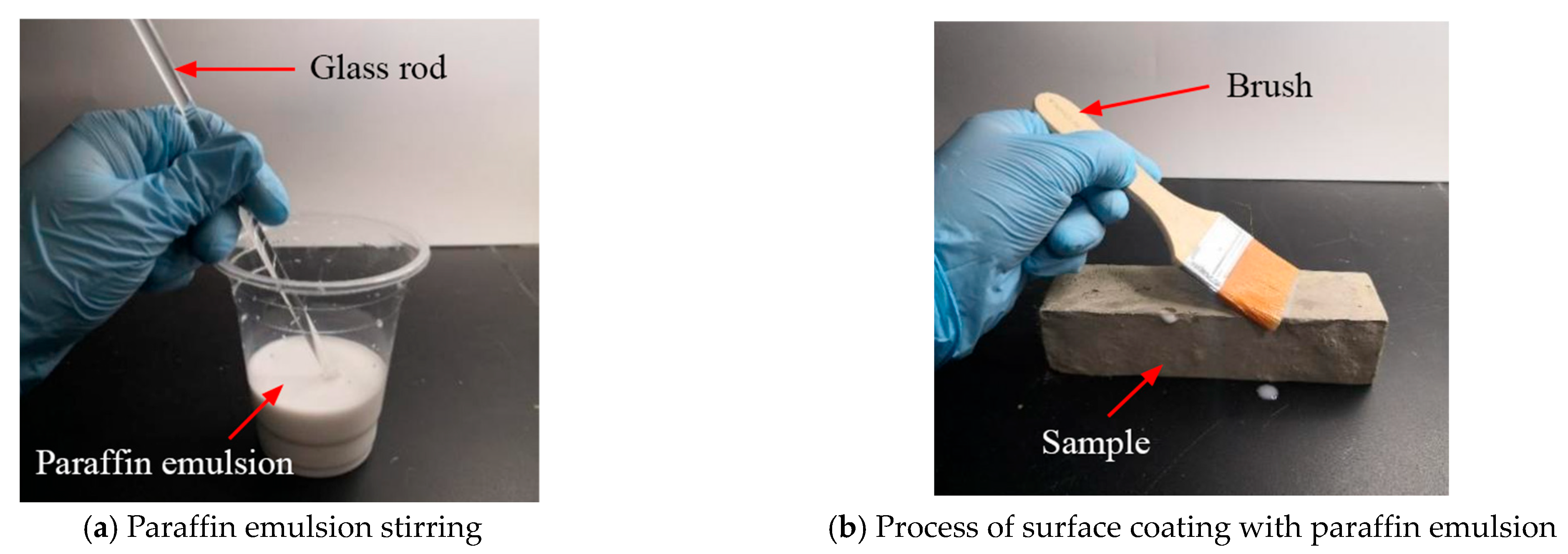
2.2.1. Surface Coating with Paraffin Emulsion
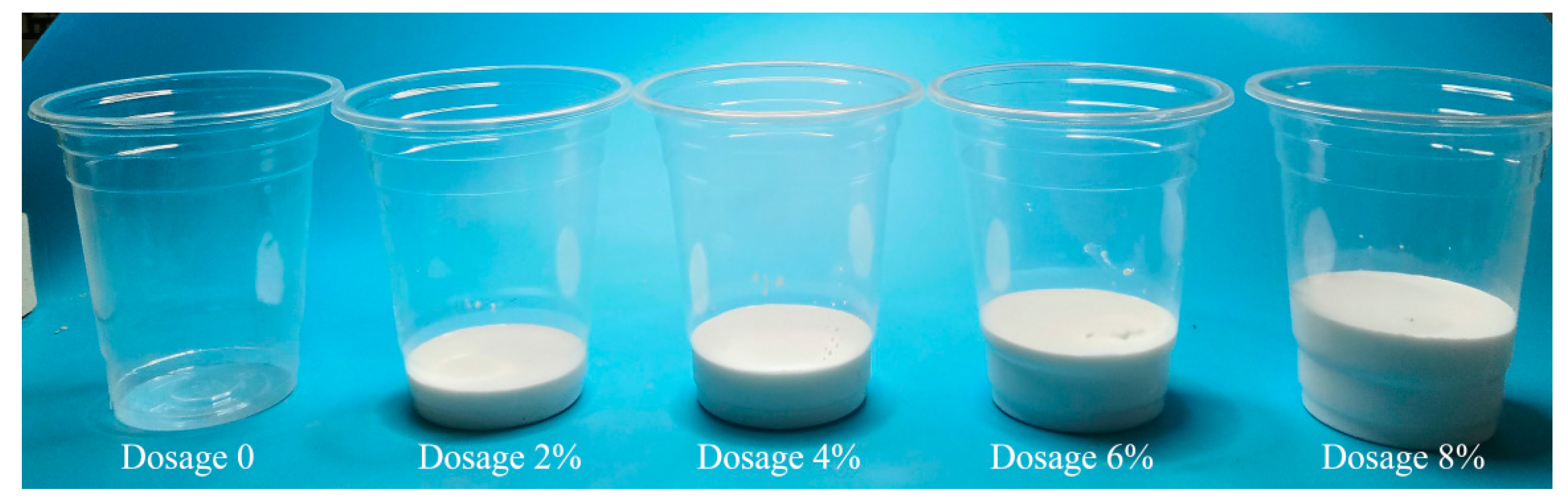
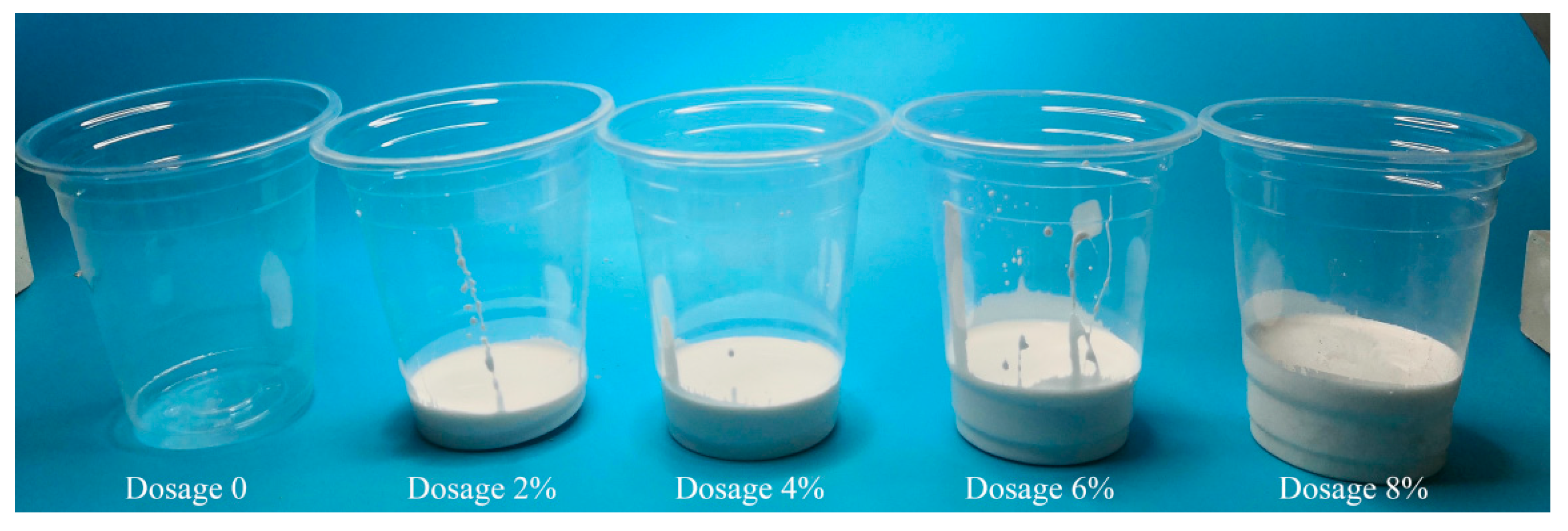
2.2.2. Internal Incorporation of Paraffin Emulsion and VAE Emulsion
2.3. Factor Level Combinations
2.4. Test Procedures
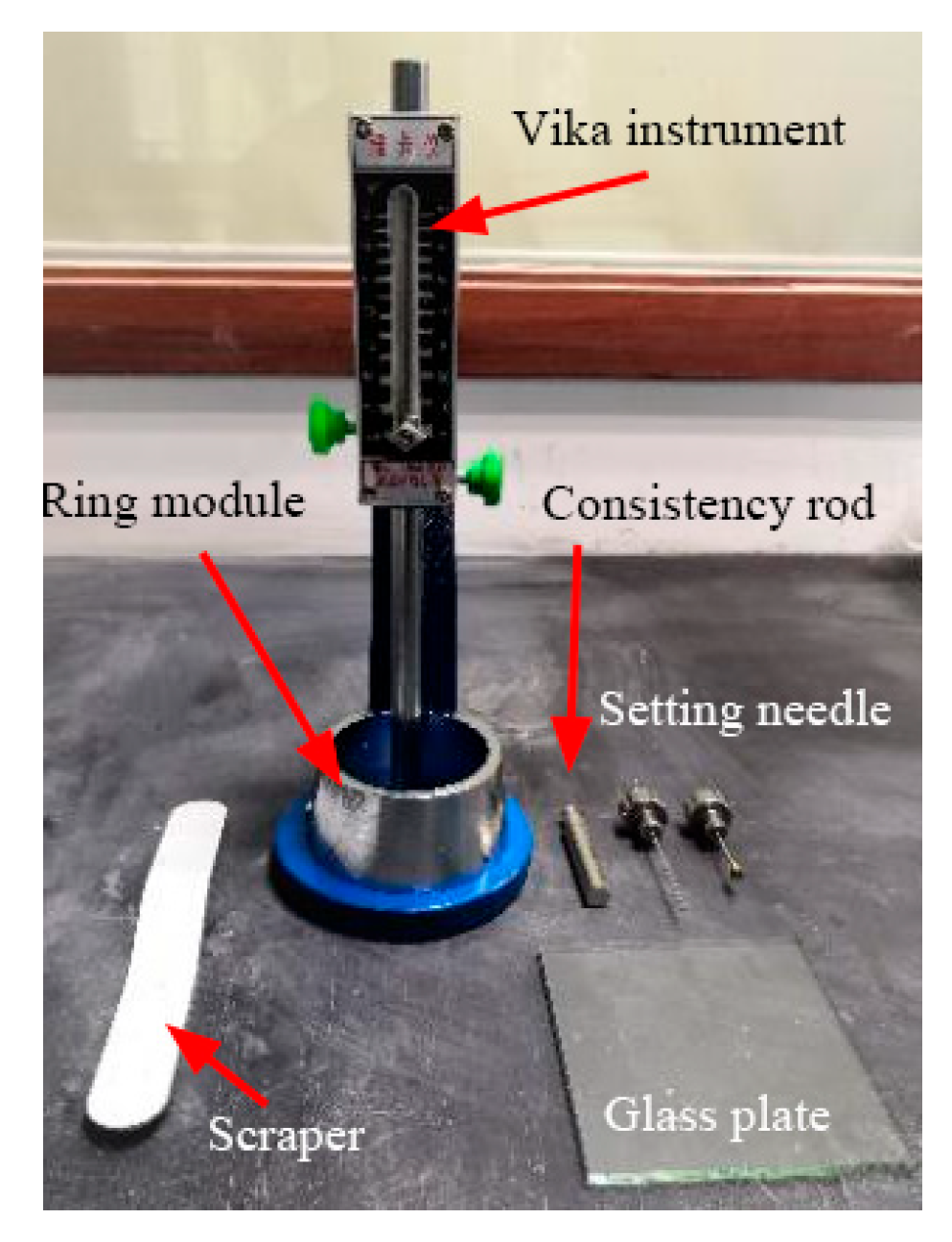
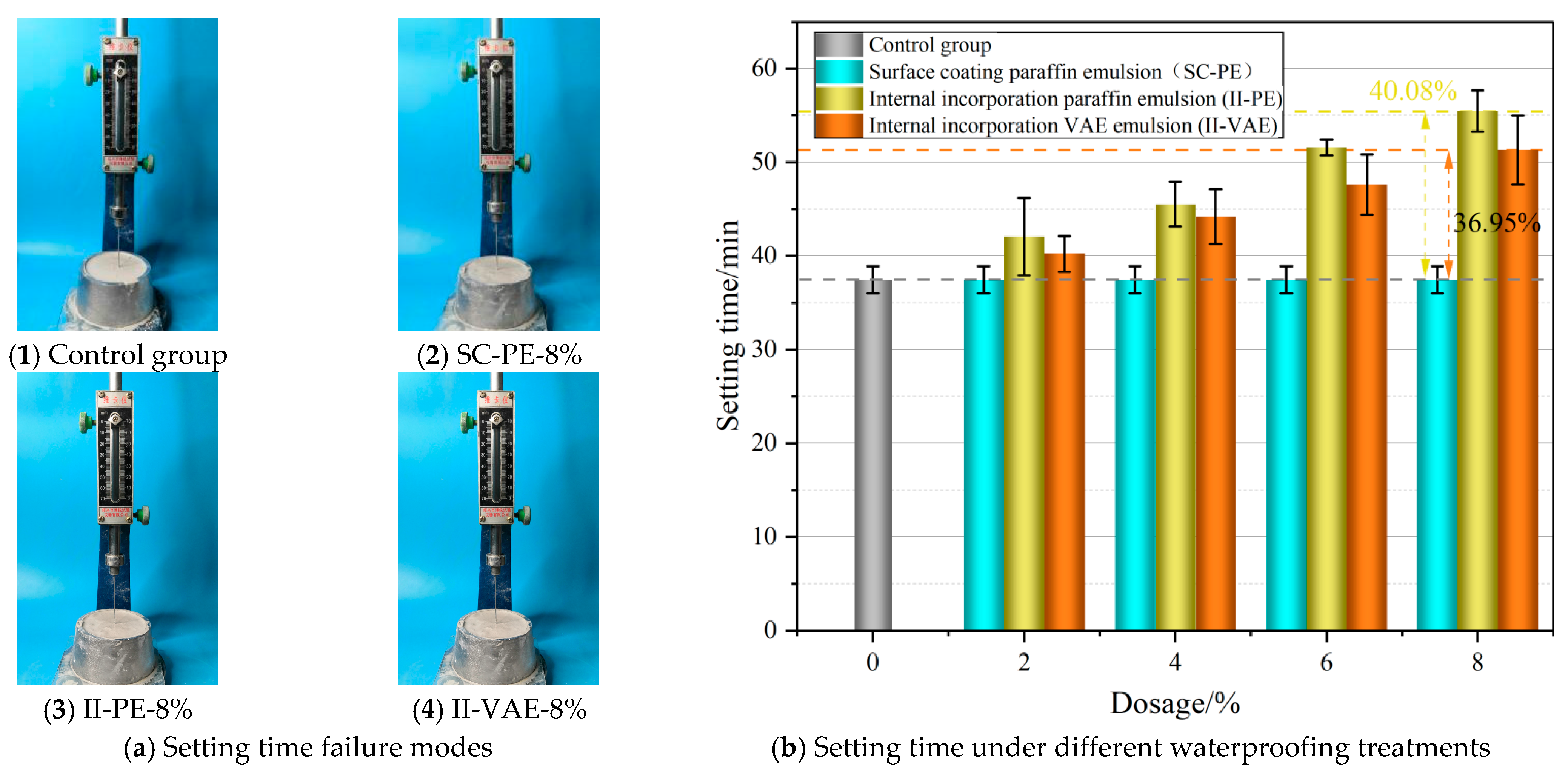
2.4.1. Setting Time
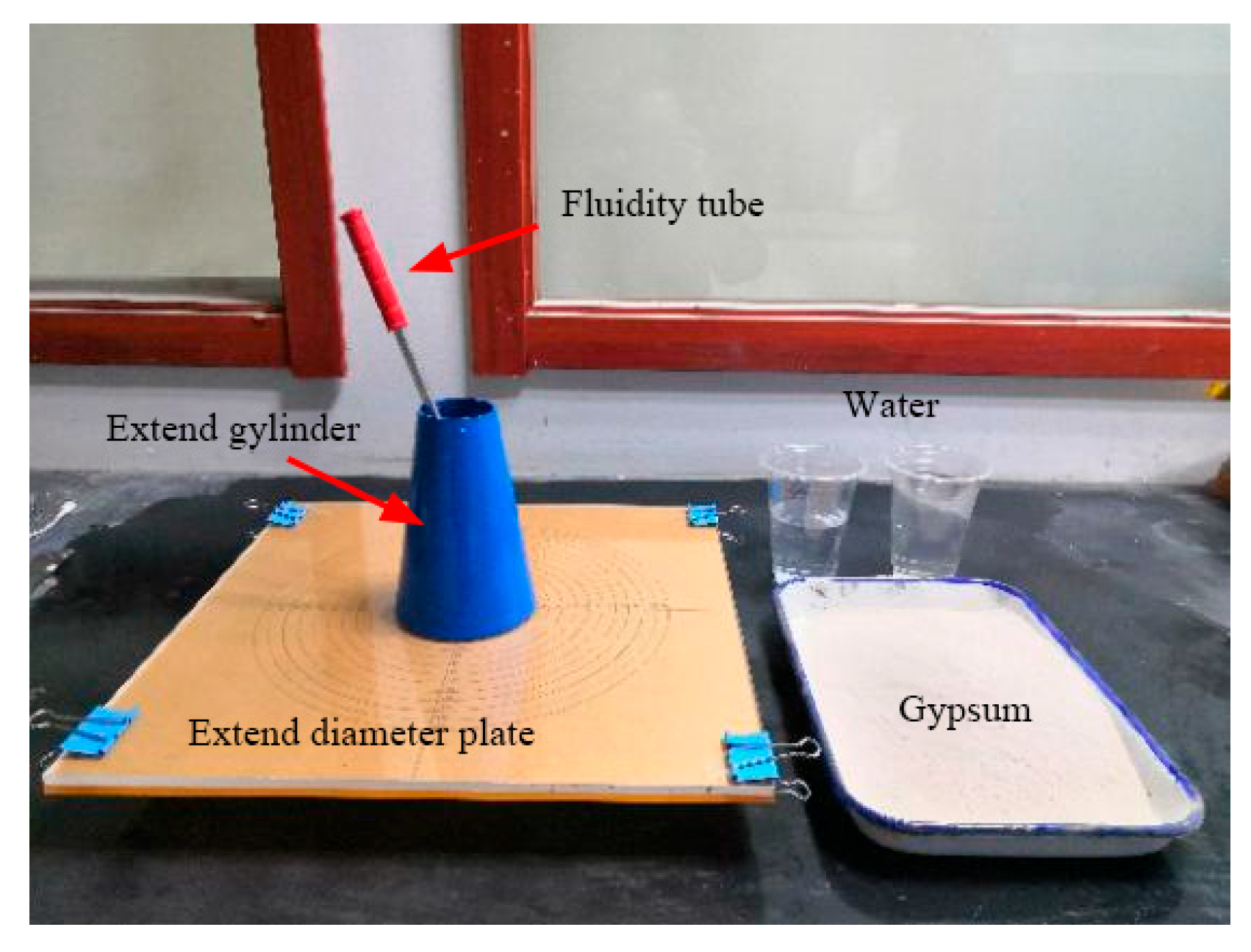
2.4.2. Fluidity
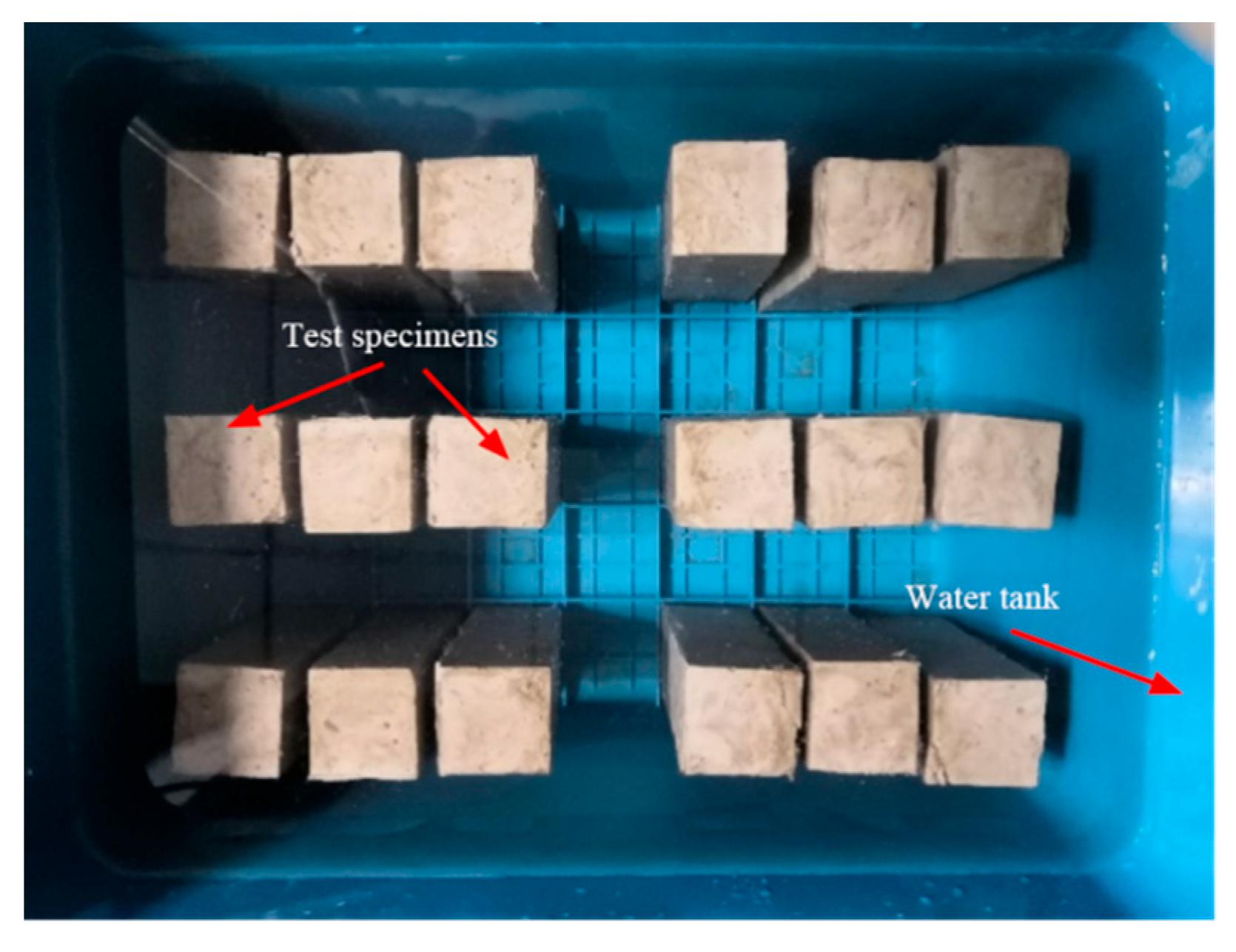
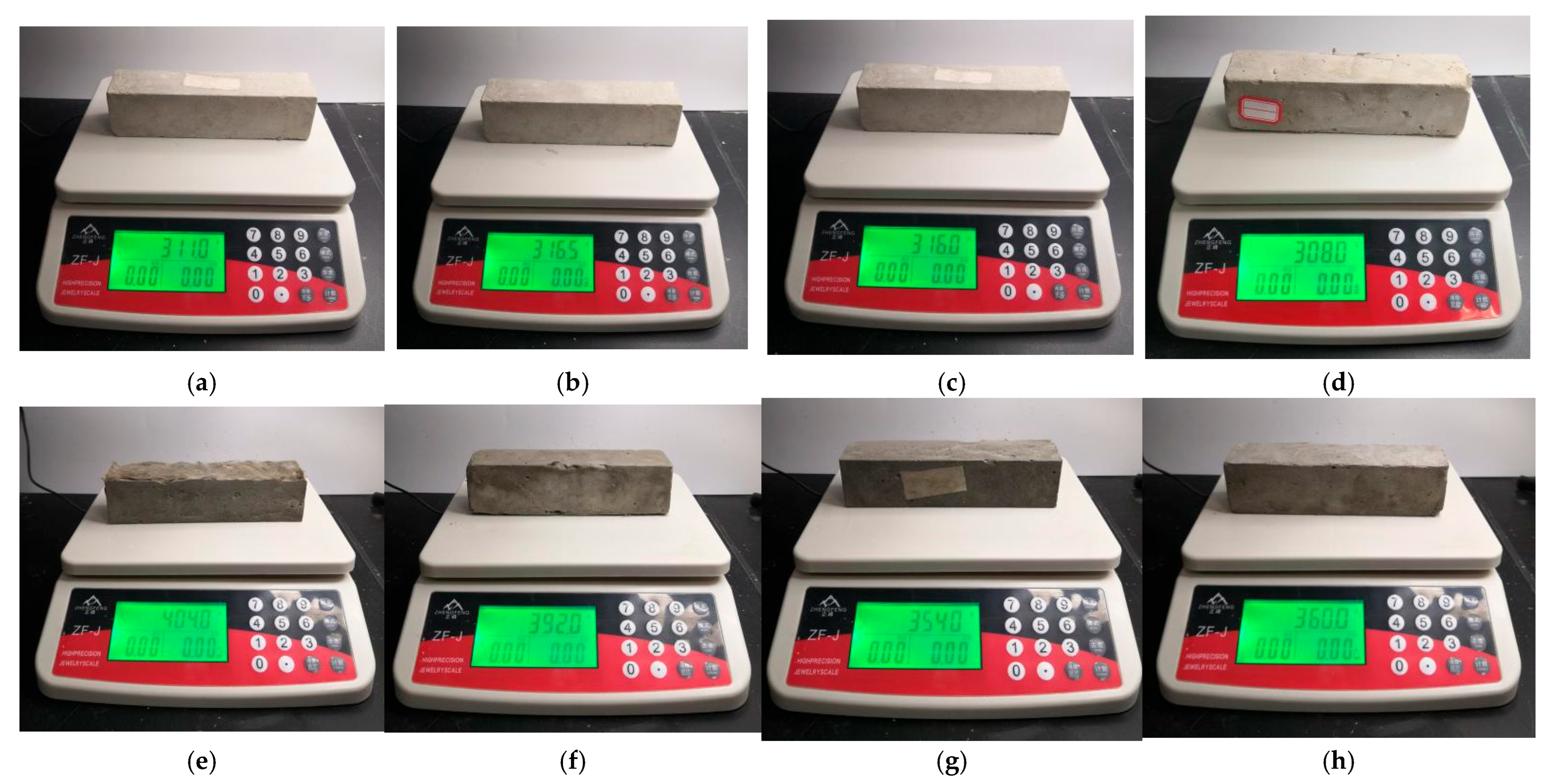
2.4.3. Water Absorption
2.4.4. Flexural and Compressive Strength
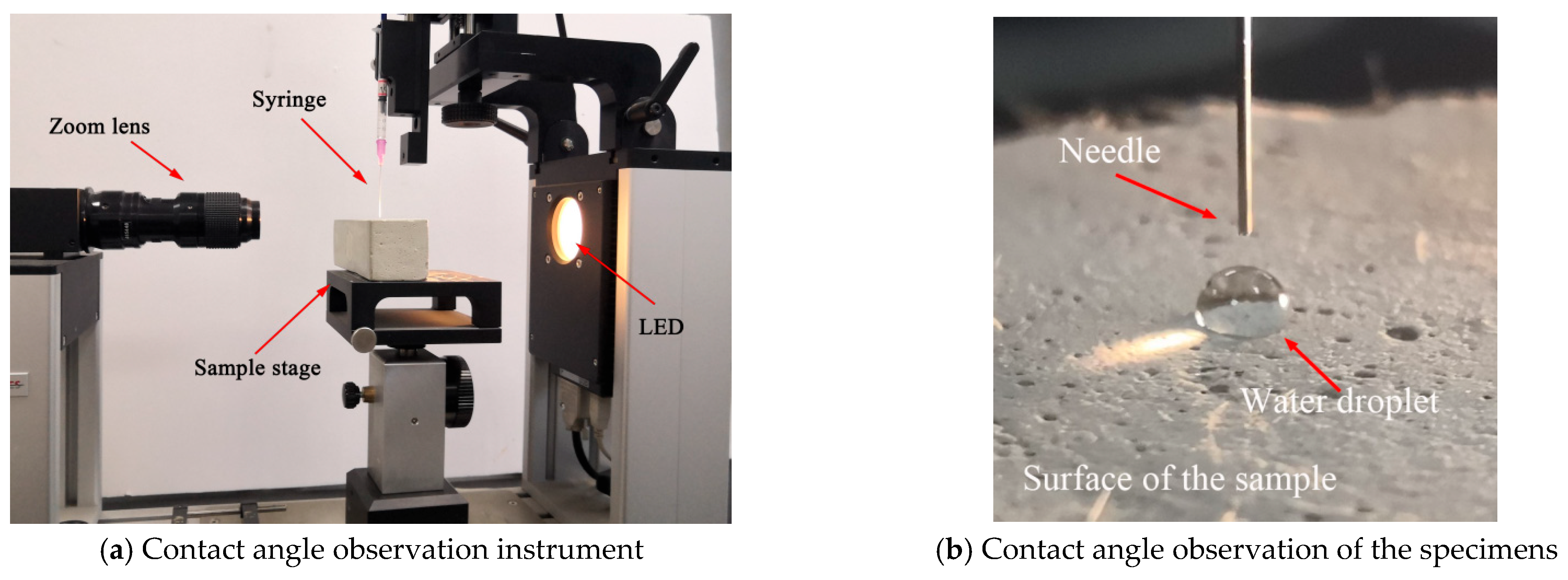
2.4.5. Contact Angle Test
3. Results and Discussion
3.1. Setting Time
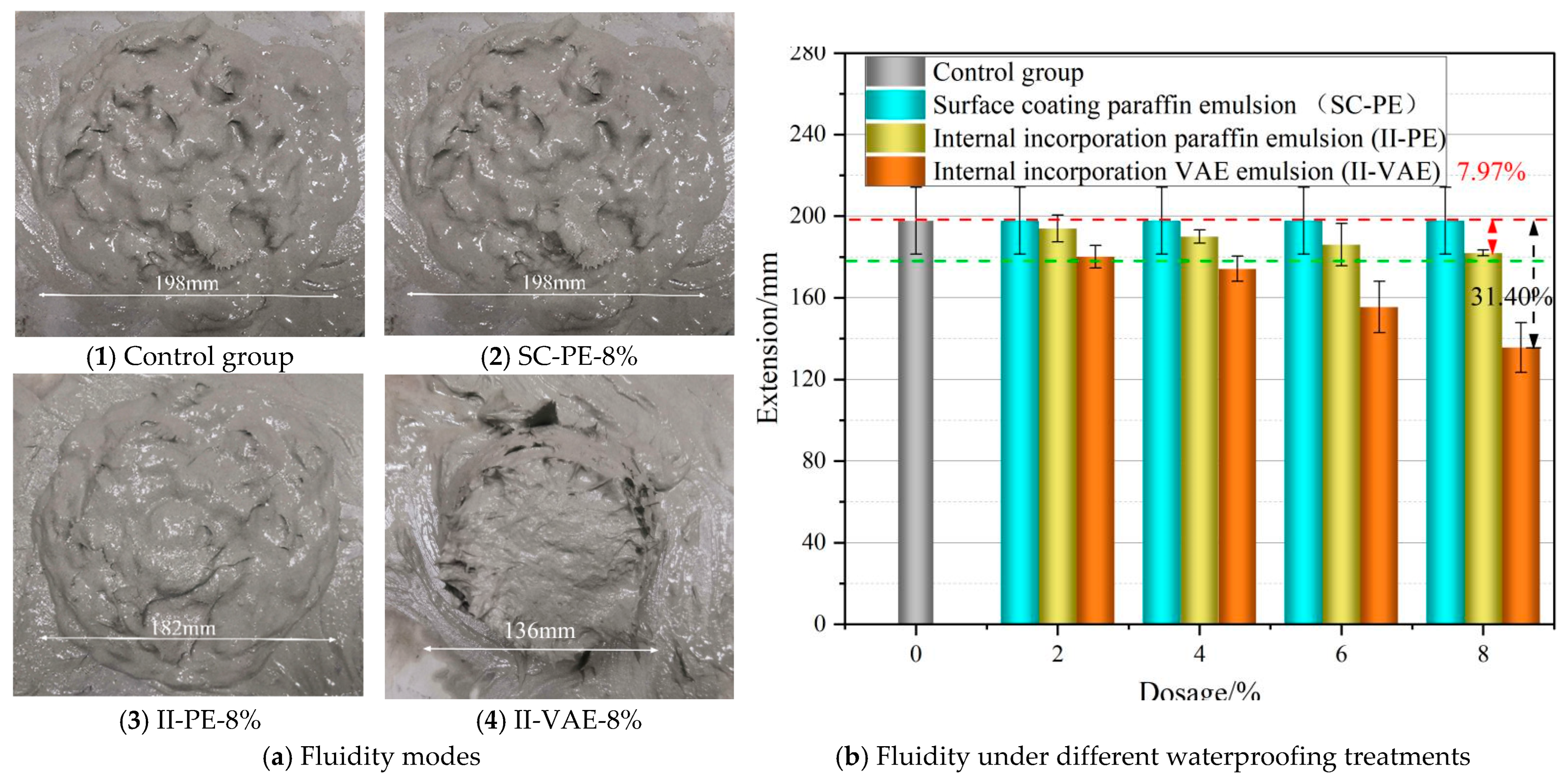
3.2. Fluidity
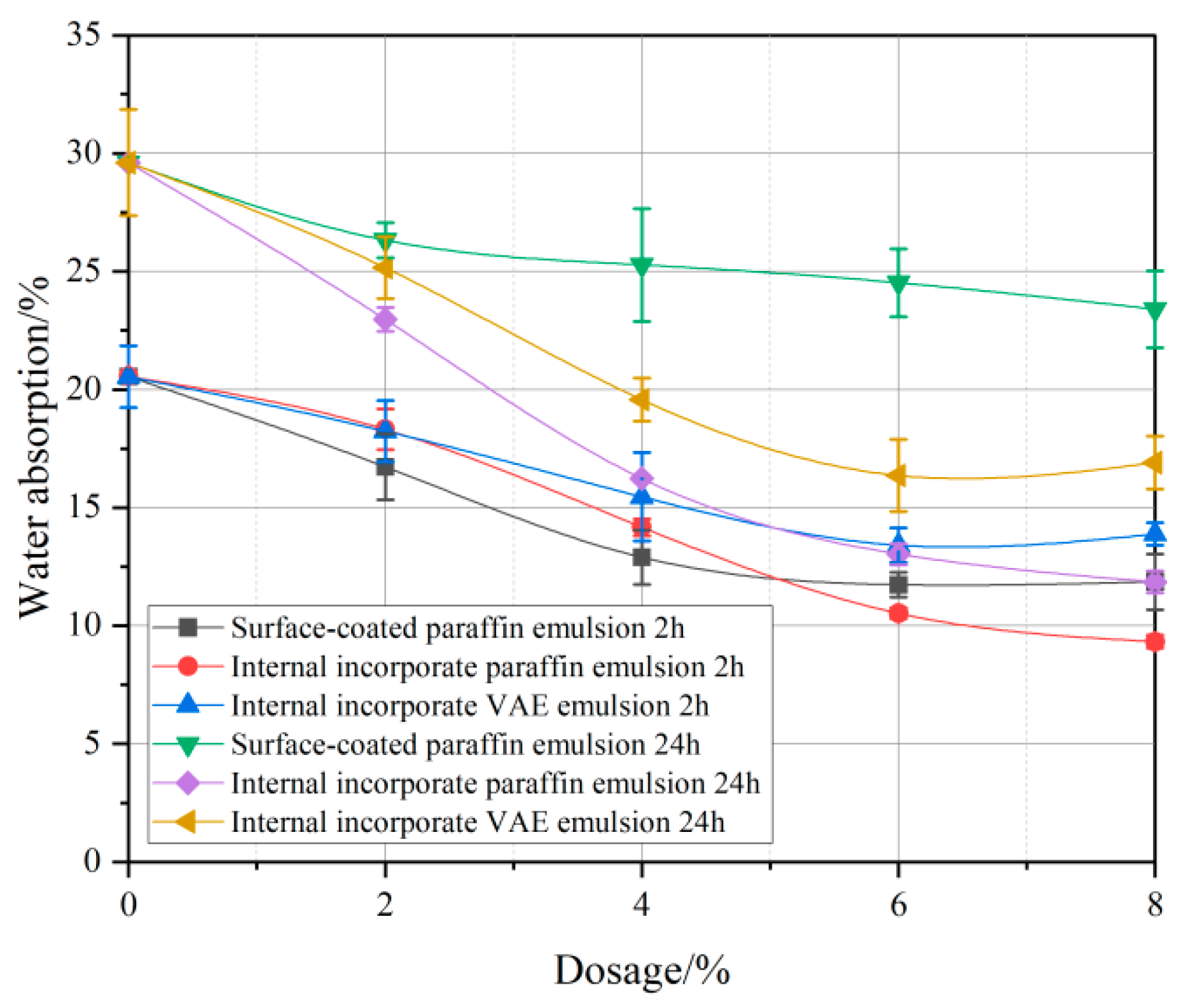
3.3. Water Absorption
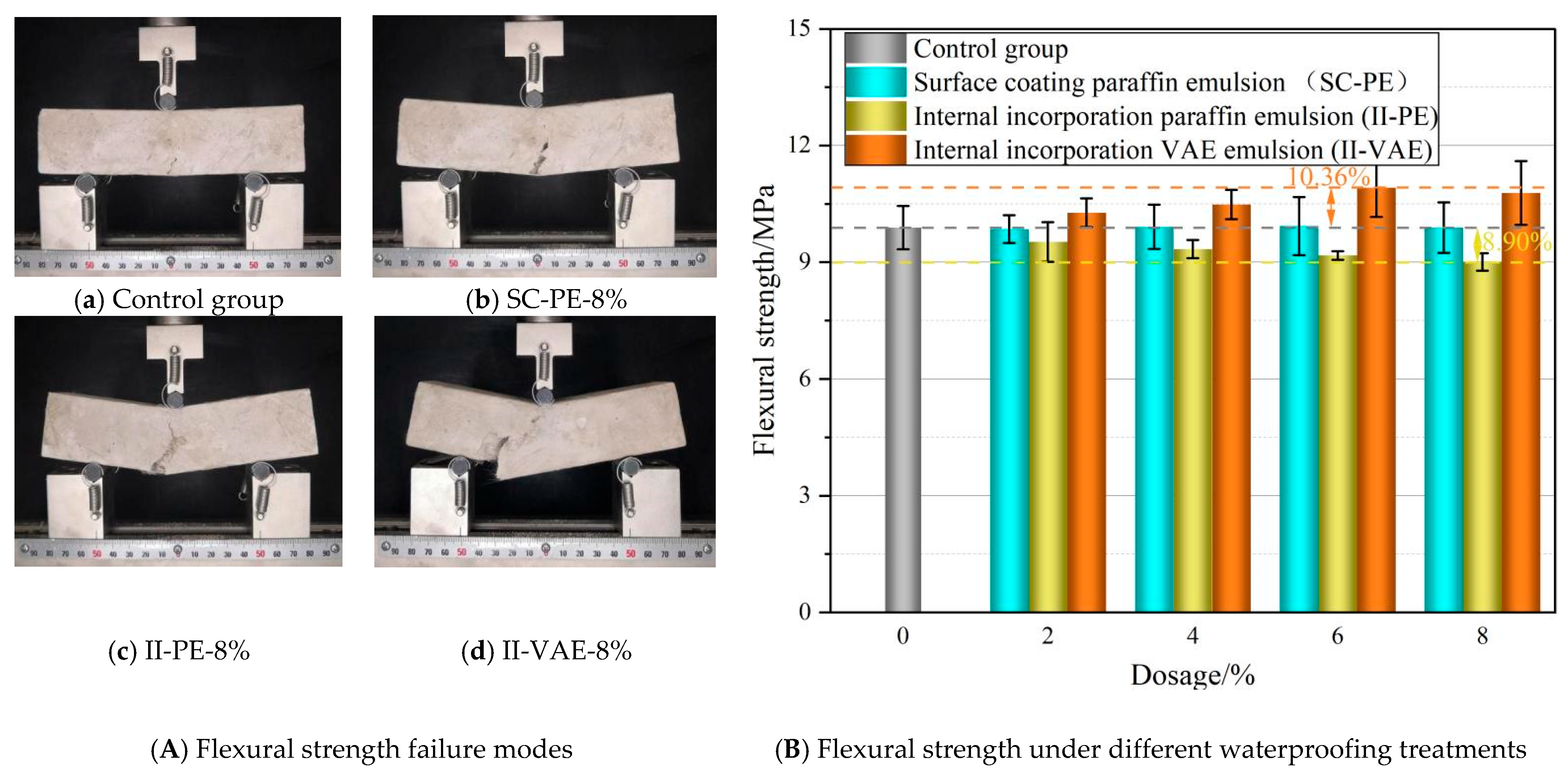
3.4. Flexural Strength
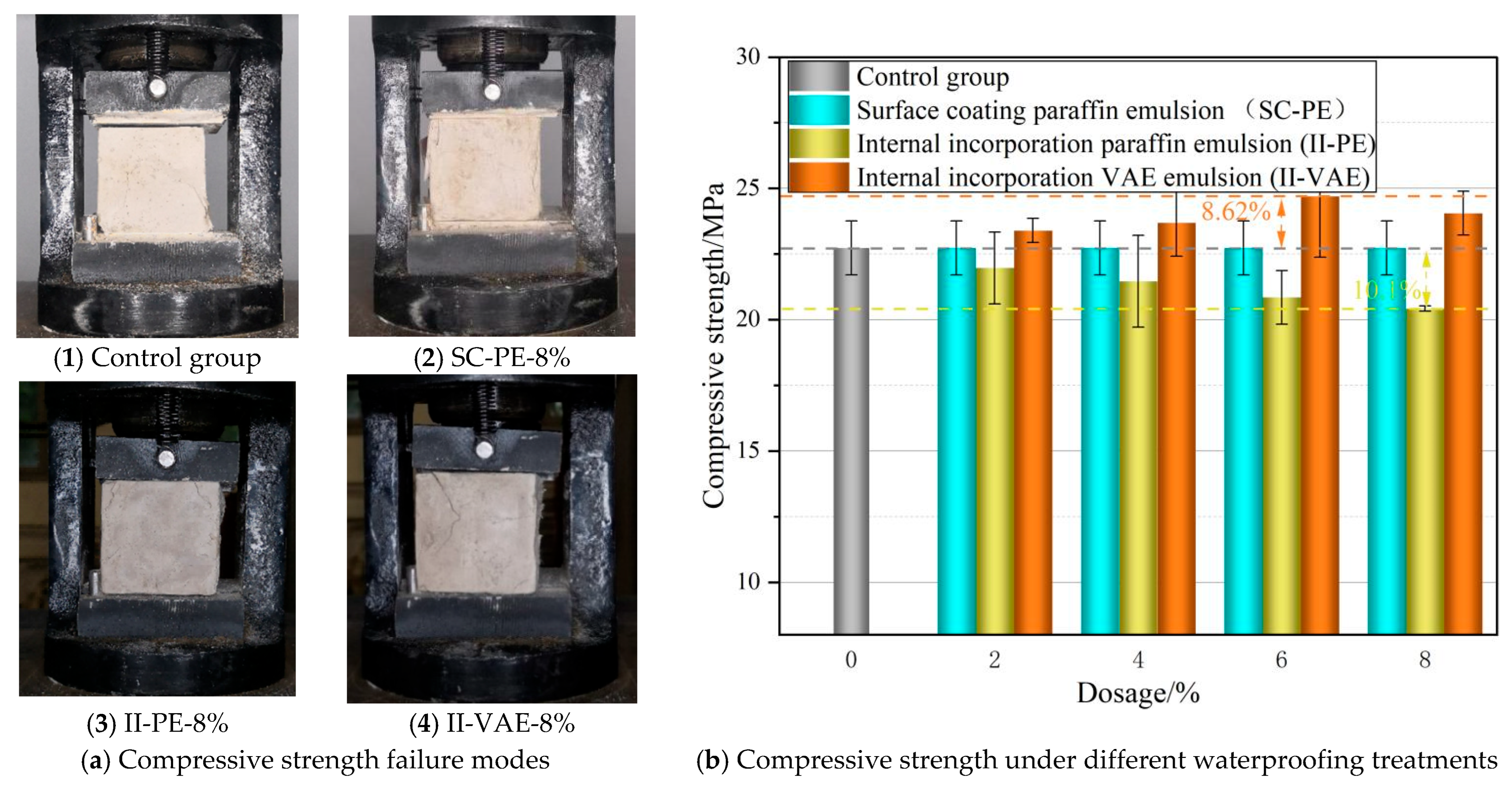
3.5. Compressive Strength
3.6. Contact Angle
4. Mechanism Analysis
4.1. Waterproofing Mechanism
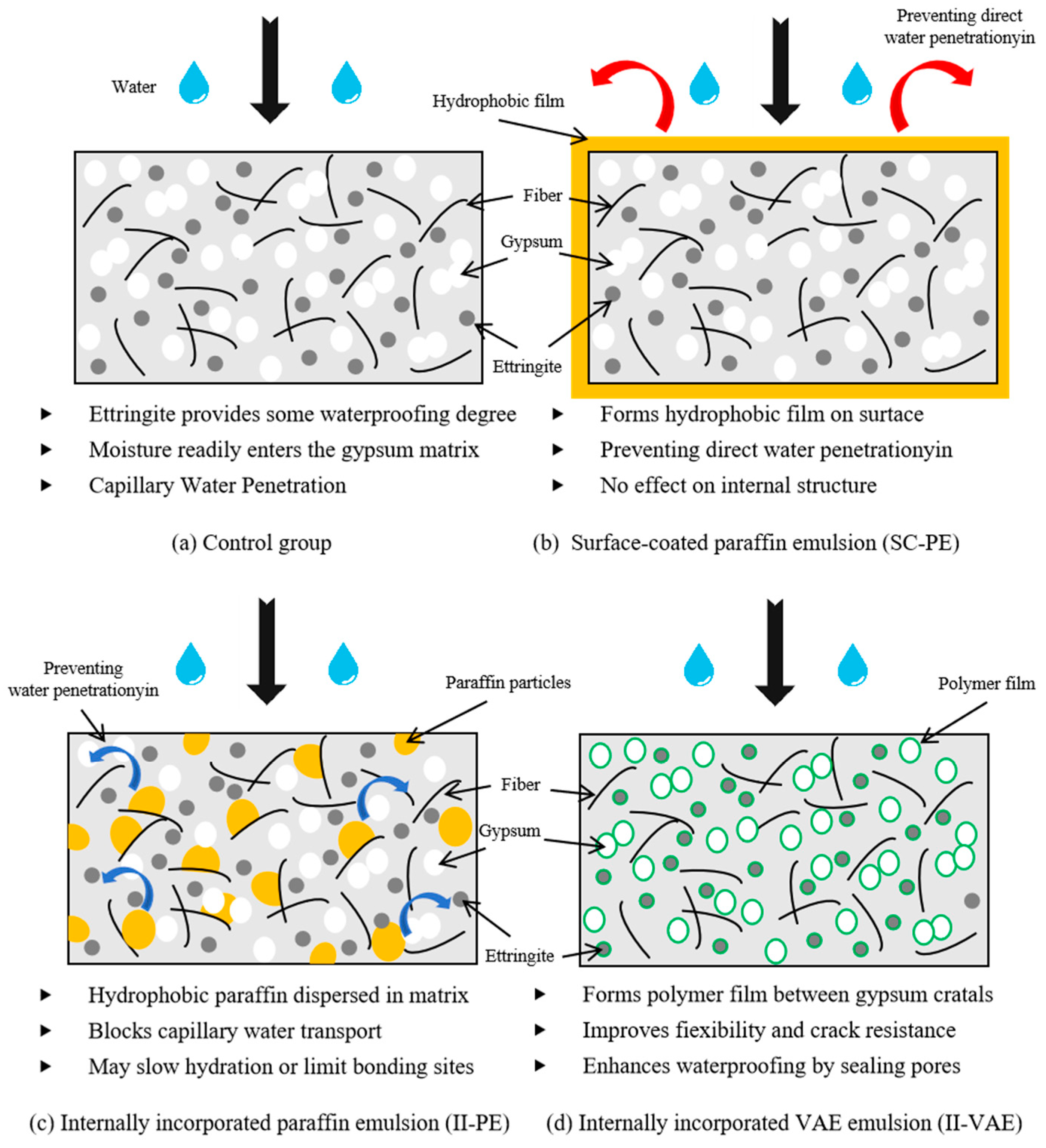
4.1.1. Control Group
4.1.2. Waterproofing Mechanism of Surface Coating with Paraffin Emulsion
4.1.3. Waterproofing Mechanism of Internal Incorporation Paraffin Emulsion
4.1.4. Waterproofing Mechanism of Internal Incorporation VAE Emulsion
4.2. Microscopic Structure
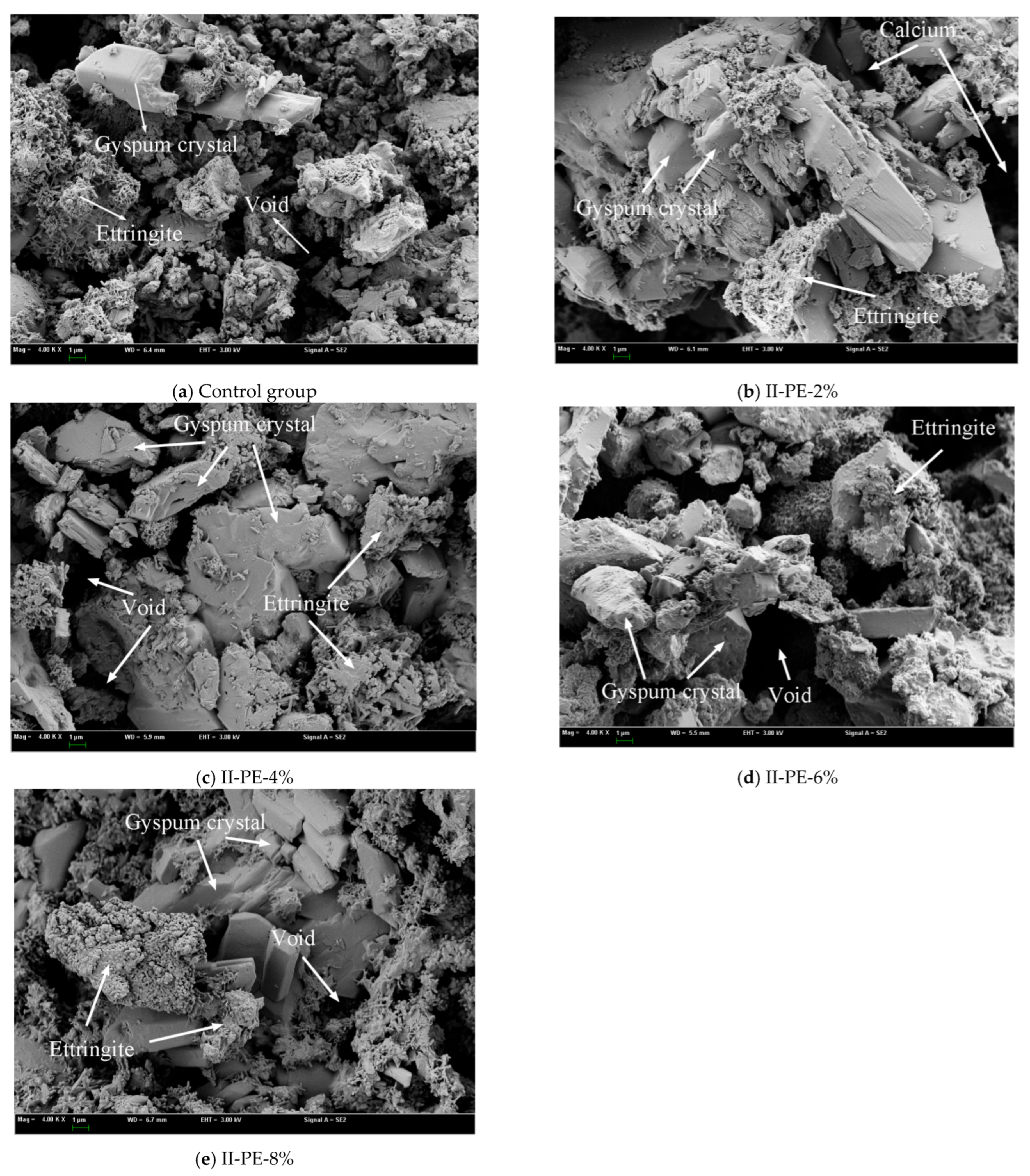
4.2.1. Internal Incorporation Paraffin Emulsion
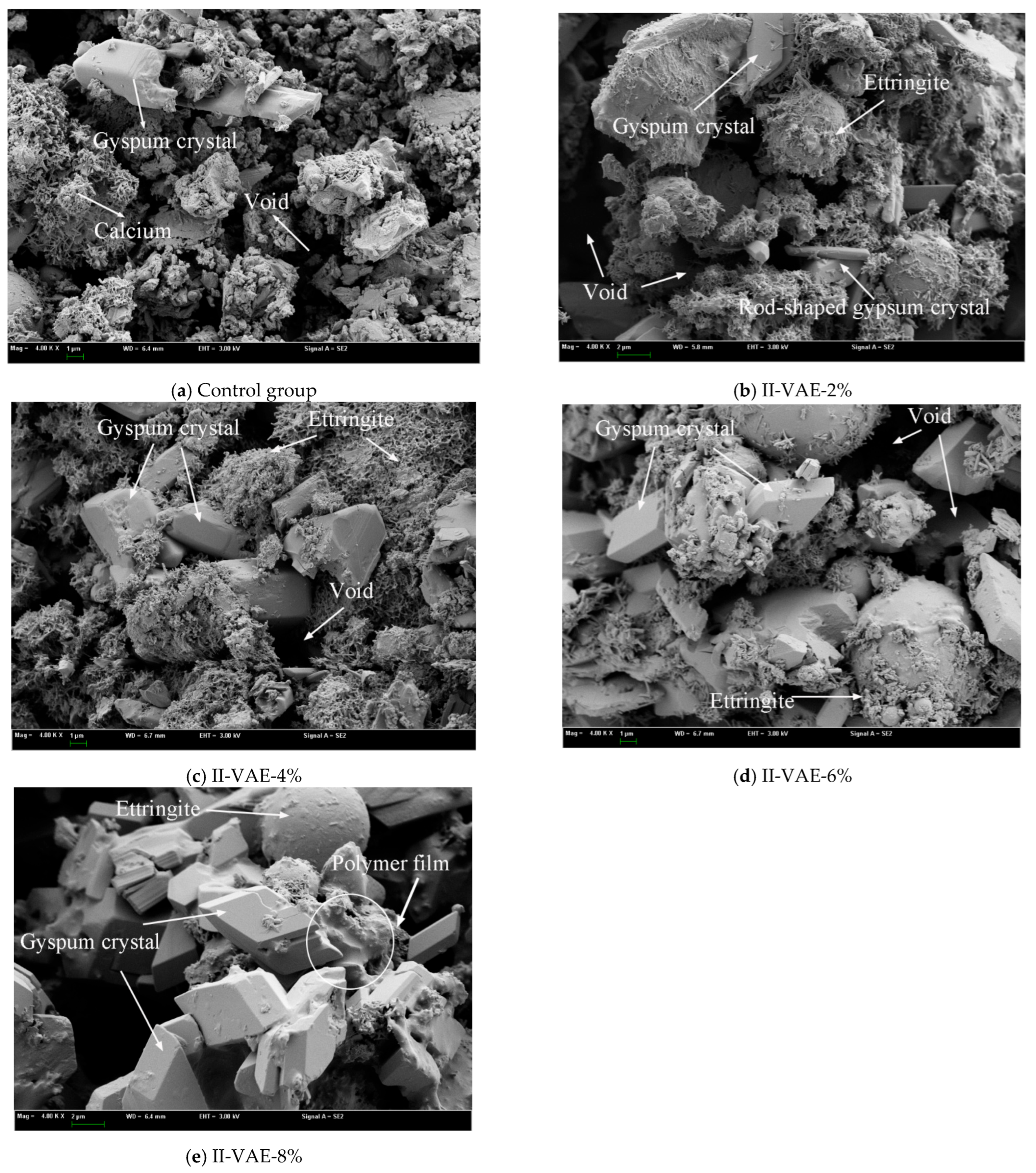
4.2.2. Internal Incorporation VAE Emulsion
5. Conclusions
- (1)
- Surface coating with paraffin emulsion exerted negligible influence on the fundamental properties of the FRMG matrix, while providing effective short-term hydrophobicity. However, the waterproofing performance deteriorated significantly after prolonged immersion due to degradation of the surface hydrophobic film.
- (2)
- Internal incorporation of paraffin emulsion formed a stable hydrophobic barrier that effectively reduced water absorption, but led to delayed setting and a reduction in mechanical strength, with both compressive and flexural strength decreasing progressively as dosage increased.
- (3)
- Internal incorporation of VAE emulsion generated continuous polymer films that filled pores and sealed microcracks, significantly enhancing waterproofing performance. Meanwhile, mechanical properties exhibited a nonlinear response, with optimal strength achieved at 6% dosage. Overall, internal modification strategies (paraffin and VAE) improved hydrophobicity and provided more durable waterproofing compared to surface treatment.
- (4)
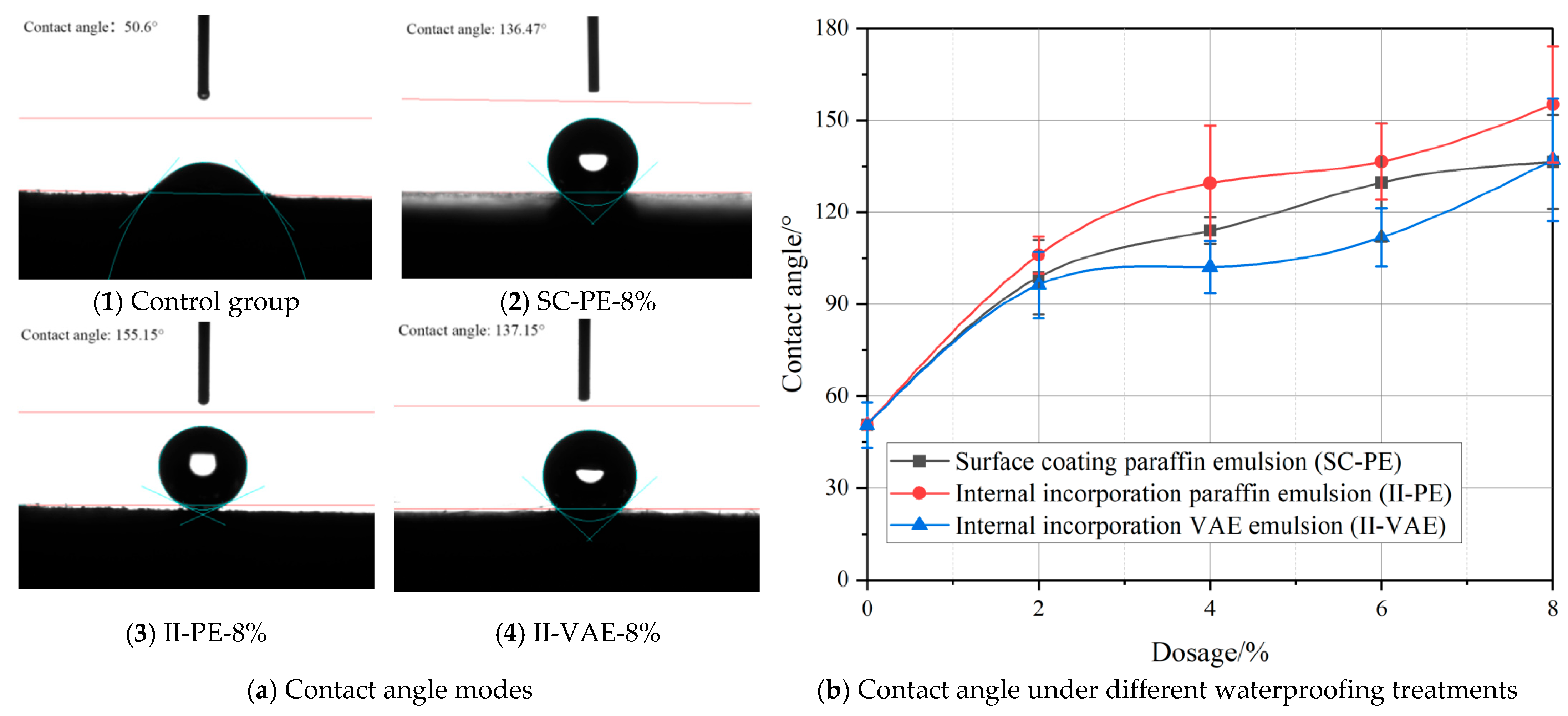
- Increasing the dosage of paraffin (surface and internal) and VAE emulsion consistently enhanced the contact angle, indicating improved hydrophobicity. Compared with surface treatment, internal modification provided more durable and stable waterproofing performance.
- (5)
- While this study provides a foundational framework for FRMG, future research should prioritize elucidating the multi-scale interfacial mechanisms and long-term durability under service-relevant conditions to refine application boundaries and optimize hybrid modification strategies for specific indoor and outdoor environments.
Author Contributions
Funding
Data Availability Statement
Conflicts of Interest
References
- Guan, Q.; Sui, Y.; Zhang, F.; Yu, W.; Bo, Y.; Wang, P.; Peng, W.; Jin, J. Preparation of α-calcium sulfate hemihydrate from industrial by-product gypsum: A review. Physicochem. Probl. Miner. Process. 2021, 57, 168–181. [Google Scholar] [CrossRef]
- Wang, S.; Pancheti, J.; Xi, Y.; Mahendran, M. Lightweight composite gypsum boards with clay mineral and glass fibre for enhanced fire-resistance. Compos. Part B Eng. 2023, 266, 111044. [Google Scholar] [CrossRef]
- Singh, S.; Maiti, S.; Bisht, R.S.; Balam, N.B.; Solanki, R.; Chourasia, A.; Panigrahi, S.K. Performance behaviour of agro-waste based gypsum hollow blocks for partition walls. Sci. Rep. 2022, 12, 3204. [Google Scholar] [CrossRef]
- Maiti, S.; Jain, N.; Malik, J. Light Weight Plasters Containing Vermiculite and FGD Gypsum Wastes for Sustainable and Energy Efficient Building Construction Material. J. Inst. Eng. (India) Ser. A 2023, 104, 603–614. [Google Scholar]
- Abu-Ennab, L.; Dixit, M.; Birgisson, B.; Kumar, P.P. Comparative life cycle assessment of large-scale 3D printing utilizing kaolinite-based calcium sulfoaluminate cement concrete and conventional construction. Clean. Environ. Syst. 2022, 5, 100078. [Google Scholar]
- Esan, M.T. Review of gypsum reinforced composites as building materials. Discov. Civ. Eng. 2024, 1, 5. [Google Scholar] [CrossRef]
- Li, X.; Zhu, L.; Liu, J.; Cao, Z.; Xue, Y.; Dang, F. Fracture evolution and mechanical deterioration of granite under cyclic thermal and liquid nitrogen cryogenic impact. Phys. Fluids 2025, 37, 086652. [Google Scholar] [CrossRef]
- Lesovik, V.; Chernysheva, N.; Fediuk, R.; Amran, M.; Murali, G.; de Azevedo, A.R. Optimization of fresh properties and durability of the green gypsum-cement paste. Constr. Build. Mater. 2021, 287, 123035. [Google Scholar] [CrossRef]
- Pietrzak, A.; Ulewicz, M.; Kozień, E.; Pietraszek, J. Application of a Mixture of Fly Ash and Solid Waste from Gas Treatment from Municipal Solid Waste Incineration in Cement Mortar. Materials 2025, 18, 481. [Google Scholar] [CrossRef]
- Elert, K.; Alaminos, R.A.; Benavides-Reyes, C.; Burgos-Ruiz, M. The effect of lime addition on weathering resistance and mechanical strength of gypsum plasters and renders. Cem. Concr. Compos. 2023, 139, 105012. [Google Scholar] [CrossRef]
- Zormati, S.; Aloulou, F.; Sammouda, H. Effects of cationic surfactant on fresh and hardened properties of cement-based mortar. J. Renew. Mater. 2023, 11, 2345. [Google Scholar] [CrossRef]
- Laatiri, Y.; Sammouda, H.; Aloulou, F. Bio-PCM Panels Composed of Renewable Materials Interact with Solar Heating Systems for Building Thermal Insulation. J. Renew. Mater. 2024, 12, 771–798. [Google Scholar] [CrossRef]
- Zhang, Y.; Dong, M.; Zhang, W.; Chen, H.; Yang, D. Preparation of mineral admixture from iron tailings with steel slag-desulfurization ash and its application to concrete. Materials 2022, 15, 5162. [Google Scholar] [CrossRef] [PubMed]
- Li, Z.; Wang, X.; Hou, Y.; Wu, Z. Optimization of mechanical properties and water absorption behavior of building gypsum by ternary matrix mixture. Constr. Build. Mater. 2022, 350, 128910. [Google Scholar] [CrossRef]
- Li, Z.; Wang, X.; Zhu, Z.; Wu, Z. Effect of mixing methods on the dispersion of fibers in the gypsum matrix and performance improvement mechanism. Constr. Build. Mater. 2022, 320, 126193. [Google Scholar] [CrossRef]
- Aloulou, F.; Alila, S. Effect of modified fibre flour wood on the fresh condition properties of cement-based mortars. Int. J. Mason. Res. Innov. 2019, 4, 355–377. [Google Scholar] [CrossRef]
- Yuan, J.; Guo, L.; Chen, S.; Liu, Y.; Feng, Y.; Lu, H. Solidified lake sediment with industrial waste and construction waste used as barrier cover material: Mechanical strength, water resistance performance, and microscopic analysis. Environ. Technol. 2025, 46, 3090–3106. [Google Scholar] [CrossRef]
- Ponduru, S.A.; Aylas-Paredes, B.K.; Han, T.; Neithalath, A.; Neithalath, N.; Sant, G.; Kumar, A. Effects of Gypsum and Limestone on Early-Age Hydration and Strength Optimization in Belite Calcium Sulfoaluminate Cement. Infrastructures 2025, 10, 27. [Google Scholar] [CrossRef]
- Yuan, Z.; Jia, Y.; Xie, X.; Xu, J. Study on the Macroscopic Properties and Microstructure of High Fly Ash Content Alkali-Activated Fly Ash Slag Concrete Cured at Room Temperature. Materials 2025, 18, 547. [Google Scholar] [CrossRef]
- Durgun, M.Y. Effect of wetting-drying cycles on gypsum plasters containing ground basaltic pumice and polypropylene fibers. J. Build. Eng. 2020, 32, 101801. [Google Scholar] [CrossRef]
- Feng, C.; Wang, Y.; Wang, L.; Zhao, X.; Zhang, W.; Zhu, J.; Du, M. Improving the water resistance of gypsum-based building materials with slag activated by calcium oxide. J. CO2 Util. 2024, 90, 102996. [Google Scholar] [CrossRef]
- Jiang, C.; Fan, K.; Wu, F.; Chen, D. Experimental study on the mechanical properties and microstructure of chopped basalt fibre reinforced concrete. Mater. Des. 2014, 58, 187–193. [Google Scholar] [CrossRef]
- Zhang, Z.; Sun, W.; Huang, W.; Zhu, Y.; Li, J.; Liang, C.; Gao, S. Interfacial and mechanical properties of silane coupling agent interface-modified basalt fiber reinforced thermoplastic polypropylene resin composites. Polym. Compos. 2025, 46, 6582–6593. [Google Scholar] [CrossRef]
- Elhadary, R.; Bassuoni, M. Interfacial bonding between basalt fiber/polymer pellets and various nano-modified cementitious matrices. J. Mater. Civ. Eng. 2023, 35, 04022471. [Google Scholar] [CrossRef]
- Kim, J.-K.; Mai, Y.-W. Engineered Interfaces in Fiber Reinforced Composites; Elsevier: Amsterdam, The Netherlands, 1998. [Google Scholar]
- Yoo, D.Y.; Banthia, N. Mechanical properties of ultra-high-performance fiber-reinforced concrete: A review. Cem. Concr. Compos. 2016, 73, 267–280. [Google Scholar] [CrossRef]
- Liu, S.; Liu, W.; Jiao, F.; Qin, W.; Yang, C. Production and resource utilization of flue gas desulfurized gypsum in China-A review. Environ. Pollut. 2021, 288, 117799. [Google Scholar] [CrossRef]
- Jia, R.; Wang, Q.; Feng, P. A comprehensive overview of fibre-reinforced gypsum-based composites (FRGCs) in the construction field. Compos. Part B Eng. 2021, 205, 108540. [Google Scholar] [CrossRef]
- Wang, L.; Cao, M.; Li, X.; Du, W.; Wang, X. A novel approach for improving the water resistance of gypsum plaster by internal mixing hypromellose and external coating waterproofing agent. Constr. Build. Mater. 2023, 401, 132940. [Google Scholar] [CrossRef]
- Akeed, M.H.; Qaidi, S.; Faraj, R.H.; Mohammed, A.S.; Emad, W.; Tayeh, B.A.; Azevedo, A.R. Ultra-high-performance fiber-reinforced concrete. Part II: Hydration and microstructure. Case Stud. Constr. Mater. 2022, 17, e01289. [Google Scholar] [CrossRef]
- Yao, H.; Xie, Z.; Huang, C.; Yuan, Q.; Yu, Z. Recent progress of hydrophobic cement-based materials: Preparation, characterization and properties. Constr. Build. Mater. 2021, 299, 124255. [Google Scholar] [CrossRef]
- del Río-Merino, M.; Vidales-Barriguete, A.; Piña-Ramírez, C.; Vitiello, V.; Santa Cruz-Astorqui, J.; Castelluccio, R. A review of the research about gypsum mortars with waste aggregates. J. Build. Eng. 2022, 45, 103338. [Google Scholar] [CrossRef]
- Najduchowska, M.; Pichniarczyk, P. Effect of hydrophobic agents on the properties of cement and gypsum mortars. Cem. Wapno Beton 2008, 15, 141–148. [Google Scholar]
- EN B. 13279-1: 2008; Gypsum Binders and Gypsum Plasters; Part 1: Definitions and Requirements. British Standards: London, UK, 2008.
- Li, Z.; Wang, X.; Wijeyewickrema, A.C.; Wu, Z. Flexural performance enhancement of modified gypsum-based composite boards using basalt fiber braids. Constr. Build. Mater. 2024, 418, 135430. [Google Scholar] [CrossRef]
- Pareek, K.; Saha, P. Basalt Fiber and Its Composites: An Overview. In Proceedings of the National Conference on Advances in Structural Technologies; Springer: Singapore, 2019. [Google Scholar]
- Ding, L.; Liu, Y.; Liu, J.; Wang, X. Correlation analysis of tensile strength and chemical composition of basalt fiber roving. Polym Compos. 2019, 40, 2959–2966. [Google Scholar] [CrossRef]
- Li, Z.; Wang, X.; Yan, W.; Ding, L.; Liu, J.; Wu, Z.; Huang, H. Physical and mechanical properties of gypsum-based composites reinforced with basalt, glass, and PVA fibers. J. Build. Eng. 2023, 64, 105640. [Google Scholar] [CrossRef]
- Wu, Z.; Wang, X.; Wu, G. Advancement of structural safety and sustainability with basalt fiber reinforced polymers. In Proceedings of the 6th International Conference on FRP Composites in Civil Engineering, CICE 2012, Rome, Italy, 13–15 June 2012; Volume 13, pp. 15–29. [Google Scholar]
- Sun, X.; Gao, Z.; Cao, P.; Zhou, C. Mechanical properties tests and multiscale numerical simulations for basalt fiber reinforced concrete. Constr. Build. Mater. 2019, 202, 58–72. [Google Scholar] [CrossRef]
- ISO 3051:1974; Gypsum Plasters—Determination of Mechanical Properties. International Organization for Standardization: Geneva, Switzerland, 1974.
- JC/T 698-2010; Gypsum Blocks. China National Light Industry Council: Beijing, China, 2010.
- EN 13279-2:2014; Gypsum Binders and Gypsum Plasters—Part 2: Test Methods. CEN: Brussels, Belgium, 2014.
- Huo, J.; Wang, Z.; Zhang, T.; He, R.; Chen, H. Influences of interaction between cement and ionic paraffin emulsion on cement hydration. Constr. Build. Mater. 2021, 299, 123951. [Google Scholar] [CrossRef]
- Cao, J.-Y.; Li, J.-P.; Jiang, Y.-M.; Wang, S.-L.; Ding, Y.; Oh, W.-C. Improvement in water resistance of desulfurized gypsum by novel modification of silicone oil paraffin composite emulsion-based waterproofing agent. J. Korean Ceram. Soc. 2019, 56, 558–565. [Google Scholar] [CrossRef]
- Ma, H.; Wang, R.; Xi, Z.; Gao, H.; Fryda, H.; Wang, P. Regulation and inhibition of early whitening of calcium aluminate cement/hemihydrate gypsum decorative mortar by polymer emulsion. Constr. Build. Mater. 2023, 393, 132023. [Google Scholar] [CrossRef]
- Khadkekar, S.A.; Kareti, M.R.; Yelishetty, M.S.; Aditya, S.V.; Daripalli, S. Incorporation of opacifier to Type III alpha gypsum and its effect on scannability and linear setting expansion—An in vitro study. J. Indian Prosthodont. Soc. 2025, 25, 80–85. [Google Scholar] [CrossRef]
- Zhang, P.; Yang, A.; Wang, X.; Wang, L.; Sha, Y.; Li, M. Synergistic Effects of Biogas Slurry as a Nitrogen Substitute Under Different Straw Incorporation Methods on Soybean Yield and Emission Reduction. Available online: https://www.researchgate.net/publication/387770120_Synergistic_Effects_of_Biogas_Slurry_as_a_Nitrogen_Substitute_Under_Different_Straw_Incorporation_Methods_on_Soybean_Yield_and_Emission_Reduction (accessed on 2 March 2026).
- Li, J.; Cao, J.; Ren, Q.; Ding, Y.; Zhu, H.; Xiong, C.; Chen, R. Effect of nano-silica and silicone oil paraffin emulsion composite waterproofing agent on the water resistance of flue gas desulfurization gypsum. Constr. Build. Mater. 2021, 287, 123055. [Google Scholar] [CrossRef]
- Wang, F.F.; Li, G.Z.; Liu, M.R. Effect of waterproof emulsion on properties of calcined gypsum from flue gas desulfurization. Adv. Mater. Res. 2011, 168, 478–481. [Google Scholar]
- Le, L.A.; Nguyen, G.D.; Bui, H.H.; Sheikh, A.H.; Kotousov, A. Incorporation of micro-cracking and fibre bridging mechanisms in constitutive modelling of fibre reinforced concrete. J. Mech. Phys. Solids 2019, 133, 103732. [Google Scholar] [CrossRef]
- Al-Dulaimi, S.D.S.; Bazhenova, S.; Stepina, I.; Erofeeva, I.; Afonin, V. Development of efficient compositions of hydrophobic materials resistant to chemical and biological environments. J. Infrastruct. Preserv. Resil. 2024, 5, 18. [Google Scholar] [CrossRef]
- Jiang, M.; Zheng, K.; Yao, H.; Prateek, G. Effect of paraffin oil nanoemulsion as a hydrophobic modifier on cement paste workability and hydration. J. Mater. Civ. Eng. 2024, 36, 04024029. [Google Scholar] [CrossRef]
- Bai, E.; Liu, G.; Xu, J.; Yang, N.; Wen, C. Tensile properties of a flexible polymer-cement composite containing portland cement and vae emulsion. Ceram. Silik. 2019, 64, 92–99. [Google Scholar] [CrossRef]
- Brighenti, R.; Carpinteri, A.; Spagnoli, A.; Scorza, D. Crack Paths in Unidirectional Fibre-Reinforced Brittle-Matrix Materials through Two Computational Models. sign 2012, 2, 1. [Google Scholar]
- Shagymgereyeva, S.; Sarsenbekuly, B.; Kang, W.; Turtabayev, S. Performance Evaluation of Fluorescent Polymer Gel Microspheres as a Reservoir Conformance Control Agent. Gels 2025, 11, 85. [Google Scholar] [CrossRef]
- Ahmed, W.; Zaneldin, E.; El Hassan, A. Investigating the Integrity and Failure Characteristics of Deteriorated Polymeric 3D-Printed Components as Candidates for Structural and Construction Applications. Buildings 2023, 13, 2402. [Google Scholar] [CrossRef]
- Fu, H.; Pang, B.; Wang, P.; Yang, C.; Liu, Y.; Du, Z.; Ji, H. Microstructure and durability of rapid repair mortar with self-emulsifying waterborne epoxy polymer. Mater. Today Commun. 2024, 40, 109375. [Google Scholar] [CrossRef]
- Toan, M.; Choi, J.; Ngo, H.T.; Bae, J.-Y.; Shin, S.; Kwon, K. Synthesis of novel zwitterionic surfactants: Achieving enhanced water resistance and adhesion in emulsion polymer adhesives. Polymers 2024, 16, 3504. [Google Scholar] [CrossRef]
- Junge, F.; Haag, R. Effect of Fluorophilic-and Hydrophobic-Modified Polyglycerol-Based Coatings on the Wettability of Low Surface Energy Polymers. Langmuir 2025, 41, 3305–3314. [Google Scholar]
- Abdolvand, Y.; Sadeghiamirshahidi, M. Soil stabilization with gypsum: A review. J. Rock Mech. Geotech. Eng. 2024, 16, 5278–5296. [Google Scholar] [CrossRef]
- Vidales-Barriguete, A.; Atanes-Sanchez, E.; del Rio-Merino, M.; Pina-Ramirez, C. Analysis of the improved water-resistant properties of plaster compounds with the addition of plastic waste. Constr. Build. Mater. 2020, 230, 116956. [Google Scholar] [CrossRef]
- Choi, J.-S.; Woo, B.-H.; Kim, H.-G.; Kim, J.-Y.; Ryou, J.-S. Possibility investigation of phase change material-impregnated and surface coated cork as an aggregate for building envelope application. Adv. Build. Energy Res. 2025, 19, 241–267. [Google Scholar] [CrossRef]
- Cao, G.; Zhao, W.; Han, L.; Teng, Y.; Xu, S.; Nguyen, H.; Tam, K.C. Enhancing Droplet Spreading on a Hydrophobic Plant Surface by Surfactant/Cellulose Nanocrystal Complexes. ACS Nano 2025, 19, 3549–3561. [Google Scholar] [CrossRef] [PubMed]
- Zhou, Y.G.; Liang, T.F.; Wu, B.Y. Effect of surface treatment on interfacial shear strength of basalt fiber reinforced polypropylene composite. Polym. Compos. 2025, 46, 8408–8423. [Google Scholar] [CrossRef]
- Bakar, N.H.A.; Kabeb, S.M. Effect of Tribology on Multifunctional Coating Surface/Interface. In Multi-Scale and Multifunctional Coatings and Interfaces for Tribological Contacts; CRC Press: Boca Raton, FL, USA, 2025; pp. 30–43. [Google Scholar]
- Zaragoza-Benzal, A.; Ferrández, D.; Barrios, A.M.; Morón, C. Water Resistance Analysis of New Lightweight Gypsum-Based Composites Incorporating Municipal Solid Waste. J. Compos. Sci. 2024, 8, 393. [Google Scholar] [CrossRef]
- Bozorgi, S.J.; Sajjadei, N.; Hashemi, M.; Kharkeshi, M.M. Polyethylene glycol plus paraffin vs. Polyethylene glycol alone: Which is more effective in treating pediatric functional constipation? A Randomized controlled clinical trial. Res. Sq. 2024. preprint. [Google Scholar]
- Li, Z.; Zhang, L.; Shan, Y.; Zhao, Y.; Dai, L.; Wang, Y.; Sun, Q.; McClements, D.J.; Cheng, Y.; Xu, X. Fabrication of high internal phase emulsions (HIPEs) using pea protein isolate-hyaluronic acid-tannic acid complexes: Application of curcumin-loaded HIPEs as edible inks for 3D food printing. Food Chem. 2024, 460, 140402. [Google Scholar] [CrossRef]
- Putnis, C.V.; Wang, L.; Ruiz-Agudo, E.; Ruiz-Agudo, C.; Renard, F. Crystallization via nonclassical pathways: Nanoscale imaging of mineral surfaces. In Crystallization via Nonclassical Pathways Volume 2: Aggregation, Biomineralization, Imaging & Application; ACS Publications: Washington, DC, USA, 2021; pp. 1–35. [Google Scholar]
- Liu, Z.; Jiang, J.; Liu, G.; Shi, J.; Wang, Y.; Wang, F.; Zhang, Y. Ethylene Vinyl Acetate Copolymer Emulsion-Modified Alkali-Activated Slag Repair Material: Mechanical Strength and Durability Linked to Microstructural Properties. J. Mater. Civ. Eng. 2024, 36, 04024175. [Google Scholar] [CrossRef]
- Wei, S.; Huang, S.; Zhou, J.; Xiao, C.; Cao, J.; Xiao, J.; Xie, C. Magnetic Carbon Porous Polymer Prepared from a New Suspended Emulsion for the Absorption of Heavy Metal Ions. Polymers 2025, 17, 257. [Google Scholar] [CrossRef] [PubMed]
- Luo, X.; Gao, J.; Liu, C.; He, Z. Effects of Polymers on Workability and Early Microstructure of Gypsum-Based Materials. ACI Mater. J. 2021, 118, 29. [Google Scholar] [CrossRef]
- Zhang, F.; Guo, H.; Wang, W.; Du, J.; Liu, Y.; Wang, H. Fast prediction of curing residual stress in polymer-matrix composites by a deep learning method. Polym. Compos. 2025, 46, 8424–8441. [Google Scholar]





| Number | Name | Waterproofing Treatments | Types of Emulsion | Dosages/% | Mechanism |
|---|---|---|---|---|---|
| 1 | Control group | - | - | - | - |
| 2 | SC-PE-2% | Surface coating | Paraffin emulsion | 2% | Forms a hydrophobic film on the surface, preventing water infiltration |
| 3 | SC-PE-4% | 4% | |||
| 4 | SC-PE-6% | 6% | |||
| 5 | SC-PE-8% | 8% | |||
| 6 | II-PE-2% | Internal incorporation | 2% | Distributes paraffin particles within the matrix, creating a stable hydrophobic barrier for long-lasting waterproofing | |
| 7 | II-PE-4% | 4% | |||
| 8 | II-PE-6% | 6% | |||
| 9 | II-PE-8% | 8% | |||
| 10 | II-VAE-2% | Vinyl acetate-ethylene copolymer emulsion (VAE emulsion) | 2% | Forms a continuous polymeric films, sealing gaps between crystals, reducing water infiltration, and ensuring long-term waterproofing | |
| 11 | II-VAE-4% | 4% | |||
| 12 | II-VAE-6% | 6% | |||
| 13 | II-VAE-8% | 8% |
Disclaimer/Publisher’s Note: The statements, opinions and data contained in all publications are solely those of the individual author(s) and contributor(s) and not of MDPI and/or the editor(s). MDPI and/or the editor(s) disclaim responsibility for any injury to people or property resulting from any ideas, methods, instructions or products referred to in the content. |
© 2026 by the authors. Licensee MDPI, Basel, Switzerland. This article is an open access article distributed under the terms and conditions of the Creative Commons Attribution (CC BY) license.
Share and Cite
Li, Z.; Li, Z.; Rao, S.; Li, D.; Lu, D.; Zhu, H.; Liu, C.; Shi, J.; Wang, X. Effect of Paraffin and Vinyl Acetate Ethylene (VAE) Emulsions on the Waterproofing and Mechanical Properties of Fiber-Reinforced Modified Gypsum (FRMG) Matrix. Buildings 2026, 16, 1491. https://doi.org/10.3390/buildings16081491
Li Z, Li Z, Rao S, Li D, Lu D, Zhu H, Liu C, Shi J, Wang X. Effect of Paraffin and Vinyl Acetate Ethylene (VAE) Emulsions on the Waterproofing and Mechanical Properties of Fiber-Reinforced Modified Gypsum (FRMG) Matrix. Buildings. 2026; 16(8):1491. https://doi.org/10.3390/buildings16081491
Chicago/Turabian StyleLi, Zhenxing, Zuohua Li, Shaohua Rao, Dongning Li, Dejing Lu, Huaitao Zhu, Changyuan Liu, Jianzhe Shi, and Xin Wang. 2026. "Effect of Paraffin and Vinyl Acetate Ethylene (VAE) Emulsions on the Waterproofing and Mechanical Properties of Fiber-Reinforced Modified Gypsum (FRMG) Matrix" Buildings 16, no. 8: 1491. https://doi.org/10.3390/buildings16081491
APA StyleLi, Z., Li, Z., Rao, S., Li, D., Lu, D., Zhu, H., Liu, C., Shi, J., & Wang, X. (2026). Effect of Paraffin and Vinyl Acetate Ethylene (VAE) Emulsions on the Waterproofing and Mechanical Properties of Fiber-Reinforced Modified Gypsum (FRMG) Matrix. Buildings, 16(8), 1491. https://doi.org/10.3390/buildings16081491