Compressive Strength and Microstructure of Multi-Solid Waste Concrete Incorporated with Iron Tailings–Steel Slag–Desulfurization Ash


Abstract
1. Introduction
2. Materials and Methods
2.1. Materials
2.1.1. Raw Materials
2.1.2. Raw Material Preparation
2.2. Mix Proportion of Concrete
2.3. Specimens Preparation
2.4. Test Methods
2.4.1. Compressive Strength Test
2.4.2. The MIP Test
2.4.3. The BSE Test
3. Results and Discussion
3.1. Compressive Strength
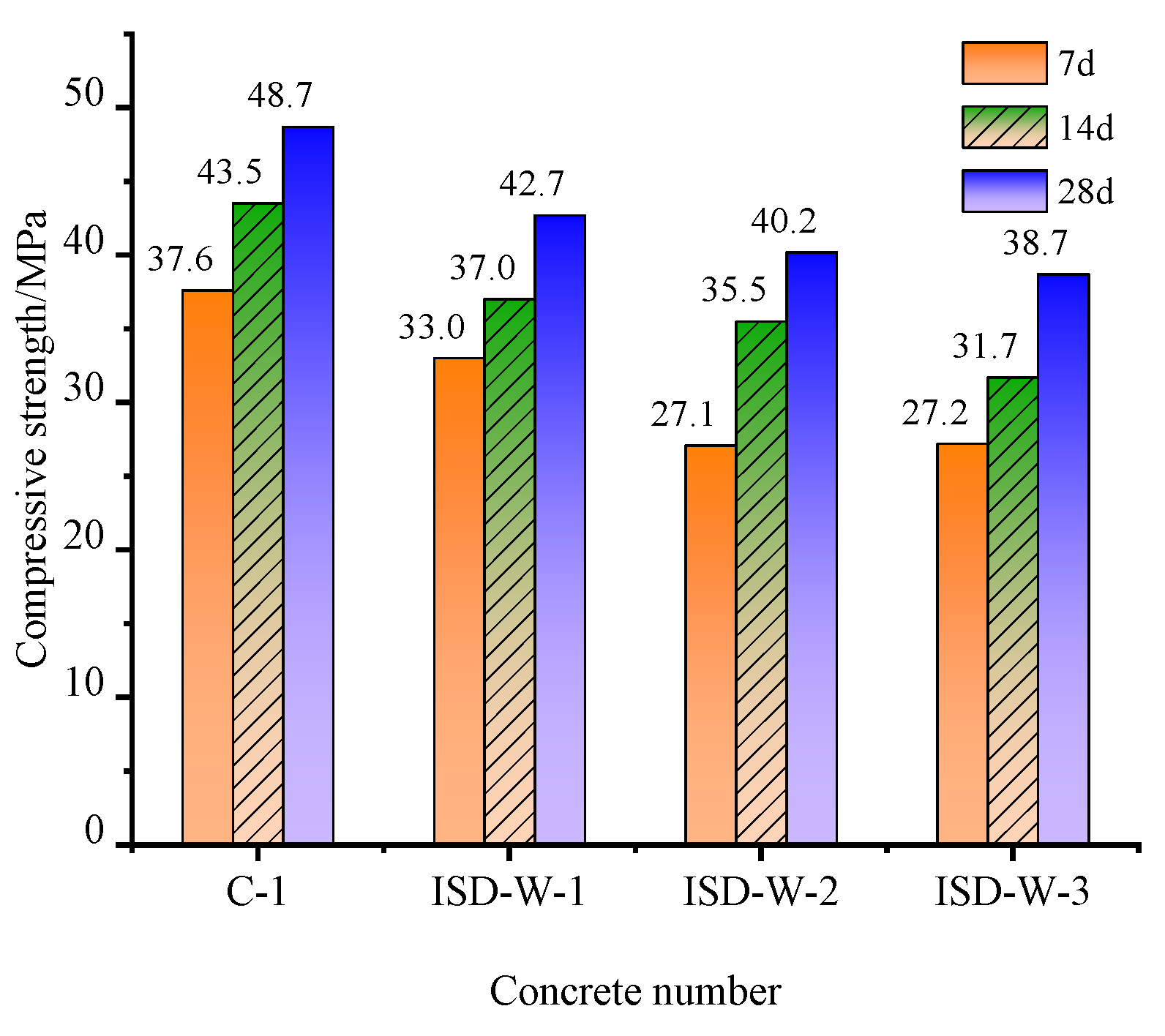
3.1.1. The Effect of w/b on the Compressive Strength of ISD Concrete
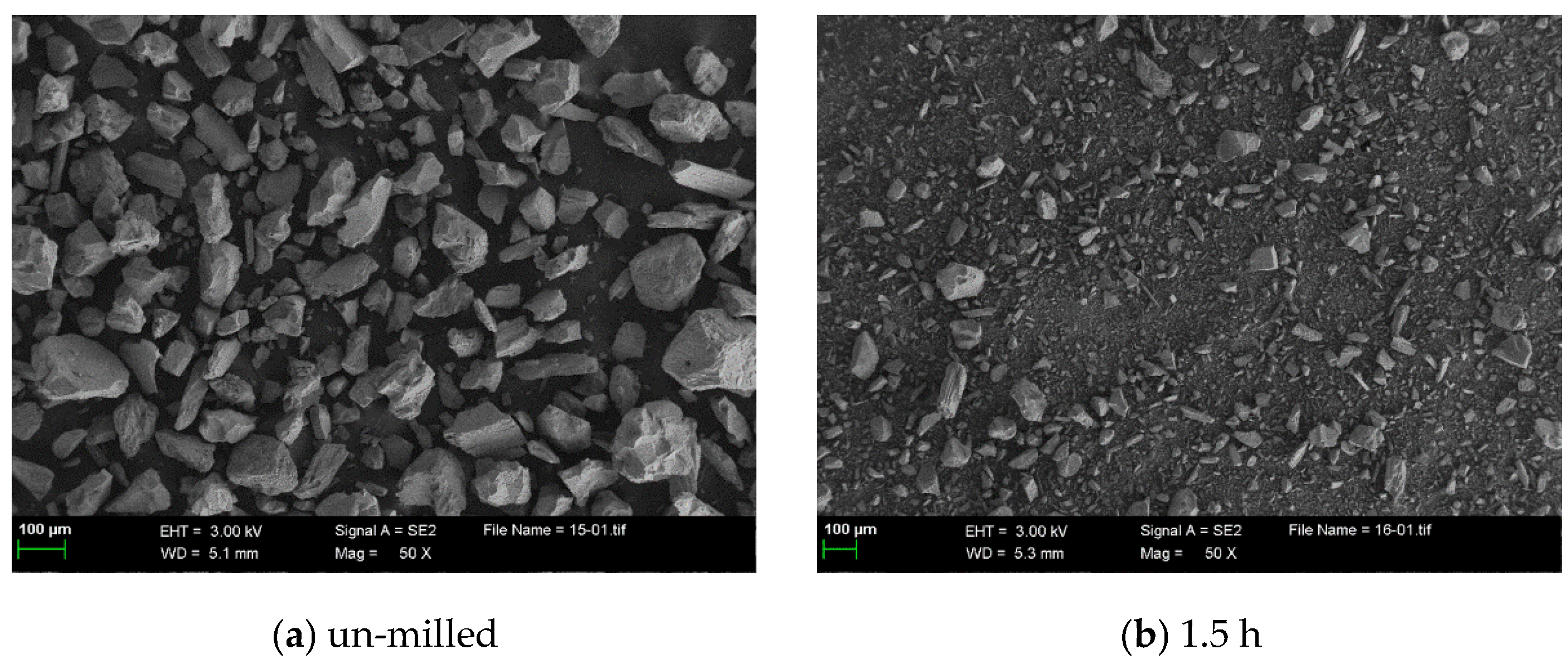
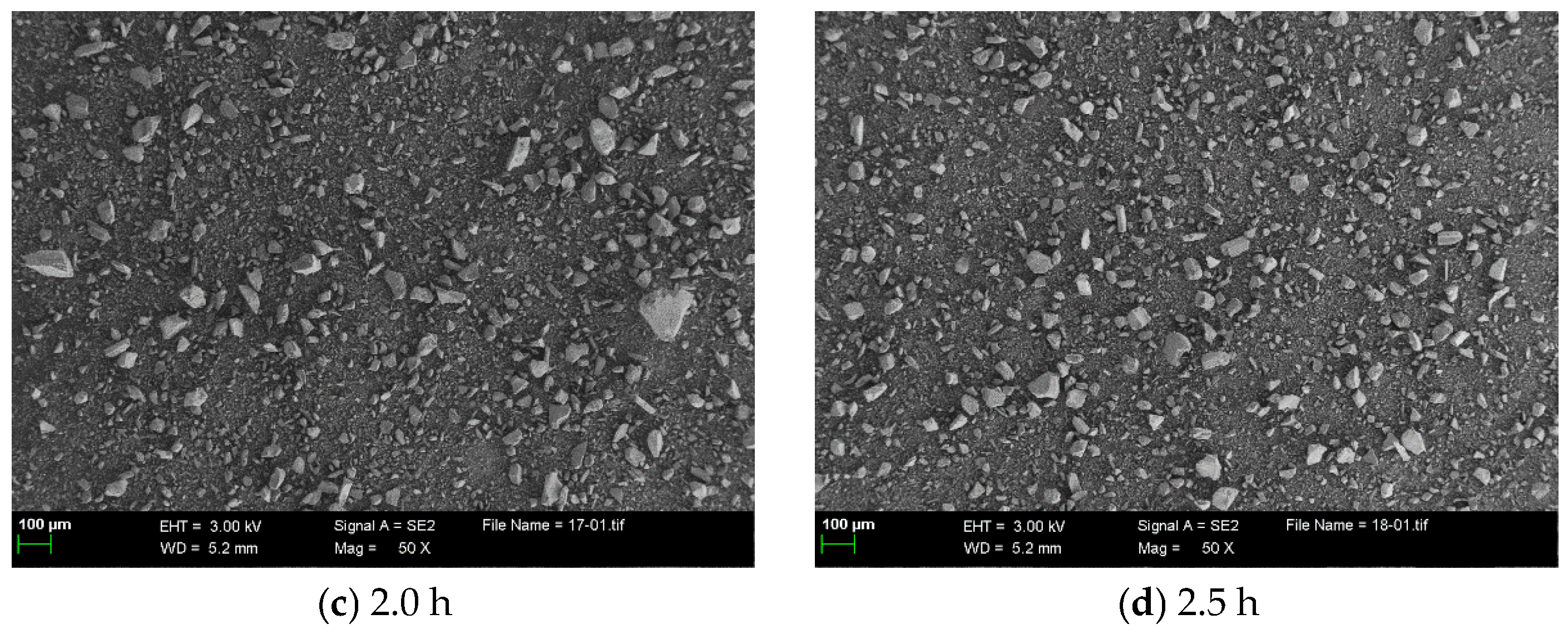
3.1.2. The Effect of ITP Fineness on the Compressive Strength of ISD Concrete
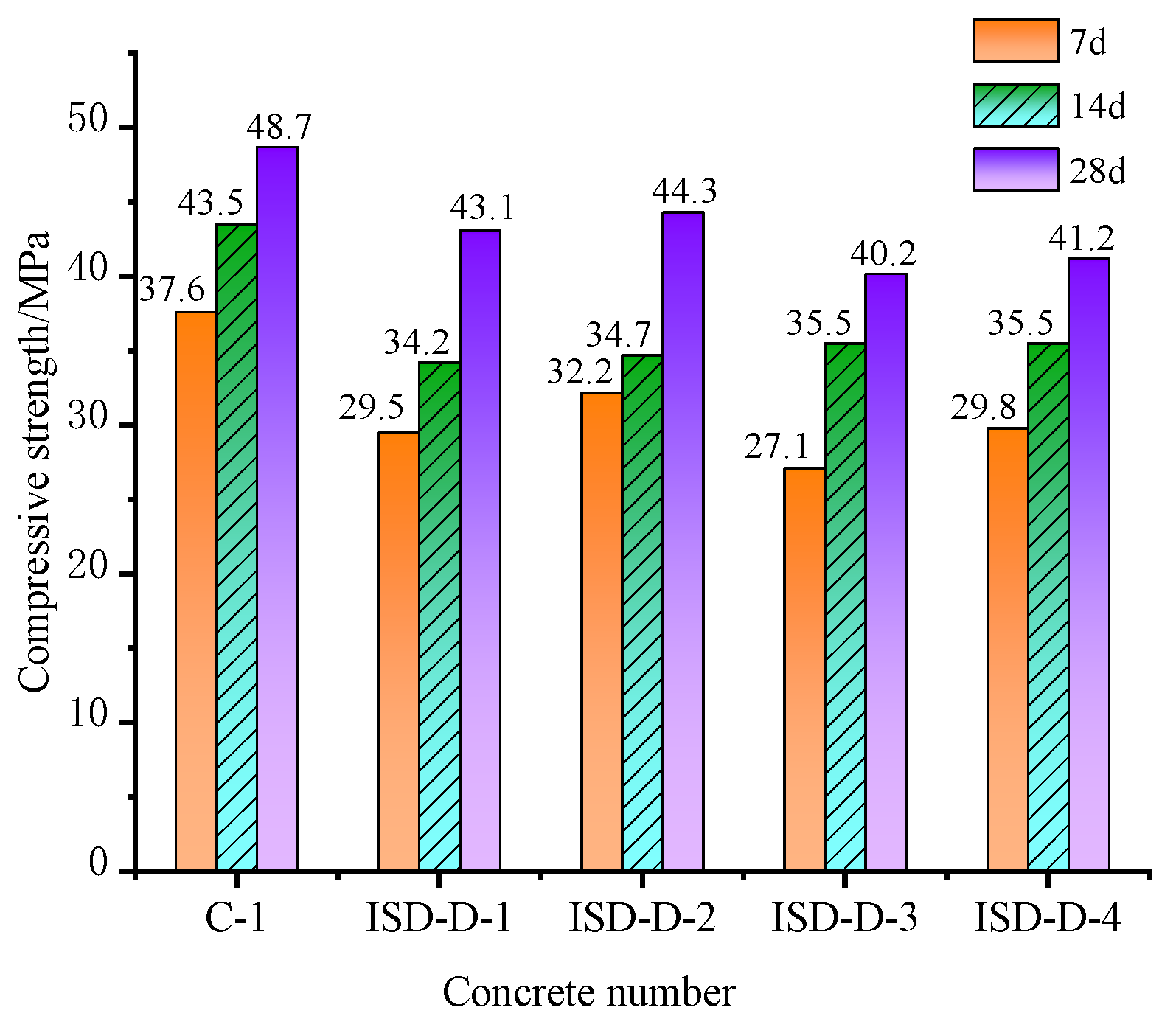
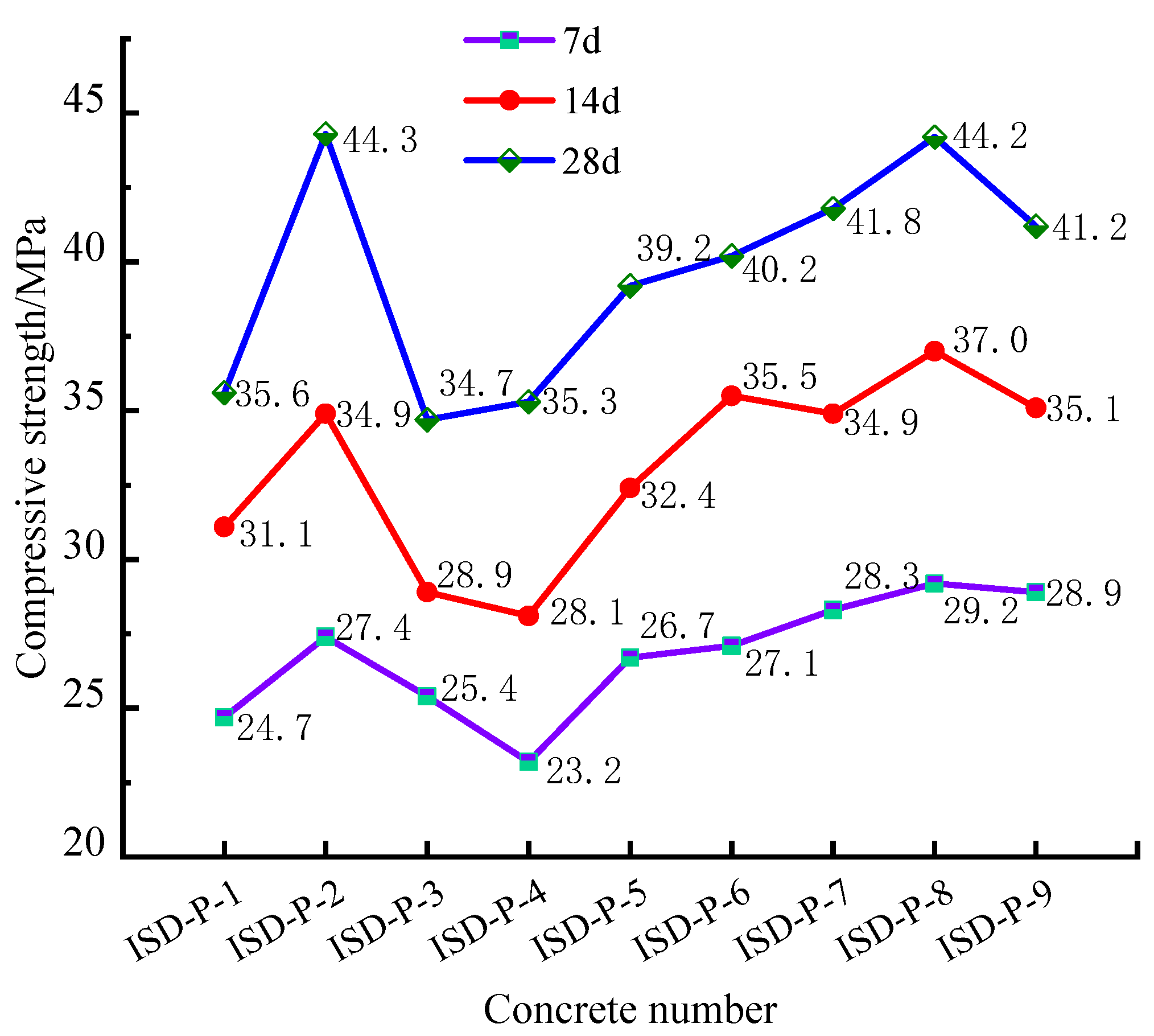
3.1.3. The Effect of Mineral Admixture Proportion on the Compressive Strength of ISD Concrete
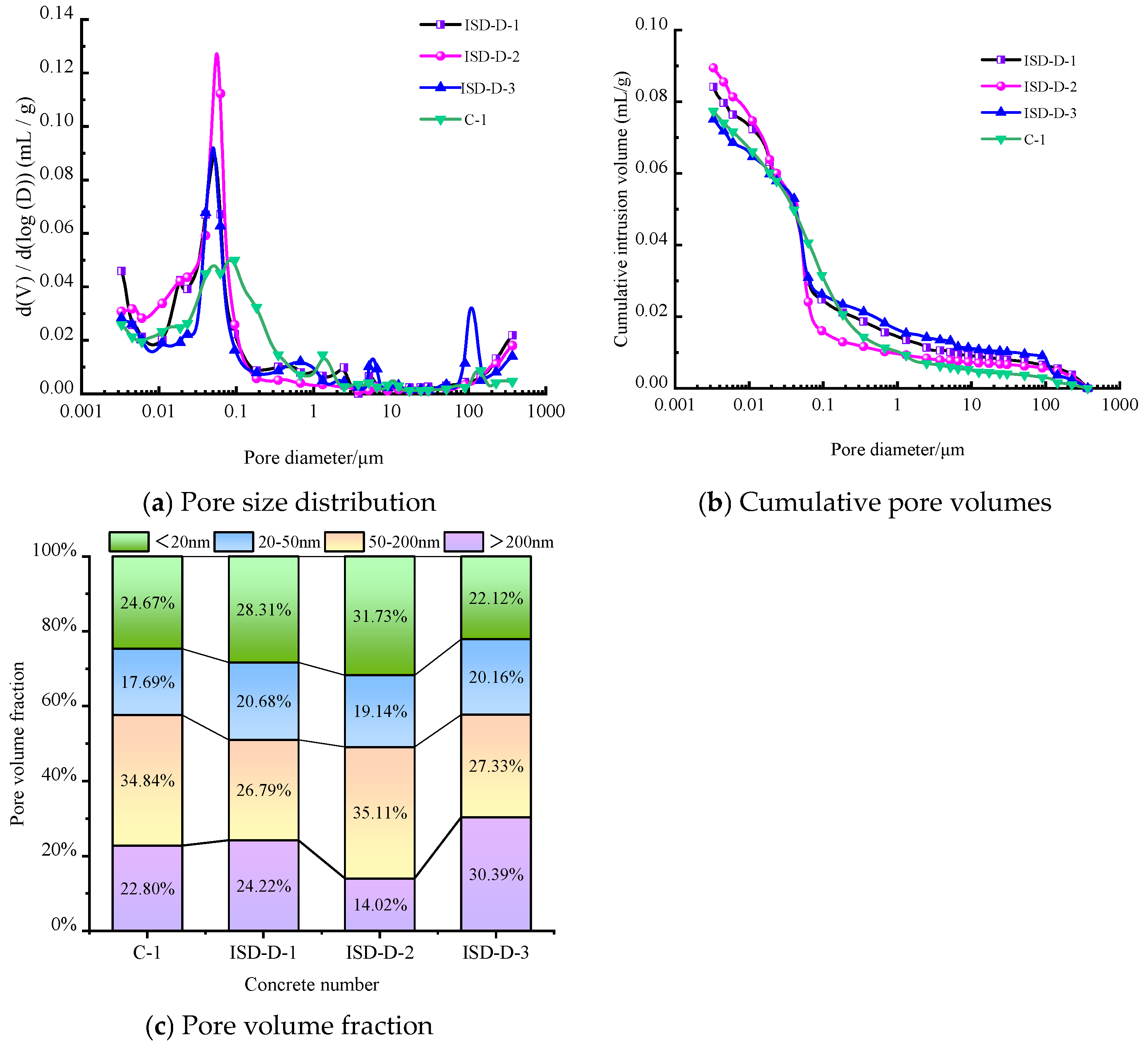
3.2. Pore Structure
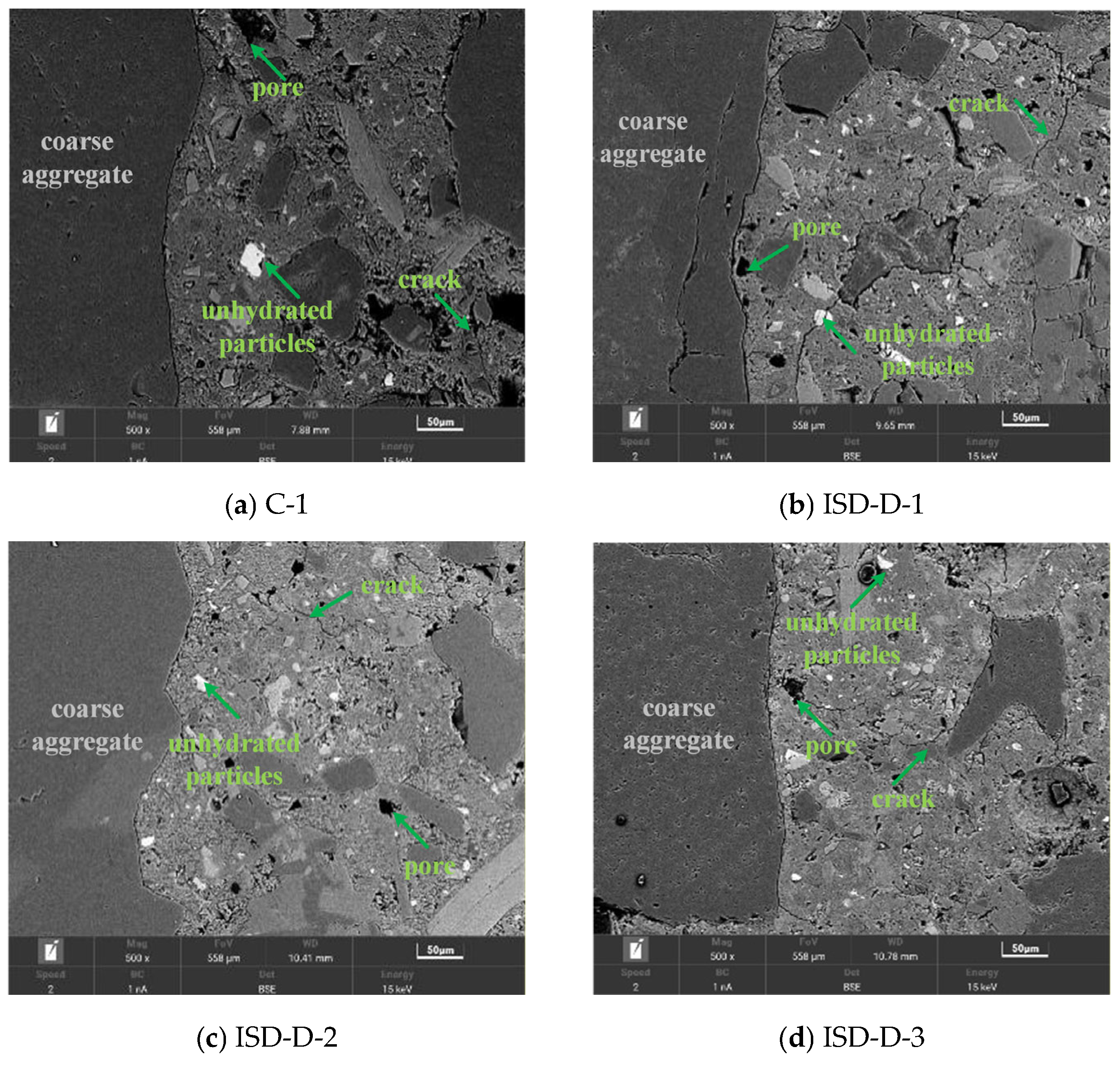
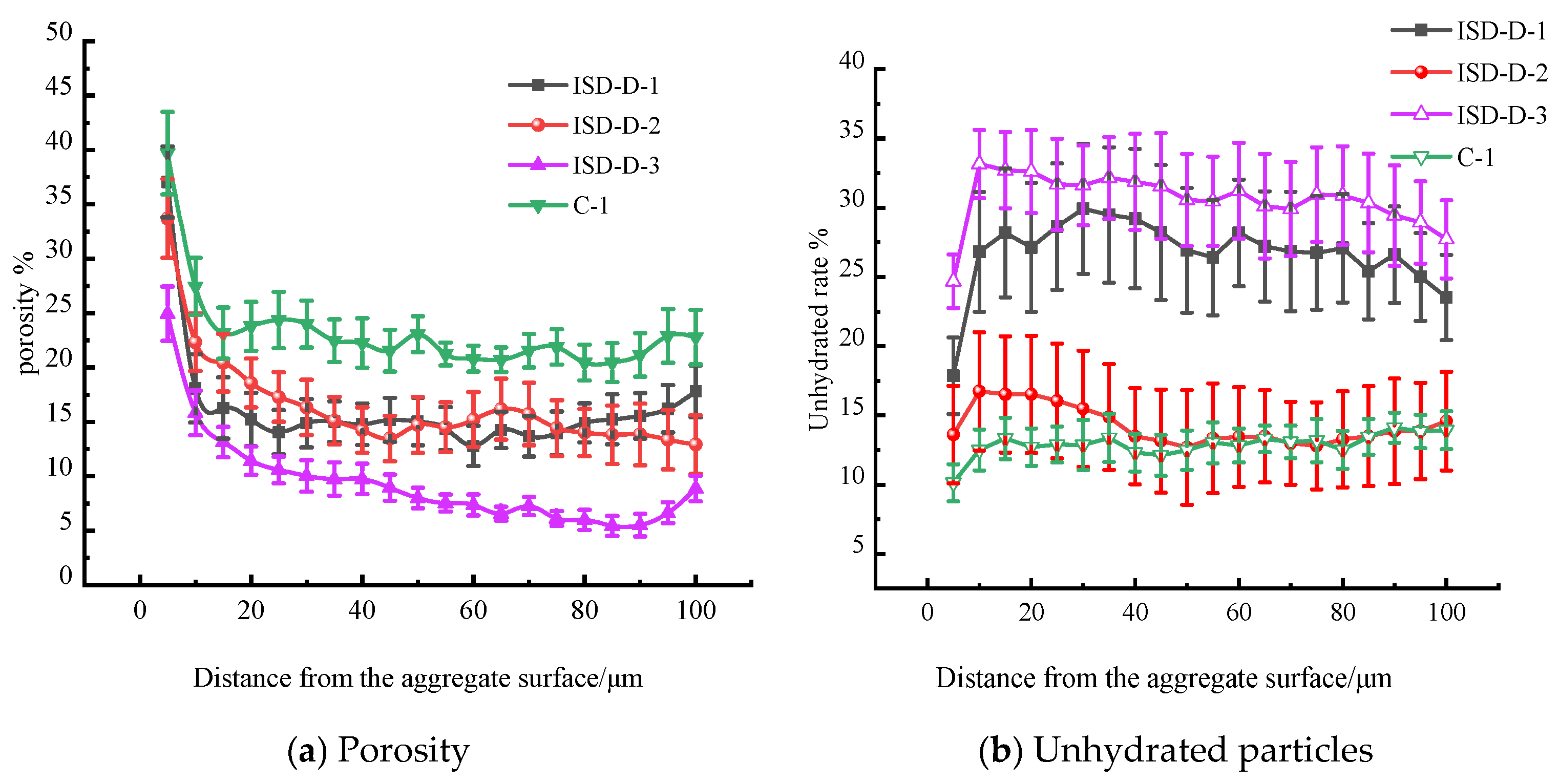
3.3. Interface Transition Zone
4. Conclusions
- The increase in the w/b has a significant impact on the early-age compressive strength of ISD concrete. However, its effect on the compressive strength at mid-to-late ages gradually diminishes due to the combined action of physical filling and secondary hydration of the ISD mineral admixtures. Appropriately lowering the w/b can enhance the compactness of ISD concrete and thus improve its compressive strength;
- The moderately ball-milled ITP enhances its cementitious activity and optimizes the particle size distribution of ISD admixtures, thereby refining the pore structure and improving the compressive strength through filler, pozzolanic, and nucleation effects;
- The ISD mineral admixtures containing appropriately ball-milled ITP can consume CH through the pozzolanic reaction to form more C-S-H and C-A-H gels, thereby reducing the quantity of unhydrated particles in the ITZ. The physical filling and secondary hydration of these multi-solid waste mineral admixtures effectively decrease the porosity and restrict the development of microcracks in the ITZ of concrete, thus enhancing the density of the ITZ;
- The test results indicate that appropriate proportions of ITP, SS, and DA can facilitate the synergistic effects of physical filling, alkali activation, and secondary hydration among the composite mineral admixtures, thereby improving the compressive strength of the concrete. Moreover, moderately increasing the proportion of SS and adjusting the ratio of ITP to DA can significantly promote the synergistic effects of these mineral admixtures;
- When the w/b, ITP fineness, and admixture proportion are suitable, the compressive strength of ISD concrete is slightly lower than that of cement concrete but still meets the design strength requirements, while its pore structure and ITZ are significantly superior to those of cement concrete;
- Although this study has verified the feasibility of applying ITP, SS, and DA in concrete, the hydration mechanisms and the synergistic effects among cementitious materials have not been fully elucidated. Furthermore, the mechanical properties and durability of ISD concrete need to be further investigated.
Author Contributions
Funding
Data Availability Statement
Conflicts of Interest
References
- Wang, G.C.; Chen, S.L.; Xia, M.M.; Zhong, W.L.; Han, X.G.; Luo, B.; Sabri, M.M.S.; Huang, J.D. Experimental Study on durability degradation of geopolymer-stabilized soil under sulfate erosion. Materials 2022, 15, 5114. [Google Scholar] [CrossRef]
- Sang, S.; Cao, L.; Guo, Y. Progress and Prospects of Resource Utilization Technologies for Bulk Industrial Solid Wastes. J. China Univ. Min. Technol. 2025, 54, 1254–1276. [Google Scholar] [CrossRef]
- Han, F.H.; Luo, A.; Liu, J.H.; Zhang, Z.Q. Properties of high-volume iron tailing powder concrete under different curing conditions. Constr. Build. Mater. 2020, 241, 118108. [Google Scholar] [CrossRef]
- Lv, X.; Lin, Y.; Chen, X.; Shi, Y.; Liang, R.; Wang, R.; Peng, Z. Environmental impact, durability performance, and interfacial transition zone of iron ore tailings utilized as dam concrete aggregates. J. Clean. Prod. 2021, 292, 126068. [Google Scholar] [CrossRef]
- Hu, Z.; Gu, X.; Liu, J.; Ge, X.; Wang, S.; Yin, S. Mechanical properties and hydration mechanism of iron tailings-cement-based supplementary cementitious materials. Buildings 2024, 14, 1044. [Google Scholar] [CrossRef]
- Zhuang, S.Y.; Wang, Q. Inhibition mechanisms of steel slag on the early-age hydration of cement. Cem. Concr. Res. 2021, 140, 106283. [Google Scholar] [CrossRef]
- Zheng, Z.; Wang, Y.; Tan, H.; He, X.; Su, Y.; Li, Y. High efficiency preparation of superfine steel slag particles and the effects on hydration of Portland cement. Case Stud. Constr. Mater. 2025, 23, e04839. [Google Scholar] [CrossRef]
- Li, Y.; Zhang, S.; Huang, M.; Yang, G.; Li, J.; Ma, M.; Hu, W.; Ni, W. Hydration Mechanism of Solid Waste Gelling Materials Containing Semi-Dry Desulfurization Ash. Gels 2025, 11, 193. [Google Scholar] [CrossRef]
- Cheng, Z.; Cheng, X.; Xie, Y.; Ma, Z.; Liu, Y. Strength Tests and numerical simulations of loess modified by desulfurization ash and fly ash. Materials 2022, 15, 512. [Google Scholar] [CrossRef]
- Zhang, Y.N.; Li, Z.J.; Gu, X.W.; Nehdi, M.; Marani, A.; Zhang, L. Utilization of iron ore tailings with high volume in green concrete. J. Build. Eng. 2023, 72, 106585. [Google Scholar] [CrossRef]
- Gu, X.W.; Liu, B.N.; Li, Z.J.; Wang, H.; Liu, J.P.; Nehdi, M.; Zhang, Y.N. Mechanical grinding kinetics and particle packing novel characterization of iron ore tailings as inert filler for cement mortar. J. Build. Eng. 2023, 78, 107558. [Google Scholar] [CrossRef]
- Li, Y.L.; Liu, F.Q.; Yu, F.; Du, T. A review of the application of steel slag in concrete. Structures 2024, 63, 106352. [Google Scholar] [CrossRef]
- Gou, M.F.; Zhou, L.F.; Then, N.W.Y. Utilization of tailings in cement and concrete: A review. Sci. Eng. Compos. Mater. 2019, 26, 449–464. [Google Scholar] [CrossRef]
- Li, J.S.; Ren, W.Y.; Zhang, A.J.; Li, S.C.; Tan, J.P.; Liu, H.T. Mechanical properties and microstructure analysis of cement mortar mixed with iron ore tailings. Buildings 2023, 13, 149. [Google Scholar] [CrossRef]
- Zhu, Q.; Yuan, Y.X.; Chen, J.H.; Fan, L.; Yang, H. Research on the high-temperature resistance of recycled aggregate concrete with iron tailing sand. Constr. Build. Mater. 2022, 327, 126889. [Google Scholar] [CrossRef]
- Hamada, H.M.; Al-Attar, A.; Askar, M.K.; Beddu, S.; Majdi, A. Enhancing sustainable concrete with iron ore tailings as fine aggregate: Environmental and engineering perspectives. Constr. Build. Mater. 2025, 470, 140707. [Google Scholar] [CrossRef]
- Zhao, S.J.; Fan, J.J.; Sun, W. Utilization of iron ore tailings as fine aggregate in ultra-high performance concrete. Constr. Build. Mater. 2014, 50, 540–548. [Google Scholar] [CrossRef]
- Liu, K.; Wang, S.; Quan, X.; Wu, J.; Xu, J.; Zhao, N.; Liu, B. Development of Engineered Cementitious Composites (ECCs) Incorporating Iron Ore Tailings as Eco-Friendly Aggregates. Buildings 2023, 13, 1341. [Google Scholar] [CrossRef]
- Kang, Y.J.; Guo, Z.L.; Pan, P. Compression test and chloride ion permeability test of concrete with different content of iron ore tailings waste rock aggregate. Concrete 2022, 3, 83–85. [Google Scholar] [CrossRef]
- Liu, B.; Meng, H.N.; Pan, G.H.; Zhou, H.; Li, D.X. Relationship between the fineness and specific surface area of iron tailing powder and its effect on compressive strength and drying shrinkage of cement composites. Constr. Build. Mater. 2022, 357, 129421. [Google Scholar] [CrossRef]
- Gu, X.W.; Zhang, W.F.; Zhang, X.L.; Li, X.H.; Qiu, J.P. Hydration characteristics investigation of iron tailings blended ultra high performance concrete: The effects of mechanical activation and iron tailings content. J. Build. Eng. 2022, 45, 103459. [Google Scholar] [CrossRef]
- Cheng, Y.H.; Huang, F.; Li, W.C.; Liu, R.; Li, G.L.; Wei, J.M. Test research on the effects of mechanochemically activated iron tailings on the compressive strength of concrete. Constr. Build. Mater. 2016, 118, 164–170. [Google Scholar] [CrossRef]
- Zhang, Y.N.; Liu, B.N.; Gu, X.W.; Nehdi, M.L.; Zhang, L.V. Mechanochemical activation of iron ore tailing-based ternary supplementary cementitious materials. Constr. Build. Mater. 2022, 346, 128420. [Google Scholar] [CrossRef]
- Cheng, Y.H.; Ma, H.Y.; Zhang, J.Y. Effects of siliceous iron tailings powder on performances of interface transition zone in concrete. Constr. Build. Mater. 2024, 421, 135764. [Google Scholar] [CrossRef]
- Cheng, Y.H.; Huang, F.; Qi, S.S.; Li, W.C.; Liu, R.; Li, G.L. Durability of concrete incorporated with siliceous iron tailings. Constr. Build. Mater. 2020, 242, 118147. [Google Scholar] [CrossRef]
- Wang, Q.; Yan, P. Hydration properties of basic oxygen furnace steel slag. Constr. Build. Mater. 2010, 24, 1134–1140. [Google Scholar] [CrossRef]
- Wang, Q.; Yan, P.Y.; Han, S. The influence of steel slag on the hydration of cement during the hydration process of complex binder. Sci. China Technol. Sci. 2011, 54, 388–394. [Google Scholar] [CrossRef]
- Wang, Q.; Yan, P.Y.; Yang, J.W.; Zhang, B. Influence of steel slag on mechanical properties and durability of concrete. Constr. Build. Mater. 2013, 47, 1414–1420. [Google Scholar] [CrossRef]
- Han, F.H.; Zhang, Z.Q.; Wang, D.M.; Yan, P.Y. Hydration heat evolution and kinetics of blended cement containing steel slag at different temperatures. Thermochim. Acta 2015, 605, 43–51. [Google Scholar] [CrossRef]
- Shi, Y.; Chen, H.Y.; Wang, J.; Feng, Q.M. Preliminary investigation on the pozzolanic activity of superfine steel slag. Constr. Build. Mater. 2015, 82, 227–234. [Google Scholar] [CrossRef]
- Pang, L.; Liao, S.C.; Wang, D.Q.; An, M.Z. Influence of steel slag fineness on the hydration of cement-steel slag composite pastes. J. Build. Eng. 2022, 57, 104866. [Google Scholar] [CrossRef]
- Wang, C.L.; Zhao, G.F.; Zheng, Y.C.; Zhang, K.F.; Ye, P.F.; Cui, X.W. Study on the preparation of high performance concrete using steel slag and iron ore tailings. J. New Mater. Electrochem. Syst. 2019, 22, 217–223. [Google Scholar] [CrossRef]
- Sun, R.; Wang, D.M. The property, structure, and phase evolution of a binary cementitious material derived from sintering flue gas desulphurization ash and steel slag. J. Build. Eng. 2024, 86, 108908. [Google Scholar] [CrossRef]
- Wang, H.Y.; Gu, X.W.; Liu, J.P.; Zhu, Z.G.; Wang, S.Y.; Xu, X.C.; Meng, J.Z. Enhancement mechanism of micro-iron ore tailings on mechanical properties and hydration characteristics of cement-steel slag system. J. Build. Eng. 2023, 79, 107882. [Google Scholar] [CrossRef]
- Heraiz, H.; Li, J.; Pan, Z.; Zhang, D.; Hu, Y.; Mu, X.; Baras, A.; Liu, J.; Ni, W.; Hitch, M. The Utilization of Slag, Steel Slag, and Desulfurization Gypsum as Binder Systems in UHPC with Iron Tailings and Steel Fibers—A Review. Minerals 2025, 15, 538. [Google Scholar] [CrossRef]
- Hu, Z.; Gu, X.; Cheng, B.; Wang, Q.; Liu, J.; Ge, X.; Yin, S. The Role of Chemical Activation in Strengthening Iron Ore Tailings Supplementary Cementitious Materials. Buildings 2024, 14, 963. [Google Scholar] [CrossRef]
- Liu, R.P.; Yao, R. Preparation eco-cement with semi dry FGD ash from steel plant. Appl. Mech. Mater. 2014, 665, 379–382. [Google Scholar] [CrossRef]
- Yang, Y.P.; Chen, L.L.; Liu, G.X.; Yan, S.J.; Wu, Y.Y.; Bian, S.; Tang, W.; Dan, J.M.; Wang, J.Y. Impact of admixtures on the performance of high-content desulfurization ash-incorporated cementitious composites: Work performance and durability. J. Alloys Compd. 2025, 1030, 180861. [Google Scholar] [CrossRef]
- Zhou, X.F.; Lang, C.Y.; Chen, X.P.; Wen, L.Y. Influence of activator on microstructure of the desulfurization ash cement. Bull. Chin. Ceram. Soc. 2015, 34, 1435–1439. [Google Scholar] [CrossRef]
- Yu, F.; Chen, X.; Fang, Y.; Cao, Y.; Bu, S.S.; Zhang, S.J. Study on the basic properties of iron tailings powder-desulfurization ash mine filling cementitious material. Sci. Eng. Compos. Mater. 2024, 31, 436–445. [Google Scholar] [CrossRef]
- Zhang, Y.N.; Wu, Q.; Zhang, W.J.; Li, Z.J.; Zhang, X.K.; Sun, H.Q. Study on the compressive strength and hydration properties of multicomponent admixture based on iron tailings. Non-Met. Mines 2023, 46, 51–54. [Google Scholar] [CrossRef]
- Zhang, Y.N.; Dong, M.W.; Zhang, W.J.; Chen, H.; Yang, D.K. Preparation of mineral admixture from iron tailings with steel slag-desulfurization ash and its application to concrete. Materials 2022, 15, 5162. [Google Scholar] [CrossRef] [PubMed]
- JGJ 55-2011; Specification for Mix Proportion Design of Ordinary Concrete. China Architecture & Building Press: Beijing, China, 2011.
- GB/T 51003-2014; Technical Code for Application of Mineral Admixtures. China Architecture & Building Press: Beijing, China, 2014.
- GB/T50081-2019; Standard for Test Methods of Concrete Physical and Mechanical Properties. China Architecture & Building Press: Beijing, China, 2019.
- Hussin, A.; Poole, C. Petrography evidence of the interfacial transition zone (ITZ) in the normal strength concrete containing granitic and limestone aggregates. Constr. Build. Mater. 2011, 25, 2298–2303. [Google Scholar] [CrossRef]
- Yan, P.Y.; Zhang, Z.Q. Review on Hydration of Composite Cementitious Materials. J. Chin. Ceram. Soc. 2017, 45, 1066–1072. [Google Scholar] [CrossRef]
- Zhang, Y.; Du, Y.J.; Zhang, W.J. Experimental study on influence of water-to-binder ratio on main properties of plastic concrete. Concrete 2020, 01, 15–18. [Google Scholar] [CrossRef]
- Zhou, P.; Xie, S.L.; Li, Q. Effect of water-binder ratio on properties and pore structure of concrete. Bull. Chin. Ceram. Soc. 2018, 37, 974–978. [Google Scholar] [CrossRef]
- Cheng, Y.H.; Yang, S.H.; Zhang, J.Y.; Sun, X.H. Test research on hydration process of cement-iron tailings powder composite cementitious materials. Powder Technol. 2022, 399, 117215. [Google Scholar] [CrossRef]
- Han, F.H.; Li, L.; Song, S.M.; Liu, J.H. Early-age hydration characteristics of composite binder containing iron tailing powder. Powder Technol. 2017, 315, 322–331. [Google Scholar] [CrossRef]
- Han, F.H.; Song, S.M.; Liu, J.H.; Wu, R.D. Effect of water/binder ratio and temperature on the hydration heat and properties of ternary blended cement containing slag and iron tailing powder. J. Therm. Anal. Calorim. 2020, 144, 1115–1128. [Google Scholar] [CrossRef]
- Gu, X.W.; Yin, S.Q.; Zhang, W.F.; Li, X.H. Effect of mechanical activation on pozzolanic activity of iron tailings. J. Northeast. Univ. (Nat. Sci.) 2022, 43, 1168–1176. [Google Scholar] [CrossRef]
- Zhang, Y.N.; Liu, B.N.; Gu, X.W.; Li, Z.J.; Jiang, D.W. Mechanical activation mechanism of multi-component iron tailings admixture. J. Shenyang Univ. Technol. 2022, 44, 95–101. [Google Scholar] [CrossRef]
- Shi, J.; Pan, W.Z.; Kang, J.Y.; Yu, Z.Y.; Sun, G.R.; Li, J.; Zheng, K.; Shen, J. Properties of Ultra-High performance concrete incorporating iron tailings powder and iron tailings sand. J. Build. Eng. 2024, 83, 108442. [Google Scholar] [CrossRef]
- Li, J.F.; Liu, P.P.; Wu, C.L.; Chen, Y.G. Common ion effect in the hydrolysis reaction of MgCa alloy hydride-salt composites. Int. J. Hydrogen Energy 2017, 42, 1429–1435. [Google Scholar] [CrossRef]
- Cheng, Y.H.; Sun, X.H.; Zhang, J.Y. Hydration kinetics of cement–iron tailing powder composite cementitious materials and pore structure of hardened paste. Constr. Build. Mater. 2023, 370, 130676. [Google Scholar] [CrossRef]
- Wu, Z.W.; Lian, H.Z. High Performance Concrete, 1st ed.; China Railway Publishing House Co., Ltd.: Beijing, China, 1999; p. 43. [Google Scholar]
- Maleki, M.; Rasoolan, I.; Khajehdezfuly, A.; Jivkov, A. On the effect of ITZ thickness in meso-scale models of concrete. Constr. Build. Mater. 2020, 258, 119639. [Google Scholar] [CrossRef]
- Gan, Y.D.; Liang, M.F.; Schlangen, E.; Breugel, K.V.; Šavija, B. Two scale models for fracture behaviours of cementitious materials subjected to static and cyclic loadings. Constr. Build. Mater. 2024, 426, 136107. [Google Scholar] [CrossRef]





| Components | SiO2 | CaO | MgO | Fe2O3 | Al2O3 | SO3 | Others |
|---|---|---|---|---|---|---|---|
| P.O 42.5 | 23.26 | 56.10 | 3.96 | 2.69 | 6.89 | 2.69 | 4.41 |
| Specific Surface Area/m2/kg | Setting Time/min | Compressive Strength/MPa | Flexural Strength /MPa | |||
|---|---|---|---|---|---|---|
| Initial | Final | 3 d | 28 d | 3 d | 28 d | |
| 400 | 185 | 260 | 28.1 | 48.7 | 5.9 | 7.5 |
| Apparent Density/ kg/m3 | Bulk Density/ kg/m3 | Crushing Index (%) | Fineness Modulus | Weight Loss (%) | Stone Powder Content (%) | Mud Lump Content (%) |
|---|---|---|---|---|---|---|
| 2560 | 1620 | 22 | 2.0 | 4.0 | 4.9 | 0 |
| Apparent Density/ kg/m3 | Bulk Density/ kg/m3 | Crushing Index (%) | Sulfates and Sulfides (%) | Content of Needles and Flakes (%) | Mud Content (%) | Mud Lump Content (%) |
|---|---|---|---|---|---|---|
| 2630 | 1610 | 7.0 | 0.1 | 3 | 0.1 | 0 |
| Mineral Admixtures | SiO2 | CaO | MgO | Fe2O3 | Al2O3 | K2O | SO3 | Na2O | Others |
|---|---|---|---|---|---|---|---|---|---|
| ITP | 62.26 | 7.78 | 6.33 | 14.37 | 4.78 | 1.40 | 0.48 | 1.34 | 1.26 |
| SS | 15.20 | 42.65 | 6.05 | 27.54 | 2.53 | 0.06 | 0.12 | 0.02 | 5.83 |
| DA | 1.47 | 93.85 | 2.00 | 0.44 | 1.14 | 0.55 | 0.19 | 0.30 | 0.06 |
| Number | Cement | ITP | SS | DA | ITS | ITR | Water Reducing Admixture | Water | w/b |
|---|---|---|---|---|---|---|---|---|---|
| C-1 | 420 | 0 | 0 | 0 | 740 | 1110 | 4.5 | 185 | 0.44 |
| ISD-W-1 | 176 | 0.42 | |||||||
| ISD-W-2 | 294 | 25 | 50 | 50 | 740 | 1110 | 4.5 | 185 | 0.44 |
| ISD-W-3 | 193 | 0.46 | |||||||
| ISD-D-1 | 294 | 25 | 50 | 50 | 740 | 1110 | 4.5 | 185 | 0.44 |
| ISD-D-2 | |||||||||
| ISD-D-3 | |||||||||
| ISD-D-4 | |||||||||
| ISD-P-1 | 294 | 126 | 0 | 0 | 740 | 1110 | 4.5 | 185 | 0.44 |
| ISD-P-2 | 63 | 63 | 0 | ||||||
| ISD-P-3 | 63 | 0 | 63 | ||||||
| ISD-P-4 | 63 | 32 | 32 | ||||||
| ISD-P-5 | 44 | 41 | 41 | ||||||
| ISD-P-6 | 25 | 50 | 50 | ||||||
| ISD-P-7 | 6 | 60 | 60 | ||||||
| ISD-P-8 | 25 | 67 | 34 | ||||||
| ISD-P-9 | 25 | 34 | 67 |
Disclaimer/Publisher’s Note: The statements, opinions and data contained in all publications are solely those of the individual author(s) and contributor(s) and not of MDPI and/or the editor(s). MDPI and/or the editor(s) disclaim responsibility for any injury to people or property resulting from any ideas, methods, instructions or products referred to in the content. |
© 2026 by the authors. Licensee MDPI, Basel, Switzerland. This article is an open access article distributed under the terms and conditions of the Creative Commons Attribution (CC BY) license.
Share and Cite
Zhao, C.; Zhang, Y.; Zhao, J.; Zhang, H.; Chen, H. Compressive Strength and Microstructure of Multi-Solid Waste Concrete Incorporated with Iron Tailings–Steel Slag–Desulfurization Ash. Buildings 2026, 16, 1382. https://doi.org/10.3390/buildings16071382
Zhao C, Zhang Y, Zhao J, Zhang H, Chen H. Compressive Strength and Microstructure of Multi-Solid Waste Concrete Incorporated with Iron Tailings–Steel Slag–Desulfurization Ash. Buildings. 2026; 16(7):1382. https://doi.org/10.3390/buildings16071382
Chicago/Turabian StyleZhao, Chuanhua, Yannian Zhang, Jianbin Zhao, Hui Zhang, and Hao Chen. 2026. "Compressive Strength and Microstructure of Multi-Solid Waste Concrete Incorporated with Iron Tailings–Steel Slag–Desulfurization Ash" Buildings 16, no. 7: 1382. https://doi.org/10.3390/buildings16071382
APA StyleZhao, C., Zhang, Y., Zhao, J., Zhang, H., & Chen, H. (2026). Compressive Strength and Microstructure of Multi-Solid Waste Concrete Incorporated with Iron Tailings–Steel Slag–Desulfurization Ash. Buildings, 16(7), 1382. https://doi.org/10.3390/buildings16071382