Experimental Investigations on Cold-Cast Anchor Stay Cables Under Vehicle Impact

Abstract
1. Introduction
2. Experimental Program
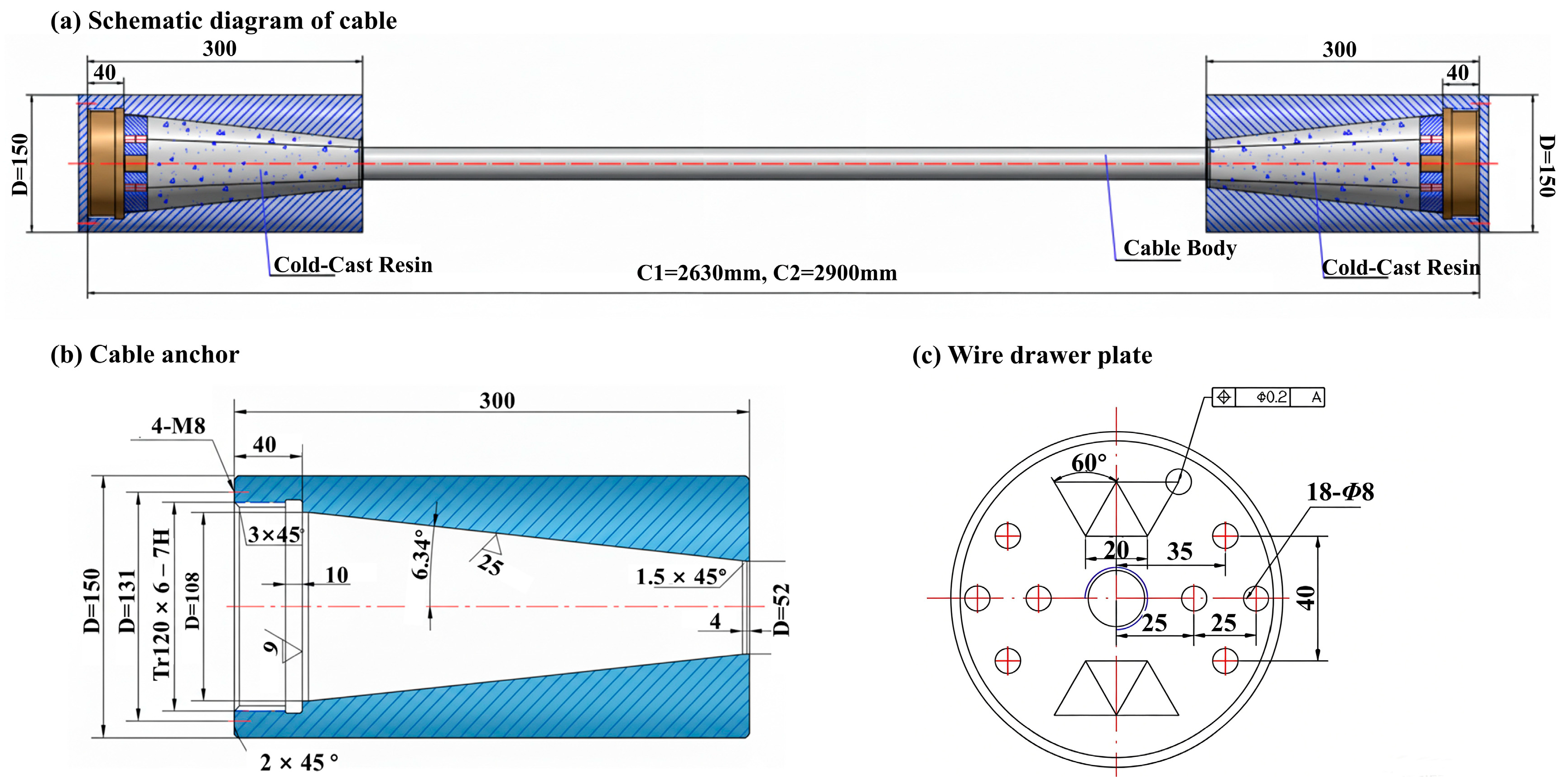
2.1. Test Specimen
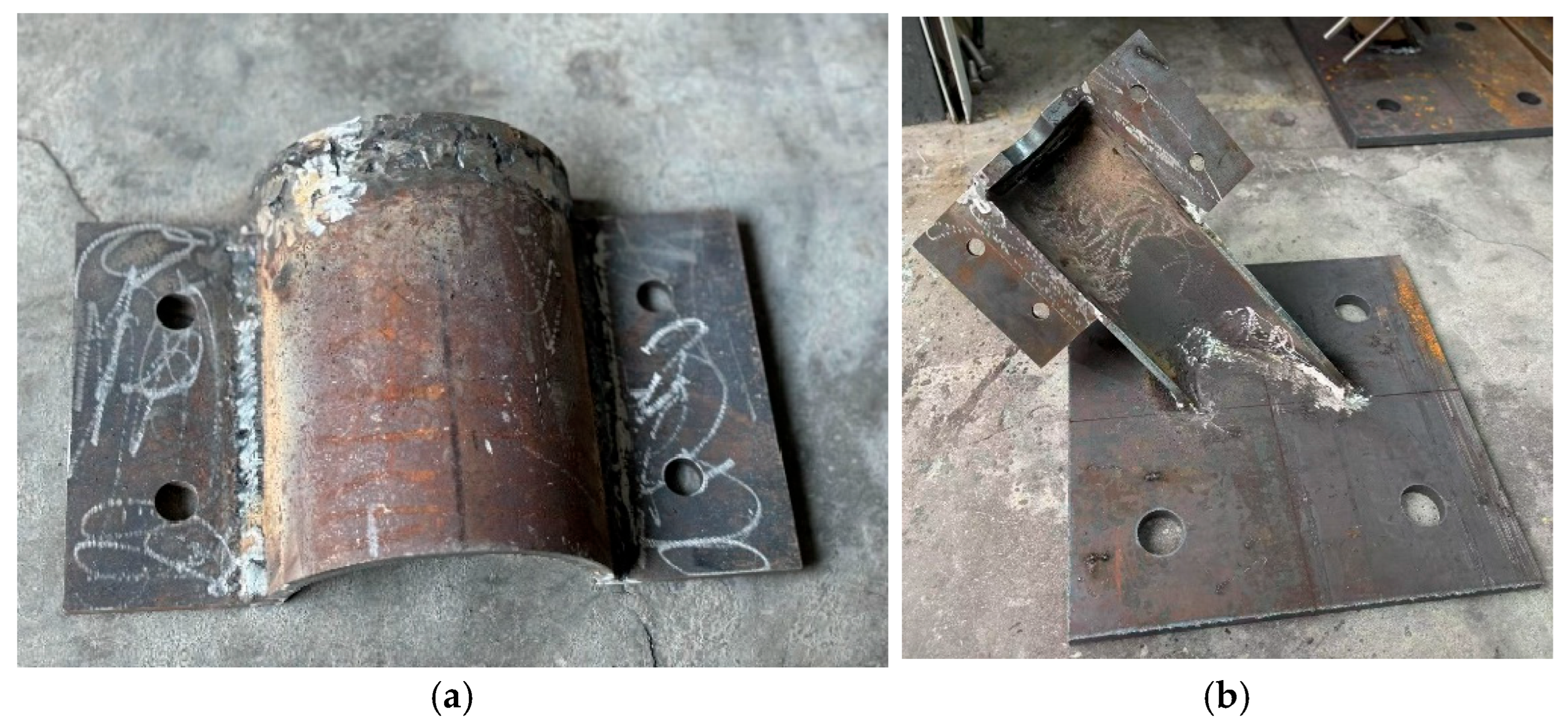
2.2. Anchorage Connection Device
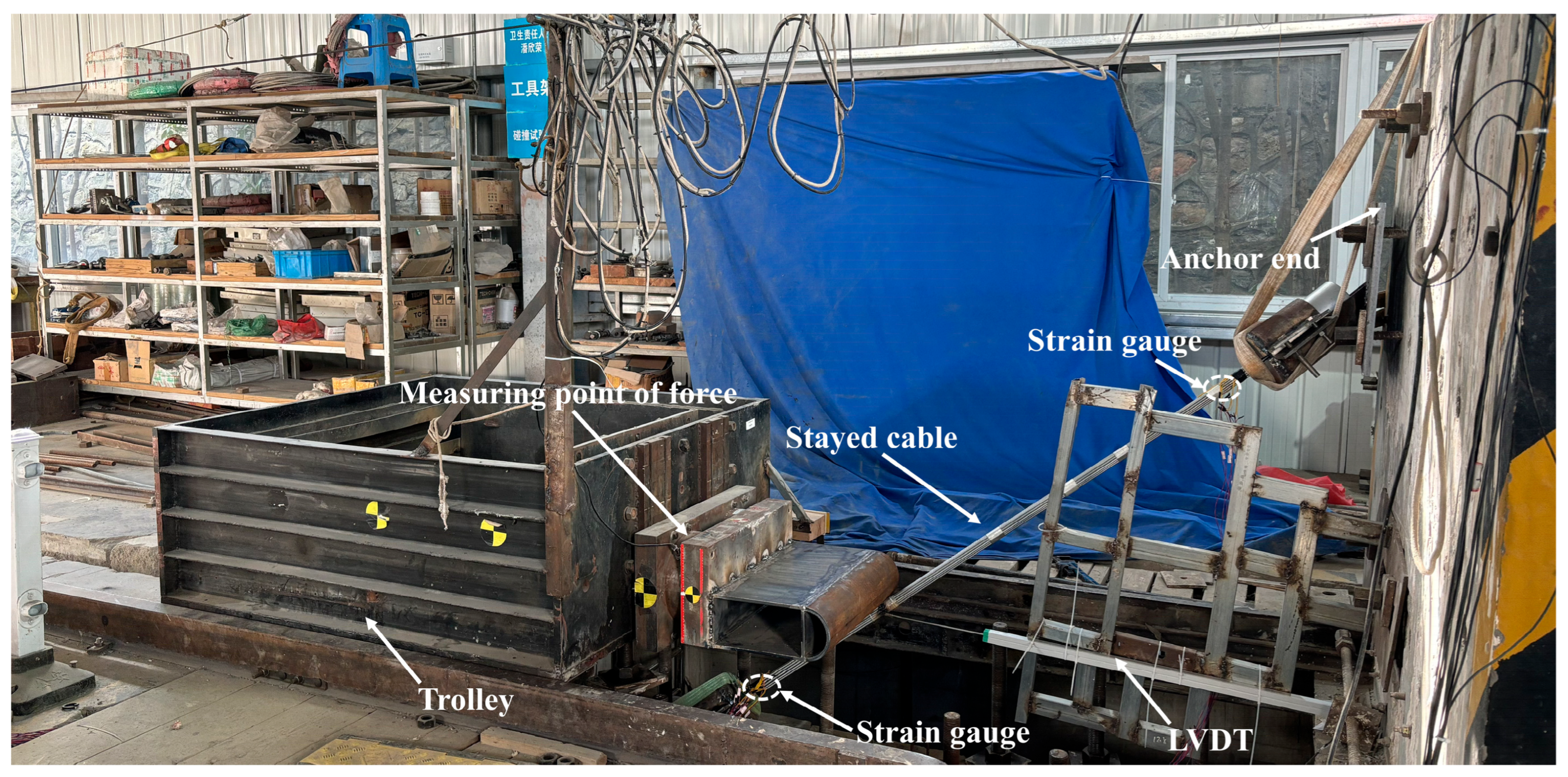
2.3. Test Setup and Procedure
2.4. Instruments and Monitoring
3. Experimental Results and Analysis
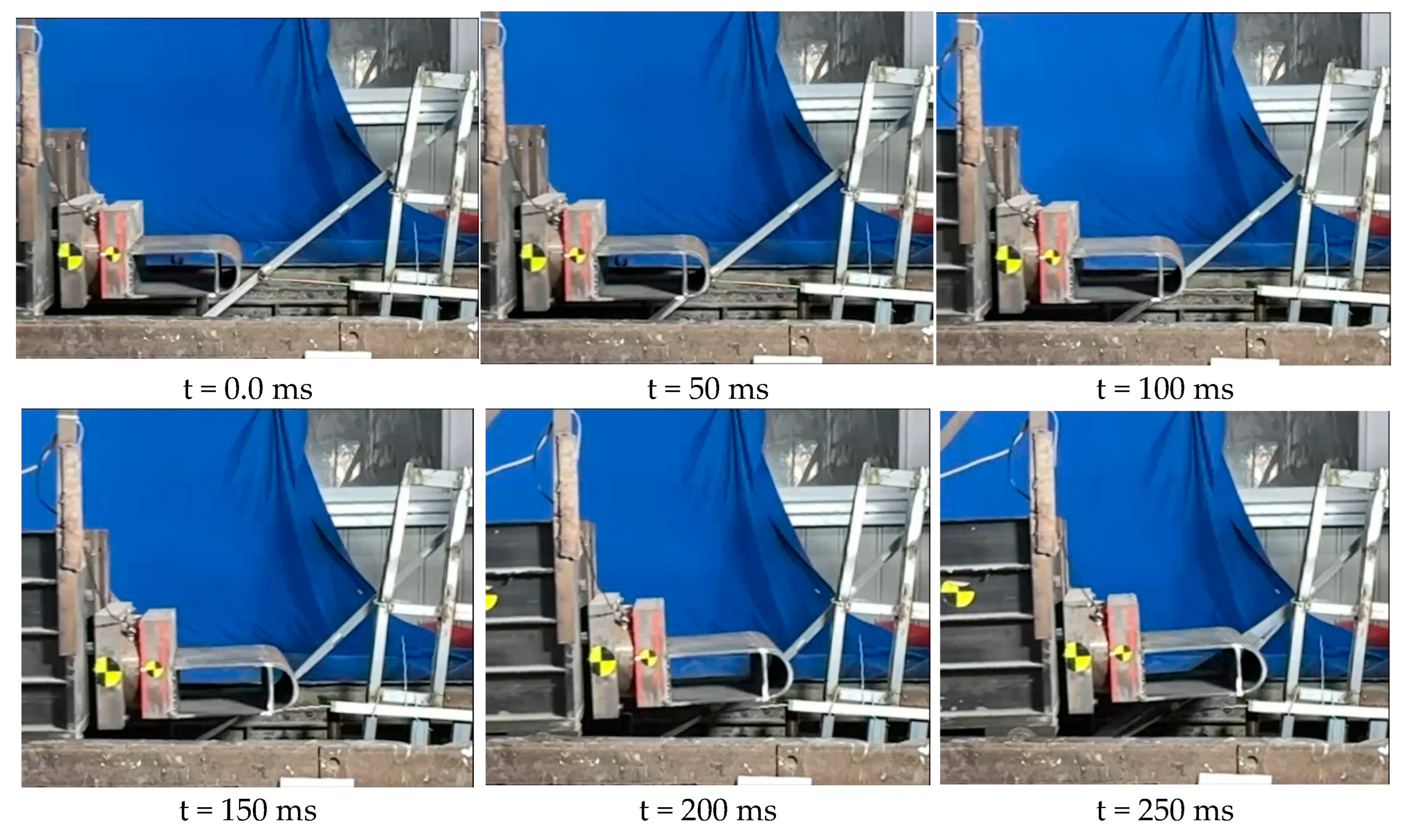
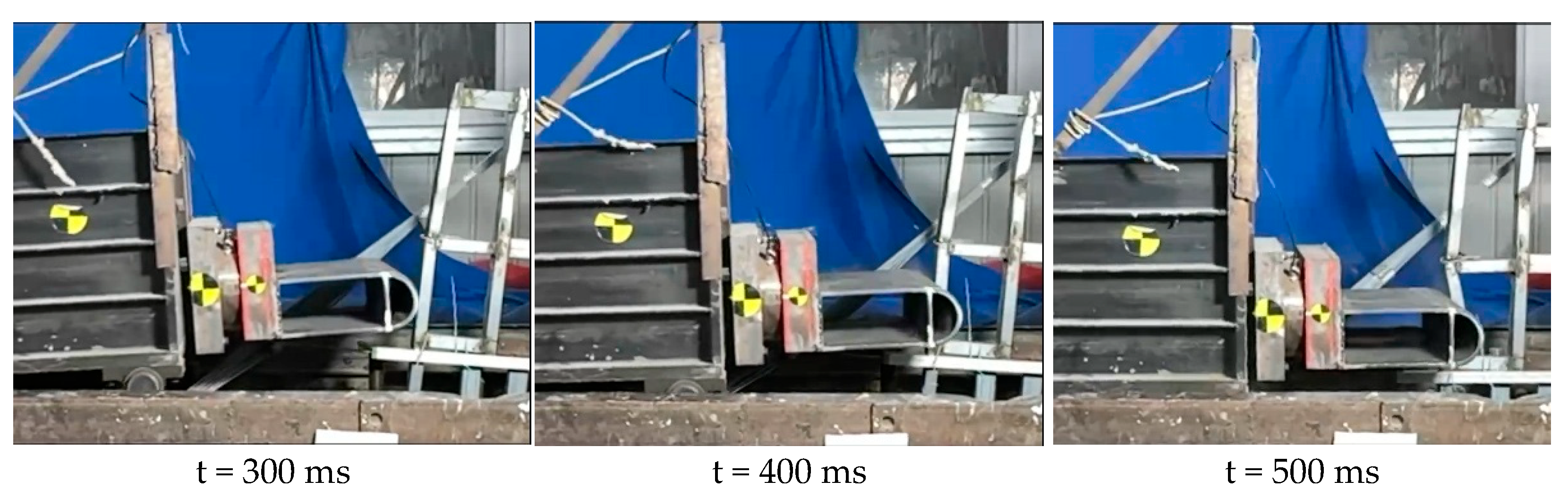
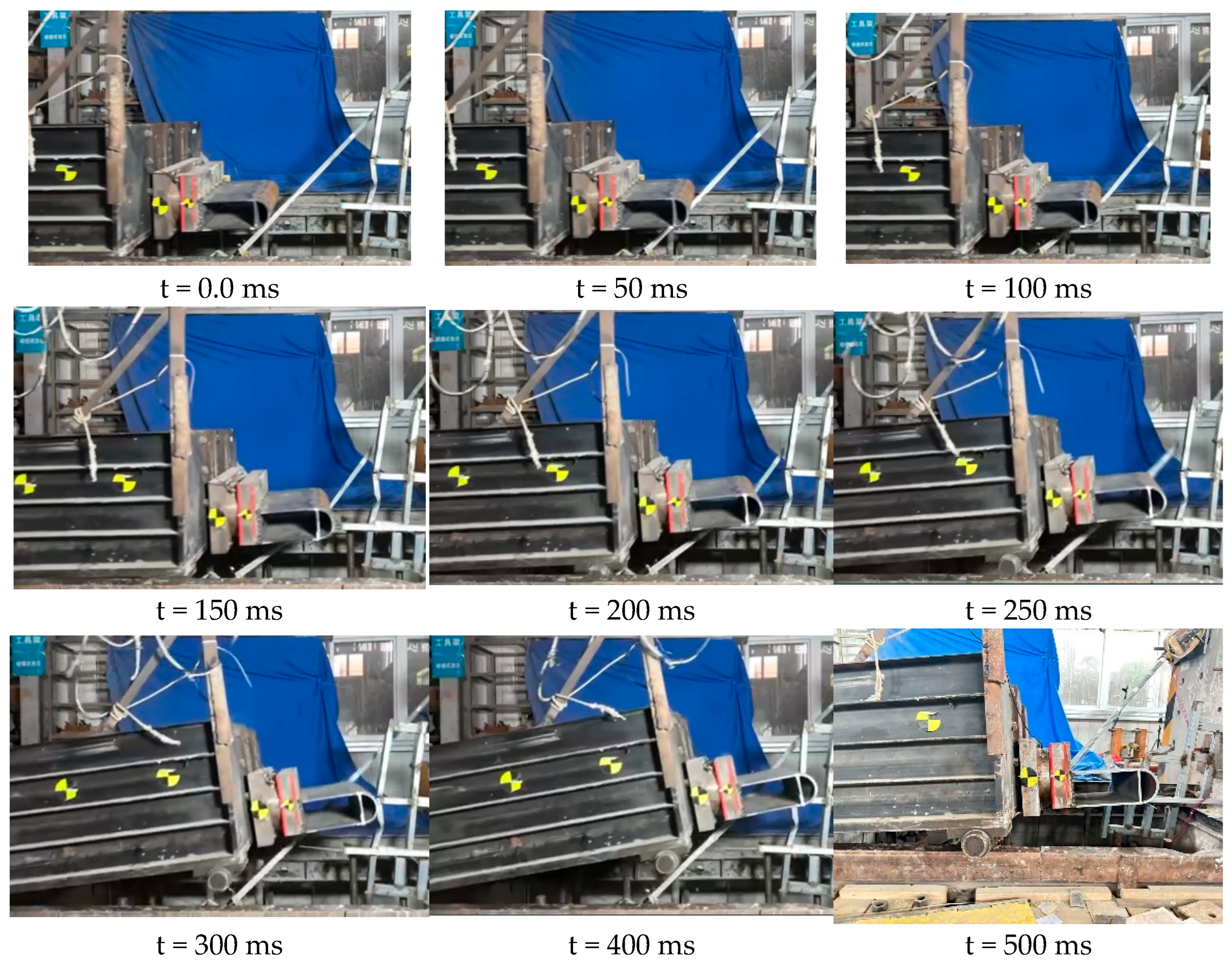
3.1. Impact Process
- Phase I: Initial Contact and Force Rise Phase.
- Phase II: Post-Peak Contact and Energy Dissipation Phase.
- Phase III: Rebound and Separation Phase.
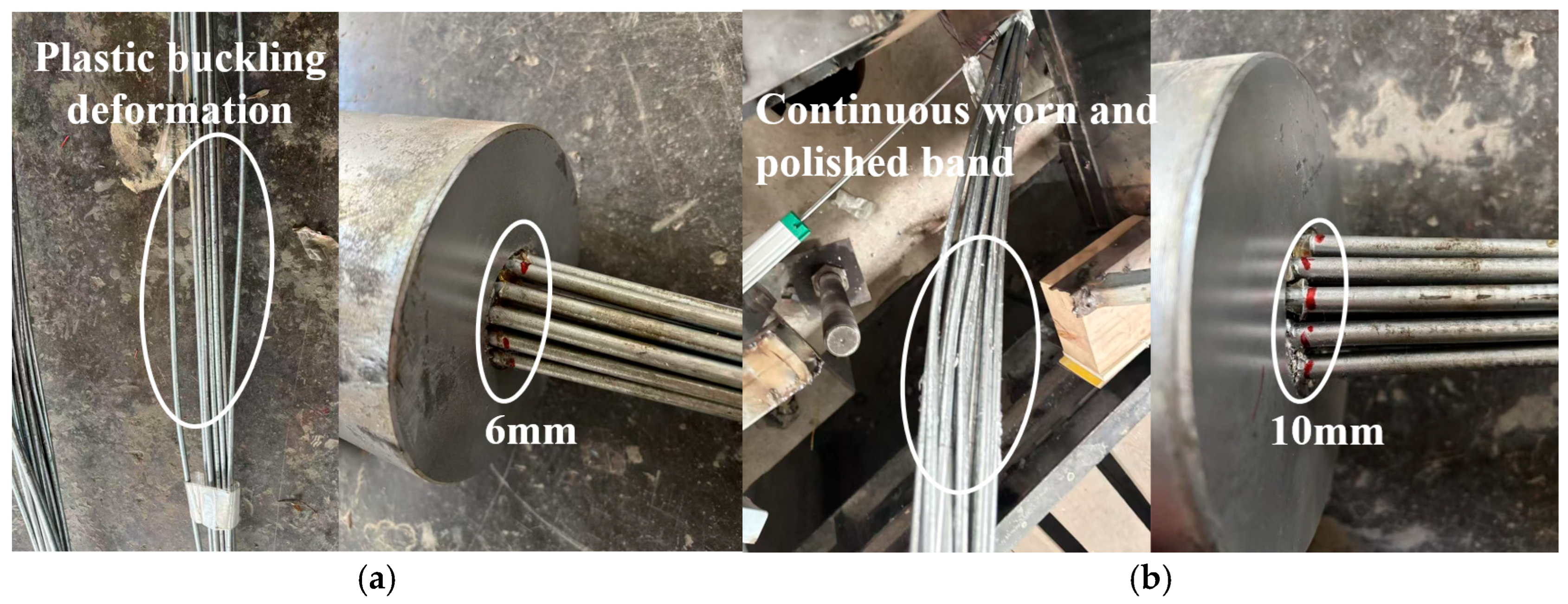
3.2. Damage Pattern
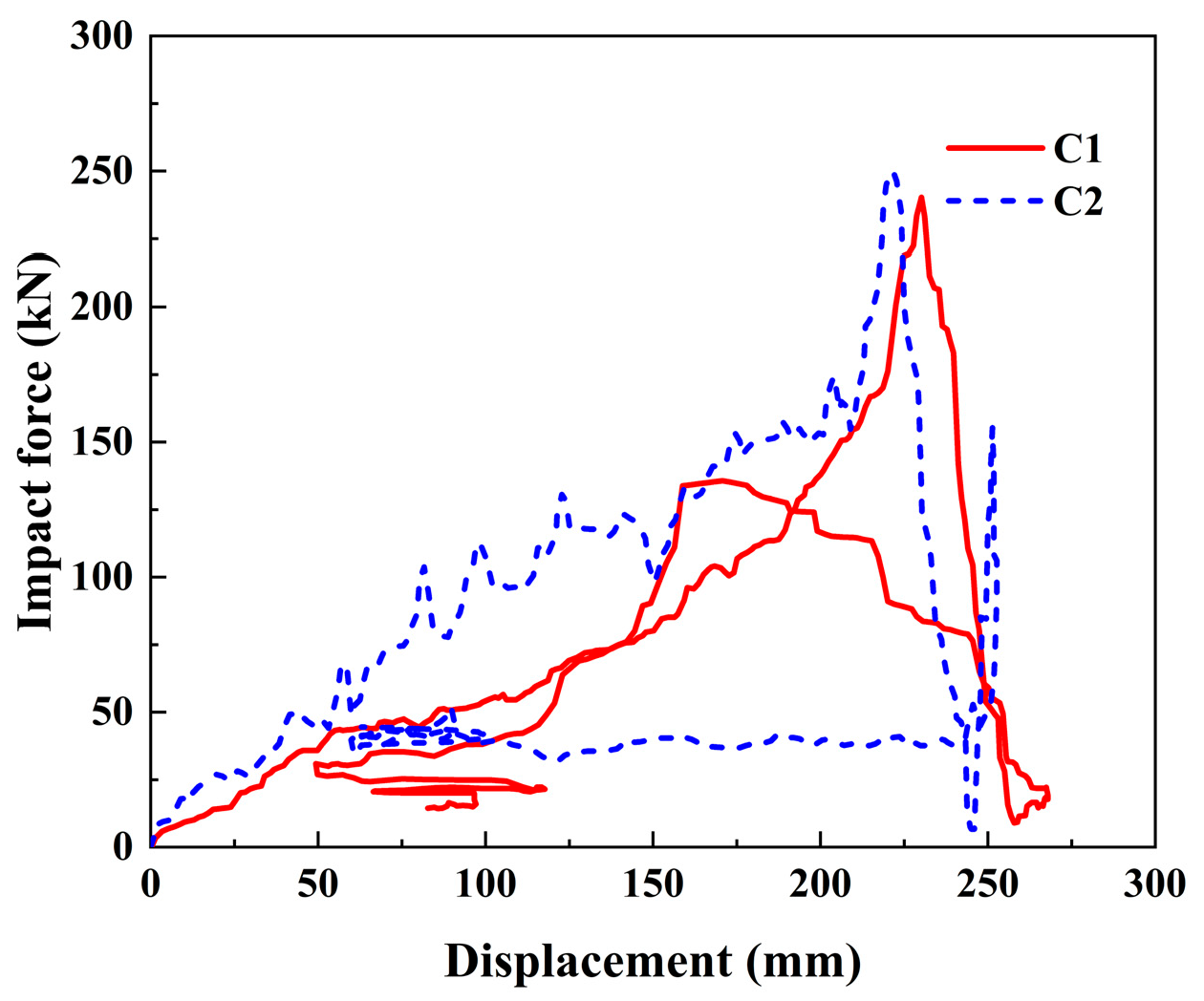
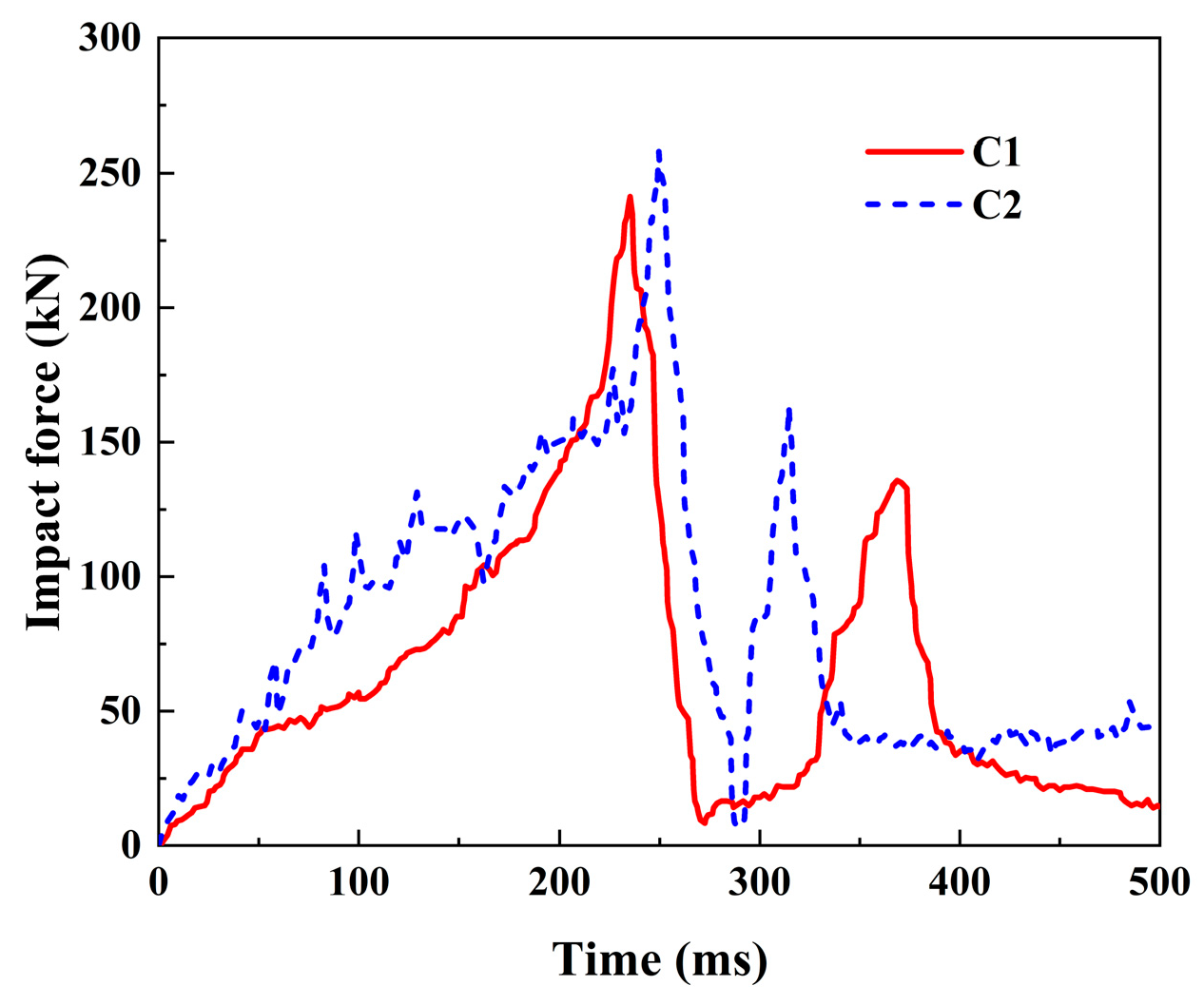
3.3. Impact Force
3.4. Force–Displacement Relationship
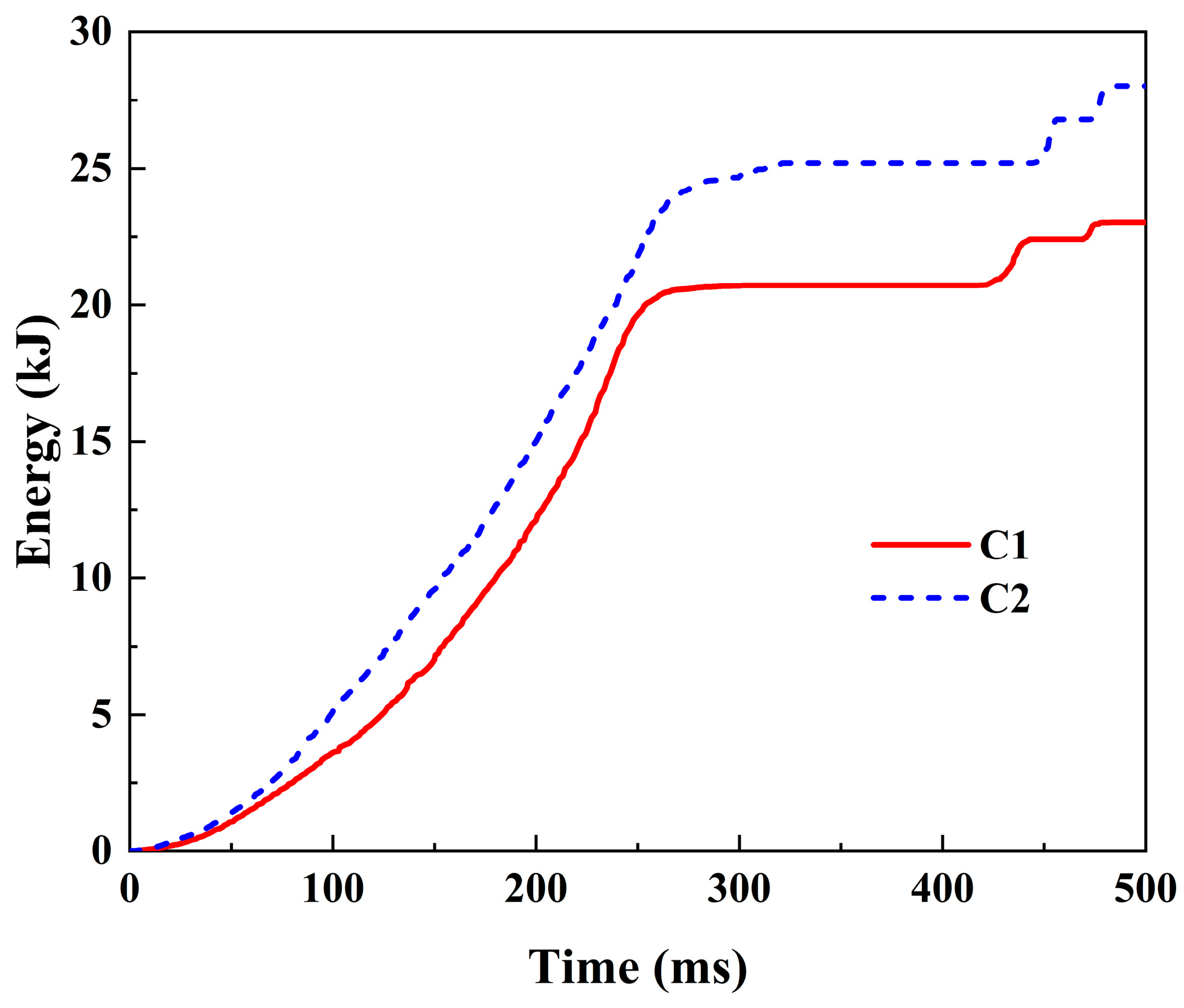
3.5. Energy History
- (1)
- Friction and sliding energy dissipation: Friction energy is dissipated due to relative sliding within the wire bundle and between the wires and the impact head. The C2 contact zone exhibits continuous wear bands and indentation marks, indicating a strong coupling between normal pressure and tangential friction; the effective sliding distance and friction energy dissipation are significantly higher than the intermittent scratches observed in C1.
- (2)
- Energy dissipation due to plastic deformation: The impact causes permanent bending and local buckling of the cable. The residual bending in C2 is more pronounced (exhibiting a zigzag profile), accompanied by cross-sectional flattening and wire rearrangement; the proportion of plastic energy dissipation is higher. In C1, plastic deformation is concentrated in localized kinked regions.
- (3)
- Elastic strain energy storage and release: The proportion of elastic strain energy released during the rebound phase directly affects the residual energy ratio. The residual energy ratio for C1 is only 25%, indicating that most of the energy was reversibly stored and released in an elastic form; the residual energy ratio for C2 is as high as 69%, implying a relatively small proportion of elastic energy, with more energy dissipated through irreversible pathways.
4. Conclusions
4.1. Research Findings
- (1)
- The impact response evolved through three distinct stages. The boundaries between stages were identified using both the impact trolley deceleration history and the characteristic changes in the impact force.
- (2)
- Although C1 and C2 reached comparable peak impact forces, C2 consistently produced a larger climbing height and a greater derailment angle. This outcome indicates that frontal impact maintains stronger cable–impact trolley interaction after the peak, thereby sustaining constraint and energy exchange into the post-peak stage and ultimately exacerbating orbital instability.
- (3)
- Both C1 and C2 exhibited visible plastic deformation at the impact location, without macroscopic failure such as wire rupture. This response indicates that the cable maintained structural continuity and residual load-carrying capacity after impact. However, minor interfacial debonding between the cable body and the cold-cast filler was observed near the anchorage end, identifying the anchorage exit as a potential weak region that warrants particular attention in impact-resistant design and assessment.
4.2. Specific Engineering Recommendations
- (1)
- Local protection of anchorage exit zones: Tests showed that 6–10 mm of the connection between the strong steel cables and the cold grout near the anchorage ends broke, causing big changes in pressure. This indicates anchorage exit zones as vulnerable locations under impact loading. It is therefore recommended that flexible composite wrapping or steel sleeves be installed on the cable body within this zone, covering approximately 1.0–1.5 m of the cable’s initial section. This will prevent interface separation from progressing and enhance the anchorage system’s impact resistance.
- (2)
- Incorporate anchorage slip into health monitoring metrics. Experimentally measured 6–10 mm slip provides a quantifiable early warning indicator. Dynamic displacement sensors should be installed at anchorage exit points in high-risk zones. Trigger targeted inspections to assess potential damage and ensure structural integrity when cumulative slip exceeds the preset threshold of 6 mm.
4.3. Research Limitations and Future Prospects
- (1)
- The key materials of the stay cables were not subjected to dedicated material property tests. For example, the mechanical properties of core components, such as 7 mm high-strength steel wires and cold-cast anchor grout, were not calibrated through testing, which could affect the accuracy of parameter selection and result analysis. Additionally, the impact vehicle features a rigid front-end design, disregarding the role of vehicle components such as bumpers that provide cushioning and energy absorption in real collisions. This meant that the load boundary conditions were easier to work out than they would have been in real life.
- (2)
- It should also be noted that this study was conducted using only two scaled specimens, with the impact velocity fixed at 4.0 m/s. This limitation stems primarily from the high cost and complex fabrication process involved in producing cold-cast anchored cable-stayed specimens. Nevertheless, these two test conditions were carefully selected based on preliminary analysis to represent the most critical impact directions, and the fixed impact velocity ensures comparability between the two conditions. Therefore, the conclusions of this study are based on specific test conditions and may not be directly applicable to all possible vehicle collision scenarios.
- (3)
- Future research could address these limitations by:
- -
- Supplementing material property tests for key cable components to establish more accurate constitutive relationships;
- -
- Adopting impact heads that more closely resemble actual vehicles to optimise loading conditions and enhance the relevance of test results to engineering practice;
- -
- Expanding the scope of the parametric study to include different impact speeds, impact locations, cable inclinations, and anchorage types, in order to provide a more comprehensive understanding of the dynamic response mechanisms of cable-stayed bridges under vehicle impact;
- -
- Refining cable impact damage assessment methods and protective design recommendations based on these improvements to facilitate the translation of research findings into engineering applications.
Author Contributions
Funding
Data Availability Statement
Conflicts of Interest
References
- He, X.; Wang, Z.; Li, C.; Gao, C.; Liu, Y.; Li, C.; Liu, B. Experimental Test and Finite Element Analysis on a Concrete Box Girder of a Cable-Stayed Bridge with W-Shaped Prestressed Concrete Diagonal Braces. Buildings 2024, 14, 506. [Google Scholar] [CrossRef] [Scilit]
- Guo, S.; Jiang, Y.; Zhang, W.; Zeng, Y. Study on Dynamic Characteristics of Long-Span Highway-Rail Double-Tower Cable-Stayed Bridge. Buildings 2024, 14, 1733. [Google Scholar]
- Zhou, Y.; Chen, S. Reliability Assessment Framework of the Long-Span Cable-Stayed Bridge and Traffic System Subjected to Cable Breakage Events. J. Bridge Eng. 2017, 22, 04016133. [Google Scholar] [CrossRef] [Scilit]
- Ma, T.; Zhu, Y.; Xiong, W.; Zhang, B. Bridge post-disaster rapid inspection using 3D point cloud: A case study on vehicle-bridge collision. J. Infrastruct. Intell. Resil. 2025, 4, 100153. [Google Scholar]
- Chen, Q.; Wang, H.; El-Tawil, S.; Agrawal, A.; Bhattacharya, B.; Wong, W. Progressive Collapse Behavior of a Long-Span Cable-Stayed Bridge Induced by Cable Loss. J. Bridge Eng. 2023, 28, 05023005. [Google Scholar] [CrossRef] [Scilit]
- Rostami, M.; Sennah, K.; Mostafa, A. Experimental Investigation of the Lateral Load-Carrying Capacity of a Developed GFRP-Reinforced TL-5 Bridge Barrier Using Special Profile Hooked Bars. J. Compos. Constr. 2019, 23, 04019027. [Google Scholar]
- Sennah, K.; Mostafa, A. Performance of a Developed TL-5 Concrete Bridge Barrier Reinforced with GFRP Hooked Bars: Vehicle Crash Testing. J. Bridge Eng. 2018, 23, 04017139. [Google Scholar]
- The Boston Globe. Multi-vehicle crash on Zakim Bridge leaves some with non-life-threatening injuries. The Boston Globe, 30 December 2020.
- MLive. Multiple lanes closed on Ravenel Bridge due to two car collision. MLive, 1 February 2020.
- Changjiang Daily. Oil tanker truck crashes through guardrail of Junshan Bridge. Changjiang Daily, 28 December 2007.
- Wang, Z.; Xian, G. Impact performances of fiber reinforced polymer composites and cables: A review. Compos. Struct. 2023, 319, 117128. [Google Scholar] [CrossRef] [Scilit]
- Geng, Y.; Zheng, T.; Zhu, J.; Yang, B.; Wang, H.; Zhao, C. Structural Response and Damage of RPC Bridge Piers Under Heavy Vehicle Impact: A High-Fidelity FE Study. Buildings 2026, 16, 549. [Google Scholar] [CrossRef] [Scilit]
- Wang, W.; Chen, J.; Zhou, R.; Zhong, J. A simplified coupled model for predicting dynamic processes of vehicle impact on pier columns. Structures 2022, 41, 997–1013. [Google Scholar] [CrossRef] [Scilit]
- Yu, X.; Chen, Y.; He, Y. Vulnerability Assessment of Reinforced Concrete Piers Under Vehicle Collision Considering the Influence of Uncertainty. Buildings 2025, 15, 1222. [Google Scholar] [CrossRef] [Scilit]
- Chen, L.; Qian, J.; Tu, B.; Frangopol, D.M.; Dong, Y. Performance-based risk assessment of reinforced concrete bridge piers subjected to vehicle collision. Eng. Struct. 2021, 229, 111640. [Google Scholar] [CrossRef] [Scilit]
- Chen, L.; Wu, H.; Fang, Q.; Li, R. Full-Scale Experimental Study of a Reinforced Concrete Bridge Pier under Truck Collision. J. Bridge Eng. 2021, 26, 05021008. [Google Scholar] [CrossRef] [Scilit]
- Abdelkarim, O.I.; ElGawady, M.A. Performance of bridge piers under vehicle collision. Eng. Struct. 2017, 140, 337–352. [Google Scholar] [CrossRef] [Scilit]
- Jiang, L.; Wang, K.; Fang, H.; Chen, B.; Zhu, L.; Zhang, Q. Protection performance of a novel anti-collision guardrail with recycled foamed concrete under vehicle collision. Eng. Struct. 2024, 305, 117795. [Google Scholar] [CrossRef] [Scilit]
- Liu, X.; Wang, X.; Zhou, J.; Li, F.; Xie, J.; Wu, Z. Corrosion Fatigue Degradation of Frp Tendon after Acidic Corrosion Coupling with Sustaining/Fatigue Loading. Eng. Struct. 2025, 335, 120383. [Google Scholar] [CrossRef] [Scilit]
- Yang, Y.; Su, M.; Liu, H. Sensitivity Analysis of Deflection Variation of the Cable-Stayed Bridge to the Cable Damage. Buildings 2023, 13, 1014. [Google Scholar] [CrossRef] [Scilit]
- Zhou, L.; Yao, G.; Zeng, G.; He, Z.; Gou, X.; He, X. Cellular Automata-Based Experimental Study on the Evolution of Corrosion Damage in Bridge Cable Steel Wire. Buildings 2024, 14, 3354. [Google Scholar] [CrossRef] [Scilit]
- Wang, J.; Duan, H.; Zhao, Q.; Meng, Q.; Zhang, K. Temperature-Dependent Tensile Degradation of HDPE Sheaths for Bridge Cables Considering UV-Chloride Exposure. Buildings 2026, 16, 736. [Google Scholar] [CrossRef] [Scilit]
- Kurino, S.; Wei, W.; Igarashi, A. Seismic fragility and uncertainty mitigation of cable restrainer retrofit for isolated highway bridges incorporated with deteriorated elastomeric bearings. Eng. Struct. 2021, 237, 112190. [Google Scholar] [CrossRef] [Scilit]
- Soto, N.; Cid, C.; Baldomir, A.; Hernández, S. Fail-safe optimum cable system under cable breakage in cable-stayed bridges. Application to the Queensferry Crossing Bridge. Eng. Struct. 2023, 279, 115557. [Google Scholar] [CrossRef] [Scilit]
- Zhang, H.; Lv, H.; Zhu, Z.; Chen, Z.; Chu, Y. Study on the Dynamic Response of the Component Failure of Drum-Shaped Honeycomb-Type III Cable Dome with Quad-Strut Layout. Buildings 2023, 13, 1894. [Google Scholar] [CrossRef] [Scilit]
- Huang, Z.; Khan, M.Z.N.; Chen, W.; Hao, H. Effectiveness of reinforcing methods in enhancing the lateral impact performance of geopolymer concrete column reinforced with BFRP bars. Int. J. Impact Eng. 2023, 175, 104544. [Google Scholar] [CrossRef] [Scilit]
- Mozos, C.M.; Aparicio, A.C. Numerical and experimental study on the interaction cable structure during the failure of a stay in a cable stayed bridge. Eng. Struct. 2011, 33, 2330–2341. [Google Scholar] [CrossRef] [Scilit]
- Giraldo-Isaza, J.P.; Giraldo-Londoño, O.; Washer, G.A.; Myers, J.J. Numerical modeling of the effects of impact conditions, foundation stiffness, and cable pretension on the behavior of high-tension guard cable systems. Eng. Fail. Anal. 2024, 165, 108692. [Google Scholar] [CrossRef] [Scilit]
- Hoang, V.; Kiyomiya, O.; An, T. Experimental and Numerical Study of Lateral Cable Rupture in Cable-Stayed Bridges: Case Study. J. Bridge Eng. 2018, 23, 05018004. [Google Scholar] [CrossRef] [Scilit]
- Fang, Y.; Xiang, Y.; Fang, Z. Impact Behaviour of Carbon Fibre-Reinforced Polymer (CFRP) Cables with Protective Sheaths. Constr. Build. Mater. 2024, 450, 138599. [Google Scholar] [CrossRef] [Scilit]
- Yang, Y.; Zhou, Z.; Guan, Y.; Shi, J.; Zhan, Q.; Fahmy, M.F.M.; Wu, B. Nonlinear Coupled Vibration Behavior of BFRP Cables on Long-Span Cable-Stayed Bridges under Parametric Excitation. Buildings 2023, 13, 3082. [Google Scholar] [CrossRef] [Scilit]
- Xiang, Y.; Fang, Z.; Wang, C.; Zhang, Y.; Fang, Y. Experimental Investigations on Impact Behavior of CFRP Cables under Pretension. J. Compos. Constr. 2017, 21, 04016087. [Google Scholar] [CrossRef] [Scilit]
- Xiang, Y.; Fang, Z.; Fang, Y. Single and multiple impact behavior of CFRP cables under pretension. Constr. Build. Mater. 2017, 140, 521–533. [Google Scholar] [CrossRef] [Scilit]
- Wu, J.; Zhou, S.; Shu, Y.; Cao, S.; Zhou, Y. Fiber monitoring of cold-casting anchor’s performance. J. Traffic Transp. Eng. 2019, 19, 37–44. [Google Scholar]
- Michels, J.; Sena-Cruz, J.; Czaderski, C.; Motavalli, M. Thermo-mechanical properties of commercially available epoxy resins for structural applications. In Proceedings of the Third Conference on Smart Monitoring, Assessment and Rehabilitation of Civil Structures, Antalya, Turkey, 7–9 September 2015. [Google Scholar]
- Zhu, Y.; Liu, L.; Zhang, J.; Jiang, T. Experimental Study on the Anchoring Performance of Carbon Fibre Reinforcement in Different Anchoring Grouts. Fiber Reinf. Plast. Compos. 2015, 7, 78–82. [Google Scholar]






| Parameters | C1 | C2 | Difference |
|---|---|---|---|
| Peak force | 242.23 | 258.03 | +6.5% |
| Peak displacement | 234.6 | 221 | −5.8% |
| Initial stiffness | 0.44 | 0.81 | +84.1% |
| Maximum external work | 20.7 | 25.2 | +21.5% |
| Residual energy ratio | 25 | 69 | +176% |
| Primary damage features | Localised kinks, intermittent scratches, and slight wear at the anchoring end | Permanent bending, continuous wear zones, re-arrangement of steel wires, spalling at the anchorage end | Damage is more concentrated; friction is the dominant factor |
Disclaimer/Publisher’s Note: The statements, opinions and data contained in all publications are solely those of the individual author(s) and contributor(s) and not of MDPI and/or the editor(s). MDPI and/or the editor(s) disclaim responsibility for any injury to people or property resulting from any ideas, methods, instructions or products referred to in the content. |
© 2026 by the authors. Licensee MDPI, Basel, Switzerland. This article is an open access article distributed under the terms and conditions of the Creative Commons Attribution (CC BY) license.
Share and Cite
Yang, N.; Zhu, Y.; Dai, L.; Wei, X.; Mao, Y.; Du, T.; Fang, H. Experimental Investigations on Cold-Cast Anchor Stay Cables Under Vehicle Impact. Buildings 2026, 16, 1366. https://doi.org/10.3390/buildings16071366
Yang N, Zhu Y, Dai L, Wei X, Mao Y, Du T, Fang H. Experimental Investigations on Cold-Cast Anchor Stay Cables Under Vehicle Impact. Buildings. 2026; 16(7):1366. https://doi.org/10.3390/buildings16071366
Chicago/Turabian StyleYang, Nan, Yaoyu Zhu, Lei Dai, Xiaochen Wei, Yan Mao, Tianyu Du, and Hai Fang. 2026. "Experimental Investigations on Cold-Cast Anchor Stay Cables Under Vehicle Impact" Buildings 16, no. 7: 1366. https://doi.org/10.3390/buildings16071366
APA StyleYang, N., Zhu, Y., Dai, L., Wei, X., Mao, Y., Du, T., & Fang, H. (2026). Experimental Investigations on Cold-Cast Anchor Stay Cables Under Vehicle Impact. Buildings, 16(7), 1366. https://doi.org/10.3390/buildings16071366